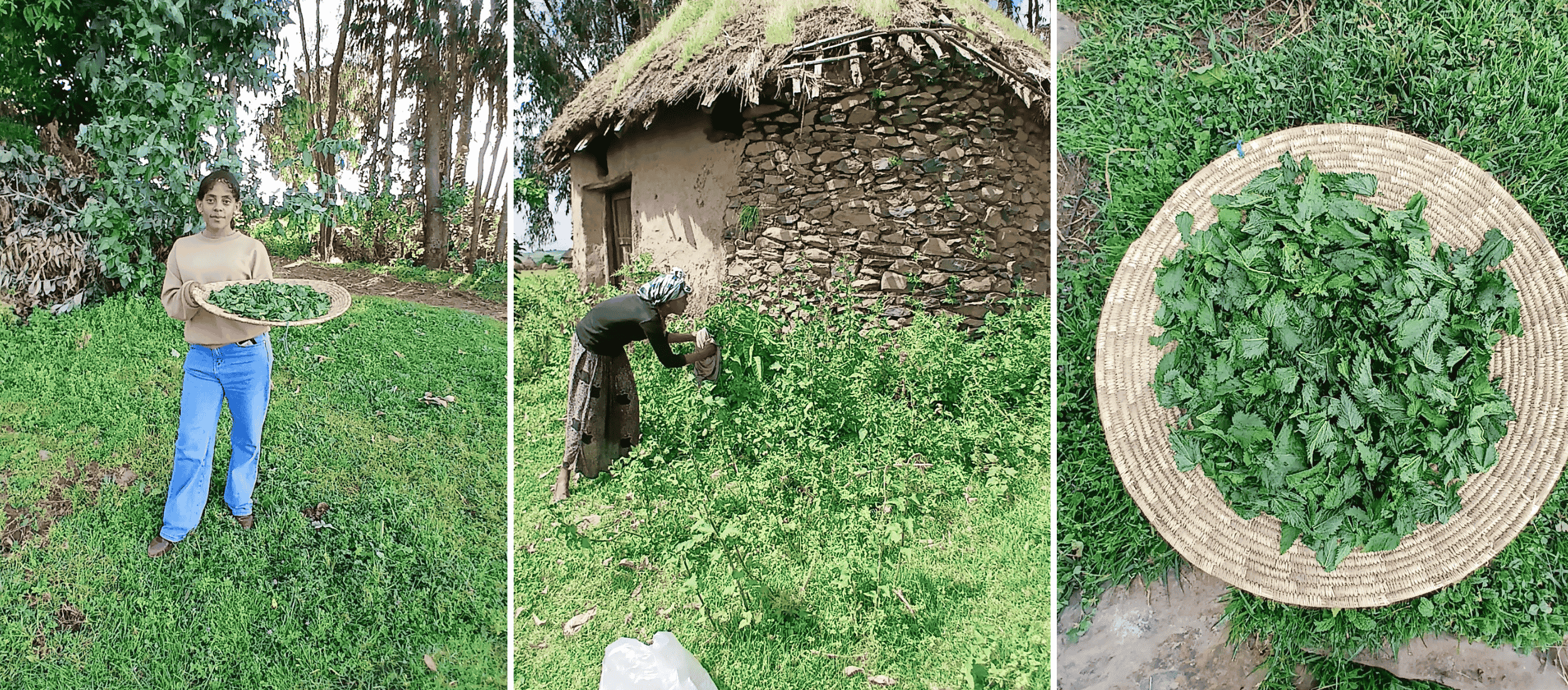
- Keiron Audain, Alliance for Food Sovereignty in Africa - Welcome, brief overview of cumulative outcomes from sessions 1–3
- Gary Martin, Global Diversity Foundation - Introduction to Theory of Change and Concept Note
- Charles Tumuhe, Alliance for Food Sovereignty in Africa (AFSA) - Presentation and discussion of the project title and summary
- Keiron Audain, Alliance for Food Sovereignty in Africa - Presentation and discussion of the proposed Impact or Vision
- Gary Martin, Global Diversity Foundation - Presentation and discussion of the proposed Long-term Outcome
- Charles Tumuhe, Alliance for Food Sovereignty in Africa (AFSA) - Brainstorming on Shorter-term Outcomes
- Keiron Audain, Alliance for Food Sovereignty in Africa - Brainstorming on Outputs
- Gary Martin, Global Diversity Foundation - Reflections on specific Activities
Thursday, July 31, 2025
Designing the African Sciences of Agroecology, Nutrition and Ethnobotany
The Society for Underutilized Legumes
30 July 2025. The Society for Underutilized Legumes (SUL) organised its 26th Academic Lecture Series with theme: Enhancing Bambara Groundnut Production Through Improved Agronomic Practices
As part of the mandates of the Consultative Group on International Agricultural Research (CGIAR), centers like the International Institute of Tropical Agriculture (IITA)—particularly through its Genetic Resources Center focuses on agricultural innovations aimed at addressing food and nutrition insecurity. One such innovation involves the promotion of Bambara groundnut, an indigenous African legume recognized for its nutritional value and resilience. Its potential to enhance food systems is especially relevant in regions grappling with drought, poor soils, and persistent poverty.
The Society for Underutilized Legumes, in its bid to support the activities of CGIAR-IITA, advocates for the inclusion of Bambara groundnut as one of the opportunity crops for global promotion and utilization, recognizing its potential to contribute to sustainable agriculture, nutrition, and climate resilience. The overall goal is to gain a better understanding of how Bambara groundnut can be utilized to achieve the desired support for both human and animal health, while also considering its impact on a sustainable environment in Africa and across the globe.
Dr Benjamin Faloye, Field Bank Manager will lead a six months capacity development on Bambara groundnut starting from July till December 2025 with support of Prof Michael Abberton, Head, Genetic Resources Center, IITA.
See his presentation below.
Background:
The Society for Underutilized Legumes (SUL) is a collaborative initiative dedicated to promoting the research, development, and utilization of legume species that are traditionally neglected or underexploited in mainstream agriculture. These legumes, often rich in nutrients and resilient to harsh environmental conditions, hold significant potential for improving food and nutrition security, particularly in regions facing the challenges of climate change and malnutrition. The society brings together researchers, development practitioners, policymakers, and other stakeholders to raise awareness about the value of underutilized legumes and integrate them into sustainable food systems.
SUL's activities include supporting scientific research on the agronomic, nutritional, and economic potential of underutilized legumes such as bambara groundnut, African yam bean, and pigeon pea. It organizes workshops, training programs, and conferences to disseminate knowledge and best practices. The society also facilitates the development of value chains by connecting smallholder farmers to markets, promoting seed systems, and advocating for policy changes that support the conservation and use of legume biodiversity. Additionally, SUL collaborates with regional and international partners to promote these crops as solutions for food diversification, soil health, and resilience in marginal environments.
See also:
6 March 2025. SDGs on Health, Nutrition & Poverty: Hidden Treasures in Neglected Tropical Legumes
Dr. Adegboyega Taofeek Tope SUL President on AfriScience Network Webinar #24
Wednesday, July 30, 2025
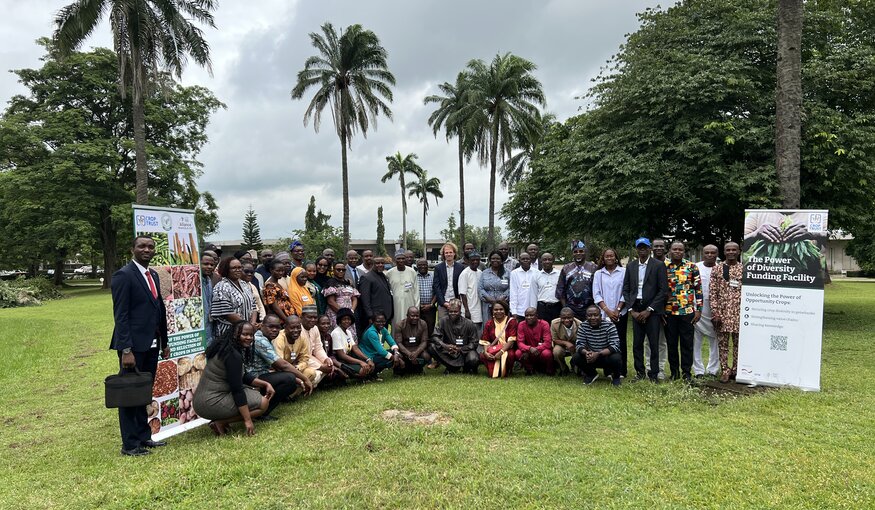
Nigeria Launches ‘Power of Diversity’ Project to Promote Neglected Crops
23 July 2025. Genetic Resource Center (GRC) building, International Institute of Tropical Agriculture (IITA) in Ibadan, the Oyo State capital.
In a major stride toward food security and climate resilience, Nigeria inaugurated the Power of Diversity Funding Facility (PDFF)—a five-year, multi-stakeholder agricultural initiative aimed at promoting neglected yet valuable “opportunity crops” across the nation.
The Power of Diversity Funding Facility (PDFF) is a transformative multi-donor funded initiative that will promote the use of so-called opportunity crops across Africa, Asia, the Pacific, and Latin America and the Caribbean. The launch event was held at the International Institute of Tropical Agriculture (IITA) in Ibadan and saw active participation from researchers, breeders, academics, and policy leaders. The initiative is jointly spearheaded by the National Centre for Genetic Resources and Biotechnology (NACGRAB), Crop Trust, and Alliance Bioversity & CIAT, with funding from the governments of Germany and IrelandThe National Centre for Genetic Resources and Biotechnology (NACGRAB) has reiterated its resolve to conserve, characterise, and promote Nigeria’s rich plant genetic resources for food and agricultural advancement.
Also speaking, a director at the Federal Ministry of Agriculture, Nuhu Kilishi, described the PDFF launch as timely, saying “it aligned with the national food security goals and the need to enhance crop power and resilience in Nigeria.” He said that crop selection would focus on production advantage, gestation period, and benefit, adding that over 50 crops are viable in Nigeria and 38 value chains are already developed. Kilishi, therefore, pledged the ministry’s support in scaling up other crops beyond the two selected for PDFF, ensuring a robust and inclusive approach to Nigeria’s agricultural transformation strategy.
The Project Coordinator, Crop Trust, Nico Willems-Possen, said the PDFF project was a five-year initiative funded by the German and Irish governments to promote opportunity crops neglected in research and agricultural policies. He noted the project would strengthen conservation, consumer awareness, and nutritional education around these crops, while working with gene banks to preserve their genetic diversity for future use. The coordinator said that the Crop Trust remained committed to its partnership with NACGRAB and other stakeholders to ensure that resilient crops are better utilised for long-term agricultural sustainability.
Dignitaries at the event included researchers, academics, breeders, and other relevant stakeholders in the Nigerian food system.
Related:
Funding Forgotten FoodsHow nutrition-sensitive are agri-food value chains?
The Nutrition Research Facility (NRF) organised a webinar exploring the contribution of agri-food value chains in achieving nutrition impacts.
- Anja Schmidt (European Commission, DG INTPA, Unit F3)
- Boudewijn Vandenbossche (Belgian Federal Public Service, Foreign Affairs, Foreign Trade and Development Cooperation)
- Bridget Fenn (NRF, NRI)
- Ravinder Kumar (NRF, NRI)
- Olimpia Orlandoni (Agrinatura, VCA4D)
- Facilitation by Paolo Sarfatti (NRF, Ghent University)
NRF resources available
- Evidence-informed decision-making: the case of bouillon seasonings in Senegal
- Long-term effects on child cognitive development of multiple micronutrient supplementation: policy brief and technical brief
- Major barriers to nutrition related evidence-informed decision-making related to ultra-processed foods. The case of bouillon seasonings in Senegal
- How effective are laws and regulations to improving food safety and quality? (also available in French)
- Can moringa and spirulina-enriched foods meet the micronutrient needs of young children? A scoping review
- Addressing economic and logistical barriers to the adoption of local alternatives (spirulina and moringa) for fortified food production by SMEs in Africa: a case study of Chad
- Nutrition Sensitive Agroecology (NSAE) in Lao PDR
Upcoming:
- School nutrition interventions in Kenya: 26th at 11:50 (CEST) - SOAP 18
- School nutrition interventions in Kenya: 27th at 14:40 - OAP 37
- Micronutrient supplementation for child’s cognition: 26th at 11:50 - SOAP 52
- Nutrition-Sensitive Agroecology in Lao PDR: 27th at 14:05 - SOAP 31
- Agroecology and nutrition in Senegal: 27th at 14:40 - SOAP 31
Related:
06/05/2025 Power point presentation of selecting relevant value chain/s for impactful development policiesTuesday, July 29, 2025
Leveraging Opportunity Crops to Address Micronutrient Gaps and Strengthen Food System Resilience
29 July 2025. 9.30 AM EST. 3:30 PM CEST. WEBINAR: "How can Opportunity Crops Be Leveraged to Address Micronutrient Gaps and Strengthen Food System Resilience?"
- VACS Partnership webinar,
- hosted by Welthungerhilfe (WHH).
Join us to:
- Explore the promise and limitations of opportunity crops
- Learn how to use WHH’s new tool to match crops with national nutrient gaps and seasonality
- Understand the current policy landscape
- Hear from expert panelists and gain practical recommendations for action
- Mathias Mogge, CEO, Welthungerhilfe
- Bertha Mkandawire, Nutrition Advisor, AGRA
- Kefilwe Roba Moalosi, Nutrition Advisor, AUDA-NEPAD
- Peiman Milani, Rockefeller Foundation
Resources:
African Food and Culture Tourism (AFCT)
29 July 2025. AFCT online session with Azeb Girmai, Country Coordinator, ENDA-Ethiopia(Ethiopia), sharing her research on how cultural tourism empowers South Omo communities. Discover how traditions boost livelihoods and resilience—despite policy gaps.
Azeb Girmai is climate change advocacy and campaign advisor with LDC Watch International. Before joining LDC Watch International, she was the Executive Director of ENDA Ethiopia, an Africa-based non-governmental organization working with marginalized communities. Ms. Girmai has more than 12 years of experience in the non-governmental sector, in areas such as international and national level advocacy and policy dialogue on environmental issues and sustainable development. She believes that tackling environmental challenges will mean tackling the main hurdles for women in Africa.Time: 1600 EAT (1500 Southern Africa / 1400 Central & parts of West Africa / 1300 rest of West Africa/UTC).
Join Zoom Meeting
- https://afsafrica-org.zoom.us/j/88368006715?pwd=9G8blvaectveVCE28LulnLJ3juGMdf.1
- Meeting ID: 883 6800 6715
- Passcode: 363249
UNFSS+4 (7) Main events 29/07
Extracts of the main program
29/07 Unlocking Sustainable Investments for Home Grown School Meals
29/07 Aligning Action, Investmentand Accountability
29/07 Increased and Targeted Investment through Public Private Partnerships
29/07 Indigenous Peoples-led Session
Including:Juan Lucas Restrepo Director General of the Alliance of Bioversity International and CIAT29/07 Food Sovereignty – Exploring National Approaches to Accelerating the Food Systems Transition
- In Tanzania, government buying is shifting toward smallholder farmers, particularly through school feeding programmes and farmer cooperatives. South Africa is working to preserve local crop varieties by identifying indigenous crops and scaling up community seed banks.
- In Mali, authorities aim to re-establish the country as the “breadbasket of West Africa,” revitalizing five key value chains and supporting over 800 local farmer groups.
- Niger aims to modernize agriculture with youth-led agro-tech and coal energy infrastructure to tackle migration by turning farming into a viable, dignified livelihoods.
- Meanwhile, Ethiopia is investing in domestic fertilizer production and seed research to reduce import dependence and strengthen seed sovereignty. And back in Gulele, those women making injera are connecting local production to global markets.
- Cameroon presented bankable agricultural projects to over 20 partners. The proposals focused on creating value, generating jobs, and driving climate-smart solutions.

Including:Juan Lucas Restrepo Director General of the Alliance of Bioversity International and CIAT
29/07 Transformation in Complex Settings
29/07 Accelerating Public-Private Collaboration for Local Impact
- Ms. Sanda Ojiambo, Executive Director and Assistant Secretary-General, United Nations Global Compact (UNGC) Fireside Chat
- Ambassador Ms. Ertharin Cousin, President and CEO, Food Systems for the Future and Board Member, Bayer AG Supervisory Board
- Mr. Gonzalo Munoz, Founder, Ambition Loop Corporate Accountability in Food Systems Policies and Processes
- H.E. Dr Faniran Sanjo, Director, Social Development Department Ministry of Finance, Budget and National Planning, Nigeria
- Ms. Inaya Ezzedine, MD, MP Chairperson Women and Children Parliamentary Committee SDG2030 AGENDA Parliamentary Commission Lebanese Parliament
- Mr. Jarot Indarto, Director of Food and Agriculture, The National Planning and Development Agency (Bappenas), Indonesia
- Ambassador Ms. Wampie Libon, Director of Inclusive Green Growth and Ambassador of Sustainable Development, Ministry of Foreign Affairs, The Netherlands
- Ms. Susanne Stormer, Partner, Sustainability Services Leader, PwC and Board Member Access to Nutrition Initiative
- Mr. Fabrice de Clerck (see picture), Chief Science Officer, EAT Foundation, Alliance of Bioversity and CIAT/CGIAR
- Ms. Francine Picard Mukuzi, Co-founder and Director of Partnerships, Shamba Centrefor Food and Climate, and Coordinator, Zero Hunger Coalition
- Ms. Christine Campeau, Global Policy Director, Food and Nutrition Systems, CARE
- Mr. Douglas Kativu, Director Africa, Global Reporting Initiative
- Ms. Laura Wellesley-Squires, Forest, Land and Agriculture (FLAG) Lead, ClimateArc
- Mr. James Lomax, Food Systems Coordination Unit, Ecosystems Division, UNEP
- Ms. Lara Blanco, Director Sustainable Development, Executive Office of the Secretary General, United Nations
29/07 The Implementation of the CAADP Strategy and Action Plan
29/07 Anticipating the Future of Food: Science, Knowledge and Innovation for Just Transformations
ministers share national experiences; civil society leaders provide rights-based perspectives on transformation pathways including through sustainable traditional food systems; country representatives engaged in successful initiatives, for instance, on school meals, agroecology and healthy diets, demonstrate evidence-based impact; and chairs of key institutional platforms including CFS High Level Panel of Experts (HLPE), FAO, CGIAR and the UNFSS Scientific Advisory Committee offer insights on the barriers and scaling effective arrangements.
- CGIAR Policy Innovations Science Program
- Guidance on strengthening national science–policy interfaces for agrifood systems
- Montpellier Process: Pooling Collective Intelligence for Action
- Committee on World Food Security: https://www.fao.org/cfs/policy-products
- HLPE website
- HLPE. 2020. Food security and nutrition: Building a global narrative towards 2030. A report by the High Level Panel of Experts on Food Security and Nutrition of the Committee on World Food Security, Rome.
Resources
UNIDO Policy Brief: Potential of Integrated Agro-Food Parks for Rural Industrialization and Economic Transformation in Developing Countries
UNIDO Guidelines for Planning, Development and Management of Integrated Agro-Food Parks (IAFPs)
UNIDO Integrated Agro-food Parks for Rural Industrialization and Economic Transformation in Developing Countries
29/07 National Food Systems Transformation Convenor-led
Sunday, July 27, 2025
UNFSS+4 (6) Main events 28/07
27–29 July 2025. Addis Ababa. 2nd UN Food Systems Summit Stocktake (UNFSS+4)
Extracts of the main program
28/07 Plenary: High-Level Opening “Harnessing a changing world for the future of sustainable food systems”
- H.E. William Samoei Ruto, President, Republic of Kenya
- H.E. Hassan Sheikh Mohamud, President, Federal Republic of Somalia
- H.E. Azali Assoumani, President, Union of Comoros
- H.E. Jeremiah Kpan Koung, Vice President, Republic of Liberia
- H.E. Kashim Shettima, Vice President, Federal Republic of Nigeria
- H.E. Jessica Alupo R.E., Vice President, Republic of Uganda
- H.E. Jorge Luis Tapia Fonseca, Deputy Prime Minister, Republic of Cuba
- H.E. Mahmoud Ali Youssouf, Chairperson, African Union
- Mr Peter Bakker, President, World Business Council for Sustainable Development
- Luigi Scordamaglia, CEO, Filiera Italia
- Elizabeth Nsimadala, East Africa Farmer’s Association
- Dina Kebede, Youth Representative
- QU Dongyu, Director General, Food and Agriculture Organization of the United Nations
- Alvaro Lario, President, International Fund for Agricultural Development
- Cindy McCain, Executive Director, World Food Programme
28/07 Advancing Accountability through Science
- Dr Shakuntala Thilsted Chair, SAC of the UN Food Systems Coordination Hub
- Dr Stefanos Fotiou Director, UN Food Systems Coordination Hub
- H.E. Demba Sabally Minister of Agriculture, The Gambia, National Convenor
- Mr Jarot Indarto Director of Food and Agriculture, the Ministry of National Development Planning (BAPPENAS) National Convenor of Indonesia
- Prof Kaosar Afsana Professor at BRAC James P Grant School of Public Health, BRAC University Scientific Advisory Committee Member
- Prof Shenggen Fan Chair Professor and Dean of Academy of Global Food Economics and Policy, Co-Chair, Scientific Advisory Committee
- Dr Jean Francois Soussana Vice President for International, National Research Institute for Agriculture, Food and Environment, SAC Co-chair Co-Chair, Scientific Advisory Committee
28/07 Strengthening Enabling Conditions through Effective Policy Mechanisms
- Covic Namukolo, Director General's Representative in Ethiopia, ILRI
- Sebastian Lukas Bych Denmark Government representative:
- Eija Hietavuo Tetra Pak, Chief Corporate Affairs
- Kaori Ono Ajinomoto, Executive Officer General Manager Sustainability, Japan
- H.E. Reuben Phiri Mtolo, Minister for Agriculture, Zambia
- H.E. Mark Cyubahiro Bagabe, Minister for Agriculture and Animal Resources, Rwanda
- Ms. Jen Haugen, Deputy Director of Global Food Security Hub, FCDO
- Ms. Alice Ruhweza, President, AGRA
- Mr. Matthias Berninger, Executive Vice President, Bayer
- Ms. Shobha Shetty, Global Director, Agriculture and Food Global Practice, the World Bank
- Mr. Jacob Oduor, Lead Economist, West Africa Region, African Development Bank
- Mr. Giulio Dal Magro, Head of Funding, International Development Cooperation, Cassa Depositi e Prestiti of Italy
- Ms. Ana Herrera, Director of Inclusive Investment, Technoserve
- Mr. Máximo Torero Cullen, FAO Chief Economist
28/07 Data and AI for Food Systems Transformation
Including:Juan Lucas Restrepo Director General of the Alliance of Bioversity International and CIAT28/07 Public finance, Trade, and Responsible Investments to Accelerate the Transition
28/07 Launch of the State of Food Security and Nutrition in the World 2025 (SOFI)
OPENING KEYNOTE SEGMENT
- Ms Amina J. Mohammed, Deputy Secretary-General of the United Nations
- H.E. Taye Atske Selassie Amde, President of the Federal Democratic Republic of Ethiopia
- Edmondo Cirielli, Deputy Minister for Foreign Affairs of Italy
- QU Dongyu, Director-General, FAO
- Alvaro Lario, President, IFAD
- Cindy H. McCain, Executive Director, WFP
- Catherine M. Russell, Executive Director, UNICEF (video message)
- Tedros Adhanom Ghebreyesus, Director-General, WHO (video message)
- Máximo Torero Cullen, Chief Economist, FAO
- H.E. Wellington Dias, Minister for Development and Social Assistance, Family and Fight Against Hunger of the Federative Republic of Brazil
UNFSS+4 (5) Side events 29/07
Extracts of the side events
29/07 Accelerating Food Systems Transformation: Why and How
- Federica Diamanti, Associate Vice President for External Relationships, IFAD
- Takashi Yamano, Principal Economist, Asian Development Bank
- Nicole Metz, Senior Knowledge Broker, Netherlands Food Partnership (NFP)
- Stephanie Sargeant, Youth Advocate, Act4Food
29/07 The Role of Public-Private Partnerships
- Keynote: H.E. Amina J. Mohammed, Deputy Secretary-General of the United Nations
- Presentation state of play: Dr. Conrad Rein, Secretary General Global Flagship Initiative for Food Security
- Moderator: H.E. Dr. Nasser Alkathani, Executive Director of AGFUND, Co-Chair and Founding Member of the Global Flagship
- H.E. Dr. Rola Dashti, UN Under-Secretary-General and Executive Secretary of Economic and Social Commission for Western Asia (ESCWA)
- H.E. Dr. Osama Faqeeha, Deputy Minister for Environmental Affairs at MEWA, Saudi Arabia
- H.E. Dr. Sidi Ould Tah, Former President of BADEA, President-elect of the AfDB; Founding Member of the Global Flagship
- H.E. Mr. Mohamed Abdi Ware, Deputy Executive Secretary of the Inter-Governmental Authority on Development (IGAD)
- 2nd UN Food Systems Summit Stocktaking Moment (UNFSS+4) – Addis Ababa, Ethiopia, 27-29 July
- Africa Food Systems Forum – Dakar, Senegal, 1-5 September
- Science Summit at UN General Assembly – New York, USA, 22-25 September
- World Food Day – Rome, Italy, 15-17 October
29/07 Public-Private Collaboration for Seed System Transformation
- Prof. Nigussie Dechassa Director General, Ethiopian Institute of Agricultural Research
- Ms. Wampie Libon Director Inclusive Green Growth, Ministry of Foreign Affairs, the Netherlands
- Mr. Elijah Mwashayenyi Head Africa, EastWest Seed - Knowledge Transfer
- Mr. Abdulrazak Ibrahim Cluster Leader Institutional Capacity & Future Scenarios, FARA
- Ms. Dina Kebede (see picture) Youth Leader Ethiopia, World Food Forum - FAO
- Mr. Adrian Cano Guerrero EU delegation to Ethiopia
- Ms. Khaoula Belhaj-Fragnière International Seeds Federation & Seeds for Food Coalition
transformative multi-donor funded initiative will promote the use of so-called opportunity crops across Africa, Asia, the Pacific, and Latin America and the Caribbean. Initially, the PDFF will focus on 14 high-potential opportunity crops in seven countries,: Colombia, Kenya, India, Nigeria, Tanzania, Uganda and Zambia. Additional funding can extend the project’s reach to more countries, driving a shift towards resilient and sustainable agrifood systems worldwide.
UNFSS+4 (3) Side events 28/07
Extracts of the side events of 28/07
28/07 Country-Owned Financial Intelligence and Strategies in a Changing Landscape
13:00-14:15 | Room: CR-3 CONCEPT NOTE 6 pp.
Six African governments have requested access to the Framework for Tracking Financial Flows to Food Systems (3FS Framework) to ensure comprehensive financial intelligence on their in-country food system flows. Following completion in Kenya and Niger, the 3FS is now being extended to the governments of Benin, Nigeria, Rwanda, and Tanzania—alongside Bangladesh and Indonesia. The 3FS Framework, co-designed by IFAD and the World Bank, empowers national leaders and stakeholders with critical financial intelligence—combining financial data, actionable insights, and information across domestic, external, and private financing streams. It enables them to identify food financing opportunities, anticipate shortfalls.