

Monday, July 20, 2026


Sustainable Gastronomy as a Pathway to Food Transformation in Africa

The webinar emphasized that indigenous foods are central to Africa's future food security. Speakers

discussed how traditional crops and recipes embody generations of knowledge on climate adaptation, sustainable farming, and nutrition, yet remain underutilized in formal food systems. They explored the connections between biodiversity conservation, cultural heritage, and culinary innovation, highlighting the role of chefs, food entrepreneurs, researchers, and policymakers in increasing consumer demand for indigenous ingredients. Particular attention was given to the leadership of women and youth, who are developing new businesses, value-added food products, and culinary experiences that celebrate African food heritage while creating employment and market opportunities.
The webinar also positioned

- Dr. Annie Trevenen-Jones – Lead Technical Consultant, Urban-Rural Alliances, C40 Cities; discussed the relationship between sustainable cities, local food systems, and indigenous foods.
- Jodi-Ann Palmer – Founder, The Food Design Agency; explored food design, consumerbehaviour, and how gastronomy can drive innovation in African food systems.
- Chiamaka Nwakalor-Egemba – Executive Chef, Dish L'Afrique; shared practical experiences of incorporating indigenous African ingredients into contemporary cuisine and elevating African gastronomy.
- Moderator: Mercy Olorunfemi – Project Manager, Global Alliance for Improved Nutrition (GAIN).
- Host: Jacinta Mwau – Head of Programs, Eastern Africa Grain Council (EAGC).

Friday, July 17, 2026
Impact of large-scale food fortification programmes

8 July 2026. A webinar marked the public launch of the report "Financing Nutrition at Scale: Capital Market Strategies for Investors" and brought its findings to life through a combination of author presentations and practitioner perspectives from those who have designed or operated the very instruments the report features.
SUN (2026) Financing Nutrition at Scale: Capital Market Strategies for Investors 82 p.
Despite the compelling economics of nutrition investment, nutrition receives less than 0.4% of global official development assistance and remains almost invisible in capital markets. As of 2023, only two nutrition-labelled bonds had been issued globally, mobilising under $500 million — against $625.8 billion in green bonds issued in 2024 alone.
The publication addresses this gap directly. The report provides ESG and impact investors with practical pathways to integrate nutrition into existing climate, agrifood and health investment theses. It maps the financing landscape, examines eleven real-world case studies — spanning blended finance facilities, bonds, trust funds, guarantees and debt swaps — and proposes a series of technical and partnership recommendations.
Developed by the Scaling Up Nutrition (SUN) Movement in coordination with ATNi under the Initiative on Climate Action and Nutrition (I-CAN), this publication provides Environmental, social and governance (ESG) investments, and impact investors with practical pathways to integrate nutrition into existing climate, agrifood and health investment theses
[NOTE GFAiR]:
The report is highly relevant for Neglected and Underutilized Species (NUS) because it reframes nutrition as an investable outcome within sustainable food systems rather than solely a public health intervention. It provides a strong rationale for positioning NUS value chains as nutrition-positive investment opportunities capable of attracting both development and private finance, particularly for smallholder farmers and SMEs in emerging markets
- By promoting nutrition-sensitive investments across agriculture, climate resilience, value chains, SMEs, and food systems, it creates new financing opportunities for NUS, which are naturally rich in micronutrients, climate-resilient, and biodiversity-friendly.
- The report calls for mobilizing private capital through Environmental, social and governance (ESG) investments, blended finance, nutrition-linked bonds, and impact investing, while emphasizing diversified food production, climate-smart agriculture, women's empowerment, and improved access to affordable, nutritious foods—all areas where NUS can deliver measurable nutrition, environmental, and livelihood benefits.
page 8: Nutrition remains chronically underfunded, receiving less than 0.4 percent of global official development assistance (ODA). For impact investors and other investors using environmental, social and governance (ESG) metrics, this underfunding represents both a challenge and an untapped market opportunity. While nutrition-related health costs exceed $4 trillion annually from overweight and obesity alone,3 and while undernutrition imposes severe productivity losses, private capital flows remain minimal.
Related:
16 July 2026. New research "Impact of large-scale food fortification programmes on micronutrient inadequacies and their implementation costs: a modelling analysis" published in The Lancet Global Health shows it's not only possible, it is achievable.
Large-scale food fortification currently prevents 7 billion nutrient gaps every year at just $0.18 per person. Yet micronutrient deficiencies still affect 1 in 2 preschool-aged children and 2 in 3 women of reproductive age worldwide with serious consequences for health, development, and economic potential.
Impact of large-scale food fortification programmes on micronutrient inadequacies and their implementation costs: a modelling analysis - Published in: The Lancet Global Health, Volume 14, Issue 5 (May 2026)
This landmark study provides the first global estimate of how existing and improved large-scale food fortification (LSFF) programmes affect micronutrient inadequacies worldwide and what they cost to implement. The authors integrated dietary intake data from 185 countries with information on national fortification programmes from the Global Fortification Data Exchange, modelling the effects of fortifying wheat flour, maize flour, rice, edible oil and salt across 13 essential micronutrientsAccelerating product development through AI prototyping
15 July 2026. Accelerating product development through AI prototyping.
Building successful AI products isn't just about having the right technology. It requires testing ideas early, involving users throughout the design process and validating concepts before investing significant time and resources in development. The CGIAR AI Hub webinar series, Grown by AI Design, explores practical approaches to designing AI products with users at the center.In this second session, the CGIAR AI Hub Service Design team demonstrated how AI-powered prototyping can dramatically accelerate product development. Rather than spending weeks refining concepts through meetings and documentation, teams can quickly create realistic prototypes, gather feedback and iterate before writing production code.

- The prototype integrates genetic, genomic, phenotypic, trait, and passport data from CGIAR's 11 genebanks—holding more than 700,000 accessions of over 3,000 plant species—into a single intelligent discovery platform.
- By applying artificial intelligence to databases such as Genesys, GRIN-Global, and GIGWA, it enables breeders, researchers, and genebank managers to rapidly identify germplasm with desired characteristics, such as drought tolerance, disease resistance, or nutritional traits, thereby reducing the time and effort required to find climate-resilient crop diversity for breeding and research.
- The prototype is currently under development, with its first joint design phase launched in early 2026 as part of CGIAR's Digital Transformation Accelerator.
- Lina Yassin CGIAR AI Hub Director CGIAR Digital Transformation Accelerator
- Mohamed Sassi AI Service Designer CGIAR Digital Transformation Accelerator
- Arwa Manzoor UX & Product Designer CGIAR Digital Transformation Accelerator
NOTE (GFAiR)

No comprehensive, interactive online map dedicated to Neglected and Underutilized Species (NUS) across Africa is currently available. While several initiatives have produced valuable spatial datasets, crop suitability maps, or country-level inventories, these are generally static maps or project-specific visualizations rather than a continent-wide interactive platform.
A continental interactive NUS Africa Map could integrate:
- distribution of indigenous and underutilized crops by country and agroecological zone;
- ex situ collections (CGIAR genebanks, national genebanks, botanical gardens);
- in situ production hotspots;
- nutritional profiles;
- climate suitability under current and future scenarios;
- value chains, SMEs, and markets;
- research organizations, universities, and seed systems; and
- ongoing projects and Communities of Practice.
Such a platform could build upon existing datasets from Genesys, CGIAR Genebanks Accelerator, FAO-WIEWS, GBIF, Crop Wild Relatives, the Alliance of Bioversity International and CIAT, and national agricultural research systems, while adding an interactive visualization layer.
It would fill a significant gap in the current NUS landscape and would complement initiatives such as the CGIAR Genebanks AI prototype by providing a user-friendly geographic entry point for researchers, policymakers, extension services, investors, and value-chain actors.
Thursday, July 16, 2026
AI for Healthy Diets – Applying AI in agrifood systems

Download concept note
Artificial intelligence (AI) is rapidly transforming agrifood systems, offering new opportunities to strengthen food security, improve nutrition, and support rural development. However, donors and development partners face challenges in translating this potential into practice, including ensuring responsible data governance, addressing inequalities in access, and identifying effective entry points for investment and collaboration.
- Michelle Tang, GDPRD Secretariat
- Alessandra Roversi, Programme Officer, Food Systems Section, Swiss Agency for Development and Cooperation
- Ty Beal, Senior Technical Specialist and global nutrition scientist, Global Alliance for Improved Nutrition (GAIN) - Brief overview of GAIN’s AI Strategy, Concrete case studies
- Mduduzi Mbuya, Director, Knowledge Leadership, GAIN - implications for donors
Wednesday, July 15, 2026
Forgotten Foods Gain Momentum in Global Indigenous Food Systems Debate
The draft HLPE-FSN Report #21 on Preserving, strengthening and promoting Indigenous Peoples' food and knowledge systems and traditional practices for sustainable food systems (101 p.) provides an important step forward by emphasizing the central role of Indigenous knowledge, territories, biodiversity and food sovereignty in transforming global food systems. The draft recognizes that Indigenous food systems offer diverse, nutritious and resilient alternatives to the narrow dependence on a handful of staple crops and highlights their potential to inform sustainable agricultural transformation.
While the draft acknowledges biodiversity and references underutilized crops in its bibliography, the
public consultation 15 May to 26 June 2026 (DEADLINE EXTENDED) demonstrates that many experts believe the report should place NUS at the heart of its policy recommendations rather than treating them as supporting examples.
While the draft acknowledges biodiversity and references underutilized crops in its bibliography, the
public consultation 15 May to 26 June 2026 (DEADLINE EXTENDED) demonstrates that many experts believe the report should place NUS at the heart of its policy recommendations rather than treating them as supporting examples.

Several contributors argue that Indigenous food systems represent living reservoirs of neglected crops whose nutritional, ecological and cultural values remain largely invisible in mainstream agricultural policies.
- One contributor specifically recommends that agroecology and Neglected and Under-utilized Species should be framed as a policy bridge between Indigenous Peoples' food systems and conventional food systems, drawing on the IFAD–Alliance of Bioversity International and CIAT framework and the accompanying "How-to-Do" notes on NUS.
- The comments also recommend referencing the IFAD Digital Toolbox on Sustainable and Indigenous Peoples' Food Systems and strengthening the report's discussion of urban Indigenous food sovereignty and intercultural education.
Other submissions reinforce this message from different regional perspectives.
- Contributors from India highlight how Indigenous farming systems maintain exceptional agrobiodiversity while reducing dependence on external inputs and improving climate resilience. They recommend that the report include stronger evidence linking crop diversity, heirloom seeds, dietary diversity, women's nutrition, youth engagement and resilience indicators, demonstrating that Indigenous food systems provide practical solutions to today's food system challenges rather than simply preserving cultural heritage.
- One contribution recommends explicitly recognizing the contribution of traditional neglected crops with nutraceutical properties—such as chia, epazote and stevia—to healthier diets and preventive healthcare.
- These examples illustrate how many Indigenous foods combine cultural significance with scientifically recognized nutritional benefits, reinforcing the report's objective of connecting Indigenous knowledge with modern food system transformation.
For initiatives such as GFAiR's Collective Action on Forgotten Foods, the consultation provides strong international validation for promoting NUS through research, education, value-chain development and policy dialogue.
- Rather than remaining niche crops, Bambara groundnut, finger millet, African leafy vegetables and many other Indigenous species can become strategic assets for addressing climate adaptation, dietary diversity, rural livelihoods and biodiversity conservation.
- The forthcoming final HLPE-FSN report therefore represents an important opportunity to elevate NUS from an underrepresented theme to a central pillar of global food system transformation.
Advancing Neglected and Underutilized Species (NUS) Education Across Africa

15 – 17 July 2026. Entebbe. The Open-Source NUS Curriculum – Developing Course Assets for Asynchronous Online Courses Workshop is a three-day curriculum development workshop jointly organized by RUFORUM, GFAiR, and the Alliance of Bioversity International and CIAT. The workshop aims to transform the competency-based curriculum on Neglected and Underutilized Species (NUS) into a complete set of high-quality, open-source digital learning resources that can be delivered asynchronously by universities across Africa. Participants work collaboratively to develop standardized course assets, including course overviews, lesson notes, multimedia resources, readings, assignments, knowledge checks, and documentation of remaining curriculum gaps.

By the end of the workshop, participating universities are expected to have completed and peer-reviewed the core digital assets required to build an open-access Bachelor's and Master's curriculum on Neglected and Underutilized Species, supporting wider adoption of NUS education across the RUFORUM network and beyond.
- Dr. Florence Nakayiwa Opening remarks; closing remarks; overall workshop leadership.
- Dr. Mary Kulabako Participant introductions and team assignments.
- Dr. Peter Kigwilu Workshop flow, roles and expectations; Curriculum Asset Completion Process (CACP); online lesson note development; daily debriefs; curriculum finalization; formal handover of curriculum assets.
- Emmanuel Okalany Aligning the NUS curriculum with labour market needs and employability.
- Dr. Bernadette Kiarie Developing quality course assets for asynchronous learning; competency-based online pedagogy; assessment design; workshop coordination; post-workshop action planning.
- Block Leads with Subject Matter Expert (SME) Teams - Review of course mapping, competencies and learning outcomes; validation of modules; development of course assets.
- Block Teams and Instructional Designers (IDs) - Preparation of course overviews, reading lists, multimedia resources, lesson notes, assignments and knowledge checks.
- Lead SMEs- Team presentations showcasing completed curriculum assets, identifying remaining gaps, and signing off curriculum packages.
Upcoming:
Africa launch webinar and consolidation of results for global synthesis and reporting (October)
Obituary

Why the Global NARS Consortium (GNC) Matters More Than Ever

We keep mistaking income for impact.
Visibility for value.
Short-term success for long-term contribution.
Visibility for value.
Short-term success for long-term contribution.
A content creator may earn more than a professor.
A trader may earn more than an agricultural scientist.
But no nation—and no civilization—has ever prospered without research.
Improved crop varieties, climate-smart farming, vaccines, antibiotics, drought-resistant seeds, sustainable livestock systems, and food innovations all began with researchers asking difficult questions long before anyone applauded.
A country that neglects its researchers today will depend on someone else's innovations tomorrow.
This is why the Global NARS Consortium (GNC), facilitated by the Global Forum on Agricultural Research and Innovation (GFAiR), is so important.
Around the world, thousands of scientists work in National Agricultural Research Systems (NARS)—public research institutes, universities, extension services, and innovation organizations dedicated to solving the challenges that matter most: food security, nutrition, climate resilience, biodiversity, sustainable agriculture, and rural livelihoods.
- These researchers are developing the crops that withstand drought.
- They are identifying biological alternatives to harmful pesticides.
- They are conserving forgotten and underutilized foods.
- They are helping farmers adapt to climate change.
- They are generating the evidence that informs better agricultural policies.
Yet much of this work remains invisible.
The Global NARS Consortium exists to change that.
It brings together national agricultural research systems from every region, creating a global community that shares knowledge, strengthens capacity, promotes South–South collaboration, and ensures that scientific solutions developed in one country can benefit many others.
The university was never built as a money-making machine. It was built to preserve knowledge, test ideas, challenge assumptions, and prepare society for the future.
Likewise, public agricultural research was never created to maximise profits. It exists because hunger, climate change, degraded soils, emerging pests and diseases, malnutrition, and biodiversity loss cannot be solved by markets alone.
No genuine researcher begins a PhD because it is the fastest path to wealth.
Everyone knows easier roads.
- Business.
- Finance.
- Politics.
- Entertainment.
Instead, researchers choose laboratories, libraries, experimental farms, field stations, hospitals, archives, and remote rural communities.
- They accept failed experiments.
- Rejected papers.
- Uncertain funding.
- Long seasons of patient work.
- Years before discoveries become solutions.
Why? Because some responsibilities are greater than a salary.
- Gregor Mendel quietly planted peas. The world later called it genetics.
- Marie Curie persevered through hardship. Her discoveries transformed science and medicine.
- Norman Borlaug developed improved wheat varieties that helped prevent famine and saved millions of lives.
- Jonas Salk refused to patent the polio vaccine. When asked who owned it, he replied: "The people."
That is research at its best.
Agricultural research has transformed humanity in similar ways.
Countless scientists working in national research institutes have developed improved crop varieties, sustainable farming practices, better livestock systems, and innovations that feed billions of people—often without their names ever becoming widely known.
The Global NARS Consortium exists to ensure these researchers are no longer working in isolation.
It connects institutions, accelerates collaboration, and amplifies the collective impact of public agricultural research worldwide.
Knowledge, however, also carries responsibility.
- Science can heal or harm.
- It can restore ecosystems or destroy them.
- It can strengthen communities or deepen inequality.
The question has never been whether researchers deserve to earn well.
- They do.
- They deserve competitive salaries, well-equipped laboratories, reliable funding, modern infrastructure, international collaboration, and public respect.
- But society must remember that knowledge is a public good before it becomes an economic asset.
- Governments must remember this too.
Investing in National Agricultural Research Systems is not charity.
It is an investment in national resilience.
When research is neglected, countries eventually pay through imported technologies, declining agricultural productivity, food insecurity, climate vulnerability, weak evidence for policymaking, brain drain, and lost opportunities for innovation.
The Global NARS Consortium, under the leadership of GFAiR, represents a shared commitment to prevent that future.
Because no single country can solve tomorrow's agricultural challenges alone.
But together, through stronger National Agricultural Research Systems connected by the Global NARS Consortium, the world's researchers can generate the knowledge, innovation, and partnerships needed to build sustainable, resilient, and equitable agrifood systems for generations to come.
(Adapted from: What Many Don’t Know: No Genuine Researcher Entered the University to Become Rich - Wadzani Dauda, PhD, D.D.)
Tuesday, July 14, 2026
Radiation entomology and the Sterile Insect Technique (SIT)

This webinar was organized in collaboration with AARINENA and the General Directorate of Agricultural Research and Policies (TAGEM), Ministry of Agriculture and Forestry of Türkiye. It brought together leading experts in radiation entomology and the Sterile Insect Technique (SIT) to discuss the application of irradiation in Mediterranean fruit fly management programmes.
The webinar covered the principles of SIT and its integration into pest management strategies, the use of gamma and X-ray irradiation to sterilize Mediterranean fruit flies, irradiation dose optimization, insect quality assurance, mass rearing, and operational aspects of SIT implementation. Speakers also shared experiences from national and regional SIT programmes, highlighted recent advances in radiation entomology, and discussed opportunities for strengthening regional collaboration in sustainable fruit fly control.
- Moderated by Dr. Didem KÖKDEN, International Relations Coordinator at TAGEM.
- Dr. Ümran Akkan Demirer, Head of the Biotechnical Control Department, Bornova Plant Protection Research Institute (TAGEM), who will present the operational implementation of SIT, including mass rearing, sterilization, quality control, and field application.
- Dr. Dilan Özmen, Senior Researcher at the TENMAK Nuclear Energy Research Institute, who will present irradiation technologies for sterile insect production, dose optimization, and quality assurance.
Note:
Türkiye's Sterile Insect Technique (SIT) programme progressed more slowly than anticipated because it remained in the research, development and pilot implementation phase for many years. The programme focused on developing domestic capacity—including mass rearing of Mediterranean fruit flies, genetic sexing strains, irradiation protocols, quality control, and release technology—before moving to operational field releases. In recent years, with continued technical support from the IAEA, Türkiye has accelerated implementation: in 2025 the Bornova Plant Protection Research Institute installed and calibrated a new ground-based sterile insect release system and began pilot releases in citrus orchards in İzmir, confirming that the national programme is actively expanding rather than being discontinued.
Jordan’s Mediterranean fruit fly SIT programme was interrupted mainly because it depended on sterile flies shipped from Guatemala, making it vulnerable to long transport times, flight cancellations, and stricter aviation security after September 2001, which sometimes caused shipments to arrive late or in poor condition. Regional political and security tensions also complicated coordination among Jordan, Israel, and the Palestinian Authority, while the absence of a nearby mass-rearing facility limited reliable expansion. The programme itself was technically successful in suppressing fruit fly populations, but these logistical and geopolitical constraints led to interruptions and encouraged a shift from eradication toward sustained suppression.
Note:
8 April 2026. Controlling mosquitoes using the sterile insect technique.
This CIRAD workshop aims to bring together key players to accelerate the operationalisation of SIT within an integrated health vision. It will bring together scientists, French public health stakeholders (Regional Health Agencies, Santé Publique France, Ministry of Health, Mosquito Control Services) and foreign stakeholders, international SIT experts and private vector control operators.
Note:

These programmes use gamma- or X-ray irradiation to sterilize male insects before releasing them into the environment, reducing pest populations without pesticides. SIT is currently being applied primarily against tsetse flies, fruit flies, and, increasingly, disease-transmitting mosquitoes.

 AFRA is an intergovernmental agreement of 39 African Member States established in 1990. Supported by the IAEA, it strengthens peaceful nuclear applications in agriculture, human health, water resources, and industry.AFRA works directly with specialized regional networks and centers to build local expertise:

Success stories
- The Joint FAO/IAEA Centre is testing induced genetic variation for insect pest resistance as an alternative to other techniques. Seven African countries are participating in this project, with a focus on the cowpea pod borer. Early success has already been demonstrated by one participating research group in India.
- The IAEA, in cooperation with the FAO, has helped Morocco achieve its first victory in the ongoing campaign to suppress the Mediterranean fruit fly. Moroccan counterparts have received the training and equipment necessary to detect and respond in a timely manner to any incursion by other fruit fly pests, which is a prerequisite for sustained suppression using the SIT.
- The IAEA, in cooperation with the FAO, helped Senegal to suppress pest populations by applying the SIT. The disease that tsetse flies transmit can kill livestock or make them sick. The tsetse fly populations in the entire project area are suppressed by more than 97%, resulting in a very low prevalence of the disease trypanosomosis that the flies transmit. This resulted in a significant increase in milk yields, and a ten-fold increase in the use of imported, more productive, exotic cattle with a positive overall return on investment.
- A new fruit fly mass rearing facility in Mauritius went into service in August 2019, with the capacity to produce 15 million flies per week. The target is to release the sterile flies in fruit and vegetable production areas to suppress fruit and vegetable infestations in selected areas.
- The IAEA, in partnership with the FAO, has provided technical support to a false codling moth project in South Africa. The insects are produced locally in a mass rearing facility and released in the citrus production areas. The release period is from September to June over a period of ten months, with 40 million moths per week released throughout 16 500 hectares.
African Regional Cooperative Agreement for Research, Development and Training related to Nuclear Science and Technology (AFRA) network
- AFRA-NEST: The African Network for Education in Nuclear Science and Technology (AFRA-NEST) harmonizes curricula, awards scholarships, and facilitates the exchange of students and researchers across the continent.
- RDCs: AFRA utilizes over 30 designated Regional Designated Centres (RDCs), such as the Graduate School of Nuclear and Allied Sciences (SNAS) in Ghana and the University of Alexandria in Egypt, to conduct master's fellowship programs.Thematic Focus: Cooperative projects span six main areas, including sustainable energy, radiation safety, and nuclear security.
Kenyan Seed Savers Network in India
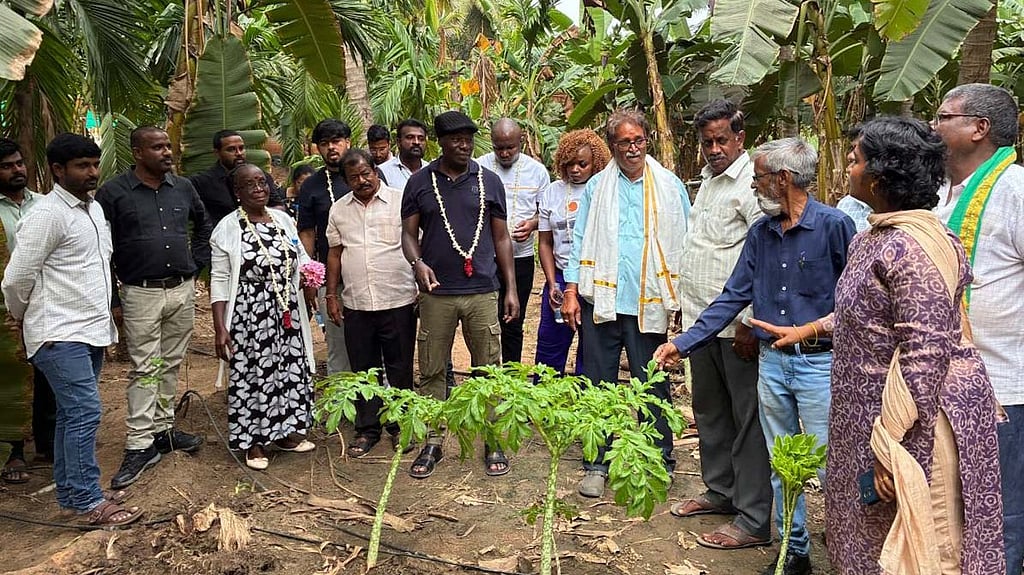
The delegation included John Kariuki Mwangi, Head of Slow Food Kenya; farmers Oddah Friday Ochomo and Zipporah Nyambura Kuria; Prasiddha Sapkota, an intern from New York University-Abu Dhabi; and Reddi Gowtham from RySS-APCNF. District Project Manager B Venkatesh briefed them on initiatives across the district.

During the exchange, the Kenyan delegation had the opportunity to showcase the work on the Global Field Concept demonstrating how a household can sustainably produce diverse and nutritious food on just 2,000 m² of land without relying on external agricultural inputs.

This approach highlights the potential of smallholder farmers to achieve food security while conserving biodiversity and building resilient farming systems.
The exchange has provided a rich platform for sharing knowledge, practical experiences, and innovative natural farming practices. The Kenyan Seed Savers Network team returned home with valuable lessons and inspiration that they will share with fellow farmers across Kenya, strengthening farmer-to-farmer learning and promoting sustainable, nature-based agriculture.
Related:
17th – 20th November 2026. 1st Eastern Africa Indigenous Seed Conference (EA-ISC 2026) - Building farmer managed seed system community of practice (COP) For a Resilient EASTERN AFRICA Region.
Last year Seed Savers Network, Kenya and AFSA collaborated on a very important initiate. A capacity building for youth representatives from over 25 countries in Africa. Here's, a touch of what happened. We also look forward to connecting further during the upcoming 1st Eastern Africa Indigenous Seed Conference to discuss the important role of the youth in promoting seed and food sovereignty.
Thursday, July 9, 2026
FONTAGRO Knowledge Week
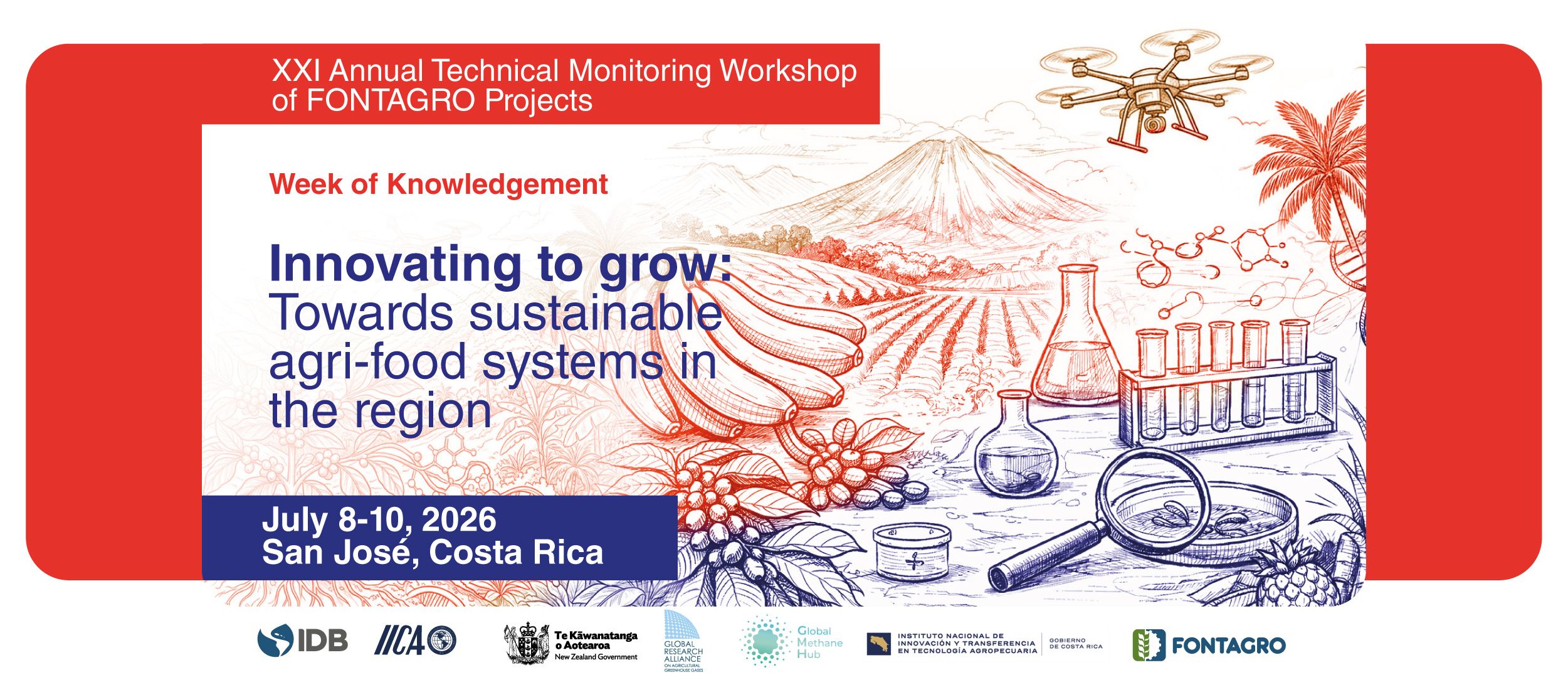
8 - 10 July 2026. FONTAGRO Knowledge Week
The event combines the XXI Annual Technical Monitoring Workshop of FONTAGRO Projects with scientific presentations showcasing research and innovation across Latin America and the Caribbean.
It is supported by the Inter-American Development Bank (IDB), IICA, the Government of New Zealand, the Global Research Alliance, Global Methane Hub, INTA Costa Rica, and other partners.
The opening session set the stage for three days of scientific exchange and regional collaboration by bringing together researchers, policymakers, development partners, and innovation leaders from across Latin America and the Caribbean. It highlighted FONTAGRO's vision of transforming agri-food systems through science, technology, and international partnerships, emphasizing the importance of collaborative research in addressing climate change, food security, and sustainable rural development.
08/07 Flagship Program 1 – Transformation of resilient and carbon-neutral crop systems
This session addressed the growing pressures of climate change, resource scarcity, and increasing food demand on agricultural production. Presenters showcased innovative approaches to improving crop resilience while reducing agriculture's environmental footprint, covering advances in soil management, biological inputs, nutrient-use efficiency, crop protection, sustainable irrigation, and climate-resilient cropping systems.
- Pablo Mamani (PROINPA, Bolivia) – Nanotechnology in agricultural soil moisture management
- Juliana Gómez Valderrama (AGROSAVIA, Colombia) – Leveraging biological products to build climate resilience
- Francisco Salazar (INIA, Chile) – Nitrogen optimization for climate-smart food production
- Víctor Hugo Sánchez (INIAP, Ecuador) – Managing potato purple top disease
- Hugo Montero (INTA, Costa Rica) – Biologicals for sustainable agriculture
- Ignacio Hisse (University of Florida, USA) – Integrating sorghum into Latin American production systems
- Carolina Lizana (Universidad Austral, Chile) – Sustainable irrigation and fertilization in quinoa
08/07 Flagship Program 2 – Livestock and animal protein systems
This session examined how livestock systems could become more productive while reducing their environmental impact. Presentations focused on climate-smart livestock production, methane mitigation, sustainable grazing systems, resilient farm management, animal welfare, and tropical dairy production, demonstrating practical pathways toward more sustainable animal production systems.
- Carlos Gómez (Universidad Nacional Agraria La Molina, Peru) – Sustainable livestock in the Amazon
- Yury Granja Salcedo (AGROSAVIA, Colombia) – Methane reduction in ruminants
- Marcelo Cesar Contreras (INTA, Argentina) – Resilient farm networks
- Natalia Aguilar (INTA, Argentina) – One Welfare approaches
- Nelson Vivas (Universidad del Cauca, Colombia) – Tropical dairy systems
- Alejandro Radrizzani (INTA, Argentina) – Gran Chaco cattle and methane reduction
09/07 Flagship Program 3 – Impact 2030
This session demonstrated how scientific innovation was translated into practical benefits for farmers and rural communities. Speakers presented successful examples of scaling agricultural innovations through extension services, public-private partnerships, participatory research, and regional collaboration, highlighting approaches that accelerated the adoption of climate-smart technologies across Latin America and the Caribbean.
- Carlos Hernández (Universidad Nacional, Costa Rica) – Geographical indications for Mesoamerican cacao
- Romina Romaniuk (INTA, Argentina) – Integrated production systems for climate adaptation
- Sebastián Villagra (INTA, Argentina) – Climate-smart research with Indigenous communities
- Gina Garzón (AGROSAVIA, Colombia) – Climate-resilient potatoes for the Andes
09/07 Flagship Program 4 – Digital revolution in agriculture
This session explored how digital technologies were transforming agricultural management and decision-making. Presentations highlighted the use of satellite observations, precision agriculture, artificial intelligence, digital decision-support platforms, and AgTech innovations to improve productivity while enhancing environmental sustainability.
- Martín Durante (INTA, Argentina) – Satellite monitoring of pasture biomass
- Liliana Ríos (AGROSAVIA, Colombia) – Tropical Agriculture 4.0 and water management
- Fernando Lattanzi (INIA, Uruguay) – Scaling AgTech innovation
- Álvaro Roel (INIA, Uruguay) – Satellite monitoring and verification of methane emissions
- Patricio Sandaña (Universidad Austral, Chile) – Online crop management platforms
10/07 Flagship Program 5 – The Future Food Basket
This session focused on agricultural diversification and innovations that contributed to resilient and nutritious food systems. Speakers presented research on biodiversity, sustainable horticulture, biological technologies, post-harvest protection, value-added products, and crop improvement, demonstrating how these innovations strengthened food security and agricultural competitiveness.
- Javier Pitti (IDIAP, Panama) – Vertical farming technologies
- Federico Battistoni (IIBCE, Uruguay) – Biologicals platform for Latin American farms
- Gabriela Nicoleta Tenea (Universidad Técnica del Norte, Ecuador) – Postharvest bio-protectors
- Ivonne Ximena Ceron Salazar (Universidad de Tolima, Colombia) – Value-added mango products
- Fabián Jiménez (INTA, Costa Rica) – Regional genetic improvement network
10/07 Project Presentations
The finalist project presentations showcased some of the most promising research initiatives supported by FONTAGRO. The projects addressed topics including gene editing, climate-smart livestock systems, biofortified crops, disease management, soil carbon sequestration, and greenhouse gas mitigation, illustrating their potential to generate meaningful benefits for farmers, consumers, and the environment.
- Sergio Feingold (INTA, Argentina) – Gene editing for plants and animals
- Nelson Pérez (AGROSAVIA, Colombia) – Multipurpose silvopastoral systems
- Maika Barría (IDIAP, Panama) – Iron-rich bean alliances
- Mónica Betancourt (AGROSAVIA, Colombia) – Fusarium wilt prevention
- Verónica Ciganda (INIA, Uruguay) – Soil carbon sequestration
- Nicolás Ayub (INTA, Argentina) – Reducing nitrous oxide emissions from agriculture
Leveraging Digital Solutions for Strengthening the Seed Systems in Africa
-(40-x-15-cm).png?sfvrsn=436c8a6_1)
9 July 2026. Leveraging Digital Solutions for Strengthening the Seed Systems in Africa
As African countries seek to strengthen food security, resilience and sustainable agrifood systems, the digitalization of seed systems is emerging as a critical enabler of transformation. Digital tools can improve seed traceability, certification, regulatory services, information management and market access, while helping address challenges such as counterfeit seeds, fragmented processes and weak sector coordination.
The event was organized by the FAO Regional Office for Africa, FAO Country Offices in DR Congo, Somalia and South Sudan, with the support from the African Development Bank (AfDB) and in collaboration with AGRA and other partners. The webinar will bring together policymakers, seed authorities, researchers, development partners, private sector actors and digital agriculture specialists to explore how digital technologies are strengthening seed systems across Africa.
Participants learned from country experiences and innovative initiatives, including FAO's EmergenSys project, digital seed certification and traceability systems in Kenya, and electronic phytosanitary certification (e-Phyto) systems. Discussions will focus on practical lessons, sustainability, interoperability, governance and opportunities for scaling digital seed solutions.
The webinar was organized as part of the EmergenSys project activities, FAO RAF’s periodic digital agriculture knowledge-sharing events, and as a contribution to the preparations for the Digitalization Thematic Area of the Africa Food Systems Forum (AFSF) 2026.
Moderation - Priya Gujadhur, FAO Representative in Ghana (a.i.); Senior Regional Resilience Officer, FAO, Regional Office for Africa
- Opening Remarks, Meshack Malo, Deputy Regional Representative, FAO Regional Office for Africa
- Remarks by the African Development Bank (AfDB), Jeffrey Kwesiga, Senior Agribusiness Officer, AHAI.4 (RDGE) Africa Development Bank
- Digital Seed Systems Initiatives under the EmergenSys Project in Somalia, South Sudan & DRCongo, Kiprotich Chemweno, Head of Information & Systems Management & Digital Innovation FAO Somalia
- Digital Seed Certification and Traceability Systems in Kenya, Ephraim Wachira, Deputy Director, Seed Certification Kenya Plant Health Inspectorate Service (KEPHIS), Kenya
@Ephraim: how can digitalisation protect IP rights on indigenous seeds?
ANSWER: This can at least document the indigenous variety establishing the fact that it is a variety of common knowledge so that no one can later on claim it. More work can then be done to facilitate community ownership of the indigenous seed.
@Ephraim: How does KEPHIS support Kenyan Seed Savers with digitalisation?
We are currently working on legislation for community seed production and certification, we shall definitely come up with a digital format for it.
- The Ethio-Seed digital platform, Ato Tefera Zeray, Technical Advisor Seed Systems, Ministry of Agriculture, Ethiopia
- e-Phyto implementation in Uganda, Remco Kibago, Information Technologist, Ministry of Agriculture Animal Industry and Fisheries, Uganda
- Presentation of the AU Biotech and Seed Partnership Platform, Catherine Langat, Seed system specialist FAOSFE
- Poll / Questions and Answers / Interactive Discussion Ken Lohento, Digital Agriculture Specialist, FAO Regional Office for Africa
Related: 1st Eastern Africa Indigenous Seed Conference EA-ISC 2026
Building farmer managed seed system community of practice (COP) For a Resilient EASTERN AFRICA Region.
📅
17th – 20th November 2026
📍
Catholic university of Eastern Africa, Nairobi, Kenya
How Farmers Organizations are reclaiming Indigenous knowledge and research
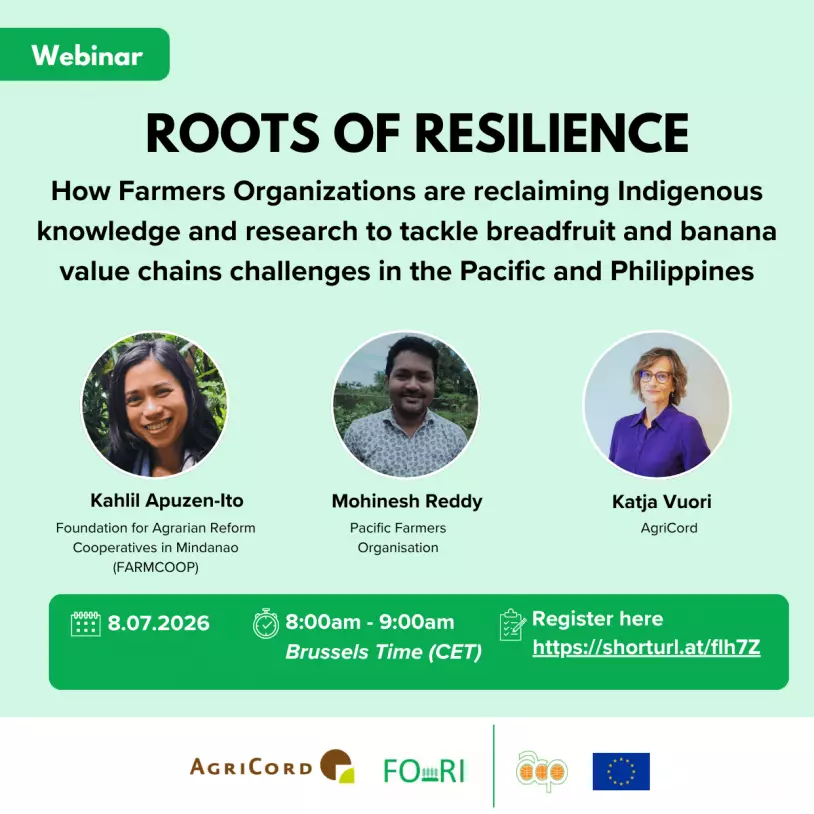
Hosted by AgriCord, this webinar showcased how farmers are utilizing indigenous knowledge and participatory research to combat climate change, crop diseases, and food insecurity.
Indigenous and local knowledge systems have long played a vital role in sustainable land management, biodiversity conservation, and climate adaptation. Yet these practices often remain under-recognized in agricultural development and research agendas.
At the same time, farmer organizations are increasingly demonstrating their capacity to generate solutions that are locally adapted, environmentally sustainable, and socially inclusive.
By bringing together farmer organizations, researchers, development practitioners, cooperatives, and policy actors, this webinar explored how farmer-led research and indigenous knowledge can contribute to building more resilient agroecological food systems.
- Katja Vuori, CEO of AgriCord – Welcome Remarks
- Mohinesh Reddy, Pacific Farmer Organisations (PFO) – Revitalizing Breadfruit Systems through Farmer-Led Agroecological Innovation and Indigenous Knowledge
- Kahlil Apuzen-Ito, FARMCOOP – Tackling TR4 Disease in the Banana Value Chain through Participatory Agroecological Research and Innovation: Experience from the Philippines
Subscribe to:
Posts (Atom)
This interactive session presents a unique opportunity to contribute to a continental framework that will strengthen collaboration, knowledge sharing, innovation, and evidence-informed decision-making in support of Africa's agricultural transformation agenda.
📅 23 July 2026
🕙 10:00–11:30 GMT
Kindly register via 🔗 https://bit.ly/4veWMKM
Be part of shaping the future of Knowledge Management for Agricultural Development in Africa.
hashtag#CAADP hashtag#KnowledgeManagement hashtag#AgricultureInnovation hashtag#AUC hashtag#FARA