Platform for African – European Partnership in Agricultural Research for Development

Tuesday, September 30, 2025

Scaling Natural Farming in Zambia Webinar


19 September 2025Scaling Natural Farming in Zambia Webinar. 

Persistent concerns for smallholder farmers include food insecurity, unaffordable costs of chemical
inputs, and failed crops due to extreme weather. The APCNF (Andhra Pradesh Community-Managed Natural Farming) model, an economically successful, innovative agroecology method, has addressed these challenges for over one million farmers in India, and now for the first time - in multiple pilot locations in Zambia. 

APCNF methods strengthen soil microbiology and hydrology, leading to increased farmer incomes, crop yields, soil health, biodiversity and climate resilience. Elimination of chemical inputs reduces costs, strengthens water and food security, increases nutrients and other health benefits for farmers and consumers. These science-backed results apply to diverse crops, geographic and climate conditions.

In the Zambia Natural Farming Pilots, APCNF's unique agroecological innovations have achieved promising results: higher yields, reduced costs, increased food security and improved climate resilience for smallholder farmers.

This breakthrough was made possible through the adaptation of the Andhra Pradesh Community Managed Natural Farming (APCNF) model of Rythu Sadhikara Samstha (RySS), the world’s largest and most economically successful agroecology approach. This was an outcome of the partnership among NOW Partners Foundation (NOW), RySS, and national partners including the Zambian government, the Salesian Sisters’ Valponasca Learning Farm, and the Jesuit Kasisi Agricultural Training Centre.

KEY POINTS:

  • APCNF's agroecology innovations are adapted for new geographical, climatic and cultural conditions in Zambia.
  • NOW and RySS constructed a partnership of organizations aligned towards common scalable, goals.
  • amazing results observed in the first year of the Natural Farming pilots in Lusaka and Luwingu.
  • Learn the strategy for effectively adapting and scaling a science-backed method to new contexts.
  • Natural Farming benefits farmers, driving regional economic development

Presenters 

  1. Father Dondo, Kasisi Agriculture Training Center
  2. Vijay Kumar, Executive Vice Chair, Rythu Sadhikara Samantha and APCNF
  3. Walter Link, Founding President of NOW Partners Foundation, the Future Economy Forum info@now.partners 
  4. Penelope Malilwe, Ministry of Agriculture, Zambia
  5. Sister Chansa Modester, Salesian Sisters, Valponasca Learning Farm
About Zambia Pilots
 
Sri Lanka Pilot Launch

Resources

Monday, September 29, 2025

AR4D Funding Opportunities for Africa : November 2025

Agriculture Fisheries Forestry

World Food Day Poster Contest (Age 5-19)

2025-11-07

The Food and Agriculture Organization of the United Nations (FOA) calls on children and teens from all over the world (ages 5 to 19) to use their imagination and create a poster of their water action for food. "Rights to foods" explores how we should all be able to enjoy nutritious food so that we can grow and live an active life. Winners will be promoted by FAO offices around the world and receive a surprise gift bag. Entries have to be submitted by 07 November 2025.

Research Grant 2025

2025-11-09

The AGNES-BAYER Science Foundation Research Grant enables doctoral students from sub-Saharan African countries to undertake research in biodiversity conservation and sustainable agriculture. The Grant aims to support African PhD students to carry out activities that are part of the doctoral research, including but not limited to field experiments and data collection or laboratory studies. A maximum grant of €7,000 will be awarded to each successful applicant. All applications must be submitted online by 09 November 2025.

FoodTech 500

2025-11-15

FoodTech 500 showcases the latest developments from international startup and scaleup companies across the food supply chain. FoodTech companies gain recognition in the AgriFoodTech industry and get the opportunity to be a speaker or exhibitor at international gatherings, conferences, and meetups. All companies from the Food Tech (or ‘AgriFoodTech’) sector can apply. The application deadline is 15 November 2025.


Biodiversity Conservation Wildlife

Grants Program

2025-11-01

The Hurtigruten Foundation seeks submissions for the Hurtigruten Foundation Grants Program to fight climate change, strengthen local communities, and stop unsustainable mass tourism. All grants are awarded in the range of €5 thousand to €10 thousand. The Foundation currently funds projects in Alaska, Antarctica, Arctic Canada and the Northwest Passage, Argentina, the British Isles, the Caribbean, Chile, Ecuador and the Galapagos Islands, the Falkland Islands, Greenland, Iceland, Norway and Svalbard, Cape Verde, Senegal, Gambia and Guinea-Bissau in West Africa. The application deadlines are 01 May and 01 November 2025.

Creating New Protected Areas

2025-11-01

The Rainforest Trust partners with local conservation organizations to create new protected areas and expand existing ones for Critically Endangered and Endangered species. The Initiative invites applications for conservation partnerships from nonprofit entities and NGOs for projects in tropical Latin America, Africa, and Asia. Applying organizations may submit proposals for either a land purchase or a protected area designation. Applications to create new protected areas are reviewed three times per year. The application deadlines are 01 March, 01 June, and 01 November 2025. Applications for less than US$250 thousand may be submitted on a rolling basis throughout the year.

Biodiversity Information for Development: Sub-Saharan Africa

2025-11-03

The Global Biodiversity Information Facility (GBIF) invites proposals for project funding from Sub-Saharan Africa under the “Biodiversity Information for Development” program. GBIF offers support for four types of projects: (1) Institutional-level biodiversity data mobilization to strengthen institutional capacity and mobilize policy-relevant biodiversity data (maximum funding: €30 thousand); and (2) Multi-institutional biodiversity data mobilization to build or strengthen collaborations between institutions to mobilize data for research and policy addressing national or regional priorities (maximum funding: €60 thousand. Applicants must be legal entities such as government agencies, natural history museums, research institutes, universities, or NGOs located in an eligible African country. The deadline for submission of concept notes is 03 November 2025.

Biodiversity and Transformative Change

2025-11-07

Biodiversa+ launches a joint call for transnational research proposals focused on fostering innovative research to be integrated into nature restoration practices for interconnected and well-functioning ecosystems and habitats, with special consideration for long-term sustainability and future-proofing of restoration efforts across spatial scales, including their evaluation. The call covers restoration efforts for biodiversity in all types of ecosystems and habitats, in all regions of the world. Funding organizations have reserved a total amount of over €40 million for joint research projects. Research teams must form transnational research consortia with eligible partners from a minimum of 3 countries participating in the call. The deadline for pre-proposals submission is 07 November 2025.


Seed Grants Program

2025-11-14

Wild Animal Initiative provides small amounts of funding to facilitate projects that will test promising new techniques or approaches, incorporate welfare assessments into ecological research and management, or adapt animal welfare science approaches for wild contexts. Seed Grants are ideal for early-career scientists or more established principal investigators who have no previous experience with wild animal welfare research. Grant size varies from US$2 thousand to US$10 thousand. The small grants program is open to anyone, although Wild Animal Initiative is especially interested in supporting postdocs and PhD students pursuing a long-term research career in the field of wild animal welfare, and researchers who have not previously included welfare considerations in their work. Expressions of Interest have to be submitted by 14 November 2025.

Bio-Acoustics Product Grants

2025-11-15

Wildlife Acoustics aims to advance animal biology research, habitat monitoring and environmental conservation through bio-acoustics recording technology. The Wildlife Acoustics Scientific Product Grant Program offers US$4 thousand of product-in-kind grants to biologists, researchers, conservationists, and students who work for charitable, educational, and other tax-exempt organizations. There are no geographical limitations. Applications are evaluated quarterly with deadlines on 15 February, 15 May, 15 August, and 15 November 2025.

Environmental Conservation Grants 2026

2025-11-17

The Japan Fund for Global Environment makes grants to non-profit organizations in Japan and developing countries for field projects in environmental conservation. Grants are for grass-roots projects and range from 500 thousand to 3 million JPY. Each non-Japanese applicant needs to have an agent in Japan to communicate and apply in the Japanese language on behalf of the applicant. The application deadline is 17 November 2025.

TROPIMUNDO Masters Program in Tropical Biodiversity and Ecosystems 2025-2026

2025-11-30

TROPIMUNDO is a 2-year Erasmus Mundus master's program in tropical biodiversity and ecosystems. Students alternate their semesters between consortium universities in Europe (Belgium, France, Italy) and tropical regions outside Europe (Australia, Cameroon, French Guiana, Guadeloupe, Malaysia). Applicants should have an internationally accepted bachelor’s degree in biology, natural sciences, environmental sciences, or equivalent. The EC provides a certain number of scholarships for EU and non-EU students. The deadline for applications (for scholarship seekers or self-funded applicants) is 30 November 2025.

Ornithology Research

2025-11-30

The Frank M. Chapman Memorial Fund supports ornithological research anywhere in the world. Chapman Research Grants are small short-term awards for research that are available to graduate students for expenses associated with projects primarily focused on the systematics and evolutionary biology of birds. Most grants range from US$1,000-US$3,500. The application deadline is 30 November 2025.


Crosscutting

Global Scholars

2025-11-05

The CIFAR Azrieli Global Scholars program provides funding, skills training, mentorship, and opportunities for research collaboration. CIFAR invites early-career researchers pursuing the most exciting and important research questions across the natural, biomedical and social sciences and the humanities to join an interdisciplinary research program. As part of the program, scholars receive C$100 thousand in unrestricted research support over two years. To be eligible for this program, applicants must hold a PhD (or equivalent) and be within the first five years of starting a full-time research position at an institution of higher education or research. The deadline for applications is 05 November 2025.

Anzisha Prize for Young Innovators

2025-11-07

The Anzisha Prize seeks young innovators ages 15-22 in Africa who develop and implement innovative solutions to challenges facing their communities. Past awards include innovations in energy, agriculture, and ecological consumer products. The grand prize winners will share prizes worth US$140 thousand. Applicants must be nationals of an African country with a business based in Africa for African customers/beneficiaries. The next application closes on 07 November 2026.

Accelerating Investments in Climate Resilience

2025-11-09

The Global Innovation Lab for Climate Finance invites innovative solutions that address barriers to climate investment in emerging markets and support the transition to a net-zero economy. The call for ideas covers four programs, each with distinct priorities. In 2026, the Lab will develop at least eight ideas. Selected ideas will receive guidance and support from experts and investors, as well as analytical and communications support. The application deadline is 09 November 2025.

Digital Transformation to Save our Planet

2025-11-10

The Box Impact Fund will award a total of US$150 thousand to six different non-profit organizations pursuing digital transformation projects. Each selected organization will receive a US$25 thousand grant to put their idea into action. The project category “Protecting the Planet” covers areas such as environmental protection, energy conservation, renewable energy, nature conservation, and biodiversity. The application deadline is 10 November 2025.

Mentorship for Emerging Leaders

2025-11-12

The Dalai Lama Fellowship offers emerging leaders from all around the world mentorship and coaching to design and implement their own original field projects addressing a global challenge. Project areas include environmental sustainability, among others. The fellowship does not offer funding for projects, instead, it offers coaching and a global community. This program is open to next-generation leaders (20-35 years old). The deadline for applications is 12 November 2025.

Poster Contest

2025-11-14

The International Compost Awareness Week Committee invites submissions for its annual poster contest. This year’s theme is “Compost! Feed the Soil that Feeds Us”. The winning poster will serve as the promotional piece of the 2026 International Compost Awareness Week and the winner will receive US$500. The contest is open to anyone from 9th grade (age 14) or older from anywhere in the world. The contest runs until 14 November 2025.

Youth Innovation Contest

2025-11-16

The UNESCO Institute for Information Technologies in Education (UNESCO IITE) invites children and young people to take part in the 2025 Youth Innovation Contest. Participants can submit creative works that reflect their vision of a more sustainable planet, using any format (painting, story, poem, or a research essay). The contest is open to two age groups: Children’s Group (5-12 years old) and Youth Group (13-17 years old). Participants are encouraged to create works focusing on Climate Change, Biodiversity, Building Sustainable Communities, Protecting Water Resources, and Clean Energy. The deadline for application is 16 November 2025.

The Future of Learning

2025-11-19

The National Geographic Society seeks innovative education and research projects that cultivate the knowledge, attitudes, and skills across all learner ages and contexts necessary to protect our planet's future. Two funding levels are available: Level I grants up to US $20 thousand for emerging leaders, and Level II grants up to US $100 thousand for more established practitioners or Explorers. This opportunity is open to applicants worldwide who are at least 18 years old. The submission deadline is 19 November 2025.

Mo Ibrahim Foundation Fellowship 2026

2025-11-20

The Mo Ibrahim Foundation financially supports the Ibrahim Leadership Fellowship position in the African Development Bank. The Fellowship allows talented individuals to increase and enhance their professional capacity, with the intention of contributing to the governance and development of their countries. The Fellowship is for young professionals, mid-career, and/or new executives who are nationals of an African country, residing anywhere in the world. The application deadline is 20 November 2025.

Career Development Awards

2025-11-20

The Wellcome Trust supports bold and creative discovery research that has the potential to improve human life, health, and well-being. Career Development Awards provide funding for mid-career researchers from any discipline who have the potential to be international research leaders. Research can be in any discipline, including STEM, experimental medicine, or climate – as long as it has the potential to improve human life. The Trust provides a salary for the grant holder and research expenses for up to 8 years. The applicant’s host organization has to be based in the UK, the Republic of Ireland, or a low- or middle-income country (apart from India and mainland China). The deadline for new applications is 20 November 2025.

Mentoring Program 2026

2025-11-28

The Global Thinkers Forum brings together a diverse network of thought leaders to share their visions of the future, create meaningful conversations around them, and effect positive change in the world. The program consists of an 8-month mentoring cycle that includes one-on-one sessions with experienced thought leaders and individuals aged between 18 and 29 from all over the world. The program’s mentors are successful individuals across several professional fields and countries. The application deadline is 28 November 2025.

Support for Community and Conservation Projects

2025-11-30

The Beit Trust supports projects for health, education, welfare, and the environment in Zambia, Zimbabwe, and Malawi. Themes include wildlife conservation. Additionally, the Trust’s interests in community welfare include drinking water and irrigation water. Grants do not normally exceed £50 thousand. Applications should be submitted by the end of May and November each year.

Webinars and events October 2025

30 September - 02 October 2025. University of Helsinki. Science for Sustainability 2025

30 September - 3 October 2025. 8th Global Sustainable Phosphorus Summit (SPS8)

30 September 2025. 14:00–16:00 CET. Launch of the FO-RI Capitalization Report
30 September 2025 Abstract submission for: 15-20 March 2026. 13 International symposium on Beverage crops South Africa

30 September 2025. Socio-cultural and economic drivers and barriers of change for Sustainable Food Systems Transition
  • organized in the context of the SCAR Food Systems Strategic Working Group (FS SWG) priority action on Accelerating and Monitoring Food Systems Transition.
  • The outcomes of the workshop will feed into the FOODPathS Final Consortium Meeting (1–2 October, The Hague), contributing to the co-creation of next steps for advancing sustainable food systems in Europe and beyond.
30 September – 2 October 2025. Kigali, Rwanda. Farmers Convention and Congress 2025.

30 September - 3 October 2025. Accra. 8th Sustainable Phosphorus Summit (SPS8)

2 to 4 October 2025 Malmö Agroecology Europe Forum

6 - 8 October 2025. Zimbabwe. African Plant Breeders Meeting + pre-conference 4-5 October

7 October 2025. Webinar – Development Finance for Youth in a Changing Landscape
  • With major donors reducing development aid, the global development community is under pressure to do more with less. The OECD projects a 9–17% drop in official development assistance (ODA) in 2025, following a 9% decline in 2024, driven largely by cuts from France, Germany, the United Kingdom, and the United States. Meanwhile, youth, particularly in Africa, face mounting challenges including limited job opportunities, weak labour protections and rising poverty.
  • This webinar, organized by the Donor Platform's Thematic Working Group on Rural Youth Employment (TWG RYE), will explore how emerging financing mechanisms can contribute to youth employment creation. Speakers will examine the comparative advantage of new financing schemes such as green bonds, green loans, climate funds and carbon credits, with particular attention to their potential impact on youth.

9 - 15 October 2025. Abu Dhabi. IUCN World Conservation Congress 2025
10–13 October 2025 | Parco di Porta Capena, Rome, Italy. First FAO Global Exhibition: From Seeds to Foods
  • 11/10 - 15:00 – 15:30 Talk: Diversifying crops in Nigerian drylands: An FAO Türkiye – Nigeria South – South Cooperation success story
  • 12/10 - 11:00 – 11:30 Talk: Genetic resources and innovation: Safeguarding our Seeds and  cultivating a Sustainable Future
  • 12/10 - 12:00 – 13:00 Jedidah Wambui: Ugali & Sukuma Wiki Kenya
  • 12/10 - 11:45 – 12:15 Talk: From seeds to table: Jordan's agricultural innovations Jordan

    13 October 2025. EUDiF Future Forum - The Future Forum is the European Union’s flagship conference on diaspora engagement and will showcase diaspora-led development stories and practices

    • 17:30 Rome,  Room 11, Luiss Campus Viale Pola 12
    13-17 October 2025. Tarawa, Kiribati. Pacific Atoll Food Summit 

    13-17 October 2025. FAO Science and Innovation Forum - Extracts:
    15 October 2025. Webinar on Neglected and Underutilized Crops:
    • Following opening remarks on policy perspectives from the European Commission’s Directorate-General INTPA and ECHO, the webinar will present the key findings of the knowledge review, after which there will be a panel discussion featuring experts from international organisations such as the GFAiR, FARA, FAO, CIHEAM, JRC and others.
    • To register, please follow this link  (please note that registration closes on 10 October).
    • Check the Knowledge Review on NUS of the Knowledge Centre for Global Food and Nutrition Security (19 pp) 


    20 - 22 October 2025. ABIM 2025
    • The year 2025 will mark significant anniversaries for the biocontrol industry: 30 years of IBMA, 20 years of ABIM, and 10 years of the Bernard Blum Award. 
    20-24 October 2025 | FAO headquarters, Rome, Italy 53rd Plenary Session of the Committee on World Food Security

    20 October 2025. 12:00-16:30 CET. FIRST IRC FUNDERS’ WORKING GROUP MEETING
    • In person only and by invitation
    • Side Event of the AU–EU Senior Officials Meeting of the High-Level Policy Dialogue on Science, Technology and Innovation, titled:
    • Venue: University Foundation, Room Félicien Cattier (Rue d’Egmont 11, 1000 Brussels, Belgium)
    • Format: Hybrid (in-person and online)
    • Zoom link: Join via Zoom 
    22 October 2025. Brussels. Bridging Continents through Innovation: Africa-Europe Innovation Dialogues
    • AEIP annual event: this event brings across African and European stakeholders from across the innovation value chains to foster connection and dialogue.
    22 October 2025. Brussels 25 years of Entrepreneurs for Entrepreneurs (OVO)

    23 October 2025. Brussels, Belgium, and online. The Innovation Fair: Enabling that step forward
    • the Innovation Fair aims to showcase the vibrancy of the cooperation among European, African and Mediterranean innovation ecosystems, promoting innovative solutions with potential for market and societal uptake, vis-à-vis potential public and private funders and fostering networking, matchmaking and collaborations.
    23 October 2025. First Webinar to prepare for the Africa Conference on SAM: Exploring the Africa Centre for Sustainable Agricultural Mechanization: Your Role in Africa’s Mechanization Journey


    28 October 2025 at 1500 EAT (1400 Southern Africa, 1200 much of West Africa/UTC).
    • This session will be going to Western Kenya to hear how Bio Gardening Initiatives (BIOGI) host visitors at their centre in Vihiga county. 
    • BIOGI will share its ‘culture tourism based on local foods’ approach. 
    • This revolves around revival of local food preparations and the taste of diverse cuisines. 
    • The organization not only works with smallholder farmers to strengthen the adoption of agroecology, but also increasingly hosts visitors on exchanges to taste and enjoy local traditional foods. 
    • Western Kenya is rich in diversity, especially the diversity of Africa’s leafy vegetables.

    29-31 October 2025. Kigali Rwanda. 16th Commemoration of Africa Day for Food and Nutrition Security (ADFNS) and 21st CAADP Partnership Platform

    3 November 2025. Kigali, Rwanda. Leveraging the AFS for Jobs” to be presented during a pre-conference to the 12th Annual ANAPRI Stakeholders Conference

    4 – 6 November 2025. Kigali Rwanda. 12th ANAPRI Stakeholders Conference

    4 - 6 November 2025. Kigali Rwanda. Scaling Up Nutrition (SUN) Movement Global Gathering

    5 - 7 November 2025. GLOBAL CLIMATE-SMART AGRICULTURE CONFERENCE

    •  by the Gender Transformative Research Methodologies Community of Practice (GTRM-CoP).
    10 - 21 November 2025. Belém, Brazil. UN Climate Change Conference (UNFCCC COP 30)


    13 - 14 November 2025. World Climate Summit 2025

    25-27 November, Lao PDR. Conference: TARASA 2025 
    25 to 28 November 2025. Tanzania. Africa Conference on Sustainable Agricultural Mechanization (SAM).

    26 - 28 November 2025. Wageningen, Netherlands. Food System Microbiomes International conference

    1 - 5 December 2025. RUFORUM AGM 2025 – Annual General Meeting

    10 - 11 December 2025. 23rd CGIAR System Council Meeting

    15-20 March 2026. International symposium on Beverage crops South Africa

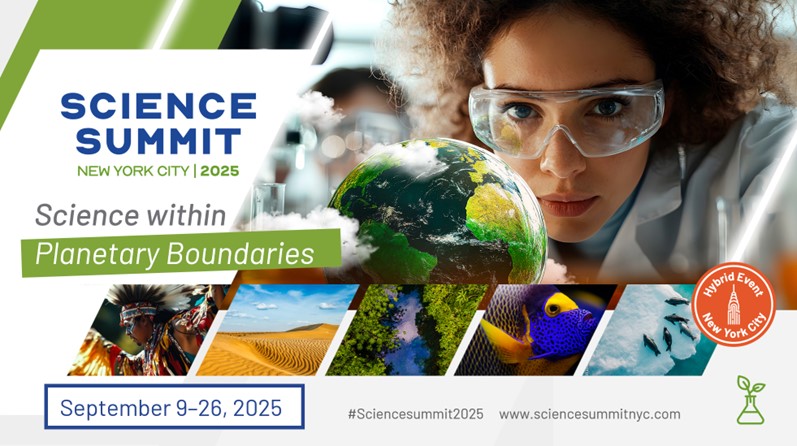
    Science Summit

    9 to 26 September 2025
    . The Science Summit featured a mix of virtual and hybrid sessions hosted in New York.

    the Science Summit at UNGA80 brought together researchers, policymakers, civil society, and private sector leaders from across the globe for more than 400 sessions highlighting how science and innovation can drive progress toward the SDGs. The Summit featured high-level panels on African scientific leadership, Indigenous peoples’ contributions to biodiversity and food security, climate-resilient agriculture, soil health, financing food systems, and mobilising capital for research and innovation, alongside the launch of major global assessments such as the IPBES Nexus Report. Spanning diverse themes—from pesticide management frameworks in Africa and the Middle East to strengthening Africa–Europe partnerships and showcasing community-driven solutions—the event emphasized collaboration, equity, and investment as critical levers for global resilience and sustainable development.

    Extracts Science Summit Programme

    10/09 The Sustainable Pesticide Management Framework in Africa Middle East: Protecting Human Health and the Environment while Increasing Agricultural Productivity

    This session presented the Sustainable Pesticide Management Framework (SPMF), a multi-year initiative by CropLife Africa Middle East and partners to phase out highly hazardous pesticides, improve farmer training, and strengthen regulatory systems to protect health and the environment while boosting productivity. Speakers from CropLife, FAO, and African regulatory agencies outlined progress and challenges in implementation. While no direct recording has been posted publicly, background videos and the SPMF Annual Report are available online, providing visuals and documentation of ongoing work.

    10/09 Modelling land Use and climate Change for Climate-Resilient Crop Production in Raya Valley, Ethiopia

    In this technical session, researchers shared modelling studies of the Raya Valley, Ethiopia, analyzing how land use change and climate variability impact crop productivity and resilience. The work combined climate projections with land suitability and water availability models, offering insights into policy measures for sustainable agricultural planning. The specific speakers and a session recording have not been made public, though related academic work on the Raya Valley provides supporting materials.

    10/09 The African science renaissance – leadership, innovation, collaboration and partnership for sustainable development

    This dialogue emphasized Africa’s growing role in global science through leadership, innovation, and collaboration, with speakers from African academies of science, universities, and international research organizations. It highlighted success stories of African-led partnerships in health, agriculture, and climate, stressing the importance of investment in homegrown talent. While the session is listed in the Science Summit NYC program, a recording has not yet been located.

    16/09 Involving Indigenous people and local communities to plan and implement Nature-based Solutions

    This session focused on inclusive approaches to Nature-based Solutions (NbS), highlighting how Indigenous Peoples and local communities can be engaged from planning through implementation to ensure equitable and effective outcomes. Speakers from environmental NGOs, Indigenous networks, and policy institutions shared case studies from Latin America, Africa, and Asia. Although the direct recording has not been found, related webinars on Indigenous knowledge in NbS are available and provide context.

    17/09 Food Security for Indigenous Peoples, Quilombolas, Traditional Communities, and the Sustainable Use of Brazilian Biodiversity

    This Brazil-focused session examined the intersection of food security, cultural rights, and biodiversity, emphasizing the contributions of Indigenous Peoples, Quilombolas, and traditional communities to conserving native species and ensuring sustainable diets. Brazilian researchers and community representatives shared perspectives on policy frameworks and grassroots innovations. No official recording has been identified, though related background publications on Quilombola food systems can be consulted.

    22/09 Africa’s Scientific Leadership: A Catalyst for Global Progress

    Held during the UN General Assembly Science Summit, this high-profile event positioned African science as central to solving global challenges, from climate change to health. Keynote speakers included leaders from the Science for Africa Foundation, government representatives, and international organizations, who underscored the need to scale African research leadership and funding. Event pages confirm the session, though a public recording has not yet been released.

    22/09 Strengthening Africa–Europe Science Partnerships for Global Resilience (Part 2)

    Building on earlier discussions, this session showcased collaborative projects and policy dialogues between African and European research institutions, with a focus on building resilience to food system shocks and climate change. It highlighted examples of co-created research agendas and joint capacity-building programs. While detailed listings exist in the Science Summit schedule, no direct online recording is available.

    23/09 Loving the Soil: The Ground for Global Food Security

    This event stressed the importance of healthy soils as the foundation of resilient food systems, with experts from soil science, agriculture ministries, and international organizations sharing evidence of how soil degradation undermines productivity and climate goals. Speakers advocated for soil health restoration initiatives and greater investment in soil monitoring. The session is listed in UNGA Guide, but no public video recording has been located.

    23/09 African Leadership in Science: Solutions by and for Africa

    This panel highlighted African-led solutions across multiple sectors, with scientists and innovators sharing case studies of technologies and policies designed within the continent to address local challenges. The session stressed knowledge sovereignty and the importance of international recognition of African expertise. While the program entry is available, a recording has not been posted.

    23/09 Empowering Communities, Securing Futures: Financing Food Systems

    Speakers in this discussion examined how financial innovation and investment can drive inclusive and sustainable food systems, highlighting models for channeling capital to smallholder farmers, women entrepreneurs, and local agri-food enterprises. Development finance institutions and philanthropic foundations shared lessons on mobilizing resources effectively. Social media posts confirm the session, but no official recording is publicly available.

    23/09 Catalyzing Regional Agri-Food Innovation: Research Ecosystems for Growth and Resilience

    This session explored how regional research ecosystems can act as catalysts for agri-food innovation, featuring contributions from networks of agricultural research institutions and policymakers. It emphasized creating enabling environments for technology adoption, resilience, and regional collaboration. While listed in the UNGA Guide, no open recording has been found.

    25/09 IPBES NEXUS Report on the Interlinkages between Biodiversity, Water, Food and Health

    This session presented findings from the IPBES Nexus Assessment, emphasizing the complex interdependencies between biodiversity, water, food, and health, and offering integrated policy options. IPBES experts and authors highlighted case studies and recommendations from the assessment, which was published in 2024. While the session recording itself is not public, IPBES has released webinars, videos, and the full report online, which serve as comprehensive references.

    25/09 Mobilising Capital for Science: Unlocking Investment in Research, Innovation

    This session examined how to increase investment flows for science and innovation, with speakers from multilateral banks, governments, and the private sector. They explored mechanisms for reducing risk, improving governance, and incentivizing long-term research funding. While included in the Science Summit program, no session recording or visuals have yet surfaced publicly.


    Friday, September 19, 2025

    Survey of the United Kingdom's and French African Diaspora Food

    Survey of the United Kingdom's African Diaspora Food Market


    https://docs.google.com/forms/d/e/1FAIpQLSf3yK0pvqgjRkjoJNzBh9wgsOCKcGbrvu9n_khbDVb_WdB_XQ/viewform

    African food markets and grocery stores in France and the UK are more than cultural spaces: they represent a significant flow of income and trade linked to the African diaspora and to Europe’s food import sector.

    The objectives of below African Diaspora Food Market survey in the UK and France is to:
    1. Explore the current African diaspora food market landscape
    2. Identify key trends, gaps, opportunities, and innovations
    3. Strengthening networks with agrifood entrepreneurs, retailers, and food advocates
    4. Evaluate findings and develop actionable next steps
    See also: Forgotten Foods: A GFAR/GFAiR Collective Action Success 

    Background:

    1. Forgotten foods and the France based diaspora of African origin. Field visit Forgotten Foods Consortium, supported by the Global Forum on Agricultural Research and Innovation (GFAiR)
    2. Racines, the ethnic grocery store of Sub-Saharan Africa and the Indian Ocean
    3. Forgotten food and the UK diaspora of African origin
    4. London's African culinary scene
    5. The UK Afro-Caribbean grocery market: Ade's Foods'
    6. Cooking the Food of Nigeria

    Recent Opportunity Crops / Indigenous Crops / Forgotten foods events

    24 September 2024. Garden lunch on FORGOTTEN FOODS (FF) prepared by Chef Jumah Alhassan
    Ghanaian Chef trained in Belgium organized by GFAiR.
    • Joanna Kane-Potaka (Australia) Secretary General of GFAiR. She presented the purpose of GFAiR and her experiences with FORGOTTEN FOODS (FF) campaigns - she was conducive to the International year of Millets.
    • Maureen Duru (Nigeria) Foodbridge, Brussels, Belgium: African Diaspora Food Forum and GFAiR's Collective Action (CA) on Forgotten Foods.
    • Juma Alhassan Mubarak (Ghana) Jumah’s corner, Gent, Belgium. She presented her recipes, based on beans, millet, yam and plantain.

    10 - 12 September
    . Tropentag 2025 - 11/09 Sessions on Neglected & Underutilised Species

    9 September. Bonn. Opportunity Crops: A BOLDER Approach to Food Security - The event focused on promoting “opportunity crops” — lesser known, nutrient-rich, resilient crops that are environmentally friendly and have potential to support food security. It was part of the BOLDER initiative, aiming to build momentum around those crops in Africa. This blog post also includes an overview of national prioritization workshops held by the Power of Diversity Funding Facility (PDFF).

    2 September. Session 02/09 @Africa food Systems Forum: Delicious, Nutritious, Culturally-Rooted Food: What does it take to transform Food Systems?

    28 August. Can Africa reduce the 2025 projected bill of 110 billion USD of food imports? - Session 28/08 at 23rd International Congress of Nutrition: 24-29 August 2025.

    26 - 27 August. Forgotten foods and the France based diaspora of African origin. Field visit Forgotten Foods Consortium, supported by the Global Forum on Agricultural Research and Innovation (GFAiR). + Racines, the ethnic grocery store of Sub-Saharan Africa and the Indian Ocean

    Colorful Revolution Webinar Series. This webinar series was built on a recent global study examining fruit and vegetable (F&V) research and development investments across nine countries. 

    Upcoming:

    15 October 2025. Webinar on Neglected and Underutilized Crops:
    • Following opening remarks on policy perspectives from the European Commission’s Directorate-General INTPA and ECHO, the webinar will present the key findings of the knowledge review, after which there will be a panel discussion featuring experts from international organisations such as the GFAiR, FARA, FAO, CIHEAM, JRC and others.
    • To register, please follow this link (please note that registration closes on 10 October).
    • Check the Knowledge Review on NUS of the Knowledge Centre for Global Food and Nutrition Security (19 pp)
    23 October. Brussels and online. The Innovation Fair: Enabling that step forward the Innovation Fair aims to showcase the vibrancy of the cooperation among European, African and Mediterranean innovation ecosystems. GFAiR's collective Action on Forgotten Food will present in one of the sessions.

    Thursday, September 18, 2025

    Implementing Natural Farming in Zambia

    18 September 2025Implementing Natural Farming in Zambia via the International Cooperation work of the Andhra Pradesh Community managed Natural Farming (APCNF), where one of the largest agroecological transition program in the world is taking place.

    Presenters
    • Father Dondo, Kasisi Agriculture Training Center
    • Vijay Kumar, Executive Vice Chair, Rythu Sadhikara Samantha and APCNF
    • Walter Link, Founding President of NOW Partners Foundation, the Future Economy Forum
    • Penelope Malilwe, Ministry of Agriculture, Zambia
    • Sister Chansa Modester, Salesian Sisters, Valponasca Learning Farm

    Related PAEPARD blogpost:

    8 - 21 June 2024. A delegation from Zambia was on a two-week visit to Andhra Pradesh to study community-based natural farming (APCNF) techniques. (former APZBNF - Andhra Pradesh Zero budget Farming).
    11 - 15 March 2024. Accelerating Nature-Based Solutions Conference

    Food impacts on species extinction risks can vary by three orders of magnitude

    Nature article (2025) Food impacts on species extinction risks can vary by three orders of magnitude

    Halting biodiversity loss and especially extinctions arising from agriculture is thus a key policy concern11,12. Effective mitigation hinges on the robust quantification of the impacts of different foods, how these vary spatially and how they might be reduced by changes in consumption patterns, provenance or production methods. Spatial layers and summary metrics can inform the efficacy of candidate interventions across diverse scales and actors: from individuals to governments and from personal dietary choices to national trade policies.

    Variation in the opportunity cost of food production


    Animal products generally have substantially greater impacts on species extinction risk than staple vegetal products. This is a result of the inherently inefficient nature of these products28,29: producing a unit of animal product requires grazing land and/or cropland for feed production, which when combined with the intrinsic feed conversion efficiency of animals leads to high land use and hence extinction impacts.

    In India, where approximately one-third of the population are lacto-vegetarian and cattle slaughter is banned in many states39, ruminant meats (mainly sheep and goat meat) contribute of 40% of the impact of people’s diets on speciesʼ extinctions.

    The full ranges of poultry meat and eggs sat within the boundaries of the legumes and pulses group, indicating that well-performing poultry meat might be less damaging than the very worst legumes, though the median impacts are still around five times higher.

    In contrast staple crops have relatively low impacts on the opportunity cost to speciesʼ extinctions

    Conversely, ‘luxury’ crops (those with little to no calorific benefit but generally commanding a high price) such as coffee, cocoa, tea and spices are all towards the higher end of the impact distribution per kilogram—although, of course, these commodities are typically consumed in relatively modest amounts.

    Two findings in particular stand out


    1. While it is recognized that malnutrition remains a salient problem in many parts of the world, clearly governments, corporations, individuals and others in wealthier nations concerned with averting the extinction crisis cannot do so without serious consideration of steps to dramatically reduce consumption of animal products, especially ruminant meat.u
    2. A second clear conclusion is that great care should be taken by richer countries in relatively low-biodiversity parts of the world to avoid exacerbating the overseas impacts of their food consumption through land-use and trade policies that will increase the offshoring of production of the food they eat to more biodiverse parts of the world. Whereas these may increase biodiversity domestically, it seems very likely that at global scale, they will cause net biodiversity harm46,68. It seems implausible that these two core findings will change as better data become