

The side event was co-organized by a number of major development, agricultural, and research organizations: IFPRI, Yara International, IFAD, CABI, AGRA, FAO, and the Gates Foundation.
RECORDING FORTHCOMING
The objectives were:
 Rikin Gandhi and his team at Digital Green made FarmerChat hashtag opensource. Leveraging Generative AI, FarmerChat offers personalized, reliable, and contextually relevant advice, overcoming limitations of previous chatbots in deterministic dialogue flows, language support, and unstructured data processing. Deployed in four countries, FarmerChat has engaged over 15,000 farmers and answered over 300,000 queries. The results of their work is impressive: the cost of advisory services dropped by 100% and the impact (in terms of good practice adoption) is 10 times higher, compared with traditional service provision.
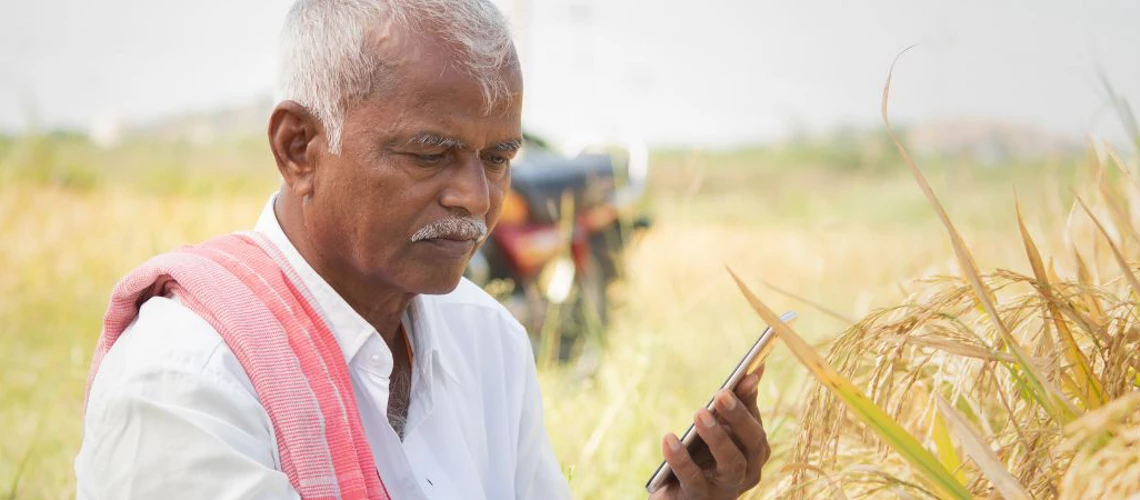 10 September 2025. Can AI give small scale producers the right advice?
Generative AI is poised to overcome these persistent barriers. And indeed, the evidence from early projects is compelling:
- Explore how AI tools can be made accessible to small-scale farmers. This includes leveraging things like natural-language interfaces to overcome digital and language barriers.
- Tailor advisory systems using localized data: weather, soils, markets. The idea is to provide decision support that is context-aware for individual farmers rather than generic advice.
- Identifying and discussing the risks: trust, bias, hallucinations (i.e. AI producing information that is incorrect but seems plausible), scalability and sustainability. Governance and safeguards are needed.
- Impacts expected: improved productivity, profitability for small-scale producers across Africa.
- Organizers & Co-Hosts

Presenters
- Parmesh Shah – Global Lead, Digital Agriculture, World Bank
- Rikin Gandhi – CEO, Digital Green
- Fatema Allmulla – International Affairs Office, UAE Presidential Court
- Jawoo Koo – Deputy Director, Digital Accelerator, CGIAR
- Jamie Collinson – CEO, iSDA

Panelists
- Salim Kinyimu – Director ICT, KALRO
- Seema Gohil – Director, Safaricom DigiFarm
- Ameen Jauhar – Data Governance Lead, CABI
- Moderator Stewart Collis – Gates Foundation
2 October 2024. Niger Delta Nigeria. In partnership with Digital Green, the LIFE-ND Project took a bold step into the digital age with the introduction of the Farmer Chat Application, a revolutionary tool designed to transform farming activities through AI assistance. LIFE-ND has been operating in Rivers State: Abia, Akwa Ibom, Bayelsa, Cross River, Delta, Edo, Imo, Ondo and Rivers. For example, 66 communities in Rivers (out of 104 targeted) have been empowered through LIFE-ND (training incubators/incubatees). Digital Green’s FY25 report says 28,000+ farmers in Nigeria are already benefitting and a Hausa version is being refined for scale-up—so usage likely extends beyond a single state, with LIFE-ND as a major conduit. Key partners involved: Federal Ministry of Agriculture & Food Security (FMAFS) (anchor in-country), IFAD (programme & funding partner; via the LIFE-ND project), NDDC (co-funding partner for 3 Niger Delta states within LIFE-ND), LIFE-ND Project (on-the-ground delivery partner across Niger Delta states), Tech/funding ecosystem noted globally: Microsoft/OpenAI/Rockefeller.
Tests in Kenya
Digital agriculture has long held the promise of filling this gap through bundled services that integrate weather forecasts, market prices, mobile payments, and agronomic advice. Still, in spite of the $1.5 billion invested in mobile phones and other technologies over the past decade, the uptake remains low. In many Sub-Saharan African countries, for example, fewer than 10 percent of all farmers use digital agricultural technology. Some solutions have scaled, such as a digital agricultural advisory service launched by the Government of Odisha that has successfully reached 7 million farmers. Sustained engagement, however, is still hampered by gaps in digital and language literacy, relevance of content, cost, and trust issues.
Generative AI is poised to overcome these persistent barriers. And indeed, the evidence from early projects is compelling:
- Digital Green, a technology non-profit, has created an AI-powered chatbot that has reached 460,000 farmers and extension workers across five countries, supporting 40 crops in six languages.
- Innovative Solutions for Decision Agriculture (iSDA) has produced a similar tool called Virtual Agronomist serving over 350,000 plots across seven African countries via WhatsApp, driving profit gains up to 4.7 times, yield increases of 1.6 times, and engagement above 60 percent.
- Kisan e-Mitra AI Chatbot, a voice-based, AI-powered chatbot launched by the Government of India, has resolved over 8.2 million queries from farmers in multiple local languages regarding direct benefit transfer, a government program that sends subsidies and welfare benefits directly into citizens’ bank accounts.
Generative AI directly addresses challenges of digital literacy, language limitations, and relevance of information by offering farmers voice-based interfaces in the languages they use every day.
This November, building on our long-standing collaboration, we will launch a comprehensive report with public and private partners exploring AI’s potential across the agri-food system. We invite governments, development partners, researchers, and tech providers to join us in transforming agricultural extension into a driver of rural prosperity.
World Bank Webinars about Broad Impacts of AI on Agriculture
Forthcoming: World Bank (2025) AI’s potential across the agri-food system
- In November 2025, building on the World Bank's long-standing collaboration, will launch a comprehensive report with public and private partners exploring AI’s potential across the agri-food system.
- Beginning with an overview of potential benefits and applications, the study will provide specific examples of how AI can be leveraged across various sectors.
- The report invites governments, development partners, researchers, and tech providers to join the report in transforming agricultural extension into a driver of rural prosperity.

This webinar provided a comprehensive overview, setting a foundational understanding of AI’s integrative role, its expansive impacts ranging from crop health management to supply chain optimization, and its potential to address persistent challenges while unveiling unprecedented opportunities. Amid the escalating demand for food security, climate change resilience, and sustainable agricultural practices, AI is a beacon of innovation and efficiency. Join us in these enlightening sessions to unravel how AI is not a distant future but a prevailing reality, shaping the agri-food sector’s present and future and unveiling pathways to address our time's complex, interwoven challenges.
Presentation of Ranveer Chandra (Microsoft) @6:56: AI driven food systems to nourish the world
28 Jan 2024. Unlocking the Future of Farming: Precision Agriculture and AI
This session delved deep into how artificial intelligence is revolutionizing precision agriculture.
Explore the latest advancements and discussions with a panel of distinguished experts, including policymakers, practitioners, academicians, and entrepreneurs. Our focus will be on cutting-edge strategies, innovative solutions, and the challenges we face in integrating AI into precision agriculture.
Explore the latest advancements and discussions with a panel of distinguished experts, including policymakers, practitioners, academicians, and entrepreneurs. Our focus will be on cutting-edge strategies, innovative solutions, and the challenges we face in integrating AI into precision agriculture.

7 December 2023. Unveiling Generative AI's Impact on Agriculture from Chatbot to Field Breakthroughs
This webinar was part of the 'What's Cooking' series by the DADI team in AGF’s Global Engagement Unit. It discussed practical applications of AI in Agriculture. The session presented a concise insight into the transformative role of AI in the agricultural sector.
- Ranveer Chandra (Microsoft)
- Rikin Gandhi (Digital Green)
- David Potere (Boston Consulting Group X)

Rikin Gandhi @27:53 discussed the transformative role of AI in supporting small-scale farmers. Navigating challenges such as remote locations, these farmers greatly benefit from Digital Green's innovative approach. Leveraging farmer-created videos from regions like India, Ethiopia, and Kenya, and backed by the World Bank and the Gates Foundation, this initiative has achieved remarkable scale. Over 54,000 government extension agents, and 5.2 million smallholder farmers, 70% of whom are women, have accessed enhanced advisory services. This has dramatically reduced the cost-per-adoption from $35/farmer to a mere $3.50/farmer, resulting in an income surge by up to 24%. The conversation also explored how Digital Green is leveraging AI's transformative potential, focusing on AI's role in using data to tailor extension advisories at the farm level, driven by a flexible digital architecture that could further reduce the cost of extension to $0.35/farmer. By fostering a feedback-driven and customized approach, the platform has seen a twofold increase in adoption among women farmers. Such strategies ensure the delivery of location-specific advisories, empowering farmers to adeptly tackle the challenges presented by our changing climate.
David Potere unpacked a series of three recent project examples where the BCG Center for Earth Intelligence is bringing the power of Generative AI into agricultural applications. The team has conducted large scale trials of imagery-based foundation models for satellite image processing and cloud removal, field boundary delineation, and crop yield forecast. The results are very promising and point to a tipping point when it comes to transforming raw image and other environmental signals into practical insights for farmers and other actors in the global food system.

- The Mahalanobis National Crop Forecasting Centre has been established to provide in-season crop forecasts and assessment of drought situation using state of the art techniques and methodologies developed by Indian Space Research Organization (ISRO).
- AKADEMIYA2063 is an Africa-based non-profit research organization with headquarters in Kigali, Rwanda and a regional office in Dakar, Senegal. Its mission is to provide data, policy analysis, and capacity-strengthening support to enable African countries to achieve the African Union’s Agenda 2063 goals of inclusive and sustainable development and economic prosperity.
- Cropin is a global B2B agtech company and digital transformation enabler for the agri-food ecosystem. Founded in 2010, the company has developed Cropin Cloud, the world's first industry cloud for agriculture. Cropin Cloud enables various stakeholders in the agricultural ecosystem to make informed decisions to improve the efficiency and productivity of large-scale global farming operations.

- Lulseged Tamene Desta, a Principal Scientist at the Alliance of Bioversity International and
CIAT, discussed the development and impact of the NextGen agro advisory system, which significantly enhances soil health and crop yields through targeted fertilizer recommendations. - Anirudh Keny from Boomitra showcasef how AI is a game-changer in optimizing soil carbon sequestration, enabling even the smallest farms to contribute to the carbon market and fostering a healthier planet.

Traditional metrics like usage frequency or app downloads often fail to capture the true impact of DFS. The "Meaningful Use" framework fills this gap by evaluating the real benefits that farmers gain from these services. Based on a survey of nearly 5,000 farmers across India, Kenya, Nigeria, Ghana, and Ethiopia, this approach covers services such as information access, input and equipment markets, and credit offered by 18 DFS providers.
Our panel of experts will discuss the design of the 'Meaningful Use' framework in collaboration with the Bill & Melinda Gates Foundation and the Busara Center for Behavioral Economics, how DFS is transforming farmers' practices, livelihoods, and resilience, and Insights on scaling DFS solutions to deliver sustainable, impactful benefits for farmers across Africa and Asia.
Presenters
- Parmesh Shah, Global Lead, Data-Driven Digital Agriculture and Innovation The World Bank;
- Ellie Turner, Director of Agriculture at 60 Decibels;
- Sheena Raikundalia, Chief Growth Officer at Kuza; Phyian Karinge, Senior Product Manager at agriBORA;
- Rajesh Ranjan, Founder,
- Krishify; Hannah Reed, Program Officer, Gates Foundation;
- Luc Christiaensen, Lead Agricultural Economist, Agricultural and Food Global Practice of The World Bank
- Sydney Gourlay, Senior Economist, Development Data Group of The World Bank;
26 June 2025. Consultative Workshop on Harnessing AI for Agricultural Transformation

with IFC - International Finance Corporation Microsoft Google Gates Foundation @digitalGreen, @IRRI, CIFOR-ICRAF Deutsche Gesellschaft für Internation ale Zusammenarbeit (GIZ) GmbH CGIAR @UAE-Gates Partnership, concluded the “Harnessing AI for Agricultural Transformation” Consultative Workshop.
- This webinar presented insights from the upcoming World Bank’s report (November 2025),"Harnessing AI for Agriculture Transformation," developed in collaboration with global partners.
- The report offers a comprehensive, development-focused analysis of how AI can be applied, responsibly and effectively, across agrifood systems—especially in low- and middle-income countries (LMIC). Moving beyond the hype, it outlines a clear roadmap for scalable applications, enabling conditions, and investment priorities.
- A panel explored how AI can transform the future of agriculture through a systems-level perspective, emphasizing development goals, LMIC-centric strategies, digital public infrastructure, responsible and inclusive AI deployment, and real-world case studies.

The Workshop was organized in three sessions.
- Session 1: discussed the new and upcoming report, diving into breakthrough insights - from investment priorities to real-world AI use cases.
- Session 2: What’s Cooking Webinar: a hybrid panel featured practitioners and innovators from across the ag-tech ecosystem.
- Session 3: What Should the World Bank Do? The final session transitioned to strategy, identifying priority areas, aligning global and regional approaches, and outlining how the World Bank can turn ideas into action.
- AI is a transformative tool—if aligned with development outcomes.
- Digital and data infrastructure remain the critical enabler. Reliable connectivity, open data systems, and interoperable digital platforms are foundational.
- Local adaptation and equity must be built into every solution. AI models must be tuned to local crops, languages, geographies, and user needs.
- The public sector must lead on governance and infrastructure. Governments—and institutions like the World Bank—play a central role in building digital public infrastructure, establishing data governance frameworks, and ensuring fair and open access.
- Trust, transparency, and validation are essential for credibility. AI systems used in agriculture—particularly those influencing subsidies, credit, or compliance—must be explainable, auditable, and ethically sound.
- AI success depends on human systems and institutions. Human extension workers, cooperatives, national statistical agencies, and local research systems remain central to AI implementation.
- Responsible scaling requires financing and partnerships. To move from pilots to platforms, AI solutions require blended finance, first-loss guarantees, and public-private partnerships.


No comments:
Post a Comment