Platform for African – European Partnership in Agricultural Research for Development

Saturday, August 1, 2026

Highlights from the 10th FARA General Assembly and 9th Africa Agriculture Science Week

27–30 July 2026. Abuja, Nigeria. Agricultural researchers, policymakers, farmers' organizations, private-sector leaders and development partners gathered for the 9th Africa Agriculture Science Week (AASW9) and the 10th Forum for Agricultural Research in Africa (FARA) General Assembly. 

Under the theme of Innovations and Partnerships for Resilient and Sustainable Agrifood Systems in Africa, the conference programme addressed four interconnected sub-themes: emerging agricultural technologies and innovations; climate-resilient agrifood systems; nutrition, health and urban food systems; and enabling impact at scale through policies, financing, capacities, institutions and inclusion. 

The programme included 25 side events and eight parallel or related sessions, with a cumulative attendance of 1,791 across the tracked sessions. Side events recorded 1,044 attendances, while parallel and other sessions attracted 747. An additional 312 participants joined selected sessions online. The exhibition brought together 35 exhibitors, including 20 national agricultural research institutes and federal colleges and 15 international and regional organisations


27 July

  • Welcome Address: Dr. Adamu Abubakar Dabban, Executive Secretary, ARCN
  • Opening Remarks: Dr. Aggrey Agumya, Executive Director, FARA
  • Context Presentation: “The State of African Agri-food System: Harnessing Innovation and Partnership to Achieve CAADP-Kampala Targets”: Dr. Debisi Araba, Managing Director, Akademiya2063
  • Ms. Bongiwe Njobe, Chairperson of the FARA Board of Directors
  • Dr. Babafemi Oyewole, CEO, PAFO
  • Dr. Baboucarr Manneh, Director General, AfricaRice
  • Obai Khalifa, Deputy Director, GF Africa
  • Dr. Abebe Haile-Gabriel, Assistant Director General, FAO-RAF
  • HE Moses Vilakati, Commissioner, AUC-ARBE
  • Alhaji Idi Mukhtar Maiha, Honorable Minister of Federal Livestock Development
  • Abubakar Kyari CON, Honorable Minister of Agriculture and Food Security, Nigeria
  • Keynote Paper: “Innovation and Partnerships for resilient and sustainable agrifood systems in Africa.” - Dr. Simeon Ehui, Director General, IITA

28 July

Overview of Science & Partnership for Agriculture Conference (SPAC)

  • Dr. Irene Annor-Frempong, DRI Emeritus, FARA
  • SPAC Study: “State of Agricultural Research in Africa, highlights of key trends, challenges, and opportunities.” - presented by Dr. Emmanuel Njukwe, DRI, CORAF
Panel Discussion: “Optimizing Agricultural Research to Deliver CAADP-Kampala Outcomes at the Country Level”
  • Facilitator: Dr. Sylvester Dickson Baguma, ExeD, ASARECA
  • Prof. Paul Pinnock Bonsu, DG, CSIR-Ghana
  • Dr. Dumisami Kutywayo Okuku, Chief Director, DRSS Zimbabwe
  • Dr. Ahmed Elmekass, Director, AU-SAFGRAD
  • Prof. Maher Elmaghraby, VP Production, ARC Egypt Africa
  • Dr. Patrick Ketiem, DG, KALRO
  • Dr. Namukolo Covic, Head, CGIAR Liaison Office for Africa
Soil Health Panel: “Interphase of Science and Private Sector Partnerships for Restoration of Africa’s degraded Soil”
  • Prof. Jibrin Jibrin, SSSN
  • Dr. Kennedy Were, KALRO
  • Eng. Clement Asana, OCP Africa
  • Dr. Mel Oluoch, Sasakawa Africa

29 July Nigeria day

  1. Keynote Address I: “Nigeria’s story of Science and Technology” Dr. Kingsley Tochukwu Udeh SAN, Hon. Minister of Innovation, Science and Technology
  2. Keynote Address II: “Advances in Marine and Blue Economy in Nigeria” Adegboyega Oyetola, Hon. Minister of Marine and Blue Economy
  3. Keynote Address III: “Advancing Nigeria’s Livestock Industry. Pushing the technologies that matter” Alhaji Idi Mukhtar Maiha, Hon. Minister of Federal Livestock Development
  4. Keynote Address IV: “Progress on Agricultural Research in Nigeria. The change is here.” Senator Abubakar Kyari CON, Hon. Minister of Agriculture and Food Security

30 July: 10th FARA General Assembly

  • Opening Remarks by FARA Chairperson Mad. Bongiwe Njobe, Chairperson of the FARA Board of Directors
  • Synthesis of Outcomes of the 9th Africa Agriculture Science Week Prof. Wole Fatunbi, Ag. DRI, FARA
  • The Board’s Accountability report Mad. Bongiwe Njobe, Chairperson of the FARA Board of Directors
  • Highlights of the FARA Secretariat’s achievements over July 2023 – July 2026 Dr. Aggrey Agumya, Executive Director, FARA
  • Amendments to the Constitution and Governance Manual Mad. Elizabeth Nsimadala, Chairperson of the Nominations and Governance Committee of the FARA Board of Directors


Side events 


Organised by the three Agroecology Regional Multi-Actor Research Networks (RMRNs - comprising RMRNEA, RADIUS in West Africa, and RAENS in Southern Africa), FARA, the Regional Universities Forum for Capacity Building in Agriculture (RUFORUM), the Research Institute of Organic Agriculture (FiBL) in the framework of the GIZ-led Knowledge Centre for Organic Agriculture and Agroecology in Africa (KCOA) and RAENS projects, the Joint Research Centre of the European Commission (JRC) and other relevant stakeholders.

Set up of the Agroecology Regional Multi-Actor Research Networks (RMRNs) in Africa:
  • Continental: Dr. Kwaku Antwi, FARA
  • East Africa: Dr. Frank Chidawanyika, ICIPE
  • Southern Africa: Dr. Sedera Norotiana Rasambo, CCARDESA
  • West Africa: Dr. Fructueuse Ouidoh Agbodjogbe, CORAF/UCAD
Presentation of 10 RMRN Agroecology Studies/Methodologies
  • Moderator: Prof. Majaliwa Mwanjololo, RUFORUM
  • Dr. Irene Kadzere, FiBL
  • Mr. Markus Arbenz, FiBL
  • Dr. Pascal Tillie, EU-JRC
  • Dr. Felix Rembold, EU-JRC
  • Dr. Florence Nakayiwa, RUFORUM


Scaling Agricultural Innovations in Africa Through Integrated Innovation Ecosystems: Transforming Agrifood Systems in Nigeria and Across Africa

For four decades, the Sasakawa Africa Association (SAA) has worked across Africa to bridge the gap
between agricultural research and farmer adoption through practical, farmer-centered approaches. 

Gender Equality in Food, Land and Water Systems: Evidence and Solutions for Urgent Action

Despite their central contributions, women continue to face structural barriers in accessing
land, finance, markets, technologies, information, and decision-making opportunities.

Beyond Productivity: Building Resilient, Inclusive and Sustainable Food Systems for Africa’s Future

Moving beyond productivity means placing equal emphasis on innovation, entrepreneurship, research translation, strategic partnerships, responsible resource management and evidence-informed policymaking. These interconnected pillars are essential for building agrifood systems that are economically competitive, environmentally sustainable and socially inclusive.

4th Biennial Africa Climate Smart Agriculture Stakeholders Conference

The central objective of 2026 Biennial CSA Stakeholders Conferences was to establish the current state of CSA in Africa and the imperatives for agroecology transition, biodiversity conservation, and soil health on the continent.

Small Insects, Big Returns: Making the Business Case for Sustainable Feed in East Africa.

Despite growing interest, the large-scale production of insects as feed remains constrained by limited
access to finance and limited investment in scaling beyond pilot projects. As with most agricultural
value chains, access to credit for small and medium enterprises involved in insect farming is limited,
as financial institutions often perceive insect farming as high-risk due to limited understanding of this
new agricultural commodity value chain.

Catalyzing Country Investments for the Implementation of the Africa Fertilizer and Soil Health-Action Plan (AFSH-AP): Pathways to Bankable National Delivery

The central objective of this session was to develop practical, bankable pathways for African countries to invest in and implement SIA and AFSH-AP at scale.
  • Designing Bankable Soil Health Investment Pathways in Africa Anthony Chapoto, ANAPRI
  • Country Case Presentation “Practical Implementation Experiences & Financing Pathways”
  • Panel Discussion “Financing models, institutional coordination, & scaling pathways”
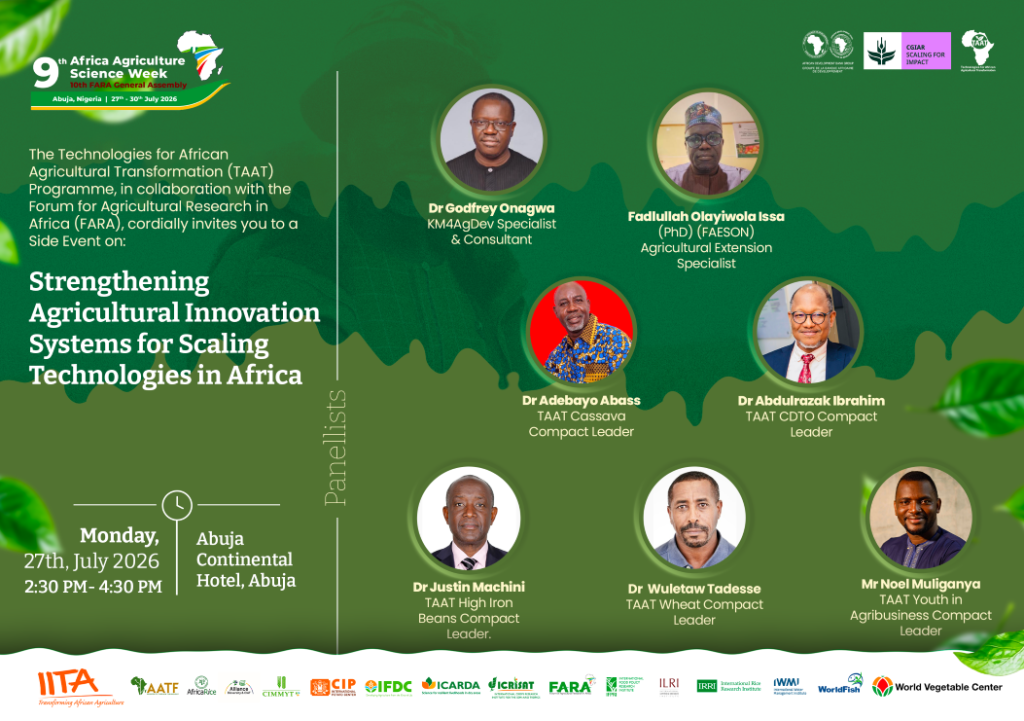
Strengthening Agricultural Innovation Systems for Scaling Technologies in Africa

The Technologies for African Agricultural Transformation (TAAT) Programme, established by the African Development Bank (AfDB) under the Feed Africa Strategy, was designed to accelerate the deployment and scaling of proven agricultural technologies capable of transforming productivity, strengthening resilience, improving food and nutrition security, generating employment and reducing poverty.

Harnessing AI-Enabled Digital Agricultural Extension and Advisory Systems to Accelerate Africa’s Agricultural Transformation

This event showcased AI-enabled digital extension initiatives, including the Nigeria Public Private
Partnership AI-enabled Digital Advisory Platform (NPPP AI-DAP) and the AFAAS
AIEnabled Digital User Platform, as scalable models for Africa. 

  • Keynote address — “The Future of AI-Enabled Extension and Advisory Systems in Africa”: Dr Godwin Atswer – Sasakawa Association Africa 
Digital Public Infrastructure (DPI) — How continental stakeholders coordinate on DPI solutions to reduce fragmentation and build toward scale and adoption. 
  • National government — Ayodele Olawunmi, Director, Federal Dept of Agricultural Extension Services, Federal Ministry of Agriculture, Nigeria 
  • Digital innovation & agritech — Tajudeen Yahaya (CEO, Extension Africa); Dev Afrique; Aisha Hadejia (Sahel Consulting Partner) 
  • Farmer organisations — Representatives from Nigeria and SSA countries, NIFAAS
  • AI ethics & digital governance — Chika Oke (DOA Law); Representative, NITDA, Bashira Hassan (Africa Practice)

Youth for Nutrition in Inclusive Science and Innovation from Soil to Plate — A Live Food Innovation Lab 


Advancing the Kampala CAADP Agenda through Evidence Based Policy Research: Bridging Science, Policy and Implementation for Scaled Agricultural Transformation 

The Pan-African Network for Economic Analysis of Policies (PANAP) members, through the
StEPPFoS Project have undertaken a range of policy studies which address priority areas aligned with the evolving CAADP agenda. These priority areas include sciencepolicy interface, climate resilience, agricultural research financing, regional trade, and inclusive agrifood systems. These studies are aimed at supporting countries to domesticate the Kampala CAADP Strategies to achieve the Agenda 2063. 
  1. Topic 1: Using political economy tools to shape regional agricultural policy: A Co-lab Approach Dr. Koen Dekeyser, ECDPM
  2. Topic 2: Data-Driven Policy Insights for CAADP: Evaluating AfCFTA Effects on AgriFood Systems and Food Security in Côte d’Ivoire Dr. Souleymane Diallo, CIRES
  3. Topic 3: Building Sustainable and Synergistic Evidence Informed Policy Ecosystems in East and West Africa: Addressing Alignment Gaps Between the CAADP and Ghana’s National Agricultural and Food System Policies (CSIR-STEPRI) Dr. Gordon Akon Yamga, CSIR-STEPRI
Panel Discussion: “Translating Evidence into Policy Action for Food System Transformation in Africa”
  • Mr. Patrick Kojo Ofori, Deputy Director in Charge of M&E(Former) & Currently National Project Coordinator of PROSPER
  • Prof. Joseph Kieyah, Deputy Director, KIPPRA
  • Dr. Dora Siliya, Fmr. Minister of Agriculture, Zambia
  • Dr Beatrice Egulu, Policy Officer, AUC-DREA
  • Dr. Emmanuel Njukwe, Director of Research & Innovation, CORAF
  • Dr. Moustapha GUEYE, Director General, ISRA

Abuja Roundtable: High-Level Ministerial Dialogue on Sustainable Financing for Agriculture
Research, Development and Innovation (AR4D)

The establishment of Nigeria’s National Agricultural Development Fund (NADF) presents an important
opportunity to demonstrate how domestic financing mechanisms can support long-term agricultural
transformation.


Strengthening Gender-Responsive Agricultural Policy through the AWARD–GRASP Fellowship

The Gender Responsive Agriculture Systems Policy (GRASP) Fellowship, an initiative of the African Women in Agricultural Research and Development (AWARD) and supported by theUnited States Agency for International Development (USAID), aims to accelerate the development and implementation of gender-responsive agricultural policies across Africa.

Farmer Centered Action Research and Innovation

The Side Event on Farmer-centered Action Research and Development for Sustainable Food Systems Transitions in Africa was jointly convened by: 1. The Forum for Agricultural Research in Africa (FARA) 2. Research Institute of Organic Agriculture (FiBL) in partnership with the Knowledge Centre for Organic Agriculture and Agroecology in Africa (KCOA) project 3. AGRICORD 4. Network of Organic Agriculture Researchers in Africa (NOARA)
  • Participatory research in organic and agroecology – insights from Sustain Sahel and SysCom (Mother-BabyTrials) Dr. Harun Cicek and Dr. Milka Kiboi - FiBL 
  • Applied research for biofertilizer applications/agroecology Patrick Mwizero – CAPAD (Burundi)
Panel:
  • Moderated by AGRICORD Katja Vuori
  • Action research in and commercialising of agroforestry Kastory Timbula (TTGAU - Tanzania) - FORI Project 
  • Farmer Field Schools as innovation platforms on sustainable agriculture and farmer managed seed systems Community Technology Development Organization (CTDO) and MASAP Project, Zimbabwe 
  • The policy environment on sustainable agri-food systems in Africa – enablers and inhibitors Food, Agriculture and Natural Resources Policy Analysis Network (FANRPAN) 
  • Action research and processing in agroecology – sunflower value chain Damian Sulumo/Frank Ademba - (MWIWAARUSHA-We Effect) – FORI Project 
  • How to scale agroecology and organic messages through Multipliers – experiences from the KCOA project Khaoula Mokrani (KCOA-KHNA) (with insights from Francis Nsanga (KCOA-KHEA) and Georges TADJIOTIO NGOUGNI (KCOA-KHCA)
  • Organic and agroecology data, statistics, and knowledge management – the African context Markus Arbenz – FiBL and KCOA; Jude Obi – Oyo University, Nigeria, and KCOAKHWA
  • Implications of farmer-centred research approaches and outcomes to PAFO and AfrONet members – some reflections PAFO and AfrONet 


Soil Intelligence for Climate-Resilient Agrifood Systems in Africa: The Role of the African Union
Soil Observatory (AUSO)
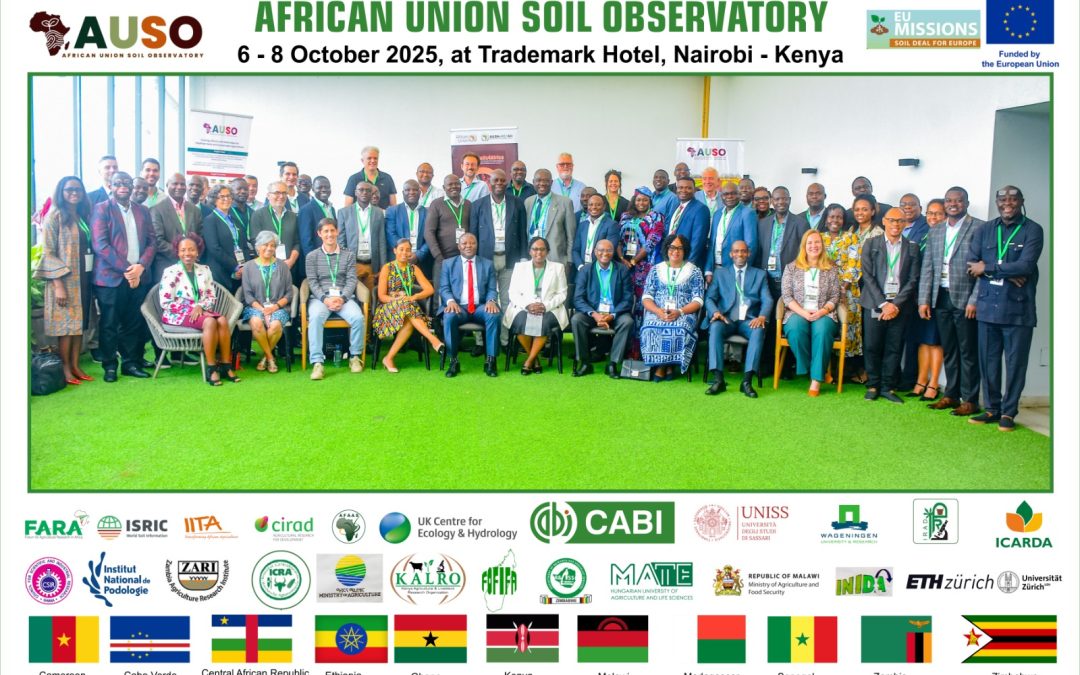
FARA, together with African, European and International partners, is implementing the African Union Soil Observatory (AUSO) project under the Horizon Europe Mission Soil Programme fully funded by the European Commission. AUSO aims to establish a continental soil observatory and digital soil intelligence platform, including a soil health dashboard, to support harmonized soil information systems, strengthen evidence-based decision-making, improve soil health monitoring, and promote sustainable and climate-resilient agrifood systems across Africa.


Envisioning the future of Africa’s livestock and fish sectors for targeted policies and investments

Participants’ feedback on the future of the livestock and fish sectors in Africa will be collated as input into an Animal Source Foods-focused outlook report being prepared by the Policy Innovations science program of the CGIAR (https://www.cgiar.org/cgiar-research-portfolio-2025-2030/policy-innovations), in collaboration with the science program on Sustainable Animal and Aquatic Foods (https://www.cgiar.org/cgiar-research-portfolio-2025-2030/sustainable-animal-and-aquatic-foods). 

Empowering youth as catalysts for transformative agriculture through mentorship, digital innovation and cooperative governance


Regional Agricultural Innovation Systems in sub-Saharan Africa: Current Status, Gaps and Future Prospects 


Launch of the Youth in Agrifood Systems Performance Index (YAPI) 


Bringing Scientific Evidence to Policymakers to Support the Agroecological Transition of Food Systems in Africa: The Example of MoSAFS

The Modelling Pathways for a Sustainable and Agroecological Transition of Food Systems in Africa (MoSAFS) project supports the transition to agro-ecological, climate resilient food systems in Africa by providing data-rich models and a science-policy interface for decision-makers. The first phase (April 2025 – April 2026) identified existing foresight studies and highlighted the need for multi-scale analysis (farm level and country level), based on three case studies in Senegal, Kenya and Mozambique, which are at different stages of national agro-ecological vision development. 
  • Kwaku Antwi FARA
  • Astou Camara ISRA-BAME (Institut Sénégalais de Recherches Agricoles - Bureau d'analyses macro-économiques)
  • Beatrice Egulu African Union
  • Guy Faure CIRAD / DeSIRA LIFT+
  • Lisa Fuchs Alliance of Bioversity International and CIAT
  • Alex Mutungi Biovision Africa
  • Martin Oulu ISFAA (Intersectoral Forum on Agrobiodiversity and Agroecology)
  • Pascal Tillie Joint Research Centre – European Commission


Investing in Extension and Advisory Services for Climate and Agroecological Transitions in Africa 

In understanding the Agroecological transition responsive extension approaches (ATREA), the ATREA project identified successful agroecological transition responsive extension approaches that are user centric, and enhance smallholder’s participation in the agri-food system transformation. The CANALLS initiative for example, leverages this to demonstrate an integrated approach to promoting agroecological transitions in the humid tropics of Central and Eastern Africa through multi-actor transdisciplinary Agroecology Living Labs that facilitate co-creation, participatory research, innovation testing,capacity strengthening for the uptake of the agroecological practices and policy engagement. Similarly, the GPSAEP initiative has generated valuable experiences in strengthening community-based advisory systems, supporting farmer-led agroecological innovation, enhancing inclusive extension approaches, and building local capacities for sustainable food systems transformation.


Institutional diagnostic for System Change - IGNITE Approach for Gender and Nutrition 

This masterclass provided participants with practical insights into the use of Tanager's Organizational Diagnostic Handbooks and Assessment Tools. Rather than focusing solely on theory, the session demonstrated how organizations can assess their institutional readiness, identify capacity gaps, and develop actionable improvement plans.


Africa Strategy Stakeholder Consultation on the Draft CGIAR Africa Strategy 

With the goal of shaping a strategy that reflects Africa's priorities, strengthens partnerships, and delivers greater impact, the consultation provided an opportunity to collectively refine a strategy that strengthens African institutions, accelerates science-based innovation, and supports sustainable agrifood systems transformation on the continent.

Dr. Simeon Ehui (IITA Director General and CGIAR Africa Continental Director), Dr. Aggrey Agumya (FARA Executive Director), Dr. Were Omamo (IFPRI Africa Director), and Dr. Namukolo Covic (Head, CGIAR Liaison Office for Africa).


Unlocking the Power of Vegetatively Propagated Crops in Africa: Empirical lessons from the PROSSIVA project 

Vegetatively propagated crops such as cassava, banana, and yam are critically important to Africa
because they serve as staple foods for hundreds of millions of people, contributing significantly to food
and nutrition security. However, these crops continue to suffer a setback in their seed systems, thus making it difficult for producers to get disease-free planting materials of improved varieties in a reliable manner. 

Strengthening Foresight Systems for Africa's Agrifood Transformation 


How Will Africa Feed 2.5 Billion People by 2050? A Strategic Foresight Study on Structural Barriers, Leadership Choices and Transformation Pathways for Africa's Agrifood Systems.


Advancing the Organic and Agroecology Research Agenda for Africa (OARAA 2036): Building
Partnerships for Resilient and Sustainable Agrifood Systems

The Network of Organic Agriculture Researchers in Africa (NOARA) initiated the development of the Organic and Agroecology Research Agenda for Africa (OARAA 2036) in 2019, with initial reflections having started from as far back as 2015.

he Network of Organic Agriculture Researchers in Africa (NOARA) is a pan-African, membershipbased network established by African organic agriculture researchers to coordinate and advance organic
and ecological agriculture research; it evolved from discussions among researchers in 2005, was
launched at the 2009 African Organic Conference in Kampala, strengthened through the 2012 African
Organic Conference in Lusaka, revived and reorganized by the African Organic Network (AfrONet) in
2019, and today operates through a continental governance structure comprising a Board of Trustees,
Governing Council, Continental Secretariat, and members drawn from researchers and other
stakeholders across Africa and beyond.

African Youth Position Statement on the Future of Africa’s Agrifood Systems 


2nd AUSO Annual Consortium Meeting/ General Assembly

The African Union Soil Observatory (AUSO) and its contribution to Africa’s soil health agenda.

No comments:

Post a Comment