Platform for African – European Partnership in Agricultural Research for Development

Monday, September 7, 2026

GFAiR Unveils Guides to Measure Equitable Partnerships

4 September 2026. The GFAiR - The Global Forum on Agricultural Innovation and Research has officially launched four practical guides that provide frameworks, standards, and KPIs for measuring Equitable Partnerships across every stage of Research for Development (R4D) projects.

🌱 Who benefits? Researchers, project partners, and global agricultural initiatives at all levels.

The four guides include:

1️⃣ The Partnership PrinciplesDefines nine principles for building equitable, inclusive, transparent, and mutually beneficial partnerships in agrifood research and innovation. 3 p.

2️⃣ Guidelines for Application in ProjectsShows researchers how to apply the nine Partnership Principles at each stage of a project, from scoping and design through implementation, dissemination, and scaling.  6 p.

3️⃣ Assessment Tool (Manual): Provides a survey-based tool, available manually or digitally, for partners to assess how effectively a project is applying the nine principles and identify areas for improvement. 

4️⃣ Partner-Inclusive Language GuideProvides practical guidance on using language that recognises partners as equal contributors and avoids terminology that reinforces unequal power relationships in research partnerships. 13 p.

It was launched during a strategic dinner meeting on the sidelines of the AFS Forum 2026 in Kigali, Rwanda. These tools address a critical sector-wide gap.

As Joanna Kane-Potaka, GFAiR Executive Secretary, highlighted during the launch: 

"There are no standards on measuring Equitable Partnerships, and a lot more work is needed. That is why GFAiR unveiled a series of guides for how to apply Equitable Partnerships in projects, as well as how to measure them at each stage of a Research for Development project."

🤝 Witnessed by Strategic Partners the launch was celebrated alongside key regional partners from the  Forum for Agricultural Research in Africa - FARA,  ASARECA, CORAF and CCARDESA, including:

  1. FARA: Dr. Aggrey Agumya (Executive Director)
  2. ASARECA: Sylvester Dickson Baguma (PhD) (Executive Director along with Dr. Joshua Okonya, Moses Odeke; Julian Barungi and Blaise Amony)
  3. CORAF: Dr. Emmanuel Njukwe (Director of Research and Innovation)
  4. CCARDESA: Dr. Majola L. Mabuza (Special Programme Coordinator, FSRP)
  5. GFAiR: Francois Stepman (Advisor), and Dr. Botir Dosov (GNC Consultant)

🌍 Supported by the European Commission, GFAiR works in close collaboration with six Regional Fora to drive agricultural innovation.

🫶 A massive thank you to all our partners for the continued support and collaboration in bringing this milestone to fruition!

Related:

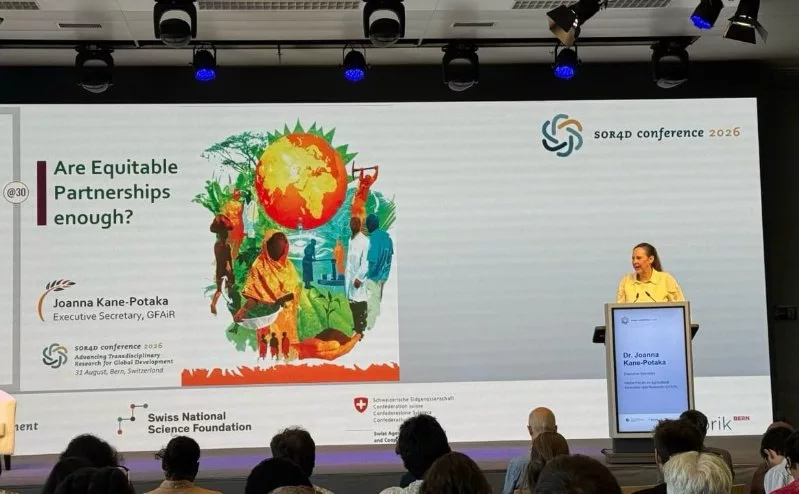
2 September 2026Are Equitable Partnerships enough? The GFAiR time-tested approach

Equitable partnerships are necessary but not sufficient to transform agricultural research and development. Drawing on GFAiR Executive Secretary Joanna Kane-Potaka’s keynote at the SOR4D (Solutions Oriented Research for Development) conference in Switzerland under under the overarching theme “Advancing Transdisciplinary Research for Global Development: Crisis, Collaboration, and Change”, it makes the case for moving beyond shared decision-making and co-ownership toward genuine local leadership.

  1. Equity must lead to local leadership: Partnerships can be co-designed and co-implemented while power still remains with those controlling funding; genuine transformation requires external partners to relinquish some power and enable local actors to lead.
  2. External partners should build local capacity: Rather than protecting their own existing “comparative advantage,” international organisations should use their strengths to help national institutions develop the capabilities needed to eventually lead their own research and innovation.
  3. Funding can unintentionally reinforce inequity: Consolidating fragmented funding could reduce duplication and proposal-writing costs, but larger projects may exclude smaller or less-experienced organisations unless funding mechanisms are deliberately designed around equity and local leadership.
  4. National actors should set the agenda: Governments and national institutions need to have their priorities and voices amplified so that international partners support locally defined agendas rather than determining them.
  5. Partnerships need to be measured: There is currently no widely accepted standard for measuring equitable partnerships, which is why GFAiR is developing tools and guidance to assess partnerships throughout the research-for-development project cycle.
  6. The problem is often “how,” not “what”: The article suggests that many development challenges are not primarily limited by technical research capacity, but by how research is organised, who participates, who owns it, and whether solutions are taken up and scaled locally.
  7. The ultimate goal: GFAiR sees equitable partnerships as a step toward local leadership, greater ownership, uptake and scaling of solutions, and ultimately stronger development impact—with funders having a particularly important role in accelerating this shift.

Related:
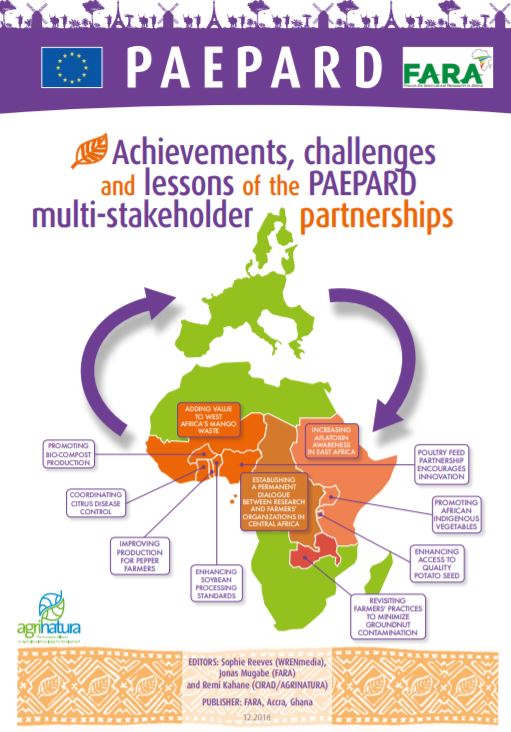
FARA's PAEPARD (Platform for African-European Partnership in Agricultural Research for Development) produced multi-stakeholder briefs and capacity-building resources to foster user-led agricultural innovation

  1. ARD Partnerships – An Introduction: An introduction to agricultural research-for-development (ARD) partnerships and the PAEPARD approach.
  2. Systems Thinking and ARD PartnershipsExplores how systems thinking can help partners understand the wider context, relationships and dynamics affecting agricultural innovation.
  3. Adaptive Leadership in ARDExamines leadership approaches for navigating complexity, uncertainty and change in multi-stakeholder agricultural partnerships.
  4. Managing Power Differences in ARD Partnerships: Focuses on recognising and managing differences in power, influence and resources among research and development partners.
  5. Gender and Youth Inclusion in ARD ProcessesLooks at how agricultural research partnerships can meaningfully include women and young people rather than treating inclusion as an add-on.
  6. Reflection and Learning in ARDExplores how partnerships can systematically reflect, learn from experience and adapt their approaches during implementation.
  7. Knowledge Co-creation and Management in ARDAddresses how different stakeholders can jointly create, exchange, manage and use knowledge throughout the research and innovation process.
  8. Scaling in ARD ProcessesExamines different pathways for taking successful agricultural innovations to greater scale, including scaling out, up and deep.

Saturday, September 5, 2026

From Research to Resilience: AFS Kigali’s Agricultural Learning Journey to Huye

On 31 August, the AFS Kigali delegation travelled to Huye for an inspiring field visit focused on one of Rwanda’s most important development assets: its agricultural research and innovation ecosystem.

The visit provided an opportunity to experience first-hand how scientific research, technology, conservation, and farmer-focused innovation are contributing to the transformation of Rwanda’s agricultural sector

The visit demonstrated a powerful connection between research institutions and the realities faced by farmers — from conserving valuable genetic resources to developing improved planting materials, strengthening soil fertility, and increasing the productivity and resilience of agricultural systems.

RAB Rubona Station: history, infrastructure and challenges


Established in 1935 in Rwanda’s Southern Province (formerly Butare), RAB Rubona Station is the country’s oldest agricultural research station and the historic foundation of Rwanda’s National Agricultural Research System. Initially created during the Belgian colonial period as the Institut National pour l'Étude Agronomique du Congo (INEAC), Rubona became a centre for research on food crops, soils and livestock adapted to the highland agroecosystems of Central Africa. 

Following Rwanda’s independence, the station evolved through successive national research institutions before becoming a flagship centre of the Rwanda Agriculture and Animal Resources Development Board (RAB) in 2011. Over the decades, Rubona has played a pivotal role in developing improved varieties of beans, maize, cassava, sweet potato and potato, while conserving indigenous crop genetic resources and supporting farmer-oriented agricultural innovation.

Today, Rubona Station comprises extensive experimental fields, crop breeding and seed multiplication facilities, soil and plant laboratories, greenhouses, irrigation infrastructure, livestock research units, offices, conference and training facilities, and one of Rwanda’s principal national genebank collections for agricultural biodiversity. 

The station hosts multidisciplinary teams of breeders, agronomists, soil scientists, plant pathologists, entomologists, livestock specialists, laboratory technicians and extension-oriented researchers who collaborate closely with universities and international partners such as CGIAR centres. 

The BioCap/COECB [Rwanda Biotech Capacity Building (BioCap) / Centre of Excellence for Crop Biotechnology]  investment is a major current infrastructure development.

Launched in December 2025, it goes beyond conducting individual crop trials: it is intended to build permanent national biotechnology capacity at Rubona. Particularly significant is the planned Centre of Excellence for Crop Biotechnology (COECB). CIP (International Potato Center) and RAB are currently developing the facility at Rubona, for biotechnology, genome editing and capacity building, particularly for potato and cassava. It is supported by a  $15 million grant from the Bill & Melinda Gates FoundationThe Donald Danforth Plant Science Center is part of this international initiative. 

Despite its strategic importance, Rubona faces significant challenges including ageing laboratory and irrigation infrastructure, limited long-term funding for research maintenance, shortages of advanced analytical equipment, the need to attract and retain highly qualified scientists, and increasing pressure to develop climate-resilient and nutrition-sensitive innovations that respond to Rwanda’s rapidly evolving agrifood system.


Discovering Rwanda’s Agricultural Research Ecosystem


At RAB Rubona Station, participants explored a remarkable collection of more than 100 conserved banana varieties. The collection illustrates the importance of agricultural biodiversity and the role of research institutions in protecting genetic resources that can support future breeding, adaptation, and food security.

The visit also introduced participants to advanced technologies supporting early-generation seed production and germplasm conservation across a diverse range of crops, including: Cassava, Sweet potato, Banana, Coffee, Passion fruit and Tree tomato.

Seeing these systems in practice offered a valuable perspective on the science behind the crops that sustain rural livelihoods. Conservation is not simply about preserving varieties for the future; it is also about maintaining the genetic diversity needed to respond to emerging challenges such as climate change, pests, diseases, and changing market demands.

From Innovation to the Farmer

A particularly important aspect of the visit was learning about rapid cassava seed multiplication and customized soil-fertility management systems.

These innovations demonstrate how agricultural research can be translated into practical solutions. Producing quality planting material more rapidly can help farmers access improved varieties, while soil-fertility approaches adapted to specific conditions can support more efficient use of nutrients and improve productivity.

Together, these technologies illustrate a broader principle: agricultural transformation requires more than introducing a new crop or technology. It requires sustained investment in research, experimentation, conservation, knowledge transfer, and systems that allow innovations to reach farmers at scale. The experience at Rubona showed how this long-term investment can contribute to higher productivity, greater resilience, and scalable solutions for farmers.


Advancing research and development of Bambara groundnut


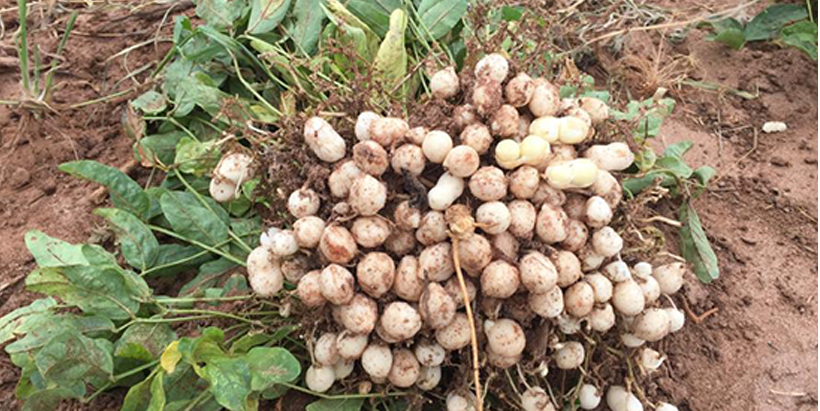
The Society for Underutilized Legumes (SUL), which emerged from IITA's Genetic Resources Center and collaborates closely with IITA-CGIAR, is expanding research on Bambara groundnut  (Vigna subterranea) and other underutilized legumes into East Africa. Recent research includes collaboration with scientists from the University of Rwanda, complementing wider IITA work on Bambara groundnut genetic resources, breeding, nutrition, climate resilience and value addition. 

The Bambara groundnut (BGN), once labeled an orphan crop, has now assumed the status of an
important underutilized nutritious, drought-resistant legume crop, and is now positioned as a promising future crop that is serving a varied choice of culinary purposes, including local delicacies, and more recently, plant-protein-based milk alternatives. Despite the numerous benefits of BGN, processing its seeds into valuable food products generates wastes (such as husks, shells, haulms, and offal), which are often disposed of carelessly into the environment, thereby creating environmental hazards.

With this growing environmental challenge, comes the growing interest in adding value to the wastes generated from BGN and converting them into products that are useful for industrial purposes, as well as food and feed, and researchers from Nigeria, Rwanda and South Africa are unlocking new economic and environmental opportunities and exploring potential value-added products from Bambara groundnut waste, transforming what was once discarded material into valuable resources that support sustainable growth across Africa’s food systems.

Picture: Dr Adegboyega Taofeek T [Kneeling] of the Society of Undertutilised Legumes (IITA) and Dr Adeyemo Rasheed O. [Standing] on the Bambara groundnut field at the University of Rwanda, Huye Campus. The field trial was conducted with the support of Lecturers and Colleagues from the University of Rwanda.  

Livestock Innovation Meets Living Heritage


The journey continued at Songa RAB Station, where agricultural innovation took on a different dimension through livestock.

The Rwanda Dairy Development Project – Phase 2 (RDDP-2) is a major dairy-sector transformation programme implemented by the Rwanda Agriculture and Animal Resources Development Board (RAB) with financing from IFAD and other partners. 

Launched on August 30, 2024, the Rwanda Dairy Development Project – Phase 2 (RDDP 2) , funded by IFAD and implemented by RAB,will benefit 175,000 dairy farmers nationwide. The revitalization of the Songa Sement Production Centre is part of a broader $125 million USD initiative aimed at transforming the dairy sector over the next five years. Between $8 million and $10 million of the $125 million allocated for RDDP 2 will go directly into establishing and operationalizing the upgraded semen production centre. 

It aims to improve the income, nutrition and resilience of rural households by creating a more inclusive, climate-resilient, digitalized and competitive dairy sector, targeting around 175,000 rural households. Of particular relevance to RAB Songa Station, RDDP-2 is upgrading the Songa Semen Production Centre into a modern hub for bovine genetic improvement, with:
  • technologies for semen and embryo production, 
  • in-vitro fertilization (IVF)
  • artificial insemination and embryo transfer, 
  • alongside improved forage production, 
  • dairy performance recording and specialized training
30 high-quality bulls are already at Songa, with a longer-term target of 60. Approximately US$8–10 million is expected to be invested directly in establishing and operationalizing the upgraded Songa centre, positioning the station as an important national centre for dairy breeding, genetics and farmer/veterinarian capacity development

Participants discovered modern approaches to livestock breeding and semen collection, gaining insight into how reproductive technologies and improved genetics can contribute to greater livestock productivity.

At the same time, the station offered an encounter with an important part of Rwanda’s cultural heritage: the iconic Inyambo royal cattle.

The contrast — and connection — between advanced breeding technologies and these culturally significant cattle provided a powerful illustration of how innovation and heritage can coexist. Rwanda’s livestock sector is not only about improving production; it is also about preserving and valuing traditions that form part of the country’s identity.

The Inyambo therefore represents more than a livestock breed. They offered a living connection between Rwanda’s past and its agricultural future.


Learning Through Experience

For the AFS Kigali delegation, which included a GFAiR representative, the field visit was an opportunity to see agricultural research not as an abstract scientific process, but as a living ecosystem involving researchers, genetic resources, technologies, farmers, institutions, and cultural heritage.


Friday, September 4, 2026

Financing Generative AI for Agricultural Advisory

4 September 2026. Financing Generative AI for Agricultural Advisory. 

Artificial Intelligence is rapidly reshaping African agriculture, with generative AI offering personalized, real‑time advisory across crops, livestock, weather, and markets at a fraction of traditional extension costs. 

Yet unlocking this potential for smallholder farmers requires financing to move beyond pilots and building shared data and digital public infrastructure that ensures accuracy, trust, and accountability. 

This plenary brought both challenges into a single dialogue, drawing on the work of the Institute for Agriculture and AI, launched through a partnership between the Gates Foundation and United Arab Emirates. The institute is essentially an AI-powered agricultural advisory and research hub. Its goal is to turn advanced AI and agricultural data into practical tools for farmers, governments and NGOs, particularly in Africa, Asia and other climate-vulnerable regions. Its work includes:

🌱 Crop, soil and weather advice tailored to specific locations

🔬 AI models for crop-disease and pest detection

🗣️ Voice-based agricultural advisers that can work in local languages

🤖 Geo- and time-aware AI/LLM systems that provide localized farming recommendations

📊 Building large, open agricultural datasets for AI research

🎓 Training agricultural ministries, NGOs and other organizations to deploy these systems

🚜 Supporting country-level pilots and real-world deployment


Rwanda's Local AI Goals

1 September 2026. Side event  AFS Kigali. AI and agriculture 

Rwanda is already testing new AI tools to help farmers who do not have smart phones or good internet. According to local reports highlighted by Vision Media Rwanda,One of the tools being tested is Tunga, an AI-powered voice assistant integrated into the agriculture ministry's call centre.” Farmers speak in Kinyarwanda to get fast crop and fertilizer advice. Rwanda wants to use these tech tools to reach more people with fewer field workers.

The government also wants to build on digital platforms such as e-Soko and Smart Nkunganire. More than 1.5 million farmers are registered on Smart Nkunganire, which allows them to order subsidised seeds and fertilisers through USSD.

Rwanda has also completed soil profiling to identify nutrient deficiencies and is developing fertiliser recommendations tailored to local soil conditions in cooperation with Morocco.


Wearing Scientific goggles 

Interview with Prof. Hlamalani (Hlami) Ngwenya Associate Professor; Head of the Research Chair: Communication for Innovation, University of the Free State (UFS), South Africa, within the Centre/Department of Sustainable Food Systems and Development.


Background

Prof. Hlamalani (Hlami) Ngwenya’s “Wearing Scientific Goggles” approach is a way of encouraging practitioners to look at their everyday work through a scientific and reflective lens, rather than treating research and science as something that happens only in universities or laboratories. 

The approach recognises that practitioners are often innovators and possess valuable tacit knowledge—insights gained through experience that are rarely documented, validated, or shared as formal knowledge. 

  • By applying structured inquiry, reflection, evidence gathering, pattern recognition, systems thinking, and documentation to their daily practice, practitioners can transform experience into credible knowledge products that can inform theory, policy, and practice. 
  • In this sense, the approach seeks to bridge the gap between theory and practice, empower practitioners as knowledge producers, and strengthen the “Science of Delivery” by making real-world implementation knowledge visible and scientifically useful. 
Ngwenya has developed the idea into a broader meta-action research framework under her work in Communication for Innovation at the University of the Free State. 

The “Wearing Scientific Goggles” (WSG) approach has important implications for the use of Artificial Intelligence (AI) in African Agricultural Extension and Advisory Services (AEAS) because it shifts the focus from “using AI as a technology” to critically examining, learning from, and improving AI-enabled practice.

Applied to AI, this means extension officers should not simply accept AI-generated recommendations but should become co-investigators of AI in practice—testing whether recommendations are agronomically sound, locally relevant, understandable, culturally appropriate, and useful to different categories of farmers - preferably using local languages. 

The Wearing Scientific Goggles approach implies that the use of local African languages in agricultural chatbots should be understood as an object of critical inquiry and continuous learning, rather than simply a technical translation problem. Extension officers, farmers, developers, and researchers should jointly test whether AI-generated advice in local languages is linguistically accurate, agronomically sound, culturally appropriate, locally intelligible, and practically useful. This requires evaluating AI performance across languages and dialects, incorporating farmer feedback and local knowledge into iterative development, and treating language choice as an issue of inclusion, equity, and knowledge sovereignty.


Related


Access Agriculture’s initiative ‘Digital knowledge sharing for remote rural areas in local languages’ has been selected as one of the 15 finalists in the Digital@UNGA Awards 2026, which recognise outstanding digital initiatives, policies, partnerships, and leaders that are driving inclusive, responsible, and people-centred technological development worldwide.
Your initiative was chosen from close to 1,500 submissions from 146 countries across the four award categories – Digital Inclusion, Digital Government, Digital Frontiers and Digital Pioneers – and reviewed by an international jury of experts. To reach the final 15 in a field of this size is a real distinction, and it places your work among the most compelling initiatives in digital inclusion brought forward this year. Mariia Shakura Project Officer International Telecommunication Union (ITU)
The achievements of all the finalists will be celebrated at the Digital@UNGA Awards ceremony in New York on 21 September 2026

Thursday, September 3, 2026

Seed Systems Group: strengthening seed systems, supporting farmers, and contributing to resilient agriculture.


3 September 2026. Interview with Isoulfou Kapran (Niger) Director of Seed Systems Group.

Agriculture is at the heart of food security, livelihoods, and economic development. Yet, farmers can only reach their full potential when they have access to quality seeds, reliable inputs, knowledge, and strong agricultural markets. This is where Seed Systems Group plays an important role.

Seed Systems Group is focused on strengthening seed systems and supporting the development of more productive, resilient, and sustainable agricultural sectors. By working with farmers, businesses, institutions, and other stakeholders, the organization seeks to improve access to quality seeds and contribute to better opportunities across agricultural value chains.

The organization is directed by Isoulfou Kapran, whose leadership supports its mission of promoting stronger and more effective seed systems. Through collaboration and practical solutions, Seed Systems Group aims to help create agricultural systems that better serve farmers and contribute to long-term food security.

As agriculture continues to face challenges such as climate change, population growth, and changing market demands, strong seed systems are more important than ever. Seed Systems Group is committed to being part of this transformation—connecting knowledge, innovation, and partnerships to help build a more sustainable future for agriculture.

Webinars and events September

31 August - 3 September 2026, Kigali, Rwanda. Africa Food Systems Forum 2026 Summit
02/09 Crop Life / GFAiR side event: Growing the movement: Scaling Opportunity Crops through policy, partnerships and Investment8-10 September 2026, Dubai World Trade Centre, UAE. Agra Middle East 2026 (AgraME 2026)

4 September 2026. Agroecology and Indigenous Foodways seminar 

11-12 September 2026. Accra. Phenomics in Plant Breeding
  • The International Plant Phenotyping Network (IPPN) is organizing a symposium in Accra – Ghana, incl a 2-day workshop for which participants can apply for full cover of travel, stay and symposium costs via this Novo Nordisk sponsored event: the Phenotyping Innovation Sprint

14-16 September 2026, Rome, Italy. Global Conference on Agriculture & Horticulture

16 to 18 September 2026 in Göttingen (Germany) and online. TROPENTAG
under the theme 'Towards multi-functional agro-ecosystems promoting climate-resilient future'.
  • The call for workshops was open until 3 May 2026.
15-17 September 2026 – Lagos, Nigeria Africa Food Manufacturing Nigeria & Western Africa

22–25 September 2026. Nairobi (Kenya). Smart Agriculture: Innovation, Digital Transformation, and Trade for a Climate-Challenged Africa.
  • The event invites papers and proposals on topics like climate-smart ag, agri-finance, digital tech, value chains, and gender/youth in agriculture - by African Association of Agricultural Economists (AAAE).
24–25 September, Brussels. EU AgRI 2040 Conference “Future-proofing EU Agri-Food through research and innovation”
25–26 September 2026. ROOTS AND RECIPES Kicks Off: Exploring the Science of Food, Identity and Belonging
  • AfricaMuseum Tervuren Belgium
  • Featuring film screenings, exhibitions, interactive fairs, workshops, demonstrations, and educational activities open to the public. Together, these events will celebrate African Diaspora foodways while inspiring conversations about science, culture, sustainability and identity.
  • This event is helping preserve, promote, research and innovate African food heritage, with this unique celebration of science, culture and community
25 September 2026.  1st SFYN Agrifood Systems Transformation Webinar
  • The webinar will bring together young people and food-system changemakers within the SFYN network and beyond to explore how young people can transform their passion, ideas, and initiatives into meaningful collective action and systemic change.

29 September 2026. at 3:00 PM (Bangkok Time).Women in Value Chains and Agri-Food Systems Transformation
  • To celebrate and recognize the International Year of Women Farmers, APAARI, together with ARINEENA, CACAARI, FARA, and CIRDAP, is jointly co-organizing a Webinar Series in 2026.
  • The webinar will focus on: Participation and leadership of women across agri-food value chains
  • Entrepreneurship, aggregation, processing, and market integration
  • Institutional, financial, and digital enablers of women’s engagement
  • The webinar aims to highlight the critical role of women farmers in advancing resilient and sustainable agri-food systems, while fostering regional knowledge exchange and collaboration.

30 September 2026. 9:00-17:00, Brussels. SCAR FS Workshop: Governance and Resilience

5 - 7 October 2026. African Union Inaugural Africa Seed Summit

8 October 2026. Knowledge Valorisation in Action:  from Results to Policy
  • This workshop will bring together policy relevant results and learnings from a cluster of Horizon Europe projects piloting innovative approaches for knowledge valorisation, to bring research results to market, society and policy.
8 - 16 October 2026. FAO’s World Food Forum (WFF)
  • This is a year-round platform for youth engagement in agrifood systems.
  • It includes ongoing virtual and thematic consultations throughout the year
8 to 12 October 2026. From Seeds to Foods

Science and Innovation:

Tuesday, 13 October — Science & Innovation Forum openingSP01 – SIF Opening: Accelerating science & innovation for food security impactsOpening/high-level session of the Science and Innovation Forum.
SP02 – Seeds of trust: rethinking science communication for food securityFocuses on how science is communicated and how trust can be strengthened around evidence and food security.
Wednesday, 14 October — Science-policy and science communicationST02 – Seeds of trust: rethinking science communication for food securityContinuation/deeper discussion of the science communication theme.
ST01 – Lost in translation? Strengthening science–policy interfaces for evidence-informed decision-makingParticularly relevant to agricultural research organizations and NARS: addresses how scientific evidence can more effectively inform policy and decision-making.
ST03 – Growing the Future: Botanic Gardens as Agrifood AlliesExplores the role of botanic gardens in agrifood systems, potentially including plant diversity, conservation and research.
There is also YM10 – Transformative Research Challenge Finals: Science for impact, under the Youth programme, which has a strong science-and-innovation dimension.
Thursday, 15 October — Main Science & Innovation programmeST05 – Resilience to disasters and the next zoonotic pandemic: What can a One Health approach deliver?One Health, zoonoses, resilience and preparedness.
ST04 – Drowning in data, starving for evidence-informed decisions: what futures for scientific evidence synthesis?Evidence synthesis, data and translating research into usable evidence for decision-makers.
ST06 – Broken by design? Rewiring investment & partnership models for research and innovationEspecially relevant for GFAiR and NARS, as it explicitly examines financing and partnership models for agricultural research and innovation.
ST07 – Women Farmers in the Digital Age: From Access to AgencyDigital innovation, gender and the empowerment of women farmers.
ST13 – From Forecast to Action: Leveraging Science and Innovation to Reduce Climate Risks for Agriculture and Food SecurityScience, forecasting and innovation for climate-risk management in agriculture.
ST08 – How can entrepreneurship accelerate food security progress?Entrepreneurship and innovation as pathways to improved food security.
ST09 – Science & Innovation for water-efficient agrifood systemsResearch and innovation for improving water efficiency in agrifood systems.
ST10 – Tipping points, cascading risks, and limits to adaptation for agrifood systems and food securityClimate risks, adaptation limits and systemic vulnerabilities of agrifood systems.
ST11 – Science with ambition: accelerating early career impact on food securityFocuses on early-career scientists and increasing their contribution to food-security outcomes.

19–23 October 2026. FAO HQ, Rome, Italy. CFS 54th Plenary Session


22 October 2026. Society for Under Utilized Legumes 8th National Stakeholders Summit
  • 09:00 AM West Central Africa
  • Join Zoom Meeting
  • https://iita-org.zoom.us/j/82976501554?pwd=lGwNeMFidI2pT7VYrmfwY6o18cHdIK.1
  • Meeting ID: 829 7650 1554
  • Passcode: IITA25@leg
26–29 October 2026. Addis Ababa. 13th ANAPRI Stakeholders Conference
  • Under the theme “Building Competitive Agrifood Economies: Policy, Trade, and Industrialisation Pathways for Africa,” the Conference will explore the policies, investments, partnerships and innovations needed to advance more competitive, resilient and inclusive agrifood systems across the continent.
  • Read the concept note here
  • Register here
23–24 October 2026. 10th African Diaspora Agrofood Forum

19-30 October 2026. Seventeenth meeting of the Conference of the Parties to the Convention on Biological Diversity

27 October 2026, Addis Ababa. AU-EU High-Level Policy Dialogue on Science, Technology and Innovation

31 October 2026. International Conference on Agroforestry Systems for Climate Adaptation and Biodiversity (ICASCAAB-2026)
  • Focuses on agroforestry systems, climate adaptation, and biodiversity — a platform for researchers and practitioners to share developments in the field.
17 – 20 November 2026. 1st Eastern Africa Indigenous Seed Conference - EA-ISC 2026
  • Building farmer managed seed system community of practice (COP) For a Resilient EASTERN AFRICA Region.
  • Catholic university of Eastern Africa, Nairobi, Kenya
25 November 2026. Bari, Italy. AU-EU Innovation fair - focus on food and nutrition security and sustainable agriculture
  • The event will run as a full-day hybrid programme (9:00 am – 7:00 pm), combining:
  • High-level policy sessions;
  • Two-minute innovation pitches from selected R&I projects and start-ups;
  • An exhibition and matchmaking space featuring innovative solutions, investors, business support organisations and research initiatives;
  • Awards for outstanding start-ups and SMEs;
  • Other networking opportunities.
25-27 November 2026. Santiago, Chile. XI CONGRESSO LATINOAMERICANO DE AGROECOLOGIA

30 November - 4 December 2026 RUFORUM’s 22nd AGM
  • To be held in Zambia, hosted by the Government of Zambia and RUFORUM member universities in Zambia.
  • This AGM edition offers Zambia, the Southern Africa Development Community (SADC), the rest of Africa, and partners an opportunity to discuss current development opportunities and challenges, and to co-create roadmaps for delivering solutions
30 November - 4 December 2026.  African Nutrition Conference in Namibia.

East-West Seed and the importance of community seed banks

2 September 2026. AFS Kigali. Interview with Epaphras Milambwe KT Manager Tanzania. 

East-West Seed has built its work around helping smallholder farmers access quality vegetable seeds alongside the knowledge and skills needed to use them effectively. In Tanzania, the company and its Knowledge Transfer Foundation support farmers through training, demonstrations and improved access to agricultural technologies. East-West Seed also recognizes the important role of informal seed systems, particularly in reaching smallholder farmers in remote communities.

East-West Seed's focus on quality seeds and farmer knowledge, alongside community seed banks' role in conserving local diversity, demonstrates how different parts of the seed system can complement one another. Together, these approaches can help farmers access appropriate planting material while protecting the genetic diversity needed to build more productive, sustainable and climate-resilient food systems. 

 Is there a resistance towards indigenous seed banks?

The Society of Underutilised Legumes at IITA

2 September 2026. AFS Kigali. Interview with Dr. Taofeek Tope Adegboyega.

He is a researcher and advocate for the development and wider utilization of underutilised legumes in Africa. 

  • SUL was established in 2016 at the Genetic Resources Centre, International Institute of Tropical Agriculture (IITA)  under the mentorship of Prof Micheal Abberton. Dr. Adegboyega and his team has contributed to research on the nutritional value, conservation, and potential of indigenous legumes such as Bambara groundnut, African yam bean, and Winged bean. 
  • As President of the Society for Underutilized Legumes (SUL), Dr. Adegboyega has championed collaboration among researchers, farmers, government agencies, and other stakeholders to promote these crops as important resources for food and nutrition security, climate resilience, and sustainable livelihoods. 
  • His leadership has also focused on increasing awareness, strengthening research, and supporting the commercialization of underutilised legumes in Africa and beyond.
Following up on the success of the participation at the inaugural CGIAR Science Week, in this interview he gives some more background on the webinars organised by SUL as well as expansion into East Africa particularly Rwanda where a field trial has just been completed on Bambara groundnut, African yam bean and winged bean. This was accomplished in  collaboration with researchers from the University of Rwanda and  Rwanda Agricultural Board (RAB) at the Huye campus. The team is interested in development strategies for novel medicinal products for related NCDs, climate resilience and food safety.


The Society of Underutilised Legumes

The Society of Underutilised Legumes, Genetic Resources Center, International Institute of Tropical Agriculture (IITA) is an important platform for promoting the awareness, conservation, and use of lesser-known legume crops. Underutilised legumes, such as bambara groundnut, African yam bean, and other indigenous legumes, have significant nutritional, environmental, and economic value but often receive less attention than major crops. Through research, knowledge sharing, and collaboration, the society helps highlight the potential of these crops to contribute to food and nutrition security.


One of the key roles of the Society is to encourage research and innovation around underutilised legumes. These crops can provide valuable sources of protein, vitamins, minerals, and other nutrients while also supporting sustainable agricultural practices. Many legumes are well adapted to local environmental conditions and can improve soil fertility through biological nitrogen fixation. By bringing researchers, students, farmers, and other stakeholders together, the Society creates opportunities to exchange ideas and develop practical approaches for increasing the production and consumption of these important crops.

The Society of Underutilised Legumes at IITA therefore represents more than an academic or research initiative; it is a step towards building resilient and sustainable food systems. Greater investment in underutilised legumes can help diversify diets, strengthen farmers’ livelihoods, preserve agricultural biodiversity, and improve resilience to climate change. With continued research, public awareness, and collaboration, these often-overlooked crops can become an important part of Africa’s agricultural future.

Scientific Conference


The Society for Underutilized Legumes (SUL) is planning its 9th International Scientific Conference
and Annual General Meeting
for October 2026 at Ahmadu Bello University (ABU), Zaria, Nigeria.

The conference is expected to provide a major platform for researchers, academics, students, policymakers, farmers, breeders, food scientists, entrepreneurs and other stakeholders to discuss the development and wider utilization of underutilised legumes.

YOU CAN JOIN THE SUL WHATSAPP GROUP HERE 


Wednesday, September 2, 2026

Scaling Opportunity Crops Through Policy, Partnerships, and Investment

2 September 2026. Scaling Opportunity Crops Through Policy, Partnerships, and Investment.

The next generation of agricultural growth will not be created by a single crop, institution, or investment.

It will emerge from connected systems that make good opportunities investable and scalable.

Policy can create the enabling environment. Partnerships can connect expertise and incentives. Investment can build the infrastructure and businesses required for competitive value chains. And farmers can turn those opportunities into production, income, and economic transformation.

The challenge now is to move from isolated success stories to scalable models.

One of the objectives of this meeting organised by CropTrust was to bring together different actors advocating for or rolling out activities on Neglected and Underutilized Crops.

Opening remarks: 
  • H.E. Moses Vilakati, Commissioner for Agriculture, Rural Development, Blue Economy and Sustainable Environment, African Union 
  • Kordula Mehlhart, Head of Division, Federal German Ministry for Economic Cooperation and Development 
  • Isabella Rae, Agriculture and Food Systems Lead, Department of Foreign Affairs and Trade, Ireland 
  • Cristina Miranda Gozálvez, Head of Unit, European Commission – DG International Partnerships

Keynote: Dr. Sayed Azam-Ali, Chair of the High Level Panel of Experts - Food and Nutrition Security of the Committee on World Food Security 


Session 1 - Policy: 

  • Dr. Clement Adjorlolo, Head of Agriculture and Rural Transformation AUDA-NEPAD
  • Mark Kofi Fynn Regional Policy Officer, FAO Regional Office for Africa, including a reference to the the policy optimisation tool

Session 2 - Partnerships: 


  • Dr. Julia Sibiya, VACS Capacity Development Lead, CIMMYT. She referred to new varieties of Bambara groundnut in Zimbabwe 
  • Michael Ojo, Country Director, Nigeria, at the Global Alliance for Improved Nutrition (GAIN). He referred to the National Food Systems Transformation agenda.
  • Dr. Kindie Tesfaye Fantanye, Head of Climate Adaptation, Sustainable Agriculture and Resilience, AGRA - Entry point for investments
  • Dr. Wole Fatunbi, Ag. Director of Research and Innovation, FARA - see below


Tuesday, September 1, 2026

Clean Energy to Nourish a Continent: Unlocking renewable power for Africa’s food systems

31 August 2026. “Power the Plate: Energy for Nutrition” 
  • Host/organiser: Welthungerhilfe (WHH), in partnership with GOGLA and the Agri-Energy Coalition. GOGLA lists it as a WHH-hosted side event, while WHH describes the session as being held in partnership with GOGLA.
  • Focus: The session examined the connection between energy access, vegetable production and nutrition. It highlighted that African countries need to substantially increase vegetable production and consumption to achieve healthier diets, while high energy costs, post-harvest losses, irrigation constraints, cooling, storage and logistics can make vegetables less affordable. The discussion looked at how productive renewable energy, investment and partnerships can make vegetables more abundant, affordable and accessible.
  • It also concluded with the launch of the Africa Vegetable Innovation Platform, linked to the #DoubleTheVeg ambition
1 September 2026. “Powering Agri-Food Systems Value Chains Amid a Global Energy Crisis”
  • Hosts: GOGLA and SNV, as part of the Agri-Energy Coalition.
  • Focus: This session took a broader look at how the global energy crisis is affecting Africa's agri-food value chains, from production and irrigation to processing, storage, transport and marketing. It explored how reliable and affordable energy can improve competitiveness, reduce food losses, strengthen rural livelihoods and accelerate food-system transformation.
2 September 2026. AFS Kigali. Powering CAADP: The Agri-Energy Nexus” session. 
  • This session was hosted by SNV, GOGLA and AGRA and focused on integrating renewable energy and agriculture within the implementation of the Comprehensive Africa Agriculture Development Programme (CAADP).

All these sessions reinforced the same message: affordable, reliable renewable energy is not simply an energy-sector issue but a prerequisite for productive, resilient and nutritious food systems.

Resource:


Clean Energy to Nourish a Continent: Unlocking renewable power for Africa’s food systems, a white paper co-authored with GAIN and SNV, looks at how renewable energy can be a vehicle for growth in the African food processing sector. 

Read the executive summary HERE and the full report HERE.

Fermentation: from evidence to scale

Fermentation: An Ancient Solution to Modern Challenges, published by Sight and Life in March 2025. CIFF supported the publication. 100 pp.


The report examines traditional food fermentation as a potentially powerful solution for nutrition, food security, livelihoods, and environmental challenges, particularly in low- and middle-income countries (LMICs).

Its main findings include:

  • Improved nutrition: Fermentation can improve mineral bioavailability and protein digestibility while reducing anti-nutritional compounds.
  • Food preservation: Fermentation can extend shelf life, helping reduce food loss and improve food availability where refrigeration and storage are limited.
  • Food safety: Certain fermentation processes can inhibit harmful microorganisms and improve the safety of foods.
  • Climate and sustainability: Fermentation is generally an energy-efficient preservation method and can contribute to reducing food waste.
  • Women and livelihoods: Traditional fermentation is frequently carried out by women at household or small-business level, so scaling it could create income opportunities and strengthen women's economic participation.
  • Local food systems: The report emphasizes building on indigenous knowledge and locally available foods rather than relying exclusively on imported technologies.
  • Scaling challenges: Major barriers include inconsistent fermentation processes, food-safety concerns, limited scientific evidence, lack of standards and regulation, consumer acceptance, and difficulties moving from household production to commercial scale.

1 September 2026. Organized by: Sight and


Life, CIFF Sight and Life (SAL) work on fermentation. This included the first-of-its-kind Special Report on Fermentation, and a new programme –Foundations for Scaling Fermented Foods in Nigeria and Ethiopia– generating country-level evidence to guide safe, effective scaleup of fermented foods across Africa. 

SAL launched the report and programme to spotlight fermentation's potential to combat malnutrition, improve livelihoods and reduce food's climate impact. 

This session was the flagship to position fermentation on the continental agenda and anchor the evidence base for Ethiopia's national roadmap. 


Session objectives 

  1. Launch the Special Report on Fermentation to a high-level, continental audience. 
  2. Position fermentation on the African food-systems agenda as a climate-smart, nutrition-sensitive solution strengthening local livelihoods - especially for women producers. 
  3. Inspire collaboration: driving innovation, attracting investment, and supporting evidence-informed policy on fermented foods
Speakers 

  1. Petrida Paul Moderator; Executive Communications Coordinator Sight and Life
  2. Elvis Gakuba Africa Director Sight and Life
  3. Kesso Gabrielle van Zutphen-Küffer Scientific Director Sight and Life
  4. Dr. Elmer Ametefe Senior Lecturer University of Ghana
  5. Dr. Zouera Youssoufou Managing Director & CEO Aliko Dangote Foundation
  6. H.E. Dr. Telesphore Ndabamenye Minister of Agriculture and Animal Resources Government of Rwanda
  7. H.E. Demeke Mekonnen Hassen Former Deputy Prime Minister of Ethiopia; Founder & Board Chairperson Yadam Foundation
  8. H.E. Senator Abubakar Kyari, CON Honourable Minister of Agriculture and Food Security Federal Ministry of Agriculture and Food Security, Nigeria
  9. H.E. Aurélie Royet-Gounin French Ambassador to Rwanda French Ministry for Europe and Foreign Affairs / Embassy of France in Rwanda
  10. Chef Dieuveil Malonga (see picture)

Hodari Foundation: Building a Future Through Innovation, Independence and Inclusion

The HODARI Foundation operates as a refugee-led nonprofit within the Kyaka II Refugee Settlement in Southwestern Uganda to assist marginalized groups. Its core focus areas include enterprise development, agriculture, and community protection aimed at fostering sustainable livelihoods and empowerment.

Over the past five years, they have worked alongside communities to create opportunities, strengthen resilience, and promote sustainable solutions—reaching more than 6,310 people of concern through locally led initiatives.

Hodari Foundation is built around a simple but powerful belief: people and communities can thrive when they have access to the right opportunities and support.

The organisation’s work, as is centred on responding to challenges such as food insecurity, climate-related pressures and the need for sustainable livelihoods. Rather than focusing only on short-term assistance, Hodari seeks to develop practical solutions that can create lasting impact.

Its approach is reflected in its three guiding principles:

  • Innovation – finding creative and practical ways to address community challenges.
  • Independence – helping people develop skills, income and opportunities that enable greater self-reliance.
  • Inclusion – ensuring that people and communities are not left behind.


Turning Challenges Into Opportunities


Many communities face interconnected challenges. Limited employment opportunities can contribute to poverty, while food insecurity and environmental pressures can make it even harder for families to build stable lives.

Hodari Foundation's approach is to respond to these challenges through sustainable, community-focused initiatives. Its work combines social impact with enterprise, creating opportunities that can contribute to both individual independence and wider community development.


Permaculture and sustainable food systems

Hodari identifies food insecurity and climate change among the challenges it wants to address. A permaculture approach fits naturally with this goal because it emphasises:
  • growing food sustainably using local resources;
  • improving soil and biodiversity;
  • reducing dependence on expensive external inputs;
  • building resilient local food systems; and
  • creating livelihoods alongside food production.

Indigenous and local foods


Food-related products, include Mushroom Flour, Composite Porridge, Mushroom Coffee, Mushroom - Hibiscus Juice. They provide a way of bringing traditional foods into modern markets while creating income for producers.

Indigenous food systems often contain knowledge about locally adapted crops, ecological conditions and sustainable cultivation practices.

Rather than treating food insecurity only as a problem requiring food distribution, a sustainable food-system model seeks to enable communities to grow, process, sell and consume their own food.

Nourishing You Naturally: How a Small Ghanaian Enterprise Is Turning Local Crops into Nutritious Foods

In Bolgatanga-Soe in Ghana’s Upper East Region, an inspiring food enterprise is demonstrating what can happen when local agricultural resources are transformed into convenient, marketable and nutritious foods. 

Nutribrown Enterprise, operating near the Catholic Church in Bolgatanga-Soe, has a  powerful message: “Nourishing You Naturally.” 

Its product range, brings together grains, seeds and fruits in powdered and cereal-based products designed for both adults and children above six months.

The story of Nutribrown is more than a story about cereal. It is a story about crop diversity, local value addition and the potential of African food systems to create nutritious products from locally available resources.

I began by working with someone as a
sales person then l met a caterer one day during my sale rounds who express ineterest in me and decided to invest in me both skill and capital, she taught me how to process the cereals and legumes into nutritious food products.

I started the business and in two years time, l heard of a program runned by an ngo (Youth Challenge International) which was organising  trainings and business pitching. Then l got the funding after the pitch. After one year l got to know about IDH through one of their Small and Medium Enterprises from whom I was buying my raw material from. Martha Akolbila CEO NUTRIBROWN


From local crops to finished products


The enterprise's GrainGlow range includes products made with ingredients such as sesame seeds, tiger nuts, legumes, coconut, dates, cinnamon and baobab fruit.

Among the products featured are:

  • GrainGlow Sesame Seeds
  • GrainGlow Cereal Tiger Nut Mix – Tombrown
  • GrainGlow Cereal Legume Mix Powder with Cinnamon
  • GrainGlow Cereal Legume Mix Powder with Coconut
  • GrainGlow Cereal Legume Mix Powder with Coconut & Dates
  • Glow Baobab Fruit Powder

This is precisely the kind of value addition that can make agricultural diversification economically meaningful.

Instead of selling crops only as raw commodities, entrepreneurs can process them into products with greater shelf value, convenience and market appeal. The result can potentially create opportunities at several points along the value chain—from farmers producing the raw materials to processors, packaging businesses, distributors and retailers.


A model worth scaling


What makes enterprises such as Nutribrown particularly interesting is their potential to demonstrate a different model of African agricultural development.

For decades, the conversation has often focused on increasing production of major commodities. That remains important, but there is another question we need to ask:

  • What can we do with the crops we already have?
  • Can we process them locally?
  • Can we develop better products?
  • Can we build brands around African ingredients?
  • Can farmers receive a larger share of the value created?
  • Can young entrepreneurs build businesses around food processing?
  • Can indigenous and underutilized crops become commercially attractive while retaining their cultural significance?

Nutribrown offers one small but tangible example of what this approach can look like.

  • From Bolgatanga to the wider African food system
  • The location is significant.
  • The Upper East Region has a long agricultural tradition, but like many parts of Africa, producers and entrepreneurs face challenges associated with markets, processing capacity, financing and access to technology.

Small and medium-sized food enterprises can help bridge some of these gaps.

When local entrepreneurs buy agricultural products, process them and sell finished foods, agriculture becomes connected to a much broader economic ecosystem.

The opportunity extends beyond one enterprise. Imagine networks of businesses producing flours, cereals, snacks, beverages and other foods from millet, sorghum, legumes, sesame, baobab, tiger nuts and other locally adapted crops.

That is how crop diversity can become not only a nutritional asset, but also an economic asset.


The bigger message: African solutions from African resources


The Nutribrown story also resonates strongly with the emerging conversation around initiatives such as AfricaVeg, led by the World Vegetable Center.

Nutribrown represents the downstream end of that same philosophy: turning agricultural diversity into products that can reach consumers.

The future of African food systems will require both sides of the equation.

  • We need scientists and breeders developing better crops.
  • We need farmers producing them.
  • We need entrepreneurs processing them.
  • We need investors financing them.
  • And we need consumers creating demand for them.


From “Nourishing You Naturally” to “Growing Africa's Food Future”


The Nutribrown brochure tells a much bigger story.

It shows what is possible when local ingredients meet entrepreneurship and value addition.

From sesame seeds to tiger nuts, legumes, coconut, dates and baobab, the products demonstrate that Africa's food future does not have to be built exclusively around imported ingredients or a narrow range of staple crops.

There is enormous potential in the diversity already present across African farms, landscapes and food cultures.

The challenge—and the opportunity—is to build the research, finance, processing, branding and market systems that allow entrepreneurs like Nutribrown to take that diversity from farm to factory, from factory to market, and ultimately from market to the household table.

That is what a truly diversified African food system could look like: local crops, local entrepreneurs, local value addition—and healthier, more resilient food economies.

Nourishing people naturally may begin with a product on a shelf. But transforming Africa's food system begins with recognizing the value of what is already growing in its fields.