Organised with funding from the International Foundation for Science (IFS, Sweden) for the workshop operational costs and the European Commission who supports GFAiR and the Collective Action on Higher Education for Forgotten Foods.
Carlo Rega, Coordinator, Knowledge Centre for Global Food and Nutrition Security, European Commission Joint Research Centre (JRC) Ispra, Italy
Prof. Agnes W. Mwang’ombe, Professor of Plant Pathology, Department of Plant Science and Crop Protection and Coordinator, Seed Enterprise Management Institute (SEMIs), University of Nairobi, Kenya
Prof. Pravat Kumar Roul, Vice Chancellor, Odisha University of Agriculture and Technology (OUAT), Bhubaneswar, India - Higher Education and Agrifood Transformation in Asia
Dr. Sonia Peter, Founder and Executive Director, Biocultural Education and Research Programme (BERP), Barbados
Prof. Christopher Chiedozie Eze, University of Agriculture and Environmental Sciences, Umuagwo, Nigeria
Ms Milcah Mlazamirwa Kalinga - Research Assistant, African Centre of Excellence in Neglected and Underutilised Biodiversity (ACENUB), Mzuzu University, Malawi
Professor Chrispen Murungweni, Executive Dean, School of Agricultural Sciences and Technology, Chinhoyi University of Technology
Prof Nelson K. Olang’o Ojijo, Associate Professor, Department of Food Science and Technology, School of Food and Nutritional Sciences, Jomo Kenyatta University of Agriculture and Technology, Kenya
Mr. Fahad Juma, Business Development Specialist, Egerton University Business Incubation Centre
Prof. Jwan Ibbini Associate Professor and Head of Department, Land Management and Environment, Hashemite University
Dr Oral O. Daley, Crop Scientist and Lecturer, Department of Food Production, The University of the West Indies, St Augustine, Trinidad and Tobago
Prof John H. Muyonga, Professor of Food Science and Technology, Department of Food Technology and Nutrition, Makerere University, Uganda
Prof Achille Ephrem Assogbadjo
Professor of Conservation Genetics, Forest Ecology and Ethnobotany, University of Abomey Calavi, Benin
Dr. Julia Sibiya Capacity Lead, Vision for Adapted Crops and Soils (VACS), CIMMYT-Kenya
Ms Cornelia Ganaa Kanyiri, Founder and Team Lead, Nelia’s Foods Limited
10 December 2025. Building Resilient Food Systems: Unlocking the Global Market Potential of Africa’s Adapted Crops” , hosted by AGRA and the Food Action Alliance, in collaboration with TechnoServe and Bain & Company.
This working session brought together >50 participants from over 27 organizations, representing the full agri-food value chain across multinational and local agri-food companies, NGOs and development partners.
The discussion explored opportunities to strengthen demand and supply for Africa’s adapted crops and advance ecosystem collaboration, with a focus on commercialization opportunities for cereal crops (millet, sorghum, fonio) in Nigeria and Kenya.
The presentation outlined the role of the Africa Adapted Crops Initiative (AACI) platform, the market opportunity assessment that validated major areas of untapped commercial potential, success examples and proven farmer-allied intermediary models, key enablers (e.g., policy, seed systems, consumer awareness) and next steps.
Major areas of near-term commercial opportunity - animal feed, beverages and packaged foods (with strong “affordable nutrition” proposition) - were highlighted and validated by key participants who shared relevant experiences and perspectives.
AACI aspires to be the leading private-public-philanthropy collaboration platform focused on the commercialization of Africa Adapted Crops and the initiative was introduced at the Africa Food Systems Forum in Dakar and New York Climate Week.
This work of mainstreaming the consumption and production of Africa Adapted Crops connects into a broader agenda of ingredient innovation, substitution, and diversification as a vital pathway to resilient food systems, nutrition security and economic inclusion.
Background:
This new Africa Adapted Crops Initiative (AACI), is hosted by AGRA and
It builds on an earlier roundtable at the AFS Forum in Dakar, bringing together leaders from governments, funders, farmer organizations, and research institutions on the need for food systems transformation in Africa.
Adapted crops — like millet, sorghum, and fonio — are nutrient-dense, climate-resilient, and rooted in Africa’s food traditions. By mainstreaming and commercializing these crops, we can strengthen food systems, build resilient livelihoods, and meet growing demand for nutritious foods across Africa and globally.
The vision behind AACI is unlocking the global market potential of adapted crops through new partnership models connecting the public, private, and philanthropic sectors. AACI will focus on:
Catalyzing demand to boost smallholder prosperity, climate resilience, and local value addition
Mobilizing closed-loop partnerships anchored by farmer-allied enterprises
Attracting catalytic capital to scale adoption and investment
AACI objectives: Commercialization of Africa Adapted Crops, mainstreaming consumption,
production, and processing
AACI connects into a broader agenda of ingredient innovation, substitution, and diversification as a vital pathway to resilient food systems, nutrition security and economic inclusion
AACI follows a demand-led, system wide approach to catalyze demand, mobilize closed-loop partnerships, attract catalytic capital and create a repeatable model to mobilize value chains
The initiative focuses on public-private-philanthropy collaboration, mobilization of large-scale demand signals, establishment of value chain alliance proof-points and enablement of cost/investment sharing required for scaling
Scope and progress to date: Recap and reinforcement between participants on significant potential in the commercialization of prioritized Africa Adapted Crops (AACs)
Adapted crops offer major untapped potential, combining drought tolerance, strong nutritional profiles (higher micronutrients vs. maize), and commercial viability across various applications; sorghum, millet, and fonio as prioritized crops driven by high substitution potentials for cereals in consumer packaged goods, expected production potential and governmental support
Nigeria and Kenya were prioritized due to broad smallholder farmer base, strong consumer packaged goods markets, solid consumer base, relevant partners and ongoing initiatives that AACI can build on
AACI has established early coalition momentum, with strong engagement across governments, corporates, funders, and farmer-allied intermediaries
Market opportunity: The 3 main near-term commercial AAC opportunities identified based on research were validated and reinforced by participants sharing their first-hand experience in commercialization
Three priority commercial opportunities: animal feed, beverages, and packaged foods
Domestic demand potential roughly 4-6x by 2035 across Nigeria and Kenya
Institutional demand as additional opportunity
Multiple examples were shared by participants validating the commercial potential, e.g.
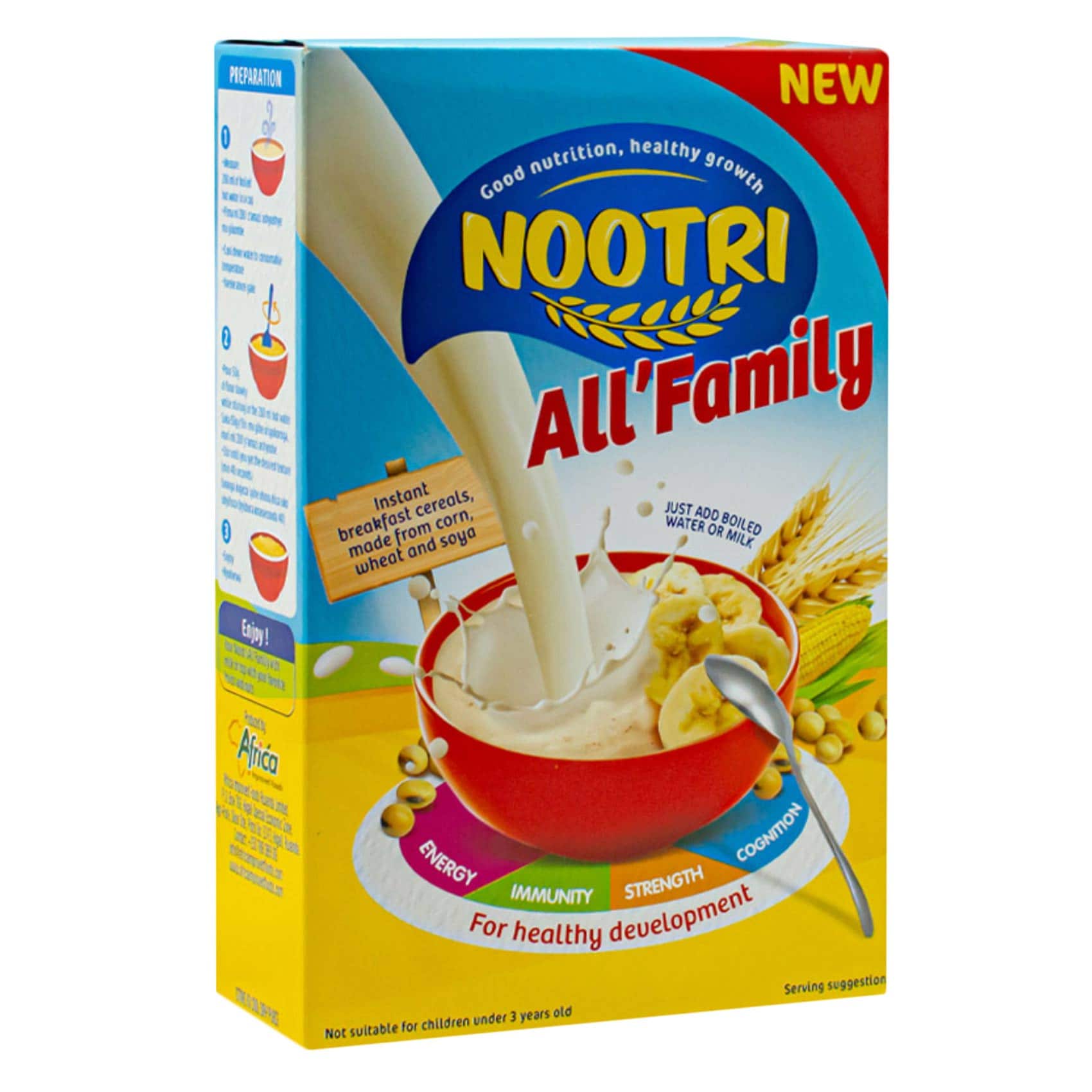
Nestlé’s integration of millet into Cerelac / Golden Morn and AIF’s inclusion of sorghum in Nootri, demonstrating the commercialization of superior nutritional profiles for consumer packaged goods
Carlsberg’s innovative approach to fonio brewing, marketing AAC’s unique taste profiles for export markets
Experience sharing on the successful substitution of maize with millet (50+%) and sorghum (up to 30%) in poultry feed, profiting from short-term price differentials versus maize – to achieve longer-term viability, dedicated efforts are required to improve AAC yields to drive down cost, as well as increased awareness for the efficacy of AACs in feed
Demand and consumer adoption: While both multinational and local consumer packaged goods companies have begun substituting established crops with AACs, they stress the need for coordinated public/private action to strengthen consumer pull and the perception of AACs
Demand acceleration requires shifting entrenched consumer perceptions (e.g., consumer awareness campaigns), positioning these crops as modern, aspirational, nutritious “super foods”, and emphasizing local sourcing aspects – away from the current perception of basic / lower-tier products
Coordinated multi-actor messaging is critical and requires a joint movement of NGOs, government and pre-competitive private sector collaboration, consistently reinforcing health and nutritional benefits; challenges may remain in categories with legal limitations to marketing, e.g. baby food
India’s successful increase in millet adoption, positioning millet as a “super food” in campaigns like the International Year of Millets, can serve as a valuable case example
Supply-side constraints and Farmer-Allied Intermediaries (FAIs): Participants continued to highlight supply-side challenges (e.g., quantity, quality and specs, reliability, price point) as a bottleneck to scaling AACs; engaging farmer-allied intermediaries as “linchpins” in value chain transformations can help to address many of these supply-side challenges:
Consistent, high-quality supply and competitive price points remain constraints, mainly driven by lower yields vs. maize (e.g., farmers achieving 1-1.5 t/ha for millet vs. 6-7 t/ha for commercial maize in optimal conditions), inconsistent post-harvest quality, fragmented farmer networks, and limited local processing capacity
Farmer-Allied Intermediaries (FAIs) offer proven scaling models that can address AACs’ core constraints making them critical to improve the value proposition of AACs and enable scaling; three were spotlighted on the call:
Babban Gona offers a technology-based “FAI in a box” model, allowing suppliers to build their own farmer-member ecosystems; the model achieves 99% loan repayment while doubling member incomes
Farmers to MARKET (FtMA) links farmers in their Farmer Service Center (FSC) model, providing them with access to training, inputs, mechanization, digitalization, and offtake markets; the required investment of 15 USD per farmer p.a., over 3 years, yields a 39% Return on Investmen (ROI), and FSCs are self-sustainable after 3 years
Yolélé supports fonio farmers on improved agronomic practices (over 50% yield gains and higher farmer margins) and is collaborating with Bühler on industrial-scale processing to reduce processing cost by 50%, increase throughput by 20x and cut water use by >98% – on equipment that can be used for sorghum and millet as well
Investing in seed supply systems is recognized as another critical enabler to increase farmer yields and cost competitiveness of AACs
Policy environment: Consensus among participants that policy levers remain critical enablers
3 main pillars of policies include fiscal and regulatory incentives (excise taxes, trade incentives, blending mandates), strategic public investment (seed systems, farmer training, institutional procurement), consumer advocacy (national campaigns on nutrition and climate resilience)
Coherence as a critical driver of adoption, showcased in the successful example of millet in India
Seed-system reform (faster certification, improved varieties) and excise incentives (e.g., beverage tax remission for local crop use) were highlighted by some participants as examples of meaningful policy measures for AACs
2026 collaboration opportunities:
The focus of AACI in Q1 2026 will on mobilization, incl. preparing for key moments, mapping of opportunities and ongoing initiatives, coalition building, co-creation of value chain alliance proof points;
this will form the basis to accelerate collaboration and implementation and scale AACI through 2026
Related:
For years, Africa’s traditional foods were dismissed as poor man’s food. They were shamed, sidelined, and replaced in the story of what “modern” eating should look like. Yet today, those very same foods are celebrated in Europe and sold at a premium as superfoods.
This shift is not just about diet trends ,it exposes a deeper story of how colonial systems devalued what was ours, only for it to be rebranded and sold back as luxury. The foods that once defined survival for millions of Africans are now packaged as health miracles for Western markets.
So the question is,why were Africa’s foods stripped of value at home, only to be exalted abroad? And what does this say about power, profit, and the urgent need for food sovereignty across the continent?
Agroecology is a polysemic concept whose contours have evolved over almost a century. There is not a single definition but a large number that reflect the concerns and commitments of the different authors and practitioners.
Thus, the scientific and technical perspective adopted by the High Level Panel of Experts (HLPE) in 2016 when it described agroecology as ‘the application of ecological concepts and principles to agricultural systems, focusing on the interactions between plants, animals, humans and the environment, to foster sustainable agricultural development in order to ensure food and nutrition security for all today and tomorrow’ has become too restrictive.
Indeed, the concept has become more complex as it addresses agri-food systems as a whole, and not just agricultural systems, by overcoming the divide between the scientific and technical dimensions of agroecology and its social and political dimensions, and by adopting a holistic perspective.
The resulting concept of agroecology, which is widely shared today, is that of a transdisciplinary, participatory and action-oriented approach, relating at the same time to a transdisciplinary science, a set of practices and a social movement.
As global food systems confronted escalating climate volatility, nutrition insecurity, and market concentration, agricultural biodiversity had moved from the margins of policy conversations to the center of resilience strategy. The webinar “Mainstreaming Agriculture Biodiversity in Global Value Chains” brought together leading scientists, policymakers, agribusiness leaders, and sustainability practitioners to explore how biodiversity-rich production systems could be integrated into modern, efficiency-driven value chains without compromising commercial viability.
The session examined the critical role of landraces, orphan crops, and genetic diversity in strengthening climate adaptation, improving nutritional outcomes, and reducing input dependencies. Speakers decoded why biodiversity was often undervalued in global trade structures—and how market incentives, digital traceability, certification innovations, and demand-side signalling could help shift the paradigm. From seed systems and regenerative practices to procurement models and corporate sustainability commitments, the conversation outlined pathways to redesign value chains that rewarded diversity rather than penalised it.
A key focus of the webinar was operationalising biodiversity at scale: developing farmer-led conservation models, creating premium markets for indigenous varieties, safeguarding intellectual property, and forging partnerships between governments, research institutions, and private-sector buyers. Participants also unpacked emerging global frameworks—from carbon markets to nature-positive reporting standards—that were reshaping how biodiversity was measured, valued, and monetised.
Ultimately, the session aimed to build a shared understanding of how agricultural biodiversity could transition from a niche sustainability goal to a mainstream business and policy imperative. By aligning science, markets, and governance, the webinar charted a roadmap for embedding biodiversity into the heart of global value chains—ensuring resilience, equity, and long-term competitiveness for producers and consumers alike.
Session Moderator Suchetana Choudhury Deputy Executive Editor, Agrospectrum Asia & India
Dr. Stefania Grando International Consultant, Agronomist and Plant Breeder - Science for new varieties breeds for uniformity - creating challenges re changing climate - Drylands will be particularly challenged by climate change, yet the dryland crops are less invested - Selection of varieties: include all the users eg consumers & processors, not only farmers - There is a need to bring together all the information from the many different breeding programs.
Dinesh Balam, Program Officer - Policy Advocacy and Coordination - Revitalizing Rainfed Agriculture Network. WASSAN (Watershed Support Services and Activities Network) is the anchoring secretariat of CoFTI (the Coalition of food systems transformation in India initiative) - in replacement of Dr. Arabinda Kumar Padhee Principal Secretary, Department of Agriculture and Farmers’ Empowerment, Government of Odisha - Land races and released varieties of millets in Odisha state in India, were compared for: farmer preferences & yield.
The land races were on top in both cases.
Released varieties were only grown because these were the only seed available.
So the govt register landraces as released varieties- evaluating them and developing seed systems.
This is now being undertaken for other forgotten foods.
- Noted the need for digital infrastructure - with multiple benefits for the farmer: traceability, export, quality control, identifying farmer needs, nutrition profiling, etc.
Joanna Kane-Potaka Executive Secretary, GFAiR - The Global Forum on Agricultural Research and Innovation - Policy is critical in any change but are not whole value chain based – bringing the different govt departments together will be much more holistic and beneficial. (Approach accredited to APAARI)
- Policies bias to the big crops. We need at minimum a level playing field. Better would be policies that incentivize biodiversity.
- Need to develop solutions that have a Triple Bottom Line – positively impacting environment, healthy food & farmer livelihoods (with a whole value chain approach). Cross cutting is ensuring inclusivity. This TBL approach is needed for research to setting policies etc.
- Smarter Staples needed– making current staples smarter (with a better TBL) & more diverse staples.
- Driving consumer demand for forgotten foods is key–not just with the consumer but all players along the value chain.
- GFAiR emphasizes “co-partnership”- all stakeholders part of co-designing thru to co-implementation.
Dr. Natalia Palacios Rojas Principal Scientist, International Maize and Wheat Improvement Center (CIMMYT) - Need more focus on foods that are good for the plant, farmers & consumers.
- Need to work on whole value chain.
- Avoid untraprocessed foods but look for ways to provide convenience foods.
- Adding value can improve the nutrition eg looking at different mixes of flour.
- Need to keep promoting the need to invest in agriculture.
- Support smallholder farmers to value add. Certification to export is too expensive & often benefits do not flow to farmers.
Dr. Juliana Jepkemoi Cheboi Vice chairman Plant Breeding Association Kenya (PBAK) - Policy is critical in any change but are not whole value chain based – bringing the different govt departments together will be much more holistic and beneficial. (Approach accredited to APAARI)
- Policies bias to the big crops. We need at minimum a level playing field. Better would be policies that incentivize biodiversity.
- Need to develop solutions that have a Triple Bottom Line – positively impacting environment, healthy food & farmer livelihoods (with a whole value chain approach). Cross cutting is ensuring inclusivity. This TBL approach is needed for research to setting policies etc.
- Smarter Staples needed– making current staples smarter (with a better TBL) & more diverse staples.
- Driving consumer demand for forgotten foods is key–not just with the consumer but all players along the value chain.
- GFAiR emphasizes “co-partnership” - all stakeholders part of co-designing thru to co-implementation.
Nnyaladzi Madzikigwa Director and Author Saffenergy Initiatives Multipurpose Co-operative Society, Botwana
18/12 In an exclusive AgroSpectrum interview, Nnyaladzi Madzikigwa, Author and Director of Saffenergy Initiatives, Botswana, explains why safflower is emerging as a strategic resilience crop rather than a speculative diversification bet.
Nnyaladzi argues that safflower’s real advantage lies in income stability, low input dependence, and multi-stream value creation—qualities that make it economically superior to high-yield but volatile dryland staples under climate stress. By rejecting bulk commodity markets and anchoring safflower in cooperative-owned processing, traceability, and ethical origin branding, Botswana is positioning the crop as an identity-based export for nutraceutical, cosmetic, and wellness markets.
Crucially, the model integrates biodiversity stewardship, women- and youth-led ownership, and Gender Based Violence (GBV) - responsive livelihoods, reframing safflower not merely as an agronomic intervention but as a national strategy for climate resilience, social recovery, and rural economic sovereignty.
BOTSWANA BIODIVERSITY ADVANTAGE
Botswana ecosystem is diverse, wetlands ,savanna desert and salt pans. Despite the low rainfall and high temperatures, Botswana hosts a variety of well adapted indigenous wildlife and crop species
Given it's climatic resilence, Safflower adds to existing crop varieties (Biodiversity diversity) in Botswana. The Biodiversity is not only a natural heritage. It is an economic opportunity. Safflower in particular has emerged as one of the most promising climate resilient crop,due to its ability to grow in marginal soils,l ow rainfall conditions and high temperatures.
WHY SAFFLOWER
Safflower is uniquely positioned to become a model Biodiversity-led crop for three reasons.
Climate resilience:it strives where most traditional crops fall.
High value Products: oil, cosmetics, herbal extracts, animal feeds and medicine uses.
Low input costs: Farmers need minimal fertilizers and water, reducing production risk.
CREATING RURAL ENTREPRENEURSHIP THROUGH VALUE ADDITION
Majority of the population is in rural areas, unemployed and entrepreneurship is at a micro level and agro based. Farming is along traditional field crops(maize sorghum) with little processing and value addition through milling. Given it's great adaptability to Botswana Climate and it's products versatility, Safflower presents an opportunity for rural agro-industry development and job creation. Through cooperatives rural communities can produce.
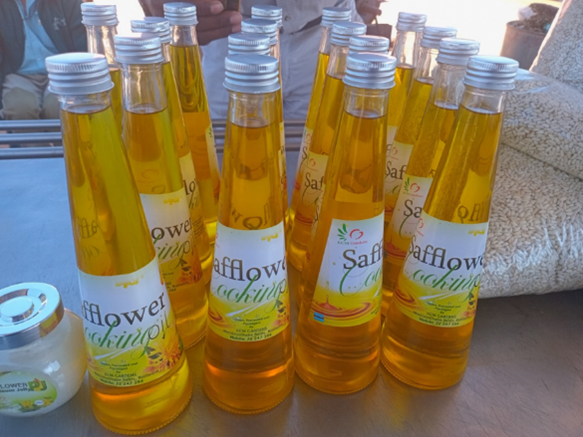
cold pressed safflower oil
Natural colorants & herbal extracts
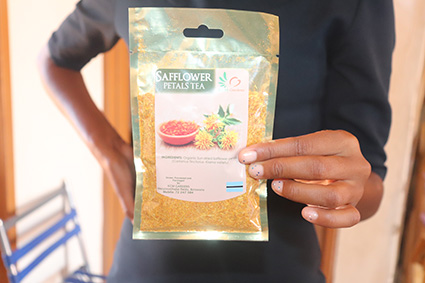
specialty teas and wellness blends
cosmetics and skincare oils
These products can be branded around Botswana's Biodiversity identity giving communities a competitive edge in both local and export markets.
THE ROLE OF EXPORT ORIENTED CO-OPERATIVES
To make Safflower a replicable model for rural entrepreneurship, we must strengthen cooperative structures. Cooperative allow small scale farmers to:
Pool resources
Access training and technology
Meet export standards collectively and branding
Negotiate better price
This cooperative driven model is already working in countries like Kenya, Ethiopia and India, and it is highly adaptable to Botswana's context
REPLICABLE PATHWAYS FOR EXPORT GROWTH
For safflower to scale, Botswana can focus on three pathways:
Standardized Product Models: training farmers on seed selection, irrigation and post harvest handling ,ensuring consistency and quality
Rural processing hubs: Establishing small community owned processing units for oil extraction and product manufacturing
Certification and Traceability: Investing in organic certification fair trade labels and Traceability systems to attract premium buyers.
In this transformative episode of the Growth Well Podcast, Oabona Michael Kgengwenyane sits down with Sarah Mosarwa, a visionary farmer and former electrician who is leading the charge in Botswana’s agricultural sector. Sarah shares her incredible pivot from a 25-year corporate career to becoming a pioneer in Safflower farming—a crop she dubs the "Green Diamond."
The "GrowthWell Podcast" focuses on African entrepreneurship and leadership, is hosted by Oabona Michael Kgengwenyane. This podcast shares stories of guests from Botswana and Africa and is produced by Innolead Consulting.
Who is Sarah Mosarwa? Sarah Mosarwa is a pioneering farmer and the director at KCM Farm in Metsimotlhabe, about 20 km northwest of Gaborone. After a 25-year career as an electrical technician, she transitioned to agriculture in 2018 and discovered safflower in 2021 via support from Botswana University of Agriculture and Natural Resources.
Sarah Mosarwais a trailblazer in championing safflower as a climate-smart, drought-resilient cash crop well-suited to Botswana’s environment. Her efforts spanning technical know-how, seed multiplication, farmer training, and market development position safflower as a transformative agribusiness with local and export potential.
With Africa importing billions in food annually and climate change threatening traditional crops like maize, Sarah breaks down why Safflower is the ultimate solution.
From its drought resistance and deep taproots to its high commercial value in cooking oil, cosmetics, and animal feed, this episode is a masterclass in modern agribusiness.
Sarah also discusses the economics of farming, revealing how Safflower can yield significantly higher returns per hectare than traditional grains.
Whether you are an aspiring entrepreneur, a smallholder farmer, or interested in the macro-economics of African food security, this conversation offers a blueprint for turning soil into wealth. Tune in to learn how local cooperatives and strategic partnerships with institutions like BUAN are reshaping the future of farming.
The Botswana University of Agriculture and Natural Resources (BUAN) is actively involved in safflower production by conducting research on its cultivation, promoting its benefits, and collaborating with farmers to increase its adoption and commercial expansion in Botswana.
8-12 December 2025, in Uganda. Strengthening communication skills of young researchers in Anglophone East Africa.
Access Agriculture, leading GFAiR's Collective Action on Inclusive Digital Agriculture and in partnership with RUFORUM, conducted a residential workshop designed for selected early-career researchers who are affiliated to institutions of higher learning or national research institutes in sub-Saharan Africa.
The workshop for Anglophone countries was held, 8-12 December 2025, in Uganda.
This regional capacity-building workshop was to strengthen the communication skills of young researchers in Anglophone East Africa. The event brought together early-career researchers from diverse disciplines to enhance their ability to communicate scientific evidence clearly, confidently, and strategically to different audiences, including policymakers, development practitioners, farmers’ organizations, and the media.
Through a mix of practical training sessions, peer learning, and hands-on exercises, participants built skills in scientific writing, policy briefs, oral presentations, and digital communication. The workshop aimed to empower young researchers to increase the visibility, relevance, and impact of their work, foster regional networking, and contribute more effectively to evidence-informed decision-making in agricultural and food systems across East Africa.
Continuous feedback, peer review, and coaching enabled participants to apply new skills directly to their own work, strengthening confidence, clarity, and outreach impact.
ERAs (Entrepreneurs for Rural Access) are local, independent entrepreneurs who use access-friendly communication tools—especially farmer-to-farmer videos—to deliver practical agricultural knowledge to rural communities. They operate as service providers, often organizing village screenings, facilitating discussions, and linking farmers to locally relevant innovations in agriculture, natural resource management, and livelihoods.
Rather than acting as trainers or extension agents, ERAs function as knowledge intermediaries and rural communication entrepreneurs, adapting content to local languages and contexts while building sustainable micro-businesses around information services. The model strengthens last-mile knowledge delivery, enhances peer learning among farmers, and creates income opportunities for young professionals engaged in rural development.
WSIS+20 High-Level Meeting of the United Nations General Assembly - Side Event “Harnessing AI, Digital Innovations, and STI for Sustainable and Advanced Agrifood Systems: Digital Agriculture and AI Roadmap and Knowledge & Partnership Gateways”, organized by the FAO Office of Innovation in collaboration with ITU.
This session explored how Artificial Intelligence (AI), digital innovations, and Science, Technology and Innovation (STI) are reshaping agrifood systems and advancing the WSIS Action Line C7 on e-Agriculture. Building on two decades of FAO’s leadership in promoting inclusive digital transformation, the event will highlight the FAO Digital Agriculture and AI Roadmap and the Knowledge & Partnership Gateways as catalysts for scaling responsible, equitable, and sustainable digital solutions.
Discussions addressed enabling governance frameworks, including data governance, interoperability standards, and ethical AI principles, as well as pathways to expand digital inclusion for smallholder farmers, women, youth, and marginalized communities.
The event provided a platform for sharing insights, strengthening multi-stakeholder partnerships, and identifying priority actions to accelerate progress toward climate-resilient, efficient, and inclusive agrifood systems.
Angelique Uwimana, Innovation Specialist (Digital Agriculture), Office of Innovation, FAO – Moderator
Vincent Martin, Director, Office of Innovation, FAO – Opening remarks
Henry van Burgsteden, Senior Innovation Officer, Office of Innovation, FAO
Erik Van Ingen, Senior Digital Agriculture and Innovation Specialist, Office of Innovation, FAO
Roxana Widmer-Iliescu, Head of Digital Inclusion Service, ITU
Giacomo Rambaldi, Senior Advisor, Digitalization for Agriculture
Innocent Musabyimana, Chief Agricultural Technologies Officer and TAAT Coordinator, African Development Bank
Ben Addom, Senior Policy Adviser, The Commonwealth
Sah Gitanjali, Strategy and Policy Coordinator, ITU – Closing remarks
AgriLLM was presented to Bill Gates alongside CGIAR partners at the UAE Presidential Court, CGIAR, The World Bank, Embrapa, and others. It marked a major milestone in bringing purposeful, domain-focused AI to the people who need it most.
Representing a comprehensive set of AI Building blocks, AgriLLM has pushed its engineering teams to solve some of the hardest problems in applied AI:
🌱 Multi-modal, multilingual LLMs for low-resource environments.
🌱 Retrieval pipelines built for noisy, heterogeneous agricultural data.
🌱 Agentic architectures capable of grounding, reasoning, and planning.
🌱 Safety and evaluation frameworks co-designed with domain experts.
CGIAR is teaming up with AI experts like ai71 to unlock 50 years of global data and expertise in an instant. New AI-powered apps and technologies can provide farmers with immediate, accurate, real-time insights and guidance on planting, weather, early warning, resource management, and more, whenever they need them.
“The AI Agriculture Ecosystem is rooted in science and powered by global collaboration. By combining the AI expertise and insights from global partners, the AI Agriculture Ecosystem can develop innovations that strengthen decision-making, guide policies and investments, and accelerate the adoption of digital tools – supporting vulnerable communities in the Global South and farmers in the Global North facing similar challenges.” Ismahane Elouafi, CGIAR’s Executive Managing Director.
Several other AI breakthroughs were showcased at the Abu Dhabi AI Agriculture Ecosystem Launch, including CGIAR’s new AI Hub. With AI71 - an Abu Dhabi-based artificial intelligence company - as a core partner, the AI Hub is a collaborative digital workspace designed to test, scale, and incubate AI innovations. It acts as a unified, interoperable digital ecosystem where experts from different sectors and disciplines can pool knowledge and collaborate on agricultural solutions, making data accessible and AI-ready.
"The UAE is harnessing artificial intelligence for global good, to help protect the farmers and communities most exposed to climate volatility. By connecting our national research and AI capabilities with leading global partners, we are turning science into real tools that reach people on the ground. Through our partnership with the Gates Foundation, we are advancing Agri-AI solutions that support millions of smallholder farmers facing unpredictable weather, helping secure a more stable and hopeful future for communities worldwide.” Her Excellency Mariam Almheiri, Head of the International Affairs Office at the UAE Presidential Court.
Groundbreaking advances delivered by the AI Hub so far include:
AgriLLM, an open-source AI model offering multilingual, real-time digital advisory that connects farmers, advisors, and policymakers;
IWMI’s AI-Water Project that supports water governance, investment and integrated planning to strengthen farmer resilience in the face of droughts and floods - a global dashboard is currently under development for the 2026 UN Water Conference;
The AI Genebank platform that accelerates crop improvement by rapidly screening hundreds of thousands of plant samples for climate-resilient traits, and then linking them to crop research via an interactive chatbot.
“Partnerships are the cornerstone of food systems transformation. The AI Hub brings together world-leading AI expertise to boost digital capacity, power innovation, and unlock transformative digital tools to support rural farmers on the frontlines of the agricultural crisis.” Sandra Milach
The launch of Abu Dhabi’s AI for Agriculture Ecosystem was a pivotal moment for a global alliance that actively harnesses artificial intelligence to strengthen food security and agricultural resilience worldwide and follows on from the USD 200 million UAE-Gates Foundation partnership announced at COP28 to advance agricultural innovation.
This has resulted in four landmark initiatives:
the Institute for Agriculture and Artificial Intelligence (IA|AI),
the CGIAR AI Hub,
AgriLLM, and
AIM for Scale.
The AI for Agriculture Ecosystem is founded on an alliance of partnerships between the International Affairs Office at the UAE Presidential Court and four Abu Dhabi-based institutions, working with international partners such as the Gates Foundation, CGIAR, the World Bank, and others.
Related: COP30 session Livestreamed 14 November 2025.
AgriLLM is a collaborative AI initiative leveraging advanced language models to expand equitable access to agricultural knowledge worldwide. It is developing a domain-specific large language model (LLM) for agriculture, benchmarked against leading systems and to be released open-source as a public good - bridging research, policy, and field-level impact.
Established by the International Affairs Office at the Presidential Court of the UAE, with AI71 as the technology partner, AgriLLM is co-led by over 15 global partners including CGIAR, EMBRAPA, the Gates Foundation, FAO, IFAD, the World Bank, and ECHO, alongside universities and research centers.
This COP30 session offered an early look at the initiative’s journey so far - what AgriLLM is, how it was designed, and its grounding in scientific knowledge and local realities - as well as a preview of what’s next ahead of its global launch in December 2025.
10–11 December 2025. Abu Dhabi, United Arab Emirates. The 23rd Science Council of CGIAR, held in Abu Dhabi in December 2025, convened senior scientists, research leaders, policymakers, and partners to provide strategic guidance on CGIAR’s science agenda amid accelerating climate, food, and nutrition challenges. The meeting focused on reviewing progress across CGIAR’s research portfolio, assessing scientific quality and relevance, and advising on priorities for impact in low- and middle-income countries, particularly in Africa, Asia, and the Middle East. Hosting the Council in the UAE highlighted the growing engagement of the Gulf region in global food security, climate resilience, and agricultural innovation.
Discussions during the Council emphasized systems transformation, including climate-resilient crops, sustainable food systems, biodiversity, nutrition, and inclusive digital innovations for smallholders. Strong attention was given to strengthening partnerships with National Agricultural Research Systems (NARS), regional bodies, and policymakers to ensure that CGIAR science translated into scalable, locally grounded solutions. The 23rd Science Council thus served as a key moment to align scientific excellence with global priorities such as the SDGs, climate adaptation, and equitable food system transformation.
9/12. GFAiR Roundtable: What role can funders play to ensure a genuine co-partnership approach of NARS in international agricultural R4D.
This roundtable brought together funders, research organizations, and NARS representatives. The discussion focused on how funding modalities, governance arrangements, and incentive structures can either enable or hinder equitable partnerships, highlighting the need to move beyond project-based contracting toward shared agenda setting, long-term institutional support, and mutual accountability.
Participants emphasized that funders play a critical role in reshaping power dynamics by supporting NARS leadership, strengthening national research capacities, and embedding co-creation, trust, and ownership at the core of international agricultural research for development collaborations.
Recording forthcoming
9/12. Friends of Gender: AI for All? Harnessing Artificial Intelligence for Gender Responsive and Inclusive Agricultural Innovation
This side event brought together researchers, practitioners, funders, and policymakers to examine how artificial intelligence can advance—rather than undermine—gender equality in agricultural innovation. The discussion explored both the opportunities of AI to improve access to information, services, and markets for women and marginalized groups, and the risks of reinforcing existing biases through data gaps, unequal access to digital tools, and exclusion from technology design processes. Participants emphasized the importance of gender-responsive data, inclusive governance of AI systems, and targeted investments to ensure that AI-driven agricultural solutions are co-designed with women and smallholder farmers and contribute to more equitable and inclusive food systems.
8/12 Steering Committee meeting GFAiR
The GFAiR Steering Committee meeting held on 8 December 2025 in Abu Dhabi (hybrid format) reviewed the network’s overall performance in 2025 and set strategic directions for 2026. The Committee discussed progress against KPIs, key outcomes, risks and mitigation measures, and approved the 2026 baseline.
A major focus was a deep dive into GFAiR’s Collective Actions, covering Forgotten Foods, Agroecology (with a focus on biopesticides), Inclusive Digital Agriculture, Land Tenure and Climate Change, and Higher Education. Members noted strong results in partnership building, fundraising, and knowledge generation across these initiatives, alongside clear milestones to scale impact, strengthen policy uptake, and deepen regional and cross-sectoral collaboration in 2026.
The Steering Committee also reviewed governance, finance, and forward-looking priorities. It endorsed the roadmap, governance model, workplan, and budget for the Global NARS Consortium, approved the 2026 Annual Workplan and Budget, and confirmed priorities for partnerships and resource mobilization, including private sector engagement.
Key governance decisions included endorsement of new guiding principles for Collective Actions and updates to partnership principles, as well as agreement on Steering Committee rotations. Regional updates from Africa, Asia, and Latin America and the Caribbean helped shape a prioritized engagement list for 2026, and the meeting concluded with a summary of key decisions and agreement on next steps and timing for the next Steering Committee check-in.
12 December 2025. Annual General Assembly (AGA) of the Donor Platform brought together members, partners and experts to exchange knowledge, shape strategic priorities and collaborate on advancing sustainable agriculture and rural development.
Thr panellists were invited to collectively reflect on and develop approaches to financing for food systems in this unpredictable global context, under the theme: “Investing in the Future of Agrifood Systems: New Directions for Development Finance.”
Objectives:
Identify catalytic financing approaches that enable donors and Public Development Banks (PDBs) to scale systemic transformation in food systems.
Engage in an interactive, forward-looking dialogue on how to sustain and expand financing for food systems amid crises and declining development budgets.
Collaborate across the thematic areas of rural youth employment and land governance in a joint session that connects insights and priorities across sectors.
Assess the implications of major 2025 global events and platforms for the future of food systems finance and the collective donor agenda.
Welcome and Opening Remarks
Bruce Campbell, GDPRD co-Chair; Senior Policy Advisor, Food Systems Section, Swiss Agency for Development and Cooperation (SDC), and Focal Point, SDC Agriculture and Food Systems Network, Switzerland
Federica de Gaetano, GDPRD co-Chair; Food Security and Rural Development Expert, Italian Agency for Development Cooperation (AICS)
Keynote Address - Prioritizing agrifood systems amid upheaval in development finance
Alexander Müller, Founder and Managing Director, TMG Think Tank and former Deputy Director-General, Food and Agriculture Organization of the United Nations (FAO)
Donor Coordination and Multilateralism in Agrifood Systems Financing
GDPRD High-Level Advisory Group and White Paper
Aligning strategies and strengthening coherent agrifood financing mechanisms
Leonard Mizzi, Head of Unit, Sustainable Agri-Food Systems and Fisheries, Directorate-General for International Partnerships, European Commission
Max von Bonsdorff, Chief Partnership Officer, Global and Multilateral Engagement, International Fund for Agricultural Development (IFAD)
High-Level Discussion Panel
Evolving roles in a fragmented aid landscape
Navigating ODA reductions and financial reforms, expanding private sector engagement, and building effective collaborative financing mechanisms
Máximo Torero Cullen, Chief Economist, FAO
Carlo Batori, Deputy Director-General, Directorate General for Development Cooperation, Ministry of Foreign Affairs and International Cooperation, Italy
Lawrence Haddad, Executive Director, GAIN
Alice Ruhweza, President, AGRA
Tom Arnold, Chair, IARDC
Stefania Lenoci, World Bank Group Resident Representative to Italy
Catalysing Finance and Impact for Agrifood Systems
Strengthening coordination among private sector, development finance, and government actors at the country level
Tim Diphoorn, One Acre Fund
Rodrigo Madrazo, CEO, EDFI Management Company
Songbae Lee, Independent Advisor and former Agricultural Finance Team Lead, USAID
Ambassador Khusrav Noziri, Assistant Director General, Islamic Organisation for Food Security (IOFS)
Alexandre Rutikanga, Chief Technical Advisor, Ministry of Agriculture and Animal Resources (MINAGRI), Republic of Rwanda; UN Food Systems Member State National Dialogue Convenor
The Future of Youth in Agrifood Systems
Joint session by the Land and Rural Youth Working Groups
Ward Anseeuw, FAO
Elisabetta Cangelosi, Gender Justice Advisor, International Land Coalition (ILC)
Evance Ochola, YPARD / Nutrika / YGAK
John F. Kelvin, Fellow of the International Land Coalition young leadership program
Marcos Montoiro, UNCCD
Multilateral and Geopolitical Dynamics of Agrifood Systems Financing
Outcomes from 2025: Key policy developments, summit commitments, and financing trends
Priorities for 2026
Nikita Eriksen-Hamel, Global Affairs Canad
Anas A. Al-Nabulsi, CFS Chair
Sandra Bartelt, Principal Adviser for G7 and G20 Sustainable Development Agendas, European Commission, Directorate-General for International Partnerships
Clara Albergaria Pacheco, French Ministry for Europe and Foreign Affairs
The Africa Network for Sensory Evaluation Research (ANSWER) is a pan-African network dedicated to advancing sensory and consumer science to support agri-food research, innovation, and market development across the continent. ANSWER brings together researchers, universities, food scientists, and development partners to strengthen how food quality, taste, texture, and consumer preferences are understood and integrated into agricultural research and value-chain development. Its core focus is ensuring that food innovations are not only technically sound, but also acceptable and desirable to consumers.
ANSWER plays a critical capacity-building role by promoting training, methodological harmonisation, and collaboration in sensory evaluation and consumer research. The network supports the use of rigorous sensory methods—such as descriptive analysis, consumer testing, and participatory approaches—adapted to African contexts. Through workshops, collaborative research, and knowledge exchange, ANSWER helps address long-standing gaps in skills, infrastructure, and standardised approaches to sensory science across African institutions.
By linking sensory science to priorities such as nutrition, food system transformation, and market access, ANSWER contributes to the development of food products that better meet local needs, preferences, and cultural expectations. Its work is particularly relevant for underutilised and traditional foods, biofortified crops, and agroecological innovations, where consumer acceptance is essential for scaling impact. Overall, ANSWER strengthens the evidence base for demand-driven agricultural research and supports more inclusive, consumer-responsive food systems in Africa.
Upcoming event:
25-26 November 2026. Pretoria, South Africa. AFROSENSE 2026 - bringing together researchers and practitioners to advance sensory and consumer science for Africa’s food systems.
Winnie Wambugu is the Director of Nakuru Tubers, a trailblazing social enterprise revolutionizing food security in Kenya.
Nakuru Tubers specializes in producing sustainability-resilient, disease-free seed potatoes using cutting-edge tissue culture and hydroponic technologies. Through this innovation, the company directly addresses the needs of smallholder farmers, equipping them with the tools to increase productivity and improve livelihoods.
Beyond seed production, Nakuru Tubers is deeply committed to empowering women and youth by offering hands-on training in sustainable agricultural practices.
With over three years of specialized experience in seed potato research, Ms. Winnie previously servedas an assistant lecturer at Egerton University’s Faculty of Agriculture. She holds an MSc in Horticulture and has enhanced her expertise through advanced studies in Plant Breeding and Seed Systems at Makerere University.
Her work increasingly focuses on neglected and underutilized species (NUS), particularly indigenous vegetables, to reduce postharvest losses and strengthen local food systems. Through applied research and enterprise design, she champions last-mile models that link scientific innovation to real-world adoption, with a strong emphasis on women and youth inclusion.
Cornelia is a Public Health Nursing professional and agribusiness entrepreneur who founded and leads Nelia’s Foods Limited, a youth led food processing company in Ghana. The enterprise produces natural powdered spices from locally grown crops, with strong attention to food safety and product quality. She works directly with women smallholder farmers in Northern and UpperWest Ghana, strengthening incomes, climate smart practices and healthier diets.
As a trainer and coach she has mentored more than 1,000 women and young people in agribusiness and entrepreneurship. Partnerships include the University of Ghana, the Postharvest Innovation Hub, USAID, GIZ, GTI and the Ministry of Food and Agriculture.
Both supports were in very practical, business-growth ways:
Equipment support: Nelia’s Foods received newly acquired equipment supported by Feed the Future/USAID via GTI.
Capacity building / staff training: The company organized internal training for its team to use the new equipment, aimed at strengthening operational capacity and improving production efficiency.
Scale and impact goals: the support is framed around helping the business scale, contribute to reducing post-harvest losses, and support job creation, especially for youth.
Program context: GTI’s overall purpose is to spur enterprise-driven growth and improve the broader system in which firms operate (investment, trade, SME development).