Platform for African – European Partnership in Agricultural Research for Development
Showing posts with label FAO. Show all posts

Saturday, August 1, 2026

Highlights from the 10th FARA General Assembly and 9th Africa Agriculture Science Week

27–30 July 2026. Abuja, Nigeria. Agricultural researchers, policymakers, farmers' organizations, private-sector leaders and development partners gathered for the 9th Africa Agriculture Science Week (AASW9) and the 10th Forum for Agricultural Research in Africa (FARA) General Assembly. 

Under the theme of Innovations and Partnerships for Resilient and Sustainable Agrifood Systems in Africa, the conference programme addressed four interconnected sub-themes: emerging agricultural technologies and innovations; climate-resilient agrifood systems; nutrition, health and urban food systems; and enabling impact at scale through policies, financing, capacities, institutions and inclusion. 

The programme included 25 side events and eight parallel or related sessions, with a cumulative attendance of 1,791 across the tracked sessions. Side events recorded 1,044 attendances, while parallel and other sessions attracted 747. An additional 312 participants joined selected sessions online. The exhibition brought together 35 exhibitors, including 20 national agricultural research institutes and federal colleges and 15 international and regional organisations


27 July

  • Welcome Address: Dr. Adamu Abubakar Dabban, Executive Secretary, ARCN
  • Opening Remarks: Dr. Aggrey Agumya, Executive Director, FARA
  • Context Presentation: “The State of African Agri-food System: Harnessing Innovation and Partnership to Achieve CAADP-Kampala Targets”: Dr. Debisi Araba, Managing Director, Akademiya2063
  • Ms. Bongiwe Njobe, Chairperson of the FARA Board of Directors
  • Dr. Babafemi Oyewole, CEO, PAFO
  • Dr. Baboucarr Manneh, Director General, AfricaRice
  • Obai Khalifa, Deputy Director, GF Africa
  • Dr. Abebe Haile-Gabriel, Assistant Director General, FAO-RAF
  • HE Moses Vilakati, Commissioner, AUC-ARBE
  • Alhaji Idi Mukhtar Maiha, Honorable Minister of Federal Livestock Development
  • Abubakar Kyari CON, Honorable Minister of Agriculture and Food Security, Nigeria
  • Keynote Paper: “Innovation and Partnerships for resilient and sustainable agrifood systems in Africa.” - Dr. Simeon Ehui, Director General, IITA

28 July

Overview of Science & Partnership for Agriculture Conference (SPAC)

  • Dr. Irene Annor-Frempong, DRI Emeritus, FARA
  • SPAC Study: “State of Agricultural Research in Africa, highlights of key trends, challenges, and opportunities.” - presented by Dr. Emmanuel Njukwe, DRI, CORAF
Panel Discussion: “Optimizing Agricultural Research to Deliver CAADP-Kampala Outcomes at the Country Level”
  • Facilitator: Dr. Sylvester Dickson Baguma, ExeD, ASARECA
  • Prof. Paul Pinnock Bonsu, DG, CSIR-Ghana
  • Dr. Dumisami Kutywayo Okuku, Chief Director, DRSS Zimbabwe
  • Dr. Ahmed Elmekass, Director, AU-SAFGRAD
  • Prof. Maher Elmaghraby, VP Production, ARC Egypt Africa
  • Dr. Patrick Ketiem, DG, KALRO
  • Dr. Namukolo Covic, Head, CGIAR Liaison Office for Africa
Soil Health Panel: “Interphase of Science and Private Sector Partnerships for Restoration of Africa’s degraded Soil”
  • Prof. Jibrin Jibrin, SSSN
  • Dr. Kennedy Were, KALRO
  • Eng. Clement Asana, OCP Africa
  • Dr. Mel Oluoch, Sasakawa Africa

29 July Nigeria day

  1. Keynote Address I: “Nigeria’s story of Science and Technology” Dr. Kingsley Tochukwu Udeh SAN, Hon. Minister of Innovation, Science and Technology
  2. Keynote Address II: “Advances in Marine and Blue Economy in Nigeria” Adegboyega Oyetola, Hon. Minister of Marine and Blue Economy
  3. Keynote Address III: “Advancing Nigeria’s Livestock Industry. Pushing the technologies that matter” Alhaji Idi Mukhtar Maiha, Hon. Minister of Federal Livestock Development
  4. Keynote Address IV: “Progress on Agricultural Research in Nigeria. The change is here.” Senator Abubakar Kyari CON, Hon. Minister of Agriculture and Food Security

30 July: 10th FARA General Assembly

  • Opening Remarks by FARA Chairperson Mad. Bongiwe Njobe, Chairperson of the FARA Board of Directors
  • Synthesis of Outcomes of the 9th Africa Agriculture Science Week Prof. Wole Fatunbi, Ag. DRI, FARA
  • The Board’s Accountability report Mad. Bongiwe Njobe, Chairperson of the FARA Board of Directors
  • Highlights of the FARA Secretariat’s achievements over July 2023 – July 2026 Dr. Aggrey Agumya, Executive Director, FARA
  • Amendments to the Constitution and Governance Manual Mad. Elizabeth Nsimadala, Chairperson of the Nominations and Governance Committee of the FARA Board of Directors


Side events 


Organised by the three Agroecology Regional Multi-Actor Research Networks (RMRNs - comprising RMRNEA, RADIUS in West Africa, and RAENS in Southern Africa), FARA, the Regional Universities Forum for Capacity Building in Agriculture (RUFORUM), the Research Institute of Organic Agriculture (FiBL) in the framework of the GIZ-led Knowledge Centre for Organic Agriculture and Agroecology in Africa (KCOA) and RAENS projects, the Joint Research Centre of the European Commission (JRC) and other relevant stakeholders.

Set up of the Agroecology Regional Multi-Actor Research Networks (RMRNs) in Africa:
  • Continental: Dr. Kwaku Antwi, FARA
  • East Africa: Dr. Frank Chidawanyika, ICIPE
  • Southern Africa: Dr. Sedera Norotiana Rasambo, CCARDESA
  • West Africa: Dr. Fructueuse Ouidoh Agbodjogbe, CORAF/UCAD
Presentation of 10 RMRN Agroecology Studies/Methodologies
  • Moderator: Prof. Majaliwa Mwanjololo, RUFORUM
  • Dr. Irene Kadzere, FiBL
  • Mr. Markus Arbenz, FiBL
  • Dr. Pascal Tillie, EU-JRC
  • Dr. Felix Rembold, EU-JRC
  • Dr. Florence Nakayiwa, RUFORUM


Scaling Agricultural Innovations in Africa Through Integrated Innovation Ecosystems: Transforming Agrifood Systems in Nigeria and Across Africa

For four decades, the Sasakawa Africa Association (SAA) has worked across Africa to bridge the gap
between agricultural research and farmer adoption through practical, farmer-centered approaches. 

Gender Equality in Food, Land and Water Systems: Evidence and Solutions for Urgent Action

Despite their central contributions, women continue to face structural barriers in accessing
land, finance, markets, technologies, information, and decision-making opportunities.

Beyond Productivity: Building Resilient, Inclusive and Sustainable Food Systems for Africa’s Future

Moving beyond productivity means placing equal emphasis on innovation, entrepreneurship, research translation, strategic partnerships, responsible resource management and evidence-informed policymaking. These interconnected pillars are essential for building agrifood systems that are economically competitive, environmentally sustainable and socially inclusive.

4th Biennial Africa Climate Smart Agriculture Stakeholders Conference

The central objective of 2026 Biennial CSA Stakeholders Conferences was to establish the current state of CSA in Africa and the imperatives for agroecology transition, biodiversity conservation, and soil health on the continent.

Small Insects, Big Returns: Making the Business Case for Sustainable Feed in East Africa.

Despite growing interest, the large-scale production of insects as feed remains constrained by limited
access to finance and limited investment in scaling beyond pilot projects. As with most agricultural
value chains, access to credit for small and medium enterprises involved in insect farming is limited,
as financial institutions often perceive insect farming as high-risk due to limited understanding of this
new agricultural commodity value chain.

Catalyzing Country Investments for the Implementation of the Africa Fertilizer and Soil Health-Action Plan (AFSH-AP): Pathways to Bankable National Delivery

The central objective of this session was to develop practical, bankable pathways for African countries to invest in and implement SIA and AFSH-AP at scale.
  • Designing Bankable Soil Health Investment Pathways in Africa Anthony Chapoto, ANAPRI
  • Country Case Presentation “Practical Implementation Experiences & Financing Pathways”
  • Panel Discussion “Financing models, institutional coordination, & scaling pathways”
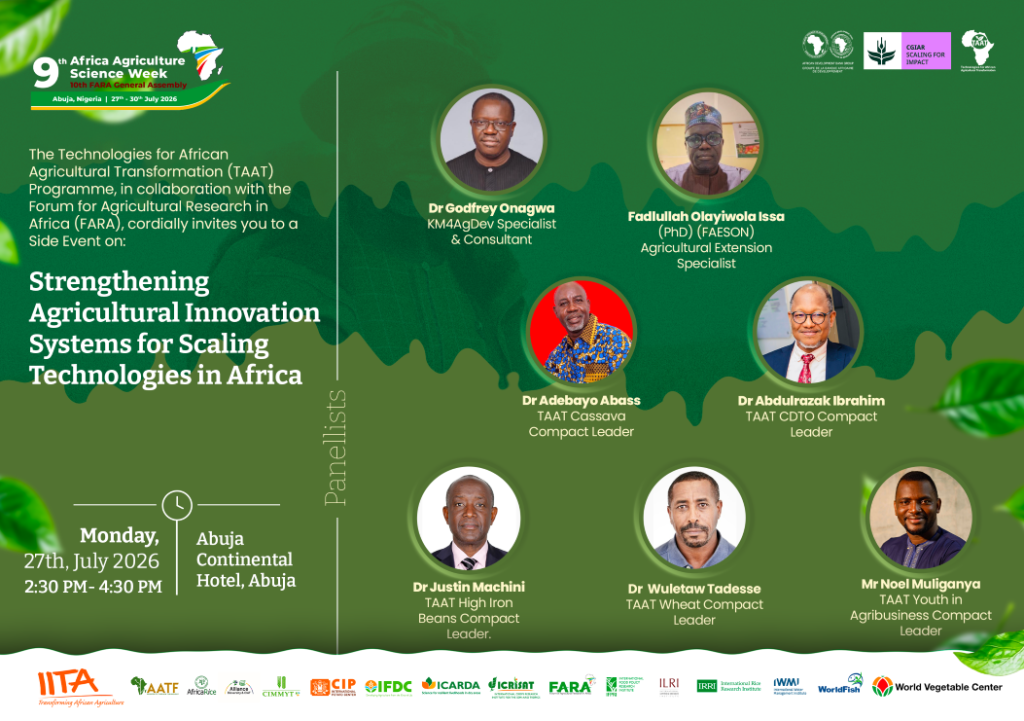
Strengthening Agricultural Innovation Systems for Scaling Technologies in Africa

The Technologies for African Agricultural Transformation (TAAT) Programme, established by the African Development Bank (AfDB) under the Feed Africa Strategy, was designed to accelerate the deployment and scaling of proven agricultural technologies capable of transforming productivity, strengthening resilience, improving food and nutrition security, generating employment and reducing poverty.

Harnessing AI-Enabled Digital Agricultural Extension and Advisory Systems to Accelerate Africa’s Agricultural Transformation

This event showcased AI-enabled digital extension initiatives, including the Nigeria Public Private
Partnership AI-enabled Digital Advisory Platform (NPPP AI-DAP) and the AFAAS
AIEnabled Digital User Platform, as scalable models for Africa. 

  • Keynote address — “The Future of AI-Enabled Extension and Advisory Systems in Africa”: Dr Godwin Atswer – Sasakawa Association Africa 
Digital Public Infrastructure (DPI) — How continental stakeholders coordinate on DPI solutions to reduce fragmentation and build toward scale and adoption. 
  • National government — Ayodele Olawunmi, Director, Federal Dept of Agricultural Extension Services, Federal Ministry of Agriculture, Nigeria 
  • Digital innovation & agritech — Tajudeen Yahaya (CEO, Extension Africa); Dev Afrique; Aisha Hadejia (Sahel Consulting Partner) 
  • Farmer organisations — Representatives from Nigeria and SSA countries, NIFAAS
  • AI ethics & digital governance — Chika Oke (DOA Law); Representative, NITDA, Bashira Hassan (Africa Practice)

Youth for Nutrition in Inclusive Science and Innovation from Soil to Plate — A Live Food Innovation Lab 


Advancing the Kampala CAADP Agenda through Evidence Based Policy Research: Bridging Science, Policy and Implementation for Scaled Agricultural Transformation 

The Pan-African Network for Economic Analysis of Policies (PANAP) members, through the
StEPPFoS Project have undertaken a range of policy studies which address priority areas aligned with the evolving CAADP agenda. These priority areas include sciencepolicy interface, climate resilience, agricultural research financing, regional trade, and inclusive agrifood systems. These studies are aimed at supporting countries to domesticate the Kampala CAADP Strategies to achieve the Agenda 2063. 
  1. Topic 1: Using political economy tools to shape regional agricultural policy: A Co-lab Approach Dr. Koen Dekeyser, ECDPM
  2. Topic 2: Data-Driven Policy Insights for CAADP: Evaluating AfCFTA Effects on AgriFood Systems and Food Security in Côte d’Ivoire Dr. Souleymane Diallo, CIRES
  3. Topic 3: Building Sustainable and Synergistic Evidence Informed Policy Ecosystems in East and West Africa: Addressing Alignment Gaps Between the CAADP and Ghana’s National Agricultural and Food System Policies (CSIR-STEPRI) Dr. Gordon Akon Yamga, CSIR-STEPRI
Panel Discussion: “Translating Evidence into Policy Action for Food System Transformation in Africa”
  • Mr. Patrick Kojo Ofori, Deputy Director in Charge of M&E(Former) & Currently National Project Coordinator of PROSPER
  • Prof. Joseph Kieyah, Deputy Director, KIPPRA
  • Dr. Dora Siliya, Fmr. Minister of Agriculture, Zambia
  • Dr Beatrice Egulu, Policy Officer, AUC-DREA
  • Dr. Emmanuel Njukwe, Director of Research & Innovation, CORAF
  • Dr. Moustapha GUEYE, Director General, ISRA

Abuja Roundtable: High-Level Ministerial Dialogue on Sustainable Financing for Agriculture
Research, Development and Innovation (AR4D)

The establishment of Nigeria’s National Agricultural Development Fund (NADF) presents an important
opportunity to demonstrate how domestic financing mechanisms can support long-term agricultural
transformation.


Strengthening Gender-Responsive Agricultural Policy through the AWARD–GRASP Fellowship

The Gender Responsive Agriculture Systems Policy (GRASP) Fellowship, an initiative of the African Women in Agricultural Research and Development (AWARD) and supported by theUnited States Agency for International Development (USAID), aims to accelerate the development and implementation of gender-responsive agricultural policies across Africa.

Farmer Centered Action Research and Innovation

The Side Event on Farmer-centered Action Research and Development for Sustainable Food Systems Transitions in Africa was jointly convened by: 1. The Forum for Agricultural Research in Africa (FARA) 2. Research Institute of Organic Agriculture (FiBL) in partnership with the Knowledge Centre for Organic Agriculture and Agroecology in Africa (KCOA) project 3. AGRICORD 4. Network of Organic Agriculture Researchers in Africa (NOARA)
  • Participatory research in organic and agroecology – insights from Sustain Sahel and SysCom (Mother-BabyTrials) Dr. Harun Cicek and Dr. Milka Kiboi - FiBL 
  • Applied research for biofertilizer applications/agroecology Patrick Mwizero – CAPAD (Burundi)
Panel:
  • Moderated by AGRICORD Katja Vuori
  • Action research in and commercialising of agroforestry Kastory Timbula (TTGAU - Tanzania) - FORI Project 
  • Farmer Field Schools as innovation platforms on sustainable agriculture and farmer managed seed systems Community Technology Development Organization (CTDO) and MASAP Project, Zimbabwe 
  • The policy environment on sustainable agri-food systems in Africa – enablers and inhibitors Food, Agriculture and Natural Resources Policy Analysis Network (FANRPAN) 
  • Action research and processing in agroecology – sunflower value chain Damian Sulumo/Frank Ademba - (MWIWAARUSHA-We Effect) – FORI Project 
  • How to scale agroecology and organic messages through Multipliers – experiences from the KCOA project Khaoula Mokrani (KCOA-KHNA) (with insights from Francis Nsanga (KCOA-KHEA) and Georges TADJIOTIO NGOUGNI (KCOA-KHCA)
  • Organic and agroecology data, statistics, and knowledge management – the African context Markus Arbenz – FiBL and KCOA; Jude Obi – Oyo University, Nigeria, and KCOAKHWA
  • Implications of farmer-centred research approaches and outcomes to PAFO and AfrONet members – some reflections PAFO and AfrONet 


Soil Intelligence for Climate-Resilient Agrifood Systems in Africa: The Role of the African Union
Soil Observatory (AUSO)
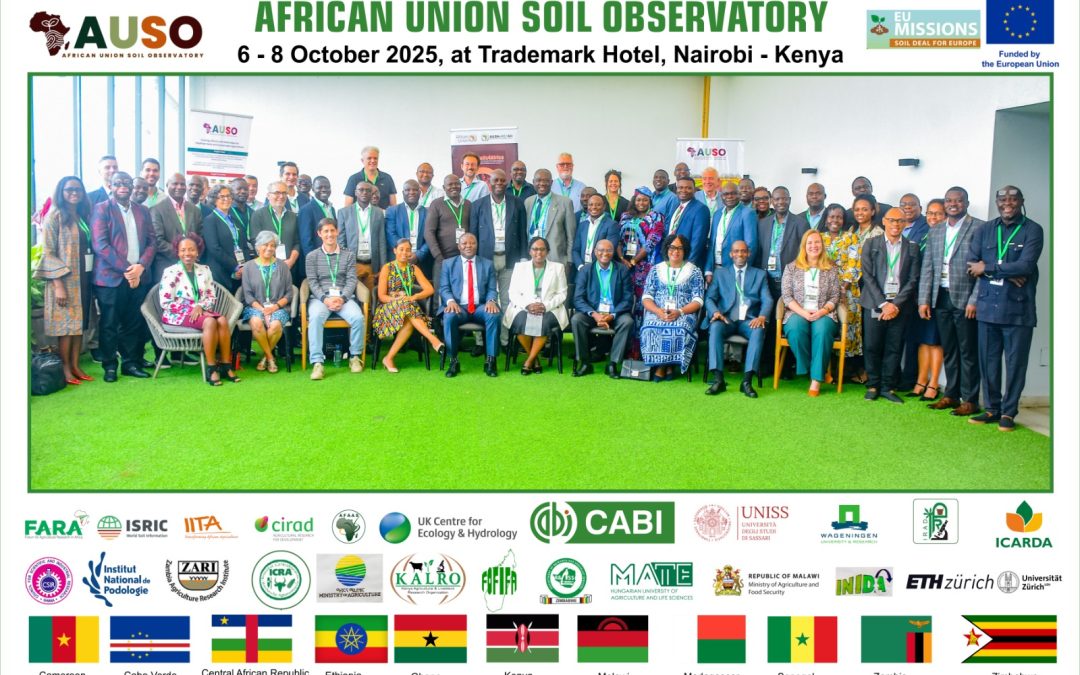
FARA, together with African, European and International partners, is implementing the African Union Soil Observatory (AUSO) project under the Horizon Europe Mission Soil Programme fully funded by the European Commission. AUSO aims to establish a continental soil observatory and digital soil intelligence platform, including a soil health dashboard, to support harmonized soil information systems, strengthen evidence-based decision-making, improve soil health monitoring, and promote sustainable and climate-resilient agrifood systems across Africa.


Envisioning the future of Africa’s livestock and fish sectors for targeted policies and investments

Participants’ feedback on the future of the livestock and fish sectors in Africa will be collated as input into an Animal Source Foods-focused outlook report being prepared by the Policy Innovations science program of the CGIAR (https://www.cgiar.org/cgiar-research-portfolio-2025-2030/policy-innovations), in collaboration with the science program on Sustainable Animal and Aquatic Foods (https://www.cgiar.org/cgiar-research-portfolio-2025-2030/sustainable-animal-and-aquatic-foods). 

Empowering youth as catalysts for transformative agriculture through mentorship, digital innovation and cooperative governance


Regional Agricultural Innovation Systems in sub-Saharan Africa: Current Status, Gaps and Future Prospects 


Launch of the Youth in Agrifood Systems Performance Index (YAPI) 


Bringing Scientific Evidence to Policymakers to Support the Agroecological Transition of Food Systems in Africa: The Example of MoSAFS

The Modelling Pathways for a Sustainable and Agroecological Transition of Food Systems in Africa (MoSAFS) project supports the transition to agro-ecological, climate resilient food systems in Africa by providing data-rich models and a science-policy interface for decision-makers. The first phase (April 2025 – April 2026) identified existing foresight studies and highlighted the need for multi-scale analysis (farm level and country level), based on three case studies in Senegal, Kenya and Mozambique, which are at different stages of national agro-ecological vision development. 
  • Kwaku Antwi FARA
  • Astou Camara ISRA-BAME (Institut Sénégalais de Recherches Agricoles - Bureau d'analyses macro-économiques)
  • Beatrice Egulu African Union
  • Guy Faure CIRAD / DeSIRA LIFT+
  • Lisa Fuchs Alliance of Bioversity International and CIAT
  • Alex Mutungi Biovision Africa
  • Martin Oulu ISFAA (Intersectoral Forum on Agrobiodiversity and Agroecology)
  • Pascal Tillie Joint Research Centre – European Commission


Investing in Extension and Advisory Services for Climate and Agroecological Transitions in Africa 

In understanding the Agroecological transition responsive extension approaches (ATREA), the ATREA project identified successful agroecological transition responsive extension approaches that are user centric, and enhance smallholder’s participation in the agri-food system transformation. The CANALLS initiative for example, leverages this to demonstrate an integrated approach to promoting agroecological transitions in the humid tropics of Central and Eastern Africa through multi-actor transdisciplinary Agroecology Living Labs that facilitate co-creation, participatory research, innovation testing,capacity strengthening for the uptake of the agroecological practices and policy engagement. Similarly, the GPSAEP initiative has generated valuable experiences in strengthening community-based advisory systems, supporting farmer-led agroecological innovation, enhancing inclusive extension approaches, and building local capacities for sustainable food systems transformation.


Institutional diagnostic for System Change - IGNITE Approach for Gender and Nutrition 

This masterclass provided participants with practical insights into the use of Tanager's Organizational Diagnostic Handbooks and Assessment Tools. Rather than focusing solely on theory, the session demonstrated how organizations can assess their institutional readiness, identify capacity gaps, and develop actionable improvement plans.


Africa Strategy Stakeholder Consultation on the Draft CGIAR Africa Strategy 

With the goal of shaping a strategy that reflects Africa's priorities, strengthens partnerships, and delivers greater impact, the consultation provided an opportunity to collectively refine a strategy that strengthens African institutions, accelerates science-based innovation, and supports sustainable agrifood systems transformation on the continent.

Dr. Simeon Ehui (IITA Director General and CGIAR Africa Continental Director), Dr. Aggrey Agumya (FARA Executive Director), Dr. Were Omamo (IFPRI Africa Director), and Dr. Namukolo Covic (Head, CGIAR Liaison Office for Africa).


Unlocking the Power of Vegetatively Propagated Crops in Africa: Empirical lessons from the PROSSIVA project 

Vegetatively propagated crops such as cassava, banana, and yam are critically important to Africa
because they serve as staple foods for hundreds of millions of people, contributing significantly to food
and nutrition security. However, these crops continue to suffer a setback in their seed systems, thus making it difficult for producers to get disease-free planting materials of improved varieties in a reliable manner. 

Strengthening Foresight Systems for Africa's Agrifood Transformation 


How Will Africa Feed 2.5 Billion People by 2050? A Strategic Foresight Study on Structural Barriers, Leadership Choices and Transformation Pathways for Africa's Agrifood Systems.


Advancing the Organic and Agroecology Research Agenda for Africa (OARAA 2036): Building
Partnerships for Resilient and Sustainable Agrifood Systems

The Network of Organic Agriculture Researchers in Africa (NOARA) initiated the development of the Organic and Agroecology Research Agenda for Africa (OARAA 2036) in 2019, with initial reflections having started from as far back as 2015.

he Network of Organic Agriculture Researchers in Africa (NOARA) is a pan-African, membershipbased network established by African organic agriculture researchers to coordinate and advance organic
and ecological agriculture research; it evolved from discussions among researchers in 2005, was
launched at the 2009 African Organic Conference in Kampala, strengthened through the 2012 African
Organic Conference in Lusaka, revived and reorganized by the African Organic Network (AfrONet) in
2019, and today operates through a continental governance structure comprising a Board of Trustees,
Governing Council, Continental Secretariat, and members drawn from researchers and other
stakeholders across Africa and beyond.

African Youth Position Statement on the Future of Africa’s Agrifood Systems 


2nd AUSO Annual Consortium Meeting/ General Assembly

The African Union Soil Observatory (AUSO) and its contribution to Africa’s soil health agenda.

Wednesday, July 15, 2026

Forgotten Foods Gain Momentum in Global Indigenous Food Systems Debate

The global conversation on Indigenous Peoples' food systems is increasingly recognizing that Neglected and Underutilized Species (NUS) are far more than "forgotten crops"—they are fundamental building blocks of biodiversity, nutrition, cultural identity, and climate resilience. 

The draft HLPE-FSN Report #21 on Preserving, strengthening and promoting Indigenous Peoples' food and knowledge systems and traditional practices for sustainable food systems (101 p.) provides an important step forward by emphasizing the central role of Indigenous knowledge, territories, biodiversity and food sovereignty in transforming global food systems. The draft recognizes that Indigenous food systems offer diverse, nutritious and resilient alternatives to the narrow dependence on a handful of staple crops and highlights their potential to inform sustainable agricultural transformation.

While the draft acknowledges biodiversity and references underutilized crops in its bibliography, the
public consultation  15 May to 26 June 2026  (DEADLINE EXTENDED)
 demonstrates that many experts believe the report should place NUS at the heart of its policy recommendations rather than treating them as supporting examples

Several contributors argue that Indigenous food systems represent living reservoirs of neglected crops whose nutritional, ecological and cultural values remain largely invisible in mainstream agricultural policies. 
  • One contributor specifically recommends that agroecology and Neglected and Under-utilized Species should be framed as a policy bridge between Indigenous Peoples' food systems and conventional food systems, drawing on the IFAD–Alliance of Bioversity International and CIAT framework and the accompanying "How-to-Do" notes on NUS. 
  • The comments also recommend referencing the IFAD Digital Toolbox on Sustainable and Indigenous Peoples' Food Systems and strengthening the report's discussion of urban Indigenous food sovereignty and intercultural education.
Other submissions reinforce this message from different regional perspectives. 
  • Contributors from India highlight how Indigenous farming systems maintain exceptional agrobiodiversity while reducing dependence on external inputs and improving climate resilience. They recommend that the report include stronger evidence linking crop diversity, heirloom seeds, dietary diversity, women's nutrition, youth engagement and resilience indicators, demonstrating that Indigenous food systems provide practical solutions to today's food system challenges rather than simply preserving cultural heritage.
The consultation also broadens the discussion from production to nutrition
  • One contribution recommends explicitly recognizing the contribution of traditional neglected crops with nutraceutical properties—such as chia, epazote and stevia—to healthier diets and preventive healthcare. 
  • These examples illustrate how many Indigenous foods combine cultural significance with scientifically recognized nutritional benefits, reinforcing the report's objective of connecting Indigenous knowledge with modern food system transformation.
Taken together, the draft report and the consultation responses send a clear signal: future food systems will require far greater investment in Indigenous knowledge and forgotten crops. 

For initiatives such as GFAiR's Collective Action on Forgotten Foods, the consultation provides strong international validation for promoting NUS through research, education, value-chain development and policy dialogue. 
  • Rather than remaining niche crops, Bambara groundnut, finger millet, African leafy vegetables and many other Indigenous species can become strategic assets for addressing climate adaptation, dietary diversity, rural livelihoods and biodiversity conservation. 
  • The forthcoming final HLPE-FSN report therefore represents an important opportunity to elevate NUS from an underrepresented theme to a central pillar of global food system transformation.

Thursday, July 9, 2026

Leveraging Digital Solutions for Strengthening the Seed Systems in Africa


9 July 2026
. Leveraging Digital Solutions for Strengthening the Seed Systems in Africa

As African countries seek to strengthen food security, resilience and sustainable agrifood systems, the digitalization of seed systems is emerging as a critical enabler of transformation. Digital tools can improve seed traceability, certification, regulatory services, information management and market access, while helping address challenges such as counterfeit seeds, fragmented processes and weak sector coordination.

The event was organized by the FAO Regional Office for Africa, FAO Country Offices in DR Congo, Somalia and South Sudan, with the support from the African Development Bank (AfDB) and in collaboration with AGRA and other partners. The webinar will bring together policymakers, seed authorities, researchers, development partners, private sector actors and digital agriculture specialists to explore how digital technologies are strengthening seed systems across Africa.

Participants learned from country experiences and innovative initiatives, including FAO's EmergenSys project, digital seed certification and traceability systems in Kenya, and electronic phytosanitary certification (e-Phyto) systems. Discussions will focus on practical lessons, sustainability, interoperability, governance and opportunities for scaling digital seed solutions.

The webinar was organized as part of the EmergenSys project activities, FAO RAF’s periodic digital agriculture knowledge-sharing events, and as a contribution to the preparations for the Digitalization Thematic Area of the Africa Food Systems Forum (AFSF) 2026.

Moderation - Priya Gujadhur, FAO Representative in Ghana (a.i.); Senior Regional Resilience Officer, FAO, Regional Office for Africa
  • Opening Remarks, Meshack Malo, Deputy Regional Representative, FAO Regional Office for Africa
  • Remarks by the African Development Bank (AfDB), Jeffrey Kwesiga, Senior Agribusiness Officer, AHAI.4 (RDGE) Africa Development Bank
  • Digital Seed Systems Initiatives under the EmergenSys Project in Somalia, South Sudan & DRCongo, Kiprotich Chemweno, Head of Information & Systems Management & Digital Innovation FAO Somalia
  • Digital Seed Certification and Traceability Systems in Kenya, Ephraim Wachira, Deputy Director, Seed Certification Kenya Plant Health Inspectorate Service (KEPHIS), Kenya 

    @Ephraim: how can digitalisation protect IP rights on indigenous seeds?
    ANSWER: This can at least document the indigenous variety establishing the fact that it is a variety of common knowledge so that no one can later on claim it. More work can then be done to facilitate community ownership of the indigenous seed.
@Ephraim: How does KEPHIS support Kenyan Seed Savers with digitalisation?
We are currently working on legislation for community seed production and certification, we shall definitely come up with a digital format for it.
  • The Ethio-Seed digital platform, Ato Tefera Zeray, Technical Advisor Seed Systems, Ministry of Agriculture, Ethiopia
  • e-Phyto implementation in Uganda, Remco Kibago, Information Technologist, Ministry of Agriculture Animal Industry and Fisheries, Uganda
  • Presentation of the AU Biotech and Seed Partnership Platform, Catherine Langat, Seed system specialist FAOSFE
  • Poll / Questions and Answers / Interactive Discussion Ken Lohento, Digital Agriculture Specialist, FAO Regional Office for Africa

Related: 1st Eastern Africa Indigenous Seed Conference EA-ISC 2026

Building farmer managed seed system community of practice (COP) For a Resilient EASTERN AFRICA Region.

📅
17th – 20th November 2026
📍
Catholic university of Eastern Africa, Nairobi, Kenya

Wednesday, July 8, 2026

Plant Genetic Resources for Food and Agriculture

8 - 10 July 2026. Thirteenth Session of the Intergovernmental Technical Working Group on Plant Genetic Resources for Food and Agriculture

The primary focus of the meeting is the Revision of the Second Global Plan of Action for Plant Genetic Resources.

This Working Group meeting operates under the Commission on Genetic Resources for Food and Agriculture (CGRFA) and serves several core functions:
  • Reviewing Draft Guidelines: Deliberating on the Draft Revised Second Global Plan of Action for Plant Genetic Resources.
  • Evaluating Global Reports: Using findings from the Third Report on the State of the World's Plant Genetic Resources to identify key policy priorities.
  • Cross-Sectoral Discussions: Addressing how plant genetic resources contribute to climate change mitigation, adaptation, and broader biodiversity for food and agriculture initiatives.

Contributions:

Monday, June 29, 2026

The Memory of the Land: Women, Partnership, and Agricultural Transformation

26 June 2026 The "The Memory of the Land: Women, Partnership, and Agricultural Transformation" webinar, was the second webinar in AgroSpectrum Asia's global series marking the International Year of Women Farmers 2026. 

The session explored the central role of women in transforming agriculture and food systems, arguing that women are not only food producers but also innovators, knowledge custodians, entrepreneurs, and leaders who are helping agriculture respond to climate change, biodiversity loss, market volatility, and technological change. The webinar emphasized that the future of sustainable agriculture depends on partnerships—across genders, generations, institutions, disciplines, and regions—to create more resilient and inclusive agrifood systems.

Discussions focused on how women are bridging traditional agricultural knowledge with scientific research and innovation, strengthening community resilience, promoting climate adaptation, and connecting policy with farmers' realities. Speakers shared examples of women-led innovation in farming, seed conservation, research, agri-business, and international agricultural partnerships. The webinar also examined practical approaches for integrating gender inclusion into agricultural policy, fostering collaboration across the agricultural value chain, and supporting the next generation of women agri-leaders. Participants were encouraged to view partnership not simply as institutional cooperation, but as the foundation for restoring more equitable, resilient, and sustainable food systems.

  • Joanna Kane-Potaka – Executive Secretary, GFAiR – Global Forum on Agricultural Innovation and Research; spoke on the importance of global partnerships and women-led agricultural transformation.
  • Evalyne Okoth – Woman farmer engaged in research; shared practical experiences from farming and community-based agricultural innovation.
  • Carlo Fadda – Research Director, Alliance of Bioversity International and CIAT; discussed the role of agricultural biodiversity, research, and partnerships in building resilient food systems.
  • Wanjiru Kamau-Rutenberg – Managing Director for Africa, Alliance of Bioversity International and CIAT, and one of the World Food Prize Foundation's 2026 Top Agri-food Pioneers; addressed women's leadership, institutional change, and inclusive agricultural innovation across Africa.
  • Moderator: Suchetana Choudhury Goswami – Session moderator, who guided the discussion on women's leadership, partnerships, and agricultural transformation.

Related: FAO releases most comprehensive dataset to date on women in agrifood systems


Related 


28 May 2026
. The first webinar in AgroSpectrum Asia's International Year of Women Farmers 2026 series focused on the growing leadership of women across agriculture and the need to recognize women as key drivers of innovation, resilience, and food system transformation


Rather than viewing women solely as producers, the webinar highlighted their expanding roles as researchers, entrepreneurs, policymakers, and community leaders who are shaping climate-smart agriculture, biodiversity conservation, and inclusive rural development. It also examined how women-led partnerships across research institutions, governments, farmer organizations, and the private sector are strengthening agricultural productivity and resilience in the face of climate change and market uncertainty.

The discussion emphasized that sustainable agricultural transformation depends on building stronger partnerships between science and practice, integrating indigenous and local knowledge with innovation, and creating opportunities for women to participate in decision-making at every level of the agrifood system. Speakers shared experiences from Africa and Asia on women-led innovation, climate adaptation, agri-enterprise development, and research collaboration, while also exploring how future food systems can become more equitable, resilient, and inclusive.
  • Sumini Sampa, Senior Agricultural Research Officer, Zambia Agriculture Research Institute; National Focal Point – Biodiversity for Food and Agriculture: From Genetic Resources to Resilient Food Systems: Why Women Matter
  • Dr. Chapwa Kasoma, Scientist – Invasive Species Management, CABI Southern Africa Centre: Climate Change, Invasive Species and the Need for Collaborative Agricultural Solutions
  • Chileshe Bwalya, Gender Equity and Social Inclusion Manager, iDE: Why Gender Equity Is Central to Agricultural Transformation
  • Sussana Phiri, YPARD Zambia Country Representative:  Young Women Reimagining Agriculture Through Leadership and Innovation
  • Joanna Kane-Potaka, Executive Secretary, Global Forum on Agricultural Innovation and Research (GFAiR): Partnerships That Power Global Agricultural Innovation
  • Moderator: Suchetana Choudhury Goswami – Session moderator, who guided the discussion on women's leadership, partnerships, and agricultural transformation.

Related:


Webinar 1 | 08 June 2026. Women Farmers and Food Security: Visibility, Roles and Realities
Women farmers play a critical role in ensuring global and local food security, yet their roles often remain under-recognised in policy and practice. This session, featuring insights from UN Women and local women's rights organisations, explores the lived realities of women farmers and the structural factors shaping their work and livelihoods. Regional perspectives will highlight concrete challenges, experiences, and opportunities for strengthening women’s roles in sustainable food systems.

Webinar 2 | 22 June 2026, Structural Barriers and Gender Inequalities in Food Systems
The second session examines structural barriers faced by women farmers, including access to land, finance, services and decision-making. It also explores how climate change, market volatility, supply chains and digitalisation affect women differently. Speakers will highlight women-led solutions and initiatives that address these challenges in practice, combining evidence-based insights with experiences from women leaders and practitioners working to transform seed and food systems.

Webinar 3 | 29 June 2026, What Works: Tools, Evidence and Pathways for Gender-Transformative Change
The final session highlights practical tools, learning approaches, and evidence for advancing gender-transformative change in agriculture and food systems. Drawing on FemHub’s work on toolkits, learning formats, and measuring change, it explores what makes interventions effective in practice—and how practitioners can move from intention to implementation. The session concludes with a joint reflection and call to action.

Monday, June 8, 2026

GFAiR Regional Fora and Steering Committee meeting

7 - 8 June 2026. Antalya, Turkey. 

Assessing new ways to accelerate more effective and equitable agrifood research and innovation systems - GFAiR Regional Fora and Steering Committee meeting 

At a critical juncture for global agri-food systems, the future of agricultural research and innovation hinges on equitable partnerships, bold collaboration, and a unified vision.  It was with this spirit that the Global Forum on Agricultural Research and Innovation (GFAiR), alongside its Regional Fora and Steering Committee, converged in Turkey.

The high-level meeting brought together representatives from the Regional Fora representing Africa, Asia-Pacific, Central Asia and the Caucasus, Near East and North Africa, Americas and Europe, along with representatives from each constituency that represents the agrifood system. These representatives form the Steering Committee of GFAiR who along with the Secretariat, convened for a strategic dialogue on the forward trajectory of GFAiR.

The forum was graced by Dr. Didem Kökden, senior International Relations Coordinator and expert at the General Directorate of Agricultural Research and Policies (TAGEM) Turkey. 

The Regional Fora workshop focused on assessing the changing funding landscape, strengthening collaboration among regional partners, that can transform especially more equitable partnerships and engagement of all stakeholders in the agrifood research and innovation. 

Participants also reviewed GFAiR’s strategic focus, including its Theory of Change based on new ways to accellerate achievements through systemic transformation of partnerships and ways of working so the Agrifood R&I systems are more effective, responsive and equitable. In this regard, the group reviewed leveraging the uniqueness of GFAiR and tools at hand like the Partnership Principles, Collective Actions, the Network, and being secretariate for the Global NARS Consortium.

The Steering Committee workshop built on the outcomes of the Regional Fora discussions and concentrated on enhancing the strategic role and influence of the Committee within GFAiR. 

Recognising the unique multi-stakeholder composition of the Steering Committee, participants explored how to better build on its diverse constituencies to strengthen advocacy, collaboration across the global agrifood innovation and research ecosystem. 

Steering Committee members in attendance included:

  • Romano De Vivo – GFAiR Vice Chair
  • Joanna Kane-Potaka – GFAiR Executive Secretary
  • Selvaraju Ramasamy – Director of Innovation, FAO
  • Amine Belhamissi – Grant Portfolio Officer, IFAD
  • James French – General Secretary, Global Confederation of Higher Education Associations for the Agricultural and Life Science (GCHERA)
  • Silvia Lanzarini – UN WomenCARL LARSEN
  • Karl Larsen– Executive Secretary, Global Forum for Rural Advisory Services, (online)
  • Daniel El Chami, TIMAC AGRO Italia, Strategy Director at Groupe Roullier (online)

Regional Fora members of the Steering Committee in attendance included:

  • Dr. Rida Shibli – Association of Agricultural Research Institutions in the Near East and North Africa (AARINENA)
  • Dr Botir Dosov – Central Asia and the Caucasus Association of Agricultural Research Institutions (CACAARI)
  • Dr. Aggrey Agumya – Forum for Agricultural Research in Africa (FARA) (online)
  • Dr. Karen Montiel – Forum for the Americas on Agricultural Research and Technology Development (FORAGRO) 
  • Dr. Dietrich Darr – Chair, European Forum on Agricultural Research for Development (EFARD)
  • Manish Rai – Asia-Pacific Association of Agricultural Research Institutions (APAARI)


Sunday, June 7, 2026

Building Resilient Nutrition and Health Systems: Global Challenges and African Solutions

2-3 June 2026. Building Resilient Nutrition and Health Systems: Global Challenges and African Solutions - International Union of Nutritional Sciences (IUNS) and Federation of African Nutrition Societies (FANUS) Joint Webinar - but the registration is closed due to high demand

This webinar was part of the IUNS Regional Webinar Series, which brings together nutrition researchers, professionals, practitioners, and students interested in nutrition and policy at different stages of their careers to discuss important and emerging topics in nutrition. The previous webinar in this series has attracted more than 500 participants globally.

Day 1: Understanding the Nutrition Challenge


The first day focused on the changing burden of malnutrition in all its forms, including micronutrient deficiencies, obesity, and non-communicable diseases (NCDs), as well as the broader food-system and health-system drivers behind these challenges. Sessions explore current evidence, emerging trends, and policy implications for Africa and other low- and middle-income regions.

Key speakers included:
  • Hyun-Sook Kim International Union of Nutritional Sciences (IUNS) – Global nutrition leadership and international collaboration.
  • Saskia Osendarp Micronutrient Forum – Micronutrient deficiencies and evidence-based interventions.
  • Yunhee Kang Ewha Womans University, Republic of KoreaMaternal and child nutrition, food security, and large-scale nutrition programmes.
  • Henda Jamoussi University of Tunis El Manar, Tunisia and Rym Ben Othman National Institute of Nutrition and Food Technology, Tunisia. – Malnutrition, obesity, diabetes, and dietary transitions.
  • Amos Laar University of Ghana School of Public Health – Food environments, ultra-processed foods, and NCDs in Africa.

Day 2: From Evidence to Action


The second day shifted to solutions and implementation, examining how nutrition and health systems can become more resilient through policy, programmes, food safety measures, and school feeding initiatives. Topics include ultra-processed foods, nutrition and cancer, food safety risks such as mycotoxins, and scaling school feeding programmes in African contexts.

The webinar was moderated by Dr. Robert Fungo (Makerere University, Uganda), Dr. Habiba Hassan-Wassef (IUNS), and Prof. Francis Bruno Zotor (FANUS and the University of Health and Allied Sciences, Ghana).

Key speakers included:
  • Jacques Delarue University of Brest, FranceNutrition, chronic disease prevention, and global nutrition policy.
  • Alan Jackson University of Southampton, United KingdomNutrition, health systems, and sustainable development.
  • Sheila Okoth University of Nairobi, Kenya and Lindy Joy Rose Food safety and mycotoxin risks.
  • Kwadzanai Nyanungo FAO and Jacqueline Kung’u Global Child Nutrition Foundation (GCNF) – School feeding, child nutrition, and food environments.
  • Francois Stepman Global Forum for Agricultural Innovation and Research (GFAiR) – Partnerships, food systems, and innovation for nutrition resilience.

Tuesday, June 2, 2026

The Outlook for Agriculture and Rural Development in the Americas

2 June 2026. The report “The Outlook for Agriculture and Rural Development in the Americas 2025–2026: A Perspective on Latin America and the Caribbean” was officially launched by the three organizations that jointly produce the report: the Inter-American Institute for Cooperation on Agriculture, Food and Agriculture Organization of the United Nations, and Economic Commission for Latin America and the Caribbean. 

The report focuses on sustainable agricultural productivity, resilient agrifood systems, rural development, and regional cooperation across Latin America and the Caribbean.

Main themes presented in the report

  1. Sustainable and resilient agricultural productivity.
  2. Food security and nutrition.
  3. Rural development and territorial transformation.
  4. Climate change adaptation and resilience.
  5. Regional cooperation and integration.
  6. Investment and innovation in agrifood systems.
  7. Inclusive development for rural communities.

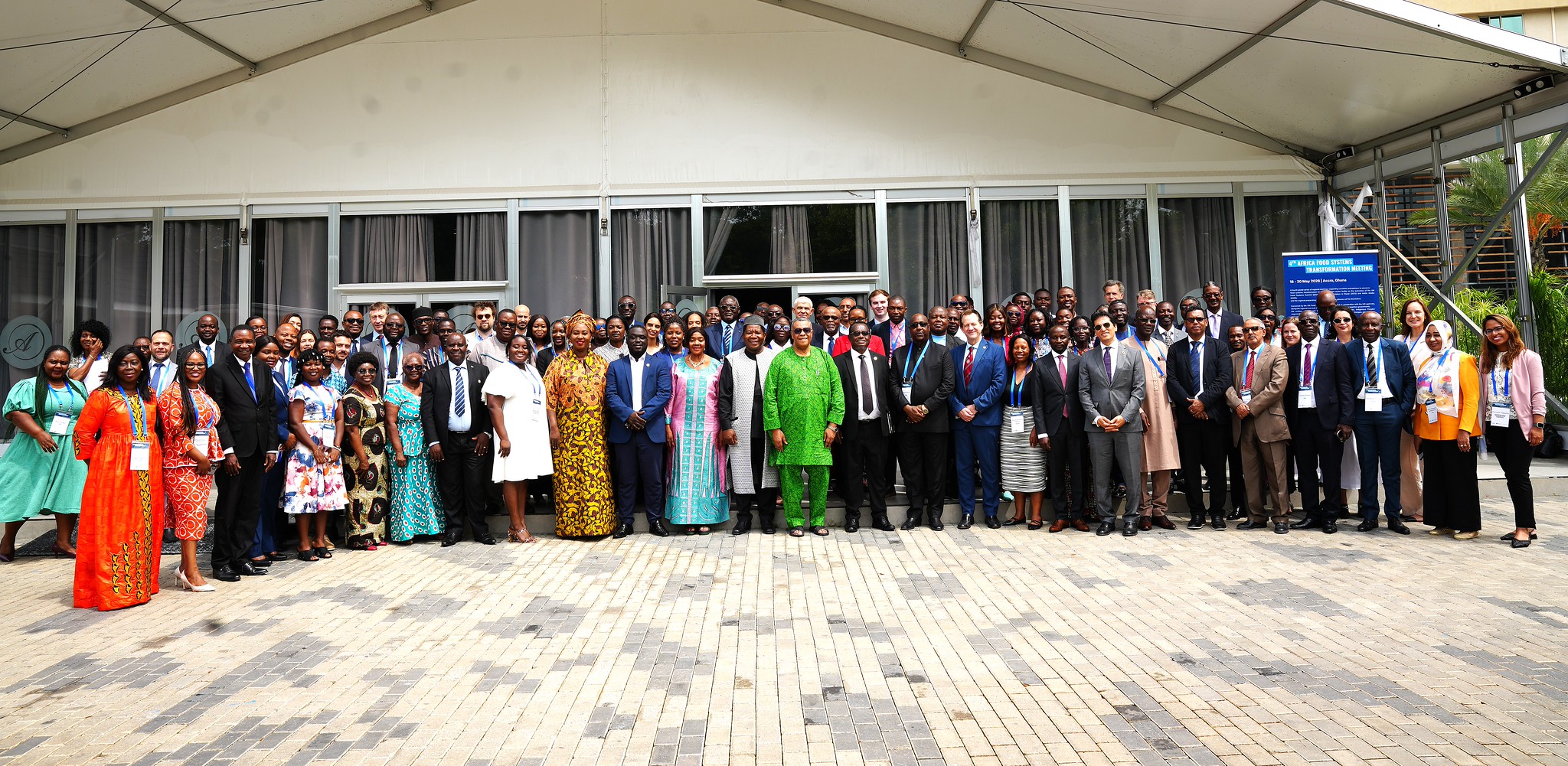
4th Africa Regional Food Systems Transformation Meeting


18–20 May 2026
in Accra, Ghana.
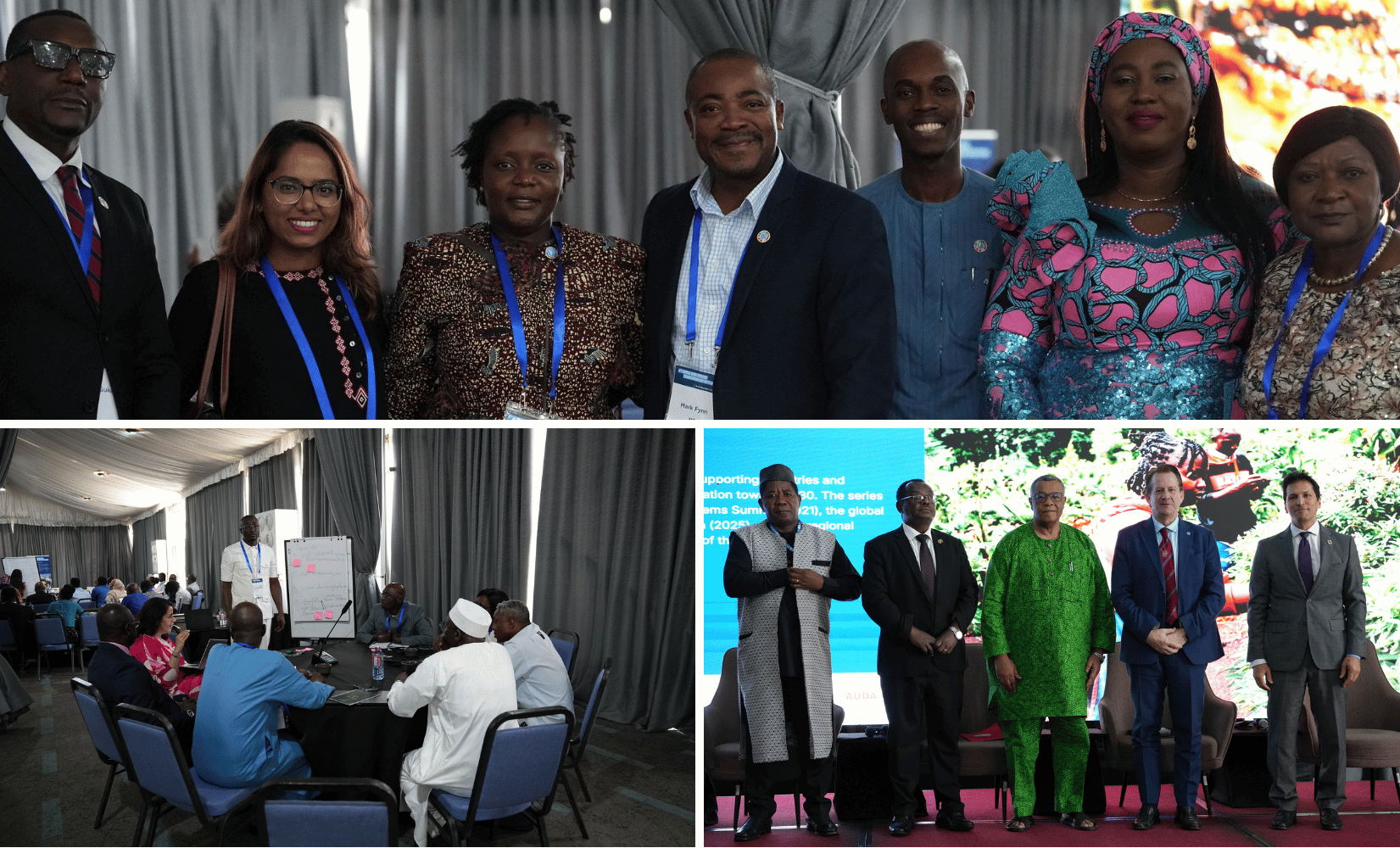
The 4th Africa Regional Food Systems Transformation Meeting brought together National Food Systems Convenors, governments, regional institutions, UN agencies, development partners, researchers, civil society, youth organizations, and the private sector. The meeting focused on accelerating implementation of national food systems transformation pathways following the adoption of the CAADP-Kampala Declaration and the outcomes of the UN Food Systems Summit +4 (UNFSS+4). Participants reviewed progress made since previous regional meetings, shared lessons from implementation, and identified opportunities for stronger collaboration, investment, and accountability across Africa.

A central theme throughout the meeting was moving from planning to delivery. Discussions emphasized improving governance, financing, monitoring systems, science and innovation, private-sector engagement, and youth leadership to transform African food systems into more resilient, inclusive, and sustainable systems. The meeting also sought to align national actions with continental frameworks such as Agenda 2063 and CAADP-Kampala, while strengthening regional cooperation to address common challenges including climate change, food insecurity, economic shocks, and unemployment.


1. High-Level Roundtable 1 Opportunities for Better Synergy Between National Pathways, Global and Continental Policy Frameworks


Purpose: To explore how national food systems transformation pathways can be aligned with continental frameworks such as CAADP and Agenda 2063, while ensuring that country priorities shape regional and global agendas.

  • Clement Adjorlolo (Moderator) Principal Programme Officer, Agriculture and Rural Transformation, AUDA-NEPAD
  • Mokganedi Mokopasetso National Food Systems Convenor, Botswana
  • Leon Baïkoua National Food Systems Convenor, Central African Republic
  • Chantal Ingabire Director General for Planning, Ministry of Agriculture and Animal Resources (MINAGRI), Rwanda
  • Victor Mbumwae National Food Systems Convenor, Zambia
  • Lorenz Franken Institution Building Specialist, Committee on World Food Security

2. Panel Discussion How to Unlock Financing and Investment for Food Systems Transformation?


Purpose: To identify practical financing mechanisms and investment approaches that can accelerate implementation of food systems transformation pathways.

  • Max von Bonsdorff (Moderator) Chief, Global and Multilateral Engagement, International Fund for Agricultural Development IFAD
  • Arsene Bationo Private Sector and Grants Management & Compliance Expert, African Development Bank AFDB
  • Athur (Arthur) Mabiso Lead Regional Economist, International Fund for Agricultural Development IFAD
  • Gabriel Ferrero Senior Strategic Advisor, Global Agriculture and Food Security Program
  • Zak Bleicher Senior Advisor and Global Coordinator, Agrifood Systems Accelerator
  • Tobie Ondoa Manga Inspector General of Agricultural Development, Government of Cameroon
  • Mohamed Abdi Yusuf National Food Systems Convenor, Somalia
  • Chantal Ingabire Director General for Planning, MINAGRI, Rwanda


3. Roundtable: How Can the Private Sector Support Food Systems Transformation?


Purpose: To discuss how businesses can help drive innovation, investment, and scaling of food systems transformation initiatives.

  • Carolin Busch (Moderator) Junior Professional Officer, UN Food Systems Coordination Hub
  • Tolu Kweku Lacroix Executive Director, UN Global Compact Ghana
  • Worlali Senyo Senior Vice President, Farmerline
  • Anthony Selorm Morrison President and CEO, Chamber of Agribusiness Ghana
  • Aleksa Mirkovic Project Administrator, United Nations Industrial Development Organization UNIDO


4. Panel: Strengthening Accountability in Food Systems Transformation


Purpose: To explore monitoring, reporting, and accountability mechanisms that can improve implementation and track progress toward food systems goals.

  • Medhat Elhelepi (Moderator) Regional Coordinator for Africa, UN Food Systems Coordination Hub*
  • Clement Adjorlolo Principal Programme Officer, AUDA-NEPAD
  • Fatmata Lucia Seiwoh National Food Systems Convenor, Sierra Leone
  • Thembani Malapela Knowledge Management Officer, UN Food Systems Coordination Hub
  • Victor Mbumwae National Food Systems Convenor, Zambia
  • Faisal Munkaila Director, Policy Planning, Monitoring and Evaluation Division, Ministry of Food and Agriculture, Ghana

5. High-Level Roundtable 2: Leveraging Science, Innovation and Data for Evidence-Based Food Systems Transformation in Africa


Purpose: To examine how science, research, innovation, and data systems can improve decision-making and accelerate food systems transformation.

  • Günter Hemrich (Moderator) Strategic Lead, Food Systems Coordination, UN Food Systems Coordination Hub
  • Abdulrazak Ibrahim Director, Research and Innovation (Food Systems), Ministry of Food and Agriculture, Ghana
  • Amira Abdelrahim Ali Mohammed Food Systems and Agricultural Policy Specialist, Sudan*
  • Demba Sabally National Food Systems Convenor, The Gambia
  • Roza Fachi Mbilizi Food Systems and Nutrition Expert, Malawi
  • Samira Hotobah-During Executive Secretary and Director Alliance African Local Food and Nutrition Supply Chains 
  • Richard Tweneboa Kodua Director, Science and Innovation, Ministry of Environment, Science, Technology and Innovation, Ghana

6. Panel Discussion: How to Capitalize on the Youth Dividend and Promote Co-Leadership for Food Systems Transformation?


Purpose: To explore how young people can be empowered as leaders, innovators, and decision-makers in food systems transformation.

  • Caesar Vulley (Moderator) Youth and Food Systems Advocate, Ghana
  • Haroun Moussa (Opening Remarks) Technical Adviser on Youth and Skills Development, AUDA-NEPAD
  • Delfina Hlashway (Keynote) Youth Food Systems Champion, Namibia
  • Kefilwe Roba Moalosi Senior Nutrition and Food Safety Officer, AUDA-NEPAD
  • Mirirai Tembo Youth Representative, Food Systems Movement, Zambia
  • Fatmata Binta Founder and Executive Director, Community Agenda for Sustainable Development, Sierra Leone


Related:

 22 May 2026. Farmer cooperatives play a critical role in strengthening inclusive, resilient, and sustainable food systems by organizing smallholder producers and enhancing access to markets, finance, technology, and knowledge, while increasing farmers’ bargaining power and income security and supporting local value chain development. 

The session brought together practitioners, policymakers, development partners, and cooperative leaders to share practical experiences and lessons learned from cooperative-led initiatives, examine how cooperatives enhance smallholder inclusion in food systems, and identify policy, institutional, and investment pathways to strengthen cooperative models, as well as opportunities to scale cooperative-driven solutions across diverse contexts, ultimately generating actionable insights on how to effectively support cooperatives in accelerating food systems transformation at both national and global levels.

Monday, May 25, 2026

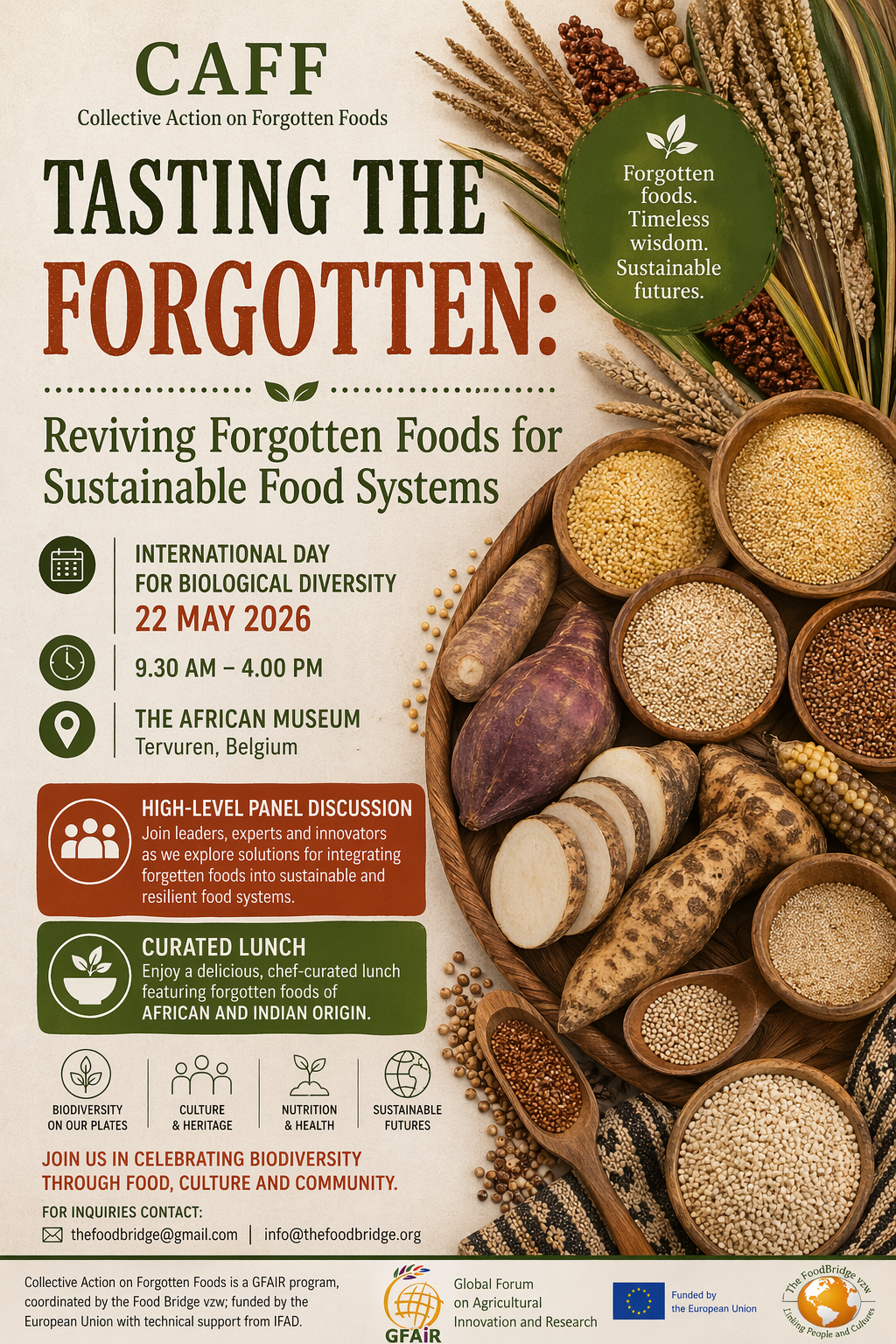
Tasting the Forgotten - the future of forgotten foods and neglected and underutilized species (NUS)


22 May 2026.
Tasting the Forgotten - the future of forgotten foods and neglected and underutilized species (NUS)

Thought leaders, chefs, researchers, policymakers, and food innovators gathered at the Africa Museum in Tervuren, Belgium, for the “Tasting the Forgotten” event — an inspiring dialogue and culinary experience focused on the future of forgotten foods and neglected and underutilized species (NUS).

The event served as a platform to reconnect biodiversity, nutrition, culture, and sustainable food systems, while highlighting how traditional and indigenous crops could contribute to healthier diets, climate resilience, and inclusive economic opportunities.


The program opened with welcoming remarks from Joanna Kane-Potaka, Secretary General of the Global Forum on Agricultural Innovation and Research (GFAIR)
"This event is in line with GFAIR current focus on inclusive and equitable partnerships. This enables local and international scientists to work together to address today’s food challenges. I encouraged participants to actively engage in GFAIR’s Collective Actions, which promote practical collaboration and innovation across the global food system."  Joanna Kane-Potaka

This was followed by opening remarks from Christophe Larose, Head of Sector for Sustainable Agriculture at the European Commission.
"Forgotten Foods offer diverse, climate-resilient options that can strengthen food systems and improve diets. These crops are living libraries of genetic diversity, essential for sustainable agriculture. Indigenous crops are inherently adapted to local conditions, reducing reliance on external inputs. Forgotten Foods are not a niche. They are a vehicle for equity, recognising the knowledge and labour of those who have sustained them for generations. These crops must be put on political agendas, from local to national to global." Christophe Larose

One of the highlights of the morning session was the launch of the report on the African Diaspora Food  Market in the United Kingdom, which explored the growing importance of diaspora-driven food economies and the opportunities they presented for forgotten and indigenous crops.

The research commissioned by the Global Forum on Agricultural Research and Innovation (GFAiR) and conducted by The Food Bridge vzw and funded by the European Commission, surveyed 1,507 African diaspora consumers across the UK and found that 97% include African food in their regular diet, with 35% consuming African food daily and 39% at least once a
week. 

According to the study titled “A Research on the African Diaspora Food Market in the United Kingdom: Understanding Market Dynamics, Opportunities and Indigenous Food Systems” (25 pages) the estimated annual market value is £1.5 billion in the UK alone, with a projected €11.5 billion market across Europe.

The research – conducted between January and April 2026 – highlights that African food is not a niche or occasional choice, but a core component of daily diets – comparable to staple foods in national consumption patterns. This positions the African diaspora food market as a mature, stable, and scalable agro food sector.


First Panel: Forgotten Foods, Global Futures: From Tradition to Transformation

The first panel discussion explored how forgotten foods could move from traditional knowledge systems into mainstream global food futures.

Panelists

  • Paulo Caruso de Lima — Liaison & Partnerships, FAO EU and Belgium
  • Christian Abegan — Executive Chef, Ambassador for WFP, and 2024 recipient of the Grand Medal of the Institut de la Gastronomie Française for promoting African cuisine
  • Prof. Patrick Van Damme — Professor Emeritus, Tropical Agronomy
  • Dr. Venkatesh Palani Samy — Adviser (Agriculture & Marine Products), Embassy of India to the EU, Belgium and Luxembourg
    "There is a rapid loss of crop diversity worldwide. In the pursuit of food security through green revolutions, national policies can unintentionally accelerated the decline of indigenous crops. This makes it increasingly important to embed NUS into national agricultural and food policies."

The discussion emphasized how innovation, policy, gastronomy, and research could work together to transform overlooked crops into drivers of resilient and equitable food systems.

Diversity for Healthy Diets and Healthy Planets

Following a coffee break, participants heard from Nico Wilms-Posen of CropTrust Germany, who delivered a presentation titled “Opportunity crops & genebanks: Diversity for healthy diets on a healthy planet.”

"NUS is relevant in creating sustainable food systems and improving diet diversity. Crop Trust works with African stakeholders to scale up and add value to opportunity crops and indigenous food species, including ongoing calls and initiatives supporting crop diversity and resilient food systems."

The session highlighted the critical role of crop diversity and conservation in addressing global nutrition and climate challenges.

Second Panel: From Biodiversity to the Plate: Why Forgotten Foods Matter Now

The afternoon panel focused on the growing movement to bring biodiversity directly into culinary spaces, consumer markets, and food entrepreneurship.

Panelists

  • Julie ABISSEGUE — Founder, ADA Studio Paris & AfroFood Business Consultant
  • Jashan Sippy — Founder & Director, AYU & ifooddesign
  • Shreya Kausik — Indian Food Expert & Owner, Chandigarh Belgium
  • Yu-Chun Liao -  City Councillor in Leuven
  • Manon Schots - theproteinproject.eu

The discussion explored how chefs, entrepreneurs, and food advocates were helping reintroduce forgotten ingredients to modern consumers while preserving cultural identity and promoting sustainable food practices.

Respondent Emile Frison former DG Alliance of Bioversity-CIAT


A Culinary Journey Through Forgotten Foods

The event concluded with a curated lunch experience titled “Tasting the Forgotten,” combining storytelling, dialogue, and culinary exploration. Participants engaged in table discussions focused on three key pathways for integrating neglected and underutilized species into global food systems.

The culinary component featured:

Together, they showcased how forgotten foods could create powerful connections between heritage, nutrition, innovation, and sustainability.

As global food systems continued to face mounting pressures from climate change, biodiversity loss, and nutrition insecurity, Tasting the Forgotten demonstrated that many solutions already existed within traditional crops and indigenous knowledge systems — waiting to be rediscovered, celebrated, and scaled for the future.