Platform for African – European Partnership in Agricultural Research for Development
Showing posts with label AgriCord. Show all posts

Thursday, October 8, 2026

COP31: Putting agriculture and food systems at the centre of climate action

9–20 November 2026. Antalya, Türkiye. The 31st United Nations Climate Change Conference (COP31) will bring together governments, international organisations, researchers, farmers' organisations, civil society and the private sector to accelerate implementation of the Paris Agreement. 

Agriculture and food systems feature prominently in the official UNFCCC side-event programme, with discussions addressing agroecology, climate-resilient agriculture, agricultural finance, biodiversity, food security and the transition towards healthier and more sustainable diets.

A central theme emerging from the programmed side events is the need to move from climate commitments to practical implementation, ensuring that farmers, research institutions and local communities can access the finance, technologies, knowledge and partnerships required to transform agrifood systems. The programme also highlights the importance of addressing trade-offs between mitigation, adaptation, biodiversity conservation and affordable nutrition.

The COP31 side-event programme demonstrates the growing recognition that agricultural transformation requires more than climate-smart technologies alone. It calls for stronger connections between scientific research, farmers' knowledge, public policies, market incentives and financing mechanisms. Agroecology, agricultural biodiversity, circular bioeconomies and sustainable food value chains are increasingly being discussed as interconnected components of climate action rather than separate policy agendas.

The following selection highlights scheduled side events particularly relevant to agricultural research and innovation.


9 November – Water for Climate Resilience: From the 2026 SCF Forum to COP31 and the 2026 UN Water Conference


Organised with the participation of IFAD, ICIMOD, Nepal and Bhutan, this event will examine climate-resilient water management, financing and institutional cooperation, including implications for resilient food systems. Announced speakers include Álvaro Lario (President, IFAD), Rania Al-Mashat (ESCWA), Hani Sewilam (Egypt), Sonja Köppel (UNECE) and Anil Mishra (UNESCO).


10 November – Advancing Agroecology in Just Transition for Healthy and Sustainable Food Systems and Agriculture


Organised by Pesticide Action Network Asia Pacific and partners, this session will present agroecology as a pathway towards a just transition in agriculture. Speakers are expected from the Alliance for Food Sovereignty in Africa (AFSA), African governments, farmers' organisations and youth movements.


10 November – National Agroecology Strategies: Brazil, Türkiye and Africa Towards COP31 Implementation


Organised by Instituto Regenera, Biovision and the Food of Tomorrow Institute, this session will explore how national agroecology strategies, public food procurement and government–civil society cooperation can translate climate commitments into action. Listed speakers include Francine Xavier, Fabrício Muriana, Oliver Oliveros, Ahmet Sami and Lilian Rahal (Brazilian Ministry of Social Development), alongside an African agroecology representative.


11 November – Scaling Climate Finance for Resilient Agrifood Systems Facing Extreme Heat and El Niño-related Shocks


Organised by FAO, this session will explore investment opportunities and innovative financing mechanisms to strengthen agricultural adaptation and food security. Speakers are listed from FAO, Australia, Türkiye, Kenya, Germany, the African Development Bank, the World Bank, the African Centre for Biodiversity and Olam International.


11 November – Unlocking Means of Implementation for Climate-Resilient Agriculture and Food Systems


This event will focus on finance, technology, capacity development, sustainable land and water management, ecosystem restoration and youth- and Indigenous-led solutions. Listed speakers include Abdulhamid Tahir Hamid (GECCI/NIPPF), Victor Fodeke (GREENPLINTH Africa), Margaret Bondziedu Impraim (YCCGA) and Sebastian Pedraza (YPARD Global).


11 November – Agri-food Systems under Climate Change: Incentives for Affordable, Healthy, Sustainable Food


This event brings together Clim-Eat, AgriCord, FANRPAN, the Southern African Confederation of Agricultural Unions (SACAU) and Wageningen Research. It will examine incentives for farmers to adopt climate-resilient practices while addressing food affordability, nutrition, biodiversity and the trade-offs involved in agrifood transformation.

Announced speakers are Carlos Alvarado Quesada (former President of Costa Rica), Tshilidzi Madzivhandila (FANRPAN), Jan Verhagen (Wageningen University & Research), Ishmael Sunga (SACAU), Leanne Zeppenfeldt (Clim-Eat), Katja Vuori (AgriCord) and Orhan Solak (Türkiye Directorate of Climate Change).


14 November – The Critical Middle, Circularity and Zero Waste: Building Climate-Resilient Food Systems


Organised by UNIDO and partners, this event will launch the Critical Middle Coalition and explore investments in processing, storage, logistics and waste reduction. It draws attention to the often-overlooked enterprises and infrastructure linking agricultural production with consumers. Speakers are expected from governments, UN organisations, development finance institutions, businesses and circular-economy organisations.


16 November – Delivering the Green Transition for Food Security: From Climate Ambition to Farm-Level Action


This session will explore efficient nutrient management, low-emission rice production, agricultural policies, investment and partnerships. Listed participating organisations include the International Rice Research Institute (IRRI), Environmental Defense Fund, World Farmers' Organisation, AGRA, Yara, the World Bank, Agroicone and the Carbon Trust.


16 November – Unlocking the Means of Implementation for Agriculture and Food Security


Organised by the Alliance of Bioversity International and CIAT, Compassion in World Farming, EIT Food, the U.S. Dairy Export Council and the World Farmers' Organisation, this event will examine how finance, technology transfer and capacity development can support the implementation of climate action in agriculture. It builds on the Sharm el-Sheikh Joint Work on Implementation of Climate Action on Agriculture and Food Security (SJWA).

Announced speakers and participants include Andrea Perez Valdez (Compassion in World Farming), Richard Zaltzman (EIT Food), representatives of the Alliance of Bioversity International and CIAT and FAO, government representatives, farmers' organisations and Indigenous Peoples.


17 November – Integrated Security and Climate Change: Building Resilience Amid Geopolitical Challenges


With the participation of ICARDA, this session will examine the relationship between climate change, food systems, security and international cooperation. Listed speakers include Ban Ki-moon (former UN Secretary-General), Bakyt Dzhusupov (OSCE), Hans-Otto Pörtner (former IPCC Working Group II Co-Chair), Sabine Schlacke (University of Greifswald), Nizar Haddad (ICARDA) and Vinay Nangia (ICARDA), with Central Asian ministerial representatives to be confirmed.


18 November – Scaling the Circular Bioeconomy: Agricultural Solutions to Climate Change


This event will discuss how agriculture can contribute to circular bioeconomies through food, renewable energy, biobased materials, greenhouse gas reduction and ecosystem services. Announced speakers include Ernie Shea (Solutions from the Land), Sally Higgins (COP31 Youth Champion), Muhammad Ibrahim (IICA), Verity Ulibarri (US farmer), Tarun Richards (Australian farmer), Ed Barnes (CBS Institute), Francis Owusu (Centre for Rural Livelihoods, Uganda), Juan Sacoto (S&P Global) and Kaveh Zahedi (FAO).

CGIAR @ COP 31

CGIAR and the EvalforEarth community are preparing a strong collaborative presence for the 2026 UN Climate Change Conference (UNFCCC COP31), which will take place in Antalya, Türkiye, from November 9 to 20, 2026.

  • EvalforEarth’s Role: EvalforEarth is a merged Community of Practice focused on climate action, food security, agriculture, and rural development. It is co-sponsored by the Evaluation Offices of CGIAR, FAO, WFP, and the GEF.
  • The Shared Mission: At COP31, these organizations aim to ensure that climate policy decisions are rooted in strict, evidence-based evaluation. By bringing data from agricultural research to the forefront, they advocate for agrifood systems to be treated as primary climate solutions


FAO @ COP 31

For FAO, COP31 provides a key platform for collaboration, knowledge sharing and decision-making on the critical role of agriculture and food systems in climate action. Agrifood systems solutions are climate solutions. As a central pillar of climate action, they help build resilience, support adaptation and reduce greenhouse gas emissions while safeguarding biodiversity and ensuring food security for all.

Schedule of event will soon be available

.

Thursday, July 9, 2026

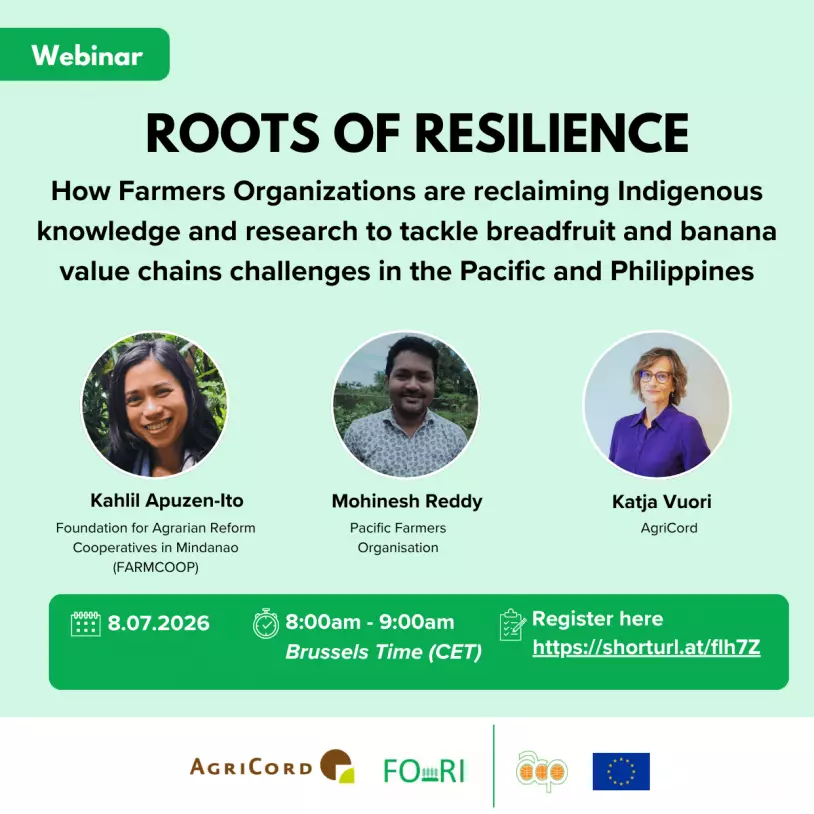
How Farmers Organizations are reclaiming Indigenous knowledge and research

8 July 2026. Roots of resilience: How Farmers Organizations are reclaiming Indigenous knowledge and research to tackle breadfruit and banana value chains challenges in the Pacific and Philippine

Hosted by AgriCord, this webinar showcased how farmers are utilizing indigenous knowledge and participatory research to combat climate change, crop diseases, and food insecurity.

Indigenous and local knowledge systems have long played a vital role in sustainable land management, biodiversity conservation, and climate adaptation. Yet these practices often remain under-recognized in agricultural development and research agendas.

At the same time, farmer organizations are increasingly demonstrating their capacity to generate solutions that are locally adapted, environmentally sustainable, and socially inclusive.

By bringing together farmer organizations, researchers, development practitioners, cooperatives, and policy actors, this webinar explored how farmer-led research and indigenous knowledge can contribute to building more resilient agroecological food systems.
  • Katja Vuori, CEO of AgriCord – Welcome Remarks
  • Mohinesh Reddy, Pacific Farmer Organisations (PFO) – Revitalizing Breadfruit Systems through Farmer-Led Agroecological Innovation and Indigenous Knowledge
  • Kahlil Apuzen-Ito, FARMCOOP – Tackling TR4 Disease in the Banana Value Chain through Participatory Agroecological Research and Innovation: Experience from the Philippines


Tuesday, June 16, 2026

AgriCord Partners' Forum 2026

4 June 2026
. Nairobi. The AgriCord Partners' Forum 2026 highlighted critical strategies for agricultural development. The sessions focused on making farmers' organizations investable through inclusive finance and scaling practical, farmer-led Nature-based Solutions.

Panel 1 | Innovative & Inclusive Financing Mechanisms

This session explored how to make farmers and their organizations more visible, investable, and resilient.

Core Themes: Inclusive finance relies on building robust support systems rather than just offering cheaper loans. Farmers' organizations act as vital intermediaries that aggregate demand, build trust, reduce risk, and connect smallholders to markets. 

Key Speakers:
  • Steve Muchiri – Eastern Africa Farmers Federation (EAFF)
  • Dan Higgins – International Fund for Agricultural Development (IFAD)
  • Mary Achini – Cooperative Bank of Kenya
  • Catherine Ndirangu – Oikocredit 

Panel 2 | Scaling Nature-based Solutions for Farmers’ Organisations: What works?

This panel centered on the practical transition to sustainable food systems, keeping collaboration and farmer leadership at the heart of the movement. 

Core Themes: The focus was on identifying which Nature-based Solutions actually work on the ground and how to scale them successfully within existing farmer organization extension systems. 

Key Speakers:
  • Moderator: Tiina Huvio – Food and Forest Development Finland (FFD)
  • Violet Nyando – Cereal Growers Association
  • Confrey Mung'au Alianji, MBA – GIZ Kenya
  • Marlène Ramirez – AsiaDHRRA
  • Francis Odhiambo Oduor – My FarmTree / Alliance of Bioversity International and CIAT 

Highlight

At 50, Daniel Saitabao has spent his life farming a modest plot in Losikito village, Tanzania. Livestock, maize, beans, but returns that rarely matched the effort.

That changed when his farmers' organisation, MVIWAARUSHA, joined the FORI programme (Farmers Organization Research-Led Innovation), funded by the European Union and Secretariat of the Organisation of African, Caribbean and Pacific States (OACPS). In a region long dominated by tobacco as a cash crop, sunflower cultivation opened an unexpected door.

Mr. Saitabao was among the first ten farmers to test it. From a single demonstration plot, he harvested 120 kilograms of sunflowers, processed into 20 liters of oil. Not just a harvest. A proof of concept that spread through the community.

Resource:

AgriCord (2026) Global Annual Report 2025, 30 p.

AgriCord’s work is defined by farmers’ priorities, co-developed and implemented with farmers’ organisations at local, national, regional and global level. Our agri-agencies provide technical support for farmers’ organisations to address constraints in production, markets, finance, governance and resilience. 

Strengthening capacities of farmers’ organisations for co-research and innovation is essential for scaling both value chain integration and resilience. It enables farmers to develop, adapt and spread locally relevant solutions, respond to changing market and climate conditions, and drive sustainable transformation from within their own organizations and networks.

FO4IMPACT is designed to strengthen smallholder farmers’ organisations as key actors in delivering long-term economic, social, climate, and environmental outcomes. 

  • Funded by the European Union and administered by IFAD, the programme builds on the experience and lessons learned from the previous FO4-programme family: Farmers’ Organisations for Africa, Caribbean and Pacific (FO4ACP); Asia (FO4A) and Latin America (FO4LA). 
  • AgriCord co-implements FO4IMPACT with regional and continental farmers’ organisations and their members.


Friday, February 13, 2026

Operationalizing agroecology: Policy guidance, farmers’ strategies, and practical challenges

11 February 2026. Operationalizing agroecology: Policy guidance, farmers’ strategies, and practical challenges

This webinar organised under the Farmer-led Research and Innovation (FO-led R&I or FO-RI) programme promoted a shared understanding and practical exchanges on agroecology to support the agroecological transition led by farmers’ organisations.
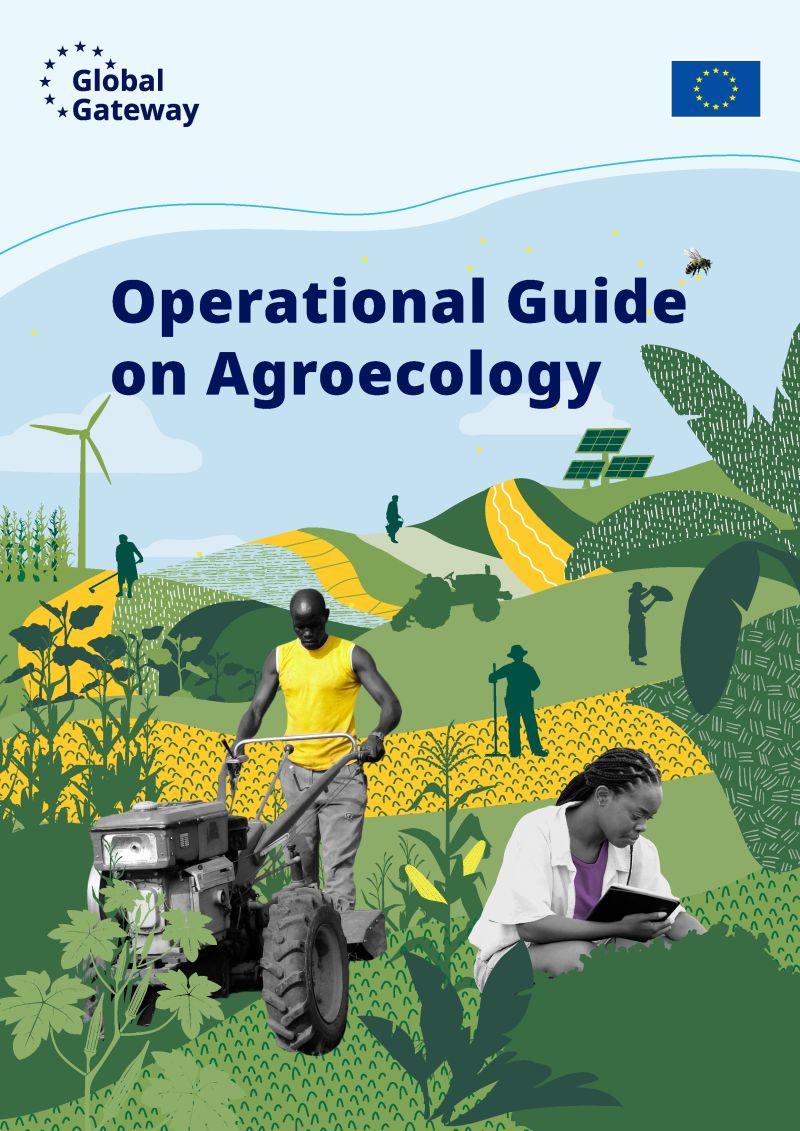
  • From EU Policy to field action: The EU Operational Guide on Agroecology. Key principles and guidance from the EU Operational Guide and its relevance for farmer-led research and innovation.
  • Farmers’ Organisations as drivers of agroecological transition: PAFO’s advocacy strategy on agroecology and the strategic role of continental and national farmers’ organisations.
  • Enabling agroecology in practice: Constraints to organic input production. Technical and systemic barriers to producing organic inputs and implications for scaling agroecological practices.
Speakers:
  • Katja Vuori - CEO, AgriCord
  • Marion Michaud - Policy Officer, DG-INTPA
  • Schadrack Seneza - M&E officer Pan African Farmers’ Organization (PAFO)
  • Sheila Chebichii Kosgei - Agribusiness Coordinator, Cereal Growers Association (CGA)
  • Dr. Babafemi Oyewole, CEO of PAFO
  • Moderated by Martin Agboton, FORI Program Manager, AgriCord

Resource


Chapter 1 – Agroecology: Definitions and Guidance.
This chapter introduces agroecology as a concept that has evolved from a scientific discipline into a holistic approach to food systems. It recounts the origins of agroecology, its broadened scope encompassing ecological, social, and cultural dimensions, and the current positions of key actors - research institutions, civil society, governments, and international organisations. The chapter highlights that agroecology aims to transform food systems by grounding agricultural practices in ecological processes, local knowledge, and equity. It also emphasises growing institutional recognition, including within EU development policy frameworks.

Chapter 2 – Reference Framework on Agroecology.
The guide then presents a structured conceptual foundation for agroecology, describing it as a paradigm shift towards systemic thinking. Central to this framework are the 13 HLPE principles, aligned with the 10 FAO elements, which together define the ecological, economic, social, and governance dimensions of agroecology. The chapter details each principle—such as diversity, synergies, recycling, responsible governance, and co-creation of knowledge—and identifies practices not compatible with agroecology, including input-intensive monocultures and measures undermining farmer-managed seed systems. It also analyses related approaches (e.g., climate-smart agriculture, conservation agriculture), showing their points of convergence and divergence with agroecological principles.

Chapter 3 – Agroecology and Major Global Challenges.
This chapter explains how agroecology provides practical, evidence-based responses to global challenges such as climate change, food insecurity, low farmer incomes, gender inequality, biodiversity loss, nutrition and health issues, water crises, and territorial management. For climate, agroecology increases vegetation cover, restores degraded land, strengthens water and nutrient cycles, and promotes carbon sequestration through agroforestry and organic fertilisation. For food security and income, it supports diversified production systems and reduces dependence on external inputs. Agroecology also advances gender equality, protects biodiversity through diversified landscapes and reduced synthetic inputs, improves nutrition through diversified diets, and supports sustainable water management. The chapter also underscores the role of territorial approaches, such as shared resource management, local governance, and inclusive participation.

Chapter 4 – Integration of Agroecology in Programming.
This section provides guidance for incorporating agroecology into EU multiannual programming processes, especially under the NDICI (Neighbourhood, Development and International Cooperation Instrument. Certain quantified objectives  of the NDICI are aligned with some key principles of the agroecological approach. In the current Multiannual Financial Framework (2021-2027).

Chapter 5 – Political Dialogue and Building a Case for Agroecology.
Here, the guide emphasises the importance of multi-stakeholder political dialogue with national, regional, and local authorities to advance agroecological transitions. It provides arguments demonstrating agroecology’s advantages: economic resilience, climate adaptation, biodiversity restoration, improved nutrition, and reduced input dependency. The chapter also recommends developing incentive mechanisms, including repurposing subsidies away from synthetic-input agriculture, creating financial incentives for agroecological innovation, and using public procurement to support agroecological production.

Chapter 6 – Possible Interventions by Type of Actor.
This chapter outlines concrete actions for different stakeholders: strengthening farmers’ capacity for innovation, improving advisory services through participatory and co-creation-based approaches, supporting value chain actors to enhance access to inclusive markets, promoting action-research, updating academic and vocational training curricula to incorporate agroecology, and assisting ministries in developing public policies that enable agroecological transitions.

Chapter 7 – Topics of Intervention.
Building on Chapter 3, this section proposes practical activities to operationalise agroecology in areas such as climate change, food security, gender, biodiversity, value chains, nutrition, water, and territorial approaches. Examples include crop diversification, support for seed systems, soil carbon sequestration practices, water-efficient irrigation technologies, anti-erosion measures, and co-created advisory services. These activities illustrate how agroecological principles can be translated into concrete interventions.

Chapter 8 – Examples of Contextualised Interventions.
This chapter provides examples demonstrating how agroecological initiatives have been adapted to specific regional and socio-economic contexts, showing the diversity of pathways and the importance of local relevance in successful transitions.

Chapter 9 – Evaluation Methodologies.
The guide reviews a suite of evaluation tools, including TAPE, the Agroecology Criteria Tool (ACT), Business Agroecology Criteria Tool (B-ACT), the AE Assessment Framework, and EFA+—used to assess agroecology at farm, project, enterprise, policy, or territorial level. These tools measure environmental, social, economic, nutritional, and governance dimensions and support evidence-based decision-making throughout project cycles.

Chapter 10 – Developing a Logical Framework.
The final chapter offers guidance for designing logical frameworks compatible with agroecology, including indicators and examples that reflect the multi-dimensional nature of agroecological transitions. It stresses ensuring coherence between objectives, results, and monitoring systems while respecting agroecological principles.


Wednesday, January 28, 2026

Agroecology in the banana sector

28 January 2026. Agroecology in the banana sector: Building sustainable innovation to counter Fusarium
Tropical Race 4 (TR4) with smallholder farmers:

This webinar organised under the FORI programme promoted a shared understanding and practical exchanges on agroecology to support the agroecological transition led by farmers’ organisations.
  • From EU Policy to field action: The EU Operational Guide on Agroecology. Key principles and guidance from the EU Operational Guide and its relevance for farmer-led research and innovation.
  • Farmers’ Organisations as drivers of agroecological transition: PAFO’s advocacy strategy on agroecology and the strategic role of continental and national farmers’ organisations.
  • Enabling agroecology in practice: Constraints to organic input production. Technical and systemic barriers to producing organic inputs and implications for scaling agroecological practices.

Wednesday, November 12, 2025

Global Climate-Smart Agriculture (CSA) Conference 2025

5–7 November 2025
, Brasília, Brazil. Global Climate-Smart Agriculture (CSA) Conference 2025

Over the three days the conference underscored that while the promise of climate-smart agriculture is strong, its success hinges on integrated, systemic approaches—not simply isolated innovations. Soil health and plant nutrition emerged as foundational; next-generation crops and sustainable livestock systems were flagged as necessary but not sufficient without enabling policies, inclusive institutions and innovative finance. The “synergies with planetary boundaries” track reinforced that CSA must be embedded in broader land-use, biodiversity and ecosystem resilience agendas. Several speakers emphasised that public and private investment must shift toward verifiable climate-smart outcomes (rather than vague “greenwashing” promises), and that farmer-centred design, gender and social inclusion, and digital tools will be critical enablers.

Thematic sessions

Extracts of the main programme

05/11 Opening Panel: Shifting power, scaling solutions: Aligning global food, climate and development agendas

In this session, panellists emphasised that transformative change in agriculture and food systems must go beyond incremental innovation; it requires a recalibration of power dynamics, meaningfully engaging farmers (especially small-holders and women), local institutions and communities in co-design and decision-making, rather than remaining passive recipients. They discussed how scaling solutions for climate-smart agriculture (CSA) demands alignment across global food, climate and development agendas — bridging trade-offs between mitigation/adaptation, food security, livelihoods, ecosystem health and equity. In particular, the panel highlighted three interlinked imperatives: (1) governance — creating inclusive institutions and enabling policies that shift power towards those most impacted; (2) finance and business models — unlocking investments that reward climate-smart outcomes (not just rhetoric) and channel resources into places and actors often marginalised; and (3) systems thinking — recognizing that food systems, climate action and development goals are deeply interconnected, so scaling solutions must work across value chains, landscapes and supply networks.
  • Rachel Waterhouse, Resilient Ocean-Coasts, Water and Land Use Systems Lead, FCDO
  • Grace Tanno, Minister, Head of the Agricultural Policy Division (DPAGRO), Brazil Ministry of Foreign Affairs (Itamaraty)
  • Chris Chilcott, Deputy Director Environment, CSIRO
  • Ishmael Sunga, CEO, Southern African Confederation of Agricultural Unions (SACAU)

05/11 From Pilot to Scale – Unlocking Payments for Ecosystem Services (PES) in Agriculture

Exploring how different financial and policy instruments can work together to mobilize climate finance in agriculture.

The discussion highlighted four major levers: (i) Measurement and verification — robust monitoring of ecosystem outcomes (e.g., carbon, water, biodiversity) is vital to make payments credible; (ii) Institutional & market design — clear governance, transparent rules, risk allocation (e.g., between buyers, aggregators, farmers) and credible demand (carbon markets, biodiversity credits) are essential; (iii) Inclusive business models — farmers (especially smallholders, women) must be integrated as active partners, not just recipients, with fair benefit sharing and capacity-building; (iv) Scaling pathways and policy enablers — public-sector policies, subsidy reform, enabling regulatory environment and blended finance can unlock up-scaling.
  • Moderated by: Rachael Kretsis, Climate and Agriculture Advisor, FCDO
  • Gertrude Kambauwa - Director of Land Resources Conservation, Malawi Ministry of Agriculture
  • Michael Kwame Nkonu - Head of Portfolio for Agricultural Livelihoods, IKEA Foundation
  • Lieven Claessens - Senior Scientist – Carbon Modelling, Olam Agri


06/11 Fact or Fiction? Debunking Myths in Sustainable Agriculture & Food Systems

In this interactive panel, participants explored how often-repeated claims in sustainable agriculture and food systems mask complex realities, and sought to distinguish legitimate innovation from oversold hype. The discussion addressed recurring themes such as “climate-smart agriculture can solve everything,” “zero-emission livestock is just around the corner,” or “nature-positive food systems are fully scalable today.” The speakers challenged each myth by contrasting them with empirical evidence and farmer-centred realities—for example, they emphasized that while soil health improvements are critical, the institutional and market barriers often prevent scaling; that livestock systems can reduce emissions but require major shifts in feed, land-use and behaviour; and that “nature-positive” approaches can deliver only if metrics, governance, and inclusive business models are robust. The session concluded that credibility in sustainable agriculture will depend on transparency about trade-offs, robust measurement of outcomes, stronger alignment with smallholder realities, and honest communication about what can — and cannot — be scaled rapidly.
  • Facilitator: Luis Rangel, Federal Inspector for Agriculture and Senior Expert for Sustainable Agriculture, MAPA
  • Muhammad Ibrahim, Scientist, Climate-Smart Agriculture
  • Ana Carolina Zimmerman, Farmer & Youth
  • Katja Vuori, CEO, AgriCord
  • Omar Farhate, Policy Officer, EmergingAg


07/11 The Private Sector/Business Panel- Innovative financial and business models

This panel explored how private finance can unlock climate-smart agriculture at scale—moving from pilots to bankable, replicable models. Speakers compared instruments such as blended finance, green bonds, sustainability-linked loans, carbon and ecosystem-service credits, and outcome-based contracts. They stressed the nuts-and-bolts: de-risking for early adopters, standardizing MRV to pay for results (not promises), aggregating smallholders so capital can flow efficiently, and aligning incentives across buyers, banks, and farmers. A recurring theme was inclusion—designing models that are investable and workable for farmers (especially SMEs and women), with policy predictability to crowd-in private capital rather than replace it.
  • Facilitator: Manuela Maluf Santos, Country Director, Brazil · IDH
  • Laurence Jassogne, Head of Nature and Climate Solutions, Olam Agri
  • Rodrigo Miguel, CEO of Agrifirm LATAM and member of the Strategic Committee of the Royal Agrifirm Group
  • Francila Calica, Head of Agricultural Affairs and Sustainability Latin America, Bayer
  • Franck Saint-Martin, Global Public Affairs, Nestle


Monday, October 13, 2025

Farmers Organizations Leading Research & Innovation (FO-RI) Capitalization Report.

30 September 2025. Launch of the FO-RI Capitalization Report

AgriCord hosted the official online launch of the Farmers Organizations Leading Research & Innovation (FO-RI) Capitalization Report. This event showcased the insights and lessons drawn from three years of farmer-led action research across 17 countries, involving 13 projects funded by the European Commission, EU International Partnerships and the OACPS Secretariat - Secrétariat OEACP.

  • Since 2022, the FO-RI program has placed farmer organizations (FOs) at the heart of research and innovation, enabling them to design, lead, and implement action research tailored to their contexts.
  • The report, led by Laurent Dietsch, synthesizes strategies, methodologies, and results from the FO-RI program. This event is not just a launch but also an opportunity to reflect collectively on how to scale up these successes and apply the findings to future farmer-led initiatives.

Key achievements include:
  • Strengthened farmer organizations with greater capacity to conduct research.
  • Enhanced farmer participation, ensuring that innovation is truly grounded in farmers’ needs
  • Promotion of agroecological practices and revival of traditional knowledge.
  • Actionable lessons for overcoming challenges such as prioritizing research themes, operational barriers, and ensuring rigor in participatory research.
Dietsch, L. (2025). Capitalisation transversale des expériences de mise en œuvre de projets de recherche action financés dans le cadre du programme FORI. Groupe d’Expérimentation et de Recherche : Développement et Actions Localisées (GERDAL); AgriCord, 55 pp.