Platform for African – European Partnership in Agricultural Research for Development
Showing posts with label Rwanda. Show all posts

Saturday, September 12, 2026

Rockefeller Foundation at AFS Forum 2026: Investing in healthier and more resilient food systems

31 August–4 September 2026. Africa Food Systems Forum (AFSF), Kigali, Rwanda, 

The Rockefeller Foundation highlighted how investment in nutrition, clean energy, public procurement and food markets can accelerate Africa’s food systems transformation. 


31 August 2026. Among the Foundation's prominent engagements was the Signature Side Event “Agri-Energy Finance for Underserved Groups”, organised with Practical Action, the Global Energy Alliance for People and Planet (GEAPP) and BASE. The discussion examined how finance, clean energy, agricultural markets, farmer organisations and last-mile businesses can be connected so that technologies such as solar irrigation, cooling, storage and processing become commercially viable for underserved farming communities. 
  • keynote by Kagwiria Koome, Lead of the Rockefeller Foundation Food Team, 
  • Roselyn Akinyi Walender – Africa Director at Practical Action
  • Kagwiria Koome – Food Team Lead at The Rockefeller Foundation 
  • Tim Mwangi – Head of Programme Delivery at Practical Action Kenya 
1 September. The Breakthrough Session “Public Procurement for Nourishing Nations,” explored how government purchasing—including school meals—can simultaneously improve nutrition, create markets for local farmers and SMEs, and strengthen local food economies.
  • Betty Kibaara with Diplav Sapkota (The Rockefeller Foundation)
  • Leila Odhiambo (Ministry of Health, Kenya)
  • Bahati W. (AGRIFACE Ltd, Rwanda)
  • IMBABAZI Jean De La Croix (World Food Forum Rwanda)
  • MICHAEL ONCHABO (FOLU Kenya)
  • Nancy Phoebe Rapando (ClimateWorks Foundation, 

3 September. The Narrative Panel “Telling Africa’s Food Story: Proof, Perception and Power”, examined a central communication challenge in African food systems: the gap between official narratives of agricultural transformation, the evidence and data used to demonstrate progress, and the realities experienced and perceived by farmers and citizens. 

In particular, the discussion considered who shapes Africa’s food-system narrative, whose evidence is considered credible, and how research, statistics, journalism and lived experience can be combined to communicate both progress and persistent challenges more accurately.
  • Dr John Ulimwengu, Evidence and Measurement at IFPRI; 
  • Ms Umuliza Njiru, Rockefeller Foundation, Investment and Partnership; 
  • Dr Fatou Dieng Gueye, Agro-economist and Head of CORAF’s MEL unit
  • Gilbert Borketey Boyefio, Programmes Manager at Parliamentary Network Africa.

4 September. Nutrition and consumer demand formed another important strand. The Rockefeller
Foundation co-organised the closing plenary “Charting Consumer Demand Trends & Our Food Environment” with AGRA, GAIN, SNV and the Access to Nutrition initiative. 
  • The session examined how healthier and nutrient-dense foods can become more affordable, desirable and commercially attractive, while generating jobs and markets for women and young people. 
  • At its exhibition space, the Foundation also showcased the work of the Fortified Whole Grain Alliance, including fortified whole-grain products from Rwanda, Kenya and Benin and progress in linking nutritious grains to school feeding.

1 September. A particularly engaging part of the Rockefeller Foundation programme was the screening of FOOD 2050, its new feature documentary narrated and executive-produced by Academy Award winner Viola Davis.
  • The film itself had its world premiere earlier, on 14 January 2026 in Los Angeles, at the Academy Museum of Motion Pictures. 
  • The film follows farmers, scientists, entrepreneurs and activists across five continents and asks a central question for the future of agriculture: how can the world nourish nearly 10 billion people by 2050 in ways that are regenerative, equitable and healthy? 
  • The documentary grew out of the Rockefeller Foundation’s Food System Vision Prize, which attracted more than 1,300 visions involving 4,000 organisations from 119 countries.
  • Watch / learn more: FOOD 2050 – official film website and trailer. The full feature film is currently listed as “coming soon to streaming”; meanwhile, the original Food 2050 short-film series can be watched through the Rockefeller Foundation’s Food System Vision Prize page. Watch the Food 2050 series

Friday, September 11, 2026

The Netherlands Food Partnership at AFSF 2026: Connecting Dutch Expertise with Africa’s Food Systems Transformation

31 August to 4 September 2026. AFS Kigali. For the Netherlands Food Partnership (NFP), the Forum was an opportunity to demonstrate that Dutch engagement in African food systems is not about a single technology, sector or organisation. Rather, it is about building partnerships across agriculture, nutrition, energy, research, entrepreneurship, finance and policy.

NFP brought together Dutch organisations and partners around a shared presence at the Forum, while also supporting several partnerships and sessions addressing some of the most pressing challenges facing Africa’s food systems.


A Dutch Pavilion built around partnership


One of the most visible elements of the Dutch presence was the Dutch Pavilion, hosted by the Netherlands Food Partnership. NFP brought together 17 members of its network at the booth, creating a shared space where organisations could present their work, meet African and international partners, exchange experiences and explore new collaborations.

The pavilion reflected the diversity of Dutch engagement in African food systems. Among those represented were organisations working on farmer livelihoods and value chains, climate resilience, nutrition, youth entrepreneurship, research and innovation.

  • Dorcas, for example, used the pavilion to showcase its work on climate-resilient agriculture, farmer field schools and value-chain development in East Africa. Its representatives highlighted experience from Tanzania and Kenya, including work around the PIP approach, farmer field schools and the honey value chain.
  • Access to Nutrition Initiative (ATNi) was also represented through the Dutch booth, with Katherine Pittore participating on behalf of the Netherlands Working Group on international
    Nutrition. ATNi's broader engagement at the Forum focused on healthy diets, consumer demand and the food environment.
  • ProVeg International was another partner present at the Dutch Pavilion, bringing perspectives on plant-rich diets and protein diversification and linking these issues to healthier and more resilient African food systems.

The pavilion therefore served as more than an exhibition stand. It became a meeting point for organisations that approach food-system transformation from different entry points but share an interest in practical, locally relevant solutions.


Putting youth entrepreneurship at the centre


A major NFP-supported event during the Forum was the session “Scaling the Youth Enterprises Ecosystem,” held on 2 September at the Youth Dome. The session was jointly organised by SNV, FAO, AGRA, Netherlands Food Partnership and Wageningen University & Research Student Challenges, with NFP's Bente Meindertsma helping to facilitate the discussion. The central question was : what does it take to help youth-led enterprises move from incubation to scale?

The discussion explored the importance of education, skills, networks, market opportunities and enabling ecosystems. Rather than treating young people simply as beneficiaries of food-system programmes, the session focused on young people as entrepreneurs, innovators and economic actors.

The involvement of East-West Seed Knowledge Transfer Foundation added a practical smallholder perspective. Elijah Mwashayenyi, Head of Knowledge Transfer for Africa, participated in the panel discussing how youth enterprises can scale across different country contexts.


Turning food-system plans into action


NFP joined FAO, GAIN, AGRA, AKADEMIYA2063, GIZ, Expertise France, the Scaling Up Nutrition Movement and the UN Food Systems Coordination Hub, among others, in a side event examining how national food-system plans can be translated into practical action. The discussion focused on the practical challenges governments face when moving from strategy to implementation, including the need for stronger coordination, partnerships and investment.

A session convened under the Accelerator framework brought together government representatives, development partners and international financial institutions to consider how implementation gaps can be addressed.


Connecting food systems with clean energy


Another major area of NFP engagement was the Agri-Energy Coalition, which brings together partners working at the intersection of energy, agriculture, water, nutrition, climate and finance. The Coalition had a dedicated exhibition booth, side events, deal-room activities, Innovation Hub sessions and networking events. NFP was among the Coalition partners. The Coalition brought together organisations including GOGLA, SNV, AGRA, GAIN, Wageningen University & Research, IWMI, Practical Action, REEEP, the Global Energy Alliance for People and Planet, Welthungerhilfe, IKEA Foundation, Acumen, BASE, Partners in Food Solutions, Helen Keller International and others.

Energy is not a peripheral issue for food systems. Reliable and affordable energy affects irrigation, cold storage, processing, transport, markets and the ability of rural enterprises to add value. Renewable energy can therefore be an enabler of both food-system resilience and rural economic development.


Investing in young innovators


NFP's partnership with Wageningen University & Research was also visible through the Food Systems Innovation Challenge. 

The Challenge connects students from universities in the Global South and elsewhere with real food-system challenges, creating opportunities for young people to develop practical solutions and entrepreneurial ideas. 

WUR and NFP jointly organise the Challenge, with a strong emphasis on partnerships with universities in the Global South and on connecting youth innovation with food-system transformation pathways. The 2026 edition involves student teams from 17 partner universities. 

Although the Grand Finals will take place Tuesday, 29 September 2026 in Wageningen, the initiative formed part of the wider NFP presence at AFSF: an example of how youth engagement, education, innovation and entrepreneurship can be connected rather than treated as separate agendas.

The 30 selected teams

1BangladeshBangladesh Agricultural UniversityThe Golden Loop
2BangladeshBangladesh Agricultural UniversityBiocircular
3BeninNational University of AgricultureGreenValor-Compost
4BeninNational University of AgricultureKetou FertiSoyaPlus
5BrazilESALQ-USPEcoPalm Nexus
6BrazilESALQ-USPKindred Ora
7EthiopiaWollo UniversityEureka
8EthiopiaWollo UniversityBiochar – The Black Diamond
9GhanaUniversity of GhanaSoilpulse AI
10GhanaUniversity of GhanaMacIsland
11IndonesiaUniversity of BrawijayaEkolestari
12IndonesiaUniversity of BrawijayaNgramut Wiji
13KenyaLukenya UniversityAgripro
14KenyaLukenya UniversitySolar Harvest Innovators
15KenyaUniversity of EldoretBreezBag
16KenyaUniversity of EldoretFermentaFuture
17NepalKathmandu UniversityGreen Miracle
18NepalKathmandu UniversityShell Alchemist
19NetherlandsWageningen University & ResearchIronTeam
20NetherlandsWageningen University & ResearchPaludifuture
21NigeriaUniversity of AbujaGreen Dessert
22NigeriaUniversity of AbujaSiam Bio-Store
23SenegalUSSEINGancax Pro
24SenegalUSSEINMBT's Infusana
25South KoreaSeoul National UniversityRegrain
26South KoreaSeoul National UniversityABEL
27UgandaMakerere UniversityGreen Organic Harvest Canopy
28UgandaMakerere UniversityBioCoat Solutions
29VietnamCan Tho UniversityEco-Aqua Alliance
30VietnamTra Vinh UniversityEverGreen


Monday, September 7, 2026

GFAiR Unveils Guides to Measure Equitable Partnerships

4 September 2026. The GFAiR - The Global Forum on Agricultural Innovation and Research has officially launched four practical guides that provide frameworks, standards, and KPIs for measuring Equitable Partnerships across every stage of Research for Development (R4D) projects.

🌱 Who benefits? Researchers, project partners, and global agricultural initiatives at all levels.

The four guides include:

1️⃣ The Partnership Principles: Defines nine principles for building equitable, inclusive, transparent, and mutually beneficial partnerships in agrifood research and innovation. 3 p.

2️⃣ Guidelines for Application in Projects: Shows researchers how to apply the nine Partnership Principles at each stage of a project, from scoping and design through implementation, dissemination, and scaling.  6 p.

3️⃣ Assessment Tool (Manual): Provides a survey-based tool, available manually or digitally, for partners to assess how effectively a project is applying the nine principles and identify areas for improvement. 

4️⃣ Partner-Inclusive Language Guide: Provides practical guidance on using language that recognises partners as equal contributors and avoids terminology that reinforces unequal power relationships in research partnerships. 13 p.

It was launched during a strategic dinner meeting on the sidelines of the AFS Forum 2026 in Kigali, Rwanda. These tools address a critical sector-wide gap.

As Joanna Kane-Potaka, GFAiR Executive Secretary, highlighted during the launch: 

"There are no standards on measuring Equitable Partnerships, and a lot more work is needed. That is why GFAiR unveiled a series of guides for how to apply Equitable Partnerships in projects, as well as how to measure them at each stage of a Research for Development project."

🤝 Witnessed by Strategic Partners the launch was celebrated alongside key regional partners from the  Forum for Agricultural Research in Africa - FARA,  ASARECA, CORAF and CCARDESA, including:

  1. FARA: Dr. Aggrey Agumya (Executive Director)
  2. ASARECA: Sylvester Dickson Baguma (PhD) (Executive Director along with Dr. Joshua Okonya, Moses Odeke; Julian Barungi and Blaise Amony)
  3. CORAF: Dr. Emmanuel Njukwe (Director of Research and Innovation)
  4. CCARDESA: Dr. Majola L. Mabuza (Special Programme Coordinator, FSRP)
  5. GFAiR: Francois Stepman (Advisor), and Dr. Botir Dosov (GNC Consultant)

🌍 Supported by the European Commission, GFAiR works in close collaboration with six Regional Fora to drive agricultural innovation.

🫶 A massive thank you to all our partners for the continued support and collaboration in bringing this milestone to fruition!


Related:

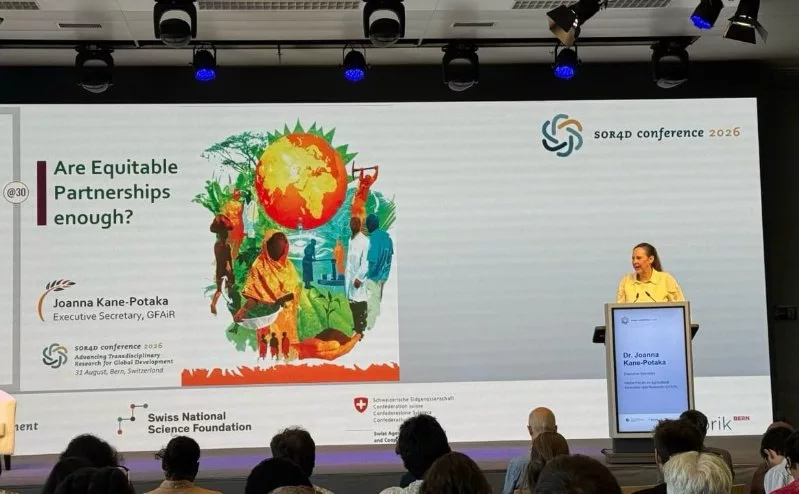
2 September 2026. Are Equitable Partnerships enough? The GFAiR time-tested approach

Equitable partnerships are necessary but not sufficient to transform agricultural research and development. Drawing on GFAiR Executive Secretary Joanna Kane-Potaka’s keynote at the SOR4D (Solutions Oriented Research for Development) conference in Switzerland under under the overarching theme “Advancing Transdisciplinary Research for Global Development: Crisis, Collaboration, and Change”, it makes the case for moving beyond shared decision-making and co-ownership toward genuine local leadership.

  1. Equity must lead to local leadership: Partnerships can be co-designed and co-implemented while power still remains with those controlling funding; genuine transformation requires external partners to relinquish some power and enable local actors to lead.
  2. External partners should build local capacity: Rather than protecting their own existing “comparative advantage,” international organisations should use their strengths to help national institutions develop the capabilities needed to eventually lead their own research and innovation.
  3. Funding can unintentionally reinforce inequity: Consolidating fragmented funding could reduce duplication and proposal-writing costs, but larger projects may exclude smaller or less-experienced organisations unless funding mechanisms are deliberately designed around equity and local leadership.
  4. National actors should set the agenda: Governments and national institutions need to have their priorities and voices amplified so that international partners support locally defined agendas rather than determining them.
  5. Partnerships need to be measured: There is currently no widely accepted standard for measuring equitable partnerships, which is why GFAiR is developing tools and guidance to assess partnerships throughout the research-for-development project cycle.
  6. The problem is often “how,” not “what”: The article suggests that many development challenges are not primarily limited by technical research capacity, but by how research is organised, who participates, who owns it, and whether solutions are taken up and scaled locally.
  7. The ultimate goal: GFAiR sees equitable partnerships as a step toward local leadership, greater ownership, uptake and scaling of solutions, and ultimately stronger development impact—with funders having a particularly important role in accelerating this shift.

Related:

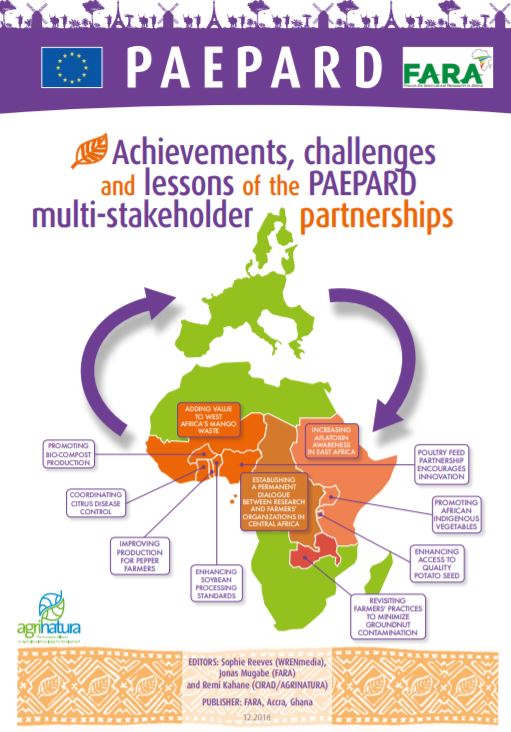
FARA's PAEPARD (Platform for African-European Partnership in Agricultural Research for Development) produced multi-stakeholder briefs and capacity-building resources to foster user-led agricultural innovation

  1. ARD Partnerships – An Introduction: An introduction to agricultural research-for-development (ARD) partnerships and the PAEPARD approach.
  2. Systems Thinking and ARD Partnerships: Explores how systems thinking can help partners understand the wider context, relationships and dynamics affecting agricultural innovation.
  3. Adaptive Leadership in ARD: Examines leadership approaches for navigating complexity, uncertainty and change in multi-stakeholder agricultural partnerships.
  4. Managing Power Differences in ARD Partnerships: Focuses on recognising and managing differences in power, influence and resources among research and development partners.
  5. Gender and Youth Inclusion in ARD Processes: Looks at how agricultural research partnerships can meaningfully include women and young people rather than treating inclusion as an add-on.
  6. Reflection and Learning in ARD: Explores how partnerships can systematically reflect, learn from experience and adapt their approaches during implementation.
  7. Knowledge Co-creation and Management in ARD: Addresses how different stakeholders can jointly create, exchange, manage and use knowledge throughout the research and innovation process.
  8. Scaling in ARD Processes: Examines different pathways for taking successful agricultural innovations to greater scale, including scaling out, up and deep.

Saturday, September 5, 2026

From Research to Resilience: AFS Kigali’s Agricultural Learning Journey to Huye

On 31 August, the AFS Kigali delegation travelled to Huye for an inspiring field visit focused on one of Rwanda’s most important development assets: its agricultural research and innovation ecosystem.

The visit provided an opportunity to experience first-hand how scientific research, technology, conservation, and farmer-focused innovation are contributing to the transformation of Rwanda’s agricultural sector. 

The visit demonstrated a powerful connection between research institutions and the realities faced by farmers — from conserving valuable genetic resources to developing improved planting materials, strengthening soil fertility, and increasing the productivity and resilience of agricultural systems.

RAB Rubona Station: history, infrastructure and challenges


Established in 1935 in Rwanda’s Southern Province (formerly Butare), RAB Rubona Station is the country’s oldest agricultural research station and the historic foundation of Rwanda’s National Agricultural Research System. Initially created during the Belgian colonial period as the Institut National pour l'Étude Agronomique du Congo (INEAC), Rubona became a centre for research on food crops, soils and livestock adapted to the highland agroecosystems of Central Africa. 

Following Rwanda’s independence, the station evolved through successive national research institutions before becoming a flagship centre of the Rwanda Agriculture and Animal Resources Development Board (RAB) in 2011. Over the decades, Rubona has played a pivotal role in developing improved varieties of beans, maize, cassava, sweet potato and potato, while conserving indigenous crop genetic resources and supporting farmer-oriented agricultural innovation.

Today, Rubona Station comprises extensive experimental fields, crop breeding and seed multiplication facilities, soil and plant laboratories, greenhouses, irrigation infrastructure, livestock research units, offices, conference and training facilities, and one of Rwanda’s principal national genebank collections for agricultural biodiversity. 

The station hosts multidisciplinary teams of breeders, agronomists, soil scientists, plant pathologists, entomologists, livestock specialists, laboratory technicians and extension-oriented researchers who collaborate closely with universities and international partners such as CGIAR centres. 

The BioCap/COECB [Rwanda Biotech Capacity Building (BioCap) / Centre of Excellence for Crop Biotechnology]  investment is a major current infrastructure development.

Launched in December 2025, it goes beyond conducting individual crop trials: it is intended to build permanent national biotechnology capacity at Rubona. Particularly significant is the planned Centre of Excellence for Crop Biotechnology (COECB). CIP (International Potato Center) and RAB are currently developing the facility at Rubona, for biotechnology, genome editing and capacity building, particularly for potato and cassava. It is supported by a  $15 million grant from the Bill & Melinda Gates Foundation. The Donald Danforth Plant Science Center is part of this international initiative. 

Despite its strategic importance, Rubona faces significant challenges including ageing laboratory and irrigation infrastructure, limited long-term funding for research maintenance, shortages of advanced analytical equipment, the need to attract and retain highly qualified scientists, and increasing pressure to develop climate-resilient and nutrition-sensitive innovations that respond to Rwanda’s rapidly evolving agrifood system.


Discovering Rwanda’s Agricultural Research Ecosystem


At RAB Rubona Station, participants explored a remarkable collection of more than 100 conserved banana varieties. The collection illustrates the importance of agricultural biodiversity and the role of research institutions in protecting genetic resources that can support future breeding, adaptation, and food security.

The visit also introduced participants to advanced technologies supporting early-generation seed production and germplasm conservation across a diverse range of crops, including: Cassava, Sweet potato, Banana, Coffee, Passion fruit and Tree tomato.

Seeing these systems in practice offered a valuable perspective on the science behind the crops that sustain rural livelihoods. Conservation is not simply about preserving varieties for the future; it is also about maintaining the genetic diversity needed to respond to emerging challenges such as climate change, pests, diseases, and changing market demands.

From Innovation to the Farmer

A particularly important aspect of the visit was learning about rapid cassava seed multiplication and customized soil-fertility management systems.

These innovations demonstrate how agricultural research can be translated into practical solutions. Producing quality planting material more rapidly can help farmers access improved varieties, while soil-fertility approaches adapted to specific conditions can support more efficient use of nutrients and improve productivity.

Together, these technologies illustrate a broader principle: agricultural transformation requires more than introducing a new crop or technology. It requires sustained investment in research, experimentation, conservation, knowledge transfer, and systems that allow innovations to reach farmers at scale. The experience at Rubona showed how this long-term investment can contribute to higher productivity, greater resilience, and scalable solutions for farmers.


Advancing research and development of Bambara groundnut


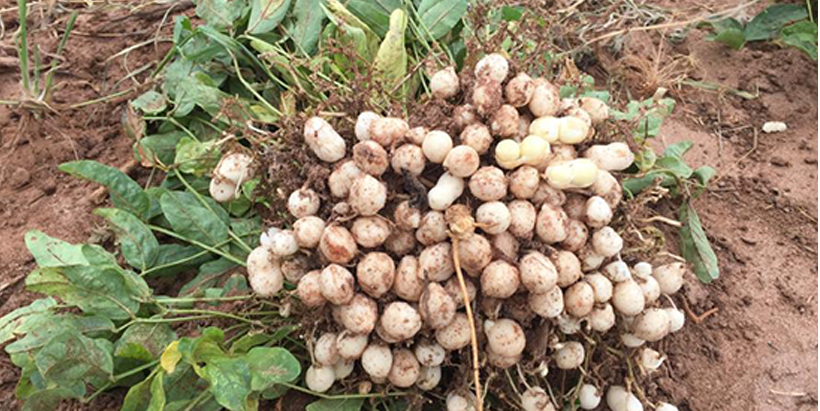
The Society for Underutilized Legumes (SUL), which emerged from IITA's Genetic Resources Center and collaborates closely with IITA-CGIAR, is expanding research on Bambara groundnut  (Vigna subterranea) and other underutilized legumes into East Africa. Recent research includes collaboration with scientists from the University of Rwanda, complementing wider IITA work on Bambara groundnut genetic resources, breeding, nutrition, climate resilience and value addition. 

The Bambara groundnut (BGN), once labeled an orphan crop, has now assumed the status of an
important underutilized nutritious, drought-resistant legume crop, and is now positioned as a promising future crop that is serving a varied choice of culinary purposes, including local delicacies, and more recently, plant-protein-based milk alternatives. Despite the numerous benefits of BGN, processing its seeds into valuable food products generates wastes (such as husks, shells, haulms, and offal), which are often disposed of carelessly into the environment, thereby creating environmental hazards.

With this growing environmental challenge, comes the growing interest in adding value to the wastes generated from BGN and converting them into products that are useful for industrial purposes, as well as food and feed, and researchers from Nigeria, Rwanda and South Africa are unlocking new economic and environmental opportunities and exploring potential value-added products from Bambara groundnut waste, transforming what was once discarded material into valuable resources that support sustainable growth across Africa’s food systems.

Picture: Dr Adegboyega Taofeek T [Kneeling] of the Society of Undertutilised Legumes (IITA) and Dr Adeyemo Rasheed O. [Standing] on the Bambara groundnut field at the University of Rwanda, Huye Campus. The field trial was conducted with the support of Lecturers and Colleagues from the University of Rwanda.  

Livestock Innovation Meets Living Heritage


The journey continued at Songa RAB Station, where agricultural innovation took on a different dimension through livestock.

The Rwanda Dairy Development Project – Phase 2 (RDDP-2) is a major dairy-sector transformation programme implemented by the Rwanda Agriculture and Animal Resources Development Board (RAB) with financing from IFAD and other partners. 

Launched on August 30, 2024, the Rwanda Dairy Development Project – Phase 2 (RDDP 2) , funded by IFAD and implemented by RAB,will benefit 175,000 dairy farmers nationwide. The revitalization of the Songa Sement Production Centre is part of a broader $125 million USD initiative aimed at transforming the dairy sector over the next five years. Between $8 million and $10 million of the $125 million allocated for RDDP 2 will go directly into establishing and operationalizing the upgraded semen production centre. 

It aims to improve the income, nutrition and resilience of rural households by creating a more inclusive, climate-resilient, digitalized and competitive dairy sector, targeting around 175,000 rural households. Of particular relevance to RAB Songa Station, RDDP-2 is upgrading the Songa Semen Production Centre into a modern hub for bovine genetic improvement, with:
  • technologies for semen and embryo production, 
  • in-vitro fertilization (IVF), 
  • artificial insemination and embryo transfer, 
  • alongside improved forage production, 
  • dairy performance recording and specialized training
30 high-quality bulls are already at Songa, with a longer-term target of 60. Approximately US$8–10 million is expected to be invested directly in establishing and operationalizing the upgraded Songa centre, positioning the station as an important national centre for dairy breeding, genetics and farmer/veterinarian capacity development

Participants discovered modern approaches to livestock breeding and semen collection, gaining insight into how reproductive technologies and improved genetics can contribute to greater livestock productivity.

At the same time, the station offered an encounter with an important part of Rwanda’s cultural heritage: the iconic Inyambo royal cattle.

The contrast — and connection — between advanced breeding technologies and these culturally significant cattle provided a powerful illustration of how innovation and heritage can coexist. Rwanda’s livestock sector is not only about improving production; it is also about preserving and valuing traditions that form part of the country’s identity.

The Inyambo therefore represents more than a livestock breed. They offered a living connection between Rwanda’s past and its agricultural future.


Learning Through Experience

For the AFS Kigali delegation, which included a GFAiR representative, the field visit was an opportunity to see agricultural research not as an abstract scientific process, but as a living ecosystem involving researchers, genetic resources, technologies, farmers, institutions, and cultural heritage.


Friday, September 4, 2026

Financing Generative AI for Agricultural Advisory

4 September 2026. Financing Generative AI for Agricultural Advisory. 

Artificial Intelligence is rapidly reshaping African agriculture, with generative AI offering personalized, real‑time advisory across crops, livestock, weather, and markets at a fraction of traditional extension costs. 

Yet unlocking this potential for smallholder farmers requires financing to move beyond pilots and building shared data and digital public infrastructure that ensures accuracy, trust, and accountability. 

This plenary brought both challenges into a single dialogue, drawing on the work of the Institute for Agriculture and AI, launched through a partnership between the Gates Foundation and United Arab Emirates. The institute is essentially an AI-powered agricultural advisory and research hub. Its goal is to turn advanced AI and agricultural data into practical tools for farmers, governments and NGOs, particularly in Africa, Asia and other climate-vulnerable regions. Its work includes:

🌱 Crop, soil and weather advice tailored to specific locations

🔬 AI models for crop-disease and pest detection

🗣️ Voice-based agricultural advisers that can work in local languages

🤖 Geo- and time-aware AI/LLM systems that provide localized farming recommendations

📊 Building large, open agricultural datasets for AI research

🎓 Training agricultural ministries, NGOs and other organizations to deploy these systems

🚜 Supporting country-level pilots and real-world deployment


Rwanda's Local AI Goals

1 September 2026. Side event  AFS Kigali. AI and agriculture 

Rwanda is already testing new AI tools to help farmers who do not have smart phones or good internet. According to local reports highlighted by Vision Media Rwanda, “One of the tools being tested is Tunga, an AI-powered voice assistant integrated into the agriculture ministry's call centre.” Farmers speak in Kinyarwanda to get fast crop and fertilizer advice. Rwanda wants to use these tech tools to reach more people with fewer field workers.

The government also wants to build on digital platforms such as e-Soko and Smart Nkunganire. More than 1.5 million farmers are registered on Smart Nkunganire, which allows them to order subsidised seeds and fertilisers through USSD.

Rwanda has also completed soil profiling to identify nutrient deficiencies and is developing fertiliser recommendations tailored to local soil conditions in cooperation with Morocco.


Wearing Scientific goggles 

Interview with Prof. Hlamalani (Hlami) Ngwenya Associate Professor; Head of the Research Chair: Communication for Innovation, University of the Free State (UFS), South Africa, within the Centre/Department of Sustainable Food Systems and Development.


Background

Prof. Hlamalani (Hlami) Ngwenya’s “Wearing Scientific Goggles” approach is a way of encouraging practitioners to look at their everyday work through a scientific and reflective lens, rather than treating research and science as something that happens only in universities or laboratories. 

The approach recognises that practitioners are often innovators and possess valuable tacit knowledge—insights gained through experience that are rarely documented, validated, or shared as formal knowledge. 

  • By applying structured inquiry, reflection, evidence gathering, pattern recognition, systems thinking, and documentation to their daily practice, practitioners can transform experience into credible knowledge products that can inform theory, policy, and practice. 
  • In this sense, the approach seeks to bridge the gap between theory and practice, empower practitioners as knowledge producers, and strengthen the “Science of Delivery” by making real-world implementation knowledge visible and scientifically useful. 
Ngwenya has developed the idea into a broader meta-action research framework under her work in Communication for Innovation at the University of the Free State. 

The “Wearing Scientific Goggles” (WSG) approach has important implications for the use of Artificial Intelligence (AI) in African Agricultural Extension and Advisory Services (AEAS) because it shifts the focus from “using AI as a technology” to critically examining, learning from, and improving AI-enabled practice.

Applied to AI, this means extension officers should not simply accept AI-generated recommendations but should become co-investigators of AI in practice—testing whether recommendations are agronomically sound, locally relevant, understandable, culturally appropriate, and useful to different categories of farmers - preferably using local languages. 

The Wearing Scientific Goggles approach implies that the use of local African languages in agricultural chatbots should be understood as an object of critical inquiry and continuous learning, rather than simply a technical translation problem. Extension officers, farmers, developers, and researchers should jointly test whether AI-generated advice in local languages is linguistically accurate, agronomically sound, culturally appropriate, locally intelligible, and practically useful. This requires evaluating AI performance across languages and dialects, incorporating farmer feedback and local knowledge into iterative development, and treating language choice as an issue of inclusion, equity, and knowledge sovereignty.


Related


Access Agriculture’s initiative ‘Digital knowledge sharing for remote rural areas in local languages’ has been selected as one of the 15 finalists in the Digital@UNGA Awards 2026, which recognise outstanding digital initiatives, policies, partnerships, and leaders that are driving inclusive, responsible, and people-centred technological development worldwide.
Your initiative was chosen from close to 1,500 submissions from 146 countries across the four award categories – Digital Inclusion, Digital Government, Digital Frontiers and Digital Pioneers – and reviewed by an international jury of experts. To reach the final 15 in a field of this size is a real distinction, and it places your work among the most compelling initiatives in digital inclusion brought forward this year. Mariia Shakura Project Officer International Telecommunication Union (ITU)
The achievements of all the finalists will be celebrated at the Digital@UNGA Awards ceremony in New York on 21 September 2026

Tuesday, September 1, 2026

Clean Energy to Nourish a Continent: Unlocking renewable power for Africa’s food systems

31 August 2026. “Power the Plate: Energy for Nutrition” 
  • Host/organiser: Welthungerhilfe (WHH), in partnership with GOGLA and the Agri-Energy Coalition. GOGLA lists it as a WHH-hosted side event, while WHH describes the session as being held in partnership with GOGLA.
  • Focus: The session examined the connection between energy access, vegetable production and nutrition. It highlighted that African countries need to substantially increase vegetable production and consumption to achieve healthier diets, while high energy costs, post-harvest losses, irrigation constraints, cooling, storage and logistics can make vegetables less affordable. The discussion looked at how productive renewable energy, investment and partnerships can make vegetables more abundant, affordable and accessible.
  • It also concluded with the launch of the Africa Vegetable Innovation Platform, linked to the #DoubleTheVeg ambition
1 September 2026. “Powering Agri-Food Systems Value Chains Amid a Global Energy Crisis”
  • Hosts: GOGLA and SNV, as part of the Agri-Energy Coalition.
  • Focus: This session took a broader look at how the global energy crisis is affecting Africa's agri-food value chains, from production and irrigation to processing, storage, transport and marketing. It explored how reliable and affordable energy can improve competitiveness, reduce food losses, strengthen rural livelihoods and accelerate food-system transformation.
2 September 2026. AFS Kigali. Powering CAADP: The Agri-Energy Nexus” session. 
  • This session was hosted by SNV, GOGLA and AGRA and focused on integrating renewable energy and agriculture within the implementation of the Comprehensive Africa Agriculture Development Programme (CAADP).

All these sessions reinforced the same message: affordable, reliable renewable energy is not simply an energy-sector issue but a prerequisite for productive, resilient and nutritious food systems.

Resource:


Clean Energy to Nourish a Continent: Unlocking renewable power for Africa’s food systems, a white paper co-authored with GAIN and SNV, looks at how renewable energy can be a vehicle for growth in the African food processing sector. 

Read the executive summary HERE and the full report HERE.

Summary

  1. Africa must align clean energy transition with nutrition gains. Food and energy prices are closely linked. Energy inefficiencies in processing raise costs, waste food, and undermine food and nutrition security. Urgent, energy-efficient, and clean energy interventions are needed to improve the availability of nutritious foods and reduce spoilage.
  2. African food processors are up to two times more energy intensive than their global peers. Outdated equipment, inefficient thermal systems, poor maintenance, and inadequate waste and heat recovery mean that processing one kilogram of produce can require nearly double the energy, reducing competitiveness. Most of the energy demand comes from thermal processes such as drying, frying, pasteurisation, roasting, and boiling, while electricity use peaks in milling, refrigeration, and pumping. Cold chain and refrigeration remain significantly underpowered. 
  3. The processing and post-harvest stages offer a strong renewable energy opportunity. Processing consumes 42% of total energy in food systems and presents the strongest business case. Using Renewable Energy at this stage provides greater co-benefits, especially in terms of nutritious, perishable foods such as fruits, vegetables, eggs, and dairy, where solar photovoltaic (PV) adoption is already on the rise. 
  4. Energy costs are a major business risk for small and medium-sized enterprise (SME) processors, accounting for 15%-22% of operating expenses. For small processors, even modest bills take a high share of revenue, threatening viability. Thin margins make them highly vulnerable to energy price shocks. 
  5. Grid instability is disruptive and costly. Frequent outages, voltage fluctuations, and poor power quality cause equipment damage, downtime, and significant financial losses. Some processors pay USD 4,800 per year in penalties for poor power factor, while others lose USD 10,000 per year due to harmonics related trips. 
  6. Fossil fuel lock-in undermines Africa’s agroindustrialisation and climate mitigation goals. Diesel dominates off-grid processing operations, while unreliable power drives greater diesel dependence. Biomass and firewood account for 18%-48% of fuel use in rural dairy plants and 70%-90% in fish processing, adding to emissions, deforestation, and health risks.

Implications for international research collaboration

  1. Expand comparable cross-country evidence on energy use and efficiency in African food processing; the report notes important geographical and data gaps.
  2. Develop and validate common energy-efficiency benchmarks across countries and value chains, building on the report’s Africa–global comparisons.
  3. Jointly test and adapt renewable-energy technologies—solar, biogas, biomass and hybrid systems—to different African processing and climatic contexts.
  4. Link energy research with nutrition and food-system outcomes, including nutrient retention, cold chains, food affordability and post-harvest losses.
  5. Strengthen South–South and international knowledge exchange, combining research, demonstration hubs, technical training and peer learning to accelerate adoption and scaling.


AfricaVeg: Turning Africa’s Vegetable Diversity into a New Engine for Food, Nutrition and Investment

31 August 2026. AfricaVeg: African Seeds, African Solutions

Hosted by World Vegetable Center. AfricaVeg is a new public–private initiative led by the World Vegetable Center to strengthen Africa’s vegetable breeding and seed innovation ecosystem. 

This side event explored how African seed companies, public breeding programs, universities, and regional partners can work together to accelerate the development and delivery of locally adapted, climate-resilient vegetable varieties that better serve farmers and markets across the continent. 

Many vegetable farmers in Africa continue to rely on imported or poorly adapted seed, while local seed companies often lack access to advanced breeding tools, elite genetics, and product development partnerships. 

AfricaVeg aims to bridge this gap by equipping African seed enterprises with the genetics, technical capacity, market intelligence, and collaborative breeding networks needed to become stronger innovation partners.


GFAiR interview with Dr. Gabriel Rugalema — Regional Director, WorldVeg.


(see also: 1 September 2026.  Innovation Hub: Investing in Diverse Crops discussion  Contribution of Dr. Gabriel Rugalema about innovation in amaranth during the panel Innovation Hub: Investing in Diverse Crops discussion 


Why vegetables matter for Africa


Africa has enormous vegetable diversity, including traditional and indigenous crops such as amaranth, African eggplant, okra, jute mallow, spider plant and roselle.

Many of these crops are nutritionally rich, adapted to local climates and important to household diets and livelihoods. Yet their potential remains underdeveloped. In many countries, farmers face limited access to quality seed, improved varieties, technical knowledge and reliable markets.

WorldVeg's work reflects a broader understanding of food-system transformation: improving diets is not only about producing more calories. It is also about increasing the diversity, nutritional quality and resilience of what people grow and eat.

The Center describes its mission as contributing to healthier lives and more resilient livelihoods through greater diversity in what we grow and eat. Its work spans climate resilience, healthy diets, vegetable biodiversity, economic empowerment, urban food systems, and food safety and loss reduction. 


From better varieties to better businesses


One of the most interesting aspects of AfricaVeg is that it recognizes that breeding a good vegetable variety is only the beginning.

A new variety must move from the laboratory and research station into a seed company, then to farmers, markets and ultimately consumers. 

That requires a functioning ecosystem connecting:

  • Public agricultural research institutions
  • Universities and scientists
  • Vegetable breeders
  • African seed companies
  • Farmers and farmer organizations
  • Investors
  • Markets and food businesses
  • Regional and continental agricultural organizations

This “last mile” between scientific innovation and farmers is critical. WorldVeg has emphasized that AfricaVeg is designed to strengthen precisely this pathway by connecting breeding, seed systems, seed companies, markets and investment.

The initiative therefore represents a shift from thinking about vegetable breeding as an isolated research activity toward seeing it as an innovation and investment ecosystem.


The forgotten opportunity: African vegetables


AfricaVeg is arriving at a time when there is growing recognition of the value of traditional African vegetables.

These crops have sometimes been overlooked by formal agricultural research and commercial seed systems despite their nutritional and environmental potential.

WorldVeg and its partners are now working to conserve and make better use of this biodiversity. More than 17,000 accessions have been collected under the African Vegetable Biodiversity Rescue Plan, with most stored in Africa's Vegetable Genebank in Arusha, Tanzania, and more than 5,000 backed up in the Svalbard Global Seed Vault. 

The challenge is therefore no longer simply to preserve diversity. It is to turn diversity into opportunity.

That means developing varieties farmers want to grow, seed companies can commercialize, consumers want to eat, and investors can support.


Related


23 - 28 August 2026. IHC2026 Tokyo. International Horticulture Conference 
  • S01 — Horticultural Genetic Resources and their Usefulness for Breeding covered horticultural genetic resources and Crop Wild Relatives. Its scientific committee included Chris Ojiewo (International Crops Research Institute for the Semi-Arid Tropics (ICRISAT) / Kenya), Ehsan Dulloo (Bioversity International / Alliance of Bioversity International and CIAT and based in Mauritius) Paula Bramel (independent consultant / genetic resources specialist, with extensive previous work with Bioversity International and the Crop Trust) Sandhya Gupta (International Crops Research Institute for the Semi-Arid Tropics (ICRISAT), India) and others working on genetic resources and crop diversity.

  • FAO side event at IHC2026 on 24 August 2026 entitled: “Unlocking the full potential of fruits and vegetables for the transformation of agrifood systems”

Presentation @9:33 by Guido Santini, Programme Coordinator, Plant Production and Protection Division (NSP), FAO, of an upcoming report (April 2027) Unlocking the Full Potential of Fruits and Vegetables Globally. He gave the preliminary results and future directions.

Related:


19 September 2025. In this video, Mwasilwa Ambali, manager of the Africa Vegetable Breeding Consortium (AVBC), explains the Consortium’s mission to strengthen Africa’s vegetable seed sector through innovation, collaboration, and knowledge sharing. 
  • Established in 2018 as a joint initiative of the World Vegetable Center (WorldVeg) and the African Seed Trade Association (AFSTA), the AVBC is a unique public-private partnership providing members with early access to WorldVeg’s improved breeding lines and research expertise. 
  • In 2025, AVBC members gathered at WorldVeg’s Eastern and Southern Africa office in Arusha, Tanzania, for a three-day meeting that brought together representatives from seed companies and institutions across Africa, Europe, and Asia. 
  • The Consortium fosters close connections between breeders, seed companies, pathologists, entomologists, and farmers, ensuring that innovations in vegetable breeding reach those who need them most. By empowering seed companies and promoting stronger breeding programs, AVBC is paving the way for more resilient and productive vegetable production in Africa. 


Monday, August 24, 2026

African Food Systems Forum 2026: Highlights

1 - 4 September 2026. The Africa Food Systems Forum 2026 focuses on the theme “Investing in Africa's Agri-Food Systems: Nourishing Nations, Growing Jobs, Building Resilience,” targeting critical transformation goals across the continent.

Highlights of the programme


31 August 2026. Investing in Africa's Agrifood Resilience 

09:00–10:00 AD10 – Breakout Room 2. Side Event.
Hosted by Academy of Global Food Economics & Policy, China Agricultural University; Environmental Defense Fund. This side event explores how investments and partnerships can strengthen the resilience of Africa’sAgrifood systems through China–Africa cooperation.


31 August 2026.Securing Africa's Food Future 

10:30–11:30. MH1 - Investment Room Deal Room 2. Side Event
Hosted by CIMMYT, Mastercard Foundation, AfDB, IFDC, Bayer, Gates Foundation. Africa's agrifood systems face mounting pressures from climate shocks, humanitarian crises, market disruptions, and geopolitical instability. These interconnected challenges threaten food security, nutrition, livelihoods, and economic growth, exposing deep structural vulnerabilities.


31 August 2026. Towards Tropical Regenerative Agriculture

10:30–11:30. MH1 - Investment Room Main Stage. Side Event
Hosted by Institute of Advanced Studies of the University of Sao Paulo. Most of the world's soil biodiversity is found in tropical regions. Rather than destroying this living wealth through chemical and synthetic approaches associated with the simplification and monotony of crop and livestock systems, the objective is to make this abundance the foundation for increasing agricultural production while expanding the supply of healthy foods capable of addressing the alarming rise in the consumption of ultra-processed products and obesity, which in both Brazil and Africa are increasing alongside hunger.


31 August 2026. AfricaVeg: African Seeds, African Solutions 

12:00–13:00. MH1 - Investment Room Deal Room 2. Side Event.
Hosted by World Vegetable Center. AfricaVeg is a new public–private initiative led by the World Vegetable Center to strengthen Africa’s vegetable breeding and seed innovation ecosystem. The session will explore how African seed companies, public breeding programs, universities, and regional partners can work together to accelerate the development and delivery of locally adapted, climate-resilient vegetable varieties that better serve farmers and markets across the continent. Many vegetable farmers in Africa continue to rely on imported or poorly adapted seed, while local seed companies often lack access to advanced breeding tools, elite genetics, and product development partnerships. AfricaVeg aims to bridge this gap by equipping African seed enterprises with the genetics, technical capacity, market intelligence, and collaborative breeding networks needed to become stronger innovation partners.


31 August 2026.Financing Africa’s Agrifood Future 

12:00–13:00. MH1 - Investment Room Main Stage. Side Event
Hosted by WHH, AKADEMIYA2063; ANAPRI; AAIN; ACTS; AFAP; ASARECA; CNG; DSG; EAGC; FRI; ICIPE; RBM ; Resilient40; TMA; CORAF

Transforming Africa's agrifood systems in an increasingly uncertain global context demands smart and inclusive financing. Yet, public funds are stretched thin, private capital tends to underinvest in agriculture, while smallholders, pastoralists, SMEs, and women are too often left out of the financing equation.

Organized by AgriBridge, an African-German Policy Network for Sustainable Agrifood Systems, this session will explore key questions around agrifood systems financing. It will highlight innovative financing approaches, including blended finance and de-risking instruments such as trade credit guarantees for women entrepreneurs or a central livestock feed purchasing agency.


31 August 2026.Harnessing Africa’s Adapted Crops.

13:30–14:30 MH1 - Investment Room Main Stage. Side Event
Hosted by Africa Adaptation Crops Initiative (AACI), Food Action Alliance, AGRA, TechnoServe and Bain & Company. Africa’s adapted crops–including sorghum, millet, cowpea, cassava, teff, bambara groundnut, and indigenous vegetables–offer strong potential for climate resilience, better nutrition, and green jobs. Yet, weak seed systems, low productivity, fragmented markets, limited processing, and insufficient private investment continue to constrain their growth and commercialization.

This side event will convene governments, private sector actors, farmer organizations, youth enterprises, researchers, financiers, and development partners to explore how to unlock the full value of these crops from production to markets and value addition.

Discussions will focus on boosting productivity, expanding structured markets, strengthening processing and food innovation, and increasing investment across value chains. Participants will engage on partnerships, finance, market opportunities, and policy actions needed to scale inclusive, climate-resilient and job-creating food systems in Africa.


31 August 2026.Malabo to Kampala: Transforming Agri-Food 

16:30–17:30. MH1 - Investment Room Deal Room 2. Side Event
Hosted by GIZ; AKADEMIYA2063; CARE International. The side event will examine how countries can turn CAADP Kampala commitments into practical delivery systems. The discussion will focus on concrete mechanisms, including NASIP alignment, Joint Sector Reviews, Biennial Review readiness, public expenditure tracking, non-state actor evidence, citizen accountability and country-to-country learning.
 

1 September 2026. AFS. Innovation Hub: Investing in Diverse Crops

Africa’s agricultural resilience, nutrition outcomes, and market competitiveness depend on diversifying production systems beyond a limited number of staple crops. Shifting the agricultural narrative away from dependence on monocultures such as maize, wheat, and rice toward climate-resilient, high-nutrient alternative crops can help attract greater capital and investment into agrifood systems.

This session will explore investment opportunities in underutilized, climate-resilient, indigenous, and high-value crops that can strengthen food security, food and income diversification, biodiversity, and regional and international trade. 

Discussions will examine financing needs on high value diversified crops, market development, research and innovation, value addition, and policies required to scale diversified agricultural systems across the continent.

Segment 1: Bright lights

  • Ms. Josephine Okot, CEO, Victoria Seeds
  • Moderator: Ms. Liz Ogutu, Policy Manager and Lead Eastern & Southern Africa, Climate Action, Alliance of Bioversity – CIAT

Segment 2: Panel

  • Dr. Jerry Asalma Nboyine, Senior Research Scientist and Entomologist, Savanna Agricultural Research Institute (CSIR-SARI), Nyankpala, Ghana
  • Mr. Jean Claude Rubyogo, PABRA Director and Seed Systems Specialist, PABRA/International Center for Tropical Agriculture (CIAT)
  • Mr. Michael Keller, Secretary General, International Seed Federation
  • Dr. Gabriel Rugalema, Regional Director, WorldVeg
  • Mr. Ayodeji Balogun, Chief Executive Officer, AFEX
  • Dr. Rufaro Madakadze, Lead Capacity Building and Technical Support, CESSA AGRA
  • Innocent Namuhoranye, Chairman and Chief Executive Officer of the National Seed Association of Rwanda (NSAR), Rwanda
  • Mr. Hakeem Jimo, Executive Director, ProVeg Nigeria


1 September 2026. Researchers Roundtable: Targeting Big Bets Across Africa’s Agri-Food Transformation. 

AFS. Kigali Convention Center. 10:00–12:00. Roundtable. 
Research must now power immediate, high-impact continental “Big Bets” that can unlock transformative investment on youth to accelerate Africa’s agrifood systems transformation.
Moderators
  • Dr. Wanjiru Kamau-Rutenberg, Panel Member, Malabo Montpellier & Managing Director–Africa, Alliance of Bioversity International and CIAT
  • Prof. Shenggen Fan, Chair Professor & Dean of the Academy of Global Food Economics and Policy (AGFEP), China Agricultural University (CAU)
Discussants
  • Dr. Canisius Kanangire, Executive Director, African Agricultural Technology Foundation (AATF)
  • Dr. Simon Heck, Director General, International Potato Centre (CIP) &; Senior Director, CGIAR
  • Dr. Tshilidzi Madzivhandila, CEO & Head of Mission, Food, Agriculture and Natural Resources Policy Analysis Network (FANRPAN)


2 September 2026. Lemigo hotel Kigali. 7:45 AM - 10:00 AM. Scaling Opportunity Crops Through Policy, Partnerships and Investment.


2 September 2026. CGIAR Strategy 2040 and Africa Strategy. 

AFS. Kigali Convention Center. AD10 – Breakout Room 2. 15:30 – 19:30 
This joint CGIAR–FARA workshop will bring together African partners and stakeholders to discuss the emerging CGIAR Africa Strategy and contribute to shaping CGIAR Strategy 2040, inviting feedback, inputs and guidance to strengthen their relevance, ownership and impact.
  • Ismahane Elouafi Executive Managing Director CGIAR
  • Simeon Ehui Director General, IITA  CGIAR Regional Director for Africa & Continental Champion for Africa IITA | CGIAR
  • Namukolo Covic  Lead of Liaison Office for Africa CGIAR
  • Aggrey Agumya Executive Director Forum for Agricultural Research in Africa (FARA)

3 September 2026. 6:00 PM - 8:00 PM. FARA-GFAiR catch up over dinner


3 September 2026 | 11:30–13:00. From Change to Proof: System Transformation


This session brings together leaders from AGRA, the Mastercard Foundation, the True Cost Accounting (TCA) Accelerator, AfrEA, and other partners to explore how innovative measurement approaches, digital technologies, and integrated data systems can strengthen system-wide evidence generation, use, and decision-making.
  • Moderator: Liz Ntonjira, Director of Program Communications, Pan-African Programs, Mastercard Foundation
  • Keynote Speaker: Prof Hamadi Boga, Vice-President, Program Delivery, AGRA
  • Andrew Cox – Director, Strategy, Monitoring & Evaluation, AGRA
  • Dr. Tadele Fayso – Director, Impact Delivery – Pan-African Programs, Mastercard Foundation
  • Jenn Yates – Director, True Cost Accounting (TCA) Accelerator
  • Dr. John Ulimwengu – Senior Research Fellow, IFPRI
  • Dr. Getaw Tadese – Director, Department of Policy Intelligence, AKADEMIYA2063
  • Dr. Máximo Torero – Chief Economist, FAO

4 September 2026. Digitalization: Financing Generative AI for Agricultural Advisory

AFS. Kigali Convention Center. Plenary. 10:00–12:00. 
Artificial Intelligence is rapidly reshaping African agriculture, with generative AI offering personalized, real‑time advisory across crops, livestock, weather, and markets at a fraction of traditional extension costs.

Yet unlocking this potential for smallholder farmers requires financing to move beyond pilots and building shared data and digital public infrastructure that ensures accuracy, trust, and accountability.

This plenary will bring both challenges into a single dialogue, drawing on the work of the Institute for Agriculture and AI, launched through a partnership between the Gates Foundation and United Arab Emirates.

Discussions will explore coordinated investments and governance frameworks to deliver AI solutions that reflect African realities and serve farmers, women, youth, and agribusinesses.

In Focus
  • Dr. Sandra Milach, Chief Scientist, Consultative Group for International Agricultural Research (CGIAR)
Center Stage
  • Mr. Tajudeen Yahaya, CEO, Extension Africa
  • Dr. Nicoline de Haan, Director, CGIAR Gender Equality and Inclusion Accelerator
  • Prof. Vikram Sadanand Adve, Director, AI Institute for Agriculture (AIFARMS) & Head, AI Agribench Consortium
  • Mr. Jamie Collinson, CEO & Founder, iSDA-Africa
In Focus
  • Prof. Hlami Ngwenya, Associate Professor and Head of Research Chair in Communication for Innovation, University of the Free State
Center Stage
  • Ms. Dolapo Olukasumond, Country Director Nigeria, African Forum for Agricultural Advisory Services (AFAAS)
  • Dr. Daniel Elger, CEO, Centre for Agriculture and Bioscience International (CABI)
  • Mr. Stewart Collis, Senior Program Officer – Digital Solutions & Agricultural Development, Gates Foundation


4 September 2026. Nutrition & Health: Charting Consumer Demand Trends & Our Food Environments 

AFS. Kigali Convention Center. Plenary. 13:30–15:30. 
This thematic plenary explores how consumer demand for healthy and nutrient-dense foods shapes, and is shaped, by Africa’s food environments and informal and formal markets. High food prices, weak purchasing power, and climate-related disruptions continue to limit access to nutritious foods across the continent.

Discussions will examine how food environments influence trust, affordability, and desirability and how private sector strategies can be leveraged to generate demand and aspiration for healthy diets.

By linking demand and supply-side dynamics, the plenary demonstrates how targeted policies and public and private investment into nutrient-dense foods can accelerate healthy diets, unleash market growth, and create jobs for women and youth.

Framing Remarks
  • H.E. Paul Gulleik Larsen, Special Envoy and Ambassador-at-Large for Food Security, Norway
  • In Focus
  • Dr. Roy Steiner, Senior Vice President, The Food Initiative, Rockefeller Foundation
  • Dr. Christine Chege, Senior Scientist, Food environment and consumer behaviour, Alliance of Bioversity & CIAT
  • Ms. Bettina Iseli, Chief Programs Officer, Welthungerhilfe (WHH)
  • Ms. Gena Perry, Executive Director, American Soybean Association's World Initiative for Soy in Human Health (ASA/WISHH)
  • Ms. Boitshepo Bibi Giyose, Senior Nutrition Officer for Policy and Programmes - Nutrition and Food Systems Division, Food and Agriculture Organization (FAO)
In Focus
  • Dr. Lawrence Haddad, Executive Director, GAIN
Center Stage: Consumer influence on private sector operations
  • Ms. Wambui Mbarire, CEO, Retail Trade Association Kenya (RETRAK)
  • Mr. George Ouma, Coordinator African Leaders for Nutrition, African Development Bank (AfDB)
Commitment Spotlight
  • Ms. Angela Kimani, Senior Program Officer – Nutritious Food Systems, Gates Foundation