The 27th PAFO–COLEAD Innovations Session discussed how agrifood systems and the organisations, cooperatives, MSMEs and support ecosystems can better serve youth and women as both entrepreneurs and jobseekers, and how strengthening one pathway can reinforce the other for sustainable, inclusive impact.
Over the three days the conference underscored that while the promise of climate-smart agriculture is strong, its success hinges on integrated, systemic approaches—not simply isolated innovations. Soil health and plant nutrition emerged as foundational; next-generation crops and sustainable livestock systems were flagged as necessary but not sufficient without enabling policies, inclusive institutions and innovative finance. The “synergies with planetary boundaries” track reinforced that CSA must be embedded in broader land-use, biodiversity and ecosystem resilience agendas. Several speakers emphasised that public and private investment must shift toward verifiable climate-smart outcomes (rather than vague “greenwashing” promises), and that farmer-centred design, gender and social inclusion, and digital tools will be critical enablers.
05/11 Opening Panel: Shifting power, scaling solutions: Aligning global food, climate and development agendas
In this session, panellists emphasised that transformative change in agriculture and food systems must go beyond incremental innovation; it requires a recalibration of power dynamics, meaningfully engaging farmers (especially small-holders and women), local institutions and communities in co-design and decision-making, rather than remaining passive recipients. They discussed how scaling solutions for climate-smart agriculture (CSA) demands alignment across global food, climate and development agendas — bridging trade-offs between mitigation/adaptation, food security, livelihoods, ecosystem health and equity. In particular, the panel highlighted three interlinked imperatives: (1) governance — creating inclusive institutions and enabling policies that shift power towards those most impacted; (2) finance and business models — unlocking investments that reward climate-smart outcomes (not just rhetoric) and channel resources into places and actors often marginalised; and (3) systems thinking — recognizing that food systems, climate action and development goals are deeply interconnected, so scaling solutions must work across value chains, landscapes and supply networks.
Rachel Waterhouse, Resilient Ocean-Coasts, Water and Land Use Systems Lead, FCDO
Grace Tanno, Minister, Head of the Agricultural Policy Division (DPAGRO), Brazil Ministry of Foreign Affairs (Itamaraty)
Chris Chilcott, Deputy Director Environment, CSIRO
Ishmael Sunga, CEO, Southern African Confederation of Agricultural Unions (SACAU)
05/11 From Pilot to Scale – Unlocking Payments for Ecosystem Services (PES) in Agriculture
Exploring how different financial and policy instruments can work together to mobilize climate finance in agriculture.
The discussion highlighted four major levers: (i) Measurement and verification — robust monitoring of ecosystem outcomes (e.g., carbon, water, biodiversity) is vital to make payments credible; (ii) Institutional & market design — clear governance, transparent rules, risk allocation (e.g., between buyers, aggregators, farmers) and credible demand (carbon markets, biodiversity credits) are essential; (iii) Inclusive business models — farmers (especially smallholders, women) must be integrated as active partners, not just recipients, with fair benefit sharing and capacity-building; (iv) Scaling pathways and policy enablers — public-sector policies, subsidy reform, enabling regulatory environment and blended finance can unlock up-scaling.
Moderated by: Rachael Kretsis, Climate and Agriculture Advisor, FCDO
Gertrude Kambauwa - Director of Land Resources Conservation, Malawi Ministry of Agriculture
Michael Kwame Nkonu - Head of Portfolio for Agricultural Livelihoods, IKEA Foundation
Lieven Claessens - Senior Scientist – Carbon Modelling, Olam Agri
06/11 Fact or Fiction? Debunking Myths in Sustainable Agriculture & Food Systems
In this interactive panel, participants explored how often-repeated claims in sustainable agriculture and food systems mask complex realities, and sought to distinguish legitimate innovation from oversold hype. The discussion addressed recurring themes such as “climate-smart agriculture can solve everything,” “zero-emission livestock is just around the corner,” or “nature-positive food systems are fully scalable today.” The speakers challenged each myth by contrasting them with empirical evidence and farmer-centred realities—for example, they emphasized that while soil health improvements are critical, the institutional and market barriers often prevent scaling; that livestock systems can reduce emissions but require major shifts in feed, land-use and behaviour; and that “nature-positive” approaches can deliver only if metrics, governance, and inclusive business models are robust. The session concluded that credibility in sustainable agriculture will depend on transparency about trade-offs, robust measurement of outcomes, stronger alignment with smallholder realities, and honest communication about what can — and cannot — be scaled rapidly.
Facilitator: Luis Rangel, Federal Inspector for Agriculture and Senior Expert for Sustainable Agriculture, MAPA
Muhammad Ibrahim, Scientist, Climate-Smart Agriculture
Ana Carolina Zimmerman, Farmer & Youth
Katja Vuori, CEO, AgriCord
Omar Farhate, Policy Officer, EmergingAg
07/11 The Private Sector/Business Panel- Innovative financial and business models
This panel explored how private finance can unlock climate-smart agriculture at scale—moving from pilots to bankable, replicable models. Speakers compared instruments such as blended finance, green bonds, sustainability-linked loans, carbon and ecosystem-service credits, and outcome-based contracts. They stressed the nuts-and-bolts: de-risking for early adopters, standardizing MRV to pay for results (not promises), aggregating smallholders so capital can flow efficiently, and aligning incentives across buyers, banks, and farmers. A recurring theme was inclusion—designing models that are investable and workable for farmers (especially SMEs and women), with policy predictability to crowd-in private capital rather than replace it.
Facilitator: Manuela Maluf Santos, Country Director, Brazil · IDH
Laurence Jassogne, Head of Nature and Climate Solutions, Olam Agri
Rodrigo Miguel, CEO of Agrifirm LATAM and member of the Strategic Committee of the Royal Agrifirm Group
Francila Calica, Head of Agricultural Affairs and Sustainability Latin America, Bayer
Franck Saint-Martin, Global Public Affairs, Nestle
ACAT is the foremost forum that focuses on game-changing novel agricultural technologies, ideas, and policies that foster agricultural transformation on the continent. The Conference is an agriculture technology transfer platform that promotes innovative and practical solutions to catalyse more efficient, inclusive, and resilient agriculture in Africa.
It brought together government representatives, industry thought leaders, policymakers, technical experts, private institutions, farmers, women and youth across the globe to discuss and define practical actions and solutions to the challenges of technology access and use faced in the agriculture sector in Africa.
This panel session explored how a user-centered design approach
can revolutionize the development and deployment of Science, Technology, and
Innovation (STI) in agriculture, with smallholder farmers and other key stakeholders
as integral members of the innovation team.
Sequence 1: How can we better understand and prioritize the specific needs of smallholder African farmers to ensure that technological solutions are truly impactful and sustainable?
Dr. Milindi Sibomana, Chief Agriculture Officer, One Acre Fund
Ms. Margaret Awinja, Coordinator, Western Region Farmers Network
Mr. Anthony Kioko, CEO, CGA
Prof. Maggie Gill, Board of Trustees Member, AATF
Dr. Kayode Sanni, Project Manager and Director of The Alliance for Hybrid Rice in Africa (AHyRA), AATF
Sequence 2: How can we create effective partnerships between researchers, policymakers, private sector actors, and farmers to design scalable farmer centric agtech solutions?
Prof. Richard O. Oduor, Research, Innovation and Outreach, Kenyatta University
Prof. Hlami Ngwenya, Head of Research Chair, Communication for Innovation Center for Sustainable Food Systems and Development, University of Free State
Prof. Bernard Slippers, Board of Trustees Member, AATF
Prof. Firew Mekbib, Chair, National Variety Release, Federal Democratic Republic of Ethiopia
Dr. Jean Claude Rubyogo, Director, Pan-Africa Bean Research Alliance (PABRA)
09/10 Building robust digital infrastructure in rural areas
This session explored a two-pronged approach: establishing resilient and accessible infrastructure for present impact and proactively developing the robust and interconnected infrastructure required to harness the transformative potential of AI, robotics, precision agriculture, and data analytics.
Sequence 1: How can digital solutions be leveraged to accelerate the adoption and
application of agricultural innovations?
Dr. Bellancile Uzayisenga, Plant & Microbial Biotechnology Programme
Coordinator Senior Principal Research Fellow, Rwanda Agriculture and Animal
Resources Development Board, (RAB)
Mr. Deo Massawe, CEO, Bank of Kigali (BK) TecHouse
Mr. Emmanuel Assiak, Chief Investment Officer, Fund for Export Development
in Africa (FEDA)
Dr. Ndambe Magnific, Deputy Vice Chancellor of Research, RICA
Sequence 2: What are the key challenges and opportunities in deploying digital tools in remote rural areas, and how can these challenges be overcome?
Mr. Pierre Kayitana, General Manager, Zipline Rwanda
Mr. Gabriel Macharia, Data Management Officer, AATF
Mr. Paul Kwengere, Board Member, International Trade Council
Mr. Faissal Sehbaoui, CEO, AgriEdge
09/06 Digital divide and promoting Ag-tech literacy
This panel addressed the critical issue of farmers’ voices to the forefront and exploring practical solutions to promote tech literacy and the adoption of farmer-centric agricultural technologies.
Sequence 1: Bridging the Gap - Farmers and Tech Developers in Dialogue
Ms. Elizabeth Nsimadala, President, EAFF
Mr. Pacifique Nshimiyimana, Founder & CEO, Real Green Gold Ltd
Mr. Naboho Wiledyo, Farmer, People’s Republic of Burkina Faso
Mrs. Tigist Endashaw Bealem, Consultant - Climate Action Policy Advocacy,
Federal Democratic Republic of Ethiopia
Sequence 2: Interactive workshop and reporting
What are the effective training and education models for Ag-Tech solutions in
Africa?
What are some practical strategies for enhancing access and affordability of
digital tools for farmers?
The role of youth in championing digital literacy among older farmers?
Day 2: Theme: Enabling Environment: Investment and partnerships
for Ag-Tech Solutions
10/06 : Enabling Environment: Investment and partnerships for Ag-Tech Solutions
This session explored strategic investments across a range of vital linkages,
markets, credit facilities, capacity building, and other essential support services.
Keynote Address: Investing in the Future of African Agriculture - H.E. Dr. Goodluck Jonathan, AATF Goodwill Ambassador & Former President, Federal Republic of Nigeria
Panel 1: Charting a Collaborative Roadmap for Quality Partnerships:
Dr. Canisius Kanangire, Executive Director, AATF
Prof. Appolinaire Djikeng, Director General, ILRI
Dr. Yuichiro Asai, President & CEO, Asai Nursey, Inc
Dr. Sheila Obim, Executive Director, Alliance for Science
Prof. Jean Jacques Muhinda, Regional Director East & Southern Africa, AGRA
Panel 2: Building the Ecosystem: Infrastructure, Finance, and Capacity
Hon. Tesi Rusagara, Minister of State for Resource Mobilization and Public Investments,
Rwanda.
Ms. Brenda Gunde, Lead Global Technical Specialist ICT4D, Sustainable Products, Markets and Institutions Division, IFAD
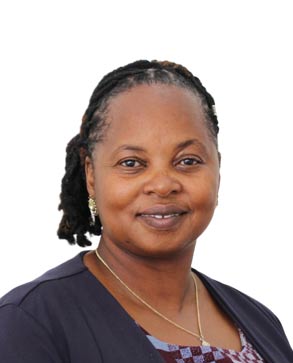
Dr. Stella Simiyu (picture), Director Regulatory Affairs & Stakeholder Relations, CropLife Africa Middle East: see video @ 42:27 - 46:38 She answers the question: How do we foster a PPP that works for the farmers?
Ms. Katie Taft, Communications and Engagement Lead, Gates Ag One
Mr. Hannington Namara, C.E.O Equity Bank Rwanda
10/06 : Developing sustainable business models for Ag-Tech
This session explored diverse investment opportunities, innovative financing mechanisms, and policy frameworks that can unlock the widespread development and adoption of impactful Ag-Tech.
Sequence 1: For sustainable Ag-Tech to thrive across diverse African markets, what are the primary investment hurdles and the resulting opportunities once these are addressed?
Dr. Eugene Mutimura, CEO, National Council of Science and Technology, Republic of Rwanda
Dr. Jonga Munyaradzi, Seed Production Manager, AATF
Dr. Said Rutabayiro Ngoga, Division Manager for Technology Innovation, Rwanda Information Society Authority
Ms. Martha Haile, Founder, Abze
Sequence 2: How can we foster a new generation of innovative agripreneurs who can drive sustainable agricultural development and economic growth?
Prof. Alfred Bizoza, Professor, University of Rwanda
Mr. John Agboola, Foundation Manager, AGCO Corporation
Mr. Peter Wamboga-Mugirya, Director for Communication and Partnerships, Science Foundation for Livelihoods and Development (SCIFODE)
Dr. Nomathemba Mhlanga, Country Representative, FAO
10/06 Researchers Dialogue Session Title: Integrating traditional knowledge systems with modern technology solutions
This session examined the synergies between indigenous ecological knowledge—deeply rooted in local cultures and ecosystems—and innovations such as precision agriculture, biotechnology, and digital platforms.
Sequence 1: Collaborative Pathways to Next-Gen Agriculture
Mrs. Gift A. Kadzamira, Director General, National Commission for Science and Technology Rwanda
Dr. Omar Mukama, Lead GCP inspector of Clinical Trials, Rwanda Food and Drugs Authority
Dr. Allan Liavoga, Technical Advisor, North American Millers Association
Ms. Bakang K. Kgasudi, PhD student, Botswana University of Agriculture and Natural Resources
Sequence 2: Interactive workshop and reporting - Bridging Wisdom and Technology
What core elements of traditional farming must be safeguarded and integrated?
How can digital agriculture enhance, rather than replace, local practices?
What governance mechanisms can ensure ethical knowledge sharing?
Day 3 : Last Mile Delivery: Commercialization and Scaling of
Ag-tech Solutions
11/06 Commercialization and Scaling of Ag-tech Solutions
The panellists analysed the persistent barriers hindering access in rural communities and explore how strategic, multi-sectoral partnerships, empowered by cutting-edge technological advancements in logistics and information flow, can revolutionize delivery.
Project Showcase: Climate Smart Remote Sensing Project in Rice Value Chain Project
- Dr. Kayode Sanni, Project Manager and Director of The Alliance for Hybrid Rice in Africa
(AHyRA), AATF
Opening Remarks & Setting the Stage
Mr. Sam Ngabire, Coordinator, Home Grown School Feeding Project, Ministry of Education,
Republic of Rwanda
Keynote Presentation: Overcoming Last Mile Hurdles -Ms. Mildred Nadah Pita, Head of
Public Affairs, Science and Sustainability, Bayer
Panel Discussion: Building Robust Partnerships Among Stakeholders (Public, Private,
NGOs) for Sustainable Scaling of Ag-Tech Solutions
Mr Shavda Tree Onov. CEO of East Africa Agro Limited
Prof. Karimbhai M. Maredia, Professor and Director of International Programs, Michigan State University - "The importance of South-South, North-South partnerships for technology transfer"
Mr. Momar Dieng, Chief Strategy and Partnerships Officer, AIMS Global Network
Dr. Jean Claude Rubyogo, Director, Pan-Africa Bean Research Alliance (PABRA)
Mr. Dagmawi Habte-Selassie, Country Director, Rwanda, IFAD
Panel Discussion: Beyond the Pilot, Scaling Ag-Tech Solutions
Mr. Amath Pathé Sene, Managing Director, Africa Food System Forum (AFSF)
Ms. Zoë Karl-Waithaka, Managing Director and Partner, Boston Consulting Group
(BCG) - Inclusive business models
Dr. Mel Oluoch, Director for Strategic Partnerships, Sasakawa
Dr. Telesphore Ndabamenye, Director General, Rwanda Agriculture and Animal
Resources Development Board (RAB)
Path Forward: Dr. Oliver Kamana, Permanent Secretary, MINAGRI
The Alliance for Cowpea Improvement in Africa (ACIA) is an Africa-focused community of cowpea experts. It responds to the demands of African farmers and consumers for cowpea that is safe, affordable and environmentally sustainable.
Cowpea is a delicious and nutritious food crop, one widely featured in African cuisines and widely grown on African farms. The mission of ACIA is to ensure this versatile and resilient crop reaches its full potential to support healthy diets and sustainable, productive farms.
Kira Everhart-Valentin of Gates Agricultural Innovations (Gates Ag One) Prof. Muhammad Lawan Umar - Cowpea breeder, Institute for Agricultural Research (IAR), Nigeria Francis Onyekachi, Manager Product Stewardship and Quality (AATF) He presented the progress on gene edited cowpeas Dr. Jean Baptiste Tignegre - African Agricultural Technology Foundation (AATF)
11/06 Licensing and IP: access to proprietary traits and germplasm
This session delved into the complex landscape of intellectual property (IP) and licensing concerning proprietary traits and germplasm – foundational elements for agricultural innovation and productivity gains in Africa. Access to these protected resources holds immense potential for developing climate-resilient crops, enhancing nutritional value, and improving yields for African farmers. However, navigating the legal, ethical, and economic considerations surrounding IP and licensing is crucial to ensure equitable access and foster sustainable agricultural development in Africa.
While the private and public seed sector share the same goal of developing improved varieties, there are
important differences that must be considered when developing appropriate IPR for cultivars developed
in the public sector. Public breeding often focuses on crops with high social returns to investment but
low private returns, such as small grains, perennials, cover and soil building crops, root and tuber crops,
and tree crops. Public breeders often focus on long arc research, that is, research in which the payoff
may require many years of work, often by many individuals. After development and proof of concept by
the public sector, the new products are commercialized by the private sector with little return of funding
to the public side. In many cases the public breeding sector collaborates with the private sector to
commercialize public cultivars, and considerations must be made to facilitate this technology transfer. (See: University of Wisconsin-Madison (2016) Intellectual Property Rights and Public Plant Breeding Recommendations, and proceedings of a conference on best practices for intellectual property protection of publicly developed plant germplasm)
Sequence 1: How can intellectual property and licensing frameworks be structured to enable access to proprietary traits and germplasm while still incentivizing innovation?
Dr. George Smith, Senior Associate Dean for Research, MSU
Dr. Damaris Odeny, Plant Geneticist, International Crops Research Institute for the SemiArid Tropics (ICRISAT)
Dr. Deogracious Protas Massawe, Principal Research Coordination Officer, Tanzania Commission for Science and Technology.
He presented: the Tanzania Technology and Innovation Support Centers (TISCs) Innovators are trained on the various aspects of IP, enabling them to identify protectable aspects of their inventions. This safeguards their innovations and gives innovators a competitive advantage at the market. The Tanzania Commission for Science and Technology (COSTECH) is managing a credit window(1 M USD) under the national fund for advancement of Science and technology (NFAST) to support commercialization of Innovations in collaboration with CRDB bank foundation and the World Bank. The establishment of this special commercialization fund in collaboration with CRDB Bank Foundation to accommodate market penetration of research and innovation products. This special window will serve to: (i) Promote commercialization of research and innovation products in Tanzania; (ii) Attract more financing opportunities within and outside Tanzania for supporting; commercialization of research and innovation products; (iii) De-risk innovators and unlock them to commercial funding from commercial banks. (the call opened on 5th May 2025)
Ag-Tech Frontier: Mechanizing the Last Miles: A viable, all-terrain machine to unlock rural food production - Mr. Eric Lane, Co-Founder and Principal, Prosparity Systems
Sequence 2: From Ownership to Access — Making IP Work for African Farmers. What practical steps are needed to ensure African researchers and farmers benefit from protected germplasm and traits, especially in the context of climate resilience and food security?
H.E. Ambassador Prof. Muhammadou M.O. Kah, AATF Board
Ms. Keziah Chomba, Legal Officer, AATF
Dr. Nyagatare Guillaume, Principal, University of Rwanda, College of Agriculture
"Let's put Intellectual Property Rights in the social context of Africa, and not from an individual gain perspective"
11/06 : Leveraging Ag-Tech for Sustainable Agriculture
This dialogue empowered young people to create, adopt and scale Nextgen AgTech solutions for a sustainable and prosperous agricultural future in Africa. This youth dialogue amplified the voices of young farmers and inspire a new generation of agricultural leaders.
Sequence 1: Collaborative Pathways to Next-Gen Agriculture
Mr. Norman Mugisha, CEO, Afrifarmers Market
Ms. Mildred Nadah Pita, Head of Public Affairs, Science and Sustainability, Bayer
Mr. Henry Lagat, Lead, Generation Africa, AGRA
Mr. John Agboola, Foundation Manager, AGCO Corporation
Sequence 2: Interactive workshop and reporting
What are the most effective ways to educate and train young farmers on AgTech in a way that resonates with them?
How can governments and other stakeholders create a more enabling environment that supports youth engagement in Ag-Tech?
How can we foster more effective collaboration between different stakeholders to avoid duplication of efforts and maximize impact?
11/06 Private Sector Dialogue: Commercialization and Scaling of Climate Smart and Modern Ag-Tech to the last mile
This private sector dialogue discusses effective
strategies for commercialization of climate-relevant agricultural technologies and
innovations in Africa.
Dr. Sylvester Dickson Baguma, Executive Director, ASARECA
Ms. Julian Barungi, Program Officer Policy, ASARECA
Dr. Joshua Okonya, Program Officer, Agricultural Technology and Innovation,
ASARECA
Mr. Federico Tonelli, Director of Development & Partnerships, Asili Agriculture
Ms. Iheoma Okpara Chienyenwa, Plant Operations Manager, The Rwanda
Fertilizer Company Ltd
Mr. Innocent Namuhoranye, Chairman, National Seed Association of Rwanda
(NSAR)
Mr. Didace Mparirwa, Head of Agriculture and Livestock Cluster, Private Sector
Federation (PSF)
Dr. Geoffrey Ongoya, Technical Manager, Koppert Biological Systems
Ms. Stella Kimani, Chief Operations Officer, Acre Africa
Ms. Sidonie Paques, Climate Finance Investment Lead, The Global Green
Growth Institute (GGGI)
Day 4 : Cultivating a sustainable future with AgTech Solutions
This subtheme explored practices for product integrity preservation to benefit farmers, enterprises, and consumers while creating regenerative and distributive products that work within the planet’s ecological limits.
Opening Remarks & Setting the Stage - H.E. Ambassador Prof. Muhammadou M.O. Kah, AATF Board
Keynote Address - Dr. Chris Holdgreve, CEO, Global Stewardship Group (GSG) & Executive Director, Excellence Through Stewardship (ETS) Stewardship for Transgenetic Plant Technology; Plant breeding Innovation (PBI) such as genome editing and other breeding innovations.
12/06 Stewardship: Cultivating a sustainable future with Ag-Tech Solutions
This session delved into practices that safeguard product integrity, ensuring the longevity and effectiveness of innovations.
Panel Discussion: Stewardship & Sustainability in Action
Prof. Johnnie Van Den Berg, Program Manager: Integrated Pest Management,
North-West University, South Africa He mentioned Nigerian Farmer’s Success Story with Bt Cowpea
Dr. Olusegun Adedayo Yerokun, Deputy Vice Chancellor, Academic Affairs,
RICA
Prof. Emmanuel Ikani, Executive Director, National Agricultural Extension and
Liaison Services, Zaria, Nigeria
Theme: Accelerating the implementation of the African Continental Free Trade Area Agreement in the context of CAADP Commitments for Safer and Healthier Diets
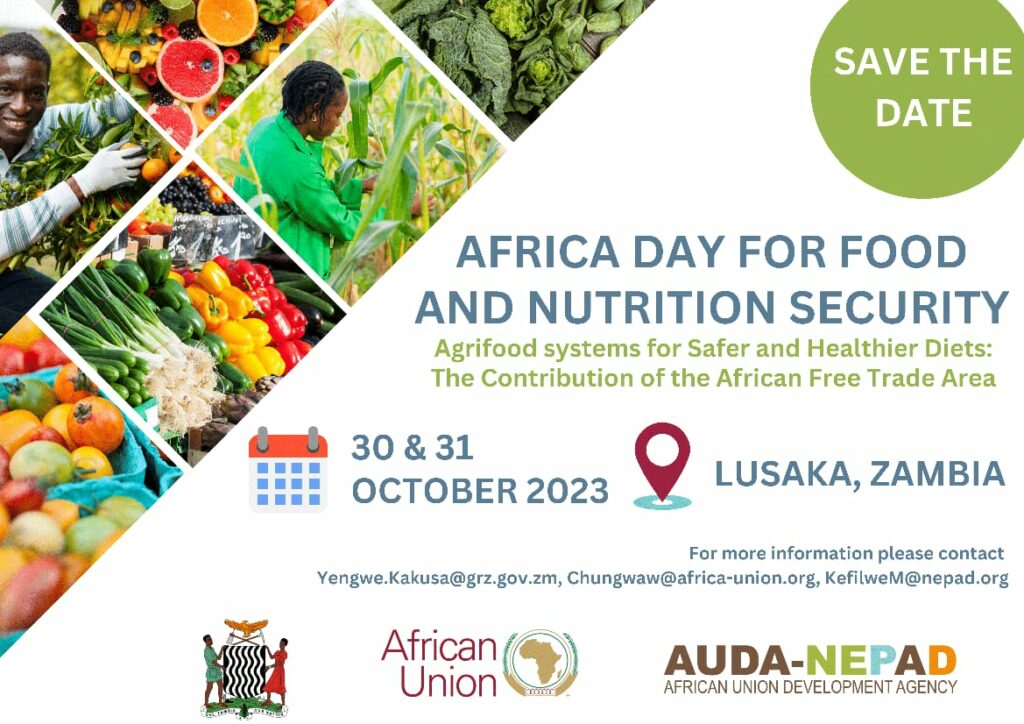
The African Union Commission (AUC) through its Department of Agriculture, Rural Development, Blue Economy, and Sustainable Environment (DARBE), in partnership with the Department of Health, Humanitarian Affairs and Social Development (HHS) and the African Union Development Agency (AUDA-NEPAD), with support of technical institutions and other stakeholders organized the commemoration of the 14th Africa Day for Food and Nutrition Security (ADFNS), the 19th edition of the Comprehensive Africa Agriculture Development Programme (CAADP) Partnership Platform (PP), the associated Malabo Policy Learning Event (MAPLE), as well as the CAADP High-Level Ministerial Forum (HLMF)
30/10 MALABO POLICY LEARNING EVENT (MAPLE)
KEYNOTE ADDRESS: Reaping the Dividend of Two Decades of Policy Reforms for Food and Nutrition Security in Africa - Dr. Lawrence Haddad, Executive Director, GAIN
Panel Discussion: Showcasing Success Stories and Key Policy Lessons in Food and Nutrition Security
Setting the scene for the MAPLE by sharing and reviewing concrete examples of success stories in policy reforms and exploring conditions for scale-up.
Ms. Abimbola Adesanmi, Partnership for Child Development, Nigeria
Ms. Rosemary Mwaisaka, former Director for Nutrition and ECSA Food Fortification program
Mr. Jervis Zimba, President of the Zambia Farmers Union
Ms. Doris Utuka, Gaba National School Feeding Manager, Ghana.
Ms. Muntanga Lindunda, CEO, Zambia Association of Manufacturers.
Mrs. Ellah Chembe, CEO, Zambia National Farmers Union
BR Commitment: Boosting Intra-African Trade in Agricultural Commodities & Services
Assess progress toward the Malabo Declaration commitment to boost intra-African agricultural trade.
Raise awareness about the current state, challenges, and opportunities of intra-African trade in
agricultural commodities and services. Share findings, and success stories that can inspire and inform stakeholders.
Dr. Hermogene Nsengimana, Secretary General, ARSO - Keynote Presenter
Mr. Martin Bwalya, Independent Food Systems Expert
Mr. Daniel Njiwa, Director, Regional Food Trade & Markets AGRA
Ms. Anataria Rumba, Director of Business Competitiveness Trademark Africa
Mr. Dingiswayo Shawa, SPS Expert COMESA
Dr. Chris Muyanda, Vice Chairman, Muska Development Agency - Summary
BR Commitment: Ending hunger and halving poverty by 2025
Dr. Sukati Mphumuzi, Senior Regional Nutrition and Food Systems Officer FAO - Keynote presenter
Mr. Raymond Chikomba, Regional Nutrition Coordinator, SADC
Dr Rhoda Mofya, National Coordinator for Nutrition and Food Security, FAO Zambia
Dr. J Chris Toe, Senior Advisor WFP
Prof Lise Korsten, University of Pretoria / AAS
Mr. Ishmael Sunga, CEO, SACAU
Dr. Laila Omar Gad, UNICEF Representative to Liberia
Ms. Bibi Giyose, Senior Advisor to CEO AUDA NEPAD - Summary
31/10 THE 14TH AFRICA DAY FOR FOOD AND NUTRITION SECURITY (ADFNS) COMMEMORATION
OPENING REMARKS:
Mr. Stanlake Samkange, Out-going Chair of the CAADP DPCG
Dr. Abebe Haile, Assistant Director-General and Regional Representative for Africa, FAO
Dr. Ibrahim Assane Mayaki, AUC Special Envoy on Food Systems
H.E. Ms. Nardos Bekele-Thomas CEO, AUDA-NEPAD
H.E. Amb Minata Samaté Cessouma, AU Commissioner for Health, Humanitarian Affairs and Social Development
H.E. Ambassador Josefa Leonel Correia Sacko, AU-DARBE Commissioner for Agriculture, Rural Development, Blue Economy & Sustainable Environment.
Hon. Rueben Mtolo, MP, Minister of Agriculture, Gov. of Zambia
High-level Ministerial Panel
W. K. Mutale-Nalumango (MP) Vice President, Republic of Zambia
Hon. Sylvia T Masebo, MP, Minister of Health, Government of Zambia
Hon. Reuben Mtolo, MP, Minister of Agriculture, Government of Zambia
Hon. Makozo Chikote, MP, Minister of Livestock and Fisheries, Government of Zambia
Perspectives from Partners on the Status of Agri-Food Trade, Food and Nutrition Security: Big Picture Priorities
Mr. Odd Arnesen, Regional Food Security Envoy, NORWEGIAN AID
Julianna Drinan. Program Officer: Agricultural Development (Data and Evaluation focus) at Bill & Melinda Gates Foundation (BMGF). Seattle, Washington, United States
UNICEF representative
Kelley Cormier Food Safety Division Chief, Center for Nutrition, USAID’s Bureau for Resilience and Food Security USAID
Dr. Abebe Haile, Assistant Director-General and Regional Representative for Africa
Dr Nalishebo Meebelo, ReNAPRI Executive Director
Dr. John Ulimwengu, Senior Research Fellow, IFPRI
Mr. Mafa Chipeta, Former Director, Department of Technical Cooperation, FAO
Where do we stand and what could be the targets and pathways of the next CAADP cycle?
Dr. Ousmane Badiane, Executive Chairperson, AKADEMIYA2063 - keynote presentation 2
Mr. Stanlake Samkange, Out-going Chair CAADP DPCG
Dr. Holger Kray, Practice Manager, World Bank
Mr. Odd Arnesen, Regional Food Security Envoy, Norway
Prof. Jean-Jacques Mbonigaba Muhinda, Regional Manager, East & Southern Africa, AGRA
Mr. Derrick Sikombe, Chief Economist, Government of Zambia
Mr Kolyang Palebale, President, PAFO
01/11 SUB-THEME 2: Harnessing science, Innovation, and research to enhance food and nutrition security
Dr. Clement Adjorlolo, Ag. Head of Agriculture and Food Security
Dr. Fatunbi Oluwole, Acting Director, Research, and Innovation, FARA - Keynote Address
Dr. Muzi Sukati, Senior Regional Nutrition Officer, FAO-RAF - Current Status of Food and Nutrition Security
Prof. Lise Korsten, University of Pretoria / AAS - Roles of Science and Research in Food Security
AGRA - Innovation for Increased Productivity and Sustainable Agriculture
Dr. David Amudavi-Executive Director, Biovision Africa Trust - Role of Agroecology in nutrition and Food Security
Prof. Francis Zotor, IUNS Vice President - Closing Remarks
01/11 SUB-THEME 3: Financing agri-food and nutrition through private sector involvement
Mr. George Ouma, Coordinator, AfDB
Mrs. Lydie Kouame, Deputy Director, WFP Global Africa Office
Ms. Bibi Giyose, Senior Nutrition and Food Systems Officer, FAO
Ms. Providence Mavubi, Director Industry and Agriculture, COMESA - Keynote Address: The role of the private sector in agri-food and nutrition financing
Mr. Simon Ziba, CEO, Vision Fund in Zambia
Ms. Gladys Mugambi, SUN Movement Business Network, Multisectoral Coordinator for Food Security and Nutrition
Mr. Cheyo Mwenechanya- Head of Agriculture Banking, Zambia National Commercial Bank (ZANACO),
Dr. Frank Kayula, Executive, Director, National Smallholders Association, Zambia
Moderator: Mr. Ashford Ngugi, Senior Partnerships Advisor, AUDA-NEPAD
Case studies
Mr. Webster Sento, Executive Director, Setso Indigenous Foods (Agro-processing)
Ms. Jacqueline Kung’u – Regional Advisor, Research and Monitoring, Nutritional International Africa
Mrs. Lucy Muchoki, CEO Pan African Farmers Agribusiness Consortium/NSA - Closing Remarks
02/11 SUB-THEME 4: Harnessing the nexus between CAADP and AfCFTA towards tripling intra-African trade in agricultural commodities and nutrition improvement
Dr. Diana Akullo, Principal Officer-Sanitary and Phytosanitary, AfCFTA
Ms. Nadine Umutoni, Project Coordinator, ARSO
Dr. John Mukuka, CEO, COMESA, ACTESA
Dr. Hakim Mufumbiro, Coordinator, CCAFRICA,
Ms. Kefilwe Moalosi, Senior Nutrition and Research Officer, AUDA-NEPAD
The AGRF Summit, which takes place from September 5th-8th, is an annual gathering that brings together heads of states and governments, agriculture ministers, members of the civil society, private sector leaders, scientists and farmers in discussions meant to define the future of Africa’s.
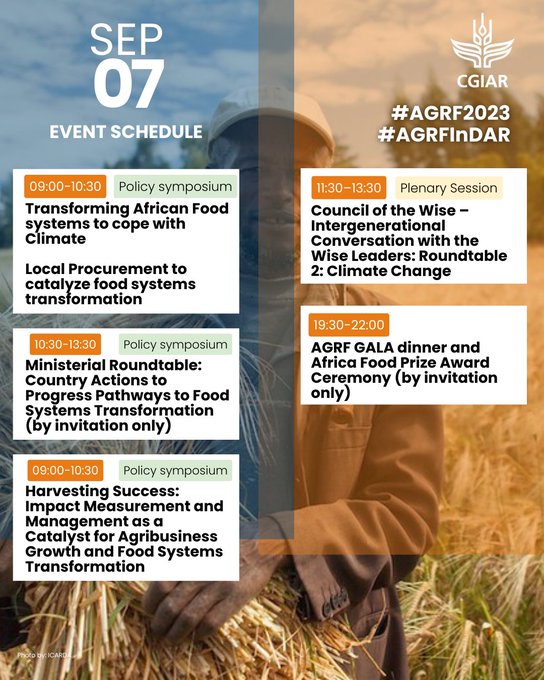
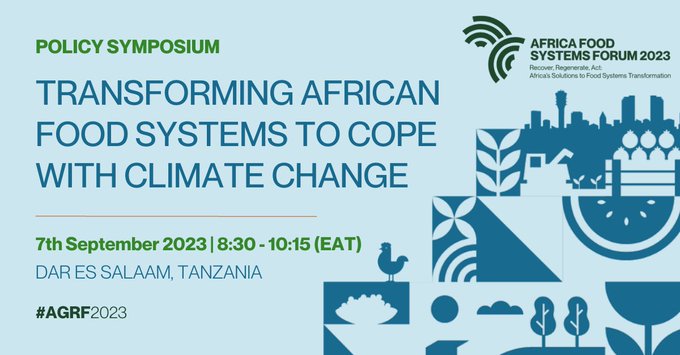
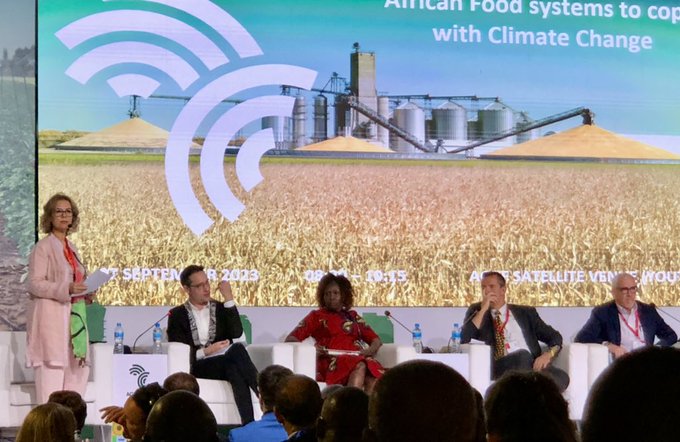
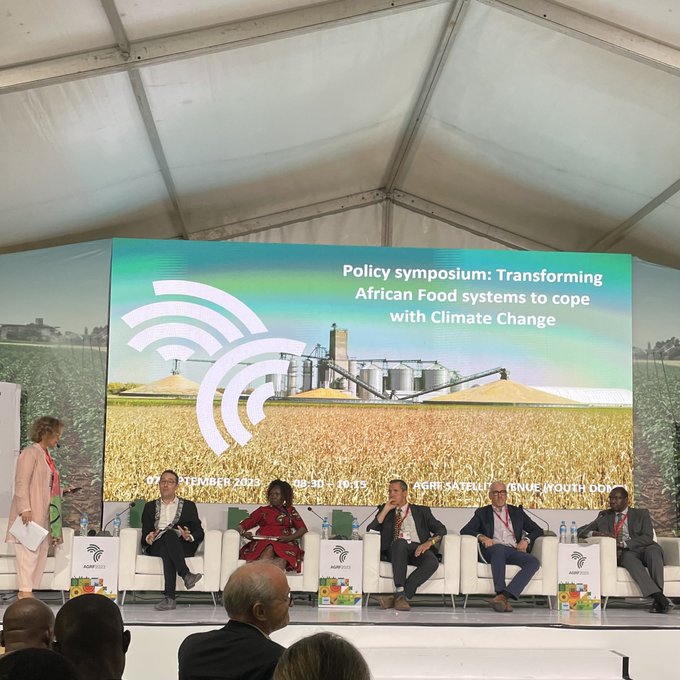
07/09 8:30 - 13:30 : Policy Symposium: Transforming African Food Systems to Cope with Climate Change
This symposium explored innovative policies, practices, and technologies that promote climate-resilient agriculture, enhance adaptation and mitigation strategies, and ensure food security in the face of changing climatic conditions.
Moderator: Dr. Ismahane Elouafi, Chief Scientist, Food and Agriculture Organization of the United Nations (FAO)
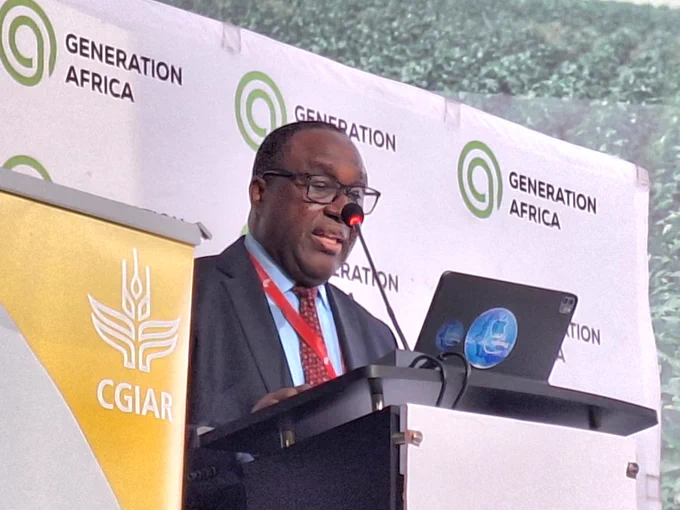
Keynote Speaker: Dr. Simeon Ehui (see picture), Director-General, International Institute of Tropical Agriculture (IITA) and Regional Director for Continental Africa, CGIAR
Fireside Chat:
Dr. Enock Chikava, Director of Agricultural Development, Bill & Melinda Gates Foundation (BMGF)
Dr Daniel Elger, CEO, CABI
Panel Discussion 1
Dr. Bram Govaerts, Director General, International Maize and Wheat Improvement Center (CIMMYT)
Dr. George Bigirwa, Deputy Vice President Program Innovations & Delivery - Technical
Dr. Edward Mabaya, Research Professor and Director of Humphrey Fellowship Program, Department of Global Development, Cornell University, US
Hon. Dr. Fikru Regassa, Minister of Agriculture, Republic of Ethiopia
Ms. Vivian Onano, Founder/Director at Leading Light Initiative
Mr. Stefan Schmitz, Executive Director, Global Crop Diversity Trust
Ms. Elizabeth Swai, CEO, AKM Glitters Company Limited, Tanzania
Mr. Peter Veal, Head of Sub-Saharan Africa, Syngenta
Panel Discussion 2
Hon. Ahmed Madobe Nunow, Minister of Agriculture and Irrigation, Federal Republic of Somalia
Ms. Dina Esposito, Assistant to the Administrator - Resilience and Food Security (RFS) at USAID, Feed the Future Deputy Coordinator for Development, & Global Food Crisis Coordinator
Dr. Joe DeVries, President Seed Systems Group, AGRA
Dr. Evan Girvetz- Principal Scientist and Global Program Leader, Finance and Investments for Climate Action CIAT
Ms. Josephine Okot, CEO, Victoria Seeds
Dr. Baboucarr Manneh, Director General, Africa Rice Center (AfricaRice)
Closing Remarks Hon. Aly Gouille Ndiaye, Minister of Agriculture and Rural Equipment, Republic of Senegal
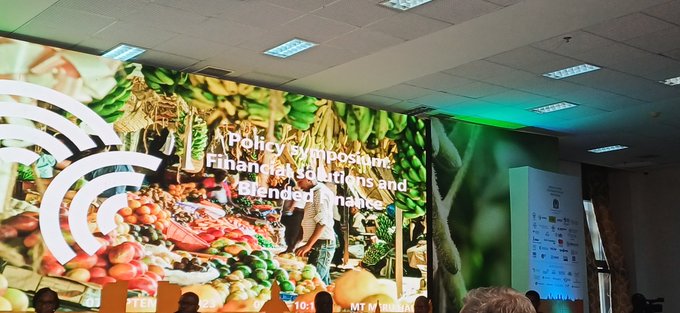
This symposium delved into the realm of financial solutions and blended finance models that can drive sustainable food systems transformation. It identified strategies to leverage diverse sources of funding, de-risk investments, and scale up sustainable agriculture practices to achieve the desired socio-economic and environmental outcomes.
Moderator Mr. Frank Braeken, Non-Executive Director and Chairman and AGRA Board Member
Fireside Chat
Hon. Lídia de Fátima da Graça Cardoso, Minister of the Sea, Inland Waters and Fisheries, Mozambique
Mr. Martien Van Nieuwkoop, Global Director for Agriculture and Food, World Bank
Panel Discussion 1: Innovative & Blended Finance
Ms. Binta Touré Ndoye, AGRA Board Member
Mr. Temi Adegoroye, Managing Partner, Sahel Consulting
Dr. Peter Umunay, Senior Environmental Specialist, Global Environment Facility (GEF)
Mr. Gunther Beger, Managing Director for the Directorate for SDG Innovation and Economic Transformation, United Nations Industrial Development Organization (UNIDO)
Mr. Theobald Sabi, Managing Director, National Bank of Commerce (NBC)
Mr. Brent Malahay, Chief Strategy Officer, Equity Group
Mr. Samuel Akyianu, Managing Director, Mastercard Foundation Africa Growth Fund
Panel Discussion 2: Securing Investments in Food Systems
Ms. Ruth Zaipuna, CEO, NMB Bank Tanzania
Ms. Hedwig Siewertsen, Head of Inclusive Finance, AGRA
Ms. Victoria Sabula, CEO, Africa Enterprise Challenge Fund (AECF)
Dr. Birama Sidibé, Member of ABC Fund Investment Committee
Ms. Hope Murera, CEO, Zep-Re Insurance
Ms. Carolyne Gathinji, Associate Partner, McKinsey & Company
Mr. Samuel Kamau Nganga, Upstream and Advisory Manager; Manufacturing, Agribusiness and Services, International Finance Corporation (IFC)
07/09 9:00 - 10:30 : Policy Symposium: Local Procurement to Catalyze Food Systems Transformation
This symposium examined the transformative potential of local procurement in catalyzing food systems transformation. It explored policies, strategies, and initiatives that promote local sourcing, production, and consumption to enhance food security, support small-scale farmers, and strengthen local economies.
Moderator: Mr. Chris Mitchell, Economic Development Expert, BCG
Fireside Chat
Mr. Peiman Milani, Director, Food Initiative, Rockefeller Foundation
H.E. Gustavo Nogueira, Ambassador of Brazil to Tanzania
Panel Discussion 1
Hon. Fred Bwino Kyakulaga, Minister of State for Agriculture, Animal Industry & Fisheries, Republic of Uganda
Ms. Nancy Rapando, Africa Food Futures Lead, World Wide Fund for Nature (WWF)
Dr. Arun Balal, CEO, HarvestPlus
Dr. Simon Heck, Senior Director for Urban Food Systems and Agrobiodiversity, & Director General CIP, CGIAR
Dr. Germana Leyna, Managing Director, Tanzania Food and Nutrition Centre (TFNC)
Panel Discussion 2
Hon. Dr. Sabin Nsanzimana, Minister of Health, Rwanda
Dr. Namukolo Covic (see picture), ILRI DG Rep & CGIAR East & Southern Africa Regional Director, EAT Lancet 2.0 Commissioner
Ms. Jennifer Baarn, Head of Partnerships, AGRA
Mr. Florent Clair, Head of Partnerships for Sustainability (P4S) – Africa & Middle East, UPL
Mr. Makoto Goda, President & CEO, Nippon Biodiesel Fuels & Special Envoy, Tokyo International Conference on African Development (TICAD) & Representative of the Working Group on Agriculture, Japanese Africa Business Council
Concluding Remarks: Hon. Dr. Peter Mutuku Mathuki, Secretary General, East African Community
07/09 10:30 - 12:00 : Policy Symposium: Infrastructure for Food Systems Transformation
This symposium delved into the topic of infrastructure in driving the transformation of food systems. It explored the intersection of infrastructure development, technological advancements, and sustainable agriculture practices to create efficient, resilient, and inclusive food systems.
ModeratorMr. Jonathan Said, Partner, Growth Teams
Fire Side Chat
Ms. Katerina Ntep, Deputy Vice President for Sector Operations, Millennium Challenge Corporation
Ms. Treasure Maphanga, Chief Operating Officer, AeTrade Group
Dr. Martin Fregene, Director of Agriculture, African Development Bank (AfDB)
Panel Discussion
Hon. Anxious Masuka, Minister of Lands, Agriculture, Water and Rural Resettlement, Zimbabwe
Mr. Daouda Sembene, CEO, AfriCatalyst (former Executive Director, IMF)
Hon. Gabriel Mbairobe, Minister of Agriculture of Cameroon
Mr. Forster Boateng, Deputy CEO, Operations, Tree Crop Authority, Ghana
Mr. Kebba Colley, Global Director – Value Chain Transformation, IDH
Mr. Alfred Chengula, Cofounder, Imara Tech
Mr. Isdor Paul Nkindi, Principal Legal Officer, BRELA
Mr. Jahan Chowdhury, Cluster Lead for Environment and Climate, IFAD
Mr. Hiro Iwanaga, Co-founder and CEO, Talus Renewables
07/09 10:30 - 12:00 : Policy Symposium: Governing for Food Systems Transformation and Better Food Security
This symposium examined the role of governance mechanisms, policies, and institutions in shaping sustainable and resilient food systems.
Moderator: Dr. Wanjiru Kamau-Rutenberg, Board Director, The Global Food Banking Network and Executive-In-Residence, Schmidt Futures
Fireside Chat
Dr. Abebe Haile-Gabriel, Assistant Director General, Regional Representative for Africa, FAO
Mr. Mamadou Biteye, Executive Secretary, The African Capacity Building Foundation (ACBF)
Panel Discussion 1
Ms. Elizabeth Swai, CEO, AKM Glitters Company Limited, Tanzania & CALA Alumni
Hon. Lamba Mamadu Saliu, Minister of Agriculture Guinea Bissau
Prof. Joyce Kinabo, Professor of Human Nutrition in the Department of Food Technology, Nutrition, and Consumer Sciences at the Sokoine University of Agriculture
Dr. Joshua Ariga, Senior Program Officer, Bill & Melinda Gates Foundation (BMGF)
Mr. Jacob Nyirongo, CALA Alumni
Prof. David Nyange, Chief of Party, USAID SERA BORA Project
Dr. Elida Kazira, Director of Crop Development, Ministry of Agriculture, Malawi
Panel Discussion 2
Mr. Amadou Makhtar Ba, Founder and Executive Chairman of All Africa Global Media Inc
Dr. Apollos Nwafor, Vice President Policy and State Capacity, AGRA
Dr. Debisi Araba, Visiting Lecturer, Imperial College London
Ms. Safia Boly, Executive Director, African Agricultural Transformation Initiative (AATI) & the Ministry of Agriculture, Tanzania
Ms. Sara Mbago-Bhunu, Director East and Southern Africa Division, International Fund for Agricultural Development (IFAD)
07/09 11:00 - 13:30 : Farmers Forum
The Farmers Forum focused on the challenges facing African smallholder farmers including climate change, conflicts, and access to markets. The panel discussion touched on topics such as inclusivity, security, investment, and research, with a focus on developing solutions to improve the livelihoods of farmers and drive economic growth and agricultural transformation in the continent.
Moderator: Mr. Norbert Tuyishime, Program Officer, Eastern Africa Farmers Federation (EAFF)
Keynote Remarks: The Role of Cooperatives in advancing Prosperity and Food Security in Africa - H.E. Kassim Majaliwa Majaliwa, Prime Minister of the United Republic of Tanzania
Ms. Ruramiso Mashumba, Regional Lead: Africa, Global Farmer Network (GFN), ZimbabweModeratorMs. Manes Ngoma, President, Farmers Union of Malawi
Keynote Speaker Ms. Elizabeth Nsimadala, President, Eastern Africa Farmers Federation (EAFF), Director, Pan African Farmers Organization (PAFO) & Director, Africa of World Farmers Organization (WFO) "Farmers' organisations have other fora to meet among themselves. In the future we would need farmers' organisations to be able to discuss the AGRA initiatives at country level and based on a score card"
Panel Discussion 2: Farmers Showcase
Dr. King-David Amoah, FONG President, Network of West African Farmers and Agricultural Producers' Organizations (ROPPA) Ghana
Mr. Ibrahima Coulibaly, President, ROPPA (PAFO)
Mr. Philip Kiriro, East Africa Farmers Federation Board Member
Dr. Sinare Yusufu Sinare, President, SACAU
Mr. Drem Taing Toutkoul, CEO, PROPAC
Ms. Rym Ferchichi, General Secretary, UMNAGRI
Mr Justin Shirima, Managing Director Tanzania, Tanganyika Farmers Association
07/09 10:30 - 12:00 : Council of the Wise - Intergenerational Conversation with the Wise Leaders
The Council of the Wise aims to brought together some of the foremost African leaders, to discuss and support initiatives and actions towards achieving inclusive, resilient and nutritious agriculture and food systems transformation, as well as the SDG commitments. As an essential element of the AGRF, the Council of the Wise provided an opportunity for leaders to come together and build a common voice and position to deliver an African agenda on Sustainable Food Systems and SDGs.
Moderator: Mr. Ibrahima Cheikh Diong, United Nations Assistant Secretary General (UN-ASG) and Director General (GDG), African Risk Capacity Group
Opening Remarks H.E. Hailemariam Dessalegn, Former Prime Minister, Ethiopia
Keynote Remarks: Achieving 2030 Amidst Crises Dr. Ismahane Elouafi, Chief Scientist, Food and Agriculture Organization of the United Nations (FAO)
Panel Discussion 1: Food and Nutrition Security
H.E. Hailemariam Dessalegn, Former Prime Minister, Ethiopia
H.E. Uhuru Kenyatta, Former President, Republic of Kenya
H.E. Lionel Zinsou, Former Prime Minister, Republic of Benin; Founder and Managing Partner, Southbridge
Moderator Prof. Lindiwe Majele Sibanda, Board Chair, CGIAR
Panel Discussion 2: Feeding people under a changing climate
H.E. Dr. Jakaya Kikwete, Former President, United Republic of Tanzania
H.E. Jonathan Goodluck, Former President, Nigeria
H.E. Mohamed Beavogui, Former Prime Minister of Guinea and Special Envoy for the 13th Replenishment of IFAD
H.E. Dr Ibrahim Assane Mayaki, the African Union Special Envoy for Food Systems
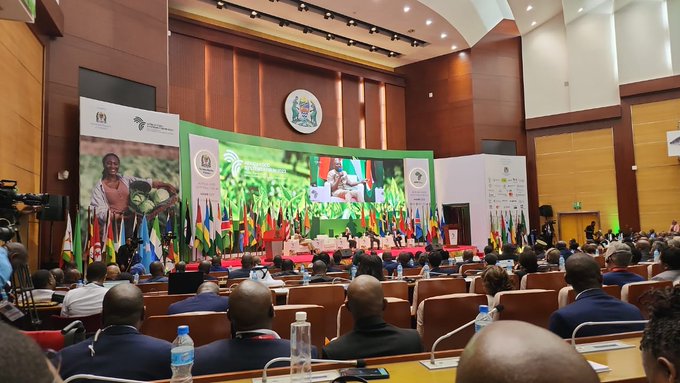
07/09 15:00 - 18:00 : PRESIDENTIAL SUMMIT: Africa’s Solutions to Food Security and Sustainable Food Systems Transformation.
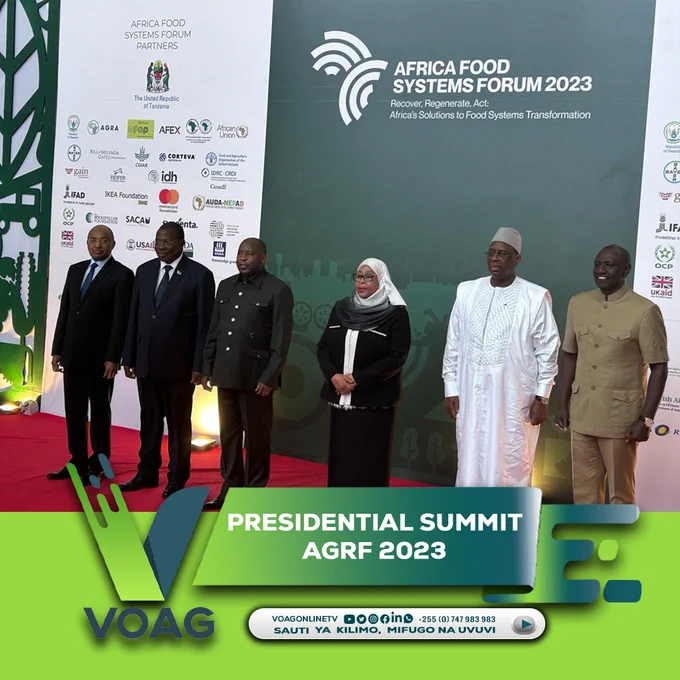
The Presidential Summit at AGRF 2023 engaged high-level dialogues and commitments to advance Africa's food systems transformation, focusing on the theme "Recover, Regenerate, Act."
Moderator Mr. Larry Madowo, CNN International Correspondent
Welcoming remarks Hon. Hussein Mohamed Bashe, Minister of Agriculture, United Republic of Tanzania
AGRF Remarks Dr. Agnes Kalibata, President, AGRA
H.E. Hailemariam Dessalegn, Former Prime Minister of Ethiopia & Chair, AGRF Partner's Group
Video Message: The Africa We Want.
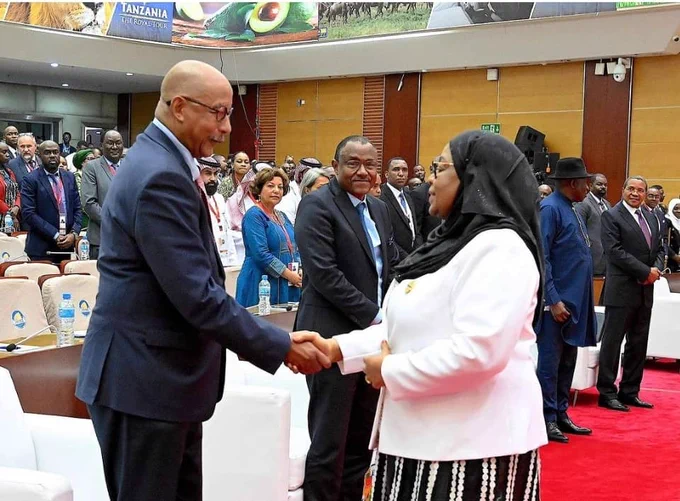
Presidential Keynote Remarks: Transforming Food Systems for Food Security and Prosperity H. E. President Samia Suluhu Hassan, United Republic of Tanzania
THE GREAT DEBATE: CAN AFRICA FEED ITSELF?
Leaders’ perspectives on Africa’s Vision for Food System Transformation.
Round 1: Quantum Leap for Food Security
Mr. Rodger Voorhies, President - Global Growth and Opportunity Division, Bill & Melinda Gates Foundation (BMGF) & AGRA Board Member
Mr. Svein Tore Holsether, President and CEO, Yara International
Round 2: Financing Food Systems Transformation
H.E. Mariam Almheiri, Minister of Climate Change and Environment, UAE
Hon. Anne Beathe Tvinnereim, Minister of International Development, Norway
Ms. Melinda Bohannon, DG Humanitarian & Development, Foreign, Commonwealth & Development Office (FCDO), UK
Hon. Gérardine Mukeshimana, Vice President, International Fund for Agricultural Development(IFAD) - Gerardine Mukeshimana took up duties from 28th August 2023 as Vice-President of the UN’s International Fund for Agricultural Development (IFAD)
PRESIDENTIAL SUMMIT: Heads of State Round table
Special remarks: Feeding people and safeguard the planet H.E. Amina Mohammed, Deputy Secretary General of the UN Heads of State
Roundtable discussions
H.E. Samia Suluhu Hassan, United Republic of Tanzania
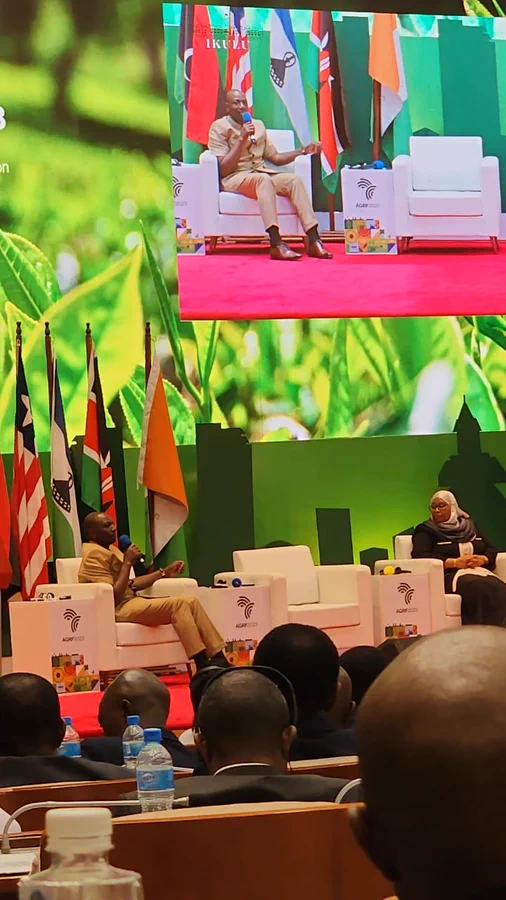
H.E. Dr. William Samoei Ruto (see picture), President of the Republic of Kenya
H.E. Macky Sall, President of the Republic of Senegal
H.E. Genral Evariste Ndayishimiye, President of the Republic of Burundi
Vote of Thanks: H.E. Hussein Ali Mwinyi, President of Zanzibar
Day 3 - #AGRF2023| The President of Kenya, H.E Dr William Ruto addresses the Presidential Summit as part of the Africa Food Systems Summit 2023.
He too decided to make use of Swahili to address his audience.
On the sidelines of the AGRF2023 forum Dr. Mukeshimana IFAD vice president, hosted a ministerial roundtable to discuss replenishment of IFAD with ministers from Uganda, Malawi, Tanzania, Mozambique, Rwanda and #Kenya
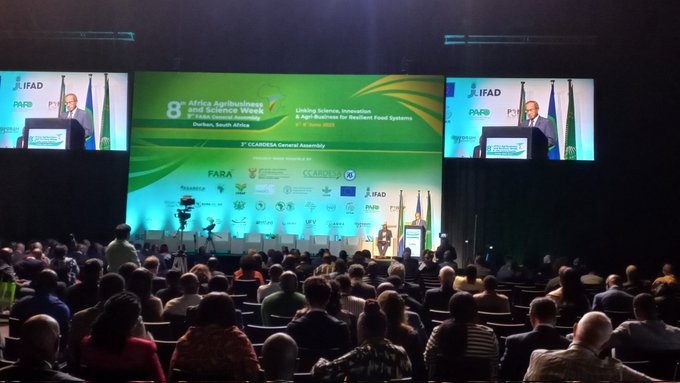
The proceedings of the events of FARA's AASW8 were streamed to its online audience to watch via the event website, Facebook, and FARA YouTube channels.
Ahmadu Babagana (picture)(FAO representative in South Africa) “One in five people in Africa is going hungry. Eliminating hunger and malnutrition is key focus on FAO’s agenda”
The plan acknowledges the magnitude of climate change impacts on agriculture in South Africa and its strategic objectives specifically speak to enhancing resilience to the effects of climate change, promoting sustainable management of natural resources, and a commitment to a just energy transition.
The AAMP is the first multi-stakeholder process and strategic plan to have commodity-specific transformation targets, jobs, exports, investments and growth rates. It includes a list of targeted interventions needed in the livestock, field crops, horticultural and agro-processing subsectors and more broadly focuses on commercial land reform in rural areas to increase food production, and on farmers’ infrastructure.
Presentation of FARA Leadership Awards
High level session
Akinwumi Adesina (President AfDB)
Papa Seck (Former Minister of Agriculture, Senegal)
Josefa Sacko (Commissioner DARBE, AUC)
Jeanine Cooper (Minister of Agriculture, Liberia)
Amany Asfour (President, Africa Business Council)
Sara Savastano (Director, Research and Impact Assessment, IFAD)
06/06 Strengthening Partnership between One CGIAR and African Research and Innovation Stakeholders (Part 1)
The goal of the session was to strengthen the partnership between CGIAR and African research and innovation institutions that will lead to the transformation of food, land and water systems in a climate crisis and respond to the ambition of achieving zero hunger in Africa.
Introduction of the four Regional Directors for Africa
One CGIAR in Africa
Action Plan for strengthening partnership between CGIAR and African Agricultural Research and Innovation Institutions.
Partnership models for expanded out-scaling in Africa (Convened by CIMMYT)
Speakers:
Aggrey Agumya (FARA)
Lindiwe Majele Sibanda (CGIAR)
Dr. Alioune Fall (Chairperson of the FARA Board of Directors, and former Director General of Senegal's National Institute for Agricultural Research)
06/06 Strengthening Partnership between One CGIAR and African Research and Innovation Stakeholders (Part 2: panel discussion)
This parallel session discussed the interrelations of issues in agricultural productivity in the light of climate change, soil health, and fertilizer, in the light of different models that are proposed for adoption in African agriculture.
Nature positive solutions for transitioning
smallholder farming systems in Africa?Noah Adamtey
Drivers of Change in the Africa farming System –
Prof Idowu Oladele
Pathways for Sustainable Intensification in AfricaDr. Benard Vanlauwe
Client-driven farming systems options for AfricaDr. Paul Demo
Thoughts on Sustainable Agriculture Model for
Africa – Dr. Tilahun Amede
07/06 Knowledge Management, Digitalization, and Youth Entrepreneurship
- IFAD, DESIRA-LIFT, CIAR-CAAS, CAADPXP4
07/06 Policies, Institutions, Capacities
- RUFORUM, PANAP, FAUBAI
07/06 Optimal Sector Strategies in African Agriculture and Agribusiness
SE-03: Tracking the Future of Food and Agriculture in Africa (Read More)
SE-04: Science and business dialogue
SE-06.a: Mainstreaming land rights of the rural poor in the climate discourse Read More
SE-06.b: Outcomes and ways forward of the GFAR webinars on: UN Food Systems Summit and National Pathways; and Regional Responses to Challenges to Soil Fertility and Sustainability Read More
SE-07: Supporting Pathways to Sustainable Land Management in Africa.
SE-08: Fostering Agribusiness and Gender/Youth-Responsive Food Systems
SE-09: Unlocking business opportunities for youth-led SMEs and enterprises
SE-10: CGIAR Agribusiness Acceleration Approaches for Climate Smart Agriculture Innovation, Resilience, Gender and Social Inclusion. (Read More)
SE-11:06/06 @3 - 6 PM (GMT+2) Advancing the AU-EU Research and Innovation Partnership in the context of the International Research Consortium (IRC) (Read More) The objective is to continue the dialogue that started during the
LEAP4FNSSA project on consolidating the membership of the IRC as well
as on building the sustainability of the IRC towards playing its expected role
as the main AU-EU Platform of the FNSSA partnerships for building stronger
food systems, sustainable growth and jobs. Incl. Godfrey Bahiigwa AUC-DARBE,
Ethiopia
Magdalena Gajdzinska, EC-RTDBrussels-Belgium
Antonella Zona, EC-DG Agri. –
Brussels-Belgium
Genna Tesdall, YPARDGermany
Michael Sudarkasa, AFAP- South
Africa
Russell Curtis, Invest DurbanSouth Africa
SE-12.a: GFAR Talks
SE-12.b: Presentation of GFAR Innovation Survey (Read more)
SE-13: Harnessing Science and Innovation: through strengthened capacity to innovate
SE-14: Tackling enabling environment issues for scaling agribusinesses in Southern and Central Africa (Read More)
SE-15: Challenges and opportunities for Extension and Advisory Services within the African Continental Free Trade Area. (Read More)
SE-16: Seed Policy Harmonisation and Domestication: A tool for facilitating seed availability and affordability
SE-17: Agricultural Biotechnology: A sustainable lever for African Continental Free Trade Area (AfCFTA) (Read More).
SE-18: TAAT: Leading the way with agricultural innovation across Africa. Room: Durban (Read More).
SE-19: TAAT / TSF Innovation platform and Agribusiness Seminar
SE-20: Developing the Implementation Modalities for the Soil Initiative for Africa and AFSH Action Plan (Read More).
SE-26: Boosting intra-Africa trade: the agricultural midstream in the value chain
SE-31: 07/06 2pm-4pm local South Africa time. Hybrid side event Unpacking the potential of Agroecology in Africa at FARA's Agribusiness and Science Week MS Teams Link for virtual participation: Click here to join the meeting
SE-34:The sustainable mutation of the Cacao Supply Chain: challenges and opportunities for Africa. (Read More)