Platform for African – European Partnership in Agricultural Research for Development
Showing posts with label Italy. Show all posts

Wednesday, September 30, 2026

Slow Food Week 2026

24 - 27 September 2026. Turin. Slow Food week. 

At the heart of the four-day programme was Terra Madre Salone del Gusto 2026, the sixteenth edition of Slow Food’s international gathering, organised by Slow Food together with the Piedmont Region and the City of Turin. Events took place across some of Turin’s iconic central locations, bringing together food producers, farmers, fishers, cooks, researchers, activists, Indigenous communities, educators and policymakers.

This year’s theme, Biodiversity – Be Diversity, placed biodiversity at the centre of conversations about the future of food. The programme explored the connections between biodiversity, climate resilience, food justice, culture, education and peace. Rather than treating food simply as a commodity, the discussions highlighted food as something deeply connected to communities, landscapes, knowledge and livelihoods. More than 1,500 people from 125 countries were involved in the opening of the 2026 edition, illustrating the international character of the gathering. 

African Slow Food delegates and networks united at the 16th edition of Terra Madre Salone del Gusto 2026 in Turin
  • Themed Discussions: African delegates gathered for dedicated sessions like the Africa Delegates' Network Meeting and panels on African and Afro-diasporic Food Systems and Biodiversity to defend biodiversity and build stronger community networks.
  • Leadership Call: Slow Food President Edward Mukiibi emphasized unity, telling delegates that cooperation across networks is vital and declaring that "the future belongs to Africa".
  • Cross-Cultural Connections: Programming highlighted trans-continental food heritage, featuring specialized events such as Breads of the World: The Ark of Taste Between Africa and Asia and Cassava Across the Atlantic: Food that Connects and Creates Identity.

Food as a meeting place


One of the distinctive features of Terra Madre was the opportunity to bring different kinds of knowledge together. Farmers and food producers meet researchers; cooks engage with communities; activists and educators exchange experiences with policymakers. Across conferences, debates, educational activities and encounters, the programme created space for conversations about how food systems can respond to some of the major challenges facing societies today.

The 2026 programme included discussions on food justice and the distribution of power within food systems, the role of food education, the protection of marine biodiversity and the relationship between land, agriculture and peace. 

Speakers included:
  • Slow Food President Edward Mukiibi 
  • chef and food activist Alice Waters 
  • researcher and author Raj Patel
  • ecological thinker Satish Kumar
  • philosopher and journalist Julian Baggini
  • journalist Eric Schlosser
  • marine biologist Helen Scales
  • United Nations Special Rapporteur on the Right to Food Sofía Monsalve Suárez, among others. 

Biodiversity beyond the field


A central message of the event was that biodiversity is not only about protecting plant and animal species. It is also about maintaining diverse agricultural practices, food cultures, local knowledge and ways of producing and sharing food. Slow Food’s work around the Presidia, Ark of Taste, Slow Food Farms and Cooks’ Alliance reflects this broader understanding of food biodiversity. 

The theme also invited participants to think about diversity in a wider social sense. In the Slow Food programme, biodiversity was presented as a source of resilience and as an alternative to different forms of monoculture—not only in agriculture, but also in social and cultural life. This perspective connected questions about seeds, soils and ecosystems with questions about communities, cultural heritage and inclusion. 

A global Slow Food community in Turin


Alongside Terra Madre Salone del Gusto, Turin hosted the Slow Food
Participants’ Assembly
 bringing together around 800 voting delegates from more than 120 countries. Held every four years, the Assembly provides a space for the global Slow Food network to discuss the movement’s strategic and organisational direction. The 2026 gathering was particularly significant because it was the first Participants’ Assembly under the legal framework of the Slow Food Foundation.

For four days, Turin therefore served not simply as a destination for tasting and celebrating food, but as a place for dialogue about the systems behind it. The encounters in September 2026 demonstrated the breadth of the Slow Food movement: from small-scale producers and Indigenous communities to chefs, researchers, educators and civil-society organisations. Together, they brought different experiences and perspectives into conversations about how food can contribute to healthier ecosystems, stronger communities and more resilient livelihoods.

Looking beyond Turin


The importance of events such as Terra Madre lies not only in what happens during four days in one city. The ideas, relationships and experiences shared in Turin can travel back with participants to farms, universities, kitchens, communities and organisations around the world.

For anyone working on sustainable agriculture, food systems, biodiversity, rural development, food education or inclusive innovation, the Turin gathering offered an important reminder: transforming food systems requires more than technological solutions. It also requires collaboration, recognition of local knowledge, protection of biodiversity and meaningful participation by the people who produce, prepare and consume food.

Turin’s Slow Food week thus offered a space to celebrate food while asking larger questions about its future—and about the kind of food systems that can support both people and the planet.


Thursday, September 10, 2026

Strengthening EU–Mediterranean cooperation on sustainable food systems

On 9 September 2026, CIHEAM Bari convened a Mediterranean Breakfast Dialogue in Brussels, bringing together representatives of different organisations for an informal exchange on the future of cooperation between the European Union and Mediterranean countries. 

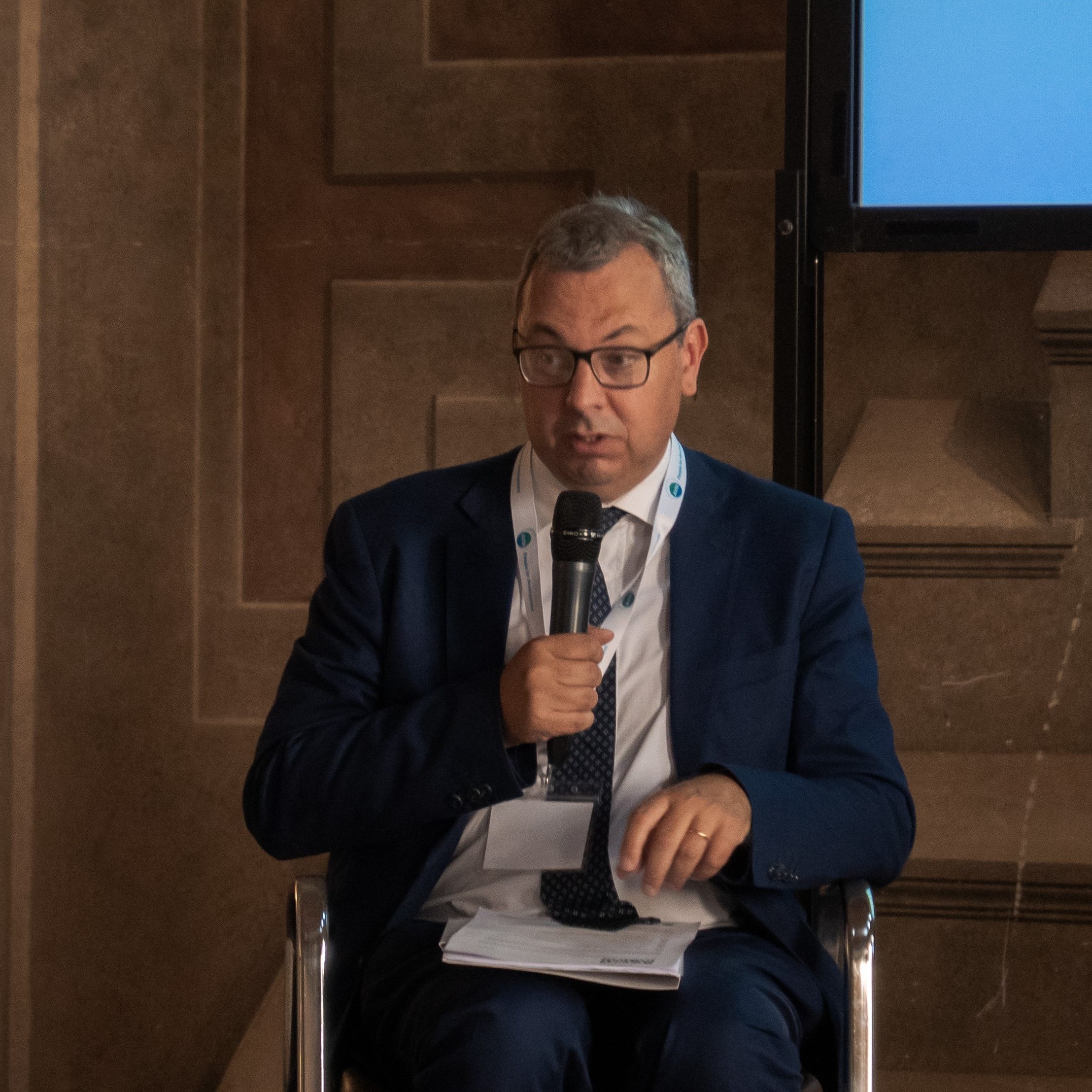
The meeting was opened by Biagio di Terlizzi, Director of CIHEAM Bari, and centred on a moderated roundtable led by Eduardo Cuoco, Director of IFOAM Organics Europe.

The discussion addressed two central questions: 
  1. what priorities should guide future EU cooperation with Mediterranean countries on sustainable agriculture and food systems, and 
  2. where stronger cooperation among European institutions, international organisations and Mediterranean partners could create the greatest added value. 
Against the backdrop of shared challenges across the Mediterranean—from climate change and natural-resource pressures to the need for more resilient and sustainable food systems—the dialogue provided a space to identify common priorities and potential areas for joint action.

A key purpose of the meeting was therefore to identify areas of convergence for future cooperation and explore how better coordination among international organisations, cooperation actors and Mediterranean partners could translate into concrete added value. The format, combining a focused roundtable with informal bilateral exchanges, also provided an opportunity to build relationships and identify possible follow-up collaboration around sustainable agriculture and food systems in the Mediterranean.

Interview


Interview with Claudi BOGLIOTTI of BARI CIHEAM. SUSTLIVES is an EU-funded agricultural project under the DeSIRA initiative focused on improving local crop patrimony, livelihoods, and ecosystems in Burkina Faso and Niger. This project was extended through AgrEcoNUS+ https://capacity4dev.europa.eu/media/...


SUSTLIVES (Sustaining and Improving Local Crop Patrimony in Burkina Faso and Niger for Better Lives and Ecosystems) was an EU-funded project under the DeSIRA (Development Smart Innovation through Research in Agriculture) initiative, implemented from 2021 with the Italian Agency for Development Cooperation (AICS) and CIHEAM Bari. Working in Burkina Faso and Niger, it promoted sustainable and climate-resilient food systems by bringing neglected and underutilized species (NUS) back into research, production, diets and markets. Its approach combined conservation of local agrobiodiversity with stronger NUS value chains, research and innovation capacity within Agricultural Knowledge and Innovation Systems (AKIS), and participatory work with farmers and other stakeholders. Particular attention was given to food and nutrition security, rural livelihoods, and economic opportunities for women and young people.

The experience and approaches developed through SUSTLIVES are being taken further through AgrEcoNUS+ (Agroecological Transition and Community Resilience through Neglected and Underutilized Species in Africa). Rather than treating NUS merely as “forgotten crops,” this follow-on initiative places them within a broader agroecological transition and resilience agenda, linking agrobiodiversity, food sovereignty, ecosystem sustainability and equitable market opportunities. AgrEcoNUS+ therefore provides an avenue for scaling lessons generated by SUSTLIVES beyond its original Burkina Faso–Niger focus and strengthening collaboration around African opportunity crops and resilient food systems across the Sahel and wider Africa.


Forthcoming:

25 November 2026. Bari, Italy. AU-EU Innovation fair - focus on food and nutrition security and sustainable agriculture
  • The event will run as a full-day hybrid programme (9:00 am – 7:00 pm), combining:
  • High-level policy sessions;
  • Two-minute innovation pitches from selected R&I projects and start-ups;
  • An exhibition and matchmaking space featuring innovative solutions, investors, business support organisations and research initiatives;
  • Awards for outstanding start-ups and SMEs;
  • Other networking opportunities.

Friday, June 19, 2026

AFRICAN OPPORTUNITY CROPS WORKING GROUP

The African Opportunity Crops Working Group was established through a consultative process supported by the SUSTLIVES project, an EU-funded initiative under the DeSIRA (Development Smart Innovation through Research in Agriculture) programme. 

Coordinated by the Italian Agency for Development Cooperation (AICS) and CIHEAM-Bari, SUSTLIVES has been working since 2021 to strengthen seed systems, value chains, markets, and enabling policies for neglected and underutilised crops in Burkina Faso and Niger, laying important foundations for a broader continental effort.

Institutionally the Working Group belongs to the African Seed and Biotechnology Partnership Platform (ASBPP) under the African Union's African Seed and Biotechnology Programme (ASBP). SUSTLIVES/DeSIRA provided the support and enabling process for its creation, but the platform itself is an AU-led mechanism.

The ASBP was endorsed by the African Union in 2007 as a continental framework for modernising Africa's seed sector. As discussions on climate adaptation, biodiversity conservation, and food systems resilience gained momentum, stakeholders increasingly highlighted the importance of opportunity crops in addressing these challenges. During the 5th Steering Group Meeting of the ASBPP in Nairobi in December 2024, members proposed the creation of a dedicated Working Group focused on opportunity crops. The proposal was subsequently endorsed in 2025, with the Alliance of Bioversity International and CIAT appointed to lead the initiative alongside partners including FARA, World Vegetable Center, Crop Trust, ICRISAT, CIHEAM-Bari, PELUM, and others.

The African Opportunity Crops Working Group aims to serve as a continental hub for coordination, knowledge exchange, policy advocacy, and partnership building around opportunity crops. Its objectives range from strengthening conservation, seed systems, and research to supporting value addition, market development, regional trade, and inclusive participation of women, youth, Indigenous Peoples, and local communities. By bringing together researchers, gene banks, farmer organizations, policymakers, and development partners, the Working Group seeks to transform opportunity crops from overlooked resources into strategic assets for achieving the ambitions of the CAADP agenda, the African Continental Free Trade Area, and Africa's broader vision for resilient and sustainable food systems.

The African Opportunity Crops Working Group

The African Opportunity Crops Working Group brings together leading African and international organizations working on neglected and underutilised species (NUS), seed systems, crop diversity, conservation, research, and food systems transformation.

Leadership

  • Alliance of Bioversity International & CIAT – Lead
  • Forum for Agricultural Research in Africa (FARA) – Co-lead
  • World Vegetable Center – Co-lead

Research and Crop Development

  • African Orphan Crops Initiative (AOCC)
  • International Crops Research Institute for the Semi-Arid Tropics (ICRISAT)
  • Abdou Moumouni University (Niger)
  • University Joseph Ki-Zerbo (Burkina Faso)
  • Natural Resources Institute Finland (Luke)

Conservation and Genetic Resources

  • Crop Trust
  • SADC Plant Genetic Resources Centre (SPGRC)
  • CIHEAM-Bari

Farmer, Community and Food System Organizations

  • Participatory Ecological Land Use Management (PELUM)
  • Community Technology Development Trust (CTDT), Zimbabwe
  • Slow Food International

Steering Committee

  • FAO – International Treaty on Plant Genetic Resources for Food and Agriculture (ITPGRFA)
  • Italian Agency for Development Cooperation (AICS)


AgrEcoNUS+ (Agroecology and Neglected & Underutilised Species Plus)

AgrEcoNUS+ (Agroecology and Neglected & Underutilised Species Plus) is a new multi-country initiative under the EU's DeSIRA+ programme that seeks to strengthen sustainable food systems by combining agroecology, neglected and underutilised species (NUS), and inclusive value-chain development. The project aims to improve food security, nutrition, climate resilience, and rural livelihoods by promoting diverse, nutrient-rich crops and supporting their integration into markets and food systems.

The project builds on the experience of the earlier SUSTLIVES and CROPS4HD initiatives, which focused on conserving farmers' varieties and NUS while promoting agroecological approaches. AgrEcoNUS+ moves a step further by emphasizing sustainable value chains, market opportunities, and access to finance for smallholder farmers, cooperatives, MSMEs, and agroecological innovators. A key component is the creation of financial mechanisms to de-risk investments and attract both public and private capital into agroecological and NUS-based enterprises.

Key features

  • Promotes agroecological production systems and climate-resilient agriculture.
  • Supports the conservation, production, processing, and commercialization of opportunity crops/NUS.
  • Develops sustainable value chains and market linkages.
  • Improves access to finance through blended finance and investment mechanisms.
  • Strengthens livelihoods of smallholder farmers, youth, women, cooperatives, and local enterprises. 

Monday, June 15, 2026

Ghana Investment Promotion Council

11 June 2026. The study titled “A Research on the African Diaspora Food Market in the United Kingdom: Understanding Market Dynamics, Opportunities and Indigenous Food Systems” (25 pages) was presented during a meeting with the Ghana Investment Promotion Centre (the GIPC was among others represented by Cherk Klutse - see picture).

The research – conducted between January and April 2026 – highlights that African food is not a niche or occasional choice, but a core component of daily diets – comparable to staple foods in national consumption patterns. This positions the African diaspora food market as a mature, stable, and scalable agro food sector. The estimated annual market value is £1.5 billion in the UK alone, with a projected €11.5 billion market across Europe.

"The Ghana Investment Promotion Centre is well positioned to host a Regional Diaspora Food SMEs Hub for West Africa due to its established mandate to attract and facilitate investment, its growing engagement with diaspora entrepreneurs, and Ghana's role as a regional gateway for trade and agribusiness. Building on its Diaspora Investment Desk, investor facilitation services, and partnerships with government agencies, financial institutions, and private-sector networks, GIPC could serve as a convening platform that connects diaspora investors with food SMEs, innovation hubs, research institutions, and market opportunities across the region. A regional hub hosted by GIPC could mobilize diaspora capital, expertise, technology, and international market linkages to strengthen food processing, value addition, and agrifood entrepreneurship, while supporting
the objectives of regional integration under Economic Community of West African States and the African Continental Free Trade Area. Such a hub would also position Ghana as a focal point for scaling diaspora-driven investments that contribute to food security, job creation, and resilient food systems across West Africa." 
Dr Maureen Duru of Foodbridge, Coordinator of GFAiR's collective action on Forgotten Foods


The Ghana Investment Promotion Centre

The Ghana Investment Promotion Centre plays a strategic role in promoting food-sector SMEs from the Ghanaian diaspora by creating an enabling investment environment and serving as a bridge between diaspora investors and local agribusiness opportunities. Through investment facilitation services, business registration support, policy guidance, and investor aftercare, the Centre helps diaspora entrepreneurs establish or expand food processing, packaging, distribution, and value-addition enterprises in Ghana. It also provides information on incentives, access to land and industrial zones, and links to government programmes that support agribusiness development.

In addition, the GIPC actively engages the diaspora through investment forums, roadshows, partnerships, and targeted outreach initiatives that showcase opportunities in Ghana's food and agriculture sector. By connecting diaspora investors with local SMEs, financial institutions, research organizations, and market actors, the Centre helps mobilize capital, technology, skills, and international market networks. This contributes to the growth of competitive food SMEs, job creation, value chain development, and increased participation of diaspora communities in Ghana’s agricultural transformation and food systems development.

  • 16–18 June 2026. Accra. Ghana–Italy Circular Economy Dialogue: Scaling Solutions for a Green Transition 
    16/06 Session 1: Circular Economy & Green Industrial Transformation: Ghana’s Landscape, Challenges and Opportunities - with Gianpiero Menza, Alliance Bioversity & CIAT
    16/06 Session 4: Circular Agribusiness & Green Entrepreneurship Unlocking opportunities in Ghana’s agro-industrial sector  - with Pierpaolo Crivellaro, Alliance Bioversity-CIAT 
  • 10 - 11 December 2025. In partnership with the International Organization for Migration Ghana, GIPC hosted a Diaspora Business Dialogue aimed at strengthening collaboration between returnees, diaspora entrepreneurs, investors, and Ghanaian businesses. The initiative focused on facilitating investment, business partnerships, and market linkages, including opportunities for SMEs in agribusiness and food processing. Such dialogues help diaspora-owned food enterprises access local networks, investment information, and business support services.
  • 10 June 2025. GIPC, together with government and development partners, supported the 2025 Ghana Diaspora Investment Forum, which brought together diaspora investors, entrepreneurs, financial institutions, and business support organizations to explore investment opportunities in Ghana. The forum highlighted sectors including agriculture, agribusiness, food processing, and SME development, providing diaspora entrepreneurs with opportunities to connect with local businesses and identify investment opportunities in food value chains.

Related: 

29 May 2026. In this debut episode, the CEO of the Ghana Investment Promotion Centre (GIPC), Mr Simon Madjie, explores the country’s changing investment landscape, highlights exciting opportunities across key sectors, and shares the vision behind the InvestGhana Podcast.

Podcast Episode 1: Why Ghana is a Top Choice for Investors 


Baibhav Biswas, Country Head & Senior Director of Olam Agri, shares how the company has expanded its footprint in Ghana, from wheat milling to operating the country’s only pasta plant, with more growth on the horizon.


Friday, March 6, 2026

Agro-industry at the Italy–Africa Business Week (IABW)


 4–6 March 2026. 
The 9th edition of the Italy–Africa Business Week (IABW) was an international forum held in Rome from that brought together entrepreneurs, policymakers, investors, and civil-society representatives from Italy and various African countries. 

Organized with the support of the Italian Ministry of Foreign Affairs and International Cooperation and other partners, the forum served as a platform for dialogue and cooperation between the two regions. Its aim was to strengthen economic and institutional partnerships by encouraging investment, business collaboration, and the exchange of knowledge between Italian and African stakeholders.

The 2026 edition focused on the theme “Africa–Italy: Partnership for Sustainable Development.” Discussions addressed strategic sectors such as renewable energy, agro-industry, healthcare, infrastructure, technology, and green finance, while also highlighting entrepreneurship, skills development, and youth employment. The forum featured conferences, roundtables, workshops, and B2B networking sessions designed to connect companies and institutions, promote public-private partnerships, and support long-term cooperation for sustainable economic growth in both Italy and Africa.

Extracts of the agenda


Overview of 05/03 Sessions: Africa and Italy, finance and female entrepreneurship: a day of dialogue at the Villa Aurelia Conference Centre


Overview of 06/03 Sessions: Small and Medium-Sized Enterprises, Youth and Institutions redefine relations between Italy and Africa


06/03 Session: Italy–Africa. Energy, Innovation, and Agriculture at the Center of the Sustainable Transition

  • Ester Stefanelli, Manager public affairs: 
    Works on institutional relations and policy advocacy supporting sustainable development initiatives: Africa subsahariana, Eni. She presented the perspective of a global energy operator
  • Oroh Roland Oletu, Director, Agribusiness EU-Nigeria Platform
    A platform fostering trade, investment, and collaboration between EU and Nigerian agribusiness actors.
  • Mario Di Giulio, Lecturer in Law of Developing Countries, Università Campus Bio-Medico. Italian university focused on life sciences, innovation, and sustainable technologies. 
  • Rima Jreich, Senior Policy and Regulatory officer, Res4Africa See some resources : Foundation promoting renewable energy partnerships between Europe and Africa. She stressed the urgency of recognizing women as entrepreneurs of green solutions, highlighting persistent gaps in education and infrastructure.
  • Valentina Gentile, Head of the Innovation for Public Administration Service, ENEA Italian National Agency for New Technologies, Energy and Sustainable Economic Development. 
    She  highlighted synergies with Horizon Europe and, like several other speakers, encouraged the idea of a future “Erasmus Africa” project. 
  • Madi Sakandé, General Manager, New Cold System.  Enterprise working on cold chain solutions for agriculture in Africa.
  • Cristina Altomare, Climate Finance Lead, UNDP Rome Centre: UNDP hub supporting sustainable development, partnerships, and innovation. She illustrated several initiatives, including Energy for Growth in Africa, proposed by the Italian government to accelerate climate financing.

06/03 The Role of the youth in the cooperation between Africa and Italy 

  • Ange Rosine Ishimwe, President, Africa
    Connect Initiative
    .
    ACI, is a Rome-based platform. The initiative aims to bring together young students and scholars to foster intercultural communities of solidarity, share ideas, and build networks.
  • Angelique Umutoni, Program Coordinator, Africa Connect Initiative
She referred to the AU-EU Youth Action Lab. This is a transformative initiative under the broader AU-EU Youth Lab programme, designed to address the lack of opportunities for youth in Africa and Europe to collaborate, innovate, and drive solutions to shared challenges. Implemented by a dynamic consortium including Oxfam, Restless Development, and the European Youth Forum, the Youth Action Lab empowers young changemakers across continents.
  • Carlos Lougourou, Outreach Coordinator, Africa Connect Initiative
  • Giuseppe Bennici, International business developer
  • Roxani Roushas, Youth4Climate Coordinator, UNDP. She shared stories from Youth4Climate—from women running electric tuk-tuks in Liberia to the production of indigenous textiles—31,000 active members worldwide proving that change.
  • Moderator: Francis Kaduki, Project Assistant, Italia Africa Business Week

Wednesday, June 12, 2024

Grassroots Innovations Assembly for Agroecology (GIA)

12 - 13 June 2024. - Grassroots Innovations Assembly for Agroecology (GIA). Drawing from a foundation of food sovereignty, agroecology and the Rights of people to define their food systems, GIA has been created (2023) to defend technological autonomy as a powerful tool to strengthen small-scale food producers globally and improve resilience, autonomy and sovereignty

GIA is a space of sharing where grassroots innovations networks around the world -who are already demonstrating an farmer-led future for agricultural technology – can connect and build a grassroots perspective on innovations.


June 12th 


  • Introduction by Schola Campesina (Italy), Caroline Ledant
  • Presentation of the report by VIVES (Belgium), Geert Furniere
  • Christina presented Tzoumakers (Greece) and highlighted the need for organization and network to support smallholders to get adequate technologies.
  • Then from the audience Soledad from ETC group (Argentina) -active on grassroots assessment on technologies- congratulated GIA for the reflections conducted in the frame of the Assembly
  • Monica from Los LLanos (Argentina) expressed a lot of interest
  • Nelson from ProRural (Bolivia) explained their activity around building tools at local level
  • Annor (Ghana) highlighted different questions to be explored as the role of local authorities and local leaders.
  • Way forward ? Make GIA known as a place for a broader reflection on local solutions in the face of the wave of high-tech 
  • Any suggestion or remark can be sent at caroline.ledant@scholacampesina.org (temporary host of GIA


June 13th 

  • Introduction by Schola Campesina (Italy), Caroline Ledant
  • Presentation of the report by VIVES (Belgium), Geert Furniere
  • Jenni Ottilie (visual scribe) shared on the poster process and her efforts to visually capture the dynamics of the group in the Gallese meeting
  • Prolinnova member, Joseph Righa (Kenya) emphasized GIA as a place of sharing, opening avenues for collaboration and support to smallholders daily innovations, to improve their livelihoods, through farmer-led (joint) experiments and Participatory innovations development. He explained that GIA is still under the process of developing a Charter and common rules of functioning ; the potential is huge.
  • Honey Bee / GIAN member Anamika Dey (India) connected GIA to organizations in Asia: the principles to innovate for solving real people problems, guided by Food Sovereignty vision is shared by other organizations / Sharmila from Malaysia and Philippine organization.
Sharmila: Yayasan Inovasi Malaysia (YIM) is the leading social innovation agency, established in 2008 under the Ministry of Science, Technology and Innovation (MOSTI). They set up a network of maker space in Malaysia. They support 7.000 innovators (researchers, academia, farmers, …) and help them to close the gap with commercialization (innovations are gathered in a non public platform). They have a mechanism to finance innovations and bring them to a better tech readiness. They look to collaborate with Honey Bee / GIAN in India and other neighbouring countries and possibly merge their database of innovations (but IP problem). They have specific programme for marginalized group. They are developing the maker spaces (with digital studio, 3D printers ; etc… accessible to the population)

Farida Mahri Wangsakerta Foundation (Indonesia). Work with youth and women, on solutions for farming but also food processing,… e.g. Food dryers for herbs, drying process to sell it (for human and animal use) ; bio fertilizer from local plants, skill people, increase awareness on the plants naturally present in the communities, and disseminate this knowledge. Work on the autonomy of people, on auto solutions to solve our problems.

Resource:

  • This report documents the first international gathering of the Grassroots Innovations Assembly from Oct 18-21 in Gallese, Italy. As food producers confront climate crises, corporate capture, and the new extractive technologies of AG 4.0, smallholders are organizing their own innovation networks for agroecological methods. The work of these networks demonstrates that peasant autonomy is possible through grassroots innovation, knowledge-sharing, research, and collaboration.
  • Drawing from a foundation of food sovereignty, agroecology and the Rights of people to define their food systems, GIA has been created (2023) to defend technological autonomy as a powerful tool to strengthen small-scale food producers globally and improve resilience, autonomy and sovereignty
  • The idea for an international grassroots innovations assembly was seeded in 2018 when the organizers of the gathering, a group of established innovation networks like Farm Hack, L’Atelier Paysan, and Schola Campesina, first crossed paths at the UN Food and Agriculture Association (FAO) summit on innovation.
  • You will find the link to the report here. 

The group came up with a long list of practical methods, events, and systems to collaborate and
communicate on Agroecology. Here is an aggregated list: 
  1. Innovation catalogs and magazines sharing alternative solutions 
  2. Video documentation, including everyday techniques because what seems normal to one farmer may be an innovation to another 
  3. Knowledge-sharing databases and wikis - for instance the Grassroots Innovation Database [GRID] - created by UNDP India : contributions from Anamika Dey, Visiting Faculty at Indian - Institute of Management Ahmedabad
  4. Parties, big social gatherings, and festivals. Having fun together! 
  5. Agroecology schools and summer school for farmers as an alternative to the corporate-controlled university extension system 
  6. Finding a volunteer farmer for each local area who provides general support to answer neighboring farmers' questions 
  7. In-person building workshops where everyone goes home with their own tool 
  8. Hackathons and collabathons 
  9. Mobile workshops and on-farm tool repair 
  10. Makerspaces and shared workshops 
  11. Trips to scout existing grassroots innovations 
  12. Hub farms that help organize feedback on innovations 
  13. Innovations fairs - social forum for innovators, opportunity to document innovations, opportunity for officials to recognize smallholders’ innovations, which helps push for policy change.

Tuesday, January 30, 2024

Italy-Africa Summit

On January 1, 2024, Italy assumed, for the seventh time, the Presidency of the G7: the group that brings together Italy, Canada, France, Germany, Japan, the United Kingdom, and the United States of America. The G7, in which the European Union also participates, is united by common values and principles and plays an invaluable role in defending freedom and democracy and addressing global challenges.

The Italian Presidency will last until December 31, 2024, and will feature a dense programme of technical meetings and institutional events throughout the country. The main event, the Leaders’ Summit, will be held on June 13-15 in Apulia.

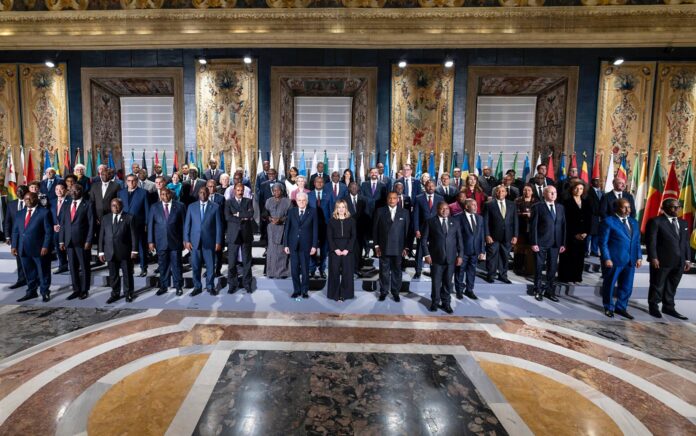
The Italy-Africa Summit was the first international event to be held in Italy since the beginning of its G7 Presidency, attesting to the importance Italy attributes to its partnership with African Countries. This is, in fact, the first time that the Italy-Africa Conference is being held as a Summit of Heads of State and Government, having been held only at ministerial level until now. In attendance were numerous Heads of State and Government and Ministers of African Countries, together with representatives of the African Union and European Union. The main international organisations also participated, starting with the UN, international financial institutions and multilateral development banks.

The five pillars of the Mattei Plan - The plan is named after Enrico Mattei, an Italian public administrator who, in the 1950s, advocated for Italy to support North African governments grow their economies and develop their natural resources. Seventy years on, Meloni is showcasing the Mattei plan as the crown jewel of her foreign policy, aiming to once again renew Italy’s approach to the African continent.
  1. Education and training
  2. Agriculture: measures will aim to reduce malnutrition rates, foster the development of agri-food chains and support the development of non-fossil biofuels. In this context, it is deemed fundamental to develop family farming, preserve forest heritage and fight and adapt to climate change through integrated agriculture
  3. Health
  4. Energy: the strategic goal is to make Italy an energy hub, a real bridge between Europe and Africa. Measures will centre around the climate-energy nexus, focusing on boosting energy efficiency and the use of renewable energy, with actions aimed at speeding up the transition of electrical systems, in particular for electricity generation from renewable sources and transmission and distribution infrastructure. The plan also provides for the development of energy-related technologies in the countries themselves, also by setting up innovation centres, where Italian companies will be able to select local start-ups and thus support employment and the enhancement of human capital.
  5. Water: measures will regard the drilling of wells, powered by photovoltaic systems; maintenance of existing water points; investments in distribution networks; and, awareness-raising activities on the use of clean, drinkable water

Context:


The purpose of the conference was to present Italy’s strategic plan that aims to review the country’s approach to the African continent.

Italian premiere, Giorgia Meloni, unveiled a “non-predatory” approach aimed at fostering cooperation. Though critics argue that the plan, dubbed “Mattei Plan”, after Enrico Mattei, an Italian public administrator who, in the 1950s, advocated for Italy to support North African governments to grow their economies and develop their natural resources. Seventy years on, Meloni is showcasing the Mattei plan as the crown jewel of her foreign policy, aiming to once again renew Italy’s approach to the African continent. As things stand, however, the plan is far from comprehensive.

The plan is due to cost around 3 million euros a year and has a four-year duration. The goal is to enhance energy cooperation with African countries and help them in different areas including health, education, and other several other sectors, but its main purpose is to address the root economic causes of mass migration from Africa. Some critics have argued it lacks a clear strategy.
“We have all been waiting to find out more about the content of the plan. But as clarified by a government’s decree, the strategy will be outlined starting from this conference and in the weeks to come. We’d like the action plan to mainly focus on Africa’s needs and the needs of the states and the countries’civil societies. We’d also like to see the use of a “bottom up approach” meaning that nothing is being imposed from above. One positive aspect of the “Mattei plan” is its long-term vision – in other words we are not dealing with the single emergency like in the case of migrant arrivals but rather we are talking about a long term strategy,”
  Giampaolo Silvestri, Secretary General of the Fondazione AVSI.

Programme:

Plenary session: 

  • President of the Council of Ministers, Giorgia Meloni 
  • Vice-President of the Council of Ministers and Minister of Foreign Affairs and International Cooperation, Antonio Tajani 
  • Chairperson of the African Union, Azali Assoumani
  • Chairperson of the African Union Commission, Moussa Faki Mahamat 
  • President of the European Parliament, Roberta Metsola 
  • President of the European Council, Charles Michel
  • President of the European Commission Ursula von der Leyen 
  • Deputy Secretary-General of the United Nations, Amina Mohammed

"Today, only 2% of global investments in clean energy go to Africa. This is very sobering given Africa's immense potential as a clean energy powerhouse. Africa has the space, the wind, the sun, just to name a few. What it lacks is infrastructure. But together we can change this. With Global Gateway, we aim to bring clean energy to 100 million people who currently do not have access to energy. This can turn out as a double win. Africa can not only produce enough clean energy to power up the African continent but also to create revenues by exporting. Preparations have begun, for example, to build the first underwater electricity cable linking North Africa to Italy and the rest of Europe. And for example, our new Hydrogen Bank is now open to African producers. This means good jobs, energy and energy security for both Africa and Europe. (...) Over 50 Italian universities now have exchange programmes with their African counterparts. The University of Parma, for example, coordinates an Erasmus project to develop clean energy skills in Africa We want to invest in this kind of cooperation. Ursula von der Leyen 
  1. Session I: ECONOMIC AND INFRASTRUCTURAL COOPERATION Introduction speeches by: Vice-President of the Council of Ministers and Minister of Infrastructure and Transport, Matteo Salvini; Minister of Economy and Finance, Giancarlo Giorgetti; Minister of Enterprises and Made in Italy, Adolfo Urso 
  2. Session II: FOOD SECURITY Introduction speeches by: Vice-President of the Council of Ministers and Minister of Foreign Affairs and International Cooperation, Antonio Tajani; Minister of Agriculture, Food Sovereignty and Forestry, Francesco Lollobrigida Participants' speeches 
  3. Session III: ENERGY SECURITY AND TRANSITION Introduction speech by: Minister of the Environment and Energy Security, Gilberto Pichetto Fratin Participants' speeches 
  4. Session IV: VOCATIONAL TRAINING AND CULTURE Introduction speeches by: Minister of Education and Merit, Giuseppe Valditara; Minister of University and Research, Anna Maria Bernini; Minister of Culture, Gennaro Sangiuliano Participants' speeches 
  5. Session V: MIGRATION MOBILITY AND SECURITY ISSUES Introduction speeches by: Minister of the Interior, Matteo Piantedosi; Minister of Defence, Guido Crosetto


[Note:  the GREATER project (Growing Rwanda Energy Awareness Through highER education)   funded in the ERASMUS+ European framework, under the 2022 Capacity Building for Higher Education (CBHE) call. 
  • Paolo Ciampolini (from the University of Parma) is currently the European Coordinator of in the framework of ERASMUS+/Capacity Building for Higher Education program. The project will be implemented under four Rwandan Institutions: INES-Ruhengeri, Rwanda Polytechnic, the University of Technology and Arts of Byumba (UTAB) and the University of Rwanda (UR). 
  • It will be also implemented under the European ones: University of Parma (Italy), National Research Council (Italy), Hochschule Niederrhein (Germany) and Hochshule Bonn Rhein-Sieg (Germany). See also: EU GREEN - Shaping our Alliance].  
While energy "may be the most relevant part" of the Mattei Plan, "Meloni is investing political capital in it mostly because of migration"  Giovanni Carbone, head of the Africa Programme at the Institute for International Political Studies (ISPI) in Milan. 

Further resources

Related

Just before meeting with the Italian prime minister, Adesina AFDB gave a rousing speech to the General Assembly of the Association for the Development of Italian Companies in Africa, the Mediterranean and the Middle East—the Confindustria Assafrica & Mediterraneo.

The number of fintech startups has tripled, reaching 5,200 between 2020 and 2021 alone. It is projected that revenues of fintech companies could reach over $30 billion by 2025. Google and the International Finance Corporation estimate that Africa’s internet economy alone could reach $180 billion by 2025 and rise further to $712 billion by 2050.

The African Development Bank is investing $20 billion for the Desert-to-Power program, to build 10,000 megawatts of solar power across 11 countries in Africa and provide electricity for 250 million people.

To unlock this potential the African Development Bank has so far invested $12 billion in agriculture over the past 6 years. The Feed Africa Summit held in Dakar last year by the African Development Bank, Government of Senegal and the African Union, has also mobilized $72 billion for investments in unlocking Africa’s agricultural potential.

Africa and Europe are significant trading partners. Exports from Africa to the European Union totaled $203 billion in 2022, while imports from Europe into Africa was $174 billion. This is a significant advantage for Italian firms looking to do business in Africa. Foreign direct investment from Italy to Africa reached $30 billion in 2022. However, this represents only 5% of Italy’s total foreign direct investment globally.

Monday, June 19, 2023

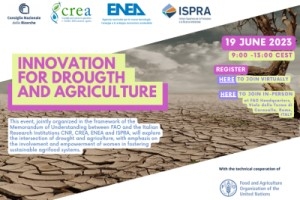
Innovation for drought and agriculture

19 June 2023. Innovation for drought and agriculture


The increasing impacts of climate change and the consequences of drought necessitate the development of adaptation and mitigation measures across various aspects of the agrifood systems. 

Research and technological innovation are considered essential means to avoid economic and social crisis and achieve sustainability. The actions should focus on cross-cutting activities, including policy, knowledge sharing, capacity development with specific considerations to health, nutrition, gender and youth empowerment relevant to drought management and mitigation in agrifood systems. 

The FAO-IRI joint event on innovation for drought and agriculture focused on participatory and innovative tools, methods and approaches relevant to drought management in agriculture.

The event contributed to the Memorandum of Understanding between FAO and the Italian Research Institutions CNR, CREA, ENEA and ISPRA, with the main objective to help developing countries in building stronger agricultural sectors through the knowledge generation from research and innovation. 

The main aspects that were discussed during the joint event included: 
  1. key impacts of drought on agriculture and raising public awareness on this topic; 
  2. initiatives related to innovations in technological, institutional, social, and policy dimensions to address the impacts of drought on agriculture for the transition towards sustainable agrifood systems.

Main resource: 

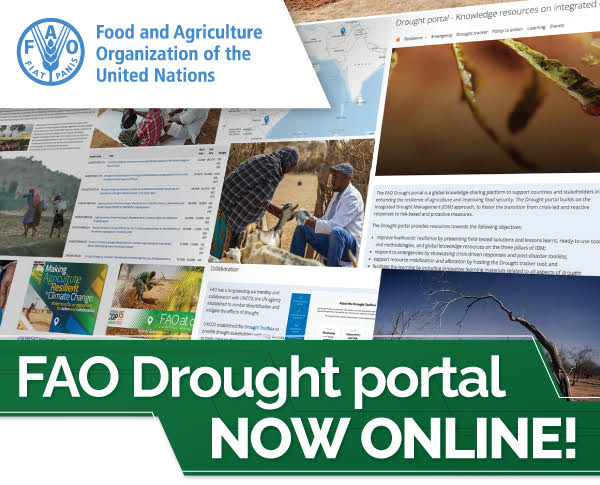
The FAO Drought portal is a global knowledge-sharing platform to support countries and stakeholders in enhancing the resilience of agriculture and improving food security. The Drought portal builds on the Integrated Drought Management (IDM) approach, to foster the transition from crisis-led and reactive responses to risk-based and proactive measures.

The Drought portal provides resources towards the following objectives:improve livelihoods’ resilience by presenting field-tested solutions and lessons learnt, ready-to-use tools and methodologies, and global knowledge resources on the three pillars of IDM;
  1. respond to emergencies by showcasing crisis-driven responses and post-disaster toolkits;
  2. support resource mobilization and allocation by hosting the Drought tracker tool; and
  3. facilitate the learning by including innovative learning materials related to all aspects of drought management.


Thursday, September 29, 2022

3rd World Conference Revitalization Of Mediterranean Diet

28 - 30 September 2022. 3rd World Conference Revitalization Of Mediterranean Diet

To celebrate the 60th Anniversary of the International Center for Advanced Mediterranean Agronomic Studies (CIHEAM), the Third World Conference on the Revitalization of the Mediterranean Diet, entitled “Change of Route Towards More Sustainable and Resilient Food Systems in Mediterranean Countries: the Mediterranean Diet as a Strategic Resource to Accelerate the Agenda 2030 in the Region” was organized at the Cosimo Lacirignola Campus, CIHEAM-Bari Institute, in Valenzano, Bari.

The Conference, as part of the UN Food Systems Summit movement for change, accommodated multiple perspectives to improve the sustainability and resilience of food systems in the Mediterranean. 

Objectives:

  • To enhance a change of route in the Mediterranean for a shift towards more sustainable and resilient food systems for accelerating the Agenda 2030 at the country level; 
  • To enhance the SFS-MED Platform, with its Coordination Desk hosted at the CIHEAM-Bari, by strengthening multi-stakeholder partnerships across the entire region; 
  • To catalyse more collaborative multi-stakeholder “green”, “blue” and “ circular” SFS- on the ground in Mediterranean countries, MED territorial context specific, within a One Health approach development framework with the Mediterranean diet acting as a SCP (sustainable consumption and production) lever; 
  • To foster a change in the current perception of the Mediterranean diet as a resource of sustainable development in the Mediterranean, at country and regional level, taking in consideration their contextual differences; 
  • To consolidate the initiative of World Mediterranean Diet Conference as permanent forum for multi-stakeholder and transdisciplinary SFS-MED dialogues and actions to accelerate the Agenda 2030 in the region.  

Extracts of the programme: 

28/09 The UN food systems post- summit process: SFS-Med dialogues follow-up linking national pathways and multi-stakeholder engagements towards more sustainable food systems in the Mediterranean

To connect food systems knowledge and expertise from diverse constituencies through the SFS-MED Platform initiative to support Med countries for accelerating the Agenda 2030.
  • Moderator: Sylvia Lopez-Ekra, Deputy Director, UN Food Systems Coordination Hub
  • Keynote Speech: Stefano Gatti, Minister Plenipotentiary, Special Italian Envoy for Food Security, Ministry of Foreign Affairs, and International Cooperation of Italy 
  • Alwin Kopse, Lead Representative, One Planet Network’s Sustainable Food Systems Programme, Federal Office for Agriculture of Switzerland - Building on the outcomes of the three SFS-MED Independent Dialogue held in 2021
Panel with UNFSS Med Member State Summit Dialogues National Convenors: 
  • Albania: Emira Gjeci, Deputy Minister of Agriculture and Rural Development 
  • Egypt: H.E. Amb. Ehab Badawy, Assistant Minister for Multilateral Affairs and International Security, Ministry of Foreign Affairs 
  • Israel: Noga Kronfeld-Schor, Chief Scientist, Ministry of Environmental Protection 
  • Italy: Stefano Gatti, Minister Plenipotentiary, Special Italian Envoy for Food Security, Ministry of Foreign Affairs, and International Cooperation of Italy 
  • Jordan: Mohammad Al-Heari, Secretary General, Ministry of Agriculture; Mahmoud Rabai, Secretary General Assistant for Project and Rural Development, Ministry of Agriculture 
  • Malta: John Busuttil, Director, Directorate General Global Issues, International Development and Economic Affairs, Ministry of Foreign and European Affairs 
  • Morocco: Redouane Arrach, Secretary General, Agriculture Department, Ministry of Agriculture, Fisheries, Rural Development, Water and Forests 
  • Spain: Samuel Jesus Juarez Casado, Senior Advisor- General Secretary for Agriculture and Food, Ministry of Agriculture, Fisheries and Food 
  • Turkey: Nihan Atay Haspolat, Ministry of Agriculture and Forestry

28/09 THE CONTRIBUTION OF CIHEAM TO THE OBJECTIVES OF A SUSTAINABLE FOOD SYSTEM IN THE MEDITERRANEAN 

This panel discussed the contribution of CIHEAM institutes to achieve the transition towards Sustainable Food Systems. 
  • moderator: Plácido Plaza Lopez, Secretary general of the CIHEAM 
  • Roberto Capone, Principal Administrator, CIHEAM Bari Focal Point CIHEAM Sustainable Food Systems 
  • Konstadinos Mattas, Visiting Professor, CIHEAM MAI-Ch, BioValue Project Coordinator 
  • Kessari Myriam and Prosperi Paolo, Scientific Administrators, CIHEAM Montpellier 
  • Ana Maria Sànchez, Principal Administrator, CIHEAM Zaragoza 
  • Conclusions: Mohamed Sadiki, President, Governing Board CIHE-AM; Minister of Agriculture of Morocco

29/09 Scaling-up agroecological innovations in the transitions of mediterranean food sy-stems: an entry point for the revitalization of the mediterranean diet 

This panel discussed a route of change enabling scaling-up of agro-ecology for territorial development and the Med Diet Revitalization and launched a permanent forum with the SFM-MED platform on enabling gamechanging solutions for scaling-up agroecology across the Mediterranean Region. 
  • Andrea Segrè, Professor University of Bologna, Italy
  • Dessislava Dimitrova, Senior researcher, Institute of Biodiversity and Ecosystem Research of Bulgarian Accademy of Science; coordinator of Slow Food - Bulgaria 
  • Lisa Paganelli, President, Distretto Bio-Simbiotico di Val Bidente e dell’alta Val Rabbi 
  • Tarek Elarabi, Associate Professor of Agricultural Microbiology, Ain Shams University, Egypt Ain Shams University, 
  • Lydie Stella Koutika, Glinka World Soil Champion 2021, soil scientist, CRDPI, Pointe-Noire, Congo 
  • Marina Carcea, Technology Director, Food and Nutrition Centre, CREA 
  • Nicolas Tinois, co-chair, EU Standing Committee on Agricultural Research, Strategic Working Group on Agroecology, Project management Jülich GmbH

29/09 11.00-13.00 Mediterranean Ministerial Dialogue: Areas of Collaboration and Concrete Proposals

This panel discussed international food security priority areas and operational proposals for the Mediterranean re-gion with food security national delegates to contribute to the efforts of the international community for immediate and concrete responses to the food security crisis. It was a follow up of the “Ministerial Mediterranean Dialogue on the Food Security Crisis” of last June and the results will converge in the next edition of the dialogue in December.
  • Maximo Torero Cullen, chief-economist, FAO;
  • Alvaro Enrique Albacete Perea, Deputy Secretary General, Union for the Mediterranean;
  • Leonard Mizzi, Head of Unit, sustainable agri-food sy-stems and fisheries, DGINTPA, EU Commission;
  • Angelo Riccaboni, Chair, PRIMA foundation;
  • Dina Saleh, Director for Near East, North Africa and Europe Division (NEN), IFAD
  • Jean-Pierre Demargerie, Deputy Director of the Programme – Humanitarian and Development Division, Programme Department, WFP
  • Biagio Di Terlizzi, Deputy Director, CIHEAM Bari

29/09 INNOVATIVE COOPERATION BETWEEN RESEARCH AND ENTERPRISES IN SFS MED: LIVING LABS APPROACH  

This panel compared skills and experiences to overcome the limits of current models and provide concrete guidance to improve the cooperation between research and enterprises in SFS MED. 
  • Moderators: Lamiae Ghaouti, Institut Agronomique et Vétérinaire Hassan II, Morocco 
  • Teodoro Miano, Vice Rector, International Affairs, University of Bari Aldo Moro 
  • Antonio Logrieco, Director CNR-ISPA Omar Bizri, international expert 
  • Marta Laranjo, UNIMED Mahdi Khomsi, BUSINESSMED 
  • Damiano Petruzzella, CIHEAM Bari 
  • Isidora Stojacic, ENOLL 
  • Maria Canelhas, EIT Food Giacomo Scarascia Mugnozza, Politecnico of Bari

30/09 Finance and investments SDG driven as fundamental push factors for a SFS MED change of routes

This panel provided some solutions in the area of financing SFS MED systems. 
  • Moderator: Roberto Ridolfi, President, LINK2007: Cooperazione in Rete 
  • Rapporteur: Francesco Rampa, ECDPM 
  • Leonard Mizzi, Head of Unit, Food Security Agriculture, DG INTPA, European Commission 
  • Paolo Di Stefano, Head on International Affairs, 
  • Coldiretti Stephen Mari, Senior Manager, 
  • Cassa Depositi e Prestiti - CDP 
  • Dhalia Abdel Kader, Chief sustainability Officer Commercial International Bank Egypt 
  • Hans Loth, RABOBANK 
  • Nouran El Said, Business Development Director, Plug’n’Grow 
  • Thouraya Triki, Director, Sustainable Production, Markets and Institutions Division, IFAD