Platform for African – European Partnership in Agricultural Research for Development
Showing posts with label organic agriculture. Show all posts

Thursday, June 20, 2024

GIZ Knowledge Centre for Organic Agriculture and Agroecology in Africa Newsletter

Global project Knowledge Centre for Organic Agriculture and Agroecology in Africa
  • Commissioned by: German Federal Ministry for Economic Cooperation and Development (BMZ)​​​​​​​
  • Overall term: 2019 to 2026
KCOA is a collaborative country-led partnership that aims to scale up the adoption of organic and agroecological farming practices through a network of five Knowledge Hubs in Africa. Within KCOA, the implementing organisations have four main objectives: 
  1. to improve access to knowledge on organic agriculture and agroecology; 
  2. to strengthen the technical and professional capacity of multi-pliers; 
  3. to foster networking and to strengthen relationships in the sector; 
  4. and to strengthen actors in their advocacy activities.

Resources:

ISAN Magazine Issue 10 (May 2024) brings stories about the benefits of biodiversity in agricultural systems, stories from Zimbabwe about how to enhance agrobiodivesity for improved food security and community-based climate change adaptation approaches, as well as profiling knowledge products on enhancing soil fertility developed by farmers in the Southern African region.


On behalf of BMZ, GIZ implements projects related to agroecology, among others, as part of BMZ’s Special Initiative “Transformation of Agricultural and Food Systems“. The following examples of rural development projects illustrate how transformative pathways are shaped differently by different sets of agroecological principles.
  • India Agents of Change – Women Self-Help Groups in India To design a systemic approach for food systems transformation and to tailor a strategy which supports rural women to create community benefits. Women Self-Help Groups (WSHG) have become pivotal change agents in agroecology
  • Mali Uniting Multiple Stakeholders for Agroecological Transitions in Mali To support multi-stakeholder dialogue and foster change processes and politics. 
  • Global Integrating Aquaculture into Smallholder Farming Systems To harness synergies among different productions systems in rural areas and to design approaches to integrated aquaculture. 
  • Regional in Sub-Saharan Africa Agroecology – a Pathway for Rural Youth Employment To ensure that business models meet sustainability goals while promoting fair employment. 
  • Mexico Strengthening Rural Livelihoods in Mexico To design cross-sectoral approaches to integrate biodiversity
Related

Support to Agroecological Transformation Processes in India (SuATI)


Tuesday, May 28, 2024

9th International Symposium on Soil Organic Matter (SOM2024)

26 - 31 May 2024. The 9th International Symposium on Soil Organic Matter (SOM2024) is currently underway at the Mohammed VI Polytechnic University (UM6P) in Benguerir, marking the first time the event has been held on the African continent.

See programme

Africa plays a critical role in global food security, with vast agricultural lands and a rapidly growing population. However, the continent also faces unique challenges when it comes to soil health. Decades of drought, overgrazing, and inadequate land management practices have contributed to soil degradation, a major threat to agricultural productivity.

According to a press release, SOM2024 aims to address these issues by showcasing the expertise of African researchers in agriculture, environmental science, and soil science. The symposium provides them with a platform to share their knowledge and findings with leading international experts, fostering cross-continental collaboration and accelerating progress in understanding soil organic matter.

But the significance of SOM2024 goes beyond knowledge sharing. It’s about highlighting Africa’s contributions to finding solutions for global problems like soil degradation and climate change.


Related:

Find below a curated selection of videos on enriching soil quality organically shared by International People's Agroecology Movements, IPAM. All the videos are recorded in Urdu with English subtitles.
  • Convert garden waste into rich resource


IPAM PakistanIPAM Pakistan is a research-learning-action approach to agroecology that focuses on small-food producers and farming communities. 
  • IPAM promotes agroecology as a sustainable approach to agriculture and food production and development, in the framework of food sovereignty, ecological and social justice. 
  • At the core of IPAM is a network of Field Learning Sites, which serve as training centres or campuses of farmers’ fields, civil society organizations, institutions and universities that offer on-site learning on agroecological farming methods, innovations and techniques and sharing of experiences of movement-building for agroecology. 

Thursday, November 24, 2022

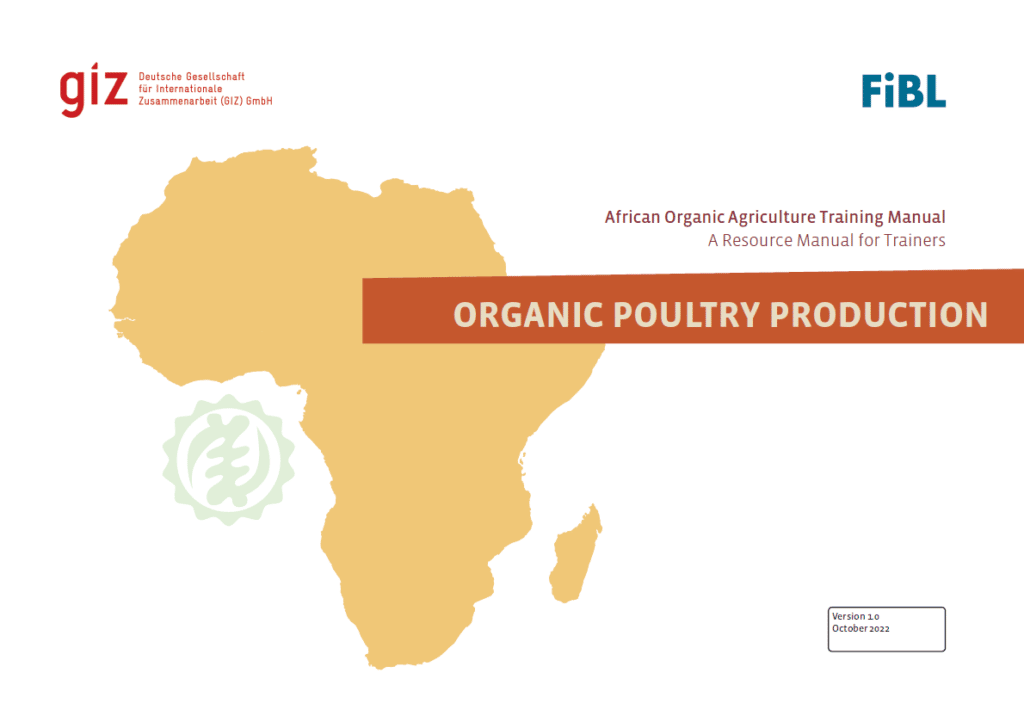
Organic poultry production - African Organic Agriculture Training Manual

FIBL (202) Organic poultry production - African Organic Agriculture Training Manual # 71 p. 

This manual is intended for use by trainers of trainers and trainers of farmers on organic agriculture. The manual aims to explain the principles and details of poultry management for small-scale poultry farmers in Africa under organic management. It has been developed with the understanding that farmers live in various contexts that may require unique adaptations of these guidelines. 

Users may require further references to existing training materials for more information:
  • Africa organic agriculture training manual Module nr. 1: Definition and Benefits of Organic Agriculture. 
  • Africa organic agriculture training manual Module nr. 5: Animal Husbandry 
  • African organic agriculture training manual Module nr. 8: Conversion to Organic Farming

Friday, September 24, 2021

WEBINAR: Can organic agriculture improve yields and incomes for smallholder farmers in Africa?

24 September 2021. Can organic agriculture improve yields and incomes for smallholder farmers in Africa?

Organic agriculture has the potential to improve both crop yields and incomes of smallholder farms in sub-Saharan Africa substantially – this is shown in a unique collaborative study from the Research Institute of Organic Agriculture (FiBL) and its partners that has just been published in the renowned journal Global Environmental Change. This study further demonstrates that in real smallholder farm setting, the potential mentioned is difficult to exploit fully and requires sound implementation. 

  • The now published study delivers new scientific evidence on the potential of organic agriculture and assesses different kinds of organic agriculture in sub-Saharan Africa (SSA) in different real farm settings. 
  • It has enough sample size (1645 farms), detailed data over a two-year time horizon and a scientifically sound comparison with a comparable conventional control group. 
  • This study clearly showed how different forms of organic agriculture performed in different real farm settings in SSA and to what extent they can contribute to sustainable development. 
  • In conclusion, organic agriculture has the potential to substantially boost productivity and farm incomes while contributing to sustainable development in Africa if implemented well. 
  • But organic agriculture is certainly not a silver bullet for solving food insecurity issues in SSA. In particular, the implementation of organic agriculture in smallholder settings is complex and might fail if farmers don’t have the capacities to implement good organic management practices like crop rotations, compost making, mixed cropping systems. 
  • This study revealed the many different forms of organic agriculture practices in sub Sahara Africa and will help to develop policies and targeted support for sustainable agriculture and food security in SSA.
Speakers:
  • David Bautze. Department of International Cooperation FiBL
  • Christian Schader FiBL Head Sustainability Assessment · Forschungsinstitut für biologischen Landbau (FiBL)
  • David Amudavi, Director of Biovision Africa Trust (BvAT)
  • Gabor Figecsky, IFOAM Organics International

Resources:

Wednesday, July 7, 2021

WEBINAR: Is Organic Agriculture a viable option for the Global South?

7 July 2021. Is Organic Agriculture a viable option for the Global South? by RIOA; KALRO; icipe/Kenya; Biovision Africa Trust, Kenya

Debate is ongoing whether organic/agroecological approaches would be a realistic and innovative pathway for eliminating poverty and hunger and promoting responsible and inclusive healthier consumption and production in the Global South. Scientific evidence is barely available as such research usually focused on the North. 

Unique results of 12 years’ comparative on-station and on-farm research in Kenya, Ghana, Uganda, Bolivia, and India were presented, highlighting productivity, profitability, and sustainability benefits and trade-offs that organic systems and other agroecological approaches offer to society and the environment. The discussion reflected on policy recommendations towards selected SDG’s with a particular focus on smallholders.
  • Dr. Irene Kadzere (FiBL) - Benefits and drawbacks of organic agriculture for African small-holder farmers
  • Dr. Laura Armengot (FiBL) - Productivity and profitability of organic compared to conventional farming in Latin America and India
  • Joseph Bandana (University of Ghana) - Is organic cocoa farming in Africa sustainable? Insight from comparative research
  • Dr. Anne Muriuki (KALRO) - Mainstreaming organic at the national level through participatory research: Examples from ProEco and SysCom projects in Kenya
  • Dr. David Amudavi (Biovision Africa Trust) - Reflections on the research findings and knowledge management from EOAI perspective: policy implications and recommendations
  • David Bautze (FiBL)
Resource:
Productivity, Profitability and Sustainability of Organic and Conventional Faming Systems in Sub-Saharan Africa: Comparative analyses (2013 – 2019)
  • The project "ProEcoAfrica" (2013 – 2017) generated comparative scientific evidence on the productivity and profitability of conventional and organic production systems in Ghana and Kenya with an emphasis on the gender dimension to farming. 
  • Since March 2016, the project "Organic Food Systems Africa (OFSA) (2016 – 2019)" which complements and builds onto ProEcoAfrica is being implemented to generate comparative scientific evidence on the sustainability of these production systems in Ghana, Kenya and Uganda.
  • www.proecoafrica.net
Resource:
RIOA (2021) What is the contribution of organic agriculture to sustainable development? A synthesis of twelve years (2007-2019) of the “long-term farming systems comparisons in the tropics (SysCom)”. Research Institute of Organic Agriculture, Frick, Switzerland, 40 pages

The results of 12 years of comparative farming systems research in Kenya, Bolivia, and India provide scientific evidence on economic and ecological sustainability of organic and conventional systems. They illustrate how organic systems and other agroecological approaches can contribute to the SDGs by 2030.

Related:
27 January 2021. Webinar Organic Agriculture - A realistic pathway? organized by FiBL and INTPA

27 May 2021. Open FiBL Day
This first digital Open FiBL Day showed how organic farming can contribute to climate change mitigation, what chickens have to do with organic apple growing in the future, if control with water markers really works or what FiBL’s contribution to sustainable cocoa production looks like.

Thursday, May 27, 2021

WEBINAR: FIBL and Africa Organic Agriculture

27 May 2021. Open FiBL Day
This first digital Open FiBL Day takes you on a journey to the world of organic – and beyond! Find out, how organic farming can contribute to climate change mitigation, what chickens have to do with organic apple growing in the future, if control with water markers really works or what FiBL’s contribution to sustainable cocoa production looks like.
In various sessions, FiBL researchers and consultants from all over Europe addressed the latest developments in organic research.

Extracts of the programme:

FiBL’s work on Policy & Sector development

FiBL’s digital trainings in Kenya and how we facilitated the organic sector development in Ukraine.

Speakers: Irene Kadzere Dr. FiBL Switzerland Tobias Eisenring MBA, M.Sc, FiBL Switzerland Eva Goldmann M.Sc , FiBL Switzerland Gian Nicolay Dipl. Ing. Agr. ETH FiBL Switzerland Natalie Prokopchuk atalie Prokopchuk FiBL Switzerland


Initiatives for improving the sustainability of agricultural production – examples from Europe and Africa 

Speakers: Harun Cicek Harun Cicek Dr. , FiBL Switzerland / Markus Steffens Dr. rer. nat FiBL  / Switzerland / Christian Grovermann FiBL Switzerland / Markus Renner FiBL Austria

Presentations:
SustainSahel - Synergistic use and protection of natural resources for rural livelihoods through systematic integration of crops, shrubs and livestock in the Sahel

  • The presentation described the linkages between biophysical, socio-economic, cultural and political realities setting the background of the project and how this Horizon 2020 project will contribute to enhance the potential of smallholders’ agricultural farming systems through innovative and scalable crop-shrub-livestock integrated systems (CSL). The presenters took the audience on a journey through the rich diversity of the Sahelian landscapes and people, as well as the challenges they face.
  • Funding: Horizon 2020, Increasing production efficiency and coping with climate change, while ensuring sustainability and resilience ; SFS-2019-2: Sustainable Intensifications in Africa / Funding scheme: RIA - Research and Innovation action / Coordinator: Dr. Andreas Fliessbach, FiBL, Deparment of Soil Sciences and Dr. Harun Cicek, FiBL, Department of International Cooperation, Switzerland / Duration: September 2020 to August 2025
  • www.sustainsahel.net / SustainSAHEL on Cordis / More about Sustain Sahel

Best4Soil - A Network sharing Knowledge about Soil
  • The Best4Soil network shares knowledge on best practices such as composting, green manure and intermediate crops. Crop information databases on soil-borne fungi and nematodes help to adjust crop rotations.
  • Best4Soil has received funding from the European Union’s Horizon 2020 Programme as Coordination and Support Action
  • BEST4SOIL NETWORK IN 20 COUNTRIES: Austria, Bulgaria, Cyprus, Czech Republic, Denmark, Estonia, France, Germany, Hungary, Ireland, Italy, Latvia, Lithuania, Netherlands, Poland, Serbia, Slovakia, Spain, Switzerland and United Kingdom.


Organic agriculture – a realistic pathway for the Global South? 

The session addresses the question whether organic agriculture is a realistic pathway for the transformation of food systems and for addressing some key issues of the SDG’s such as eliminating poverty and hunger and responsible consumption and production. Research results of 12 years comparative farming research in Kenya, Bolivia and India on the productivity, profitability and other benefits that organic systems respectively other agroecological approaches offer to society as well as to the environment will presented. Thereafter conclusions and policy recommendations will be discussed with experts/colleagues representing our trials in Kenya, Bolivia and India.

Speakers: Beate Huber, David Bautze, Noah Adamtey, Irene Kadzere, Amritbir Riar, Monika Schneider

The journey of cocoa from the agroforestry system to chocolate – FiBL’s contribution to sustainable cocoa production (EN) 

How is cocoa produced in biodiverse and climate resilient agroforestry systems? What are the challenges in organic cocoa production and in the management of agroforestry systems? Get some insight into FiBL’s long-term research on cocoa production systems and learn how cocoa beans are processed into chocolate!

Speakers: Monika Schneider, Johanna Rüegg, Laura Armengot, Barbora Tumova

Successful dissemination in multi-national research projects

Communicating and disseminating complex scientific topics in multi-national agricultural research projects can be challenging. We share important lessons learned and success factors from our experiences in communication and dissemination at the European level.

Speakers: Helga Willer FiBL Switzerland Laura Kemper FiBL Switzerland Lauren Dietemann, FiBL Switzerland Thomas Alföldi, FiBL Switzerland

FiBL’s role to strengthen the transition to a sustainable agri-food system

Is organic agriculture the silver bullet for the transition of the food system? Do we need research beyond organic? What is FiBL’s role? What do farmers and consumers expect from us? What should our research strengthen further, what is missing?

Related:
RIOA (2021) What is the contribution of organic agriculture to sustainable development? A synthesis of twelve years (2007-2019) of the “long-term farming systems comparisonsin the tropics (SysCom)”. Research Institute of Organic Agriculture, Frick, Switzerland, 40 pages

The results of 12 years of comparative farming systems research in Kenya, Bolivia, and India provide scientific evidence on economic and ecological sustainability of organic and conventional systems. They illustrate how organic systems and other agroecological approaches can contribute to the SDGs by 2030.

Webinar 27 January 2021. Organic Agriculture - A realistic pathway? organized by FiBL and INTPA


Monday, April 12, 2021

REPORT: European Commission. Action plan for the development of organic production

25 March 2021. The new organic action plan builds upon the achievements of the 2014-20 action plan and takes into account the outcome of a public consultation on organics, held between September and November 2020.
  • Its overall aim is to boost the production and consumption of organic products, to reach 25% of agricultural land under organic farming by 2030, as well as to increase organic aquaculture significantly.
  • The Commission also intends to increase the share of research and innovation (R&I) and dedicate at least 30% of the budget for research and innovation actions in the field of agriculture, forestry and rural areas to topics specific to or relevant for the organic sector.
European Commission (2021) Action plan for the development of organic production. Communication from the commission to the European Parliament, the council, the European Economic and Social Committee and the committee of the regions. March 2021. 22 pp.

The action plan is broken into three interlinked axes that reflect the structure of the food supply chain and ambitions of the Green Deal sustainability objectives:
  1. Axis 1: stimulate demand and ensure consumer trust
  2. Axis 2: stimulate conversion and reinforce the entire value chain
  3. Axis 3: organics leading by example: improve the contribution of organic farming to environmental sustainability
The three axes will be supported by 23 actions, continuing some of the successful 2014-20 actions, as well as putting forward an array of new actions and mobilising different sources of funding.
Stronger support in the new common agricultural policy

The common agricultural policy (CAP) will be mobilised fully to support the implementation of the action plan. Financial support for organics will continue to be offered through rural development commitments, with an additional stream of funding made available through eco-schemes. CAP support will also include technical assistance and the exchange of best practices and innovations in organics. Farm advisory services will be strengthened, notably as part of Agricultural Knowledge and Innovation Systems (AKIS), to promote relevant knowledge exchange.
Focus on Research and Innovation

Organic farming is knowledge-intensive. However, there is still a clear need to enhance further the knowledge so that organic farming can become even more sustainable and also more productive. To support the ambitions of the action plan, the Commission intends to dedicate at least 30% of the budget for research and innovation actions in the field of agriculture, forestry and rural areas to topics specific to or relevant for the organic sector, such as increased crop yields, genetic biodiversity and alternatives to contentious products.

Thursday, February 4, 2021

WEBINAR: Adaptive Approaches for Food System Sustainability in Nigeria

4 February 2021. Adaptive Approaches for Food System Sustainability in Nigeria

Convened by: Community Action For Food Security, and Climate Smart Agriculture Youth Network

Curator: Azeez Salawu, Executive Director, Community Action For Food Security

Food systems in Nigeria are highly crucial in ensuring sustainable production and supply of food that are safe, affordable and also accessible to her teeming population. 
  • The Covid-19 pandemic coupled with the climatic disruption experienced in 2020 posed enough threats to the food system across the value chain especially the small scale farmers production, processing and access to market which resulted in hike in food prices. 
  • Thus, there is an urgent need to address better, inclusive and sustainable food systems in Nigeria.
The dialogue aims to bring together top impact leaders, key influencers, multi-stakeholders and dynamic scholars, Public and Private sectors, Non-Governmental and Civil Society Organizations working collectively on improving the food systems in Nigeria. The objective of this event is to spark up critical discussions, inspire, engage, network, connect and also form a formidable partnership that will be based on investing in Food and Nutrition Security leading to the achievement of the Sustainable Development Goals.

Speaker included: 
  • Mrs. Ayobami Kareemah Oladipo, Agriculture Project Manager, Data Analyst| Organic Farming at the HEDA Resources Centre. 
    Human and Environmental Development Agenda (HEDA Resources Centre) is a non-governmental organisation and non-partisan human rights and development league. The Centre conducts research, policy advocacy, training, as well as citizens’ awareness and mobilization on core human development issues, including agriculture, food security, climate change, human rights, public sector accountability and electoral reform processes.
  • Mrs. Saidat Shonoiki Greenskills center Nigeria. CEO Ideal Agro allied Services Ltd. 
    Greenskill Acquisition Center Ltd/GTE is a licensed registered Non- Governmental institution in Nigeria. Greenskill was established to bridge the gap between the classrooms and agribusiness industry through building quality workforce to lead sustainable agriculture in Nigeria and beyond, replicate the model Centre in African countries in partnership with government, investors, and Development partners. The Greenskill Farm Centre started the sustainable agricultural farm centre after founder fellowship programme at University of Wisconsin- Stout – Menomonie (An Obama Initiative- YALI2014) and Kenya Institute of Organic Farming, Nairobi, Kenya which is now agricultural vocational school.


    I am an animal feeds producer with expertise in fish feeds manufacturing.

Friday, September 25, 2020

Thursday, November 14, 2019

5th West African Organic Conference


12-15 November 2019. Accra, Ghana. The West African Organic Conference (WAOC) is held every two years in one of the countries in the sub-region. So far, Nigeria, Benin and Mali have hosted it. Ghana is proud to host the organic conference in 2019.
Objectives:
  • The potential of organic agriculture in contributing to the transformation of national and regional economies, ecologies and livelihoods through income growth, enhancement of systems resilience and mitigation of climate change, food sovereignty and trade is explored and showcased.
  • The sharing of knowledge, information, experiences and skills among all stakeholders in the organic sector is facilitated, the uptake of organic alternatives through south-south collaboration is encouraged.
  • Organic produce and products are exhibited to stimulate national, regional and international trade and link producers to markets.
  • The conference is showcased and publicized to create awareness, obtain support and buy-in among policymakers (what are the next steps), organic stakeholders and the general public.
Seminar STAKEHOLDERS - Scientific Day
  • Moderator: Ingrid Prem
  • INFONET-BIOVISION • Online information complements Organic Agriculture Extension. Monique Hunziker Belinda Weya 
  • LAND MANAGEMENT • Farmers’ perception of land and adoption of sustainable land management technologies. Assogba S. Claude-Gervais 
  • OWNERSHIP • Ownership & transmission mechanisms of organic agriculture among pineapple producers Nathalie L&o Loyem 
  • LAND USE • The need for including organic and ecological sound use in an integrated development plan. Niek van Dulvenbooden 
  • ADOPTION OF PRACTICE • Determinants of Adoption of Organic Farming Practices Among Rural Farmers. Friday Ogar Idiku
Policy and Markets
  • Dr. De Fenzy Schandorf • President of EOAP-G Ecological Organic Agriculture Platform of Ghana (EOAP-G) 
  • Professor Simplice Davo VODOUHE • Chair of the West African Organic Network (WAfrONet) 
  • Dr. Ernest Aubee • Head of Agriculture Division Economic community of West African States (ECOWAS) Commission, Nigeria. 
  • Dr. Simplice Nouala • Head of Agriculture and Food Security Division African Union 
  • Dr. Elke Stumpf • Head of the Market Oriented Agriculture Programme (MOAP) German Development Cooperation (GIZ) Hon Dr. Sagre Bambangi • Deputy Minister of Agriculture(Crops) Ministry of Food and Agriculture(MoFA)

Monday, November 12, 2018

6th International Conference on Organic Agriculture Sciences (ICOAS);

7 - 9 November 2018. Esterhazy Palace, Eisenstadt, Austria. 6th International Conference on Organic Agriculture Sciences (ICOAS).
  • ICOAS brought together scientists, advisors, entrepreneurs, policy makers, associations, non-governmental organisations and other stakeholders to meet and discuss latest research results and developments in organic agriculture in Central and Eastern European countries.
  • ICOAS fosters the strong partnership across stakeholders in Central and Eastern Europe. Knowledge dissemination and capacity building along the value chain in Central and Eastern European countries are the main focus of ICOAS. Therefore, ICOAS actively contributes to the promotion of research and innovation in the organic sector.
ICOAS took place in two main parts – the two-day Scientific Conference, followed by the Organic Policy Summit.

Pathways to phase-out contentious inputs 
Chair: Ulrich Schmutz – Coventry University, UK 
  • Replacement of Contentious Inputs in Organic Farming Systems (RELACS) – a comprehensive Horizon 2020 project, Veronika Maurer, Research Institute of Organic Agriculture (FiBL), CH 
  • Pathways to phase-out contentious inputs from organic agriculture in Europe – Research overview and preliminary results, Ulrich Schmutz, Coventry University, UK 
  • Lessons learned from phase-outs – the case of the peat phase-out in the United Kingdom, Judith Conroy, Coventry University, UK
Better knowledge transfer and dissemination across all stakeholders in organic agriculture 
  • Chair: Klaus Wiesinger, Bavarian State Reseach Center for Agriculture (LfL), Germany 
  • Knowledge transfer in organic farming in Estonia, Elen Peetsmann, Estonian University of Life Sciences, EEstonia
  • Low Input dairy farming in Austria – Experiences from training courses and results of participating farmers, Andreas Steinwidder, Höhere Bundeslehrund Forschungsanstalt Raumberg Gumpenstein, Austria 
  • Pleasurable Cooking Lessons work! Findings from the Pilot Phase of Schule des Essens (School of Eating), Theres Rathmanner, Research Institute of Organic Agriculture (FIBL), Austria
Consumers’ perspectives and attitudes towards organics 
  • Chair: Anja Eichinger, Research Institute for Organic Agriculture (FiBL), Austria 
  • Organic - what consumers think, Reinhard Geßl, Freiland Verband, Austria
  • Organic Agriculture and Food Industry in Austria - attitudes, wishes, expectations and knowledge of young people and young adults, Andreas Steinwidder, Höhere Bundeslehr- und Forschungsanstalt Raumberg Gumpenstein, Austria 
  • Organic or Local Food: Consumers’ Attitudes and Preferences for Vouchers, Iva Zvěřinová, Charles University, Czech republic

Thursday, March 22, 2018

Trends in organic agriculture and sustainability standards

12 March 2018. Brussels. DevCo Infopoint. Trends in organic agriculture and sustainability standards in low income countries: outlook and development challenge

Organic agriculture – with a constantly growing global market worth over 80 billion euros in 2016 – is also becoming increasingly important in low-income countries. While organic has the largest certified area world-wide and in low-income countries, other Voluntary Sustainability Standards (VSS) such as Fairtrade, UTZ, or Rainforest Alliance are also gaining in importance. Currently, at least 25 percent of the global coffee production and 9 percent of the global cotton is certified according to one of the major VSS (including organic).

At this session, FiBL experts presented the latest data on the status of organic farming and other VSS, with a focus on selected commodities, and the development impact of these standards for low income countries will be discussed.
  • Beate Huber, Deputy director, FiBL
  • Julia Lernoud, Department of Extension, Training and Communication, FiBL 


Wednesday, November 22, 2017

3rd Organic innovation days

15-17 November 2017. Brussels. Organic innovation days. The Organic Innovation Days was TP Organic’s annual event gathering actors from the organic and conventional food and farming sector as well as policy-makers to discuss the latest innovations in the organic sector and beyond.

As part of the event, the winners of this year’s Call for Organic Innovations were announced, who presented their innovative and successful solution they have developed to address the needs of the organic sector.

This year’s edition was also enriched with the OK-Net Arable Final Conference where the best practices to improve yields in organic farming were presented and followed by a discussion on knowledge exchange and innovation support in organic farming.
  • Coordinated by IFOAM EU, the OK-Net Arable project promotes exchange of knowledge among farmers, farm advisers and scientists with the aim to increase productivity and quality in organic arable cropping all over Europe.
  • OK-Net Arable has launched a knowledge platform providing access to a wide range of tools and resources that can help improve production, and a virtual meeting place for cross-border learning.
  • The project is financed by Horizon 2020, the EU’s main funding instrument for research and innovation and involves 17 partners from 12 countries all over Europe.
The European Commission has published the Work Programme 2018-2020 of Horizon 2020 – Societal Challenge 2. It includes several calls that are relevant for the organic and low-input food and farming sector.

Scope A of the call SFS-08-2018-2019 “Improving animal welfare” was specifically developed for the organic and low-input farming sector. Under that scope one call is planned for 2018 with a total budget of 10 million euro.

TP Organics has made an assessment, listing all the calls where organic has been mentioned. Please click here to view the document.

Friday, November 17, 2017

Strategies for feeding the world more sustainably with organic agriculture

Strategies for feeding the world more sustainably with organic agriculture
Adrian Muller, Christian Schader,  Nadia El-Hage Scialabba,  Judith Brüggemann,  Anne Isensee,  Karl-Heinz Erb,  Pete Smith,  Peter Klocke,  Florian Leiber,  Matthias Stolze and
Urs Niggli

14 November 2017. The Guardian. Converting land from conventional agriculture to organic production could reduce greenhouse gas emissions, the run-off of excess nitrogen from fertilizers, and cut pesticide use. It would also be feasible to convert large amounts of currently conventionally farmed land without catastrophic harm to crop yields and without needing huge amounts of new land.

In this article Organic agriculture is proposed as a promising approach to achieving sustainable food systems, but its feasibility is also contested. 
  • The researchers used a food systems model that addresses agronomic characteristics of organic agriculture to analyze the role that organic agriculture could play in sustainable food systems. 
  • Here they show that a 100% conversion to organic agriculture needs more land than conventional agriculture but reduces N-surplus and pesticide use. 
  • However, in combination with reductions of food wastage and food-competing feed from arable land, with correspondingly reduced production and consumption of animal products, land use under organic agriculture remains below the reference scenario. 
  • Other indicators such as greenhouse gas emissions also improve, but adequate nitrogen supply is challenging. 
  • Besides focusing on production, sustainable food systems need to address waste, crop–grass–livestock interdependencies and human consumption. 
  • None of the corresponding strategies needs full implementation and their combined partial implementation delivers a more sustainable food future.

Friday, February 24, 2017

Science Day 2017 at BIOFACH

15 -18 February 2017. Nuremberg. Biofach 2017.  
Organic food and farming systems have great potential to meet global challenges – such as population growth, climate change, environmental pollution and deterioration of natural resources – while being economically attractive to farmers. However, organic food and farming Systems remain a niche category with less than one percent of the global farmland certified, and only a small share of
the global population consuming organic produce. 

Sourcing from Central and Eastern Europe - risks and benefits
15 February. This session presented and discussesed the latest developments, trends and the potentials of the Organic Sector within the CEE. General and in-depth information is shared at the level of specific countries - Hungary, the Ukraine, Slovakia, Czech Republic.
  • Prof. Dr. Urs Niggli, Director, Research Institute of Organic Agriculture (FiBL), Switzerland
  • Dr. Dóra Drexler, Ungarisches Forschungsinstitut für biologischen Landbau (ÖMKI), Hungary
  • Dr. Toralf Richter, Berater Naturkostfachhandel, Research Institute of Organic Agriculture (FiBL), Switzerland
  • Magdalena Lacko-Bartosova, Slovak University of Agriculture in Nitra, Slowakia
  • Jan Gallas, Ministry of Agriculture of the Czech Republik
17 February. Research institutes and scientists in low- and middle-income countries working on novel knowledge and techniques of organic systems face challenges. The ability of organic agriculture to address international development is not being given the access needed to the funding, facilities, and other resources to live up to its full potential as a solution to rural development. Furthermore, within OFFS there is a widening economic disparity between smallholder/family farms and industrialised production that threatens to undermine that potential.

UNCTAD 2016
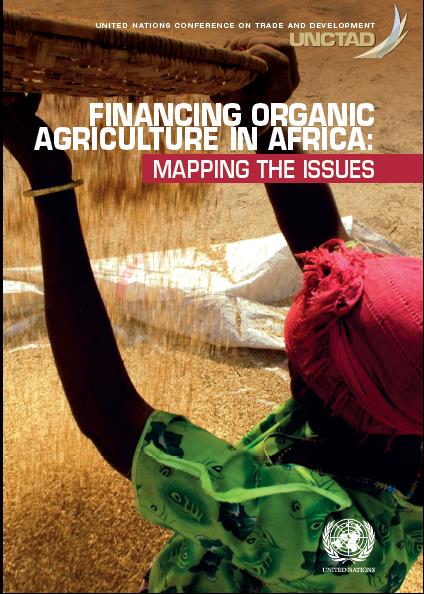
Financing Organic Agriculture in Africa: Mapping the Issues, 10 pages
"Research grants are perceived as one the least available 
funding instruments to support OA development."

17 February 2017. Nuremberg, Germany. Building on the vision and strategic action plan of TIPI
(the Technology Innovation Platform of IFOAM – Organics International), a workshop identified the research gaps in organic food and farming systems in the context of international cooperation. The Science Day was organized by the Research Institute of Organic Agriculture FiBL in collaboration with IFOAM EU.
  • Hans-Jörg Lutzeyer, European Commission, DG Research & Innovation
  • Annette Schneegans, European Commission, DG Agriculture and Rural Development
Building on the vision and strategic action plan of TIPI (the Technology Innovation Platform of IFOAM – Organics International), the science day identified the research gaps in organic food and farming Systems in the context of international cooperation, which will contribute to the development of a strategic research agenda for organic food and farming systems.
  • Which thematic fields should be prioritized in different regions (continents) to collect evidence about the benefits and needs for improvement of organic food and farming Systems (100 questions to be addressed by novel organic food and farming systems)?
  • Who should set these research priorities, and how (i.e., how much should research priorities and innovations be farmer-, policy-, market- or funder-driven)?
  • How can the organic community and its constituents effectively advocate for organic food and farming Systems research?
Related:
15 February 2017. Launch of the 2017 edition of
"The World of Organic Agriculture"
Statistics and Emerging Trends 2017.
Helga Willer and Julia Lernoud (Eds.)
Research Institute of Organic Agriculture (FiBL), Frick and IFOAM – Organics International, Bonn

The study (336 pages) contains reports, authored by experts, on the organic sector and emerging trends in all regions and selected countries. The statistics are supported with graphs and tables. In addition, background information on issues such as standards and legislation is provided. New additions to this edition are an article on organic cotton from the Textile Exchange and a chapter reviewing the organic and Fairtrade markets.

Extract: Latest Developments in Organic agriculture in Africa (Jordan Gama) (pages 161-174)
  • The African Organic Network (AfrONet) 
  • Strategic Plan (2015-2025) for the Ecological Organic Agriculture Initiative (EOAI) for Africa 
  • New UNCTAD study “Financing Organic Agriculture in Africa: Mapping the Issues” 
  • Outlook 
The African organic network
AFRONET has been endorsed to be the continental alliance of Ecological Organic Agriculture (EOA) stakeholders in Africa. The meeting that endorsed was held on 1st May 2012 and attended by 42 partners across Africa. Represented by NOAM, PELUMs, PROPAC, IFOAM and Associations/Institutions from Africa and partners.

In 2008 national organic agriculture movements (NOAMs) in Eastern and Southern Africa met in Nairobi where the idea for an African Organic Agriculture Network imaged and resolution to work towards its being a reality was passed. This resolution was shared with other like-minded actors in West Africa during the Nigerian Organic Summit 2008 and it was approved at the 1st African Organic Conference in Kampala in 2009.

Further discussion was held at Biofach 2010 and the IFOAM/UNEP conference in Nairobi, 2011. Need for strategic Alliance of EOA actors in Africa are felt as a network for Organic Agriculture Research in Africa was launched during the organic conference in Kampala.


Related: 
The Cotton made in Africa initiative has set itself the goal since 2005 to sustainably improve the living conditions of cotton farmers in Sub-Saharan Africa.
  • African smallholders learn about efficient and environmentally friendly cultivation methods through agricultural training provided by our experts. 
  • At the same time, an international alliance of textile companies is established which purchase the Cotton made in Africa raw material and pay a licensing fee to use the seal. 
  • The proceeds from licensing fees, in following with the workings of a social business, are reinvested in the project regions of Sub-Saharan Africa.

Monday, July 11, 2016

Farming for the future of Friends of the Earth

Farming for the Future: Organic and Agroecological Solutions to Feed the World
This report was written by Christopher D. Cook, Kari Hamerschlag, Friends of the Earth U.S. and Kendra Klein, Friends of the Earth U.S
2016, 23 pages
The science is clear: Feeding the world sustainably requires that we protect the ecological resources that are essential for producing food now and in the future. What’s more, research consistently shows that hunger is not a problem of overall supply of food, but results from poverty, lack of democracy and unequal access to land, water and other resources. 

Rather than producing more food under unequal and ecologically destructive conditions, the solution to hunger hinges on creating a more sustainable, democratic and fair food system for all.
Despite the many proven benefits of ecological farming, there is a massive disparity in research funding for organic in comparison to conventional agriculture. Of the $49 billion invested globally in agricultural research, less than one percent goes to organic farming.164 In the U.S., less than two percent of public agricultural research funding goes to organic and biologically diversified farming.165,166 Agroecological farming approaches have achieved high levels of environmental performance and productivity despite minimal funding. Increased research could improve yields and environmental gains beyond already proven success. (page 17)
Presentations
Learn from top scientists and thought leaders on the science of sustainable food production and a comprehensive approach to creating a healthy, resilient food system to feed all people, now and into the future.

Friday, February 12, 2016

BIOFACH 2016: organic food and the tension between safety and quality

10 - 13 February 2016. Nuremberg, Germany. BIOFACH 2016.
The BIOFACH Congress – the platform for knowledge transfer, information exchange, discussion and opinion forming – is the biggest organic congress in the world and its some 100 presentations and panel discussions reach more than 7,000 participants. Join in the discussion and be inspired!

Key theme 2016: "Organic 3.0 – Acting for more organic!"
Organic 3.0 is the discussion on the organic sector of the future and stands for credible and sustainable concepts which are ground-breaking in the re-structuring of the global agriculture and food industry. The organic movement itself is called upon. But not only that: its partners in politics, the private sector and civil society must also create the conditions for the restructuring process and growth as well as actively support the organic sector. BIOFACH 2016 provides the platform for holding discussions and initiating specific measures.

Extracts of the program:
  • The World of Organic Agriculture - Statistics and Emerging Trends At this session the latest data on organic agriculture worldwide were presented (area, operators, markets) and an overview of the current status of organic legislation will be given
  • EU Policy Day, organised by IFOAM EU in cooperation with BIOFACH. In March 2014 the European Commission published its legislative proposal for a new organic regulation. The next and last step in this process is represented by the ‘trilogue’ negotiations between the three EU institutions to agree on a final legal text, presumably at the beginning of 2016. Taking into consideration the three institutions’ proposals, trilogue outcomes on certain regulation areas can be already foreseen and discussion can be kicked off.The policy day will bring together the EU policy makers and the organic sector to discuss the possible changes that the sector will have to be facing when the new organic regulation is adopted.
  • Recent Studies in Organic Research. This session bridged the gap between science and the public by covering studies published in 2015 (and early 2016) about the human health and environmental benefits of organic agriculture.
  • How much food safety can we afford? The tension between safety and quality. Manufacturers and consumers have been jolted by the discoveries of dioxin and mycotoxins in food products. Does society need to reach a new consensus on safety and quality?
Barbara Altmann, Head of Strategic Sourcing Food Ingredients / Rapunzel Naturkost AG Jutta Jaksche, Verbraucherzentrale Bundesverband e.V. (vzbv)
Dr. Ulrich Mautner, SALUS Haus Dr. med. Otto Greither Nachf. GmbH and Co. KG
Andreas Swoboda, W-E-G Stiftung and Co. KG
Tom Nizet, Responsable certification / Certisys GmbH
Hubertus Doms, Hipp GmbH & Co. Produktions KG

Monday, October 5, 2015

Agroecology for Nourishing the World and Transforming the Agri-Food System

29 September 2015, EXPO 2015, Milan, Italy. The Action Network: Organic Can Feed The Planet published a manifesto and released a declaration, affirming organic as the food and farming system best suited to meet the major challenges facing us. 

The organic movement has joined together to contribute to the theme of this year’s EXPO in Milan – feeding the planet – and IFOAM EU has published a report, Feeding the People: Agroecology for Nourishing the World and Transforming the Agri-Food System.
“The question of feeding the planet is often and unfortunately approached from the wrong angle. Focussing entirely on intensifying production is misguided and merely props up collective dependency on the very industrial agri-food production and consumption systems that do not meet the needs of people whilst destroying the environment. Organic food and farming and agroecology have a holistic, system-wide approach to food and farming. They are uniquely placed to address the complex and interlinked global challenges we currently face including food insecurity and obesity, climate change, unfair working and trade conditions, soil degradation, loss of biodiversity, poor animal welfare, deforestation and loss of agricultural land, to name but a few.” IFOAM EU President Christopher Stopes.
“There is an urgent need for a transformation of the existing agri-food systems to sustainable agroecological systems and scientific investigation is increasingly showing that a system-wide change is needed. Agroecology is an innovative form of food production that offers huge potential, not only to provide better food but also to remedy the environmental destruction that now threatens human societies. Therefore, we are calling for a billion-euro EU flagship research programme on agroecology and the transformation of the current agri-food system.”  Angelika Hilbeck, senior scientist at the Swiss Federal Institute of Technology’s Institute of Integrative Biology and co-editor of Feeding the People.

Thursday, June 18, 2015

9th European Organic Congress: Designing our Future

11-12 June 2015. Latvia. During the Latvian Presidency of the EU Council, the Ministry of Agriculture, in cooperation with the International Federation of Organic Agriculture Movements (IFOAM), organised the 9th European Organic Congress: Designing our Future.

There were discussions on the development of Latvia's organic agriculture with a view to the
emerging EU organic farming regulation and new opportunities for the development of organic farming after the introduction of the new Rural Development Programme. During the congress, there were visits to innovative organic farms engaged in the production of new products as well as to research institutions involved in organic agriculture innovation projects.

The organic agriculture congress brought together representatives of the European Commission, the respective Member State Ministries, EU research institutions, monitoring authorities, public organisations and lobbies interested in the development of organic agriculture.

Programme of the event
Media programme
More information on the event

Friday, February 20, 2015

BIOFACH - World's leading Trade Fair for Organic Food

10-13 February 2015. The 2015 BIOFACH and VIVANESS Congress, which included more than 100 separate discussions, was attended by 7,000 interested listeners and participants. Taking place this year for the first time, the Politics Forum experienced particularly strong interest, drawing more than 1,000 visitors to its events. The discussion on the free trade agreement between the EU and the USA “TTIP - an opportunity or a threat to the organic industry” proved to be especially popular.

In 2014, German households spent 4.8 % more on organic food and drink than in the year before, with sales amounting to just under EUR 8bn according to the German Federation of the Organic Food Industry (BÖLW). The natural cosmetics market has also grown significantly. A general survey conducted by naturkosmetik konzepte, GfK, IRI, IMS Health and BioVista shows that over EUR 1bn were generated from natural cosmetics in 2014, 10 % more than in 2013.

Some African organic agriculture exhibitors:

Dried coconut
WAD (Weija Agricultural Development) was founded in the year 2000 and exports mainly dried and fresh pineapples, dried coconut, dried mangos and dried papaya. WAD African Foods believes in the potential of small farmers in Ghana.

The company’s target is to alleviate poverty in the country and to fight against the dependence of the famers. WAD African Foods supports small-scale farmers improving their standard of living by training them and promoting their products on the European market. The company works with middle-class farmers group in different regions of Ghana. Over 200 farmer families supply WAD with their products which are certified by IMO Switzerland.

NOGAMU/BioAfrican Pavillion
A unique feature of Uganda 's organic agriculture is the high coordination, involvement and commitment from all stakeholders in the organic sector. From public institutions including the ministries of Trade, Agriculture, Uganda Export Promotions Board, Uganda National Bureau of Standards, Uganda Coffee Development Authority, Cotton development Organization, the Presidents office, to private institutions (all under the umbrella of NOGAMU) these include farmers associations, export companies, NGOs, CBOs, private Universities (e.g. Uganda Martyr's University).

Aduna is an Africa-inspired health and beauty brand and social business. Their mission is to create demand for exceptional and underutilised natural ingredients that we source directly from small-scale producers in Africa. Their first two ‘super-ingredients’ baobab and moringa are the best-selling superfoods in leading UK health and beauty retailers including WholeFoods, Planet Organic, Liberty and Selfridges.
Agro Eco-Louis Bolk Institute is an independent organisation specialised in project management, training and advice on organic and sustainable agriculture in the tropics. From their office in Accra (Ghana) they work in various countries of East and West Africa. Central pillars of their work are their systems approach, respect for the integrity of life, and a participatory methodology. Among their international clients are CARE, Progreso and Oxfam Novib.
Set on a fertile, rural 40 hectare plantation in Vivo, deep in the province of Limpopo, South Africa, where conditions are ideal to cultivate aloe plants, Aloway Natural Health Products. (Aloway) is home to the first manufacturing facility of organic Aloe Vera on an industrial scale in South Africa. When cultivation began at Aloway in 2008, it reached out to the local community to source workers for the facility. This has had a positive spin off for the rural people of Vivo, as job creation is desperately needed in these remote areas.