Platform for African – European Partnership in Agricultural Research for Development
Showing posts with label CABI. Show all posts

Monday, June 29, 2026

The Memory of the Land: Women, Partnership, and Agricultural Transformation

26 June 2026 The "The Memory of the Land: Women, Partnership, and Agricultural Transformation" webinar, was the second webinar in AgroSpectrum Asia's global series marking the International Year of Women Farmers 2026. 

The session explored the central role of women in transforming agriculture and food systems, arguing that women are not only food producers but also innovators, knowledge custodians, entrepreneurs, and leaders who are helping agriculture respond to climate change, biodiversity loss, market volatility, and technological change. The webinar emphasized that the future of sustainable agriculture depends on partnerships—across genders, generations, institutions, disciplines, and regions—to create more resilient and inclusive agrifood systems.

Discussions focused on how women are bridging traditional agricultural knowledge with scientific research and innovation, strengthening community resilience, promoting climate adaptation, and connecting policy with farmers' realities. Speakers shared examples of women-led innovation in farming, seed conservation, research, agri-business, and international agricultural partnerships. The webinar also examined practical approaches for integrating gender inclusion into agricultural policy, fostering collaboration across the agricultural value chain, and supporting the next generation of women agri-leaders. Participants were encouraged to view partnership not simply as institutional cooperation, but as the foundation for restoring more equitable, resilient, and sustainable food systems.

  • Joanna Kane-Potaka – Executive Secretary, GFAiR – Global Forum on Agricultural Innovation and Research; spoke on the importance of global partnerships and women-led agricultural transformation.
  • Evalyne Okoth – Woman farmer engaged in research; shared practical experiences from farming and community-based agricultural innovation.
  • Carlo Fadda – Research Director, Alliance of Bioversity International and CIAT; discussed the role of agricultural biodiversity, research, and partnerships in building resilient food systems.
  • Wanjiru Kamau-Rutenberg – Managing Director for Africa, Alliance of Bioversity International and CIAT, and one of the World Food Prize Foundation's 2026 Top Agri-food Pioneers; addressed women's leadership, institutional change, and inclusive agricultural innovation across Africa.
  • Moderator: Suchetana Choudhury Goswami – Session moderator, who guided the discussion on women's leadership, partnerships, and agricultural transformation.

Related: FAO releases most comprehensive dataset to date on women in agrifood systems


Related 


28 May 2026
. The first webinar in AgroSpectrum Asia's International Year of Women Farmers 2026 series focused on the growing leadership of women across agriculture and the need to recognize women as key drivers of innovation, resilience, and food system transformation. 


Rather than viewing women solely as producers, the webinar highlighted their expanding roles as researchers, entrepreneurs, policymakers, and community leaders who are shaping climate-smart agriculture, biodiversity conservation, and inclusive rural development. It also examined how women-led partnerships across research institutions, governments, farmer organizations, and the private sector are strengthening agricultural productivity and resilience in the face of climate change and market uncertainty.

The discussion emphasized that sustainable agricultural transformation depends on building stronger partnerships between science and practice, integrating indigenous and local knowledge with innovation, and creating opportunities for women to participate in decision-making at every level of the agrifood system. Speakers shared experiences from Africa and Asia on women-led innovation, climate adaptation, agri-enterprise development, and research collaboration, while also exploring how future food systems can become more equitable, resilient, and inclusive.
  • Sumini Sampa, Senior Agricultural Research Officer, Zambia Agriculture Research Institute; National Focal Point – Biodiversity for Food and Agriculture: From Genetic Resources to Resilient Food Systems: Why Women Matter
  • Dr. Chapwa Kasoma, Scientist – Invasive Species Management, CABI Southern Africa Centre: Climate Change, Invasive Species and the Need for Collaborative Agricultural Solutions
  • Chileshe Bwalya, Gender Equity and Social Inclusion Manager, iDE: Why Gender Equity Is Central to Agricultural Transformation
  • Sussana Phiri, YPARD Zambia Country Representative:  Young Women Reimagining Agriculture Through Leadership and Innovation
  • Joanna Kane-Potaka, Executive Secretary, Global Forum on Agricultural Innovation and Research (GFAiR): Partnerships That Power Global Agricultural Innovation
  • Moderator: Suchetana Choudhury Goswami – Session moderator, who guided the discussion on women's leadership, partnerships, and agricultural transformation.

Related:


Webinar 1 | 08 June 2026. Women Farmers and Food Security: Visibility, Roles and Realities
Women farmers play a critical role in ensuring global and local food security, yet their roles often remain under-recognised in policy and practice. This session, featuring insights from UN Women and local women's rights organisations, explores the lived realities of women farmers and the structural factors shaping their work and livelihoods. Regional perspectives will highlight concrete challenges, experiences, and opportunities for strengthening women’s roles in sustainable food systems.

Webinar 2 | 22 June 2026, Structural Barriers and Gender Inequalities in Food Systems
The second session examines structural barriers faced by women farmers, including access to land, finance, services and decision-making. It also explores how climate change, market volatility, supply chains and digitalisation affect women differently. Speakers will highlight women-led solutions and initiatives that address these challenges in practice, combining evidence-based insights with experiences from women leaders and practitioners working to transform seed and food systems.

Webinar 3 | 29 June 2026, What Works: Tools, Evidence and Pathways for Gender-Transformative Change
The final session highlights practical tools, learning approaches, and evidence for advancing gender-transformative change in agriculture and food systems. Drawing on FemHub’s work on toolkits, learning formats, and measuring change, it explores what makes interventions effective in practice—and how practitioners can move from intention to implementation. The session concludes with a joint reflection and call to action.

Tuesday, June 16, 2026

Advancing Biological Control in Asia, the Middle East and Africa: Knowledge, Practice and Partnership

11 June 2026. Promoting the awareness and use of biological control in Asia, the Middle East and Africa

As concerns grow over pesticide resistance, biodiversity loss, environmental degradation, and food safety, experts from more than 75 countries gathered for a regional webinar organized by CABI and the International Tropical Fruits Network (TFNET). The event highlighted the growing recognition of biological control as a key component of sustainable agriculture and resilient food systems. Participants explored how biological control approaches, when integrated within broader Integrated Pest Management (IPM) strategies, can reduce dependence on synthetic pesticides while improving environmental outcomes, farmer livelihoods, and market access.

A major focus of the webinar was the role of innovation, science, and digital tools in accelerating the adoption of biological control. 

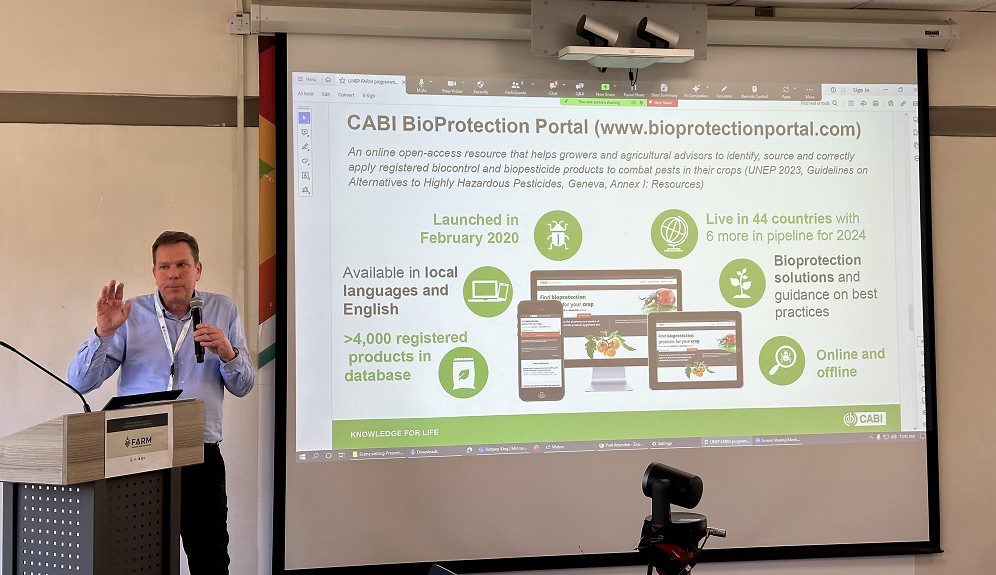
  • CABI showcased its PlantWise Plus programme and demonstrated the CABI BioProtection Portal, an open-access platform operating in 54 countries and 18 languages that provides information on more than 7,000 registered bioprotection products. 
  • Participants also learned from a successful case study in Malaysia, where classical biological control of diamondback moth significantly reduced pesticide use in brassica production while strengthening export opportunities through lower pesticide residues: Diamondback Moth Management in Malaysia
  • Country perspectives from Egypt, Sudan, and Saudi Arabia further illustrated how biological control is increasingly being incorporated into climate-smart agriculture programmes, extension services, and national sustainable agriculture strategies.

Throughout the discussions, participants emphasized that biological control is not a stand-alone solution but rather part of a broader systems approach to sustainable crop protection. Successful adoption depends on strong regulatory frameworks, quality assurance systems, effective extension services, farmer engagement, institutional support, and access to affordable biocontrol products. Digital advisory tools were identified as particularly important for helping farmers and advisers make informed decisions, while capacity development and policy harmonization were seen as critical for scaling adoption across regions. The webinar also underscored the importance of placing farmers at the centre of innovation and ensuring that solutions are adapted to local ecological and socio-economic contexts.

Looking ahead, participants identified significant opportunities for regional collaboration through joint research initiatives, regulatory harmonization, public-private partnerships, digital agriculture platforms, and South-South cooperation. There was broad agreement that scaling biological control will require coordinated action across research institutions, governments, extension systems, private companies, and farmer organizations. By fostering partnerships and sharing practical experiences, the webinar demonstrated how biological control can contribute to healthier ecosystems, safer food production, improved market access, and more resilient agricultural systems across Asia, the Middle East, and Africa.

Friday, September 12, 2025

Artificial intelligence for small scale producers

2 September 2025. The session titled “Artificial Intelligence for Small-Scale Producers” was a side event of the Africa Food Systems Forum (AFSF).

The side event was co-organized by a number of major development, agricultural, and research organizations: IFPRI, Yara International, IFAD, CABI, AGRA, FAO, and the Gates Foundation.  

RECORDING FORTHCOMING

The objectives were:

  • Explore how AI tools can be made accessible to small-scale farmers. This includes leveraging things like natural-language interfaces to overcome digital and language barriers. 
  • Tailor advisory systems using localized data: weather, soils, markets. The idea is to provide decision support that is context-aware for individual farmers rather than generic advice. 
  • Identifying and discussing the risks: trust, bias, hallucinations (i.e. AI producing information that is incorrect but seems plausible), scalability and sustainability. Governance and safeguards are needed. 
  • Impacts expected: improved productivity, profitability for small-scale producers across Africa.
  • Organizers & Co-Hosts
Presenters
  • Parmesh Shah – Global Lead, Digital Agriculture, World Bank
  • Rikin Gandhi – CEO, Digital Green
  • Fatema Allmulla – International Affairs Office, UAE Presidential Court
  • Jawoo Koo – Deputy Director, Digital Accelerator, CGIAR
  • Jamie Collinson – CEO, iSDA
Rikin Gandhi and his team at Digital Green made FarmerChat hashtag opensource. Leveraging Generative AI, FarmerChat offers personalized, reliable, and contextually relevant advice, overcoming limitations of previous chatbots in deterministic dialogue flows, language support, and unstructured data processing. Deployed in four countries, FarmerChat has engaged over 15,000 farmers and answered over 300,000 queries. The results of their work is impressive: the cost of advisory services dropped by 100% and the impact (in terms of good practice adoption) is 10 times higher, compared with traditional service provision.

Panelists
  • Salim Kinyimu – Director ICT, KALRO
  • Seema Gohil – Director, Safaricom DigiFarm
  • Ameen Jauhar – Data Governance Lead, CABI
  • Moderator Stewart Collis – Gates Foundation
2 October 2024. Niger Delta Nigeria. In partnership with Digital Green, the LIFE-ND Project took a bold step into the digital age with the introduction of the Farmer Chat Application, a revolutionary tool designed to transform farming activities through AI assistance. LIFE-ND has been operating in Rivers State: Abia, Akwa Ibom, Bayelsa, Cross River, Delta, Edo, Imo, Ondo and Rivers. For example, 66 communities in Rivers (out of 104 targeted) have been empowered through LIFE-ND (training incubators/incubatees). Digital Green’s FY25 report says 28,000+ farmers in Nigeria are already benefitting and a Hausa version is being refined for scale-up—so usage likely extends beyond a single state, with LIFE-ND as a major conduit. Key partners involved: Federal Ministry of Agriculture & Food Security (FMAFS) (anchor in-country), IFAD (programme & funding partner; via the LIFE-ND project), NDDC (co-funding partner for 3 Niger Delta states within LIFE-ND), LIFE-ND Project (on-the-ground delivery partner across Niger Delta states), Tech/funding ecosystem noted globally: Microsoft/OpenAI/Rockefeller.


Tests in Kenya


Digital agriculture has long held the promise of filling this gap through bundled services that integrate weather forecasts, market prices, mobile payments, and agronomic advice. Still, in spite of the $1.5 billion invested in mobile phones and other technologies over the past decade, the uptake remains low. In many Sub-Saharan African countries, for example, fewer than 10 percent of all farmers use digital agricultural technology. Some solutions have scaled, such as a digital agricultural advisory service launched by the Government of Odisha that has successfully reached 7 million farmers. Sustained engagement, however, is still hampered by gaps in digital and language literacy, relevance of content, cost, and trust issues.

Generative AI is poised to overcome these persistent barriers. And indeed, the evidence from early projects is compelling:
  • Digital Green, a technology non-profit, has created an AI-powered chatbot that has reached 460,000 farmers and extension workers across five countries, supporting 40 crops in six languages. 
  • Innovative Solutions for Decision Agriculture (iSDA) has produced a similar tool called Virtual Agronomist serving over 350,000 plots across seven African countries via WhatsApp, driving profit gains up to 4.7 times, yield increases of 1.6 times, and engagement above 60 percent.
  • Kisan e-Mitra AI Chatbot, a voice-based, AI-powered chatbot launched by the Government of India, has resolved over 8.2 million queries from farmers in multiple local languages regarding direct benefit transfer, a government program that sends subsidies and welfare benefits directly into citizens’ bank accounts.
Generative AI directly addresses challenges of digital literacy, language limitations, and relevance of information by offering farmers voice-based interfaces in the languages they use every day.
This November, building on our long-standing collaboration, we will launch a comprehensive report with public and private partners exploring AI’s potential across the agri-food system. We invite governments, development partners, researchers, and tech providers to join us in transforming agricultural extension into a driver of rural prosperity.

World Bank Webinars about Broad Impacts of AI on Agriculture

Forthcoming: World Bank (2025) AI’s potential across the agri-food system
  • In November 2025, building on the World Bank's long-standing collaboration, will launch a comprehensive report with public and private partners exploring AI’s potential across the agri-food system. 
  • Beginning with an overview of potential benefits and applications, the study will provide specific examples of how AI can be leveraged across various sectors.
  • The report invites governments, development partners, researchers, and tech providers to join the report in transforming agricultural extension into a driver of rural prosperity.

The World Bank's "What's Cooking" series is a learning and discussion forum focused on the digital transformation of the agrifood system, inspired by the World Bank's 2021 report What's Cooking: Digital Transformation of the Agrifood System. These events, which have included webinars and online seminars, explore how digital technologies can improve efficiency, equity, and sustainability in food and agriculture, and discuss the necessary policies and ecosystems to enable this digital transformation.


19 October 2023. Setting the Stage: The Broad Impacts of AI on Agriculture

This webinar provided a comprehensive overview, setting a foundational understanding of AI’s integrative role, its expansive impacts ranging from crop health management to supply chain optimization, and its potential to address persistent challenges while unveiling unprecedented opportunities. Amid the escalating demand for food security, climate change resilience, and sustainable agricultural practices, AI is a beacon of innovation and efficiency. Join us in these enlightening sessions to unravel how AI is not a distant future but a prevailing reality, shaping the agri-food sector’s present and future and unveiling pathways to address our time's complex, interwoven challenges.

Presentation of Ranveer Chandra (Microsoft) @6:56: AI driven food systems to nourish the world


28 Jan 2024. Unlocking the Future of Farming: Precision Agriculture and AI

This session delved deep into how artificial intelligence is revolutionizing precision agriculture.
Explore the latest advancements and discussions with a panel of distinguished experts, including policymakers, practitioners, academicians, and entrepreneurs. Our focus will be on cutting-edge strategies, innovative solutions, and the challenges we face in integrating AI into precision agriculture.


16 November 2023. Unlocking the Future of Farming: Precision Agriculture and AI

The session, titled "Unlocking the Future of Farming: Precision Agriculture and AI," delved deep into how artificial intelligence is revolutionizing precision agriculture.


7 December 2023. Unveiling Generative AI's Impact on Agriculture from Chatbot to Field Breakthroughs

This webinar was part of the 'What's Cooking' series by the DADI team in AGF’s Global Engagement Unit. It discussed practical applications of AI in Agriculture. The session presented a concise insight into the transformative role of AI in the agricultural sector.
  • Ranveer Chandra (Microsoft)
  • Rikin Gandhi (Digital Green)
  • David Potere (Boston Consulting Group X)

Ranveer Chandra discussed the role of Generative AI in helping answer agricultural questions, and the role of LLMs and multimodal AI for agricultural copilots for various stakeholders in agriculture. He discussed some used cases, and then the role of Retrieval Augmented Generation (RAG) and Fine Tuning of large models when trying to use LLMs for Agriculture. He also spoke about the available tools, including Azure OpenAI and tools that are available for people who want to get started with building solutions leveraging Generative AI. 

Rikin Gandhi @27:53 discussed the transformative role of AI in supporting small-scale farmers. Navigating challenges such as remote locations, these farmers greatly benefit from Digital Green's innovative approach. Leveraging farmer-created videos from regions like India, Ethiopia, and Kenya, and backed by the World Bank and the Gates Foundation, this initiative has achieved remarkable scale. Over 54,000 government extension agents, and 5.2 million smallholder farmers, 70% of whom are women, have accessed enhanced advisory services. This has dramatically reduced the cost-per-adoption from $35/farmer to a mere $3.50/farmer, resulting in an income surge by up to 24%. The conversation also explored how Digital Green is leveraging AI's transformative potential, focusing on AI's role in using data to tailor extension advisories at the farm level, driven by a flexible digital architecture that could further reduce the cost of extension to $0.35/farmer. By fostering a feedback-driven and customized approach, the platform has seen a twofold increase in adoption among women farmers. Such strategies ensure the delivery of location-specific advisories, empowering farmers to adeptly tackle the challenges presented by our changing climate. 

David Potere unpacked a series of three recent project examples where the BCG Center for Earth Intelligence is bringing the power of Generative AI into agricultural applications. The team has conducted large scale trials of imagery-based foundation models for satellite image processing and cloud removal, field boundary delineation, and crop yield forecast. The results are very promising and point to a tipping point when it comes to transforming raw image and other environmental signals into practical insights for farmers and other actors in the global food system.

4 April 2024. Putting Space and AI on the Driver’s Seat: How Remote Sensing Can Drive Agricultural Decision Making

The food security of millions has been undermined by climate shocks and there is a strong need for monitoring and forecasting crop yields to support decisions on food security for early action. This webinar will highlight three of these novel systems that can bring powerful information and decision support tools to farmers, governments and food security decision makers, highlighting South-to-South innovation and collaboration. Participants will have the opportunity to interact with these innovators to learn more about the technology, scale, replicability and impact of the tools and approaches in other regions. 
  • The Mahalanobis National Crop Forecasting Centre has been established to provide in-season crop forecasts and assessment of drought situation using state of the art techniques and methodologies developed by Indian Space Research Organization (ISRO). 
  • AKADEMIYA2063 is an Africa-based non-profit research organization with headquarters in Kigali, Rwanda and a regional office in Dakar, Senegal. Its mission is to provide data, policy analysis, and capacity-strengthening support to enable African countries to achieve the African Union’s Agenda 2063 goals of inclusive and sustainable development and economic prosperity. 
  • Cropin is a global B2B agtech company and digital transformation enabler for the agri-food ecosystem. Founded in 2010, the company has developed Cropin Cloud, the world's first industry cloud for agriculture. Cropin Cloud enables various stakeholders in the agricultural ecosystem to make informed decisions to improve the efficiency and productivity of large-scale global farming operations. 
25 April 2024. Harnessing Artificial Intelligence for Sustainable Soil Health
  • Lulseged Tamene Desta, a Principal Scientist at the Alliance of Bioversity International and
    CIAT, discussed the development and impact of the NextGen agro advisory system, which significantly enhances soil health and crop yields through targeted fertilizer recommendations. 
  • Anirudh Keny from Boomitra showcasef how AI is a game-changer in optimizing soil carbon sequestration, enabling even the smallest farms to contribute to the carbon market and fostering a healthier planet.

7 November 2024. Unlocking the Power of Digital Farmer Services: A Deep Dive into the 'Meaningful Use' Framework”
 
Traditional metrics like usage frequency or app downloads often fail to capture the true impact of DFS. The "Meaningful Use" framework fills this gap by evaluating the real benefits that farmers gain from these services. Based on a survey of nearly 5,000 farmers across India, Kenya, Nigeria, Ghana, and Ethiopia, this approach covers services such as information access, input and equipment markets, and credit offered by 18 DFS providers.

Our panel of experts will discuss the design of the 'Meaningful Use' framework in collaboration with the Bill & Melinda Gates Foundation and the Busara Center for Behavioral Economics, how DFS is transforming farmers' practices, livelihoods, and resilience, and Insights on scaling DFS solutions to deliver sustainable, impactful benefits for farmers across Africa and Asia.

Presenters


26 June 2025. Consultative Workshop on Harnessing AI for Agricultural Transformation 

The World Bank`s Data and Digital Agriculture and Digital Development team, in collaboration
with IFC - International Finance Corporation Microsoft Google Gates Foundation @digitalGreen, @IRRI, CIFOR-ICRAF Deutsche Gesellschaft für Internation ale Zusammenarbeit (GIZ) GmbH CGIAR @UAE-Gates Partnership, concluded the “Harnessing AI for Agricultural Transformation” Consultative Workshop. 
  • This webinar presented insights from the upcoming World Bank’s report (November 2025),"Harnessing AI for Agriculture Transformation," developed in collaboration with global partners. 
  • The report offers a comprehensive, development-focused analysis of how AI can be applied, responsibly and effectively, across agrifood systems—especially in low- and middle-income countries (LMIC). Moving beyond the hype, it outlines a clear roadmap for scalable applications, enabling conditions, and investment priorities. 
  • A  panel explored how AI can transform the future of agriculture through a systems-level perspective, emphasizing development goals, LMIC-centric strategies, digital public infrastructure, responsible and inclusive AI deployment, and real-world case studies.


The Workshop was organized in three sessions.
  1. Session 1: discussed the new and upcoming report, diving into breakthrough insights - from investment priorities to real-world AI use cases.
  2. Session 2: What’s Cooking Webinar: a hybrid panel featured practitioners and innovators from across the ag-tech ecosystem.
  3. Session 3: What Should the World Bank Do? The final session transitioned to strategy, identifying priority areas, aligning global and regional approaches, and outlining how the World Bank can turn ideas into action.
Key takeaways from the workshop:
  1. AI is a transformative tool—if aligned with development outcomes.
  2. Digital and data infrastructure remain the critical enabler. Reliable connectivity, open data systems, and interoperable digital platforms are foundational.
  3. Local adaptation and equity must be built into every solution. AI models must be tuned to local crops, languages, geographies, and user needs.
  4. The public sector must lead on governance and infrastructure. Governments—and institutions like the World Bank—play a central role in building digital public infrastructure, establishing data governance frameworks, and ensuring fair and open access.
  5. Trust, transparency, and validation are essential for credibility. AI systems used in agriculture—particularly those influencing subsidies, credit, or compliance—must be explainable, auditable, and ethically sound.
  6. AI success depends on human systems and institutions. Human extension workers, cooperatives, national statistical agencies, and local research systems remain central to AI implementation.
  7. Responsible scaling requires financing and partnerships. To move from pilots to platforms, AI solutions require blended finance, first-loss guarantees, and public-private partnerships.

Monday, September 8, 2025

Africa Phytosanitary Research Regional Consultation workshop

19 - 22 August 2025, Nairobi, Kenya. Africa Phytosanitary Research Regional Consultation workshop: Identifying opportunities, co-creating solutions. 

Download the program here 4 pp.

CABI, in collaboration with Kenya Plant Health Inspectorate Service (KEPHIS), AU InterAfrican Phytosanitary Council (AU IAPSC), EUPHRESCO Network Office organized a consultation workshop on Phytosanitary Research in Africa to share information on successes and best practices on phytosanitary research. 

Euphresco III is a global network of organizations involved in plant health research funding, research implementation, and policy- making, seeking to develop, coordinate, fund, and conduct phytosanitary research to inform policy. The network aims to strengthen the coordination of national and regional phytosanitary research programs, primarily focusing on statutory plant health (emerging and regulated pests). Globally, phytosanitary research coordination has been identified as a key strategic activity within the IPPC Strategic Plan 2030 (Agenda 7) and within the AU-IAPSC Plant Health Strategy for Africa (2022-2036).

Workshop objectives 
  1. Map the current status of phytosanitary research in Africa 
  2. Validate phytosanitary research priorities 
  3. Identify challenges and opportunities for funding phytosanitary research 
  4. Co-create a roadmap for phytosanitary research collaboration in Africa

22/08 Mapping Phytosanitary Research Needs for Africa  

  • CABI, acting as the regional champion for Africa under the EUPHRESCO III project, is spearheading efforts to map phytosanitary research needs across the continent, with the goal of establishing a coherent and strategic regional research agenda. 
  • This entails conducting surveys among National Plant Protection Organizations (NPPOs) and research institutions to identify current and emerging phytosanitary research priorities. The collected insights will inform the design of a regional phytosanitary strategic plan, which will align with and contribute to the development of a global research framework. 
  • CABI will also leverage its Global Agricultural Research Archive (GARA) to disseminate vital information—including journal articles, workshop proceedings, success stories, and research reports—to enhance coordination and knowledge sharing among stakeholders.

22/08 Africa Phytosanitary Programme (APP) 

  • The Africa Phytosanitary Programme (APP), led by the IPPC Secretariat in collaboration with the FAO and the African Union, is a strategic initiative aimed at strengthening plant health systems across Africa through modern scientific and digital tools. 
  • Launched in September 2023, the pilot phase engaged 11 countries—Cameroon, the Democratic Republic of Congo, Egypt, Guinea-Bissau, Kenya, Mali, Morocco, Sierra Leone, Uganda, Zambia, and Zimbabwe—and provided tailored training, tablet-based geospatial surveillance tools, and pest survey protocols to enhance early detection and rapid response to phytosanitary threats 
  • By 2025, APP entered its second phase, expanding to eight additional countries and conducting Train-the-Trainer workshops—most recently held in South Africa—to build a broader continental network of skilled phytosanitary officers equipped to monitor pests, support food security, and facilitate compliant trade

22/08 Recent Initiatives from APAARI in Plant Health Research and Innovations in Asia


Prof. Paul Taylor, Technical Coordinator, APAARI highlighted (Virtually) APAARI’s ongoing efforts to address phytosanitary challenges.
  • The Asia-Pacific Association of Agricultural Research Institutions (APAARI) has recently advanced several initiatives in plant health research and innovations to strengthen regional biosecurity, sustainable agriculture, and food system resilience. 
  • These efforts include promoting the use of biological control agents and agroecological practices to reduce reliance on chemical pesticides, enhancing early warning and surveillance systems for invasive pests, and fostering digital innovations such as ICT-enabled pest diagnostics and knowledge platforms.

Monday, December 2, 2024

PlantwisePlus: Sustainable solutions for a food-secure future

25 November 2024. InfoPoint conference: Empowering smallholder farmers to safeguard crops, livelihoods and biodiversity

Recording available

PlantwisePlus supports countries to predict, prevent, and prepare for plant health threats, helping farmers to produce safer, higher-quality food through sustainable crop production. PlantwisePlus addresses three critical challenges for smallholder production: preparing for pest and invasive species outbreaks, reducing pesticide risks, and improving access to farmer advisory services. With a target to reach 75 million smallholder farmers in 27 countries around the world, the role of PlantwisePlus in supporting agricultural resilience, food security, and environmental sustainability will be key focus areas of this InfoPoint. 

The session featured speakers from CABI, who offered an overview of the programme’s achievements and vision, as well as two programme partners from Zambia and Pakistan who are involved in on-the-ground implementation. These partners shared how PlantwisePlus supports their national strategies for sustainable agricultural development, demonstrating the vital role of partnerships in achieving lasting impact. 

  • Leonard Mizzi – Head of Unit INTPA F3- Sustainable Agri-Food systems and Fisheries
  • Dr Daniel Elger – CEO, CABI
  • Dr Janny Vos – Partnerships Development Director, CABI
  • Zombe Sikazwe - Senior Seeds Officer, Seed Control and Certification Institute (SCCI), Zambia
  • Dr Imtiaz Hussain - Member Plant Sciences, Pakistan Agricultural Research Council (PARC), Pakistan

Sunday, March 24, 2024

Financing Agrochemical and Agricultural Plastics Reduction and Management (Farm)

12 March 2024. New initiative aims to curb the toxic impacts of agriculture


The governments of Ecuador, India, Kenya, Laos, Philippines, Uruguay, and Vietnam have come together to launch a $379 million initiative to combat pollution from the use of pesticides and plastics in agriculture: Financing Agrochemical and Agricultural Plastics Reduction and Management (Farm)

Chemicals play a crucial role in farming, with nearly 4 billion tons of pesticides and 12 billion kg
of agricultural plastics used every year.

Despite their benefits for food yields, these chemicals pose significant risks to human health and the
environment. As many as 11,000 people die from the toxic effects of pesticides annually, and chemical residues can degrade ecosystems, diminishing soil health and farmers’ resilience to climate change. The opening burning of agricultural plastics also contributes to an air pollution crisis that causes one in nine deaths worldwide.

Highly hazardous pesticides and mismanaged agricultural plastics release toxic persistent organic pollutants (POPs) – chemicals which don’t break down in the environment and contaminate air, water, and food. These inputs are generally cheaper than sustainable alternatives, giving farmers little incentive to adopt better practices.

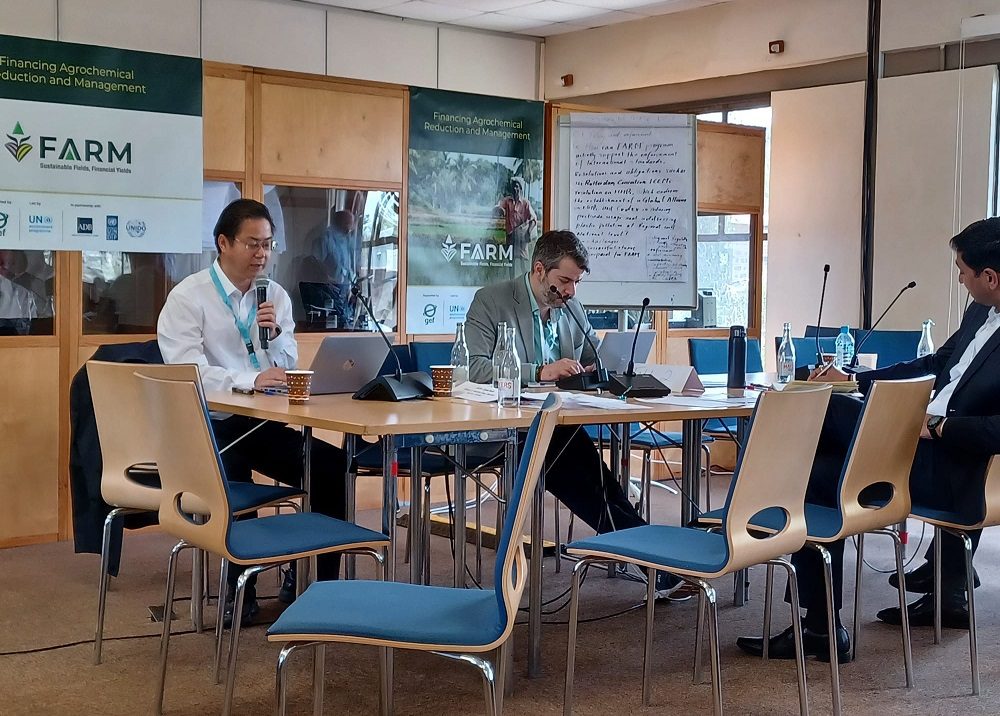
The Financing Agrochemical Reduction and Management Programme – or FARM – led by the UN Environment Programme (UNEP) with financial support from the Global Environment Facility (GEF), seeks to change that, elaborating the business case for banks and policy-makers to reorient policy and financial resources towards farmers to help them adopt low- and non-chemical alternatives to toxic agrochemicals and facilitate a transition towards better practices.

The five-year programme is projected to prevent over 51,000 tons of hazardous pesticides and over 20,000 tons of plastic waste from being released, while avoiding 35,000 tons of carbon dioxide emissions and protecting over 3 million hectares of land from degradation as farms and farmers convert to low-chemical and non-chemical alternatives.

About FARM


The Financing Agrochemical Reduction and Management Programme (FARM) is a $379 million, five-year initiative to combat agrochemical pollution. Funded by the Global Environment Facility, the programme is led by UNEP, with the support of United Nations Development Programme, United Nations Industrial Development Organization and the African Development Bank. Participating countries include Ecuador, India, Kenya, Laos, Philippines, Uruguay, and Vietnam.

CABI contributes to US $37 million FARM programme aimed at reducing pesticides and plastics in agriculture

Wednesday, November 22, 2023

Global food security summit

20 November 2023. London. Global food security summit

The Global Food Security Summit focused international attention on the deepening global food security crisis and help boost efforts to achieve Zero Hunger and end malnutrition (SDG 2). It galvanised support for lasting solutions that turn the tide and prevent famine, wider food insecurity and malnutrition. Seeking to shift the dial on progress across four action pillars, it will shine a particular spotlight on UK-funded cutting-edge science and innovation. The Summit will showcase practical action achieving real, lasting improvements in people’s lives, delivered by UK expertise, partnerships and science.

Extract of the agenda


Plenary: Opening Session

  • The Rt. Hon Andrew Mitchell, Minister for Development, United Kingdom – Welcome remarks
  • The Rt. Hon Rishi Sunak, Prime Minister, United Kingdom
  • HE Hassan Sheikh Mohamud, President of the Federal Republic of Somalia
  • HE Mariam Almheiri, Minister of Climate Change and Environment, UAE
  • Sir Chris Hohn, Chair of Board, Children’s Investment Fund Foundation
  • Bill Gates, Bill & Melinda Gates Foundation (pre-recorded video)

Session 2: Harnessing science and technology for food security


This session showcased collaborative science and research partnerships in action,
accelerating progress towards greater food security and nutrition, including cutting edge
British science and leadership. It galvanised further joined-up action to tackle some of the
thorniest problems facing the world today, including harnessing emerging technologies
including digital and AI, and finding scalable solutions that support nutrition, productivity,
climate resilience and protect nature. 

Setting the scene: Science and Technology for Food Security
  • Dr Qu Dongyu, Director General, Food and Agriculture Organization of the United
  • Nations
  • Dr Beth Dunford, Vice President, African Development Bank
  • HE David Ernest Silinde, Deputy Minister of Agriculture, Tanzania
  • HE Dr. Girma Amente, Minister of Agriculture, Ethiopia
Role of National Research and Innovation Systems and Partnerships 
  • Esther Penunia, Secretary General, Asian Farmers’ Association
  • Dr Juergen Voegele, Vice President, World Bank
  • Dr Rob Bertram, Chief Scientific Adviser, USAID
  • Prof Dame Ottoline Leyser, CEO, UK Research and Innovation
Lead discussants
  • Prof Bhavani Shankar, Professorial Research Fellow in Food and Health, University of Sheffield
  • Dharshan Wignarajah, Director, Climate Policy Initiative
Harnessing Science and Technology for Food and Nutrition Security 
  • Dr Agnes Kalibata, President, AGRA
  • Prof Lindiwe Sibanda, Board Chair, CGIAR
  • Rodger Voorhies, President of Global Growth, Bill & Melinda Gates Foundation
Lead discussants
  • Dr Daniel Elger, CEO, CABI
  • Dr Appolinaire Djikeng, Principal of the Centre for Tropical Livestock and Genetic Health and Director General of the International Livestock Research Institute
  • Dr Jon Styles, Director, Assimila
  • The Rt. Hon Anne-Marie Trevelyan, Minister for Indo-Pacific, United Kingdom 

Wednesday, September 21, 2022

Sustainable agriculture intensification handbook

This book provides an insight into the background, lessons learned, and the methodology of facilitating the application of best-bet/best-fit agricultural technologies to smallholder farms in East and Southern Africa (ESA). 

All technologies highlighted within this book, except those on livestock feeding, were trialed and demonstrated in farmers' fields over an eight-year period [2012 - 2020] as part of the Feed the Future/USAID funded research-for-development Africa RISING ESA Project and supported by the CGIAR. 

The livestock feed technologies were compiled from Eastern Africa literature and included to offer a full set of technologies relevant for farmers in mixed farming systems. 

Topics covered include the introduction of resilient and nutrient-dense crops, better arrangement of crops in the field to amplify intercrop benefits, and the management of soils to improve soil fertility and minimize physical soil and nutrient loss. 

The publication also features technologies for postharvest loss reduction, livestock feeding, food processing, and in the later chapters, important expositions on how multiple technologies can be creatively integrated in a farming system and how key products of research can be taken to scale. In the first chapter and throughout the handbook, the importance of taking gender dynamics into account to ensure technologies produce equitable outcomes is emphasized. 

This book: provides evidence-based descriptions of sustainable agricultural intensification technologies that have been validated iteratively with smallholder farmers; a convenient, easy-to-read, and science-based 'how-to' guide for successful deployment of improved agricultural technologies that will ensure readers from development/scaling agencies save time and resources for research trials and instead focus on technology deployment; gives evidence of how building research and development partnerships can be a critical element for successful delivery and scaling up of agricultural technologies. 

The book is aimed primarily at development practitioners who seek new competences in taking new technologies to scale. However, the breadth of topics covered makes this book an essential resource for agricultural scientists as well as university and college students aspiring to apply systems thinking in future agricultural research and development work.

Related article:

Monday, April 4, 2022

The state of the agri-SME sector – Bridging the finance gap

CASA (2022) The state of the agri-SME sector – Bridging the finance gap # 67 p.

This report takes stock of the increasingly pluralistic landscape of agricultural small- and medium-sized enterprise (agri-SME) finance in sub-Saharan Africa and Southeast Asia, with the aim to establish a new perspective on the market overall - sizing and segmenting the market in new ways, reflecting on the rapidly accelerating imperative around climate, and identifying new priorities for action.

This report breaks down the market in a more comprehensive and holistic way to show where finance is specifically flowing, via specific types of products from specific types of funders to specific types of agri-SMEs, and indicates that there is a significant and very important role for commercial capital in this market.

Four long-term change priorities are suggested to systematically closing the agri-SME financing gap over time: 
  • intentionally growing larger numbers of agri-SMEs into commercially investable prospects to anchor local bank markets for finance; 
  • developing capacity, incentives, and infrastructure for local banks and funds to profitably serve smaller, less commercial agri-SMEs over time; 
  • making blended finance more efficient and effective; and 
  • building the infrastructure around climate finance. 
These change priorities are expansive in scale and scope, and will require coordinated action from actors across the agri-SME finance ecosystem.

Absence of climate finance


Within this overall picture, the report shows there is an “absence of any major flows of climate finance for agri-SMEs relative to the known dimensions of the climate crisis”.

Globally, only 1.7 per cent of global climate finance, or about US$10 billion, is available to small-scale agriculture, according to the analysis and advisory organisation Climate Policy Initiative. Over 95 per cent of that is provided from public sources and earmarked largely for efforts to curb climate change, rather than adapt to it.

To address this part of the financing gap, the report calls for new, foundational infrastructure to be established in the next three to five years to increase the financing available to agri-SMEs for climate-related investments.

Among these is the development of common methods that define climate adaptation and mitigation in agri-SMEs.
  • Unlike mitigation, which has tangible elements that can be measured, such as a reduction of carbon dioxide emissions, adaptation lacks a universal target. Much of this is due to the context-specific nature of adaptation — what works in one place may not work elsewhere.
  • Take, for example, an innovation aimed at increasing maize yields in drought-prone areas. The project could use drought-resilient seeds, irrigation, or soil management, and be held against a single metric of maize yield in low rainfall years, the report proposes.
  • While metrics can help attract adaptation investment for agri-SMEs, governments must also play a part, creating a stable regulatory environment, as well as tax incentives and concessional financing, or cheap financing around adaptation innovations.
  • Progress toward an accepted adaptation metric, however, will take time.
“Government must make a clear climate commitment with policy that includes an adaptation plan and investment strategy, and which prioritises certain … sector projects, by first putting its own financing into that plan, and then calling for international cooperation to co-finance, governments can attract the private sector.”
"The economic case for investing in climate adaptation is strong. Benefit-cost ratios rangefrom 2:1 to 10:1. Yet, money is not flowing at the pace or scale needed and there is a need to shift the way investment decisions are made to account for climate risks, scaling up and deploying public finance more effectively, scaling disaster risk finance and insurance, as well as harnessing private capital for resilience." Maria Tapia, programme lead for climate finance at the Global Centre on Adaptation.

Wednesday, May 19, 2021

WEBINAR: Nature-based solutions for Fall Army Worm management

19 May 2021. Nature-based solutions for Fall Army Worm management.
By FAO. Speakers include experts from EMBRAPA, icipe and ICRAF.

Speakers:

Rhett D. Harrison - Senior Researcher, Landscape Ecology and Conservation. World Agroforestry

Centre, East & Southern Africa Region, Zambia
“Agro-ecological approaches for Fall Armyworm management”
Fall armyworm (FAW) is attacked by a very wide range of natural enemies. In biologically diverse smallholder fields, known as Milpas, in Central America FAW is regarded as a minor pest, although it is a significant pest in commercial farms. Agro-ecological approaches promote the diversity, abundance and activity of natural enemies, and should form the basis of IPM strategies for FAW management. These are based on three complementary strategies: (i)  integrated soil fertility management to promote healthy, vigorous plants that are resilient to pest attack; (ii) increasing biodiversity from field to farm to landscape scales to provide habitat and alternative resources for natural enemies; and (iii) species actions for promoting natural enemies, such as providing insect hotels or bat roosts. Early results from our studies from smallholder fields in Malawi and Zambia suggest that FAW populations are kept in check by mortality factors across a diverse range of environmental conditions. Support for farmers should focus on enhancing capacity for IPM, through improved knowledge of agro-ecological approaches and biological control options with botanicals as biopesticides used in emergency responses.

Ivan Cruz - Researcher, Embrapa maize & sorghum (Brazilian Agricultural Research Corporation),

Brazil
“Success of Biological control of Spodoptera frugiperda in maize in areas of small-scale producers (family farmers) in Brazil”
Work developed on small properties in corn produced for grain consumption or for silage production as food for the dairy herd has demonstrated that efficient and cost-effective control of Spodoptera frugiperda – while also preserving environmental and human health – can be achieved with the use of the biological control agent Trichogramma pretiosum, an egg parasitoid. The strategy involves technical training in production systems, biological control, and pest monitoring. Also necessary are strong network connections for fast information sharing – an essential tool for decision-making, acquisition, and use of biological control technology, considering the short interval between the arrival of the pest, the beginning of its egg-laying, and the hatching of larvae.

Sevgan Subramanian- Principal Scientist, International Centre of Insect Physiology and Ecology (icipe), Kenya

“Sustainable solutions for fall armyworm management by smallholders in Africa”

The invasion of Africa by fall armyworm (FAW), Spodoptera frugiperda in 2016, aggravated losses in cereal production in Africa. Emergency responses for FAW control have been based on use of synthetic pesticides. However, smallholders have reported low efficacy and high cost of some synthetic pesticides promoted for FAW management. They are also less likely to be environmentally sustainable. Considering the low productivity of cereals in smallholder systems, pest management strategies for fall armyworm in Africa needs to be sustainable and amenable to the smallholders. Diversified production such as cereal-legume intercropping and push-pull systems, effective monitoring at national and regional level, conservation of indigenous natural enemies and promotion of biopesticides as alternatives to synthetic pesticides, can contribute to effective and sustainable management of FAW by smallholders in Africa.

Fall armyworm: organizations taking action

The African Agricultural Technology Foundation (AATF) recognises that frequent drought events and insect-pests including stemborers and fall armyworm are a major threat to food security in Africa. To address this threat, the Water Efficient Maize for Africa (WEMA) Project was created in 2008 to develop and deploy new drought-tolerant and insect-resistant (climate-smart) maize varieties using conventional plant breeding techniques enhanced with molecular markers and double haploids technologies, and genetic engineering or transgenic technology.

The recently launched TELA Maize Project builds on the successes of the WEMA Project, using both drought-tolerant (DT; DroughtGard® or CspB from Bacillus subtilis) and insect-resistant (Bt from Bacillus thuringiensis) transgenes or traits donated royalty-free to smallholder farmers, to develop white maize varieties under the trademark TELA®.

To support African farmers, AgBiTech is:

  • Accelerating capacity for production of Fawligen, a naturally occurring biological insecticide

  • Part of the FAO’s Biopesticide Working Group

  • Working with CABI, IITA, USAID, SDC and others to enable African farmers to access technology and address this major threat to African food security

  • Open and keen to be part of any public and/or private consortium to control fall armyworm

AgBiTech’s biological solution for fall armyworm is undergoing extensive evaluations and regulatory trials across multiple countries in Africa.

AgBiTech's corporate video can be viewed here.
Alliance for a Green Revolution Africa (AGRA) is an important and impactful forum for African agriculture, pulling together stakeholders in the agricultural landscape to take practical actions and share lessons that will move African agriculture forward.


Andermatt Biocontrol is providing several control tools for fall armyworm. To immediately respond to the fall armyworm crisis, Littovir, a baculovirus based product initially developed for control of the African cotton leafworm, has successfully been tested against fall armyworm and is registered in Cameroon against that pest. 

Further research and development projects are running to provide the most effective baculovirus isolate, such as Spodoptera frugiperda MNPV isolates.

Additionally their South African based subsidiary Plant Health Products has recently developed a novel insecticide based on Metharizium rileyi, which specifically kills noctuid larvae, and shows very promising effects on fall armyworm. 

Contact: Felix Dubach, Area Manager for Africa and the Middle East, felix.dubach@biocontrol.ch


The mandate of the Inter-African Phytosanitary Council of the African Union (AU-IAPSC) is to coordinate and provide support to the protection of plant resources for the welfare and economic development of the Member States of the African Union (AU). It collaborates with 55 National Plant Protection Organizations (NPPO) and eight Regional Economic Communities (REC) in the effort to supporting the Member States in the phytosanitary capacity building process, preventing the introduction and spread of exotic and invasive plant pests, and increasing intra- and intercontinental market access.

AU-IAPSC is a specialized technical office of the AUC-DREA, governed by a Steering Committee to provide technical and political oversight to AU-IAPSC as well as a general assembly. It is also the Regional Plant Protection Organization for Africa as per the IPPC.

AU-IAPSC has hosted a variety of key international meetings to support memeber states to engage at the policy level regarding fall armyworm.



CABI improves people’s lives worldwide, by applying relevant scientific expertise and practical tools, to solve challenges caused by invasive species such as fall armyworm. Through Action on Invasives (AoI), CABI is developing and scaling out innovative solutions to manage fall armyworm through prevention, early detection, eradication/containment and control. CABI is strengthening phytosanitary systems across Africa, and also identifying and validating low risk technical solutions against fall armyworm such as biological control using the pest’s natural enemies, biopesticides and bio-rationals and other low cost cultural control solutions. CABI is also investigating natural enemies of fall armyworm in its native home in Latin America. This is coupled with community action approaches, to increase awareness about the control of fall armyworm. Using a novel combination of earth observation technology, satellite positioning, and the plant-pest lifecycle, the Pest Risk Information SErvice (PRISE) delivers science-based solutions for forecasting the risk of fall armyworm outbreaks, thereby triggering timely large scale alerts, advice and inputs to farmers to mitigate against this pest. CABI’s Plantwise programme works closely with national agricultural advisory services in 34 countries to establish and support sustainable networks of plant clinics run by trained plant doctors, where farmers can find practical plant health advice for fall armyworm management. Through Plantwise, CABI also connects farmers with relevant knowledge resources - like factsheets, photosheets and Green and Yellow Lists.



CERTIS Europe B.V., European crop protection specialists, have been developing their product ‘Eradicoat T’ as a biorational insecticide against fall armyworm in Africa. 

“Eradicoat T is reported to be extremely effective against many kinds of mites, whitefly, aphids, mealybug and fall armyworm. Thanks to its physical mode of action rather than working as poison like most conventional pesticides, there is no concern about insecticide resistance of pests. Furthermore, this product is safe for the environment and people, as its active ingredient derives from starch and is used also as a food additive and leaves no residue. Eradicoat T is now approved and recommended as a solution to combat fall armyworm on maize in Ghana and CERTIS are working to expand its use in other West African countries.”



The International maize and wheat improvement centre (CIMMYT) have developed the Fall Armyworm in Africa: A Guide for Integrated Pest Management, and are working on lowland tropical inbred lines with resistance to fall armyworm. CIMMYT also leads the Fall Armyworm R4D International Consortium, that brings together diverse institutions in public and private sectors worldwide to explore ways to synergistically work on short-, medium- and long-term solutions to tackle the challenge of fall armyworm in Africa.


Farm Radio’s mission is to support African broadcasters to provide radio services that share knowledge with and amplify the voices of small-scale farmers, their families, and their communities.


The FAO has proposed a programme of action to help smallholder farmers, national governments and development partners respond to the outbreak. The management plan has identified six components: Immediate Recommendations & Actions; Short-term Research Priorities; Communication and Training; Monitoring and Early Warning; Policy and Regulatory Support; Coordination. Actions include delivering:


ICIPE
 focuses to develop an IPM strategy that is suited to the needs of the African smallholders, considering the agroecology, cropping systems and the diversity of natural enemies of fall armyworm in Africa. ICIPE scientists have shown that push-pull technology (PPT) - a dynamic intercropping system – contributes to improved food security by reducing stemborer and Striga weed problems while improving livelihoods through enhanced crop yield, soil health, fodder availability and income to smallholder maize growers.

Several indigenous natural enemies for fall armyworm in Africa have been identified by ICIPE, including the parasitoids Cotesia icipe, Palexorista zonata, Charops ater and Coccygidium luteum. Fungal isolates effective against early life stages of fall armyworm have been also identified and ICIPE are engaged with private sector partners for their commercialisation.

In partnership with FAO and national partners in Uganda, Burundi and Rwanda, ICIPE is engaged in establishing a Community–Based Fall Armyworm Monitoring, Forecasting, Early Warning (CBFAMFEW) and management strategy for fall armyworm. This project aims to train communities in fall armyworm scouting using pheromone traps and ensure data flow via the use of the mobile app, FAMEWS. Data from several districts and villages could assist in understanding the dynamics of fall armyworm, establish risk zones and enable decision making for effective management of fall armyworm in sub-Saharan Africa.
 

In Niger, ICRISAT, with the national phytosanitary services, has carried out a survey on the fall armyworm incidence using pheromone traps. So far, fall armyworm has been observed on maize, sorghum, rice, fonio (=Digitaria) and pearl millet. 

In collaboration with Institut National de la Recherche Agronomique du Niger (INRAN), an inventory of native parasitoids is ongoing. So far, Trichogramma and Telenomus species have been found parasitizing eggs of fall armyworm. A culture of fall armyworm has been established and evaluation of the effectiveness of the Telenomus species is being carried out in the laboratory. Screening of sorghum germplasm for host plant resistance is also planned. 

ICRISAT is collaborating with Institut de l’Environement et de Recherches Agricoles (INERA) in Burkina Faso to test synthetic pesticides and neem-based formulations against fall armyworm.

The International Institute of Tropical Agriculture (IITA) is a non-profit institution that generates agricultural innovations to meet Africa’s most pressing challenges of hunger, malnutrition, poverty, and natural resource degradation.

In early 2016, fall armyworm was first detected by IITA scientists on the African continent following initial caterpillar outbreaks on maize in Central and Western Africa. IITA is assessing the efficacy of native parasitoids of fall armyworm in Benin and Togo. Additionally, co-evolved parasitoids of fall armyworm were introduced from the USA to Benin and are maintained as stock cultures at IITA-Calavi for use in future classical biological control campaigns. IITA-Benin is posed to serve as regional hub for the provision of fall armyworm parasitoids in Africa.

Lancaster University is interested in the ecology, dynamics, genetics, migration and diseases of armyworms, including the harnessing of natural enemies of armyworms for biological control, especially baculoviruses. It has hosted the Armyworm Network for more than 10 years. This provides farmers, scientists, governments and media with up to date information on fall and African armyworm in Africa, including regular news updates, forecasts, scientific papers and videos. 

For more information contact: Professor Kenneth Wilson (ken.wilson@lancaster.ac.uk)



Penn State University, through its PlantVillage Platform, has deployed an AI assistant called Nuru (Swahili for light) that can work offline on a standard smartphone to diagnose fall armyworm and to carry out the UN FAO fall armyworm scouting procedure. 

The PlantVillage fall armyworm detection tool was developed in partnership with FAO and is intended to link to FAO’s Fall Armyworm Monitoring and Early Warning System (FAMEWS). Nuru has already been used in over 30 countries. In addition to detection, the app allows for the offline delivery of extension advice customized to user or country. 

The backend platform of PlantVillage facilitates the working of experts to judge and assess images of potential fall armyworm from the field. This may be useful to identify damage as fall armyworm moves to different hosts. 

The platform also alerts experts to new records with automated messaging.


The Ministry of Agriculture and Irrigation (MoAI) in Kenya asked Precision Agriculture for Development (PAD) to design the MoA-INFO SMS platform.

The MoA-INFO platform provides farmers with a two-way SMS service that both disseminates and collects information about fall armyworm. Advisory content was developed with the MoAI, CABI, and various other stakeholders. MoA-INFO sends free recommendations about fall armyworm to help farmers manage the pest and limit crop damage. Farmers can also use an SMS tool to measure the level of fall armyworm infestation in their field and take appropriate actions based on the assessment result.

Anyone in Kenya can access the service by texting “FARM” (for English messages) or “SHAMBA” (for Kiswahili messages) to 40130. Sending and receiving messages is free for Safaricom customers. Other networks will soon be added.

Contact: kenya@precisionag.org


Provivi logo


Provivi® uses modern science to help farmers protect crops in a naturally effective and sustainable way. Provivi is developing a family of safe, effective, and economical pheromone solutions for crop protection. Pheromones can be synthesized artificially and be used in various ways for insect population control. One use is by confusing the male insects, so they cannot find a female. When the males do not find a female, the mating process is disrupted. As a result, reproduction is prevented, and less offspring will be produced in the next generation.

Unlike traditional insecticides, which aim to eliminate insect larvae already present in the field, mating disruption does not kill insects. It is instead a species-specific, preventative method that hinders the next generation of worms and reduces the insect population over each season of use.

Following extensive testing on several continents, Provivi’s pheromone-based mating disruption concept is highly effective as the foundation for controlling the population of the Fall Armyworm.

Provivi FAWTM pheromone dispenser was launched in Mexico in November 2020. This marks the beginning of a new foundation for Integrated Pest Management (IPM) for the control of Fall Armyworm. Provivi pheromone-based technology against Fall Armyworm will soon reach Kenya, Brazil, China and India.
Russell IPM has developed a range of compatible products that can be used as part of an integrated pest management strategy to combat the infestation of fall armyworm.

Syngenta East Africa has introduced the insecticides VOLIAM TARGO ®063 and MATCH® 50EC as a solution to fall armyworm infestation in Kenya. Recently, Syngenta has tested a new seed treatment, which is a combination of two active ingredients known as “Fortenza Duo”. Syngenta reports that Fortenza Duo protects the maize crop during the critical first 30 days (after emergence) against fall armyworm and saves 1-3 foliar sprays, while reducing fall armyworm pressure for the rest of crop cycle. Syngenta suggests that seed treatment, as a technology, is the most appropriate for smallholder farmers as there is a significantly lower health risk compared to exposure to foliar sprays.



The U.S. Government (through its Feed the Future Initiative) is supporting the transfer of knowledge regarding fall armyworm, creating awareness among farm communities, and disseminating evidence-based technologies and management practices, through:

  • Providing technical assistance to ensure appropriate policies, regulations and systems are in place to test, approve, register and certify the full range of management options.

  • Strengthening the capacity of African governments and research institutions in early warning, monitoring and integrated pest management.

  • Strengthening commercial seed systems to combat fall armyworm.

  • Incentivizing innovators to create digital solutions to identify track and manage fall armyworm for smallholder farmers.

Feed the Future fall armyworm management resources include:

  • A standardized Fall Armyworm Pest Management Field Guide of evidence-based management options for low resource African farmers, prepared in collaboration with the International Maize and Wheat Improvement Centre (CIMMYT) and dozens of research and development partners.

  • Country-specific Pest Management Decision Guides (PMDGs), produced in partnership with CIMMYT and CABI. These easy-to-use IPM-based tools can be used by farmers and extension workers for making decisions about controlling fall armyworm on maize and sorghum crops.  

  • Farmer animations on how to identify and manage the pest in multiple languages, produced by Scientific Animations without Borders (SAWBO).

  • Training modules in pesticide risk management.

  • Pre-recorded fall armyworm informational webinars.



The Agricultural Research Service (ARS) is the U.S. Department of Agriculture's chief scientific in-house research agency. 

Studies by USDA scientists Robert Meagher and Rodney Nagoshi (Insect Behaviour and Biocontrol Research, Gainesville, FL) provided valuable technical insights in USAID’s Fall Armyworm in Africa: A Guide for Integrated Pest Management.


Related article (opinion): What the Global Battle Against the Fall Armyworm Reveals About How the US and China See the Future of Global Food Production