Platform for African – European Partnership in Agricultural Research for Development
Showing posts with label Ireland. Show all posts

Wednesday, July 23, 2025

Forgotten Foods: A GFAR/GFAiR Collective Action Success Story

The Collective Action on Forgotten Foods represents one of the most impactful and forward-looking partnerships under GFAR (now GFAiR)—reviving neglected and underutilized crops (NUS) to transform food systems, improve nutrition, and empower marginalized communities. Its story spans over two decades, beginning with the early recognition of "forgotten foods" as a global agri-innovation frontier.
 

Origins: A Global Innovation Priority (1999–2000)


The term “forgotten foods” began gaining traction in 1999–2000, when GFAR convened dialogues on rethinking agricultural innovation to serve smallholders, especially in marginal environments. At the GFAR2000 Global Conference in Dresden, neglected and underutilized species (NUS) were formally acknowledged as a global priority for research and innovation. These species—locally adapted, nutrient-dense, and often resilient to climate stress—had long been marginalized by mainstream agricultural R&D. GFAR partnered with actors like Bioversity International and the CGIAR NGO Committee to elevate the status of NUS in policy, research, and funding agendas.

Rising Momentum: From Advocacy to Collective Action


Through the 2000s and 2010s, GFAR supported global awareness-raising on the role of forgotten foods in combating hunger, biodiversity loss, and the erosion of traditional knowledge. These efforts laid the groundwork for the formal establishment of the Collective Action on Forgotten Foods, launched as part of GFAR’s restructured Collective Action mechanism in the late 2010s.

Key milestones included:
  • Formation of a multi-stakeholder partnership, including farmer organizations, public research institutes, NGOs, UN agencies, private sector, and youth;
  • A 2021–2022 global dialogue series on forgotten foods, led by GFAR and partners, identifying barriers and opportunities across regions;
  • The “Forgotten Foods Manifesto” (2022), calling for co-research, policy support, and investment in neglected crops;
  • Country-level engagement, such as support to India’s Odisha Millet Mission and integration of forgotten foods in school feeding, biodiversity policy, and climate resilience programs.

A Paradigm Shift in Food Innovation


Today, the Forgotten Foods Collective Action is:
  • Restoring indigenous food systems, valuing women's and communities’ knowledge;
  • Stimulating demand and markets for climate-resilient local crops;
  • Rebalancing agri-research priorities toward diversity, equity, and sustainability;
  • Driving policy shifts at national and global levels.
In September 2024, 3 consortia were selected among 21 applications for the GFAiR call for "Letters of Intention (LoI) on Forgotten Foods”: Swaminathan Foundation (India) the University of Ghana (Ghana) and The Food Bridge (Belgium). The 3 selected consortia focus on farmer-led conservation practices which are central to reviving forgotten foods. The Food Bridge (Belgium) manages a Food Heritage Project in Nigeria and Ghana with the intention of leveraging the access to the African diaspora food market, to promote consumption of indigenous African food, support rural farmers to start growing these food crops and access to premium market - see: 8th African Diaspora Agrofood Forum on Forgotten Foods. 

Food Bridge coordinates the Collective Action on Forgotten Foods. 


The Food Bridge (Belgium) coordinates the Collective Action on Forgotten Foods because of its leadership in bridging African diaspora markets with rural African farmers, its proven experience in food heritage projects in Ghana and Nigeria, and its ability to connect traditional knowledge, entrepreneurship, and policy advocacy—making it uniquely positioned to lead a global movement to revive and scale indigenous foods across continents. 

It identified two specific pathways to promote the consumption - and hence the demand for - forgotten foods: 
  1. the increased demand by the diaspora of nutritious forgotten foods of their country of origin and 
  2. the role of African Diaspora Food SMEs which offer new market niches for farmers’ organizations and agri-food SME’s. 

Between January and June 2025, the Collective Action on Forgotten Foods mobilized a diverse and dynamic set of activities—including proposal writeshops in Ghana and Nigeria, intercontinental consortium building, pilot deployments of the GAMAAL app, and high-level advocacy campaigns—that demonstrated how traditional knowledge, digital tools, and inclusive partnerships can converge to elevate opportunity crops. By centering women-led enterprises, diaspora engagement, and regional research capacity, these efforts serve as a scalable model for integrating biodiversity, nutrition, and cultural heritage into food systems transformation—offering a compelling blueprint for global action on neglected and underutilized crops.

The market study conducted in London was a pivotal step in understanding the demand, cultural relevance, and commercial potential of forgotten foods within the African and Caribbean diaspora communities. By analyzing consumer preferences, purchasing behavior, and existing supply chains, the study will provide critical insights into how opportunity crops—such as fonio, bambara groundnut, and African leafy vegetables—can be positioned in diaspora markets as both culturally resonant and nutritionally superior alternatives. 

These findings cannot only inform product development and branding strategies but can also strengthen the case for policy support and investment in transcontinental value chains that reconnect African smallholder producers with diaspora consumers seeking to reclaim food heritage.

See for further information on this market study following blog posts:

Multi-donor funded initiative to promote the use of so-called opportunity crops


Crop Trust has launched (19/03/2025) the Power of Diversity Funding Facility (PDFF). This  transformative multi-donor funded initiative will promote the use of so-called opportunity crops across Africa, Asia, the Pacific, and Latin America and the Caribbean. 

Initially, the PDFF will focus on 14 high-potential opportunity crops in seven countries,: Colombia, Kenya, India, Nigeria, Tanzania, Uganda and Zambia. Additional funding can extend the project’s reach to more countries, driving a shift towards resilient and sustainable agrifood systems worldwide.

Backed by an initial investment of €10 million from Germany (the German Federal Ministry for Economic Cooperation and Development (BMZ) through KfW Development Bank) and €2 million from Ireland, the PDFF will empower farmers to diversify their agricultural systems with resilient and nutritious alternatives to mainstream crops. The German funding will come via KfW, the German Development Bank, and Ireland is providing funding through its Department of Foreign Affairs.

To provide a foundation of knowledge, the Crop Trust has launched an Opportunity Crop Knowledge Base with key information on the crops prioritized by BOLDER partners.
  • The BOLDER (Building Opportunities for Lesser‑known Diversity in Edible Resources) initiative—funded by the Government of Norway under the broader BOLD program—aims to conserve underutilised, nutritious crops and make them accessible to smallholder farmers. Funded by the Government of Norway, BOLDER works to secure the diversity of these crops, and make it available to smallholder farmers in four African countries.
  • Budget: USD 22.4 million.
  • Project period: 2024 to 2030.
  • Target countries: Benin, Ghana, Tanzania, and Uganda.
BOLD (Biodiversity for Opportunities, Livelihoods and Development) is a 10-year global initiative funded by the Government of Norway, coordinated by the Crop Trust to protect and utilize crop diversity for food and nutrition security. 
  • Budget: now carries a total budget of ≈ USD 80 million (up from the initial USD 58 million committed at launch).
  • Project Period: 2021 to 2030—a full decade-long initiative.
  • Partner Countries: The core implementation, centers on 15 national genebanks spread across Africa, Asia, Latin America and the Near East. Allied work centres on crop improvement, seed systems and “opportunity crops” in four pilot countries: Uganda, Tanzania, Ecuador, and Bhutan.
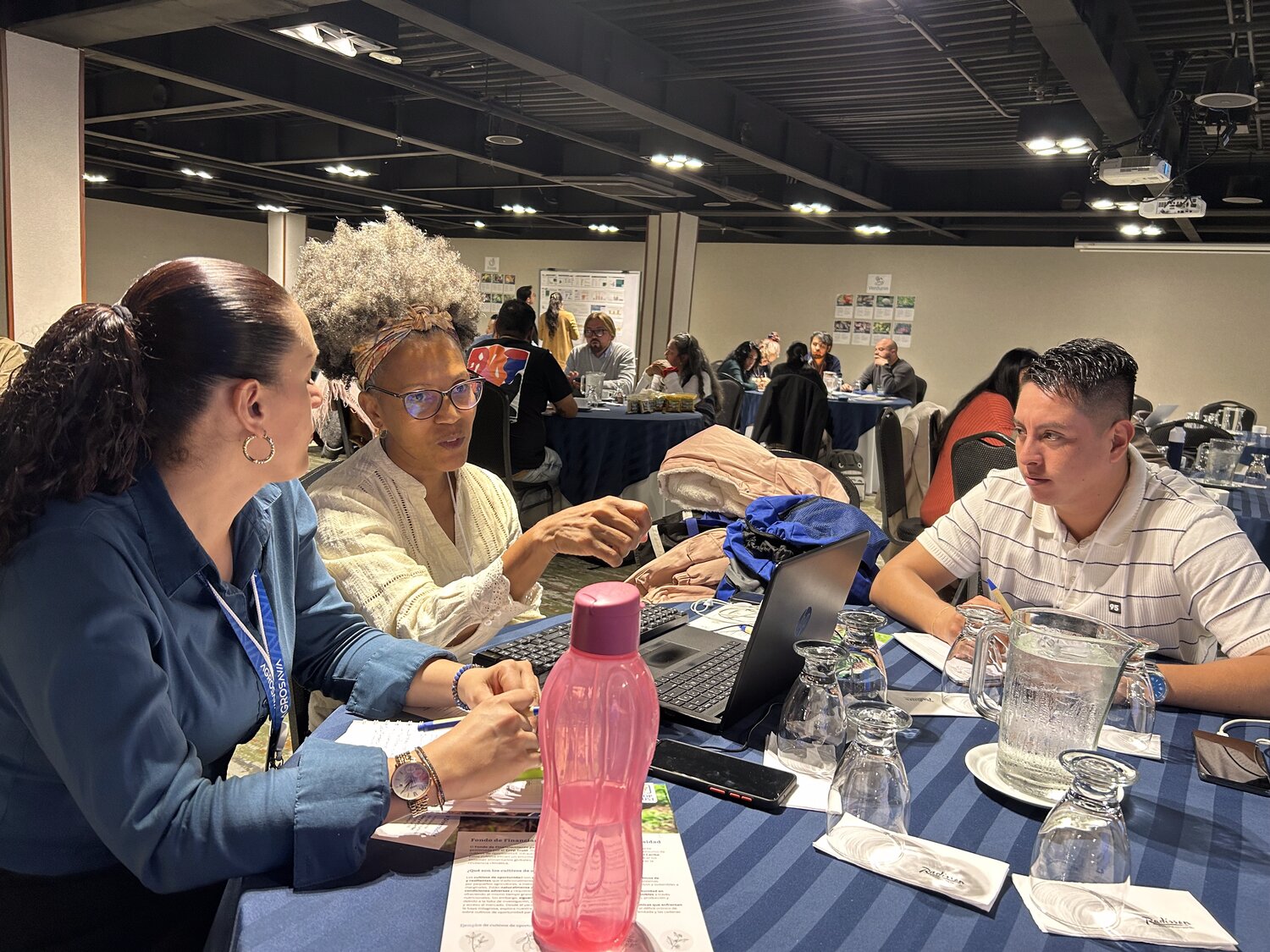
The Power of Diversity Funding Facility selection workshop took place in Bogotá, Colombia, on 15-16 July, co-hosted by Agrosavia, the Alliance of Bioversity International and CIAT and the Crop Trust. The Funding Facility is financially supported by the German Federal Ministry for Economic Cooperation and Development (BMZ) through the KfW Development Bank, and the Department of Foreign Affairs of Ireland.

Monday, October 3, 2022

Livestock sector actions towards more sustainable food systems

3 - 7 October 2022
. Livestock sector actions towards more sustainable food systems
In a hybrid form, onsite in Dublin, Ireland.

The main objective of the 12th GASL MSP is for diverse and multiple stakeholders across the global livestock sector to display and commit to actions towards more sustainable, inclusive, resilient livestock systems as a part of global food system transformation.

The regional consultations in Africa was organised on zoom from 22-26 August. 

  1. Day one is based around food system challenges that the livestock sector must overcome or face up to through actions and commitments that make a positive difference to livestock producers and consumers worldwide. 
  2. Day two brings together regional perspectives on these same challenges, showing how the priority actions of sector actors in different countries and regions respond to the specific issues they face. 
  3. On day three, participants will explore and learn from Ireland’s agri-food systems, gaining insights and inspiration to devise actions to tackle the critical challenges facing the livestock sector.  
  4. Day four convenes a policy forum to consider political choices and priorities for food systems under immense pressure and implications for livestock sector actions and priorities. 
  5. The final day provides a global synthesis from the various sessions, contributing to a Declaration and commitments on livestock sector actions towards more sustainable food systems. 
REGIONAL FOCAL POINTS 
  • FRANCOPHONE AFRICA: Alexandre Ickowicz, CIRAD (see picture); Fagouri Said, WAMIP North Africa (WORLD ALLIANCE OF MOBILE INDIGENOUS PEOPLES)
  • ANGLOPHONE AFRICA: Simplice Nouala, African Union Commission (see picture); Michael Victor, ILRI  (see picture); Cynthia Mugo, ILRI (see picture)

DAY 1


03/10 SESSION 1: Framing presentations 

  • Importance of Livestock in Global Food Security: Tom Arnold, Government of Ireland’s Special Envoy on Food Systems 
  • Origin Green - Making farm to fork sustainable, David Kennedy, Head of Dairy, Bord Bia (Irish Food Board) 
  • Nutritional benefits of animal source foods: Alice Stanton, Professor at Royal College of Surgeons in Ireland  and Director of Human Health at Devenish Nutrition 

03/10 SESSION 2: Challenging livestock; global actions for sustainable food systems 

  • Food system ambitions and challenges for the livestock sector - Jessica Fanzo, Johns Hopkins University, USA (virtual)
  • Phil Howard, Michigan State University, USA (virtual) 
  • Ermias Kebreab, University of California, Davis, USA, (virtual) 
  • Nitya Rao, University of East Anglia, UK, (virtual) 
  • Truoung Tuyet Mai, Vietnam National Institute of Nutrition Responders: 
  • Bernard Kimoro, State Department for Livestock, Kenya 
  • Julián Chará, Centre for Research on Sustainable Agriculture, Colombia 
  • Nitya Ghotge, ANTHRA, India 
  • Mitch Kanter. Global Dairy Platform, USA

DAY 2

04/10 SESSION 11: Regional Agendas for Sustainable Livestock 

  • East and Southeast Asia – Bu Dengpan (virtual) 
  • Africa - Simplice Nouala 
  • South Asia - Nitya Ghotge 
  • Eastern Europe and Central Asia – Yuriy Nesterov 
  • Western Europe - Nancy Bourgeois 
  • Reflections on region agendas – Jimmy Smith, Director General, ILRI

06/10 SESSION 21 Policy Forum 

  • Welcome: Shirley Tarawali 
  • Research agenda for sustainable livestock: Martin Heydon, Minister or State, Ireland’s Department of Agriculture, Food and Marine 
  • Importance of policy support for sustainable livestock: Carlos Cherniak, Permanent Representative of Argentina to the UN Agencies for Food and Agriculture and Chair of the Sub-Committee on Livestock, FAO Committee on Agriculture (COAG) 
  • Introduction to the Policy Forum: Thanawat Tiensin, Director, Animal Production and Health Division, FAO 
  • Scene setting presentation: Improving the sustainability of livestock systems in Ireland: Laurence Shalloo, Head, Animal and Grassland Research and Innovation Programme, TEAGASC. 
Panel discussion – research and policy priorities for sustainable livestock: 
  • Moderator by Bill Callanan, Chief Inspector, Ireland’s Department of Agriculture,  Food and the Marine. 
  • Ambassador Cherniak, Chair of the Sub-Committee on Livestock, FAO Committee on Agriculture 
  • Marcelo Gonzalez, Deputy Minister for Livestock, Ministry of Agriculture and Livestock, Paraguay  
  • Frank O’Mara, Director, TEAGASC  
  • Zoe Kavanagh, National Dairy Council, Ireland
Related:
5 September 2022. GASL webinar: Antimicrobial use in livestock – the high-scale producers’ and international organizations’ perspective.
The emergence of antimicrobial resistance is a global threat to human health and livestock health, welfare and productivity. Refinement and reduction of antimicrobial use are key measures to curb the emergence of the resistance. In this webinar we will discuss challenges, opportunities and actions taken in the high-end of livestock production with four member organizations of GASL - Global Roundtable for Sustainable Beef, International Poultry Council, International Meat Secretariate and International Dairy Federation.


Related:
8 December 2022 in Brussels. 2nd edition of the “Perspectives on Pastoralism” festival
  • The programme can be found on the film festival website (www.pastoralistfilmfestival.com). 
  • The next screening of films from this edition will be in combination with a photo exhibit by the PASTRES (Pastoralism, Uncertainty and Resilience: Global Lessons from the Margins) research programme funded by the European Research Council (ERC) (https://pastres.org).

Wednesday, July 6, 2022

7th Africa Ireland Economic Forum 2022

30 June 2022. The 7th Africa Ireland Economic Forum 2022 (AIEF 2022) was a one-day conference brought business and political leaders together with public and private sector stakeholders from across Ireland and the continent of Africa to share thinking and ideas and explore new opportunities to strengthen and diversify our relationships and increase trade and investment in both directions.

Extract of the programme + list of speakers and panellists.

Session Two: Green growth for food, agriculture, infrastructure and energy: Sustainable development in emerging markets

  • Opening Remarks: A recorded message from H.E. Ms. Josefa Sacko, African Union Commissioner for Rural Economy and Agriculture
  • Shane Hamill – Interim Director of Global Business Development, Bord Bia
  • Catherine Keogh, Chief Corporate Affairs and Brand Officer, Kerry Group
  • David O’Halloran, Managing Director, africa JUICE, Ethiopia, and Power Ventures Africa
    africaJUICE was established in 2007, when its founders saw the opportunity for sustainably growing and processing tropical fruits in Africa to meet the growing international, regional and local demand for processed tropical fruits and to provide an alternative to the traditional supply sources of Latin America and Asia.
  • Michel Davitt, Director, International Development, Nicholas O’Dwyer Ltd
    Nicholas O'Dwyer Ltd is a Consulting Engineering in Ireland, providing water engineering, environmental engineering and civil and structural engineering services to public and private sector clients alike. 

    See picture: Morogoro Water Supply Scheme, Tanzania
    The goal of the project was to rehabilitate and upgrade the Mafiga Water Treatment Plant to bring production to 27 MLD from its present maximum of 19 MLD, expand pumping and transmission from the plant, and refurbish/replace the Mambogo water treatment plant, expanding it from 4 MLD to 6 MLD.

Tuesday, June 22, 2021

Fourth African Union (AU) – European Union (EU) agriculture ministerial conference

22 June 2021.  The fourth African Union (AU) – European Union (EU) agricultural ministerial conference, co-hosted by the African Union Commission and the European Commission.

The conference, which is taking place under Portugal’s EU Council Presidency, follows previous conferences:

The 2017 conference advanced a number of concrete deliverables that fed into the fifth AU-EU summit of November 2017 (held in in Abidjan, Côte d'Ivoire), while at the 2019 conference, AU and EU member states endorsed a Political Declaration and Action Agenda for the transformation of rural Africa.


The conclusions of the Conference and all the presentations are available on the Ministerial Conference webpage.

Four high-level thematic sessions

1. Investment opportunities and challenges for local producers and the competitiveness of the agri-food sector

Concept note for the panel on agricultural investment (2 pp.)
While agricultural value chains remain the focus of considerable attention, at both the policy level and through promotion of sustainable public and private sector investments, it will be their capacity to improve social, economic and environmental sustainability, which determines their contribution to Africa’s Agenda 2063, the CAADP targets, the UN 2030 Agenda and the SDGs.
  • CHAIR: Ms Graziella Romito, Director at Ministry of Agriculture of Italy, G20 Chair of Agriculture Deputies
  • MODERATOR: Leonard Mizzi, Head of Unit INTPA.F.3, Sustainable Agri-Food Systems and Fisheries.
  • Jennifer Susan Chiriga, Chief of Staff of AUDA-NEPAD -  Opportunities and challenges to invest in Africa
  • James Tefft, Senior Economist, FAO Investment Centre - Catalyzing the sustainable and inclusive transformation of food systems
  • Gilles Boumeester, Africa Project Lead, Rabobank - A finance for sustainable agrifood systems
  • Dimitri Van Raemdonk, Fund Manager, EDFI AgriFI
  • Bagoré Bathily, Founder, Laiterie du Berger -  Sustainable investment to enhance local production
Webstreaming of the Thematic Panel: https://webcast.ec.europa.eu/au-eu-ministeral-virtual-conference-with-interactio-schum-2021-06-22

2. Agriculture research and innovation for soil health, agro-ecology and other innovative approaches

Concept note for the panel on agricultural research and innovation (2 pp.)
In November 2019, the Pan-African Network for economic Analysis of Policies (PANAP) was launched. PANAP is a network among African academic/research and institutional partners collaborating with the European Commission Joint Research Centre to build research capacity on agricultural economics and policy issues with a focus on Africa. In March 2020, the European Commission published the Communication ‘Towards a comprehensive Strategy with Africa’ including a focus on stepped up cooperation in R&I with Africa.
  • CHAIR: Issa Barro, Counsellor to the Minister of Agriculture of Senegal
  • MODERATOR: Juan Lucas Restrepo, DG of CIAT-Bioversity alliance
  • Annick Sezibera, Confédération des Associations des Producteurs Agricoles pour le Développement (CAPAD) -  Agroecology as a sustainable green business
  • Beatrice Egulu (AUC-DARBE), Giampiero Genovese, (EC-JRC): Pan African Network for the economic Analysis of Policies (PANAP) - an African Network for the economic Analysis of Policies
  • Tony Siantionas, Director Scaling Positive Agriculture, World Business Council for Sustainable Development WBCSD -  Strengthening the engagement of the private sector towards agroecology
  • Daniel Nahon, Emeritus professor, founder and director of CEREGE - The Silicon Valley of the Green Transition
  • Samuel Rigu, CEO, Safi Organics - Decentralized fertilizer production in local communities
  • H.E. Martin Heydon, Minister of State of Ireland, Department of Agriculture, Food and the Marine
Webstreaming of the Thematic Panel: https://webcast.ec.europa.eu/au-eu-ministeral-virtual-conference-with-interactio-jenk-2021-06-22

3. Use of digital solutions in agriculture to combat diseases and to strengthen rural communities

Concept note for the panel on digital solutions in agriculture and plant and animal health (2 pp.)
The discussion during this panel will focus upon the use of digital solutions in agriculture for combating diseases and strengthening rural African communities. It will take stock of the existing challenges and explore present and future opportunities for collaboration and investment in E-agriculture.
  • CHAIR: H.E. Elsayed Elkosayar, Minister of Agriculture and Land Reclamation of Egypt
  • MODERATOR: Tassos Haniotis, Acting Deputy-Director General, European Commission, DG Agriculture
  • Jeremy Knops, General Delegate, COLEACP - Adjusting to the EU market requirements to unlock the agri-food potential in Africa
  • Sarah De Saeger & Marthe De Boevre, MYTOX-SOUTH coordinators, Ghent University, Belgium - Current status of food safety big data in Europe & Africa
  • Alan Belward, European Commission, Joint Research Centre JRC -  Scientific evidence and knowledge to reduce food losses and improve food safety
  • Nnaemeka C. Ikegwuonu, CEO, ColdHub Nigeria - ColdHubs; digitalized solar-powered infrastructure to reduce food spoilage and make safe nutritious food available for consumption
  • Ishmael Sunga, CEO, Southern African Confederation of Agricultural Unions (SACAU)
Webstreaming of the Thematic Panel: https://webcast.ec.europa.eu/au-eu-ministeral-virtual-conference-with-interactio-mans-2021-06-22

4. Regional trade integration for increased consumer access to safe food, improved food security and enhanced value chains

Concept note for the panel on regional trade integration (3 pp.)
The EU is supporting the AfCFTA through the Economic Partnership Agreements (EPAs), whose role as “building blocks” is consistent with the AfCFTA’s drive for greater economic integration and fit into a reform agenda where partner countries put in place the necessary policies and measures that enable business and farmers to create wealth and improve livelihoods. Within the AfCFTA support, the EU is also collaborating with the AU on the programme for Strengthening Sanitary and Phytosanitary Systems for Africa (SPS Africa) and the Africa Intellectual Property (AfrIP) project with a focus on protecting Geographic Indications in Africa. 
  • CHAIR : H.E. Fernando Miranda Sotillos, Secretary General for Agriculture and Food, Ministry of Agriculture, Fisheries and Food of Spain
  • MODERATOR: John Clarke, Director, European Commission, DG Agriculture
  • Estherine Fotabong, Director, AUDA-NEPAD - The AfCFTA and the other international agreements 
  • Jemimah Njuki, Director for Africa, IFPRI - Intra-Africa trade
  • H.E. Gerardine Mukeshimana, Minister of Agriculture of Rwanda - The role of regional integration and Africa’s economic transformation
  • Ahmed M. El Wakil, President, ASCAME (Association of the Mediterranean Chambers of Commerce and Industry)
Webstreaming of the Thematic Panel: https://webcast.ec.europa.eu/au-eu-ministeral-virtual-conference-with-interactio-gasp-2021-06-22

PLENARY SESSION: 

Setting the scene 14.00 – 14.20 (CEST)

  • H.E. Josefa Sacko, African Union Commissioner for Agriculture, Rural Development, Blue Economy and Sustainable Environment
  • H.E. Maria do Céu Antunes, Minister of Agriculture of Portugal

REPORTING OF THE THEMATIC MORNING SESSIONS14.20 – 15.00 (CEST)

  1. Ms Graziella Romito, Director at Ministry of Agriculture of Italy, G20 Chair of Agriculture Deputies
  2. H.E. Moussa Balde, Minister of Agriculture of Senegal
  3. H.E. Elsayed Elkosayar, Minister of Agriculture and Land Reclamation of Egypt Minister of Agriculture of Egypt
  4. H.E. Luis Planas Puchades, Minister of Agriculture, Fisheries and Food of Spain

KEYNOTE ADDRESSES

  • Ms Elizabeth Nsimadala, President of the Pan Africa farmers Organization PAFO
  • Mr Ramon Armengol, President of the General Confederation of EU Agricultural Cooperatives

CONCLUSION

  • H.E. Angela Thoko Didiza, Minister of Agriculture, Land Reform and Rural Development of South Africa
  • H.E. Janusz Wojciechowski, European Commissioner for Agriculture
Webstreaming of the Plenary Session: https://webcast.ec.europa.eu/au-eu-ministeral-virtual-conference-with-interactio-gasp-2021-06-22


Friday, April 16, 2021

WEBINAR: Access to Nutrition: How can we make nutritious food affordable for all

16 April 2021. Access to Nutrition: How can we make nutritious food affordable for all? by Irish Forum for International Agricultural Development - IFIAD 

 Hosted by University College Cork, Centre for Global Development and the Irish Forum for International Agricultural Development. The aim of this webinar is to identify ways of addressing the problem of widespread lack of access to nutritious foods due to lack of affordability. This is a major challenge for the global food system: recent research has estimated about 3 billion people globally cannot afford a healthy diet. This has huge implications for achieving SDG2, and is a major focus of Action Track 1 (AT1) of the UN Food Systems Summit. 

The webinar will provide an overview of the global extent of the challenge, and will present case study evidence from projects involving Irish and other NGOs. Discussion of potential solutions will be guided by some of the “Gamechanger” ideas being developed in the AT1 process of the Food Systems Summit.


Thursday, January 14, 2021

REPORT: Adopting a sustainable food system approach in Irish Development Cooperation

Adopting a sustainable food system approach: Implications for Ireland’s development programming and policy influencing (2021, 34 pages)

In today’s increasingly complex and interlinked world, we need approaches for navigating complexity, to help us analyse, understand and decide. This is especially true for food-related development and sustainability challenges, which span multiple domains, actors and connections. The many demands placed upon food systems requires systemic approaches that achieve multiple goals at the same time, while being attentive to trade-offs.

This paper discusses the design options and considerations for a sustainable food system approach for Ireland’s development cooperation. While Ireland’s new international development policy, A Better World (2019), underscores the need for systemic responses to the challenges posed by food systems, this has not been integrated into strategy or operations. As such, this paper discusses the advantages and disadvantages of food system approaches and provides an overview of two recent case studies of food system approaches in practice. This paper also describes the process through which Ireland’s development cooperation could integrate a sustainable food system approach in strategy or operations, or both. At the strategic level, food-related development cooperation would use a food system narrative and support partners to place their own priorities within it. At the operational level, programming would be determined by an overarching food system strategy that guides the selection of development activities.

There are several opportunities, either currently in place or upcoming, for discussing and adopting a sustainable food system approach by Irish development cooperation, both domestically and internationally. By adopting a food system approach in strategy and programming, Irish food-related development cooperation can tackle multiple priorities more effectively.

This paper is part of our thematic series that focuses on developing and using a ‘food system approach’ to look at food-related challenges. Read the first publication of the series: ‘The food systems approach in practice: Our guide for sustainable transformation‘.

Wednesday, July 1, 2020

WEBINAR: Impacts of small loans on the adaptive capacity of farmers in Rwanda


Video recording forthcoming

Climate change poses serious risks for rural livelihoods and food security in Rwanda. At the same time, a significant number of Rwandan farmers pool their resources together through cooperatives and Village Savings and Loan Associations (VSLAs) in order to increase productivity. 

Therefore, it is important to consider on the one hand the future impacts of climate change on the microfinance sector in Rwanda, and on the other to ensure that the benefits of microfinance can decrease rural residents’ vulnerability to climate impacts.

This event will provide an overview of research focused on the clients of Urwego Bank, one of Opportunity International UK’s local partners in a development project funded by the Scottish Government which aimed to provide microcredit loans to 8,500 smallholder farmers working in government-supported agricultural cooperatives. We will explore the impacts of small loans on the vulnerability and adaptive capacity of farmers in southern and western Rwanda (Huye and Rubavu districts) along with its implications for climate justice and discuss the recommendations included in the final report.
  • Dr Karin Helwig, Glasgow Caledonian University
  • Dr Michael Mikulewicz, Glasgow Caledonian University
  • Pete Parisetti, Opportunity International UK

Thursday, May 30, 2019

Launch of Nutrition Connect


29 May 2019. Launch of Nutrition Connect: nutritionconnect.org.

Nutrition Connect, an initiative from GAIN, is focused on harnessing public private engagement to drive investment, action and impact to make nutritious and safe foods the norm.

Nutrition Connect is an open access resource which aims to bring together the knowledge we already have around public private engagement, stimulate the development of new knowledge, and generate dialogue and partnerships.

Videos:
In this video, Lawrence Haddad, Executive Director, Global Alliance for Improved Nutrition, tells more about Nutrition Connect.


 Mr Ciarán Cannon, T.D., Minister of State for the Diaspora and International Development speaks to why Nutrition Connect is an important part of Ireland's international development strategy.


Resources:
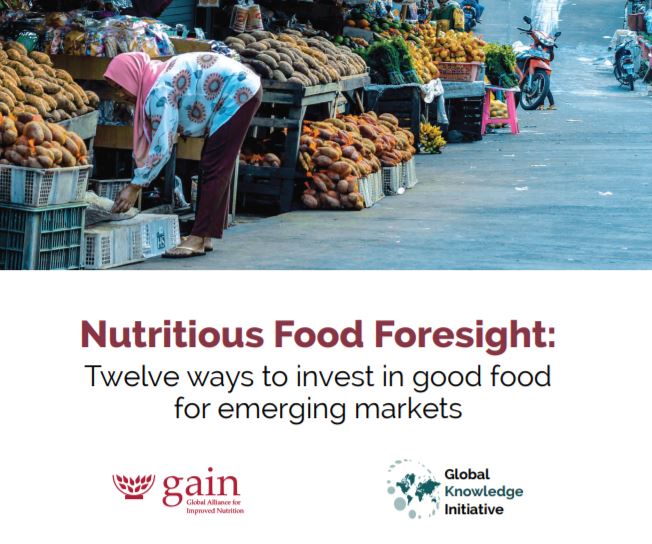
Nutritious Food Foresight: Twelve ways to invest in good food in emerging markets 
Hansen, A.R., Keenan, C., and Sidhu, G.
Global Knowledge Initiative and Global Alliance for Improved Nutrition (GAIN) May 2019, 55 pages
This report sheds light on twelve specific innovations which we judge can reduce the price of nutritious food, address food safety issues, and increase shelf life, in low and middle-income country settings. In all cases, the primary beneficiaries of the deployment of these innovations would be the poor (or at a minimum, those on modest incomes). All twelve innovations are ready to be deployed at scale within the next five years. The report provides numerous concrete examples of how each concept has already been implemented in a relevant setting. 


Equally importantly, given the accelerated rate of innovation development, the report is intended to provide a methodology for screening and prioritising innovations. This methodology is available for others to use, perhaps looking at other important characteristics such as potential for gender transformation or mitigation of the effects of climate change.

The panel prioritized their top 12 innovations within the four “Delphi Directives,” which include:
  1. starting with native, sustainable, and nutritious foods; 
  2. investing in food processing closer to the point of production in order to reduce losses and retain nutrients; 
  3. making food markets more traceable and transparent to stabilize demand, improve safety, and reduce price fluctuation; 
  4. and using cold storage and transportation to help perishable food last longer—especially for rural populations, mothers, adolescent girls, and children.
“Everything was about calories and making sure there was enough. Now, it is making sure that people have access to nutritious food. It’s about pointing out the importance to invest in the infrastructure and the supply chains in developing countries because we will benefit from that as well.” 
"By adopting new strategies in renewable energy and transportation, there can be practical options to improve access to nutritious food that may provide better returns on investments. I believe this will only happen if each of the innovations has a business model. We see 
more and more entrepreneurs who are mission driven and want to do good, instead of a non-profit project that ends after it has been implemented.” Dr. Simone Frey, founder of Nutrition-Hub and Future of Nutrition,
To unlock change, the authors of this report call for collaboration:
Civil society, development organizations, financial institutions, governments, businesses, and consumers - all have a role to play to unleash the potential of these innovations to achieve a tipping point toward scale. Going forward, mobilizing the champions of change and enabling meaningful opportunities for collaboration and continued learning will be the key to move the global community from innovation to impact.


See also:
Food Tank: New Study Highlights Importance of Investing in Emerging Food Markets


Related:
The Global Alliance for Improved Nutrition (GAIN) offers a new, first-of-its-kind executive short course, Together for nutrition, which focuses on public-private engagements to improve the consumption of nutritious food. The course will bring together 30 participants with an equal number coming from the public and private sectors.

Monday, October 29, 2018

Call for proposals under the Africa - Ireland Agri-food Development Programme

11 -12 October 2018. Dublin Ireland. The 6th Africa Ireland Economic Forum organised by the Irish Department of Foreign Affairs and Trade together with the African Embassies in Ireland, brought together business people and thought leaders and focused on strengthening trade links in the agri-foods sector.

#AIEF2018
A number of Tanzanian agri-food companies participated in the forum, including Alaska Tanzania and GBRI Business Solutions. Jennifer Bash, CEO of Alaska Tanzania, also addressed the session on "Women and Business - Pathways to Success," highlighting the skills that women can bring to senior leadership roles in companies, and her insights as a successful young entrepreneur.
There is an enormous potential for agriculture to transform African economies. Ireland's, agri-business development has been an integral part of Ireland's economic development and transformation story. Over a few decades, Ireland has grown from predominantly small scale subsistence farming, exporting primary production, to a sophisticated producer of high-end, value-added food. Over €1 billion worth of Irish food and drink is exported every month and over the last 7 years, Irish agri-food exports have increased by 56%, mainly driven by non-EU trade. 
Ireland's Deputy Prime Minister (Tanaiste) and Minister for Foreign Affairs, Simon Coveney T.D.
He announced an expansion and new call for proposals under the Africa Agri-food Development Programme, which is funded by the Irish Government. 
  • The objective of the programme is to develop partnerships between the Irish Agri-Food Sector and African countries to support sustainable growth of the local food industry, build markets for local produce and support mutual trade between Ireland and Africa. 
  • More information on the programme, including how to submit applications can be found at: https://www.agriculture.gov.ie/aadp/
  • Important: Only Irish Agri-Food companies can apply.
  • Projects will be supported in the following countries – Botswana, Cóte d’Ivoire, Ethiopia, Ghana, Kenya, Namibia, Nigeria, Malawi, Mozambique, Rwanda, Sierra Leone, South Africa, Tanzania, Uganda, and Zambia.
  • The closing date for the receipt of applications is 5.00pm on Friday, 30 November 2018.
Agri-business in Action: Succeeding in new marketsThis panel explored the journey of companies operating in new markets, both within the EU and in Africa. Panellists reflected on strategies to meet 
the challenges of breaking into new markets.
  • Mr. Francis Grogan (see picture)– Co-Founder and CEO, Zambeef Products, Zambia
  • Mr. Marcel De Sousa – CEO, IPM Potato Group, Ireland
  • Mr. Kevin Friel – International Marketing Director, Ornua, Ireland
  • Ms. Pamela Anyoti Peronaci (see picture)– Managing Director, Asante Mama, Taste of Uganda
Women in Business, Pathways to success.Leading female entrepreneurs from both Ireland and Africa shared their stories, charting out the development of their various enterprises and offer an insight into their experiences on their journey to the top.
The AIEF was followed by further business to business discussions between Irish and Tanzanian companies at a Roundtable on Trade and Investment Opportunities in East Africa held on Friday 12th October at the Department of Foreign Affairs and Trade. Mr Gilead Teri from the Tanzanian Private Sector Foundation delivered a presentation at the event on trade and investment opportunities in Tanzania. The programme also included a site visit for Tanzanian companies to a large Irish agri-food processor.

Wednesday, May 30, 2018

Belfast Summit on Global Food Integrity – ASSET2018

29-31 May 2018. Belfast. ASSET 2018 brought together representatives from international and governmental agencies, the academic and industrial research community, non-governmental organisations and the commercial and technical leaders in the food industry and its supply chain to discuss, debate and provide leadership on tackling a range of serious challenges that face the integrity of our global food supply system.

The Summit featured a number of high level strategic presentations on key issues by internationally recognised leaders. It also placed a firm emphasis on harnessing the collective knowledge and experience of the delegates to address these challenges through the formulation of policy recommendations to governments and a Summit communique.

Extracts of the programme (focusing on the speakers from the EC and Africa)
  • Keynote: Dr John Bell, European Commission, Future proofing the food system
The growing complexities and risks to human health from foodborne illness and antimicrobial resistance (AMR)
  • Prof. Kennedy Chah Teaching and Research University of Nigeria. Chah Kennedy is a Professor of Veterinary Microbiology at the University of Nigeria and a Fellow of the College of Veterinary Surgeons, Nigeria. His research interests include isolation and characterization of pathogenic bacteria of veterinary and zoonotic importance (particularly salmonellae, Escherichia coli, staphylococci, enterococci and Klebsiellae), antimicrobial resistance in pathogenic and indicator bacteria (particularly extended-spectrum beta-lactam resistant enterobacteriaceae, methicillin resistant staphylococci, vancomycin resistant enterococci) and evaluation of natural products and metal complexes as possible sources of antimicrobial agents
  • Mr. Sonigitu Asibong Ekpe, Assistant Director Scientific Ministry Of International
    Development And Cooperation, Nigeria. Mr. Ekpe has over twenty five years work experience in government, private sector and non-profit organizations. He is currently working with the Cross River State Ministry of International Development Cooperation as an Acting Deputy Director (Scientific), where he explores relevant sources/opportunities for development assistance that the state can find leverage. He also assists in providing overall coordination and oversight in the implementation and management of donor assisted programmes/projects. He is a 2018 Global Champion for Global Open Data for Agriculture and Nutrition (GODAN)
Nutritional challenges and implications for health
  • Dr. Olaniyi Odusina Lecturer And Researcher Tai Solarin University Of Education, Nigeria
  • Dr. Mehroosh Tak of SOAS/London. She is a research fellow and an applied economist working on food systems and nutrition in low and middle-income countries. Her doctoral research explores how public investments can be made more nutrition-sensitive via investments in infrastructure and the agriculture route. In her work, Mehroosh focuses on both quantitative and qualitative research
    methods for policy and programme evaluation. Her expertise lie in impact evaluation, nutrition finance, and nutrition-sensitive agriculture for sustainable food systems.
Techniques to quantify the risk - Lead by MultiCoop Project
  • Dr Chibundu Ezekiel - Food Microbiologist/ Mycotoxicologist Babcock University. Dr. Chibundu N. Ezekiel holds BSc Microbiology (First Class Honours) from Babcock University (Nigeria), MSc Microbiology and PhD Mycology/Mycotoxicology from the University of Ibadan, Nigeria. His research focuses on food safety, fungal diversity and taxonomy, and mycotoxins. He has contributed, through cutting-edge research, to the understanding of the recent prevalence of mycotoxins in food and feed in Africa and the underlying factors that contribute to increased mycotoxin occurrence in staple crops on the continent. As a mycologist, he led the development of technical solutions in the form of validating a low-cost microbiological medium for use in resource-scarce regions (e.g. Africa) - the medium facilitates rapid and easy identification and differentiation of aflatoxin-producing Aspergillus species commonly found in African soils and food crops.
Improving diet quality: drivers of food choice at an individual, environment and policy level
  • Miss Barbara Bray Nuffield Farming Trust, Uganda. Barbara Bray is a registered UKVRN Associated Nutritionist with the Association for Nutrition. She is the Director of a food safety and nutrition consultancy, Alo Solutions Ltd, which provides food safety and nutritional labelling advice, development and training to clients who include Bakkavor, Selfridges and fresh produce growers. Barbara worked in the Ugandan agri-business sector for three years after graduation and then spent 14 years in the chilled foods sector in the UK and France, firstly in food procurement and then in the provision of technical advice and compliance information as Technical Manager with Bakkavor, an international food manufacturer. For Specific Nutritional Need’ was a study of vegetables consumption in countries including China, South Korea, Australia and New Zealand. The project looks at national food policies and private initiatives to promote consumption of vegetables which benefit our health.
Related:
FoodIntegrity is a European five-year multi-faceted project, which will draw from a well of experience consisting of 60 partners in the EU, China and Iceland to tackle issues surround the authenticity of food.
  • FoodIntegrity presents latest developments and strategies in the field of food integrity: safety, quality, authenticity and traceability!
  • The project provides a focal point for the sharing and exploitation of European research aimed at protecting the integrity of food production in Europe.
Learn more on FoodIntegrity outcomes on strategies for detecting fraud and assuring the integrity of the food chain, such as analytical methods and results, end-user tools, developed standards, opinions and guides, transparency along the food chain.
  • Session on FoodIntegrity Latest Research (Tuesday, 29th May 2018, 16:45 – 18:15, Hall 1A) | Programme Link
  • Session on FoodIntegrity Tools and Solutions (Wednesday, 30th May 2018, 15:30 – 17:40, Hall 1A) | Programme Link
FINAL FOODINTEGRITY 2018 CONFERENCE!
14-15 November 2018, Nantes, France. More information please click here

Wednesday, September 27, 2017

Science for Development: Seminar in advance of the AU-EU Summit

27 September 2017. Brussels. Permanent Representation of Ireland to the European Union. The aim of the seminar was to discuss the relevant research infrastructures and examples of capacity building for achieving the Sustainable Development Goals and to examine the enabling policy and regulatory environment for facilitating sharing of data and knowledge between practitioners in Europe and Africa and enhancing science cooperation on a global level.

The seminar also considered agriculture and food security, and how Africa and Europe can cooperate. Research and innovation are pivotal to realisation of the goals of Africa’s transformative agenda. Food security, nutrition and sustainable agriculture (FNSSA) was identified as the first priority by the EU-Africa High Level Policy Dialogue (HLPD) on Science, Technology and Innovation.

Extract of the programme:
  • Perspectives on Science with Africa, Triona McCormack, Director of Research, University College Dublin, Ireland
  • European Open Science Cloud, Jean-Claude Burgelman, Head of Unit, Directorate General for Research and Innovation, European Commission
  • Africa Data Intensive Research Cloud (ADIRC), Vinny Pillay, Minister Counsellor, South African Mission to the European Union, Department of Science and Technology
Setting the Scene for Science at the AU-EU Summit
  • Joe Costello, Former Minister for Trade and Development, Ireland
  • Jonathan Van Meerbeeck, Pan African Programme, Directorate-General for International Co-operation and Development, European Commission
  • John Fred Kakule, Expert in charge of Science and Technology, Africa Caribbean Pacific Group of States

Wednesday, August 2, 2017

Irish charities merge to strengthen trade links with Africa

Bernard O’Connell(left), a director of Traidlinks is pictured
with African women entrepreneurs from Burundi on
a trade mission to Democratic Republic of Congo
20 July 2017. Irish non-profit Traidlinks has merged with Gorta-Self Help Africa in a move designed to build on Traidlinks’ success in facilitating trade on the African continent.

Since 2004 the company has supported over 120 export-orientated businesses across the continent of Africa and in 2016 Traidlinks helped over 20 Rwandan companies achieve nearly $1 million export sales in regional markets.

The merger of the two groups comes as the government launches the latest phase of its Africa agri-food development programme, an initiative designed to support partnerships between Irish and African agri-food companies.
“Business can and is making a real difference in building economies and reducing extreme poverty in sub-Saharan Africa. Rural poor communities need markets, they need jobs, and they need a fair price for their goods and services, and we believe that by working together we can play a vital role in facilitating that to happen,”  Ray Jordan, chief executive of Gorta-Self Help Africa.

Tuesday, April 25, 2017

Irish agri firms to move into African market

16 April 2017. In November 2017 IrishFarm will be taking a group of Irish farm equipment and agtech specialists on a market study tour to South Africa, providing an ideal opportunity to get a feel for the market, meet potential partners and showcase their products. South Africa is the largest animal-feed producer on the continent, and there's an ongoing opportunity to supply supplements to feed manufacturers, although this will mean taking market share from existing players.

The visit will also take in Kenya, where agriculture accounts for 20pc of GDP, and tea and horticultural products are the country's largest exports. Irish animal-health company Cross Vetpharm has operations in Kenya, and those active elsewhere in East Africa include MagGrow, a start-up commercialising eco-efficient spraying technology; Hermitage Genetics, which specialises in pig breeding, and milking parlour specialist DairyMaster. There's no doubt that other Irish firms selling to the agricultural sector could also look to Africa.

Wednesday, June 22, 2016

Technology for Transforming Irish Agri-Food and Bioeconomy

22 June 2016. Brussels. Launch of the Teagasc Technology Foresight Report 2035.  The Teagasc Technology Foresight report identifies the key technologies that will shape and influence the farms of 2035. Over 200 national and international scientists, policymakers and industry representatives contributed to the foresight process over the past 18 months to help identify these potentially transformative technologies.

Agenda:
  • Launch of Teagasc Technology Foresight 2035 Report (Mr Phil Hogan, European Commissioner for Agriculture & Rural Development) 
  • Overview of Teagasc Technology Foresight (Dr Frank O’Mara, Director of Research, Teagasc) 
  • The Role of Foresight in the EU Commission (Dr John Bell, Director, Bioeconomy, Agriculture, Food, Marine, DG- Research and Innovation)
Download
Teagasc Technology Foresight 2035. Final Report [3.6mb]
  • The Teagasc Technology Foresight report provides a comprehensive and well-researched source of evidence for policy decisions relating to future science and technology programmes. 
  • The primary users of the report will be research and policy makers and key players in the industry.
  • This Foresight Report has identified the technology areas which Teagasc will prioritise in its research programmes to support Ireland’s agriculture and food sectors in facing the challenges and opportunities that lie ahead. 
  • Without coordination of the full complement of stakeholders, not just the researchers, it will be very difficult to arrive at a system which creates jobs and equitably distributes the gains realised by the new technologies discussed in this Report.
The launch informed key players in research and policy fields about the potential benefits and risks associated with powerful new technologies and support the need for the type of informed decision-making which will be required in the coming years if Europe is to reap the benefits and minimise the risks of highly disruptive technologies in the broad bioeconomy sector. You can see the programme here


Extracts of the report:
Agriculture in particular faces significant challenges in the coming decades not only in Ireland, but in Europe and elsewhere around the world. On the one hand, it must produce more food for a growing, increasingly affluent global population that requires a more diverse, protein-rich diet. But it must also compete for lucrative new markets, while vying for access to increasingly scarce natural resources, preserving biodiversity, water and soil quality, restoring fragile ecosystems and mitigating the effects of climate change. (page 5)

We are beginning to understand how the microbiota of the rumen in livestock has an impact on feed conversion and rate of emission of GHG . We are also beginning to understand how the microbiota of the soil has an impact on issues such as grassland productivity, nutrient cycling and carbon sequestration. These insights will help us improve the performance of the beef and dairy sectors based on better nutritional strategies for livestock and the grasslands they feed on. (page 6)

The beef farm sector continues to be characterised by very large numbers of small producers, some part-time, with comparatively low farm incomes and a very high reliance on direct payments as a source of income. Innovation and technology adoption rates remain low on many small and part-time farms with little incentive to innovate given the high-reliance on direct payments. Improving the productivity and profitability of these farms will be a persistent challenge for both research and knowledge transfer over the next ten to twenty years. (page 10)

‘Smart Agriculture’ technologies are not yet available at commercial scale. According to research by Accenture, applications are currently only partly implemented, if at all, and mainly in developed countries on large farms. The vast majority of smallholders are yet to adopt these technologies. (page 11)

It is clear that the current dependency on chemical protectants is becoming, or indeed has become unsustainable. (...) While seeking to reduce the potential occurrence of chemical residues in water systems-and ultimately in the food chain-is fundamentally logical, it has been predicted that this approach will have a negative impact on crop protection measures, because a reduction in the availability of active chemistries will lead to an overuse of the remaining compounds. Hence, this will drive the evolution of resistance in pest/pathogen/weed populations for the remaining active chemicals. Such a scenario will seriously undermine the viability of several crop systems, if alternative measures of disease mitigation are not identified and integrated into crop rotations. (...) Accordingly, there is an increased need to develop integrated pest control measures that incorporate genetic resistance supported by chemical and/or agronomic interventions. Biotechnology has a crucial role to play in this integrated approach through the use of new techniques of molecular biology and networks of sensors. (page 18)

The growing global population, increasing urbanisation and rising incomes will not only increase the overall global demand for food and agricultural products, but also lead to a greater demand for higher quality and processed food. (...) Aspects such as food safety, quality, traceability and health-promoting properties of food will all become more important as the sustainable lifestyles trend gains
momentum.
(page 19)

Monday, April 15, 2013

Hunger, Nutrition, Climate Justice: Dublin 2013

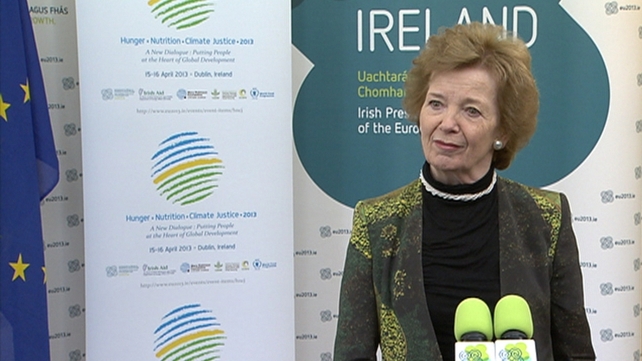
15 April, 2013 - 16 April, 2013.  Dublin, Ireland. The Dublin Conference on Hunger, Nutrition and Climate Justice has been coorganised by CCAFS, Irish Aid, the Mary Robinson Foundation - Climate Justice, and the World Food Programme. It brought together key policy makers and global thought leaders with local
Mrs. Mary Robinson, former President of Ireland, 

President,Mary Robinson Foundation - Climate Justice
people and practitioners facing the realities of rising food prices, failed crops, under nutrition and voicelessness.

The objective was to facilitate a dialogue and learn from practical experience and robust evidence to inform a new approach to addressing hunger, nutrition and climate justice, in the context of the new international development agenda. 

The aim was not simply be to adopt an outcome document, but to inspire new ways of thinking about global development challenges and to invigorate and broaden the debate, at all levels, listening to and learning from the experiences of local people, and rooting future thematic policy approaches in their lives and their efforts to cope.


15.04.2013
Joyce Banda speech
President of Malawi

See video

Conference Documents
HNCJ Conference Provisional Agenda(PDF)
HNCJ Conference Papers, including full case studies (PDF)
Case studies: For a full list of case studies click here
The Conference is livestreamed on www.eu2013.ie/press-centre