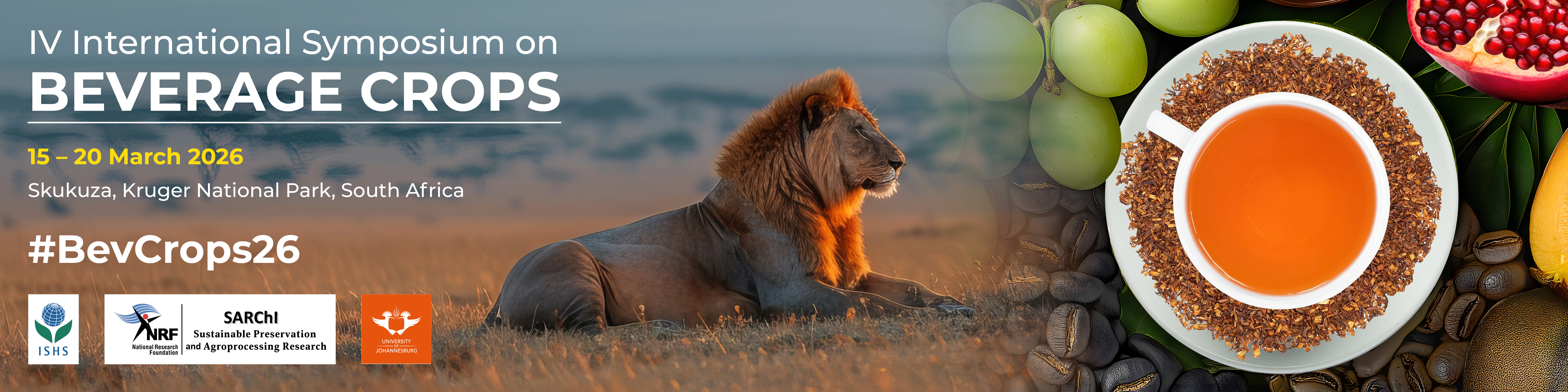
Under the theme ‘Beverage Crops: Sustainability and Scientific Advancements in the 21st Century,’ this symposium highlighted the latest research, technological innovations, and industry trends shaping the future of beverage crop production and processing.
This theme reflects the growing importance of beverage crops in sustainable agriculture, nutrition, and global trade. Beverage crops encompass a vast diversity of fruits, nuts, vegetables, vine and berry fruits, and botanical plants used for fresh juices, extracts, fermentations, and infusions.
From widely consumed beverages such as coffee, tea, beer, and wine to emerging plant-based alternatives like almond and soy beverages, as well as herbal infusions rich in bioactive compounds—including the proudly South African Rooibos tea—this symposium provided a platform for scientific exchange, innovation, and industry collaboration.
This event built on the success of previous symposia held in Cairns, Australia (2016), Xi’an, China (2018), and Murcia, Spain (2023)
16/03 Indigenous, underutilized and culturally significant crops
Chair: Prof. Adeyemi Aremu
Community-Based Participatory Research on Beverage Wild Tea Species - Dr. Nadia Araya, Mr. David Sehlola, Ms. Johleen Malaka, Ms. Retang Phaahla, Ms. Nondumiso Phaahla, Ms. Mammone Tang
Potential Use of Moringa oleifera as a Functional Underutilized Beverage Crop - Ms. Johleen Malaka, Dr. Nadia Araya
Ethnobotanical Appraisal of Ziziphus mucronata as a Reproductive Health Beverage - Ms. Hlengiwe Khumalo, Dr. James Lwambi Mwinga, Prof. Adeyemi Oladapo Aremu
Traditional Beverage Potential of Mpesu (Securidaca longipedunculata) for Male Health in South Africa - Dr. Nadia Araya, Mr. Wilson Libago, Ms. Johleen Malaka
Medicinal and beverage uses of Myrothamnus flabellifolius Welw. (resurrection plant) for good health and well-being in Southern Africa - Ms. Keloabetswe Mokgau, Dr. James Lwambi Mwinga, Dr. Makhotso Lekhooa, Prof. Stephen O. Amoo, Prof. Adeyemi O. Aremu
Nutritional and beverage potential of five edible fruit species consumed by Mapulana people in Mpumalanga Province of South Africa - Dr. Kutullo N. Shai, Dr. Khae Ncama, Dr. James Lwambi Mwinga, Prof. Stephen O. Amoo, Prof. Adeyemi O. Aremu
16/03 Indigenous crops, traditional fermentation and processing
Chair: Prof. Oluwafemi Adebo
Characterization of Autochthonous Marula Wine Yeasts Growth Dynamics, Nutrient utilization and Stress Tolerance - Prof. Tieho Paulus Mafeo, Prof. Kgabo Moganedi, Dr. Annastatia Lekganyane, Dr. Lesetja Legodi, Mr. Ramoba, Louis, Ms. Ayishah Seimela
The physicochemical properties and microbial diversity of spoiled marula fruits - Prof. Tieho Paulus Mafeo, Dr. Perpetua Tebeila, Ms. Dzuvha Mulaudzi, Prof. Kgabo Lydia Moganedi
Chemical composition and bioactive analysis of the marula fruit juice after the pretreatment and fermentation - Ms. Matholo Joyce Mothapo, Dr. Lesetja Moraba Legodi, Prof. Kgabo L Maureen, Moganedi
Probiotic Potential and Health-Promoting Properties of Microorganisms Isolated from Spontaneously Fermented Marula Fruit Wine - Ms. Matholo Joyce Mothapo, Dr. Annastasia Lekganyane, Ms. Amahle Ntluko, Ms. Lilian Makgoo, Prof. Kgabo Moganedi, Mr. Louis Ramoba
Exploitation of marula fruit wine's wild yeasts as suitable candidates for industrial craft beer brewing - Ms. Matholo Joyce, Mothapo, Loius Ramoba, Prof. Kgabo Moganedi, Dr. Annastatia Lekganyane
Exploration of bacteria involved in spontaneous fermentation of umqombothi (an indigenous South African beverage) - Prof. Oluwafemi Adebo, Prof. Patrick Njoberh, Mr. Wisdom Tizayi, Ms. Lungani Nyathi, Mr. Edwin Vukosi
19/03 Cross-cutting and interdisciplinary futures
Unlocking the beverage potential of plants identified among the Yoruba-speaking people in Nigeria - Prof. Adeyemi Oladapo Aremu, Basirat O. Ms. Rafiu, Assist. Prof. Abiodun O. Omotayo, Prof. Ibraheem O. Lawal
Potential of Eswatini indigenous plants in the nutraceutical beverage industry- a review - Dr. Patricia Carmichael, Dr. Kwanele Andy Nxumalo, Ms. Menzi P. Ms. Ngwenya, Mr. Vusumuzi Vilane, Dr. Gugu Sibandze
Chemical diversity and variability in essential oil composition across three underutilised Agathosma species for potential beverage crop preservation - Dr. Yardjouma Silue, Neliswa H. Ms. Gcabashe, Prof. Olaniyi A. Fawole
Cultural and nutritional benefits of Ximenia afra var afra among the Bapedi and Vhatsonga people in Mopani district, Limpopo Province - Mathabe P. Maake, Dr. Makhotso Lekhooa, Prof. Dr. Adeyemi O. Aremu, Prof. Stephen Amoo
The Africa Network for Sensory Evaluation Research (ANSWER) is a pan-African network dedicated to advancing sensory and consumer science to support agri-food research, innovation, and market development across the continent. ANSWER brings together researchers, universities, food scientists, and development partners to strengthen how food quality, taste, texture, and consumer preferences are understood and integrated into agricultural research and value-chain development. Its core focus is ensuring that food innovations are not only technically sound, but also acceptable and desirable to consumers.
ANSWER plays a critical capacity-building role by promoting training, methodological harmonisation, and collaboration in sensory evaluation and consumer research. The network supports the use of rigorous sensory methods—such as descriptive analysis, consumer testing, and participatory approaches—adapted to African contexts. Through workshops, collaborative research, and knowledge exchange, ANSWER helps address long-standing gaps in skills, infrastructure, and standardised approaches to sensory science across African institutions.
By linking sensory science to priorities such as nutrition, food system transformation, and market access, ANSWER contributes to the development of food products that better meet local needs, preferences, and cultural expectations. Its work is particularly relevant for underutilised and traditional foods, biofortified crops, and agroecological innovations, where consumer acceptance is essential for scaling impact. Overall, ANSWER strengthens the evidence base for demand-driven agricultural research and supports more inclusive, consumer-responsive food systems in Africa.
Upcoming event:
25-26 November 2026. Pretoria, South Africa. AFROSENSE 2026 - bringing together researchers and practitioners to advance sensory and consumer science for Africa’s food systems.
In 2025, South Africa hosted the first-ever G20 and B20 Presidency led from Africa. Guided by the theme “Inclusive Growth and Shared Prosperity through Global Cooperation,” B20 South Africa is committed to driving collaboration between advanced economies and emerging markets, ensuring that growth benefits people everywhere.
The B20 South Africa 2025 Summit in Johannesburg (18–20 November 2025) was the culmination of this historic year, a global platform to amplify the B20 Recommendations and connect international perspectives with Africa’s leadership moment.
Extract of the G20 Leaders’ Summit, South Africa 2025 Programme
24/11 G20 Flagship Initiative on Food Security Meeting
Recording forthcoming
The 2025 G20 Presidency, designated Food Security as its second high-level priority (Priority 2) under its overall theme of “Solidarity, Equality, Sustainability”. The leaders’ Declaration of the Summit further emphasised the challenge: up to 720 million people hungry in 2024, and 2.6 billion unable to afford healthy diets.
Programme Director: Dr Petronella Chaminuka: Executive Manager: Research Support and Coordination.
Dr. Litha Magingxa, CEO and President of the Agricultural Research Council
H.E. Amina J. Mohammed, Deputy Secretary-General of the United Nations (Video)
Dr. Stefan Schmitz, Co-Chair Global Flagship Initiative for Food Security and Executive Director Crop Trust (Video)
H.E. Dr. Osama Faqeeha, Chair, UN Convention to Combat Desertification (UNCCD) COP16 Presidency (Video)
Dr. Martin Fregene, Acting Vice President, Agriculture, Human & Social Development, African
Development Bank (Video)
Dr. Conrad Rein, Secretary-General of the Global Flagship Initiative for Food Security - Framing Presentation – The Global Flagship Initiative for Food Security in the G20 Context:
H.E. Mr. John Steenhuisen, Minister of Agriculture, South Africa - G20 Outcomes
Panel Discussion
Moderator: Mr. Declan Kirrane, Africa-Europe Science Collaboration Platform (AERAP) and Managing Director, UN Science Summit
H.E. Ms. Alice Ruhweza, President of AGRA
Mr. Mooketsa Ramasodi, Director-General: Department of Agriculture, South Africa
Dr. Linda Mtwisha, Group Executive, Research and Innovation, Agricultural Research Council
Professor Appolinaire Djikeng, Director-General, International Livestock Research Institute
Mr. Gideon Hefer, Executive Council Member, CropLife South Africa
Mr. Brian Weaving, Head of Business Development, SASA Finance
The event stressed that time is tight — Africa must utilise the coming growing seasons to seize food-system gains. Three “levers” for transformation included:
Building resilient regional supply chains (processing, cold-chains, logistics, infrastructure).
Scaling sustainable agriculture for smallholder-based systems (supporting 70 %+ of food production on the continent).
Smallholder farmers central: The narrative emphasised that while commercial agriculture exists, change hinges on supporting smallholder (often female-led) producers with better finance, inputs, market access.
Business & private-sector role: The Task Force work was business-driven, with private-sector insights feeding into policy recommendations. “We handed our insights to policy makers with a sense of partnership and urgency.
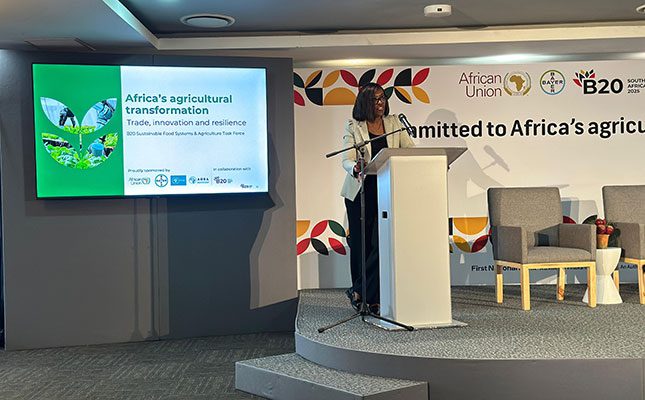
Debra Mallowah, Bayer Africa Head for Crop Science and chairperson of the B20 Task Force on Sustainable Food Systems and Agriculture, delivered a message that urgently called for action.
Agriculture remains the backbone of many economies – powering livelihoods, nourishing communities, and fuelling trade. But this sector now stands at a crossroads, threatened by environmental change, rising input costs, and supply chain volatility. At the same time, it holds immense potential to drive sustainable development, particularly across Africa. This Task Force is focused on four priority areas:
Enhancing Labour and Capital Productivity:
Unlocking innovation and investment to improve yields, integrate value chains, and create jobs, particularly for Africa’s growing workforce.
Ensuring Climate Resilience and Improving Livelihoods:
Promoting climate-smart practices, inclusive financing, and technologies that reduce risk and increase food security for small-scale farmers.
Accelerating and Enabling Trade: Strengthening regional trade and agro-processing infrastructure to reduce costs, cut losses, and link farmers to new markets.
Promoting Sustainable Agricultural Practices: Scaling regenerative approaches, digital tools, and context-specific sustainability standards that work for producers and the planet.
19/11 Global South and Global North Conversation: Getting Global Cooperation Right in the Next Era of Global Change
Charles R. Johnston – Managing Director, Citi Global Government Affairs; Chair, Business & Industry Advisory Committee (BIAC) to the Organisation for Economic Co‑operation and Development (OECD).
Alexia Latortue – Distinguished Non-Resident Fellow, Centre for Global Development.
Trevor Manuel – Chairperson & Independent Non-executive Director, Board for Old Mutual; Chair, G20 Africa Expert Panel.
Jacqueline Mugo – Executive Director & CEO, Federation of Kenya Employers (FKE); President, International Organisation of Employers (IOE).
27–29 October 2025 Addis Ababa, Ethiopia. The 2025 General Assembly of the China-Africa Agricultural Science and Technology Innovation Alliance was held in Addis Ababa, Ethiopia, bringing together policymakers, scientists, and industry leaders to discuss and advance cooperation. The China-Africa Agricultural Science and Technology Innovation Alliance (CAASTIA) is a platform for collaboration between Chinese and African institutions to advance agricultural science, technology, and innovation in Africa. Co-hosted by the African Academy of Sciences and the Chinese Academy of Agricultural Sciences, it aims to share China's agricultural advancements with Africa to improve food security, modernization, and sustainable development. CAASTIA facilitates joint research, technology transfer, and capacity building through initiatives like the recent General Assembly held in Addis Ababa, Ethiopia.
Abebe Haile-Gabriel, FAO Assistant Director-General: "CAASTIA is committed to driving innovation in agricultural science and technology. Today (27 October), multiple Chinese and African institutions signed memoranda of understanding (MOUs) for jointly implemented projects-pragmatic actions that advance this goal and are of historic significance."
Lise Korsten, President of the African Academy of Sciences (AAS): "This platform will serve as our flagship for strengthening South-South cooperation. I look forward to it becoming a turning point for achieving food security across the African continent, and to learning extensively from China's experience in technology and innovation."
ARC President and CEO Dr. Litha Magingxa and Executive Manager for Research Support and Coordination Dr. Petronella Chaminuka are representing the ARC at this historic event, aimed at advancing food security and sustainable development across Africa, drawing lessons from China’s success in agriculture and poverty alleviation. During the Assembly, ARC also held bilateral discussions with the Chinese Academy of Agricultural Sciences (CAAS) to explore new joint initiatives under the existing MoU between the two institutions.
Goal: To strengthen China-Africa cooperation in agricultural research and development to address food insecurity and promote modernization in Africa.
Membership: It brings together leaders from Chinese and African organizations, including research institutions, government agencies, and universities.
Activities:
Joint research: Conducting collaborative research projects, such as the one between Mekelle University in Ethiopia and the Lanzhou Veterinary Research Institute in China focusing on animal health.
Technology transfer: Sharing agricultural technologies, including digital farming tools and techniques, to improve productivity.
Capacity building: Providing training and support to African scientists, farmers, and other stakeholders.
Organizer: International Centre for Genetic Engineering and Biotechnology (ICGEB) – Cape Town & partner institutions
As Africa strengthens its position in global agricultural trade, the need to align food safety with sustainable farming has never been greater. This high-level international conference brings together researchers, policymakers, industry leaders, and technology providers to explore science-based solutions for managing pesticide residues, with a strong focus on biological solutions, regulatory innovation, and precision agriculture.
Stella Simiyu (Director, Regulatory Affairs & Stakeholder Relations, CropLife Africa Middle East) — Are biopesticides’ harmonisation efforts paying off?
Travis Bui (Administrative Chair, UAPASTF) — UAV pesticide applications: Industry efforts to enable global regulatory frameworks (virtual)
Afternoon session included:
Murenga Mwimali (Chief Research Scientist, Kenya Agricultural & Livestock Research Org) — Challenges & opportunities in Kenya’s residue compliance.
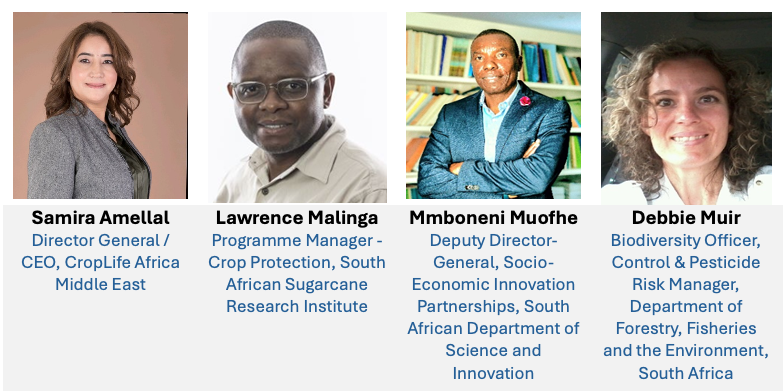
Debbie Muir (Biodiversity Officer – Control & Pesticide Risk Manager, DFFE South Africa) — Key provisions of harmonised guidelines for registration of biopesticides in Southern Africa.
Mellon Kabole (Africa Regional Manager, Minor Use Foundation) — Minor Use Foundation priority setting results for Africa.
Day 2 (12 Nov) — Innovations in Biological Pest Control
Chair: Stephen Njoka (Former Director, DLCO-EA)
Keynote: Yrielle Roets‑Dlamini (Senior Researcher – Bioprocess Technology Dev., CSIR) — Scaling & commercialisation pathways: addressing barriers to the growth of biological solutions
Peter Kamuti (Deputy Director, Kenya Plant Health Inspectorate Service) — Rethinking the last spray: Biopesticides for residue mitigation
Fernando Cantão (Fundraising/Tech Transfer & Innovation, ICGEB) — The role of biostimulants & biofertilisers in mitigating pesticide residues
Kahsay Mawcha (Research Fellow – Biopesticides, ICGEB) — Microbes as pesticide clean-up agents: evidence from the literature
Panel:
Moderator: Debbie Matteucci (Chair, South Africa Bioproducts Organisation)
Cornelius Oosthuizen (GM, Koppert South Africa), Kenneth Chipere (Principal Research Officer, Pesticides Registration, Zimbabwe),
Maurice Barasa (Head, Registration of Pesticides, Kenya) & Michelle Lesur (CEO, Andermatt Madumbi)
Day 3 (13 Nov) — Precision Agriculture & Data-Driven Solutions
Chair: Ramadhan Kilewa (Research Officer, Tanzania Plant Health & Pesticides Authority)
Keynote: Mmboneni Muofhe (Deputy Director-General, Socio-Economic Innovation Partnership, South Africa Dept. of Science & Innovation) — From data to action: scaling digital tools for farm-level biocontrol
Tom Murray (Technical Manager, Fruits & Horticulture, Woolworths, South Africa) — From farm to shelf: A retailer’s perspective on pesticide residues
Stella Simiyu (Director, Regulatory Affairs & Stakeholder Relations, CropLife Africa Middle East) — Regulatory readiness for the use of drones in Africa
Closing remarks by Minshad Ansari (Chair, World Bioprotection Forum) + Stella Simiyu + Dennis Ndolo
Activity: Launch of the African Bioproducts Community of Practice – led by Dennis Ndolo (ICGEB)
The Biopesticides Community of Practice (CoP) was established under the Collective Action on Agroecology (CA-AE) to accelerate the adoption of safe, effective biopesticides and promote agroecological pest management. It bridges research, industry, policy, and farmer practice to harmonize regulatory frameworks, coordinate innovation, and support evidence-based scaling of biological pest control solutions.
Objectives
Improve access to and farmer uptake of biopesticides through evidence, policy guidance, and market linkages.
Harmonize regulatory and Access and Benefit Sharing (ABS) approaches across regions.
Coordinate fragmented research and innovation across Africa, Asia, and Europe.
Support evidence-based scaling of biopesticides within Integrated Pest Management (IPM) systems.
Build a global network for continuous knowledge sharing and policy dialogue on biocontrol solutions.
Linking up with Asian Biopesticide experts:
The Asia‑Pacific Biopesticide Community of Practice (ABCoP), launched by APAARI in May 2024, is a vibrant cross‑sectoral platform that unites researchers, industry stakeholders, policymakers, regulators, NGOs and government agencies across the Asia‑Pacific region. Its primary mission is to promote knowledge exchange, foster collaboration, and accelerate the development, regulation, and trade of biopesticides—a sustainable alternative to conventional chemical pest control.
Related:
GFAIR's Collective Action on Agroecology (CA AE)–Biopesticides initiative took part in the Annual Biocontrol Industry Meeting (ABIM) 2025, held in Basel, Switzerland from 20-22 October 2025, as part of its commitment to advancing sustainable agricultural innovation. ABIM, recognized as the world’s leading biocontrol industry conference, brought together over a thousand experts, researchers, regulators, and industry leaders to exchange insights and foster collaboration on the future of biological crop protection. For CA AE–Biopesticides, this engagement marked an important step toward deepening its involvement in global dialogues that align with Africa’s agroecological transformation agenda.
Organised by: The Federation of Africa Nutrition Societies Conference (FANUS) and the African Nutrition Society (ANS)
Both the African Union Agenda 2063 Second 10-year Implementation Plan (2024 – 2033) and the Kampala CAADP Action Plan for 2026-2035, address the continued drain on national budgets of the bill for imported foods. According to H.E. Commissioner Sacko (Ministerial Retreat, Rwanda, October 2023) the 90 billion US dollars African countries have been spending for the last 5 years on food imports is expected to reach 110 billion US dollars per year as of 2025. A political commitment at the highest level is backing the African Union’s comprehensive multi-stakeholder action plans conceived to rectify the paradox of the high cost paid for food imports by a Continent that possesses more than half of the world’s uncultivated fertile land.
The Symposium
reviewed the current situation, its challenges and opportunities, and the strategies deployed to address them;
shared an ongoing example of Africa’s strategies deployed to meet those challenges; and
discussed progress made in some of the strategic approaches that contribute to creating - and satisfying - a consumer demand for home grown African foods.
Professor Mady Cissé (picture), President African Nutrition Society (ANS) The Role, of Food Technology, the Chefs, and the Food Processing industry in Crating the Demand and Realizing the integration of Home Grown Foods in Food Supply Chains
There was a 32 % increase in food imports to Africa in one year
Dr Arne Duebecke, Laboratory Services for safe and authentic foods. Tentamus Innovation Hub Carl von Ossietzky University of Oldenburg. Bremen - The Role of Standards in Completing the Data Base on African Diets and Food Ways in the Different Ecological Zones
Prof. Anne Lartey, Former Director for Nutrition FAO, and former President of the International Union of Nutritional Sciences. Creating Demand That Sustains Food Production and Supply Chains in Particular to the Urban Consumer in Africa
Tambra Raye Stevenson, Founder/CEO of WANDA (Women Advancing Nutrition Dietetics and Agriculture)
Dr Robert Fungo, President Federation of African Nutrition Societies (FANUS)
Moderator: Dr Habiba Hassan-Wassef, ANS (African Nutrition Society) Living Legend of the International Union of Nutrition Sciences ; Health and Nutrition Policy in Sustainable Development ; Chair, National Nutrition Sciences Committee Egypt
Group picture:
Prof Francis Zotor vice president International Union of Nutrition Societies ; Professor Mady Cissé President African Nutrition Society (ANS) ; Dr Robert Fungo, President Federation of African Nutrition Societies ; Dr. Sara O'Neill (University of Brussels) ; Dr Habiba Hassan-Wassef, ANS (African Nutrition Society) Living Legend of the International Union of Nutrition Sciences, Health and Nutrition Policy in Sustainable Development, Chair, National Nutrition Sciences Committee Egypt ; Tambra Raye Stevenson, Founder/CEO of WANDA (Women Advancing Nutrition Dietetics and Agriculture) US ; Dr Maureen Duru Foodbridge
Focus: Understanding and addressing the global nutrition and health impacts of ultra-processed foods, guiding policy, public health, and consumer awareness.
IUNS-ACTIVATOR (Asian Decadal Nutrition Evaluation, Reflection and Galvanizing Efforts for Future)
Chair:Dr. Sangeetha Shyam
Focus: Reviewing and learning from a decade of nutrition progress in Asia, identifying gaps, and setting priorities for the next decade.
In a moment when maternal and child health is under threat, and vital nutrition programs like SNAP and WIC face devastating cuts, Little WANDA stands tall—reminding us that food is not just a basic need, it’s a basic right.
Her song turns policy into poetry—and makes sure that our youngest voices are heard at the table and in the halls of power.
💬 “She carries the stories of our communities—and the solutions.” — Tambra Raye Stevenson, Creator of Little WANDA and Founder of WANDA
Interview with Dr Habiba Hassan-Wassef, ANS (African Nutrition Society) Living Legend of the International Union of Nutrition Sciences ; Health and Nutrition Policy in Sustainable Development ; Chair, National Nutrition Sciences Committee Egypt
Highlight: FAMA: Food and microbiota Africa
Supported by the French Embassy in South Africa, FAMA project “Food and Microbiota in Africa” was launched on 4 July 2024 for a duration of 2 years. the FAMA) project was launched at the Centre of Excellence in Food Security (CoE-FS) of the University of Pretoria (UP).
The FAMA project aims to assess the role of traditional African foods in improving gut microbiota, and reducing the triple burden of malnutrition in South African and Senegalese populations.
It was designed within the “Transforming Food Systems and Agriculture through Research in Partnership with Africa” (TSARA) initiative, and builds on existing scientific collaboration among partners through previous projects and that of the CoE-FS.
It is a project financed under Fond Équipe France, from the French Ministry of Foreign Affairs,
The project research partners are from across South Africa, Senegal and Europe: the CoE-FS; UP; the University of the Western Cape; Agricultural Research Council (ARC); Council for Scientific and Industrialised Research; Laboratoire de Recherche sur les Transformations Économiques et Sociales – Institut Fondamental d’Afrique Noire de l’Université Cheick Anta Diop (LARTES-IFAN); the French Agricultural Research Centre for International Development (CIRAD); and the National Research Institute for Agriculture, Food and Environment (INRAE). In addition to the research partners, the project includes an NGO, Siyazisiza Trust (South Africa) and an agro-processing enterprise, Puratos (Europe).
Dr Arlène Alpha (CIRAD/CoE-FS) is the project lead.
It brings together a wide range of speakers involved in shaping the food system, providing an opportunity for food growers, academics, activists, writers, nutritionists, policy makers, food lovers and anyone interested in sustainable approaches, to engage in key issues intimately connected to the food we eat, and find ways to work together in creating a better food future. With over 500 in-person attendees and a media audience reach over 50 million, Food Indaba has become a major platform for food systems awareness and transformation.
9 July 2025.AI and the African Food System African practitioners, scholars, and policy specialists were invited to provide inputs on the merits, risks, and ethical imperatives that need to be prioritised within African deliberations on the regulation of Artificial Intelligence, which is being rapidly and eagerly adopted by agro-industries and other food system role players in Africa. (See also press release: 11/07 Decolonising data: ensuring AI reflects Africa’s rich diversity in food systems and ethics
Gareth Haysom, senior researcher at the African Centre for Cities, as well as Associate Professor in food security from the University of Namibia
Haysom introduced an AfriFOODlinks project, which looks at the city food systems in hub cities in countries like Burkina Faso, Tunisia, Uganda, Kenya and South Africa. Those cities then work with 10 more cities, and five European cities. They study what food systems in Africa need, feeding that information back to the public, and working with city officials. He questioned how we challenge the disposable nature of the food system, start to see our bodies as being just as polluted as our atmosphere, and how we could start valorising local and indigenous foods in different ways — the ways that were thrown out by colonialism because they did not suit the economic model.
Ms Alison Pulker, PhD candidate and research assistant at the African Centre for Cities. Her current research interests are related to urban food insecurity and urban food systems governance.
Pulker said that during her research they ran into an ethical consideration: how to protect data taken from people, and, during storage of that data, how to create long-term anonymity.“We need to ask the questions ‘what is our interest?’ and ‘what is our interest in the food system?’. AfriFOODlinks is a project that has managed to show that Africa’s food systems are not homogenous, in the same way that Africa is not homogenous,” said Pulker.
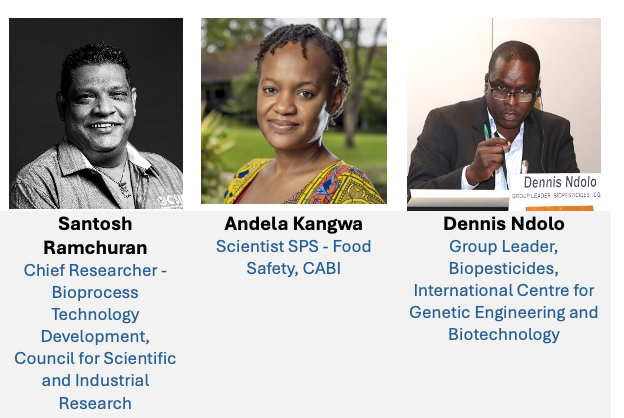
Dr Dennis Ndolo, Leads the Biopesticides Research Group at the International Centre for. Genetic and Engineering and Technology (ICGEB), which focuses on information and data sourcing, collation, generation and dissemination to support the discovery, development, formulation and commercialisation of low cost, stable and effective biopesticides.
Prof Ndeyapo Nickanor, Executive Dean, Faculty of Agriculture, Engineering & Natural Sciences at the University of Namibia
Dr Rike Sitas, Inter-disciplinary urban scholar at the African Centre for Cities, whose research focus includes culture, technology and African cities, with a particular interest in youth, democratic decision-making, and the future of work.
Mr Russel Hlongwane, Cultural producer, research on the Young and Online in African Cities Project (afrotecha.urban). Work aims to understand how digital services and platformed practices are enabling new access to essential services and contributing to urban development.
Prof Shari Daya, Director, Humanities Learning Support Unit at the University of Cape Town whose research focus includes food and ethics. (tbc if not replaced by Dr Anesu Makina)
Upcoming:
19 July 2025.AI & the Food Systems Conference: A full day in-person conference anchored by key regional AI thought leaders and practitioners drawn from the Centre of Excellence in Food Security's Innovation Lab, the Data Science for Social Impact research group at the University of Pretoria, and the Global Centre on AI Governance.
Background:
Launched in December 2022, AfriFOODlinks TRANSFORMING AFRICA’S URBAN FOOD ENVIRONMENTS THROUGH STRENGTHENING LINKAGES BETWEEN FOOD SYSTEMS STAKEHOLDERS IN CITIES ACROSS EUROPE AND THE CONTINENT (1 December 2022 - 30 November 2026, Total cost € 11 816 305,09) is an EU funded project. Coordinated by ICLEI Africa, the project gathers 26 partners across the globe to improve food security and urban sustainability in 65+ cities in Africa and Europe
Discuss how strengthening urban-rural linkages through local, traditional, and farmers’
markets contributes to both food systems resilience and climate adaptation/mitigation.
To exchange policy-relevant experiences and field practices linking local food systems and
climate action through integrated urban-rural approaches
Identify key messages to inform UN-Habitat and partners’ contribution to UNFSS+4, CFS
53 and COP30, particularly on sustainable urbanization, inclusive food systems, and climate
resilience.
The session brought together participants from a wide range of sectors, UN agencies, international
organizations, local governments, market actors, development agencies, academia, and civil society,
creating a rich space for dialogue and cross-sectoral learning. Download the main messages (4 pp.)
Remy Sietchiping
UN-Habitat, PLGS
Ann Trevenen-Jones (PhD)
Global Alliance for Improved
Nutrition (GAIN)
Sensasi Boney Advocates for Public Spaces in Uganda
J. Robin Moon (PhD)
World Farmers Markets Coalition
(WorldFMC)
Giaime BertiResilient Local Food Supply
Chains Alliance (RLFSC)
Sharon Gil
Cities Lead, UN Environment
Program (UNEP)
Dennis Andaye
Team lead, Regional Coalition for
Farmers Market, MAMi project, Kenya
Furaha Abwe (PhD)
Urban Planning for community
Change in Tanzania
Transforming agriculture through research and innovation for providing adequate and nutritious food to all, minimising food waste and loss, boosting digital and precision technology and access to data to the farmers, combating the transboundary pests and diseases, encouraging investment in agricultural research & innovations for sustainably enhancing agricultural productivity while protecting the biodiversity and local food systems in the realm of climate change and diversification in agri-food value chain is essentially required. The challenges are much formidable than ever before.
An innovative and collective effort is required to address such formidable challenges. Hence, in 2011 the G20 Member States decided to address the diverse global challenges in agriculture affecting the people and planet through join agricultural research and innovation strategies as well as implementation of initiatives under new cooperation formats.
Issue Note: Agriculture and food systems are central to global food and nutrition security, with over 700 million people experiencing hunger and Africa being particularly worst affected by food insecurity.
The 2025 G20 Meeting of Agricultural Chief Scientists (MACS) concluded with a strong emphasis on advancing climate-resilient agriculture, fostering equitable research collaboration, and supporting science-based policy for sustainable food systems. Key outcomes included a commitment to strengthening global cooperation on agricultural research and innovation, particularly with institutions in the Global South. Delegates agreed to prioritize the development of climate-smart technologies, promote open data sharing, and support inclusive innovation that integrates traditional knowledge with cutting-edge science.
The meeting also emphasized building resilient agri-food systems through enhanced public-private partnerships, investments in capacity development, and improved coordination between national research systems. Special attention was given to the importance of nutrition-sensitive agriculture, biodiversity conservation, and soil health. South Africa, as host, highlighted the role of African research institutions and the need for more equitable participation in global scientific dialogues. The MACS communiqué reflected a shared resolve among G20 members to align agricultural research with the goals of food security, sustainability, and resilience in the face of climate change and geopolitical disruptions.
This seminar was the first in a series to promote a wider initiative –
AfriCaribbean Tourism Routes. Given increasing trends in
tourism markets for local, healthy “authentic” culinary and cultural
experiences, the tourism routes initiative between Africa and the
Caribbean aims to promote the regions as sustainable and unique
culinary cultural meccas for both international, regional, and
domestic travelers and public and private sector investors. The seminar was in hybrid format (in-person and virtual).
The seminar was chaired by Mr. Jerry Mabena, CEO of the Motsamayi Tourism Group and featured opening remarks and a keynote address from heads of UJ’s School of Tourism and Hospitality, South Africa’s National Agricultural Marketing Council, the Tourism Business Council South Africa, and Africa Tourism Partners.
It highlighted the social, economic, and environmental relevance of
indigenous, neglected and under-utilized crops to Africa and the
Caribbean. More specifically, to promote these African and
Caribbean crops and related value-added foods and products as
unique ingredients for developing sustainable tourism.
Entrepreneurs showcased real-world case studies – from indigenous teas and reimagined culinary menus in South Africa, bespoke traditional catering in Zimbabwe, artisanal chocolates by a rural network of African and Caribbean farmers and chocolate producers, founded in Trinidad and Tobago, to farm tours in Grenada, and agricultural-based spa treatments in Barbados. Senior representatives from research institutions and development partners, including the International Institute of Tropical Agriculture, South Africa’s Agricultural Research Council, Afreximbank, the International Finance Corporation, the International Trade Centre, UN Tourism, the Inter-American Institute for Cooperation on Agriculture, and the CARICOM Secretariat, highlighted areas in which they are already partnering and other areas for future collaboration, to support the seminar objectives.
OPENING REMARKS
Mr. John Steenhuisen, Minister, Department of Agriculture, Republic of
South Africa (RSA) (tbc)
Mr. Tshifhiwa Tshivhengwa, CEO, Tourism Business Council, RSA
Prof. Diane Abraham, Director, School of Tourism and Hospitality, University
of Johannesburg
CONCEPTUAL AND OPERATIONAL FRAMEWORKS
This presentation provided an overview of trends in the tourism markets that are
relevant to indigenous and local food crops. It also reviews the food system
framework to highlight the benefits of collaboration between Africa and the
Caribbean in maximising these market opportunities for achieving their
sustainable development goals, namely those linked to food and nutrition
security, food import reduction, job creation, and climate change adaptations.
BUILDING BRIDGES: STRATEGIES AND LESSONS LEARNED IN CREATING
CROSS-BORDER AGRITOURISM ROUTES
This presentation provided strategic insights gleaned from creating an
international tasting trail between the United States and Canada
Dr. Lisa Chase, Professor at the University of Vermont Extension, Director of
the Vermont Tourism Research Center, past President and current
Education Co-Chair of the Global Agritourism Network.
CASE STUDIES: COUNTRY RESPONSES TO FOOD AND WELLNESS TRENDS IN TOURISM MARKETS
Examples of primarily private sector-driven business responses highlighted, among other themes:
the key markets targeted,
social and environmental returns on their investments;
challenges in their supply chains; and
the role of smallholder farmers and entrepreneurs and how they can be more efficiently incorporated into agritourism value chains.
Fine Dining; Farm-2-Table
Case Study 1: Mr. Michael Daiber, Manager, !Khwa ttu, an award winning
San heritage educational center and tourist destination transformed its
restaurant menu to tell an indigenous story.
Food Festivals
Case Study 2. Chef Nyanda Peltier Charles, Founder, WATO Festival,
Commonwealth of Dominica (celebrating Caribbean local foods and culture)
Specialty Foods; Retail
Case Study 3: Ms. Gillian Goddard, Co-Founder, Chocolate Rebellion, (an
African-Caribbean network of cocoa farmers and artisanal chocolate
producers)
Case Study 4: Ms. Retang Phaahla, Co-Founder, Setšong African Tea
Crafters, Limpopo, South Africa) (transforming local flora and fauna into an
indigenous brand)
Spa and Beauty Treatments
Case Study 5: Mr. Steve Andrews, Founder, Soothing Touch Spa and The
Bamboo Retreat, Barbados (pampering agri-style)
SPECIAL PRESENTATIONS
DEVELOPING AN AUTHENTIC, LOCAL, CULTURALLY DIVERSE FOOD ECOSYSTEM FOR SOUTH AFRICANS AND GLOBAL TOURISTS
This presentation explored key learnings from the development of a food ecosystem at the V&A Waterfront, one of South Africa’s premier tourist destinations. Participants gained insights into how this complex neighbourhood is leveraging market-driven strategies, driving an ambition to foster an example of a just, equitable and sustainable food landscape, benefiting local communities, small-scale farmers and culinary entrepreneurs
Mr. Henry Mathys, Strategic Programme Manager, V&A Waterfront, Cape Town, South Africa.
REDEFINING FARM LIFE – REIMAGINING LUXURY
This presentation showcased how farms, traditionally places for food production,
can now be hubs for health and wellness experiences, tapping into an emerging
market of travellers seeking nature-based therapies, organic foods, and holistic
well-being experiences.
POTENTIAL FOR HERITAGE FOOD TRAILS IN THE CARIBBEAN
This presentation highlighted success stories in food and wellness tourism in
selected Caribbean countries and the development of regional heritage trails
linking indigenous foods and healing cultures
Ms. Ena Harvey, Agritourism Specialist
LINKING ENTREPRENEURSHIP-AGRICULTURE DEVELOPMENT IN AFRICA
AND THE CARIBBEAN: FROM FARM TO TABLE
This presentation highlighted opportunities in the agri-food model to drive
entrepreneurial innovations for meeting the demands of both local and global
tourism markets.
Ms. Isolina Boto, Head of Networks and Alliances, COLEAD
ROTECTING HERITAGE AND PROMOTING GROWTH: THE ROLE OF
GEOGRAPHICAL INDICATIONS (GIs) IN MARKETING INDIGENOUS AND
NEGLECTED FOOD CROPS
This presentation explored how the recognition of these crops with a GI label
can elevate their marketing value, attract tourism, and stimulate sustainable local
economies. It also touched on the challenges of establishing such systems
and the impact of protecting indigenous knowledge in both the agricultural sector
and cultural tourism.
Mr. Mark Forgenie, Managing Director, Vista Dorado Estates Moruga Hill
Rice
CULTIVATING CONNECTIONS – THE ROLE OF TOUR OPERATORS IN
SHAPING AGRITOURISM EXPERIENCES ACROSS AFRICA AND THE
CARIBBEAN
The presentation highlighted the role of tour operations in, among others,
facilitating logistics and operations for a competitive agritourism route, marketing and promotion, and creating tailored tourism packages while supporting local
community engagements
Mr. Muthuri Kinyamu, Founder, Turn Up Travel and Board Member, Kenya
Ecotourism.
IMPROVING CONNECTIVITY BETWEEN AFRICA AND THE CARIBBEAN
Increased and competitive connectivity between the two regions is required for
efficient South-South collaboration in maximising opportunities in tourism markets
for mainstreaming indigenous food crops. This presentation provided an update
on flight options between Africa and the Caribbean, based on the joint venture
between Air Peace and Antigua and Barbuda.
Ms. Hafsah Abdulsalam, CEO, LIAT 2020
PROMOTING SOUTH-SOUTH COLLABORATION AND AGRITOURISM TRADE
BETWEEN AFRICA AND THE CARIBBEAN
Afreximbank is leading a transformative process to strengthen social and
economic ties between Africa and the Caribbean. Facilitating trade and
investment is a vital step in this process and has formed a major part of the bank’s
Diaspora Strategy. This presentation explored how this support can be
leveraged to promote joint investments in establishing an African-Caribbean
tourism trade route centred on indigenous and neglected crops bundled with the
regions’ cultural and creative assets.
Afreximbank
TAKING ACTION: MAKING A PITCH
This presentation provided an investment pitch for developing a WILD food
safari around homestead communities in Limpopo and Mpumalanga provinces to
complement South Africa’s well developed wildlife safari. It also highlighted lessons for integrating indigenous and neglected crops into more mature tourism
market segments.
Mr. Dave Varty, Co-Founder & Co-Owner, Londolozi Private Game Reserve
This presentation shared plans for RICE, Rising in Community Everyday, a
proposed festival for promoting communities’ uniqueness through culinary art and
experiences
Chef Chaz Brown, Executive Chef at Garces Events
RESPONSES FROM ACADEMIA
This session shared Academia and Development Partners’ agenda, particularly in terms of
(i) on-going related activities; (ii) opportunities for collaboration among themselves for increasing efficiencies in delivering related impacts; and (iii) opportunities for new investments to contribute to maximising African and Caribbean indigenous and local food crops for sustainable tourism and development.
Prof Michael Abberton, Director of the International Institute of Tropical
Agriculture (IITA) Genetic Resources Program and Lead for IITA’s work on
neglected crops
Dr Hema Kesa, Director, Food Evolution Research Laboratory and Senior
Lecturer at the School of Tourism and Hospitality, University of Johannesburg
Prof Mark N. Wuddivira, Dean, Faculty of Agriculture, University of the West
Indies
Dr. Yolisa Pakela-Jezile, Acting Executive Manager, Crops and Natural
Resources, Agricultural Research Council, RSA
RESPONSES FROM DEVELOPMENT PARTNERS
Mr. Samuel Kamau Nganga, Manager, Manufacturing, Agriculture and
Services, International Finance Corporation
Mr. William Castro Rodriguez, Sr. Trade Officer, Caribbean Unit, International
Trade Centre
Ms. Sandra Carvao, Director, Market Intelligence, Policies, and
Competitiveness, United Nations World Tourism Organisation (UNWTO)
Ms. Shauna Brandon, Rural Development Specialist, Inter-American Institute
for Cooperation on Agriculture (IICA)
Mr. Jonathan Lewis, Program Manager, Gates Foundation
Dr. Wendell Samuel, Sr. Advisor to the Secretary General and Acting
Assistant Secretary General, Directorate for Economic Integration,
Innovation, and Development, CARICOM Secretariat
A key highlight of the seminar was an inspiring “elevator pitch session,” including a proposal for a WILD Food Safari in Mpumalanga, South Africa, to leverage the province’s wildlife game safari – an already well-established tourism offering; and another to promote high-end food events based exclusively on indigenous, underutilized, and emblematic crops, including Trinidad and Tobago’s Moruga Hill rice.
The seminar concluded with a call to action from FANRPAN’s CEO, Dr. Madzivhandila, for long-term funding to be increased for feasible tourism projects that promote the regions’ indigenous and neglected food crops.
The Africa-Europe Cluster of Research Excellence in Sustainable Food Systems (CoRE-SFS), co-led by the University of Pretoria and the University of Bologna, has launched a webinar series focusing on key topics shaping the future of sustainable food systems. This was the 3rd webinar.
Looking specifically at the untapped potential of indigenous crops in shaping sustainable food systems, this webinar highlighted how traditional agricultural knowledge, combined with modern innovations, can drive food security, resilience, and economic opportunity.
The webinar attracted nearly 200 participants from across Africa and Europe, and also featured:
Prof Peter Baguma of Makerere University in Uganda [peter.baguma@mak.ac.ug]. Prof Baguma explored the socio-cultural and policy dimensions of indigenous food systems in Uganda. His presentation focused on the historical importance of indigenous and traditional food crops, and outlined the threats they face, including land conversion, inadequate policy support and declining intergenerational knowledge transmission. He noted that attitudes towards indigenous foods are generally positive among rural populations, particularly in lower-income and female-headed households. These foods are often seen as nutritious, affordable and culturally significant. However, some perceive them as “food for the poor” or outdated, reflecting lingering biases that can hinder broader uptake. “Efforts to revitalise indigenous food systems must address marketing, education and policy,” Prof Baguma said. “There’s a critical need for community nurseries, value chain development and national policies that prioritise these crops as a foundation for food security.”
Prof Riette De Kock [riette.dekock@up.ac.za]. She presented on the role of sensory innovation in enhancing the appeal of indigenous crops. Drawing on research in sensory science and consumer studies, she highlighted the importance of making traditional foods not just nutritionally adequate but also appealing to contemporary consumers. “Food neophobia – the reluctance to eat unfamiliar foods – is a real barrier,” she explained. “But by optimising sensory properties such as taste, aroma and texture, we can increase the acceptance of these foods, particularly among younger and urban populations.” Using examples like cowpea and sorghum-based products, Prof De Kock showed how traditional crops could be repositioned through modern food science to meet changing dietary preferences while maintaining cultural relevance.
Moderated by Dr Abena Boakye of the Kwame Nkrumah University of Science and Technology in Ghana.
The discussion reinforced the broader importance of indigenous crops in climate-resilient agriculture. These species are often better adapted to local environmental conditions, and possess valuable traits such as drought resistance and high nutritional density.
Recent research supports this view. According to Kanter et al. (2023), local and traditional food systems play an essential role in addressing both undernutrition and climate change. Moreover, studies like the one by Owusu-Kwarteng et al. (2024) emphasise the contribution of indigenous and traditional foods to dietary diversity and food sovereignty in African contexts.
Dr Boakye highlighted the interdisciplinary and applied nature of this work.
About CoRE-SFS
Food system challenges, including food insecurity, malnutrition, and poverty, persist in Africa. In 2023, the African Research Universities Alliance (ARUA) and The Guild of European Research-Intensive Universities (The Guild) launched 17 research clusters to foster collaborative research across Africa and Europe. Each Africa-
Europe Cluster of Research Excellence (CoRE) pairs researchers from at least three African and two European universities to tackle major scientific issues through research and education.
One of these clusters, the Africa-Europe Cluster of Research Excellence in Sustainable Food Systems (CoRE-SFS), is co-led by the University of Pretoria and the University of Bologna. This global platform includes 22 partners from across Africa and Europe collaborating on challenge-driven, integrated, and engaged research, focusing on sustainable food systems.

 Extracts of the programme