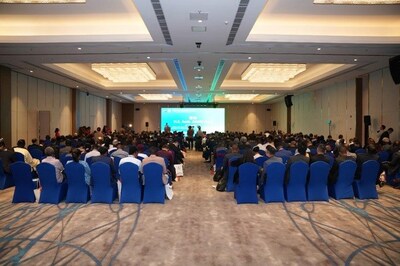
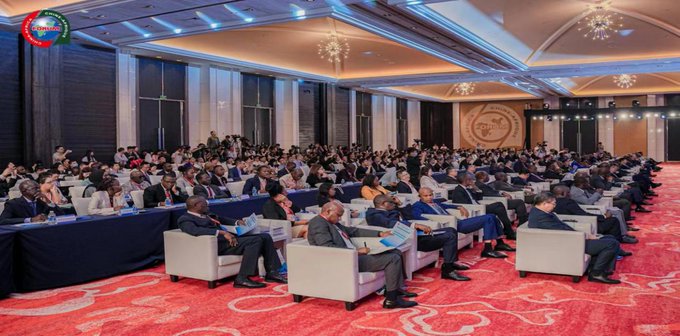
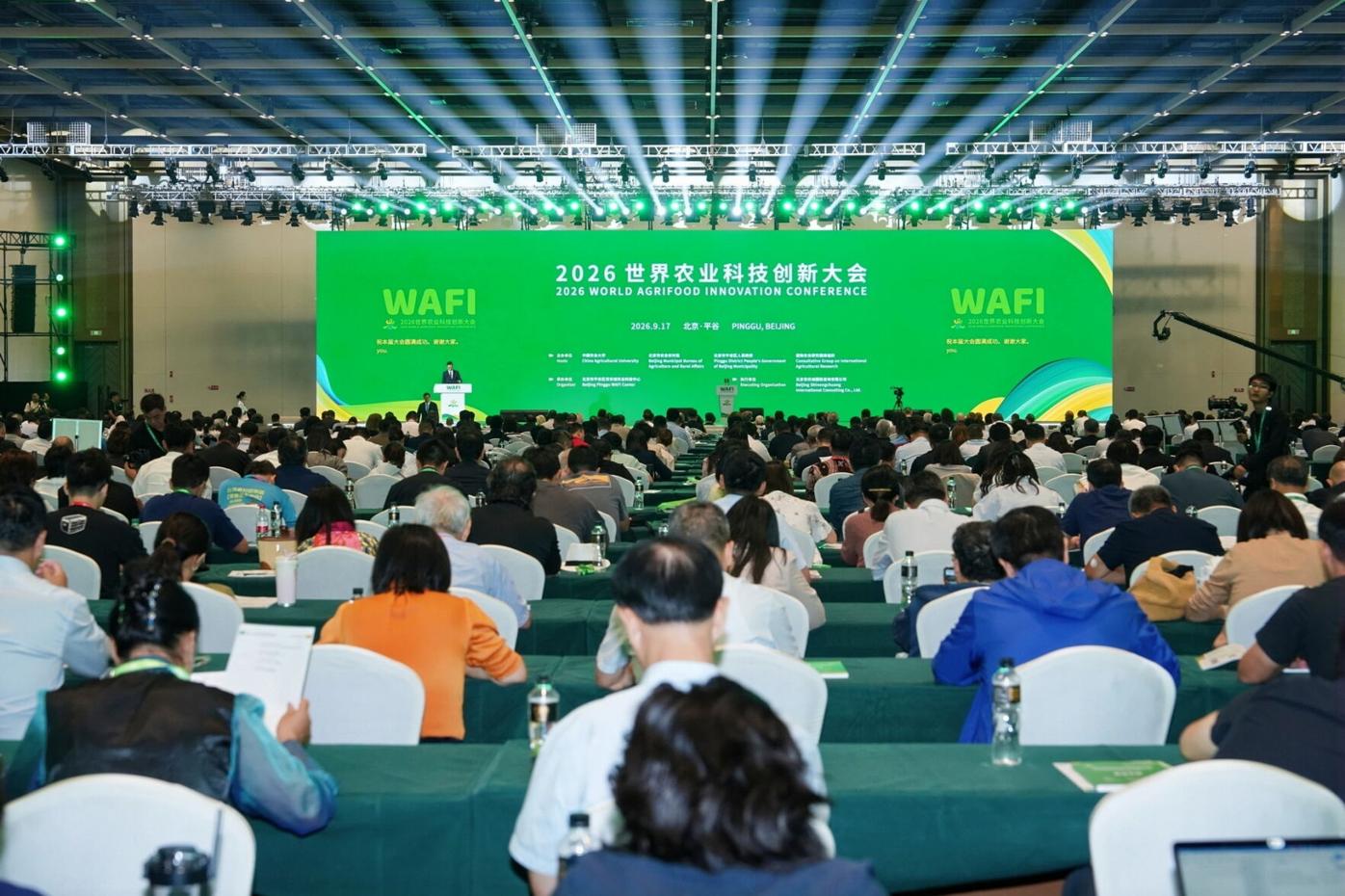
17–19 September 2026, Pinggu, Beijing, China. The World AgriFood Innovation Conference (WAFI 2026) brought together the global agricultural innovation community in , under the theme “Green and Healthy Transformation of Agrifood Systems.”
- Video recordings are available here
WAFI positioned innovation as a key driver for making agrifood systems healthier, more resilient, inclusive and sustainable. The conference is conceived not simply as an annual event, but as a platform for continuing collaboration among governments, research and academia, industry, practitioners and other actors working on food security, climate change and sustainable development.
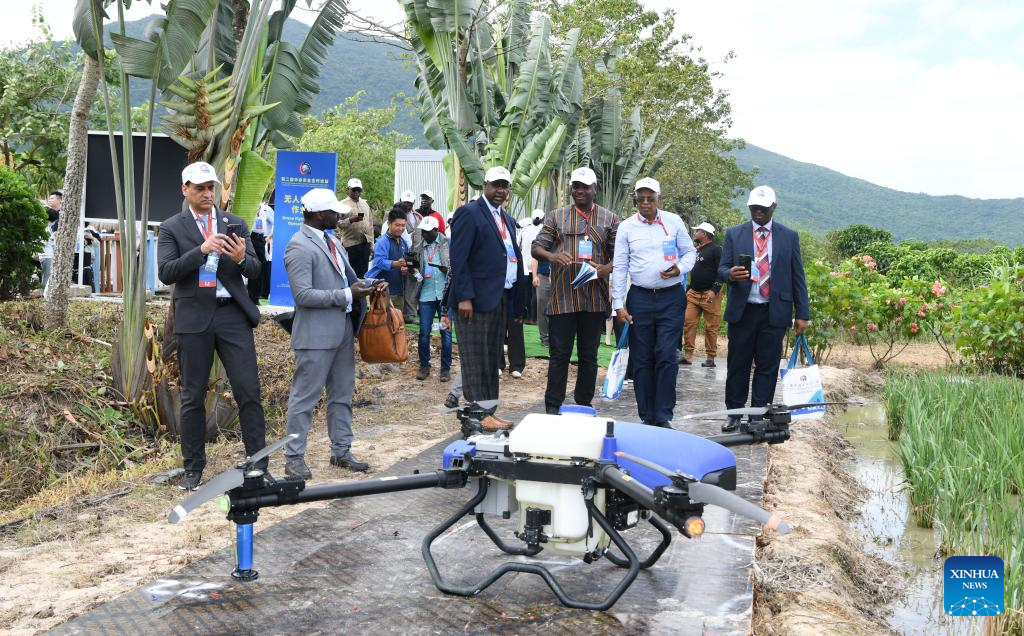
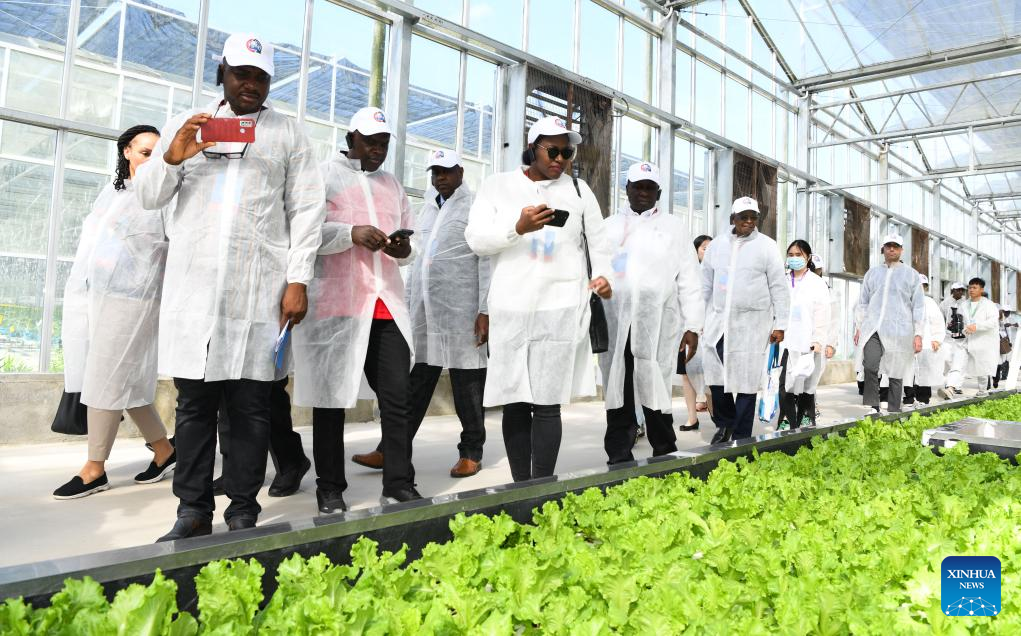
The 2026 conference was jointly hosted by China Agricultural University, the Beijing Municipal Bureau of Agriculture and Rural Affairs, the People’s Government of Pinggu District, and CGIAR. The programme combined plenary and thematic discussions with parallel sessions, side events, innovation showcases and the World AgriFood Technology Expo, creating opportunities to connect scientific advances with policy, investment, entrepreneurship and practical application.
The 2026 conference was jointly hosted by China Agricultural University, the Beijing Municipal Bureau of Agriculture and Rural Affairs, the People’s Government of Pinggu District, and CGIAR. The programme combined plenary and thematic discussions with parallel sessions, side events, innovation showcases and the World AgriFood Technology Expo, creating opportunities to connect scientific advances with policy, investment, entrepreneurship and practical application.
Innovation across the agrifood system
Reflecting the breadth of agrifood transformation, WAFI 2026 addressed topics including artificial
intelligence and digital technologies, smart agriculture, future foods, nutrition and health, livestock and aquaculture, biotechnology, policy and governance, resilience and sustainability, smallholder agriculture and green finance. This broad agenda underscored that transforming agrifood systems requires more than increasing agricultural productivity: technological innovation needs to connect with environmental sustainability, human health, viable businesses and effective institutions.
16 + 17/09 AI-Driven Global Agrifood Transformation
- Watch the recording here of 16/09: AI and Agriculture Forum
- Watch the recording here of 17/09: AI-Driven Global Agrifood Transformation
Digital innovation featured prominently. Discussions on AI and agriculture examined how emerging technologies can support agricultural modernisation and smallholder development, while other sessions explored remote sensing and the digital transformation of land and agricultural management. At the same time, the programme gave attention to regenerative agriculture, illustrating the growing interest in approaches that combine agricultural production with restoration of soils and ecosystems.
This session asked a very practical question: whether AI can actually help farmers make better decisions rather than simply produce increasingly sophisticated models. Digital Green presented farmer-facing digital extension approaches. The discussion stressed that reaching farmers digitally is only the starting point; the larger challenge is converting AI-generated information into usable agricultural decisions.

- Yvonne Pinto, Director General, International Rice Research Institute (IRRI) – moderator
- Silvia Maria Fonseca Silveira Massruha, President, Embrapa Solos
- Liu Jie, Chair Professor and Dean, Institute of Artificial Intelligence, Harbin Institute of Technology
- Rikin Gandhi, Co-founder and CEO, Digital Green.
17/09 Transforming the Food Industry for Healthy Diets and Better Nutrition
Watch the recording here of 17/09: Transforming the Food Industry for Healthy Diets and Better Nutrition
Among WAFI's prominent nutrition voices was Shakuntala Haraksingh Thilsted, CGIAR Platform Director for Nutrition, Health and Food Security Impact and 2021 World Food Prize Laureate.
 18/09 Protein Diversification and Dietary Transformation
Watch the recording here of 18/09: Protein Diversification and Dietary TransformationThe emphasis on a “green and healthy” transformation also placed nutrition and health firmly within the
agricultural innovation agenda. Sessions included discussions around novel and future foods, nutrition, One Health and dietary innovation.
This session linked dietary diversity with diversification of the food and protein base. The forum explored how protein diversification can contribute to more nutritious, sustainable and resilient food systems, including the transition from technological breakthroughs to market adoption.
- Francesco Branca, former Director of Nutrition and Food Safety, WHO
- Mengshan Chen, Director, China National Food and Nutrition Advisory Committee
- Shenggen Fan, Dean, Academy of Global Food Economics and Policy (AGFEP), China Agricultural University
- Bruce Friedrich, Founder and President, Good Food Institute; and Nicole Wu, Chief Representative & Executive Director, ProVeg China, who moderated the high-level dialogue on industrialisation of novel proteins.
19/09 Coarse Grains, Whole Grains, and the Green and Low-Carbon Transformation of Agrifood Systems
Watch the recording here of 19/09: Coarse Grains, Whole Grains, and the Green and Low-Carbon Transformation of Agrifood Systems
On the final day, WAFI hosted a dietary-fibre innovation forum addressing Low glycemic index (GI) foods and prebiotics, while a One Health forum explored connections between agrifood systems and wider health governance.
19/09 China Africa Agricultural Science and Technology Industrial Cooperation Forum
This session focused on a central challenge in China–Africa agricultural cooperation: how to move from scientific and technological innovation to adoption, commercialisation and impact at scale. Discussions connected agricultural research with technology transfer, institutional capacity, markets, private-sector investment and locally appropriate innovation ecosystems.
- Antony Chapoto — Executive Director, ANAPRI. His contribution addressed the policy and institutional environment required for technology adoption, scaling and sustained private-sector investment in Africa.
- Esther Van de Voort — Director, Innovation Portfolio & Ecosystem Partnerships, Yara International. She participated in the panel “From Technology to Market: Building Sustainable China–Africa Agricultural Innovation Ecosystems,” looking at how cross-border partnerships can accelerate technology commercialisation, market access and scalable agricultural impact.
- Issa Ouedraogo — Senior Scientist, Climate Action, Alliance of Bioversity International and CIAT, and Country Representative in Senegal. He focused on connecting agricultural science and innovation with locally appropriate solutions and moving “from innovation to impact.”
19/09 Tropical Agriculture and South-South Cooperation
Watch the recording here of 19/09: Tropical Agriculture and South-South Cooperation
WAFI 2026 also highlighted the international character of contemporary agricultural research and innovation. Its partnership with CGIAR and engagement of international research, government and private-sector actors provided a space for linking China's agricultural science and innovation capacity with global research networks.
This session centred on two linked themes: “Green, Low-Carbon and Sustainable Transformation of Tropical Agriculture” and “Strengthening South–South Cooperation for a Green and Healthy Agricultural Future.” The forum examined how science, technology, investment, institutional partnerships and knowledge exchange can accelerate sustainable tropical agriculture, particularly across the Global South.
- Feng Weizhe — Dean/Director, Sanya Institute of China Agricultural University; opening-session moderator. He presented the institute's work in tropical agriculture and overseas Science and Technology Backyards, including initiatives in Malawi and Brazil.
- Ruben G. Echeverría (picture) — Senior Adviser, Agricultural Research for Development; opening remarks. He argued that South–South cooperation should evolve beyond one-way technology transfer toward long-term partnerships encompassing research, investment, business and innovation.
- Shenggen Fan — Dean and Chair Professor, Academy of Global Food Economics and Policy (AGFEP), China Agricultural University; opening remarks. He highlighted a shift from individual projects toward institutionalised South–South partnerships, including joint funds, networks and working groups.
- Sean de Cleene — Adjunct Professor, Singapore Institute of Technology; moderator of the keynote session. He proposed rapid “sprint” cooperation that brings research, finance, farmer training and private investment together around concrete bottlenecks.
- Jiang Changshun — Chinese Academy of Tropical Agricultural Sciences (CATAS); keynote speaker. His contribution focused on international tropical-agriculture R&I cooperation, capacity building, germplasm, pest and disease management, technology transfer, standards and trade.
- Simon Heck — Director General, International Potato Center (CIP); keynote speaker. He discussed the expansion of potato production into tropical Asia and Africa and the need to translate advances in breeding more rapidly into farmer-accessible solutions.
- Lin Faqin — Professor, Academy of Global Food Economics and Policy, China Agricultural University; keynote speaker. He addressed agrifood-system resilience amid geopolitical conflict, input-price increases, trade restrictions and climate change, with particular attention to smallholders.
- Conrad Rein — Secretary-General, Flagship Initiative for Global Food Security; keynote speaker. His presentation, “From Knowledge to Scaling: Advancing Resilient Tropical Agriculture through South–South Cooperation,” stressed connecting knowledge, partnerships and capital to take proven solutions to scale.
See: Comments from Ruben G. Echeverria : Strong science, technology, and innovation partnerships are essential to agricultural development. Scaling them requires partners—and partnership requires trust.
"Regional networks such as FARA, CORAF, ASARECA in Africa, APAARI in Asia, and FONTAGRO in LAC can connect local and global innovation. At the global level, CGIAR provides a trusted foundation for science-based partnerships with Chinese universities, academies of science, and other organizations represented at this conference."