Platform for African – European Partnership in Agricultural Research for Development
Showing posts with label Uganda. Show all posts

Tuesday, September 1, 2026

Hodari Foundation: Building a Future Through Innovation, Independence and Inclusion

The HODARI Foundation operates as a refugee-led nonprofit within the Kyaka II Refugee Settlement in Southwestern Uganda to assist marginalized groups. Its core focus areas include enterprise development, agriculture, and community protection aimed at fostering sustainable livelihoods and empowerment.

Over the past five years, they have worked alongside communities to create opportunities, strengthen resilience, and promote sustainable solutions—reaching more than 6,310 people of concern through locally led initiatives.

Hodari Foundation is built around a simple but powerful belief: people and communities can thrive when they have access to the right opportunities and support.

The organisation’s work, as is centred on responding to challenges such as food insecurity, climate-related pressures and the need for sustainable livelihoods. Rather than focusing only on short-term assistance, Hodari seeks to develop practical solutions that can create lasting impact.

Its approach is reflected in its three guiding principles:

  • Innovation – finding creative and practical ways to address community challenges.
  • Independence – helping people develop skills, income and opportunities that enable greater self-reliance.
  • Inclusion – ensuring that people and communities are not left behind.


Turning Challenges Into Opportunities


Many communities face interconnected challenges. Limited employment opportunities can contribute to poverty, while food insecurity and environmental pressures can make it even harder for families to build stable lives.

Hodari Foundation's approach is to respond to these challenges through sustainable, community-focused initiatives. Its work combines social impact with enterprise, creating opportunities that can contribute to both individual independence and wider community development.


Permaculture and sustainable food systems

Hodari identifies food insecurity and climate change among the challenges it wants to address. A permaculture approach fits naturally with this goal because it emphasises:
  • growing food sustainably using local resources;
  • improving soil and biodiversity;
  • reducing dependence on expensive external inputs;
  • building resilient local food systems; and
  • creating livelihoods alongside food production.

Indigenous and local foods


Food-related products, include Mushroom Flour, Composite Porridge, Mushroom Coffee, Mushroom - Hibiscus Juice. They provide a way of bringing traditional foods into modern markets while creating income for producers.

Indigenous food systems often contain knowledge about locally adapted crops, ecological conditions and sustainable cultivation practices.

Rather than treating food insecurity only as a problem requiring food distribution, a sustainable food-system model seeks to enable communities to grow, process, sell and consume their own food.

Thursday, April 30, 2026

Promoting Indigenous seeds

24 April 2026. PROMOTING INDIGENOUS SEED PRACTICES TO ADVANCE SEED AND FOOD SOVEREIGNTY, AND PROTECTION OF BIODIVERSITY. 

This was a high-level webinar focused on strengthening traditional seed systems and local food control. 

WATCH THE RECORDING HERE

It brought together stakeholders such as farmers, civil society organizations, researchers, and policy actors to discuss how indigenous seed practices can support food sovereignty—defined as the right of communities to control their seeds, food systems, and agricultural choices . The discussion emphasized that traditional seeds are not only agricultural inputs but also carry cultural knowledge, resilience, and identity.

A central theme of the event was the role of indigenous seed systems in protecting biodiversity and building climate resilience. Participants highlighted that local seed varieties are often better adapted to specific environments and can evolve over time through farmer-led selection, helping maintain genetic diversity in crops. This is increasingly important as global agriculture faces threats from climate change, monoculture farming, and the spread of uniform commercial seeds, which can reduce biodiversity and increase dependency on external inputs. The webinar positioned indigenous seed practices as a key pathway for sustainable and agroecological food systems.

The event also stressed the need for policy support, community empowerment, and knowledge sharing to scale indigenous seed practices. This includes strengthening farmer-managed seed systems, supporting seed exchange networks, and recognizing the rights of smallholder farmers—especially women—to save, use, and share seeds. Overall, the webinar framed indigenous seeds as essential to achieving food sovereignty, ecological sustainability, and resilient local economies, calling for coordinated action across communities, governments, and development partners.


Forthcoming: 


17th – 20th November 2026. 1st Eastern Africa Indigenous Seed Conference
  • A landmark gathering bringing together farmers, policymakers, researchers, and seed advocates from across Eastern Africa to champion seed sovereignty and strengthen farmer-managed seed systems.
  • Organised by the Catholic university of Eastern Africa, Nairobi
  • four days of knowledge exchange, regional collaboration, and advancing policies that protect indigenous seed systems as the foundation of food security and climate resilience.

Thursday, March 26, 2026

PrAEctiCe CWEN Agroecology Final Conference 2026

 26 March 2026. Kajjansi, Uganda (NARO Aquaculture Research Centre). PrAEctiCe CWEN Agroecology Final Conference 2026.

The event serves as the culmination of the PrAEctiCe project, showcasing:

  • Evidence from 3 agroecology living labs (Kenya, Uganda, Tanzania)
  • Practical applications of Circular Water–Energy–Nutrient (CWEN) systems
  • Tools and indicators supporting smallholder agroecological transition

The participants for the Main Event included Consortium members, academia, agriculture technology companies, small-scale farmers, farmers’ associations, women’s associations, policy makers, private sector businesses, agricultural input suppliers, extension agents, development partners, and non-governmental organisations (NGOs).

Extract of the programme

The PrAEctiCe project training testimonial from smallholder Farmers and Women's Associations in East Africa.

Farmers and representatives from farmers' associations will share firsthand accounts of how engaging with the PrAEctiCe Living Labs and Agroecology systems has transformed their agricultural practices, water use, and livelihoods.

  • Joel Mwambola - Sustainable Agriculture Tanzania
  • Justine Bagenda, National Agricultural Research Organisation NARO
  • Lovin Kobusingye, President, Uganda National Women’s Fish Organisation
  • John Ochieng, Head of Programs, COFIAuganda
  • Moderator: Faith Njihia, Africa Agribusiness Academy


PrAEctiCe open access training materials


This presentation introduced the PrAEctiCe training materials, “Introduction to Agroecology,” hosted on the Smart Step platform. It explored how these materials have been structured for learners and can be accessed and adapted by stakeholders.

  • Blessing Sorinola, APODISSI


Evidence-based policy recommendation for economic, environmental, and social returns


This presentation outlined the economic, environmental, and social benefits of agroecological practices and present actionable policy recommendations to unlock these returns at scale.
  • Emmanuel Okalany, RUFORUM

European Commission project synergies and collaborative pathways for sustained impact


This session brought together representatives from European Commission-funded projects working on agroecology, sustainable agriculture, and circular food systems to share tools, methodologies, and innovations from their respective projects, identify areas of complementarity, and discuss practical pathways for collaboration.

  • Dr Erick Ogello, Maseno University, CareForAfrica project
  • Godfrey Biso, Biotechnologist at Youths in Technology and Development (YITEDEV) Ruralities project
  • Emmanuel Okalany, CEA FIRST project
  • Morris Egesa, African Forum for Agricultural Advisory Services (AFAAS), Project Coordination Assistant, CANALLS project
  • Moderator: Charles Gitau, Africa Agribusiness Academy


Wednesday, November 5, 2025

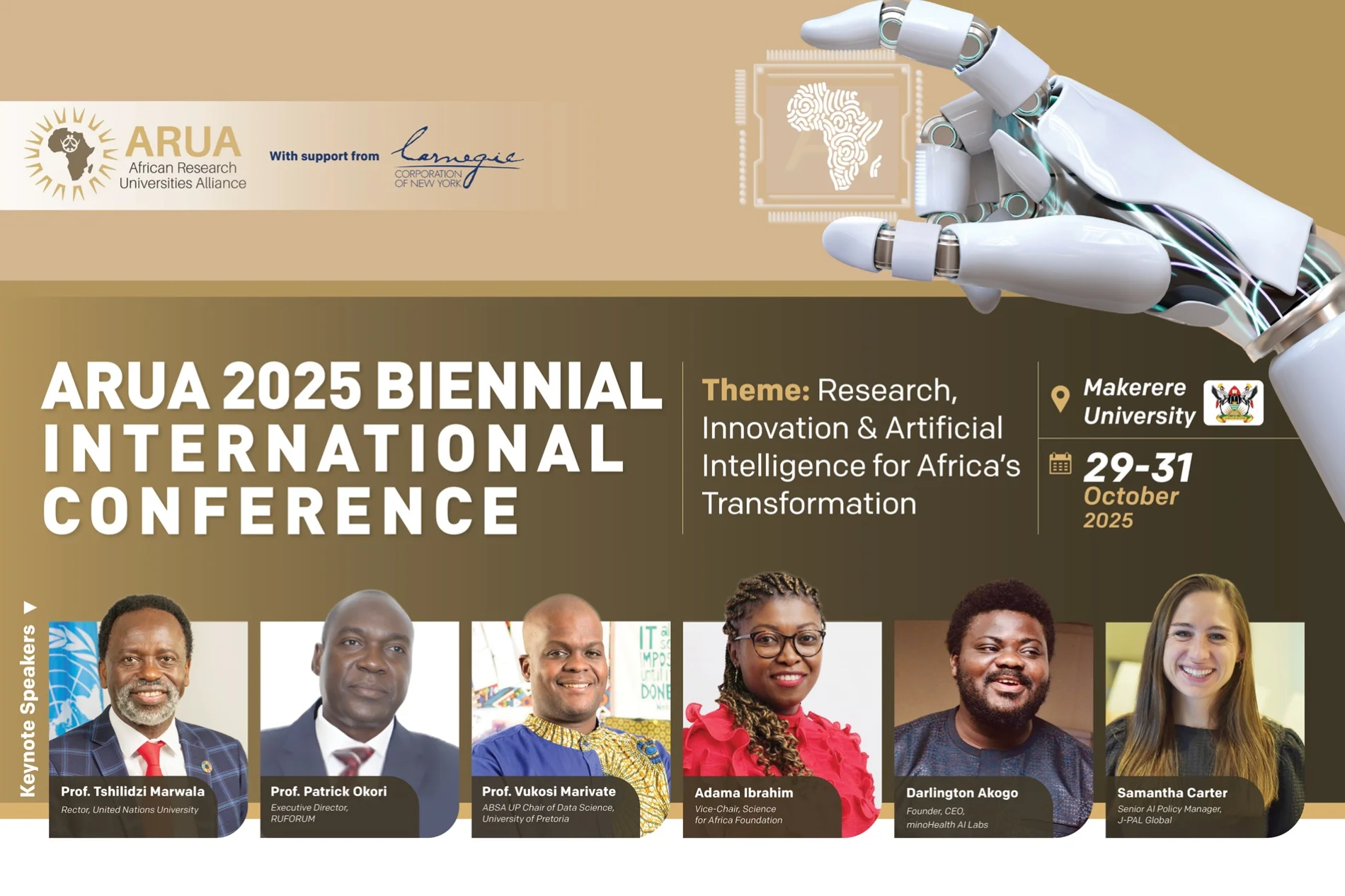
The ARUA 2025 Biennial International Conference

29 - 31 October 2025. The ARUA 2025 Biennial International Conference brought together experts from different fields, including universities, research institutions, government, industry, civil society, international organizations, etc., to discuss how Africa’s Transformation can best be facilitated by 
Research, Innovation and Artificial Intelligence.

See conference brochure (112 pp)

Extracts of the programma


29/10 Advancing responsible AI ecosystems in African HEIs

  • Moderator: Prof. Sizwe Mabizela (VC, Rhodes University, ARUA Board Chair)
  • Prof. Bolanle Oboh (DVC, University of Lagos)
  • Prof. Didas Muganga Kayihura (VC, University of Rwanda)
  • Prof. Mosa Moshabela (VC, University of Cape Town)
  • Prof Denis Worlanyo Aheto  (VC, University of Cape Coast)


30/10 Collaboration of Networks (Promoting Collaborative Research and Innovation Networks in AI in Africa)


  • Moderator: Prof. Kayode Oyebode Adebowale (VC, University of Ibadan)
  • Prof. Sharon Fonn (Co-Director, CARTA)
  • Prof. Anthony Egeru (Manager - Skilling, Engagement for Community Development, RUFORUM)
  • Mr. Jim Kaketch (Senior Programme Officer, Research and Policy Uptake, Partnership for African Social & Governance Research - PASGR)
  • Prof. Akanni Ibukun Akinyemi  (DVC, OAU)
  • Dr. Rachid Serraj (Director for Africa Initiative, UM6P)


31/10 Collaboration of Networks (Engaging international collaborative networks for Research and Innovation)

  • Moderator: Emeritus Prof. Ernest Aryeetey (University of Ghana)
  • Prof. Jenny Dixon (Secretary General, Universitas 21 – U21)
  • Prof. Jan Palmwosky (Secretary General, The Guild of European Research-Intensive Universities – The Guild)
  • Prof. Peter Lennie (Executive Director, Worldwide Universities Network - WUN)
  • Prof. Maashutha Samuel Tshehla (DVC, Stellenbosch University)
  • Dr. Laurent Bochereau (Minister-Counsellor Science, Technology & Innovation Delegation of the European Union to the African Union)

Poster presentation


The ARUA 2025 Biennial International Conference includes several posters and presentations directly related to agriculture and food security, many highlighting how AI and digital innovation can support sustainable farming, climate resilience, and smallholder livelihoods.

1. Leveraging Artificial Intelligence for Climate-Resilient Agriculture and Food Security in Africa: Addressing Data Gaps, Infrastructure Challenges and Policy Barriers

  • Presenter: Ms. Mariah Muli, University of Nairobi
  • Summary: Explores AI’s potential to improve agricultural resilience and food security in Africa. Identifies barriers such as data scarcity, weak infrastructure, and inadequate policy frameworks. Recommends developing localized AI models, strengthening digital infrastructure, and fostering public-private partnerships

2. Leveraging Indigenous Knowledge and Artificial Intelligence for Climate Resilience and Sustainable Agriculture in Africa: Exploring Africa’s Rain-Making Technology

  • Presenter: Mr. Philip Onyekachukwu Egbule, University of Delta, Agbor
  • Summary: Examines integration of Indigenous Knowledge Systems (IKS) with AI for climate adaptation and sustainable agriculture. Proposes hybrid systems that combine traditional weather knowledge with AI-based prediction tools for improved agricultural planning

3. Development of an Agri-Management Database System Prototype for the Sustainability of Smallholder Farmers in South Africa: A Design Thinking Approach

  • Presenter: Dr. Obvious Mapiye, Stellenbosch University, with co-authors from University of Pretoria and UNISA
  • Summary: Introduces a mobile app (AMDS) co-designed with smallholder cattle farmers to digitize farm records and extension services. Demonstrates improved usability and efficiency for managing farm data and connecting to markets

4. Climate-Smart Apiary Site Selection in East Africa: GIS-Based Analysis of Current and Future Climate Projections

  • Presenter: Dr. Filagot Mengistu Walle, Addis Ababa University, with collaborators from University of Helsinki and ICIPE
  • Summary: Uses AI-driven GIS and multi-criteria decision methods to optimize beekeeping site selection under different climate scenarios. Demonstrates how climate models can support adaptive agriculture and ecosystem services

5. AI Research Boost and Impact on Ugandan Universities and Communities

  • Presenter: Mr. Hussein Mbabali, Islamic University in Uganda
  • Summary: Highlights how AI and IoT projects in Ugandan universities (e.g., Busitema’s smart irrigation) have improved crop yields and agricultural productivity, showcasing university-community partnerships


🧩 Poster Presentations Related to Agriculture

6. Monitoring the Environmental Quality of Solar Energy-Powered Poultry Production System Using Artificial Intelligence (AI)

  • Presenters: Okonkwo Ifeanyi & Owoh Ikechukwu, University of Nigeria, Nsukka
  • Summary: Describes use of AI systems to monitor environmental parameters (temperature, humidity, emissions) in poultry systems powered by solar energy—targeting efficiency and sustainability in agribusiness

Wednesday, August 20, 2025

Kenya is transforming bean research

5 May 2025
. Kenya is taking bold steps to transform its bean research landscape through renewed collaboration, innovation, and capacity building. At the heart of this transformation is a growing partnership between the Kenya Agricultural and Livestock Research Organization (KALRO) and the Pan-Africa Bean Research Alliance (PABRA), under the Alliance of Bioversity International and CIAT. This collaboration is not only driving the development of improved bean varieties but also laying the foundation for climate-resilient agriculture, stronger seed systems, and next-generation researchers poised to shape the future of food security in the region.

During a visit to KALRO centers at Katumani, Thika, and Kakamega, Dr. Eliezah Kamau -Bean
Program Lead at KALRO-Thika - underscored the value of the Alliance partnership. The partners also reviewed ongoing work at the Horticulture Research Institute (HRI), where Dr. Kamau highlighted breeding efforts focused on drought tolerance, low soil fertility adaptation, and resistance to pests and diseases. This collaboration marks a vital step toward a more resilient and productive bean value chain in Kenya.

Industry Insights: The Bean Value Chain


As part of their field engagement, the Alliance team visited the National Cereals and Produce Board (NCPB) in Donholm, Nairobi, where they met with Mary Cherot, Executive Director of Cherubet Foods. Cherubet is a growing small and medium-sized food processing enterprise (SMFE) that specializes in value-added products, including instant composite porridge and pre-cooked beans.

Despite ongoing supply challenges, especially in maintaining consistent grain quality, Cherubet Foods sees strong market potential in yellow and red mottled bean varieties. The company primarily sources its beans through cooperative societies and smallholder farmers from the Rift Valley and border regions. This underscores the pressing need to strengthen aggregation networks and post-harvest handling systems to ensure consistent quality and a reliable supply chain.

Accelerating bean breeding to respond to market demands in East Africa: ACIAR’s Rapid Cooking Bean Project for health, nutrition and fuel efficiency

24-28 Marc 2025. A training program for partner countries in RCBP was held at the Alliance's Uganda
office , where researchers identified a major bias in seed colors of beans in RCBP, with the majority belonging to the black bean market class.

The project uses advanced breeding technologies, including pedigree selection, genomic selection and optimal contribution selection (OCS) to accelerate the development of common bean varieties that cook at least 30% faster and contain 15% more iron and 10% more zinc than traditional varieties. RCBP is a collaborative effort between The University of Western Australia (UWA) and members of the Pan-Africa Bean Research Alliance (PABRA) through the Alliance of Bioversity International and CIAT, and six National Agricultural Research and Extension Organisations (NARES) in Burundi, Ethiopia, Kenya, Rwanda, Tanzania and Uganda. The project not only focuses on scientific innovation but also on empowering a new generation of African plant breeders with new skills including gender-inclusive training.

The project is implementing a novel breeding approach (BRIO) to accelerate breeding for rapid cooking and biofortified beans. BRIO stands for accurate breeding values (B), rapid cycles (R), index selection (I) and optimal contributions selection (OCS) (O). The BRIO approach was implemented by the Alliance in Uganda in 2019 by intercrossing a diverse set of 160 founder parents. This was followed by rapid two-year cycles of overlapping early generation recurrent selection. Faster-cooking beans released by partners in this project will lower household fuel use and labor, especially for women, while addressing regional micronutrient deficiencies. Through strategic breeding cycles and inclusive capacity-building, RCBP is creating a ripple effect across agriculture, nutrition and gender equity, making it a powerful model for sustainable development in the region.

The Neycha Accelerator & Fund to support agroecological enterprises in East Africa

The Neycha Accelerator & Fund - A joint initiative by SHONA and Biovision to support agroecological enterprises in East Africa.

The Neycha Accelerator & Fund, an agroecology accelerator and revolving loan fund with the goal of boosting agroecology in East Africa and supporting growth-oriented small and medium-sized agroecological entrepreneurs (AEEs) with the much-needed capacity, capital and connections they require to move towards more sustainable and regenerative food production while advancing to a holistic and circular agrifood economy.

The Neycha Accelerator & Fund is looking to identify and invest in entrepreneurs building growth-oriented Agroecological Enterprises in Kenya and Uganda by providing them with the capacity, capital and connections they need to grow their impact.

Wednesday, July 23, 2025

Forgotten Foods: A GFAR/GFAiR Collective Action Success Story

The Collective Action on Forgotten Foods represents one of the most impactful and forward-looking partnerships under GFAR (now GFAiR)—reviving neglected and underutilized crops (NUS) to transform food systems, improve nutrition, and empower marginalized communities. Its story spans over two decades, beginning with the early recognition of "forgotten foods" as a global agri-innovation frontier.
 

Origins: A Global Innovation Priority (1999–2000)


The term “forgotten foods” began gaining traction in 1999–2000, when GFAR convened dialogues on rethinking agricultural innovation to serve smallholders, especially in marginal environments. At the GFAR2000 Global Conference in Dresden, neglected and underutilized species (NUS) were formally acknowledged as a global priority for research and innovation. These species—locally adapted, nutrient-dense, and often resilient to climate stress—had long been marginalized by mainstream agricultural R&D. GFAR partnered with actors like Bioversity International and the CGIAR NGO Committee to elevate the status of NUS in policy, research, and funding agendas.

Rising Momentum: From Advocacy to Collective Action


Through the 2000s and 2010s, GFAR supported global awareness-raising on the role of forgotten foods in combating hunger, biodiversity loss, and the erosion of traditional knowledge. These efforts laid the groundwork for the formal establishment of the Collective Action on Forgotten Foods, launched as part of GFAR’s restructured Collective Action mechanism in the late 2010s.

Key milestones included:
  • Formation of a multi-stakeholder partnership, including farmer organizations, public research institutes, NGOs, UN agencies, private sector, and youth;
  • A 2021–2022 global dialogue series on forgotten foods, led by GFAR and partners, identifying barriers and opportunities across regions;
  • The “Forgotten Foods Manifesto” (2022), calling for co-research, policy support, and investment in neglected crops;
  • Country-level engagement, such as support to India’s Odisha Millet Mission and integration of forgotten foods in school feeding, biodiversity policy, and climate resilience programs.

A Paradigm Shift in Food Innovation


Today, the Forgotten Foods Collective Action is:
  • Restoring indigenous food systems, valuing women's and communities’ knowledge;
  • Stimulating demand and markets for climate-resilient local crops;
  • Rebalancing agri-research priorities toward diversity, equity, and sustainability;
  • Driving policy shifts at national and global levels.
In September 2024, 3 consortia were selected among 21 applications for the GFAiR call for "Letters of Intention (LoI) on Forgotten Foods”: Swaminathan Foundation (India) the University of Ghana (Ghana) and The Food Bridge (Belgium). The 3 selected consortia focus on farmer-led conservation practices which are central to reviving forgotten foods. The Food Bridge (Belgium) manages a Food Heritage Project in Nigeria and Ghana with the intention of leveraging the access to the African diaspora food market, to promote consumption of indigenous African food, support rural farmers to start growing these food crops and access to premium market - see: 8th African Diaspora Agrofood Forum on Forgotten Foods. 

Food Bridge coordinates the Collective Action on Forgotten Foods. 


The Food Bridge (Belgium) coordinates the Collective Action on Forgotten Foods because of its leadership in bridging African diaspora markets with rural African farmers, its proven experience in food heritage projects in Ghana and Nigeria, and its ability to connect traditional knowledge, entrepreneurship, and policy advocacy—making it uniquely positioned to lead a global movement to revive and scale indigenous foods across continents. 

It identified two specific pathways to promote the consumption - and hence the demand for - forgotten foods: 
  1. the increased demand by the diaspora of nutritious forgotten foods of their country of origin and 
  2. the role of African Diaspora Food SMEs which offer new market niches for farmers’ organizations and agri-food SME’s. 

Between January and June 2025, the Collective Action on Forgotten Foods mobilized a diverse and dynamic set of activities—including proposal writeshops in Ghana and Nigeria, intercontinental consortium building, pilot deployments of the GAMAAL app, and high-level advocacy campaigns—that demonstrated how traditional knowledge, digital tools, and inclusive partnerships can converge to elevate opportunity crops. By centering women-led enterprises, diaspora engagement, and regional research capacity, these efforts serve as a scalable model for integrating biodiversity, nutrition, and cultural heritage into food systems transformation—offering a compelling blueprint for global action on neglected and underutilized crops.

The market study conducted in London was a pivotal step in understanding the demand, cultural relevance, and commercial potential of forgotten foods within the African and Caribbean diaspora communities. By analyzing consumer preferences, purchasing behavior, and existing supply chains, the study will provide critical insights into how opportunity crops—such as fonio, bambara groundnut, and African leafy vegetables—can be positioned in diaspora markets as both culturally resonant and nutritionally superior alternatives. 

These findings cannot only inform product development and branding strategies but can also strengthen the case for policy support and investment in transcontinental value chains that reconnect African smallholder producers with diaspora consumers seeking to reclaim food heritage.

See for further information on this market study following blog posts:

Multi-donor funded initiative to promote the use of so-called opportunity crops


Crop Trust has launched (19/03/2025) the Power of Diversity Funding Facility (PDFF). This  transformative multi-donor funded initiative will promote the use of so-called opportunity crops across Africa, Asia, the Pacific, and Latin America and the Caribbean. 

Initially, the PDFF will focus on 14 high-potential opportunity crops in seven countries,: Colombia, Kenya, India, Nigeria, Tanzania, Uganda and Zambia. Additional funding can extend the project’s reach to more countries, driving a shift towards resilient and sustainable agrifood systems worldwide.

Backed by an initial investment of €10 million from Germany (the German Federal Ministry for Economic Cooperation and Development (BMZ) through KfW Development Bank) and €2 million from Ireland, the PDFF will empower farmers to diversify their agricultural systems with resilient and nutritious alternatives to mainstream crops. The German funding will come via KfW, the German Development Bank, and Ireland is providing funding through its Department of Foreign Affairs.

To provide a foundation of knowledge, the Crop Trust has launched an Opportunity Crop Knowledge Base with key information on the crops prioritized by BOLDER partners.
  • The BOLDER (Building Opportunities for Lesser‑known Diversity in Edible Resources) initiative—funded by the Government of Norway under the broader BOLD program—aims to conserve underutilised, nutritious crops and make them accessible to smallholder farmers. Funded by the Government of Norway, BOLDER works to secure the diversity of these crops, and make it available to smallholder farmers in four African countries.
  • Budget: USD 22.4 million.
  • Project period: 2024 to 2030.
  • Target countries: Benin, Ghana, Tanzania, and Uganda.
BOLD (Biodiversity for Opportunities, Livelihoods and Development) is a 10-year global initiative funded by the Government of Norway, coordinated by the Crop Trust to protect and utilize crop diversity for food and nutrition security. 
  • Budget: now carries a total budget of ≈ USD 80 million (up from the initial USD 58 million committed at launch).
  • Project Period: 2021 to 2030—a full decade-long initiative.
  • Partner Countries: The core implementation, centers on 15 national genebanks spread across Africa, Asia, Latin America and the Near East. Allied work centres on crop improvement, seed systems and “opportunity crops” in four pilot countries: Uganda, Tanzania, Ecuador, and Bhutan.

The Power of Diversity Funding Facility selection workshop took place in Bogotá, Colombia, on 15-16 July, co-hosted by Agrosavia, the Alliance of Bioversity International and CIAT and the Crop Trust. The Funding Facility is financially supported by the German Federal Ministry for Economic Cooperation and Development (BMZ) through the KfW Development Bank, and the Department of Foreign Affairs of Ireland.

Thursday, May 15, 2025

East Africa Carbon Markets Forum EACMF 2025

8 - 9 May 2025. Kampala, Uganda East Africa Carbon Markets Forum EACMF 2025

This Forum convened over 300 stakeholders from across the region and beyond to advance carbon market development as a catalyst for sustainable growth. A major highlight was Uganda’s announcement of a forthcoming National Climate Fund, aimed at mobilizing climate finance and supporting green investments through both voluntary and compliance carbon markets . The forum emphasized the importance of robust regulatory frameworks, with discussions focusing on Article 6 of the Paris Agreement, transparency in carbon credit issuance, and the need for harmonized policies across East Africa to attract investment and ensure environmental integrity.

Participants also explored innovative financing models and digital tools to scale high-quality carbon projects. Organizations like Trees for the Future showcased farmer-centered agroforestry initiatives that link smallholder farmers to global carbon markets, demonstrating tangible benefits such as direct carbon payments . The forum underscored the role of nature-based solutions, renewable energy, and community engagement in achieving climate goals, positioning East Africa as a leader in leveraging carbon markets for sustainable development.


Extracts of the programme


 08/05 Navigating Regulatory Frameworks for Carbon markets

  • Keynote Speaker: Xana Maunze, Climate Finance Official, Enabel Mozambique

09/05 Unlocking Opportunities - Carbon Markets Association of Uganda - CMAU

See the video recording above
  • Kenneth Mugangi, Partner KTA Advocates
  • Michael Nana Yaw Nimoh, SPOUTS International, Country Director
  • Mr. Senyonga Derick, Senior Climate Change Officer, Ministry of Water and Environment, Climate Change Department
  • Anete Garoza, Co-organiser of EACMF and Vice President of CMAU
  • Moderator: Emmanuel Wanyama, Expert in Sustainability, KTA

Financing Sustainable Projects: Scaling Carbon Investments in Africa

  • Frederic Olbert, Co-founder and CFO, Carbonpool
  • Philip Hardwick, CEO of Everpath and Head of Environmental Projects for BB Energy
  • Tim McLellan, CEO, Trees For Future
  • Robert Mukiza, Director General, UIA 
  • Moderator: Canary Mugume, Senior news anchor & investigative reporter, NBS television

Other international speakers:

  • Micaela Passetti, Carbon Market Specialist, Climate Change Division, UNEP
  • Tom Sengalama, Team Leader-Nature, Climate, Energy and Resilience, UNDP
  • Tim McLellan, CEO, Trees For Future

Wednesday, May 14, 2025

Global Convening on Food Systems Transformation

7–9 May 2025.
Brussels. The Global Alliance for the Future of Food is a strategic alliance of philanthropic foundations working together and with partners around the world to transform global food systems.

The Global Alliance brought together members and partners—leaders from philanthropy, civil society, and beyond—united in driving food systems transformation at the intersections of climate, health, biodiversity, and justice. This was a closed, registration-only event.

Featuring high-level, thought-provoking plenaries and strategic working sessions, the convening explored bold, collective action at this pivotal geopolitical moment and tackled urgent challenges and opportunities in food systems transformation.

Through its convenings, the Global Alliance fosters connections among partners inside and outside philanthropy with diverse change-making approaches, creating a unique space for strategic dialogue. This gathering identified opportunities for collaboration, align strategies, and tackle critical challenges together.

Setting the stage

  • Jane Maland Cady, McKnight Foundation and Co-chair Global Alliance for the Future of Food
  • Anna Lappé,  Global Alliance for the Future of Food

Context setting: grounding in the moments

  • Olivier De Schutter, IPES-food

Shifting towards Action

  • Million Belay, Alliance for Food Sovereignty Africa (AFSA)
  • Esther Penunia, Asian Farmers' Organisation (AFA)
  • Vijayan Mj, Participatory Action Researh Coalition of India
  • Faustine Bas-Defossez, European Environmental Bureau
  • Moderator:  Ruchi Tripathi, Global Alliance for the Future of Food

Parallel sessions 1

  • Bridging agendas, amplifying voices: a bold strategy for global food negotiations
  • Bridging land and sea: uniting fishers and farmers for a sustainable future
  • Confronting corporation power, ultra-processed diets and the food-energy nexus
  • Repurposing environmentally harmful subsidies: ensuring public finances work for people and planet
  • Foresight for principled food systems transformation: anticipating, assessing and inciting change
Presentation by CGIAR Integrated Partnership Board, Vice Chair Patrick Caron

Parallel sessions 2

  • Agrochemicals and the food energy nexus: tckling a fossil fuel lock-in
  • Cathalic levers for regenerative and agroecology food systems transitions
  • Confronting corporation power, ultra-processed diets and the food-energy nexus
  • Foresight for principled food systems transformation: anticipating, assessing and inciting change
  • Repurposing environmentally harmful subsidies: ensuring public finances work for people and planet

Organising for Healthy food environments

  • Carlos Monteiro, University of Sao Paulo
    (below of related video recording)


Video interview

Interview with Nancy Mugimba, National Coordinator Eastern and Southern Africa Small Scale Farmers' Forum (ESAFF) Uganda

She answers following questions:

Why is the diaspora essential for the promotion of Forgotten Foods?

How is your mother sending  bamboo shoots to the UK friends and relatives?

Tuesday, December 10, 2024

Nutrition-sensitive food value chain in the Africa region – investing in MSMEs for delivering healthy diets

5 December 2024. Nutrition-sensitive food value chain in the Africa region – investing in MSMEs for delivering healthy diets by IFAD

The virtual event attended by [102 participants / 319 registrations] aimed at advocating and raising awareness of the issues towards creation of sustainable and inclusive food value chains to meet food and nutritional demand for consumers. The specific objectives of the event were: 
  • bring innovations and different technologies, exchange of share good practices and case studies in promoting sustainable food products development by SMEs that are environmentally friendly, ecologically sustainable, safe and nutritious. 
  • discuss the issues and challenges for ensuring sustainable consumption, including reducing food loss and waste 
  • identify policy and investment options for promoting sustainable food products development by SMEs and promotion of sustainable consumption. 
Speakers:
  • Welcome Remarks – delivered by Ms Sara Mbago, Regional Director, IFAD East and Southern Africa Regional Office ESA
  • Why invest in value chains? - Sustainable value chains introducing eco-friendly, safe and nutritious food products that support local and traditional safe and nutritious foods cultivated by small-holder farmers (e.g. adding value to traditional foods; processing of safe, better quality and nutritious food products; packing using environmentally friendly degradable packaging system, food labeling) – Ms Betty Kibaara, Director, The Rockefeller Foundation, Africa Region Office

    Citing the example of investing in school feeding (in Ghana), Ms. Kibaara clarified that children in schools comprise 48 billion dollar market globally and the need to encourage aggregator models that supply schools with locally procured nutritious value chains. She emphasized the need to collaborate with governments to accelerate impact through institutional procurement including embracing initiatives like capacity building to strengthen local sourcing.

  • What technologies and innovations can be offered? Working with MSMEs to deliver nutritious diets: food fortification as means to combat micronutrient deficiencies in Africa: – Mr. Penjani Mkambula, Deputy Director, Programme Services, Global Alliance for Improved Nutrition (GAIN) 
  • Investing in nutrition-sensitive value chain in Africa - Dr. Kennedy Bomfeh, Senior Director, The Ajinomoto Foundation 

    Dr. Kennedy Bomfey gave five key points on how to leverage the public-private partnerships: i) The need for both sectors to understand the problem in context in order to co-create synergistic interventions; ii) The need to provide a science based response to understand the context thus enabling participation for scale up of proposed solutions; iii) collaboration for holistic impact by using evidence as a bridge to link private sector and public sector; iv) localizing for uptake or utilization of locally available raw materials by ensuring local food culture is respected to protect local food value chains; v) The use of market based distribution for sustainability by leveraging public private partnerships to enhance market penetration mechanisms. 

    See for more information: 08/10: In the spotlight: Forgotten Foods / Opportunity Crops and Nutrition in the First 1000 Days

  • facilitated by Ms Nomindelger Bayasgalanbat, Senior Technical Specialist (Social Inclusion – Nutrition), IFAD, ECG 
Panel with representatives of MSMEs
  • Moderated by Ms Putso Nyathi, Senior Value Chain Specialist, IFAD, PMI
  • Creating safe and nutritious local food products at affordable price, – Ms. Marie Claire Nyirankundizanye, Farm Fresh Foods Ltd (Rwanda) - Precooked beans biofortified

    The FarmFresh Food Company is an innovative Kigali-based food processing company that markets branded, fully cooked Rwandan beans in laminated pouches 

  • Increasing utilization of local foods for healthy diets: Ms. Rachel Gikonyo, Eden Harvest Limited, Vegetables value chain, Kenya 

    Eden Harvest Limited, an agricultural enterprise that specializes in farming, aggregating, packing, and distributing high-quality, fresh agricultural produce to schools, restaurants, supermarkets, and households.

  • Diversifying products to support nutritious diets: Insects as Future Food - Dr. Geoffrey Ssepuuya, INSFOODS Limited, Uganda 

  • Creating safe and nutritious local food products at affordable price - Mr. David Kamau, Fortified Whole Grain Alliance, Eastern Africa focus on Burundi 
Closing Remarks – delivered by Sara Kaoukou, ESA Regional Lead Portfolio Advisor, IFAD


Related: 


This important meeting, supported by the European Union and Expertise France through their EU4SUN project, brought together local producers, policymakers, regulatory authorities, funders, social impact investors, and technical agencies. The discussions focused on applying a systems approach to address barriers to producing safe and nutritious, locally made complementary foods. 

Read the meeting pre-read material, “Barriers to improving access to locally produced nutritious and safe complementary foods in low- and middle-income,” available in English and French.

Micronutrient Forum. Barriers to improving access to locally produced nutritious and safe complementary foods in low and middle-income countries. Washington, D.C.: Micronutrient Forum; 2024. # 14 pp.

Monday, December 2, 2024

Women Land Defenders from Latin America, Asia, Africa, and EMENA


28 November 2024
. During this meeting leaders from Latin America, Asia, Africa, and EMENA, broke down the successes and challenges of practical initiatives in their advocacy efforts to achieving women land rights in order to overcome obstacles in their territories. 

Recording available

Women Land Rights Defenders are crucial to protect land and territories, but doing so expose them to gender specific threats and challenges. There is a global need to engage with women defenders to support them, document their struggles and facilitate their voices to be heard in the public sphere.

  • Moderated by Elisabetta Cangelosi, Gender Justice Advisor, International Land Coalition 
  • Etienne Coyette, Policy Officer, INTPA F3
  • Michel Forst, UN Special Rapporteur Environmental defenders
  • Marusia Lopez,IM-Defensoras- Mesoamerican Initiative of Women Human Rights Defenders
  • Kimberly Alvarez, AR Now ! NLC Philippines
  • Leiria Vay, CODECA, Guatemala
  • Hadija Sserwanga,UCOBAC, Uganda

Monday, August 12, 2024

Field tour to agroecology centres of excellence

 12 August 2024.  Field tour to agroecology centres of excellence

  • by AFSA
  • This virtual event provided an immersive experience into best agroecological practices at the RUCID, the Ugandan HSHF/agroecology Centre.
The Rural Community in Development (RUCID), is a HSHF (Healthy Soils Healthy Food) centre in Mityana district and the RUCID ORGANIC AGICULTURE TRAINING COLLEGE is found 4 km from Mityana town along Namutamba road, in Kigogozi cell/ village, Kireku ward/ parish, Busimbi division/ subcounty, Mityana municipality, Mityana District. 

The college is an autonomous subsidiary of RURAL COMMUNITY IN DEVELOPMENT (RUCID), a limited company by guarantee.


The RUCID Centre in Mityana district, Uganda

Common agroecology practices alongside Ugandan farmers include; crop diversification, intercropping, contouring, and the preservation of indigenous seeds and making biofertilizers and bio-stimulants. These practices not only enhance food variety and nutritional value but also build resilience against climate change impacts. For example, the indigenous seeds are adapted to local conditions and offer higher resilience to pests and diseases, and require less inputs than commercial varieties. This not only reduces costs for farmers but also safeguards agro-ecosystem biodiversity.

Securing Women's Land Rights for Agroecology

8 August 2024
. Securing Women's Land Rights for Agroecology 

Agroecology is increasingly recognized as the most suitable approach to achieving sustainable food, land, and eco-systems. A system that can support efforts to eliminate hunger, alleviate poverty, and soil degradation. With agroecology, we are likely to achieve food sovereignty, build territorial markets, and productively empower the youth and women. We still have limitations however, some of which are due to the land rights and governance that affect all, but especially the women who make up over 50-70% of the small-scale farmers.

This webinar, organised by PELUM. discussed how to secure women's land rights for agroecology. PELUM Association is a strong network of 12 countries in East and Southern Africa working to improve the livelihoods of small holder farmers and sustainability of rural communities through promoting Ecological Land Use Management practices.

Thursday, May 9, 2024

East Africa Carbon Markets Forum

9-10 May 2024. East Africa Carbon Markets Forum, a premier event bringing together key stakeholders in the region's carbon markets.

The East Africa Carbon Markets Forum - a premier event bringing together key stakeholders in the region's carbon markets.

This forum served as a dynamic platform for knowledge exchange, collaboration, and actionable discussions aimed at advancing sustainable development goals through carbon market initiatives.


Session: Carbon Credit Regulations Landscape in East Africa

  • Hon. Ruth Nankabirwa Ssentamu, Minister of Energy and Mineral Development  Uganda's Preparedness for Climate Finance and Urgency to Expand Clean Energy Access.
  • Marc Baker, CEO, Carbon Tanzania
  • Mahlon Walo, Chairman of CAMAK, CEO Afrinet Carbon
  • Daniel James, Founder & CEO, REGID International
  • Anete Garoza, Co-founder & Chief Climate Officer, 1MTN
  • Lily Ginsberg-Keig, Policy Manager, BeZero Carbon - A Credible and Transparent Carbon Market. 
  • Margaret Athieno Mwebesa, Commissioner for Climate Change, Ministry of Water and Environment, Uganda - Green Horizons: Charting Uganda's Journey Toward Climate Resilience 

Session: Exploring Article 6 and its Implications for East African Nations

  • Rehema Mbalamwezi, Vice president of UpEnergy’s Africa operations - The view from the ground: practical implementation of Article 6 Framework in Tanzania.
  • Sam Davies, CEO, FLUX
  • Kenneth Muhangi, Partner, KTA advocates
  • Ely Sandler, Policy Advisor, Seagrass
  • Molly Brown, Head of Carbon Strategy, BURN Manufacturing
  • Heather McEwan, Senior Manager, Africa and the Middle East, Verra - VIDEO: Opportunities for Africa

Session: How can voluntary carbon markets overcome credibility questions?\

  • William Otieno, Regional Lead, UNFCCC RCC East and Southern Africa (RCC EAS Africa) - Translating Policy into Action: Advancing Article 6 Implementation in East Africa.
  • Dr Max Graham, CEO, Space For Giants - VIDEO: Building Africa’s Carbon Economy
  • Ann Maina, Project Lead East Africa, Boomitra, 2024 Earthshot prize winner
  • Olya Grovel, Chief Growth Officer, Orbify
  • Molly Brown, Head of Carbon Strategy, BURN Manufacturing
  • Frederick Leuschner, co-founder and CEO Greentrade Tech

Panel Discussion: Sustainable Approaches to Carbon Dioxide Removal: A Long-lasting Perspective

  • Lily Ginsberg-Keig, Policy Manager, BeZero Carbon
  • Peter BenHur Nyeko, Co-founder and Managing Director, Mandulis Energy
  • Yifan Powers, Senior Research Manager, Climate Precision Development
  • Bhagyan Kekal, Director, Bukona Agro Processors Ltd.
  • Calvin Jodisi, President, African Summit on Entrepreneurship and Innovation (ASENTI)
  • Bryan Adkins, Co-Chair, Carbon Markets Association of Kenya (and NCN) - Convening a movement on carbon markets: experiences from the Nairobi Climate Network
  • Mahlon Walo, Chairman of CAMAK, CEO Afrinet Carbon
  • Dr. Sami Divleli, CEO of Net Zero Climate Investments - Harnessing Water Projects for Sustainable Development.

Panel Discussion: Road from COP28 to COP29 and what we need to achieve

  • Andrew Ocama, Climate Finance Advisor, Ethiopia Tony Blair Institute
  • Max William Matter, Senior Financial Sector Specialist, CGAP
  • Robert Mukiza, Director General, Uganda Investment Authority
  • Kristjan Raude, CEO and co-founder, 1MTN
  • Anete Garoza, Co-founder & Chief Climate Officer, 1MTN

Session: Impact Investing


Case Studies: Successful Impact Investing in East African Carbon Projects

  • Sivan Yaari, Founder & CEO of Innovation: Africa. From Sun to Water: Carbon Credits as a Pathway for Sustainable Water Projects in Africa
  • Bryan Adkins, CEO, Eden Reforestation Projects. Project and Policy Development in East Africa: Lessons and Areas for Improvement
  • Bianca Gichangi, Regional Lead for Africa, VCMI - Accelerating Green Growth in East Africa through Carbon Finance from High-Integrity Markets.
  • Lawrence Cole-Morgan, Global Markets: Lead, Carbon Credit Trading, Standard Bank - State of Carbon Markets in Africa and Climate Finance
Panel Discussion: COP28 Follow-up: How East Africa Can Unlock Billions for Nature-Based Carbon Solutions
  • Nikita Parfeniouk, Originator, Offset8 Capital Limited
  • Daniel Yin, CEO, Spouts International
  • Denis Mugagga, Climate Finance Unit, Ministry of Finance
  • Canary Mugume, News anchor at NBS Television and investigative journalist
Panel Discussion: Investing for the Planet: Strategies in Carbon Markets and Beyond
  • Ilkay Demirdag, Impact & Investment Strategist
  • Anete Garoza, Co-founder & Chief Climate Officer, 1MTN
  • Andreas Reger, Head of Project Development, Volkswagen ClimatePartner GmbH
  • Roy Kahangwe, Business Lead and Managing Director, Khala Labs

Session: Unleashing Africa's Potential

  • Patrick Ayota, Managing Director, NSSF - Navigating Corporate Climate Action.
  • Dr. Sophie Flack-Prain, Reporting & Insights Lead, Space Intelligence - Ecosystem Insights: Kenya’s Nature-based Opportunities
    • Reporting & Insights Lead at Space Intelligence, to explore Kenya through the lens of our national-level land cover data set, diving into key insights about the country’s natural capital, the challenges in mapping certain regions of the landscape via remote sensing, and how project developers and investors can use these data to maximise and showcase nature impact from forest carbon projects.
  • Kanyinke Sena, Governing Board Member, Integrity Council for the Voluntary Carbon Market (ICVCM) - VIDEO: How the work of the Integrity Council for the Voluntary Carbon Market impacts East Africa
Panel discussion: How Carbon Credits are Driving Sustainable Agriculture, Agroforestry
  • Caroline Kimani, Carbon Technical Expert, Climate Action Platform for Africa (CAP-A)
  • Alek Pillay, Senior Underwriter, Kita.Earth
  • Vincent Mainga, Country Director, Trees for the future
  • Carolina Fernandes, Global Head of Origination, Seagrass
Panel Discussion: Decarbonisation: Accelerating e-mobility in East Africa
  • Allan Muhumuza, Team Leader, Mobility Bureau at the Science, Technology and Innovation Secretariat – Office of the President
  • Rikki Verma, Founder, Nexus Green
  • Ivan Kwikiriza, Founder, Safelori
  • Asmahaney Saad, Partner, KTA Advocates


Session: Carbon Market Digitalisation

Einars Garoza, Partner, Bld.ai - From Data to Decisions: Tech Solutions for Climate Investment in Africa

Panel Discussion: Tech-Driven Resilience: Revolutionizing Climate Finance in Africa

  • Alexey Shadrin, CEO & Co-founder, Evercity.io
  • Hania Othman, Director Sustainable Impact EU/Africa, The HBAR Foundation
  • John Robert Turyakira, Deputy Executive Director, The Environment Shield
  • Nicholas Katongole, Co-Founder & Director, NileOrbital Aerospace

Panel discussion: Carbon Markets: Innovating Finance, Promoting Health, and Leading Consciously into the Future
  • Deniz Erkus, International Consultant for UNDP, CIO Sustainability at HealthSum
  • Kandia Milton, Government Affairs Director, Dream.org
  • Julius Magala, Energy Access Coordinator at UNCDF
  • Ron Kawamara, Vice Chairperson, Uganda Tourism Board - Green Horizons: Exploring the Synergy Between Sustainable Tourism and Carbon Markets for a Greener Future.
Panel Discussion: The View from a Top: Strategies of Visionary Leadership in Dynamic World
  • Dr. Sami Divleli, Co-Founder & Chair of Net Zero Climate Investments
  • Victoria Joy Sibiya, Sustainability Business Manager, Next Media
  • Irene Mugisha, CEO of Presidential CEO Forum
  • Kristjan Raude, 1MT Nation

Resource:

Evaluating the potential and eligibility of conservation agriculture practices for carbon credits
Published: 22 April 2024.

Carbon credits, a voluntary market mechanism to reduce greenhouse gas (GHG) emissions, can incentivize climate action. We evaluate the potential and eligibility of Conservation Agriculture (CA) practices for carbon credit generation in India under Verra's VM0042 methodology.

Related:


29 March 2024. WRI Africa, Aspen Institute Africa, SDSN Kenya, CAP-A and Nairobi Climate Network NCN hosted a Carbon Markets Clinic on 25 March 2024, in order to equip participants with foundational knowledge in the basics of carbon markets, to understand the role of carbon markets in Kenya.


Monday, May 6, 2024

Essential Competencies of Frontline Agricultural Extension Professionals

Suvedi, M., and Sasidhar, P.V.K. (Eds.). (2024). Essential Competencies of Frontline Agricultural Extension Professionals. East Lansing, Michigan, USA: Alliance for African Partnership, Michigan State University. #461 pp.

This training manual was funded by Michigan State University through the Alliance for African Partnership (AAP) for a 2021 Partnerships for Innovative Research in Africa (PIRA) grant award titled ‘Strengthening Agricultural Extension Training in the MSU Alliance for African Partnership (AAP) Consortium Partners in Africa’. 

All the papers are available at https://www.canr.msu.edu/people/murari_suvedi

To serve farmers and agribusiness operators better, we need to prepare new generations of agriculture development professionals, change our extension curriculum and pedagogy and prepare competent extension professionals. 

To improve training of extension professionals, the editors of this manual conducted three comprehensive studies on essential competencies of extension professionals in South Asia and sub-Saharan Africa: 

  1. Assessment of Core Competencies of Livestock Extension Professionals in India (2016): USAID – MEAS Funded Project. 
  2. Strengthening Agricultural Extension Training in South Asia (India, Sri Lanka and Nepal) - Process Skills and Competency Gaps in Undergraduate Agricultural Extension Curriculum (2020): Funded by US Department of State under Fulbright programme. 
  3. Strengthening Agricultural Extension Training in Nigeria, Malawi, South Africa, Uganda, and Kenya (2023): Funded by AAP-PIRA (Alliance for African Partnership - Partnerships for Innovative Research in Africa), Michigan State University. 
These studies identified essential job competencies of extension professionals, assessed whether these key competencies were covered in current UG extension curriculum, determined the gaps in essential job competencies of extension professionals and recommended competency-based curriculum with 11 process skills and core competencies and 97 subcompetencies for their inclusion in the UG agricultural extension curriculum. 

Extracts

The extension system is challenged to serve as the connecting actor in complex agricultural innovation systems, to go beyond technology transfer to facilitation, beyond training to learning,  assisting farmers to form groups, dealing with marketing issues, addressing public interest issues in rural areas such as resource conservation, health, monitoring of food security and agricultural production, food safety, nutrition, family education, and youth development, and partnering with a broad range of service providers and other agencies.  This calls for new skills and competencies for extension professionals, apart from those they  traditionally possessed. (page 277)

In general, innovators and earlier adopters have more formal education, higher social status (larger farms, higher income), greater exposure to mass media, greater exposure to interpersonal channels of communication, greater extension agent contact, greater social participation (e.g., community leader, farmer association leader) and more contact with persons outside their community than later adopters. However, it should be noted that individuals do not occupy permanent positions in the characterization of the adopter categories for all innovations. For instance, an individual who 
falls into the category of laggard in innovation A may become an innovator for innovation B. (page 102)

The multitude of ICT initiatives in agricultural extension plays an important role in revitalizing the interaction between extension services and farmers by making services more demand-driven, up-to-date, and inclusive. However, ICT is but one element in the wider transformation toward pluralistic extension services. Francis and Addom (2014) argue that extension alone cannot lift people out of poverty without the right combination of policies, technologies, and market opportunities. Context specificity is critical. To be effective, it is essential to choose the ICT tool that is the most appropriate in a specific situation and context, such as in affordability (McNamara et al., 2011). This depends both on the type of information to be transferred as well as on the characteristics of the target group. ICTs should not be seen as the sole solution to the challenges associated with agriculture because broad access to more sophisticated and integrated ICTs requires organizational capacity that public sector agricultural extension systems at present lack. (page 155)

Management generally values improvement-oriented studies. Donors and policymakers seek
knowledge-oriented evaluations and studies that answer accountability questions. (...) The extension program or project manager should establish the desired level of outcomes at the 
outset of a program, project, or policy. The higher up the hierarchy they are, the more time and resources it generally takes to gather data about outcomes, but the more convincing the evidence will be. As a manager, you must decide the trade-off between strong evidence of worth and the cost/time required to gather evidence. The top rung of the ladder shows results related to the long-term benefits or impacts that drive the program or project – for example, “environmentally friendly agricultural production.” Managers typically cannot evaluate at the top level because they cannot isolate other factors that may have led to the long-term result, but it is nevertheless helpful to know what the ultimate expected outcome or impact is. (page 169)

Because of several limitations -- such as availability of baseline data, budget, and absence of a
suitable comparison group -- experimental or quasi-experimental designs may not be feasible
in many contexts. In such situations, extension program evaluators have frequently used non-
experimental evaluation designs to conduct program/project evaluations. Two commonly designs
used evaluation designs are: Pre- vs. Post-program Evaluation 
page 173)