Platform for African – European Partnership in Agricultural Research for Development
Showing posts with label IRD. Show all posts

Tuesday, April 23, 2024

Sustainable Intensification of Soils and Agroecosystems


23-25 April 2024
, Dakar, Senegal International Conference on Sustainable Intensification of Soils and Agroecosystems

The objective of this conference is to bring together researchers, teacher-researchers, students, experts and professionals to present the latest scientific results and discuss the challenges and opportunities for sustainable agriculture in sub-Saharan Africa.

Organized by the Institute of Research for Development (IRD), the Senegalese Institute of Agricultural Research (ISRA), the Center for International Cooperation in agronomic research for development (CIRAD), the Agricultural Prospective Initiative and rural (IPAR), the “Dynamics for an Agroecological Transition in Senegal” (DyTAES) and their partners, with the support of the African Center of Excellence in Agriculture for Security food and nutrition (CEA AGRISAN) and the French scientific committee of the desertification (CSFD), this international scientific conference will allow researchers and researchers, as well as civil society to discuss the challenges and opportunities of a sustainable agriculture in sub-Saharan Africa.


23/04 Session 1 : Des modes d’usage des terres renouvelés face aux enjeux de l’agenda 2030 du développement durable


This session presented research results on alternative agricultural and pastoral practices and on the responses provided by these practices to global issues and the needs of farming communities. Particular attention was paid to alternative practices allowing adaptation to the effects of climate change in the region, in particular the management of the health of soils, plants, animals and that of water resources. This session will also question the capacity of alternative practices for controlling greenhouse gas emissions, particularly through their potential for carbon sequestration in soils and vegetation.

24/04 Session 2 : Co-construire et co-évaluer les futures pratiques agricoles et les voies d’adaptation des agrosystèmes : quelles méthodologies ?


This session highlighted approaches that have integrated from their initiation a diversity of actors in the search for sustainable alternatives, in particular through innovative methods of co-design and consultation (living labs, collaborative or participatory research platform, modeling support, deliberative approach, etc.)

24/04 Session 3 : La transition agroécologique pour plus de durabilité et de souveraineté alimentaire


This session discussed the latest advances in terms of knowledge on agricultural and livestock techniques or practices, social arrangements and public policies which respond through agroecology to questions of sustainability on a scale. local, territorial, or national. It involved assessing the impact of these possible transformations on renewed food sovereignty policies.

  • Application des images drone en RGB et de l’Intelligence Artificielle (IA) pour dénombrer les pieds de mils et estimer leur taux de couverture à l’échelle de parcelles dans un système agroforestier dominé par Faidherbia albida. Niang A. et al
  • S4-3. Deep learning approach for diagnosing and estimating the severity of mango diseases in developing countries : the case of Senegal. Faye D. et al
  • S4-4. Spatial Characterization of Agroforestry System Performance in Faidherbia/Pearl Millet Intercrops Using a Probabilistic Atlas of UAV Data. Diene S. et al
  • S4-12. Association cultural mil-niébé comme défit de l’intensification agroécologique au Sénégal : capacité du modèle STICS à simuler ces performances agronomiques. Senghor Y. et al
  • S4-11. Massive Open Online Course (MOOC) sur l’Agroécologie adapté au contexte de l’Afrique de l’Ouest : outils numérique efficace pour appuyer la transition agroécologique. Sall SN. et al.

Massive Open Online Course (MOOC) on Agroecology specific to West Africa (page 115 of the programme) - MOOC sur l’Agroécologie adapté au contexte de l’Afrique de l’Ouest : outils numérique efficace pour appuyer la transition agroécologique 

For a better understanding and good use of agroecological techniques and meeting the challenge of the agroecological transition, it is necessary to innovate and adapt information and sharing systems of knowledge on agricultural practices, agri-food systems and sectors, the orientations of the research, initial and continuing training for actors in the agricultural and rural world, and the system support for farmers (the agricultural council). For this, the use of tools to strengthen The most accessible and least expensive capacity will better satisfy stakeholders. Among these tools, there are training courses accessible everywhere (online), free and very interactive which are MOOCs (Massive Open Online Course). 

Agroecology is above all diversity, a diversity of ways in understanding and construction of agroecological systems, in the analysis and implementation of principles. This is why the Agroecology MOOC in West Africa takes into account the contexts regional know-how in its application and the food system as a whole. The objective of the tool created in West Africa is to adapt the content of agroecology MOOCs to the standards of West African context, to co-create new adapted case studies and new lessons illustrating the agroecological transition and co-constructing an animation system supported by the partners. The development of the MOOC Agroecology specific to West Africa constitutes a real opportunity in capacity building for teaching staff, students and development stakeholders agricultural, and thus an important lever to support the sustainable intensification of its production systems agricultural.


23/04 Table ronde 1 : Quelle transition agroécologique pour une souveraineté alimentaire en Afrique de l’Ouest ? (organisée par DyTAES)


The objectives of this round table were: to take stock of experiences around the agroecological transition; to dialogue on the place of the agroecological transition in policies and expected agricultural transformations; to identify the challenges for a successful agroecological transition.


24/04 Table ronde 2 : L’intensification durable dans l’agenda de la prochaine Conférence des Parties (COP16) de la Convention des Nations Unies de Lutte contre la Désertification (CNULCD) ? Quels messages portés à la COP16 ?


The objective of this round table is to debate: on issues of scientific diplomacy with regard to the CNCLD; on priority messages to highlight in anticipation of the next “Desertification” COP
on modalities (Policy brief) to make these messages visible.


Tuesday, September 12, 2023

Research and Innovation in Africa: a driver for development and partnerships

13 September 2023. Brussels + Online. Conference on Research and Innovation in Africa: a driver for development and partnerships

See the Programme

Link for online participation:

A roadmap for research and innovation between the European Union and the African Union was agreed at the occasion of the EU-AU Summit in February 2022. It identifies 4 objectives: translate innovative capacities and achievements into tangible outputs, strengthen innovation ecosystems, develop sustainable, long lasting and mutually beneficial higher education and R&I and scale up instruments that can take forward existing successful programmes and projects. 

In the context of the revision of the EU multiannual financial framework and of the programming of EU external action instruments for 25-27, the conference will discuss the role of research and innovation for the development of partnerships between the European Union and partner countries, through a focus on African countries.

Aims of the conference
  • Through a focus on the EU-African scientific partnerships, brainstorming on the implementation of Research & Innovation policies in support to the Global Gateway strategy;
  • Give visibility to European Research & Innovation expertise in the field of partnerships for development;
  • Promote the dialogue between European research organisations and the European Commission on EU Research & Innovation policies and funding mechanisms in the Global Gateway context;
  • Mobilize European research organizations in the implementation of the Global Gateway strategy;
  • Provide a political framework for the creation of a European Research Alliance for Sustainable Development in partner countries in the Global South.

Keynote speeches – The role of Research and Innovation in the European Union – African Union partnership

  • Hans Stausboll, Director for Africa, DG INTPA 
  • Erik Hansalek  (see speaker), Head of Unit Africa, German Federal Ministry of Education and Research (BMBF) Germany
    "We can not ensure success but we can deserve it"
  • Patrick Nedellec, Director for European and International cooperation, French Ministry of Higher Education and Research  

Round Table 1: The singularities of the Research & Innovation partnerships for development 


Through the example of Africa, the round table allowed research organizations to explain the needs and specificities of the R&I for development. 

The testimonials addressed the following topics in particular: research infrastructures, issues related to HR/training/mobility, the notion of scientific excellence in research with the South and the construction of sustainable partnerships. 
  • Lise Korsten (second from left), President African Academy of Sciences. She is the first woman President to lead the Academy. She will serve for a three-year term running from 2023-2026.  

    "We hope the ARISE I project will be continued in ARISE II."

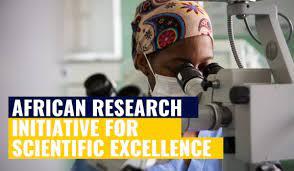
    Note: African Research Initiative for Scientific Excellence (ARISE) is implemented by the African Academy of Sciences (AAS) and promotes research in different fields of scientific endeavour taking into account EU-AU joint priorities such as public health and green transition. 

  • Olusola Bandele Oyewole, General Director, Association of African Universities  AAS
  • Amadou Sall, General Director, Institut Pasteur de Dakar, President of Pasteur Network  (failed to connect online)
  • Stephen Onakuse, President, Alliance Agrinatura 

    "The Forum for Agricultural Research in Africa will be the leader of a new Horizon-Europe project in which AGRINATURA will be a partner"

    Note:  CEA-FIRST and StePPFOS were selected under the HORIZON-CL6-2023-FARM2FORK: Long-term sustainable platform for the EU-AU cooperation under the FNSSA partnership. 

  • Emilian Cioc, Deputy regional director, Agence universitaire de la francophonie  
  • Moderation: Michael Hörig, Director of Brussels’ Office, DAAD 

Round Table 2: The European R&I policy framework to support the partnerships for development


DG INTPA presented in particular the role of R&I in the Global Gateway strategy, while DG RTD  detailed the Global approach of R&I with a focus on Africa (e.g.: EU-AU roadmap/Africa initiative Horizon Europe). The presentations of a Member State and a National Funding Agency will highlight their ownership of the political framework and, in particular, the added value of the so called “Team Europe” approach. 
  • Carla Montesi (see video picture), Director, Green Deal and Digital Agenda, DG INTPA 

    "With a budget of 8 million INTPA will start in 2024 the Technical support to the coordination of the ‘Scientific and technological support to the Regional centres of Excellence related to Green Transition’ Note: Reference number: INTPA/2023/EA-RP/0016 

    Question: The scarcity of human resources at EUD level, the focus on directly managed projects and the sometimes disappointing follow-up of national research agendas have indeed  been signalled as bottlenecks. in the report "EU support to sustainable agri-food systems in partner countries 2014-2020"  IS IT REALISTIC TO EXPECT THAT EU delegations also follow the national research agenda considering the limited staff? 

  • Nienke Buisman, Head of Unit, International Cooperation, DG RTD 

    "We plan to organise another Research info session in November" 

    "Under the Africa Initiative II a series of calls for proposals were published which are open to/requiring the participation of African scientists. We received already some 205 proposals" 

    Question:  INtegrated and Circular Technologies for Sustainable city region FOOD systems in Africa (INCiTiS-FOOD) will be showcased in New York 22/09. This consortium exceptionally involves a financial partner (AFRACA) to upscale innovation. IS THIS THE WAY FORWARD? 

  • Thomas Melonio, Director Innovation, Strategy, Research, Agence française pour le développement (AFD)  

    "AFD invested some 50 to 60 million on research. But research competes with many other priorities. We want in particular to bridge the gap between research and policy makers for green transition. In South Africa we analyze with EU funding the effect of the energy transition. We have a similar research going on, on the impact of the just and green transition policy in Colombia. Our AFD innovation fund wants to fund small projects with high impact. We want to scale up the most efficient innovations."

  • Isabel Diaz, Deputy Vice President of the Spanish Research Council (CSIC)  
  • Moderation: Alain Mermet, Permanent Representative to the EU, CNRS

Round Table 3: Tools and resources available


This panel discussed the operational aspects of certain R&I instruments set up by the European Commission to support partnerships with African countries:  
  • Olivier Sagna, Director for Studies & Cooperation, Ministry of Higher Education, Research and Innovation, Senegal  
  • Helena Posthumus, Programme Director DeSRIA-Lift, Wageningen University – DeSIRA  

    Q for Helena Posthumus : A follow up of the programme, with the working title Desira+, is in the making. How will it involve the CAADP XP4 organisations (FARA, ASARECA, CORAF, CARDESSA) and RECs  (COMESA, ECOWAS,...) more intensely to co-design and lead in the programme and projects, including in related policy dialogue?
  • Ibrahim Karidio Diori, Centre de Recherche Médicale et Sanitaire, Niger – ARISE  
  • Fluvio Franchi, Project Coordinator, Pan African Planetary and Space Science Network  
  • Moderation: Olivier Dangles, Deputy Science Director, IRD 

Wednesday, February 15, 2023

Innovative approaches and technologies for building climate resilient food systems


13 – 15 February 2023. 6th G-STIC Conference in Rio de Janeiro 

The G-STIC conference is hosted jointly by VITO (the prime research and technology organization on cleantech and sustainable development in Belgium) and 7 other not-for-profit independent technology research institutes: FIOCRUZ (Oswaldo Cruz Foundation, Brazil), CSIR (The Council for Scientific and Industrial Research, South Africa), GIEC (Guangzhou Institute of Energy Conversion, China), GIST (Gwangju Institute of Science and Technology, South Korea), NACETEM (National Centre for Technology Management, Nigeria), TERI (The Energy and Resources Institute, India) and SDSN (the United Nations Sustainable Development Solutions Network).

15/02 Innovative approaches and technologies for building climate resilient food systems

Video starts @ 1:49:30

Climate and food systems are inextricably linked. Climate-related extreme weather events pose a major threat to the stability of the entire food supply chain and to the nutrition and wellbeing of countless millions of people. At the same time, unsustainable food systems are responsible for widescale deforestation and soil degradation and contribute to climate change. Food production is responsible for 19 to 29% of global greenhouse gas emissions. Our food systems clearly need to be more resilient, from production to consumption, so that they remain functional, recover from the effects of harmful events, and serve our needs without damaging the environment. 

To address this, the Climate Resilient Food Systems Alliance (CRFS) was launched in 2021. Its mission is to accelerate activities aimed at integrated food and climate action, especially in the most vulnerable countries and regions. Climate change impacts are already reducing crop and livestock productivity and decreasing food security for millions of people worldwide. So feeding a global population of almost 10 billion by 2050 will require a radical transformation in how food is produced, processed, traded, and consumed. Technology has a huge role to play in this transformation. Farmers, governments, and businesses will need better data, analysis, and insights to support their short- and long-term decisions and enable them to manage risk, maximize production sustainability, and thrive in a changing climate. Globally, the use of advanced analytics in agriculture is booming. Artificial intelligence (AI), machine learning, predictive modeling, and other forms of advanced analytics are already being used to improve food systems. 

The speakers will review the current situation and look ahead at how advanced technologies can be used to bolster food security in developing countries. 
  • Moderated by Julia Weatherhogg UNFCCC Adaptation Programme Officer 
  • H.E. Manuel Heitor University of Lisbon Professor at Instituto Superior Técnico (IST) 
  • Max Berkelmans Rabobank Business Consultant Finance - Acorn 
  • Molly Brown 6th Grain Corporation Chief Science Officer 
  • Rafaela Gontijo Lenz NUU Alimentos CEO Rafael Leão United Nations World Food Programme Programme Officer 
  • Napoleón Molina Rikolto Coffee Program Director Latin America 
  • Madeeha Bajwa Group on Earth Observations Chief, Work Programme Coordinator 
  • Abigail Alvarado FAO regional office for Latin America and the Caribbean Technical specialist 
  • Jennifer Philips Lead of InsuResilience’s Centre of Excellence on Gender-smart Solutions Advisor, InsuResilience Secretariat 

15 /02 Plenary session: Biodiversity

Video starts @ 4:41:17

This session discussed the challenges embedded in the seek for sustainable biodiversity use. The panelists debated the instruments needed to guide this pathway with justice, rights, and equity. They looked at the existing mechanisms for curbing the overexploitation of natural resources and biodiversity loss as essential means to securing all forms of life on Earth. 
  • Moderated by Carlos Eduardo Young Federal University of Rio de Janeiro
  • Sateré Mawé Samela Brazilian Indigenous youth activist 
  • H.R.H. Princess Esmeralda of Belgium Journalist, author and environmental activist 
  • Erie Tamale SCBD Senior Programme Management Officer, Head Capacity Building and Knowledge Management Montreal, Canada
  • Anne Larigauderie Intergovernmental Science-Policy Platform on Biodiversity and Ecosystem Services (IPBES) Executive Secretary 
  • Sechaba Bareetseng The Council for Scientific and Industrial Research (CSIR) Programme Manager Indigenous Knowledge Systems South Africa
  • Benjamin Roche Research Institute for Development (IRD) Research Director 
  • Márcia Chame Oswaldo Cruz Foundation Researcher 
  • Bram De Keulenaere Mantis Director 

Thursday, March 14, 2019

3rd One Planet Summit

14 March 2019. Nairobi. While Africa is responsible for only 4% of global greenhouse-gas emissions, 65% of the African population is considered to be directly impacted by climate change.

This first regional edition of the One Planet Summit highlighted the unique role of Africa as a global partner facing both challenges and opportunities, in particular in the field of innovative solutions for adaptation and resilience.

  • The Summit brought together high-level officials, CEOs and inspiring voices from youth, and civil society to showcase concrete achievements and breakthrough initiatives, and trigger new coalitions and commitments.
  • Designed as a full day of High-Level conversations and Coalition building for Climate and Environmental action in Africa, the event preceded the high-level segment of UNEA-4.

Extacts of the high level programme
NEW BUSINESS MODELS FOR RENEWABLE ENERGY IN AFRICA
  • African Solutions: New Business Models Akinwumi Adesina, President, African Development Bank @1:14 in below video
  • High Level Address on Adaptation and Resilience  Kristalina Georgieva, Interim President, World Bank Group
Scaling up solutions
  • Stephen Chege, Director Corporate Affairs, Safaricom 
  • Samba Bathily, Co-founder &and CEO, Solektra International 
  • Soham El Wardini, Mayor of Dakar, Senegal 
  • Jean-Bernard Lévy, Chairman and CEO, EDF

Pitch Hubs: To Display Africa’s innovative Climate Solutions (focus on agriculture)
  • Kenya Tea Development Agency and AFD
    KTDA invests in tea and other related profitable ventures for the benefit of the shareholders and other stakeholders. It benefits to 350,000 smallholder tea farmers and 39 of their regional tea factories
    Jean-Pierre Barral, Head of Energy and Digital Transition, AFD
    Japhet B. Sayi, General Manager, KTDA Power Company
  • Big Data for Climate Smart Agriculture
    Technology can contribute to enhancing the agricultural sector by make it more productive and more resilient to climate change. This pitch illustrated this by focusing on one of the projects led by the Government of Kenya aiming to improve agriculture through enhanced agrometeorological data analysis.
    Boniface O. Akuku, Director Information & Communication Technology, Agriculture Observatory
  • 4 per 1000 initiative
    The ambition of 4 per 1000 is to encourage actors to engage in a transition towards a productive agriculture, highly resilient, based on an appropriate land and soil management, creating jobs and income and thus promoting sustainable development
    Leigh Ann Winowiecki, Soil Systems Scientist, The World Agroforestry Centre (ICRAF)
    Murielle Trouillet, Policy Officer, International Sustainable Development, Ministry of Agriculture and Food, France
  • MIKOKO, co-management of green infrastructures
    Nature-based solutions are key to enhance the impacts of the ecosystem. Discover an African flagship project on the preservation of mangroves, using sustainability science and spatial technologies, for a positive change on communities and climate.
    Wanja Dorothy Nyingi, Head of Ichthyology, National Museums of Kenya and Coordinator, Kenya Wetlands Biodiversity Research Group (KENWEB)
    James Gitundu Kairo, Coordinating Author of the IPCC’s Special Report on Oceans and Cryosphere (SROCC), Kenyan Forest Services
    Stéphanie Duvail, Geographer and Mangroves Specialist, IRD 
  • Livelihoods Fund - Mt Elgon Initiative
    Along with Brookside and VI Agroforestry, discover a key project that will implement smart agricultural practices to sustainably increase yield and milk production with crop diversification, cow efficient feeding, watering & breedingBernard Giraud, Co-founder and President
    John Gethi, Director of Milk Procurement, Brookside Dairy Ltd.
    Wangu Mutua, Deputy Regional Director, Vi Agroforestry
Sector panels - Extract
CLIMATE INVESTMENT OPPORTUNITIES IN CITIES 
Sub-Saharan Africa’s cities are home to more than 470 million people that are expected to double over the next 25 years. Climate impacts on agricultural yield are likely to exacerbate rural-to-urban migration and put pressure on urban infrastructure and services in the coming decades. This session brought together speakers to discuss how cities in Africa and in emerging markets around the world can leapfrog historical approaches to urban development and invest in low-carbon, resilient infrastructure. 

Panelists discussed how to connect cities with financing to implement resilient and green urban development strategies and mobilize private sector finance that is crucial to climate action. 
  • James Wainaina Macharia, Cabinet Secretary for Ministry of Transport, Infrastructure, Housing and Urban Development, Kenya 
  • Hans Peter Lankes, Vice President of Economics & Private Sector Development, IFC 
  • Mohamed Sefiani, Mayor of Chefchaouen, Morocco 
  • Maimunah Mohd Sharif, Executive Director, UN-Habitat 
  • Marjeta Jager, Deputy Director General for International Cooperation and Development, European Commission 
INTEGRATED LANDSCAPES MANAGEMENT 
Over 25 years after Rio, there is more recognition of the importance of Africa’s terrestrial and coastal landscapes in delivering multiple production and ecosystem service benefits to support the continent’s transformation. This event provided different countries and champions of Africa’s landscape restoration and integrated management an opportunity to show case actions in a variety of different critical landscapes (from coastal to drylands and highlands). 

The panelists identifiedy key ingredients of effective participatory implementation, specify further needs, and share selected opportunities for leveraging support. 
  • Amedi Camara, Minister of Environment and Sustainable Development, Mauritania 
  • Almoustapha Garba, Minister of Environment and Sustainable Development, Niger 
  • Hamadi Boga, Principal Secretary, State Department of Agriculture, Ministry of Agriculture, Livestock, Fisheries and Irrigation, Kenya 
  • Laura Tuck, Vice President of Sustainable Development, World Bank Group 
  • William Kwende, Chairman, Agritech 
  • Ibrahim Thiaw, Executive Secretary, UNCCD 

Tuesday, September 27, 2016

Programming experiences and future options for bi-regional research cooperation in food security

19 September 2016. CAAST-Net Plus released a new report analysing "programming experiences and future options for bi-regional research cooperation in food security".

"This report would be beneficial to all those involved in the creation, funding and coordination of ST and I multilateral collaborative initiatives, notably as part of large-scale EU programmes. We wanted to see what lessons could be learned from similar efforts already underway or concluded so as to avoid mistakes made previously and ensure we followed the best practices possible when attempting the establishment of a new cooperative venture between the EU and Africa and operating in the field of FNS," Johan Viljoen of the French National Institute for Research for Sustainable Development (IRD) (formerly the Institute for Research for Development).

Programming mechanisms reviewed in the report include the EU's INCO-NET, BILAT, and ERA-NET projects as well as the so-called Article 185 and Joint Programming initiatives.

"Within the framework of the EU-Africa High Level Policy Dialogue on science, technology and innovation (HLPD), food and nutrition security constitutes a priority area for scientific collaboration between Africa and Europe. As a result, this is the perfect moment for a retrospective of the major cooperative instruments having operated between the two continents and to consider the extent to which these would be suitable for addressing the theme of FNS." Dr Jean Albergel of the French National Institute for Research for Sustainable Development (IRD)

Monday, February 1, 2016

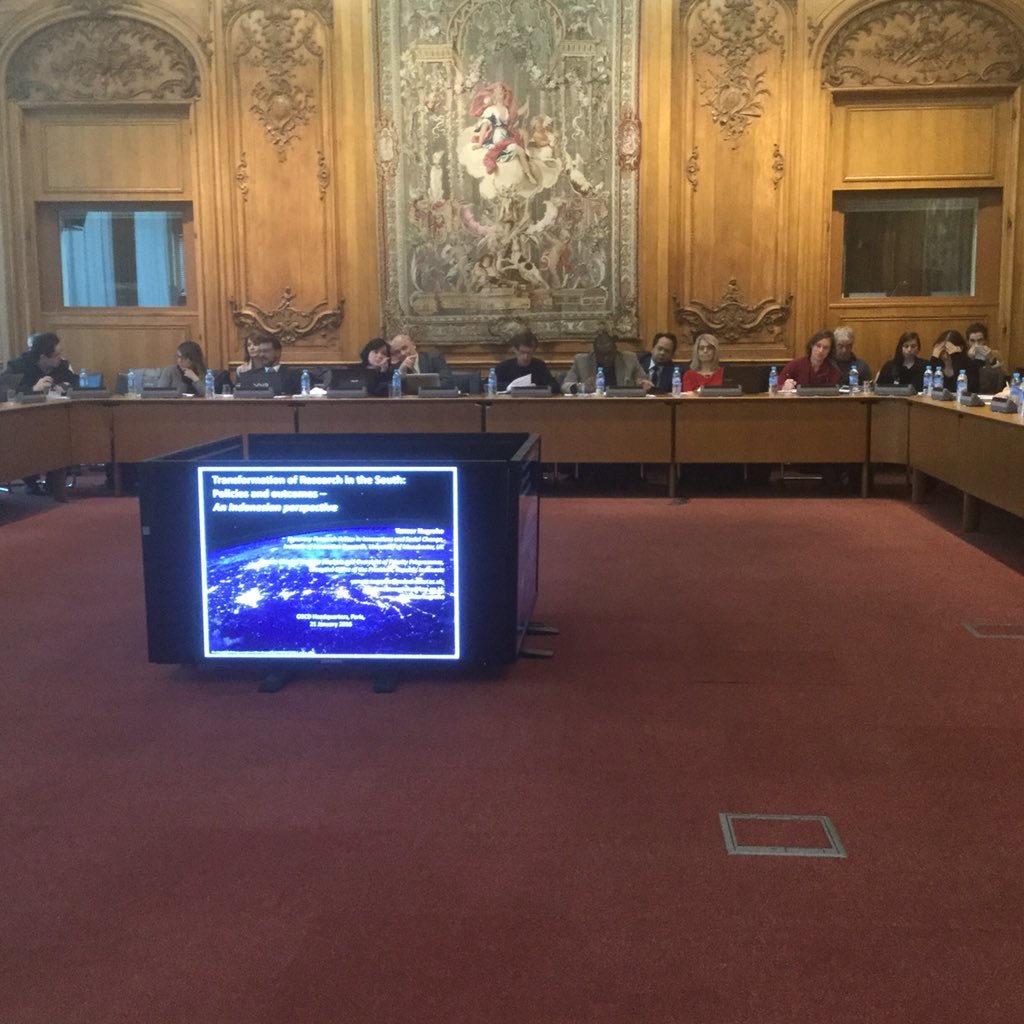
The Transformation of Research in the South: policies and outcomes

21-22 January 2016. Paris. International Conference : “The Transformation of Research in the South: policies and outcomes”. Organisers: International Development Research Center (IDRC), Canada ; Institut de Recherche pour le Développement (IRD), France ; Centre Population et Développement (IRD and Univ. Paris Descartes), Paris ; Institut Recherche-Innovation-Société (IFRIS), France ; OECD Development Centre.

How countries support public scientific research has a direct bearing on the capability of researchers to generate scientific knowledge, and of organizations to adapt or apply such knowledge. While many countries in Asia, Africa and Latin America are characterized by weak scientific capacity, there are signs of change in how governments support research and promote science.

Topics included:
  1. Developing research policy frameworks
  2. Strengthening academic research
  3. Expanding public and private participation in research
  4. Frameworks/tools for assessing research performance and impact
  5. Transnational cooperation in research:
Extract of the program:
  • Science-granting councils in Sub-Saharan Africa: A typology of diverse science funding configurations Johann Mouton (Centre for Research on Evaluation, Science and Technology at Stellenbosch University, South Africa)
  • Priority issues for evaluation research in Science Granting Councils – Sub Saharan Africa Johann Mouton (Centre for Research on Evaluation, Science and Technology at Stellenbosch University, South Africa)
  • Evolution of science policy research in South Africa – “plus ça change …” Michael Kahn
    (Centre for Research on Evaluation, Science and Technology, South Africa)
  • Strengthening innovation and development research in African universities: the case of AfricaLics Anna Kingiri, Rebecca Hanlin (AfricaLics Secretariat, African Centre for Technology Studies, Kenya) Margrethe Holm Andersen (Globelics Secretariat, Aalborg University, Denmark) Aschalew Tigabu (AfricaLics Secretariat, African Centre for Technology Studies, Kenya)
  • A Systemic Method for Assessing the Impacts of Agricultural Research for Development Temple Ludovic, Barret Danièle, Dabat MH., Devaux-Sparatakis A., Faure G., Hainzelin Etienne, Mathé S., Toillier A., Triomphe B. (Centre de coopération internationale en recherche agronomique pour le développement (CIRAD), France)
  • New trends in knowledge generation lifts research cooperation in Africa a notch higher Margaret Wanjiku (The MDG Centre, East and Southern Africa, Kenya) 
  • The structuring of scientific research through cooperation in Africa countries: examples from French research for development Philippe Hamelin, Ouidir Benabderrahmane, Rigas Arvanitis (Institut de Recherche pour le Développement, France)