Platform for African – European Partnership in Agricultural Research for Development
Showing posts with label EFARD. Show all posts

Monday, October 12, 2026

Making Biopesticides Work: Connecting Regulation, Scientific Evidence and Sustainable Pest Management


8 October 2026
| Online Webinar | GFAiR – EFARD – HSWT. Making Biopesticides Work: Connecting Regulation, Scientific Evidence and Sustainable Pest Management.

The webinar brought together two complementary research perspectives, examining how regulatory conditions and field-level effectiveness influence the development, commercialisation and adoption of biopesticides.

  • Krishna Gondaliya (HSWT) presented “Context-dependent effectiveness of biopesticides in field crop systems and implications for sustainable pest management: a structured evidence review.” The presentation examined how biopesticide performance varies across agricultural environments and field conditions. Unlike conventional approaches that assess efficacy under standardised experimental conditions, the review emphasised the importance of understanding the contexts in which biopesticides deliver reliable results. The review provided a basis for considering how scientific evidence can inform product development, farmer recommendations and the integration of biopesticides into sustainable pest-management strategies.
  • Dr Emmanuel Tetteh Jumpah (EFARD/HSWT) presented “Why Biopesticide Regulation Matters Globally,” drawing on a 2026 multi-stakeholder expert survey covering Europe, Asia, Sub-Saharan Africa, North America and the Middle East.

The survey examined the legal and regulatory frameworks governing biopesticides and identified several major challenges:

  • Unpredictable approval timelines and administrative inefficiencies that delay market access.
  • Regulatory requirements that may impose disproportionate burdens on lower-risk biological products.
  • Limited technical and institutional capacity for evaluating and registering biopesticides.
  • Barriers faced by small and medium-sized enterprises (SMEs) developing innovative biological pest-control products.
  • Insufficient regulatory harmonisation and mutual recognition across countries and regions.
  • Regulatory frameworks that do not always reflect local agricultural conditions and practical implementation needs.

The presentation explored the importance of proportionate, risk-based regulatory approaches that maintain safety and efficacy standards while facilitating innovation, investment and access to biological pest-management solutions.

Connecting regulation, research and agricultural practice

A moderated panel discussion and question-and-answer session brought together the two perspectives, exploring how regulatory systems, scientific evidence and local agricultural conditions interact. The central message was that biopesticides cannot be scaled successfully through technological innovation alone. Their effective deployment requires coordinated efforts involving researchers, regulatory authorities, agricultural extension services, private-sector developers and farmers.

Reliable field evidence can strengthen regulatory decision-making, while more predictable and proportionate regulatory procedures can encourage investment and facilitate access to effective biological products.

Resource:

Biosolutions in Afro-Eurasian Agriculture: Institutional Conditions for Scaling Biopesticides and Biofertilizers. A Technical Report for Policymakers, Regulators and Development Partners. Prepared from a thirteen-country comparative review and the EFARD/GFAiR/CAAE webinar of 21 July 2026. 11 p.

SADC (2025) Harmonized Guidelines for the Registration of Biopesticide Products and Biological Control Agents in Southern Africa, May 2025 42 p.

The draft SADC Biopesticide Guidelines promote safer alternatives to chemical pesticides, but their regulatory framework largely reproduces the conventional pesticide industry model, potentially replacing chemical inputs with proprietary biological inputs without transforming agricultural practices. QUESTION: Should Guidelines not try to explicitly establish a proportionate, risk-based regulatory pathway for farmer-produced, locally manufactured and non-proprietary biopesticides, including simplified testing, affordable or waived fees, recognition of traditional knowledge and publicly funded registration support?


Upcoming:


14-15 October 2026. Brussels. Farmers' Organisation-led Bio-inputs Systems - International Workshop
  • CSA, FWA-UAW and AgriCord organise two days in Belgium exploring how farmers' organisations can help build credible, accessible and sustainable bio-input systems, from the laboratory and the field to business models and policy.
  • Bio-inputs are a key lever for accelerating the transition towards more agroecological, regenerative and resilient agricultural systems. 
  • By helping restore soil fertility, improve crop health, reduce dependence on synthetic inputs and strengthen farmers' autonomy, they offer new ways to combine productivity, sustainability and resilience in the face of climate and economic pressures.
  • Bio-inputs (biofungicides, bioinsecticides, bioherbicides, biostimulants and compost) naturally emerge as an avenue worth exploring.
  • Farmers' organisations (FOs) have a central role to play in this transition: through experimentation, production, services to farmers, the dissemination of innovations, and dialogue with public and private stakeholders. 


Related:


The South African Bioproduct Organisation (SABO) was established in 2013 as a brainchild between
the Department of Agriculture, Forestry and Fisheries (DAFF), various Universities and research institutions as well as the bioproduct industry to improve the standards of bioproducts in the market in order to protect both the market and the end users. 

The purpose of SABO is to develop the agricultural bioproduct industry in South Africa and to regulate the activities of participants in accordance with high ethical and science-based standards.

SABO’s official membership directory lists several companies that operate internationally in agricultural biological products, crop protection and bioproducts, such as: Bayer, Corteva Biologicals, Syngenta, UPL OpenAg., Koppert Biological Systems, Lallemand Plant Care, Rizobacter, Suterra.

Related:


The International Centre for Genetic Engineering and Biotechnology (ICGEB) undertakes research, capacity development and technology transfer to advance the development and adoption of biopesticides and biofertilizers, particularly in Africa. Its Biopesticides Research Group in Cape Town, led by Dr Dennis Obonyo Ndolo, focuses on microbial biological control, integrated pest management and regulatory harmonisation. 

Through its Southern Africa Biopesticides Project (2021–2024), ICGEB supported six SADC countries—Botswana, Mozambique, South Africa, Tanzania, Zambia and Zimbabwe—in strengthening regulatory frameworks, developing regional registration guidelines and exploring biopesticides to reduce chemical pesticide residues in agricultural products. Its B-INOC AFRICA initiative, supported by the Italian Government, promotes research, innovation, entrepreneurship and commercialization of microbial bioinoculants, including biopesticides and biofertilizers. ICGEB also collaborates with FAO and other international partners on agricultural biotechnology, biosafety and biological crop protection.

ICGEB (2024) Advancing Regulatory Harmonisation and Biopesticide Innovation in Africa 04 – 08 March 2024, Cape Town, South Africa Workshop Report. 42 p.

The workshop on Advancing Regulatory Harmonisation and Biopesticide Innovation in Africa brought together 293 participants (82 in person; 211 joining virtually) from 23 countries.
Participants included regulatory professionals, researchers, industry experts, and policymakers.

The objectives of the workshop were to provide participants with a comprehensive insight into
Africa’s regulatory landscape for biopesticides, facilitate the identification of gaps and challenges
impeding biopesticide research and development, and harmonisation of regional and continental
guidelines.

Monday, August 3, 2026

Biosolutions in Afro-Eurasian Agricultural Innovation Systems

 21 July 2026. The EFARD/GFAiR/CAAE webinar examined the institutional conditions required to scale biopesticides and biofertilizers across Africa, Asia, and Europe. Drawing on evidence from thirteen countries, the presentation demonstrated that successful adoption of biological agricultural inputs depends not only on their biological effectiveness but also on the strength of agricultural innovation systems.

The comparative analysis showed that countries possessing abundant biodiversity do not necessarily achieve successful commercialization. Instead, adoption is determined by coordinated investments in research, regulation, manufacturing, commercialization, extension services, and quality assurance.

The webinar emphasized that effective regulatory systems, functioning markets, strong public-private partnerships, and farmer confidence are essential prerequisites for scaling biological solutions. Experiences from Kenya, South Africa, Spain, the Netherlands, India, China, and other countries illustrate different pathways toward successful adoption as well as persistent institutional bottlenecks.

The webinar reinforced that the transition toward sustainable agriculture is fundamentally an institutional challenge rather than solely a technological one. While biological products have demonstrated considerable potential to improve agricultural sustainability, widespread adoption requires coordinated investments across research, regulation, commercialization, manufacturing, extension, and governance. The comparative evidence from Africa, Asia, and Europe shows that countries are unlikely to achieve successful scaling through isolated interventions. Instead, integrated agricultural innovation systems that align scientific research with policy, markets, and farmer needs provide the strongest foundation for sustainable adoption.

The discussion concluded that scaling biological inputs requires systemic institutional transformation rather than isolated technological innovation. Strengthening agricultural innovation systems is therefore central to achieving sustainable food systems while reducing dependence on synthetic agricultural inputs.

  • Moderator Darshika Senadheera, Asia-Pacific Association of Agricultural Research Institutions (APAARI)
  • Keynote Speaker Emmanuel Tetteh Jumpah, Executive Secretary, European Forum on Agricultural Research for Development (EFARD), Project Coordinator, Beyond BioPest Project, Weihenstephan-Triesdorf University of Applied Sciences (HSWT), Germany

Monday, June 8, 2026

GFAiR Regional Fora and Steering Committee meeting

7 - 8 June 2026. Antalya, Turkey. 

Assessing new ways to accelerate more effective and equitable agrifood research and innovation systems - GFAiR Regional Fora and Steering Committee meeting 

At a critical juncture for global agri-food systems, the future of agricultural research and innovation hinges on equitable partnerships, bold collaboration, and a unified vision.  It was with this spirit that the Global Forum on Agricultural Research and Innovation (GFAiR), alongside its Regional Fora and Steering Committee, converged in Turkey.

The high-level meeting brought together representatives from the Regional Fora representing Africa, Asia-Pacific, Central Asia and the Caucasus, Near East and North Africa, Americas and Europe, along with representatives from each constituency that represents the agrifood system. These representatives form the Steering Committee of GFAiR who along with the Secretariat, convened for a strategic dialogue on the forward trajectory of GFAiR.

The forum was graced by Dr. Didem Kökden, senior International Relations Coordinator and expert at the General Directorate of Agricultural Research and Policies (TAGEM) Turkey. 

The Regional Fora workshop focused on assessing the changing funding landscape, strengthening collaboration among regional partners, that can transform especially more equitable partnerships and engagement of all stakeholders in the agrifood research and innovation. 

Participants also reviewed GFAiR’s strategic focus, including its Theory of Change based on new ways to accellerate achievements through systemic transformation of partnerships and ways of working so the Agrifood R&I systems are more effective, responsive and equitable. In this regard, the group reviewed leveraging the uniqueness of GFAiR and tools at hand like the Partnership Principles, Collective Actions, the Network, and being secretariate for the Global NARS Consortium.

The Steering Committee workshop built on the outcomes of the Regional Fora discussions and concentrated on enhancing the strategic role and influence of the Committee within GFAiR. 

Recognising the unique multi-stakeholder composition of the Steering Committee, participants explored how to better build on its diverse constituencies to strengthen advocacy, collaboration across the global agrifood innovation and research ecosystem. 

Steering Committee members in attendance included:

  • Romano De Vivo – GFAiR Vice Chair
  • Joanna Kane-Potaka – GFAiR Executive Secretary
  • Selvaraju Ramasamy – Director of Innovation, FAO
  • Amine Belhamissi – Grant Portfolio Officer, IFAD
  • James French – General Secretary, Global Confederation of Higher Education Associations for the Agricultural and Life Science (GCHERA)
  • Silvia Lanzarini – UN WomenCARL LARSEN
  • Karl Larsen– Executive Secretary, Global Forum for Rural Advisory Services, (online)
  • Daniel El Chami, TIMAC AGRO Italia, Strategy Director at Groupe Roullier (online)

Regional Fora members of the Steering Committee in attendance included:

  • Dr. Rida Shibli – Association of Agricultural Research Institutions in the Near East and North Africa (AARINENA)
  • Dr Botir Dosov – Central Asia and the Caucasus Association of Agricultural Research Institutions (CACAARI)
  • Dr. Aggrey Agumya – Forum for Agricultural Research in Africa (FARA) (online)
  • Dr. Karen Montiel – Forum for the Americas on Agricultural Research and Technology Development (FORAGRO) 
  • Dr. Dietrich Darr – Chair, European Forum on Agricultural Research for Development (EFARD)
  • Manish Rai – Asia-Pacific Association of Agricultural Research Institutions (APAARI)


Monday, June 1, 2026

Biological Control, Biopesticides and Sustainable Food Systems in Afro-Eurasia

1 June 2026. Biological Control, Biopesticides and Sustainable Food Systems in Afro-Eurasia

Biological control and biopesticides are increasingly recognized as important tools for reducing dependence on synthetic pesticides, improving integrated pest management (IPM), supporting agroecological approaches, and enhancing compliance with residue-sensitive export markets. At the same time, adoption of bio-solutions remains uneven due to regulatory fragmentation, quality-control challenges, commercialization barriers, limited farmer awareness, and weak extension systems.

In response to these issues, regional and international organizations have intensified efforts to strengthen collaboration on biological control, sustainable pest management, regulatory harmonization, and knowledge exchange. One important initiative is the Asia-Pacific Biopesticide Community of Practice (ABCoP), established by the Asia-Pacific Association of Agricultural Research Institutions (APAARI) in 2024 following the STDF-funded regional project on pesticide residue mitigation through promotion of biopesticides.

This webinar provide a platform for researchers, regulators, development organizations, private-sector actors, students, and policymakers to discuss emerging developments in biological control and bio-solutions in Africa and Asia. The webinar will also contribute to broader discussions on sustainable agriculture, regulatory systems, trade opportunities, innovation platforms, and farmer adoption pathways.

Speaker 1: Darshik Prasadani Senadheera, Dr. Ravi Khetarpal - Asia-Pacific Association of Agricultural Research Institutions (APAARI)

Advancing Biological Control and Adoption in the Asia-Pacific Region: Insights from the Asia-Pacific Biopesticide Community of Practice (ABCoP)

The presentation discussed regional efforts to strengthen biological control and biopesticide adoption in the Asia-Pacific region through the Asia-Pacific Biopesticide Community of Practice (ABCoP). It will examine experiences related to biological control, microbial biopesticides, integrated pest management, regulatory harmonization, commercialization, digital knowledge platforms, and sustainable pest management under tropical and subtropical agricultural systems.


The Asia-Pacific region faces increasing pressure to reduce pesticide residues, strengthen sustainable agricultural practices, and comply with evolving international trade standards, highlighting the growing importance of biological control and biopesticides. In response to these challenges, the Asia-Pacific Biopesticide Community of Practice (ABCoP) was launched by APAARI in May 2024 as a sustainability initiative emerging from the successful STDF-funded project, Asia Pesticide Residue Mitigation Through the Promotion of Biopesticides and Enhancement of Trade Opportunities, implemented by APAARI in partnership with AgAligned Global, USA, during 2020–2023.

The project established important foundations for promoting biopesticides in the Asia-Pacific region through the development of best practices and standardized protocols, while strengthening technical and functional capacities in maximum residue limit (MRL) data generation, biopesticide production, and regulatory harmonization among participating National Plant Protection Organizations (NPPOs). To sustain and expand these achievements, ABCoP was established as a regional knowledge-sharing and networking platform bringing together researchers, policymakers, industry leaders, government agencies, academia, private-sector stakeholders, and development partners. Supported by NPPOs, FAO, STDF, AARINENA, FARA, and other collaborators, the platform promotes regional cooperation, knowledge exchange, and sustainable pest management in the Asia-Pacific region.

The ABCoP 2024 and 2025 discussions primarily focused on biological control and biopesticide-related practices relevant to Asia-Pacific agroecosystems, including rice, horticultural, and diversified cropping systems. Key themes included classical biological control, microbial biological control, entomopathogenic biological control, integrated pest management (IPM), regulatory and policy aspects of biological control, commercialization and private-sector engagement, and digital knowledge platforms supporting biopesticide adoption. Discussions also addressed invasive pests, residue mitigation strategies, regulatory harmonization, and practical implementation challenges under tropical and subtropical agricultural conditions.

Emerging themes such as microbiome-based disease management, AI-supported biocontrol research, and digital bioprotection platforms further highlighted the evolving role of biological control in sustainable agriculture. ABCoP continues to serve as an inclusive regional platform supporting innovation, policy dialogue, capacity development, and multi-stakeholder collaboration for advancing environmentally responsible pest management and safe agricultural trade across the Asia-Pacific region.

Speaker 2: Stella Simiyu Wafukho - CropLife Africa & Middle East Region

Accelerating Registration Processes for Biopesticides & Biocontrol agents in Africa and the Middle East Region and BioCOPPA Index Process

The presentation addressed regulatory perspectives, private-sector engagement, and policy considerations shaping the development and adoption of biological crop-protection solutions in Africa and the Middle East. It will also include the BioCOPPA Index Process.

Background documents:


BioCOPPA Index Pilot Report.pdf (4 p)
The BioCOPPA Kenya pilot workshop successfully validated the relevance and applicability of the BioCOPPA Index in the Kenyan context.

ABCOP-2024-The-Rewind.pdf (18 p)
APAARI launched the Asia-Pacific Biopesticide Community of Practice (ABCoP) in May 2024, with the support of FAO, STDF, government agencies, private sector and international organizations such as AARINENA and FARA, to bring together stakeholders from the biopesticide sector, including industry leaders, researchers, policymakers, national representatives and other key actors.

ABCOP-2025-The-Rewinds.pdf (23 p)
The Asia-Pacific Biopesticide Community of Practice (ABCoP) builds on the momentum of 2024–25 as it moves into 2026, focusing on strengthening regulatory systems, accelerating adoption, and fostering an enabling innovation ecosystem for biologicals.

11 June 2026. Promoting the awareness and use of biological control in Asia, the Middle East and Africa


10-11 June 2026. Biopesticides Europe 2026
Biopesticides Europe 2026 brings together the full biological crop protection value chain to focus on turning regulatory change, climate pressure and market demand into real, scalable opportunities for biologicals.

Tuesday, October 29, 2024

GFAiR Mobilizes Global Collaboration for Critical Agricultural Innovation

22 October 2024. Press release. Samarkand, Uzbekistan. GFAiR Mobilizes Global Collaboration for Critical Agricultural Innovation Amid Growing Climate and Food Security Concerns.

A major milestone in international agricultural cooperation was reached as the Global Forum for Agricultural Research and Innovation (GFAiR) signed a series of Memoranda of Understanding (MoUs) with key Regional Platforms and institutions. The MoUs were signed during the Global NARS Consortium (GNC) workshop, held on 22 October 2024, in Samarkand, Uzbekistan, marking a pivotal moment in GFAiR’s commitment to advancing agricultural innovation and regional collaboration on a global scale.

The MoUs were signed with EMBRAPA, AARINENA, APAARI, CACAARI (see pictures), EFARD, FORAGRO and FARA, establishing a framework for enhanced cooperation. These agreements aim to strengthen the global voice, increase influence, and improve the resource base and capacities of National Agricultural Research Systems (NARS), while reinforcing the collaboration among global and regional partners.


Preparations for 2025: A Roadmap for Enhanced Collaboration


As GFAiR prepares to mark its 30th anniversary, the Regional Platforms will be instrumental in
implementing a strategic roadmap, developed in consultation with national, regional, and global institutions, networks, and organizations. This roadmap will be unveiled during the CGIAR Science Week, set for April 7-12, 2025, at the UN Campus in Nairobi, Kenya, as part of the pre-launch of new GFAiR initiatives.

Engaging the Private Sector and Expanding Partnerships


In recognition of the crucial role played by the private sector in agricultural innovation,
the agreements include a commitment to welcome private sector participation alongside government agencies. This will encompass extension services, social enterprises, and other private stakeholders, reinforcing the importance of diverse partnerships in advancing sustainable agricultural development.


Strong Regional Support from Central Asia


The workshop highlighted the strong support for GFAiR’s mission from the Central Asia region, with endorsements from governments, research bodies, and farmers' organizations in Uzbekistan, Azerbaijan, Kazakhstan, Georgia, and other nations. This regional backing underscores the shared vision of fostering agricultural resilience and innovation across Central Asia.

New Leadership and Steering Committee for GFAiR


GFAiR’s newly formed Steering Committee was also officially introduced at the workshop. Dr. Ravi
Khetarpal, who continues to lead as Chair, was joined by the newly appointed Vice Chair, Dr. Romano de Vivo, who took over from Dr. Ross McLeod. Dr. McLeod was acknowledged for his invaluable contributions and steadfast support to GFAiR over the years.

In addition, the Steering Committee welcomed three new members: Daniel El Chami from Tima Agro, Katja Vuori from AgriCord, and three representatives from UNWOMEN, signaling a strengthened commitment to gender equity and inclusive agricultural development.

Paving the Way for Global Agricultural Progress


The signing of these MoUs marks a significant step toward a more cohesive and impactful global agricultural research community. GFAiR, through the GNC, is committed to driving agricultural innovation and collaboration that meets the challenges of the 21st century. The 2025 roadmap will serve as a cornerstone for aligning regional strengths with global priorities, ensuring that the next decade of agricultural research is marked by sustainable growth, collaboration, and shared success.

Thursday, January 11, 2024

AARINENA regional meeting on the Global NARS Consortium

10 January 2024
. Regional meeting of the Association of Agricultural Research Institutions in the Near East and North Africa (AARINENA) to discuss the Global NARS Consortium (GNC) implementation plan.
  • On March 17, 2023, the heads of the six GFAR Regional Fora (AARINENA, APAARI, CACAARI, EFARD, FARA, and FORAGRO) signed the Bangkok Declaration to establish a Global NARS Consortium (GNC) and entrusted it to GFAR.
  • The GFAR Regional Fora agreed to operationalize the GNC, in consultation with relevant national, regional and global institutions, networks and organizations, undertaking to facilitate
    the implementation of a roadmap by 2025, to mark the 30th year of GFAR’s existence. 
    A GLOBAL NARS CONSORTIUM_0.pdf (672.95 KB)
  • GFAR has harnessed the potential of AI, particularly through ChatGPT, in the establishment of the Global National Agricultural Research Systems (NARS) Consortium. The initial focus centered on partners assembled by GFAR and the Regional Fora. 
  • ChatGPT4’s prowess enabled GFAR to broaden its scope, identifying a broader range of potential institutions that met established criteria. This yielded a bounty of results, providing invaluable insights to refine the selection process. This methodical approach yielded a comprehensive list of potential NARS in each country.
  • The advisory group for the Global NARS Consortium (GNC) will convene with CGIAR a joint meeting on 18th of January. GNC is due to be launched in June 2024 (TBC), coinciding with a main CGIAR event.


Related: GFAR/GFAiR Hub


Friday, May 5, 2023

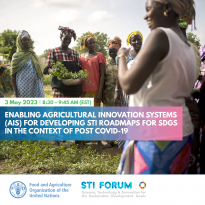
Enabling Agricultural Innovation Systems AIS for developing STI roadmaps for SDGs

3 May 2023
.  Enabling Agricultural Innovation Systems (AIS) for developing STI roadmaps for SDGs in the context of post COVID-19 Side Event at the 8th Multi-stakeholder Forum on Science, Technology and Innovation for the Sustainable Development Goals (2-5 May 2023).

The Tropical Agriculture Platform (TAP) Partners, a global, multi-stakeholder facilitation mechanism on capacity development (CD) for Agricultural Innovation Systems (AIS), supported by the European Union and coordinated by FAO, have taken on the AIS perspective, and have designed and tested a Common Framework on CD for AIS. 

This framework includes a range of tools and guidelines to support Member States in their efforts to achieve the SDGs. General Objective: This side event aims to spotlight the role of Agricultural Innovation Systems (AIS), and its actors (agricultural education, extension, research, business enterprises, and bridging institutions) and their enabling environment to unlock the potential of agricultural innovation and to bring the agriculture and food security perspective into the development of multi-sectoral STI agenda and roadmap for SDGs in the context of Post COVID-19. 

Panelists highlighted their regional and national experience in strengthening the capacity of AIS and how AIS could contribute to more efficient, inclusive, resilient and sustainable agrifood systems including the value chains to be better prepared to shocks (such as COVID 19, recent food crisis and other crisis to come)?
  • Moderated by Helena Posthumus
  • Ismahane Elouafi, Chief Scientist, FAO - Opening remarks
  • Guy Faure, Senior Policy Officer, European Commission - Development smart innovation through research in agriculture (DeSIRA) initiative and it’s contribution to achieve SDGs 
  • Selvaraju Ramasamy, Senior Agricultural Officer, Office of Innovation, FAO - A common framework for capacity development for Agricultural Innovation Systems (AIS) 
  • Ravi Khetarpal, Asia-Pacific Association of Agricultural Research Institutions (APAARI)
  • Phonevilay Sinavong, Planning and Cooperation of the National Agriculture and Forestry Research Institute (NAFRI)
  • Max Olupot, TAP Chair, African Forum for Agricultural Advisory Services (AFAAS)
  • Sarah Tione, Ministry of Agriculture of Malawi
  • Ibrahim Abdulrazak, Forum for Agricultural Research in Africa (FARA)
  • Maria Isabel Paredes, Latin American Network for Rural Extension Services (RELASER)
  • Murat Sartas, European Forum on Agricultural Research for Development (EFARD)

Friday, September 30, 2022

Joint meeting EFARD - GFAR Fostering Interaction with European Partners

30 September 2022. Joint meeting EFARD - GFAR  Fostering Interaction with European Partners.

Previous meeting: 16 June 2022, Brussels, Belgium.

After a successful EFARD meeting on June 16th , EFARD gave an update on concrete opportunities to get involved in: 
  1. the European Commission funded Desira-LIFT project
  2. the GFAR collective action on Transformative Learning to be implemented by EFARD members
  3. Election of the 2022-2024 EFARD Management Team
GFAR (Global Forum on Agricultural Research and Innovation) engaged with European stakeholders and
  1. Present a quick overview of GFAR and the EC project
  2. Discuss how to how to empower GFAR’s constituencies, how to strengthen GFAR’s presence in the Regions and decentralize activities
  3. Present GFAR collective actions (other than Transformative Learning), and how to engage.


Saturday, June 18, 2022

European Forum on Agricultural Research for Development meeting

16 June 2022
, Brussels, Belgium. EFARD Annual Hybrid Meeting. “EFARD for Inclusiveness and Transformative Learning”

The European Forum on Agricultural Research for Development is a multi-actor platform which provides opportunity for dialogue on issues of strategic importance for European agricultural and research and non-research actors. Each year, the platform members meet to discuss strategies for possible (re)alignment of EFARD’s priorities with those of key partners such as the European Commission (EC), the Global Forum for Agricultural Research (GFAR) and partners in the South. 

The inclusiveness of Central and Eastern European countries and transformative learning is the focus of this year’s meeting. While the COVID pandemic has posed many challenges for network organisations in the AR4D arena such as EFARD, we believe that now is a good moment to re-energize the EFARD community. During the past 1.5 years the EFARD management has carried out consultations amongst its members and the AR4D community at large to better define EFARD’s comparative advantage and potential role in a new evolving AR4D environment. 

Two major opportunities arise in the short term: 
  • With EFARD currently being actively involved in the DeSIRA-LIFT project, EFARD can intensify collaboration and exchange with the CAADP XP4 organisations, and represent a consolidated multi-stakeholder European voice on AR4D in this project.
  • Another opportunity emerges from EFARD taking a prominent role in GFAR’s collective action on transformational learning, which aims to update curricula of agricultural higher education institutions globally. All EFARD members were invited to contribute to, and benefit from, both initiatives. 
OBJECTIVES 
  • Presentation of EFARD's white paper and action plan to support Agricultural Research for Development. 
  • Reaching out to Central and Eastern European / EU13 countries for more inclusivity in Agricultural Research for Development.
  • Exploring possibilities on involvement of EFARD and European stakeholder groups in the GFAR collective action of transformative learning.
Speakers:
  • Welcome Remarks EFARD – Dietrich Darr, Chair, EFARD 
  • Supporting Common Projects of Civil Society regional actions in the Western Balkan Gjergj Murra, Director Western Balkans Fund 
  • Support instruments to build capacities, facilitate contacts, and exchange knowhow with focus on the Western Balkans and the Eastern Partnership Regions – Jiří Sýkora, Visegrad Fund 1
  • Opportunities for Science, Technology, Innovation in the Sub-Saharan Africa MultiAnnual Indicative programme (MIP) 2021-2027 – Jean Michel Sers, policy officer, DG INTPA F5 ‘Science, Technology, Innovation & Digitalisation’ 
  • DeSIRA-LIFT (Leveraging the DeSIRA Initiative for agri-food systems transformation) – Guy Faure, Senior Policy Officer, DG INTPA F3 ‘Sustainable Agri-Food systems and Fisheries’
  • Presentation European Initiative on International Agricultural Research for Development (EIARD) – Christophe Larose, Head of Sector, DG INTPA F3 ‘Sustainable Agri-Food systems and Fisheries’ and Chair EIARD 
  • Vision for EFARD – Dietrich Darr, Chair, EFARD 
With EFARD currently being actively involved in the DeSIRA-LIFT project, EFARD can intensify collaboration and exchange with the CAADP XP4 organisations, and represent a consolidated multi-stakeholder European voice on AR4D in this project.


00:04:50 Welcome Remarks EFARD–Dietrich Darr, Chair, EFARD 00:09:25 Supporting Common Projects of Civil Society regional actions in the Western Balkan Gjergj Murra, Director of Western Balkans Fund 00:31:05 Support instruments to build capacities, facilitate contacts, and exchange know-how with a focus on the Western Balkans and the Eastern Partnership Regions–Jiří Sýkora, Visegrad Fund 00:53:10 Opportunities for Science, Technology, Innovation in the Sub-Saharan Africa Multi-Annual Indicative Programme (MIP) 2021-2027–Jean Michel Sers, policy officer, DG INTPA F5 ‘Science, Technology, Innovation & Digitalisation 01:21:00 DeSIRA-LIFT (Leveraging the DeSIRA Initiative for agri-food systems transformation)–Guy Faure, Senior Policy Officer, DG INTPA F3 ‘Sustainable Agri-Food systems and Fisheries 01:41:00 Coffee Break 02:02:00 Presentation European Initiative on International Agricultural Research for Development (EIARD)–Christophe Larose, Head of Sector, DG INTPA F3 ‘Sustainable Agri-Food systems and Fisheries’ and Chair EIARD 02:26:00 Vision for EFARD–Dietrich Darr, Chair, EFARD 02:49:15 Discussion on the future of EFARD

Discussion on future of EFARD 

In light of the tremendous challenges related to the sustainability transformation of our food systems, GFAR and its partners are proposing a Collective Action aiming at the transformation of formal higher education in the agriculture sector to better equip the future generations of graduates and agricultural professionals with the knowledge, skills and attitudes required for the collaborative management of innovation. 

These include, inter alia, the capacity of graduates to understand innovation logics, processes and models; to support approaches of coexperimentation and co-validation of innovation among diverse actors; to manage multiactor innovation processes; the capacity to build trust among actors; to promote joint ownership of the innovation process; to manage conflicts; to set shared goals and objectives; to support the co-construction of technological, social, organisational and policy innovations; to monitor the process and learn from the collaborative experience, and many others. The Collective Action builds upon previous initiatives where knowledge, skills and attitudes of future graduates were identified along with a redefinition of the role of the instructor and of the purpose and mandate of the universities. EFARD is willing and glad to lead this upcoming Collective Action. The meeting aimed at presenting to and discussing with stakeholders the proposed Collective Action. 
  • Introduction of GFAR and Collective Action – Hildegard Lingnau, Executive Secretary, GFAR 


  • Presentation of the Collective Action on Transformative Learning – Jan Stas, Czech University of Life Sciences and lead organisation on behalf of EFARD 


  • Discussion Collective Action on Transformative Learning including previous experience in higher education transformation – Moderator Nathalie Doré, GFAR 
  • Closing Remarks – Dietrich Darr, Chair, EFARD
The meeting started with an introductory presentation by prof. Dr Hildegard Lingnau and Alessandro Meschinelli, during which the global context and the aims of this meeting, together with the mandate of the Global Forum on Agricultural Research and Innovation (GFAR) were explained. GFAR members pointed out the notion of innovation as the result of a social process – based on the interaction of diverse actors as holders of knowledge. The key requirements for the CA to be implemented successfully were mentioned as follows:

1. Better definition of the new roles played by advisory services and researchers (tasks/ToRs)
2. Identification of new competencies and skills
3. Work towards developing the appropriate learning approaches and contents

This should lead to creating the conditions for the diverse families of actors to come together on the same ground, to connect them into one “multistakeholder group”, which will support selected universities and their partners to reflect and act upon the higher innovation transformation requirements to meet the emerging professional needs of researchers and extensionists. Alessandro Meschinelli also pointed out that the CA could be planned following two approaches: the minimalist approach would aim at developing a manifesto, as a joint declaration of intentions and a vision for Higher Education Transformation. In contrast, the maximalist approach would include (further) developing and implementing new HEI curricula in several model universities.

The second part was presented by Ing. Jan Staš from the Faculty of Tropical AgriSciences, Czech University of Life Sciences Prague (FTA, CZU). Within his presentation, a more specific/detailed context of the CA and the role of universities in the CA was explained, mentioned that a university can and should be at the nexus of the initiative, leading it in close collaboration with other (networks of) universities, e.g., RUFORUM, AGRINATURA, etc. and under the guidance of EFARD and GFAR.

The main objectives of the CA were explained as follows:

1. Collaborative Management of Innovation, which includes:
a. the capacity to understand the diversity of cultures, innovation logics, processes and models;
b. to support approaches of co-experimentation and co-validation of innovation among diverse actors;
c. to manage multi-actor innovation processes/teamwork leading to partnerships, including achieving community engagement;
d. the capacity should build trust among actors;
e. to promote joint ownership of the innovation process;
f. to equal the playing field between actors with unequal power;
g. to manage conflicts; set shared goals and objectives;
h. to define joint strategies and support collaborative planning;
i. to monitor the process and learn from the collaborative endeavour…and others

2. To train the youth to prepare them as drivers of new agriculture and agribusiness enterprises and rural transformation through skills*, entrepreneurship and vocational training (and transformational learning processes) and by promoting Soft/Life/Relational/Transdisciplinary skills of students to engage in co-research and co-innovation as a collective modality of generating knowledge for pro-poor and by-poor development

3. Transformation of formal higher education set-ups and contents need to match the new skills required for conducting the type of transdisciplinary work which is implied by co-research and co-innovation processes

4. Capacity building along the agricultural value chains (production, input supply, value addition, marketing, but also credit provision, enabling policy environment)

* Leadership, Versatility and agility, Communication skills, Sense for synthesis and problem analysis (come to the core of a problem 0), Entrepreneurship, Business Management, Leadership, Marketing Empathy, Problem-solving, Logical thinking, Understanding technology and processing, but also understanding and critical use of social media, critical analysis and understanding of (in)formal information sources (at all value chain levels, but also for social interaction), use of social media in communication and interaction with stakeholders along the whole value chain, etc.

Also, the term “Model graduate” was described as a continuously learning person who is proactive, ethical and capable of conceptualising new business and investment opportunities and engaging with communities and the industry while aware of the constantly changing socio-economic and political environment. These graduates will develop abilities to leverage diverse, innovative skills to address complex, interrelated challenges, analyse gaps and solve problems. Master how to do all that as a team member, be capable of negotiation and conflict management and fully understand group dynamics and what is needed to work with socio-economically diverse, gendered, and international groups. The model graduate should be the “product” of the learning institution, which uses the approach called “University without walls” in other words, this learning institution offers dynamic packages – and not only one - of experiential problem-driven/solving learning, joint multi-stakeholder student mentorship, entrepreneurial grants, internships, conferences and seminars, arts, theatre and music, lab experimentations, community engagement and service, and others.

CZU suggested the 2-tier practical implementation of the CA:

1. firstly, on the institutional level, there is a need to secure policy/governmental support of the responsible ministries/education authorities and community buy-in. Here, the success will depend on partnerships with other universities, the business community, the governments and the local communities and organisations, which should continuously exchange experiences, complementarity, knowledge, resources, etc.
2. secondly, on the learner’s level, where the internships will increase the employability of the graduate, students will be working directly with farmers/producers but also with all other operators along the agricultural value chain, gaining an understanding of their lives and challenges, acting as advisers based on their learning but also gaining themselves from the knowledge of farmers and experimenting together to find solutions to real-world problems

Lastly, the proposed implementation plan was explained by CZU as follows (with GFAR potentially supporting further consultations leading to the full design of the Collective Action):

1. Initial consultancies/workshops and equitable dialogues building on the ideas developed by the ‘representative platform of higher education stakeholders’ (created in 2017) summarized by GFAR in its initial Concept Note together with representatives from GFAR x RUFORUM to better identify priorities and areas of focus;
2. A continent-wide internet survey about willingness to participate in CA’s activities
3. Upon analysis and synthesis of the findings, and in collaboration with EFARD, RUFORUM and GFAR, a core group of representatives/stakeholders will elaborate a practical plan of operations/full design of the CA that will, amongst others, define the concrete countries x institutions where the pilot activities will be put on the ground.
4. At the end of the project, a final workshop – bringing together all major stakeholders who will consolidate experiences and lessons learned and prepare a concrete plan for scaling out the model to other partners in the regions
5. Facilitation and concrete implementation through CZU’s day-to-day project management
6. This will be assisted by a steering committee, consisting of representatives of CZU, GFAR, EFARD, RUFORUM and the multiple stakeholder platform (1 per organisation), which will regularly meet and discuss progress against operations plan x milestones discussed

After the second presentation, the poll was launched about the experiences (involvement) of the audience with the “Higher Education Transformation”. From the results obtained, 57% of the participants answered YES, which means that more than half have already some experience with this mentioned topic. Next, another poll was launched to see if the audience feels this Collection Action is addressing the right priorities. Over 70% of participants said YES.

After the answers were collected from the chat, the discussion was launched. Participants could write the questions in the conversation or ask them directly and participate in break-out rooms.

The fruitful debate raised answered several topics like understanding the spirit of the Collective Action where resource mobilization/raising funds depends also on the partners themselves; the need to involve other faculties, not only agriculture/life sciences; the importance of training professors inside the higher education system towards supporting “innovation brokers” dynamics; the relevance of reaching an agreement on a common lexicon regarding terms such as co-creation, transformative, transformational learning that lend themselves to diverse interpretations; the fundamental involvement of youth also in the decision making processes that determine the transformation; the relevance of the transdisciplinary approach..

It was generally agreed that it would be optimal to identify/review similar previous activities and valorize them in a logic of “connectin the dots” relying on “champions” that are already spearheading the transformation discussed and hence creating a network around them. Examples given included the Agrinovia Master course in Burkina Faso on co-innovation, where students learnt how to design and implement research protocols in a multidisciplinary and transdisciplinary way, taking into account diverse stakeholders points of view and practices; the experience of Future Food Institute, with food and climate shapers and the Booth Camps, as an intergenerational and transdisciplinary approach combining in an unconventional campus diverse teaching and learning experiences; GCHERA project on Transforming Higher Education in Mexico and Haiti. It was recommended to compile some of the best practices and make the dispersed knowledge and expertise available consolidated.

Another poll was launched to ask the participants about their willingness to participate in joining the core group. 92% of the people said YES. 8% said maybe, but they would like to have more information. For those interested ones, the following steps, how to join, were explained by Alessandro Meschinelli.

Overall, several interventions highlighted the need to better focus the Collective Action (which appears to be too encompassing, with too many priorities), on specific outcomes/tangible results which could be reached over a period ranging from 6 months to 3 or 4 years.

As examples of what to aim at, the following objectives as possible main areas of focus were mentioned: change attitudes within higher education actors and farmers working with them; change mindsets among individual faculty members; transform students into agents of change; influence faculties, programmes, universities; raise awareness on the need for change; create a handbook on co-creation methodologies for professors and students; generate model curriculum; offer training sessions for university principals and chairpersons; produce a policy paper.

Finally, positive, motivative closing words were said by Dr Dietrich Darr.

Regarding the final satisfaction poll, 69% were very satisfied, and 31% were satisfied.

Who to reach out to if someone would like to join this CA?

Contacts:
  • Dietrich Darr: Dietrich.Darr@hochschule-rhein-waal.de
  • Alessandro Meschinelli: Alessandro.Meschinelli@fao.org
  • Patrick Van Damme: van_damme@ftz.czu.cz
  • Jan Staš: stas@ftz.czu.cz

Monday, September 14, 2020

WEBINAR: European Forum for Agricultural Research and Development (EFARD)

14 September 2020. EFARD 2020 Virtual AGM.

The European Forum for Agricultural Research and Development (EFARD), organised a VIRTUAL AGM on "Strengthening EFARD’s Networking Capacity: Implications for Governance, Partnerships, Funding”. 

Part 1
  • Unpacking the Policy, Research and Innovation Drivers for Agricultural Transformation Post Covid-19, Francesco Rampa, Head of Programme, Sustainable Food Systems, ECDPM ; 
  • The Role of the Private Sector in Fostering Innovation, Edouard Lehmann, Research and Innovation Manager, COLEACP ; 
  • EFARD's Role in EU Development Cooperation Agenda for Agricultural Transformation, Christophe Larose, Head of Sustainable Agriculture, DG-DEVCO
Part 2:
  • Strengthening EFARD's Networking Capacity: Implication for Governance, Partnerships, Funding
    A network analysis (18 pages) was performed of six leading continental and global ARD multi-stakeholder platforms. These platforms are composed of over 265 national, regional and international organisations, and the analysis highlights EFARD’s position and the conditions that foster or hinder EFARD in enabling strategic dialogue and galvanising commitment to achieve the desired development impact on agri-food system transformation. The six ARD multi-stakeholder platforms included: (i) The European Forum on Agricultural Research for Development (EFARD), (ii) The European Alliance for Agricultural Knowledge for Development (AGRINATURA) ; (iii) The Forum for Agricultural Research in Africa (FARA) ; (iv) The Tropical Agriculture Platform (TAP) ; (v) The Global Forum for Agricultural Research (GFAR) ; (vi) The AU-EU High-Level Policy Dialogue on Science, Technology and Innovation (AU-EU HLPD) 
  • MT Report 2018-2020
  • Strategic Realignment: Defining EFARD's Position in AGRINATURA; GFAR, TAP 
  • Presentation and Endorsement of EFARD Management Team 2020-2022 
  • EFARD's Value Proposition and Key Elements of EFARD Strategic Plan 2020- 2022
"Going forward EFARD needs to dedicate more resources; technical and financial as well as human capital to networking within Europe, building strategic alliances and creating opportunities for the exchange of knowledge and data among its constituent members and with other regional, continental, global and thematic networks for addressing global challenges." (page 11 of the analysis)

Prof. Dr. Dietrich Darr (Rhein-Waal University of Applied Sciences) is the new incoming chair of

EFARD. He is professor of agribusiness (since 2012). His research interests include the analysis of smallholders’ land use-related decision-making, the role of underutilized wild fruits and other non-timber forest resources in local livelihoods and value chains, as well as upgrading and innovation management in the food and NTFP (Non-Timber Forest Products) processing industry.

Tuesday, December 19, 2017

EFARD annual meeting

11 December 2017. DG- Research and Innovation, Brussels. EFARD Technical and Business Annual Meeting: Future of European Agricultural Research and Innovation Partnerships.

Download the full report of the meeting (February 2018, 29 pages)

The European Forum on Agricultural Research for Development is a multi-actor platform which provides opportunity for dialogue on issues of strategic importance for European agricultural and research and non-research actors. Each year, the platform members meet to review their achievements of the previous year and develop strategies for possible (re)alignment of EFARD’s priorities with those of key partners such as the European Commission (EC), the Global Forum for Agricultural Research (GFAR) and partners in the South.

This year, the EFARD annual meeting explored lessons learned including those from the mid-term review of CDAIS and the final evaluation of PAEPARD and from EFARD members  to advocate on the way forward for strengthening the engagement, enhancing the contribution and achieving longer-term commitment of EU stakeholders and multistakeholder agricultural research and innovation partnerships for achieving greater development impact. The latest PAEPARD publication on lessons learned on AR4D funding were also released.

Presentations


Background Papers
The Platform for an  Africa-Europe Partnership  in Agricultural Research  for Development (PAEPARD) has sought to overcome these shortcomings by mobilizing  and supporting multi-stakeholder research consortia to address priority research issues that respond to users’ needs. 
In implementing this user-led approach, some key lessons have been learned about funding agricultural research  for development (ARD).


Agricultural research in the Global South: steering research beyond impact promises


Appraising the participation of European partners in the PAEPARD Users-Led Process


5 factsheets on stages and tools of the Capacity Development (CD) for Agricultural Innovation System (AIS) process


Tuesday, December 6, 2016

Future of Users’ Led Research and Innovation Partnerships


Vladimir Verner 
Dep. of Economics and Development 
Czech University of Life Sciences 
29-30 November, 2016. Prague. Czech University of Life Sciences. 2016 Annual Technical and Business Meeting. European Forum for Agricultural Research for Development (EFARD).


The theme for the 2016 EFARD annual meeting was the “Future of User-Led Research and Innovation Partnerships” to determine the relevance from the perspectives of European AR4D stakeholders and how best to embed and up-scale this approach for achieving the sustainable development goals through North-South research and development cooperation involving researchers and non-researchers considering especially Eastern and Central European perspectives.

As EFARD’s mission is to promote more effective, demand-driven and impact-focused research and innovation through building partnerships particularly with developing countries, this year’s annual technical meeting provided a platform for reflection and learning by showcasing the experience of ongoing policy and programme initiatives, in particular the PAEPARD programme, and lessons learned from the ULP process, innovative AR4D funding mechanisms and innovation partnerships between Europe and Africa.


The meeting focused on the message that "lessons learned are crucial". Sharing and learning from the PAEPARD experiences and using the results of the CTA/EFARD study clarified a number of issues. See below presentation.


PAEPARD Users’-Led Process and Multi-Stakeholder Innovation Partnerships – Learning from the PAEPARD Experience 
  • Building multi-stakeholder innovation partnerships (MSHIPs) involving users is a process, which takes time. 
  • Small funding has enhanced the motivation and capacity building of partners, especially farmer organisations, which has increased European interest to work together with African-led innovation partnerships. A change of mindset especially on the value of research has been noted among the nonresearch actors involved in the PAEPARD Users’-led process (ULP). 
  • Funding is a key incentive to the engagement of (European) actors. European partners are motivated to join a MSHIP when there is a call for proposals launched by donors. 
  • Good communication is a key component of MSHIPs.
  • Passion and commitment are key factors for actor engagement and the success of MSHIPs. 
  • Engaging users in MSH and research and innovation (R&I) partnerships must be adequately funded and funds should be disbursed in a timely manner. Innovative and diverse funding mechanisms are critical.
  •  
Extract of the PAEPARD programme:
  • PAEPARD Innovative Funding Mechanisms and Lessons Learned from Africa-EU AR4D partnerships over the years – Jonas Mugabe, FARA, Ghana and Remi Kahane, Agrinatura/ CIRAD, France - PAEPARD Management Team
  • EFARD’s Assessment of the position of European partners in the PAEPARD Users’-Led Process – Laurianne Ollivier, EFARD Intern and J.A. Francis, Executive Secretary, EFARD, The Netherlands 
  • Adding Value to Mango Waste in West-Africa led by COLEACP (European-led) – Timbilfou Kiendrebeogo, Zootechnicien/Systèmes de Production Animale, CNRST/INERA, Burkina Faso and Denis Felicite-Zulma, Project Officer, COLEACP, France 
  • Aflatoxin Groundnut Value Chain in Malawi-Zambia led by FANRPAN (African-led) – Limbikani Kenani Matumba, Lecturer/Researcher, Lilongwe University of Agriculture and Natural Resources (LUANAR),
    Malawi and Tim Chancellor, Director of Capacity Strengthening and Partnerships, Natural  Resources Institute, University of Greenwich, United Kingdom 
  • Users’/Farmers’ perspectives on engaging in research and innovation partnerships -Irish potato Consortium -Burundi (public research leader) – Anton Haverkort, Researcher, Wageningen University and Research, The Netherlands 
  • Trichoderma for horticulture soil fertility management in Burkina Faso (private sector leader) – Olivier Besnard and Claude Arsène Savadogo, Administrateur-Géran, GIE BIOPROTECT-B, Burkina Faso
Extract of the Eastern and Central Europe programme:
EFARD also seeked to engage more with Eastern and Central Europe organizations and issues.
  • The Future of Demand-led Research and Innovation – Szandra Megyery, International Research Coordinator, National Agriculture Research and Innovation Centre, Hungary 
  • Showcasing examples of research and innovation partnerships led by Eastern and Central European partner organisations Strengthening the Engagement of Eastern and Central Europe in Agricultural Research and Innovation Partnerships – Vladimir Verner, Professor Assistant, Head of Department of Economics and Development, Czech University of Life Sciences, Czech Republic 
  • Transformative Change of Agriculture through Collaborative Agricultural Research and Citizen-led Innovation – Michael Hauser, President of Agrinatura, Boku University, Austria 
  • Process model based decision support for multi-stakeholder water-food-energy-ecosystem networks - harmonization of local interests with global sustainability –Monika Varga, YPARD Representative- Hungary, Kaposvár University, Hungary 
  • Reinventing networking and collective action in the Balkans: the case of Slow Food in Velika Plana, central Serbia – Ivana Radic Jean, YPARD Representative- Serbia - AgTraIn PhD program SupAgro University, CIRAD, Montpellier and University of Catania, France 
  • Agriculture and Research: Kosovo's youth brought together with YPARD – Hana Voca, YPARD Representative – Kosovo- Agriculture engineer, AEP Anadolu Etap Penkon company, Turkey 
  • Ana Vrankulj, Associate, South Eastern Europe Advisory Service Network (SEASN), Croatia 
  • Regional Development Association - Transforming Lives to Better – Davit Gogilashvili, YPARD Representative– Georgia - Monitoring and Evaluation Specialist, Regional Development Association (RDA), Georgia 
  • Increasing youth engagement through YPARD in Mongolia– Enkhtor Anudari, YPARD 
    Representative – Mongolia, Czech University of Life Sciences, Czech Republic
Presentations
  1. ARD4D in the EU development cooperation
  2. The future of demand-led research and innovation
  3. Strengthening the Engagement of Eastern and Central Europe in Agricultural Research and Innovation Partnerships (PAEPARD project)
  4. PAEPARD innovative funding mechanisms and lessons learned from Africa-EU ARD4D partnerships
  5. Stemming Aflatoxin pre- and post-harvest waste in the groundnut value chain in Malawi and Zambia to improve food and nutrition security in the smallholder farming families
  6. COLEACP Users'-led process
  7. Seed potato quality innovations for small scale farmers in Burundi
  8. Effects of Trichoderma sp improved composts on vegetable production in Sub-Saharan area
  9. PAEPARD Users' Led Process (YPARD representatives)
  10. Process model-based decision support for multi-stakeholder water-food-energy-ecosystem network
  11. Capacity building for youth in organic agriculture
  12. Engaging youth through YPARD in Mongolia
  13. Tranforming lives to better in rural Georgia
  14. Reinventing networking and collective action in the Balkans: the case of slow food in Velika Plana (Update from EFARD member)
  15. GFAR evolution and GCARD 3: Implications for governance
  16. Capacity development for Agricultural Innovation Systems (CDAIS) project 2015-2018
  17. Updates on YPARD - Young professionals for agricultural development
  18. Latest news on SCAR, the SCAR CASA Project and the SCAR ARCH WG
  19. EFARD Mid-Term Report
Related: Launch of the PAEPARD publications:
Facilitating innovation in agricultural research for development:
Brokerage as the vital link, “From assumptions to reality”
François Stepman, Edited by Susanna Cartmell-Thorp, WRENmedia
PAEPARD November 2016. Published by the Forum for Agricultural Research in Africa – FARA, Accra, Ghana, 20 pages

Enseignements des consultations sectorielles et multi-acteurs menées dans le cadre de PAEPARD entre 2010 et 2012
Julie Flament, Denis Félicité-Zulma, Jonas Mugabe et Rémi Kahane
22.11.2016, 40 pages
Avant d’engager les acteurs africains et européens dans ces partenariats, et pour mieux les y préparer, le projet a organisé entre 2010 et 2012 des consultations en Afrique et en Europe, qui font l’objet de cette publication.
Inclusive, balanced, demand-led partnerships for ARD: A consultative process.
PAEPARD Policy brief nr. 3. November 2016. 8 pages

This document presents a summary of the main findings of sector and multi-stakeholder consultations conducted by the Platform for African European Partnership on Agricultural Research for Development (PAEPARD) during 2010-2012. It provides recommendations for the sustainable establishment of partnerships in agricultural research for development (ARD), between African and European partners in particular, to be innovative, balanced and demand-driven. From the consultations all PAEPARD partners agreed that, while the cultures and interests of each sector are often different, points of view need to converge and expertise be put at the disposal of all partners if a multi-stakeholder partnership in ARD is to be successful
Dr. Yemi Akinbamijo of FARA
The first paper Brokerage as the vital link, “From assumptions to reality” highlights lessons learned from the development of PAEPARD-
supported consortia, which illustrate various impacts of brokerage.

A number of assumptions have been used in the implementation of PAEPARD II, which PAEPARD consortium partners have worked to refine over the years. The most important assumptions included:
  1. Demand-driven agricultural innovation and research increases quality of results; 
  2. Innovation facilitators are key in multi-stakeholder partnership success; 
  3. An inclusive approach supports locally-led change, innovation and entrepreneurship; 
  4. PAEPARD supported-consortia have better balanced multi-stakeholder partnerships; 
  5. Improved call preparedness increases success rate of ARD proposals