Authors and editors of the special issue presented evidence on the medium-term effects of rising fertilizer prices and their implications for global demand, highlighting the disproportionate effects on smallholder farmers in low- and middle-income countries. The discussion will also cover issues related to the role of targeted subsidy programs, integrated soil fertility management, and site-specific nutrient approaches.
A panel of fertilizer experts discussed how these insights can support policymakers seeking to mitigate price volatility, strengthen soil health, and ensure resilience in agricultural production, particularly during adverse weather events and economic shocks. This seminar offers critical perspectives for researchers, policymakers, and agribusiness leaders working to build more sustainable and equitable food systems in an increasingly uncertain world.
Introduction and Opening Remarks Ruth Hill, Director, Markets, Trade, and Institutions, IFPRI
Christopher Barrett, Stephen B. and Janice G. Ashley Professor of Applied Economics and Management, Charles H. Dyson School of Applied Economics and Management, Cornell University, Ithaca, NY, US
A synthesis of recent evidence on the policy dimensions of fertilizer, soil health, and economic shocks Kibrom Abay, Senior Research Fellow, IFPRI (Presentation)
Country and cross-country policy experience: A conversation with the authors
Jaweriah Hazrana, Postdoctoral Research Fellow, Arizona State University
Pauline Chivenge, Senior Scientist, International Rice Research Institute (IRRI)
Panel Discussion: How do we build resilience to future shocks in international and domestic fertilizer markets?
Moderated by Charlotte Hebebrand, Director, Communications and Public Affairs, IFPRI Peter Odhiambo Owoko, Head, Policy Coordination, Directorate of Agricultural Policy Research and Regulations, State Department for Crop Development & Agricultural Research, Kenya
Latha Nagarajan, Director, Sustainable Opportunities for Improving Livelihoods with Soils (SOILS) Consortium, International Fertilizer Development Center (IFDC)
Shamie Zingore, Director of Research and Development, African Plant Nutrition Institute (APNI)
24 - 26 October 2023. Norman Borlaug International Dialogue - harnessing innovation, adaptation, and diversification to improve systemic resilience, recover from shocks, and sustainably nourish all people. 16 - 20 October 2023. Virtual Side Events
The theme Harnessing Change is a deliberate progression of the 2022 theme, Feeding a Fragile World. After focusing last year on the ongoing impacts of COVID-19, climate change, and conflict, this year focused on harnessing innovation, adaptation, and diversification to improve systemic resilience, recover from shocks, and sustainably nourish all people.
Resilience: How can we rebuild the food system to be more resilient to future shocks? A resilient food system is one that can absorb shocks, overcome stressors, and mitigate risk, all critical components of ensuring reliable food access for all. At the Borlaug Dialogue, we will discuss how different sectors can enhance resiliency at every level of the food supply chain.
Innovation What innovations will tip the scale towards forward progress on hunger and malnutrition? Continuous innovation is critical to meet increasing food and nutrition demands amid crosscutting challenges like climate change, increased migration, and resource competition. Food system leaders are encouraged to harness Dr. Borlaug’s legacy of innovation and discuss and implement novel ideas to improve global food and nutrition security at the Borlaug Dialogue.
Empowerment How can we empower future generations and those most vulnerable with the necessary tools and resources to become leaders in the food system?In order to harness change in food systems, all actors - farmers, businesses, universities, nonprofit organizations, governments, youth, and more - must be engaged and empowered to make change. Empowering individuals to embrace progress, deploy innovations, and think critically about the future of food and agriculture is a hallmark of the Borlaug Dialogue.
Mobilization -How can we mobilize resources to implement solutions at scale? To decrease current and future levels of food insecurity, food system leaders must unite and mobilize resources to implement solutions at scale. The Borlaug Dialogue provides a space for diverse actors to come together to build effective solutions to the planet’s most intractable food and agricultural challenges.
Nourishment -How can we center not only feeding but nourishing the planet, without leaving anyone behind?Properly nourishing the global population requires not just producing enough food, but also producing the right food to support good physical, cognitive, and societal health for all. With every country in the world facing the double burden of malnutrition, the Borlaug Dialogue encourages discourse that places increased attention on nutrition security and the acceptability, accessibility, and affordability of nutritious food.
Regeneration - What role does regeneration play in a sustainable recovery?Regenerative approaches to the food system promote symbiotic relationships between agricultural and ecological systems, using context-specific knowledge to avoid or mitigate harm and replenish natural resources. The Borlaug Dialogue welcomes leadership in this area, recognizes its roots in Indigenous knowledge, and seeks to further explore its potential.
16/10 Side event of the Borlaug Dialogue on Regenerative Agriculture
17/10 Multi-stakeholder action for scaling soil health globally for food security now and in the future
The Coalition of Action 4 Soil Health (CA4SH) and the Sustainable Productivity Growth Coalition (SPG Coalition) co-hosted a virtual side event at the 2023 Borlaug International Dialogue.
Healthy soil is the very foundation of our food systems and provides several vital ecosystem services, from carbon sequestration to improving food and nutrition security. Healthy soil is critical for supporting sustainable agricultural productivity growth and moving from scarcity to prosperity and healthy diets for all. With over one third of the Earth’s surface degraded and over 3.2 billion people negatively affected by degradation, continuing business as usual is no longer an option. Now is the time for multi-stakeholder action to build an enabling environment at multiple levels for supporting, financing, scaling and monitoring healthy soil ecosystems globally. The objectives of this session were to: 1) Raise awareness of the critical role of healthy soil for sustainable agricultural productivity growth, food and nutrition security, biodiversity, climate change mitigation and adaptation, and ecosystem restoration; 2) Showcase the goals, actions and progress of the Coalition of Action 4 Soil Health (CA4SH) and the Coalition for Sustainable Productivity Growth for Food Security and Resource Conservation; 3) Highlight progress on collaboration and partnership to scale and finance soil health.
Dr. Leigh Winowiecki, Soil and Land Health Research Lead and co-Founder of the Coalition of Action 4 Soil Health (CA4SH)
Dr. Elise Golan, Director for Sustainable Development for the US Department of Agriculture, and a co-Lead of the SPG Coalition
Dr. Rattan Lal, Soil Scientist, Ohio State University, World Food Prize recipient 2020, co-Founder of CA4SH
Dr. Joao Campari, WWF-International Food Practice Lead
Adrian Leitoro, Youth Representative and Co-founder of Kenyan NGO Nature and People as One (NaPO)
Kate Newbury-Hyde, Senior Manager, Agriculture and Food, World Business Council for Sustainable Development (WBCSD)
Dr. Jack Hannam, Reader in Pedology, President of the British Society of Soil Science
18/10 Climate Action for Resilient Food System Transformation – Policy and Institutional Insights from Asia and Latin America and the Caribbean
Co-organized by IFPRI and Inter-American Institute for Cooperation on Agriculture (IICA)
Suresh Babu, Senior Research Fellow / Head of Capacity Strengthening, IFPRI
19/10 Utilizing Adaptive Management to Harness Change
Land O'Lakes Venture 37 hosted a Borlaug Dialogue webinar on leveraging adaptive management to harness change, drawing on lessons from a Feed the Future pest management activity in the DRC.
26/10 World Food Prize Africa Agriculture Dialogue
Dr. Victor Oladokun, Senior Advisor to the President for Communication and Stakeholder Engagement, AfDB
Dr. Akinwumi A. Adesina - President, AfDB
From Dakar to Des Moines: Fulfilling the promise of agricultural transformation in Africa
H.E. Mrs. Sahle-Work Zewde, President of the Federal Democratic Republic of Ethiopia
H.E. Kashim Shettima, Vice President of the Federal Republic of Nigeria
Dr. Akinwumi A. Adesina - Tribute to Professor Gordon Conway, former President of the Rockefeller Foundatio
Panel: US Public and Private Sector Investment Opportunities in African Agriculture
Ramin Toloui, Assistant Secretary, Bureau of Economic and Business Affairs, U.S. Department of State
Dina Esposito, Assistant to the Administrator for the Bureau for Resilience, Environment and Food Security, USAID
John Coumantaros, Chairperson, Flour Mills of Nigeria (FMN)
Stuart Knight, Global Commercial Operations Leader, Health and Agriculture, Thermo Fisher
Jason Brantley, Vice President, Small Ag and Turf, John Deere
26/10 Without water, there is no food security
Margaret Zeigler, IICA Representative of USA.
Alvaro Lario, President of IFAD.
Fernando Schwanke, IICA Project Director.
Christopher Neale, Director of the Water for Agriculture Institute at the University of Nebraska. -
Zulfikar Mustapha, Minister of Agriculture of Guyana.
26/10 Bringing Space to Place: Transforming African Agriculture with Better SOILS
Hosted by the International Fertilizer Development Center (IFDC).
SOILS-Space to Place (SOILS-S2P) is an innovative strategy for addressing global food security and soil health issues. Funded by the American people through the USAID Bureau for Resilience and Food Security, SOILS-S2P showcases a model of collaboration and forward-thinking approaches. The initiative collaborates with research- and development-minded public and private partners, including AGRA, CIMMYT, Kansas State University, and Ma’aden.
SOILS-S2P connects advanced technology, like GIS-based data, with local knowledge, empowering communities to make informed decisions regarding soil health and agricultural practices.
The remarkable results achieved, including yield increases of 40-200% and substantial reductions in fertilizer wastage, underscore this approach’s effectiveness.
Its potential for global scalability sets SOILS-S2P apart. The initiative demonstrates how we can collectively address multifaceted challenges from the impacts of crises, conflicts, and climate change, by fostering collaboration and implementing innovative solutions.
Dr. Upendra Singh
Vice President, Research
International Fertilizer Development Center (IFDC)
Dr. P.V. Vara Prasad
Distinguished Professor and Director, Feed the Future Sustainable Intensification Innovation Lab, Kansas State University
Feed the Future Sustainable Intensification Innovation Lab, Kansas State University
Dr. Tilahun Amede
Director of Sustainable Farming, Climate and Resilience
AGRA
Dr. Thomas G. Coon
Professor Emeritus, Michigan State University
Michigan State University
Dr. Jonathan Atkinson
The Meridian Group
Dr. Bram Govaerts
Director General of CIMMYT and 2014 Borlaug Field Award Laureate
CIMMYT (International Maize and Wheat Improvement Center)
This IFPRI session examined the impacts of the conflict in Ukraine on food systems around the world. Russia’s February 2022 invasion triggered trade disruptions and dramatic price increases for energy, agricultural commodities, and fertilizers, which were already high following the COVID-19 lockdowns and value chain disruptions. While international prices have come down from the peaks seen in 2022, domestic inflation levels remain high in many low- and middle-income countries, and food and fertilizer affordability remains a challenge. The war has also led to a sizable drop in agricultural production in Ukraine, which has been an important exporter of grains and cooking oil. Given that 30 percent of Ukraine’s agricultural land may be riddled with land mines, production in this major breadbasket may not recover swiftly when hostilities cease.
Speaker from Ukraine's Ministry of Agrarian Policy and Food (Invited)
Dina Esposito, Assistant to the Administrator for the Bureau for Resilience and Food Security (RFS) at USAID, Feed the Future Deputy Coordinator for Development, and Global Food Crisis Coordinator, and the Agency’s Global Food Crisis Coordinator - Mitigating the Global Impacts of Food System Shocks: Key Takeaways for Resilience Building Efforts
Antonina Broyaka, Kansas State University, Department of Agricultural Economics - Outlook for Ukraine's Agricultural Sector
Joseph Glauber, Senior Research Fellow, Market, Trade and Institutions, IFPRI - Impact of the War on Global Markets
David Laborde, Division Director, Agrifood Economics Division (ESA), Food and Agriculture Organization (FAO) - How Domestic Policy Measures Exacerbate the Impact of the War
Caitlin Welsh, Director, Global Food and Water Security Program, Center for Strategic and International Studies (CSIS) - Prevalence and Impact of Landmines on Ukrainian Agricultural Production\
The summit, to be held in June 2023, will bring together high-level stakeholders to reach an agreement on a 10-year action plan for sustainable productivity growth in African agriculture.
The purpose of the Summit is to bring together all relevant stakeholders to highlight the crucial role of fertilizer and soil health in stimulating sustainable pro-poor productivity growth in African agriculture and to agree on an African Fertilizer and Soil Health Action Plan, as well as the Soils Initiative for Africa.
The Conference is expected to bring together the African Heads of State, high-ranking government officials, senior policy makers, private-sector players and civil society organizations. Other participants will include representatives of farmer organizations and development agencies, including NGOs, scholars and scientists, and representatives of leading donor organizations.
When the first Fertilizer Summit was held, in 2006, most fertilizer markets in Africa were dominated by domestic and international traders with limited incentives to build robust supply channels or provide fertilizers tailored to soil and crop-specific needs. A decade and a half later, there has been a dramatic increase in the utilization of African mineral resources for fertilizer production.
Although the majority of this production is exported out of the continent, this should not necessarily be the case for the future. Long-term investments in fertilizer production plants and blending facilities are creating a paradigm shift with a focus on building sustainable and competitive distribution channels and customer (farmer) profitability, versus quick short-term profits. African governments also have more openness to the notion of private sector-led fertilizer markets, and hence a willingness to create a conducive policy and regulatory environment. Thus, Africa’s growth in fertilizer consumption combined with converging interests from the public and private sector creates an opportunity to develop a more holistic roadmap that increasingly addresses sustainability issues, including the critical role of soil
health.
The challenge, therefore, will be to transition African agriculture from a soil-mining and low-
productivity activity towards a highly efficient activity with minimum emissions while avoiding the mistakes of overuse and mismanagement of nutrients made on other continents and achieving this at a pace never seen anywhere else in history. There is a need to move from fertilizer use only, to holistic, sustainable management of soils. Therefore, an African Fertilizer and Soil Health Action Plan is urgently required, with high-impact solutions and investments over a 10-year horizon to accelerate access to fertilizers and sustainable management of soils, reduce the yield gaps and contribute to sustainable agricultural transformation in the context of a changing climate on the continent.
In order to inform the discussions and deliberations during the summit, the following studies
have been commissioned:
Mega Trends: Key Trends, Challenges and Opportunities for Agriculture in Africa. Lead – ANAPRI
The impacts of African Continental Free Trade Area on fertilizer sector. Lead –FAO
Farmer's risks and economic use of fertilizer in Africa. Lead - ANAPRI
Fertilizer policy and regulatory frameworks. Lead – ANAPRI and AFAP
The prevalence and cost of soil degradation in Africa: implications and imperative for urgent action. Lead - APNI
Policy directions for incentivizing soil health practices at the country level. Lead - FARA
Promoting sustainable soil management to increase organic resources in farms and landscapes. Lead - FAO
Financing tools identified to strengthen the supply and improve the availability of inorganic fertilizer. Lead – AFAP, AFFM, EBID
Effectiveness and performances of existing financing schemes in overcoming the fertilizer financing constraints. Lead – AFFM, AFAP
Refine the archetypes and create policy guidelines on fertilizer financing, finance archetypes of supply chains. Lead – IFDC, Wallace & Associates
Development of a Monitoring Plan to Track implementation of the AFSH Action Plan. Lead – IFDC
Scoping existing technologies and innovations on effective fertilizer use in the smallholder system. Lead – APNI
Sectoral issues affecting Soil Health. Lead – APNI, FAO.
Mechanisms used to finance the fertilizer distribution chain from import to farmer. AfDB.
Common Africa Agro-Parks (CAAPs) Documents
Information Note on Common Africa Agro-Parks (CAAPs)
Food and Agriculture for Sustainable Transformation (FAST) Initiative
Climate Responses for Sustaining Peace (CRSP) Initiative
Africa is a potential agri-investment destination and offers huge agriculture and food opportunities. According to a World Bank Report Africa Agriculture and Agribusiness Markets Set to Top USD One Trillion in 2030. Agro-processing continues to be a great opportunity for investors. Investors shall get ready to feed and create employment for ' 'Africa's 1.5 billion population by 2030 and over 2.5 billion by 2050, while making some decent profits in the process of making use of the African food market that will triple to USD 1trillion by 2030.
For a first time, the African Union is keen on taking over the continental food market of the current 1.3
billion customers, which shall be operationalized and offered to African business people and investors,
to significantly reduce food imports in the continent.
The Common African Agro-Parks (CAAPs) Programme, which is a mega-initiative to create regional agro-industrial hubs implemented by the African Union was conceptualized to respond to the continent's demand for interventions aimed at:
increasing the supply of locally produced agricultural goods,
reversing projections on African food imports, and
value-added processing of agricultural products with a view to boosting intra-African trade and investment.
It is expected that the implementation of the CAAPs will help Africa to take over the African food import market of the approximately $50 billion per year that is currently outsourced to the rest of the world.
The CAAPs constitute 5 large common agro-industrial zones that will be established in suitable agro-
ecological areas in Africa for the selected commodities, one in each of the 5 geographical regions in Africa, that will serve as major agricultural development hubs with transboundary mega agro-industries and food supply corridors on the continent. Each agro-industrial zone will therefore be dominated by specialized agricultural commodities to produce sufficient quantity of the commodity that can gradually offset the import bill of such commodities.
A CAAP Demonstration Project is defined as an agro-industrial park with an agriculture value chains development that promotes regional integration and boost intra-Africa trade by covering at least two countries that come into agreement to produce, transform, and trade with a view to boost the production and transformation of agricultural commodities for job and wealth creation in the region within the context of the African continental free trade areas.
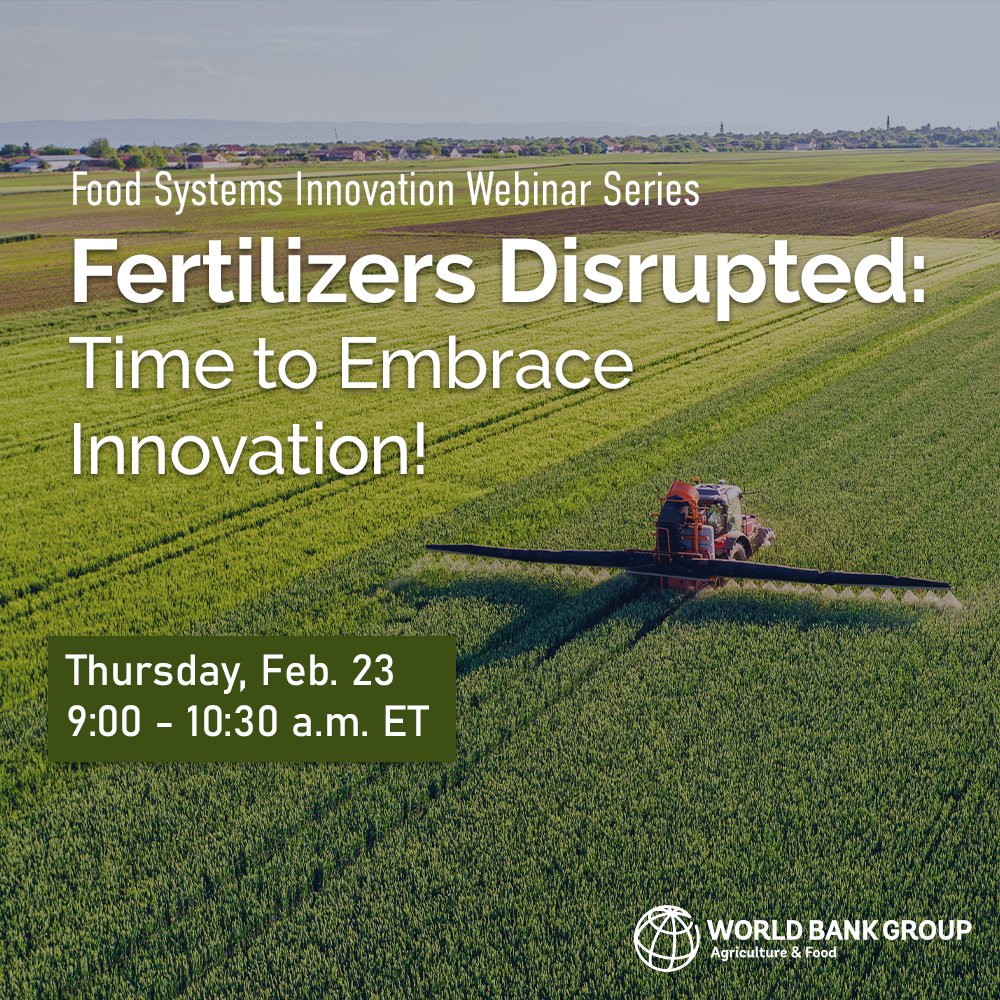
This webinar from the World Bank is the first in this new series under the Food Systems Innovation webinar series and are dedicated at showcasing a range of innovations and discussing how the government can use and/or support the scaling up of these innovations for sustainable soil fertility management.
Recording forthcoming
While it is understandable that global fertilizer production and distribution systems are crucial for agriculture and food production and have significantly contributed to yield increases over the last decades, it is also evident that it lacks sustainability and its limits for supporting a resilient food system are now brought to the fore. Fertilizer application if often inadequate and inefficiency, its supply depends on a few countries and it is a source of pollution and GHG emission. Record fertilizer prices provide an opportunity to fast track the change towards carbon-neutral and more sustainable agriculture systems and can serve as the disruption which will ease farmers and investors transition to alternative fertilizers.
Many options already exist, from a data-driven use of chemical fertilizers to innovations allowing decentralized production systems or move to a range of options of BioSolutions with microbial- or plant-based fertilizer, which have the potential to provide a viable long-term solution to these challenges.
Moderator: Parmesh Shah, Global Lead, Data-driven Digital Agriculture, Agriculture and Food Global Practice, The World Bank
Chakib Jenane, Practice Manager, West and Central Africa, Agriculture and Food Global Practice, World Bank
Shobha Shetty, Practice Manager, East Africa (TBC)
Julian Lampietti, Manager for Global Engagement, Agriculture and Food Global Practice, World Bank
Sebastian Nduva, Program Lead, AFO, International Fertilizer Development Center (IFDC)
Mandla Nkomo, Chief Growth Officer, Excellence in Agronomy Initiative, CGIAR
Jeremy Cordingley, Founder/Managing Director, Crop Nutrition Laboratory Services (Cropnuts)
Cropnuts was established in 1998 and is Africa’s one of the leading laboratory for agricultural and environmental testing, providing a wide range of analytical services to farmers, businesses and smallholders. Cropnuts has developed detailed soil fertility maps for several African countries. These soil fertility maps typically cover large areas of land and reveal variations in the soil properties. These maps have been used by fertilizer blending companies and research institutions to develop specialist fertilizer blends for specific crops in different agro-ecological zones – a process that we call Smart Blending.
This Register of Fertilizer Manufacturing and Processing Facilities in sub-Saharan Africa (SSA), excluding South Africa, monitors and maps all operational fertilizer producing plants, indicating the available name-plate production capacity in the region. The register also captures information on upcoming projects on fertilizer plant installations. The details are obtained by AfricaFertilizer.org (AFO) directly from fertilizer companies by use of questionnaires or from secondary data.
The AfricaFertilizer (AFO) initiative is the premier source for fertilizer statistics and information in Africa. Set up in 2009, AFO is hosted by the International Fertilizer Development Center (IFDC) and supported by several partners, including the International Fertilizer Association (IFA), on fertilizer trade and fertilizer use by crop studies, the Bill and Melinda Gates Foundation (BMGF) through Development Gateway (DG) as partner for data visualization, Argus Media as partner for international fertilizer prices, comments, and reports and USAID’s Bureau for Resilience and Food Security through the Feed the Future Soil Fertility Technology Adoption, Policy Reform, and Knowledge Management under the Sustainable Opportunities for Improving Livelihoods with Soils (SOILS) Consortium for monitoring tools such as the AfricaFertilizer Watch.
This event brought SUN countries and stakeholders together to explore the challenges and opportunities of a multistakeholder approach to transforming food systems and achieving global nutrition goals.
Ms. Gerda Verburg, SUN Coordinator, United Nations Assistant Secretary-General (Moderator)
Mr. Iean Russel, FAO-EU FIRST Senior Policy Officer, Cambodia
Mr. Hou Kroeun, Deputy Country Director at Helen Keller International and Coordinator of the SUN Civil Society Alliance, Cambodia
Mr. Sok Chea Hak, SUN Business Network Coordinator, Cambodia
Ms. Inmaculada del Pino Alvarez, Food Security Program Lead at the International Development Law Organization and member of the Governance Action Area
Ms. Ana Yanira Calderón, Directora Ejecutiva, Consejo Nacional de Seguridad Alimentaria y Nutricional (SUN Focal Point), CONASAN, El Salvador
Dr. Shams, Coordinator of the coordination unit for the Afghanistan food security and nutrition agenda (SUN Focal Point)
Mike Khunga, SUN Youth Leader for nutrition and co-chair of AT5 on resilience, Malawi
Ms. Carla Montesi, Director of “Green Deal and Digital Agenda”, European Commission
27 July 2021. Access to nutrition through the workplace: leveraging the private sector
Co-founded by the CGF and the Global Alliance for Improved Nutrition (GAIN), the Workforce Nutrition Alliance supported the organisation of a UNFSS Pre-Summit Affiliated Session under the theme “Access to nutrition through the workplace: leveraging the private sector”. The event, hosted by the Government of Bangladesh Ministry of Labour and Employment and GAIN, brought together leaders from government, civil society, the private sector and non-governmental organisations, to explore the key role of workforce nutrition programmes in addressing global malnutrition. Find out more about the Workforce Nutrition Alliance: https://workforcenutrition.org/
26 July 2021. Towards a Zero Hunger, Nourish the Future Pledge For the Private Sector
The Zero Hunger, Nourish the Future Pledge is an opportunity for companies, investment funds, and philanthropies to align USD 5 billion of their resources with new evidence and complement their pledges with new commitments being made by global institutions and governments to end hunger and nourish the future by 2030.
Peter Bakker, President, World Business Council for Sustainable Development (WBCSD)
Dr. Lawrence Haddad, Executive Director, GAIN & Chair, Action Track 1, UN FSS
Ute Klamert, Assistant Executive Director, World Food Programme (WFP)
Ibrahim Gourouza, Grow Africa & AUDA-NEPAD
Sanne Helderman, Lead research, World Benchmarking Alliance
Julia Friederike Harnal, Vice President Sustainability & Governmental Affairs Agricultural Solutions, BASF
26 July 2021. UN FSS Pre-Summit Parallel Session. Tackling Undernutrition Through Action and Accountability:
A ‘reset’ for the prevention, early detection and treatment of wasting and costing information on the consequences of stunting.” Emergency Nutrition Network, the Power of Nutrition (PoN), Standing Together for Nutrition (ST4N) and the Micronutrient Forum (MNF). The webinar included a brief overview of the wasting reset, followed by a panel discussion.
Moderator: Dr Patrick Webb – Professor, Tufts University
Minister Colm Brophy – Ireland’s Minister of State for Overseas Development and Diaspora
Aminata Shamit Koroma – Nutrition Director, Sierra Leone
Shawn Baker – Chief Nutritionist, USAID
Simon Bishop – Chief Executive, the Power of Nutrition
Cecilia Fabrizio – Programme Lead, Standing Together for Nutrition
26 July 2021. UNFSS Pre-Summit Webinar: Economic Empowerment of Women to Combat Malnutrition
To alleviate malnutrition in a sustainable manner and to progress toward gender equity, local, nutritious food-centered micro-enterprise is pivotal. IFDC and Malnutrition Matters empower rural or village-based women and youth to use the low-cost SoyaKit to make affordable protein-rich soyfoods for their neighborhoods, while making a daily $4 profit. Increased income generation is foundational for gender equity. This micro-enterprise requires 2 days’ training in food-processing and business, is environmentally friendly (soyfoods require 10x less energy than animal protein), produces many tasty foods, is quickly profitable, and is a strong catalyst for gender equity initiatives with a policy/cultural/educational focus.
Hart Jansson, President of Malnutrition Matters,
Caroline Sage, Business Development Associate at IFDC
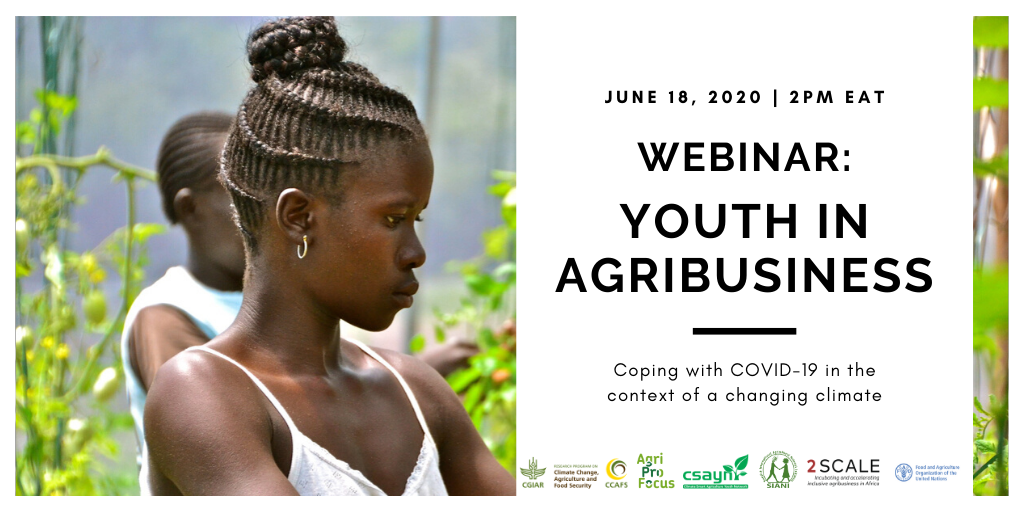
The CGIAR Research Program on Climate Change, Agriculture and Food Security (CCAFS), IFDC-2SCALE, the Food and Agriculture Organization of the United Nations (UN-FAO), AgriProFocus, the Climate Smart Agriculture Youth Network (CSAYN) and the Swedish International Agricultural Network Initiative (SIANI) hosted an online discussion on the Climate and Agriculture Network for Africa ( CANA ) platform.
Speakers
Ian Mutwiri of HomeRange Poultry shared how his team has developed online manuals on poultry farming, which are freely available online, and how his team is using social media platforms, such as Youtube and Facebook, to conduct training sessions targeting the youth.
Antony Malovi (CSAYN) has developed a solar drier using locally available materials given that he could not import any as a result of COVID-19 lockdown.
Ruhakana Taremwa, AgriProFocus member and CEO Agrotourism noted that COVID-19 had really had an impact on agrotourism; with partial lockdown in Uganda there are no opportunities for youth to visit each other's agribusiness to learn and network however, with technology they have been able to conduct their trainings online. He also commended the Ugandan government for its increase in this year's budget allocations towards the agriculture sector.
Marzia Pafumi, Youth Engagement Specialist (FAO), argued that youth agripreneurs responded to COVID-19 very fast, trying to adapt their business models and thinking outside the box to find new opportunities. She mentioned that as a result of the pandemic, there has been an accelerated move to online marketing and sales, such as orders on social media, home delivery and an increase in mobile payments. Agripreneurs also started to work more with adding value to primary products. Many of them started to use locally sourced agricultural inputs.
Mr Jacob Ochieng (Practical Action) highlighted the unprecedented impact COVID-19 is having on the economy worldwide. Practical Action is supporting agribusinesses and youth so they can remain safe by providing access and distributing information on the best practices about stopping the spread of the virus. Ochieng also underscored the importance of keeping essential agricultural services running. He mentioned that marketing and networking for agripreneurs is not possible during a lock-down, but digital platforms and social media that will help to coordinate are key when people can not physically meet to negotiate, transact or receive training. In conclusion he mentioned that innovations and the combined learnings about climate change and COVID-19 should be utilized in activities related to resilience for youth in agribusiness.
The discussion during the webinar revealed that young agripreneurs need empowerment in the following critical areas:
Mentorship – young female agripreneurs are underrepresented and this can be attributed to various challenges including socio-cultural barriers, such as access to land and lack of technical skills. Mentorship from established young male and especially female agripreneurs was seen as essential for upcoming young agripreneurs.
Financial Access- There is a need to offer access to capital for the youth as well as the development of youth-focused financial tools to support the establishment and sustainable operations of youth-led agribusinesses
Capacity building – Governments and development partners can work in partnership with established agribusinesses and with youth-centered organizations to establish centers of excellence which include demonstration sites and knowledge sharing activities for young people, including those on ICT, a field that has become vital in light of the COVID-19 crisis.
The discussions at the webinar made it crystal clear that when youth innovation in agribusiness is complemented with financial and non-financial support, young agripreneurs can not only survive but continue to thrive in the post-pandemic new world order.
The online discussion ran for two weeks from 20th May 2020 to 5th June 2020 culminating in a one day online virtual interaction on 10th June 2020. The outcomes of the discussions will inform the future advocacy, policy, programming and fundraising work of the organizations behind this initiative, to enhance the protection of young workers and entrepreneurs in the agri-food system from the negative impacts of the COVID-19 pandemic, as well as climate shocks.
Hosted on the Climate and Agriculture Network for Africa ( CANA ) platform to discuss the following questions:
As a young person engaged in agribusiness, how is COVID-19 and other climate related shocks such as the raging floods and invasion of desert locusts affecting your personal and professional life and livelihood?
How are you organizing your work and resources to cope with the crisis from an economic and health perspective?
How have your government and other organizations supported you to cope with these challenges?
What lessons learned from the COVID-19 pandemic can be applied in the context of climate change? What innovative ideas have you applied or observed?
The findings of this survey were presented. At the time of analysis, 89 private sector businesses had participated in the survey. This webinar highlighted not just the challenges presented to firms from Uganda’s private sector, but it also gave voice and agency to those who have found ways to innovate in this challenging business environment.
* The video below starts at 1:21:15 with the statement of Joseph Nkuma of NUCAFE: "It is now more critical, more than ever before that institutions, organisations that bring together farmers has become more and more important. (..) There is a need in a systemic way of empowering farmers to be able to access funding opportunities."
Mitigating the impact of COVID-19:
Businesses are contemplating to
sustain their operations by reducing the
operational costs – reviewing the staff
salaries/wages, working from home, laying
off some staff, and suspending some
activities. Some have asked for permission
from the district COVID-19 task force to
allow them to continue operating.
Businesses have strategized the marketing of products and service delivery to the clients –
door-to-door and adopting digital platforms for marketing and service delivery of products
to the clients.
Engaging the financial institutions to restructure the loan payment plan. Holding on/seizing
advancements to farmers before delivering the outputs are key immediate considerations
with some of the businesses.
Digitalizing the payment system with the clients through mobile money has been targeted
to enhance transactions for businesses.
Policy recommendations for support
Requests for financial aid for partners
to sustain their operations in the short
run and/or post COVID-19 operations
is the major exclamation for most of
the businesses.
The need for support to invest in transport equipment to facilitate the procurement and
delivery of the products
Seeking for long term financing aid to invest in value addition and reviving the struggling
businesses is wanting.
Support to digitalizing businesses – marketing, payments, services deliveries
Philomena Nshangano is executive director of Rubyerwa Dairy Investments Ltd. (RDI) a family business she founded with her late husband. RDI is a medium-size (80-hectare) farm in Rwanyamahembe Sub County, Mbarara District. The business draws its name from its 3 sites: Rubingo, Byembogo & Rwanyamahembe that keep different stages of herd structures. On average, RDI produces 800 liters of milk daily from 45 cows. The business has received several awards from Local Government, DDA, the African Union, and livestock Shows, and is regarded as a model Commercial Dairy Training Farm. With support from SNV/TIDE, RDI has trained 750 dairy farmers & workers. RDI has designed Dairy Operational & Financial record books and hosts interns from all educational institutions and many farm visitors.
Featured Panelists Tobias Basson is managing director of Highgrow Agri Ltd. trading as Namakwaland farms in Uganda. Namakwaland is a social impact driven agricultural company that wishes to better the lives of Ugandan farmers through modern primary agriculture and value addition. Namakwaland’s main focus area in Uganda is Irish potato farming, working in ware potato production for retailers, processors, restaurants and local market. Namakwaland also supplies seed for the industry. Namakwaland also engages in exporting crops such as peanuts, sweet potato, and hot pepper. This is also one as part of crop rotation system. Maize for seed production is also planted. Namakwaland supplies jobs for up to 250 people, mostly women and youth and works with IFDC’s REACH-Uganda project, which connects the business with a network of over 5,000 Irish potato farmers. Annet Kizza is the knowledge transfer country manager for East-West Seed. Kizza has managed several projects in the areas of livelihood WASH and governance; as a grant special specialist, she possesses wide knowledge on project management and resource mobilization. She is currently managing several country programs of East-West Seed aimed at promoting vegetable growing in Uganda. Kizza has worked with and managed for several donors including USAID, EU, and DFID. She has also worked as a consultant in organizational development for both private sector and government agencies. Joseph Nkuma has spearheaded empowerment of over 1.5 million Ugandan smallholder coffee farmers using his innovation of the farmer ownership model that has increased farming household income by 250%. Nkuma has founded and established two national social enterprises: NUCAFE as Uganda’s coffee largest entrepreneurial employer and CURAD as Uganda’s largest agribusiness incubator. Nkuma successfully championed and influenced Government of Uganda to formulate the first ever Uganda National Coffee Policy in 2013, which supports farmers to own and add value to their coffee. Joseph has won NUCAFE many awards including the National Investor of the Year Award 2016 and Best Africa Farmer Organization of the year 2016 in income diversity. John Tusasirwe is the current CEO of Transformation for Rural Development (TRAFORD) Limited. TRAFORD mainly deals in climate smart agriculture training, agro-input advisory and procurement, and produce marketing/trading in cereals, pulses, and oil crops. Tusasirwe has been a team leader/CEO at TRAFORD since 2016. He is currently giving both financial, production, and operation oversight to over 10 permanent staff coordinating TRAFORD projects supporting over 6000 youth and women in both Amuria and Dokolo districts; the two projects are co-funded by SNV and Heifer international. Dr. Okoth Ochola Godfrey is a veterinary surgeon and CEO and founder of Asiima Agriconcern Ltd (2004), a family business run together with his wife Eva Ochola – marketer and co-director. Ochola specializes in the poultry value chain livestock subsector and has worked with the government for one year and with the private sector since 1990. Asiima operates in six districts in Uganda, employing more than 90 workers and supporting more than 3000 farmers indirectly. Asiima has assisted in training more than 2000 farmers, farmer groups, students, and interns with the support from these partners: AVSI/SKY, DANIDA, and Mukerere University. Asiima supports farmers through extension services from its veterinary pharmacy outlet in Kampala which doubles as a marketing hub for its products and services as well as a booking office for the DOCs. Elijah Mwashayenyi is the Head of East-West Seed Knowledge Transfer in Africa, with the responsibility for resource mobilisation, partnership building, and management support to country teams. Mwashayenyi has 30 years of experience in the horticulture and development sectors. East-West Seed’s current work in Africa is focused on Tanzania, Uganda, and Nigeria but has prospects of expanding to other countries in future. Kenneth Kagame is a retired medical professor of medicine. Since his retirement in 2011, his focus has been on dairy farming. Kagame’s 60-hectare farm is peri-urban, 12 km from Mbarara City centre. Ten hectares of the farm are devoted to bananas and fodder. Kagame keeps Friesian crosses, about 3F grade. Kagame is involved with a dairy cooperative Society, BUKAKA, under the umbrella UCCCU, in which he serves as the chairman. The cooperative owns a 3000-liter cooler and can collect and market milk for about 70 members. Owoyesigyire Kenneth is the managing director of OKEBA Uganda, Ltd. He has over 8 years of experience in project management implementation of multi-donor-funded projects, and value addition processing and marketing. Okeba’s core business falls under three thematic areas (i) innovations for livelihoods, (ii) financing and distribution of agricultural inputs, and (iii) grain bulking, marketing and Logistics and transport. In partnership with SNV, OKEBA is implementing a Climate Resilient Agribusiness for Tomorrow (CRAFT) project in the four districts of Mubende, Kyejonjo, Kakumiro, and Kyegegwa. The project is empowering 8000 farmers to increase their incomes through increased production of soybean by use of Climate Smart Agricultural Technologies.
The webinar (Recording forthcoming) answered the following questions and more:
What are the current critical challenges faced by firms working in Uganda’s agriculture sector?
How have Ugandan firms led in business innovation?
What are the key gaps remaining that the agriculture business sector still needs help in bridging?
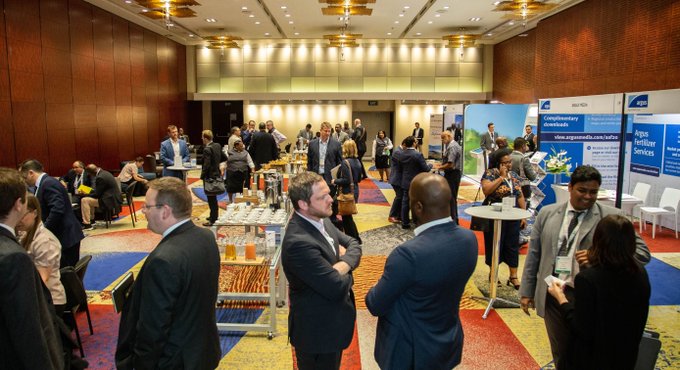
19-21 February 2020. Cape Town, South Africa. The 11th annual Argus Africa Fertilizer conference . The conference brings together attendees representing 150 companies from across the fertilizer supply chain.
Fertilizer Fast Track - a guide to global fertilizer production, trade and demand dynamics
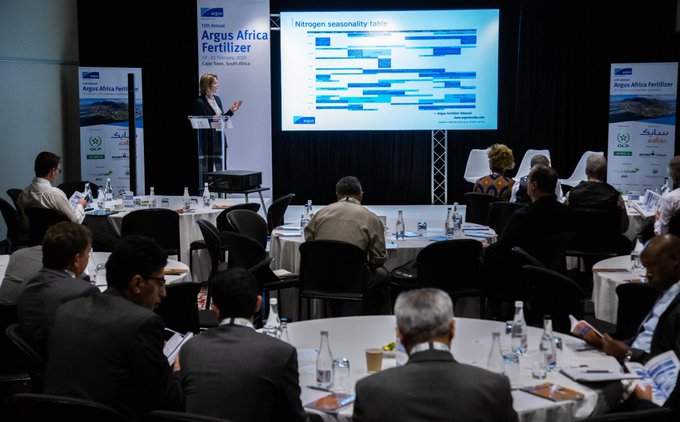
Insights into the nitrogen markets - Frances Wollmer (see picture), Principal, Fertilizer Consulting, Argus
Developments in the potash markets - Oliver Hatfield, Vice President Business Development, Fertilizers, Argus
A focus on the phosphate markets - Premium phosphate markets - Mike Nash, Editor for Fertilizer Content Development, Argus
A snapshot of the sulphur markets - Oliver Hatfield, Vice President Business Development, Fertilizers, Argus
Roundtable discussions
Fertilizer supply and demand trends in Zimbabwe
Tapuwa Mashingaidze, CEO, Chemplex Corporation
The market for enhanced efficiency fertilizers in Africa
Dustin Beckerling, African Continent Manager, Koch
Agronomic Services
West Africa Fertilizer Market Update
Dr. Abdoulaye Dièye, WAFA Secretary - Research and Training, West Africa Fertilizer Association
Managing Crop Production in Acidic Soils in Ethiopia
Sam Gameda, Senior Soil Scientist, International Maize and Wheat Improvement Center (CIMMYT) Ethiopia
Soil vs foliar fertilization, and the addition of growth regulants or plant hormones
Dr Steven A. Oosthuyse, General Manager, HortResearch SA
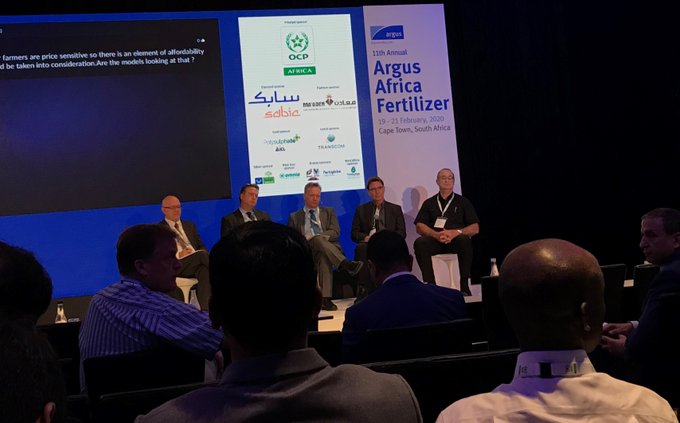
Panel discussion: Introduction to finance options for the African fertilizer supply chain Financing options for SME’s ; Maintaining sustainable finance ; The importance of building relationships between the public and private sectors to achieve success
Marie Claire Kalihangabo - Coordinator, Africa Fertilizer Financing Mechanism (AFFM), African Development Bank - Keynote speaker
Edward Mabaya - Manager of Agribusiness Development, African Development Bank - Moderator
Charles Sesay, Finance Director, Rokel Bank
Kalim M. Shah, Chief Investment Officer, Sub-Saharan Africa Manufacturing, Agribusiness and Services Department, International Finance Corporation (IFC)
Robson Mutandi, Country Director, International Fund for Agricultural Development (IFAD)
Panel discussion: Connecting the private and public sectors to improve value chain efficiency for fertilizer use and distribution Successful business models; The role of financial institutions in supporting the fertilizer supply chain; Regional initiatives to improve access to finance
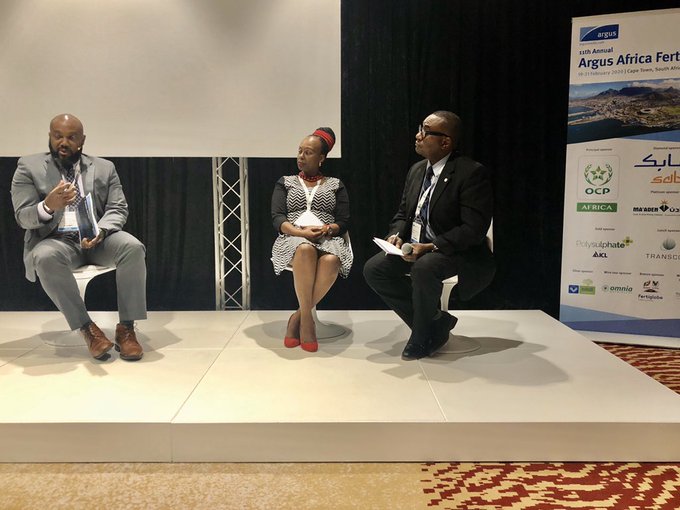
Pierre Brunache (see picture: left), - Consultant AFFM, African Development Bank - Moderator
Asseta Diallo, (PhD), Program Officer, Soil Fertility and Fertilizer Systems, Alliance for a Green Revolution in Africa (AGRA)
Sheila Keino, Regional Director, New Business ande Partnerships, AFAP Malawi, Business and Technical Services Unit (BTS)
Case study: Mali’s success story – Achieving the Abuja Declaration objectives Agricultural transformation developments and strategies for ensuring value chain efficiency across the region
H.E. Josefa Sacko - Commissioner, Rural Economy and Agriculture, African Union
Panel discussion: The movement towards customised fertilizers for smallholders in Africa The importance of educating blenders, Soil testing, crop analysis and understanding research results, Opportunities for blenders in the region
Dr Pieter Haumann, Chief Executive Officer, FERTASA
John Wendt, Deputy Director for Field Research, IFDC
Jeff Ivan, Director International Sales, AGI FERTILIZER SYSTEMS
Mark Goodwin, Manager International Business, Compass Minerals
Developing multi-nutrient fertilizers for improving crop yield and quality
- ICL Fertilizers
Improving nutrient use efficiency with multi-nutrient products
Compatibility with African crop types, Opportunities in Africa for multi-blend fertilizers
Tamir Richker, South and East Africa Sales Manager, ICL Group
Panel discussion: Digital transformation in agriculture
The increasing importance of smart farming, The use of digital technologies among rural population and farmers, Sharing information and data collection, Investment in digital agriculture
Edward Mabaya, Manager of Agribusiness Development, African Development Bank
Marc Corbeels, Agricultural Researcher, AIDA Research Unit, CIRAD
Introduction to Argus Sub-Saharan Africa report (Argus, December 2019, 575 pages) National and regional markets for fertilizers in SSA, Key market sectors, players and products; Import/supply hubs and transport corridors
Oliver Hatfield - Vice President Business Development, Fertilizers, Argus
Visualizing Insights on Fertilizer for African Agriculture (VIFAA) Program: A new fertilizer data platform for Sub-Saharan Africa
What will the platform offer and who can use it? ; Project status update ; Applying data to key decision-making processes for governments and private sector actors
Charlene Migwe, VIFAA Project Manager, Kenya, Development Gateway
Diego Dimunzio, Software Developer, Development Gateway
Panel discussion: Supporting small scale farmers with their fertilizer usage in Sub-Saharan Africa
Challenges for small scale farmers; Import trends; What are the missing links in the value chain?
Carlos Zandamela, President, Mozambican Platform for Promotion of Fertilizer Use (AMOFERT)
Rob Groot, Director Business Development and Partnerships, IFDC
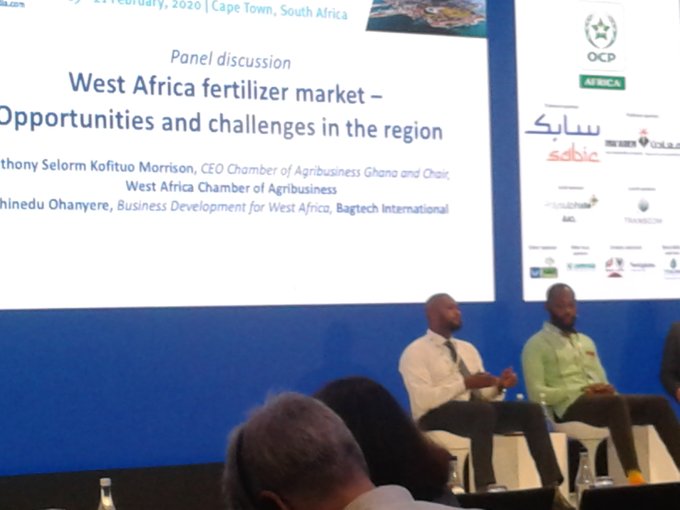
Panel discussion: West Africa fertilizer market – Opportunities and challenges in the region
Ghana's Fertilizer Expansion Programme and other regional initiatives; Regional security issues; Domestic production in Nigeria and import volumes
Anthony Selorm Kofituo Morrison, CEO Chamber of Agribusiness Ghana and Chair, West Africa Chamber of Agribusiness
Gideon Negedu, Executive Secretary, FERTASA
Panel discussion: Overcoming transport and supply chain challenges across Africa and recommendations for improvement Are transportation costs improving? Transportation availability ; Infrastructure developments
Gopal Chandak, Regional Head - West Africa and Asia (Fertilizer and Agri Inputs), Export Trading Group
Gertrude Mashonganyika, Supplies and Logistics Manager, ZFC Ltd
Shujjat Alikhan, Vice President, IMGS Group
David Buruchara, Fertilizer Logistics Specialist, One Acre Fund
How will security restrictions in West Africa impact consumption volumes and agricultural outputs in this region?
Impacts of urea restrictions; Balancing security gains against economic losses; Urea supply and demand outlook for 2020
Dr Innocent Okuku - Vice President, West African Fertilizer Association
Panel discussion: Strategies for improving the African supply chain: From production to the farmer How can fertilizers be made more accessible for small scale farmers? The importance of private and public sector collaboration ; Fertilizer subsidies in Africa
Grace Chilande, Fertilizer Market Specialist - AfricaFertilizer.Org Coordinator, IFDC Kenya - Moderator
Mahamadou Nassirou Ba, Economic Affairs Officer - Technology, Climate Change and Natural Resources Division, United Economic Commission for Africa (UNECA)
Andrew Prince, General Manager - Supply Chain, Omnia
7 to 9 June 2017.Abidjan, Côte d’Ivoire. The Four-Country Cotton Partnership (USAID C4CP) a project implemented by the International Fertilizer Development Center (IFDC) and funded by the United States Agency for International Development (USAID), in collaboration with the African Union (AU), the African Development Bank (AfDB) and the West and Central African Council for Agricultural Research and Development (CORAF/WECARD), organized a forum on Women’s Access to Appropriate Agricultural Technology.
Over 100 participants drawn from the West African region attended this forum, with a specific focus on the C-4 countries. Regional organizations such as the African Union (AU), African Development Bank (AfDB), United Nations Economic Commission for Africa (UNECA), Economic Community of West African States (ECOWAS), West Africa Economic and Monetary Union (WAEMU) as well as members of the Community of Practice on Gender Cotton and Food Security were also present. Coordinators of the ECOWAS agriculture policy (ECOWAP) as well as female producers and processors shared their experiences.
The forum:
Reviewed the existing innovative technological initiatives, policies and strategies.
Evaluated the existing level of use of farming equipment and technologies by small holder farmers.
Facilitated the sharing of experience to improve access and adoption of appropriate technologies and innovations by female farmers and processors.
Identified gender-smart technologies and innovations for planned pilot Incubation Centers of the USAID C4CP project in the C4 countries.
Made recommendations to government, regional institutions and all stakeholders on effective ways and means of enhancing women’s access and adoption of appropriate agricultural technologies and innovations in order to raise productivity at the farm level.
Other CORAF event 13-14 June 2017. Accra. Stakeholders and Agricultural experts from the West African countries converged for a Two-Day consultative meeting seeking ways to consolidate progress made so far on food security issues in the sub-region.
The Two-Day Learning Event dubbed ‘Catalytic Innovation for Agricultural Transformation’ provided a roadmap to spur the growth of the national and regional seed industry.
The World Bank and the United States Agency for International Development (USAID) supported the Sub-regional bloc ECOWAS in implementing two mutually reinforcing flagship programs ; The West African Seed Program (WASP) and the West African Agricultural Productivity Program (WAPP) focusing on seven member states but with regulations throughout all 15 member countries in addition to Mauritania and Chad which are not in the sub-region.
The conference agenda featured over 30 speakers who addressed ways to increase African farmers' access to fertilizer and consequently to boost agricultural yields across the continent.
On of the keynote speakers included:
OCP AFRICA chief executive Karim Lofti Senhadji, (picture)
the African Development Bank's vice-president for agriculture, human and social development, Jennifer Blanke, (picture)
and the chief executive of African development partnership NEPAD, Ibrahim Assane Mayaki.
Other speakers (extracts)
promoting an Enabling Environment for SMEs in the Fertilizer Supply Chain, Daniel Gad, Owner, Omega Farms
Why Micronutrients are Important in Fertilizers, Rob White, Regional Director, International Zinc Association
The Role of Public Private Partnerships in Improving Access to Fertilizers, Adam Mostert, Chairman, East and Southern Africa Fertilizer Trade Platform (ESAF)
Jason Scarpone President and CEO AFAP
African Fertilizer Financing Mechanism: Recent Developments and Opportunities, Benedict Kanu, Lead Agriculture Expert, Agriculture and Agro-Industry Dept. African Development Bank
The conference was supported by the International Fertilizer Association (IFA), the Africa Fertilizer and Agribusiness Partnership (AFAP) and the International Fertilizer Development Center (IFDC) as well as by a number of other organisations involved in promoting fertilizer use in Africa
The agenda focused on increasing consumption of fertilizers and building meaningful supply chain partnerships in Africa. Speakers from the private and public sectors discussed the importance of creating enabling environments for fertilizer supply and distribution, improving access to finance and developing infrastructure that in turn will broaden intra-Africa trade, increase fertilizer consumption across the continent and ultimately boost agricultural productivity.
The African Fertilizer Access Index: Towards the Establishment of Competitive Fertilizer
Value Chains for Smallholder Farmers
Maria Wanzala, Regional Director, East and Southern Africa, AFAP (picture)
A new AFAP initiative to support the establishment of an enabling environment for fertilizer in order to boost fertilizer use by smallholder farmers
Strengthening understanding of the key components of harmonized fertilizer policies and regulations for the region
Disseminating comprehensive knowledge of the status of fertilizer policies and regulations in the target countries
Panel Discussion: Farmer and Agridealer Perspectives on Fertilizer Distribution and Use
Fertilizer use in the context of broader farming considerations – seed quality, irrigation facilities and extension services
Improving accessibility, affordability of fertilizers for farmers
Delivering training to improve understanding of balanced fertilization
Optimizing knowledge of specific crop and soil requirements
The evolving role of the hub agridealer as a key link in the supply chain
Daniel Gad, Owner, Omega Farms
Dinnah Kapiza, Owner and Managing Director, Tisaiwale Trading
Nike Tinubu, Managing Director, Eagleson Cassava
Mark Tindle, Managing Director (Zambia), Omnia Fertilizers
Panel Discussion: Boosting Fertilizer Consumption with Accessible Financial Platforms and Innovative Solutions
Leveraging private and public sector initiatives to unlock the potential of SMEs across the agricultural sector
Collaborative initiatives to offer access to credit for smallholder farmers
Kalim M. Shah, Chief Investment Officer, Downstream Oil abd Gas, Sub-Saharan Africa, IFC
Julia Franklin, Global Sourcing Director, One Acre Fund
Benedict Kanu, Lead Agriculture Expert, Agriculture and Agro-Industry Dept. African Development Bank
Developments in Trade Corridors, Regional Collaboration and Agricultural Clusters
Update on developments of key trade corridors and impact on the market
Assessing the costs and risks including border procedures and bottlenecks
Government initiatives and public and private sector collaboration
Linking investment and innovation to develop robust supply networks of fertilizers and seeds for smallholder farmers
Argent Chuula, CEO - ACTESA, Common Market for Eastern and Southern Africa
(COMESA)










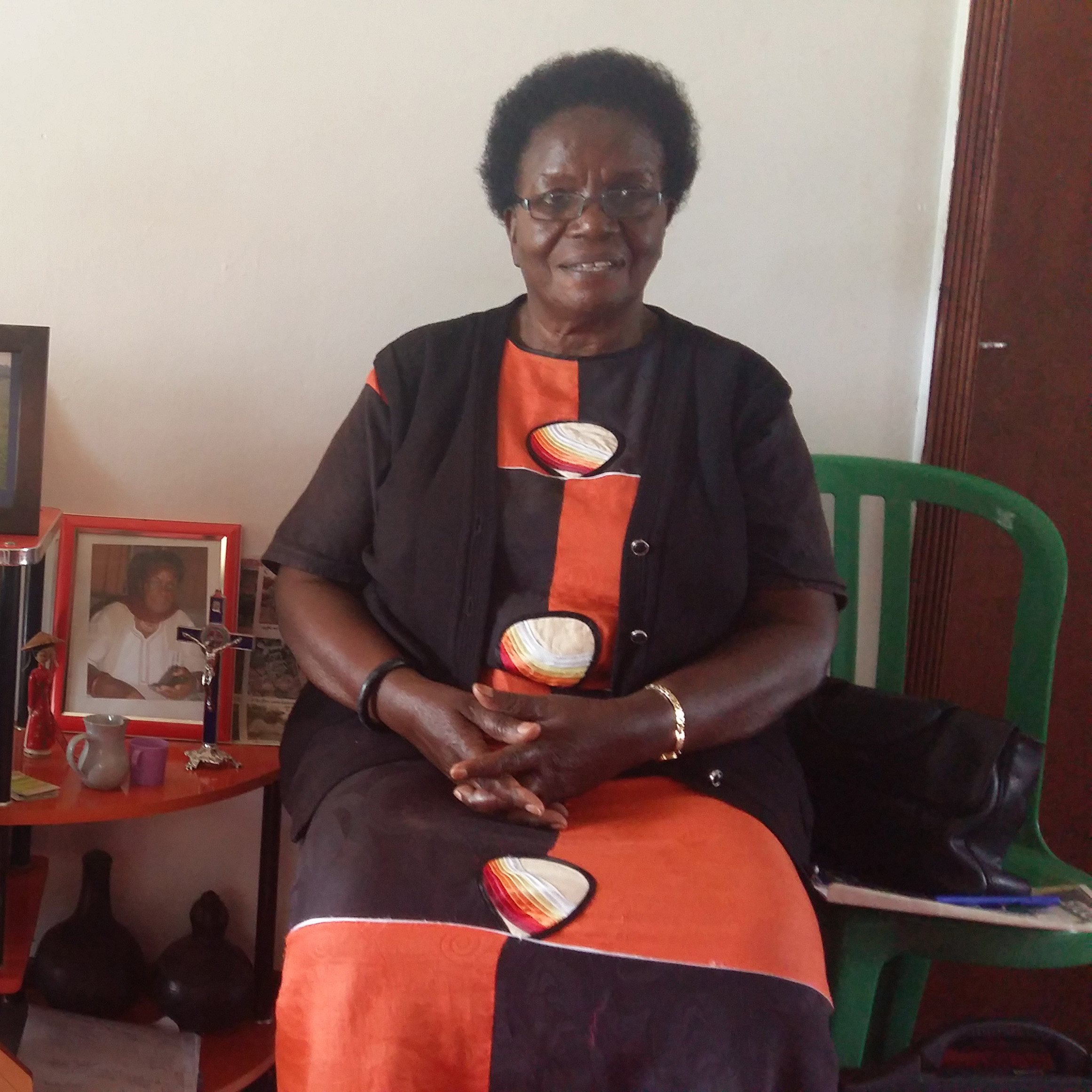 Philomena Nshangano is executive director of Rubyerwa Dairy Investments Ltd. (RDI) a family business she founded with her late husband. RDI is a medium-size (80-hectare) farm in Rwanyamahembe Sub County, Mbarara District. The business draws its name from its 3 sites: Rubingo, Byembogo & Rwanyamahembe that keep different stages of herd structures. On average, RDI produces 800 liters of milk daily from 45 cows. The business has received several awards from Local Government, DDA, the African Union, and livestock Shows, and is regarded as a model Commercial Dairy Training Farm. With support from SNV/TIDE, RDI has trained 750 dairy farmers & workers. RDI has designed Dairy Operational & Financial record books and hosts interns from all educational institutions and many farm visitors.
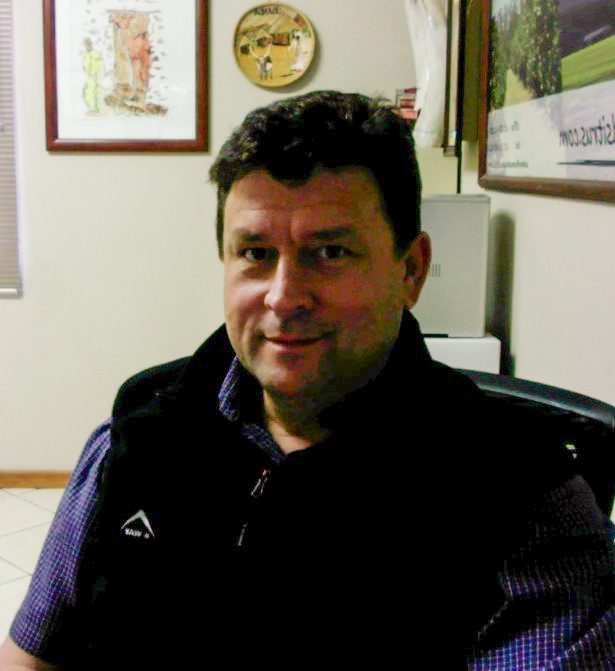 Tobias Basson is managing director of Highgrow Agri Ltd. trading as Namakwaland farms in Uganda. Namakwaland is a social impact driven agricultural company that wishes to better the lives of Ugandan farmers through modern primary agriculture and value addition. Namakwaland’s main focus area in Uganda is Irish potato farming, working in ware potato production for retailers, processors, restaurants and local market. Namakwaland also supplies seed for the industry. Namakwaland also engages in exporting crops such as peanuts, sweet potato, and hot pepper. This is also one as part of crop rotation system. Maize for seed production is also planted. Namakwaland supplies jobs for up to 250 people, mostly women and youth and works with IFDC’s REACH-Uganda project, which connects the business with a network of over 5,000 Irish potato farmers.
  Annet Kizza is the knowledge transfer country manager for East-West Seed. Kizza has managed several projects in the areas of livelihood WASH and governance; as a grant special specialist, she possesses wide knowledge on project management and resource mobilization. She is currently managing several country programs of East-West Seed aimed at promoting vegetable growing in Uganda. Kizza has worked with and managed for several donors including USAID, EU, and DFID. She has also worked as a consultant in organizational development for both private sector and government agencies.
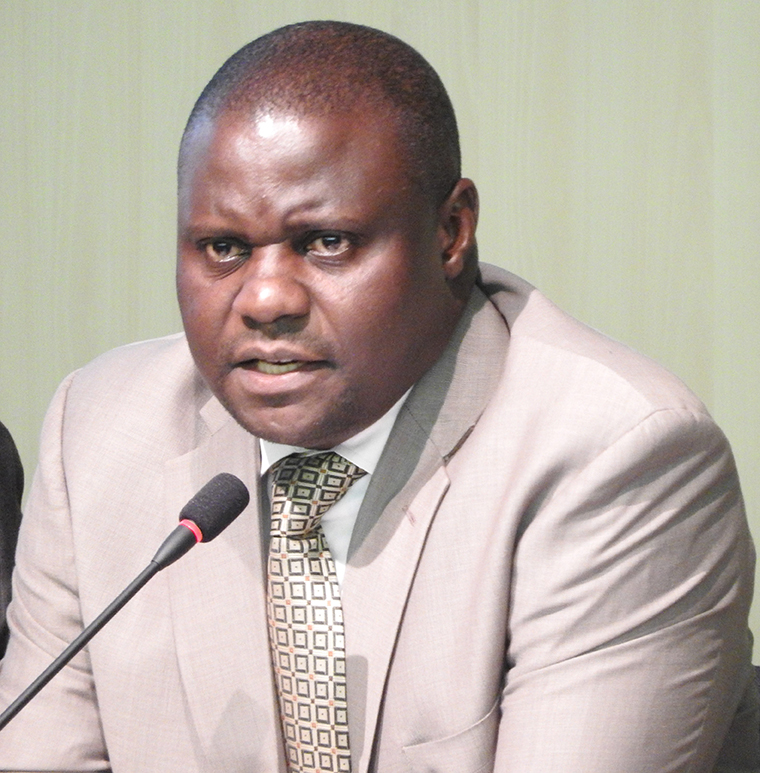 Joseph Nkuma has spearheaded empowerment of over 1.5 million Ugandan smallholder coffee farmers using his innovation of the farmer ownership model that has increased farming household income by 250%. Nkuma has founded and established two national social enterprises: NUCAFE as Uganda’s coffee largest entrepreneurial employer and CURAD as Uganda’s largest agribusiness incubator. Nkuma successfully championed and influenced Government of Uganda to formulate the first ever Uganda National Coffee Policy in 2013, which supports farmers to own and add value to their coffee. Joseph has won NUCAFE many awards including the National Investor of the Year Award 2016 and Best Africa Farmer Organization of the year 2016 in income diversity.
 John Tusasirwe is the current CEO of Transformation for Rural Development (TRAFORD) Limited. TRAFORD mainly deals in climate smart agriculture training, agro-input advisory and procurement, and produce marketing/trading in cereals, pulses, and oil crops. Tusasirwe has been a team leader/CEO at TRAFORD since 2016. He is currently giving both financial, production, and operation oversight to over 10 permanent staff coordinating TRAFORD projects supporting over 6000 youth and women in both Amuria and Dokolo districts; the two projects are co-funded by SNV and Heifer international.
 Dr. Okoth Ochola Godfrey is a veterinary surgeon and CEO and founder of Asiima Agriconcern Ltd (2004), a family business run together with his wife Eva Ochola – marketer and co-director. Ochola specializes in the poultry value chain livestock subsector and has worked with the government for one year and with the private sector since 1990. Asiima operates in six districts in Uganda, employing more than 90 workers and supporting more than 3000 farmers indirectly. Asiima has assisted in training more than 2000 farmers, farmer groups, students, and interns with the support from these partners: AVSI/SKY, DANIDA, and Mukerere University. Asiima supports farmers through extension services from its veterinary pharmacy outlet in Kampala which doubles as a marketing hub for its products and services as well as a booking office for the DOCs.
 Owoyesigyire Kenneth is the managing director of OKEBA Uganda, Ltd. He has over 8 years of experience in project management implementation of multi-donor-funded projects, and value addition processing and marketing. Okeba’s core business falls under three thematic areas (i) innovations for livelihoods, (ii) financing and distribution of agricultural inputs, and (iii) grain bulking, marketing and Logistics and transport. In partnership with SNV, OKEBA is implementing a Climate Resilient Agribusiness for Tomorrow (CRAFT) project in the four districts of Mubende, Kyejonjo, Kakumiro, and Kyegegwa. The project is empowering 8000 farmers to increase their incomes through increased production of soybean by use of Climate Smart Agricultural Technologies.