Platform for African – European Partnership in Agricultural Research for Development
Showing posts with label Germany. Show all posts

Friday, June 19, 2026

Agroecology, Climate Resilience, and Indigenous and Underutilised Crops: Rethinking Value Chains for Sustainable Food Futures

9–11 June 2026 | University of Hohenheim, Stuttgart, Germany

As climate change, biodiversity loss, and malnutrition continue to challenge global food systems, researchers, practitioners, and development organizations are increasingly turning their attention to indigenous and underutilised crops (IUCs) as part of the solution. Against this backdrop, the University of Hohenheim hosted the international symposium "Agroecology, Climate Resilience, and Indigenous and Underutilised Crops: Rethinking Value Chains for Sustainable Food Futures" 

The symposium brought together scientists and development partners from Southern Africa and Germany to explore how neglected and underutilised crops can contribute to more resilient, nutritious, and sustainable food systems. Organized through the African-German Centre for Sustainable and Resilient Food Systems and Applied Agricultural and Food Data Science (UKUDLA) and the University of Hohenheim, the event highlighted the growing recognition that future food security will require greater crop diversity and stronger support for crops that have historically received limited research and investment.

Why Indigenous and Underutilised Crops Matter

Across Africa and other regions, many indigenous crops are rich in nutrients, adapted to local agroecological conditions, and capable of thriving under climatic stresses such as drought and heat. Yet most remain marginal in research agendas, seed systems, markets, and public policy.

Throughout the symposium, speakers emphasized that these crops offer opportunities to simultaneously address climate adaptation, dietary diversity, biodiversity conservation, and rural livelihoods. However, realizing this potential will require moving beyond production-focused approaches and investing in the entire value chain—from breeding and seed systems to processing, markets, consumer awareness, and policy support.


Extracts of the agenda

Day 1: Agroecology of Indigenous and Underutilised Crops

The first day focused on the agroecological foundations of underutilised crops and their contribution to resilient food systems.

Keynote Speakers

  • Prof. Ndiko Ludidi (University of Mpumalanga)
    Using underutilised crops for food system resilience: from agroecology to human nutrition
  • Prof. Dr. Simone Graeff-Hoenninger (University of Hohenheim)
    From underutilised crop to arising agronomic importance: the examples of hemp and chickpea
  • Dr. Ethel Phiri (Stellenbosch University)
    From marginal to strategic: climate-resilient production systems for indigenous and underutilised crops

The discussions highlighted how crop diversity strengthens ecosystem resilience while providing nutritious food options for vulnerable communities. Speakers demonstrated how crops once considered "minor" can become strategically important under changing climatic conditions.

Day 2: Climate Resilience and Adaptation

The second day examined breeding, genetics, climate adaptation, and international efforts to promote crop diversity.

Keynote Speakers

  • Prof. Dr. Karl Schmid (University of Hohenheim)
    Improving the potential of underutilised crops by plant breeding using quinoa and amaranth as examples
  • Dr. Lembe S. Magwaza (Cranfield University)
    The double role of underutilised crops for climate resilience and protein supply

International Organisation Perspectives

  • Nico Wilms-Posen (Crop Trust)
    Global initiatives for crop diversity
  • Simone Welte (Welthungerhilfe)
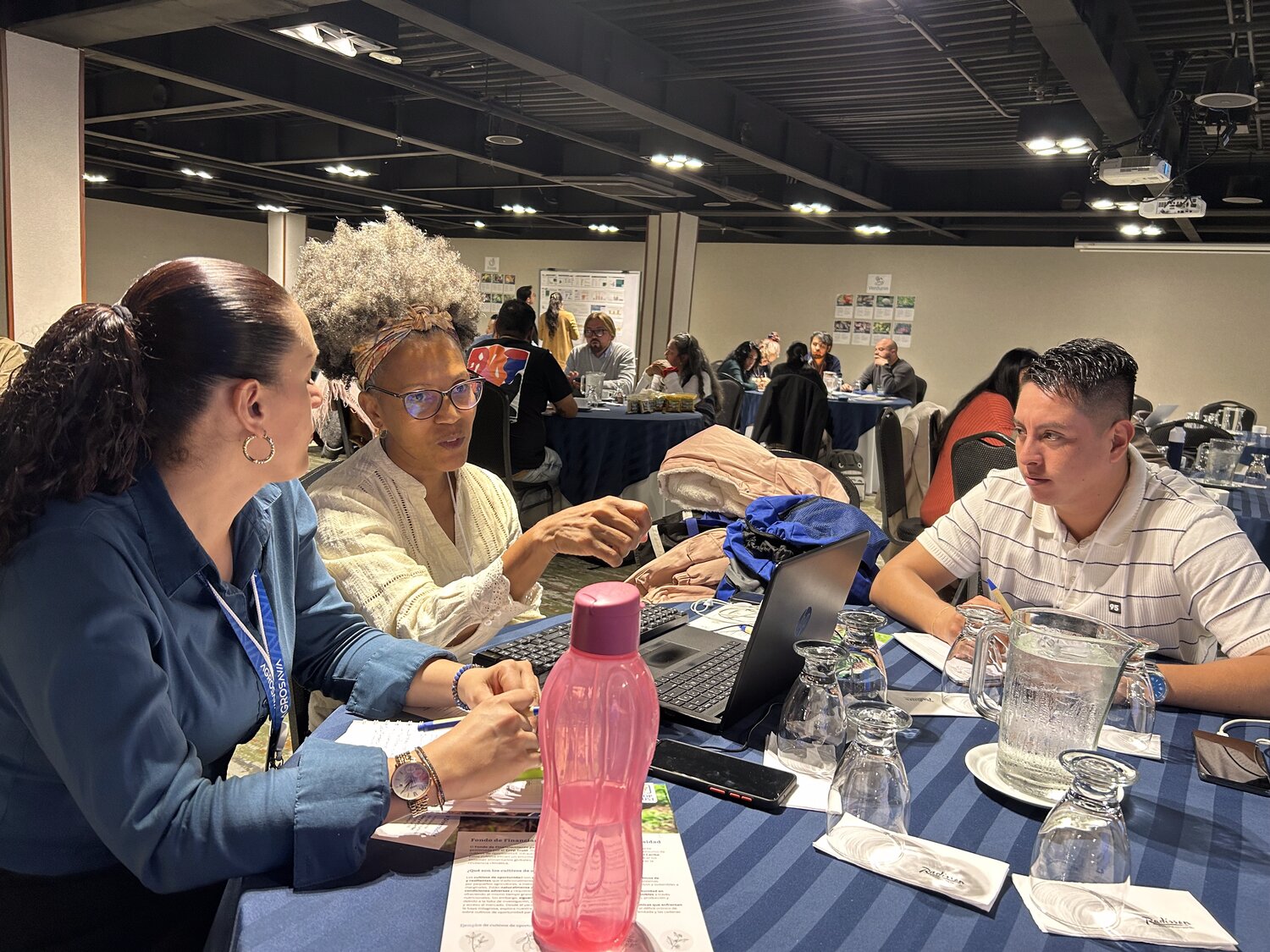
    Nourishing Diversity: Unlocking the Nutritional Power of Opportunity Crops

These sessions reinforced the importance of genetic diversity and targeted breeding efforts to improve productivity and farmer adoption while maintaining the resilience traits that make these crops valuable.

The contribution from Welthungerhilfe highlighted recent evidence on "opportunity crops" such as millets, fonio, bambara groundnut, cowpea, pigeon pea, amaranth, and other neglected crops that offer significant nutrition and climate benefits.

Day 3: Creating Value Chains for Underutilised Crops

The final day shifted attention from production and adaptation to the challenge of building viable markets and sustainable value chains.

Keynote Speakers

  • Prof. Dr. Sebastian Hess (University of Hohenheim)
    Market challenges for niche products
  • Prof. Unathi Kolanisi (University of Zululand)
    Food innovations and consumer acceptance of underutilised crops

A recurring message throughout the symposium was that the greatest challenge facing indigenous and underutilised crops is not proving their value, but creating enabling environments for their uptake. Despite their nutritional and environmental advantages, these crops often face barriers including weak seed systems, limited processing infrastructure, poor market access, low consumer awareness, and insufficient policy support.

Participants stressed that future investments should focus on developing inclusive value chains that connect producers, processors, retailers, researchers, and consumers. Such efforts would help transform underutilised crops from niche products into meaningful contributors to sustainable food systems.

Key Messages from the Symposium

Three major conclusions emerged:

  1. Indigenous and underutilised crops are critical assets for climate-resilient food systems, offering drought tolerance, biodiversity benefits, and adaptation potential that complement major staple crops.
  2. Their contribution to nutrition is often greater than their current economic visibility, with many species providing superior micronutrient density and dietary diversity compared to dominant commercial commodities.
  3. The future of these crops depends on value-chain development, including investment in research, breeding, seed systems, processing technologies, consumer awareness, and supportive public policies.

Looking Ahead

The symposium demonstrated growing momentum behind efforts to reposition indigenous and underutilised crops within agricultural research and development agendas. As governments, research institutions, and development organizations seek pathways toward sustainable food futures, these crops are increasingly viewed not as relics of traditional agriculture, but as strategic resources for achieving climate resilience, nutrition security, and agricultural sustainability.

The challenge now is to translate scientific evidence into coordinated action that enables farmers, consumers, and markets to realize their full potential.

Tuesday, March 3, 2026

Germany's Multilateral Engagement and Food Security


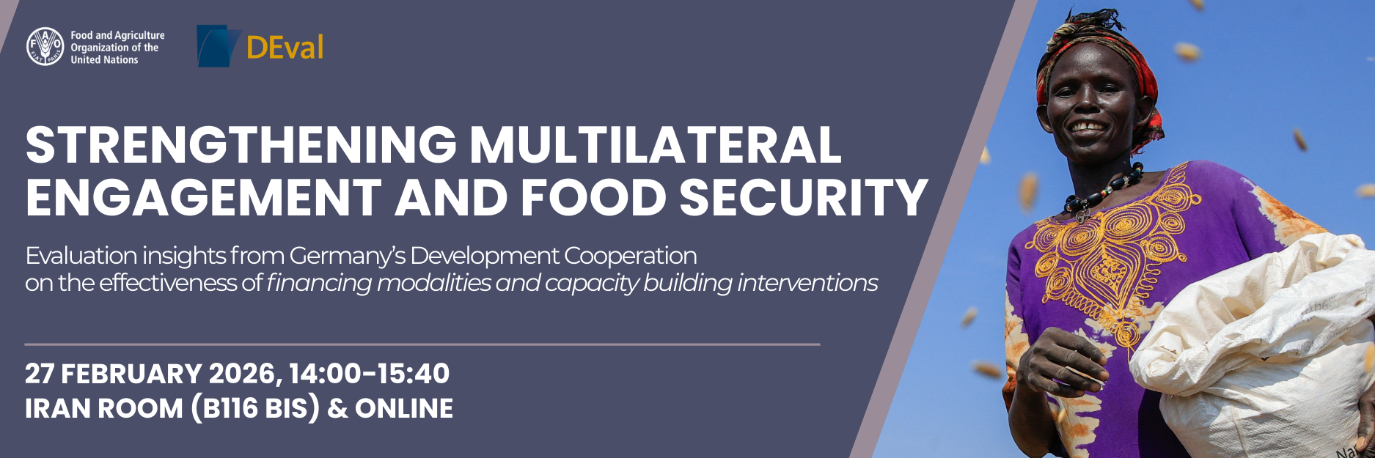
27 February 2026.  “Strengthening Multilateral Engagement and Food Security – Evaluation insights from Germany’s Development Cooperation”

The session featured presentations by colleagues from the German Institute for Development Cooperation (DEval) and explored: 
  • Key findings from the evaluation of Germany’s multilateral engagement, including the effectiveness of core and earmarked financing modalities;
  • Evidence on the effects of capacity strengthening interventions on food security and nutrition in sub-Saharan Africa;
  • Implications for strengthening multilateral portfolios and enhancing food systems resilience.
Speakers:
  • Carlos Tarazona (OED) 
  • Clair Null (OED) 
  • Clemencia Cosentino (OED)
Related:
Römling, C., A. Sting, L. Kunert and C. Wicke (2025), The Effects of Capacity Strengthening Interventions on Food Security and Nutrition. Evidence Synthesis of Development Cooperation in Sub-Saharan Africa, German Institute for Development Evaluation (DEval), Bonn, 8 pp

Wednesday, January 28, 2026

CGIAR’s Role at the GFFA 2026

15 - 16 January 2026. CityCube Berlin. 2026 GFFA - Water. Harvests. Our Future.

CGIAR’s presence at GFFA 2026 included contributions across multiple expert and thematic panels, mainly on water governance, the water–energy–food nexus, irrigation, blue foods, and sustainable water use. CGIAR framed scientific evidence and actionable solutions for policy and practice around water and food security, especially under climate change pressures.

CGIAR scientists and leaders brought research into the center of several thematic policy debates:
  • Water Governance & Competing Uses: the panel addressed how to share water equitably for food
    and water security, including tenure and governance frameworks. Emphasis was on integrated management that balances agricultural water use with broader human and ecosystem needs.
  • Sustainable Irrigation & Nexus Approaches: Discussions on sustainable irrigation emphasized the water–energy–food–environment nexus, bringing scientific insights on how to optimize scarce water resources for resilient agriculture.
  • Blue Foods & Blue Bioeconomy: CGIAR-linked research on aquatic foods and the blue bioeconomy featured in sessions that highlighted how aquatic food systems contribute to
    nutrition, sustainability, livelihoods, and climate resilience.
  • Science for Policy & Global Water Resilience: Across panels, CGIAR evidence highlighted how water security is essential for food security, climate adaptation, and resilient agrifood systems — contributing directly to global policy dialogues leading into the UN Water Conference 2026.

The Malabo Montpellier Panel's report on sustainable fisheries and aquaculture in Africa (Fish-Friendly) shows how governments in Africa are implementing measures and reforms to address these challenges and promote sustainable fisheries and aquaculture. The evidence-based actions described in the report demonstrate how integrated policy, investment, and innovation can foster inclusive growth, strengthen resilience, and deliver environmental benefits. This aligns with regional frameworks such as the African Union's Ten-Year Strategy for Aquatic Ecosystem Development (CAADP) and global commitments such as the Sustainable Development Goals (SDGs) and the Paris Agreement, and provides valuable insights for the sustainable management of aquatic resources.

The expert panel at GFFA 2026 aims to build on these findings and provide a platform for stakeholders to exchange knowledge, highlight political innovations, and explore how strengthening the blue bioeconomy can sustainably promote food security, livelihoods, and aquatic ecosystems.


16/01
Expert panel #7 Sustainable Water Use and Innovative Agricultural Technologies in the Agriculture of Eastern Europe and Central Asia

Innovative agricultural technologies play a central role: be it precise drip irrigation systems with minimized evaporation losses, drought- and salt-stress-resistant seeds and varieties, soil-conserving agricultural technology for optimal soil moisture, or closed-loop livestock farming systems.

What challenges do Eastern European and Central Asian countries face with regard to sustainable water use in agriculture? What do practical solutions look like? What obstacles do they face? And how can the use of water-efficient agricultural technologies be further expanded?

16/01 Expert Panel #8 - The Blue-Green Nexus: Innovations for Smart Water Strategies from Farm to
Sea

Keynote Speaker: Jörn Schmidt, WorldFish

16/01 High Level Panel - African Union (AU)
Keynote Speaker: Mark Smith, IWMI

16/01 Expert Panel #11 - Sharing water fairly for food and water security: The Global Dialogue on Water Tenure
Panelist: Barbara van Koppen, IWMI

16/01 Expert Panel #12 - Challenges and opportunities of agricultural water governance in the context of climate change: Pathways for transformation
Panelist: Claudia Ringler, IFPRI

16/01
Expert Panel #15 - Sustainable Irrigation Requires a Water-Energy-Food-Environment Nexus Approach
Panelist: Claudia Ringler, IFPRI; Mohsin Hafeez, IWMI

16/01
Expert Panel #16 - Blue Foods and the Blue Bioeconomy: Pathways to Nutrition, Resilience, and Sustainability
Panelist: Jörn Schmidt, WorldFish; Shakuntala Thildsted, CGIAR

17/01 Breakout Session: Finding Constructive Solutions to Competing Uses
Moderator: Jo Swinnen, Director General - IFPRI


Tuesday, September 16, 2025

Opportunity Crops: A BOLDER Approach to Food Security

9  September 2025. Bonn. Opportunity Crops: A BOLDER Approach to Food Security

The event focused on promoting “opportunity crops” — lesser known, nutrient-rich, resilient crops that are environmentally friendly and have potential to support food security. It was part of the BOLDER initiative, aiming to build momentum around those crops in Africa. The program included opening remarks, panel discussions, short talks, thematic sessions from seed to table, and conversations about preserving crop diversity. Learn more about BOLDER.

Welcome & Opening Remarks
  • Cody Gildart, Chief Communications Officer, Crop Trust
  • Stefan Schmitz, Executive Director, Crop Trust Talk: “Within Diversity; Among Diversity”
Setting the Scene: Africa Today, Africa Tomorrow
  • Céline Termote, Senior Scientist and Regional Team Leader for Food Environment and Consumer Behavior, Alliance of Bioversity International and the International Center for Tropical Agriculture (CIAT)
  • Mercy Mwambi, Agricultural Economist, World Vegetable Center (WorldVeg)
  • Matilda Ntowa Bissah, Scientist, Council for Scientific and Industrial Research - Plant Genetic Resources Research Institute (CSIR-PGRRI), Ghana
BOLDER Opportunities: Expanding the Value of Crop Diversity

Short talks from BOLDER collaborators on how opportunity crops can strengthen food systems from seed to table.
  • Sarah Paule Dalle, Researcher, Department of International Environment and Development Studies (Noragric), Norwegian University of Life Sciences (NMBU)
  • Peter Emmrich, John Innes Centre (JIC)
  • John Adriko, Director of Research, National Forestry Resources Research Institute (NaFORRI),
    National Agricultural Research Organisation (NARO), Uganda
Food Systems & Opportunity Crops

What are researchers seeing in terms of production trends, markets, and shifts in consumer preferences?
  • Mercy Mwambi, Agricultural Economist, World Vegetable Center (WorldVeg)
  • Céline Termote, Senior Scientist, Alliance of Bioversity International and CIAT
Building the Ecosystem: The BOLDER Process
  • Nora Castañeda-Álvarez, BOLDER Project Coordinator, Crop Trust
  • Nico Wilms-Posen, Project Coordinator, Power of Diversity Funding Facility, Crop Trust
Exploring & Evaluating Crop Diversity

How farmers are working with researchers to test, select and adopt diverse crops using the 'tricot'
approach.
  • Kauê de Sousa, Scientist, Alliance of Bioversity International and CIAT
  • Carlos Houdegbe, Faculty of Agronomic Sciences, University of Abomey-Calavi, Benin
  • Sognigbe N’Danikou, Scientist, World Vegetable Center (WorldVeg)
Collecting & Conserving Crop Diversity

Why urgent collecting efforts are vital to prevent the loss of valuable crop diversity forever.
  • Mujuni Sospeter Kabululu, Senior Research Officer, Tanzania Plant Health and Pesticides Authority
  • Dèdéou Apocalypse Tchokponhoue, Genebank Manager, University of Abomey-Calavi, Benin
The Future: Building on BOLDER

A look at what’s next: how to build equitable, sustainable food systems with support from national governments and new initiatives.
  • Nora Castañeda-Álvarez, Crop Trust
  • Nico Wilms-Posen, Crop Trust
Video published 03/12/2025

Background:

Crop Trust has launched (19/03/2025) the Power of Diversity Funding Facility (PDFF). This transformative multi-donor funded initiative will promote the use of so-called opportunity crops across Africa, Asia, the Pacific, and Latin America and the Caribbean.

Initially, the PDFF will focus on 14 high-potential opportunity crops in seven countries,: Colombia, Kenya, India, Nigeria, Tanzania, Uganda and Zambia. Additional funding can extend the project’s reach to more countries
, driving a shift towards resilient and sustainable agrifood systems worldwide.

Backed by an initial investment of €10 million from Germany (the German Federal Ministry for Economic Cooperation and Development (BMZ) through KfW Development Bank) and €2 million from Ireland, the PDFF will empower farmers to diversify their agricultural systems with resilient and nutritious alternatives to mainstream crops. The German funding will come via KfW, the German Development Bank, and Ireland is providing funding through its Department of Foreign Affairs.

National Workshops


Kenya: 18–22 August 2025. Nairobi. Finger millet and amaranth were selected as Kenya’s priority “opportunity crops” during the two-day National Stakeholder Consultation under the Power of Diversity Funding Facility (PDFF). They were chosen from a longlist of 43 crops. The initiative will be implemented in collaboration with Alliance of Bioversity International and CIAT, and Kenya’s Agricultural and Livestock Research Organization (KALRO).
  • Edwin Garzón-Horta — PDFF Project Specialist, Crop Trust
  • Dr. Gloria Otieno — Genetic Resources & Food Security Policy Specialist, Alliance of Bioversity International & CIAT
  • Peterson Wambugu — Genetic Resources Research Institute (GeRRI), Kenya
  • Evelyne Okoth — Farmer representative from Kisumu

India: 19-20 August 2025. Chennai. Foundation National Stakeholder Consultation on Opportunity Crops in India, under the Power of Diversity Funding Facility (PDFF).

India’s agricultural landscape is rich with diversity, yet many traditional crops have quietly faded from mainstream attention. At the national dialogue hosted by the MS Swaminathan Research Foundation and Crop Trust called the ‘Power of Diversity Funding Facility – Identifying Priority Opportunity Crops’, scientists, farmers, and policymakers came together to spotlight these neglected and underutilised species (NUS)—and why they might hold the key to a healthier, more sustainable future.


Colombia: 15–16 July 2025. Bogotá. Colombia Chooses Its Opportunity Crops The participatory
process to choose opportunity crops brought together representatives from the national government, farmers, researchers, environmental organizations, international cooperation agencies, agricultural unions and the private sector. The group finally chose peach palm and chayote, opportunity crops that will now receive critical support from the Funding Facility to tap their full potential for Colombia’s communities and economy.


In Nigeria the consultation tackled a list of 37 possible crops. Fonio and pigeon pea came out on top.

The Crop Trust’s Power Of Diversity Funding Facility brought together partners from the Zambia Agricultural Research Institute (ZARI), the National Genebank of Zambia, local experts and farmers to identify Opportunity Crops that matter most for the country’s agricultural future. The top picks? Sorghum and cowpea – crops that can withstand harsh conditions while providing reliable nutrition.


Organized by: The Alliance of Bioversity International & CIAT (CGIAR), which coordinated the Uganda and Tanzania workshops for BOLDER.

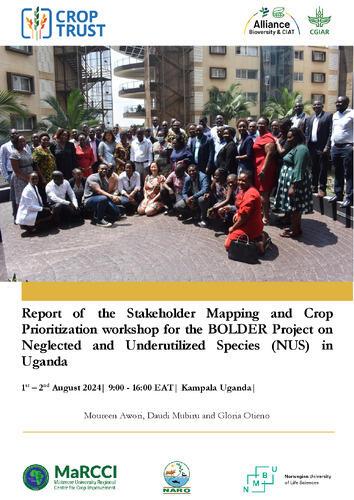
Uganda has prioritized five Neglected and Underutilized Species (NUS) for their potential to enhance food security, nutrition, and economic growth. Among these, jackfruit stands out with the highest ranking (11.6), valued for its adaptability to climate change, rich nutritional content, and widespread cultural acceptance. Pearl millet, scoring 11.4, is recognized for its exceptional drought tolerance and importance in traditional ceremonies, such as marriages. Pumpkin, with a score of 11.2, is celebrated for its nutritional and medicinal properties, as well as its broad acceptance among communities. Cowpea, scoring 11.0, is notable for its seasonal adaptability, nutritional richness, and cultural significance. In addition, amaranth, both as a grain and a leafy vegetable, was included among the priority crops due to its vital role in promoting food security, nutrition, and health. 

These species collectively offer immense potential for strengthening Uganda’s food systems, improving dietary diversity, and fostering sustainable economic development. By focusing on their promotion and utilization, Uganda can leverage their climate resilience, nutritional benefits, and cultural relevance to address malnutrition and support long-term growth. 


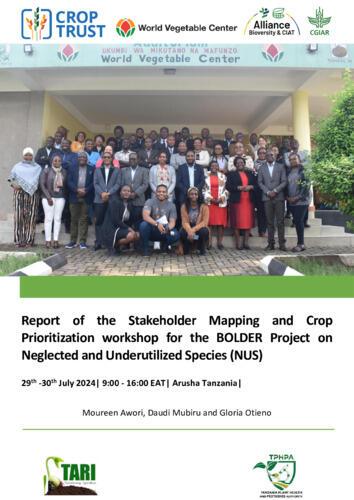
A stakeholder workshop in Tanzania convened 55 participants to identify priority Neglected and Underutilized Species (NUS) crops, develop comprehensive stakeholder lists, and define roles within NUS food systems. The workshop identified five key priority crops: sweet potatoes, finger millet, Moringa, Bambara groundnuts, and Jute mallow. Participants emphasized the importance of selecting crops with traits such as pest and disease resistance, drought tolerance, high nutritional value, and marketability. These traits are critical for enhancing food security, improving nutrition, and ensuring the resilience and sustainability of local food systems. The collaborative efforts of stakeholders aimed to strengthen NUS integration into Tanzania’s agricultural value chains and promote their broader adoption.


Friday, September 12, 2025

Tropentag 2025

10 - 12 September 2025. Tropentag 2025 is an interdisciplinary international conference focused on tropical and subtropical agriculture, natural resource management and rural development. 

This year the theme was “Reconciling land system changes with planetary health”, meaning the conference explored how agricultural systems, land use, food security, and environmental protection can be balanced in the face of climate change, urbanization, land-use change, and other pressures. 

The event was organized by the University of Bonn/ZEF together with several partner European
universities and research bodies, and it will include keynotes, oral and poster presentations, workshops, and hybrid/online sessions. 

The key thematic areas were:

  • Resilient Crop & Livestock Systems: Enhancing crop and livestock productivity through optimized management, breeding, and climate-smart agriculture. Addressing biotic (pests, diseas-es) and abiotic (drought, salinity) stresses to improve resilience and resource efficiency.
  • Soil, Water & Biodiversity: Strengthening soil fertility, water management, and agricultural biodiversity. Applying nature-based so-lutions for soil conservation, water retention, and ecosystem services in agricultural landscapes.
  • Land Use, Forestry & Agroecology: Optimizing land management and farming systems through regenerative agriculture, sustainable forestry, and agroecological approaches. Balancing productivity, soil health, and ecosystem functions to enhance long-term agricultural and forest sustainability.
  • Food Systems & Nutrition: Improving food quality, safety, and biofortification while ensuring seed system sustainability. Strength-ening nutrition-sensitive agricultural value chains for healthier diets and resilient food systems.
  • Markets, Economics & Science Policy:Understanding farmer decision-making, risk management, and innovation adoption. Co-design of poli-cies and market mechanisms that support climate-resilient agriculture while ensuring economic viability.
  • Social Learning & Governance: Promoting knowledge transfer, participatory govern-ance, and institutional change. Addressing land ten-ure security, gender equity, and access to resources to support inclusive agricultural transitions.
  • Technology & Agricultural Innovation: Leveraging artificial intelligence, remote sensing, and smart farming for better decision-making and re-source efficiency. Advancing biotechnology and pre-cision agriculture to enhance productivity with mini-mal environmental impact.

Extracts of the programme 80 pp.

  • Opening session Dr. Siméon Ehui — Director General of the International Institute of Tropical
    Agriculture (IITA) & CGIAR Regional Director for Africa Reconciling land systems changes with planetary health. 
  • Dr. Lenis Saweda Liverpool-Tasie (Michigan State University, USA) Her research is about transforming food systems, rural livelihoods, MSMEs, policy-advisory in agriculture in low-/middle-income countries. 
  • Dr. Chris Hoffmann (University of São Paulo, Brazil) Works on nutrition transition, gut microbiome, how socioeconomic & agricultural policies affect health outcomes. 
  • Closing session Dr. Ousmane Badiane — Executive Chairperson of AKADEMIYA2063 On remote sensing & AI applications in agriculture; broad reflections toward planetary health. 

11/09 Sessions on Neglected & Underutilised Species


This session highlighted the crucial role of neglected and underutilised species (NUS) and broader biodiversity in tackling today’s food system challenges. Presentations spanned themes such as how NUS link biodiversity, climate, and nutrition; the nutritional potential of neglected African crops; and the integration of biodiversity into agricultural and rural development. Case studies also addressed ecological restoration in Brazil, mangrove protection in Vietnam, and citizen science approaches in the Dominican Republic. Together, the talks emphasized that biodiversity conservation and mainstreaming NUS are key strategies for building climate resilience, improving nutrition security, and supporting sustainable livelihoods.

Céline TermoteNUS at the nexus of biodiversity, climate and nutrition → Framed NUS as critical for dietary diversity and resilience to climate change.
Michael Frei, Hervé Mube K., Dominique van der Straeten, et al.Micronutrient density of neglected and underutilised African crops → Showed how NUS could help combat hidden hunger through high micronutrient content.
Mariam AbbasMainstreaming biodiversity into agricultural and rural development: The case of Mozambique → Explored how policy and practice can embed biodiversity in rural development.
Milka KiboiPerformance and yield stability of maize under a long-term experiment in the sub-humid tropics → Provided insights on biodiversity and stability of staple crops, linking to agro-biodiversity themes.
Emma Tamez MonteroSocial-ecological restoration in the Brazilian Mata Atlântica: Implications on landscape connectivity dynamics → Examined restoration efforts to reconnect fragmented landscapes.
Uyen TranDoes sustainable aquaculture certification protect mangroves? Evidence from Vietnam → Investigated whether certification schemes actually safeguard biodiversity.
Hugo-Enrique Reyes-AldanaCitizen science for biodiversity monitoring and pathogen detection in coffee farms in the Dominican Republic → Highlighted farmer participation in biodiversity tracking and early warning systems.


Poster Session: Biodiversity and neglected species

A number of poster presentations under this theme: e.g. “Transforming Ethiopian botanical gardens into socio-ecological systems …”, “Wild and alien plant species as a source of food and livelihood support among low-income households …”, “Valorising neglected and underutilised crops: Role of bio-inoculants in improving productivity” etc.

11/09 Bridging Farmer Innovation and Digital Co-Design


The session focused on how farmers’ knowledge and innovation can be combined with digital tools through participatory and co-design approaches. Presentations highlighted how peer-to-peer learning, serious games, and participatory digital literacy can strengthen farmer capacities, encourage more sustainable practices, and improve rural livelihoods. Case studies spanned Kenya, Namibia, Cameroon, and Thailand, showing how farmers and researchers can co-create digital solutions tailored to local needs. The common thread was empowerment of rural communities by embedding innovation within their own social and ecological contexts, rather than top-down technology transfer.

Rufo Roba Halakhe, Maria Restrepo, Brigitte KaufmannPeer-assisted smartphone learning to support digital literacy and participatory design in northern Kenya → Farmers learned digital skills by supporting each other, enabling stronger participation in co-design of digital solutions.
Sean Yeo, Kingpai Koosakunilrund, Patrick WaeberBreaking the failure cycle: Strategy game design to rethink mangrove restoration → A role-play/strategy game helped stakeholders rethink and improve approaches to mangrove restoration in Thailand.
Francis E Ndip, Perez L Kemeni Kambiet, Ernest L MoluaAgricultural commercialisation and children’s welfare: Impacts on diets and education → In Cameroon, commercialization of agriculture was linked to both opportunities and risks for children’s nutrition and schooling, underlining the need for inclusive policies.
Mareike Aufderheide-Voigts, Mpule Kamwi, Rufo Roba Halakhe, Maria Restrepo, Brigitte KaufmannEnhancing livestock husbandry and rural livelihoods through peer-to-peer information access: A transdisciplinary approach in communal areas of Namibia → Farmers co-designed peer-sharing platforms to improve livestock practices and strengthen communal resilience.


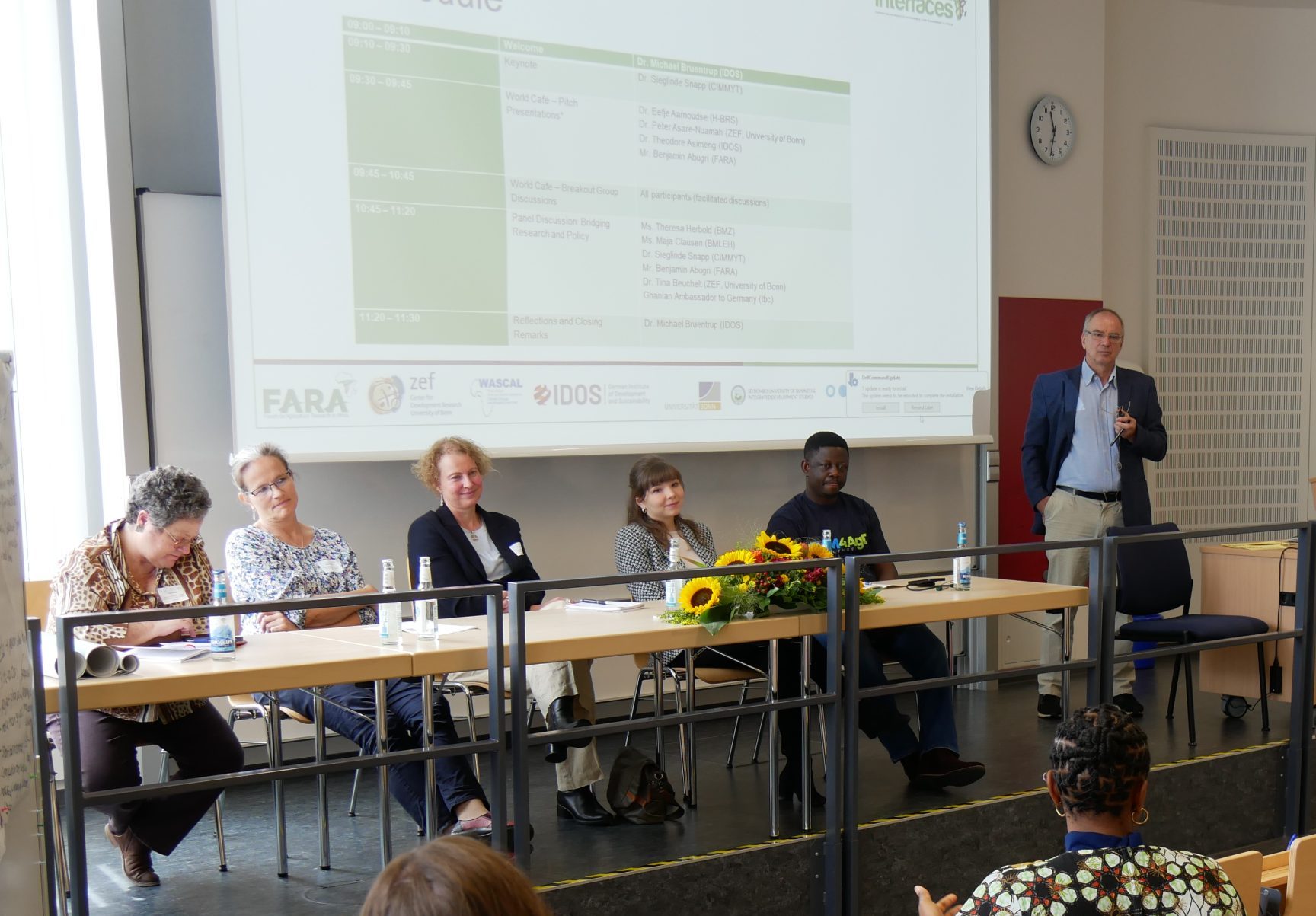
10/09 Bridging the Gap: Strengthening Science-Policy Interfaces in Agricultural Research


  • INTERFACES Side Event at Tropentag 2025,
  • The event brought together researchers, policymakers, and development practitioners from Africa and Europe to reflect on how scientific knowledge can more effectively shape and inform policy processes. 
  • The workshop built on previous Tropentag conversations on participatory research and agricultural knowledge management, and it offered a platform to deepen the dialogue around bridging research, policy, and practice.

Wednesday, July 23, 2025

Forgotten Foods: A GFAR/GFAiR Collective Action Success Story

The Collective Action on Forgotten Foods represents one of the most impactful and forward-looking partnerships under GFAR (now GFAiR)—reviving neglected and underutilized crops (NUS) to transform food systems, improve nutrition, and empower marginalized communities. Its story spans over two decades, beginning with the early recognition of "forgotten foods" as a global agri-innovation frontier.
 

Origins: A Global Innovation Priority (1999–2000)


The term “forgotten foods” began gaining traction in 1999–2000, when GFAR convened dialogues on rethinking agricultural innovation to serve smallholders, especially in marginal environments. At the GFAR2000 Global Conference in Dresden, neglected and underutilized species (NUS) were formally acknowledged as a global priority for research and innovation. These species—locally adapted, nutrient-dense, and often resilient to climate stress—had long been marginalized by mainstream agricultural R&D. GFAR partnered with actors like Bioversity International and the CGIAR NGO Committee to elevate the status of NUS in policy, research, and funding agendas.

Rising Momentum: From Advocacy to Collective Action


Through the 2000s and 2010s, GFAR supported global awareness-raising on the role of forgotten foods in combating hunger, biodiversity loss, and the erosion of traditional knowledge. These efforts laid the groundwork for the formal establishment of the Collective Action on Forgotten Foods, launched as part of GFAR’s restructured Collective Action mechanism in the late 2010s.

Key milestones included:
  • Formation of a multi-stakeholder partnership, including farmer organizations, public research institutes, NGOs, UN agencies, private sector, and youth;
  • A 2021–2022 global dialogue series on forgotten foods, led by GFAR and partners, identifying barriers and opportunities across regions;
  • The “Forgotten Foods Manifesto” (2022), calling for co-research, policy support, and investment in neglected crops;
  • Country-level engagement, such as support to India’s Odisha Millet Mission and integration of forgotten foods in school feeding, biodiversity policy, and climate resilience programs.

A Paradigm Shift in Food Innovation


Today, the Forgotten Foods Collective Action is:
  • Restoring indigenous food systems, valuing women's and communities’ knowledge;
  • Stimulating demand and markets for climate-resilient local crops;
  • Rebalancing agri-research priorities toward diversity, equity, and sustainability;
  • Driving policy shifts at national and global levels.
In September 2024, 3 consortia were selected among 21 applications for the GFAiR call for "Letters of Intention (LoI) on Forgotten Foods”: Swaminathan Foundation (India) the University of Ghana (Ghana) and The Food Bridge (Belgium). The 3 selected consortia focus on farmer-led conservation practices which are central to reviving forgotten foods. The Food Bridge (Belgium) manages a Food Heritage Project in Nigeria and Ghana with the intention of leveraging the access to the African diaspora food market, to promote consumption of indigenous African food, support rural farmers to start growing these food crops and access to premium market - see: 8th African Diaspora Agrofood Forum on Forgotten Foods. 

Food Bridge coordinates the Collective Action on Forgotten Foods. 


The Food Bridge (Belgium) coordinates the Collective Action on Forgotten Foods because of its leadership in bridging African diaspora markets with rural African farmers, its proven experience in food heritage projects in Ghana and Nigeria, and its ability to connect traditional knowledge, entrepreneurship, and policy advocacy—making it uniquely positioned to lead a global movement to revive and scale indigenous foods across continents. 

It identified two specific pathways to promote the consumption - and hence the demand for - forgotten foods: 
  1. the increased demand by the diaspora of nutritious forgotten foods of their country of origin and 
  2. the role of African Diaspora Food SMEs which offer new market niches for farmers’ organizations and agri-food SME’s. 

Between January and June 2025, the Collective Action on Forgotten Foods mobilized a diverse and dynamic set of activities—including proposal writeshops in Ghana and Nigeria, intercontinental consortium building, pilot deployments of the GAMAAL app, and high-level advocacy campaigns—that demonstrated how traditional knowledge, digital tools, and inclusive partnerships can converge to elevate opportunity crops. By centering women-led enterprises, diaspora engagement, and regional research capacity, these efforts serve as a scalable model for integrating biodiversity, nutrition, and cultural heritage into food systems transformation—offering a compelling blueprint for global action on neglected and underutilized crops.

The market study conducted in London was a pivotal step in understanding the demand, cultural relevance, and commercial potential of forgotten foods within the African and Caribbean diaspora communities. By analyzing consumer preferences, purchasing behavior, and existing supply chains, the study will provide critical insights into how opportunity crops—such as fonio, bambara groundnut, and African leafy vegetables—can be positioned in diaspora markets as both culturally resonant and nutritionally superior alternatives. 

These findings cannot only inform product development and branding strategies but can also strengthen the case for policy support and investment in transcontinental value chains that reconnect African smallholder producers with diaspora consumers seeking to reclaim food heritage.

See for further information on this market study following blog posts:

Multi-donor funded initiative to promote the use of so-called opportunity crops


Crop Trust has launched (19/03/2025) the Power of Diversity Funding Facility (PDFF). This  transformative multi-donor funded initiative will promote the use of so-called opportunity crops across Africa, Asia, the Pacific, and Latin America and the Caribbean. 

Initially, the PDFF will focus on 14 high-potential opportunity crops in seven countries,: Colombia, Kenya, India, Nigeria, Tanzania, Uganda and Zambia. Additional funding can extend the project’s reach to more countries, driving a shift towards resilient and sustainable agrifood systems worldwide.

Backed by an initial investment of €10 million from Germany (the German Federal Ministry for Economic Cooperation and Development (BMZ) through KfW Development Bank) and €2 million from Ireland, the PDFF will empower farmers to diversify their agricultural systems with resilient and nutritious alternatives to mainstream crops. The German funding will come via KfW, the German Development Bank, and Ireland is providing funding through its Department of Foreign Affairs.

To provide a foundation of knowledge, the Crop Trust has launched an Opportunity Crop Knowledge Base with key information on the crops prioritized by BOLDER partners.
  • The BOLDER (Building Opportunities for Lesser‑known Diversity in Edible Resources) initiative—funded by the Government of Norway under the broader BOLD program—aims to conserve underutilised, nutritious crops and make them accessible to smallholder farmers. Funded by the Government of Norway, BOLDER works to secure the diversity of these crops, and make it available to smallholder farmers in four African countries.
  • Budget: USD 22.4 million.
  • Project period: 2024 to 2030.
  • Target countries: Benin, Ghana, Tanzania, and Uganda.
BOLD (Biodiversity for Opportunities, Livelihoods and Development) is a 10-year global initiative funded by the Government of Norway, coordinated by the Crop Trust to protect and utilize crop diversity for food and nutrition security. 
  • Budget: now carries a total budget of ≈ USD 80 million (up from the initial USD 58 million committed at launch).
  • Project Period: 2021 to 2030—a full decade-long initiative.
  • Partner Countries: The core implementation, centers on 15 national genebanks spread across Africa, Asia, Latin America and the Near East. Allied work centres on crop improvement, seed systems and “opportunity crops” in four pilot countries: Uganda, Tanzania, Ecuador, and Bhutan.

The Power of Diversity Funding Facility selection workshop took place in Bogotá, Colombia, on 15-16 July, co-hosted by Agrosavia, the Alliance of Bioversity International and CIAT and the Crop Trust. The Funding Facility is financially supported by the German Federal Ministry for Economic Cooperation and Development (BMZ) through the KfW Development Bank, and the Department of Foreign Affairs of Ireland.

Monday, June 2, 2025

Sustainable Land Management in Sub Saharan Africa


To foster transdisciplinary exchange on sustainable land management, climate resilience, and agricultural innovation in Sub-Saharan Africa, over 120 leading researchers, policymakers, and practitioners will gather in Accra for the “Status Seminar 2025.” 

Hosted by the German Institute of Development and Sustainability (IDOS), the Forum for Agricultural Research in Africa (FARA), and the Center for Development Research (ZEF) at the University of Bonn. This high-level event blends cutting-edge science with community-based innovation.

The seminar will spotlight four major regional research projects, including COINS, DecLaRe, Minodu, and InfoRange, as well as the cross-cutting support initiative INTERFACES, which links institutions across Germany and several African countries. These projects collaborate to address pressing challenges in agriculture and natural resource management through inclusive, evidence-based, and scalable solutions.

INTERFACES strengthens the projects’ effectiveness and visibility by supporting knowledge management, networking, science communication, social learning, capacity development, and policy engagement. The seminar will offer a platform to showcase research outcomes and foster dialogue among diverse stakeholders—from scientists to traditional authorities, from youth representatives to development partners.

The opening ceremony on 3rd June will feature high-level dignitaries and institutional leaders, including representatives from:The Office of the Vice President of Ghana
  • Dr. Ibrahim Murtala Muhammed (MP), Minister for Environment, Science, Technology and Innovation (MESTI)
  • Eric Opoku (MP), Minister for Food and Agriculture (TBC)
  • Paul Bosu, Director-General of the Council for Scientific and Industrial Research (CSIR)
  • Aggrey Agumya, Executive Director of FARA
  • Stefan Müller, Head of Division, Future Provision – Fundamental and Sustainable Development Research, German Federal Ministry for Research, Technology and Space.
  • HE Daniel Krull, Ambassador of the Federal Republic of Germany

All reacti
2