Platform for African – European Partnership in Agricultural Research for Development
Showing posts with label UNEP. Show all posts

Friday, November 14, 2025

Food & Agriculture Pavilion @COP30

10 - 21 November 2025
. Belém, Brazil. UN Climate Change Conference (UNFCCC COP 30) - Food & Agriculture Pavilion @COP30 

With Brazil holding the presidency as both an agricultural powerhouse as well as home to the Amazon rainforest and other critical ecosystems such as the Cerrado, the stage is set to show how coherent land-use policies can deliver for climate, nature, and people alike. For the first time, we may see food systems take center stage in a way that meaningfully links the Rio Conventions, the Sustainable Development Goals (SDGs), and the Paris Agreement. 

COP30 is the turning point to mainstream food systems into climate action. CGIAR scientists and FAO with and their global partners are seizing the moment to provide the science, partnerships, and innovations that make global adaptation and mitigation targets achievable, inclusive, and ready for finance.


Extracts of the programme


11 Nov. The full stack: From AI models to ethical policy and farmer impact (IWMI / CGIAR)


This event explored how advanced AI, Earth observation, and digital agronomy can translate into practical benefits for farmers. It focuses on data governance, responsible AI in agriculture, and real-world examples from CGIAR’s work in South Asia and Africa to scale decision-support tools for climate-smart farming.
  • Giriraj Amarnath Research Group Leader – Water Data for Climate Resilience IWMI 
  • Elliot Jones-Garcia Senior Research Analyst IFPRI 
  • Andrew Howe Ai2 Tek Sapkota Principal Scientist CIMMYT 
  • Imara Salas Secretariat Director AIM for Scale 
  • Marcelo Morandi Head of the Office of International Relations Embrapa


12 Nov. Sustainable nitrogen management for climate, food security and livelihoods


A discussion of science-based strategies for cutting nitrogen losses while maintaining yields. CGIAR and FAO researchers shared insights on fertilizer efficiency, circular nutrients, and opportunities for national climate commitments to integrate nitrogen mitigation.

  • Valerie Fajardo, Research Fellow International Nitrogen Network 
  • Martina Otto Head of Secretariat Climate and Clean Air Coalition, UNEP 
  • Tek Sapkota Principal Scientist CIMMYT Mark Sutton Director of the International Nitrogen Management System (INMS) and GCRF South Asian Nitrogen Hub (SANH), co-chair of the UNECE Task Force on Reactive Nitrogen (TFRN) and co-chair of the UNEP Global Partnership on Nutrient Management (GPNM) 
  • David Kanter Chair, International Nitrogen Initiative and Professor of Environmental Studies at New York University (NYU) 
  • Tariq Aziz Regional Director for South Asia at the International Nitrogen Initiative (INI) and Professor of Soil Science at the University of Agriculture, Faisalabad (UAF) 
  • Andrea Perez Senior International Affairs Manager Compassion in World Farming Martial Bernoux Team leader and Senior Natural Resources Officer FAO 
  • Osamu Kubota Deputy Assistant Minister, Export and International Affairs Bureau, Ministry of Agriculture Forestry and Fisheries (MAFF), Japan 
  • Saskia Sanders Swiss Federal Department of Economic Affairs and negotiator of Sharm El-Sheik Joint Work in Agriculture


13 Nov. Pulses in school meals — Untapped climate potential


This session highlights the mitigation and nutrition gains achievable by bringing climate-resilient pulses into national school meal programmes. CGIAR crop scientists share evidence from India, East Africa, and Latin America.
  • Sid Mehta Founder & CEO Greenworks Inc.
  • Lara Gilmour Director of Policy & Sustainability Global Pulse Confederation (GPC)
  • Marcela Quintero Associate Director General  Alliance of Bioversity International and CIAT
  • Lyana Latorre Vice President, Latin America and the Caribbean The Rockefeller Foundation


14 Nov. Demystifying low-emission food systems and landscapes


A science-based unpacking of what “low-emission food systems’’ actually entail. Presenters discussed how mitigation targets can be realistic for countries with diverse farming systems, and the role of CGIAR in quantifying emission reductions.
  • Eliza Villarino Research Specialist Alliance of Bioversity International and CIAT 
  • Marcela Quintero Associate Director General Alliance of Bioversity International and CIAT 
  • Tek Sapkota Principal Scientist, Agricultural System/Climate Change CIMMYT 
  • Claudia Ringler Unit Director, Natural Resources and Resilience IFPRI


14 Nov. Introducing AgriLLM: An AI-Powered Agricultural Advisory Service for the Global South


AgriLLM is a collaborative AI initiative leveraging advanced language models to expand equitable access to agricultural knowledge worldwide. It is developing a domain-specific large language model (LLM) for agriculture, benchmarked against leading systems and to be released open-source as a public good - bridging research, policy, and field-level impact. 
 
Established by the International Affairs Office at the Presidential Court of the UAE, with AI71 as the technology partner, AgriLLM is co-led by over 15 global partners including CGIAR, EMBRAPA, the Gates Foundation, FAO, IFAD, the World Bank, and ECHO, alongside universities and research centers.  
 
This COP30 session offered an early look at the initiative’s journey so far - what AgriLLM is, how it was designed, and its grounding in scientific knowledge and local realities - as well as a preview of what’s next ahead of its global launch in December 2025.
  • Silvia Massruhá President / Head of Digital Agriculture Embrapa
  • Lina Yassin CGIAR AI hub Product Lead CGIAR
  • Kate Kamarchuk Director, Client solutions & Strategic Partnerships AI71
  • Marcelo Behar Special Envoy for Bioeconomy and Senior Advisor Ambition Loop
  • Mamoun Alaoui, AI71 Product Manager/ Technical Lead AI71
  • Eliot Jones-Garcia Senior Research Analyst IFPRI


15 Nov. Climate technology progress report 2025


CGIAR scientists and partners assessed advances in climate tech—bioeconomy solutions, emissions monitoring, digital agriculture, and drought-tolerant crops—evaluating which innovations are ready for scaling.
  • Alex Godoy-Faúndez Associate Professor & Director Universidad del Desarrollo 
  • Debora Ley Coordinator, Climate Change National Actional Plan, NDC3.0 Ministry of Environment and Natural Resources, Guatemala 
  • Elisabeth Gilmore Associate Professor in Environmental Engineering Carleton University 
  • Martial Bernoux Team leader and Senior Natural Resources Officer FAO 
  • Monica Trujillo Research Fellow SEI Latin America 
  • Sara Lærke Meltofte Trærup Head of Section on Technology Transitions and System Innovation UNEP-CCC 
  • Stephen Minas Chair of the Climate Technology Centre and Network Advisory Board

The 2025 Climate Technology Progress Report (CTPR): ‘Advancing biobased technologies in the bioeconomy’ examines how advancing the climate and nature agenda through the integration of technology and sustainable biobased solutions can offer a comprehensive and cost-effective pathway to achieving both objectives simultaneously.

The report is intended as a resource for policymakers, practitioners, and stakeholders seeking to advance integrated, effective, and equitable climate and nature action in the lead-up to COP 30 and beyond.


15 Nov. Turning innovation into impact: Scaling climate-smart solutions for farmers (IWMI / AICCRA / CGIAR)


This AICCRA-led session presented success cases—index insurance, digital advisories, climate-smart cropping systems—reaching millions across Africa. Emphasis is on partnerships that turn pilots into national programmes.

Accelerating Impacts of CGIAR Climate Research for Africa (AICCRA) has six country teams and regional initiatives that work with national and regional partners to transform climate services and scale climate-smart agriculture, increasing access to and use of CGIAR innovations for the benefit of millions of small-scale farmers in Africa.
  • Martial Bernaux Team leader and Senior Natural Resources Officer OCB-FAO
  • Paula Packer Head of Embrapa Environment Embrapa Environment
  • Marina Piatto  Executive Director IMAFLORA
  • Paul Winters Executive Director AIM for Scale
  • Giriraj Amarnath Research Group Leader - Water Data for Climate Resilience (WDCR) IWMI
  • Todd Rosenstock Director - Climate Action Science Program CGIAR
  • John Mundy Director of Global Partnerships One Acre Fund
  • Vincent Martin Director - Office of Innovation FAO


15 Nov. Circular food systems: International solutions for climate action


Showcased evidence from CGIAR research on waste valorisation, nutrient recycling, climate-smart processing, and circular agriculture business models from Latin America, Africa, and Asia.
  • João Paulo Pucciariello Perez Executive Secretary of Food and Nutrition Security Osasco City Hall, Brazil 
  • José Ogawa Mayor of Barcarena, Brazil
  • Anna Salminen Chief Specialist Ministry of Agriculture and Forestry of Finland
  • Sieglinde Snapp SAS Program Director CIMMYT
  • Tilahun Amede Director Climate Adaptation Sustainable Agriculture and Resilience AGRA
  • Niina Aagaard Director of Communications Nordic Council of Ministers

x


17 Nov. Unlocking Finance at Scale for Land Restoration, Climate Adaptation & Food Security

The Resilient Agriculture Implementation for Net-Zero Land Degradation (RAIZ) initiative showcased how restoring degraded agricultural lands is vital for climate resilience, food security, and environmental gains.

By exploring innovative financing mechanisms that blend public, private, and multilateral capital, and sharing best practices across UNFCCC, CBD, and UNCCD frameworks, RAIZ accelerates pathways to achieve land degradation neutrality by 2030. 
  • James Stapleton Senior Advisor, Advocacy Alliance of Bioversity International & CIAT (CGIAR)
  • Wendy Franceconi Senior Environmental Scientist Alliance of Bioversity International & CIAT (CGIAR)

17 Nov. Agriculture and food security in the Caribbean (IWMI / CGIAR)


This session focused on water-smart agriculture, climate advisories, and innovation ecosystems that support Caribbean states in integrating adaptation into food security strategies.
  • Donneil Cain Moderator; Climate Change Coordinator Caribbean Development Bank 
  • Daniel Best President Caribbean Development Bank
  • Todd Rosenstock Director, CGIAR Cliimate Action CGIAR
  • Martial Bernoux Team Leader and Senior Natural Resources Officer FAO
  • Kristin Lang  Director, Department of the Latin America and the Caribbean Region Green Climate Fund (GCF) Secretariat


18 Nov. Strengthening Rural Extension and Advisory Services for a Just Agrifood Transition


This session highlighted the importance of strengthening Rural Extension and Advisory Services to promote a just agrifood transition. It emphasized the role of university outreach, civil society, international organizations, governments, and farmers in addressing climate change. Drawing on evidence and case studies, it showcased collaborative models that advance climate-smart, low-carbon, regenerative, and agroecological practices, linking knowledge, policy, and local action to foster fair, resilient, and sustainable agrifood systems for family farmers and traditional communities.
  • Marco Teixeira  Researcher and Consultant Instituto Escolhas
  • Jaqueline Ferreira Research Director Instituto Escolhas
  • Graciella Corcioli Professor and General Coordinator School of Agronomy at the Federal University of Goiás
  • Paulo Teixeira Minister Ministry of Agrarian Development and Family Farming of Brazil  
  • Gustavo Chianca Assistant Representative – Programme Officer FAO Brazil
  • Rodrigo Castro  Brazil Country Director Solidaridad


19 Nov. Restoring Soils, Renewing Futures: South-South Cooperation for Climate-Resilient Landscapes


This session explored innovative soil restoration models for climate resilience. It showcased policy, finance, and science partnerships that regenerate degraded lands, promote inclusive south-south learning, and scale soil health solutions for resilience, green jobs, and climate action.
  • Leigh Winowiecki Global Research Leader: Soil and Land Health CIFOR-ICRAF
  • Aliou Fala Director of Agricultural research
  • Sieglinde Snapp SAS Program Director CIMMYT


20 Nov. Finance and Evidence for Soil Health to Advance Climate and Sustainable Development Goals


This session spotlighted soil health as a cross-cutting solution for climate mitigation and adaptation, biodiversity conservation, land restoration, food and nutrition security, farmers’ income and livelihoods. It explored how to build and use credible evidence and scale up successful farmer-led initiatives through fit-for-purpose data, partnerships, and investment. Grounded in cases from Africa and Brazil, as well as youth-led initiatives, the discussion linked scientific and financial innovation to national pathways under the Rio Conventions and the Sustainable Development Goals.
  • Hicham El Azami Director of Evaluation & Learning OCP Nutricrops
  • Luis Rangel Senior Expert for Sustainable Agriculture Brazilian Ministry of Agriculture and Livestock (MAPA)
  • Leigh Winowiecki  Co-Lead, CA4SH and Soil and Land Health Research Lead CIFOR-ICRAF
  • Nick Blong First Assistant Secretary, Sustainability, Climate and Strategy Division Australian Government Department of Agriculture, Fisheries and Forestry
  • Lily Tanui Project Officer and Climate Action Leader Kenya National Farmers’ Federation (KENAFF)
  • Helena Van Tichelen UN Events Coordinator International Association of Students in Agricultural and Related Sciences (IAAS)

20 Nov. Enabling holistic NDCs: Tools for integrated climate, biodiversity & food systems action (Alliance CIAT–Bioversity, IWMI, partners)


A major CGIAR-supported event presented integrated modelling tools and cross-sector planning approaches to help countries upgrade their NDCs to include biodiversity, water, and food system linkages.
  • Roberta Makoko NDC Coordinator Malawi
  • Sophika Kostyniuk Managing Director Aquatic Life Institute
  • Charlotte Pavageau  Senior Programme Manager Biovision Foundation
  • Greenwell Matchaya Deputy Representative and Senior Economist IWMI/CGIAR, Pretoria
  • Moderator: Silvia Mantilla Global Policy & Communications Manager WFA


20 Nov. Scaling solutions for resilient animal & aquatic food systems (CGIAR involvement)


This session highlighted innovations from livestock, aquaculture, and aquatic food research communities—including genetics, climate-resilient breeds, water-efficient aquaculture, and antimicrobial-smart systems.
  • Michelle Tigchelar Senior Scientist WorldFish
  • Todd Rosenstock Program Director CGIAR
  • Anthony Whitbread Program Leader, Livestock, Climate, Environment (LCE) ILRI
  • Bernard Kimoro Head climate change and livestock sustainability State Department for Livestock, Ministry of Agriculture and Livestock Development, Kenya
  • Angela Churie Kallhauge Executive Vice President Impact at Environmental Defense Fund
  • Maya Rajasekharan Managing Director, Americas Alliance of Bioversity International and CIAT
  • Lucy Njuguna Postdoctoral Fellow Alliance of Bioversity International and CIAT
  • Ana Maria Loboguerrero Director, Adaptive and Equitable Food Systems Gates Foundation


20 Nov. Sustainable and regenerative livestock of the Americas


A multi-country dialogue on grazing management, silvopastoral systems, and regenerative livestock approaches. CGIAR contributes metrics for monitoring ecosystem benefits and emission reductions.
  • Mariana Aração Heaf of beef program EMBRAPA
  • Cristina Tófoli Executive Coordinator Instituto de Pesquisas Ecológicas (IPE)
  • Allison Thomas COO U.S. Dairy Export Council
  • Amanda Soares Roza  Technical Advisor for Sustainability and Market Intelligence CNA (Brazil)


20 Nov. Scaling regenerative agriculture from Riyadh to Belém (Alliance Bioversity–CIAT / CA4SH)


Building on the UNCCD COP16 momentum, this session connects regenerative agriculture leaders from Latin America, Africa, and the Middle East. It highlights CGIAR evidence on soil health, farmer incentives, and resilience outcomes.
  • Pedro de Figueiredo Co-founder and CEO NetZero in Brazil
  • Maya Rajasekharan Managing Director Alliance of Bioversity International and CIAT
  • Natalia Bottan Vasconcelos Sustaintability Manager Sygenta
  • Isabela Malpighi Chief Sustainability Officer Pepsico Latam
  • Osama Faqeeha Deputy Minister for Environment, Ministry of Environment, Water and Agriculture, Saudi Arabia
  • Gabriel Lambert Advisor to the Executive Secretary of the United Nations Convention to Combat Desertification (UNCCD)
  • Leigh Winowiecki Global Research lead for Soil and Land Health CIFOR-ICRAF


20 Nov. Family farming and agroecology: Pathways to inclusive & climate-resilient food systems


Explores how agroecology and family farming can drive just transitions. CGIAR’s contributions include metrics, farmer-centred extension models, and evidence on productivity co-benefits.
  • Kamyla Borges Senior expert on Agriculture Institute for Climate and Society
  • Caroline Rocha Executive Director LACLIMA

Wednesday, September 10, 2025

Africa Climate Week and the Africa Climate Summit

1 - 10 September 2025. Addis Ababa, Africa Climate Week and the Africa Climate Summit

From 1 to 6 September 2025, Africa hosted the second UNFCCC Climate Week, a solution-oriented global forum driving climate implementation and finance strategies. This was followed from 8 to 10 September by the Second Africa Climate Summit where African leaders and partners convened under the banner “Accelerating Global Climate Solutions” to showcase homegrown innovations, demand investment—not aid—and coordinate a unified continental front ahead of COP30.


Extracts of the programme

Below are the agriculture-focused sessions:
Enhancing Preparedness and Anticipatory Actions in Africa (8 Sept)
It spotlighted multi-hazard early-warning/early-action across agrifood value chains and showcased preparedness models relevant to farmers.

Speaker: Abebe Haile-Gabriel (FAO ADG/Regional Representative for Africa).  

09/09 Enhancing Climate Change Adaptation and Resilience through South–South Technological Innovation

It examined how tools like climate-risk/vulnerability mapping and SSC technology transfer (e.g., drought-tolerant crops, low-cost irrigation) had been used to scale locally led adaptation in agriculture, water and energy, and it produced policy/finance recommendations for uptake. 

Keynote: Prof. Celeste Saulo (WMO SG). Moderator: Dawit Solomon (AICCRA–ILRI). Panelists: Abebe Haile-Gabriel (FAO), Edith Ofwona Adera (AfDB/AAAP), Doris Mpoumou (UN Women to AU/UNECA), Matthias Naab (UNDP RSCA), Martin Krause (UNEP Climate Change Div.), Robert Ackatia-Armah (WFP Ethiopia). 

09/09 Transforming Africa’s Food Systems for Climate Resilience & Agro-ecology


Organized by WRI, the session explored how agroecology and food-system innovations had advanced climate resilience, with examples on landscape approaches and farmer-centered practices.

Speaker :
Edward Kilawe  Senior Forestry Officer (FAO). 

09/09 Locally Led, Forecast-Informed Climate Services for Resilient Smallholder Futures (9 Sept, evening)

Hosted by the NORCAP ARCS consortium, it highlighted how tailored, forecast-informed advisories had supported planting decisions and risk management for smallholders in Ethiopia and Malawi.

Co-moderator:
Joseph Kirule (FAO Ethiopia).  

09/09 Collaborative Solutions: Leveraging AI for Resilient Agriculture, Energy, and Risk Systems in Africa 

This session showcased Earth Observation (EO)/Artificial Intelligence (AI) applications (from climate-smart agriculture and early warning to last-mile services), and it issued actions on financing, governance, and ethical/inclusive AI for farmer resilience.

While locally driven, context-specific adaptation is vital, many African countries lack access to the technological tools and systems required to adapt effectively and at scale. Across the Global South, however, a wide array of cost-effective, proven technologies is emerging—from Earth Observation (EO) systems and open-source climate data platforms to Artificial Intelligence (AI) for early warning systems, precision agriculture, grid optimization, and resilient infrastructure planning. These innovations hold enormous promise for strengthening resilient agriculture, clean energy systems, and climate risk management, especially when tailored and scaled in African contexts.

Objectives: (see concept note)
  • Identify promising AI, Earth Observation, and materials-based technologies emerging from the
    Global South that can be localized and scaled to strengthen Africa’s agriculture, energy, and climate risk management systems. 
  • Examine the financing, policy, and regulatory frameworks—including data governance, IP flexibility, and digital access—needed to accelerate the adoption and interoperability of climate technologies. 
  • Assess strategies to ensure localized deployment reaches vulnerable communities, empowers youth and innovators, and integrates informal economies and citizen-driven solutions for last-mile resilience.
Moderator: Robert Lisinge (UNECA). 
Keynote: Ousmane Ndiaye (DG, ACMAD). 

AI can significantly improve people's understanding of climate patterns and forecasting capabilities. 
He pointed out that traditional observation methods can be augmented by AI to predict outcomes based on historical data. However, he highlighted that high-quality data is essential for effective AI modeling, reinforcing the adage "garbage in, garbage out." The discussion also addressed the importance of technological access and modern computing resources, which are vital for AI training and application. 

Panelists: 
The panelists called for greater collaboration among African nations to share data and best practices, avoiding duplication of efforts. Valuable lessons could be learned from successful models implemented in Europe and North America, advocating for collective action within the African community to optimize AI's potential in climate science, the panelists noted.
  • Amjad Abbashar (UNDRR Africa)

    He articulated the pressing need for effective leadership and governance as Africa prepares for urbanization, where the projected population of urban areas account 70 percent by 2050. Smart cities must integrate various services, including utilities like electricity and clean water, to ensure effective urban planning, he stressed. The director general also explored the potential of AI in optimizing energy usage from production to distribution, highlighting renewable energy techniques, recalling experiences from 2013 on Zero Net Energy Buildings. Manasseh envisioned a future where homes could generate electricity during sunny days, allowing owners to sell excess power back to the grid while drawing from it at night, potentially resulting in zero net payment due to energy production. As demand for energy continues to rise, particularly with the growing energy consumption associated with AI, he reiterated the necessity of incorporating renewable energy and green technologies, alongside effective policies and governance, to meet the growing demand.

  • Wilfred Ndifon (AIMS)

    She emphasized AI's ability to accelerate learning; pointing out the critical issue of data governance, which raises concerns about data usage and potential misuse. Establishing clear guidelines for shared data is essential to build trust and maximize AI's effectiveness, she noted. She identified financing as a significant challenge, urging policymakers to prioritize investment in AI initiatives tailored to agriculture, calling for multilateral organizations to contribute to funding research and AI projects, citing the emergence of innovative solutions, such as a virtual agronomist platform that enables farmers to seek timely advice.

  • Namukolo Covic (ILRI/CGIAR, Ethiopia Rep.)

  • Fatima Denton (UNU-INRA)
  • Emmanuel Manasseh (ITU Africa).


SIDE EVENTS

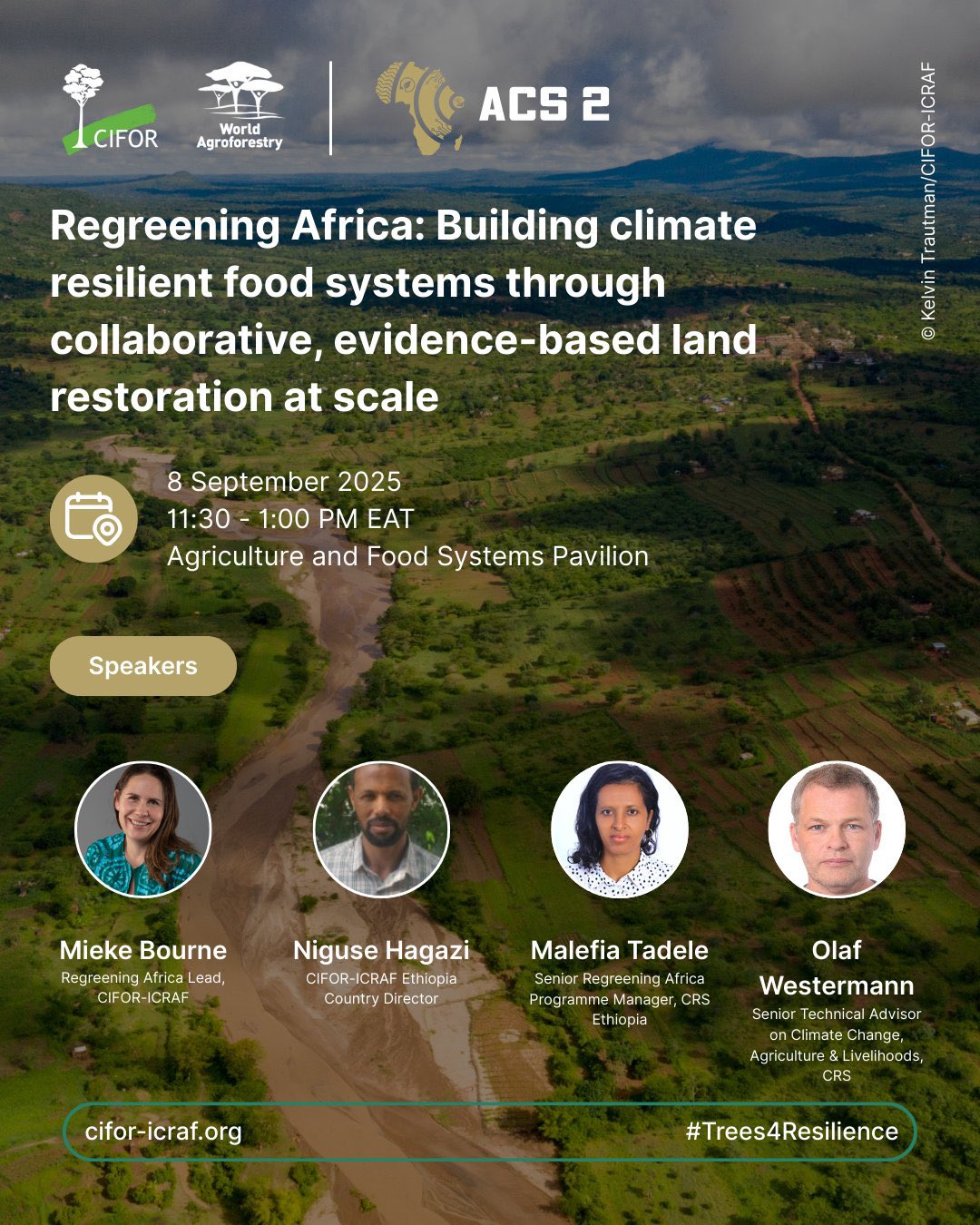
08/09 Regreening Africa: Building climate-resilient food systems through land restoration 


(CIFOR-ICRAF side event)

It presented evidence that large-scale restoration under the Great Green Wall vision had strengthened food security and adaptation; organizers promoted replication and investment pathways; specific speakers were not listed on the public agenda posts.


09/09 Rooted in resilience: Governance, financing and technical support for locally led, biodiversity-rich, climate-smart restoration

(CIFOR-ICRAF side event)

It highlighted community-led restoration models that had improved farm productivity and ecosystem services, and it called for blended finance for locally led projects; individual speakers were promoted via social posts rather than a formal list. 


(ECDPM side event)

It argued that investments (e.g., green ammonia for low-carbon fertilizer) had simultaneously advanced adaptation and ag-industry growth, and it proposed pipelines for Africa-Europe collaboration.

Monday, July 14, 2025

CGIAR observer status at UNEA

9 July 2025. CGIAR observer status at UNEA

CGIAR, the world’s largest agricultural research partnership, has been officially accredited as an intergovernmental organization (IGO) to the United Nations Environment Assembly (UNEA). This milestone grants CGIAR observer status at UNEA, enabling participation in its sessions and subsidiary bodies, including the upcoming UNEA-7 in December. This milestone formally positions CGIAR within the highest level of global environmental governance and strengthening its role as a trusted scientific partner in support of UN Member States. It enables the organization to bring agricultural science into high-level environmental governance, helping bridge gaps between food systems and environmental goals.

This development comes at a crucial time. As the world seeks urgent solutions to the “triple planetary crisis” of climate change, biodiversity loss, and pollution, CGIAR brings over 50 years of agricultural innovation and scientific evidence to these critical discussions. With this new role, CGIAR can ensure that food, land, and water systems are fully considered in global environmental policy.

Accreditation also improves CGIAR’s ability to inform high-level decisions by providing science-based recommendations directly to environment ministers and policymakers. It strengthens ongoing collaborations, such as the CGIAR Nature-Positive Initiative with UNEP, and positions CGIAR to contribute more directly to international campaigns and resolutions on sustainability.

CGIAR’s UNEA accreditation strengthens its ability to contribute to the objectives of the three “Rio Conventions”: the UN Framework Convention on Climate Change (UNFCCC), the Convention on Biological Diversity (CBD), and the UN Convention to Combat Desertification (UNCCD).

Friday, July 11, 2025

Towards A Big Data Revolution for the Planet

8 - 10 July 2025
. Rome. SPRA and the European Space Agency hosted the Third High Level Expert Group (HLEG) Meeting on Big Data of the UN Science Policy Business Forum on the Environment at ESA-ESRIN headquarters in Frascati. 

Download:
This technical High-Level event under the theme “Towards a big data revolution for the Planet: from Uncertainty to Opportunity” focused on four main objectives, each addressing a key component of Big Data’s role in environmental sustainability. In a rapidly shifting geopolitical context, the need for high-quality environmental data is greater than ever: (1) Governance of the Global Environmental Data Strategy; (2) Environmental Big Data in the Global Digital Compact Framework and Structural  Transformation; (3) Data for Green Investment, Accountability, and Transparency; (4) New Frontiers, New Gaps, New Opportunities.

The UNEP secretariat is expected to share a second draft of the GEDS in August 2025. The second draft is expected to have a more operational focus, including a distinction between international and national levels.


Extract of the programme

08/07 EARTH OBSERVATIONS IN ACTION 

  • Centralized Procurement of Earth Observation Data and Derived Analytics Marie-Christine Delucq, Geospatial Solutions Manager, Airbus 

    Centralizing the procurement of Earth Observation (EO) data and derived analytics enables Airbus to streamline access to high-resolution, multi-sensor satellite imagery and advanced AI-powered insights—driving cost efficiency and operational agility across its geospatial services. This unified approach not only supports scalable digital products—from precision agriculture to disaster response—but also accelerates innovation in downstream analytics, leveraging a robust, centrally managed Earth Observation (EO) ecosystem for faster, smarter decision-making

09/07  TECH & INNOVATION 

  • The Transformative Potential of Environmental Genomics by Nicolas Tsesmetzis, Principal Science Expert, Nature Based Solutions, Shell
The transformative potential of environmental genomics lies in its ability to radically enhance the understanding and monitoring of ecosystem health and function, enabling more precise, data-driven implementation of nature-based solutions. By decoding the genetic material found in soil, water, and other environmental samples, Shell uses this advanced tool to track biodiversity, microbial activity, and ecological responses to interventions at unprecedented resolution. This approach supports the design, validation, and scaling of high-integrity carbon sequestration projects, such as reforestation and soil regeneration, by providing robust, science-backed evidence of environmental impact—thereby improving both the credibility and effectiveness of carbon credits and natural climate solutions.

 Nicolas Tsesmetzis spoke about the transformative potential of environmental genomics and the pioneering work of IOGP-JIP34, a joint initiative to develop guidance and best practices for the use of eDNA in the energy sector. As a present-day solution to the biodiversity data crisis, standardized eDNA methods are enabling the generation of high-integrity, scalable biodiversity data—a critical enabler for nature-positive outcomes, enhanced transparency, and alignment with the UN Global Environmental Data Strategy (GEDS). This approach also opens new pathways for green finance and more effective environmental reporting.

He praised the broader expert community advancing standardization of molecular methods through platforms like ISO TC147/SC5/WG13 and iESTF. As highlighted by Kristian Meissner, the outdated notion that molecular methods lack technical readiness is no longer valid. The evidence is clear: standardized eDNA monitoring is ready to support biodiversity and bioassessment needs, and can meaningfully augment existing indicators to meet the demands of the Global Biodiversity Framework.


10/07 PATHWAYS TO SYSTEMIC CHANGE TOWARDS DATA COHESION & INTEROPERABILITY  

  • Corporate Sustainability Reporting Directive (CSDR) and Tracking Supply Chain  by Sotirios Kanellopoulos, Data and ICT for sustainability policy officer, European Commission, Directorate General Environment. 
    The CSDR is a major EU regulation (entered into force in January 2023) that requires large companies and listed SMEs to report on environmental, social, and governance (ESG) impacts, including their value chains and supply chains. It expands the scope of the earlier Non-Financial Reporting Directive (NFRD).


10/07 Scaling Environmental Data in Developing Countries: What Data Governance and Funding Models? Will Power the Digital Transition? 

  • Moderator: Sherif Dawood, Egyptian Ministry of Foreign Affairs 
  • Charles Mwangi, Director, Kenya Space Agency 
  • Laurent Durieux, Coordinator One Forest Vision, Institut de recherche pour le développement (IRD) 
  • Yblin Roman, Policy Lead, Sirge Coalition 
  • Débora Ingrisano (see 2 slides), Cooperative Development Manager, Brazilian Cooperative Organization System (OCB System) 


GFAiR proposition on future Pathways

The emerging frameworks around big data, environmental governance, and digital transformation—such as the Global Environmental Data Strategy (GEDS) and the Global Digital Compact—offer highly strategic tools for the UN Food Systems Summit (UNFSS) coalitions, particularly in supporting accountability, investment tracking, and structural transformation.

1. Enabling High-Integrity Food Systems Data for Action and Accountability

Coalitions working on Local Food and Nutrition Supply Chains, agroecology, sustainable consumption, school meals, or food loss and waste need reliable, interoperable, and inclusive data. The GEDS governance framework promotes: 
  • Data sovereignty and ethics aligned with Indigenous and farmer knowledge systems.
  • Federated and open-access models, allowing local ownership while enabling global reporting.
  • Standards and protocols for environmental and socio-economic indicators that can be adapted for tracking food systems transformation.
  • For example, coalitions can integrate food biodiversity, nutrition, and agroecological metrics into shared platforms that support SDG 2 (Zero Hunger), SDG 12 (Sustainable Consumption and Production), and climate commitments.
2. Leveraging the Global Digital Compact for Structural Food Systems Transformation

The Global Digital Compact underlines equitable digital infrastructure, ethical AI, and data rights. These principles can help UNFSS coalitions: 
  • Bridge digital divides in food systems innovation—especially for smallholders, women, and youth.
  • Develop digital public goods (e.g. open-source farm-level monitoring tools) aligned with CARE/FAIR principles.
  • Protect food systems data from corporate capture while enabling trusted, real-time analytics to support both grassroots initiatives and policy interventions.
3. Using Environmental Big Data to Mobilize Green Investment

The GEDS roadmap and Frascati Pathways highlight how high-integrity environmental data underpins climate finance and sustainability-linked investments. UNFSS coalitions can use this to: 
  • Embed agroecological and nutrition-sensitive food system indicators into green bond frameworks and blended finance tools.
  • Strengthen credibility and comparability of impact data, critical for scaling nature-based solutions, regenerative agriculture, or carbon-positive food systems.
  • Demonstrate co-benefits (biodiversity, equity, carbon sequestration) for integrated SDG and climate outcomes.

Upcoming

18 July 2025. 11:00 am CEST. From Data to Decisions: Modelling a Sustainable Future for Food Systems

  • Explore how cutting-edge modelling tools are driving evidence-based solutions for food system sustainability. 
  • This webinar will examine the dynamic intersections of ecological priorities, economic realities, and policy-making, highlighting how integrated data approaches can support biodiversity, resilience, and long-term food security across diverse contexts.


28 July 2025. UNFSS+4 session: Investment Dialogue #3: Data and AI for Food Systems Transformation

Leads: UN Global Compact (UNGC) & World Economic Forum (WEF)

16:30 - 18:00 | Africa Hall

See page 5 in the program in attachment (unfortunately not detailed with the speakers)

Related 

26 September 2024. Policy Workshop on International Carbon Certification Schemes

  • This workshop ( see the Agenda) gave an insight into what is happening in the United States and Australia, as well as an overview of the context in the Pacific region and Europe.
  • Organised by the ORCaSa project in the framework of the Soil Carbon International Research Consortium (IRC), this event was an opportunity for experts and policymakers to meet, exchange ideas, and make progress in the field of soil carbon policy.
  • Launched in September 2022, ORCaSa is a Horizon Europe initiative that aims to bring together international stakeholders working on techniques for capturing and storing carbon in the soil.
  • Start date: 1 September 2022
  • End date: 31 August 2025

Tuesday, June 17, 2025

Biotechnologies for a Sustainable Future: Driving Agrifood Systems Transformation

16 - 18 June 2025,
FAO HQ, Rome, Italy. Biotechnologies for a Sustainable Future: Driving Agrifood Systems Transformation

This conference discussed the latest advancements, opportunities and risks associated with biotechnologies, and to examine how biotechnologies can drive agrifood systems transformation, ensuring equitable access and delivering meaningful impacts at all levels.

Objectives 
  • Highlight past achievements, recent advancements and future trends in biotechnologies and their transformative potential for achieving efficient, inclusive, resilient and sustainable agrifood systems.
  • Explore how biotechnologies, including low-tech tools and advanced innovations, such as genome editing and synthetic biology, can empower small-scale producers, processors, traders and retailors to enhance food security, improve nutrition, and build resilience to climate challenges.
  • Share good practices in integrating digital technologies, such as Artificial Intelligence and bioinformatics, to advance research, improve access, and scale biotechnological innovations.
  • Discuss the experience in development of policies and legislation to ensure the safe, equitable, and responsible application of biotechnologies, addressing risks and building public trust.
  • Foster global collaboration by connecting policymakers, scientists, civil society organizations, private sector, and other relevant stakeholders to drive inclusive biotechnological solutions, ensuring no one is left behind in the transformation of agrifood systems.
"Biotechnology is not a substitute for traditional knowledge, but instead it is a valuable complement. It must be accessible to those on the front lines of agrifood systems: farmers, rural communities, and stewards of the environment. Responsible governance, appropriate regulatory frameworks, public trust, and cross-sector collaboration are essential to ensure that no one is left behind in this era of rapid transformation." QU Dongyu FAO Director-General 

Extracts of the programme

16/06 Opening plenary session

The panel highlighted some of the recent advancements such as synthetic biology, microbial metabolic engineering, molecular data science, analytics, computational methods including Artificial Intelligence (AI) applied to development and application of biotechnological solutions. 

FAO Webcast
  • Welcome and opening Address, Dr QU Dongyu, Director-General, FAO 
  • Vincent Martin, moderator
  • Science-based approaches to support food security, better nutrition and food safety in the context of transforming agrifood systems - Mr. Carlos Goulart, Secretary of Animal and Plant Health at the Ministry of Agriculture and Livestock, Brazil
  • Biotechnologies as catalysts for agrifood systems transformation and its role in achieving multiple SDGs - Mr Víctor Manuel Villalobos Arámbula, Former Secretary, Ministry of Agriculture and Rural Development, Mexico 
  • Role of National Agricultural Research Systems (NARS) in development and application of Biotechnologies - Mr Sanwen Huang, President, Chinese Academy of Tropical Agricultural Sciences (CATAS), Hainan, China
  • Application of biotechnologies for smallholders - Mr Papa Abdoulaye Seck, Former Director General, Africa Rice Center and Former Minister of Agriculture and Rural Development, Senegal
  • Taking stock of the past achievements, status and recent breakthroughs in biotechnological research and development - Ms Louise Fresco Professor & Former President, Wageningen University and Research, Wageningen, Netherlands: She stressed the promises of biotechnology 1.0 and biotehnology 2.0

The panel discussion highlighted some of the recent advancements such as synthetic biology, microbial metabolic engineering, molecular data science, analytics, computational methods including Artificial Intelligence (AI) applied to development and application of biotechnological solutions.

FAO Webcast
  • Looking at the future: International cooperation and partnerships for promoting biotechnologies for efficient, inclusive, resilient and sustainable agrifood systems - Ms Jelena Begovic, Chair, Board of Governors, International Centre for Genetic Engineering and Biotechnology (ICGEB), Trieste, Italy and Former Minister of Science, Technological Development and Innovation, Government of Serbia.
  • Application of synthetic biology and microbial metabolic engineering for food security and nutrition - Ms Claudia Vickers, Professor, Queensland University of Technology, Australia
  • Molecular data science - Analytics and computational methods, including AI, applied to genome, protein sequence, and small molecule data - Mr Justin Gerke, Sr. Data Science Manager, Corteva Agriscience, Indianapolis, IN, USA
  • Exploring the Future of biotechnologies: Integrating foresight across UN and Beyond - Mr Chris Earney, Head UN Futures Lab/Global Hub, UN Futures Lab/Global Hub Executive Office of the Secretary General at the Unities Nations, New York, USA
  • Biotechnologies at work for smallholder farmers: Lessons of the past, challenges and opportunities of the future - Mr Ajay Vir Jakhar, Chairman, Bharat Krishak Samaj, Indian Farmers Forum, New Delhi, India: Phylantropic organizations should not influence policy
  • Role of private sector in promoting biotechnological solutions: Increasing investments and engagements - Mr Michael Keller, Secretary General, International Seeds Federation, Nyon, Switzerland

    + 22:35:50 Intervention from Ms Louise Fresco

16/06 FAO/IAEA Joint centre and the Biotechnologies abstract winners

Atrium side event: Extract: Evaluation of transgenic cowpea with combined resistance to the Legume pod borer and cowpea weevil - Mr Jerry Nboyine, Principal Research Scientist (Entomologist) at CSIR - Savanna Agricultural Research Institute, Tamale. Ghana

16/06 Biotechnological innovations and sustainability frontiers

The session focused on some recent and specific biotechnological innovations including gene editing, synthetic biology, DNA sequencing, bioinformatics, cell based products and its wide range of novel solutions for resilient and sustainable agrifood systems.

FAO Webcast
  • Biotechnologies to the most vulnerable communities: Participatory action research with indigenous peoples and peasant communities, and advice on public policies and programs - Ms Georgina Catacora-Vargas, Member of the IPES-Food panel, and professor at the Academic Peasant Unit ‘Tiawanacu’ of the Bolivian Catholic University, Santa Cruz, Bolivia
  • Revolutionary gene editing technology for affordable and accessible solutions in agrifood systems - Mr Brad Ringeisen, Executive Director, Innovative Genomics Institute (IGI), Berkeley, California, USA (On-line)
  • Application of the latest DNA sequencing technologies and bioinformatics methods to advance scientific understanding of crop genetics and interaction with their environment - Mr Mario Caccamo, Chief Executive Officer and Director, National Institute of Agricultural Botany, Cambridge, United Kingdom
  • Biotechnological and food innovation – How plant and cell- based products will transform our agrifood systems? - Mr Bruce Friedrich, President and Founder, The Good Food Institute, Washington, D.C., USA
  • Molecular biological research for development of stress tolerance and resilient crops - Mr. Yasunari Fujita, Food Program, Program Director, Japan International Research Center for Agricultural Sciences (JIRCAS), Japan
  • Role of structural and functional changes in the genome, diversity and population’s structure - adaptation to natural environmental variations or human-induced changes - Mr Yves Vigouroux, Director, DIADE Research Unit (Diversity - Adaptation - Plant Development), Institute of Research for Development (IRD), Montpellier, France
  • Delivering the benefits of biotechnology tools to farmers: Facilitating the transfer of appropriate biotechnology applications to farmers - Ms Margaret Karembu, Director, International Service for the Acquisition of Agribiotech Applications (ISAAA), Africa Center, Nairobi, Kenya (On-line)

16/06 Genetic improvement for sustainable crop production systems

The presentation focused on topics such as next generation genomics, molecular breeding, gene editing and synthetic biology for sustainable crop production systems. 

16/06 Biotechnological Innovations in livestock management

The session provided a platform for interactive dialogue on the latest biotechnological applications in animal breeding, conservation of genetic diversity, improvement of feed efficiency and product quality, and the development of next-generation vaccines.


16/06 Youth and women in Biotech: Innovating for Tomorrow


FAO Webcast 45 applications were received and 6 were selected for presentation
+ 2:05:00 Intervention from Ms Louise Fresco: "South - South collaboration is really important" "Vasilov vs Lisenko  in Russia: we are go to be evidence driven" "Only a fully rounded individual can bë a good scientist

17/06 Innovation Pathways for development and localization of biotechnologies

The session highlighted some practical examples from the United States and China on product development, localization and commercialization, and safe and appropriate use of technologies to help meet agricultural challenges and consumer needs.

  • Role of Agricultural education and extension to promote development and localization of biotechnologies: Pathways for promoting biotechnologies in South Africa - Ms Lerato Bame Tsalaemang Matsaunyane, Research Team Manager: Farmer Support, Commercialisation and Enterprise Development, Agricultural Research Council – Vegetable, Industrial and Medicinal Plants (VIMP), Pretoria, South Africa (On-line)

17/06 Biotechnologies in managing forest genetic resources

  • Biotechnologies to enhance the conservation and use of African tree germplasm - Ms Alice Muchugi (Theme Leader, Tree Genetic Resources and Biodiversity, World Agroforestry, Kenya)

17/06 Fish breeding, diagnostic tools and vaccines for aquatic animals

Brief overview of the main areas where biotechnologies are currently been applied in the fisheries and aquaculture.

17/06 Biotechnological applications for improving nutrition and food quality

  • Applying genomics to enhance the use of nutritionally important underutilized crops and trees species: African Orphan Crops Consortium (AOCC) Initiative - Ms Alice Muchugi, Theme Leader, Tree Genetic Resources and Biodiversity, CIFOR-ICRAF, Nairobi, Kenya 

 17/06 Biotechnology applications in a sustainable bioeconomy

This session discussed the current issues of sustainability assessments and barriers to adoption of biotechnologies. 

FAO Webcast
  • Platforms to enable knowledge transfer and bioeconomy development - Mr. Julius Ecuru, Manager, BioInnovate Africa at ICIPE - International Centre of Insect Physiology and Ecology, Kenya 

17/06 Collaborative approaches for ensuring safety of biotechnological applications in food

  • Case 2: Importance of information sharing under the Convention of Biological Diversity: Biosafety Clearing House (BCH) - Ms Wadzanayi Mandivenyi, Biosafety Clearing House Manager, Biosafety Unit, Secretariat of the Convention on Biological Diversity (CBD), United Nations Environment Programme (UNEP), Canada
FAO Webcast

17/06 Climate-Resilient Future: Adapting to biotic and abiotic stresses through biotechnologies


This session highlighted accessible and affordable biotechnological innovations for climate change adaptation, and discuss specificity of some regional initiatives, and opportunities of plant microbiomes research and the development of microbial pro- and pre-biotic products for a more sustainable agriculture.
  • Biotechnologies for adapting to climate change: Improving resilience of smallholders in Africa - Mr Sylvester Oikeh Manager Biotech Maize seed system AATF, Nairobi, Kenya (On-line)
  • Developing next-generation plant breeding technologies to accelerate the creation of resilient and diverse crops, particularly in response to climate change - Ms Ying Shao, Co-Founder & Chief Executive Officer, Plantik Biosciences, Paris, France 

17/06 Private sector in development, uptake and scaling of biotech solutions 


The session highlighted some selected cases from Sweden, Switzerland, Nigeria, USA and Canada. The discussions focused on application of biotechnologies in livestock herd health management, plant breeding, high-quality and high yielding varieties of seeds and scaling efforts. 
  • Development of Nigeria’s seed sector by improving access to high-quality, high-yielding varieties for smallholder farmers and promoting agronomic practices that support food security and rural livelihoods - Mr Moses Igyuve, Value Seeds Ltd, Nigeria 

18/06 Scaling Innovations in Biotech: From research to context specific adoption by rural communities

Examples covered economically important tropical crops, recent developments in biological nitrogen inhibition (BNI) and converting waste into biofertilizers. 

  • Facilitating transition of biotechnologies from the research to adoption enabled through Science, Technology and Innovation (STI) roadmap  in South Africa  - Ms Maneshree Jugmohan-Naidu, Director: Agricultural Biotechnology, Department of Science, Technology and Innovation, Pretoria, South Africa 
  • Scaling biotech products and response under real-world farmers’ conditions - Mr David Spielman, Director, Innovation Policy & Scaling Unit, International Food Policy Research Institute, Washington DC, USA 
  • Transforming agricultural waste into bio-fertilizer and outreach to rural women farmers in Uganda - Ms Elizabeth Kabakoyo, Founder, Glowish Agro Solutions, Uganda (On-line)

18/06 Policies in Biotechnology: Ensuring innovation and equity, balancing regulatory frameworks


This session highlighted the policies for equitable access and responsible application of biotechnologies by addressing consumer concerns and ensuring integration of ethical considerations.
  • Policy and regulatory affairs for biotechnologies: Experiences from Africa - Mr Francis Nangayo, Senior Manager and Head, Regulatory and Policies, African Agricultural Technology Foundation (AATF), Nairobi, Kenya.
  • Policies and regulations of agricultural biotechnologies in Malawi – stakeholder relations and communications - Ms Lilian Chimphepo, Chief Environmental Officer (Biosafety Registrar), Environmental Affairs Department, Malawi 
  • Policy enablers for regulating agricultural biotechnologies in Africa - Mr Samuel Timpo, Principal Programme Officer – Biosafety, Johannesburg, South Africa 

18/06 Closing Plenary Session

Monday, June 2, 2025

One Planet Network’s Sustainable Food Systems Conference


27-29 May 2025. 
Brasilia, Brazil. With its 5th global conference, the One Planet Network’s Sustainable Food Systems Programme intended to make a substantial contribution to inspire and encourage policymakers to take bold decisions in the key policy fora in 2025, such as the UNFSS+4 Stocktaking Moment and UNFCCC COP30.

The main theme was: "Overcoming the Barriers to Food Systems Transformation - Coherent Policies and Equity-sensitive Solutions to Simultaneously Fight Hunger and Malnutrition, Biodiversity Loss and the Climate Crisis".

This conference showcased concrete solutions, policies and actions to address political economy barriers at the intersection of food systems, nutrition, climate, biodiversity, livelihoods, equality and other related policy agendas, that can be adapted and replicated in different contexts.

Day 1

Plenary Session 2: Systems-based and equity-driven strategies to address political economy dynamics

  • H.E. José Wellington Barroso de Araújo Dias, Minister for Social Development and Assistance, Family and Fight Against Hunger, Brazil
  • H.E. Christian Hofer, State Secretary for Agriculture, Switzerland
  • H.E. Henry Musa Kpaka, Minister of Agriculture and Food Security, Sierra Leone
  • H.E. Paul Gulleik Larsen, Ambassador-at-large & Special Envoy, Ministry of Foreign Affairs, Norway
  • H.E. Ambassador Nosipho Nausca-Jean Jezile, Chairperson, UN Committee on World Food Security
  • Joao Campari, Global Leader, Food & Agriculture Practice, WWF International
  • Myrna Cunningham, President, Center for Autonomy and Development of Indigenous Peoples
  • Arilson Favareto, Full Professor of the Josué de Castro Chair of Healthy and Sustainable Food Systems, University of São Paulo
  • Adriana Lobo Castellón, Head of the International Cooperation Office of the Ministry of Agriculture and Livestock, Costa Rica
  • Elisabetta Recine, Former President, National Food and Nutrition Security Council (CONSEA) of Brazil, member of IPES-Food
  • Máximo Torero Cullen, Chief Economist, Food and Agriculture Organization of the United Nations (FAO)
  • Walter Belik, Professor, University of Campinas in São Paulo
  • Chris Béné, Senior Policy Advisor and Principal Scientist, Alliance of Bioversity International and the International Centre for Tropical Agriculture (CIAT)
  • Diva Dessai, Influencing Manager & Senior Policy Advisor (Nutrition and Food Systems), GAIN Mozambique Samuel Jose Hino, Thematic Focal Point of Green Economy and Resources, Children and Youth Major Group to UNEP
  • Yessika Hoyos, Member of CAJAR, José Alvear Restrepo Lawyers’ Collective (CAJAR)
  • James Leslie, Global Programme Manager, Food Systems, United Nations Development Programme (UNDP)
  • Rodrigo Orair, Director, Extraordinary Secretary for Tax Reform, Ministry of Finance, Brazil

Solutions Workshop 1: Addressing trade-offs and maximizing co-benefits

  • José Graziano da Silva, Director, Instituto Fome Zero (IFZ)
  • Lee Ann Jackson, Head of the Agro-Food Trade and Markets Division, Organisation for Economic Co-operation and Development (OECD)
  • Allison Loconto, Research Professor, INRAE
  • Bakari Mongo, CEO, Tanzanian Organic Agriculture Movement (TOAM)
  • Tebila Nakelse, Research Professor, Virginia Tech
  • Balance Phala, Sustainable Food Systems Officer, ICLEI
  • Juliana Tangari, Director, Comida do Amanhã Institute

Solutions Workshop 2: Leveraging the power of social protection, food procurement and school
meals for improved farmer livelihoods, healthy diets, climate and biodiversity

  • Betina Bergmann Madsen, Chief Procurement Officer, Municipality of Copenhagen
  • Marcos Vinicius Dias Nunes, Vice President and Secretary of International Relations, National Confederation of Rural Family Farmers – CONTAG
  • Amos Laar, Professor of Public Health Nutrition, University of Ghana
  • Renata Mainenti Gomes, Coordinator, National Fund for Educational Development, Brazil
  • Nguyen Thi Ngoc Huyen, Youth sustainability advocate and social entrepreneur, Children and Youth Major Group to UNEP
  • Angie Katherine Roncancio Sánchez, Environmental Administrator, Ministry of Environment and Sustainable Development, Colombia
  • Luana Swensson, Policy specialist for sustainable public procurement, Food and Agriculture Organization of the United Nations (FAO)
  • Ana Terra Reis, Secretary of Supply, Cooperativism and Food Sovereignty, Ministry of Agrarian Development and Family Farming, Brazil
  • Najla Veloso, Executive Secretary, Latin American Sustainable School Feeding Network (RAES), Food and Agriculture Organization of the United Nations (FAO)
  • Anthony Wenndt, Technical Officer, Global Alliance for Improved Nutrition (GAIN)

Day 2


Plenary Session 3: Convergence and coherence: aligning policies and actions on climate, biodiversity, inequalities and nutrition through the food systems nexus

  • Karima Ahmed Al-Hada’a, Planning & Liaison Specialist, Ministry of Planning & International Cooperation, Yemen
  • Cherrie Atilano, Founder and CEO, AGREA Agricultural Systems International
  • Patrick Caron, Researcher, CIRAD
  • Agnes Kirabo, Executive Director, Food Rights Alliance & Chairperson, Scaling Up Nutrition Civil Society Network in Uganda
  • Alwin Kopše, National Convenor, Head of International Affairs, Federal Office for Agriculture, Switzerland
  • David Nabarro, Strategic Director, 4SD Foundation
  • Lilian Rahal, Secretary of Food and Nutrition Security at the Ministry of Development and Social Assistance, Family, and the Fight Against Hunger, Brazil
  • Jose Valls Bedeau, Policy Officer, Food and Agriculture Organization of the United Nations (FAO)

Solutions Workshop 3: Scaling Finance for NBSAPs and NDCS towards Food Systems Transformation: Exploring Solutions from the Global North & South

  • H.E. Christian Hofer, State Secretary for Agriculture, Switzerland
  • H.E. Henry Musa Kpaka, Minister of Agriculture and Food Security, Sierra Leone
  • Haseeb Bakhtary, Lead Scientist, Climate Focus
  • Oliver Camp, Environment and Food Systems Advocacy Advisor, Global Alliance for Improved Nutrition (GAIN)
  • Joao Campari, Global Leader, Food & Agriculture Practice, WWF International
  • Tereza Campello, Socio-environmental Director, Banco Nacional de Desenvolvimento Econômico e Social (BNDES)
  • Wendy Francesconi, Senior Scientist, Alliance of Bioversity International and the International Centre for Tropical Agriculture (CIAT)
  • Adriana Lobo Castellón, Head of the International Cooperation Office of the Ministry of Agriculture and Livestock, Costa Rica
  • Liban Mahad Abdullahi, Green Economy and Resources Working Group, Thematic Facilitator, Children and Youth Major Group to UNEP
  • Gonzalo Muñoz, High-level Champion, Ambition Loop • Orsayla Nyarai, International Union for Conservation of Nature (IUCN)
  • Maya Rajasekharan, Managing Director for the Americas, Alliance of Bioversity International and CIAT and Director General CIAT

Solutions Workshop 4: Multi-stakeholder Mechanisms for Food Systems Transformation

  • Tulsi Giri, Co-creator of Food Networks and Social Entrepreneur, Food Networks
  • Ceres Hadich, National Coordinator, Movimento dos Trabalhadores Rurais sem Terra (MST)
  • Agnes Kirabo, Executive Director, Food Rights Alliance & Chairperson, Scaling Up Nutrition Civil Society Network in Uganda
  • Alwin Kopše, National Convenor, Head of International Affairs, Federal Office for Agriculture, Switzerland
  • Beatriz Martins Carneiro, Food Systems Coordinator, Regional Office LAC, United Nations Environment Programme (UNEP)
  • Elisabetta Recine, former President, National Food and Nutrition Security Council (CONSEA) of Brazil, member of IPES-Food
  • Ana Maria Suarez Franco, Secretary General, FIAN International
  • Jose Valls Bedeau, Policy Officer, Food and Agriculture Organization of the United Nations (FAO)
  • Anthony Wenndt, Social Protection Lead, Global Alliance for Improved Nutrition (GAIN)


Day 3


Plenary Session 4: Measuring progress and promoting accountability mechanisms for food systems transformation Solutions Workshop 5: Linking food systems policies with biodiversity, nutrition and climate

  • Abdoulaye Falla, Director of Statistics of the Ministry of Agriculture, Niger • Alejandro Guarin, Food Systems Transformation Lead, World Benchmarking Alliance 
  • Thin Lei Win, Journalist, Lead Reporter for the Food Systems Newsroom of Lighthouse Reports & Thin Ink 
  • Hugo Melgar-Quiñonez, Associate Professor, McGill University 
  • Stella Nordhagen, Research Lead, Global Alliance for Improved Nutrition (GAIN) 
  • Sergio Schneider, Full Professor of Sociology of Rural Development and Food Studies, Federal University of Rio Grande do Sul 
  • Maria Siqueira, Director, Pact Against Hunger 

Solutions Workshop 5: Linking food systems policies with biodiversity, nutrition and climate


  • Bambot Grace Annih, National Convenor, Secretary General, Ministry of Agriculture and Rural Development
  • Oliver Camp, Environment and Food Systems Advocacy Advisor, GAIN
  • Maria Verônica de Santana, Northeastern Rural Worker’s Movement (MMTR-NE), Brazil
  • Patricia Gentil, Director of Ministry of Social Development, Family, and the Fight Against Hunger (MDS)
  • Karla Vanessa González Moreno, Farmer and active member of the Chamber of Livestock Producers of Nandayure, Costa Rica
  • Alwin Kopše, National Convenor, Head of International Affairs, Federal Office for Agriculture, Switzerland
  • David Nabarro, Strategic Director, 4SD Foundation 
  • Elisabetta Recine, former President, National Food and Nutrition Security Council (CONSEA) of Brazil, member of IPES-Food
  • Fredrick Edward Walugembe, Chairperson, National Food Systems Coordination Committee, Uganda
  • Truong Tuyet Mai, Food Systems National Convenor for Viet Nam & Vice- Director of the National Institute of Nutrition, Ministry of Health, Viet Nam
  • Eduardo Sfoglia, Head of International Advisory Ministry of Fisheries and Aquaculture, Brazil
  • João Paulo Pucciariello Perez, Executive Secretary for Food Security and Sustainability, Municipality of Osasco, State of Sao Paulo

Key Themes and Outcomes

  1. Addressing Political Economy Barriers. Participants examined how entrenched power structures, policy lock-ins, and geopolitical tensions hinder the implementation of sustainable food systems. The conference emphasized the need for equity-sensitive solutions that address these challenges, including adopting a Right to Food approach and promoting coherent implementation of nutrition, climate, biodiversity, and other relevant commitments. 
  2. Promoting Policy Coherence and Integration. The conference highlighted the importance of aligning policies across sectors to simultaneously address hunger, malnutrition, biodiversity loss, and the climate crisis. It showcased concrete solutions, policies, and actions that can be adapted and replicated in different contexts to achieve this integration. 
  3. Strengthening Multi-Stakeholder Collaboration. Recognizing that food systems transformation is a whole-of-society task, the conference called for meaningful, inclusive, and cross-sectoral collaboration at all levels. It provided a platform for diverse stakeholders to share experiences and deepen their collective efforts towards more equitable and sustainable food systems pathways. 
  4. Informing Global Policy Processes. Outcomes from the conference are intended to inform global food systems efforts in upcoming policy forums, including the UNFSS+4 Stocktaking Moment and UNFCCC COP30. The conference aimed to inspire and encourage policymakers to take bold decisions in these key policy fora in 2025.


One Planet Network’s Sustainable Food Systems Programme


The SFS Programme is a multi-actor partnership focused on catalyzing urgent transformation towards sustainable food systems, as a critical strategy to achieve the SDGs. Through a shared vision of inclusive, diverse, resilient, healthy and sustainable food systems, our partners collaborate on joint on-the-ground activities, research initiatives and advocacy efforts in support of more coherent and holistic policies to address complex food systems challenges. To do this, the SFS Programme promotes a ‘systems-based’ approach. The SFS Programme currently has over 200 members worldwide, bringing together leading organizations from government, the UN system, civil society, farmers and fisherfolk, the scientific community, and private sector.