Platform for African – European Partnership in Agricultural Research for Development
Showing posts with label waste. Show all posts

Wednesday, January 14, 2026

Reducing Food Loss and Waste: A Food Systems Perspective

13 January 2026. Reducing Food Loss and Waste: A Food Systems Perspective

In the first segment, Jocelyn Boiteau and Prabhu Pingali will share key findings from their new book, Wasted Potential: Tackling Food Loss and Waste Across Transforming Food Systems.
Their work takes a holistic view of where losses occur from production through consumption, and how smarter policies and investments can meaningfully reduce them. The book importantly also highlights the need for better metrics and approaches to understanding where and why losses occur.

This book launch was followed by presentations on new IFPRI research on innovative approaches to measuring and reducing food loss and waste in perishable foods. This includes research on the use of artificial intelligence to improve food loss measurement accuracy, reducing spoilage in meat supply chains, and other emerging tools for understanding and addressing losses in highly perishable products.

The seminar concluded with an open Q&A exploring promising directions for future research and practical, cost‑effective strategies to reduce food loss and waste at scale.
  • Alan de Brauw, Senior Research Fellow, IFPRI
  • Prabhu Pingali, Professor, Charles Dyson School of Applied Economics & Management, & Director, Tata-Cornell Institute for Agriculture & Nutrition, Cornell University
  • Jocelyn Boiteau, Senior Nutrition Impact and Innovation Director, Food Systems for the Future
  • Vivian Hoffmann, Senior Research Fellow, IFPRI
  • Carolyne Maina, Program Director, Technoserve
  • Assan Ng’ombe, Resilience Officer, Alliance for a Green Revolution in Africa (AGRA)
  • Ruth Hill, Director, Markets, Trade, and Institutions, IFPRI

Wednesday, May 8, 2024

Training on the Implementation of Upcycling and Waste Management

8 May 2024
. Arusha, Tanzania. Implementation of upcycling and waste management programs Training

The Agriculture Sector Network (ASNET) from Kenya, in partnership with the East African Business Council (EABC) and with support from GIZ Program Agency for Business and Economic Development, organized a training on the Implementation of Upcycling and Waste Management.

The Agriculture Sector Network (ASNET) is the umbrella body of the agriculture sector in Kenya formed through a partnership of KEPSA, KNCCI, SDG partnership.

Through the Agency for Business and Economic Development (AWE), BMZ intends to improve the structural foundations for interaction between development cooperation and the German and European private sector.

AWE addresses key topics of development cooperation: food and agriculture, energy, trade, education, construction, tourism, health care, international organisations, mobility, textiles, social entrepreneurship, environmental and social standards, finance, information and communications technology, mechanical and plant engineering, water and waste management, and municipal companies.

The Deutsche Gesellschaft für Internationale Zusammenarbeit (GIZ) GmbH and the Deutsche Investitions- und Entwicklungsgesellschaft (DEG) implement AWE as an equal partner.  


Tuesday, June 6, 2023

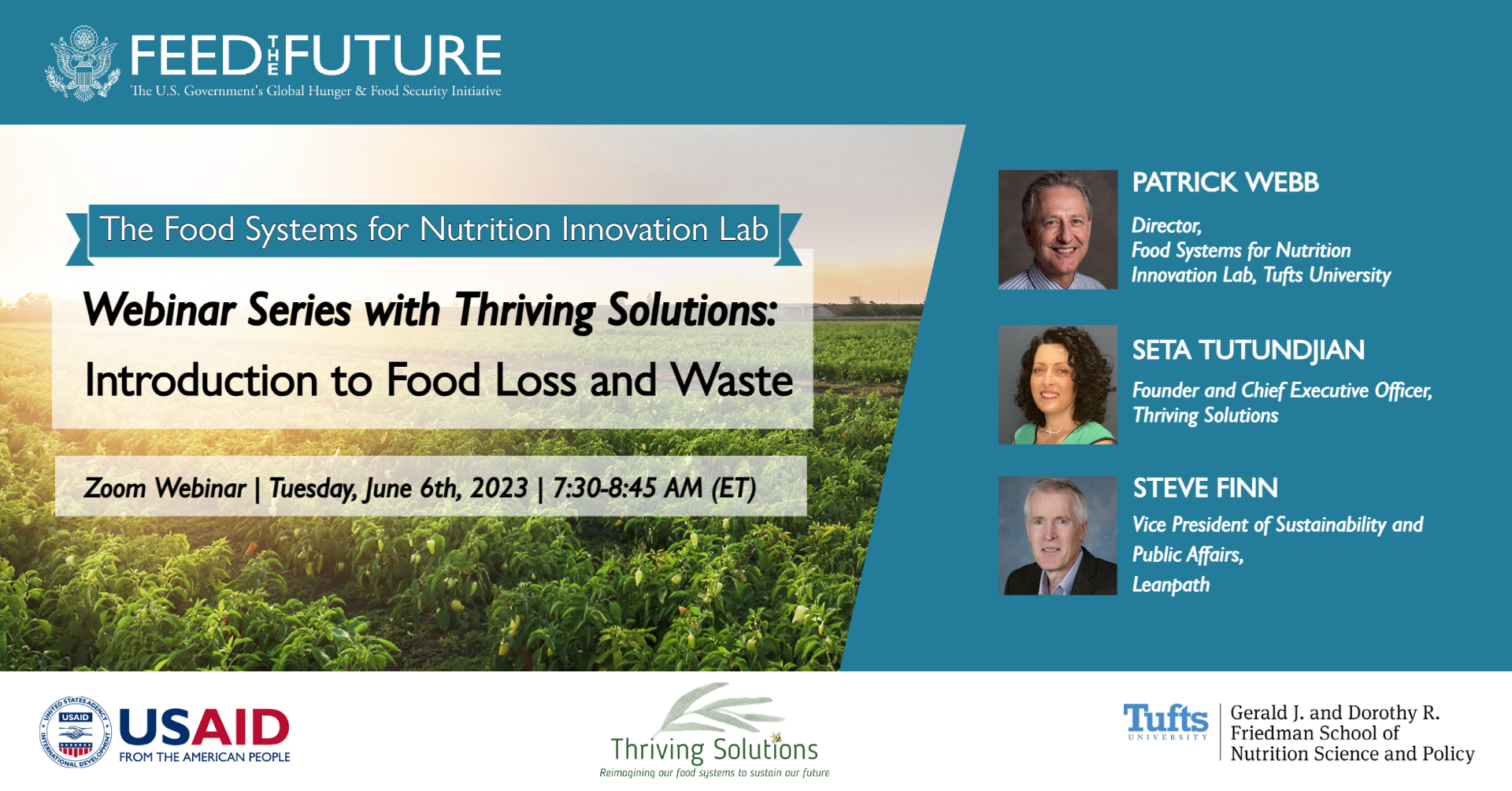
Introduction to Food Loss and Waste

  •  Food Systems for Nutrition Innovation Lab (FSN-IL), in collaboration with Thriving Solutions, on 
  • This webinar discussed food loss and waste basics while touching upon different drivers and causes that lead to food loss and waste along the value chain. 
Speakers:
  • Patrick Webb, Director, Food Systems for Nutrition Innovation Lab
  • Seta Tutundjian, Founder and Chief Executive Officer, Thriving Solutions
  • Steve Finn, Vice President of Sustainability and Public Affairs, Leanpath


17 May 2023.
 Introduction to Circular Economy

This webinar covered the basics of Circular Economy, the difference between a circular and linear economy, and the importance of shifting towards a circular model built on the three pillars eliminating waste, regenerating nature, and circulating products and material.
By Food Systems for Nutrition Innovation Lab (FSN-IL). This is a consortium led by Tufts University’s Friedman School of Nutrition Science and Policy, funded under USAID through the Feed the Future Initiative

The recording and presentations are available here
  • Patrick Webb, Director, Food Systems for Nutrition Innovation Lab. Dr. Patrick Webb is Director of the Feed the Future Food Systems for Nutrition Innovation Lab.
  • Seta Tutundjian, Founder and Chief Executive Officer, Thriving Solutions and member of the High-Level Expert Group to assess the need for the International Platform for Food Systems Science
  • Omar Habboush, Co-founder and Finance and Business Strategy Officer, Hivemind: On the potential of the black soldier fly larvae production for proteins. 

Tuesday, March 14, 2023

Food Loss and Waste in Fruit and Vegetable Supply Chains

14 March 2023. 2:30pm - 4pm CET Food Loss and Waste in Fruit and Vegetable Supply Chains - IFPRI Seminar

According to the United Nations Food and Agriculture Organization (FAO), about one-third of all food produced around the globe is lost or wasted. This is particularly egregious in a world where one in nine persons is food insecure, and widespread food affordability concerns in low- and middle-income countries have resulted from COVID-related value chain disruptions and the global impact of the war in Ukraine.

This annual event will take stock of efforts around the world to tackle food loss and waste through initiatives like Champions 12.3, a coalition of leaders from governments, businesses, international organizations, research institutions, farmer groups, and civil society dedicated to inspiring ambition, mobilizing action, and accelerating progress toward achieving Sustainable Development Goal Target 12.3 by 2030.

The seminar will also take a closer look at fruits and vegetables, which are among the healthiest but most wasted foods. Given their perishable nature, great care, attention, and cooperation along all parts of fruit and vegetable value chains are required to reduce food loss and waste.
  • Moderator Luciana Delgado, Senior Research Analyst, IFPRI
  • Welcome Rob Vos, Director, Markets, Trade and Institutions Division, IFPRI, and Lead, CGIAR Initiative on Rethinking Food Markets
  • Welcome Jacob Jensen, Minister for Food, Agriculture and Fisheries of Denmark (video recording)
  • Keynote Address Maximo Torero, Chief Economist, Food and Agriculture Organization (FAO)
Panel Discussion
  • Rob Vos, Director, Markets, Trade and Institutions Division, IFPRI, and Lead, CGIAR Initiative on Rethinking Food Markets
  • Muhammad Yakubu Bubayaro, Founder/CEO, Bunkasa Agritech
  • Shannon Sajdak, Senior Sustainability Manager, Apeel
  • Signe Frese, Director, CSR and Quality, Coop Denmark
  • Liz Goodwin, Senior Fellow and Director, Food Loss and Waste, World Resources Institute (WRI)

Thursday, June 23, 2022

Water quality and water resource management in Africa

The Fondation L’Oréal and UNESCO have worked together for more than 20 years to help empower more women scientists to achieve scientific excellence and participate equally in solving the great challenges facing humanity. Each year they honour five brilliant female scientists, promote their work globally and empower them to act as role models for aspiring women scientists and future generations.

To support women-led scientific excellence in addressing societal needs worldwide, one Laureate from each of the five major regions of the world is awarded: Africa and the Arab States, Asia and the Pacific, Europe, Latin America and the Caribbean, and North America.

Professor Catherine Ngila was selected as the 2021 Laureate for Africa and the Arab States. She was awarded for her ground-breaking contribution to water quality and water
resource management in Africa. She has pioneered nanotechnology based analytical methods for monitoring and removing industrial water pollutants, creating a major positive impact by enabling millions of families to benefit from safer drinking water.

Prof Jane Catherine Ngila is currently the Deputy Vice Chancellor in charge of Academic and Student Affairs (DVC-AA) at Riara University.

More information on the awards can be found here in this press book.

Professor Catherine Ngila is awarded for her groundbreaking contribution to water quality and water resource management in Africa. Her entrepreneurial flair and enquiring scientific mind have seen her pioneer nanotechnology based analytical methods for monitoring and removing industrial water pollutants, creating a major positive impact by enabling millions of families to benefit from safer drinking water. 

Prof. Ngila’s chief innovation lies in using electro-spun, nano-absorbent fibers and nano-composite membranes (derived from chemical resins and biomass materials) to detect and remove trace metals (such as lead, zinc and aluminum) and toxic chemical substances. And her team’s modeling of wastewater treatment plants is helping wastewater treatment plant managers in Johannesburg, South Africa, to improve their effluent discharge. As Africa continues to industrialize, her work will become ever more important in protecting human health and aquatic life. 
“Water research is close to my heart in that, water is life! Nanotechnology can play a vital role in water purification techniques. My dream is to produce a commercially viable water nano-filter that removes contaminants in one filtration cycle, enabling rural African families to install affordable water filters in their homes.” 
Girls and women throughout the country and across Sub-Saharan Africa often walk long distances to collect water and firewood to purify it through boiling, typically over smoky cookstoves or by using fabric to act as a water filter. By scaling up the production of household water filters – using cost-effective materials such as agricultural ‘waste’ including sugarcane bagasse, maize stalks and dried algae, to absorb contaminants – more families would gain access to safe water. 

As a child growing up in Kenya’s Kitui County, Prof. Ngila experienced these challenges firsthand and saw the impact of this heavy domestic burden on girls’ education. 
“Before going to primary school, I would walk up to 3km to fetch water, and as soon as lessons finished for the day, I would run home to fetch firewood and later pound maize to prepare food. Boys were exempted from household chores, so from an early young age, I felt discriminated against for being a girl. I promised myself that education would be my way out of hardship.” 
Prof. Ngila persevered with her studies, encouraged by her father, a former tribal chief (her mother passed away when she was a young child). She had the good fortune to study at an all-girls secondary school, free from gender stereotypes, and here, her interest in chemistry blossomed, inspired by her chemistry teacher. She later graduated as the top student at Kenyatta University’s science faculty in 1986, where she began pursuing her interest in water resource management. 

With universities and laboratories in her native Kenya facing funding, resource and infrastructure challenges, Prof. Ngila continued her research in Australia, where she obtained her doctoral degree from UNSW in 1996 before returning to Kenya to lecture at Kenyatta University, and later in Botswana and South Africa. At the University of Johannesburg, she experienced a major ‘Eureka’ moment by using electro-spinning cellulose to extract individual nano-fibers. This had previously been thought impossible, as cellulose is restricted by its limited solubility in common solvents and inability to melt, preventing the separation of such fibers. 

Prof. Ngila and her doctoral student Stephen Musyoka overcame these challenges by applying a high-voltage electric field to a modified cellulose solution, producing biopolymer nanofibers with diameters in the range of 100-500nm – and delivering a high-impact approach for water purification. As a senior woman scientist in Kenya (where just five of the 31 public universities have women vice chancellors), Prof. Ngila has found it hard to break the glass ceiling, often finding herself sidelined by male counterparts in decision-making. The ‘multitasking’ burden faced by senior women scientists – conducting research while acting as role models and being the ‘token woman’ on multiple boards and councils – also undermines their ability to flourish personally and professionally. It may even result in reinforcing their sense of isolation and exclusion from laboratory working culture, which in turn limits their career opportunities. In some cases, it can leave women susceptible to harassment. 

Despite this, she remains undeterred in her conviction to fight gender discrimination. 
“Excellent science and innovation require the talents of both women and men. We need the complementary skills and values of both genders to create a balanced, holistic approach to leadership.” 
As the Acting Executive Director of the African Academy of Sciences (AAS) and former Chair of the AAS working group on education and gender, Prof. Ngila dreams of both influencing decision making and STEM policy for women and girls, and mobilising research funding to establish a state of-the-art laboratory for promising analytical chemists. When women scientists are able to form a “critical mass” in the workplace, they will be able to better advocate for themselves and build stronger support networks. She considers that the L’Oréal-UNESCO For Women in Science International Awards will “enable [her] to continue [her]commitment to science with energy and passion, and act as a strong role model for women and girls in Africa”.

Wednesday, September 15, 2021

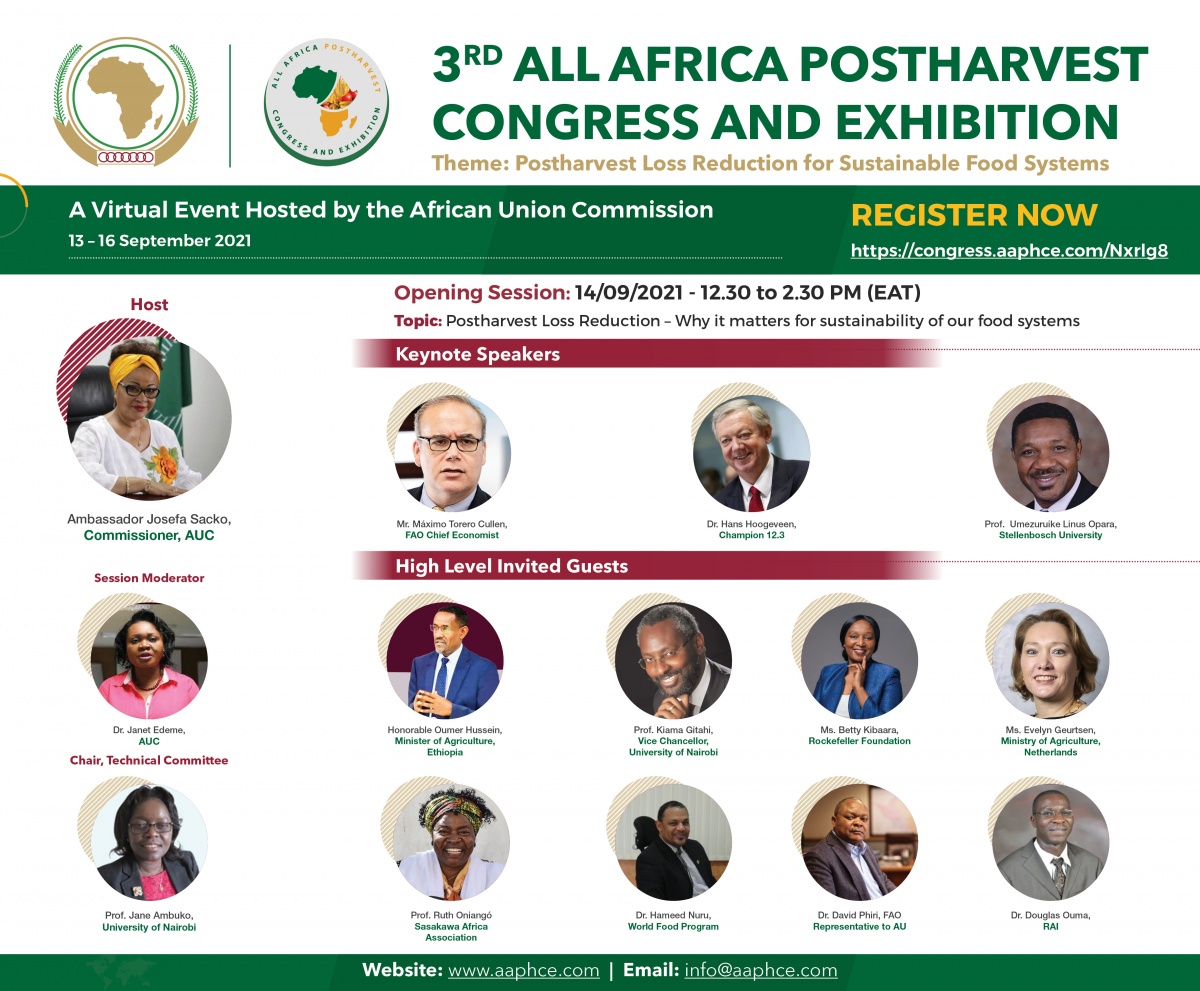
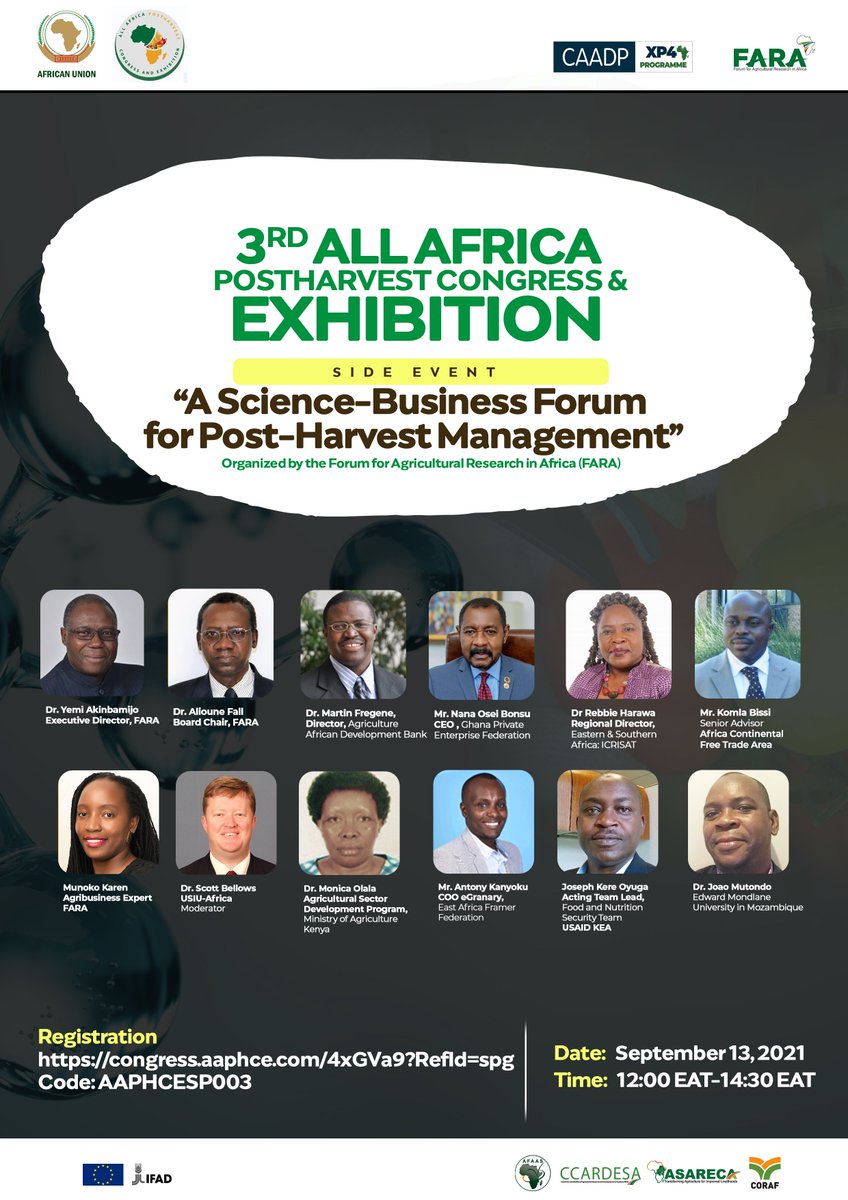
Third All Africa Post Harvest Congress and Exhibition

13 - 17 September 2021. The Third All Africa Post Harvest Congress and Exhibition

The theme for the 3rd AAPHCE is Postharvest Loss Reduction for Sustainable Food Systems. This theme is aligned with the 2021 call to action towards sustainable food systems. It is evident that food loss and waste reduction is critical in ending hunger in sustainable food systems. When 1.3 billion metric tons of food is lost/wasted annually in a world where 820 million people continue to go hungry every day, it is time to change how we produce and consume our food.

Since its inception in 2017, the AAPHCE has evolved into an important Pan-African convening to create awareness about food loss and waste and showcase sustainable solutions in the African context. The AAPHCE also provides a platform to network and establish partnerships for research, outreach and investment initiatives towards food loss and waste reduction.

Pre-events

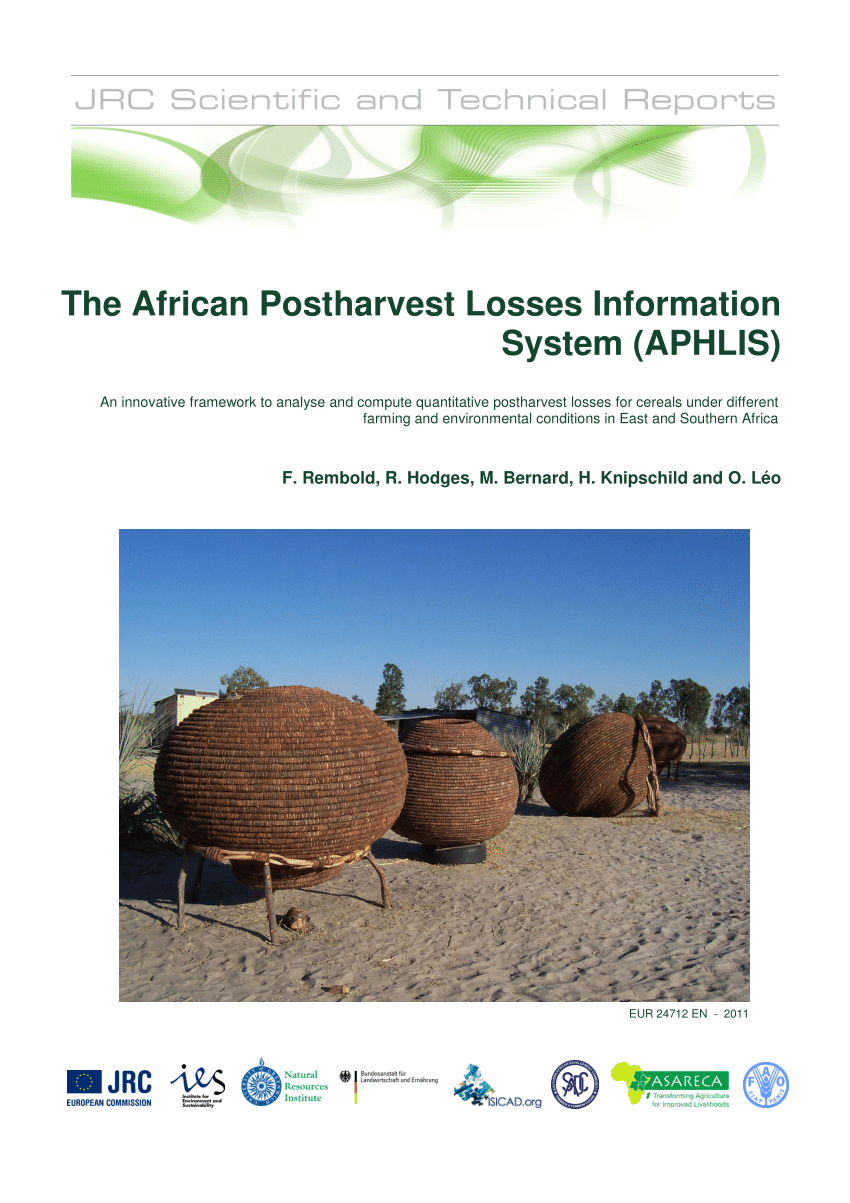
The side event engaged participants in innovative learning, practice, and reflection. The programme included short presentations on the features and functions of APHLIS; the role that APHLIS can play to help countries measure postharvest losses and meet their Malabo reporting requirements; and efforts to provide early warning information on climate-based risks of mycotoxin contamination. Interactive breakout group activities explored how APHLIS can be used to calculate postharvest losses and the nutritional and financial dimensions of such losses.
  • Quantifying postharvest losses and a demonstration of the APHLIS functions and features - Tanya Stathers (Natural Resources Institute, UK) and Brighton Mvumi (University of Zimbabwe)
  • Role and alignment of APHLIS to Malabo PHL reporting - Cephas Taruvinga Post harvest Solutions Specialist, ex African Union Advisor
Plenary discussion: Country Experiences of Fostering Postharvest Loss (PHL) Management Actions

  • PHL Strategy Development and PHL Measurement experiences - Prof Brighton Mvumi (University of Zimbabwe) and Mrs Mary Mdachi (Tanzania)
  • Agro-climatic mycotoxin risk early warning system, and mycotoxin news - Dr Felix Rembold (EC - Joint Research Centre (JRC)
  • Sustaining PHL monitoring and metrics - Dr Gideon Onumah (Natural Resources Institute, UK)

13/09. Training the Next Generation of Food System Leaders and Researchers by the Consortium for Innovation in Post-Harvest Loss and Food Waste Reduction

The Consortium is composed of leading institutions in the Americas (Iowa State University, University of Maryland, Zamorano Pan-American Agricultural School, University of São Paulo), Europe (Wageningen University and Research), Middle East (Volcani Center), and Africa (University of Nairobi, Kwame Nkrumah University of Science and Technology, Stellenbosch University). Undergraduate and graduate students from these institutions are conducting innovative research that improves storage and distribution, develops tracking and monitoring, minimizes spoilage through pre-and post-harvest innovation, and changes behavior to reduce post-harvest loss and food waste reduction (PHL-FW). Speakers presented their research findings and share how they are positively impacting the sustainable reduction of PHL-FW and improving livelihoods throughout the world.

Main events

14/09. Framing Presentation on PHL Issues in African Context 

  • Prof. Umezuruike Linus Opara, Stellenbosch University, South Africa 
  • Mr. Máximo Torero Cullen – Chief Economist, FAO 
  • Dr. Hans Hoogeveen - FAO Independent Chairperson of the Council

14/09. Cost effective priority actions for FLW measurement within Africa

  • Dr. Bruno Tran – International Institute of Tropical Agriculture (IITA) 
  • Dr. Carola Fabi – FAO Panelists 
  • Prof. Brighton Mvumi - University of Zimbabwe 
  • Prof. Sheila Okoth - University of Nairobi, Kenya 
  • Dr Miezah Kodwo - Kwame Nkurumah University of Science & Technology, Ghana 
  • Dr Oluwatoba Omotilewa - AFDB

14/09. Saving Africa’s harvest during and post COVID-19 Pandemic – lessons learnt, opportunities to strategize for future natural disasters and pandemics

  • Dr. Mel Oluoch – Sasakawa Africa Association 
  • Mr Munhamo Chisvo - Jimat Development Consultants

15/09. Scaling out of innovative postharvest technologies in sub-Saharan Africa: lessons and progress

  • Heiko Furing – Buhler Group 
  • Damian Ihedioha - AFDB
  • Dr. Deirdre Holcroft - Holcroft Postharvest Consulting 
  • Lisa Kitinoja – Postharvest Education Foundation 
  • Mr. Andrew Gatheca – Global Development Incubator, Kenya 
  • Mr. Gerald Masila – Eastern Africa Grain Council (EAGC) 
  • Mr. Nnaemeka Ikegwuonu - ColdHubs Ltd, Nigeria

15/09. Innovative Financing Mechanisms for Upscaling Postharvest Interventions

  • Victoria Madedor – Bank of Industry Investment and Trust Co Ltd, Lagos, Nigeria 
  • Mr. Benjamin Kusi – Self-Help Africa 
  • Prof. Enock Stanley Ugulumu – Micro Finance Institute, Iringa, Tanzania 
  • Edward Agaba – Alliance for a Green Revolution in Africa (AGRA) 
  • Dr. Geeta Sethi – World Bank Group 
  • Mr. Michael Obanubi, Director, Finance and Economics, Wellspring Development Capital, Bristol, United Kingdom 

16/09. Enabling policies, effective national/regional strategies, experience sharing, Collaborating, Learning and Adapting

  • Mr. Komla Bissi – African Union Commission (AUC) 
  • Dr. Divine Njie - United Nations Food and Agriculture Organization (FAO) 
  • Dr. Honest Kessy – Director of Food Security Department, Ministry of Agriculture Tanzania 
  • Mr. Mohammed Mousa – Director of the Agriculture and Environment Division, IGAD 
  • Ms. Dorcas Tawonashe – Deputy Director Strategic Policy Planning, Ministry of Agriculture Zimbabwe 
  • Mr. Esayas Lemma – Director, Directorate of Crops, Ministry of Agriculture, Addis Ababa, Ethiopia

16/09. The Roadmap to Realization of Malabo 2014 and SDG 12.3 Targets

  • Prof. Dirk Maier – Consortium for Innovations in Postharvest Loss and Food Waste Reduction 
  • Mr. Cephas Taruvinga – Postharvest Policy Consultant 
  • Dr. Rosa Rolle – FAO
  • Dr. Craig Hansen – World Resources Institute, Champion 12.3 
  • Prof. Umezuruike Linus Opara – Stellenbosch University, South Africa

Monday, October 5, 2020

WEBINAR: The Role of Water Re-use in Water Security: An effective tool in agriculture, food production

1 October 2020. The Role of Water Re-use in Water Security: An effective tool in agriculture, food production and urban water use. 2020 Water for Food Global Webinar Series

This webinar explored water re-use as a tool for water security and sustainability across agriculture, municipal use and food production. Experts discussed the current situation of water re-use, technology and application from a local and global perspective. The session was moderated by Peter McCornick, Executive Director of the Daugherty Water for Food Global Institute.

The archived video will be available soon.


Speaker Profiles


Anne Thebo
Senior Researcher
Pacific Institute


Shannon Spurlock
Founder and Principal Consultant
Ochotona Consulting


Clinton Williams
Soil Scientist
United States Department of Agriculture/Agricultural Research Service


Yulie Meneses
Water for Food Processing Specialist

Wednesday, June 24, 2020

WEBINAR: Addressing Food Loss and Waste in a COVID-19 World

23 June 2020. Addressing Food Loss and Waste in a COVID-19 World (WRI)

COVID-19 has led to a crisis in the food system, with many fearing a global rise in food loss and waste due to disruptions along the supply chain. But around the world, efforts are underway to ensure food makes it to people, not left to rot in fields or landfills.

This webinar explored:
  • How is COVID-19 impacting food loss and waste levels around the globe?
  • What actions can governments and companies take to prevent this food loss and waste?
  • What efforts are already showing success?
Speakers discussed these questions and how the audience can help reduce food loss and waste during this crisis.
  • Hans Hoogeveen (Ambassador and Permanent Representative of the Netherlands to the UN Organizations for Food and Agriculture)
  • H.E. Josefa Sacko (Commissioner for Rural Economy and Agriculture, African Union)
  • Daniel Gustafson (Special Representative of the Director General, FAO)
  • Geeta Sethi (Global Lead and Advisor, Food Systems Transformation, World Bank)
  • Amy Senter (Chief Sustainability Officer, Kellogg Company)

Monday, June 15, 2020

Africa’s Restoration Entrepreneurs Aid in COVID-19 Response

11 June 2020. Africa’s Restoration Entrepreneurs Aid in COVID-19 Response

The Land Accelerator has been held twice in Africa and will return to Nairobi for the third time in April 2021. The program will also be launching in South Asia in December 2020 and in Latin America in February 2021.
Pioneers in Africa’s restoration economy — whose companies directly heal degraded land by growing trees or helping farmers produce food more sustainably — are providing essential services in this time of crisis. Their unique supply chains connect rural landscapes to urban centers, allowing them to improve the health and productivity of agricultural land, stay strong in times of adversity and sustainably meet demand.

Here are four entrepreneurs whose businesses are improving the health or productivity of vital landscapes, while also serving their communities during the coronavirus pandemic:

Foli Ayivor: Putting a Freeze on Food Waste. 
  • Ayivor is the founder of Agromyx, an instant-food company in Accra, Ghana that purchases and processes excess produce from farmers that would otherwise rot, then freeze dries the fruits and vegetables. 
  • Recently, COVID-19 caused significantly more post-harvest losses. The government’s shelter-in-place policy disrupted traditional supply chains. Many farmers are finding it more difficult to find buyers for their produce, leaving their entire harvest — and income — rotting in their fields.
  • Ayivor participated in WRI’s Land Accelerator in 2019, a training program for entrepreneurs like him “to create a new strategy and also a better understanding of my customer segment.
Lorna Omuodo: Creating Cleaner Air and Surfaces
  • In Kenya, Lorna Omuodo’s company E-Moto helps low-income customers transition from cooking with firewood to clean-burning biofuel. 
  • Unlike most biofuels that use crops, Omuodo uses leftover sugarcane stalks that would otherwise go to waste. 
  • E-moto protects households from indoor air pollution, which kills 600,000 people annually in Africa, while also protecting Kenya’s forests by reducing demand for firewood. 
  • Omuodo, also a Land Accelerator alum, began her company in August 2019 by supplying 500 families per month, mostly in Kabaa, a town outside of Nairobi.
Said Twahir: Cooking a Solution to Deforestation
  • Other Land Accelerator companies are deemed essential to the economy. Said Twahir runs Kencoco, a company in coastal Kenya that turns discarded coconut husks into deforestation-free, smoke-free charcoal briquettes for cooking. 
  • Twahir has shifted his focus from providing briquettes to hotels and restaurants to serving higher demand from households.
Edwin Kamau: Keeping the Fertilizer Coming
  • Edwin Kamau is the founder of EcoH Holdings, a Kenyan company that converts organic waste into fertilizer pellets to help farmers enhance soil health and increase food production. 
  • He has received the government’s permission, as an essential service, to collect organic waste once a month to continue manufacturing and distributing fertilizer to local farmers.

Tuesday, June 2, 2020

WEBINAR New Methodology for Assessing and Quantifying Post-Harvest Loss and Food Waste Within a Value Chain

28 May 2020. Webinar on New food loss and waste protocol. Organised by the Consortium for Innovation in Post-Harvest Loss and Food Waste Reduction. Wageningen University and Research (WUR) have developed a new methodology for assessing and quantifying loss and waste within a value chain.


Speakers:

Joost Snels: Senior Project Manager Supply Chain Development and Sustainable Food Chains @Wageningen University
  • In his current positions of Senior Project Manager Supply Chain Development and sustainable food chains he combines his 20 years of experience in the field of product quality driven (international) supply chain management with project management. 
  • For 10 years he has been involved in several (international) projects that focus on preventing and reducing food waste and food losses in food chains. 
  • Related to the topic food waste and food losses he plays and played an expert and project management role in several projects, including the Dutch Top Institute Food and Nutrition, the Dutch Top Sector Agri and Food and within EU REFRESH (H2020)
Jan Broeze: Senior Staff Scientist @Wageningen University
  • Jan Broeze has a background in Applied Mathematics and has more than 20 years of experience in understanding causal relations in food processing with a process analysis approach. Main application domains are process optimization and valorisation of by-products. 
  • He holds the position of Senior Scientist, Sustainable Processing and Process Optimisation at Wageningen Food & Biobased Research and contributes to eco-sustainable development of agri-food chains through increasing valorisation of by-products. 
  • He therefore developed a protocol that not only addresses potential uses from a product perspective, but also initiates the development of a marketable and demand- oriented products. 
  • He plays and played a role in the CCAFS project on Climate-Smart Agriculture (CGIAR) and EU REFRESH (H2020)

Wednesday, May 13, 2020

WEBINAR: Food Loss and Waste – Can we end it by 2030 while dealing with the COVID-19 pandemic?


12 May 2020. WEBINAR. Food Loss and Waste – Can we end it by 2030 while dealing with the COVID-19 pandemic? IFPRI 
COVID-19 has significantly disrupted the food chain and with just ten years to go before the 2030 Agenda for Sustainable Development (SDG 2030) is to be met, eliminating food loss and waste is increasingly urgent. Building on the 2019 inaugural event, this special event will discuss whether, as a global community, we can or will end food loss and waste while dealing with the COVID-19 pandemic.
  • Troels Mandel Vensild, Minister Counsellor of Food, Agriculture and Fisheries, Embassy of Denmark in Washington, DC
  • Johan Swinnen, Director General, IFPRI
  • Mogens Jensen, Minister for Food, Fisheries and Equal Opportunities & Minister for Nordic Cooperation, Government of Denmark
  • Stephen Censky, Deputy Secretary, U.S. Department of Agriculture
  • Anna-Karin Modin-Edman, Senior Sustainability Manager, Arla Foods
  • Denise Osterhues, Senior Director for Corporate Affairs, The Kroger Company
  • Ambassador Darci Vetter, Vice Chair for Agriculture, Food and Trade, Edelman; Former Chief Agricultural Negotiator for the Office of the United States Trade Representative
  • Craig Hanson, Vice President for Food, Forest, Water & the Ocean, World Resources Institute (WRI)
  • Rob Vos, Director, Markets, Trade, and Institutions Division, IFPRI
  • Moderator Rajul Pandya-Lorch, Director, Communications and Public Affairs & Chief of Staff, Director General's Office, IFPRI


Related: 

French fishermen say they are throwing back two-thirds of their catch. Australia is facing an avocado glut. Alain Goubau, a farmer in Ontario, now feeds some of his milk back to his cows. But there is a limit to what can be recycled; most of what cannot be sold will be wasted. Millions of litres of keg beer is going stale. The EU is expecting to lose €400m ($430m) of potatoes. America’s food-waste ratio is set to rise from 30% to 40% this year, according to André Laperrière of GODAN, a group which promotes open data.

Some farmers deprived of markets, and thus cash, by restaurant closures and the like will leave crops to rot rather than pay for harvest. Some will go bust. In countries with low interest rates the risk is lessened. 


The globalisation means more countries depend on imports. 
Analysis done for The Economist by Josef Schmidhuber and Bing Qiao of the FAO shows that most countries are more dependent on imports today than they were 20 years ago (see map).

Although farms are, by their nature, local, much of the rest of the food industry is global. The supplies of seed, fertiliser, machinery and fuel that farmers need come from far afield. The companies that tie the system together—giant middlemen like America’s adm, Bunge and Cargill, Louis Dreyfus, based in the Netherlands, and Olam International, based in Singapore—all operate on a worldwide basis, sourcing, storing and shipping agricultural commodities for foodmakers like Kraft or Unilever. Their size and global reach lets them make a lot of money on quite narrow margins. They can quickly swap one source for another to accommodate changes in supply or demand, smoothing prices and keeping the system flexible.

Sunday, September 29, 2019

2nd All Africa Postharvest Congress

17 September 2019. Addis Ababa. 2nd All Africa Postharvest Congress. This four day Congress was organized by the African Union Commission in collaboration with the University of Nairobi, Stellenbosch University and Jomo Kenyatta University of Agriculture and Technology.

Specific objectives:

  • to raise awareness on food losses and waste through data and information sharing; 
  • Showcase effective strategies, technologies, practices, initiatives for postharvest loss reduction; 
  • Monitor and review progress on postharvest loss reduction initiatives against set targets; 
  • and build and strengthen linkages and partnerships for resource mobilization and other activities geared towards postharvest loss reduction. 

In recognition of the devastating effects of Post-Harvest Loss and food waste, the African Union Heads of State and Government included in their 2014 Malabo Declaration, a call to reduce postharvest losses in Africa by 50 percent by the year 2025.

In addition, African Union Commission, with support from partners Rockefeller Foundation and FAO developed the African Union Post-Harvest Loss Management Strategy.
“This strategy will support our 55 member states in implementing actions at all levels in agricultural and food value chains to reduce post-harvest losses on our continent. It is the first-ever post-harvest loss strategy for the continent and a clear demonstration of the African Union’s commitment to continue to provide the right strategies and frameworks to guide our member states to increase agricultural productivity, create jobs, and improve incomes through strengthening our value chains and by reducing post-harvest losses,” H.E Prof. Victor Harrison representing Commissioner for Rural Economy and Agriculture, H.E Amb. Josefa Sacko
Further given the scale of the greenhouse gas impact of food loss and waste, the AU’s Department of Rural Economy and Agriculture is working with AU member states to include measures to reduce food loss and waste in their Nationally Determined Contributions (NDCs) to the Paris Agreement on Climate Change. These measures include policies, programs, practices, and technologies that reduce food losses on the farm, during storage and distribution, at market, and in the home.

Resources:
August 2018. Post-Harvest Loss Management Strategy August 2018

Thursday, September 27, 2018

African Agriculture @ UNGA 73 and Global Goals Week (8)

23-29 September 2018. New York. Food systems, hunger and nutrition received a great deal of attention during Global Goals Week.

25 September 2018. Transforming food systems was the focus of an event that aims to “stretch the very fabric” of SDG 2, organized by Kellogg, FReSH and the SDG 2 Advocacy Hub.

  • Nutrition was woven throughout the week, with a cooking challenge at NYU to highlight “nutrition without borders” with award-winning chefs, and a forum hosted by the Barilla Center for Food and Nutrition and the Sustainable Development Solutions Network (SDSN).
  • Read the executive summary or full report
  • A thought leadership panel hosted by Kellogg Company, FReSH and SDG2 Advocacy Hub focused on Sustainable Development Goal 2 and food system resilience. Convened alongside the UN General Assembly, this event created integrated discussions to drive transformational change in our food systems for both people and planet. 
The event consisted of two curated panels to drive provocative, disruptive conversations that identify tangible and actionable solutions to achieve SDG2.

Reducing Food Loss and Waste: Advancing the Agenda
  • Every year, one-third of the world's food is never consumed -- costing the global economy $940 billion and contributing to 8 percent of greenhouse gases. This event assessed global progress toward Sustainable Development Goal Target 12.3 on food loss and waste, explored how it can help meet SDG 2 on hunger, and announced the biggest developments of the year in the worldwide effort to halve food loss and waste by 2030.
  • Former White House Chef Sam Kass demonstrated a new recipe and give tips on how to avoid food waste at home. 
Speakers:
  • DAVE LEWIS, Group Chief Executive of Tesco and Chair of Champions 12.3
  • VYTENIS ANDRIUKAITIS, European Commissioner for Health and Food Safety
  • HANS HOOGEVEEN, Ambassador and Permanent Representative of the Netherlands to the UN Organizations for Food and Agriculture
  • JOSEFA LEONEL CORREIA SACKO, Commissioner for Rural Economy and Agriculture of the African Union Commission
  • SAM KASS, Former White House Chef, Founder of TROVE and Venture Partner with Acre Venture Partners
  • LIZ GOODWIN, Senior Fellow and Director, Food Loss and Waste at World Resources Institute
  • LINDIWE MAJELE SIBANDA, Co-Chair of Global Alliance for Climate Smart Agriculture, Farmer, and Champion for Sustainable Food Systems AGRA
  • SHENGGEN FAN, Director General of the International Food Policy Research Institute IFPRI
  • PETER FREEDMAN, Managing Director of The Consumer Goods Forum
  • MARCUS GOVER, Chief Executive of WRAP
  • GILBERT HOUNGBO, President of the International Fund for Agricultural Development IFAD
  • SELINA JUUL, Founder of Stop Wasting Food movement Denmark
  • KEVIN FAY, Executive Director of the Global Food Cold Chain Council
  • STEFANIA LALLAI, Sustainability and External Relations Director for Costa Cruises
  • MICHAEL LA COUR, Managing Director, IKEA Food Services AB
  • JOAQUIM LEVY, Managing Director and World Bank Group Chief Financial Officer of World Bank
Tackling the Scandal of Preventable Child Deaths: Financing for Child Survival 2030
  • Every year, millions of children under-five die from preventable causes such as pneumonia. Urgent action and financing is require to meet the SDGs associated with child survival. 
  • Save the Children, UNICEF, GSK, Global Citizen and Global Financing Facility are organised this intimate high-level meeting to discuss how we can end this scandal and sustainably finance child survival. 
  • Global leaders in child health and nutrition, from public and private donors, and from implementing partners and governments. Together, they agree to a plan of action to ensure our global and domestic health and nutrition financing architecture is equipped to realise the ambition of the SDGs and end preventable child deaths by 2030.
Speakers:
  • chaired by Carolyn Miles, CEO, Save the Children US. 
  • Florence Sibomana, SUN youth advocate 
  • Kevin Watkins, CEO, Save the Children UK 
  • Mark Suzman, Chief Strategy Officer, The Bill & Melinda Gates Foundation 
  • Rogerio Roberio, Senior Vice President at GSK 
  • Ambassador Hideo Suzuki, Assistant Minister for Global Issues Japanese Government 
  • Mariam Claeson, Director, Global Financing Facility (GFF) 
  • Unicef, 
  • Donor Governments 
  • Country supported by the GFF
26 September 2018. Global Citizen Festival: Sustainability at centre stage

Chef Pierre's fonio fruit salad
Chef Pierre's fonio fruit salad showcases fonio, an ancient grain with deliciously mild, nutty flavour that has grown in West Africa for 5,000 years and is a key ingredient of West African cuisine. Similar to millet, fonio too was replaced by imported grains and became scarce in food markets around the region. 

Fonio has been nicknamed the 'miracle grain', as it is high in micronutrients and can be grown in areas of poor quality soil with little water. Through Yolélé, Chef Pierre is connecting West Africa's fonio farmers with Western markets by championing the sustainable production of this grain in West Africa. This will help not only to promote healthy eating but also protect the region's biodiversity and support the livelihoods of fonio farmers.

Wednesday, August 29, 2018

South Africa cooling project to reduce harvest loss

29 August 2018. Dearman launches South Africa cooling project to reduce harvest loss

Clean cold experts at Dearman have launched a new project aiming to reduce wasted harvest in South Africa. The project is backed by grant funds from the Department for International Development (DFID). Food waste in South Africa is estimated to be worth £4.7 billion annually, half of which occurs in the fruit and vegetable sector. Low farmer income makes access to cooling technology difficult.

Dearman’s 24-month project seeks to develop a mobile pre-cooling system, using the company’s groundbreaking liquid nitrogen engine. Pre-cooling rapidly reduces the temperature of produce immediately after harvest, to ensure minimal post-harvest food loss.

Working with local partners Transfrig, the cold chain operator, and Harvest Fresh, a family-owned food producer based in the Gauteng province, Dearman will develop a mobile, off-grid, zero-emissions system that allows small farmers to access affordable pre-cooling.

The fruit and vegetables pre-cooling market is estimated to be worth £730 million across Africa. Dearman’s project seeks to deliver a successful technology demonstration, including a six-month field trial, and set out a viable route for wider commercial deployment of the pre-cooling system.

The company estimates that deploying just 250 Dearman pre-coolers in South Africa would be enough to process the 350,000 tonnes of fruit and vegetable wasted during post-harvest handling and storage. Additional impacts would include saving 328 million cubic metres of water and 29,000 hectares of land also currently wasted, as well as boosting farmer incomes by 12%.
“We’re very excited to be launching our new project in South Africa. Small farmers in the country want an affordable pre-cooling system, but one that does the job cleanly. The zero-emission system we are developing can offer a real alternative to polluting, expensive diesel systems and help to reduce post-harvest food loss.” Dr Daniel Fennell, Dearman’s Head of New Applications

Friday, December 22, 2017

8th International Forum on Food and Nutrition

4-5 December. Milano, Italy. 8th International Forum on Food and Nutrition. The BCFN Forum is
the international platform of dialogue and networking that every year aims to identify the pathway towards concrete solutions to the environmental, health and socio-economic challenges affecting the current food system.

The 2017 edition brought together policy makers, the scientific community, private sector and the general public to share knowledge, analysis and best practices in light of the Agenda 2030.

Held in Milan at Pirelli HangarBicocca the eight edition of the event focused on food security, climate change and migrations, sustainable food systems at the country and city level and the reform of the agricultural policy in Europe.

Extracts of the programme
On December 4, the Forum amplified the voice of new generations, involving young leaders from all over the world seeking for scalable ideas to overcome current burning issues in the food system.
  • The first day included the Award ceremony - Agropolis Louis Malassis International Scientific Prize for Agriculture and Food Olam Prize for Innovation in Food Security
On December 5, the Forum  involved high level speakers on main topics and participants in interactive working sessions on such subjects, stimulating an active engagement of the audience.
  • Keynote. Food solutions in the framework of the SDGs, Jeffrey Sachs  Director, Earth Institute, Columbia University and Director, UN SDSN
  • The role of African CSOs for the implementation of Agenda 2030: The case of the Alliance for Food Sovereignty in Africa Million Belay  Founder of Alliance for Food Sovereignty in Africa (AFSA) and Researcher, Stockholm Resilience Centre
  • Getting to Zero Hunger in an uncertain world! What will it take? Arif Husain  Chief Economist and Director of the Food Security Analysis and Trends Service, World Food Programme
  • Safe and healthy food in 2030: the road ahead - Interview with: Vytenis Andriukaitis  EU Commissioner Health and Food Safety
PARALLEL WORKING SESSIONS: extract

Research and Innovation in Food Systems
  • Bina Agarwal Professor of Development Economics and Environment - University of Manchester
  • Filippo Maria Bassi Durum wheat breeder, ICARDA, Morocco, winner, Olam Prize 2017
  • Barbara Buchner Executive Director, Climate Finance - Climate Policy Initiative
  • Paul Gepts Distinguished professor of the University of California-Davis, California
  • Touhami Khorchani Professor Director, Institut des Régions Arides - Tunisia
  • Paul Kosuth Director, Agropolis Fondation
  • Elena Poverenov Research Scientist, Institute of Postharvest and Food Sciences of Agricultural Organization of Israel
Videos

Friday, June 9, 2017

Recordings of the sessions on Agriculture @ the European Development Days

7-8 June 2017. Brussels. Organised by the European Commission, the European Development Days (EDD) brought the development community together to share ideas and experiences in ways that inspire new partnerships and innovative solutions to the world’s most pressing challenges.

Following sessions and stands were related to agriculture:

7 June 2017:

Organised by: CBA, TBT, CTA
This lab presented intra-ACP initiatives aimed at spurring investment opportunities to support trade expansion and sustainable development.  Regimes for intra-regional investment flows and facilitation need to be enhanced. The session started with a video contribution of Dr. Ameenah Gurib-Fakim, President of the Republic of Mauritius.

  • Moderator: Viwanou Gnassounou, Assistant Secretary General African, Caribbean and Pacific Secretariat
  • Bibi Ameenah Firdaus Gurib-Fakim President Republic of Mauritius (video contribution) 
  • Pamela Coke-Hamilton Executive Director Caribbean Export Development Agency
  • Steve Kayizzi-Mugerwa Independent Evaluation Office International Monetary Fund
  • Masego Marobela Managing Director Botswana Bureau of Standards
  • Roberto Ridolfi Director for Sustainable Growth and Development European Commission - DG for International Cooperation and Development
    "Research should be applied to sustainable investment to promote descent jobs"
Organised by: UNIDO, DW, The Consumers Good Forum, Danish Technological Institute, FAO, IIF/IIR, RIOGO
This session brought together entrepreneurs and experts in food systems, refrigeration, agricultural supply chains, and climate change to discuss food loss and how refrigeration could mitigate it. Participants discussed the role that refrigeration and the cold chain have in reducing this loss, the downsides of increasing energy consumption and emissions through additional cooling and transport, and the barriers that exist to extend cold chains in countries. Possible solutions and existing technologies and ideas were presented, such as off-grid refrigeration, where investments should be made and policy changes to facilitate such technologies.
  • Graciela Alvarez International Institute of Refrigeration
  • Ignacio Gavilán (picture) Director of Environmental Sustainability The Consumer Goods Forum
  • Manuela Kasper-Claridge Head of Business and Science and Environment Deutsche Welle
  • Yvonne Lokko Industrial Development Officer United Nations Industrial Development Organization
  • Antoine Skayem CEO RIEGO
Resources:
Organised by: CIRAD, EC, UNDP
The territorial approach aims to bring together different regions and local communities to enhance the potential for development. The challenge is to connect the work of the national government to the local level to ensure inclusive development. The territorial approach is only part of a solution that focuses on a bottom-up approach and increasingly on decentralisation. Involving small and medium-sized enterprises in the implementation of the SDGs and the political process guiding it are of outmost importance.
  • Moderator Johannes Krassnitzer International Coordinator UNDP
  • Roberta Dall’Olio Vice President European Association of Development Agencies
  • Franco Iacop Rapporteur on SDGs European Committee of the Regions
  • Stefano Marta Economist, Policy Research and Advice OECD
  • Marie-Cécile Thirion Agronomist and project coordinator Agence Française de Développement
  • Elodie Valette Researcher Centre de Coopération Internationale en Recherche Agronomique pour le Développement (CIRAD)


Organised by: AFDB, AAIN, PAFO, CTA, CEMA, ACP
An earlier conference on boosting youth employment in Africa revealed that around 80 % of people in the continent work in agriculture, hence the need for investment in the sector. The majority of farmers are small holders and so the focus needs to be particularly on access to finance and skill enhancement. Most vocational programmes are not very effective because they assume people have at least primary education, which is not always the case. On-the-job training needs greater focus in these vocational programmes.
  • Moderator Leonard Mizzi Head of Unit C.1 - Rural development, food security and nutrition European Commission - DG for International Cooperation and Development
  • Alieu Jallow EDD Young Leader, Gambia 
  • Dalitso Luke Mbewe Director Tapera Industries
  • Thato Mojaboswa Stimela Managing Director Brastorne Enterprises 
  • Christiaan Rebergen Director General for International Cooperation Ministry of Foreign Affairs, Netherlands
  • Mara Walz Board Member German National Young Farmer Association


Thato Mojaboswa Stimela
mAgri/Botswana
Managing Director
Brastorne Enterprises
In Botswana, an entrepreneur with information technology skills has created an application (mAgri) that farmers can access through their mobile phones. Since the Internet is currently too expensive for most people, the application uses Short Message Service (SMS) and Unstructured Supplementary Service Data (USSD) technology. Users pay a small fee, and state their name, location and type of crop they are producing and then receive local advice about weather and soil conditions.

The entrepreneur has increased the number of users from 2,000 to 250,000, with about 500 new ones signing up each day. A major factor in this success is that his application has a social element, allowing users to “chat” with each other, and access Wikipedia and their emails. The target is 500,000 users and to add more services, including insurance, crop protection and weather updates, to make the application available on the internet as data processing costs decline, and to expand the service to other countries.


AgriHack Talent is a programme of the Technical Centre for Agricultural and Rural Cooperation (CTA). It supports ICT innovations and entrepreneurship in Agriculture led by young entrepreneurs. Pitch AgriHack is an e-agriculture start-up competition, a component of the program. The pilot edition of Pitch AgriHack was held in 2016 in collaboration with the African Development Bank; its final was in Kenya.

Organised by: ColeACP, YPARD, ACP
The Food and Agriculture Organization of the United Nations (FAO) estimates that the world will need to produce some 60 % more food to feed a hungry world by 2050. A way to meet this challenge is to transform agriculture by involving youth and the private sector. This brainstorming session was driven by young dynamic entrepreneurs from the South and the North. From production to consumption, developing sustainable and inclusive agri-food value chains will be possible if young people are involved, if their perception of agriculture can change. Concretely, what does it mean for the different stakeholders involved in developing an inclusive and sustainable agriculture? This brainstorming session, driven by young and innovative people, supplied new and concrete ideas that can be forwarded to decision makers.


How to create decent jobs in the global supply chains?
Organised by: EC, ILO, UNIDO, ACP
DG DEVCO shared its experience in promoting decent work in global value chains, particularly in the garment sector. A dialogue unfolded involving the African, Caribbean and Pacific Secretariat and the participants.
Moderator

  • Francoise Millecam Deputy Head of Unit, Human Development and Migration European Commission - DG for International Cooperation and Development
  • Valérie Berset Bircher Deputy Head International Labour Affairs Swiss State Secretariat of Economic Affairs
  • Michael Elkin Chief Technical Adviser of the SCORE programme International Labour Organization
  • Dan Rees Director of the Better Work Programme International Labour Organization
  • Christophe Yvetot Director of UNIDO Liaison Office to the European Union United Nations Industrial Development Organization
How to make agriculture attractive for youth?
Organised by: ColeACP, YPARD, Gembloux Agro Bio-Tech, Global Vert, ACP Young Professionals Network
From production to consumption, developing sustainable and inclusive agri-food value chains will be possible if young people are involved, if their perception of agriculture can change. Concretely, what does it mean for the different stakeholders involved in developing an inclusive and sustainable agriculture? This brainstorming session, driven by young and innovative people, supplied new and concrete ideas that can be forwarded to decision makers.

  • Viwanou Gnassounou Assistant Secretary General African, Caribbean and Pacific Secretariat
  • Carolin Kawira Agronomist
  • Regis Meritan Head of Sector for Agricultural Growth European Commission
  • Stephen Mintah Chairman Comité de liaison Europe-Afrique-Caraibes-Pacifique
  • Khadija Niang Crop Manager
  • Calvin Picker General Manager Africa Bio
Innovative agriculture for next generation farms
Organised by: OCP, EU-Africa Business Forum
Participants heard about two examples of how high technology can be used to boost the productivity of African agriculture. The Nigerian company Zenvus has developed technology that allows farmers to monitor their crops and land more efficiently, registering the state of the soil or the threat from pests, telling them when to irrigate or when to use fertiliser. The technology can make it easier for farmers to raise credit with banks, something that can be difficult because credit institutions have an independent means of verifying the information that farmers provide.

The Geneva-based International Trade Centre, a joint venture of the United Nations and the World Trade Organization, presented its soon-to-be launched Sustainability Network, through which users can share their business and sustainability profiles with buyers, traders, standards organizations, certification bodies, financiers and others.
  • Karim Lotfi Senhadji OCP Africa CEO OCP Group
  • Moderator Lanre Akinola Editor African Business
  • Ndubuisi Ekekwe Founder and Chairman First Atlantic Semiconductors and Microelectronics
  • Maira Dzelzkalēja Vice President Copa
  • Michael Hailu Director Technical Centre for Agricultural and Rural Cooperation
  • Kanayo F. Nwanze Member of the Global Agenda Council on Food Security World Economic Forum
  • Joseph Wozniak International Trade Centre 
Panellists agreed that decisions on technological change must always involve local communities and cannot be imposed from outside. Technology must always work to the benefit of the farmer. The solutions to Africa’s development issues will not be decided in Paris, London, Washington or Geneva: They can only be taken in Africa by Africans.

Young people are attracted by technology and technological innovation could be a means to draw young people to agriculture, or to keep them from leaving the farm, which would help ease Africa’s unemployment problem.
The central role of water for inclusive and sustainable growth and the creation of decent jobs
Organised by: UNESCO, World Water Assessment Programme, EC
The potential employment effects of investment in water are considerable. Water treatment plants, for example, directly employ engineers, administrative staff, security guards and indirectly, many more. Crucially are the induced and growth-related jobs in the wider economy that are made possible by investment in water. In Kinshasa, small water systems operated by local communities have created 400 local sustainable jobs.

In Africa, it is estimated that women and girls spend the equivalent of one year’s worth of work by France’s entire workforce on collecting water every year. However, in the current programming cycle and following the end of the EU’s Water Facility, fewer than 10 countries in Africa have designated water as a focal sector, which reduces opportunities for obtaining funds for blending under the African Investment Facility.


  • Moderator Eric Beaume Deputy Head of Unit Water, DG for infrastructures and cities European Commission - DG for International Cooperation and Development
  • Paolo Ciccarelli Head of Unit European Commission - DG for International Cooperation and Development
  • Céline Gilquin Head of Water Unit Agence Française de Développement
  • Lucilla Minelli Programme Officer United Nations World Water Assessment Programme of UNESCO
  • Stefan Uhlenbrook Coordinator United Nations World Water Assessment Programme of UNESCO
Business switch to green with innovative support services
Organised by: UNEP, UNIDO, SwithAfrica, Regional Activity Centre for Sustainable Consumption and Production
The session addressed the transition to an inclusive green economy as a new model of development, that can be based on the circular economy paradigm. It builds on the experience of the SWITCH programmes in Asia, Africa and the Mediterranean region, in developing partnerships with the private sector to shift SME’s behaviour and practice, towards Sustainable Production and Consumption patterns. The lab generated a debate on private sector collaboration approaches – ranging from enabling eco-entrepreneurship to providing MSMEs with technical assistance on SCP and to enhancing sustainable value chains – and how these can become more effective in the context of the inclusive green economy transition.
Moderator
  • Alexander Charalambous Team Leader SWITCH to Green Facility
  • Nour Kays Founder NK by Nour Kays
  • Chantal Marijnissen Head of Unit C2 Environment, Ecosystems, Biodiversity and Wildlife European Commission - DG for International Cooperation and Development
  • Vivekanand Mishra Director Gayatri Pashmina Inc.
  • James Mwaura Muiruri Managing Director Champion Shoes LTD

Prof De Decker, KULeuven
Sustainable soil management: the foundation for Africa's future?
Organised by: EC, KULeuven, WAC, FAO,
Soil is at the heart of agriculture. Africa's fertile soils are under threat, especially due to climate change and poor land management. Nutrient and soil organic matter depletion, together with soil erosion, worsen the effect of climate change and decrease the resilience of the land. The answer lies in the large-scale adoption, both at policy and practical levels, of guidelines for sustainable soil management, including integrated soil fertility management, in conjunction with climate-safe agriculture, for example, intercropping and agroforestry. The session assessed systematic challenges and obstacles for ensuring food security and rural development, and providing increased resilience to climate change.


8 June 2017:

There is no sustainable development without shared science
Organised by: CIRAD
According to SDG 17, a successful sustainable development agenda requires inclusive, multi-stakeholder partnerships. In the agricultural sector, structured knowledge platforms gathering political players, the private sector, civil society and research actors exist. Co-ownership, co-decision on the societal challenges to tackle, shared values and visions, and jointly committed resources are key characteristics. They cover a wide range of expertise, approaches and backgrounds and the impact of their activities stretches from the local to the national and regional scale. During the brainstorming session, participants reflected on the expansion potential and sustainability of global knowledge partnerships for sustainable development in agriculture.

Soils and agriculture in the face of climate change: Challenges of the 4P1000 initiative
Organised by: IRD (Mathieu Savadogo was excused (Director Association for research and training in agroecology)
4P1000 has two objectives: improving carbon sequestration in soil will enrich the soil and improve agriculture; storing carbon produced by industrial emissions will reduce the level of carbon in the atmosphere and potentially slow climate change. The programme is run by a partnership of government and non-state actors and is based on a research and scientific programme of 11 countries.
A related African initiative to improve soil yields and support local farmers is bearing fruit in Burkina Faso. The Association for Training and Research in Agro-Ecology is working with farmers, local NGOs and agricultural researchers to develop agro-ecological farming practices that restore the soil’s fertility and increase food production. Farmers build on traditional practices to conserve water and improve the soil. In addition, they use animal and other organic compost to enrich the soil, carry out strategic tree planting, and develop short-cycle seeds.

The programme helps farmers to experiment in comparing costs and benefits in relation to other practices, as well as offering technical training sessions in agro-ecology innovation. It also has a social aspect: boosting gender and economic equity by setting up women’s savings and credit groups; encouraging dry-season vegetable gardening for consumption and sale at local markets; improving practices for raising livestock; and building agricultural capacity.


  • Moderator Dorothée Fischer Journalist
  • Jean-Luc Chotte Head of research and Deputy Director of ECOBIO Institut de Recherche pour le Développement (CIRAD)
  • Bernard Rey Deputy Head of Unit, Rural development, food security, nutrition European Commission - DG for International Cooperation and Development
  • Emmanuel Torquebiau Senior researcher and Climate Change Officer Centre de Coopération Internationale en Recherche Agronomique pour le Développement
Global Climate Change Alliance plus (GCCA+): The role of CSOs supporting climate change and sustainable development agenda
Organised by EC
The systemic inclusion of CSOs in climate policy-making is a step towards inclusive risk governance, the area where climate resilience, disaster resilience, and conflict resilience overlap. This interconnectedness is especially salient at local level, where communities are faced with interlocking resilience challenges. CSOs have a crucial role to play in integrating disaster risk reduction and resilience-building in climate adaptation strategies. Local communities become even more vulnerable when they are excluded from the policy process.
Moderator
  • Guido Corno Climate Change Policy Expert Global Climate Change Alliance +
  • Rosario Bento Pais Head of Unit Civil Society, Local Authorities European Commission - DG for International Cooperation and Development
  • Buh Wung Gaston Coordinator Geotechnology, Environmental Assessment and Disaster Risk Reduction
  • Maria Theresa Nera-Lauron CSO Partnership for Development Effectiveness
  • Marcus Oxley Executive Director GNDR Global Network of Civil Society Organisations for Disaster Reduction
  • Felice Zaccheo Head of Unit C.6 - Sustainable Energy and Climate Change European Commission - DG for International Cooperation and Development
Organised by: CTA, PAFO, Agricord
Today, women in Africa are largely restricted to the type of microfinance that is typical of development programmes. The experience of Ugandan entrepreneur Lovin Kobusingye has shown that with persistence and drive, African women’s agri-businesses can thrive. When Kobusingye was refused bank credit – despite a surge in orders following her appearances in the Ugandan press and on national TV – she received the fresh fish she needed for her processed fish ‘sausages’ on credit from her poor farmers’ suppliers and paid them out of the proceeds of the sales. Her company now exports products across Africa, trades with Lebanon and is exploring ways to enter European and US markets.

The European Investment Bank is among the international financial institutions that are trying to

strengthen the business environment for women like Kobusingye, with new credit structures that will allow entrepreneurs to get enough large-scale loans for them to launch small and medium-sized enterprises or grow bigger corporations.

Two Kenyan women, for example, have developed a phone-based credit score and lending system. The She Trades initiative focuses on seven areas critical to the expansion of women-owned enterprises in Africa, helping women farmers to escape from their traditional roles in low-paid primary production. Comprehensive data collection on agri-businesses is seen as a first step to bring government and scientific partners together to diversify crops, increase output and promote value-adding activities such as food processing and exporting.

Moderator
  • Michael Hailu, Director CTA
  • Vanessa Erogbogbo, Head of Women and Trade Programme, International Trade Centre (see below video)
  • Heike Ruettgers, Head of Mandates Management, European Investment Bank
    In her presentation Heike refers to FarmDrive (Kenya) which is transforming how smallholder farmers access financial services and to Boost Africa: empowering young African entrepreneurs (see below video)
  • Lovin Kobusingye, Managing Director, Kati Farms Ltd
  • Marie-Joseph Medzeme Engama, Chargée de Programmes de Développement des Chaînes de Valeur agricole, Plateforme Régionale des Organisations Paysannes d'Afrique Centrale
  • Fatma Ben Rejeb, CEO PAFO (Organisation panafricaine des agriculteurs)
AUDIO STARTS @ 6:30


Related: ‘Africa Tech Ventures’ – a venture fund focussed on investing in and accelerating the growth of disruptive tech-enabled startups and businesses in Sub-Saharan Africa.

Global partnerships supporting smallholder farmers
Organised by: CABI, EC, East-West Seed
Companies can provide tropical vegetable seeds, which cost about 5 % of farm costs, but can more than double or treble income. Alternatively, with the growth of smartphones and tablets, farmers can send pictures of diseased crops to remote “plant doctors”, with a 92 % success rate in diagnosis. Early warning of a particular banana pest, for example, can be transmitted to 50 million smallholder farmers at the touch of a button.

But just as donors are not just cash machines, farmers are not just guinea pigs for trial experiments. It is a dignified role – the foundation of all human life – but remote rural farmers often need education to help articulate their needs and eradicate pockets of ignorance. For example, in some developing countries, a farmer is not considered ‘a man’ unless he grows maize – even though it requires heavy rainfall and maize is often not as profitable as other crops, such as cashew nuts.
For any PPP to be successful, its entry point must be the local village and its success must start at the farm gate. That means increasing productivity and access to markets, which in turn build up income and resilience – a virtuous circle where a farmer can then afford more seeds or technology. There is no one-size-fits-all solution for PPPs – different regional fruits, vegetables, tastes and specialities – but farmer cooperatives can help smallholders when dealing with the private sector. Farmer cooperatives can also help to scale up enterprises in what will always be a largely private sector activity, whether large or small.
  • Moderator Nick Ishmael Perkins Lead Technical Advisor - Development Communication and Extension CABI
  • Maaike Groot Company Representative Europe East-West Seed
  • Henry Msatilomo Chief Agriculture Extension Officer Ministry of Agriculture, Irrigation and Water Development
  • Washington Otieno Plantwise Programme Executive Director CABI
  • Roberto Ridolfi Director for Sustainable Growth and Development European Commission - DG for International Cooperation and Development
A Territorial Approach to Food Security and Nutrition Policy
Organised by: EC, OECD, German Cooperation
Gathering knowledge, with governments in Cambodia, Colombia, Côte d’Ivoire, Mali, Niger, Morocco, and Peru, a joint study by the FAO, the OECD, and the United Nations Capital Development Fund, has confirmed the value added that traditional approaches have when complemented with a territorial approach to address food insecurity. This approach promotes bottom-up, place-based and multisectoral development initiatives, which can break through dependency relationships and improve the enabling factors for development, capitalising on the benefits of urban-rural linkages. This session presented the findings from the joint study and outline the next steps of the project.

  • Moderator Mark Cropper Senior expert European Commission - DG for Agricultural and Rural Development
  • Vito Cistulli Senior Economist Food and Agriculture Organization of the United Nations
  • Leonard Mizzi Head of Unit C.1 - Rural development, food security and nutrition European Commission - DG for International Cooperation and Development
  • Joaquim Oliveira Martins Special Advisor to the Director - Centre for Entrepreneurship, SMEs, Local Development and Tourism Organisation for Economic Development and Cooperation
Organised by: EC, European Investment Bank, European Development Investment Institutions

Roberto Ridolfi
Director for Sustainable
Growth and Development
European Commission -
DG for International
Cooperation and Development
The main blockage to investment is frequently not the availability of finance but the local business environment. Since the Lisbon Treaty, the EU has been in a unique position in that it can launch a political dialogue with a partner government about issues such as the rule of law, an instrument that no development bank has at its disposal. These dialogues are a forum to address the main constraints to investment and to promote good governance. In addition to transparent regulation, private sector actors also require security and safety to operate, and hard and soft infrastructure, from transport and energy to health and education.
This is why the EU’s External Investment Plan (EIP), adopted in September 2016, operates as a three-pillar structure: the European Fund for Sustainable Development; technical assistance to develop financially attractive projects; and the promotion of a conducive investment climate. The EIP is expected to leverage €44 billion to €50 billion in investment with €3.5 billion in grants. Guarantees from the European Fund for Sustainable Development serve to reduce the risk for private investors and absorb potential losses. The EIP is currently focused on Africa and the European neighbourhood but could include other regions in the future.
  • Moderator: Nanno Kleiterp Chairman of the Board of Directors of EDFI European Development Finance InstitutionsZsuzsanna Hargitai irector of EU Funds Co-Financing and Financial Instruments EBRD
  • Hakim Marrakchi CEO Maghreb Industries
  • Amaury Mulliez Deputy Chief Executive Officer, Operations in Africa and the Middle East PROPARCO
  • Roberto Ridolfi Director for Sustainable Growth and Development European Commission - DG for International Cooperation and Development
Stands/boots related to agriculture:
Michael Hailu (CTA), Patrice Sewade (Sojagnon),
Dr Kanayo F. Nwanze (former IFAD president),
Yemi Aknibamijo (FARA ED)
Driving sustainable development through export-oriented agriculture
Stand 3: Compagnie Fruitiere
Stand 4: Global Shea Alliance
Stand 12: a.o. SwitchAfricaGreen
Stand 14: Fair Trade
Stand 16: Joint FAO/IAEA Programme
Stand 20: EC
Stand 23: EC, FAO 
Bernard Rey (DevCo) said innovation
is key for agriculture
to fulfill the development objectives,
like climate change and nutrition
Reinforcing Africa-EU research and innovation collaboration for development impact
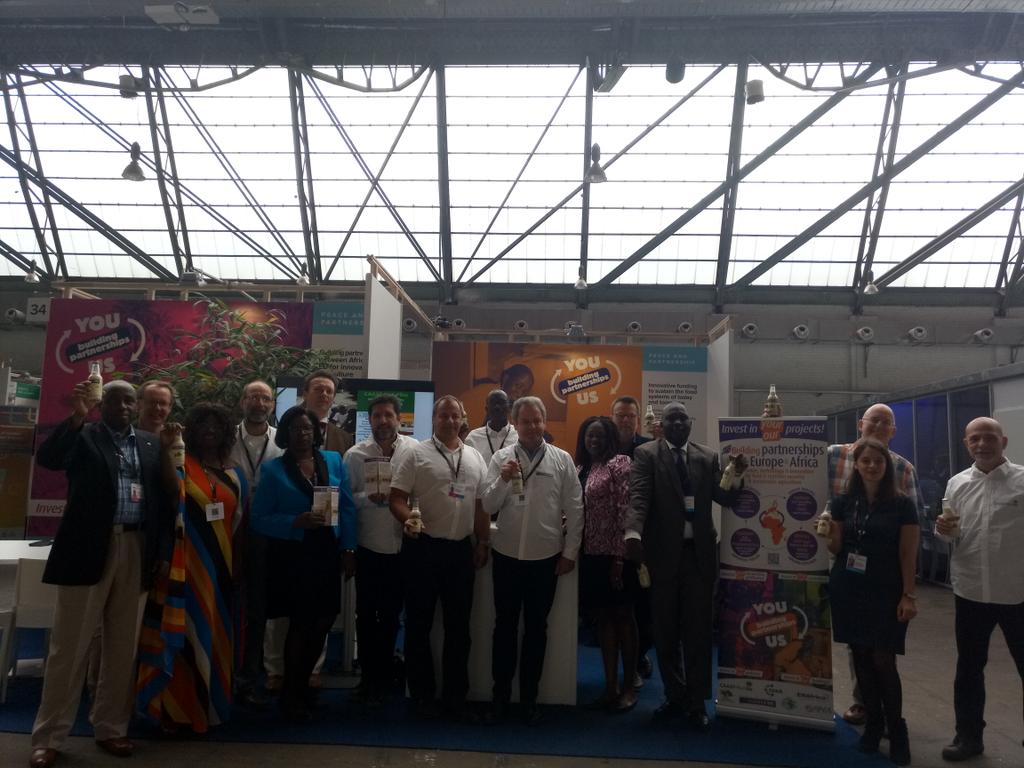
Stand 34: PAEPARD, FARA, Agrinatura, EFARD, CDAIS, Caast-net+, RINEA, Leap-Agri, FAO, PronIntensAfrica

See blogposts
Executive Director, FARA said:
Showcasing PAEPARD,
the best ship in Africa-EU research
and innovation partnerships
Delivering agricultural knowledge to empower youth and women
Stand 39: CABI
Stand 56: EC, CONCORD, etc
Stand 68: AESA, ACP
Stand 72: AECOM, ECORYS, CARDNO, DMI
Stand 73: ColeACP, YPARD, Gembloux Agro Bio-Tech, CEJA, Global Vert, ACP Young Professionals Network