The national launches of AgrEcoNUS+ in Zimbabwe and Ghana marked important milestones in promoting neglected and underutilized crop species (NUS), also known as Forgotten Foods, as drivers of agroecological transition, food and nutrition security, biodiversity conservation and inclusive rural development.
The four-year programme, Enhancing Value Chains and Markets of Neglected and Underutilized Crop Species to Contribute to Agroecological Transition in Africa, is funded by the European Union under DeSIRA+ and implemented through a consortium led by the Italian Agency for Development Cooperation (AICS), the International Fund for Agricultural Development (IFAD), SWISSAID and CIHEAM Bari.
Operating in nine African countries — Burkina Faso, Côte d'Ivoire, Ghana, Guinea, Mauritania, Niger, Senegal, Tanzania and Zimbabwe — AgrEcoNUS+ builds on the achievements of earlier initiatives such as SUSTLIVES and CROPS4HD.
The international launch took place online on 1 October 2026, with more than 110 participants from over 14 countries.
Zimbabwe: Strengthening agroecology and farmer-managed seed systems
22 September 2026 — Harare, Zimbabwe
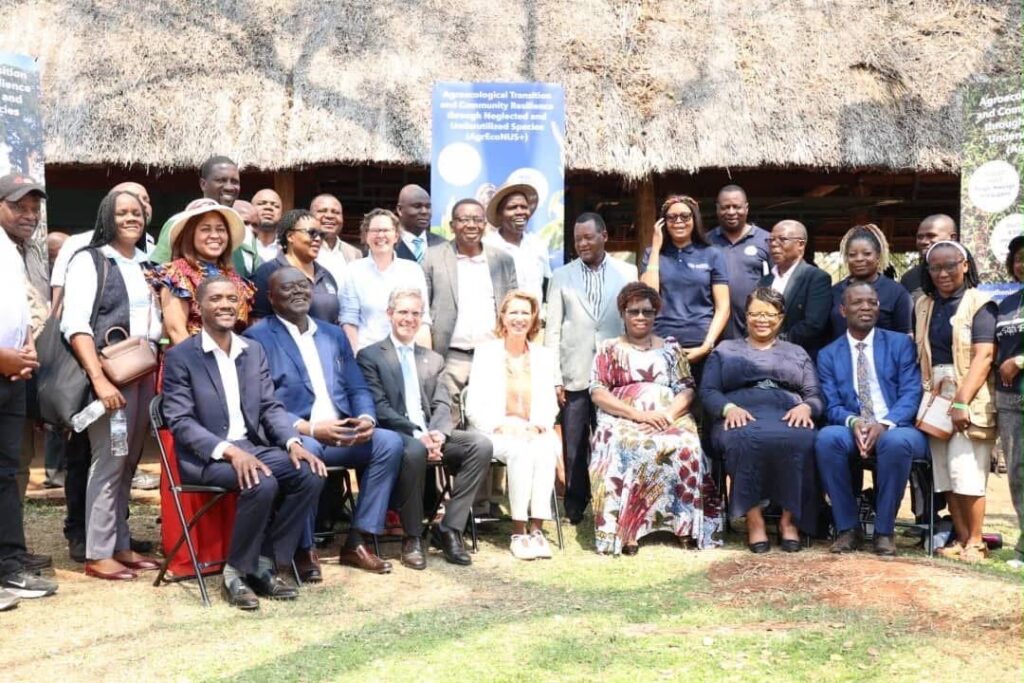
researchers and civil society organizations to promote the potential of traditional African crops for sustainable agricultural development.
Among the speakers were:
H.E. Giuseppe Giacalone, Ambassador of Italy to Zimbabwe, who emphasized the importance of crops such as millet, sorghum, Bambara groundnut, African pea and amaranth for nutrition, biodiversity and climate resilience.
- Francesco Rispoli, IFAD Country Director for Zimbabwe and Eswatini, whose remarks were delivered by Joylyn Ndoro, IFAD Country Liaison Officer for Zimbabwe. He highlighted the complementarity between AgrEcoNUS+ and IFAD's Smallholder Agriculture Cluster Project.

Representatives of the Government of Zimbabwe, the European Union, SWISSAID and the Embassy of Switzerland also participated.
The Zimbabwe component focuses on Hwange, Binga and Lupane, where AgrEcoNUS+ will promote agroecological farming practices, locally adapted crops, farmer-managed seed systems and inclusive agricultural value chains.
Implementation involves the Community Technology Development Organisation (CTDO), Fambidzanai Permaculture Centre, Bio-Innovation Zimbabwe and ICRISAT.
An important objective is the establishment of 15 agroecology Village Business Units, benefiting approximately 4,500 farming households.
The programme will complement existing rural development investments by connecting agroecological innovation with farmer organizations, local infrastructure and market opportunities.
Ghana: Launch at the University of Ghana, Legon
13 October 2026 — Institute of Statistical, Social and Economic Research (ISSER), University of Ghana, Legon, Accra

The launch provided a platform to discuss how neglected and underutilized crops can contribute to agroecological transition, agricultural biodiversity, food security and inclusive economic development in West Africa.
Opening session and institutional representatives
The event was attended by:
- Hon. Justice Quarm, Head of Protocol, Ministry of Food and Agriculture, Ghana.

- H.E. Laura Ranalli, Ambassador of Italy to Ghana and Togo.
- Marco Riccardo Rusconi, Director of the Italian Agency for Development Cooperation (AICS).
- Gisela Spreitzhofer, Acting Head of Cooperation, European Union Delegation to Ghana.
- Emanuela Forcella, Head of the AICS Ouagadougou Office, responsible for Ghana.
He emphasized the experience gained through the SUSTLIVES programme, implemented under the European Union's DeSIRA initiative, and the importance of long-standing partnerships with African universities and research institutions.

Rusconi also thanked the European Union for entrusting AICS with the programme's leadership, emphasizing the importance of EU delegated cooperation in translating common development priorities into practical action.
High-Level Round Table on Neglected and Underutilized Species in West Africa

(CIHEAM Bari).
The panel brought together representatives of the University of Ghana, University Joseph Ki-Zerbo (Burkina Faso), University Abdou Moumouni (Niger) and the West and Central African Council for Agricultural Research and Development (CORAF).
Discussions focused on the role of neglected and underutilized species in agroecological transition, food and nutrition security, biodiversity conservation and inclusive economic development.
The exchange highlighted the importance of regional research collaboration, strengthening national research capacities and connecting scientific knowledge with the needs of farmers and agrifood enterprises.
- Dr. Wole Fatunbi, representing the Forum for Agricultural Research in Africa (FARA), presented the potential of opportunity crops to build more diverse, resilient and sustainable African food systems. His contribution situated neglected and underutilized species within the broader African agricultural research and innovation agenda, emphasizing their relevance for food-system diversification and climate adaptation.
- Filippo Acasto, AICS Programme Manager, presented the regional scope, strategic objectives and expected results of AgrEcoNUS+. The presentation outlined how the programme seeks to strengthen agricultural research, farmer-managed seed systems, agroecological practices and inclusive markets while promoting cooperation among African and European partners.
- Hamid El Bilali (CIHEAM Bari) and Prof. Naalamle Amissah (University of Ghana) presented the Ghana component of the programme. Their presentation addressed the national context, priority neglected and underutilized crop value chains, intervention areas and planned activities. The Ghana component offers opportunities to strengthen partnerships between universities, research organizations, farmer groups, agricultural enterprises and policymakers.
Further information