The visit provided an opportunity to experience first-hand how scientific research, technology, conservation, and farmer-focused innovation are contributing to the transformation of Rwanda’s agricultural sector.
The visit demonstrated a powerful connection between research institutions and the realities faced by farmers — from conserving valuable genetic resources to developing improved planting materials, strengthening soil fertility, and increasing the productivity and resilience of agricultural systems.

RAB Rubona Station: history, infrastructure and challenges


Discovering Rwanda’s Agricultural Research Ecosystem
At RAB Rubona Station, participants explored a remarkable collection of more than 100 conserved banana varieties. The collection illustrates the importance of agricultural biodiversity and the role of research institutions in protecting genetic resources that can support future breeding, adaptation, and food security.
The visit also introduced participants to advanced technologies supporting early-generation seed production and germplasm conservation across a diverse range of crops, including: Cassava, Sweet potato, Banana, Coffee, Passion fruit and Tree tomato.

From Innovation to the Farmer
A particularly important aspect of the visit was learning about rapid cassava seed multiplication and customized soil-fertility management systems.
These innovations demonstrate how agricultural research can be translated into practical solutions. Producing quality planting material more rapidly can help farmers access improved varieties, while soil-fertility approaches adapted to specific conditions can support more efficient use of nutrients and improve productivity.
Together, these technologies illustrate a broader principle: agricultural transformation requires more than introducing a new crop or technology. It requires sustained investment in research, experimentation, conservation, knowledge transfer, and systems that allow innovations to reach farmers at scale. The experience at Rubona showed how this long-term investment can contribute to higher productivity, greater resilience, and scalable solutions for farmers.
Advancing research and development of Bambara groundnut
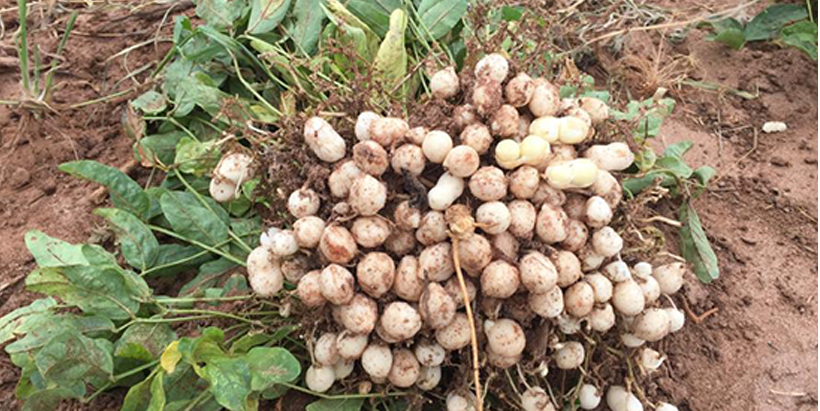

important underutilized nutritious, drought-resistant legume crop, and is now positioned as a promising future crop that is serving a varied choice of culinary purposes, including local delicacies, and more recently, plant-protein-based milk alternatives. Despite the numerous benefits of BGN, processing its seeds into valuable food products generates wastes (such as husks, shells, haulms, and offal), which are often disposed of carelessly into the environment, thereby creating environmental hazards.
With this growing environmental challenge, comes the growing interest in adding value to the wastes generated from BGN and converting them into products that are useful for industrial purposes, as well as food and feed, and researchers from Nigeria, Rwanda and South Africa are unlocking new economic and environmental opportunities and exploring potential value-added products from Bambara groundnut waste, transforming what was once discarded material into valuable resources that support sustainable growth across Africa’s food systems.
Picture: Dr Adegboyega Taofeek T [Kneeling] of the Society of Undertutilised Legumes (IITA) and Dr Adeyemo Rasheed O. [Standing] on the Bambara groundnut field at the University of Rwanda, Huye Campus. The field trial was conducted with the support of Lecturers and Colleagues from the University of Rwanda.
Livestock Innovation Meets Living Heritage
The journey continued at Songa RAB Station, where agricultural innovation took on a different dimension through livestock.

- technologies for semen and embryo production,
- in-vitro fertilization (IVF),
- artificial insemination and embryo transfer,
- alongside improved forage production,
- dairy performance recording and specialized training

Participants discovered modern approaches to livestock breeding and semen collection, gaining insight into how reproductive technologies and improved genetics can contribute to greater livestock productivity.
At the same time, the station offered an encounter with an important part of Rwanda’s cultural heritage: the iconic Inyambo royal cattle.
The Inyambo therefore represents more than a livestock breed. They offered a living connection between Rwanda’s past and its agricultural future.
Learning Through Experience
For the AFS Kigali delegation, which included a GFAiR representative, the field visit was an opportunity to see agricultural research not as an abstract scientific process, but as a living ecosystem involving researchers, genetic resources, technologies, farmers, institutions, and cultural heritage.