Platform for African – European Partnership in Agricultural Research for Development
Showing posts with label Bioversity. Show all posts

Wednesday, August 20, 2025

Kenya is transforming bean research

5 May 2025
. Kenya is taking bold steps to transform its bean research landscape through renewed collaboration, innovation, and capacity building. At the heart of this transformation is a growing partnership between the Kenya Agricultural and Livestock Research Organization (KALRO) and the Pan-Africa Bean Research Alliance (PABRA), under the Alliance of Bioversity International and CIAT. This collaboration is not only driving the development of improved bean varieties but also laying the foundation for climate-resilient agriculture, stronger seed systems, and next-generation researchers poised to shape the future of food security in the region.

During a visit to KALRO centers at Katumani, Thika, and Kakamega, Dr. Eliezah Kamau -Bean
Program Lead at KALRO-Thika - underscored the value of the Alliance partnership. The partners also reviewed ongoing work at the Horticulture Research Institute (HRI), where Dr. Kamau highlighted breeding efforts focused on drought tolerance, low soil fertility adaptation, and resistance to pests and diseases. This collaboration marks a vital step toward a more resilient and productive bean value chain in Kenya.

Industry Insights: The Bean Value Chain


As part of their field engagement, the Alliance team visited the National Cereals and Produce Board (NCPB) in Donholm, Nairobi, where they met with Mary Cherot, Executive Director of Cherubet Foods. Cherubet is a growing small and medium-sized food processing enterprise (SMFE) that specializes in value-added products, including instant composite porridge and pre-cooked beans.

Despite ongoing supply challenges, especially in maintaining consistent grain quality, Cherubet Foods sees strong market potential in yellow and red mottled bean varieties. The company primarily sources its beans through cooperative societies and smallholder farmers from the Rift Valley and border regions. This underscores the pressing need to strengthen aggregation networks and post-harvest handling systems to ensure consistent quality and a reliable supply chain.

Accelerating bean breeding to respond to market demands in East Africa: ACIAR’s Rapid Cooking Bean Project for health, nutrition and fuel efficiency

24-28 Marc 2025. A training program for partner countries in RCBP was held at the Alliance's Uganda
office , where researchers identified a major bias in seed colors of beans in RCBP, with the majority belonging to the black bean market class.

The project uses advanced breeding technologies, including pedigree selection, genomic selection and optimal contribution selection (OCS) to accelerate the development of common bean varieties that cook at least 30% faster and contain 15% more iron and 10% more zinc than traditional varieties. RCBP is a collaborative effort between The University of Western Australia (UWA) and members of the Pan-Africa Bean Research Alliance (PABRA) through the Alliance of Bioversity International and CIAT, and six National Agricultural Research and Extension Organisations (NARES) in Burundi, Ethiopia, Kenya, Rwanda, Tanzania and Uganda. The project not only focuses on scientific innovation but also on empowering a new generation of African plant breeders with new skills including gender-inclusive training.

The project is implementing a novel breeding approach (BRIO) to accelerate breeding for rapid cooking and biofortified beans. BRIO stands for accurate breeding values (B), rapid cycles (R), index selection (I) and optimal contributions selection (OCS) (O). The BRIO approach was implemented by the Alliance in Uganda in 2019 by intercrossing a diverse set of 160 founder parents. This was followed by rapid two-year cycles of overlapping early generation recurrent selection. Faster-cooking beans released by partners in this project will lower household fuel use and labor, especially for women, while addressing regional micronutrient deficiencies. Through strategic breeding cycles and inclusive capacity-building, RCBP is creating a ripple effect across agriculture, nutrition and gender equity, making it a powerful model for sustainable development in the region.

Tuesday, May 6, 2025

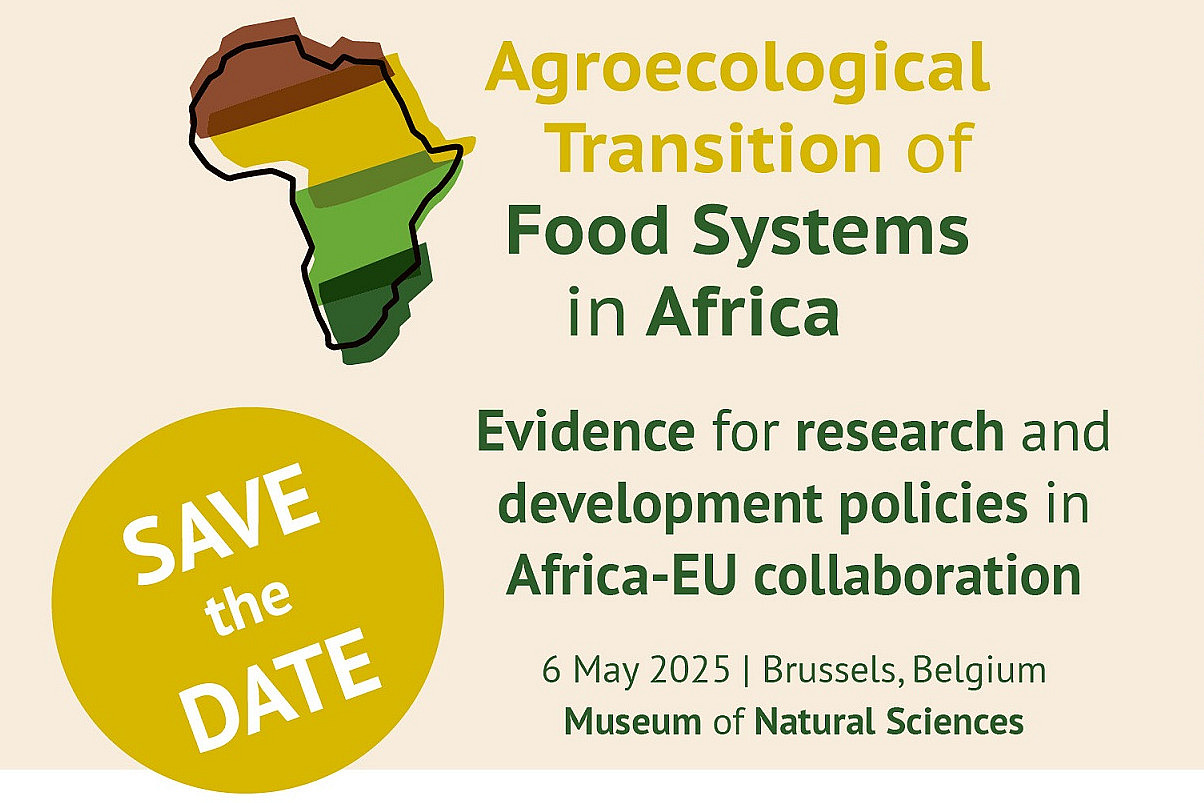
Agroecological transition of food systems in Africa

6 May 2025. Museum of Natural Sciences. Brussels. Agroecological transition of food systems in Africa: Evidence for research and development policies in Africa-EU collaboration

This event provided state-of-the-art scientific evidence on agroecological approaches for improved resilience of African smallholder farmers. It shared insights from nine EU-Africa collaborative projects, funded by Horizon 2020, DeSIRA EU and the Swiss Agency for Development and Cooperation. Implications of the project's findings for policymakers in both the EU and Africa were discussed. Priorities for future research and development programmes, in terms of agroecology, regenerative agriculture and organic agriculture were assessed.

Following  projects jointly coordinated this event: 
  1. EWA-BELT: Linking East and West African farming systems experience into a BELT of sustainable intensification. The EWA-BELT project aims at promoting food production systems through Sustainable Intensification (SI) in representative small-holder farming systems of different agro-climatic areas of East (Ethiopia, Kenya, and Tanzania) and West (Burkina Faso, Ghana, Sierra Leone) Africa and, consequently, to realize an interregional African “belt” able to promote SI by assessing and exchanging best practices and experiences among different contexts.​
    This project has received funding from the European Union’s Horizon 2020 research and
    innovation programme
     
     (Grant agreement ID: 
  2. FairSahel Fostering an Agroecological Intensification to improve farms Resilience in Sahel.
    This project has received funding from the European Union’s DESIRA call (2020) and complementary funding from The French Agency for Development (AFD)
  3. HealthyFoodAfrica Improving nutrition in Africa by strengthening the diversity, sustainability, resilience and connectivity of food systems.
    This project has received funding from the European Union’s Horizon 2020 research and innovation programme.  (Grant agreement ID: 862848 /  EU contribution € 7 499 456,25 / 1 October 2020 to 30 September 2025) 
  4. Soils4Africa The aim of Soils4Africa is to provide an open-access Soil Information System (SIS) with a set of key indicators and underpinning data, accompanied with a methodology for repeated soil monitoring across the African continent. The soil information system will become part of the knowledge and information system of FNSSA and will be hosted by an African institute.
    This project has received funding from the European Union’s Horizon 2020 research and innovation programme.  (Grant agreement ID: 862900 / EU contribution € 6 697 797,50 / 1 June 2020 - 31 May 2025)
  5. SustainSAHEL Focussing on the Sahel zone, the EU-funded SustainSAHEL project aims to enhance the resilience of smallholder agricultural farming systems to climate change as well as their intensification potential through scalable innovations on crop–shrub–livestock (CSL) integration.
    This project has received funding from the European Union’s Horizon 2020 research and innovation programme. (Grant agreement ID: 861974 / EU contribution € 7 499 930,00, 1 September 2020 - 31 August 2025)
  6. SustInAfrica Sustainable Intensification of Food Production through resilient farming systems in West and North Africa. SustInAfrica applies a transdisciplinary systems approach to testing and implementing landscape, soil, water and plant health management strategies and sustainable agricultural practices to ensure that the agricultural technologies being developed are sustainable, economic viable, resilient to current and future climate shocks and stresses, and provide ecological provisioning services across the targeted regions of Africa. 
    This project has received funding from the European Union’s Horizon 2020 research and innovation programme. (Grant agreement ID: 861924 / EU contribution € 6 997 318,70 / 1 September 2020 to 31 August 2025)
  7. SysCom The project "Farming Systems Comparison in the Tropics" (SysCom), implemented by the Research Institute of Organic Agriculture (FiBL), aims to establish a scientific basis for discussions on the performance and potential of conventional and organic agricultural production systems in the tropics. It has been running since 2007. In three tropical countries – Bolivia, India and Kenya – long-term farming systems comparison field trials have been established in concert with participatory on-farm research focussing on a different cropping system in each country. (Funder: Swiss Agency for Development and Cooperation (SDC), Liechtenstein Development Service (LED), Coop Sustainability Fund, Biovision Foundation
  8. UPSCALE Upscaling the benefits of push-pull technology for sustainable agricultural intensification of East Africa. The UPSCALE project addresses the critical challenges of yield gaps, food insecurity, changing climate, and the unsustainability of conventional agricultural intensification methods by expanding the scope, reach and impact of Push-Pull Technology (PPT) in East African Smallholder Agriculture.  (Grant agreement ID: 861998 / EU contribution: € 7 655 597,50  / 1 November 2020 to: 31 October 2025

Opening

Climate resilient production systems: Agroecology for enhanced productivity, soil and livestock


Agrobiodiversity strategies for improved food diversity and nutirtion


Inclusive growth and sustainable job creation: Comparative advantage of the economy of agroecology


Agroecology transition and adoption:Transforming agri-food systems


Synthesis Session - EU-Africa agenda for agroecological R&I priorities: Research and development agenda – Evidence for achieving sustainable and resilient livelihoods


  • Moderation: Markus Arbenz, FiBL CH
  • Beate Huber (FiBL)
  • Guy Faure (European Commission, DG International Partnerships)
  • Luis Vivas-Alegre (European Commision, DG Agriculture and Rural Development)
  • David Amudavi (Biovision Africa Trust)
  • Oluwole Fatunbi (FARA)
  • Hans-Jörg Lutzeyer (DG Research and Innovation)

Success story: Cassia nigricans

Neglected and Underutilized crop Species researched by the EWA - BELT project 
  • As part of the EWA-BELT project, the choice of species studied was made by the various partners about the development potential of the species, in terms of yield or nutritional properties, drought tolerance, disease resistance, and commercial value. 
  • The identified Neglected and Underutilized crop Species were: Anchote (Coccinia abyssinica) , Bambara groundnut (Vigna subterranea), Enset (Ensete ventricosum), Finger Millet (Eleusine coracana), Fonio (Digitaria exilis), Frafra Potatoe (Solenostemon rotundifolius), Lablab Bean (Dolichos lablab L), Tef (Eragrostis tef)
  • The identified Locally neglected species were Cowpea (Vigna unguiculata), Groundnuts (Arachis hypogaea), Lima bean (Phaseolus lunatus L), Cocoa tree (Macadamia integrifolia and M. tetraphylla), Pearl millet (Cenchrus americanus)

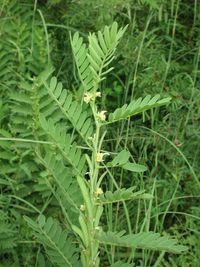
Cassia nigricans, known locally as "zandr kouka" in Burkina Faso, is traditionally used for post-harvest crop protection. However, over time, this knowledge has diminished, as many farmers no longer recognize the plant and no longer use it. 

Cassia nigricans, also known as Chamaecrista nigricans, is an erect, woody shrub native to Africa and India. It is known for its medicinal properties, including traditional uses for skin conditions, fevers, malaria, and stomach issues. The plant's leaves are sometimes added to food as an appetizer and can be dried for storage protection of pulses. 

Through interviews and collaboration with the INERA research institute, the ACRA Foundation based in Milan, reintroduced the use of Cassia nigricans for crop protection, initially focusing on cowpea and cotton. 
  • The results of their trials were promising, with the extracts proving as effective as Neem-based products and, in some cases, even more effective than untreated controls. This success encouraged farmers to adopt Cassia nigricans into their practices, with some extending its use to other crops such as maize.
  • During field trials, ACRA compared Cassia nigricans with neem-based extracts and widely used synthetic pesticides. While both herbal treatments performed well, Cassia nigricans showed significant advantages, particularly in its ability to control pests during the growing season. The results were even more pronounced during the second year of testing, where Cassia nigricans outperformed the neem extracts and was as effective as the synthetic pesticides. This comparison highlights the potential of locally sourced plants to reduce dependence on agrochemicals while providing sustainable and affordable solutions for farmers.
  • A key aspect of ACRA's research was testing these botanical solutions in diverse locations and under different conditions. In Burkina Faso, ACRA collaborated with the local cooperative "Tegawendé" to test Cassia nigricans extracts. After sharing the results with the farmers, the cooperative members decided to incorporate the extract into their farming practices. This type of community-based research ensures that solutions are adaptable to local conditions and needs.
  • In addition to the agronomic benefits, ACRA's research also incorporates economic analysis. A cost-benefit analysis conducted by Gramsci University revealed that Cassia nigricans has a higher cost-benefit ratio (CBR) than synthetic pesticides and neem extracts. The ability to harvest Cassia nigricans directly from the wild offers a significant economic advantage, as farmers can produce their own pesticide without having to purchase expensive chemicals. The analysis also highlighted the fact that the locally available biopesticide is more accessible and profitable for farmers in resource-limited environments.

Success story: use of biopesticides from neem plant and hot pepper

Tanzania Agricultural Research Institution (TARI), partner of the EWA-BELT Project (GA 862848), introduced the farmers of the Arusha region (Tanzania) to the preparation and use of biopesticides from neem plant, tephrosia vogelii, and hot pepper, collecting some testimonies about their main benefits, such as the cost-efficiency and environmental protection.

Thursday, November 14, 2024

ADAF 2024: Spotlight on Glim Africa

ADAF 2024: Spotlight on Glim Africa - presented 8 November 2024 at the African Diaspora Agrofood Forum

Founded in 2020 in France and 2021 in Cameroon, Glim Africa was created to provide local alternatives to the massive imports of wheat and rice in Cameroon and across Africa. Glim Africa focused on promoting local agriculture by developing products from indigenous crops such as cowpea (niébé), recognized by WWF as one of the 50 foods of the future.

Winner of Meet Africa 2 (Cameroon), Laureate of AgroParisTech Foundation, Winner of the African
Diaspora Forum.

In Cameroon, Glim Africa promotes the consumption of niébé (cowpea) to diversify diets, creating new market opportunities and improving nutrition. By partnering with local producers, Glim Africa encourages sustainable agricultural practices, reduce reliance on imports, and foster economic growth. Its efforts create jobs across the value chain, from farming to processing, contributing to the resilience of local communities and supporting environmentally friendly production methods.

Glim Africa  specializes in the production of cowpea-based products, including cowpea flour, cowpea porridge, and fine and medium cowpea couscous. These products cater to both local and international markets. Locally, the company operates in Cameroon, primarily in Douala and Yaoundé, while internationally, the focus is on the Île-de-France region in France. Glim Africa is a pioneering company in this market, offering innovative, nutritious food products and promoting their use as alternatives to common imported goods.

"Highlighting the potential of African agricultural resources is my vocation. We source from farmers in the Far North region of Cameroon, a fertile land for cowpeas. It is a food crop; those who harvest it consume the seeds. We carry out the entire processing process in our workshop located in Douala, following strict hygiene and control standards."  Annie ADIOGO, founder of Glim Africa 

Committed to her mission since 2017, Annie ADIOGO food innovation expert, is a graduate of AgroParisTech and Ferrandi Paris. She began her activity in France before setting up a production workshop in Cameroon. In her home country, she also teaches and supervises students in their projects to promote local products.


Cowpea - the seed with super powers

Nicknamed the magic bean of Africa and ranked among the 50 foods of the future by the WWF, cowpea is a basic ingredient in Afro-ancestral cuisines and Soul Food. It is naturally gluten-free and contains twice as much protein as traditional cereals (wheat, corn, rice). Its production requires little water and promotes crop rotations thanks to its ability to fix nitrogen in the soil.

CONTACT

Annie Estelle Adiogo | BP 11 162 Douala, Cameroon
annie.adiogo@glimafrica.com | www.glimafrica.com

Tuesday, November 12, 2024

ADAF 2024: Spotlight on Vyakulani Africa Project

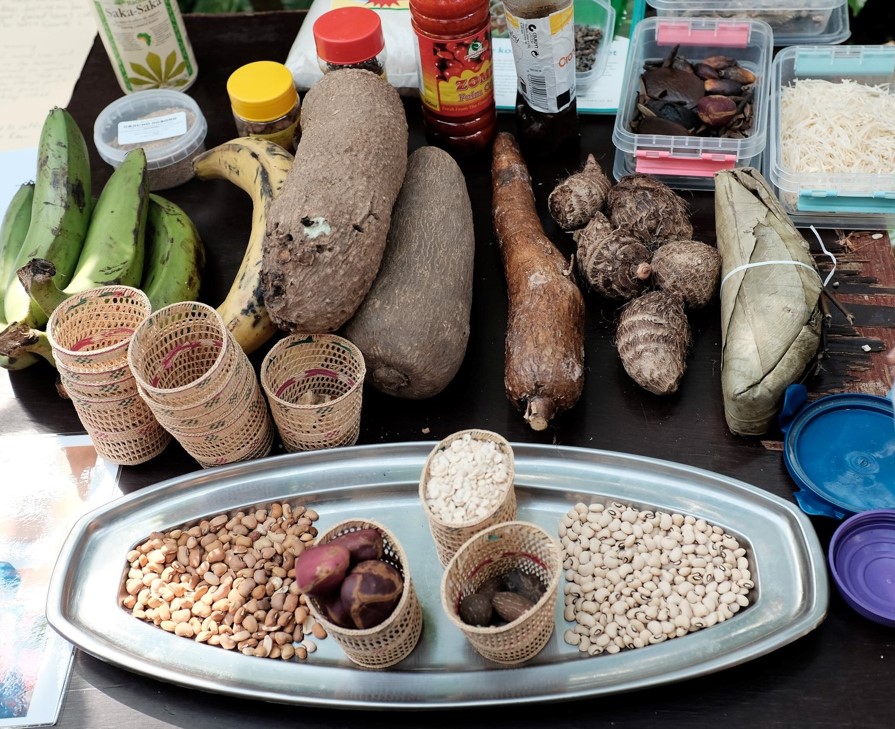
Vyakulani Africa Project (June 2024 – January 2025) The aim of the project is to document African diaspora foodways in Belgium. 

Vyakulani is Swahili for “in the foods” or “which foods”, which embodies our intention to explore and celebrate the rich and diverse food traditions of the African diasporas.

There is increasing interest in consuming nutritious plant-based diets in Europe. However, the consumption and trade of nutritious African foods, has not gained as much acceptance as it should in the public domain, in view of the historical link between both continents. 

Interest in nutritious plant-based diets is on the rise, yet African foods have not gained the recognition they deserve in Europe despite efforts to promote fair-trade food systems. For African diasporas in Europe, cooking with traditional ingredients remains a key part of their identity and heritage. However, the influence of Western lifestyles and biases against African food often echo colonial attitudes, limiting the acceptance and awareness of nutritious African foods like millet, fonio, and sorghum.

While other exotic dishes like kimchi, lemongrass, and quinoa are widely accepted, African superfoods and the role of African agrofood entrepreneurship in biodiversity conservation are not well-known. The project aims to:
  1. Highlight the importance and potential of African food systems.
  2. Encourage Africans in Europe to reconnect with their culinary traditions.
  3. Promote healthy African foods to the wider public.
Among the African diasporas in Europe the desire to cook home foods with indigenous ingredients persists. Within families, food is one of the strong identity markers. Thus, the sustainability of home recipes and diets, including their transmission across generations and potential benefits for larger society (European citizens) need further exploration.

Links 

Wednesday, June 21, 2023

Is Biofortification delivering on its promise to improve lives with nutrient-enriched crops?

20 June 2023. This year marks 20 years since the establishment of HarvestPlus and the introduction of biofortification—a revolutionary technique that enhances the nutritional value of crops through selective breeding.

In light of this milestone, GFAR hosted the 6th GFAR Talks session that revolved around the thought-provoking question: "Is Biofortification delivering on its promise to improve lives with nutrient-enriched crops?" This GFAR Talk shed light on the progress and impact and limitations of biofortification, offering insights into its potential to transform lives through the cultivation of nutrient-enriched crops.

  • Lynn Brown - Lynn currently serves as the Director of Policy, Strategy, and the Africa region at HarvestPlus, hosted by IFPRI. She is also a member of the CGIAR consortium 
  • Dr. Jeremy Cherfas - Dr. Cherfas is a distinguished science writer and podcaster dedicated to exploring topics related to food, nutrition, agriculture, and development. While previously serving as a Communications Officer at Bioversity International, Dr. Cherfas continues to actively contribute to the field from his base in Rome.
Resource.
HarvestPlus, WFP (2022) Biofortification: A Food Systems Approach to Ensuring Healthy Diets  Globally # 19 p.
  • HarvestPlus and the World Food Programme (WFP) have released a joint brief that highlights the significant role for nutrient enriched biofortified crops in improving global nutrition and food security.
  • The brief provides basic information about biofortification and how it plays a central role in global efforts by the CGIAR (of which HarvestPlus is a part) to improve the nutrition and health of vulnerable populations in low- and middle-income countries. 
  • It highlights the robust evidence based on the agricultural benefits of biofortified crops, their acceptance by farmers and consumers, and the crops’ nutritional and health benefits. Drawing on this evidence, the brief shows how “nutrient enriched crops can help sustainably transform food systems to deliver healthier diets.”  


Tuesday, March 7, 2023

2nd International Conference on Biodiversity in the Congo Basin

6 - 10 March 2023. 2nd International Conference on Biodiversity in the Congo Basin

The strong involvement of the local and regional stakeholders during the first conference in 2014, organised mainly with Belgian financial support, and the subsequent activities in the region have drawn the attention of several international stakeholders who expressed interest to support or become involved in a second edition of such a conference.

With the support of the Belgian Development Cooperation an international conference will be convened to address current and future challenges such as the periodically emerging epidemies from zoonotic origin, global climate changes, massive deforestation, biodiversity loss, as well as the steep demographic growth in the region. Discussing these issues requires the mobilisation of novel science-based answers and their translation into adequate policy measures.

The conference aims at:
  1. Enhancing awareness and motivation among (inter)national and provincial political authorities to increase their efforts to safeguard the Congo Basin and its unique fauna and flora in view of the increasing demographic pressure and economic development with its effects on the use of renewable natural resources and the potential threats to human health that may come with it.
  2. Strengthening the existing local and international network of scientists, civil society and policy makers.
  3. Strengthening links between the climate-biodiversity and health research.
  4. Promoting the public availability of the data related to the exploitation of renewable natural resources publicly available among local authorities.
Programme
Abstract book

Extracts of the programme

06/03 BIODIVERSITE: GENERATION FUTURE

  • Local perceptions of tropical forest ecosystem services, insights from Africa Gerard Imani, Université officielle de Bukavu, RDC & Aida Cuni Sanchez, Norwegian University of Life Sciences, Norvège 
  • Africa Dendrochronological Field school: A tool for Capacity Building and Enhancing Ecological Research Justine NGOMA, The Copperbelt University, Zambia 
  • Conservation de la biodiversité et développement des pays africains Inza KONE, Swiss Center for Scientific Research in Côte d’Ivoire 
  • Réduire l’écart : un aperçu des besoins Benjamin TOIRAMBE, Secrétaire Général, Ministère de l’Environnement et Développement Durable, RDC 

09/03 Keynote Speakers

  • Pathways to understand and relieve pressure on Congo Basin forest’s natural capital Pascal BOECKX, Université de Gand, Belgique 
  • Aires et territoires conservés par les peuples autochtones pygmées et communautés locales (APAC), une opportunité a l’atteinte de l’objectif 30×30 du nouveau cadre mondial post 2020 sur la biodiversité Léonard BOMBOLO BOSENGE, ANAPAC RDC 
  • L’interface Science – Politique en matière de biodiversité Hugues AKPONA, African Parks Network, Bénin 

Friday, February 24, 2023

Key Results and Recommendations of the Agroecology Dialogue Series


In 2022, FAO and Biovision Foundation organized the Agroecology Dialogue Series, an initiative in support of the Coalition for food systems transformation through Agroecology (Agroecology Coalition).

The briefs were officially launched during the FAO Deputy Director-General’s visit to Switzerland on 22 February 2023.

The series consists of three thematic dialogues that aim to identify entry points, opportunities, building blocks, innovative approaches and institutional frameworks that can support the upscale of agroecology. Between 60 and 90 participants contributed to each dialogue from various backgrounds (scientists, government representatives, civil society organizations, intergovernmental organizations, private sector, and others) and sectors. The key findings and recommendations of each dialogue were summarized in three outcome briefs.

23 June 2022. Dialogue 1: The interface between agroecology and territorial approaches for food systems transformation

Agroecology and its principles are increasingly recognized as a promising pathway for providing sustainable solutions to the issues of food security and nutrition, the fight against poverty and social inequalities, the adaptation to climate change, the preservation of biodiversity and natural resources, and the fight against zoonotic diseases. Simultaneously, approaches that put territories at the center of development also gained attention for the implementation of the UN Agenda 2030 for Sustainable Development. They are championed as being more effectively and sustainably tailored to local socio-economic and ecological conditions and have been proposed as ways to increase the sustainability of agricultural landscapes that look at the landscape as an integrated system of resources, actors, processes, and flows.

This first hybrid dialogue: 
  • explored the interface between territorial approaches and agroecology, and how this interface contributes to the sustainable transformation of food systems. 
  • analysed the relation between both approaches and the pathways needed for public policies, research initiatives, investment mechanisms, and advocacy to support agroecological transitions at territorial scales.
Resource:
FAO and Biovision (2023) The interface between agroecological and territorial approaches for food systems transformations, Outcome brief no. 1, January 2023, # 17 p.

15 September 2022 Dialogue 2: Beyond the farm: Exploring synergies between the agroecology and conservation communities

The second dialogue intended to connect the conservation and agroecology communities to explore opportunities and limitations of agroecology to address conservation needs beyond the farm. It looked beyond classical on-farm conservation angles (e.g. conservation of local crop varieties and crop wild relatives). 

Instead:
  • it discussed the contributions of agroecology to mitigate species decline and ecosystem degradation in the landscape, which are less explicitly recognised within existing narratives of the agroecology or conservation communities. 
  • The dialogue also aimed to identify concrete pathways to increase synergies between the agroecology and conservation communities in food system transformation through policy reform, knowledge creation and investment.
Resource:
FAO and Biovision (2023)  Beyond the farm: Exploring synergies between the agroecology and conservation communities, Outcome brief no. 2, January 2023, # 15 p.

29 September 2022. Dialogue 3: Agroecology as a response to agri-input scarcity

This third dialogue reflected on the current global food crisis and the looming scarcity of agricultural inputs. Record prices in fertilizers, supply chain interruption, increasing dependence on synthetic agricultural inputs and on a handful of suppliers have underlined the urgency of food system transformation. As a result, a number of countries are committing to reducing their dependence on synthetic inputs. The current crisis creates opportunities to advance food system transformation through agroecology. 

The dialogue focused on:
  • a better understanding of concrete implementation steps and pathways to increase the resilience of food systems to agricultural inputs scarcity through agroecological approaches, in the areas of policy reform, knowledge creation and investments.
Resource:
FAO and Biovision (2023) Agroecology as a response to agri-input scarcity, Outcome brief no. 3, January 2023, # 17 p.

Tuesday, October 27, 2020

VIRTUAL CONFERENCE: Shaping the Future of Food Markets for Agroecology in Africa

27-29 October 2020
. Shaping the Future of Food Markets for Agroecology in Africa : A virtual
conference

This conference will lay out the challenges facing African markets, shape the markets we want to see in the future, and work out how to get there. It will be the first of its kind in delivery, content and participation, with thousands of participants engaging across the discussions, competitions and celebrations before and during the conference.

Extracts of the programme

27/10 Day 1: Understanding African markets and trends
What are the most important characteristics of African Markets? And their strengths and weaknesses?
What do we see as the characteristics of African markets of the future in the transition to agroecology? 
27/10 Three parallel side events

There has been a steady shift from traditional / indigenous production and eating patterns to “modern” patterns. This discussion reflects on a reawakening on agro-ecological production, consumption and marketing of indigenous/African foods
  • Moderator: Andrew Bennie (African Centre for Biodiversity), South Africa 
  • Bibi Giyosi (NEPAD), Botwana 
  • Prof Cecilia Onyango, (Barefoot Guide), Kenya Indigenous foods in Africa are prominent cultural signifiers for the various ethnic groups. 
At the 2021 Summit, the advocates of Nature-Based Solutions are rolling out an elaborate mirage of the food system they say will feed the world but not until long past 2030. Challenging this technocratic myth is the much more efficient and effective strategy for territorial market
  • Moderator: Ibrahima Coulibaly, (CNOP), Mali
  • Pat Mooney, ETC Group 
New technology offer farmers real opportunities to expand their business. In this talk Naudé will show how to use SMS, WhatsApp, Facebook and websites to reach clients and build markets. Smallscale farmers can deliver food at competitive prices to local consumers. This talk will show how to build these systems and profit from them! 
  • Moderator: Leonida Odongo, Kenya 
  • Dr Naude Malan, University of Johannesburg, South Africa 
28/10 Day 2: Shaping the future of markets for the transition to agroecology
  1. What are the key changes that need to happen to strengthen African markets for the transition to agroecology?
  2. How can the strengthening of African Markets promote/protect farmers’ and consumers’ rights?
  3. What are the enablers and hindrances to the expansion and success of African Markets?
28/10 Three parallel side events

  • Moderator: Jen Astone (Integrated Capital Investing), USA 
  • Charles Dhewa (Knowledge Transfer Africa), Zimbabwe 
  • Hervé Bouagnimbeck (Groupement d’appui pour le développement durable), Cameroon 
This presentation will showcase "food scandals" that GRAIN and the Citizens and Agroecology working group have worked on mapping in 2020.
  • Moderator: Sabrina Masinjila (African Centre for Biodiversity), Tanzania
  • Susan Nakacwa (GRAIN), Uganda 
Establishing and connecting new markets is key to recalibrating local food systems and building resilience within the failings of the existing system and in the wake of COVID19.
  • Moderator: Dr Luke Metelerkamp, Rhodes University, South Africa
  • Speaker: Dr Scott Drimie, (Southern Africa Food Lab), South Africa 
29/10 Day 3: Changing policy towards markets for heathy food systems
  1. How can we illustrate to key decision-makers that African markets are an integral part of resilient food systems?
  2. What kind of investment is needed to strengthen African markets for the transition to agroecology?
  3. What should AFSA be focusing on in the next 5 years to strengthen agroecological markets
29/10 
Keynote address 4 

See the facebook streaming

  • Prof Olivier De Schutter, UN Special Rapporteur on extreme poverty and human rights, Belgium 
Panel discussion 
  • Moderator: Bethule Nyamambi (Trust Africa), Zimbabwe
  • Andrew Bennie (African Centre for Biodiversity), South Africa  
  • Mamadou Goita (AFSA; IRPAD), Mali 
  • Charles Dhewa (Knowledge Transfer Africa), Zimbabwe 


Tuesday, February 12, 2019

13th International Conference on Dryland Development

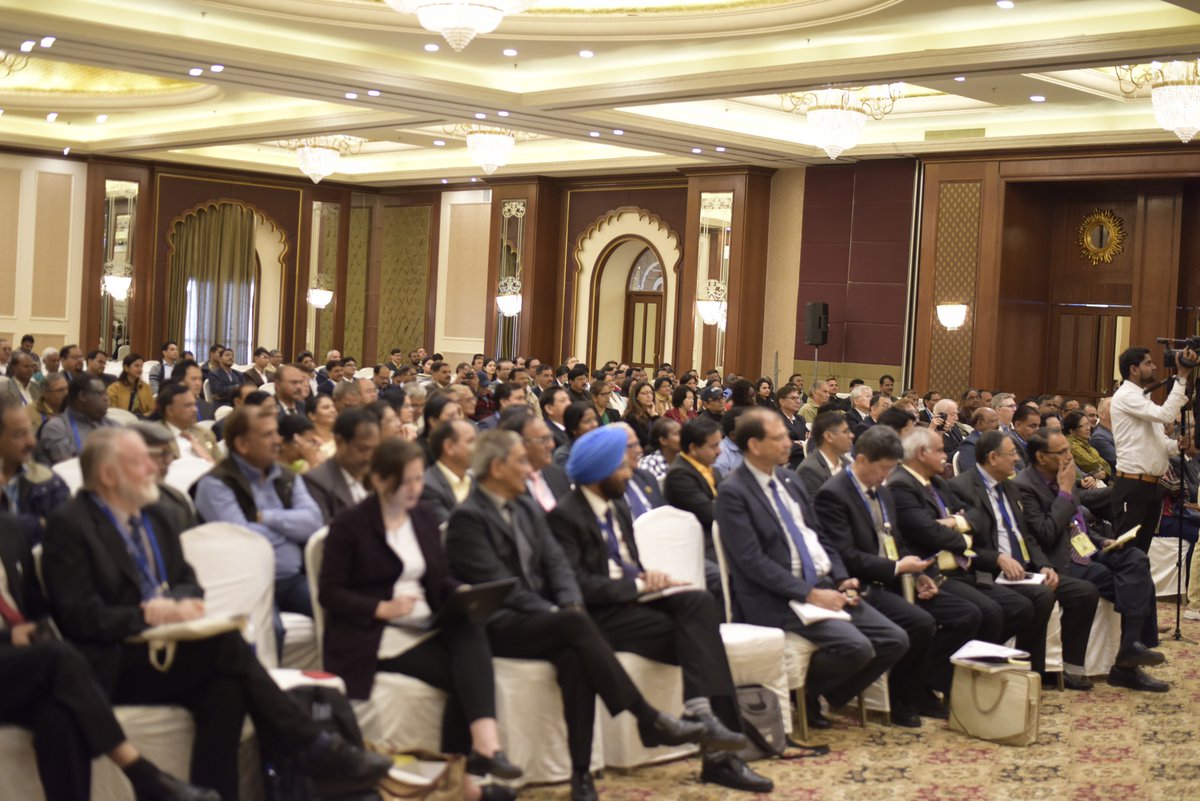
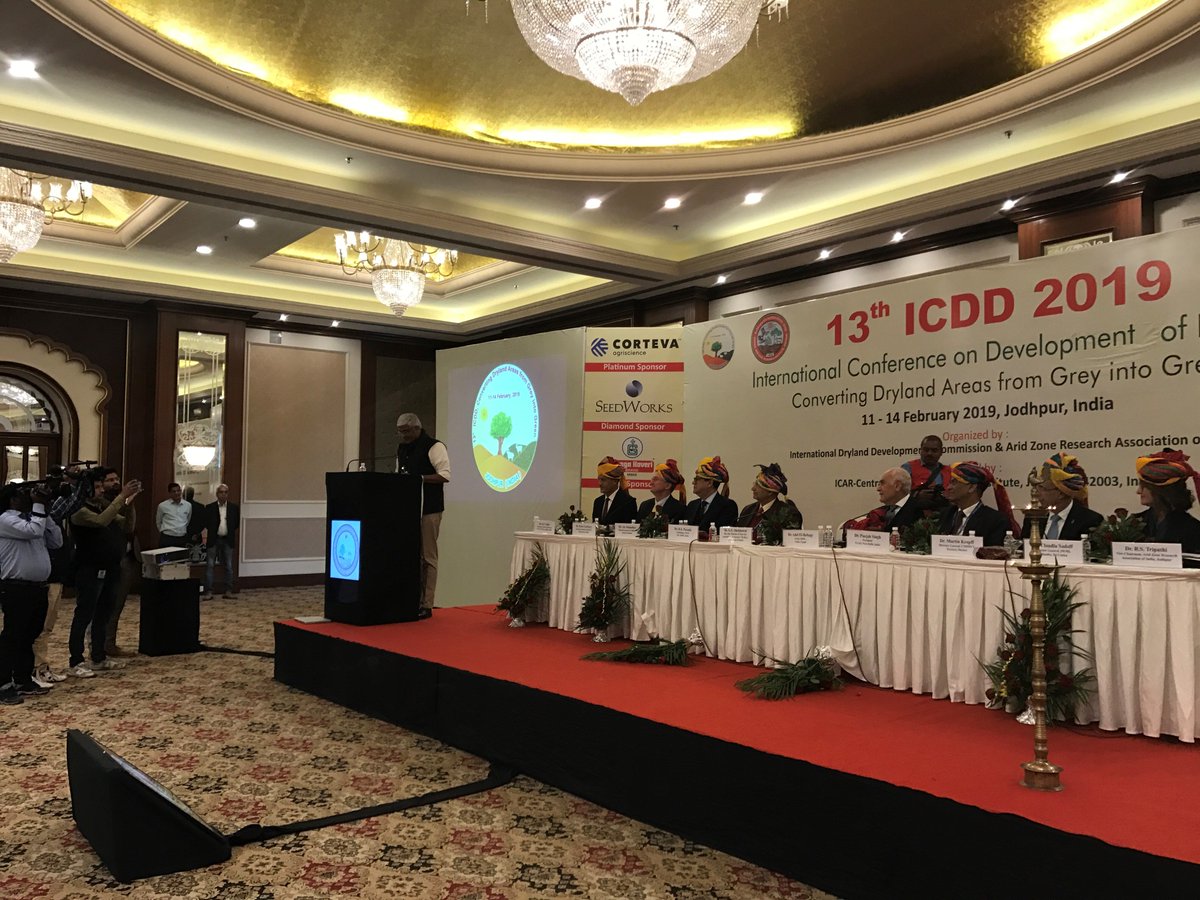
11-14 February 2019. Jodhpur, India. The 13th International Conference on Dryland Development, with the theme "Converting Dryland Areas from Grey into Green", is organized by IDDC (International Dryland Development Commission) and the Arid Zone Research Association of India (AZRAI) and hosted by the ICAR-Central Arid Zone Research Institute (CAZRI).


Gajendra Singh Shekhawat‏ 
(Indian Minister of State
for Agriculture and Farmers Welfare)
addressed the Inaugural Session
Drylands cover about 41% of earth’s land area and are home to ~38% of world population. A majority (90%) of the people of this ecosystem live in developing countries. With fragile natural resource base, achieving food security in drylands has been a great challenge. With the threat of climate change looming large and additional threat of massive out-migration, the livelihoods of more than 2 billion people who live in these areas, will be further at risk.

The efforts of the research and development community and of policymakers dealing with dry areas and aiming at sustainable management of natural resources have to be boosted in order to optimize adaptive mechanism and risk aversion elements for the dryland communities.

ICARDA contributed to this conference with not least than 8 presentations (see further)

  1. Innovations built on traditional knowledge and modern technology for sustainable dryland agriculture 605 views
  2. Field crops breeding for resistance to biotic and abiotic stresses at ICARDA: Achievements and prospects. 248 views
  3. Pulses for Harvesting ‘More from Less’ in Dry Areas  465 views
  4. Durum wheat ideotype for the drylands of tomorrow 341 views
  5. Big Data and Digital Augmentation for Accelerating Agroecological Intensification 412 views
  6. Improving Agricultural Water Productivity in the Indira Gandhi Nahar Pariyojana (IGNP) 515 views
  7. How to set priorities and capture market/farmers' needs  211 views
  8. Conservation and use of agrobiodiversity in CWANA drylands,  181 views
The sharing of knowledge and capacity building of all the stakeholders in dryland is an essential element of these presentations. ICARDA believes that institutional reforms at the ecosystem level to bridge the divide in the governance of different natural resources including water coupled with the global commitment for greater coordination in legal, policy and management issues pave the path for sustainable livelihood security in drylands and in converting dryland areas from grey to green.

Themes of technical sessions of the conference:
  1. Technical Session 1: Impact of Climate Change in Drylands (Theme 1)
  2. Technical Session 2: Managing Land Degradation & Desertification (Theme 2)
  3. Technical Session 3: Soil Health Management, Carbon Sequestration and Conservation Agriculture (Theme 3)
  4. Technical Session 4: Conservation & Use of Agrobiodiversity; Developing Adapted Cultivars (Theme 5)
  5. Technical Session 5: Water Harvesting & Improving Water Productivity
  6. (Theme 4)
  7. Technical Session 6: Conservation & Use of Agrobiodiversity, Developing Adapted Cultivars (Theme 5)
  8. Technical Session 7: Sustainable Intensification & Diversification (Arid Horticulture, Aquaculture, Protected Agriculture) (Theme 6)
  9. Technical Session 8: Livestock, Rangeland and Agroforestry Management (Theme 7)
  10. Technical Session 9: Conservation & Use of Agrobiodiversity, Developing Adapted Cultivars (Theme 5)
  11. Technical Session 10: Post Harvest Management, Value Chain, Renewable Energy, Farm Mechanization and Automation (Theme 8)
  12. Technical Session 11: Policies, Institutions & Markets to Improved Livelihood Security (Theme 9)
Themes of the Satellite symposium
  1. Crop Improvement for Sustainable Production
  2. Big Data in Dryland Agriculture
  3. Mainstreaming Water Productivity in Drylands
  4. Dryland Agrobiodiversity for Adaptation to Climate Change
  5. Arid Agro-ecosystem: Challenges and Opportunities

11 February 2019

Guests of honor:
  • Dr. Peter Carberry, (see picture) Director General ICRISAT, Patancheru, India
    Risk mitigation in dryland agriculture: Prospects and realities
  • Dr. Martin Kropff, (see picture) Director General, CIMMYT, Texcoco, Mexico 
    Maize and wheat science for alleviating the pressure on natural resources in drylands
  • Prof. Dr. Adel El-Beltagy, (see picture) Chair International Dryland Development Commission
    Navigating through uncertainties: Agro-ecosystems affected by dynamic impact of climate change
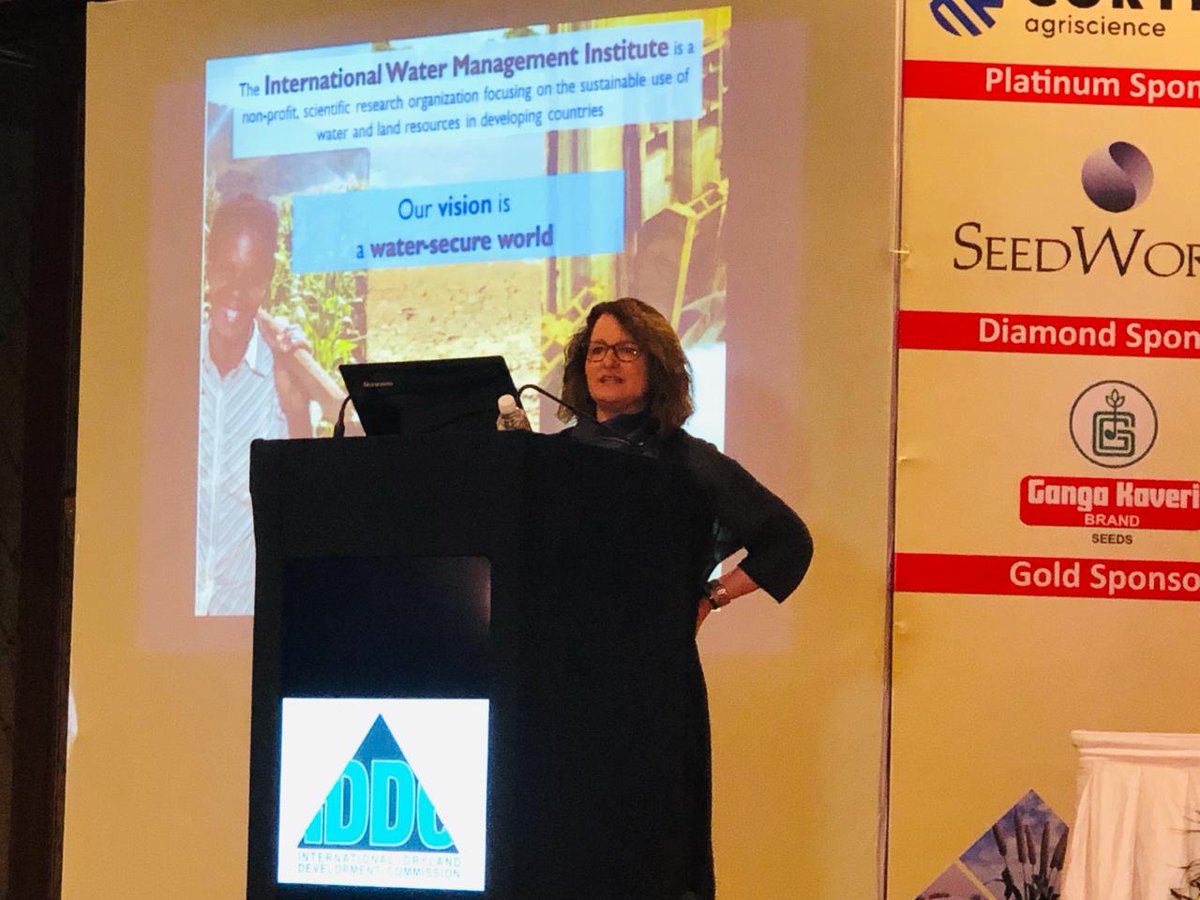
  • Dr. Claudia Sadoff, (see picture) Director General, IWMI, Colombo, Sri Lanka
  • Dr. Raj S. Paroda, Chairman of the Trust for Advancement of Agricultural Sciences (TAAS) New Delhi, India
  • Dr. Panjab Singh, President, National Academy of Agricultural Sciences (NAAS), New Delhi, India
  • Prof. T. Mohapatra, Director General of the Indian Council of Agricultural Research (ICAR) and Secretary Department of Agriculture Research and Education (DARA), Ministry of Agriculture, Government of India
  • Mr. Aly Abousabaa, Director General ICARDA, Beirut, Lebanon 
    Role of traditional knowledge combined with new innovative technologies in achieving (see presentation below)
Mr. Aly Abousabaa, Director General of ICARDA
on how synergy between traditional knowledge and
innovation would contribute to livelihood in dry areas

"Evidence shows that the dry areas and the MENA region specifically, for example, is heading towards a much warmer climate scenario over the next 50 years than initially anticipated."

"As highlighted by the IPCC Special report on impacts of global warming in October 2018, climate change impact can be avoided by limiting global warming to 1.5 degrees Celsius compared to 2 degrees, or more. Also noted in this report

is that by limiting global warming, people and ecosystems will have more room to adapt and remain below relevant risk thresholds. To undertake this critical adaptation, appropriate local intervention schemes can be applied and instead interrupt negative effects of climate change."

"Published last month, the EAT-Lancet report on Food in the Anthropocene cites the need for environmental systems and processes to be maintained for sustainable food production. Global food systems transformation is needed urgently to ensure long-term sustainability both in terms of food production and to reduce the threat to local ecosystems. Mr. Aly Abousabaa (see picture), Director General of ICARDA"

12 February 2019

12 February: Technical Session 4: Conservation and Use of Agrobiodiversity; Developing Adapted Cultivars (Theme 5)
  • Field crops breeding for resistance to biotic and abiotic stresses at ICARDA: Achievements and prospects. Lead Lecture 1 - Dr. Michael Baum, Director BIGM, ICARDA, Beirut, Lebanon 

Dr. Michael Baum, on behalf of Filippo,
presenting durum wheat research carried out at ICARDA
to make it climate smart crop
⁦@fillobax⁩ ⁦@ICARDA⁩
12 February: Satelite Symposium TU - ICARDA Satellite Symposium : Crop Improvement for Sustainable Production
The marginal region is the place where one or more of the factors necessary for plant production do not reach the level of the requirement. 

To achieve the goal to produce the necessary amount of crops under the changing climate, we need to extensively improve the crop varieties combining knowledge and technologies of molecular biology, genetics, physiology, informatics, modeling, and others. This satellite symposium is aimed to exchange the research activities among researchers studying cereals, pulses, and root symbiotic microbes, and know the present status and prospects to develop marginal regions for sustainable crop production.
  • Manipulation of centromere specific histone H3 (CENH3) in crop plants for haploid breeding: towards sustainable food production in dryland Dr. Takayoshi Ishii 
  • Pulses for harvesting more from less in dry areas

    Dr. Shiv Kumar Agrawal
    (see picture)

    Shiv Kumar Agrawal leads ICARDA’s Food legumes program, which aims to deliver improved germplasm of lentil, kabuli chickpea, faba bean, and grass pea to national partners in South Asia, sub -Saharan Africa, West Asia, and North Africa. 

  • How to find effective root symbiotic microbes for crops? -Toward the use of customized microbes for sustainable agriculture in an object area Dr. Takeshi Taniguchi 
  • Barley improvement for marginal lands Dr. Ramesh Verma
  • Discussion Crop improvement for the dry areas/ Conclusions and closing remarks Dr. Michael Baum
  • Rapporteur: Dr. Vinay Nangia (see picture) Senior Hydrologist, ICARDA Specially Appointed Associate Professor IPDRE, Tottori University
12 February: Satelite Symposium Big Data in Dryland Agriculture
Agricultural research is becoming more and more data intensive. High-throughput genotyping, precise phenotyping, drones, imaging platforms, GIS/RS, socio-economic information, climatic sensors, IoT and various kinds of data streams are pouring data to scientists to leverage their research to next level.
  • Big Data and Informatics Platforms at ICRISAT and future strate- Dr. Abhishek Rathore 
  • The CGIAR platform for big data in agriculture: Towards big-data enabling agriculture development Dr. Brian King 
  • GOBii, a Scalable Genomics Data Management System with Rapid Data Extract Times and Integration with Downstream Genomic Selection Analysis Pipelines Dr. Elizabeth Jones 
  • Big Data and Digital Augmentation for Accelerating Agroecological Intensification Dr. Chandrashekhar Biradar  (see picture) 
    Dr. Chandrashekhar Biradar is a Principal agroecosystems scientist and head of Geo-informatics Units, ICARDA. He is a distinguished scientist in the field of geo-informatics science and technology. He has multidisciplinary science background with focus on digital augmentation for accelerating agro-ecological intensification
  • Seeing is Believing: Using Smartphone Pictures for Agricultural Risk Management Dr. Berber Kramer 
  • Big Data in Indian Agricultural Research and Development Dr. Rajendra Parsad 
  • Breeding Modernization at ICRISAT: Implementing Industry Principles in the Public Sector Dr. Jan Debaene 

13 February 2019

 Dr. Vinay Nangia Senior Hydrologist, ICARDA

13 February: Technical Session 5: Water Harvesting and Improving Water Productivity 
(Theme 4)
  • Improving Agricultural Water Productivity in the Indira Gandhi Nahar Pariyojana (IGNP) A joint project between ICARDA and CAZRI Vinay Nangia (see picture), N.D. Yadava, M.L. Soni and V.S. Rathore

Dr. Ashutosh Sarker talking at ICDD about how to
intensify and diversify rice based systems with
lentil and grass pea
 ⁦@ICARDA⁩ ⁦@alyabousabaa

13 February: Technical Session 7: Sustainable Intensification & Diversification (Arid Horticulture, Aquaculture, Protected Agriculture) (Theme 6)
  • Intensification and diversification of dryland production systems with winter pulses in South Asia Dr. Ashutosh Sarker, Coordinator, ICARDA’s Regional Program for South Asia and China, New Delhi, India 
13 February: Satellite Symposium Mainstreaming Water Productivity in Drylands
Low precipitation and prolonged dry seasons in the drylands can lead to water scarcity, and limit agricultural productivity and output. Therefore, it is critical to achieve efficient inter-sectoral coordination to enable utilization of available water resources to the best advantage. The maximum potential for expansion of agricultural areas and benefits from improved water productivity lies in arid and semi-arid regions. This mini-symposium enabled exchanges among researchers working in the area of water management to share knowledge on the present status and prospects for higher water productivity in the drylands. The deliberations helped in framing a strategy for managing water for increasing water productivity and mainstreaming it in drylands at scale through appropriate institutional frameworks and policies. 


Dr. Ahmed Amri speaking about science based
approaches for efficient conservation and use of
genetic resources at ICDD
⁦@ICARDA⁩ ⁦⁦@alyabousabaa⁩
13 February: Satellite Symposium Dryland Agrobiodiversity for Adaptation to Climate Change
Amongst the total 34 global hotspots, 9 are in the dry lands and about 0.5% of the plant species are endemic to the region. In terms of agriculture, plant species endemic to the drylands make up 30% of the plants under cultivation today, including many ancestors and crop wild relatives (CWRs). However, exact status of species in the dry lands remains unknown, as no comprehensive assessment has been collated. The objectives of this mini-symposium were:
  • To examine the current threats to dryland agrobiodiversity, deliberate upon the opportunities and challenges due to climate change, and the required policy interventions to overcome the threats and challenges.
  • To take stock of agrobiodiversity in the Indian, Central and West Asian, and North African dryland regions and management strategies of their genetic resources.
  • To Identify the possible role of regional and international organizations in management of dryland agro-ecosystems through research and development, in partnership mode for
    harnessing agrobiodiversity to address the global challenges being faced by dryland communities.
Presentations
  • Conservation and use of agrobiodiversity in CWANA drylands, Ahmed Amri (see picture), ICARDA, Morocco Head of ICARDA's Genetic Resources Unit, which runs the GRU seed bank in Rabat.
  • How to set priorities and capture market/farmers' needs Dr. Filippo Bassi Senior scientist ICARDA (durum breeder) and Dr. Michael Baum BIGM Program (Biodiversity and Integrated Gene Management ) and Morocco Platform Director ICARDA, RABAT

14 February 2019

14 February: Satellite Symposium Arid Agro-ecosystem: Challenges and Opportunities
The Arid ecosystem covers around 17% of the world's land area and are inhabited by about 6% population which manifests insurmountable challenges due to inhospitable climate, vast livestock and human population surviving on limited and fragile natural resources.

Generation of technologies for conservation and efficient utilization of resources holds key for transforming less productive arid lands to gainful livelihood resources for farmers of these regions. Despite of several limitations, many opportunities exist in arid lands. The symposium will discuss some of the key issues concerning the conservation of natural resources, their optimum utilization and livelihood security. These include:

  • Changes in Land use patterns and role of space technologies in food, energy and water security in arid regions
  • Natural resource vulnerability under climate change and biological indicators of land degradation and agradation
  • Livestock scenario in arid regions and their role in livelihood security
  • Integrated farming system approach for arid ecosystem and opportunities in horticulture
14 February:  Policy Dialogue- Converting Dryland Areas from Grey into Green
  • Chairs - Prof. Ramesh Chand, Member, Niti Aayog, Government of India, New Delhi
  • Co-chairs - Prof. Dr. Adel El-Beltagy, Chair, International Dryland Development Commission, Former Minister of Agriculture and Land Reclamation, Cairo, Egypt
  • Dr. Ashok Dalwai, CEO, National Rainfed Area Authority, Government of India, New Delhi
Panelist
  • Dr. Raj Paroda, Chairman, TAAS, New Delhi, India
  • Dr. Panjab Singh, President, NAAS, New Delhi, India
  • Sh. Pawan Kumar Goyal, Additional Chief Secretary - Agriculture, Rajasthan, India
  • Dr. Aly Abousabaa, Director General, ICARDA, Beirut, Lebanon
  • Ms. Maria Beatix Giraudo, Former President, AAPRESID, Senior Advisor to Govt. of Argentina
  • Prof. Wang Tao, President, Lanzhou Branch of CAS, China
  • Prof. Atsushi Tsunekawa, Professor, ALRC, Tottori University, Tottori, Japan
  • Prof. Academician Guram Aleksidze, President, GAAS, Georgia
  • Dr. S.K. Malhotra, Commissioner (Agriculture), Govt. of India, New Delhi, India
  • Prof. Mohamed F. Osman, Former Chair, General Authority for Fish resources Development (GAFRD), Egypt