Platform for African – European Partnership in Agricultural Research for Development
Showing posts with label Angola. Show all posts

Wednesday, June 24, 2020

Webinar: Running farmer field schools and field-based activities in times of COVID-19

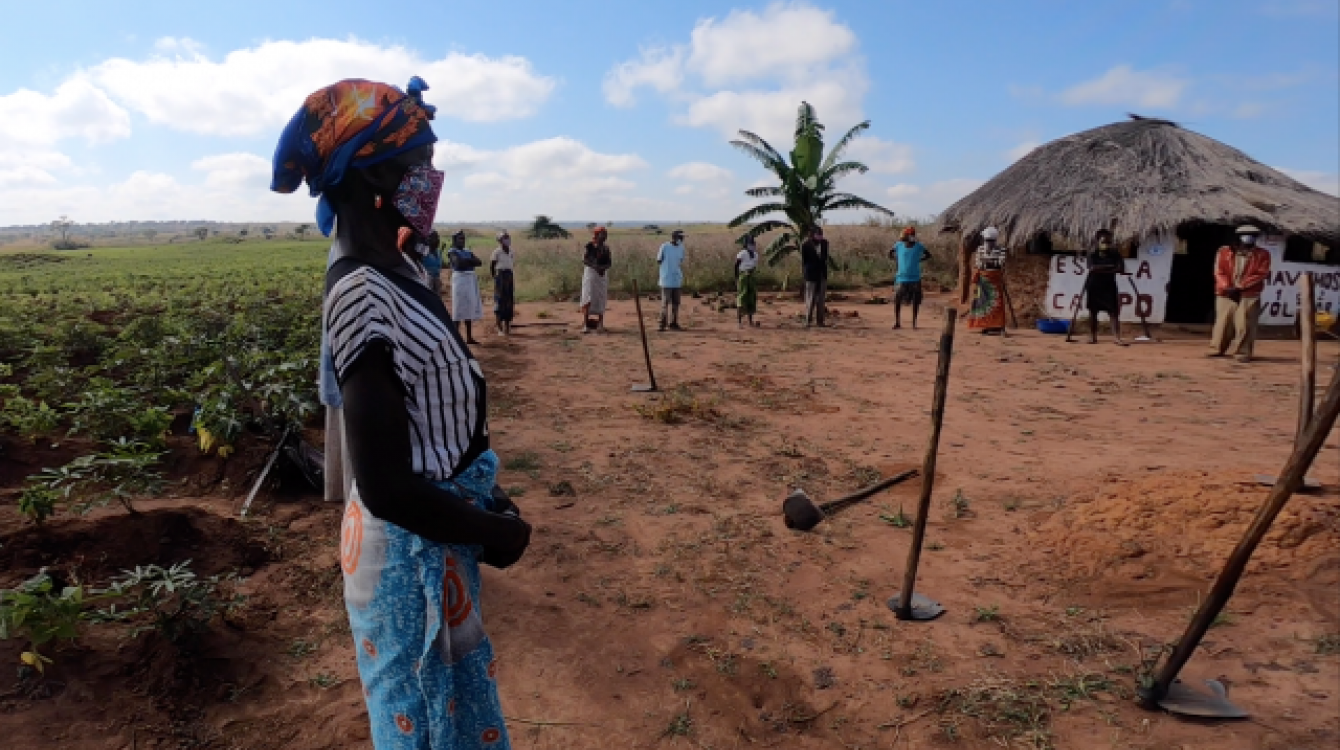
Farmers wear masks during a Farmer Field School session
on COVID-19 prevention in Malanje Province, Lombe community.
Angola has very few cases of COVID-19, and FAO together
with the Angolan government, is working to keep it that way
24 June 2020. Webinar: Running farmer field schools and field-based activities in times of COVID-19 Organized by the African Forum for Agricultural Advisory Services (AFAAS), Eastern Africa Hub and the Global Farmer Field School Platform from FAO’s Plant Production and Protection Division (AGP). Co-organized with the Resilient Food Systems Programme (RFS). 

This webinar discussed:
  • Introductory remarks by the Eastern Africa Field School Support Hub, hosted by AFAAS
  • Discover FAO Angola’s communication campaign with posters on basic precaution measures for FFS
  • How this campaign became global and used across the world by FFS practitioners
  • The work of the global farmer field school platform to support the FFS community in times of COVID-19
  • Basic precaution measures and key considerations when running an FFS
  • Suggested FFS activities on COVID-19 and how to implement them
Presenters 
  • Catia Marinheiro, Communication Officer – FAO Angola 
    FAO’s focus in Angola is to strengthen livelihoods and food security. This is especially important in times of crisis, like this one. Though Angola has so far recorded only a small number of positive COVID-19 cases, it is paramount that the disease is kept at bay, both for the health of the population and to limit the impact that restrictions on movements and other preventive measures have on livelihoods. FAO, the Ministry of Agriculture and the World Health Organization’s information campaign aims to reach 1 million rural families in Angola.
  • Anne-Sophie Poisot, Lead Technical Officer, FAO Plant Production and Protection Division (AGP).

Thursday, July 13, 2017

Farming: a cornerstone of Angola's economic diversification

3 July 2017. In the Seventies, Angola was one of Africa’s leading farming nations. But years of civil war took its toll on the sector which only represents 10% of the country’s GDP today.

Since the end of conflict fifteen years ago, a major effort has been made to boost agriculture – a vital necessity when you consider that Angola needs to import 80% of its consumer goods.

According to economic experts, Angola has the potential to become one of the leading agricultural countries in Africa. It boasts 58 million hectares of arable land – the equivalent of a country the size of France. The problem is that only 10% of it is exploited. This is mainly due to poor irrigation.

For this edition of Focus, the team visited Angola’s largest farm. Located 1,400 metres in altitude, on the highlands of South Kwanza province, it covers 10 000 hectares. Only one third of that is being used for now, but the fifty varieties of goods produced – ranging from fruit and vegetables to milk products – yield an annual turnover of 5 million dollars.

Large, privately-owned farms like this one only represent 15% percent of Angola’s agribusiness, but half of its farmed land.
“Angola has excellent conditions for agriculture. There are many different micro-climates, there is a lot of arable land, a lot of water. We have some of the best conditions in the world for farming… Our big problem today is the workforce,” João Macedo, Grupolider administrator.


Friday, January 30, 2015

Inception workshop Capacity Development for Agricultural Innovation Systems (CDAIS)

29-30 January 2105. Paris, France. An inception workshop was organised to start up a newly EC funded project on Capacity Development for Agricultural Innovation Systems (CDAIS). This project will run for a period of 48 months. It involves 44 International and National Agricultural Research and Innovation Organisations that comprise the Partners of the Tropical Agriculture Platform.

The Tropical Agriculture Platform (TAP) has been initiated by the G20 to promote agricultural innovation in tropical countries. To achieve this goal, TAP acts as a multilateral and dynamic facilitation mechanism that enables more effective and streamlined capacity development interventions in agricultural innovation systems.

The objective of this initiative is to establish a global partnership on Capacity Development in Agricultural Innovation Systems. The main activities will be:
  • Coordinate and harmonize global efforts on CD for AIS through TAP mechanisms. 
  • Analyse, synthesise and document the diversity of CD for AIS definitions, approaches and methodologies 
  • Develop a Common Framework on CD for AIS 
  • Develop a shared vision of CD for AIS among partners in 8 countries 
  • Assess and develop country-led AIS-CD action plans in 8 pilot countries 
  • Establish/strengthen mechanisms/ platforms for advocacy, dialogue and action on AIS CD in 8 countries 
  • Improve capacity for strengthening capacity in AIS 
  • Improve capacity for joint innovation by local/national value chain partnerships 
  • Improve the organisational culture, practices and procedures of key stakeholder organisations 3.4 Review, analyze, document, synthesize and compare lessons learned across 8 pilot countries and share them at global level
The partners are AGRINATURA-EEIG, the FAO, and the National Research and Development Agencies in Ethiopia, Rwanda, Niger, Angola, Bangladesh, Laos, Guatemala, Honduras and regional organisations in the regions of these countries. 

Tuesday, May 20, 2014

Land, Territorial Development and Family Farming in Angola

Land, Territorial Development and Family Farming in Angola
A holistic approach to community-based natural resource governance: 
The cases of Bie, Huambo, and Huila Provinces
Francisco Carranza ; Jordan Treakle , FAO, 52 pages

This paper describes Angola's family farming sector, with an emphasis on land tenure and natural resources management. Challenges faced by Angolan family farmers include climate change impacts, food insecurity and land tenure conflicts from foreign agricultural investment. The paper also highlights rural development challenges that affect family farming, including: the need to improve institutional capacity, physical planning and infrastructure; and insufficient knowledge on land tenure and management alongside limited data exchange among public institutions and departments.

The paper highlights two tendencies in land issues over the three decades since Angola's independence: 
  1. the de-legitimization of the role of traditional authorities; 
  2. and government challenges in service provision and support to decentralized institutions. 
It argues that these trends contributed to insecure land rights. Further, “significant gaps remain” between legal frameworks that protect and guarantee rural community land rights and their implementation, according to the paper, which states that these implementation gaps exacerbate land conflicts and contribute to the marginalization of under-represented groups.

The paper includes chapters on: 
  1. an overview of Angola, including its natural resources and agriculture; 
  2. land issues in Angola; 
  3. FAO's involvement in land issues, including support to provincial land and natural resources management institutions; 
  4. family farming in Angola, including cropping and production systems; 
  5. participatory and negotiated approaches to land and natural resources management; 
  6. pilot experiences in the highland plateau; 
  7. and conclusions.