4–8 November 2024. Lisbon, TROPICAL SUMMIT - Foreseeing Answers to Global Challenges
Tropical Summit: A unique multi-actor forum to achieve the 2030 Agenda through triangular cooperation.
The main objectives of Tropical Summit are to promote the transfer of knowledge, stimulate multidisciplinary collaboration and the involvement of stakeholders, and contribute to the co-creation and innovative projects, capitalizing and densifying existing initiatives and collaboration platforms for the rapid implementation of tangible and robust solutions. The focus will be on South-South-North triangular cooperation and 4 thematic areas:
Tropical Summit: A unique multi-actor forum to achieve the 2030 Agenda through triangular cooperation.
- 5 - 6 November 2024. 16.30 - 18.00 CET. FARA side event Catalyzing agro-ecological transitions in the tropics in the context of climate change
The main objectives of Tropical Summit are to promote the transfer of knowledge, stimulate multidisciplinary collaboration and the involvement of stakeholders, and contribute to the co-creation and innovative projects, capitalizing and densifying existing initiatives and collaboration platforms for the rapid implementation of tangible and robust solutions. The focus will be on South-South-North triangular cooperation and 4 thematic areas:
- PLANETARY HEALTH: Nurturing life within the global boundaries
- AGRICULTURAL DEVELOPMENT: Sustainability as a path to socioeconomic progress
- TERRITORIAL AND SOCIAL TRANSITIONS: Building resilient spaces and societies in every dimension
- HUMAN GROWTH: Empowerment and technology for the times ahead
Extracts of the programme
5/11 High-level Session
- Carmen Neto - Minister of Fisheries and Marine Resources
- Florbela Paraíba - President of Camões I.P
- Jeffrey Sachs - President of the UN Sustainable Development Solutions Network
- Maria da Graça Carvalho - Minister of the Environment and Energy
- Ravi Khetarpal - Executive Secretary of Asia Pacific Association of Agricultural Research Institutions (APAARI)
- Ubiraci Pataxó - Master of Knowledge and President of the Korihé Institute
5/11 Catalyzing agro-ecological transitions in the tropics in the context of climate change
Parallel Session - RoundtableOrganised by : FARA / CORAF / CCARDESA / RUFORUM / JRC-ISPRA / AE-TPP (CIROF - ICRAF) / IFAD

This panel session discussed the critical role of agroecology in addressing food system challenges in Africa, particularly under the looming impacts of climate change. Opening remarks by Dr. Aggrey Agumya focused on the need for a robust ten-year agricultural strategy from FARA that acknowledges the benefits of agroecology, a point furthered by Dr. Guy Faure’s insights on EU support and the importance of innovation and market access for agroecological systems. Dr. Marc Corbeels highlighted the detrimental effects of climate change, indicating changes in temperature and rainfall that could reduce crop yields. Discussions led by Prof. Rachel Wynberg outlined fundamental principles and necessary transformative approaches to agroecology. The session identified key action items for scientists, researchers, policymakers, and research institutions to bolster evidence, innovation, market access, and research capacity, while also addressing the challenges of urbanization and waste management in agroecological practices. Overall, the meeting underscored the urgency of catalyzing agroecological practices as a resilient response to climate change and food security challenges in Africa.
- Aggrey Agumya, FARA
FARA is developing 10-year agricultural strategy for Africa. No mention of agroecology in the strategy despite efforts. Lack of evidence cited as reason for not featuring agroecology prominently. Call for scientists to provide more concrete evidence on agroecology benefits.
- Guy Faure, EC-INTPA
He emphasized need for innovation in agroecology to boost production, Highlighted importance of better market access for agroecological farming systems, EU is funding regional multi-actor research networks to strengthen research capacity

- Marc Corbeels, CIRAD
He presented the CANALLS project. This research project aims to drive agroecological transitions in the humid tropics of Central and Eastern Africa via multi-actor transdisciplinary Agroecology Living Labs (ALLs) and providing holistic agroecological solutions that meet the challenges of the local food systems. The ALLs are based in - DEMOCRATIC REPUBLIC OF CONGO: Bunia in DRC (Lowlands/ cocoa) + Biega in DRC (Highlands/ coffee) + Kabare (Highlands/ coffee) + Uvira (Lowlands/ cassava, rice)
- CAMEROON: Ntui (Lowlands/ cocoa)
- BURUNDI Giheta (Highlands/ coffee) + Bujumbura (Lowlands/ maize)
- RWANDA Kamonyi (Highlands/ cassava)
- Rachel Wynberg, University of Cape Town

She presented the RAENS research project: Research for Agroecology Network Southern Africa
She referred to the book
Rachel Wynberg (2024) African Perspectives on Agroecology Why farmer-led seed and knowledge systems matter # 398 pp.This book offers a contribution that is enriched by the collaborative, creative, and critical voices of African farmers, activists, scientists, scholars, and policymakers. Their viewpoints combine in this volume to articulate a shared and dynamic vision of a world where agriculture is productive, diverse, and sustainable; where different ways of seeing and knowing are respected; and where seed and food systems are in the hands of farmers and local communities.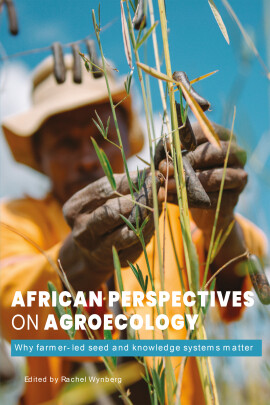
- Baitsi Podisi, CCARDESA

06/11 Agricultural Development
- Keynote - Sammy Aggrey Professor in Genetics and Genomics at the University of Georgia, Athens
- Bongiwe Njobe - Forum for Agricultural Research in Africa (FARA)
- Karen Montiel - Technical specialist, Inter-American Institute for Cooperation on Agriculture
- Ravi Khetarpal - Chair of the Global Forum on Agriculture Research and Innovation (APAARI)
- Sylvain Perret - Director of Agrinatura
- Moderator: Oseyemi Akinbamijo Former Executive Director of FARA
06/11 Building Climate-Resilient Agri-Food Systems: Case Studies and Indicators
Parallel Session – Project Showcase- Transformative Agri-Food Supply Chains for Climate Resilience – Which indicators are suitable to measure resilience and social transformation? - Christine Altenbuchner, BOKU University
- Agroecological Solutions for Resilient Farming in West Africa - The Cape Verde Case Study - Miguel Ribeiro, ADPM - Associação de Defesa do Património de Mértola
- Variability and Trends in the Beginning and End of the Rainy Season in West Africa. The Guinea-Bissau case study - Orlando Mendes, National Meteorological Institute; Institute of Geography and Spatial Planning
- Sustainable Aquaponics for Food Security in SIDS: A Case Study of São Tomé and Príncipe - Britta Kautzman, School of Agriculture; Lisbon School of Economics & Management
- INNOECOFOOD - Eco-innovative technologies for improved nutrition, sustainable production and marketing of agroecological food products in Africa - Ana Faria, CIIMAR – Interdisciplinary Centre of Marine and Environmental Research
INNOECOFOOD aims to establish innovative production/ business ECOHUBS and improve local aquaculture farms using AI and IoT in six African countries. To support EU-AU markets and trade, INNOECOFOOD will train rural farmers, youth and women to innovatively produce and process nutritious aquaculture catfish and tilapia, blue-green cyanobacteria spirulina, and insect value chains that will be processed into certified marketable human food products and feed.
The project aims to establish ECOHUB farms in six African countries, Kenya, Uganda, Ghana, Namibia, Tanzania and Egypt, where sustainable cultured fish, Spirulina (a green-blue algae) and insects will be produced using innovative artificial intelligence technologies and climate-friendly renewable local energy sources, with optimized production-processing-operation-marketing. This project will also lead to the employment and training of local people with low socio-economic status in these ECOHUB farms, enabling them to sustainably continue the production chain and cycle in the ECOHUB farms, and to produce and process certified, marketable food and industrial products from these innovative farms, thus providing the potential for sustainable social impact. - Soil Salinity and Saline Agriculture in Eastern & Southern Africa: Experiences from a Regional Technical Network Initiative - Jakob Herrmann, Weltweit – Association for the Promotion of Local Initiatives e.V.; Martin Luther University Halle-Wittenberg, Soil Science and Soil Protection
06/11 Transforming African farming and food systems through research and innovation – A presentation and discussion with six EU-H2020 projects
- Adam Standring, Instituto Superior de Economia e Gestão
- Idalina Dias Sardinha, Instituto Superior de Economia e Gestão
- Giles Young, Natural Resources Institute Finland (Luke)
- Helena Serrano, Faculty of Sciences - University of Lisbon
- Cristina Branquinho, Faculty of Sciences - University of Lisbon
- Mary Steverink-Mosugu, ISRIC - World Soil Information
- Giovanna Seddaiu, University of Sassari
- Harun Cicek, Research Institute of Organic Agriculture
- Fernando Sousa, Research Institute of Organic Agriculture
- Vladimir Mrkajić, InoSens
- Mila Sell, Natural Resources Institute Finland (Luke)
6/11 Reflections of Agroecology as pathway to climate change adaptation and mitigation
Organised by: FARA / CORAF / CCARDESA / RUFORUM / JRC-ISPRA / AE-TPP (CIROF - ICRAF) / IFAD
This Panel Discussion brought together experts to address the critical role of agroecology in achieving sustainable agricultural systems amidst climate challenges. The panelists identified research gaps, including the pressing need for improved dialogue between scientists and policymakers regarding soil health and agroecological practices.
Key presentations focused on evidence supporting agroecology's benefits for food security and sustainability, alongside the importance of translating research into actionable policies. The discussion also emphasized participatory approaches to certification, farmer compensation for ecosystem services, and fostering effective communication strategies to bridge the gap between science and policy. Collaborative efforts between FARA and Ruforum were highlighted as essential for advancing research and addressing the challenges of farmer adoption of agroecological practices while ensuring immediate economic benefits. Action items include conducting quantitative studies on agroecological impacts and developing compensation schemes for ecosystem service providers.
- Alex Awiti, CIFOR-ICRAF
- Khamis Fathiya, ICIPE
- Irene Kadzere- Forichi, FiBL
- Emmanuel Njukwe, CORAF
- Felix Rembold, Food Security Team Leader at the Joint Research center of the European Commission EC-JRC

He presented findings from systematic reviews on agroecology impacts, discussed positive impacts on food security, socioeconomic factors, and food system sustainability, highlighted ongoing review on climate change mitigation and adaptation and he emphasized the need for more quantitative data and modeling.
He has led the development of the anomaly hotspots of agricultural production and was one of the initiators of the African Post Harvest Losses Information. He has lived in Africa for several years and contributes to numerous international research and cooperation projects together with the EU delegations, UN and local organizations.
When yesterday I heard in the introduction of Dr. Aggrey Agumya (FARA) that there are still ongoing discussions, even at a very high level and a very strategic political level, where the availability of scientific evidence that proves the potential of agroecology to have an impact on food security, on socioeconomic aspects, on climate change adaptation, and that this is still questioned, I was really feeling to be in the right discussion.
The Joint Research center's core mission is to provide scientific evidence to European policymakers. And this includes agroecology. We are not engaged in primary research about agroecology. So in the last three years, together with other research centers such as CIRAD but also several European universities, we have started several systematic scientific reviews of scientific literature and also meta analysis. We have already published the results of three of them.
- The impacts of agroecology on food security in comparison with conventional systems.

The first review was specific to developing countries and 19 out of 26 are in Africa. It was an opportunity to characterize what agroecological practices are being implemented and are most used by farmers in those 19 African countries.There is a clear positive impact of agricultural practices on food security. It's not only through yield and production, but it's also very clearly in terms of increased availability of nutritious food and dietary diversity (the link between food security and health). - Socioeconomic impacts. In 80 peer reviewed papers scientific we found clear positive association with farmers income, with revenue and also with efficiency and productivity. Of course, agroecology is labor intensive and can increase costs. But we also know that it is always a question of trade offs and cost benefit. It is important to look very specifically at local context to understand whether the overall effect on income prevails on the increase of costs or on pressure, for example on gender inequality that can be linked to the increase of labor need.
- Food system sustainability.There is clearly less literature available on this. We compared the principles of agroecology with the food systems framework and food systems sustainability dimensions.Biodiversity has a positive impact on food systems. Increased biodiversity. Synergies in crop livestock systems or increased soil fertility with organic material in the soil and above the soil creates a number of synergies that support sustainable food systems.
Climate change mitigation:
- There is strong evidence that agroecology has a potential to reduce greenhouse gas emissions in particular CO2 and N2O thanks to the reduced carbon intensive inputs and thanks to the use of less fossil based fertilizers. From the 16,000 papers 300 papers have been full text contributions and some have quantitative data. There is scientific evidence about the fact that the agricultural practices can clearly and strongly increase the carbon stocks in the soil through the various practices from mulching to practices that increase organic material in the soil and agroforestry which clearly contributes to Carbon Sequestration
- Rice producing systems are contributing very strongly to methane. Methane can be reduced by different agroecological practices. The same applies also to livestock. It's a body of evidence which cannot be ignored and which can guide also political dialogue and policy dialogue and decisions for adaptation.

Climate change adaptation:
- there is a strong body of evidence that some aspects or some practices in agroecology and in particular diversification at the farm level clearly has a strong potential to contribute to climate change adaptation.
- Increased biodiversity can support resistance to drought or drought tolerance.
Challenges:
- One of the challenges with the scientific reviews was to take into account practices which are not named as Agroecology. Another challenge throughout all these reviews is that we most of the time find papers or work on single practices. So the complexity and the systemic aspects are very difficult to evaluate.
- Policymakers need not only conclusions about the potential and whether the associated impact of agricultural practices is positive or neutral or negative. They need also more quantitative data. And this is something we started working on and I think also other research centers are working on.
- We need to do more modeling so that we can also provide quantitative information, possibly in local contexts and not just globally.
- A lot of research is focused on the farm and on production aspects and not on the other parts of the food system. So there is clearly a gap. The identification of this gap is the second benefit of literature review, after identifying the main comparative advantages of agroecology with conventional: what are the research gaps? This is also something we are discussing with the colleagues of RUFORUM, FARA others. What are the research gaps so that new initiatives can focus on those gaps.
Resources
- Paracchini, M., Justes, E., Wezel, A., Zingari, P.C., Kahane, R., Madsen, S., Scopel, E., Héraut, A., Bhérer-Breton, P., Buckley, R., Colbert, E., Kapalla, D., Sorge, M., Adu Asieduwaa, G., Bezner Kerr, R., Maes, O. and Negre, T., (2020) Agroecological practices supporting food production and reducing food insecurity in developing countries # 80 pp.
- Sirdey, N., Scopel, E., Ferrier, G., Khann, L., Ermolli, M. and Paracchini, M.L., (2023) Mapping the contribution of agroecological transitions to the sustainability of food systems # 78 pp.
- Mouratiadou, I., Wezel, A., Kamilia, K., Marchetti, A., Paracchini, M.L. and Barberi, P. (2024) The socio-economic performance of agroecology. A review AGRONOMY FOR SUSTAINABLE DEVELOPMENT, # 21 pp.
07/11 FOOD4WA: Sharing Africa's Centers of Excellence and Innovative Agricultural Solutions with the World
Parallel Session - Project Showcase & Debate
In line with strengthening Inter-ACE collaborations, various thematic networks have been created under the ACE Impact Project. The Food for West Africa (FOOD4WA) is one of eight thematic networks established with the aim of advancing collaboration on cutting edge research, to address food insecurity challenges within the region. The Network headquarters are based at the Regional Center of Excellence on Poultry Sciences (CERSA) of the University of Lome-Togo.
- Eh Samba Sylla, Food for West Africa Network (FOOD4WA)
- Centre of Excellence on Climate Change, Biodiversity and Sustainable Agriculture (CCBAD) of Côte d’Ivoire
- West Africa Centre for Crop Improvement (WACCI)
- CDA of Nigeria
- AGRISAN of Senegal
- CERSA from Togo