This high-level Forum, held in Spain was an opportunity for Spain to weave strong links with the continent.
This high level event organised by One Africa Forums hosted more than 350 delegates representing 17 African nations, Spain and other European countries. This first edition was to fill a void and build a communication bridge between the two regions, improve understanding and build networks and friendships. There were more than 1.000 B2B meetings through a mobile networking app.
Moderated by The Gabonese journalist Naike MBA NDONG and Jean Noel GEORGES, CEO JNG Expert, the forum panels were dispatched between two conference rooms and addressed a number of topics ranging from the need to take Africa Spain Cooperation to a new level to cooperation in key sectors like Infrastructures, urbanization, energy, agriculture, Ports development, digitalization, financing along with the prospects of the African free Trade Area and women empowerment issues.
Ensuring food security and the infrastructure challenges
Africa is not unaffected by the consequences of climate change and food security has become another of the great challenges facing the continent. Africa has more than 50% of the world’s arable land and must take advantage of this challenge to develop innovative agricultural schemes, as several countries stand out as models for agricultural development.
A panel was held in which representatives of different agents took part.
The debate opened with a video of Josefa Correa Sacko, Commissioner of the African Union, who described food security as «a priority of the first order» and advocated joint work. Other important issues to ensure food security, according to the expert, are tackling climate change and its serious consequences with policies that, for example, conserve soils; and supporting and providing training and
employment opportunities in the agricultural sector for young people.
The debate was closed by David Garay, CEO of Indegate, Spain, who also highlighted the importance of these forums for African development.
The 2017 conference advanced a number of concrete deliverables that fed into the fifth AU-EU summit of November 2017 (held in in Abidjan, Côte d'Ivoire), while at the 2019 conference, AU and EU member states endorsed a Political Declaration and Action Agenda for the transformation of rural Africa.
While agricultural value chains remain the focus of considerable attention, at both the policy level and through promotion of sustainable public and private sector investments, it will be their capacity to improve social, economic and environmental sustainability, which determines their contribution to Africa’s Agenda 2063, the CAADP targets, the UN 2030 Agenda and the SDGs.
CHAIR: Ms Graziella Romito, Director at Ministry of Agriculture of Italy, G20 Chair of Agriculture Deputies
MODERATOR: Leonard Mizzi, Head of Unit INTPA.F.3, Sustainable Agri-Food Systems and Fisheries.
Jennifer Susan Chiriga, Chief of Staff of AUDA-NEPAD - Opportunities and challenges to
invest in Africa
James Tefft, Senior Economist, FAO Investment Centre - Catalyzing the sustainable and
inclusive transformation of food systems
Gilles Boumeester, Africa Project Lead, Rabobank - A finance for sustainable agrifood systems
Dimitri Van Raemdonk, Fund Manager, EDFI AgriFI
Bagoré Bathily, Founder, Laiterie du Berger - Sustainable investment to enhance local production
In November 2019, the Pan-African Network for economic Analysis of Policies (PANAP) was launched. PANAP is a network among African academic/research and institutional partners collaborating with the European Commission Joint Research Centre to build research capacity on agricultural economics and policy issues with a focus on Africa. In March 2020, the European Commission published the Communication ‘Towards a comprehensive Strategy with Africa’ including a focus on stepped up cooperation in R&I with Africa.
CHAIR: Issa Barro, Counsellor to the Minister of Agriculture of Senegal
MODERATOR: Juan Lucas Restrepo, DG of CIAT-Bioversity alliance
Annick Sezibera, Confédération des Associations des Producteurs Agricoles pour le Développement (CAPAD) - Agroecology as a sustainable green business
Beatrice Egulu (AUC-DARBE), Giampiero Genovese, (EC-JRC): Pan African Network for the economic Analysis of Policies (PANAP) - an African Network for the
economic Analysis of Policies
Tony Siantionas, Director Scaling Positive Agriculture, World Business Council for Sustainable Development WBCSD - Strengthening the engagement of the private sector towards agroecology
Daniel Nahon, Emeritus professor, founder and director of CEREGE - The Silicon Valley of the
Green Transition
Samuel Rigu, CEO, Safi Organics - Decentralized fertilizer production in local communities
H.E. Martin Heydon, Minister of State of Ireland, Department of Agriculture, Food and the Marine
The discussion during this panel will focus upon the use of digital solutions in agriculture for combating diseases and strengthening rural African communities. It will take stock of the existing challenges and explore present and future opportunities for collaboration and investment in E-agriculture.
CHAIR: H.E. Elsayed Elkosayar, Minister of Agriculture and Land Reclamation of Egypt
MODERATOR: Tassos Haniotis, Acting Deputy-Director General, European Commission, DG Agriculture
Jeremy Knops, General Delegate, COLEACP - Adjusting to the EU market requirements to unlock the agri-food potential in Africa
Sarah De Saeger & Marthe De Boevre, MYTOX-SOUTH coordinators, Ghent University, Belgium - Current status of food safety big data in Europe & Africa
Alan Belward, European Commission, Joint Research Centre JRC - Scientific evidence and knowledge to
reduce food losses and improve food safety
Nnaemeka C. Ikegwuonu, CEO, ColdHub Nigeria - ColdHubs; digitalized solar-powered
infrastructure to reduce food spoilage and make safe nutritious food available for
consumption
Ishmael Sunga, CEO, Southern African Confederation of Agricultural Unions (SACAU)
The EU is supporting the AfCFTA through the Economic Partnership Agreements (EPAs), whose
role as “building blocks” is consistent with the AfCFTA’s drive for greater economic integration and fit
into a reform agenda where partner countries put in place the necessary policies and measures that
enable business and farmers to create wealth and improve livelihoods. Within the AfCFTA support,
the EU is also collaborating with the AU on the programme for Strengthening Sanitary and
Phytosanitary Systems for Africa (SPS Africa) and the Africa Intellectual Property (AfrIP) project with
a focus on protecting Geographic Indications in Africa.
CHAIR : H.E. Fernando Miranda Sotillos, Secretary General for Agriculture and Food, Ministry of Agriculture, Fisheries and Food of Spain
MODERATOR: John Clarke, Director, European Commission, DG Agriculture
Estherine Fotabong, Director, AUDA-NEPAD - The AfCFTA and the other international
agreements
Jemimah Njuki, Director for Africa, IFPRI -Intra-Africa trade
H.E. Gerardine Mukeshimana, Minister of Agriculture of Rwanda - The role of regional
integration and Africa’s economic transformation
Ahmed M. El Wakil, President, ASCAME (Association of the Mediterranean Chambers of Commerce and Industry)
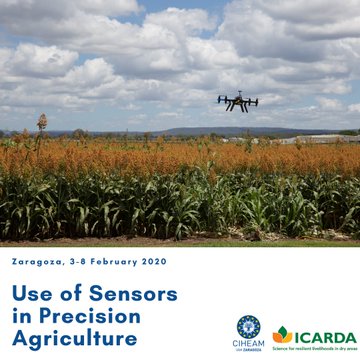
3-8 February 2020. Zaragoza, Spain. Agriculture 4.0 offers innovative solutions to make production
environmentally, economically and socially viable but in many countries the successful implementation of many of these technologies is still a challenge.
Food production must increase by 70% in order to feed a world
population that is expected to reach 9.6 billion by 2050. This challenge
is even greater when we take into account the low increase rate of
available land, the effects of climate change on agricultural production
and the societal demand for decreasing the impact of agriculture on
the environment. To achieve a more rational, competitive and
environmentally friendly production of food and biomass, a change in
farm management is required and precision agriculture is part of the
solution.
Precision agriculture (PA) is the management of spatial and temporal
variability to improve economic returns and reduce environmental
impact. PA technology makes it possible to log data of soil and crop
properties at even centimetre level across an entire field.
Although most people can see the benefits of using a more
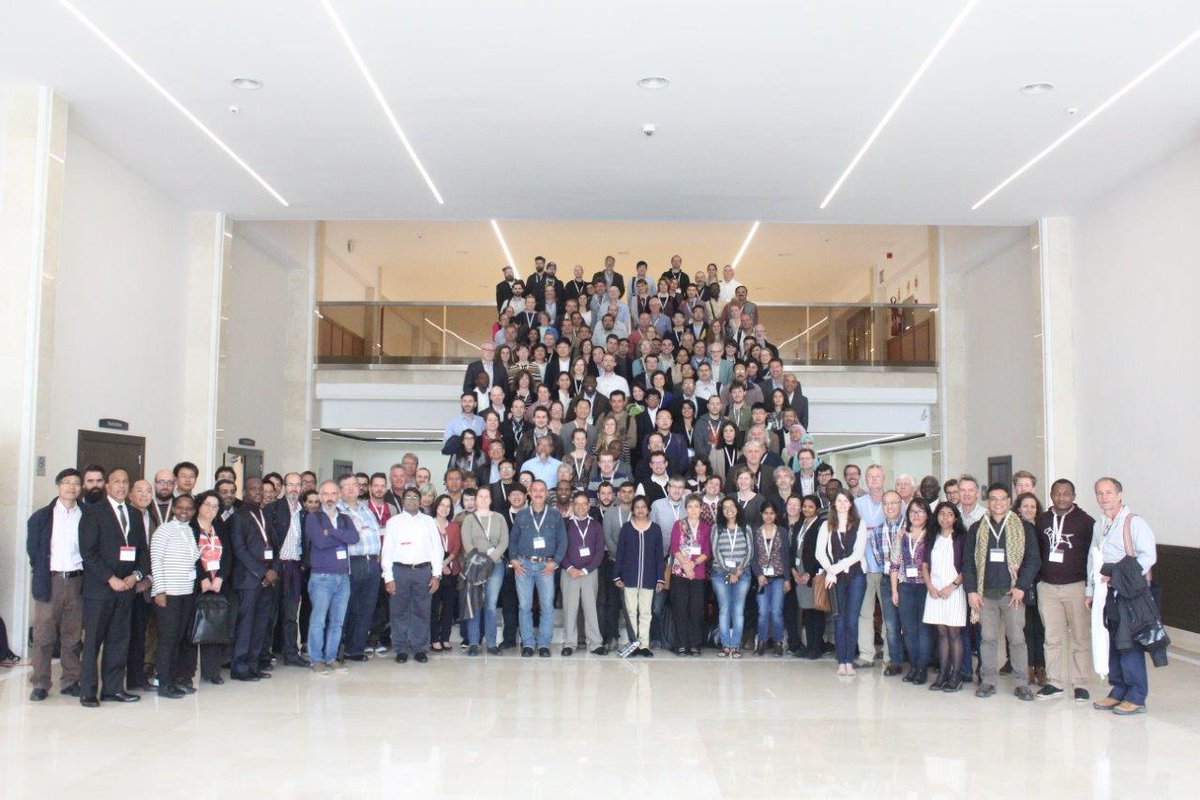
15 participants came from universities / research centers. 7 participants came from public institutions, including the ministry of agriculture from Palestine and the ministry of environment from Malta. 10 attendees came from big private agricultural companies
precise
approach to manage crops with additional information, the tools
provided by PA and other information technologies have not yet moved
into mainstream agricultural management. The complexity and the
investment in new equipment inhibit easy adoption.
Training in the
use of tools and technologies and a deeper analysis of successful
implementation can enhance adoption.
Sensors play a crucial role in PA. They are the key for collecting data
in a more efficient way in order to make the most appropriate
management decisions.
The objective of this course was to deliver
knowledge about different aspects of sensors, how to use them and how
to integrate their data into the decision making process. The focus was on the specificities of the Mediterranean agriculture.
Knowledge of the large range of different sensors and their
possibilities and limitations.
Better understanding of sensor common principles and technical
implement requirements.
– Criteria to choose the appropriate technology and strategy for
monitoring the required parameters under different conditions.
Experience on current sensor system technology successfully
implemented for different purposes and situations.
Hands-on experience in sensor operation and in-field data
acquisition.
Skills for sensor data processing and integration of the derived
information into the farm management information system.
Awareness of the economic issues involved in the implementation of
PA.
An overview of emerging sensor technologies and future
developments.
Related:
L'intérêt du secteur privé pour des capteurs innovants pour l'agriculture.
Interview avec Prof. M. Hachicha National Research Institute in Rural Engineering, Water and Forestry, University of Carthage | UCAR
Quel est le défit des capteurs actuels?
Quel est l'intérêt des compagnies Européennes?
Comment les start-ups Tunisiens peuvent ils bénéficier d'une nouvelle génération de capteurs?
Est-ce que cela peut également avoir des retombées sous-régionales?
Est-ce que ces capteurs peuvent également être utilisés pour les plantes?
- Comment cela peut bénéficier le petit producteur?
Quel système de subside pourrait être utile au petit producteur?
30th January to 1st February 2019. FARA Secretariat, Accra, Ghana
The Long-term Europe-Africa Partnership for Food and Nutrition Security, and Sustainable Agriculture (LEAP4FNSSA)is a Coordination Support Action (CSA) funded by the Directorate General for Research and Innovation (DG RTD) of the European Commission (EC), under Horizon 2020. It brings together 35 institutions from Africa and Europe which are ready to engage in collaborative research and innovation on Food and Nutrition Security and Sustainable Agriculture (FNSSA) roadmap signed in 2016, between the African Union and the European Union.
From Left: Dr. Mawoko Philippe (Africa Union Commission), Agnieszka Romanowicz (European Commission), Madam Patricia Apiagyei (Hon. Deputy Minister of Environment, Science, Technology & Innovation of Ghana), Dr. Yemi Akinbamijo (Executive Director, FARA) and Philippe Petithuguenin (CIRAD)
A presentation to the
Honourable Deputy Minister
The official Kick Off Meeting, which is taking place at the Secretariat of the Forum for Agricultural Research in Africa (FARA), Accra, Ghana, aims to provide visibility to the project while proving opportunity for engagement, reflection and discussions by officials, authorities and stakeholder representatives.
The meeting generated useful feedback and recommendations for the implementation of the Project. In addition, the GA provided an opportunity to build a shared vision of the project by clarifying contents of work package activities, the reporting line and work plan for year 1.
The event brought together over 75 participants from across Africa and Europe including the Minister of Environment, Science, Technology and Innovation (MESTI) of the Republic of Ghana and European and African Ambassadors representing countries involved in the project in Ghana for day one.
Participants representing the 35 partners of the LEAP4FNSSA Project at the Kick Off Meeting & General Assembly
Background Leap4FNSSA is a Coordination and Support Action (CSA) whose main objective is to provide a tool for European and African institutions to engage in a Sustainable Partnership Platform for research and innovation on Food and Nutrition Security, and Sustainable Agriculture (FNSSA).
Under the aegis of the High Level Policy Dialogue (HLPD) and its Bureau, building upon former EU funded projects such as RINEA, CAAST-Net Plus, ProIntensAfrica and linking with the ongoing ERANet Cofund LEAP-Agri, Leap4FNSSA aims to achieve its main objective through:
Increased synergies and coherence between actors, research and innovation projects, initiatives and programmes, through the development of institutional alliances and clusters of projects.
An enhanced learning environment and large knowledge base, including monitoring and evaluation activities, and established communication and links between different initiatives in order to improve European-African cooperation in Science, Technology and Innovation (STI).
A well-established long term sustainable partnership and co-funding mechanism.
The project will have a 4-years duration, from November 2018 to October 2022.
For more information on LEAP4FNSSA kindly refer to the below flyers (English and French).
Representatives from research centres, farmer organisations, agricultural companies, universities, start ups and small- and medium-sized enterprises (SMEs) attended the fourth CAAST-Net Plus workshop on the Knowledge Management and Communication and Communication System (KMCS) Initiative.
The workshop brought together key stakeholders who are key in establishing a KMCS, The workshop is part of a series of consultations on the KMCS Initiative. It further aimed to:
Highlight cases of existing portals and actors in Africa and Europe in the field of FNSSA (Food, Nutrition Security and Sustainable Agriculture);
Identify the methodological/technical needs for a joint Africa-EU KMCS;
Identify communication gaps between existing portals and amongst actors of the FNSSA value chains;
Identify best practice methods and principals for knowledge sharing and communication strategies for
research uptake; and,
Explore tangible long-term options for the implementation of a joint Africa-EU KMCS.
Previous consultations took place in South Africa, Namibia and Egypt between 2016 and 2017. Findings from the consultations will be encapsulated into a blueprint which will be presented in October 2017 to African and European policymakers, including the Bureau of the EU-Africa High Level Policy Dialogue, the European Commission and the African Union Commission.
Dr Joan Girona,
Institute of Agrifood Research
and Technology (IRTA, Spain), "Food Security, Self-Sufficiency
and Sustainable Agriculture in
a Changing World"
Related:
28-29 September 2017. Plant Inter Cluster meeting. The PIC Meeting is the most important event in the plant production industry organized annually in Europe. This event aimed to foster knowledge in the plant field, creating a common strategy to ease the international development of clusters and its members.
The Networking event targeted a wide spectrum of companies, clusters, universities, research centers and end users, from Europe and South America related to plant production.
The scarcity of women in the field of science and technology is a situation that is found all over the world in both developed and developing countries. Women scientists’ networks are aware that this lack of representation has serious consequences on the global development.
It is in Africa where the scientific and technological gender gap is the widest. Furthermore, the continent is losing its best female scientists, who are emigrating to other regions. This is why the Women for Africa Foundation is a specific program to support and increase the scientific and technological capacities of African women so that they can acquire the necessary training and innovative spirit with which they will cope with the major challenges of the 21st century.
The Women for Africa Foundation is a Spanish private, non-profit entity created in February 2012 by María Teresa Fernández de la Vega, the former Vice President of the Government of Spain with the aim of promoting equal rights and opportunities for women, contributing to the progress of the continent.
The priority areas are : Health, Energy, Water and Climate change and Food Security.
The selected candidates are enrolled in a 6 months scholarship program of internship in following ‘Severo Ochoa’ Centres of Excellence, whose prestige is unanimously recognized throughout Spain and internationally, thereby ensuring excellence in scientific research in various fields. the associated research centres are:
the Spanish National Cancer Research Centre (CNIO, www.cnio.es),
the Institute of Photonic Sciences (ICFO, www.icfo.eu),
the Spanish National Centre for Biotechnology (CNB, www.cnb.csic.es) and the Carlos III Health Institute (ISCIII, www.isciii.es),
the Institute of Mathematical Sciences (ICMAT, www.icmat.es ),
Each of the seven centres will host 1 senior women researcher for a six-month fellowship. Applications will be subjected to a rigorous selection process, evaluating the academic merits and leadership of the applicants as well as the scientific quality and expected impact of their research projects. Selected candidates will receive training and integration in a dynamic, multidisciplinary and highly competitive working team, where they will be able to develop their research projects and acquire complementary skills, empowering them to transfer their research results into tangible economic and social benefits.
Dr. IFEOMA ENWEANI, . She is presently attached to the Department of Medical Laboratory Science of the Nnamdi
Azikiwe University in Nigeria
Dr. Yemisi Adesiji is a Nigerian senior lecturer in the Department of Medical Microbiology and Parasitology of the
Ladoke Akintola University of Technology, Osogbo and acting as the head of department of Veterinary Microbiology
at the University of Ilorin
Dr. Chiaka Anumudi is a Nigerian senior lecturer, who obtained her Ph D in Zoology (Cellular Parasitology) at the
University of Ibadan
Dr. Sarra Arbaoui is a Tunisian reasearch assistant within the High Agronomic Institute of Chott Mariem, Tunisia
Dr. Elizabeth Kizito has a doctorate degree in Plant breeding obtained from the Swedish University of Agricultural
Sciences, Uppsala and she is currently a senior lecturer and head of the Department of Agricultural and Biological
Sciences at the Uganda Christian University, Mukono.
Dr. Nobanathi Maxacato, a young South African doctor, obtained her PhD in Chemistry from the University of Pretoria in
2012. She is currently a lecturer and research fellow in the University of Johannesburg where she teaches Chemistry for
Somatology, for chemical engineering, for food and biotechnology and for environmental health
Dr. Atnuke Adebanji is a Nigerian senior lecturer who works at the Kwame Nkrumah University of Science and
Technology of Kumasi, Ghana. Since 2012 she is a member of the West Africa Climate Change and Land Use (WASCAL)
programme.
Dr Elizabeth Kaase-Bwanga holds a PhD in Economics - Rural Economy and Policy analysis, from the Makerere University
of Kampala, Uganda where she is a senior lecturer specializing in Gender and Development Strategies, Feminist Economics
and Gender Planning and Monitoring & Evaluaton in Local Development
All scenarios for keeping global temperature change below 1.5°C or 2°C involve carbon sequestration. Agricultural soils, grasslands, and wetlands are huge potential sinks for carbon if properly managed. This conference will explore the state of our scientific understanding, results from field trials, emerging policy frameworks, and proposals to accelerate progress and build the field of soil based carbon sequestration globally.
Five objectives:
Identify and convene influential experts, scientists, practitioners, public officials, and philanthropists to accelerate progress and build the field of soil-based carbon sequestration.
Showcase research, pilot projects, policies, financial structures, and incentives for hastening adoption of carbon sequestration best and emerging practices.
Explore tangible action plans and initiatives with the potential to help ensure a global carbon budget that keeps global temperature rise to no more than 1.5°C.
Prioritize systems thinking and a conference agenda that explores the many co-benefits of returning carbon to soil
Identify needed next steps for research, policy initiatives, action campaigns and Investment opportunities.
FARMER PERSPECTIVES ON SOIL AND CARBON SEQUESTRATION
Facilitator – Patrick Holden, Founder, Sustainable Food Trust
Kofi Boa (picture), Farmer, Director, Center for No Till Agriculture
Christine Jones, Founder, Amazing Carbon
Seth Watkins, Farmer, Pinhook Farms
POLICY
From California to Australia – what policies are helping farmers shift to soil carbon sequestration (SCS) and soil building practices? A look at federal, provincial, regional and global policy frameworks that support wider adoption of healthy soil practices and SCS.
Facilitator: Renata Brillinger, California Climate & Agriculture Network
Luca Montanarella, Action Leader in Soil, European Commission
Jenny Lester Moffitt, Deputy Secretary of Agriculture, California
GRAIN and the Institute for Trade and Agriculture Policy (IATP) April 2017 have produced a hard-hitting fact sheet pointing to the huge role of the industrial meat and dairy complex in destabilising our climate and how we can address it. This fact sheet is a concise call to action, released as two major funder alliances gather in Barcelona and then Paris to assess and strategise on these issues.
The fact sheet argues that it’s not just a matter of eating less meat. “Citizens and social movements need to get more aware about and mobilise support for small farmers’ and pastoralists’ production systems and local markets” stressed Henk Hobbelink, coordinator of GRAIN. “We need food system change, not just individual consumer action.”
WORKSHOP 5: 100% Agroecology, Land & Food Sovereignty: Beyond the Technical Fixes
Agroecology is powerful. And in fashion. Social movements, with the support of philanthropy and in alliance with a broad range of actors, seek to create new food systems with agroecology at their center. Agroecology is understood not as a simple set of technical practices, but fundamental to agrarian reform and food sovereignty.
This workshop looked at how philanthropy has and can play a vital role in supporting social movements to challenge the power of the industrial food system, offer authentic solutions to climate change and put small scale food producers center-stage again.
The aim of the session was to further collaboration between philanthropy and civil society organizations to co-create sustainable food systems rooted in social justice.
Speakers:
Moderator: Henk Hobbelink, GRAIN
Elizabeth Mpofu (picture) - La Via Campesina
Rosalinda Guillen - Community 2 Community
Inga Wachsmann - Fondation Charles Léopold Mayer - FPH
Funders: European Funders for Sustainable Agriculture and Food (EFSAF), AgroEcology Fund, Fondation Charles Léopold Mayer (FPH), Jesse Smith Noyes Foundation, TheGlobal Alliance for the Future of Food
Research/ innovation experiences of Inter-American Institute for Cooperation on Agriculture (IICA). Priscila Henríquez, IICA.
European support for ARD: programs and actions. Helena Gómez, Macpherson CSIC- CICA.
ARD in Spanish cooperation: specially in sub- Saharan Africa. Gabriel Cremades y Ana Regina Segura, Spanish Agency for International Development Cooperation (AECID)
University international development cooperation observatory and ARD networking (ARD network). Carlos Gregorio Hernández Diaz-Ambrona ITDUPM.
Transferring successful ARD results. FAO
Round table: “SDG and ARD: sectoral challenges”
Hunger Zero and sustainable food. Kattya Cascante, UCM.
Water and energy. Diego Intrigiolo. CSIC.
Climate change and biodiversity. Margarita Ruiz Ramos, UPM.
Rural development. Rosa Gallardo, Universidad de Córdoba.
Thematic workshops:
“What are we researching about ARD and what should we?”
Hunger Zero and sustainable food. Moderated by Kattya Cascante, UCM
Water and energy. Moderated by Luciano Mateos, UCO.
Climate change and biodiversity. Margarita Ruiz Ramos, UPM.
Rural development. Rosa Gallardo, Universidad de Córdoba.
Closing: Bernard Rey, Food security, rural development, nutrition. DG DEVCO European Commission.
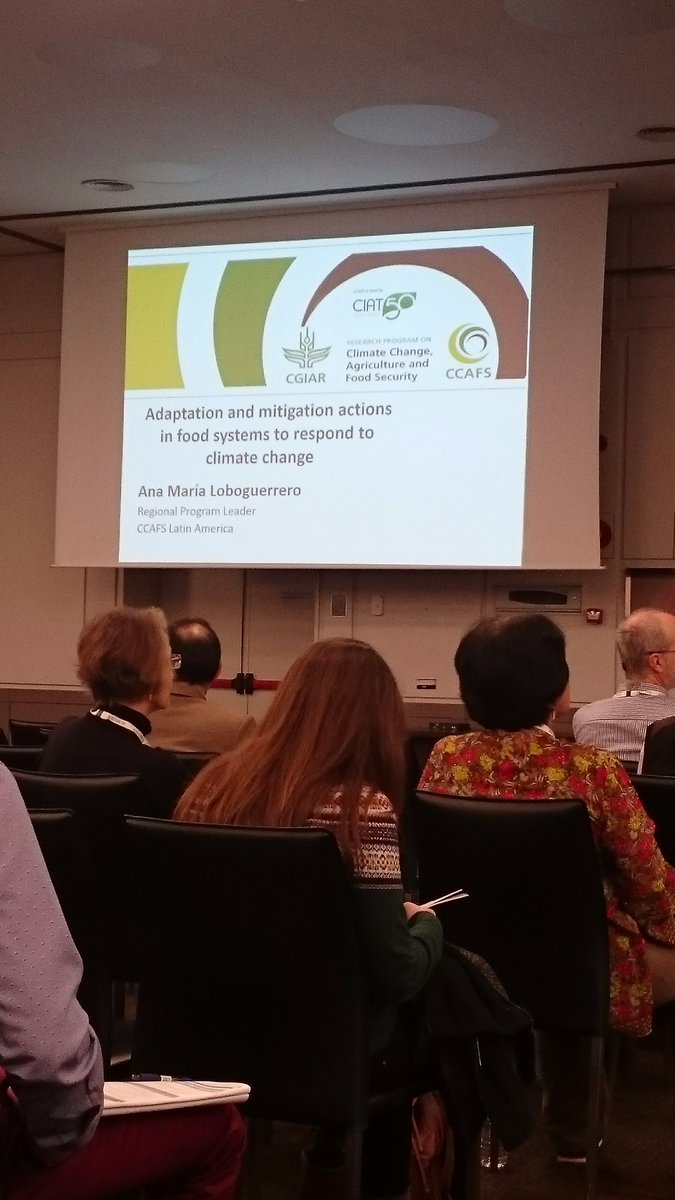
26-28 March 2017. Meliá Sitges, Sitges, Spain. The 2nd Agriculture and Climate Change Conference focused on the likely impact of climate change on crop production and explore approaches to maintain and increase crop productivity into the future.
Assessment of performance of drought tolerant maize (Zea mays L.) hybrids under combined
drought and heat stress
S.K. Meseka, A. Menkir, O. Bossey, O. Azeez, W. Mengesha, International Institute of Tropical Agriculture,
Nigeria
Developing and deploying climate-resilient maize varieties in the developing world
B.M. Prasanna, International Maize and Wheat Improvement Center (CIMMYT), Kenya
Demand-driven innovative breeding approaches for developing climate change ready crop
varieties in chickpea for Africa and Asia
R.K. Varshney, ICRISAT, India, The University of Western Australia, Australia
Underutilised crops as ‘new' crops under climate change: A South African perspective
T. Mabhaudhi, R.P. Kunz, R.E. Schulze, A.T. Modi, University of KwaZulu-Natal, South Africa