Platform for African – European Partnership in Agricultural Research for Development
Showing posts with label food systems. Show all posts

Tuesday, September 15, 2026

Future food symposium UK

14 - 15 September 2026. Future food symposium UK. The Future of Food Symposium is hosted by 6 universities across the UK

  1. University of Essex
  2. University of Nottingham
  3. University of Reading
  4. Institute for Development Studies, University of Sussex
  5. University of Birmingham
  6. University of Sheffield

It is an annual event that brings together researchers, practitioners, policymakers, and advocates working at the cutting edge of food systems research and practice. In 2026, the symposium took place under the theme Food Systems at a Crossroads: Local Action, Global Change, reflecting the urgent need to connect place-based knowledge and community-led innovation with the broader systemic transformations required to build equitable, sustainable, and resilient food futures.

Book of Abstracts - Food Systems at a Crossroads: Local Action, Global Change 29 p,

This year's symposium spans an extraordinary breadth of topics, from agri-food sustainability and Indigenous food sovereignty, to community food resilience, public dining, coastal food challenges, nutrition and health inequalities, and the growing role of data and artificial intelligence in food systems. Together, the tracks reflect a shared conviction: that meaningful change in food systems requires collaboration across disciplines, sectors, institutions, and borders.


Extracts of the programme


14/09 Positive Agri-Food Futures for People and Planet

Food systems are at a critical juncture, facing intensifying pressures from climate change, biodiversity loss, resource degradation, and persistent inequalities in access to nutritious food and sustainable livelihoods. Delivering a transition toward resilient, nature-positive agri-food systems requires moving beyond fragmented approaches toward integrated, outcome-focused strategies that recognise the interdependencies between environmental health, food production, and societal wellbeing. 

  • Luh Putu Kartini, Putu Diah Sastri Pitanatri, Bali Tourism Polytechnic - Beyond Food Waste: Women's Culinary Mediation and Circular Food Futures in Rural Bali
  • Shreya, Sijo Abraham, Nimisha Mittal, Independent Researcher - Seed Commons as Integrated Infrastructure for Climate-Resilient Food Systems: Evidence from Eastern India
  • Alampik Debbarma, Tripura University - Food, Forests, and Sustainability: Indigenous Tipra Culinary Practices in Northeast India
  • Nma Goran Dhahir, Water Diplomacy Center - Governing Water, Governing Nutrition: Transboundary Water Governance Failures, Water Quality Degradation, and Nutritional Vulnerability in the Kurdistan Region of Iraq
  • Alice Mauchline, University of Reading - Working in Partnership: How can farmers best inform peer-reviewed science and scientists best inform farmers?
  • Ada Freaney and Claire Mac Evilly, Airfield Estate - Cultivating Sustainable Futures: The Living Classroom Model at Airfield Estate
  • Carina Manitius, University of Vermont - Stranded Assets and Stranded Livelihoods in Agriculture: Identifying Barriers to Change to Support Just Transformation


14/09 Community-Based Approaches to Tackling Food Insecurity 

While a significant body of literature exists on people’s experiences of emergency food access, particularly through networked and independent foodbanks, many new forms of community-based approaches to tackling food insecurity continue to emerge. New community-based spaces of food access go beyond food aid provision and seek to create a sense of connection, build resilience and even ‘close the circular loop’ between food surplus, affordable food access, and food waste that is then revalorised as compost to grow local, sustainable food. 
  • Anton Rosenfeld and Bruce Pearce, Garden Organic - Growing resilience through culturally relevant varieties
  • Connie Dalton, Pamela Louise Graham, and Richard Lee, Northumbria University - Beyond Nutrition: A Mixed-Methods Study of Children, Families, and School Staff's Experiences of Free School Meals Across the UK
  • Neal Haddaway, University of Amsterdam - Commensality: exploring agricultural migrant workers'relationships with food and cooking
  • Nia Coupe, Hollie Walsh, Zahra Mulla et al., University of Manchester - Getting nutritious food into food aid: the Food Aid Mapping Manchester (FAMM) study
  • Purva Bahadkar and Anita Dighe, Foundation for Mother & Child Health India - Beyond Food: Strengthening Food Security Through Timely Behaviour Change Communication During the First 1,000 Days
  • Sharon Mada, Thuenen Institute - Approaches to Food Waste Reduction in Urban Sub-Saharan Africa: Practices and Initiatives for Circular Food Systems

    Data were collected from 400 households and 39 street market vendors in Hatcliffe, Zimbabwe, through a face-to-face questionnaire survey. In addition, semi-structured interviews were conducted with 11 experts from Mauritius, Nigeria, Botswana, Kenya, Ethiopia, Tanzania, South Africa, and Zimbabwe. 


14/09 Resilience and Community Food Projects 

  • Lucy Shepherd, Heritage Seed Library, Garden Organic - Growing Resilience from the Ground Up: Community Conservation of Heritage Crops for a Changing World
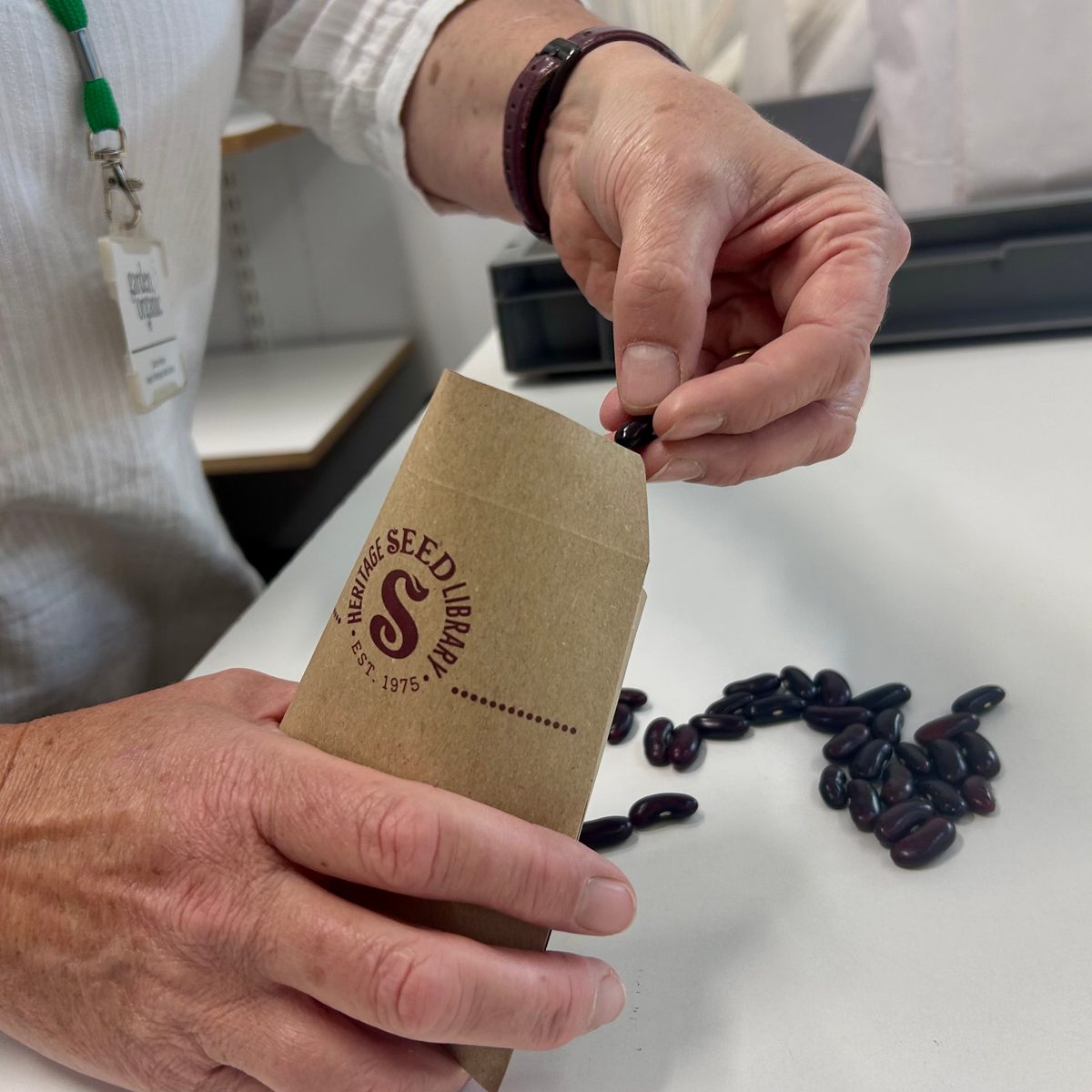
    This work presented findings from Sowing Your Seeds: Heritage Crops for a Resilient Future, a National Lottery Heritage Fund project led by Garden Organic's Heritage Seed Library. Working across the Midlands, the project identifies, documents and conserves locally maintained edible crop varieties. Through seed-saving workshops, community events and seed swaps, growers are encouraged to share both seeds and the stories behind them, recognising that cultural knowledge and lived experience are inseparable from the genetic resources themselves. By bringing little-known collections of heritage crops back into active cultivation, ‘Sowing Your Seeds’ helps ensure that locally adapted varieties, together with their cultural heritage, remain living components of our food system. This presentation offered attendees opportunities to consider community seed conservation and will suggest a model for participatory conservation that strengthens biodiversity, celebrates community custodianship, and equips food systems with the diversity needed to respond to an uncertain future. 

15/09 Decolonising Food Systems & Sovereignties [Panel Debate]

This panel explored decolonizing food systems through Indigenous resurgence, governance, and relational accountability. Indigenous speakers from Turtle Island will examine how colonial policies, dispossession, and extractive economies have undermined Indigenous food practices and sovereignties. The discussion addressed dismantling colonial structures that regulate land, water, and agriculture, and disrupting the power relationships that privilege state and corporate control over Indigenous decision-making. 

  • Track Chair: Dr. Belinda Zakrzewska (University of Birmingham)
  • Shyra Barberstock, Co-founder of Kebaonish Inc / Queen's University (Canada)
  • Rye Barberstock, Co-founder of Kebaonish Inc / Queen's University (Canada)


Monday, September 14, 2026

EC's New Strategic Approach to Research and Innovation

8 September 2026. The European Commission launched a new strategic approach to boost research, innovation, deployment and uptake in Europe’s agri-food sector.

The European Commission adopted a Communication on a new Strategic Approach to Research and Innovation for competitive, resilient and sustainable agriculture, forestry, rural areas and food systems. This strategic document brings together two closely interlinked frameworks, to guide future research, innovation, deployment and uptake across the entire agri-food sector. These frameworks are AgRI 2040, focusing on agriculture, forestry and rural areas, and Food 2040, focusing on food systems, including fisheries and aquaculture.

The Communication aims to strengthen the agri-food innovation ecosystem from early-stage research and innovation to deployment and market uptake, and to accelerate the uptake of knowledge and innovation across the entire sector. It puts greater emphasis on users’ challenges and needs and on the delivery of real impact on the ground by bringing together multiple actors including end users, researchers and businesses, to co-create, test and demonstrate solutions in real-world settings. This will also help startups, scaleups and SMEs to move promising innovations closer to the market.

This Communication draws on insights from the public consultations supporting AgRI 2040 and Food 2040 as summarized in the Staff Working Document.

Resources

* 25/09 Partnerships for research and innovation that foster competitive, resilient and sustainable agrifood systems in Europe and beyond: How to build strong strategic partnerships within the EU and beyond? What are successful examples?


New Strategic Approach to Research and Innovation


The European Commission’s new Strategic Approach to Research and Innovation (26 p.) places global cooperation, inclusive governance, knowledge brokerage and multi-actor innovation at the centre of future agricultural R&I. 

"In 2023, EU agriculture and food systems generated more than EUR 1 trillion in added value and employed around 30 million people (15% of all jobs in the EU2). This includes 4.8 million people employed in 309 000 businesses in the food and drink industry, the EU’s largest manufacturing sector that delivered EUR 1.5 trillion in turnover and EUR 296 billion in value added. As the world’s largest agri-food exporter, the EU recorded a EUR 50 billion agri-food trade surplus in 2025." (page 2)

The Communication identifies cooperation with international partners as one of six cross-cutting priorities and specifically points to the AU–EU FNSSA Roadmap and its International Research Consortium as the framework for identifying common R&I priorities with Africa.

This creates a role for GFAiR as a global convening and brokerage mechanism: connecting the EU with Regional Fora, NARS, farmer organisations, universities, CGIAR and other innovation actors; facilitating equitable participation in research agenda-setting; and helping translate international research investments into locally relevant Collective Actions. 

"The new roadmap agreed between the African Union and the EU on ‘Food and Nutrition Security and Sustainable Agriculture’ (FNSSA), together with the related International Research Consortium should provide a framework for identifying, with the African Union and related partners, common areas on which to focus. Cooperation with other partners to address similar challenges in agriculture, forestry and rural areas, such as India or the Community of Latin American and Caribbean States, could be further explored." (page 12)

This is reinforced by the Communication's emphasis on governance that integrates different forms of knowledge and perspectives, inclusive stakeholder engagement, youth and gender, and stronger links between research and policymaking. In this sense, GFAiR can help ensure that international cooperation under AgRI 2040 is not simply EU research transferred to partner countries, but genuinely co-created research and innovation responding to priorities identified by national and regional actors.

The Communication is equally significant for National Agricultural Research Systems (NARS) because its proposed innovation model closely corresponds to the functions NARS must perform: linking research, farmers, extension and advisory services, education, private enterprise, policymakers and markets. 

The Commission stresses that innovation must move beyond individual projects through scaling out, scaling up and scaling deep, and argues that farmers are more likely to adopt innovations when they are co-created with them, tested under real-life conditions and supported through advisory services and peer-to-peer exchange. This provides a strong rationale for engaging NARS as national innovation-system partners rather than merely research implementers. Their research stations, extension links, testing facilities, universities and relationships with producers can provide the institutional infrastructure for Living Labs, farmer-led experimentation, validation of traditional knowledge and adaptation of innovations to local conditions. 

Particularly relevant to GFAiR’s current work, AgRI 2040 explicitly calls for the development or reintroduction of “neglected and underutilised species” as climate-smart, resource-efficient, resilient and diverse crops.

"The potential of plant breeding, knowledge of seeds and plant varieties, biotechnology and genetic resources should be further leveraged. This includes supporting breeding activities, as well as the development or reintroduction of climate-smart, resource-efficient, resilient, resistant and diverse varieties, including neglected and underutilised species, suited to a wide range of conditions, with due consideration of the legal and policy context." (page 16-17)


Extract from the consultation results


Up to 88% of the respondents strongly or somewhat agreed with the four proposed mechanisms to strengthen research and innovation (R&I) at EU and international level to address global challenges in agriculture, forestry and rural areas: (page 10)
  1. closer public-public cooperation and alignment of agendas between the EU, Member States and Associated Countries; 
  2. enhanced public-private collaboration with business and philanthropic actors; 
  3. deeper partnerships with international organisations and third countries; 
  4. stronger cross-disciplinary and cross sectoral collaboration (for example on One Health, the bioeconomy, biotechnology and the blue economy). 


Extract from the Staff Working Document


The Staff Working Document provides a fairly clear set of lessons for how agricultural research and innovation (R&I) should be strengthened at international level. The most relevant elements are:

  • Treat international cooperation as a core R&I function, not an add-on. The Commission argues that climate change, biodiversity loss, soil degradation, water scarcity and food insecurity are inherently cross-border challenges. International cooperation is therefore needed to accelerate innovation uptake, exchange knowledge and co-develop solutions adapted to local needs. The document notes that third-country partners participated in 34% of relevant Horizon 2020 projects and 19% of current Horizon Europe projects.

  • Build long-term international R&I partnerships around jointly agreed priorities. The EU–AU FNSSA Partnership is presented as a flagship model: it combines joint research, innovation, capacity building and knowledge exchange around sustainable agriculture, nutrition-sensitive food systems, markets and trade, climate resilience and innovation uptake. The Commission has mobilised more than €125.5 million for 20 collaborative projects through this cooperation. Several projects began in 2020: FOODLAND | InnoFoodAfrica | HealthyFoodAfricaEWA – BELT | SustainSAHEL | SustInAfrica | UPSCALE | Soils4Africa

  • Move from temporary projects towards permanent or networked international research mechanisms. Particularly important is the International Research Consortium (IRC-FNSSA). 
    "Its establishment has transformed FNSSA from a coordination platform into a long-term, inclusive mechanism for joint AU-EU research governance."
    Together with the forthcoming FNSSA Roadmap 2027–2036, it is expected to support
    innovation, policy alignment and sustainable development across both continents.
    CEA-FIRST further supports this by reducing research fragmentation, developing a common knowledge platform, analysing R&I activities and establishing thematic working groups that feed evidence into high-level policy dialogue.

  • Strengthen NARS and Agricultural Knowledge and Innovation Systems (AKIS). The AKIS4FNSSA project is a Horizon Europe research initiative that builds a shared African and European agricultural knowledge network to support sustainable food security. The envisaged impact is to strengthen the AU–EU agrifood systems R&I governance framework by evolving the IRC into an enduring infrastructure and a community of practice that drives agricultural innovation in Africa. AKIS4FNSSA is a shared African and European knowledge investment into a productive, innovative-driven and inclusive agricultural innovation system supporting the FNSSA Partnership.

  • Use multi-actor and place-based approaches internationally.
    International cooperation increasingly supports place-based innovation and AKIS, while Horizon cooperation promotes multi-actor approaches and capacity building. CANALLS (Driving agroecological transitions in the humid tropics of Central and Eastern Africa through traNsdisciplinary Agroecology Living LabS) provides a concrete African example: eight agroecology Living Labs connect researchers, farmers, advisory services,
    communities and policymakers and engage more than 20,000 farmers and value-chain actors. This is a way of connecting science, policy and practice.

  • Connect international research to policy and investment rather than ending at knowledge generation. PRIMA - The Partnership for Research and Innovation in the Mediterranean Area - demonstrates such model: countries pool resources around a common R&I strategy and competitive calls. Between 2018 and 2025 it supported 2,900 beneficiaries through 305 projects, illustrating how a long-term intergovernmental partnership can mobilise scientific communities, public institutions and private actors around common challenges.

  • Improve access of smaller and less-connected actors to international R&I. Cascade funding can finance SMEs, farmers and other small actors to test and validate research results, while Living Labs and lighthouses allow innovations to be tested under real conditions.

    The PREMIERE project adds training, capacity building, networking, brokerage and even seed funding for proposal development, specifically to widen participation of organisations with little previous experience in collaborative projects. PREMIERE is a European Union funded project that aims to strengthen the multi-actor approach by supporting the development of more relevant, coherent, and well-prepared project proposals. Handbook #2 is the second in PREMIERE’s series of practical guides for multi-actor proposal teams. It’s a companion to the forthcoming, shorter How-to Guide on the same topic and to PREMIERE’s webinar on this subject (available soon).


The role of regional fora


GFAiR through its global coordination and network along with the six Regional Fora can contribute to Food 2040 by acting as the bridge between the EU’s global R&I ambitions and the priorities, capacities and innovation systems of their regions. Building on the Food 2030 experience, they can help co-define research agendas, connect NARS and AKIS actors, identify locally relevant food-system challenges, mobilise multi-actor partnerships, and channel evidence from farmers, researchers, advisory services, private sector and policymakers into international R&I programming.

GFAiR and Regional Fora together could help Food 2040 avoid fragmented, project-by-project cooperation by aggregating national priorities, facilitating cross-country and South–South learning, supporting regional Living Labs and Communities of Practice, and ensuring that EU-funded research is better aligned with regional strategies and more effectively taken up through NARS, extension, education and policy systems.


APAARI’s Role in Agricultural Research and Innovation


The Asia-Pacific Association of Agricultural Research Institutions (APAARI) was founded in 1990 through an initiative of FAO and governments across Asia and the Pacific. Its vision is strengthened research and innovation for sustainable agricultural development, while its mission focuses on promoting, coordinating and strengthening agrifood research and innovation systems through partnerships, capacity development and advocacy. Its strategic priorities encompass sustainable agriculture and agroecology, healthy and nutritious value chains, innovation and technology, safe agrifood trade, and climate resilience, biodiversity and environmental sustainability.

APAARI acts as a regional connector and platform for international research collaboration, linking national research organizations, CGIAR and international research centres, universities, extension services, farmers and civil society, the private sector, development partners and regional platforms. Collaboration is organized around knowledge exchange, joint research and innovation, capacity development, regional networking, policy dialogue, resource mobilization and technical cooperation. Current projects illustrate this role in practice, covering phytosanitary compliance and seed trade, plant-health research coordination, SPS modernization, skills and policy support, and agroecology and safe food systems across South and Southeast Asia.

See the link of the presentation here if you cannot view below Power Point Presentation


AARINENA's Role in Agricultural Research and Innovation


The Association of Agricultural Research Institutions in the Near East and North Africa (AARINENA), established in 1985, serves as a regional hub for strengthening and transforming agricultural research and innovation across the NENA region. Its mission is to connect national, regional and international research actors through dialogue, knowledge exchange and partnerships, while strengthening capacities and influencing policy. Its priorities include building a global knowledge platform for South–South and South–North exchange, fostering open and multi-stakeholder agricultural R&I systems, transforming higher education and research, and empowering rural women, youth and smallholder farmers.

AARINENA provides a strong platform for international research collaboration through knowledge sharing, capacity building, joint resource mobilization, policy engagement, networking, technology transfer, and joint monitoring and evaluation. Its thematic networks cover areas such as plant genetic resources, water-use efficiency, date palm, olives, animal production and health, plant protection, biotechnology and Forgotten Foods, Neglected Crops and Underutilized Species (FF-NUS), providing practical structures for collaborative research and innovation. Recent examples include the Date Palm Innovation Platform (2023) and Olive Innovation Platform (2024).

See the link of the presentation here if you cannot view below Power Point Presentation


The role of FORAGRO in Agricultural Research and Innovation


FORAGRO - the Forum of the Americas for Agricultural Research and Technological Development, established in 1997, is a hemispheric, open and inclusive forum connecting the main actors in agricultural research, development and innovation across the Americas. It brings together national agricultural research institutes, academia, producer and private-sector organizations, civil society, extension services, regional cooperation mechanisms and international organizations. Its role combines an internal function—promoting dialogue, coordination, investment and a shared regional R&I agenda—with an external function, connecting the Americas with global research and innovation processes through GFAiR, CGIAR and other regional and international partners.

FORAGRO’s reconceptualization is structured around three strategic axes: (1) developing a strategic and foresight roadmap for science, technology and innovation (STI) in agrifood systems; (2) creating a platform for horizontal cooperation, including AGROFOOD-TROP and AI-supported knowledge management through OPSAa; and (3) strengthening engagement with international STI spaces. The third axis positions FORAGRO as a regional voice, global foresight radar and strategic interpreter of international opportunities, enabling the Americas to formulate common priorities, anticipate emerging trends, connect regional capabilities with global initiatives, and present more coordinated regional positions internationally.

See the PPT presentation here if you cannot view below Power Point Presentation


FARA's role in Agricultural Research and Innovation 


The Forum for Agricultural Research in Africa (FARA) was created in 1997 and evolved by 2000 into Africa’s apex organization for agricultural research and innovation. Its establishment responded to the fragmentation of Africa’s national research systems and the need for a continental mechanism to coordinate research, strengthen capacities, facilitate partnerships and knowledge exchange, advocate for supportive policies, and represent African agricultural research internationally, including within GFAiR. 

FARA’s strategic role is to connect science with agriculture at scale by improving access to regional and global knowledge, facilitating innovation-to-impact partnerships, strengthening institutional and human capacities, and supporting collective action across countries and sub-regions. The presentation highlights an evolving African agricultural research agenda shaped by digitalization, climate change, agroecology and regenerative agriculture, gender and social inclusion, a rapidly growing youth population, and the vulnerability of African food systems. 

FARA positions itself as “one door” to research partnerships across 55 African countries and as a key African partner for GFAiR. The final slide identifies concrete areas of FARA–GFAiR Collective Action collaboration: Forgotten Foods, inclusive digital transformation of agriculture, agroecology/pesticides, transformation of higher education in agriculture, and land tenure and climate change.

See the link to the presentation here if you cannot view below Power Point Presentation


CACAARI's Role in Agricultural Research and Innovation


CACAARI—the Central Asia and the Caucasus Association of Agricultural Research Institutions—serves as a regional forum linking national agricultural research institutions in Armenia, Azerbaijan, Georgia, Kazakhstan, Kyrgyzstan, Tajikistan, Turkmenistan and Uzbekistan with universities, advisory services, farmer organizations and international partners. Its approach is based on national ownership: countries identify research priorities and farmers’ needs, while CACAARI facilitates regional consultation, coordination and partnerships. Its main areas of shared interest include water and soil management, climate adaptation, food and rural livelihoods, with an emphasis on connecting research to practical farming and agribusiness decisions.

For 2026–2030, CACAARI proposes four priorities: climate-resilient farming; stronger research systems; innovation with farmers, particularly women and youth; and improved evidence and useful digital tools. It seeks partnerships that can translate these priorities into shared regional agendas, joint programmes, field-learning initiatives and evidence for research investment. Concrete opportunities include cross-border research on water and soils, university–farmer–advisory partnerships for women and youth, and assessments of research capacity and investment needs. CACAARI also provides a bridge to wider regional and global cooperation through GFAiR, APAARI and AARINENA, positioning Central Asian and Caucasus research institutions to contribute to—and benefit from—international agricultural research and innovation initiatives.

See the PPT presentation here if you cannot view below Power Point Presentation


AGRA Impact, Learning and Foresight Report 2026


31 August 2026. 
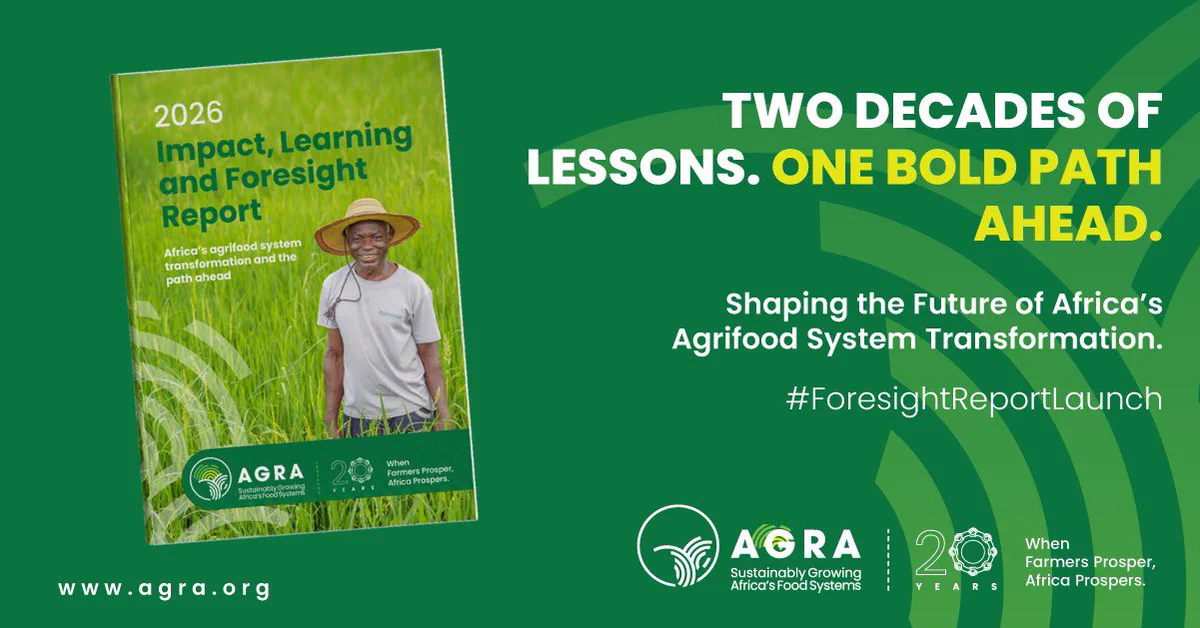
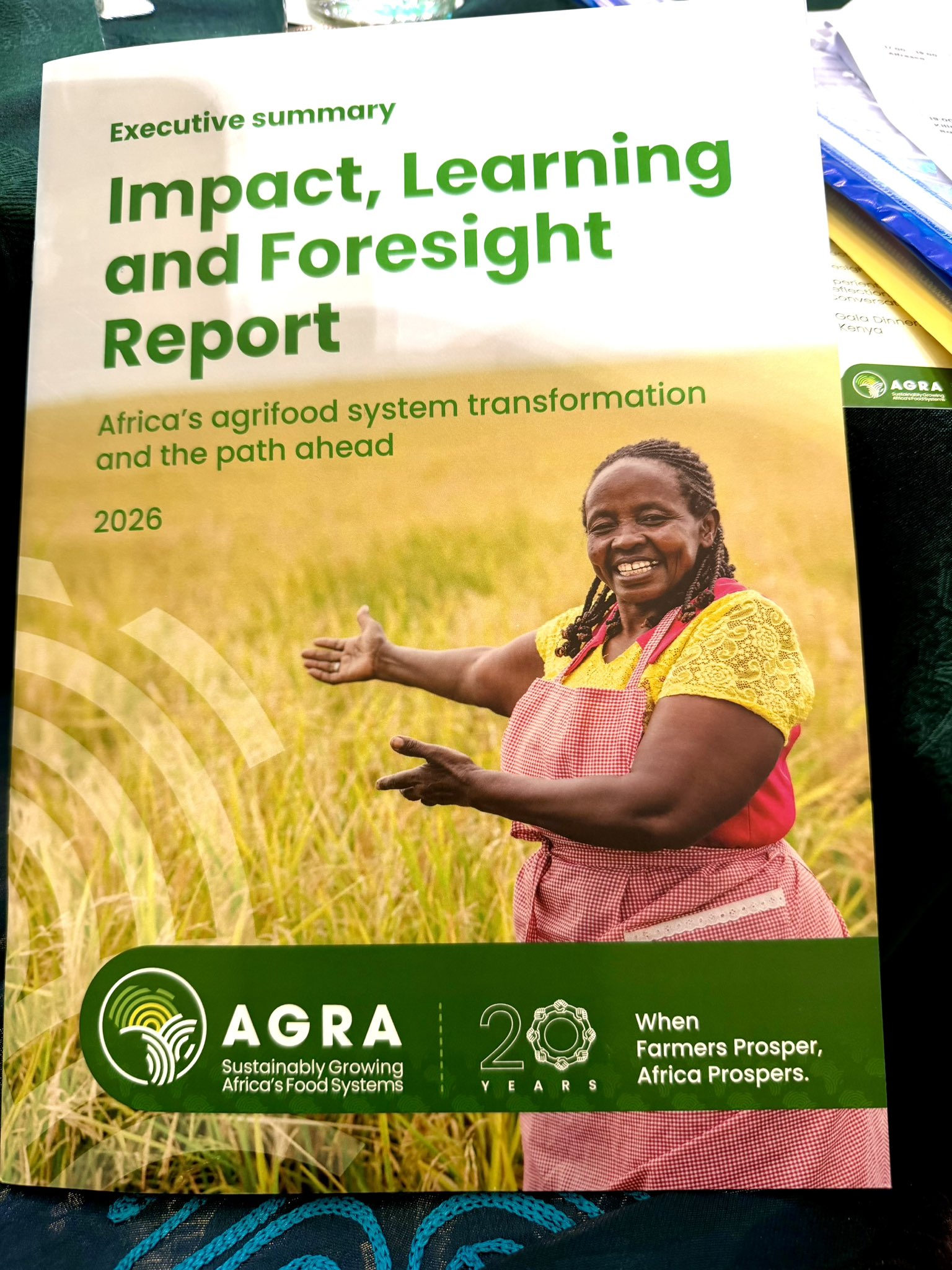
AFS Kigali. The major AGRA report whose findings were brought into the AFS Forum 2026 discussions in Kigali was the AGRA Impact, Learning and Foresight Report 2026, a 20-year stocktake of AGRA’s work and, more broadly, of Africa’s agricultural transformation since 2006


AGRA (2026) AGRA Impact, Learning and Foresight Report 2026. 180 p.

AGRA (2026) Executive summary AGRA Impact, Learning and Foresight Report 2026.  17 p.

Its central message is that Africa has made substantial agricultural progress, but increased production has not consistently translated into farmer prosperity. The review points to gains such as roughly 40% higher cereal yields, nearly doubled real farm output and increased farmer incomes since 2005, while stressing that these aggregate improvements coexist with persistent food insecurity, low profitability for many smallholders and weak resilience. 

It therefore argues that the next phase of transformation should be judged less by hectares reached, technologies distributed or yields alone, and more by whether farmers earn sustainable incomes and become economically resilient.

A particularly useful contribution of the report is its diagnosis of three interconnected “traps” holding back transformation: 

  1. the productivity trap, where farmers cannot consistently achieve sufficient productivity; 
  2. the value trap, where farmers and other local actors capture too little value from what they produce; and 
  3. the capability trap, where institutions, markets and delivery systems lack the capacity to sustain transformation. 
The implication is that isolated interventions—better seed, fertilizer or training on their own—are insufficient. Productivity needs to be connected to functioning markets, finance, infrastructure, value addition, institutions and demand.


Saturday, September 12, 2026

Rockefeller Foundation at AFS Forum 2026: Investing in healthier and more resilient food systems

31 August–4 September 2026. Africa Food Systems Forum (AFSF), Kigali, Rwanda, 

The Rockefeller Foundation highlighted how investment in nutrition, clean energy, public procurement and food markets can accelerate Africa’s food systems transformation. 


31 August 2026. Among the Foundation's prominent engagements was the Signature Side Event “Agri-Energy Finance for Underserved Groups”, organised with Practical Action, the Global Energy Alliance for People and Planet (GEAPP) and BASE. The discussion examined how finance, clean energy, agricultural markets, farmer organisations and last-mile businesses can be connected so that technologies such as solar irrigation, cooling, storage and processing become commercially viable for underserved farming communities. 
  • keynote by Kagwiria Koome, Lead of the Rockefeller Foundation Food Team, 
  • Roselyn Akinyi Walender – Africa Director at Practical Action
  • Kagwiria Koome – Food Team Lead at The Rockefeller Foundation 
  • Tim Mwangi – Head of Programme Delivery at Practical Action Kenya 
1 September. The Breakthrough Session “Public Procurement for Nourishing Nations,” explored how government purchasing—including school meals—can simultaneously improve nutrition, create markets for local farmers and SMEs, and strengthen local food economies.
  • Betty Kibaara with Diplav Sapkota (The Rockefeller Foundation)
  • Leila Odhiambo (Ministry of Health, Kenya)
  • Bahati W. (AGRIFACE Ltd, Rwanda)
  • IMBABAZI Jean De La Croix (World Food Forum Rwanda)
  • MICHAEL ONCHABO (FOLU Kenya)
  • Nancy Phoebe Rapando (ClimateWorks Foundation, 

3 September. The Narrative Panel “Telling Africa’s Food Story: Proof, Perception and Power”, examined a central communication challenge in African food systems: the gap between official narratives of agricultural transformation, the evidence and data used to demonstrate progress, and the realities experienced and perceived by farmers and citizens. 

In particular, the discussion considered who shapes Africa’s food-system narrative, whose evidence is considered credible, and how research, statistics, journalism and lived experience can be combined to communicate both progress and persistent challenges more accurately.
  • Dr John Ulimwengu, Evidence and Measurement at IFPRI; 
  • Ms Umuliza Njiru, Rockefeller Foundation, Investment and Partnership; 
  • Dr Fatou Dieng Gueye, Agro-economist and Head of CORAF’s MEL unit
  • Gilbert Borketey Boyefio, Programmes Manager at Parliamentary Network Africa.

4 September. Nutrition and consumer demand formed another important strand. The Rockefeller
Foundation co-organised the closing plenary “Charting Consumer Demand Trends & Our Food Environment” with AGRA, GAIN, SNV and the Access to Nutrition initiative. 
  • The session examined how healthier and nutrient-dense foods can become more affordable, desirable and commercially attractive, while generating jobs and markets for women and young people. 
  • At its exhibition space, the Foundation also showcased the work of the Fortified Whole Grain Alliance, including fortified whole-grain products from Rwanda, Kenya and Benin and progress in linking nutritious grains to school feeding.

1 September. A particularly engaging part of the Rockefeller Foundation programme was the screening of FOOD 2050, its new feature documentary narrated and executive-produced by Academy Award winner Viola Davis.
  • The film itself had its world premiere earlier, on 14 January 2026 in Los Angeles, at the Academy Museum of Motion Pictures. 
  • The film follows farmers, scientists, entrepreneurs and activists across five continents and asks a central question for the future of agriculture: how can the world nourish nearly 10 billion people by 2050 in ways that are regenerative, equitable and healthy? 
  • The documentary grew out of the Rockefeller Foundation’s Food System Vision Prize, which attracted more than 1,300 visions involving 4,000 organisations from 119 countries.
  • Watch / learn more: FOOD 2050 – official film website and trailer. The full feature film is currently listed as “coming soon to streaming”; meanwhile, the original Food 2050 short-film series can be watched through the Rockefeller Foundation’s Food System Vision Prize page. Watch the Food 2050 series

Thursday, August 20, 2026

AFRIC 2026: Fund to Feed Africa

7–8 August 2026. 
African Food Research & Innovation Conference (AFRIC 2026), held virtually on  under the theme “Fund to Feed Africa.” 

Organised by the Centre for African Food Research and Innovation (CAFRI), the conference brought together food researchers, academics, policymakers, industry leaders, funders, investors, and emerging researchers to examine a critical question: How can Africa better fund and support the research needed to build resilient, nutritious, and sustainable food systems?

From research to real-world impact


Africa has no shortage of food-system challenges—or ideas for addressing them. Climate variability is putting pressure on agricultural production. Post-harvest losses continue to undermine food availability and farmer incomes. Nutrition challenges coexist with rapidly changing diets, while food businesses and researchers often struggle to access the capital and infrastructure required to turn promising ideas into scalable solutions.

AFRIC 2026 placed research financing at the centre of this conversation.

Rather than treating research as an academic exercise separate from food-system development, the conference highlighted research as an essential investment in Africa’s economic and social future. Discussions explored the roles that industry, banks and investors, international and multilateral organisations, development-finance institutions, governments, and universities can play in creating a stronger funding ecosystem for African food research.

This shift in perspective is important. If research is expected to deliver solutions to Africa’s food challenges, researchers need more than recognition—they need sustainable funding, partnerships, mentorship, infrastructure, and pathways for moving discoveries from laboratories and universities into communities and markets.

A conversation spanning the food system


AFRIC 2026 addressed a broad range of issues shaping the continent’s food future.

Among its thematic areas were climate change and food production, indigenous food systems, food processing and value addition, public health and nutrition, and food policy and governance.

Together, these themes demonstrate why food research cannot be approached from a single discipline.

Climate-resilient agriculture, for example, requires collaboration among agricultural scientists, food technologists, economists, policymakers, businesses, and farmers. Likewise, improving nutrition requires an understanding not only of nutrients and diets but also of culture, affordability, food processing, consumer behaviour, and public policy.

The conference therefore offered a platform for connecting different parts of the food ecosystem—and, importantly, the people who finance, conduct, translate, and apply research.

Putting African researchers in the spotlight


One of AFRIC 2026’s notable features was its focus on the next generation of African food researchers.

Graduating researchers from CAFRI’s African Food Research Apprenticeship Programme (AFRAP) presented work addressing practical food-system challenges. Their projects covered subjects ranging from reducing fruit post-harvest losses and sustainable food preservation to plant-based proteins, insect-based protein, fermented foods, nutrition, and the use of artificial intelligence to reduce post-harvest losses.

These projects illustrate the breadth of innovation emerging from African researchers themselves.

They also reinforce a crucial point: Africa’s food challenges require African-led research that responds to local realities. Indigenous crops, traditional food systems, local markets, consumer preferences, infrastructure constraints, climate conditions, and cultural practices all matter when designing solutions that can work at scale.

Connecting researchers with capital


Perhaps the most consequential conversation at AFRIC 2026 was the connection between research and finance.

The conference programme included sessions examining research funding from multiple perspectives, including industry, banks and investors, international organisations, development-finance institutions, government-backed institutions, and academia. It also included a session dedicated to strategies for African researchers seeking research funding.

This multi-stakeholder approach matters because no single source of funding can solve Africa’s food-research financing gap.

Watch in the video the contribution of Dr Ndidi Okonkwo Nwuneli President and CEO, The ONE Campaign @ 1:30:34: The role of Industry in funding African Food Research.

African Food Changemakers is about highlighting and supporting the people transforming Africa’s food systems through innovation, entrepreneurship, and sustainable solutions.


Friday, August 14, 2026

Reflections on the side event on Forgotten Foods at the World Social Forum

8 August 2026. Cotonou and Abomey-Calavi, Benin. The 17th World Social Forum (WSF).  Reflections on the side event on Forgotten Foods at the World Social Forum.

GFAiR’s Collective Action on Forgotten Foods (CA FF) brings farmers, researchers, civil society and private-sector actors together to revive neglected and underutilized species (NUS) by strengthening farmer-led conservation and traditional knowledge, research and innovation, markets and value chains, and policy support—thereby improving biodiversity, nutrition, climate resilience and farmers’ livelihoods.

Interview with Francois Stepman, Advisor Global Forum for Agriculture and Innovation Research.


The speaker discusses the importance of revitalizing local nutrition and agroecology in Africa to combat malnutrition and climate change.

Local promotion: Consumption of local produce

  • The goal is to promote African culinary heritage (lentils, beans, local plants) to reduce reliance on imports of rice, milk, and wheat.
  • The concept of "forgotten foods" is central to addressing biodiversity and malnutrition issues.
  • Intergenerational initiatives involving young people from Ghana and Nigeria aim to pass on traditional recipes through cooking workshops.

Agroecological issues: Production and health challenges

  • The excessive use of toxic pesticides, particularly in Benin, is linked to a rise in health problems such as cancer.
  • A major debate remains: can agroecology feed Africa's rapidly growing population—such as Nigeria's 220 million inhabitants?
  • Research must focus on the genetic potential of rare plants regarding their resilience to climate change.

Research directions: Funding and priorities

  • There is a critical need to redirect funding (from the World Bank, the European Commission, and national governments) toward research on local produce.
  • Priorities must shift from an economy focused solely on exports (cocoa, maize) to the revitalization of local resources.
  • How can a balance be struck between the yield requirements of a growing population and the preservation of age-old agroecological methods?

The West African Caravan: Defending Food Sovereignty through Land, Water and Peasant Seeds


The West African Caravan for Land, Water and Peasant Seeds has become one of the region's most visible grassroots mobilizations for food sovereignty, agroecology and communities' rights over natural resources. Initiated by the Global Convergence of Land and Water Struggles – West Africa (CGLTE-OA), the Caravan brings together farmers' organizations, pastoralists, fishers, women's and youth movements, civil-society organizations and agroecology networks. Since its first edition in 2016, it has sought to make the voices of rural communities heard in debates over land, water, seeds and agricultural policy. 

The movement itself brings together more than 300 organizations and has involved major regional networks including the Network of Peasant
Organizations and Agricultural Producers in West Africa (ROPPA), COPAGEN, the West African Committee for Peasant Seeds (COASP), La Via Campesina Africa, the Alliance for Food Sovereignty in Africa (AFSA) and We Are the Solution.


From a regional caravan to a movement for food sovereignty


At the heart of the Caravan is a simple principle: food sovereignty is difficult to achieve when
farming communities do not control the resources required to produce food
. Access to land and water is therefore inseparable from farmers' ability to save, reproduce, exchange and improve their own seeds. From its first edition, the Caravan explicitly connected these rights with family farming, peasant agroecology and food sovereignty, while challenging land, water and seed grabbing. Its vision emphasizes locally rooted food systems, biodiversity, farmers' control over seeds and respectful relationships between producers and consumers.

The Caravan is particularly significant because it takes these debates out of conference rooms and into farming communities. Rather than organizing a single regional meeting, delegations travel between countries and stop in communities where farmers, traditional authorities, women's groups, young people and policymakers can exchange experiences. Local struggles consequently become part of a regional political agenda. Research on the movement has highlighted precisely this ability of the Caravan to connect localized struggles over natural resources with broader West African and international movements for food sovereignty and climate justice.


Peasant and indigenous seeds at the centre


Peasant, traditional and indigenous seed systems are fundamental to this struggle. Generations of farmers have selected crops and varieties according to local soils, rainfall patterns, food cultures, nutritional preferences and farming systems. These systems maintain agricultural biodiversity while continuously adapting crops to changing environments. Seed sovereignty therefore goes beyond having physical access to seed: it concerns farmers' ability to save, select, multiply, exchange and transmit planting material and associated knowledge from one generation to another.

This is especially important for Africa's neglected and underutilized species (NUS), traditional crops and indigenous foods. Many such crops survive not because they have been prioritized by commercial seed companies, but because farming communities—often women—have continued cultivating, selecting, cooking and exchanging them. The erosion of farmer-managed seed systems can therefore mean more than the disappearance of varieties. It can also lead to the loss of traditional knowledge, food cultures, dietary diversity and locally adapted genetic resources.

The Caravan consequently raises a fundamental question about the future of African agriculture: who controls the seed? A food system increasingly dependent on a narrow range of commercial varieties risks marginalizing the diversity maintained in farmers' fields. By contrast, strengthening farmer-managed seed systems can complement formal breeding and genebank conservation by keeping crop diversity alive and evolving under real farming conditions. Previous Caravan activities have explicitly promoted common farmer seed banks alongside agroecological practices.


Women as custodians of seed diversity


The Caravan also brings attention to the often insufficiently recognized role of women in conserving agricultural biodiversity. In many West African farming and food systems, women are involved not only in production but also in selecting seed, storing planting material, processing crops and maintaining knowledge about preparation, nutrition and cultural uses. During earlier editions of the Caravan, organizers explicitly highlighted women's land rights and described women as important guardians of seeds.

Protecting indigenous and farmer-managed seeds must therefore go hand in hand with strengthening women's access to land, resources, decision-making and markets. A seed may be conserved in a genebank, but maintaining it as part of a living food culture requires farmers who continue to grow it and consumers who continue to value it.


The 2026 Caravan: converging on Cotonou


The fifth West African Caravan, held from 19 July to 9 August 2026, significantly expanded this regional mobilization. Two routes crossed West Africa: a Sahelian route from Senegal through Mali and Burkina Faso to Togo, and a coastal route from Guinea through Côte d'Ivoire and Ghana to Togo. They subsequently converged in Benin, where participants also met a Central African Caravan travelling from Cameroon through Nigeria ahead of the 17th World Social Forum in Cotonou. Organizers projected more than 500 participants, 18 stopovers and mobilization involving more than 20,000 people, particularly rural communities, women and youth.

The launch in Tambacounda, Senegal, already demonstrated the broad coalition behind the initiative. Participants included representatives from Senegal, Mauritania, The Gambia and Guinea-Bissau, alongside farmers' organizations, social movements, community leaders and local authorities. The launch was supported by the Dynamic for an Agroecological Transition in Senegal (DyTAES) and Enda Pronat.

(see: CGIAR Trust Fund (2024) Dynamic for the agroecological transition (Dytael) in Fatick - Senegal. Relocalization of the millet value chain for the territorialization of agroecology

The West African Caravan was initially stopped by Beninese police and sent back toward the border on 3 August 2026, reportedly amid problems concerning authorization and cross-border entry procedures for the large convoy of more than 400 participants from multiple West African countries.

The arrival in Cotonou was therefore more than the conclusion of a journey. It brought a decade of grassroots experience—from the Caravan editions of 2016, 2018, 2021, 2023 and 2026—into a global civil-society forum. Land governance, access to water, peasant seeds, agroecology, food sovereignty, climate change, social cohesion and peace could consequently be discussed not as separate issues, but as components of the same transformation.


From seed conservation to transformation of food systems


The importance of the West African Caravan ultimately lies in its insistence that seeds are simultaneously biological resources, cultural heritage, sources of livelihoods and instruments of food sovereignty. Conserving indigenous crops without strengthening the communities that cultivate them is insufficient. Likewise, promoting agroecology without addressing farmers' access to land, water and diverse seed can only achieve limited transformation.

For neglected and underutilized species, this message is particularly powerful. Their revival requires a chain connecting farmers and seed custodians → community seed systems → research and characterization → agroecological production → processing and entrepreneurship → markets and consumers → supportive policies. The Caravan helps ensure that the first actors in this chain—the farmers and communities who have maintained this diversity—remain central to decisions about its future.

After ten years of mobilization, the West African Caravan demonstrates that the struggle for food sovereignty is also a struggle for agricultural biodiversity and control over the foundations of food production. Its recurring message—rights to land, water and peasant seeds are a common struggle—has particular resonance at a time of climate change, biodiversity loss and increasing concentration within agricultural input systems. Protecting Africa's indigenous and farmer-managed seeds is therefore not about returning to the past. It is about ensuring that the extraordinary diversity created and maintained by generations of African farmers remains available for future breeding, resilient farming, diversified diets and locally determined food systems.


Related:

10 August 2026. Niger Restored 900,000 Hectares of Dead Desert With Shovels — Half a Million People Now Eat. Niger Restored 900,000 Hectares of Dead Desert With Shovels, Half a Million People Now Eat, proving that sometimes the best technology to save the future is actually centuries old. In the southern Maradi region of Niger, a stretch of barren land that the United Nations once wrote off as "finished" is now thriving. This isn't the result of billions of dollars in foreign aid or heavy machinery; it's the result of an ancient, forgotten farming method called the "half-moon" and "zaï pits," pioneered by a man everyone once called insane.

This video explores how 528 sites in the Sahel are holding three million cubic meters of water, recharging aquifers, and creating life-saving microclimates. We also look at the reality behind the African Union's Great Green Wall project, and how grassroots, shovel-in-hand resilience is successfully pushing back the Sahara Desert.

Why Africa Must Stop Being Just a "Supplier" to Global Brands

14 Aug 2026. Women in Geopolitics - Why Africa Must Stop Being Just a "Supplier" to Global Brands

Why does a continent holding 60% of the world's uncultivated arable land spend a staggering $100 billion every single year importing food? In this masterclass episode of Women in Geopolitics, leading economic and policy experts challenge everything we think we know about African agriculture.

Ambassador Peko explains why Africa doesn't suffer from a production deficit, but rather an ownership deficit. While African women produce up to 80% of local food, the broader economy remains trapped: exporting raw materials like cocoa, cotton, and coffee, only to buy them back as branded Swiss chocolate, Louis Vuitton fashion, and Starbucks coffee.

Learn why true food sovereignty requires owning four critical strategic assets: 

  1. Genetics (breaking the global seed monopolies), 
  2. Technology (leveraging AI alongside indigenous knowledge like Zai pits), 
  3. Infrastructure (combating the tragic 30% to 40% post-harvest food losses), 
  4. and original African Brands. 
On-the-ground expert Maureen addressed the stark logistical and structural barriers preventing local producers from effectively connecting to continental markets.

Tuesday, July 7, 2026

Honoring the women whose hands shaped America's food system


Who fed America?

For more than 250 years, Black women have grown, harvested, cooked, researched, taught, organized, and nourished a nation often without recognition. "We Belong at the Table" is a cinematic musical tribute honoring the women whose hands shaped America's food system and whose legacy continues to inspire future generations.

Created by WANDA (Women Advancing Nutrition, Dietetics and Agriculture) during its 10th anniversary and in recognition of America's 250th anniversary, this song celebrates the food sheroes who transformed recipes into resistance, gardens into freedom, and meals into movements.

From Harriet Tubman and Georgia Gilmore to Edna Lewis, Jessica B. Harris, Flemmie Kittrell, Leah Chase, Karen Washington, Toni Tipton Martin, Psyche Williams-Forson, Carla Hall, Lena Richard, Vertamae Smart-Grosvenor, Evelyn Crayton, Fannie Lou Hamer, and **Tambra Raye Stevenson, this film reminds us that food is more than nourishment; it is heritage, leadership, community, and democracy.

At WANDA, we believe:

🌱 Food is a human right.
🤝 Belonging is the foundation of democracy.
🍽️ Every table has the power to build healthier communities.

This is more than a song. It is an invitation to remember those who came before us—and to become the next generation of Food Citizens. Because we belong. And so does our food.

Join the Movement
❤️ Support the WANDA Scholars Fund and help prepare the next generation of food leaders.
🌍 Learn more about WANDA: https://www.iamwanda.org​

Follow WANDA:
Instagram: @_iamwandaorg
LinkedIn / Facebook / X: @iamwandaorg
Website: https://www.iamwanda.org​

Lyrics Written in Honor of America's Food Sheroes

Honoring the enduring contributions of Black women who have nourished families, strengthened communities, advanced science, preserved culture, and shaped democracy through food.

Monday, July 6, 2026

The Financing Agri-Food Systems Sustainably (FINAS) 2026 Dialogue

30 June–2 July 2026 at the Kenyatta International Convention Centre. The Financing Agri-Food Systems Sustainably (FINAS) 2026 Dialogue was held from under the theme "Towards Sustainable Financial Architecture for Africa's Food Systems." 

The summit brought together governments, development banks, financial institutions, agribusinesses, farmer organizations, investors, research organizations, and development partners to explore how Africa can mobilize and better align finance for food systems transformation.

Dr. Charity Mutegi, Director: "Agriculture continues to power Africa’s economies, yet financing models
remain stuck in the past. Despite donor funding and countless initiatives, the numbers have not shifted. This question is at the heart of #FINASSummit dialogue. That stagnation tells us one thing: we must do something differently."

By aligning policy, innovating finance models, and forging partnerships, we can unlock inclusive, de‑risked solutions for Africa’s food systems.

Programme

Overall, FINAS 2026 featured more than 50 plenary sessions, side events, deal rooms and masterclasses, with speakers drawn from African governments, the private financial sector, development finance institutions, farmer organizations, international organizations, research institutions and development partners. The programme emphasized practical financing solutions for policy alignment, inclusive finance, climate resilience, agrifood SMEs and investment mobilization across Africa.

The programme was organized around four major thematic pillars.

1. Policy Alignment and Coordination

This track focused on creating coherent financing frameworks that support implementation of the Kampala CAADP Declaration and national agricultural investment plans.

Main sessions included:

  • Continental Roundtable: Policy Alignment and Coordination for Financing the Kampala
    CAADP Declaration
  • Using National Agrifood Systems Investment Plans (NASIPs) to mobilize, coordinate and monitor investments
  • Launch of the Kenya National Agrifood Systems Investment Plan (NASIP) 2026–2030

Key discussion themes

  • Harmonizing national and continental investment strategies
  • Public finance reforms
  • Improving accountability for agricultural expenditure
  • Better coordination among governments, donors and private investors.

2. Innovative and Inclusive Finance Models

One of the largest streams examined how to unlock finance for farmers, cooperatives and agrifood SMEs. Panels and side events covered:

  • Making Agricultural Development Funds work
  • Public Development Banks and agricultural finance
  • Wholesale lending for agricultural financial inclusion
  • Agri-SME finance and prudential reforms
  • Finance linked with agricultural skills development
  • Blended finance mechanisms
  • Cooperatives and rural financial services

The discussions emphasized reducing investment risks while expanding affordable credit to smallholders, women, youth and agricultural enterprises.

3. Green, Climate and Resilient Finance

A major focus of FINAS 2026 was integrating climate resilience into agricultural finance. Major sessions included:

  • Embedding Climate Risk Intelligence into Agricultural Value Chain Financing (plenary keynote)
  • Carbon finance under Article 6.2 of the Paris Agreement
  • Embedding insurance into agricultural lending
  • Climate-resilient finance for crop and livestock systems
  • Sustainable financing for resilient agrifood systems
  • Financing feed and fodder systems
  • Cold-chain financing and reducing food loss and waste

These sessions explored insurance, climate data, carbon markets, blended finance and innovative risk-sharing mechanisms that can attract private capital into climate-smart agriculture.

4. Trade, Investment and Partnerships

The final thematic stream examined how finance can strengthen regional markets and agricultural competitiveness. Topics included:

  • Trade and investment frameworks
  • Regional value chains
  • Public-private partnerships
  • Cross-border investments
  • Deal rooms connecting investors with agribusinesses
  • Business-to-business matchmaking
  • Scaling agricultural innovations

Special emphasis was placed on mobilizing domestic capital, strengthening African financial markets and reducing dependence on external aid.

Side events: extracts

02/07 Unlocking Sustainable Financing for Nutrition-Sensitive Food Systems: Evidence, Partnerships and Sub-national Level Innovations — Stock Take of Financial Flows for Food Systems (3FS)

The panel emphasized that transformation requires deliberate alignment of policy frameworks,
financing instruments, and institutional will.
  • Faraya Constance Zimudzi @FAO (#F𝗔𝗢, 𝗨𝗡): Nutrition-sensitive investment must be embedded into agrifood systems at country level.   
  • Ruth Okowa (#𝗚𝗔𝗜𝗡): Policies must translate into practice, ensuring SMEs can scale nutrition-focused solutions.   
  • Anna Tavina Eivin (#𝗙𝗔𝗢, 𝗨𝗡): Stronger institutional coherence is essential to sustain impact.     
  • Peter Chepata (𝗠𝗔𝗜𝗜𝗖): Financing instruments must be tailored to SME realities.    
  • Joseph Nderitu (𝗞-𝗨𝗡𝗜𝗧𝗬): Local financial institutions play a critical role in bridging access gaps.     
  • Blessings Mutheu (𝗜𝗻𝗰𝗼𝗳𝗶𝗻): Investors must see SMEs as viable partners in nutrition transformation.    
  • Samuel Ndonga (𝗙𝗔𝗢, 𝗨𝗡): Coordinated approaches are key to embedding nutrition into agrifood finance.   

2/07 Beyond Donor Funding: Advancing AI-Enabled Finance for Africa’s Smallholder Farmers

At FINAS 2026, SAFIC convened a high-impact side event themed “Beyond Donor Funding: Sustainable Business Models and AI-Enabled Finance for Africa’s Smallholder Farmers,” bringing together leaders from government, academia, development, technology, and the private sector to explore practical pathways for transforming African agriculture.

Prof. Simon Ndiritu, The Center Director of SAFIC, opened by challenging participants to rethink the agricultural ecosystem, noting that Kenya does not lack technology or innovation. Rather, the real opportunity lies in integrating advisory services, finance, quality inputs, insurance, and market access into a coordinated system that delivers tangible value for farmers.

In his keynote remarks, Amb. Philip Thigo, Special Envoy on Technology, emphasized the importance of building trusted mechanisms for data exchange across the agricultural ecosystem. He encouraged stakeholders to begin with practical, scalable proof points, highlighting food systems as a compelling use case for shared data infrastructure and collaborative innovation.

Moderating the discussion, Richard Migwalla of Baobab Impact framed the conversation around three critical questions:

  • Can we meet farmers at their point of need?
  • Can we deliver these solutions sustainably?
  • Can artificial intelligence improve the commercial equation for smallholder agriculture?

𝗔𝗴𝗿𝗶𝗰𝘂𝗹𝘁𝘂𝗿𝗮𝗹 𝗙𝗶𝗻𝗮𝗻𝗰𝗲 𝗧𝗲𝗰𝗵𝗻𝗶𝗰𝗮𝗹 𝗪𝗼𝗿𝗸𝗶𝗻𝗴 𝗚𝗿𝗼𝘂𝗽 (𝗧𝗪𝗧)

At #FINAS2026, leaders from across finance, policy, and development have launched the 𝗔𝗴𝗿𝗶𝗰𝘂𝗹𝘁𝘂𝗿𝗮𝗹 𝗙𝗶𝗻𝗮𝗻𝗰𝗲 𝗧𝗲𝗰𝗵𝗻𝗶𝗰𝗮𝗹 𝗪𝗼𝗿𝗸𝗶𝗻𝗴 𝗚𝗿𝗼𝘂𝗽 (𝗧𝗪𝗧,) a permanent mechanism designed to move evidence into policy, and policy into action.
Key highlights from the speeches:
David Sajabi, 𝗙𝗶𝗻𝗮𝗻𝗰𝗲 & 𝗜𝗻𝘃𝗲𝘀𝘁𝗺𝗲𝗻𝘁 𝗘𝘅𝗽𝗲𝗿𝘁: “Good ideas must not remain reports. Reforms must be followed through.” He emphasized that success will be measured not by discussions, but by real change in agricultural lending.
Dr. Samuel Tiriongo, 𝗞𝗲𝗻𝘆𝗮 𝗕𝗮𝗻𝗸𝗲𝗿𝘀 𝗔𝘀𝘀𝗼𝗰𝗶𝗮𝘁𝗶𝗼𝗻 Stressed the importance of evidence-based advocacy, better data, and exploring alternative collateral beyond land to unlock lending opportunities for farmers.
Titian Donda, 𝗠𝗮𝗻𝗮𝗴𝗶𝗻𝗴 𝗗𝗶𝗿𝗲𝗰𝘁𝗼𝗿, 𝗣𝗼𝗹𝗶𝗰𝘆, 𝗔𝗰𝗲𝗹𝗶 𝗔𝗳𝗿𝗶𝗰𝗮 Reflected on the journey of collaboration, noting that fragmented approaches have slowed progress. The TWT is a product of partnership and coordination, designed to transform data into evidence and evidence into reforms.
Petra Jacoby, 𝗣𝗿𝗼𝗴𝗿𝗮𝗺 𝗗𝗶𝗿𝗲𝗰𝘁𝗼𝗿, 𝗔𝗴𝗿𝗶𝗰𝘂𝗹𝘁𝘂𝗿𝗲 𝗗𝗲𝘃𝗲𝗹𝗼𝗽𝗺𝗲𝗻𝘁, 𝗚𝗜𝗭 𝗞𝗲𝗻𝘆𝗮 Called the launch a reaffirmation of collective commitment. She highlighted the need for sound policies, reliable data, effective risk-sharing mechanisms, and strong coordination to build confidence among financial institutions and expand access to finance for farmers.

FINAS 2026 post-summit field visits 

From cold storage to food processing, the FINAS 2026 post-summit field visits continued with a stop at ItalNovis Group SEZ Limited in Tatu City, Kenya.

‎‎Delegates explored the company's modern pasta manufacturing facility, gaining firsthand insight into the journey from raw materials to finished products. The visit demonstrated how technology, efficient production systems, and value addition are driving competitiveness in Africa's food manufacturing sector.

‎‎With roots dating back to the 1950s, ItalNovis Group reflects the impact of sustained industrial investment and innovation in building resilient agrifood value chains.