ACENUB was established in 2022 to strengthen the agri-food system in Africa through research, training, and development related to Neglected and Underutilised Species (NUS).
Interview with Dr Mavuto Tembo UMUZ HOLD, Senior Lecturer at Mzuzu University in Malawi, with a focus on land management and related fields. He is also associated with the African Centre of Excellence in Neglected and Underutilised Biodiversity (ACENUB) at Mzuzu University. Additionally, he has served as a Project Manager for the TEN-Climate Change and Hunger Project at Mzuzu University.
The focus of ACENUB
Research and training: The center provides high-level postgraduate training to address regional food and nutrition challenges. Its research focuses on unlocking the potential of NUS to increase agricultural productivity.
Biodiversity for food security: ACENUB believes that targeted research on biodiversity is foundational to development. This can help prevent over-reliance on a few staple crops, a major contributor to food and nutrition insecurity in sub-Saharan Africa.
Skills development: The center aims to strengthen connections between universities, agricultural institutions, and the agro-based industry to improve skills related to the agri-food system across Africa.
Funding and partnerships: ACENUB is part of a World Bank-funded project in collaboration with the Government of Malawi and works with various regional and international partners.
What are neglected and underutilised species (NUS)? Neglected and Underutilised Species (NUS) are domesticated or wild plant species used by local communities but not extensively researched, improved, or commercialized. These species are important because they are often:
Climate-resilient: Many NUS are well-adapted to thrive in harsh environments and tolerate drought, heat, and other stresses.
Nutrient-dense: They can offer significant nutritional value, including protein, micronutrients, and fiber, helping to combat malnutrition.
Supports biodiversity: Utilizing NUS helps increase the diversity of crops and build more resilient farming systems.
Supports smallholder farmers: NUS can be grown on marginal land and help diversify income for small-scale farmers.
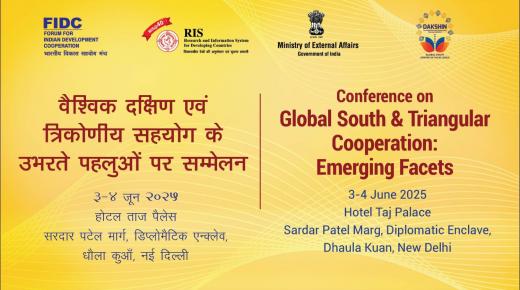
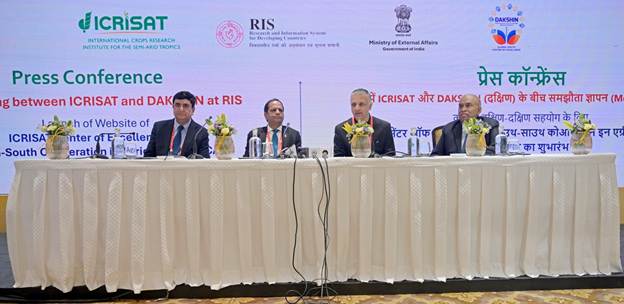
The initiative aims to accelerate agricultural innovation and collaboration across the Global South. The launch also featured the signing of a strategic Memorandum of Understanding (MoU) between ICRISAT and DAKSHIN (Development and Knowledge Sharing Initiative) - a Government of India initiative focused on strengthening South-South cooperation through capacity building and development partnerships.
An emerging modality of engagement being spearheaded by the Global South comprise of various models of Triangular Cooperation as a hybrid collaboration of the North and the South, strongly embedded on principles of ownership, horizontality and partnership that has the potential to emancipate countries from debilitating dependence and encourage them to expand capacities for sustainable future. The important issue of enhanced development cooperation, along with development financing has been articulated at multiple levels by member governments including from the Global South, G7 and others. The G20 during the Indian presidency in 2023 emphasized the need to enhance North-South, South-South and Triangular Cooperation (TrC) and the Brazilian G20 presidency in 2024 made trilateral cooperation one of its priorities.
A cursory study of TrC projects demonstrates value addition,
enables home-grown innovations in developing country pivots to test for scale and replication, and builds
better trust among all stakeholders on account of participative decision making.
03/06 Special Session on Agriculture as Driver of Growth in the Global South in
partnership with ICRISAT
Agriculture remains a cornerstone of livelihoods, employment, and food security across the Global South. The sector contributes significantly to GDP and employs a large share of the population,
particularly women and youth. However, the potential of agriculture to drive sustained, inclusive growth is often underutilized due to structural challenges such as low productivity, climate vulnerability,
land degradation, and limited access to finance and technology. Key issues:
Examining the transformation of agriculture into a highvalue, technology-driven sector including the role of agri-tech, precision farming, and digital infrastructure.
Revisiting Cross-country knowledge sharing through South-South and Triangular Cooperation, and policy frameworks and institutional innovations supporting rural transformation
Speakers:
Special Address by Dr M. L. Jat, Secretary-DARE & Director General, ICAR, Ministry of Agriculture and Farmers Welfare, Government of India
Professor Sachin Chaturvedi, Vice Chancellor, Nalanda University and Director General, RIS
Dr Himanshu Pathak, Director General, ICRISAT, India
Ms Ama Brandford-Arthur, SSTC Global Technical Coordinator, Department for Country Operations, IFAD, Italy @2:53:31
Ms Archna Vyas, Director, Gates Foundation, New Delhi
Ambassador Ashraf Rashed, Chairperson, COMESA Committee of Elders, Egypt
Professor (Dr) Govind Raj Pokharel, former Vice-Chairperson, National Planning Commission, Nepal
Professor Joseph Keiyah, Deputy Director, KIPPRA, Kenya
03/06 Action Labs on Successful Case Studies and Sectoral Specificities of Triangular Cooperation
Action Lab I: Agriculture, Health, SMEs, Entrepreneurship and Digital Solutions
Co-Chair: Mr Chaman Lal Dhanda, Head, Triangular Cooperation, India Component, GIZ, India
Co-Chair: Dr Saravanan Raj, Director, National Institute of Agricultural Extension Management (MANAGE), India
Ms Dima Al-Khatib, Director, UNOSSC, New York US (Online)
Mr Manuel Mera, Director Social Protection, CIPPEC, Argentina
Dr Manuel Gonzalo, Research Professor, The Argentine Council for International Relations (CARI), Argentina
Dr Beatriz Muriel, Executive Director, INESAD, Bolivia
Ms Temwa Disi, Founder, Temwanani Agri Food's Enterprise, Malawi (Online)
Dr Jayanta Choudhury, Professor, Nagaland University, India
Mr Anal Raj Bhattarai, CEO, N.R.N Nepal Development Fund, Nepal
04/06 Valedictory Session: Preparing for Future Global South Partnerships
In the fractured multilateral space, this high-level panel charted the path for future global partnerships in general, and in/of the Global South in particular.
Co-Chair: Mr Dammu Ravi, Secretary, Economic Relations, Ministry of External Affairs, Government of India*
Co-Chair: Mr Pradeep S. Mehta, Secretary General, CUTS International, India
Key Takeaways: Professor Sachin Chaturvedi, Vice Chancellor, Nalanda University and Director General, RIS
Dr Sabyasachi Saha, Associate Professor, RIS
Dr Dushni Weerakoon, Executive Director, Institute of Policy Studies, Sri Lanka
Dr Posh Raj Pandey, Chair Emeritus, South Asia Watch on Trade, Economics and Environment, Nepal
Dr Carlos Correa, Executive Director, The South Centre, Switzerland
Professor N. R. Bhanumurthy, Director, Madras School of Economics, India
Vote of Thanks: Dr Sushil Kumar, Assistant Professor, RIS
DAKSHIN – Global South Centre of Excellence
DAKSHIN - Global South Centre of Excellence emanates from an announcement made by the Prime Minister of India, Narendra Modi, during the 1st Voice of Global South Summit in January 2023.
DAKSHIN stands for Development and Knowledge Sharing Initiative. It endeavours to assist relevant stakeholders and partners in the identification and implementation of scalable and sustainable solutions that can transform the economies and societies of countries of Global South.
22 January 2025. Sustainable Agriculture and Agro-Ecological Approaches in the Global South.
12 - 16 May 2025. Malawi. The 7th Africa-Wide Agricultural Extension Week (AAEW)served as a pivotal platform for stakeholders across Africa to reimagine the role of agricultural extension in achieving food security and economic growth.Under the theme “Rebranding Extension for Enhanced Public/Private Sector-Driven Commercialisation, Industrialisation and Inclusive Food Systems,” the event emphasized the necessity of transforming extension services into dynamic, demand-driven systems that actively engage both public and private sectors.
Malawi's Minister of Agriculture, Sam Kawale, underscored that agricultural extension must be central to Africa’s development agenda, highlighting its critical role in transitioning from subsistence to commercial agriculture and addressing unemployment and hunger.The event featured exhibitions, field visits, and knowledge-sharing sessions, fostering collaboration among farmers, researchers, policymakers, and private sector actors.
A key conclusion from the week was the urgent need to professionalize and better network extension practitioners across the continent.Dr. Silim Nahdy, Executive Director of the African Forum for Agricultural Advisory Services (AFAAS), emphasized that without platforms like AAEW, extension systems risk stagnation due to fragmented knowledge and limited cross-border collaboration.
The event also called for increased investment in extension services and stronger integration with research institutions and agribusinesses to ensure that innovations effectively reach smallholder farmers.Participants agreed that revitalizing extension is essential for achieving the Sustainable Development Goals, particularly zero hunger, and for realizing the African Union’s Agenda 2063.The week concluded with a commitment to advocate for supportive policies and greater financing to empower extension systems as catalysts for inclusive agricultural transformation.
The Mlimi App
The Mlimi App brings agriculture to your fingertips with features like:
Crop & Livestock Advisory
Market Prices
Weather Updates
Financial Tips
Mlimi Wallet & More!
Download it now on Google Play and step into the future of smart farming.
This innovation is made possible through a partnership between Farm Radio Trust and the Government of Flanders, with support from AGRA and IFAD.
The session will hear about SCOPE Kenya’s work, with a focus on water harvesting and management for enhanced land regeneration, and food production and biodiversity conservation among school communities.
schools which have excelled well in putting up rain surface runoff management systems, resulting in reduced soil erosion, and increased regreening of their landscapes,
The conversation will centre around data-driven technologies and artificial intelligence (AI) and how they are revolutionizing farming and food production practices.
Panelists will highlight real-world applications such as precision farming, predictive analytics for crop and livestock management, and AI-driven food supply chain optimization.
The panelists will also discuss emerging technologies such as generative AI, digital twins, and other innovative solutions and their applications in the agriculture and food sector.
ARISE is an innovative Research and Innovation (R&I) support programme implemented by the AAS with support from the African Union Commission (AUC) and the European Commission (EC).
Webinar Series - IFPRI Modeling Systems: Informing Future Pathways and Priorities for Agrifood Systems
The Rural Investment and Policy Analysis (RIAPA) modeling system helps navigate multiple development goals in economic, welfare, and environmental domains, assessing the impacts and trade-offs of policies and investments on agrifood systems, workers, and households.
Thursday, June 13th 11 am CEST / 12 pm (noon) Nairobi time / 3:30 pm New Delhi time / 4 pm Jakarta time Registration Link for June 13th
The REPORT You will find the link to the report here. Drawing from a foundation of food sovereignty, agroecology and the Rights of people to define their food systems, GIA has been created (2023) to defend technological autonomy as a powerful tool to strengthen small-scale food producers globally and improve resilience, autonomy and sovereignty
13 June 2024. 4-part, interactive webinar series titled: Restoring Soil Health with Fungi and the Soil Food Web
13 June 2024. - 11AM PT / 8PM CET Webinar 1: Soil Health, Fungi, and the Soil Food Web: Dr Elaine Ingham and, mycologist, Dr Adam Cobb, will be taking a deep dive into the fungal kingdom that forms such a key part of the Soil Food Web. They'll be exploring some of the important functions that various types of fungi perform, and the interactions between fungi, plants and the other groups of microorganisms in the soil.
Presentation of the results of the EU-funded project "CLEAR Cotton - Eliminating child labour and forced labour in the cotton, textile and garment value chain: an integrated approach" by DG INTPA, ILO and FAO
18 June 2024, 3:30 PM. The Unjust Climate: Measuring the impacts of climate change on rural poor, women, and youth Virtual Policy Seminar
18 to 20 June 2024, in Brussels. Focus-Africa, Down2Earth and CONFER Horizon-Europe projects final conference
This (invitation only) gathering will bring together leading experts and stakeholders to share insights and discuss the future of climate services in Africa.
Developments in the theory and the applications of counterfactual methods for policy impact evaluation. Amsterdam (The Netherlands)
The aim of COMPIE is to bring together practitioners and academics to discuss developments in the theory and the applications of counterfactual methods for policy impact evaluation. Applications can cover a broad range of interventions, from labor and social policy to regulation and funding programmes, ideally with a focus on EU policies or developing countries.
Paper submissions: January 1, 2024 to 28 February, 2024
update on Regen10's Outcomes-Based Framework, which aims to equip all food system actors with a shared understanding and ambition for driving the transition to regenerative farming; provide a spotlight and Q&A on Regen10's upcoming feedback survey; and present the latest on Regen10's transition pathways briefs, which explore the costs and benefits of transitioning to regenerative food systems.
Rsif will host Dr Victor Ongoma Climate Change Adaptation Scientist at the International Water Research Institute, Mohammed VI Polytechnic University, UM6P for the 48th Guest Webinar Series.
co-hosted by the EABC and the African Export-Import Bank (Afreximbank)
Learn from industry leaders about developing bankable projects in key manufacturing value chains such as agro-processing, fertilizers and agro-chemicals, mineral processing, pharmaceuticals, textiles, leather, apparel, and automotive.
The CGIAR Science Week HAS BEEN POSTPONED. This is due to unforeseen circumstances.
Drawing on CGIAR science and partnerships from around the world, the inaugural CGIAR Science Week was supposed to bring together the community working for a food, nutrition and climate secure future to: co-create a roadmap for food, land and water systems transformation, forge partnerships for action, build the case for investment, inspire change.
The rescheduled event will take place at the same venue - the UN Campus - in Nairobi, co-hosted by KALRO.
2 July 2024. @1200 EAT, 1100 Southern Africa, 1000 Central and parts of West Africa/BST, 0900 the rest of West Africa/GMT. Water School Africa (WSA)
The zoom link to join this WSA online session is: Meeting ID: 875 4508 1076
Presenter: Daniel Chinkhuntha. Daniel has pertinent knowledge, skills and capacity in Permaculture, Agro-Ecology and Organic Farming. He is an Organic Farmer and he manages Tikondwe Freedom Gardens, a Farm near Lilongwe, Malawi on which Permaculture is practised with the aim of achieving Food Sovereignty and secure livelihoods. He specializes in planning and designing the landscape for Sustainable Development as well as facilitating trainings and teaching Agroecology to farmers, academics & Extension workers.
In his presentation Daniel is going to share about the water holding work that was started by his late father. He is going to share about the rain water harvesting structures that they are using to hold water at Tikondwe Freedom gardens in central Malawi.
2 - 3 July 2024. Exploring Intersections: Decolonization, Diasporas and the African Food System
This hybrid conference is an initiative of the Food Bridge vzw in partnership with Diaspofood ULB, Africa Museum Tervuren, Interdisciplinary Historical Food Studies Research Group (FOST) VUB, The New Global Order (TNGO), Alefa Diaspora and others.
The conference seeks to unravel the historical, cultural, and socio-economic dynamics that shaped the current state of African food systems and its impact on the continent’s development. Furthermore, it will be considering the effects of colonization, the experiences of diasporic communities, and the potential for decolonization to reshape the African food systems.
Abstracts should be in .doc or pdf format and sent to diasporaprojet@gmail.com Maureen.Duru@vub.be Sarah.Oneill@ulb.be
This webinar aims at sharing findings from the EFUDTRIPI project implemented in Ghana by the Science and Technology Policy Research Institute, Council for Scientific and Industrial Research (CSIR-STEPRI) and to solicit stakeholders’ inputs as part of the co-creation approach being employed throughout the project implementation.
The EFUDTRIPI project was designed to focus on small, medium and large-scale farmers to generate evidence on the level of use of digital technologies and services by farmers and the impacts on their farming activities. The project identifies the enablers and constraints to the use and adoption of digital solutions, existing policy gaps, and the interventions policymakers and digital service providers should adopt to eliminate these constraints.
BlueInvest Africa is an important business event, initiated by the European Commission in 2022.
The objective of BlueInvest Africa is to facilitate meetings between African entrepreneurs seeking financing and international investors scouting for opportunities, all centred around projects capable of propelling Africa's blue economy forward
The African Research Universities Alliance Centre of Excellence in Sustainable Food Systems (ARUA-SFS), hosted at Future Africa (University of Pretoria), in collaboration with the Food, Agriculture and Natural Resources Policy Analysis Network (FANRPAN), present the Climate, Land, Agriculture and Biodiversity (CLAB)-Africa Webinar Series.
The CLAB-Africa project is designed to elevate Africa-specific knowledge by supporting the continent’s leading scientists to engage political leadership on varying catalytic sectors to address the continent’s wicked challenges.
Webinar 1: Climate Impacts on Food Systems in Africa: The webinar will a.o. present case studies of successful projects, discuss the importance of policies, governance, and stakeholder engagement, and highlight advances in agricultural research and technology, providing a comprehensive understanding of building resilient and sustainable food systems in the face of climate change.
the first Dialogue will start from the HLPE definition of transdisciplinary science (HLPE, 2019, p.33) and analyze both challenges and best practices from a suite of Agroecology TPP's projects on doing science differently.
first of a series of dialogues hosted by the Agroecology TPP (Transformative Partnership Platform on Agroecological Approaches to Building Resilience of Livelihoods and Landscapes).
The Agroecology TPP aims to foster transitions to more sustainable agricultural and food systems by accelerating and coordinating the actions of a range of institutions already working on agroecology across various scales, contexts, and locations.
25 July 2024. Scaling CA with for Sustainable Agricultural Mechanization in Africa in the Context of Gender Equality and Social Inclusion (GESI).
Introductory remarks of the panel discussion at the 9WCCA by Paswel Marenya (CIMMYT) or UN Women. Panelists: Dr Snapp (CIMMYT), ICARDA/INRA, and UM6P/Al Moutmir.
24 July 2024. 8:00 AM - 10:00 AM CT. Seed Commercialization Webinar: Africa Public-private partnership drives local seed transformation. By ISAID Feed the future
29 - 31 July 2024. Kigali, Rwanda. 2nd Science & Partnerships for Agriculture Conference (SPAC 2024) https://events.faraafrica.org/
The 2024 edition of the SPAC conference will host its usual lead conferences among many other convenings; it will host the Third Biennial Africa Climate Smart Agriculture Conference; the Knowledge Management for Agricultural Development (KM4AgD) conference, the AU-EU Horizon
Europe partnership projects coordinated by FARA viz., CEAFIRST and StEPFoS, a workshop on advancing the application of foresight in African agriculture and a reflection workshop on the AfDB-supported Technologies for African Agriculture (TAAT) programme, plus several others.
02/08 Assessing the impacts of international agricultural research: New methods, rigorous evidence, better decisions [SPIA Fest 2024] - CGIAR Standing Panel on Impact Assessment (SPIA)
02/08 Regional integration, sustainability and food security in South Asia
02/08 The bioeconomy and sustainable development
02/08 Transforming food systems in South Asia - IFPRI
02/08 Transdisciplinary approaches in agri-food systems transformation research- IFPRI, Alliance of Bioversity International and CIAT, ICARDA
02/08 Facilitating the rapid, Inclusive and sustainable rural transformation in Asian developing countries
04/08 Plenary 3: Healthy and Sustainable Diets and Nutrition
04/08 Plenary 4: Agri-Food Value Chains and Sustainability
05/08 Plenary 5: Gender in Agri-Food Systems
06/08 Plenary 6: Agri-Food Systems, Climate, and the Environment
06/08 Plenary 7: Novel Approaches in Agri-Food Systems Research
Selection of Invited Panel sessions that will be held at the conference. For session details and timing, please consult the conference program app (available from July 2024).
Science Policy Interface for Sustainable Food Systems (organizer: Hans-Jörg Lutzeyer, Peter Wehrheim) (speakers: Justus Wesseler, Shenggen Fan, Jill McCluskey, Akiko Suwa-Eisenmann, Joachim von Braun)
Toward Sustainable Food Systems Transformation in Africa (organizer: Ousmane Badiane, Tsitsi Makombe) (speakers: Sheryl Hendriks, Anna Lartey, John Ulimwengu, Getaw Tadesse, Julius Ecuru, Katrin Glatzel, Racine Ly)
Nourishing Growth: How Public Spending Decisions are Shaping Agricultural Transformation and Food Security in India and Africa (organizer: Ashok Gulati, Joachim von Braun) (speakers: Shyma Jose, Bezawit Beyene Chichaibelu, Lukas Kornher, Ousmane Badiane, Usha Barwale Zehr, Sachin Chaturvedi, Shahidur Rashid, Sheryl Hendriks
Strengthening the Capacities of Agricultural Policy Research Institutes in Africa (organizer: Thomas Jayne) (speakers: Nalishebo Meebelo, Lenis Saweda O. Liverpool-Tasie, Chris Barrett, Tinashe Kapuya, Milu Muyanga)
Urban Food Systems and Dietary Transition in Africa (organizer: Felix Asante (speakers: Jonathan Mockshell, Sylvester Ogutu, Hannah Ameye, Matin Qaim, Makaiko Khonje
Alternative Proteins: Challenges and Opportunities in Low- and Middle-Income Settings (organizer: Claudia Ringler) (speakers: B Dayakar Rao, Arghadeep Saha, Frans Swanepoel, Melissa van der Merwe, Holly Wang)
August 2024. AFMASS Nigeria Food Expo co-located with Africa Dairy Manufacturing Expo and Africa Food Safety Summit – Western Africa
submit high quality abstracts of original research (250-350 words, English language) via the online form at: https://www.tropentag.de/submission/index.php (available from 25 March onwards). The deadline for abstract submission is May 3, 2024.
16 -19 September 2024. 13th African Crop Science Society (ACSS) conference.
hosted by the Eduardo Mondlane University (EMU) in Maputo, Mozambique,
under the theme, ‘Crop research and innovation for agricultural transformation, resilience and inclusion’, the Maputo meeting will also provide a platform for sharing and discussing research results that bring solutions towards enhancing agricultural development in Africa.
17 September 2024, Nairobi, Kenya, and online. GLF | GLF Africa 2024
26 September 2024.Innovative systems for sustainable technology development, and uptake or adoption of Sustainable Agricultural Mechanization in Africa
Lead by FARA and contributions by China Agricultural University (Li Hongwen), Murdoch University Bangladesh (Enamul Haque); CORAF, and the African Forum for Agricultural Advisory Services (AFAAS).
24 October 2024. The role of smallholder farmers in agricultural development and food security in Africa for Sustainable Agricultural Mechanization in Africa
Introductory remarks by PAFO. Panel: ROPPA/EAFF; PASAE; University of Nairobi; CSIR-CRI Ghana; and Director of Mechanization, Nigeria.
The SUN Movement Global Gathering is the Movement’s flagship event and one of the largest international gatherings within the nutrition community.
26 to 27 November 2024 SFN+ Hybrid Conference: Innovations for sustainable and resilient agri-food systems
This hybrid conference will provide an opportunity to explore the latest innovations in the agri-food systems within the UK and beyond (Africa and Asia); showcase the success of its funded research projects, present the latest knowledge exchange initiatives of its expert working groups and provide networking opportunities for leading food researchers and industry experts.
28 November 2024. Sustainable Agricultural Mechanization in Africa: Annual Summary Paper to be prepared by AfricaMechanize Secretariat.
This training manual was funded by Michigan State University through the Alliance
for African Partnership (AAP) for a 2021 Partnerships for Innovative Research in Africa (PIRA) grant
award titled ‘Strengthening Agricultural Extension Training in the MSU Alliance for African
Partnership (AAP) Consortium Partners in Africa’.
To serve farmers and agribusiness operators better, we need to prepare new generations of agriculture
development professionals, change our extension curriculum and pedagogy and prepare competent
extension professionals.
To improve training of extension professionals, the editors of this manual
conducted three comprehensive studies on essential competencies of extension professionals in
South Asia and sub-Saharan Africa:
These studies identified essential job competencies of extension professionals, assessed whether
these key competencies were covered in current UG extension curriculum, determined the gaps
in essential job competencies of extension professionals and recommended competency-based
curriculum with 11 process skills and core competencies and 97 subcompetencies for their inclusion
in the UG agricultural extension curriculum.
Extracts
The extension system is challenged to serve as the connecting actor in complex agricultural innovation systems, to go beyond technology transfer to facilitation, beyond training to learning, assisting farmers to form groups, dealing with marketing issues, addressing public interest issues in rural areas such as resource conservation, health, monitoring of food security and agricultural production, food safety, nutrition, family education, and youth development, and partnering with a broad range of service providers and other agencies. This calls for new skills and competencies for extension professionals, apart from those they traditionally possessed.(page 277)
In general, innovators and earlier adopters have more formal education, higher social status (larger farms, higher income), greater exposure to mass media, greater exposure to interpersonal channels of communication, greater extension agent contact, greater social participation (e.g., community leader, farmer association leader) and more contact with persons outside their community than later adopters. However, it should be noted that individuals do not occupy permanent positions in the characterization of the adopter categories for all innovations. For instance, an individual who
falls into the category of laggard in innovation A may become an innovator for innovation B. (page 102)
The multitude of ICT initiatives in agricultural extension plays an important role in revitalizing the interaction between extension services and farmers by making services more demand-driven, up-to-date, and inclusive. However, ICT is but one element in the wider transformation toward pluralistic extension services. Francis and Addom (2014) argue that extension alone cannot lift people out of poverty without the right combination of policies, technologies, and market opportunities. Context specificity is critical. To be effective, it is essential to choose the ICT tool that is the most appropriate in a specific situation and context, such as in affordability (McNamara et al., 2011). This depends both on the type of information to be transferred as well as on the characteristics of the target group. ICTs should not be seen as the sole solution to the challenges associated with agriculture because broad access to more sophisticated and integrated ICTs requires organizational capacity that public sector agricultural extension systems at present lack.(page 155)
Management generally values improvement-oriented studies. Donors and policymakers seek knowledge-oriented evaluations and studies that answer accountability questions. (...) The extension program or project manager should establish the desired level of outcomes at the outset of a program, project, or policy. The higher up the hierarchy they are, the more time and resources it generally takes to gather data about outcomes, but the more convincing the evidence will be. As a manager, you must decide the trade-off between strong evidence of worth and the cost/time required to gather evidence. The top rung of the ladder shows results related to the long-term benefits or impacts that drive the program or project – for example, “environmentally friendly agricultural production.” Managers typically cannot evaluate at the top level because they cannot isolate other factors that may have led to the long-term result, but it is nevertheless helpful to know what the ultimate expected outcome or impact is. (page 169)
Because of several limitations -- such as availability of baseline data, budget, and absence of a suitable comparison group -- experimental or quasi-experimental designs may not be feasible in many contexts. In such situations, extension program evaluators have frequently used non- experimental evaluation designs to conduct program/project evaluations. Two commonly designs used evaluation designs are: Pre- vs. Post-program Evaluation page 173)
The AGRF Summit, which takes place from September 5th-8th, is an annual gathering that brings together heads of states and governments, agriculture ministers, members of the civil society, private sector leaders, scientists and farmers in discussions meant to define the future of Africa’s.
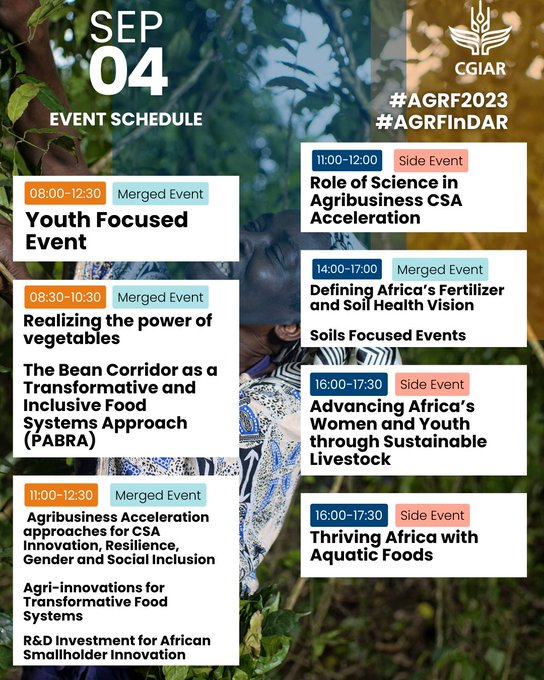
04/09 08:30 – 10:00 AIM for Climate: Making investments in climate-smart innovation count for women
Organizer: USAID
The Agriculture Innovation Mission for Climate (AIM for Climate) addresses
climate change and global hunger by uniting participants to increase investment
and support for research and development for climate-smart agriculture and food
systems innovation.
This event launched a new partnership between AIM for Climate and FAO’s innovative Monitoring and Analyzing Food and Agricultural Policies Programme (MAFAP). The partnership is focused on helping governments get better results for climate mitigation and adaptation with their current resources allocated to agriculture.
Ms. Dina Esposito, Assistant to the Administrator - Resilience and
Food Security (RFS) at USAID, Feed the Future Deputy Coordinator
for Development, & Global Food Crisis Coordinator
Dr. Nicoline de Haan, Director of CGIAR GENDER Impact Platform
Maggie Kasiko, Gender and Youth Lead, Land o'Lakes Venture37
Betty Kiplagat, Government & Industry Affairs Leader for Africa, Corteva
Agriscience
Elizabeth Nsimadala, President, Eastern Africa Farmers Federation
(EAFF), Director, Pan African Farmers Organization (PAFO) & Director,
Africa of World Farmers Organization.
Moderator: Ms. Ann Vaughan, Senior Advisor for Climate Change,
USAID
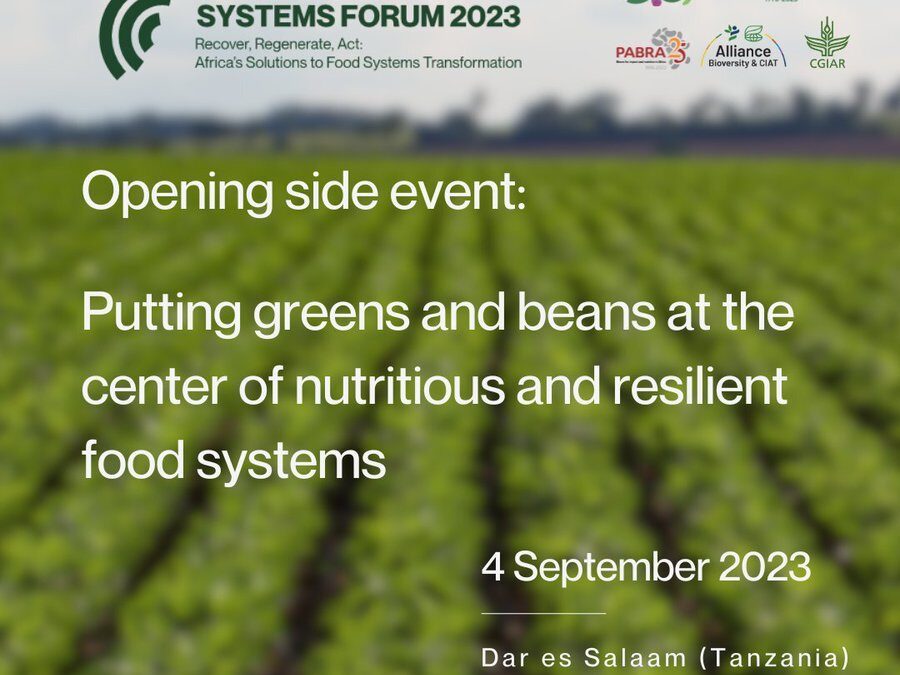
50 years of research and development
experience by WorldVeg, and over 25 years of the Pan-African Bean Research Alliance (PABRA)program of the Alliance
of Biodiversity and CIAT. Panelists shared experience on
business development, home gardens, urban gardening, etc., and propose bold
priority actions for debate, as a cornerstone of a broader strategy for nutritious
and resilient food systems.
Marco Wopereis, Director General, World Vegetable Centre
Juan Lucas Restrepo, Director General, Alliance of Bioversity International
and the International Center for Tropical Agriculture (CIAT), and Global
Director, Partnerships and Advocacy, CGIAR
The session featured compelling evidence highlighting strategies to bolster the connection
between research and business, a crucial step in facilitating investment streams
and enhancing the profitability of youth-driven agripreneurship across Africa.
Hon. Gerald G. Mweli, Permanent Secretary, Ministry of Agriculture, The
United Republic of Tanzania
Mr. Edson Mpyisi, Chief Financial Economist and the Coordinator of the
ENABLE Youth Program at the African Development Bank (AfDB)
Dr. Eileen Nchanji, Gender Specialist, Alliance of Bioversity International
and CIAT (ABC)
Ms. Pauline Lingg, Program Designer & Manager, Ghana Food Movement
Mr. William Madudike, President of the youth board, Zimbabwe Farmers'
Union
Ms. Beatrice S Marandu, Projects Coordinator, YouLead - Africa Youth
Leadership Program
Ms. Judith Endelesi Karia, Founder and MD, Ava Group Investment Ltd.
04/09 9:00 – 10:30 : Investing in Women – an AECF initiative to support transformation for women in agriculture
Organizer: AECF - Africa Enterprise Challenge Fund
AECF has over the past four years developed a broader approach to intentionally
target gender transformation in the climate smart agriculture sector. By providing
finance not just to SMEs but also to other economic entities where women work;
by placing capacity building at the core of investment decisions; and by
strengthening the broader enabling environment, our Investing in Women
approach takes a new and more holistic attitude to building women as
entrepreneurs.
Mrs. Matilda Onyango Omollo, CEO of Great Lakes, current investee
Ms. Elizabeth Swai, CEO AKM Glitters, Ex-AECF investee
Mr. Stephen Kijazi, Embassy of Canada, and GAC representative
Mr. Cosmas Muchina, Programme Manager, AECF, IIW BEK
Ms. Jael Amati, Gender lead, AECF
04/09 10:00 – 12:00 : Financing Seed Companies
Organizer: CESSA - AGRA
Most seed companies in Africa are start-ups and one of the challenges they
continuously face is limited financing to enable them grow, expand and invest in
modern facilities. AGRA has previously established a special window to support
these companies with an investment of USD $26.8M but this is far below what
they need. Several financial institutions are willing to support seed companies but
for one reason or the other only a few have benefitted.
Braison Salisali, Senior Consultant, Sundy Merchants, Tanzania
Wanjohi Ndagu, Investment Director, Pearl Capital Kenya
Victoria Sabula, CEO, AECF, Kenya
04/09 10:45 – 12:15 : Financing Farmers Organizations for Resilience
Organizer: IFAD, SAFIN, AFEX
The event addressed challenges faced by African farmers' organizations
(FOs) in obtaining financial support for agricultural development and resilience,
given the complexities of the current environment with crises like COVID-19, the
Ukraine crisis, and climate change.
Moderator – Ms. Tabitha Njuguna, Managing Director,
AFEX
Opening Remarks – Mr. Bernard Hien, Regional Director of the West and
Central Africa, IFAD
Mr. Musa Sibandze, AAACO President & ICA chair (Framer)
Ms. Teofora Madilu, Senior Manager Agribusiness, Equity Bank
Mr. Musa Sibandze, AAACO President & ICA chair
Closing Remarks – Mr. Frank Rubio, Senior Technical Advisor, IFAD
04/09 11:00 – 12:30 : Policy Prioritization through Value-Chain Analysis: public-private partnerships in policymaking, implementation, competitiveness, and investment.
Organizer: RENAPRI
Policy Prioritization through Value-Chain Analysis (PPVC) is a structured, replicable, market-led and phased approach that assists
governments to prioritize policies and commodity value chains in their
implementations. The approach uses high-quality models, tools, and analytics
based on credibly sourced and vigorously verified data for assessing Inclusive
Agricultural Transformation (IAT) related priorities and trade-offs associated with
alternative policy, public investment, and value chain choices.
Dr. Lilian Kirimi, Tegemeo Institute of Agricultural Policy
and Development, Egerton University Senior Research Fellow and
Research Coordinator.
Miss. Aika Okting'ati Aku, SUA
Dr John Macharia, Country Manager, Kenya, AGRA
Mr. Elifadhili Ezekiel, Head of Operation, Qstek Farm Limited Head of
Operation- Private sector, Sunflower Value Chain, Tanzania
Dr. Andrew Agyei-Holmes, Research Fellow, Institute of Statistical,
Social and Economic Research University of Ghana
Mr. Alan Rennison, Senior Program Officer, Bill & Melinda Gates
Foundation
Dr Nalishebo Meebelo, Executive Director, ReNAPARI
04/09 11:00 – 12:30 : Agri-innovations for transformative food systems
Organizer: EAFF & ILC Africa + R&D investment for smallholder-centered innovation in Africa Organizer: CGIAR
Uptake of innovations is low for women yet they play a big role in
agriculture. Youth on the other hand do not like engaging in agriculture, as most
would like to settle in urban centers where they can access paid jobs mainly white
color jobs. Agriculture is not attractive to the youth due to overall profitability and
returns on investment. Value chain development at different stages of production
to marketing are still lacking.
Hellen Keti, Director, Abosi Top Hill Farmers’ Cooperative, Kenya
Representative of an R&D funding organization
Representative of an African government
04/09 11:00 – 12:30 : From Farm to Fork for Real – How to Enhance Young People’s Employment and Entrepreneurship Opportunities Within Africa’s Agri-Food Systems
Organizer: Mastercard Foundation
This session focused on maximizing employment and entrepreneurship
opportunities for youth in the Agri-Food system.
Mr. Fatawu Koniamu Bakari, Public Relations Officer for Ghana Society for
the Physically Disabled (GSPD) and Ghana Federation for Disabled (GFD),
West Gonja Municipal
Ms. Harriet Cheelo
Ms. Antoinette Moleele, Advocacy and Capacity Development Consultant
Mr. Oduma Philip Dennis
Mr. Drissa Tessougue, Country Representative of YPARD in Mali
Ms. Nduta Kimani, Co-founder of Novelle Generation limited
04/09 11:00 – 12:30 : Agribusiness Acceleration approaches for CSA innovation, resilience, gender and social inclusion
Organizers: CIAT, AICCRA, IWMI, CGIAR
This transformative session explored the pivotal role of science and research in
accelerating investment in climate-smart agriculture (CSA). CSA
technical assistance coupled with investment readiness can mitigate risks and
increase agribusiness bankability. Science-based acceleration approaches allow for pathways
that demonstrate socio-environmental impact, vital to scaling investment in CSA.
Let's cultivate a resilient, inclusive, and sustainable agricultural future, empowering
all stakeholders to thrive.
Ms. Mercy Zulu Hume, Venture building & Investment Specialist, Alliance
Bioversity International & CIAT
Dr. Stephanie Jacquet, Climate Research Team Leader, Alliance Bioversity
International & CIAT
Dr. Inga Jacobs-Mata, Lead of CGIAR’s Ukama Ustawi Regional Integrated
Initiative for East and Southern Africa, AICCRA Zambia Cluster Lead, Southa
Africa Representative, International Water Management Institute (IMWI)
Dr. Godefroy Grosjean, Co-Lead of the CGIAR Hub for Sustainable Finance,
Alliance Bioversity International & CIAT
Mr. Angelous Kamande, Head of Investments Advisory Services, AECF
Mr. Peter Kirimi, Regional Agribusiness Coordinator for East and Southern
Africa, 2SCALE
Ouma Sani, Manager, Women’s Investment Club Senegal
Mr. Norman Mugisha, CEO Afri-Farmers Market
Aminata Diallo, CEO GIE Diallo Tiama
Vivian Sackoe (National Bank of Commerce Tanzania)
04/09 14:00 – 15:30 : Food Systems Transformation: Supporting government leadership for pathway implementation.
Organizer: GAIN, ACT4Food, Akademiya2063
This session drew on the experience of countries since the UNFSS to examine
how the delivery of practical support from different stakeholders to National
Convenors in governments can be enhanced as they advance the implementation
of their national food systems pathways.
Dr. Nadine Gbossa, Director, Food Systems Coordination, IFAD
Opening Remarks: Dr. Lawrence Haddad, Executive Director, GAIN
Prisca Rwezahura, Country Director, GAIN Tanzania
Dr. Honest Kessy, National Convenor, United Republic of Tanzania
National Convenor (TBC from Nigeria or Kenya)
Dr. Boaz Blackie Keizire, Head of Policy and Advocacy, AGRA
Dr. Kelley Cormier, Food Safety Division Chief, USAID
Ms. Hadija Jabiri, Managing Director and Founder, GBRI Ltd
Closing Remarks: Dr. Ousmane Badiane, Executive Chairperson, Akademiya
2063
04/09 14:00 – 15:30 : The Malabo Declaration on Africa’s Agriculture: fostering coalitions of decisionmakers, and stakeholders to accelerate implementation
Organizer: Natural Resources Institute, University of Greenwich, United Kingdom, AGRA
Though several countries have made
tangible progress in implementing actions aimed at achieving the Malabo targets,
it is evident from the most recent CAADP Biannual Reviews (2021) that more
needs to be done, and at an accelerated pace. The main objective of the session was
to foster broad-based, dynamic and informed policy actions which will help to
transform African food systems for the benefit of the peoples and governments.
Keynote speech: Prof Sheryl Hendriks, Director, NRI, University of Greenwich
Stocktaking on stakeholder platforms driving action in agriculture and food
systems: lessons from selected NRI projects by NRI team.
o Dr. Gideon Onumah;
o Dr. Kate Wellard Dyer;
o Dr. Louise Abayomi;
o Richard Lamboll
Dr. Godfrey Bahiigwa, Director of Agriculture and Rural Development,
African Union Commission (AUC)
Hon. (Dr) Godfred Jasaw, Member of Parliament, and Vice Chairman,
Agriculture Select Committee of the Parliament of Ghana
Stephen Ruvuga, Executive Secretary MVIWATA (a national farmers’
organisation, Tanzania)
Dr. Apollos Nwafor, AGRA Vice President, Policy and State Capability
04/09 14:00 – 15:30 : Rural prosperity in fragile situations
Organisers: IFAD + AfDB
This session shared private businesses’ strategies to resilience building in fragile
contexts and their outcomes in terms of transformation of food systems,
business growth and increase in income/well-being of poor producers: (a) AfDB fragility analysis and its use in customizing AfDB
approach to private sector development in fragile contexts; (b) IFAD's approach to building the resilience of private sector
businesses in fragile contexts and achieving food systems transformation
drawing on evidence from IFAD programmes (IOE evaluation, fragility gap
analysis in NEN, corporate paper on fragility).
Moderator: Ms. Rasha Omar, Country Director, Sudan, IFAD
Mr. Simon Gitonga Taveta, Communication Officer, Solar Energy
Consulting & Construction Company (SECCCO), Somalia
Ms. Asunta Akuol Bol, Coordinator of Rural Producer Associations, VSF
Germany, South Sudan
Mr. Riadh Ben Messaoud, Coordination Manager, Transition States
Coordination Office, AfDB
Mr. Bernard Hien, Regional Director, West and Central Africa Division,
IFAD
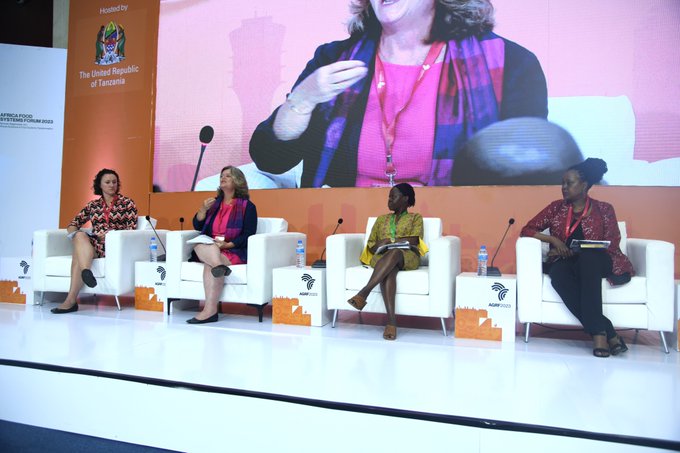
04/09 14:00 – 15:30 : Merged Event Title: Gender Responsive Policies as Drivers of Innovative Solutions for Equitable Agri-food Systems
Organizers: AWARD, African Food Changemakers
A new FAO Report (2023) provides a comprehensive picture of the status of
women in agrifood systems finds that whilst there has been some progress, there
persists substantial gender inequalities in agri-food systems. With a focus on diversity, the event featured a culmination of the Leading
African Women in Food Fellowship program.
Keynote address: Ms. Dina Esposito, Assistant to the Administrator, Bureau for
Resilience and Food Security, Feed the Future Deputy Coordinator for
Development, and the Agency’s Global Food Crisis Coordinator.
High-level moderated panel discussion
Dr. Nicoline de Hann, Director, CGIAR GENDER Impact Platform
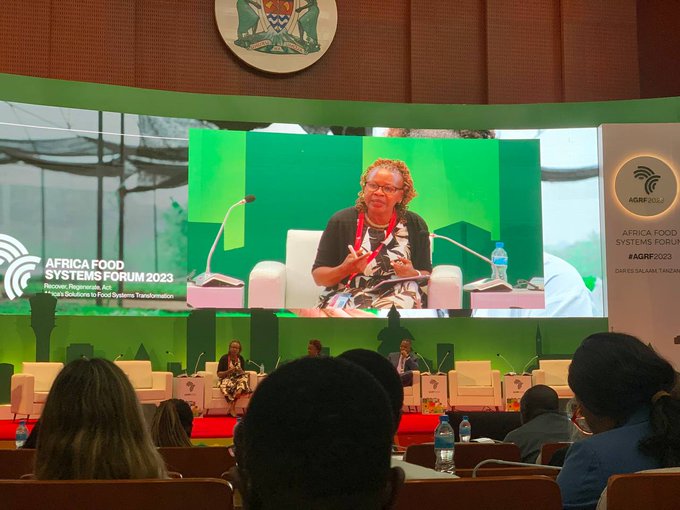
Dr. Susan Kaaria (see picture), Director, AWARD She said that when examining global organizations, it is evident that there is a significant gender inequality issue. She added that we must ensure that women play a central role in decision-making and policy formulation.
Dr. Nomathemba Mhlanga, Agribusiness Officer, FAO
Dr. Boaz Keizire, Head Policy, Advocacy and Food Systems, AGRA
This event broought together actors in soil
health and fertilizer to share their experiences and highlight what is working for the
continent and provide practical solutions and recommendations around proven
technologies for soil fertility management, acid soils management, landscape
management, as well as those related to building the resilience of stakeholders
and facilitating access to financial solutions.
The outcomes of the event will be
shared to the African Union’s Fertilizer and Soil Health (AFSH) Summit to be held
in October and beyond the summit, to inform the implementation of the 10-years
action plan. Theme 1: Promoting Indigenous Crops for Increased Soil and Human Health and Climate
Change Resiliency – led by Alliance for African Partnership (AAP)
Prof. Lise Korsten, Co-Director of the Department of Science and
Innovation, Centre of Excellence in Food Security, University of Pretoria.
Prof. Richard Mkandawire, Director, Africa, Alliance for African
Partnership
Dr. Tony Milanzi, Assistant Director - Africa Office, Alliance for
African Partnership
Theme 2: Building Healthy Soil Ecosystems – led by CIFOR-ICRAF
Mr. Henk van Duijn, President & CEO, IFDC
Intervener(s)
Dr. Liesl Wiese-Rozanov, International Consultant, Agricultural
Science and Policy/ Editorial Board Member, Soil Security Journal
Dr. Anthony Kimaro, Country Director, Tanzania, CIFOR-ICRAF.
Theme 3: Integrated Soil Fertility Management (ISFM) – led by CGIAR and GIZ
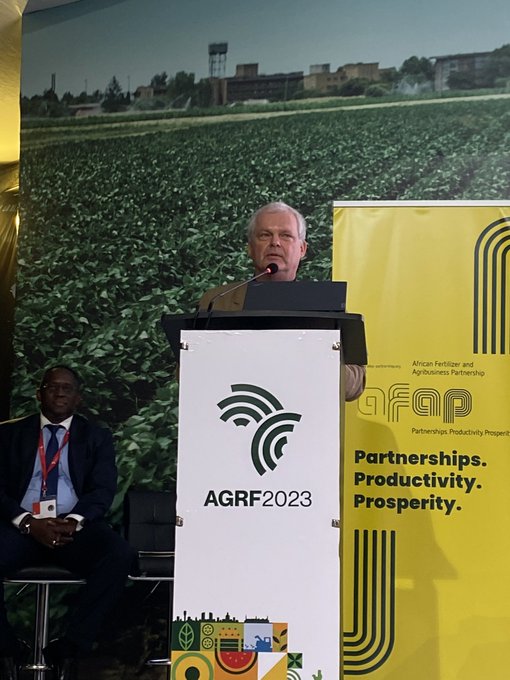
Dr. Bernard Vanlauwe (see pictures), Deputy Director General, Research for
Development, International Institute of Tropical Agriculture (IITA) Dr Vanlauwe challenged the audience with a CREDIBLE action plan that will help to scale agronomic solutions.
Ms. Latifa Mafumbi, Co-Founder, Guavay Lt
Dr. Job Maguta Kihara, CIAT
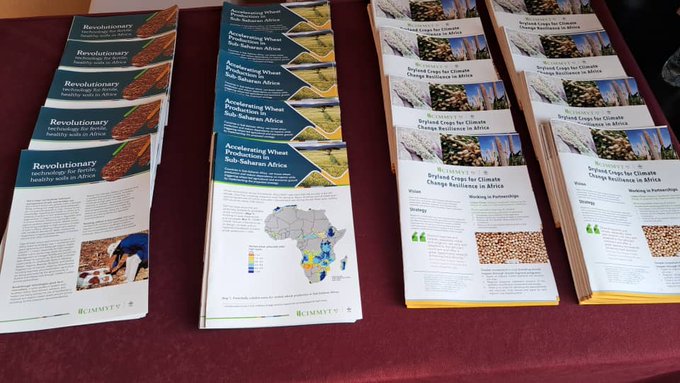
Theme 4: Defining Africa’s Fertilizer and Soil Health Vision/Rehabilitating acid soils for food security – led by AGRA, CIMMYT
Dr. Shamie Zingore, APNI
Dr. Samuel Gameda, Soil Scientist, CIMMYT Sustainable Agrifood
Systems (SAS) Program
04/09 16:00 – 17:30 : Herding Change: Sustainable Livestock Innovation by Women and Youth
Organizers: Heifer, ILRI, GDP, Land O'Lakes, SNV
In African food systems, animal source foods (i.e. milk, meat and eggs) can play a
critical role in addressing challenges to food security, nutrition, employment,
economic growth and climate adaptation, particularly for women and youth.
Mrs. Margaret Munene, Managing Director, Palmhouse Dairies (Kenya)
Ms. Elizabeth Swai, Founder, AKM Glitters integrated Poultry business
(Tanzania)
Panel 2: Discussants
Mr. Joachim Balakana, National Coordinator, Tanzania, Land O’Lakes
Venture37
Mrs. Shirley Tarawali, Assistant Director General, ILRI
Ms. Adesuwa Ifedi, SVP Africa Heifer Intl.
discussant, SNV
04/09 16:00 – 17:30 : Transforming African Food Systems: Sharable, Reliable and Timely Agricultural Data and Market Information are Essential for Agricultural Policies, Market Information, Food Security and Sustainable Food Systems
Organizers: USDA, AKADEMIYA2063, AGRA
For
a sustainable transformation, food system actors need reliable, timely, and easily
accessible data and information, including technologies such as Artificial
Intelligence (AI), to drive innovation and guide decision-making across the food
system.
Dr. Otto Gonzalez, Senior Director, Agricultural Economic Development
Division, Global Programs, USDA Foreign Agricultural Service
Ms. Lisa Colson, GIS and Imagery Specialist, USDA Foreign Agricultural
Service
Mr. Andrew Mack, CEO and Founder of Agromovil, a data and marketaccess company for small farmers, and project implementer for USDA
Foreign Agricultural Service
Dr. Racine Ly, Director, Data Management, Digital Products and
Technology, AKADEMIYA2063
Mr. Babacar Ceesay, Senior Manager, Information Systems, Department of
Data Management, Digital Products and Technology, AKADEMIYA2063
Dr. Paul Thangata, Head of Data and Analytics, AGRA
Ms. Providence Mavubi, Director for Agriculture and Industry, Common
Market for Eastern and Southern Africa (COMESA)
Closing remarks
Dr. Otto Gonzalez, Senior Director, Agricultural Economic Development
Division, Global Programs, USDA Foreign Agricultural Service
Dr. Ousmane Badiane, Executive Chairperson, AKADEMIYA2063
04/09 16:00 – 17:30 Getting real: The Inclusion debate- Advancing Social Inclusion in Food
Systems, Is it a reality or mirage?
Organizers: FOLU, AGRA, WRI, GAIN, Practical Action (PA), Micro Enterprise
Support Program Trust (MESPT), Tanager
This session through panel presentations and a debate presented how youth and
women can contribute to national food systems action plans as well as lessons
learned from implementing youth and social inclusive programs in Africa. This will
challenge African governments to develop and implement food systems plans that
are diverse and inclusive as a solution to sustainability.
Panel discussion
Mrs. Ndindi Nwuneli (see picture), Co-founder and Executive Chair, Sahel Consulting She remarked that inclusivity requires intentionality, including sharing power, equity, and success. She added that we must work with integrity and excellence and Africa needs leaders who embody this.
Dr Apollos Nwafor, AGRA
Ms. Maureen Munjua, Country Representative- Tanager
o Ms. Wangari Kuria, CEO, Farmer on Fire
The Inclusion debate
Ms. Winnie Osulah, Gender Expert, Tanager
Ms. Wangari Kuria, CEO, Farmer on Fire
Mrs. Rebeccah Amukhoye,CEO, MESPT
Ruth Okowa - GAIN
Tim Mwangi -Practical Action
04/09 16:00 – 17:30 : Mainstreaming Gender into the African Crop Innovation Pipeline
Organizers: GCfGE, Gates Ag One
Gender shapes all aspects of agricultural technology development, yet too often, it is neglected or marginalised when developing new crop innovations. This side event explored the full innovation pipeline from research and supply
chain development to marketing and evaluation, and it shows how breeders can
help overcome gendered differences in access to seeds, best practices and
markets to improve their incomes, nutrition and well-being.
Dr. Eveline Sawadogo/Compaoré, Environment and Agricultural Research
Institute (INERA)
Sara Mbago-Bhunu, IFAD
Dr. Eileen Nchanji, Alliance of Bioversity International & CIAT
Dr. Martina Occelli, Cornell University
Moderator: Renée Giovarelli, Global Center for Gender Equality




)