4 September 2026. The GFAiR - The Global Forum on Agricultural Innovation and Research has officially launched four practical guides that provide frameworks, standards, and KPIs for measuring Equitable Partnerships across every stage of Research for Development (R4D) projects.
🌱 Who benefits? Researchers, project partners, and global agricultural initiatives at all levels.
The four guides include:
1️⃣ The Partnership Principles: Defines nine principles for building equitable, inclusive, transparent, and mutually beneficial partnerships in agrifood research and innovation. 3 p.
2️⃣ Guidelines for Application in Projects: Shows researchers how to apply the nine Partnership Principles at each stage of a project, from scoping and design through implementation, dissemination, and scaling. 6 p.
3️⃣ Assessment Tool (Manual): Provides a survey-based tool, available manually or digitally, for partners to assess how effectively a project is applying the nine principles and identify areas for improvement.
4️⃣ Partner-Inclusive Language Guide: Provides practical guidance on using language that recognises partners as equal contributors and avoids terminology that reinforces unequal power relationships in research partnerships. 13 p.
It was launched during a strategic dinner meeting on the sidelines of the AFS Forum 2026 in Kigali, Rwanda. These tools address a critical sector-wide gap.
As Joanna Kane-Potaka, GFAiR Executive Secretary, highlighted during the launch:
"There are no standards on measuring Equitable Partnerships, and a lot more work is needed. That is why GFAiR unveiled a series of guides for how to apply Equitable Partnerships in projects, as well as how to measure them at each stage of a Research for Development project."
🤝 Witnessed by Strategic Partners the launch was celebrated alongside key regional partners from the Forum for Agricultural Research in Africa - FARA, ASARECA, CORAF and CCARDESA, including:
FARA: Dr. Aggrey Agumya (Executive Director)
ASARECA: Sylvester Dickson Baguma (PhD) (Executive Director along with Dr. Joshua Okonya, Moses Odeke; Julian Barungi and Blaise Amony)
CORAF: Dr. Emmanuel Njukwe (Director of Research and Innovation)
CCARDESA: Dr. Majola L. Mabuza (Special Programme Coordinator, FSRP)
GFAiR: Francois Stepman (Advisor), and Dr. Botir Dosov (GNC Consultant)
🌍 Supported by the European Commission, GFAiR works in close collaboration with six Regional Fora to drive agricultural innovation.
🫶 A massive thank you to all our partners for the continued support and collaboration in bringing this milestone to fruition!
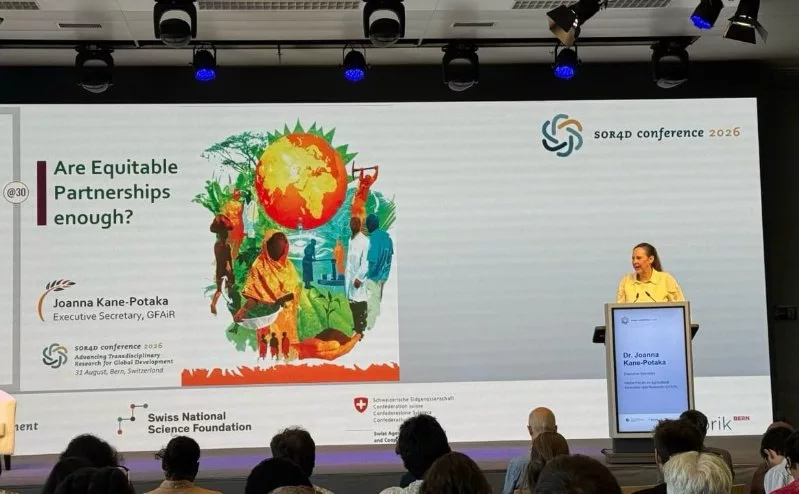
Equitable partnerships are necessary but not sufficient to transform agricultural research and development. Drawing on GFAiR Executive Secretary Joanna Kane-Potaka’s keynote at the SOR4D (Solutions Oriented Research for Development) conference in Switzerland under under the overarching theme “Advancing Transdisciplinary Research for Global Development: Crisis, Collaboration, and Change”, it makes the case for moving beyond shared decision-making and co-ownership toward genuine local leadership.
Equity must lead to local leadership: Partnerships can be co-designed and co-implemented while power still remains with those controlling funding; genuine transformation requires external partners to relinquish some power and enable local actors to lead.
External partners should build local capacity: Rather than protecting their own existing “comparative advantage,” international organisations should use their strengths to help national institutions develop the capabilities needed to eventually lead their own research and innovation.
Funding can unintentionally reinforce inequity: Consolidating fragmented funding could reduce duplication and proposal-writing costs, but larger projects may exclude smaller or less-experienced organisations unless funding mechanisms are deliberately designed around equity and local leadership.
National actors should set the agenda: Governments and national institutions need to have their priorities and voices amplified so that international partners support locally defined agendas rather than determining them.
Partnerships need to be measured: There is currently no widely accepted standard for measuring equitable partnerships, which is why GFAiR is developing tools and guidance to assess partnerships throughout the research-for-development project cycle.
The problem is often “how,” not “what”: The article suggests that many development challenges are not primarily limited by technical research capacity, but by how research is organised, who participates, who owns it, and whether solutions are taken up and scaled locally.
The ultimate goal: GFAiR sees equitable partnerships as a step toward local leadership, greater ownership, uptake and scaling of solutions, and ultimately stronger development impact—with funders having a particularly important role in accelerating this shift.
Related:
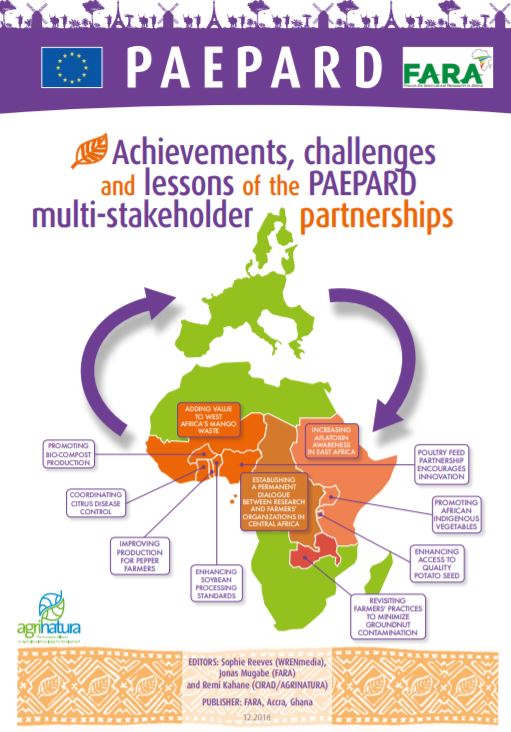
FARA's PAEPARD (Platform for African-European Partnership in Agricultural Research for Development) produced multi-stakeholder briefs and capacity-building resources to foster user-led agricultural innovation
ARD Partnerships – An Introduction: An introduction to agricultural research-for-development (ARD) partnerships and the PAEPARD approach.
Systems Thinking and ARD Partnerships: Explores how systems thinking can help partners understand the wider context, relationships and dynamics affecting agricultural innovation.
Adaptive Leadership in ARD: Examines leadership approaches for navigating complexity, uncertainty and change in multi-stakeholder agricultural partnerships.
Gender and Youth Inclusion in ARD Processes: Looks at how agricultural research partnerships can meaningfully include women and young people rather than treating inclusion as an add-on.
Reflection and Learning in ARD: Explores how partnerships can systematically reflect, learn from experience and adapt their approaches during implementation.
Knowledge Co-creation and Management in ARD: Addresses how different stakeholders can jointly create, exchange, manage and use knowledge throughout the research and innovation process.
Scaling in ARD Processes: Examines different pathways for taking successful agricultural innovations to greater scale, including scaling out, up and deep.
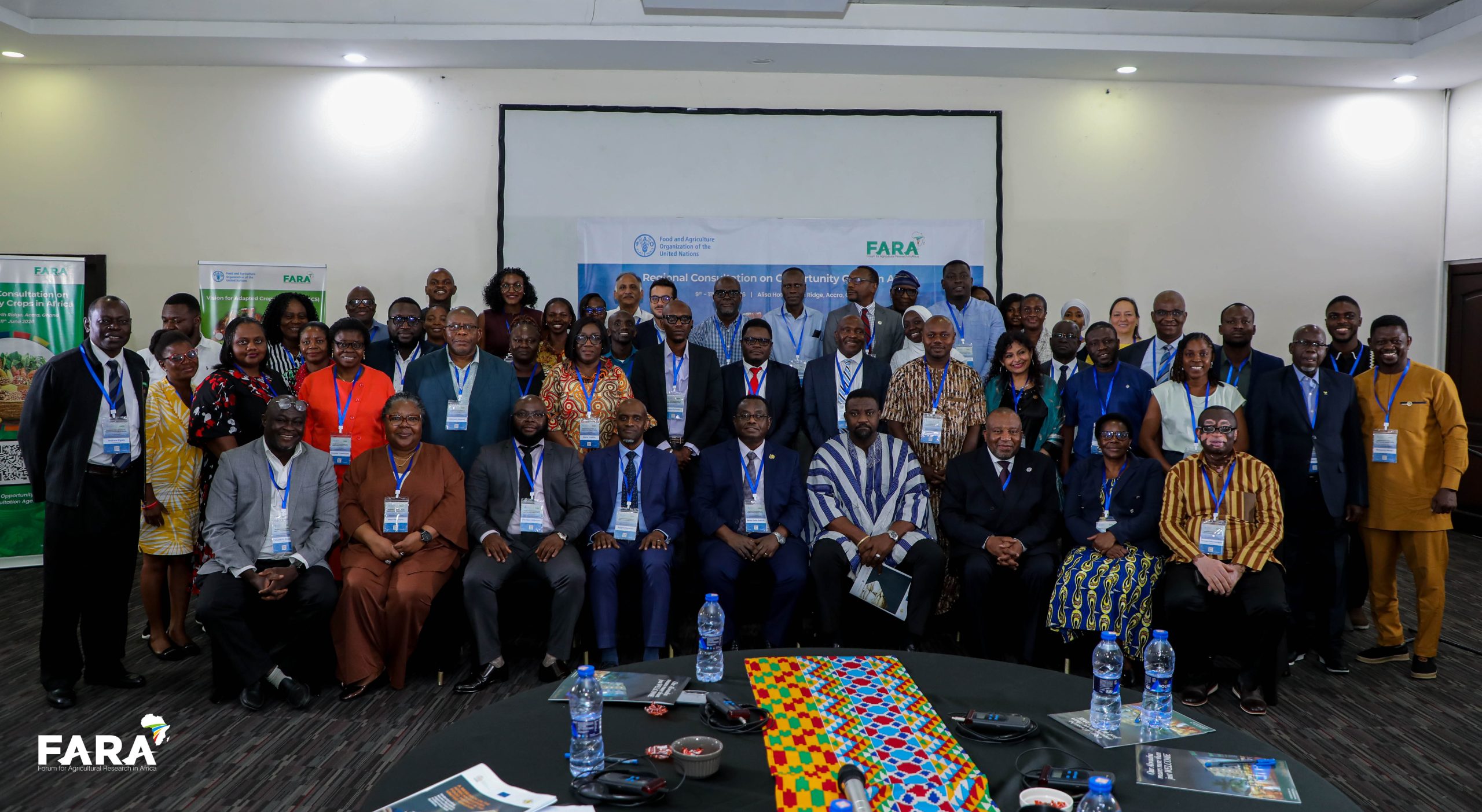
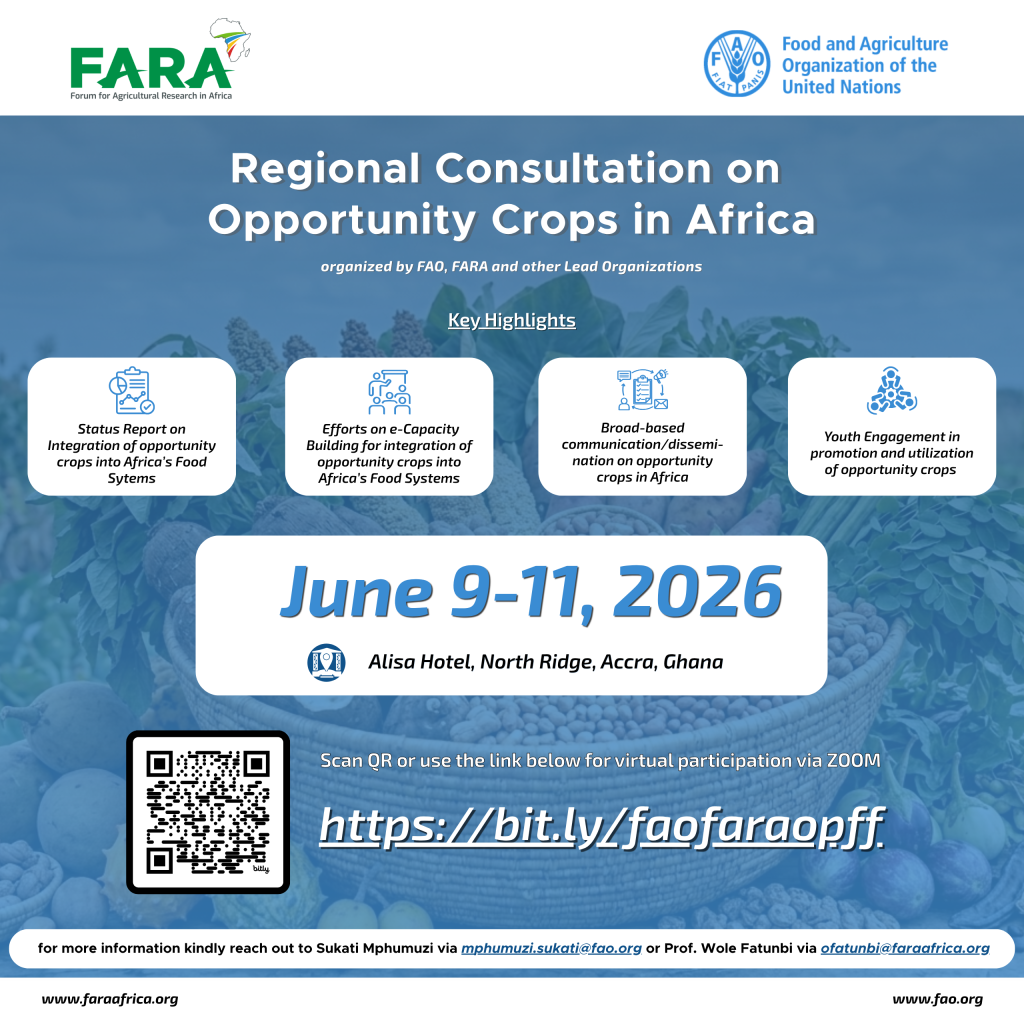
9 - 11 June 2026. Accra, Ghana. NUS Africa's regional stakeholders conference. Co-organized by the Forum for Agricultural Research in Africa (FARA) and the Food and Agriculture Organization of the United Nations (FAO), the hybrid event focused on integrating neglected and underutilized “forgotten foods” (like millets, fonio, and sorghum) into African food systems.
The conference strongly aligned with GFAiR's Collective Action on Forgotten Foods by addressing policy integration, capacity strengthening, seed systems, breeding, market development, and multi-stakeholder partnerships for neglected and underutilized crops. Notably, GFAiR contributes directly through the presentation on embedding opportunity crops into education and capacity development systems, reinforcing GFAiR's role in knowledge exchange and innovation for resilient food systems.
The regional consultation for Africa highlighted the strategic role of opportunity crops in contributing to
sustainable, nutrient-sensitive agrifood systems and climate-resilient agriculture in the region by:
Assess the progress made in the implementation of the Africa manifesto and action plan on forgotten food.
Reviewing and sharing national and regional experiences related to opportunity crops conservation, production, utilization, constraints, and opportunities.
Discussing policy and institutional frameworks needed to enhance production, value chains, and utilization of opportunity crops.
Developing a regional roadmap and collaborative action plan to maintain opportunity crops in food and agricultural policies.
Strengthening partnerships among governments, research institutions, the private sector, and civil society for opportunity crops promotion.
Day 1: Setting the Vision and Overcoming Barriers
Opening Session
Dr. Abebe Haile-Gabriel, FAO Regional Representative for Africa
Dr. Aggrey Agumya, Executive Director, FARA
Representative of Ghana's Ministry of Food and Agriculture
Strategic Perspectives on Opportunity Crops
Dr. Chikelu Mba (FAO): Unlocking Africa's Plant Genetic Resources for Food and Agriculture
Prof. Elbilali (IADC): Framework for integrating neglected and underutilized species into agrifood systems
Dr. Clement Adjorlolo (AUDA-NEPAD): Scaling opportunity crops through coordinated policy action
Transitioning African Agrifood Systems
Dr. Julia Sibiya (VACS): Opportunity crops for agrifood system transformation
Madam Fatmata Binta (Dineonamat): African ingredients and cultural food value
Prof. Wole Fatunbi (FARA): Progress report on the Africa Manifesto on Opportunity Crops/Forgotten Foods
Dr. Abdou Tenkouano (ICIPE): Plant health solutions for opportunity crops
Dr. Ousmane Ndoye (CORAF): Research development and networking
Joe Mzinga (ESAFF): Mechanization pathways for smallholder systems
Theme 2: From Knowledge to Action
Dr. Maureen Duru (The Food Bridge): Scaling nutrient-rich crops for food security
Prof. Nelson Ojijo (JKUAT): Awareness raising and consumer recognition
Olawunmi Benedict (GROW West Africa): Producer capacity building and agroecological transition
Prof. Vincent Aduramigba (IAR&T/OAU): Capacity development instruments for NARES and institutions
Theme 3: Regional Actions and Networks
Prof. Wole Fatunbi (FARA): Communities of practice and regional networks
Ms. Ndèye Aïssatou Diop (CORAF): West and Central Africa experiences
Mr. Moses Odeke (ASARECA): Eastern and Central Africa experiences
Dr. Batholomeu Chataika (CCARDESA): Southern Africa experiences
Day 2: Conservation, Breeding, Seed Systems and Markets
Theme 4: On-Farm Diversity and Local Adaptation
Dr. Carlo Fadda (Bioversity & CIAT): Managing crop diversity on farms
Dr. Olakunle Sansa (IITA): Diversity for resilience
Dr. Hillary Muginyo (Zimbabwe): Participatory breeding for locally adapted varieties
Theme 5: Conservation of Opportunity Crops
Dr. Nora Castaneda (Crop Trust): Complementary conservation strategies
Dr. Olaniyi Oyatomi (IITA): Linking on-farm and ex situ conservation
Dr. Bissah Mathilda (PGRI-CSIR): Genetic resource conservation and germplasm exchange
Andrew Mushita (CTDT-ZW): Community seed banks and local stewardship
Theme 6: Breeding for Nutrition and Resilience
Prof. Enoch G. Achigan-Dako (UAC-Benin/AOCC/AfPBA): Collaborative breeding for forgotten foods
Dr. Rita Mumm (AOCC): Strengthening plant breeding capacity in Africa
Mr. Francois Stepman (GFAiR): Integrating opportunity crops into educational curricula
Theme 7: Seed Systems and Value Chains
Yarama (GNRC): Registration of local varieties
Edward Kilawe (FAO): Lessons from the One Country One Priority Product initiative
Dr. Presidor Kendabie (NDU-Nigeria): Sustainable seed systems for forgotten foods
Theme 8: Building Markets and Business Cases
Dr. Yacouba Diallo (AFSTA): Integrating orphan crops into seed trade systems
Mr. John Cordaro (MARS/AOCC): Public-private pathways for opportunity crops
Dr. Stefano Marras (Bayer): Private-sector innovation and investment
Mr. Andrew Egala (GWB Kenya): Market access, short supply chains, and alternative retail models
Day 3: Developing the African Roadmap
Theme 9: Action-Based Roadmap for Opportunity Crops
Participants were divided into working groups to develop a continental roadmap and implementation agenda for integrating opportunity crops into African agrifood systems. This was followed by plenary presentations and discussions on recommendations and next steps.
The consultation concluded with a synthesis by Dr. Chikelu Mba (FAO) and closing remarks from Dr. Aggrey Agumya (FARA) and Ms. Priya Gujadhur (FAO Ghana).
ACAT is the foremost forum that focuses on game-changing novel agricultural technologies, ideas, and policies that foster agricultural transformation on the continent. The Conference is an agriculture technology transfer platform that promotes innovative and practical solutions to catalyse more efficient, inclusive, and resilient agriculture in Africa.
It brought together government representatives, industry thought leaders, policymakers, technical experts, private institutions, farmers, women and youth across the globe to discuss and define practical actions and solutions to the challenges of technology access and use faced in the agriculture sector in Africa.
This panel session explored how a user-centered design approach
can revolutionize the development and deployment of Science, Technology, and
Innovation (STI) in agriculture, with smallholder farmers and other key stakeholders
as integral members of the innovation team.
Sequence 1: How can we better understand and prioritize the specific needs of smallholder African farmers to ensure that technological solutions are truly impactful and sustainable?
Dr. Milindi Sibomana, Chief Agriculture Officer, One Acre Fund
Ms. Margaret Awinja, Coordinator, Western Region Farmers Network
Mr. Anthony Kioko, CEO, CGA
Prof. Maggie Gill, Board of Trustees Member, AATF
Dr. Kayode Sanni, Project Manager and Director of The Alliance for Hybrid Rice in Africa (AHyRA), AATF
Sequence 2: How can we create effective partnerships between researchers, policymakers, private sector actors, and farmers to design scalable farmer centric agtech solutions?
Prof. Richard O. Oduor, Research, Innovation and Outreach, Kenyatta University
Prof. Hlami Ngwenya, Head of Research Chair, Communication for Innovation Center for Sustainable Food Systems and Development, University of Free State
Prof. Bernard Slippers, Board of Trustees Member, AATF
Prof. Firew Mekbib, Chair, National Variety Release, Federal Democratic Republic of Ethiopia
Dr. Jean Claude Rubyogo, Director, Pan-Africa Bean Research Alliance (PABRA)
09/10 Building robust digital infrastructure in rural areas
This session explored a two-pronged approach: establishing resilient and accessible infrastructure for present impact and proactively developing the robust and interconnected infrastructure required to harness the transformative potential of AI, robotics, precision agriculture, and data analytics.
Sequence 1: How can digital solutions be leveraged to accelerate the adoption and
application of agricultural innovations?
Dr. Bellancile Uzayisenga, Plant & Microbial Biotechnology Programme
Coordinator Senior Principal Research Fellow, Rwanda Agriculture and Animal
Resources Development Board, (RAB)
Mr. Deo Massawe, CEO, Bank of Kigali (BK) TecHouse
Mr. Emmanuel Assiak, Chief Investment Officer, Fund for Export Development
in Africa (FEDA)
Dr. Ndambe Magnific, Deputy Vice Chancellor of Research, RICA
Sequence 2: What are the key challenges and opportunities in deploying digital tools in remote rural areas, and how can these challenges be overcome?
Mr. Pierre Kayitana, General Manager, Zipline Rwanda
Mr. Gabriel Macharia, Data Management Officer, AATF
Mr. Paul Kwengere, Board Member, International Trade Council
Mr. Faissal Sehbaoui, CEO, AgriEdge
09/06 Digital divide and promoting Ag-tech literacy
This panel addressed the critical issue of farmers’ voices to the forefront and exploring practical solutions to promote tech literacy and the adoption of farmer-centric agricultural technologies.
Sequence 1: Bridging the Gap - Farmers and Tech Developers in Dialogue
Ms. Elizabeth Nsimadala, President, EAFF
Mr. Pacifique Nshimiyimana, Founder & CEO, Real Green Gold Ltd
Mr. Naboho Wiledyo, Farmer, People’s Republic of Burkina Faso
Mrs. Tigist Endashaw Bealem, Consultant - Climate Action Policy Advocacy,
Federal Democratic Republic of Ethiopia
Sequence 2: Interactive workshop and reporting
What are the effective training and education models for Ag-Tech solutions in
Africa?
What are some practical strategies for enhancing access and affordability of
digital tools for farmers?
The role of youth in championing digital literacy among older farmers?
Day 2: Theme: Enabling Environment: Investment and partnerships
for Ag-Tech Solutions
10/06 : Enabling Environment: Investment and partnerships for Ag-Tech Solutions
This session explored strategic investments across a range of vital linkages,
markets, credit facilities, capacity building, and other essential support services.
Keynote Address: Investing in the Future of African Agriculture - H.E. Dr. Goodluck Jonathan, AATF Goodwill Ambassador & Former President, Federal Republic of Nigeria
Panel 1: Charting a Collaborative Roadmap for Quality Partnerships:
Dr. Canisius Kanangire, Executive Director, AATF
Prof. Appolinaire Djikeng, Director General, ILRI
Dr. Yuichiro Asai, President & CEO, Asai Nursey, Inc
Dr. Sheila Obim, Executive Director, Alliance for Science
Prof. Jean Jacques Muhinda, Regional Director East & Southern Africa, AGRA
Panel 2: Building the Ecosystem: Infrastructure, Finance, and Capacity
Hon. Tesi Rusagara, Minister of State for Resource Mobilization and Public Investments,
Rwanda.
Ms. Brenda Gunde, Lead Global Technical Specialist ICT4D, Sustainable Products, Markets and Institutions Division, IFAD
Dr. Stella Simiyu (picture), Director Regulatory Affairs & Stakeholder Relations, CropLife Africa Middle East: see video @ 42:27 - 46:38 She answers the question: How do we foster a PPP that works for the farmers?
Ms. Katie Taft, Communications and Engagement Lead, Gates Ag One
Mr. Hannington Namara, C.E.O Equity Bank Rwanda
10/06 : Developing sustainable business models for Ag-Tech
This session explored diverse investment opportunities, innovative financing mechanisms, and policy frameworks that can unlock the widespread development and adoption of impactful Ag-Tech.
Sequence 1: For sustainable Ag-Tech to thrive across diverse African markets, what are the primary investment hurdles and the resulting opportunities once these are addressed?
Dr. Eugene Mutimura, CEO, National Council of Science and Technology, Republic of Rwanda
Dr. Jonga Munyaradzi, Seed Production Manager, AATF
Dr. Said Rutabayiro Ngoga, Division Manager for Technology Innovation, Rwanda Information Society Authority
Ms. Martha Haile, Founder, Abze
Sequence 2: How can we foster a new generation of innovative agripreneurs who can drive sustainable agricultural development and economic growth?
Prof. Alfred Bizoza, Professor, University of Rwanda
Mr. John Agboola, Foundation Manager, AGCO Corporation
Mr. Peter Wamboga-Mugirya, Director for Communication and Partnerships, Science Foundation for Livelihoods and Development (SCIFODE)
Dr. Nomathemba Mhlanga, Country Representative, FAO
10/06 Researchers Dialogue Session Title: Integrating traditional knowledge systems with modern technology solutions
This session examined the synergies between indigenous ecological knowledge—deeply rooted in local cultures and ecosystems—and innovations such as precision agriculture, biotechnology, and digital platforms.
Sequence 1: Collaborative Pathways to Next-Gen Agriculture
Mrs. Gift A. Kadzamira, Director General, National Commission for Science and Technology Rwanda
Dr. Omar Mukama, Lead GCP inspector of Clinical Trials, Rwanda Food and Drugs Authority
Dr. Allan Liavoga, Technical Advisor, North American Millers Association
Ms. Bakang K. Kgasudi, PhD student, Botswana University of Agriculture and Natural Resources
Sequence 2: Interactive workshop and reporting - Bridging Wisdom and Technology
What core elements of traditional farming must be safeguarded and integrated?
How can digital agriculture enhance, rather than replace, local practices?
What governance mechanisms can ensure ethical knowledge sharing?
Day 3 : Last Mile Delivery: Commercialization and Scaling of
Ag-tech Solutions
11/06 Commercialization and Scaling of Ag-tech Solutions
The panellists analysed the persistent barriers hindering access in rural communities and explore how strategic, multi-sectoral partnerships, empowered by cutting-edge technological advancements in logistics and information flow, can revolutionize delivery.
Project Showcase: Climate Smart Remote Sensing Project in Rice Value Chain Project
- Dr. Kayode Sanni, Project Manager and Director of The Alliance for Hybrid Rice in Africa
(AHyRA), AATF
Opening Remarks & Setting the Stage
Mr. Sam Ngabire, Coordinator, Home Grown School Feeding Project, Ministry of Education,
Republic of Rwanda
Keynote Presentation: Overcoming Last Mile Hurdles -Ms. Mildred Nadah Pita, Head of
Public Affairs, Science and Sustainability, Bayer
Panel Discussion: Building Robust Partnerships Among Stakeholders (Public, Private,
NGOs) for Sustainable Scaling of Ag-Tech Solutions
Mr Shavda Tree Onov. CEO of East Africa Agro Limited
Prof. Karimbhai M. Maredia, Professor and Director of International Programs, Michigan State University - "The importance of South-South, North-South partnerships for technology transfer"
Mr. Momar Dieng, Chief Strategy and Partnerships Officer, AIMS Global Network
Dr. Jean Claude Rubyogo, Director, Pan-Africa Bean Research Alliance (PABRA)
Mr. Dagmawi Habte-Selassie, Country Director, Rwanda, IFAD
Panel Discussion: Beyond the Pilot, Scaling Ag-Tech Solutions
Mr. Amath Pathé Sene, Managing Director, Africa Food System Forum (AFSF)
Ms. Zoë Karl-Waithaka, Managing Director and Partner, Boston Consulting Group
(BCG) - Inclusive business models
Dr. Mel Oluoch, Director for Strategic Partnerships, Sasakawa
Dr. Telesphore Ndabamenye, Director General, Rwanda Agriculture and Animal
Resources Development Board (RAB)
Path Forward: Dr. Oliver Kamana, Permanent Secretary, MINAGRI
The Alliance for Cowpea Improvement in Africa (ACIA) is an Africa-focused community of cowpea experts. It responds to the demands of African farmers and consumers for cowpea that is safe, affordable and environmentally sustainable.
Cowpea is a delicious and nutritious food crop, one widely featured in African cuisines and widely grown on African farms. The mission of ACIA is to ensure this versatile and resilient crop reaches its full potential to support healthy diets and sustainable, productive farms.
Kira Everhart-Valentin of Gates Agricultural Innovations (Gates Ag One) Prof. Muhammad Lawan Umar - Cowpea breeder, Institute for Agricultural Research (IAR), Nigeria Francis Onyekachi, Manager Product Stewardship and Quality (AATF) He presented the progress on gene edited cowpeas Dr. Jean Baptiste Tignegre - African Agricultural Technology Foundation (AATF)
11/06 Licensing and IP: access to proprietary traits and germplasm
This session delved into the complex landscape of intellectual property (IP) and licensing concerning proprietary traits and germplasm – foundational elements for agricultural innovation and productivity gains in Africa. Access to these protected resources holds immense potential for developing climate-resilient crops, enhancing nutritional value, and improving yields for African farmers. However, navigating the legal, ethical, and economic considerations surrounding IP and licensing is crucial to ensure equitable access and foster sustainable agricultural development in Africa.
While the private and public seed sector share the same goal of developing improved varieties, there are
important differences that must be considered when developing appropriate IPR for cultivars developed
in the public sector. Public breeding often focuses on crops with high social returns to investment but
low private returns, such as small grains, perennials, cover and soil building crops, root and tuber crops,
and tree crops. Public breeders often focus on long arc research, that is, research in which the payoff
may require many years of work, often by many individuals. After development and proof of concept by
the public sector, the new products are commercialized by the private sector with little return of funding
to the public side. In many cases the public breeding sector collaborates with the private sector to
commercialize public cultivars, and considerations must be made to facilitate this technology transfer. (See: University of Wisconsin-Madison (2016) Intellectual Property Rights and Public Plant Breeding Recommendations, and proceedings of a conference on best practices for intellectual property protection of publicly developed plant germplasm)
Sequence 1: How can intellectual property and licensing frameworks be structured to enable access to proprietary traits and germplasm while still incentivizing innovation?
Dr. George Smith, Senior Associate Dean for Research, MSU
Dr. Damaris Odeny, Plant Geneticist, International Crops Research Institute for the SemiArid Tropics (ICRISAT)
Dr. Deogracious Protas Massawe, Principal Research Coordination Officer, Tanzania Commission for Science and Technology.
He presented: the Tanzania Technology and Innovation Support Centers (TISCs) Innovators are trained on the various aspects of IP, enabling them to identify protectable aspects of their inventions. This safeguards their innovations and gives innovators a competitive advantage at the market. The Tanzania Commission for Science and Technology (COSTECH) is managing a credit window(1 M USD) under the national fund for advancement of Science and technology (NFAST) to support commercialization of Innovations in collaboration with CRDB bank foundation and the World Bank. The establishment of this special commercialization fund in collaboration with CRDB Bank Foundation to accommodate market penetration of research and innovation products. This special window will serve to: (i) Promote commercialization of research and innovation products in Tanzania; (ii) Attract more financing opportunities within and outside Tanzania for supporting; commercialization of research and innovation products; (iii) De-risk innovators and unlock them to commercial funding from commercial banks. (the call opened on 5th May 2025)
Ag-Tech Frontier: Mechanizing the Last Miles: A viable, all-terrain machine to unlock rural food production - Mr. Eric Lane, Co-Founder and Principal, Prosparity Systems
Sequence 2: From Ownership to Access — Making IP Work for African Farmers. What practical steps are needed to ensure African researchers and farmers benefit from protected germplasm and traits, especially in the context of climate resilience and food security?
H.E. Ambassador Prof. Muhammadou M.O. Kah, AATF Board
Ms. Keziah Chomba, Legal Officer, AATF
Dr. Nyagatare Guillaume, Principal, University of Rwanda, College of Agriculture
"Let's put Intellectual Property Rights in the social context of Africa, and not from an individual gain perspective"
11/06 : Leveraging Ag-Tech for Sustainable Agriculture
This dialogue empowered young people to create, adopt and scale Nextgen AgTech solutions for a sustainable and prosperous agricultural future in Africa. This youth dialogue amplified the voices of young farmers and inspire a new generation of agricultural leaders.
Sequence 1: Collaborative Pathways to Next-Gen Agriculture
Mr. Norman Mugisha, CEO, Afrifarmers Market
Ms. Mildred Nadah Pita, Head of Public Affairs, Science and Sustainability, Bayer
Mr. Henry Lagat, Lead, Generation Africa, AGRA
Mr. John Agboola, Foundation Manager, AGCO Corporation
Sequence 2: Interactive workshop and reporting
What are the most effective ways to educate and train young farmers on AgTech in a way that resonates with them?
How can governments and other stakeholders create a more enabling environment that supports youth engagement in Ag-Tech?
How can we foster more effective collaboration between different stakeholders to avoid duplication of efforts and maximize impact?
11/06 Private Sector Dialogue: Commercialization and Scaling of Climate Smart and Modern Ag-Tech to the last mile
This private sector dialogue discusses effective
strategies for commercialization of climate-relevant agricultural technologies and
innovations in Africa.
Dr. Sylvester Dickson Baguma, Executive Director, ASARECA
Ms. Julian Barungi, Program Officer Policy, ASARECA
Dr. Joshua Okonya, Program Officer, Agricultural Technology and Innovation,
ASARECA
Mr. Federico Tonelli, Director of Development & Partnerships, Asili Agriculture
Ms. Iheoma Okpara Chienyenwa, Plant Operations Manager, The Rwanda
Fertilizer Company Ltd
Mr. Innocent Namuhoranye, Chairman, National Seed Association of Rwanda
(NSAR)
Mr. Didace Mparirwa, Head of Agriculture and Livestock Cluster, Private Sector
Federation (PSF)
Dr. Geoffrey Ongoya, Technical Manager, Koppert Biological Systems
Ms. Stella Kimani, Chief Operations Officer, Acre Africa
Ms. Sidonie Paques, Climate Finance Investment Lead, The Global Green
Growth Institute (GGGI)
Day 4 : Cultivating a sustainable future with AgTech Solutions
This subtheme explored practices for product integrity preservation to benefit farmers, enterprises, and consumers while creating regenerative and distributive products that work within the planet’s ecological limits.
Opening Remarks & Setting the Stage - H.E. Ambassador Prof. Muhammadou M.O. Kah, AATF Board
Keynote Address - Dr. Chris Holdgreve, CEO, Global Stewardship Group (GSG) & Executive Director, Excellence Through Stewardship (ETS) Stewardship for Transgenetic Plant Technology; Plant breeding Innovation (PBI) such as genome editing and other breeding innovations.
12/06 Stewardship: Cultivating a sustainable future with Ag-Tech Solutions
This session delved into practices that safeguard product integrity, ensuring the longevity and effectiveness of innovations.
Panel Discussion: Stewardship & Sustainability in Action
Prof. Johnnie Van Den Berg, Program Manager: Integrated Pest Management,
North-West University, South Africa He mentioned Nigerian Farmer’s Success Story with Bt Cowpea
Dr. Olusegun Adedayo Yerokun, Deputy Vice Chancellor, Academic Affairs,
RICA
Prof. Emmanuel Ikani, Executive Director, National Agricultural Extension and
Liaison Services, Zaria, Nigeria
The new umbrella body has been founded by the Forum for Agricultural Research in Africa (FARA), the Association for Strengthening Agricultural Research in Eastern and Central Africa (ASARECA), the West and Central Africa Council for Agricultural Research and Development (CORAF), the Center for Coordination of Agricultural Research for Development in Southern Africa (CCARDESA), the Regional Universities Forum for Capacity Building in Agriculture (RUFORUM), the North Africa Sub Regional Organization (NASRO) and the African Forum for Agricultural Advisory Services (AFAAS). AARIEIs is expected to help them improve their linkages on research, extension and higher education.
On climate change, the partnership plans to focus on joint research in crop and livestock breeding, soil health, regenerative and digital agriculture as part of strengthening collaborative research for sustainable and climate-resilient agricultural technologies.
It will also have a joint development of climate-smart innovations, nature-positive agroecology, AI-driven precision agriculture, big data analytics, and policy-oriented research for food security and sustainable investment.
It will emphasize technology transfer and scaling for impact, capacity sharing and development, monitoring, evaluation and learning, and resource mobilization in ensuring that Africa becomes self-sufficient in food production.
AARIEIs will also establish regional innovation hubs and strengthen private sector linkages and ensure that agricultural technologies reach their intended users.
It will also promote community-driven technology adaptation, delivery and extension services throughout Sub Saharan Africa (SSA).
At the CGIAR Science Week, the African Agricultural Research, Innovation & Education Institutions (AARIEI) signed a Partnership Engagement Framework with the CGIAR to foster research, innovation, capacity building, and impact-driven solutions to support Africa’s agricultural transformation.
The two organizations now have a guiding structure to strengthen collaboration that is expected to foster strategic partnerships, knowledge exchange, and joint innovation efforts.
It will help enhance partnerships between CGIAR and AARIEIs for joint research, innovation, and policy influence, and also align development agenda with the AU Agenda 2063, CAADP-Kampala Strategy, CGIAR 2025-2030 research strategy, and regional agricultural policies.
The organization aims to drive a culture shift toward more equal and healthy partnerships for capacity sharing between and among CGIAR and partners advancing food, land, and water systems transformation.
Emphasis will also be put on enhancing research infrastructure within AARIEIs, fostering South-South collaboration and peer learning, and expanding digital learning and open knowledge platforms to facilitate information sharing and skill development.
At the recently concluded CGIAR Science Week side event titled “Breeding for Tomorrow: Inclusive Delivery,” Ms Beatrice Egulu from the African Union Commission (AUC) delivered a compelling address, advocating for deeper continental integration and innovation in seed systems to ensure equitable access and regional impact. The high-level panel session, held at the United Nations Office in Nairobi, brought together prominent voices from the African agricultural sector under the theme of “Inclusive Delivery”, a strategic framework aimed at transforming breeding programmes for greater reach, uptake, and farmer impact.
Ms Egulu highlighted the disparity between promising regional frameworks—such as the COMESA Variety Catalogue, ECOWAS seed regulations and SADC’s Harmonised Seed Regulatory System – and their actual implementation. Despite protocols for mutual recognition, numerous African countries continue to impose redundant variety testing, outdated national laws, and limited regulatory capacity, thereby hindering access to improved varieties.
South-South Cooperation (SSC): A Strategic Pathway to Scale
Discussing the significance of South–South Cooperation, Ms Egulu described it as a cornerstone for democratizing agricultural innovation in Africa. She noted that SSC facilitates the exchange of technologies and institutional best practices—from East African seed traceability systems inspired by Asia to participatory breeding models adapted across African regions.
“SSC is not just a tool. It is a pathway to shared sovereignty and resilience in seed systems.”
To institutionalise these gains, she called for:
Integrating the SSC into the African Seed and Biotechnology Programme (ASBP) and the framework of the CAADP-Kampala Declaration.
Utilising triangular cooperation to mobilise financial and technical support.
Mainstreaming SSC within broader frameworks such as STISA-2024 and the African Agribusiness Strategy.
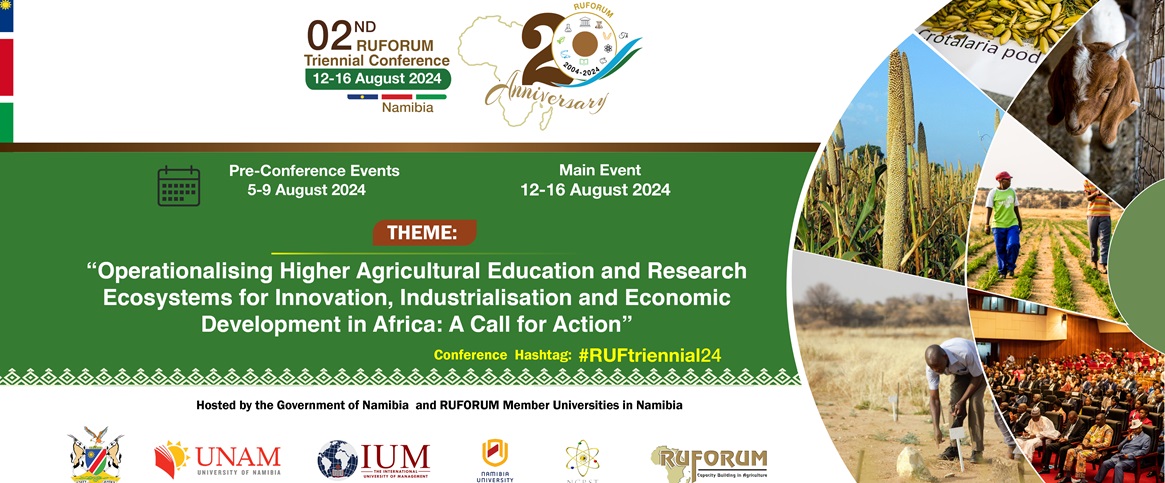
The theme for the second Triennial Conference is “Operationalising Higher Agricultural Education and Research Ecosystems for Innovation, Industrialisation and Economic Development in Africa: A Call for Action”.
The conference will enable education, research and agricultural ecosystem actors to showcase and present their key findings, lesson-share and inform each other on key actions required to harness science, technology and innovation for Africa’s development. Accordingly, the second Triennial Conference will involve scientific sessions that bring together a wide range of stakeholders and partners. The scientific sessions will include oral and poster presentations as well as exhibitions.
This symposium was held in three sub-themes listed below.
Supplying Africa’s 2nd decade (2024-2034) work force:
i. Transforming Graduate Training and Research: The gaps, experiences, and lessons
learnt.
ii. Entrepreneurial education: The practice, and scalable lessons.
iii. Rebalancing the human resource pyramid: The gaps, and linkage between Technical
and Vocational Education and Training (TVETs) and university education.
iv. Closing the gender and diversity gap in agricultural education: The gaps, lessons
learnt and opportunities.
v. Leaving no one behind: Out of school skilling and education programmes: Practice
and lessons learnt.
Emergent Issues-Digitizing education:
i. Leveraging digital tool to increase access to education while maintaining quality and
relevance.
ii. Machine learning and Artificial Intelligence and its impact on education.
Emergent issues: Building human capital for Africa’s climate change and
resilience programmes.
i. Climate risks and mitigation: The gaps, experiences, and lessons learnt in training
programmes.
ii. Low carbon services and renewables: The gaps, experiences, and lessons learnt in
training and research programmes.
iii. Climate and carbon finance, and resilience investments: The gaps, experiences and
lessons learnt.
Prof. Patrick Okori, RUFORUM
Dr. Beatrice Muganda Inyangala, Principal Secretary, State Department of Higher Education, Kenya
Dr. Molapo Qhobela, Deputy Vice-Chancellor - Institutional Change, Strategic Partnerships and Societal Impact (TBC)
Prof. Olusola Bandele Oyewole, Secretary General, AAU
Dr. Agnes Kalibata, President, AGRA
Dr. Aggrey Agumya, Executive Director, FARA
Dr. Silim Nahdy, Executive Director, AFAAS
Dr. Simeon Ehui, Regional Director, Continental Africa CGIAR and DG IITA
Plenary Session, Thematic Area 2: Sustainably Growing the Economy and Feeding Africa
The event will start with a policy address on “Africa’s strategic and policy aspirations for sustainably feeding and growing its agrifood system to be delivered by Special Advisor to the Commissioner for Agriculture, Rural Development, Blue Economy, and Sustainable Environment (ARBE), African Union Commission. This will be followed by a keynote address on “Sustainably growing the economy and feeding Africa” to be made by the CGIAR.” Discussants from academia, national and continental agricultural research organizations, and the extension service providers, private sector, and farmers will respond to the key issues raised in the keynote address.
Prof. Jerome Theo Afeikhena, Special Advisor to the Commissioner, Agriculture, Rural Development, Blue Economy and Sustainable Environment, African Union Commission (Representing Commissioner ARBE) - Policy address on “Africa’s strategic and policy aspirations for sustainably feeding and growing its agrifood system”
Dr. Ephraim Nkonya, Nonresident Research Fellow, IFPRI - Economics of land degradation in sub-Saharan Africa
Efforts to increase adoption of integrated soil fertility management will require improvement of access to markets, advisory services and retraining of agricultural extension services. There is also need to find practical and amenable strategies for incentivizing farmers to use ISFM. For example, conditional fertilizer subsidy could provide incentives for farmers to adopt nitrogen fixing agroforestry trees and improve significantly the current subsidy programs in several SSA countries.
Prof. Agnes Mwangombe, Former Principal of the College of Agriculture and Veterinary Sciences, University of Nairobi
Dr. Job Kihara, Initiative Co-Lead, Excellence in Agronomy, CGIAR
Prof. Umezuruike Linus Opara, Distinguished Professor and Research Chair, Stellenbosch, South Africa
Prof. Cliff Dlamini, Executive Director and Head of Mission, CCARDESA
Dr. Moumini Savadogo, Executive Director, CORAF
Dr. Robert Zougmoré, AICCRA Cluster Lead for West Africa, Alliance of Alliance of Bioversity International and CIAT
13/08 @ 10:30 Unlocking Inclusive and Broad-Based Economic Opportunity
To unlock inclusive and broad-based economic opportunity for Africa, new knowledge on models,
pathways, and drivers of Africa’s economic growth, successes, and lessons for scaling these across the
continent be identified and widely disseminated. A symposium will discuss how to unlock inclusive economic growth in Africa in two sub-themes:
Inclusive resourcing for equitable economic growth:
i. Inclusive access to financial resources: Microfinance, Fintechs and supporting excluded
communities and populations.
ii. Access to agricultural input subsidies: Lessons learnt and options for the future
iii. Access to technologies: Lessons learnt and options for the future in formal and informal
seed and technology supply systems, post stress seed systems (emergency seed)
iv. Closing the gender gap in agriculture practice and enterprise.
v. Inclusive access to land, water, and other physical resources for production (land tenure
systems -access, usage, control) for all.
Wealth and Youth Employment:
i. Agri-entrepreneurship and agriculture de-revived jobs: Initiatives, opportunities,
prospects, and lessons learnt from past and ongoing actions.
ii. Feeding Africa’s urbanising population: The changing peri-urban and urban food systems
and their opportunities for young people through service provision, value addedprocessing and new foods.
iii. Unlocking entrepreneurship in innovation: Digitization, and emerging technologies to
facilitate best environment for entrepreneurship.
Dr. David Nielson, RUFORUM IAP, and former WB - "Is an inclusive and diverse growth possible for Africa? Lessons learnt over the past decades of the continental renaissance."
Dr. Pascal Sanginga, Regional Sector Manager for Agriculture and Agro-Industries, African Development Bank
Dr. Enock Warinda, Executive Director, ASARECA.
Dr Tshilidzi Madzivhandila, Chief Executive Officer (CEO), FARNPAN
13/08 @ 8:30 CET Economic Trends, Best -Practices, Policy-Practice and Futures
Innovations for growing Africa’s agriculture and related sectors: a) Improving Africa’s low agricultural total factor productivity: The status, trends and opportunities; b) Technological Leapfrogging: Digitization, renewables and manufacture transition ; c) Production at scale for a growing population and markets: Can smallholder agriculture grow and feed Africa: Evidence, roles and opportunity?
Foresight and trend studies: a) Reaping Africa’s demographic dividend: Implications for education planning and investments; b) Making agriculture work for African economies: lessons learnt from CAADP and other frameworks; c) Policy and economic implications of climate risks and natural disasters.
Policies, planning and its implementation (underpinnings for the second decade of Africa’s agenda 2063- (2024-2034): a) People centred development; b) Economic resilience:
The meeting is designed to have three sessions that will include an official opening, and two technical sessions that will focus on; (a) Policy frameworks for strengthening Africa-Europe Research and Science capacity; (b) Dialogues on experiences and lessons learnt from implementing intra-Africa, Africa-European partnerships as well as global collaboration for building human and science capacity for Africa.
Session 1: Dialogue Opening : Call for Action to Strengthen Africa’s Human & Science Capacity
Prof. Kenneth K.
Matengu, Vice
Chancellor
Dr. Stephen Onakuse,
President, AGRINATURA
Mr. Mukulia Kennedy
Ayason, Department of
Agriculture, Rural
Development, Blue
Economy, and
Sustainable
Environment, African
Union Commission
H.E. Ana Beatriz Martins,
EU Ambassador to
Namibia
Hon. Carl Schlettwein,
MP, Minister, Ministry of
Agriculture, Water and
Land Reform
Session 2: Policy frameworks and agendas for strengthening Africa’s Research and Science capacity
Lead Paper 1: Imperatives for strengthening Africa- European Union higher education and research agendas: Lessons learnt and new opportunities. Prof. Ylva Hillbur, Pro Vice-Chancellor, international relations, Swedish University of Agricultural Sciences, Sweden.
Panel Discussion: Making the partnership
work for African and European Universities
Prof. Ioannis Dimitriou moderator
Prof. Peter Mageto, Vice
Chancellor of Africa University
Prof. Georgewill Owunari,
University of Port Harcourt
Jelle Maas, Wageningen
University
Prof. Rachid Serraj Director of
Strategy & Africa Initiative at UM6P
Prof. Barnabas Nawangwe, Vice
Chancellor, Makerere University
Session 3: Convergence and way-forward planning for strengthening Africa-European strategic partnerships for higher agricultural education, research for development and policy
Lead Paper 2: The AU-EU International Research Consortium on Research and Innovation on Food, Nutrition Security and Sustainable Agriculture as a coordination mechanism for a coherent AU-EU partnership Dr. Aggrey Agumya, Executive Director, FARA
Panel Discussion: Experiences from Africa
and Europe for making the IRC relevant and
effective
Moderator: Dr. Petronella
Chaminuka
AGRINATURA
Dr. Patrice Grimaud
Director for East Africa, CIRAD
National Research Foundation,
South Africa
National Council for Research,
Science and Technology, Namibia.
Panel Discussion: Strengthening regional coordination of the
partnership in Africa
Given the diversity and complexities of SSA farming systems , coupled with increased internet
band width, and telephony penetration across the continent; as well as the presence of financial
technologies (FINTECs) and other digital information innovations, the potential for the
continent to increase access to knowledge to the s majority of farmers, is a realistic optimism.
Leveraging all these opportunities requires new ways of doing business, including among others
shifting to market-driven, business oriented and integrated systems. This is necessary, among
other things, to reengage Africa's women and young population in agriculture.
This meeting brings together different actors to create shared vision for increasing
last mile delivery of science and technology products and services as well as other allied
requisites for transforming Africa’s agrifood systems. A major objective being the intensification
of young people in Africa’s emerging USD 1 trillion agrifood systems market.
Dr. Paul Fatch
Dr Aggrey Agumya, Executive Director,
FARA.
Dr Simeon Ehui, Director General the
International Institute of Tropical Agriculture
and Regional Director for Africa, CGIAR
Dr Silim M Nahdy Executive Director, AFAAS - Last mile delivery: What we have learnt and the
transformations needed to engage unlock
opportunity for agrifood systems transformation
Prof. Anthony
Egeru, Skilling and Engagement Manager,
RUFORUM Secretariat. - Engaging young people into the monetized economy: What we have learnt.
Experiences from the sub-regional organisation CCARDESA, ASARECA and CORAF
Development partner perspectives: What is the
agenda and what have we learnt?
Roundtable discussions: Other opportunities for
agrifood systems transformation
The transition towards agroecological food systems and the development of both productive andresilient farming systems and value chains are complex processes. It requires new knowledge, competencies and policies to co-create solutions based on agroecological principles and the integration of scientific and local knowledge.
Therefore the Regional Multi-Actors Research Network (RMRN) projects is being implemented onregional scale to strengthen the capacity of the Regional Centers of Excellence (RCoE) and other actors which are to be selected by the subregional organizations (SROs), namely CORAF, ASARECA, and CCARDESA, to conduct agroecology research within their respective sub-regions . These RCoEs rely on stakeholder engagement to bridge the gap between the research, policy, and practice and provide a better understanding of Co-: the duties and responsibilities of researchers and policy makers and practitioners in promoting the green transition trough agroecology practices.
Welcome Remarks from the Chair: Aggrey Agumya
Welcome by DG INTPA
Prof. Alex Awiti (CIFOR-ICRAF) - Title: Focus on research and capacity on agroecology in Africa
Welcome Remarks from the Chair: Aggrey Agumya
Welcome by DG INTPA
Prof. Alex Awiti (CIFOR-ICRAF) - Title: Focus on research and capacity on agroecology in Africa
Presentation of Discussion Paper: How can agroecology contribute to improving food security in Africa?Prof. Majaliwa JG / Dr. Kwaku A./Dr. Felix Rembold
Panel Discussion
Moderator: Caroline Callenius (JRC-ISPRA)
David Amudavi (Biovision) . David shared the resource:
Approximately 40 participants are expected at the CEA-FIRST side event in Windhoek, Namibia. They include representatives of FNSAA stakeholders from AU/EU member countries; CEA FIRST project beneficiaries; HLPD FNSSA working group; Directorate-General for Research and Innovation (RTD); the Directorate-General for International Partnerships (INTPA); the Directorate-General for Agriculture and Rural Development (DG-Agri); the Standing Committee on Agricultural Research (SCAR); regional economic communities (ECOWAS, CEMAC, SADC, EAEC); sub regional organizations (CORAF/WECARD, ASARECA, CCARDESA); and the specialized Technical Committees (i) on Education, Science and Technology, (ii) on Agriculture, Rural Development, Water and Environment, on (iii) Social Development, Labour and Employment or on (iv) Gender and Women’s Empowerment of the African Union, etc.
Overview of the International Research Consortium
Presentation of the Results of the desk review and
online surveys
Setting up Breakout sessions (two
– four groups)
TORs: (i) What are the levels of implementation, key
achievements, challenges, and areas of improvements
of the four thematic areas of the 2016 -2026 AU-EU
FNSSA roadmap?
(ii) What are the emerging trends and future priorities
of the new AU-EU FNSSA R&I roadmap?
Keynote Speaker: Dr. David Amudavi, Biovision Africa Trust
Dr. Guy Faure, European Commissio, DG INTPA
Dr. Oluwole A. Fatunbi, Forum for Agricultural Research in Africa (FARA)
Dr. Bernhard Freyer , Institute of Organic, Farming (IFÖL)
Dr. Wivine Munyahali, Université Catholique de Bukavu
Modetators: Dr. Kwaku Antwi, FARA, Prof. Majaliwa Mwanjololo, RUFORUM, Mrs. Ama P. A. Adu-Dartey, FARA
Background
The project’s main aim is to increase Science Technology and Innovation capacities of RCoEs in agroecology to efficiently contribute to a green transition in Sub Saharan Africa. The 36-month project officially started on January 1, 2024.
This project has three main objectives :
Strengthened scientific and technological capacities of RMRNs in Agroecology to produce, collect, access, process, share data / information and carry out research activities using a gender-sensitive approach.
Increased RMRNs contribution in agroecology through transformative quality research and scientific knowledge generation and dissemination.
Enhanced gender-sensitive support to agroecology practitioners, scientists, and policymakers.
The RMRN Project is funded by the European Union (EU) as part of its Regional Multi-year Indicative Programme (MIP) for Africa. The MIP will support strengthening the consortia of Africa based institutions to lead interventions in Africa in several domains including multi-stakeholder partnerships to bring agroecological innovations to scale, using co-learning, co-creation, and multi-stakeholder approach.
The Africa-based and Africa-led research organisations include FARA, CORAF, ASARECA, CCARDESA, universities under the RUFORUM Network and Africa in general and other research institutions. The proposed actions will promote partnership with relevant institutions such as Farmer organizations under the Pan African Farmers Organization (PAFO), extension institutions under the African Forum for Agricultural Advisory services (AFAAS), NGOs, CSOs, the private sector, and financial institutions. The project targets countries in Eastern, Western, Southern and Central Africa.

 Related: