Platform for African – European Partnership in Agricultural Research for Development
Showing posts with label value chain. Show all posts

Wednesday, August 13, 2025

Cameroon on the brink: Cocoa’s New Deforestation Frontier

Mighty Earth (2025), Cameroon on the brink: Cocoa’s New Deforestation Frontier  40 pp.

A new report reveals that Cameroon is becoming the next major hotspot for cocoa-driven deforestation. As productivity declines in Ghana and Côte d’Ivoire due to global heating, crop disease, and outdated farming practices, Cameroon’s cocoa industry is booming, increasing the threat to the country’s forests and wildlife. Mighty Earth is sounding the alarm that without urgent action by the Cameroonian government, cocoa companies and the EU there is a major risk of deforestation spreading as it has done in Ghana and Cote d’Ivoire leading to massive forest loss in those key producing countries.

Surging deforestation


Cameroon is now the world’s fifth-largest cocoa producer and has set a goal to triple production by 2030—a move that is increasing pressure on the country’s forests and hugely biodiverse ecosystems. The report highlights that 2024 marked the highest year of forest loss in Cameroon to date, with some districts having lost as much as 43% of their forest coverage since 2020. A surge in cocoa-driven deforestation near Nkondjock district, which is adjacent to the Ebo Wildlife Reserve, poses a risk to the habitat of critically endangered charismatic megafauna such as Western Lowland Gorillas and Forest Elephants.

Tuesday, September 19, 2023

Opportunities for processing millets

19 September 2023
. International Year of Millets Global Webinar Series. 4th Webinar: “Opportunities for processing millets

This online seminar discussed how to establish value chains for millets, from seed to table, including creation of consumer demand, through practical experiences from Italy and India. Burkina Faso shared knowledge on how to reduce crop losses in sorghum value chain.
  • Mr Aggrey Agumya, Executive Director, FARA Opening remarks
  • Ms Ombretta Polenghi, Director of Global Research & Innovation, Dr. Schär, Italy Millets and sorghum value chain developed from seed to table 
  • Mr Souleymane Traore, Agriculture engineer, FAO, Burkina Faso Burkina Faso: case study on losses in sorghum and lessons
  • Ms Shauravi Malik, Co-Founder at Slurrp Farm Successful processing practices of millets in India 
  • Ms Diana Carter, Nutrition and Food Systems officer, FAO Closing remarks


Tuesday, October 18, 2022

Cold food chains: exploring innovations

14 October 2022
. Cold food chains: exploring innovations in space tech and data science

Part of a series of events taking place in the build up to World Food Day exploring how interdisciplinary research is using expertise in science and technological to make a meaningful contribution to food systems in the UK and beyond. It will feature short talks from experts involved in STFC Food Network+ projects, alongside some guest speakers, which will act as a starting point for a discussion about future collaborative projects.

Recording forthcoming

Related 

Charcoal coolers were constructed in Uganda to reduce on the post-harvest losses. Previously, farmers would harvest and keep their vegetables in their houses and some under the tree shade. This has changed with the building of affordable and sustainable charcoal coolers. The vegetable shelve life has increased from 1-3 days allowing the farmers to store any extra vegetables that may have not been sold on that day. Identifying packing materials that address appearance, texture, flavor, nutrition value and safety for the vegetables has enabled better handling and reduced loss of vegetable quality during their transportation to the markets. 

Sparky Dryer in Uganda are electric-powered dehydrators but they are too expensive, while traditional drying methods - solar dryers or open sun drying - do not work well during the rainy season and are much slower. The dryers start at about $80 and can dehydrate 10kg of mango in two hours running on 2kg of biofuel. 

Thursday, September 15, 2022

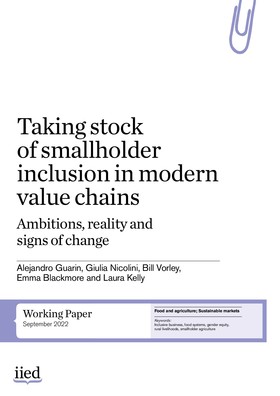
Working paper: Taking stock of smallholder inclusion in modern value chains: ambitions, reality and signs of change


Guarín, A., Nicolini, G., Vorley, B., Blackmore, E., Kelly, L. (2022). Taking stock of smallholder inclusion in modern value chains: ambitions, reality and signs of change
IIED, London Working paper, # 40 pages https://pubs.iied.org/21086iied

This report examines the promise and reality of including smallholders from developing countries in modern value chains as a path to sustainable development. Drawing on an extensive literature review and interviews with diverse stakeholders, we lay out the ambitions, expectations and assumptions hanging on smallholder inclusion with regard to income, gender equity and environmental sustainability. We describe the gaps between expectation and reality, suggesting that inclusion — as conceptualised and implemented — is poorly suited to the complex challenges faced by farmers. 

The report identifies five signs of change in the discussion about smallholder inclusion, and reflect on what these might mean for its future.

Wednesday, March 23, 2022

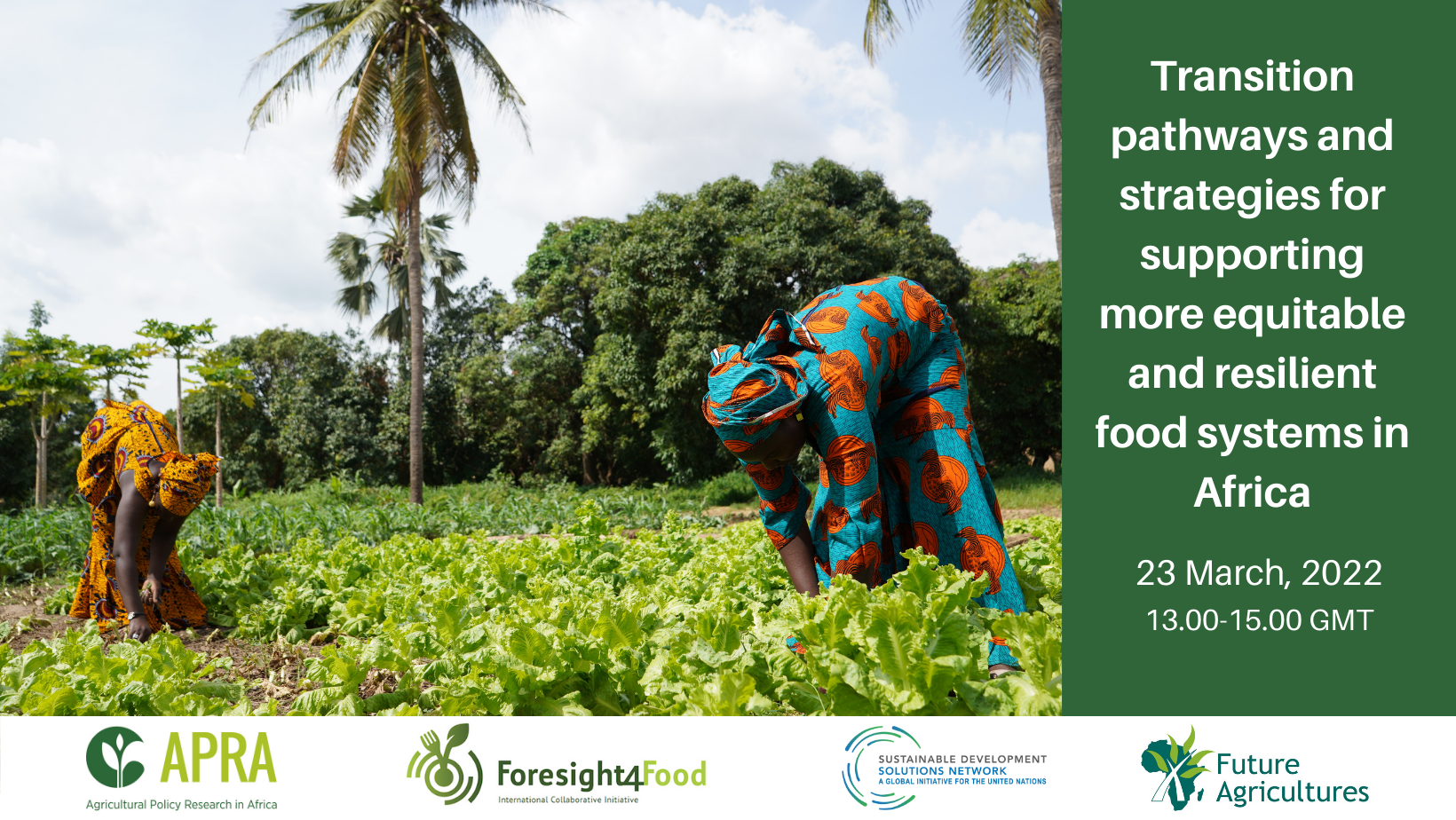
APRA e-Dialogue on 'Transition Pathways and Strategies for Food System Transformation

23 March 2022
. APRA e-Dialogue on 'Transition Pathways and Strategies for Food System Transformation - This dialogue included:

Starting in October 2021 and running through 2022, the e-Dialogue series on agricultural commercialisation, agrarian change and rural transformation in sub-Saharan Africa has examined a range of topics including the emerging challenges and regional realities of smallholder transformation and COVID-19’s effects on food systems and rural livelihoods. Now, in the third and final event of this series, we turn our attention to transition pathways and strategies for supporting more equitable and resilient food systems in Africa. 

This last e-Dialogue, moved the focus of food system transformations from ‘what needs to happen’ to ‘how to make it happen’ to support more equitable and inclusive forms of food system transformation.
  • Oil palm commercialisation, changing gender relations, and agricultural transformation in Ghana
  • Gender and social differentiation in the context of Malawi’s groundnut commercialisation
  • Rice and sunflower commercialisation and differential pathways for livelihood improvement: A Tanzania case study
  • Politics, power and social differentiation in African agricultural value chains
  • Policies and strategies to support inclusive agricultural commercialisation and food system transformation

Thursday, December 23, 2021

Cold Chain Management for the Fresh Produce Industry in the Developing World

Vijay Yadav Tokala, Majeed Mohammed (2021) Cold Chain Management for the Fresh Produce Industry in the Developing World, #268 p.

Global food losses are a result of a lack of necessary infrastructure, improper food safety handling procedures, and insufficient training for the personnel working in the cold chain. The development of a resource-efficient and energy-smart food supply chain requires a well-integrated evaluation and development of the cold chain. 

Cold Chain Management for the Fresh Produce Industry in the Developing World provides a comprehensive review of the benefits of an unbroken cold chain in developing countries and focuses on the critical role of extension education in the implementation of cold chain management.

The unbroken cold chain is essential for all stakeholders in the fresh produce industry to maintain the quality and safety of food products during handling, transporting, and storing in their journey from producer to consumer. Appropriate cold chain management is crucial not only to reduce the postharvest losses and wastages, but also to increase farmers' income, generate employment opportunities, and improve the livelihood of stakeholders along the supply chain.

Key Features:
  • Includes case studies for promoting the expansion of existing technologies for cold chain development in Asian, Africa and the Caribbean nations.
  • Assesses cold chain management as crucial to the growth of global trade in perishable products with contributions from international organizations, researchers and commercial experts.
  • Articulates resilient, sustainable and creative concepts to develop cold chains to enhance food distribution.

Monday, December 13, 2021

BOOK + WEBINAR: African Farmers, Value Chains, and Agricultural Development

9 December 2021. At first glance, African smallholder farmers might seem unproductive, as their crops yield much less than potential and are often of variable quality. A new PIM-supported book “African Farmers, Value Chains, and Agricultural Development” argues that in fact they are largely producing following rational economic decisions, and that this situation is a consequence of the economic and institutional environment in which they produce. 

The authors Alan de Brauw and Erwin Bulte discuss ways that different types of transaction costs limit their market opportunities in general, including transport costs but also costs related to different sources of risks, trust, market power, liquidity, and even storage. The presence of high transaction costs limits the ability of farmers to market their surplus, hence reducing their incentives to produce. The authors discuss several types of costs in detail, including problems related to input and output markets, certification of quality products, and issues with storage. They then critique several “solutions” that are often discussed to help lower transaction costs, before offering some of their own recommendations, noting that the application of any recommendations must take local context into account.
  • Erwin Bulte – Professor of development economics at Wageningen University; co-leader of PIM Flagship 3: Inclusive and Efficient Value Chains.
  • Alan de Brauw – Senior Research Fellow, Markets, Trade, and Institutions Division, International Food Policy Research Institute (IFPRI); leader of PIM Flagship 3 cluster on “Value Chains Research: Outreach and Scaling” and co-leader of “Interventions to Strengthen Value Chains” cluster.
  • Hope Michelson, Associate Professor, Department of Agricultural and Consumer Economics
  • University of Illinois, Urbana-Champaign.
  • Moderator: Frank Place - Director, CGIAR Research Program on Policies, Institutions, and Markets.

Wednesday, June 30, 2021

WEBINAR: High-level Conference on Sustainable Cocoa in Ghana

30 June 2021. High-level Conference on Sustainable Cocoa in Ghana. (Passcode: 349159)

The objective of the high-level conference was to take stock of the dialogue in Ghana on each of the topics covered during the roundtable discussions, and to draw conclusions on the way forward (i) to foster progress in the elimination of child labour, (ii) to enhance the protection and restoration of the forests, (iii) to improve the coordination of initiatives supporting the sector and (iv) to ensure a living income for the cocoa farmers.
  • Moderator Viwanou Gnassounou, former Assistant Secretary-General OACPS
  • Welcoming remarks - H.E Diana Acconcia, European Ambassador to Ghana
  • Statement by Mrs. Jutta Urpilainen, European Commissioner for International Partnerships
  • Statement by Hon. Samuel A. Jinapor Hon. Minister of Lands and Natural Resources (Ghana)
National dialogue conclusions: Viwanou Gnassounou, former Assistant Secretary-General OACPS

Panel discussion:
  • Hon. Joseph Baahen Aidoo, Chief Executive officer, COCOBOD
  • HE Ron Strikker, Ambassador of the Netherlands to Ghana
  • Mr. Alex Arnaud Assanwo, Executive Secretary Cote d'Ivoire-Ghana Cocoa Initiative
  • Mr. Chris Vincent, Acting President, World Cocoa Fooundation (WCF)
  • Mrs. Sandra Kwabea Sarkwah, Chairperson, Ghana Civil Society Cocoa Platform
  • Mrs. Leticia Yankey, Founder Cocoa Mmaa
  • Mr. Michel Arrion, Executive Director, International Cocoa Organisation (ICCO)
Shared resources:


Tuesday, June 29, 2021

Sustainability of agricultural and fisheries value chains in EU partner countries

In November 2020, Agrinatura organised a webinar entitled “Covid-19: new challenge or new opportunity to enhance sustainability of agricultural and fisheries value chains in EU partner countries?”. It was organised within the framework of the Value Chain Analysis for Development (VCA4D) programme, which is funded by the European Union (EU). The VCA4D programme involves carrying out analyses of priority value chains in EU-partner countries in order to assess their sustainability and inclusiveness from social, economic and environmental perspectives.

The event was an opportunity for reflection and dialogue between experts involved in the VCA4D studies and policymakers on disruptions which occurred in various value chains (VCs) as a result of the first wave of the COVID-19 pandemic. 

Key findings from case studies presented:

The experts presented evidence from 10 case studies from Africa and South America. It is evident from these cases that the effects of as well as responses to the pandemic differed across VCs and countries.

Part 1 - Introduction to the webinar 

  1. Case 1/ Ethiopia - Cotton (Gian Nicolay) – 8:23
  2. Case 2/ Ecuador - Cocoa (Johan Blockeel) – 13:33
  3. Case 3/ Togo - Pineapple (Konga Palassi and Osée Alate) – 16:40
  4. Case 4/ Angola - Coffee (Bernardo Piazzardi and Margarida Lima de Faria) - 21:24
  5. Case 5/ Mali - Fisheries (Ivonne Acosta Alba) - 32:01
  6. Case 6/ The Gambia - Fisheries (Adama Mbaye) - 38:07
  7. Case 7/ Colombia – Diary (Gustavo Saldarriaga) - 43:29
  8. Case 8/ Ghana – Sorghum (Ricardo Villani and Gideon Onumah) - 48:31
  9. Case 9/ Nigeria - Maize (Muhammed Bello and Gideon Onumah) - 58:22
  10. Case 10/ Zambia – Maize (Anthony Chapoto) - 1:04:23

Part 2 - Questions & Answers & Wrap-Up: “a synthesis of the evidence emerging from the different cases” 


Part 3 - “In the policy officers’ shoes” - insights, comments and questions: will the Covid-19 crisis change the future?

  • Guy Faure, DEVCO C1, Rural Development, Food Security and Nutrition
  • Catharina Bamps, Delegation of the European Union to Angola - 07:40
  • Katrine Mulvad Thomsen and Frank Isioma Okafor, Delegation of the European Union to Nigeria and ECOWAS – 16:14
  • Questions & Answers
  • See the transcript 02/06/2021: Summary of the VCA4D webinar

Part 4 - Concluding remarks

  • Dr Marie-Hélène Dabat & Dr Gideon Onumah

Monday, June 28, 2021

REPORT + WEBINAR: Value Chain Development and the Poor: Promise, Delivery, and Opportunities for Impact at Scale

Jason DonovanDietmar StoianJon Hellin (2020) Value Chain Development and the Poor. Promise, delivery, and opportunities for impact at scale. pp. 368

Since the early 2000s, value chain development (VCD) has figured prominently on the agendas of donors, governments, and NGOs in pursuit of market-based options to poverty reduction, food security, gender equity, and other goals.

Researchers have shown interest in value chains as a theoretical construct for studying interactions between farmers and markets, while practitioners have focused their attention on approaches and tools for applying VCD in the field.

Despite considerable investments in VCD, limited evidence exists on the extent to which different approaches to VCD have advanced diverse development goals. This knowledge gap sounds alarms, not least because of the complexities involved and the multitude of options for getting it right (or wrong).

This collection offers unique perspectives on VCD from both practitioners and researchers. It explores how VCD is implemented in the field, options for innovation in design, and the potential for VCD to achieve impact at scale. Altogether, the book provides a timely critique of current approaches, pointing at options for more reflexive learning, new collaborative frameworks, and faster innovation of VCD.

The book is an invaluable resource for those working with NGO programming, development think tanks, donor organizations or private foundations, or researchers with an interest in rural development.

Related: Launch of the report

17 June 2021Value Chain Development and the Poor: Promise, Delivery, and Opportunities for Impact at Scale

In recent years, value chain development (VCD) in the agrifood system has been hailed as a practical way to expand market access for smallholder producers, reduce poverty, enhance environmental sustainability, and improve food security and gender equity. Despite significant investments in VCD from governments, donors, and NGOs, however, evidence regarding the effectiveness of VCD interventions in addressing these important development goals remains lacking. Many existing studies have focused on the design and outputs of VCD interventions themselves rather than on their outcomes and impacts. As a result, the true reach of these programs remains unknown, particularly for poor populations.

A recent book, published by Practical Action Publishing and supported by the CGIAR Research Program on Policies, Institutions, and Markets (PIM) and the CGIAR Research Program on Maize Agrifood Systems (MAIZE), looks to fill this important knowledge gap. Value Chain Development and The Poor: Promise, delivery, and opportunities for impact at scale provides a collection of case studies and lessons learned from VCD interventions in Latin America, Africa, and Southeast Asia. The book includes chapters written by researchers and development practitioners, providing an in-depth examination of VCD in both theory and in practice.

During this webinar, editors Jason Donovan, Dietmar Stoian, and Jon Hellin presented findings from the book and explored how VCD can be more effectively designed, implemented, and scaled up to include and benefit poor populations.
  • Moderator: Erwin Bulte, Professor of Development Economics, Wageningen University
  • Jason Donovan, Senior Economist, International Maize and Wheat Improvement Center (CIMMYT)
  • Dietmar Stoian, Lead Scientist, World Agroforestry (ICRAF)
  • Jon Hellin, Head of the Sustainable Impact Platform, International Rice Research Institute (IRRI)
  • Closing remarks: Frank Place, Director, PIM


Thursday, April 22, 2021

REPORT: Innovation Accelerator: Building resilient smallholder supply chains

Innovation Forum (2020) Innovation Accelerator: Building resilient smallholder supply chains. The Clinton Foundation, COLEACP, CottonConnect, GIZ, Golden Agri-Resources and Nestlé. 51 pp

This report builds on more than 60 interviews with key people from each member organisation, and with other commentators, and on an extensive literature review.

At the end of the supply chain are the end users of these agricultural goods – the consumers who buy coffee, chocolate bars, tea, vegetables and a plethora of other products. It is clear that key to improving livelihoods and environmental impacts of agricultural supply chains is to drive more resources to farmers. If this is the case, then an obvious part of the solution would be to expect consumers to pay more for the goods they buy. It is not clear that consumers’ expressed willingness to buy sustainably-produced goods is always reflected in actual purchasing decisions. 

Four key issues therefore emerge from this research as key areas for attention by the Innovation Forum working group, and for the wider community working to improve smallholder supply chains: 

  1. Smallholder farmers are caught in an on-going poverty trap. This can be sustainably addressed through, for example, systemic reforms around farm size and land consolidation, and an improved enabling environment for that. 
  2. Currently, work on smallholder supply chains is largely undertaken project-by-project. How can a more systemic approach be developed? 
  3. The need for greater collaboration and partnership is clear. Yet, despite repeated exhortations, cooperation remains a rarity. How can this be changed?
  4. At present, smallholder sustainability efforts are not sustainable. They are not effectively joined up, and remain insufficiently linked to core business operations of sourcing companies. How can this change over time?

This report is intended as the first step in Innovation Forum’s Innovation Accelerator (IA) rural and agricultural reform research, designed to share initial lessons between members, and to define a clearer agenda for work in specific geographic locations. The next steps for this project are therefore as follows: 

In four selected geographic areas: 
  • Map and examine potential for collaboration between different initiatives working in each location, and for better linkages to work being done by the country government and by international development actors. 
  • Analyse in more detail the political economy in each location. It is clear that working through and with local power structures is an important factor in gaining traction with farming communities. Developing a more-shared understanding may allow work to go further and deeper. 
  •  Explore the areas of supply chains that seem less understood. In particular, develop more insight into the ‘farm gate to port’ element looking, for example, at conditions for those working in transport and processing. 
  • Develop better government engagement and understand where points of access may be available that are currently under-explored. 
The ‘international landscape’ 
  • Explore how current supply chain models might be modified over time, to make them more effective in supporting smallholder sustainability. 
  • At present there is no coherent process for matching sustainably produced goods with a market for them. What might a ‘sustainable commodities marketplace’ look like and how might it be developed? 
Related:
22 April 2021. Real rural resilience: How to connect smallholder farmers directly to global markets 
The ‘Innovation Accelerator’ action research programme recently published ground-breaking research on how companies can enable smallholder development beyond siloed purchasing and initiatives. Through 80+ interviews with those on the front lines of smallholder engagement, it uncovered opportunities for sourcing companies to link directly with smallholders growing a variety of crops. Many of these can help lift communities out of poverty if market access can be enabled.

This 60 minute webinar, (see podcast) discussed how buyers can use a “Sustainable Commodities Marketplace” to increase broad based economic development in supplier countries by sourcing multiple crops and collaborating on sourcing opportunities for smallholder communities.
  • Goetz Martin, head of sustainability implementation, Golden Agri-Resources
  • Alison Ward, CEO, CottonConnect
  • Ruth Thomas, director, Global Agribusiness Action on Equitable Livelihoods (GAA-EL)
  • Silke Peters, team leader, sustainable agricultural supply chains initiative, GIZ
  • Lea Rankinen, director, sustainability and public affairs, Paulig Group
  • Dr Peter Stanbury, senior associate, Innovation Forum

Background:

The SmallholderInnovation Accelerator Collaborating to develop durable smallholder supply chains: an action research project to share lessons and drive better practice
  • Since summer 2020, Innovation Forum has been running an action research project – we call it our “innovation accelerator” – to develop actionable lessons which can build durable commodity supply chains based on smallholder farming. 
  • This project was established to respond to the fact that, despite almost decades of effort by companies, campaigners, NGOs and others, considerable social and environmental challenges still remain in smallholder-based commodity supply chains. 
  • The project brings together six varied organisations to share the lessons they have learned over many years, and also builds on a comprehensive review of various reports, papers and other written information. 
  • It also aims to look at commodity value chains in their wider context – at societal and international level. To that end, it brings in perspectives from areas of expertise such as development economics, anthropology and political economy.

Friday, February 19, 2021

REPORT: UNEP - The value-chain approach & its application to food

Report: UNEP (2021). Catalysing Science-based Policy action on Sustainable Consumption and Production – The value-chain approach & its application to food, construction and textiles. Nairobi. 98 p. 

This report explains the ‘Value-Chain Approach’ methodology and shares findings from its application to three critical sectors: food, construction and textiles.

The ‘Value-Chain Approach’ is a methodology for catalysing science-based policy action on sustainable consumption and production. Its purpose is to identify key points of intervention within economic systems to reduce natural-resource use and environmental impacts caused by production and consumption, and to define a common agenda for action.

This report is the product of the International Resource Panel and the One Planet network Task Group, an 18-month collaboration that formed in response to a resolution on sustainable consumption and production at the 4th UN Environment Assembly (UNEA4), composed of experts on natural-resource use from the International Resource Panel, and practitioners on sustainable consumption and production from across the One Planet network.

Most policy measures address either primary production or individual consumption stages. This leaves a continued gap in measures that address the middle stages of the food value chainTools and solutions are available across the One Planet network to address the key challenges along the food value chain. While many activities are at primary production or individual consumption stage or are holistic; there is an opportunity to build on ongoing initiatives at the food processing, retail and
food services – in particular through the sustainable tourism, sustainable procurement and consumer information programmes. (page 48)

The data presented demonstrates that the majority of both natural resource use and environmental impacts that take place along food value chains are occurring at the primary production stage through 
practices such as farming crops, raising livestock and fishing. (page 52)

Primary producers have a limited ability to shape food systems and change their production  practices.   (page 55)

Further detail on the  analysis of the food  value chain is available at  www.oneplanetnetwork.org/
scp-task-group 

Launch of the Value Chain Report


The United Nations Environment Assembly requested that the One Planet network and the International Resource Panel (IRP) form a Task Group to catalyse science-based policy action on sustainable consumption and production (SCP) (UNEP/EA.4/Res.1)

In order to ‘translate’ the technical information in IRP reports into actionable, science-based recommendations on SCP for governments and businesses, the Task Group developed a ‘value-chain approach’ and applied it to three critical sectors: construction, food and textiles. The report entitled “Catalysing science-based policy action on Sustainable Consumption and Production: The value-chain approach & its application to food, construction and textiles” explains the ‘value-chain approach’ methodology and shares findings from the three sectoral analyses.

Panel: Priorities and Opportunities in Food, Construction and Textiles\
  • Welcome remarks by Inger Andersen, Executive Director, UNEP
  • The Value Chain Approach: A new way to trigger action on SCP by Arthur Eijs, Ministry for Infrastructure & Environment Netherlands, Task Group member
  • Ministry of Environment and Sustainable Development of Argentina (representative tbc), Task Group member
  • Ministry of Environment, Forestry and Fisheries of South Africa (representative tbc), Task Group member
  • Izabella Teixeira, IRP Co-Chair and Task Group member
  • Mr. Rijit Sengupta, Chief Executive Office of the Centre for responsible Business in India, Task Group member
Related: 

18 February 2021. Ahead of the fifth United Nations Environment Assembly (UNEA-5), the United Nations Secretary-General, António Guterres, and the Executive Director of the UN Environment Programme (UNEP), Inger Andersen, officially launched a new report, untitled “Making Peace with Nature” (UNEP).

UNEP (2021) Making Peace With Nature

Making Peace With Nature, a new report published by the United Nations Environment Programme (UNEP), synthesizes findings from recent global assessments, including those by the Intergovernmental Panel on Climate Change, the Intergovernmental Science-Policy Platform for Biodiversity and Ecosystem Services, and others. 

It proposes what the authors’ call “a scientific blueprint to tackle the climate, biodiversity and pollution emergencies.” The report says the Earth faces a Triple Emergency: climate change, biodiversity loss and pollution. 
"Without nature’s help, we will not thrive or even survive. For too long, we have been waging a senseless and suicidal war on nature. The result is three interlinked environmental crises. Climate disruption, biodiversity loss and pollution that threaten our viability as a species. They are caused by unsustainable production and consumption," said Guterres during the event.
Andersen said, "There is indeed no precedent for what we must do, but if 2020 was a disaster, 2021 can and must be the year humanity began making peace with nature and secured a fair, just and sustainable future for everyone."

Friday, February 5, 2021

REPORT: The Value of Coffee: Sustainability, Inclusiveness, and Resilience of the Coffee Global Value Chain

28 January 2021
. Release of the Coffee Development Report 2020 by the International Coffee Council. 

This year's report ‘The Value of Coffee: Sustainability, Inclusiveness, and Resilience of the Coffee Global Value Chain’ provides sound empirical analysis as well as policy recommendations along the entire coffee value chain. It provides recommendations to help coffee farmers and the whole coffee sector be sustainable, inclusive and resilient.

It contains facts and figures on the global coffee value chain, effects of the COVID-19 pandemic on global coffee developments and economic, social and environmental impacts of the coffee value chain on the producer countries as well as policy recommendation for a sustainable, inclusive and resilient are all there at your fingertips. 

The report was prepared by the ICO team in collaboration with external contributors and with support from the German Federal Ministry for Economic Cooperation and Development (BMZ) through the Deutsche Gesellschaft für Internationale Zusammenarbeit (GIZ) GmbH.

You can read more information about the CDR2020 here.

Related;
To mark the launch of the second Coffee Development Report, a virtual event was held on January 28. On this occasion, the CDR2020 was launched and shared with ICO members and the global coffee and development community.
  • The event was held together with the Government of the United Kingdom, marking the 49th Member to join the ICO. Besides Victoria Prentis, Parliamentary Under-Secretary of State for Farming, Fisheries and Food for the UK Parliament, will bewas one of the guest speakers. 
  • On behalf of the German Federal Ministry for Economic Development and Cooperation, Sebastian Lesch, Head of Unit, participated in the panel event.

Wednesday, January 20, 2021

WEBINAR: Accelerating sustainable supply chains in Europe: The case of palm oil

20 January 2021. In the first half of this decade the first landscape approaches emerged as an alternative to supply chain approaches. The real challenge is to identify HOW we build on the lessons learned to take the best of both worlds. We need to cooperate to transition business and society behind a clean, resilient and inclusive future.

This webinar explored the current thinking around sustainable value chains, and we invite you to join us on this journey to help lead the clean and just transition.


  • 1:11 Welcome - Philippe Thiry, Belgian Alliance for Sustainable Palm Oil
  • 2:24 Key Note - Eva De Bleeker, Secretary of State for Budget and Consumer Rights
  • 12:33 Key Note – Ambassador Hadi, Ambassador of the Republic of Indonesia
  • 17:50 Sustainability “Beyond Food” – Salima Kempenaer, Belgium, DG Environment
  • 25:29 Context and sector vision - Jelmen Haaze, Belgian Alliance for Sustainable Palm Oil
  • 27:01 “Landscape approaches”: Case study NI-SCOPS: Babasola Olajide,Program Manager Palm Oil (NI-SCOPS) IDH 
  • 36:43 The way forward: The control-tower concept for a sustainable palm oil value chain – Christoph Vanderstricht, PwC
  • 53:33 A vision shared beyond Belgium - Horacio Alemán, Spanish Alliance for Sustainable Palm Oil
  • 57:08 Q&A
  • 1:20:54 Conclusion – BASP

SourceUp is a new collaboration platform for supply chain sustainability changemakers

SourceUp is currently funded through IDH the Sustainable Trade Initiative, by the generous contributions of the Dutch Ministry of Foreign Affairs, the Swiss State Secretariat for Economic Affairs (SECO), the Danish Ministry of Foreign Affairs (DANIDA) and the Norwegian Ministry of Climate and Environment (NICFI). Compacts have their own funding, as described on the Compact profile pages.

Thursday, December 17, 2020

WEBINAR: Impacts of COVID-19 on Agricultural Value Chains in Bangladesh, Laos, Myanmar, India and Vietnam

17 December 2020
. VCB-N Webinar presenting the results of Country Assessments regarding the Impacts of COVID-19 on Agricultural Value Chains

The Value Chain Capacity Building Network (VCB-N) initiated by an IFAD-grant shared the results of country assessments on the impact of COVID-19 on agricultural value chains, implemented in a number of Asian countries in the APR as mandated by IFAD. 

In total, six assessments were conducted by VCB-N members in five countries including Bangladesh, Laos, Myanmar, India and Vietnam covering analysis of 16 different agricultural value chains.

Recommendations for designing more resilient and future proof value chains in the post-COVID era, were presented and discussed.

Wednesday, December 16, 2020

WEBINAR: How to build resilient smallholder supply chains and drive systemic change for rural communities

16 December 2020
Innovation Accelerator: How to build resilient smallholder supply chains and drive systemic change for rural communities. 

This webinar will launch the initial findings of the research which has explored a wide range of supply chains, including cotton, fruit and vegetables, dairy, coffee, soya, palm and maize. As well as bringing together cross-sector experience, the project sought insights from political science and development economics to explore the wider societal dynamics of communities and countries in which supply chains exist. Innovation Accelerator was formed thanks to the support of The Clinton Foundation, COLEACP, CottonConnect, GIZ, Golden Agri-Resources and Nestlé.

A panel of working group members will then explore some of the key issues in more detail, including: 
  • How societal norms affect how best to work with smallholder communities 
  • Do employees and intermediaries in smallholder supply chains earn a living income and work in safe environments? 
  • Is smallholder farming viable in the longer term, or do we need to explore other structures for rural agricultural communities? 
  • What prevents host governments from providing coherent policy frameworks for agriculture, and how can we develop effective extension services? 
Speakers:
  • Dr Peter Stanbury (project lead),  will lay out the conclusions of the research to date, questions which have emerged, and the practical next steps. 
  • Roberto Duarte, advisor, sustainable agricultural supply chains and standards programme, GIZ
  • Anita Neville, SVP, group corporate communications, Golden Agri-Resources 
  • Ariana Constant, director, Clinton Development Initiative 
  • Alison Ward, CEO, Cotton Connect 
  • Yann Wyss, senior manager, social impact, Nestlé 
Background:
The SmallholderInnovation Accelerator Collaborating to develop durable smallholder supply chains: an action research project to share lessons and drive better practice
  • Since summer 2020, Innovation Forum has been running an action research project – we call it our “innovation accelerator” – to develop actionable lessons which can build durable commodity supply chains based on smallholder farming. 
  • This project was established to respond to the fact that, despite almost decades of effort by companies, campaigners, NGOs and others, considerable social and environmental challenges still remain in smallholder-based commodity supply chains. 
  • The project brings together six varied organisations to share the lessons they have learned over many years, and also builds on a comprehensive review of various reports, papers and other written information. 
  • It also aims to look at commodity value chains in their wider context – at societal and international level. To that end, it brings in perspectives from areas of expertise such as development economics, anthropology and political economy.
Resource:
Innovation Forum (2020) Innovation Accelerator: Building resilient smallholder supply chains. The Clinton Foundation, COLEACP, CottonConnect, GIZ, Golden Agri-Resources and Nestlé.51 pp

This report is intended as the first step in Innovation Forum’s Innovation Accelerator1 (IA) rural and agricultural reform research, designed to share initial lessons between members, and to define a clearer agenda for work in specific geographic locations. The next steps for this project are therefore as follows: 

In four selected geographic areas: 
  • Map and examine potential for collaboration between different initiatives working in each location, and for better linkages to work being done by the country government and by international development actors. 
  • Analyse in more detail the political economy in each location. It is clear that working through and with local power structures is an important factor in gaining traction with farming communities. Developing a more-shared understanding may allow work to go further and deeper. 
  •  Explore the areas of supply chains that seem less understood. In particular, develop more insight into the ‘farm gate to port’ element looking, for example, at conditions for those working in transport and processing. 
  • Develop better government engagement and understand where points of access may be available that are currently under-explored. 
The ‘international landscape’ 
  • Explore how current supply chain models might be modified over time, to make them more effective in supporting smallholder sustainability. 
  • At present there is no coherent process for matching sustainably produced goods with a market for them. What might a ‘sustainable commodities marketplace’ look like and how might it be developed? 
Related: 
Following a recent article laying out the challenges for sustainable cocoa in the coming years, Dr Peter Stanbury and Tobias Webb suggest a path forward for all concerned. The cocoa sector is facing significant pressures. Questions have been raised about the effectiveness of procurement standards, and West Africa’s largest producing countries are making veiled threats about permitting companies to continue their sustainability programmes because of a perceived reluctance by those companies to pay the governments’ new ‘living income differential’ (LID). The notion of minimum pricing is spreading to other parts of the world too, not least South America and the Caribbean. This article sets out a manifesto to achieve genuine sustainability in the cocoa sector.

Speaking in Accra, Ghana, the World Cocoa Foundation’s Ethan Budiansky and Innovation Forum’s Toby Webb discuss progress in the cocoa sector, particularly through the Cocoa and Forests Initiative in west Africa. The WCF works to achieve more sustainability in cocoa production, both in terms of dealing with climate change impacts and deforestation as well as farm productivity and livelihoods. Budiansky explains how the federation promotes climate-smart cocoa – and why now, finally, the sector as a whole seems to be developing better collaboration than it had perhaps in the past.

Monday, December 14, 2020

WEBINAR. COVID-19 Risk and Food Value Chains.

11 December 2020.  COVID-19 Risk and Food Value Chains.

The short- and long-term impacts of the COVID-19 pandemic on food systems remain uncertain, raising concerns about food security. The pandemic’s public health impacts, as well as the economic and logistical impacts of pandemic response measures such as lockdowns and travel restrictions, have the potential to disrupt food value chains around the globe. Such disruptions could result in labor shortages, decreased production, volatile food prices, and reduced food availability and access. 

Understanding how COVID-19 is affecting local and global food value chains is key in establishing effective policy responses to mitigate the harmful impacts of the ongoing public health crisis. This webinar will examine results of several recent studies on how various food value chains are responding to COVID-19.

This webinar organized by the CGIAR Research Program on Policies, Institutions, and Markets (PIM) and Food Security Portal on December 11, 2020 shared results of recent studies in Ethiopia, Nigeria, and India on how food value chains are responding to COVID-19. 
  • Kalle Hirvonen (IFPRI) presented findings from a study on food consumption and food security in Ethiopia, using a unique panel survey of a representative distribution of households in Addis Ababa. 
  • Sudha Narayanan (Indira Gandhi Institute of Development Research) discussed bottlenecks in food and agriculture supply chains in India following closures of several Agricultural Produce Market Committee mandis and presented policy recommendations to ease the flow of goods. 
  • Ben Belton (WorldFish / Michigan State University) presented findings on the impact of COVID-19 on Nigeria’s fish value chains, which are crucial to the country’s food security and employment opportunities.

Monday, October 26, 2020

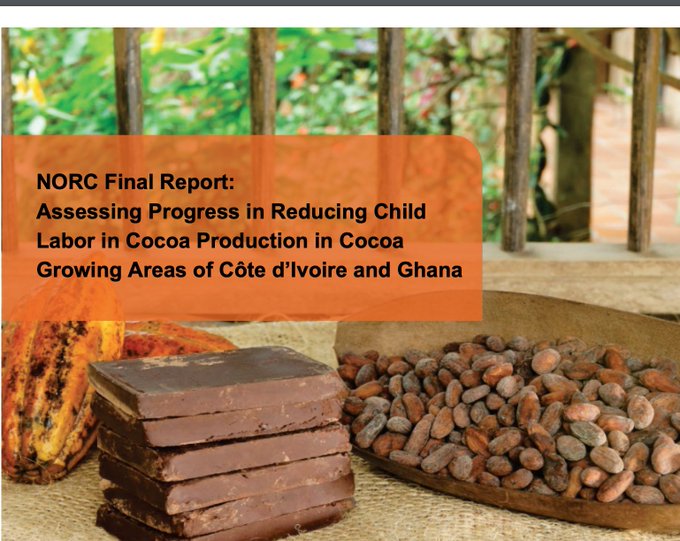
REPORT: Assessing Progress in Reducing Child Labor in Cocoa Production in Cocoa Growing Areas of Côte d’Ivoire and Ghana

NORC Final Report: Assessing Progress in Reducing Child Labor in Cocoa Production in Cocoa Growing Areas of Côte d’Ivoire and Ghana. 301 pages

The National Opinion Research Center, NORC has spent the last five years working closely and collaboratively with ILAB, the governments of Côte d’Ivoire and Ghana, Industry (represented by the World Cocoa Foundation (WCF)), Civil Society Organizations (CSOs), and multiple international organizations with an interest in child labor (including UNICEF, the International Cocoa Initiative (ICI), and the International Labour Organization (ILO)). 

NORC at the University of Chicago is one of the largest independent social research organizations in the United States.

This report is the outcome of that collaborative effort to accurately measure and report on the issue of child labor and hazardous child labor in the cocoa growing areas of Ghana and Côte d’Ivoire.

As part of this study, NORC administered 2,824 roster surveys, 2,809 household head surveys, 5,552 child surveys, 158 community surveys, 372 cocoa shed surveys, and 260 school surveys across Ghana and Côte d’Ivoire.

The country-specific data indicates that in cocoa growing areas 38 percent of children in Côte d’Ivoire and 55 percent of children in Ghana living in agricultural households were engaged in child labor in cocoa production. Amid a 14 percent increase in cocoa production between 2013/14 and 2018/19 in Côte d’Ivoire and Ghana in aggregate, prevalence of child labor in cocoa production among cocoa growing households in each individual country remained stable.
In the 2018-19 season, 1.56 million children were involved in child labor working expanding cocoa harvest in Ivory Coast and Ghana. C. 45% of children from farming families in growing areas were working on plantations v. 31% 10 years ago.
Other Key Findings:
  • Cocoa is a key part of agriculture in the cocoa growing areas of both countries as can be seen from the fact that a predominant majority of agricultural households grow cocoa.
  • School attendance among children in agricultural households increased from 58 percent to 80 in Côte d’Ivoire and from 89 to 96 percent in Ghana.
  • The prevalence rate of child labor did not increase in the high cocoa production stratum while we observe substantial increases in prevalence within the low and medium production areas between 2008/09 and 2018/19. There was a similar trend in the change in prevalence of exposure to hazardous work during the same period. This indicates that future interventions should target low and medium cocoa production areas
  • When multiple interventions were implemented in a community, it led to a statistically significant reduction in the rates of child labor and hazardous child labor in cocoa production
  • Respondents recommend that engaging community leaders, including representatives for women and youth early in the design of the intervention helped promote sustainability
RESOURCES

Tuesday, July 7, 2020

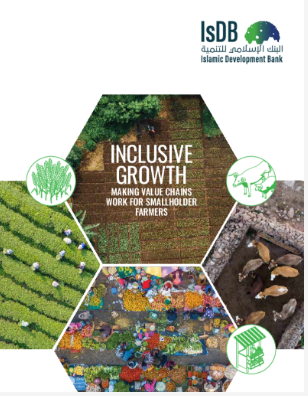
Inclusive Growth: Making Value Chains Work for Smallholder Farmers

Islamic Development Bank Group. (2020). Inclusive Growth: Making Value ChainsWork for Smallholder Farmers. Jeddah, Kingdom of Saudi Arabia. © Islamic Development Bank, 2020 Islamic Development Bank Group - 128 pages

This book – Inclusive Growth: Making Value Chains Work for Smallholder Farmers – aims to provide insights into this question and practical solutions for increasing the engagement of smallholders in profitable GVCs. 

The overall theme and the eight chapters of the book reflect the Islamic Development Bank’s 10-Year Strategy and its execution mechanism – the President’s Five-Year Program (P5P). ‘Making Markets Work for Development’ is a central theme of that program. It also fits with the Sustainable Development Goals and the commitment made by countries around the world to achieve them by 2030. GVCs have great potential to help with this, but harnessing that potential is not an easy task. It requires strong partnership with many actors, particularly the private sector, with each of them fulfilling their commitment. 

This book is the second in a series of IsDB publications that are in line with the Bank’s goal of being knowledge driven in its investments and efforts to catalyze impactful and sustainable development. The first book – Change for Impact, published in 2018 – made an important contribution to this goal. 

The information contained in this book responds to ever-increasing demand for insights into the best approaches to developing and executing private sector-led GVCs that integrate smallholders. Through a set of well-sequenced chapters and case studies, it offers practical recommendations to inform the future development of strong GVCs at scale

Monday, May 25, 2020

WEBINAR: Poverty alleviation in cocoa, coffee and tea supply chains

26 March 2020. Yuca Waarts, senior researcher, sustainable value chain development, Wageningen University talks with Ian Welsh about the challenges developing living incomes for smallholder farmers and plantation workers. 

 She points out that the interventions that can make a difference for coffee, tea and cocoa production aren’t necessarily the same, with many factors impacting income levels, and argues that for many smallholders finding a way out of poverty is impossible with ever-smaller farm sizes. However, business can still help.