Platform for African – European Partnership in Agricultural Research for Development
Showing posts with label NRI. Show all posts

Wednesday, May 20, 2026

Food Accelerator Programme of Greenwich University

18 May 2026. The presentation of the report “A Research on the African Diaspora Food Market in the United Kingdom: Understanding Market Dynamics, Opportunities and Indigenous Food Systems” was followed by a visit to the Food Accelerator Programme at the University of Greenwich, 

The Food Accelerator Programme at the University of Greenwich is an innovation and business support initiative led through the Medway Food Innovation Centre and the university’s Natural Resources Institute. The programme is designed to help food and agri-food startups scale their businesses through technical assistance, mentorship, product development support, business coaching, and access to research facilities. 

Participants receive tailored guidance over several months, including workshops, one-to-one advisory sessions, investor connections, and support in accessing grants and funding opportunities. The programme places a strong emphasis on sustainable food systems, plant-based innovation, food technology, and commercial readiness.

For African SMEs, particularly those operating in agriculture, food processing, agritech, and nutrition sectors, the programme offers important opportunities to strengthen innovation capacity and improve competitiveness. African SMEs often face challenges such as limited access to research infrastructure, weak product development systems, and difficulties attracting investment. 

Through accelerator-style support, businesses can refine products, improve quality standards, adopt new technologies, and develop stronger business models that are attractive to regional and international markets. The programme’s mentorship and networking components also expose African entrepreneurs to industry experts, academic researchers, and potential investors, helping them overcome barriers to growth and commercialization.

In addition, the programme aligns well with broader efforts to strengthen food security, sustainability, and entrepreneurship across Africa. By helping SMEs become market- and investment-ready, initiatives like the Greenwich Food Accelerator contribute to job creation, value addition in agricultural supply chains, and the development of climate-smart food innovations. 

African SMEs that participate in such programmes can gain international visibility, access to collaborative research, and partnerships that support expansion into new markets. These benefits are particularly valuable for women-led enterprises, youth innovators, and startups developing solutions for nutrition, sustainable agriculture, and resilient food systems across the continent.

The Growing Kent & Medway website shows examples of businesses it has supported: 
  1. West african food festival in Faversham 
  2. Innovating the recipe box market with a taste of Nigeria: Meet Konero, 
  3. Stabilising African Superfoods for the Plant-Based Market with Root Mylk  
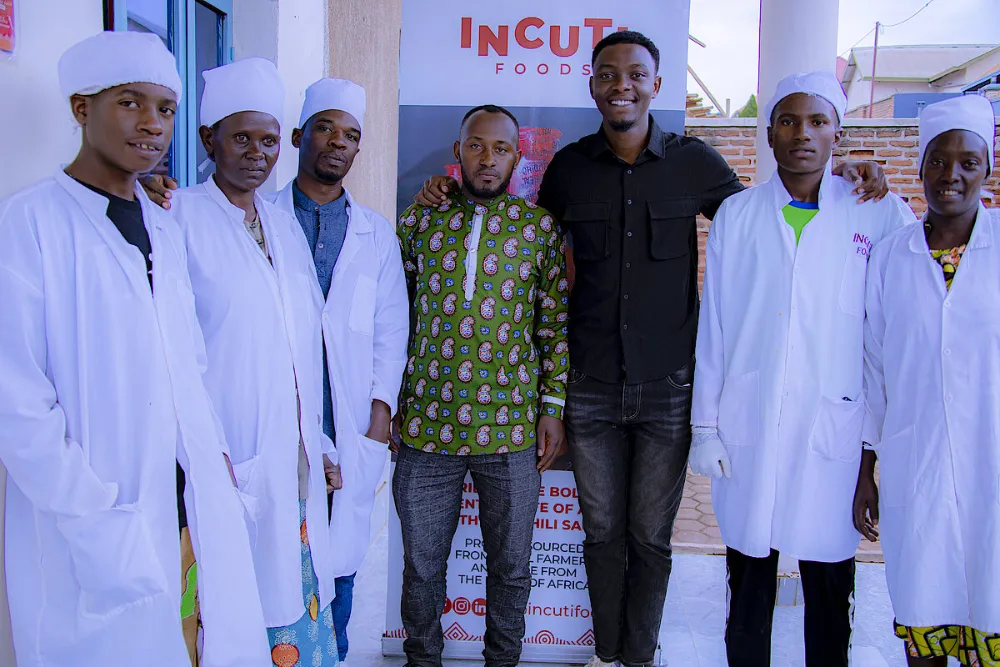
  4. How NRI is supporting a Rwandan start-up’s global vision - Natural Resources Institute

    Incuti is reshaping Rwanda’s chilli value chain, by adding value to chillies that were once sold fresh or went to waste. Farmers now have a more reliable buyer in Incuti, local communities benefit from job creation, and Rwanda earns valuable foreign exchange from exports.

A minimum food technology machinery

In a low-resource African context, the minimum food technology machinery required to support SMEs through a food accelerator programme should focus on affordable, multipurpose, energy-efficient equipment that improves food safety, shelf life, and value addition. The priority is not high-end industrial automation, but practical technologies that allow small enterprises to process local crops into marketable products. Core machinery would typically include cleaning and sorting equipment, solar or hybrid dryers, small hammer mills or grinders, oil presses, mixers, sealers, and basic packaging machines. For enterprises working with fruits, vegetables, grains, legumes, or neglected crops, these technologies can significantly reduce post-harvest losses while increasing product quality and income generation.

Basic food safety and preservation infrastructure is equally important. Minimum investments should include stainless steel processing tables, water filtration systems, weighing scales, moisture meters, refrigeration or cold storage units where feasible, and simple pasteurization or sterilization equipment. In many rural African settings, unreliable electricity makes solar-powered dryers, biomass-powered processing systems, and low-energy cooling technologies particularly valuable. Small laboratory tools for quality testing — such as pH meters, thermometers, and microbial testing kits — can also help SMEs meet national and export standards without requiring expensive industrial laboratories.

The most effective approach in poorer contexts is often shared processing infrastructure rather than individual ownership of machinery. Community food innovation hubs, cooperative processing centres, or university-linked incubation facilities can provide SMEs with access to machinery they could not afford independently. This reduces costs while encouraging skills transfer, entrepreneurship, and product innovation. For African SMEs working on forgotten foods, indigenous crops, or agroecological products, the emphasis should therefore be on scalable, repairable, locally maintainable technologies that support food safety, nutrition, and market access rather than sophisticated industrial systems that are difficult to sustain.

  • The webinar will explore the relationship between food safety and sustainability in food manufacturing, highlighting both the challenges and opportunities associated with current industrial practices. While food safety remains the highest priority across the sector, many processes used to ensure safe production, such as pasteurization, sterilization, cleaning in place, and sterilization in place, require significant amounts of energy, water, and chemical inputs.
  • The session will examine how these practices can create sustainability trade-offs, while also addressing how climate change is introducing new microbial hazards that need to be controlled throughout the food system.
  • Participants will gain an overview of the current landscape of food safety and sustainability, including opportunities to improve resource efficiency while maintaining high safety standards. Topics will include innovative hygienic design approaches, modernisation of traditional preservation methods, strategies to reduce spoilage and waste, and solutions to address emerging microbial risks linked to climate change.
  • If you are interested in joining this webinar, please register through this link: https://bokuvienna.zoom.us/webinar/register/WN_5iai5_fwSzO1WN_p-Hqsxg#/registration 

Friday, July 14, 2017

Pioneering project estimates nutritional losses

The two-year project, led by the Natural Resources Institute (NRI) at the University of Greenwich, is being carried out in partnership with scientists from the University of Zimbabwe, the National Agricultural Research Laboratories in Kawanda, Uganda (NARL), the International Potato Center (CIP), and Purdue University and Iowa State University in the United States.
“The team’s first step was to hold an open consultation on nutritional losses. Over four hundred agriculture and nutrition experts from more than 50 countries were invited to take part in a survey focussing on key nutrients. The data gathered from this survey will be used to shape the research and will be integrated into the design of a predictive tool being developed through the project.” NRI’s Dr. Aurélie Bechoff Food and Nutrition Specialist, who is leading the project. 
Nutri-P-Loss will work alongside APHLIS, the African Postharvest Losses Information System, created in 2010 by NRI and partners. APHLIS is a scientific model producing calculated estimates of postharvest losses of food crops across sub-Saharan Africa. Through APHLIS+, a project led by Dr Bruno Tran (AfricaRice and NRI), a new and improved version of the information system is being developed, covering more crops and types of data, including nutritional loss.

The project comes under the research initiative known as ‘IMMANA’ or ‘Innovative Metrics and
Methods for Agriculture and Nutrition Actions’, funded with UK Aid from the UK government through the Department for International Development (DFID) and coordinated by the Leverhulme Centre for Integrative Research on Agriculture and Health (LCIRAH).

Thursday, March 30, 2017

Rockefeller Foundation announces $500,000 funding for NRI's “Cassava Bag”

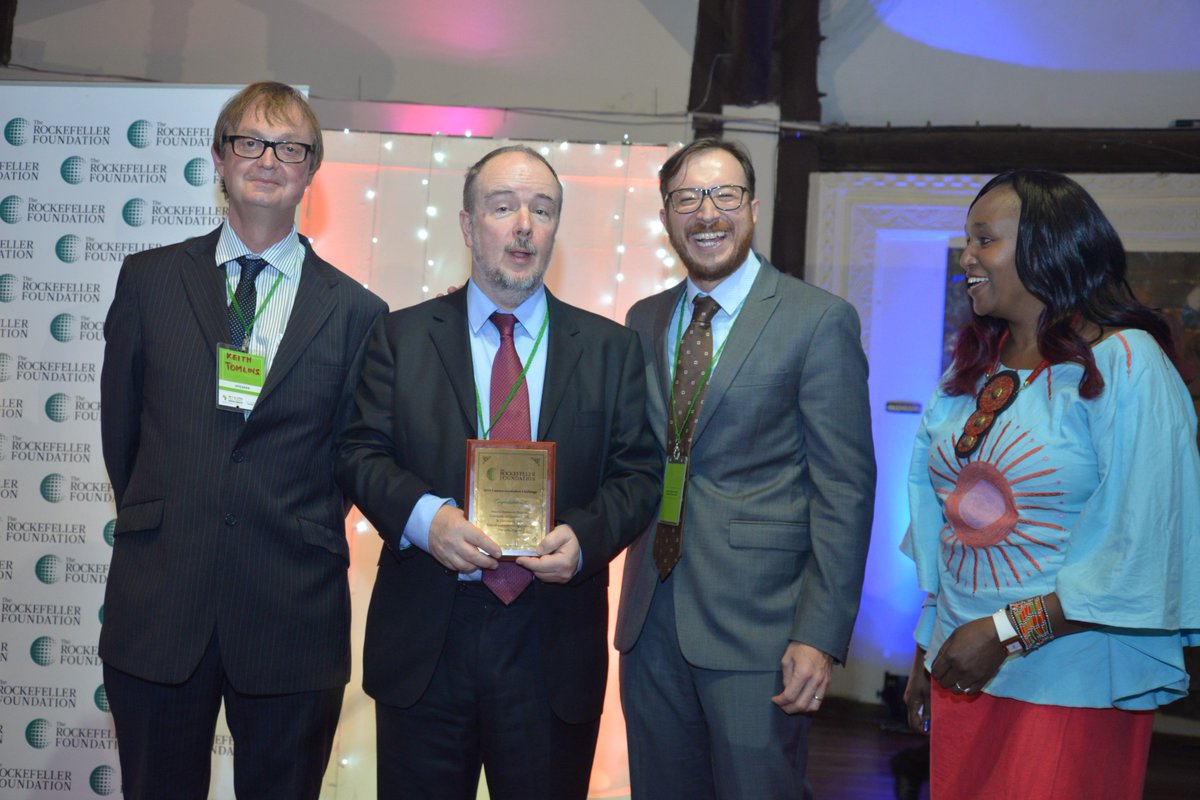
30 March 2017. An innovative idea to extend the shelf life of cassava, the staple food of some of the world's poorest communities, is to be funded by the Rockefeller Foundation. Six hundred applications from 32 countries were considered by 21 judges before just one entry, the NRI cassava bag, was selected for funding.

Reps from the Rockefeller Fondation congratulate
Profs Bennet & Tomlin for the winning NRI Cassava bag
The foundation has announced an initial grant of up to $500,000 to a team led by the University of Greenwich's Natural Resources Institute (NRI). The funding will support the testing and marketing of a storage bag for cassava roots – an innovation
that includes built-in curing technology to keep the foodstuff fresh.

The success of the invention, named the NRICassavabag, could benefit 500 million people in sub-Saharan Africa who rely on cassava for food security and nutrition. Currently, up to 40 per cent of the crop is wasted as it can deteriorate as soon as 24 hours after harvest. The new bag can extend the useful life of the crop for at least eight days.
"Fresh cassava rots all too quickly. Most damage to the roots occurs between the field and the factory. This meant that the solution to the problem lies with their storage. Now, the solution's in the bag. Our technology could be a transformational step for African cassava production." Professor Ben Bennett, NRI's Deputy Director and co-leader of the research team.
"The Natural Resources Institute has, once again, won international recognition for its expert knowledge and research. Partnership is at the heart of this project, which is a great example of the university's ambition to find solutions to the challenges that face our world – globally, nationally and locally. Many congratulations to all involved." Professor David Maguire, Vice-Chancellor of the University of Greenwich.


Related:

Tuesday, March 7, 2017

13th International Symposium of the International Society for Tropical Root Crops

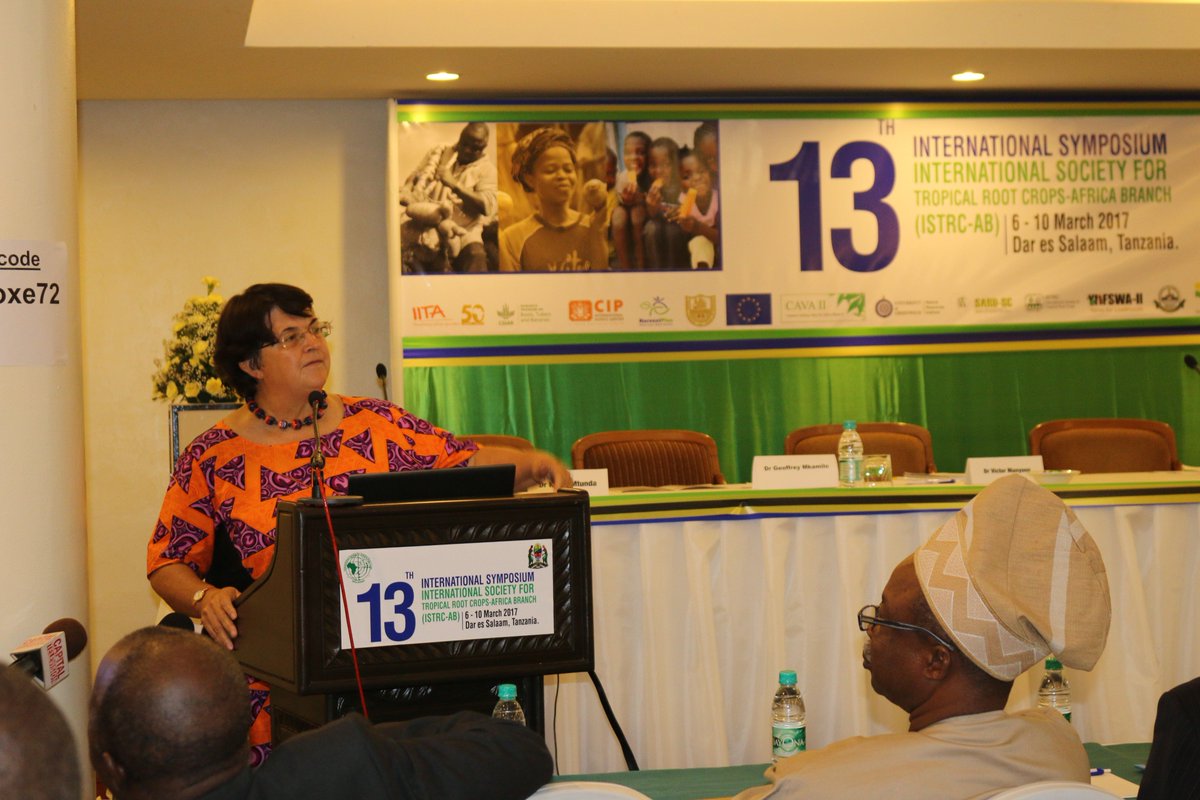
Dr. Jan Low delivers keynote address for 13th Symposium
5 – 10 March 2017. Dar es Salaam, Tanzania. The theme of the 13th International Symposium of the International Society for Tropical Root Crops – Africa Branch (ISTRC-AB) was “Expanding Collaboration, Catalyzing Innovation of Root Crops for Accelerating Africa’s Economic Growth”.

The sub-themes of the event are:
  • Managing priority genetic resources, cropping systems pests and diseases
  • Commercial Seed System, Agronomy and weed management
  • Postharvest technologies, nutrition, value chains and market opportunities
  • Enhancing innovative impact through partnerships
  • Mobilizing Investors for Sustainable Root and Tuber Crop Research and Development.
The conference is attended by 2016 World Food Prize (WFP) laureates from the International Potato Center (CIP)—Drs Maria Andrade, Robert Mwanga and Jan Low, all attending ISTRC-AB—for their great achievement in contributing to reduced hidden hunger among women and children of Africa, through the orange-fleshed sweetpotato (OFSP).
“Addressing postharvest losses and markets cannot be overemphasized in the efforts to boost production of root and tuber crops in Africa. If not well addressed, then all the work done to increase production through development and adoption of improved varieties, and good agronomic practices will not realize the anticipated benefits. This is one of the areas the meeting will focus on including attracting investors,” Dr Victor Manyong, IITA Director for Eastern Africa.
Root and tuber crops are versatile staples that can enable Africa to meet its food and nutrition security as they produce more food per unit area of land than most crops. However, they also suffer from high postharvest losses – they spoil very easily and storage is a challenge.

Other areas that the participants will deliberate on are efforts to control the major pests and diseases of roots and tubers such as cassava brown streak disease and cassava mosaic disease; and sweet potato virus disease and root rot, which significantly reduced the crop’s production nearly wiping it out from the country. These include breeding resistant varieties and establishing clean seed systems to reduce the spread of diseases as farmers share infected planting materials.

The organization of the meeting was led by Tanzania’s Ministry of Agriculture, Livestock and Fisheries. Other partners included IITA, CIP, Commission for Science and Technology (COSTECH) and Cassava Adding Value for Africa (CAVA) project that is led by the Tanzania Food and Nutrition Centre (TFNC)

For more information, please visit the ISTRC-AB website. The ISTRC-AB conference has been organised by the International Institute of Tropical Agriculture (IITA) working closely with a number of partners including CIP, CGIAR Research Program on Roots, Tubers and Bananas, the Natural Resources Institute among others. ISTRC-AB was established in 1978 and is headquartered in IITA.

Related
Sweetpotato production: A simple guide to good cultural practices
Abidin, P.E., Acheremu, K., Akansake, D., Darkwa, K., Dorgbetor, I.K
International Potato CenterDecember 2016, 2 pages

Friday, November 14, 2014

Improving Nutrition Outcomes Through Optimized Agricultural Investments (ATONU)


3 November 2014. Kinshasa. DRC. The Food, Agriculture and Natural Resources Policy Analysis Network (FANRPAN) and its consortium partners announced a $16 Million grant from the Bill and Melinda Gates Foundation to implement the “Improving Nutrition Outcomes through Optimized Agricultural Interventions (ATONU)” project.

This was announced during the Africa Day of Food and Nutrition Security.

This project seeks to improve nutrition outcomes in smallholder farm families and poor households through tailored nutrition sensitive agriculture programs that ultimately benefit women of child bearing age and children in the first 1000 days of life.

The ATONU project consortium members include:
  1. the Africa Innovations Institute in Uganda, 
  2. Sokoine University of Agriculture in Tanzania, 
  3. Agribusiness Systems International, an affiliate of ACDI/VOCA, 
  4. Farm Africa, 
  5. the Natural Resources Institute of the University of Greenwich, 
  6. the Leverhulme Center for Integrative Research on Agriculture and Health 
  7. and the London School of Hygiene and Tropical Medicine in the UK. 
The ATONU project will be implemented over a six-year period, ending in December 2020. The focus countries for the project are: Ethiopia, Nigeria, Tanzania, Ghana and Uganda.

Objectives:
The ATONU project will provide technical assistance to integrate tailored nutrition interventions
into planned and ongoing agricultural investments through:
  •  generating tools and frameworks for diagnosing the opportunities to incorporate tailored nutrition interventions into agriculture investments; 
  • offering technical assistance for designing, testing, and rigorously monitoring and evaluating results of the tailored nutrition interventions (proof of concept); 
  • documenting and disseminating best practices and evidence and adding to the agriculture for nutrition knowledge base; 
  • advocating for evidence-based decision making at all levels; and 
  • strengthening African capacity and building a community of practice in agriculture for improved nutrition. 
The impact will be that smallholder farm families and poor households will have access not only to more food but also to a wide variety of safe and nutritious foods. Dr Lindiwe Majele Sibanda – FANRPAN CEO and ATONU Project Director, appreciating the grant award from the foundation, said: 
“The grant award will help close the gap between the agriculture and nutrition communities who have to work together and bring to bear what agriculture can do for nutrition in farm families”.
Additional source:
6 November 2014. NRI: Research consortium featuring NRI seeks to harness the power of agriculture for improved nutrition: new grant announced by FANRPAN

Related: Call for Applications

Postdoctoral Fellowships on Innovative Methods and Metrics for Agriculture and Nutrition Actions (IMMANA Fellowships)(led by the Friedman School of Nutrition Science and Policy at Tufts University)
  • Download the Call
  • Objective: To accelerate the development of innovative and interdisciplinary methods, metrics and tools to advance scientific understanding of the linkages between agriculture and food systems, health, and nutrition outcomes, and thereby inform policy and programmatic actions in low and middle income countries (LMICs).
  • Funding available: Six one-year postdoctoral research fellowships, in four rounds (2015-2018), with stipends for fellows and two mentors.
Related:

Monday, November 3, 2014

Adding value to indigenous vegetables in East and Central Uganda


3 November 2014. Kampala. Launch ceremony of the consortium Enhancing nutrition security and incomes through adding value to indigenous vegetables in East and Central Uganda.

Indigenous vegetables contain vitamins and minerals which are essential in the absorption and metabolism of food ingested by the body. Despite Sub-Saharan Africa being home to hundreds of indigenous vegetables, which can supply the required vitamins and minerals such as β-carotene, vitamins C and E, folates, iron and calcium, these vegetables have not been mainstreamed in the staple diets. Potential consumers of indigenous vegetables complain about the inconsistency in supply and poor quality of products availed to them due to a) seasonality of supply, b) long distances between production areas and potential consumption centres and c) poor post harvest handling.

Though there has been an attempt to improve availability and access to food especially in Northern Uganda which is a post conflict area, the aspect of quality of food has not been accorded ample attention yet it is crucial in addressing qualitative malnutrition. Despite the fact that the National Food and Nutrition Policy of Uganda highlight importance of vegetables in diets, there exist gaps in vegetable consumption.


Objectives of the project: 
This research, therefore, intends to improve post harvest handling and preservation of African indigenous vegetables (especially Solanaceae sp) in order to prolong their shelf life and hence increase their consumption in nutritionally vulnerable populations while increasing revenue of those engaged in their production. More specifically, the project intends to generate:
  1. Better knowledge of indigenous vegetable varieties with prolonged shelflife. 
  2. Increased knowledge about technologies and processes for prolonging shelflife of indigenous vegetables. 
  3. Better understanding of efficient delivery pathways for value added indigenous vegetables to end-markets.
"In June 2013 the European Commission announced the EU’s commitment to support countries in reducing stunting in children under 5 by 7 million by 2025. By doing this the Commission has taken an unprecedented level of commitment among the donor community and has shown the way for others to pledge for measurable and time-bound targets in stunting reduction. In order to attain the desired results, the EU has therefore pledged to mobilize € 3.5 billion, between 2014 and 2020, to attain our nutrition objective”. 
Mr Bogdan Stefanescu, Head of Rural Development Section, European Delegation Uganda
Partners:
  • The project shall be led by Uganda Christian University (UCU) . UCU has previously been involved in conducting research and community outreach programmes on indigenous leafy vegetables in Central Uganda under the HORTCRSP project. Currently it is in a partnership with Biosciences East and Central Africa (BecA- ILRI) to develop molecular tools for improvement of indigenous African Solanaceae vegetables. It is also currently involved in conducting field trials with support from Syngenta for different new vegetable varieties targeting the Ugandan market. UCU also coordinates the African Solanaceae Consortium, Afri-Sol to which Farmgain and CHAIN Uganda are members together with several other organisations with interest in Solanaceae sp.
  • The practitioner organisation, Farmgain Africa (FGA) is a private firm with a project history mainly specializing in building the capacity of practitioners in East Africa (NGOs, CBOs and development agencies) in identifying and accessing market opportunities for agricultural commodities (www.farmgainafrica.org). Farmgain not only supports the establishment Agri-value chains but helps private sector actors in developing agro-enterprises.
  • The Coalition for Health, Agriculture and Income networks (CHAIN Uganda) is a CBO which builds the capacity of small holder farmers through supporting formation and coordination of self help groups to effectively transition from subsistence levels to commercial farming for improved incomes and livelihood.
  • The Natural Resources Institute (NRI) shall be responsible for identifying and cataloguing all available technologies and methods of prolonging shelf life of indigenous vegetables. NRI, specifically members of the Food and Markets Department, shall avail expertise on horticultural post-harvest technologies