Platform for African – European Partnership in Agricultural Research for Development
Showing posts with label Denmark. Show all posts

Tuesday, March 14, 2023

Food Loss and Waste in Fruit and Vegetable Supply Chains

14 March 2023. 2:30pm - 4pm CET Food Loss and Waste in Fruit and Vegetable Supply Chains - IFPRI Seminar

According to the United Nations Food and Agriculture Organization (FAO), about one-third of all food produced around the globe is lost or wasted. This is particularly egregious in a world where one in nine persons is food insecure, and widespread food affordability concerns in low- and middle-income countries have resulted from COVID-related value chain disruptions and the global impact of the war in Ukraine.

This annual event will take stock of efforts around the world to tackle food loss and waste through initiatives like Champions 12.3, a coalition of leaders from governments, businesses, international organizations, research institutions, farmer groups, and civil society dedicated to inspiring ambition, mobilizing action, and accelerating progress toward achieving Sustainable Development Goal Target 12.3 by 2030.

The seminar will also take a closer look at fruits and vegetables, which are among the healthiest but most wasted foods. Given their perishable nature, great care, attention, and cooperation along all parts of fruit and vegetable value chains are required to reduce food loss and waste.
  • Moderator Luciana Delgado, Senior Research Analyst, IFPRI
  • Welcome Rob Vos, Director, Markets, Trade and Institutions Division, IFPRI, and Lead, CGIAR Initiative on Rethinking Food Markets
  • Welcome Jacob Jensen, Minister for Food, Agriculture and Fisheries of Denmark (video recording)
  • Keynote Address Maximo Torero, Chief Economist, Food and Agriculture Organization (FAO)
Panel Discussion
  • Rob Vos, Director, Markets, Trade and Institutions Division, IFPRI, and Lead, CGIAR Initiative on Rethinking Food Markets
  • Muhammad Yakubu Bubayaro, Founder/CEO, Bunkasa Agritech
  • Shannon Sajdak, Senior Sustainability Manager, Apeel
  • Signe Frese, Director, CSR and Quality, Coop Denmark
  • Liz Goodwin, Senior Fellow and Director, Food Loss and Waste, World Resources Institute (WRI)

Saturday, February 4, 2023

ARD Country Profiles Sweden, Denmark. Norway, Belgium

Country Profile for Denmark (2022)

This ARD country Profile ( # 4 pages) has been prepared by EIARD with contributions from staff of Danida, complemented by information collected from internal and online databases and websites. It gives an overview of the country's ARD priorities/approaches, organisation of ARD, and instruments/programs of ARD funding during 2020-2021.

Sweden - ARD Country Profile (2022)

This ARD Country Profile for Sweden ( # 3 pages) has been prepared by EIARD with contributions from staff of Sida, complemented by information collected from internal and online databases and websites. It gives an overview of the country's ARD priorities/approaches, organisation of ARD, and key programmes/beneficiaries during 2021.

Norway - ARD Country Profile (2022)

This ARD country Profile ( # 4 pages) has been prepared by EIARD with contributions from staff of Norad, complemented by information collected from internal and online databases and websites. It gives an overview of the country's ARD priorities/approaches, organisation of ARD, and instruments/examples of ARD funding.

Belgium - ARD Country Profile (2022)

Funding for ARD is mostly the responsibility of the Belgian Development Cooperation where it is supported through different channels. Belgian Development Cooperation’s multilateral funding currently supports CGIAR(link is external). As an EU Member State, Belgium contributes also to the funding of the European Union’s (EU) Horizon Europe research programmes (and Belgian Centres of Excellence can receive funding from these programs). Belgian Development Cooperation’s bilateral support is given to Belgian universities, non-governmental organisations (NGOs), and scientific institutions such as the Royal Museum for Central Africa(link is external) and the Institute for Tropical Medicine(link is external).


Forthcoming in 2023
  • European Commission - forthcoming in 2023
  • France - forthcoming
  • Germany - forthcoming in 2023
  • Ireland - forthcoming in 2023
  • Netherlands - forthcoming in 2023
  • Switzerland - forthcoming
  • United Kingdom - forthcoming in 2023

Saturday, April 28, 2018

5th International Conference on Food Security and Nutrition (ICFSN 2018)

9-10 April 2018. Copenhagen. 5th International Conference on Food Security and Nutrition (ICFSN 2018)

  • Evaluating the impact of consumption of indigenous fruits and vegetables on rural food security: the case of Port St Johns area, South Africa. Samuel Ntlanga, Amon Taruvinga and Abyssinia Mushunje
    Indigenous fruits and vegetables are associated with multiple nutritional and health benefits. Unfortunately, the multiple benefits associated with indigenous fruits did not gain any popularity and further not taken into account as the possibly solution in addressing food and nutritional insecurity in rural areas. The study shows that there was a significant improvement in food security from the consumers of indigenous fruits and vegetables than non-consumers. (PAGE 16)
  • Income and food security status among rural women Indigenous Knowledge (IK) based crafters and non-crafters: The case of Amathole District Municipality, South Africa Sesetu Nyeleka, Amon Taruvinga and Leocadia Zhou
    IK based crafts may address rural household income for women but falls short of addressing their household food security.
  • Multisector approach to tackling drivers of malnutrition in vulnerable communities: Experience from USAID - Feed the Future Nigeria Livelihoods Project E. A. Oluloto, A. A Oseni, A. Kanoute
    The project promoted optimal Nutrition and WASH services focusing on the first 1000 days through a comprehensive behavior change communication package, capacity building, and services delivery.   The success of this multisector approach to improving nutrition was massive and demonstrates that food and nutrition security is better achieved when all sectors work in tandem. (PAGE 24)
  • Performance and Application of a “Dilute-and-Shoot” LC-MS/MS Method for Determination of Mycotoxins in Food Products in São Paulo, Brazil. Larissa T. Franco, Tânia Petta, Maria E. Vendrametto and Carlos A.F. Oliveira
    Results indicated low incidences of mycotoxin in the products evaluated, although the co-occurrence of FB and DON warrants concern about their incidence in wheat flour in Brazil. (PAGE 23)

Thursday, April 26, 2018

Valorizing Green Growth in Africa (VALOR)

Aiming to accelerate valorization of green inclusive growth in Africa, the Danish funded Valorizing Green Growth in Africa (VALOR) project created new knowledge on how African origin product (OP) producers can add value to their products by documenting and incorporating territory specific cultural, environmental and social qualities. 

In the Comprehensive Africa Agriculture Development Program (CAADP) context VALOR promotes wise use of market forces. VALOR involves research capacity strengthening in 3 partner countries, Ghana, Kenya and Tanzania.

Aloe Vera from the Kilimanjaro Region
Aloe Vera from the Kilimanjaro region is one of the Tanzanian origin products identified by the VALOR project as having potential for registration with a geographical indication. The rich fertile volcanic soils of the plains below Kilimanjaro Mountain, is one of the factors defining Aloe product qualities, according to a local producer. 

Ghana Savannah Yam
Yam cultivated in the Ghana Savannah region is one of the Ghanaian origin products identified by the VALOR project as having potential for registration with a geographical indication. A thousand year old cultural tradition for yam cultivation is one of the defining characteristics of the quality and reputation of Ghana Savannah yam.

African Quality Honey (almost) ready for GI registrationIt is almost there; the recognition of quality origin honey from distinct areas across Tanzania, Kenya and Ghana. The quality is high, the demand is high, and producers are well-aware of the link between the local flora and environment and the quality of their honey.

Background:
Lead Institution: Department of Food and Resource Economics (KU), University of Copenhagen (KU), Denmark, Faculty of Science (KU)
Partner Institution(s):
  • University of Nairobi, Department of Agricultural Economics, Kenya
  • University of Dar es Salaam, Institute of Resource Assessment, Tanzania
  • University of Ghana, Legon, Department of Geography and Resource Development, Ghana
  • University of Cape Coast, Department of Entomology and Wildlife, Ghana
  • The Danish Beekeepers' Association, Denmark
Start Date: January 1, 2014, End Date: December 31, 2018
Total grant: DKK 9,977,540
Contact : Henrik Egelyng
Project Website: http://ifro.ku.dk/english/research/projects/projec...

Monday, December 12, 2016

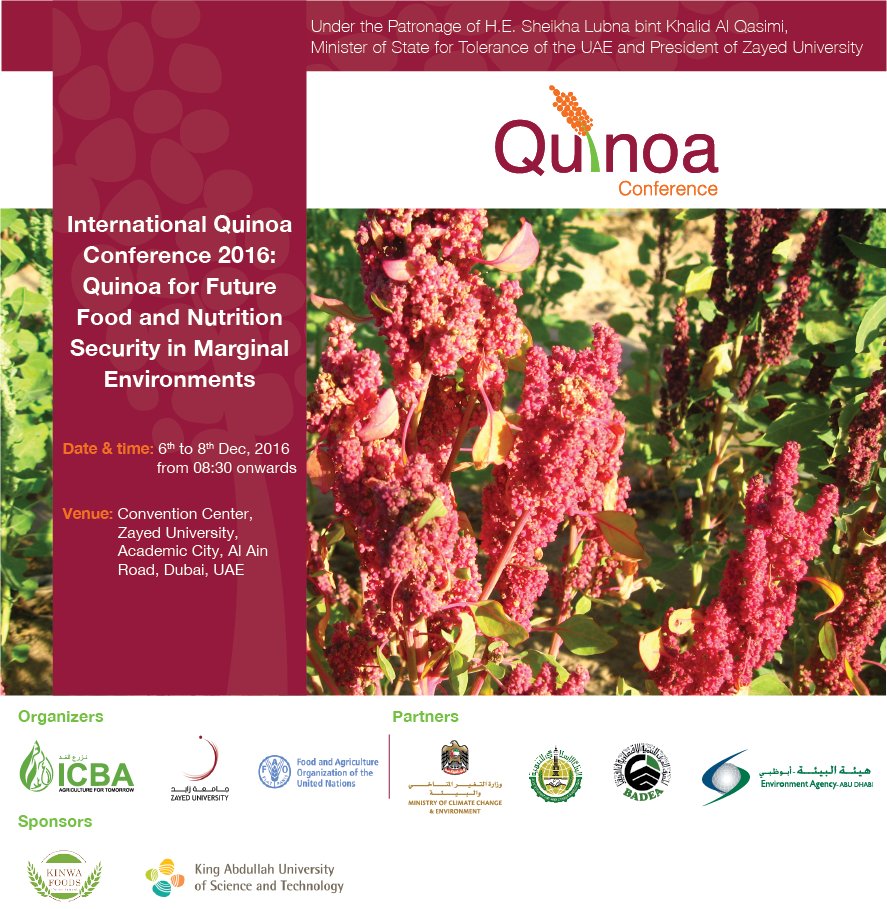
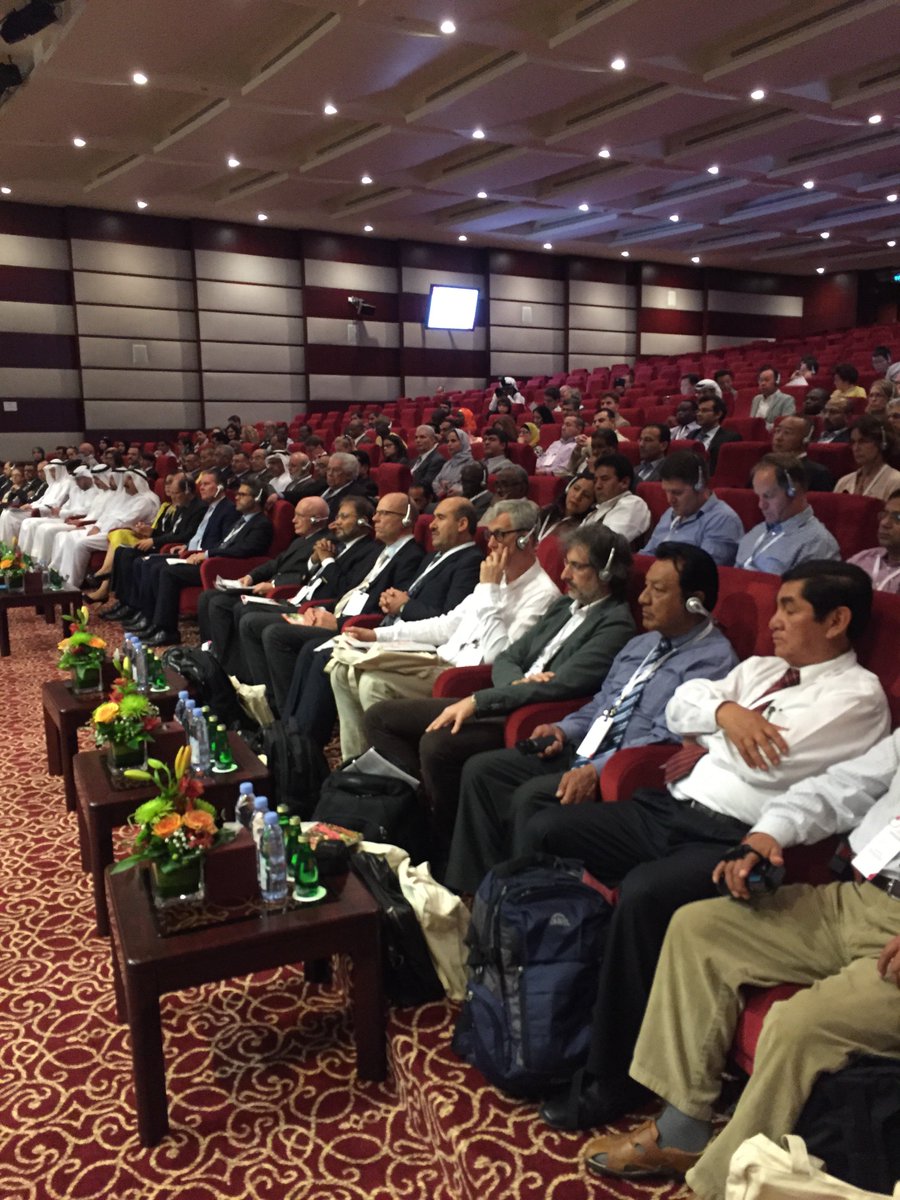
The International Quinoa Conference 2016

6-8 December 2016. Dubai. The International Quinoa Conference 2016:  “Quinoa for Future Food and Nutrition Security in Marginal Environments”.

This conference provided a unique platform for discussions on ecological, economic and social aspects related to introducing quinoa for sustainable agricultural production in marginal environments.
Organizers: the International Center for Biosaline Agriculture (ICBA) in collaboration with the Ministry of Climate Change and Environment of the United Arab Emirates, Zayed University, the Islamic Development Bank (IDB), and the Arab Bank for Economic Development in Africa (BADEA), with the technical contribution of the Food and Agriculture Organization of the United Nations (FAO).

The conference:
  • Brought together leading scientists, practitioners and decision-makers from the public and private sectors in a mix conducive to innovation and technology transfer
  • Explorec opportunities for collaboration between the public and private sectors
  • Showcasec the latest developments in quinoa research, production and trade around the world
  • Highlightdc quinoa uses and niche market opportunities
  • Connectdc young professionals to experienced professionals
  • The worldwild potential of quinoa - Jacobson S.E. Copenhagen of University, Denmark 
  • Quinoa introduction in West-Africa: experience of Burkina Faso - Dao A., Institute of Environment and Agricultural Research (INERA), Burkina Faso
  • Adaptability of quinoa in Eastern and Southern Africa: Potential implications for food security and climate change adaptation - Mukankusi C., International Center for Tropical Agriculture (CIAT), Uganda
  • Quinoa performance under the hot- dry weather of Sudan - Maarouf I.M., Former National Consultant of the FAO quinoa project in Sudan, Sudan
  • Performance of quinoa genotypes in different ecological areas of central districts in Malawi -
  • Muhota P.T., Lilongwe University of Agriculture and Natural Resources (LUANAR), Malawi
  • Adaptability of quinoa to adverse climatic and soil conditions - Boukary H., Director of Regional Center of Agronomic Research, Niger
  • Quinoa adaptability, participatory varietal selection and recipe development in Kenya - Wanderi S., Kenya Agricultural and Livestock Research Organisation (KALRO), Kenya

Friday, June 24, 2016

International Food and Agribusiness Management Association conference

19 - 23 June 2016. Denmark. The three major issues at the International Food and Agribusiness
Management Association conference (IFAMA 2016) were:

PEOPLE FLOW OF TALENT IN THE FOOD AND AGRIBUSINESS SECTOR
In the future, we will become increasingly dependent on people with the right work ethic, training, competencies and skills to develop sustainable solutions.
  • How do we identify and overcome the barriers that influence the attractiveness of the food and agribusiness industry to young people in various regions, from elementary school through university?
  • Which educational changes are necessary to enhance the flow of high quality talent into the industry?
CLIMATE CLIMATE-SMART FOOD AND AGRIBUSINESS SYSTEMS
Climate change has direct implications for food production, commodity supply and prices, and food security, especially among vulnerable populations in developed and developing countries.
  • How do we define and map the implications of climate change on the food and agribusiness industry?
  • What gaps exist in the climate change knowledge of industry stakeholders, and how do we develop research questions, training and processes to bridge them?
BIG DATA BETTER ANALYTICS AND DEEPER INSIGHT MANAGEMENT

Big data is key to addressing food security challenges and productivity improvements in a future era of resource constraints and climate change.
  • Which research questions would best envision the role of big data in the food and agribusiness industry and define the strategies to exploit it?
  • How do we build alliances to foster opportunities for data sharing that enhance efficiency while leaving room for competition?
  • How should we frame the issues surrounding big data so that privacy risks do not dog other industries?
Finance and sustainability
  • Niels Dijkman, Head Sustainability Corporate Banking ABN AMRO Bank, Netherlands
    (speaker and moderator)
  • Stefano Pascucci, Co-chair Scientific Symposium, Professor in Sustainability and Circular Economy, University of Exeter Business School, UK
  • André Louw Chief Executive Officer and Board Member: Agric Risk Specialist (ARS), Ficksburg, Free State; Honorary Professor: Agricultural Economics, University of Pretoria, South Africa
Food Innovation, HR management and Development
  • John Purchase, CEO Agricultural Business Chamber, Pretoria, South Africa
  • Jaideep Biswas, Vice President, OLAM International, Nigeria
  • W. Scott Hine, Vice President Products & Solutions and Chief Innovation, Novus International, USA
  • Johan van Rooyen, IFAMA President, Professor in Agricultural Economics, University of Stellenbosch, South Africa (moderator)
Food innovation in developing countries
  • Johan van Rooyen, IFAMA President 2015 – 2019, Chairman of IFAMA, Professor in Agricultural Economics, University of Stellenbosch, South Africa (moderator), 
  • P.G. Chengappa, President of the Agricultural Economics Research Association (AERA) and Indian Council of Agriculture Research (ICAR), National Professor at the Institute for Social and Economic Change, India
  • Domenico Dentoni, The Global Centre for Food Systems Innovation, Netherlands
Addressing the opening session of the International Food and Agribusiness Management Association (IFAMA) 2016 conference, meeting in  all this week, Phil Hogan, European Commissioner for Agriculture and Rural Development said that he believed agriculture policy was “back on the agenda” and that the EU was working hard to deliver on behalf of the industry’s farmers and agri-innovators.
There is €3.6bn (£2.75bn) available at EU level between now and 2020 to fund synergies between agriculture and research, via Horizon 2020 and the European Innovation Partnership for ‘Agricultural Productivity and Sustainability’. Around €64 million of that will be dedicated to precision farming and digital technologies in the agriculture sector under the current Horizon 2020 Work Programme 2016-2017, with €30m being invested in the implementation of an ‘Internet of Things Large Scale Pilot’ on smart farming and food security. There is evidence that the links between research, farmers and industry are still too weak. Too many innovations are still not being transformed into practical tools, and too many research questions from the sector remain unanswered. Agricultural knowledge and innovation systems need to be made more efficient and interactive. And the same goes for food innovation. Farmers and the food industry needed to be empowered to embrace research and innovation, working in collaboration with scientists and investors to generate knowledge from the earliest possible stage.” Phil Hogan, European Commissioner for Agriculture and Rural Development 
Related: 

Wednesday, June 8, 2016

Launch of the 3GF Partnership “Food Loss & Waste Protocol”

6 - 7 June 2016. Copenhagen. The 3GF 2016 Summit, has made a global commitment to advancing green transformation at speed and at scale. Hosted by the Government of Denmark, representatives from 3GF partner countries; China, Ethiopia, Kenya, The Republic of, Korea and Mexico attended the 3GF Summit along with representatives from new partner countries Chile and Vietnam .

The Summit also welcomed decision makers from 37 different countries across the public and private sectors along with civil society. Over 450 high level delegates attended the event including representatives from 68 private companies.

Extract of the programme:
Delivering Smarter Food Systems
As we think about our food supply, how can new partnerships help increase efficiency working through such deeply embedded and existing supply chains? How can food waste be reduced at both the production and consumption ends of our food systems? How can we achieve scale in markets where smallholder farmers can play a significant role? See: Session note: Delivering Smarter Food Systems 

Panel:
  • HE Mr Espen Lunde Larsen, Minister of Environment and Food, Denmark 
  • Khalid Bomba, CEO, Ethiopian Agricultural Transformation Agency, (ATA)
  • Liz Goodwin, CEO, WRAP
  • Michiel Kernkamp, CEO, Nestlé Nordic Region
  • Toine Timmermans, Wageningen University
A Call to Action: An In Conversation on Enabling Solutions at Speed and Scale in Ethiopia
This session explored green growth in Ethiopia - the experience of climate solutions in the context of
mitigation and climate changes in the country. One of the key strategic priorities for the Ethiopian government has been the development of industrial parks to attract investment, to both build up infrastructure and create employment opportunities. According to the UNDP, it’s estimated that building the green economy in Ethiopia would require over US$150 billion over 20 years from 2011 to 2030. A green path of development would allow Ethiopia to tap into streams of climate finance as well as traditional investment, whilst providing future-proof jobs in emerging sectors.
Session note: A Call to Action: An In Conversation on Enabling Solutions at Speed and Scale in Ethiopia

Launch of the 3GF Partnership “Food Loss and Waste Protocol”
What gets measured can be managed: Presentation of the 3GF partnership that has developed a global
standard for measuring food loss and waste in a consistent, credible and transparent manner.

Press RELEASE 06/06/2016: First-Ever Global Standard to Measure Food Loss and Waste Introduced by International Partnership

Panel:
  • HE Mr Kristian Jensen, Minister for Foreign Affairs, Denmark 
  • Liz Goodwin, CEO, WRAP
  • Michiel Kernkamp, CEO, Nestlé Nordic Region 
  • Andrew Steer, President and CEO, World Resources Institute, (WRI) 
  • Ren Wang, Assistant Director General, Agriculture and Consumer Protection Department, Food and Agriculture Organization of the United Nations (FAO)
“This standard is a real breakthrough. For the first time, armed with the standard,
countries and companies will be able to quantify how much food is lost and wasted, where it occurs, and report on it in a highly credible and consistent manner. There’s simply no reason that so much food should be lost and wasted. Now, we have a powerful new tool that will help governments and businesses save money, protect resources and ensure more people get the food they need.” Andrew Steer, President and CEO, World Resources Institute. “
“WRAP’s work to help reduce household waste in the UK by 21 percent was only possible through our ground-breaking analysis to quantify how much and where it was wasted. Food waste is not confined by borders, so WRAP is delighted to have helped develop the Food Loss and Waste Standard. I am confident it will empower businesses, governments, and other organisations to take action on an international scale, an outcome that WRAP will strongly support.” Dr. Liz Goodwin, Chief Executive Officer, WRAP (The Waste and Resources Action Programme)
“Measuring the level of food waste in a structured way is critical for developing effective
strategies that focus on reducing food waste and monitoring progress at the business, national and EU level, as well as contributing to the achievement of SDG Target 12.3. The EU-FUSIONS' Food Waste Framework and Quantification Manual is fully synchronized with the Food Loss and Waste Protocol's FLW Standard. This enables users of the FUSIONS manual which are monitoring and reporting on food waste amounts and trends over time to be harmonized with the requirements of the global accounting and reporting standard.” Toine Timmermans, Project Coordinator for EU-FUSIONS
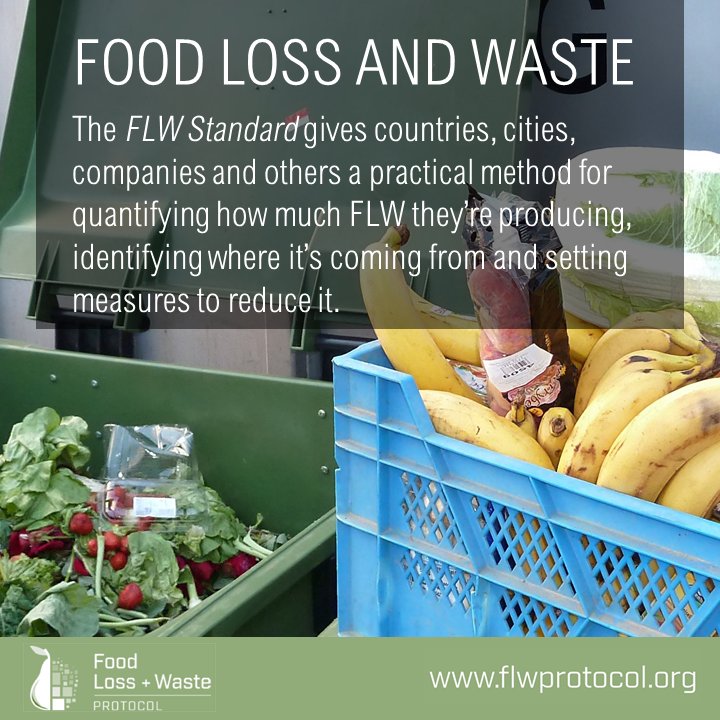
The Food Loss and Waste (FLW) Standard (160 pages)
  • provides a set of global definitions and reporting requirements for companies, countries and others to consistently and credibly measure, report on and manage food loss and waste. The Standard will help governments and businesses save money, protect resources and ensure more people get the food they need.
  • The FLW Standard was developed over the past three years by a partnership of leading international organizations, led by the World Resources Group (WRI). More than 200 external stakeholders representing companies, national governments, intergovernmental organizations, non-governmental organizations, and academic institutions from around the world provided feedback on the Standard.
Food loss and waste facts:
  • An estimated one-third of all food is lost or wasted worldwide as it moves from where it is produced to where it is eaten, even as more than 800 million people are undernourished.
  • Food loss and waste globally costs up to US$940 billion per year.
  • Food loss and waste generates about 8 percent of global greenhouse gas emissions. If it were a country, food loss and waste would be the third-largest greenhouse gas emitter behind China and the United States.
Resources:
The new FLW Protocol website, where you can access the Standard: www.FLWProtocol.org
A short 3GF film on food loss and waste and the Standard:


Related:
Interview with Vimal Shah, Chairman, Kenya Private Sector Alliance / Bidco Oil Refineries. Why is green growth important for the African region and how can public private partnerships drive green growth?

Green and growth must go together. Without green, growth cannot be sustainable and green cannot thrive without growth. A rapid, large-sale industrial transition is needed if global economic growth is to continue while reducing greenhouse gas emissions, adapting societies to climate change and promoting a sustainable use of resources.