Platform for African – European Partnership in Agricultural Research for Development
Showing posts with label OECD. Show all posts

Wednesday, August 26, 2026

How Food Trade and Markets Shape Diets in West Africa


26 August 2026
. This webinar was jointly organised by the Sahel and West Africa Club (OECD/SWAC), the Global Alliance for Improved Nutrition (GAIN) and AGRA. Bringing together perspectives from trade, nutrition, public policy and the private sector.

Recording forthcoming

This webinar examined how food trade and markets shape diets in West Africa, recognising both their potential to improve access to diverse and nutritious foods and the risks they may pose for healthier food environments. 

  • Explored how trade and markets influence diets in West Africa, including both their contribution to food diversity and affordability and their potential to expand access to less healthy foods.
  • Identified policy and market conditions that can help align intra-African food trade and nutrition objectives.
  •  Fostered dialogue between trade, nutrition, public-sector and private-sector actors on practical entry points to leverage markets and trade for healthier food systems.

Background 


Diet quality in West Africa remains constrained by insufficient diversity, limited affordability of healthy diets and underconsumption of nutritious foods. Food environments are also changing. Consumption of unhealthy and ultra-processed foods is still lower than in many other regions, but recent evidence from the Global Diet Quality Project shows it is rising in several countries, including Côte d’Ivoire and Nigeria. These trends point to a dual challenge: improving access to diverse and nutritious foods while preventing a faster shift towards less healthy food environments.

Trade and markets are central to this challenge, but their role remains insufficiently understood. Imports are often associated with adverse effects on diets, particularly through the increased availability of ultra-processed and unhealthy foods. Yet trade and markets can also support better nutrition outcomes by improving the availability, affordability and seasonal access to diverse foods. Recent evidence from OECD/SWAC shows that intra-regional food trade in West Africa is around six times larger than official statistics suggest and provides an estimated 25% of regional calorie needs. It also connects growing urban demand to more diverse production basins, supporting food diversity and helping to mitigate seasonality.

Speakers 

  • Joyce Akpata Head of Policy, Advocacy & Communications Global Alliance for Improved Nutrition (GAIN) 
  • Alban Mas Aparisi Food Systems Lead OECD SWAC 
  • Koffi Zougbede Economist OECD SWAC 
  • Emmanuel Konjoh Director Ministry of Trade of Sierra Leone 
  • Seun Sangoleye CEO Baby Grubz 
  • Wubeneh Nega Head of Trade and Markets AGRA 
  • Victor Ajieroh Director Praisegate / ATNi

Resources

OECD (2025) Report: Intra-regional Food Trade in West Africa: New Evidence, New Perspectives 138 p.


Intra-regional Food Trade in West Africa: New Evidence, New Perspectives (see PAEPARD blogpost 12/09/2025) introduces a pioneering approach to measuring and understanding food trade within the region. This report is the first to combine official statistics with innovative data on unrecorded trade flows for over 130 food products, revealing that the annual value of intra-regional food trade exceeds USD 10 billion annually—six times higher than officially reported. 


This paper provides new evidence on private sector perceptions on intra-regional food trade in West Africa, drawing on a survey of more than 3 200 food traders operating across 32 markets in eight countries. The dataset allows for a differentiated analysis by business size, gender, country and product specialisation. The findings reveal an extensive, economically significant, and market-driven sector, though it remains predominantly informal. While over 80% of traders are unregistered, the median trader has an average monthly turnover of USD 13 289 and employs five workers. 

Traders respond strongly to market signals, such as price differentials and demand patterns, and more than half (56%) trade with non-neighbouring countries. Overall, 62% of traders report a positive business outlook for the next five years, with variations across countries and food products. The main constraints identified extend beyond border procedures and include limited access to finance, insecurity, and inadequate transport and market infrastructure. This analysis points to a strong but under-leveraged market dynamic and underscores the need for better-adapted policies to unlock the potential of intra-regional food trade.


Related:


Rudolf Buntzel and Francisco Marí (2016) Good Food – Poor Producers: How the Agricultural Industry Rules the Food Markets with Standards - Gutes Essen – arme Erzeuger: Wie die Agrarwirtschaft mit Standards die Nahrungsmärkte beherrscht

This book is unusually relevant to current debates about interoperability of sustainability standards: it examines private standards, certification and conformity systems, their duplication, adaptation to local conditions, and the disproportionate compliance burden on small producers.

Wednesday, July 2, 2025

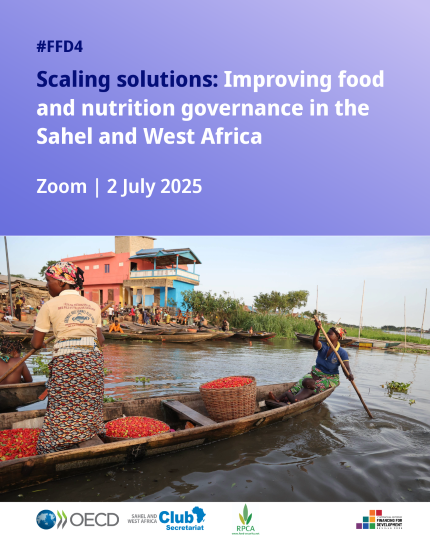
FfD4 (3) Scaling solutions: Improving food and nutrition governance in the Sahel and West Africa

30 June - 3 July 2025. Seville, Spain. The 4th International Conference on Financing for Development (FfD4). This global summit is convened by the UN to mobilize and align public and private financing for sustainable development, with a focus on tackling poverty, climate change, inequality, and food system transformation.


2 July 2025. OECD side event: Scaling solutions: Improving food and nutrition governance in the Sahel and West Africa 


Focus: Strengthening governance, business models, and regional partnerships to build resilient food systems in Sahel/West Africa. Organised by the OECD/Sahel and West Africa Club (SWAC) Secretariat.

Over the past decade, the Sahel and West Africa region has experienced an increase in cereal and root crop production per capita. However, food and nutrition security has worsened, with an additional 30 million people affected in the last five years. This situation demonstrates that agricultural growth alone is insufficient to improve food security which is driven by complex, interconnected factors.

The SWAC Secretariat, in collaboration with the Permanent Inter-State Committee for Drought Control in the Sahel (CILSS), facilitates the Food Crisis Prevention Network (RPCA) under the political leadership of the Economic Community of West African States (ECOWAS) and the West African Economic and Monetary Union (UEMOA). Through the RPCA network, the SWAC Secretariat has recently developed essential governance tools for food security and nutrition. 
  • Moderator: Sidy Gueye NIANG, Programme Manager, Sahel and West Africa Club Secretariat (OECD/SWAC)
  • Dr Issoufou BAOUA, Director General, Agrhymet Centre, CILSS
  • Ms Bintia Stephen TCHICAYA, Representative ad interim in Liberia and Programme Leader for Social Protection for Africa, FAO
  • Ms Cecilia García GASALLA, Director of Cooperation with Africa, the Arab World and Asia, AECID
  • Dr Conrad REIN, Secretary General, Global Flagship Initiative for Food Security, AGFUND
  • Mr Philippe THOMAS, Head of Sector for Crisis and Resilience of Food and Agricultural Systems, European Union
  • Mr Jean Pierre SENGHOR, former Executive Secretary of the Food Security National Council, Senegal
  • Mr Ahmet BENANE, CONACILSS, Mauritania

Tuesday, December 10, 2024

EU Agri-Food Days

10 - 11 December 2024
 EU Agri-Food Days

This annual event brought together agri-food system stakeholders, civil society, consumers, academia and policymakers from across the EU. 

They discussed the latest agricultural trends, policy options, market developments, as well as how research, innovation and digital technologies are shaping European agriculture of today and tomorrow.

Extracts of the programme


11 December: Presenting the EU Agricultural Outlook Report: Focus on the Changing Environment Driving Markets

This session featured a keynote on the drivers shaping the market outlook, the presentation of the latest
EU Agricultural Outlook report, and a panel discussion with representatives and experts of international
organisations on challenges and opportunities of the Outlook.
  • Seth Meyer, Chief Economist, U.S. Department of Agriculture (USDA) - Keynote speech: What has changed in the environment of agricultural markets in the ten last years and what lessons can we draw for the future?
  • Bence Toth, Acting Head of Unit Analysis & Outlook, Directorate-General for Agriculture and Rural Development, European Commission - Presentation of the 2024 EU Agricultural Outlook Report

Panel discussion
  • Catherine Geslain-Lanéelle, Director for Strategy & Policy analysis, Directorate-General for Agriculture and Rural Development, European Commission
  • Marion Jansen, Director of Trade and Agriculture Directorate, OECD
  • Seth Meyer, Chief Economist, U.S. Department of Agriculture (USDA)
  • Johan Swinnen, Director General, International Food Policy Research Institute (IFPRI)

    "This report is important as the European Food regulations and standards have a great impact on the rest of the world."

  • Monika Tothova, Senior Economist, FAO/ AMIS Secretary
  • Alessandra Zampieri, Director Sustainable Resources, Joint Research Centre, European Commission 

Resource:
EC (2024), EU agricultural outlook, 2024-2035. European Commission, DG Agriculture and Rural Development, Brussels. # 82 pp.

The Medium-term outlook report provides an overview of the medium-term prospects for major EU agricultural markets, income and environment until 2035.

The report's highlights relevant to low-income countries include:

Global Food Security and Nutritional Trends: 
  • Calorie intake in low-income countries is expected to increase by 4%, driven by staples, livestock products, and fats.
  • Despite adequate global food production, low-income countries face challenges in food affordability and distribution​
Agricultural Trade:
  • The EU remains a net exporter of agri-food products, with potential for reduced imports of oilseeds and sugar due to increased domestic production. This could influence global trade dynamics, affecting low-income countries dependent on EU imports​ 
Climate and Resource Challenges:
  • The report highlights increasing global challenges like droughts and water scarcity, which are particularly acute in low-income countries. 
  • Technological and policy advancements in sustainable farming and resource management in high-income regions could serve as examples for low-income countries​
Protein Transition:
  • There's a global shift from animal to plant proteins due to cost and sustainability, which may influence the food supply chains of low-income countries, particularly those exporting or importing plant-based proteins 
Macroeconomic Environment:
  • Slower global economic growth and stabilizing commodity prices could affect the purchasing power and investment capacities in agricultural sectors of low-income countries​ 


11 December: Future R&I agenda for competitive, sustainable and resilient agri-food systems in the EU and globally

This session will present the EU approach to the agricultural research and innovation (R&I) and showcase examples of innovative solutions generated by Horizon-funded R&I projects. A panel discussion will provide insights on the future R&I agenda for competitive, sustainable and resilient agri-food systems in the EU and globally.
  • Master of Ceremony: Sasha Twining
  • Diego Canga Fano, Acting Deputy Director-General in Directorate-General for Agriculture and Rural Development, European Commission - Keynote speech
Presentation of innovative solutions generated by Horizon 2020 projects
  • Andrea Schubert, Representative of Horizon 2020 project TOMRES: A novel and integrated approach to increase multiple and combined stress tolerance in plants using tomato as a model
  • Souzana Lorentzou, Representative of Horizon 2020 project NOMAD: Novel organic recovery using mobile advanced technology
  • Stefano Mocali, Representative of Horizon 2020 project EXCALIBUR: Exploiting the multifunctional potential of belowground biodiversity in horticultural farming
  • Anders Wolf, Representative of Horizon 2020 project VIVALDI: Veterinary validation of point-of-care detection instrument
  • Tora Råberg, Representative of Horizon 2020 project RUBIZMO: Replicable business models for modern rural economies
Panel discussion and Q&A session
  • Thierry Caquet, Scientifc Director, France’s National Research Institute for Agriculture, Food and Environment (INRAE)
  • Kerstin Rosenow, Head of Research and Innovation Unit in Directorate-General for Agriculture and Rural Development, European Commission
  • Kelli Talving, Farmer, Ahisilla taluaed
  • Andrew Carlin, Director of Missions & Strategic Programmes, EIT Food
  • Elena-Teodora Miron, Head of the Competence Centre for Research and Innovation Projects, Coordinator of Horizon Europe project ModernAKIS, Austrian Chamber of Agriculture 

12 December: Overcoming Hurdles: Unlocking the Potential of Digitalisation in Agriculture


The session will explore the current level of adoption of digital tools in agriculture in the EU and address the key challenges hindering further implementation. 
  • Alessandra Zampieri, Director for Sustainable Resources, Joint Research Centre, European Commission - Keynote speech 
Panel discussion and Q&A session
  • Elli Tsiforou, Secretary-General, Committee of Professional Agricultural Organisations - General Confederation of Agricultural Cooperatives (COPA-COGECA)
  • Prof. Dr. Engel Arkenau, Deputy Director General for Digital and Data Policy, Innovation and Transfer, Federal Ministry of Food and Agriculture, Germany
  • Caroline van der Weerdt, Senior Consultant, TNO Innovation for Life
  • Stefan Top, President of the European Agricultural Machinery Association (CEMA), CEO, AVR Machinery
  • Evangelia Mourmoura, Team Leader for Digitalisation, Data Governance Unit, Directorate-General Agriculture and Rural Development, European Commission
  • Catherine Geslain Lanéelle, Director for Strategy and Policy Analysis, Directorate-General for Agriculture and Rural Development, European Commission, explores the potential of Artificial Intelligence.
  • Tassos Maltezos, farmer, shares his experience with smart farming infrastructure from the field

Tuesday, March 19, 2024

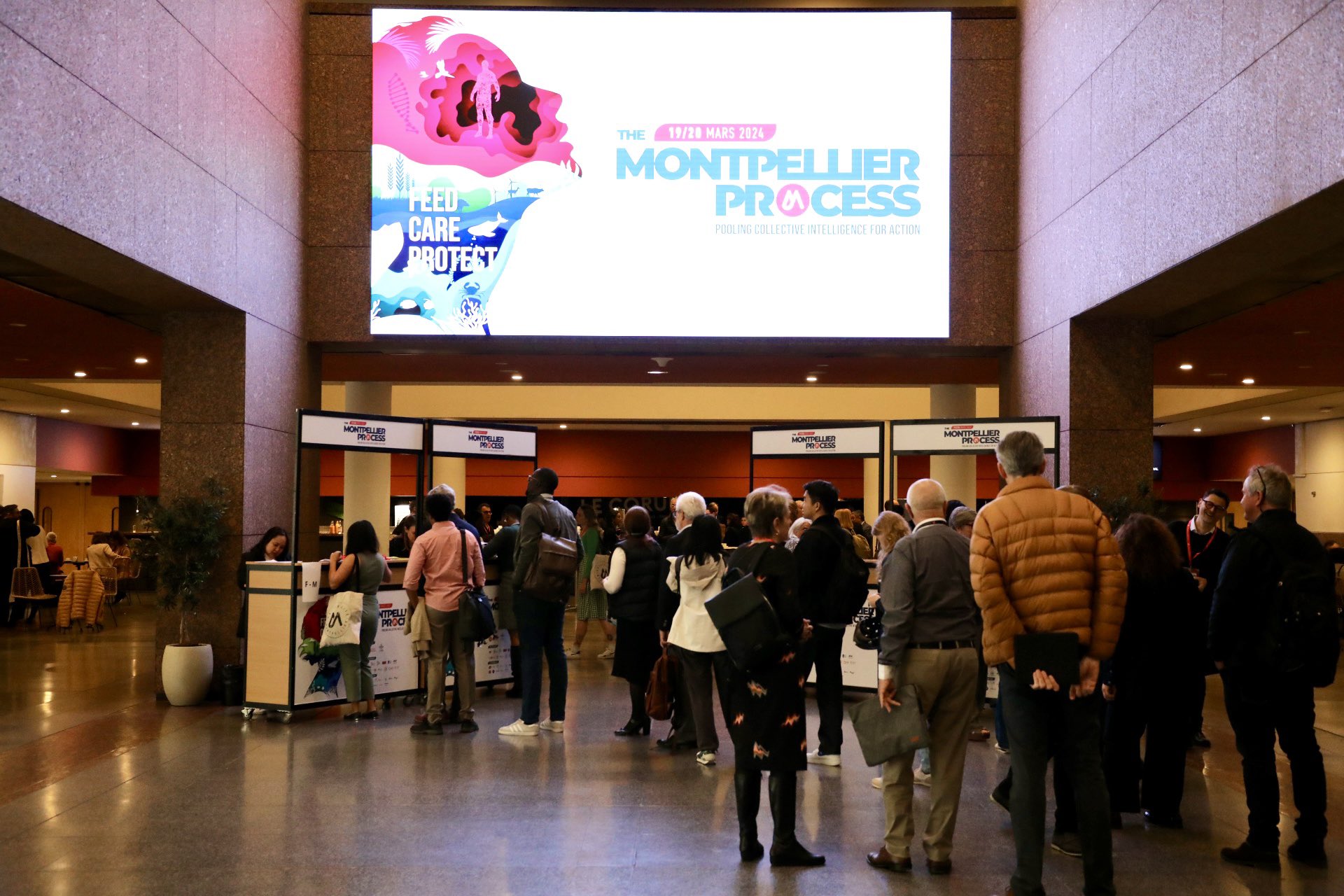
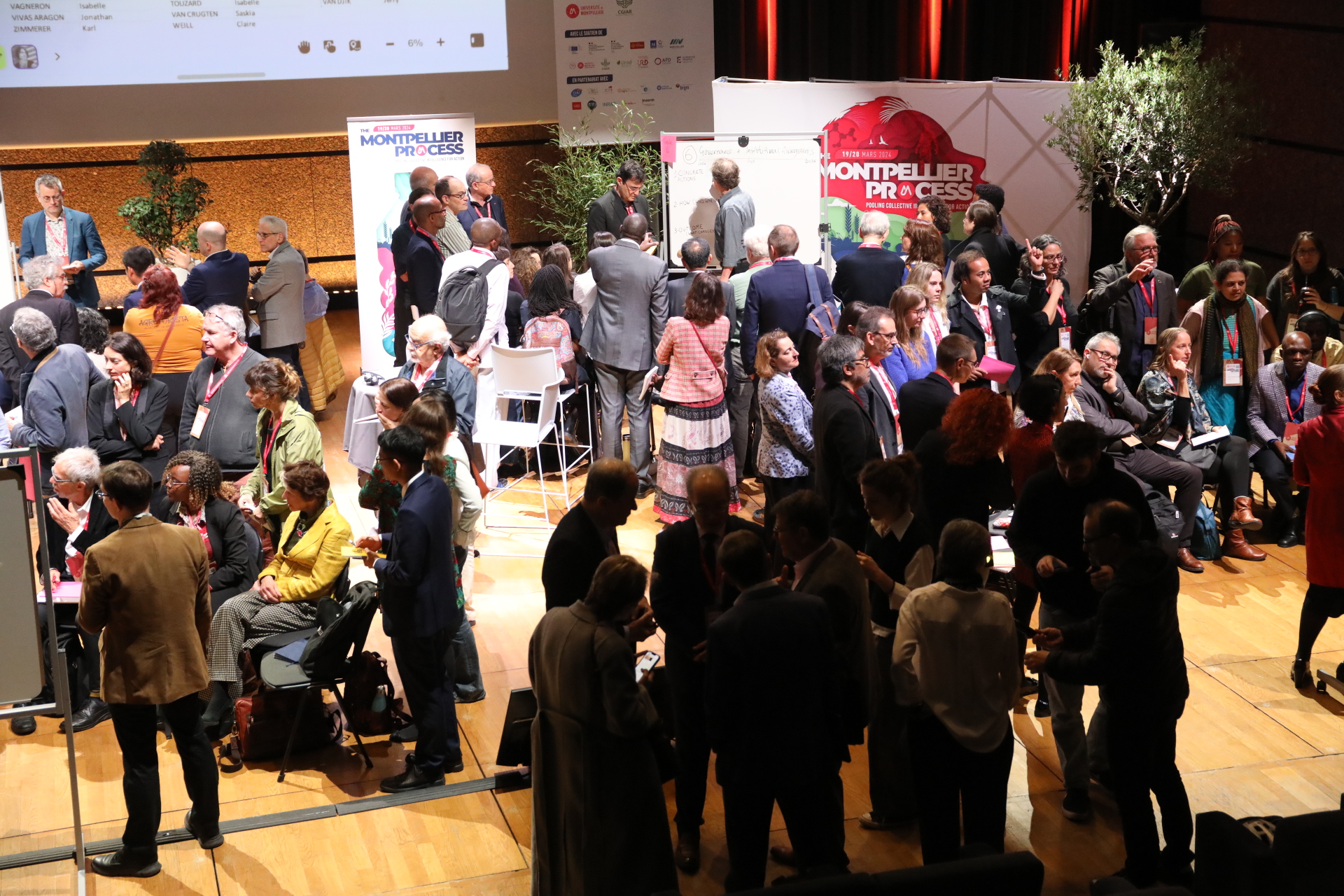
The Montpellier Process: Pooling Collective Intelligence

19–20 March 2024
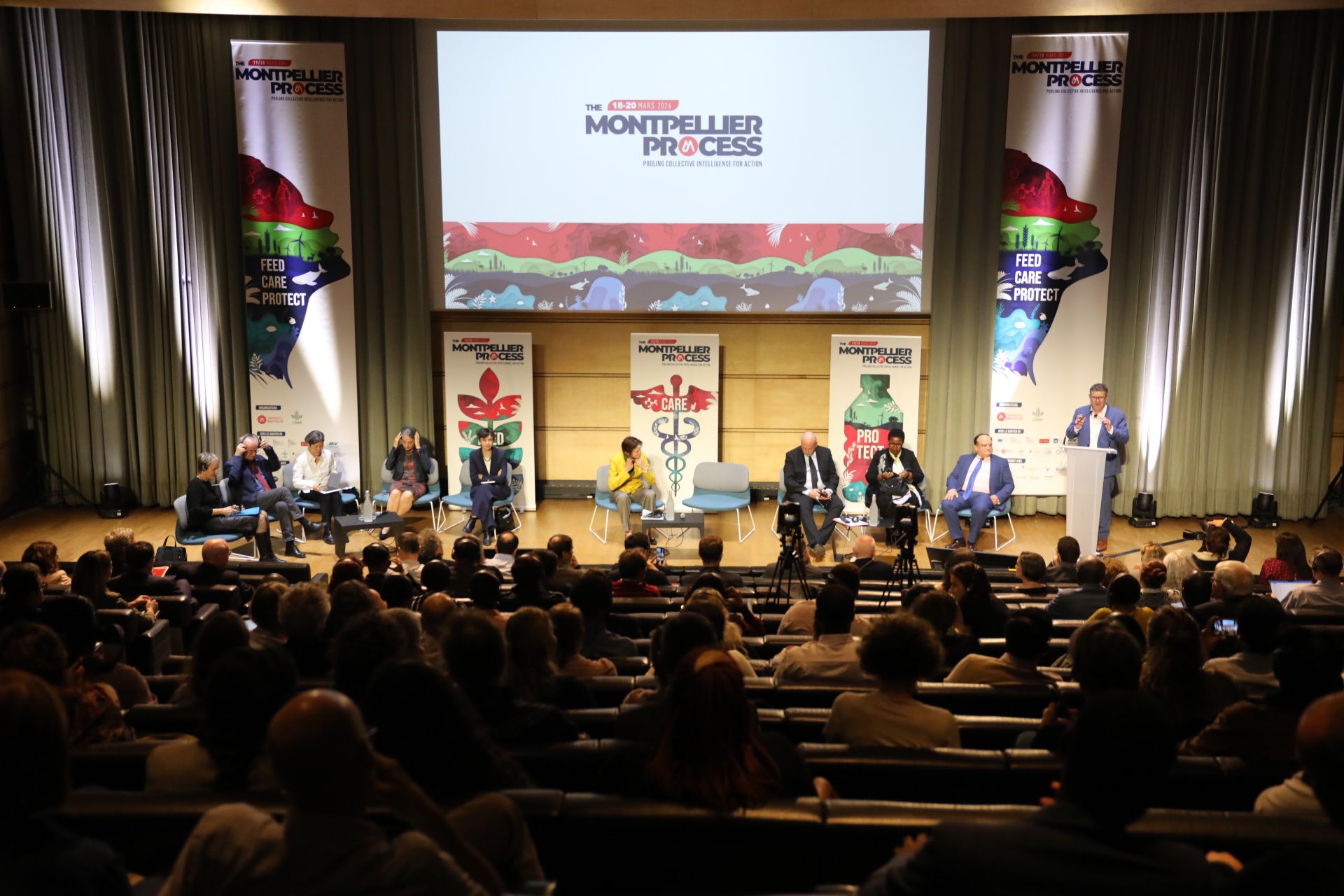
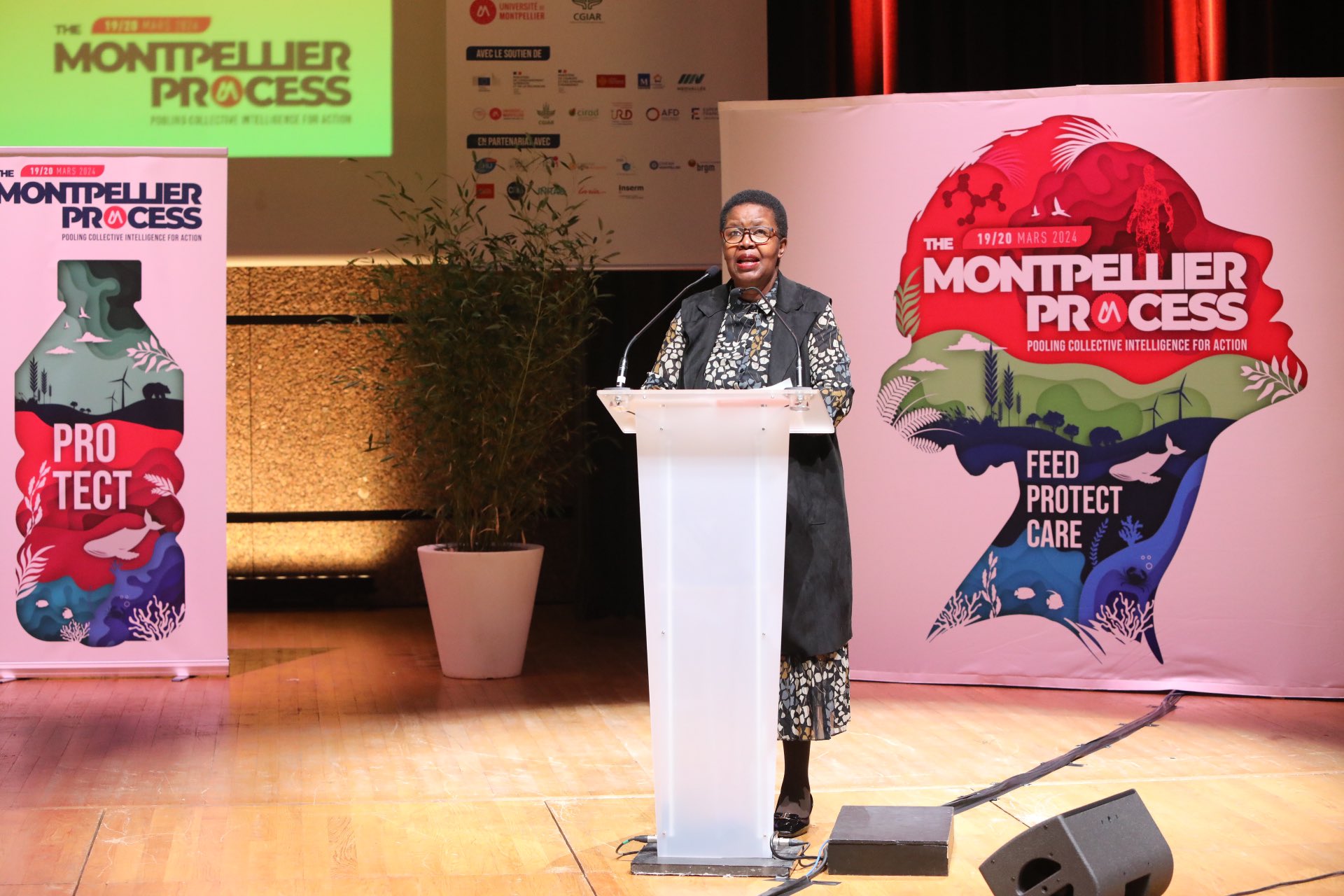
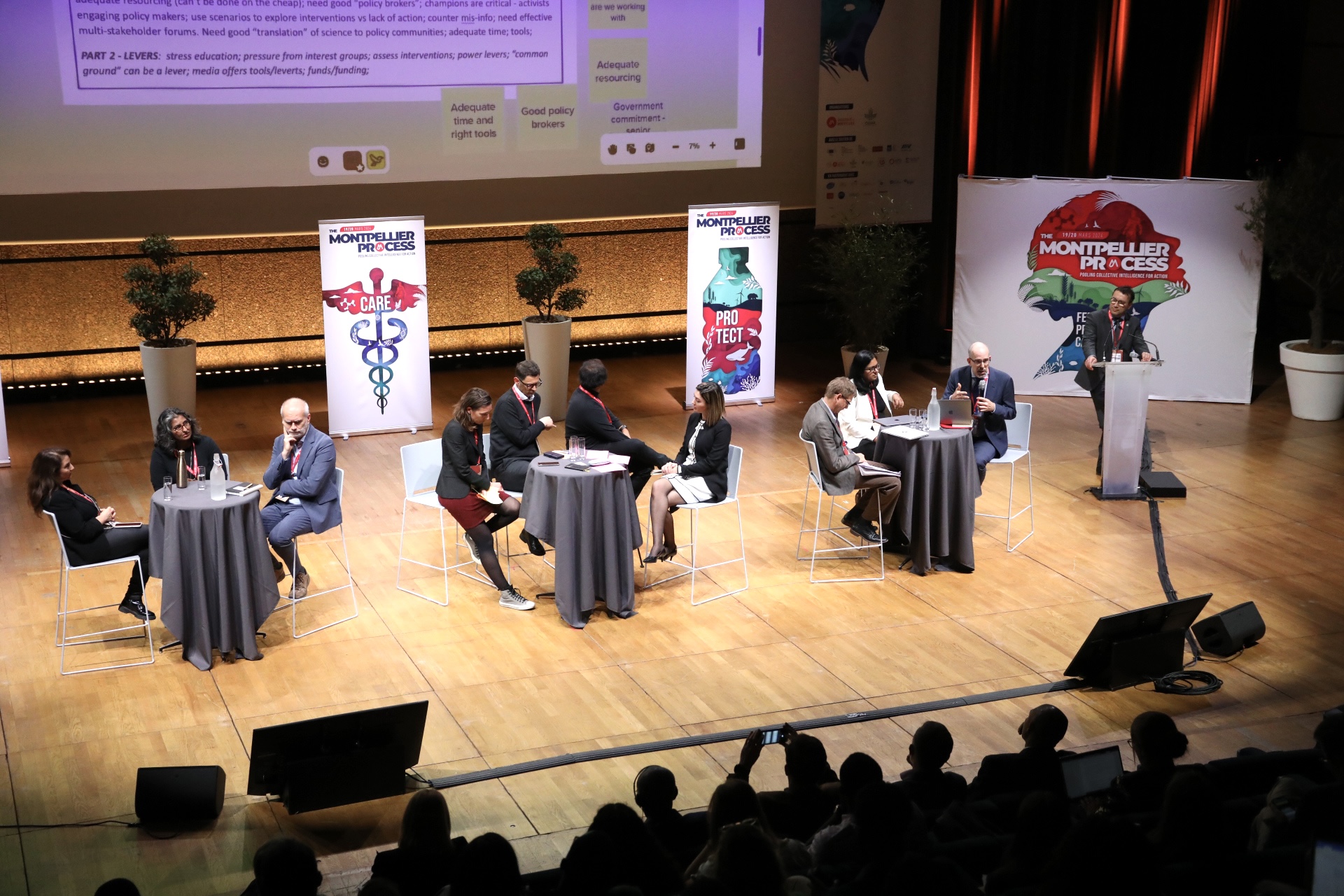
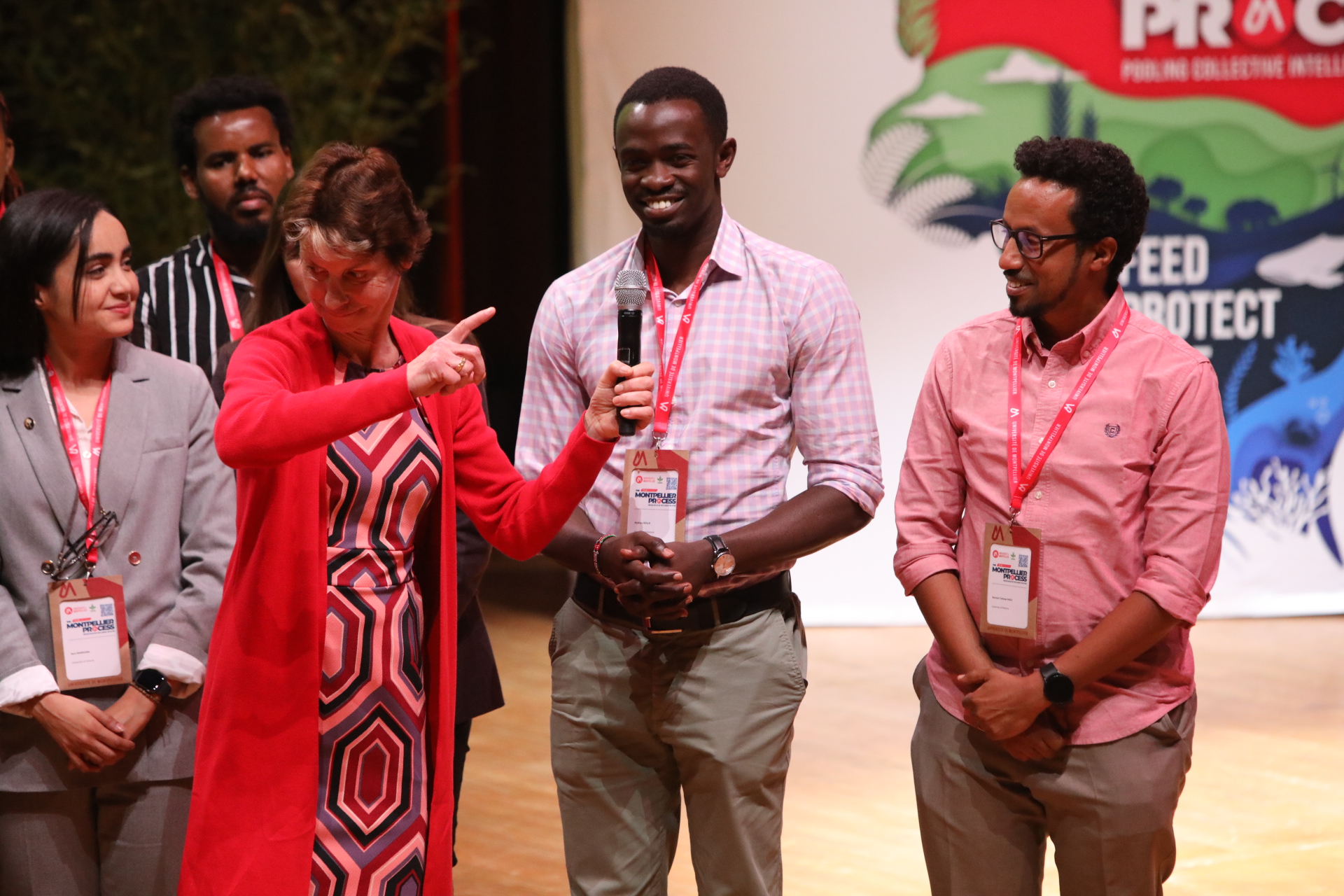
. Montpellier. The Montpellier Process: Pooling Collective Intelligence

This event gathered 200-300 selected individuals from scientific and policy domains, focusing on intentional, diverse representation. It seeks to identify and agree on a joint roadmap. The gathering’s program was structured into three key sessions:
  1. Knowledge: Sharing expert panels’ ambitions, challenges, and demands.
  2. Intelligence: Interactive discussion on moving beyond fragmented intelligence.
  3. Action: Developing a joint roadmap for pooling collective intelligence.
The Montpellier process was launched by CGIAR and the Montpellier scientific communities. It is a collectively owned and safe working space for  pooling collective intelligence, promoting a connective tissue across local,  national and global expertise where science, policy and action can interact. 

Objectives:

  • Prepare joint messaging from global scientific communities calling for pooling collective intelligence across the International Panels and Science-Policy Interfaces to effectively address the polycrisis and related challenges.
  • Facilitate and activate connection and cooperation across International Panels and a diversity of science-policy interfaces, including cross feedback on reports, alignment on definitions, collective working groups, data-sharing, and joint reporting.
  • Support learning communities of practice optimizing collective expertise, including both academic, local and indigenous knowledge, and science-policy interfaces at local, national and international levels and across scales, i.e. mobilizing global expert panels’ knowledge for action at local and national levels and local knowledge at national and global scales.
  • Define how this community can better align and coordinate its collaboration to contribute to the UN International Decade of Sciences for Sustainable Development 2024-2033 and in global fora such as CFS and UN Conventions COPs.
  • Increase the representation and participation of actors from the Global South and of multiple and diverse scientific disciplines and knowledge systems, notably indigenous and local knowledge and those of marginalized communities, to ensure that their voices, perspectives and realities are included. 
Taken together, these actions, when supported by the Montpellier Process, provide real potential to translate Expert Panels recommendations into credible and scalable action.

Download the concept note – PDF 11 Mo # 5 p.

Extracts of the program:

18/03 Day 0 From Raising the Alarm to Saving the Planet: Science
Mobilizes
 

(recording forthcoming)
  • Carlos ALVAREZ PEREIRA, Secretary General of The Club of Rome
  • Akiko Suwa-Eisenmann, Chair of the High-Level Panel of Experts of the United Nations Committee on World Food Security (HLPE-FSN) - Exchange: How to make scientific knowledge
    “actionable”?
     
  • Thomas Mettenleiter, Co-Chairman of the One Health High Level Expert Group (OHHLEP) - Health and sustainable development - Food and sustainable development
  • Sandra Diaz, professor of ecology and one of the world’s top 1% researchers - Biodiversity and sustainable development
  • Heide Hackmann, co-chair of a recent UN report on the links between climate change and the SDGs - Climate and sustainable development
  • Elisabeth Claverie de Saint- MARTIN, President and CEO of CIRAD - Strengthening the interface between science and policy
  • Conclusion: Lindiwe Sibanda, CGIAR System Board Chair 

19/03 Day 1 From Knowledge to intelligence


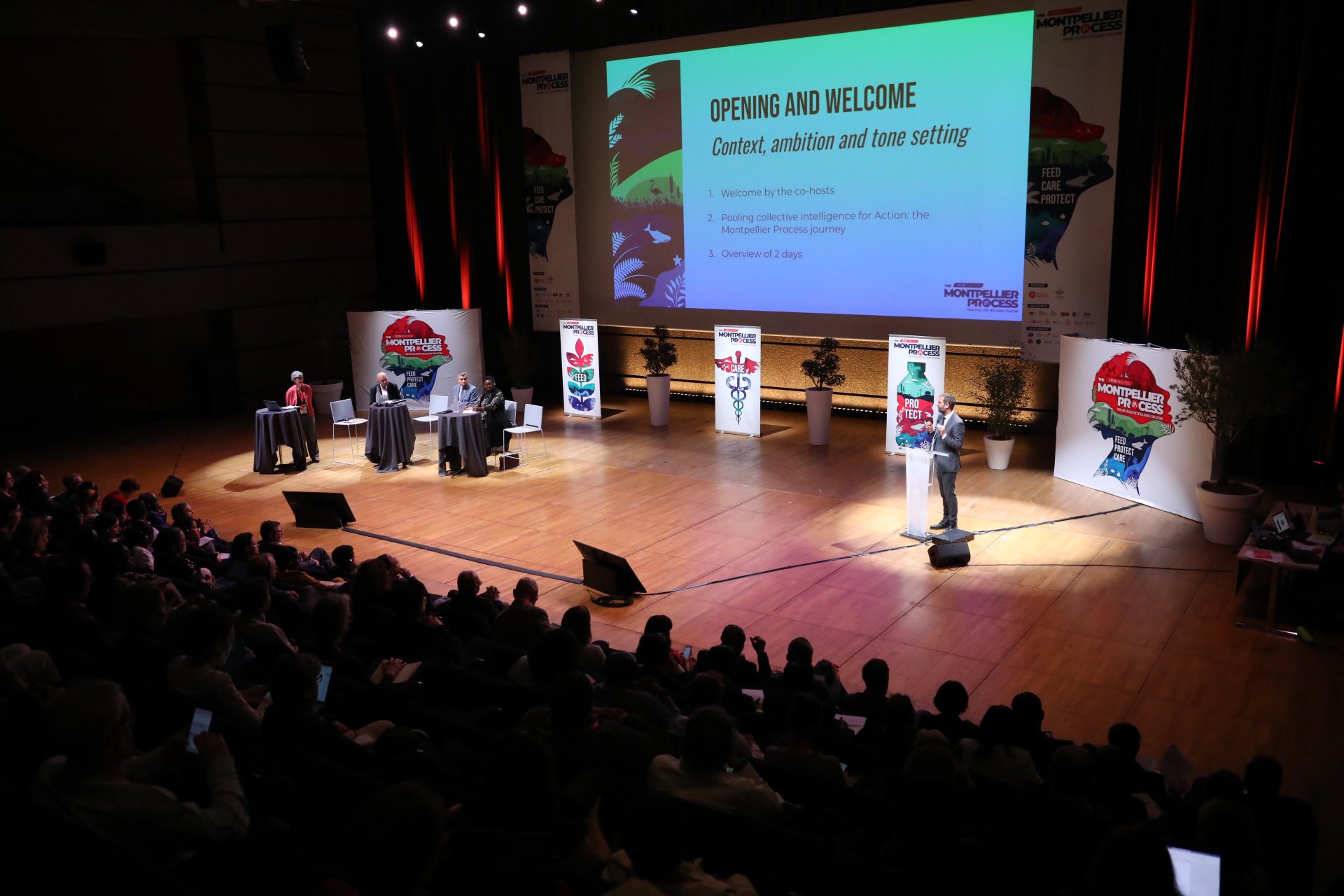
Open & Welcome:
  • Philippe Augé, President of the University Montpellier
  • Lindiwe Sibanda, Chair of the CGIAR System Board
  • Michaël Delafosse, President of Montpellier Méditerranée Métropole
  • Jalil Benabdillah, Vice-president of Occitanie Region in charge of Economy, Employment, Innovation and Reindustrialization
Context, ambition and tone setting:
Pooling Collective Intelligence for Action: the ambition / The challenge: building a connecting tissue across sectors, across scales and across knowledge systems
  • Patrick Caron CGIAR System Board Vice Chair 
  • Fabrice DeClerck
  • Amanda Harding 
The Framing: a common starting point and shared ambition 

Panel 1 Why knowledge makes a difference but still fails to meet the challenges of the Global South and raise Global South voices: role of science and diverse knowledge systems.

  • Moderator: Heide Hackmann Hackmann (University of Pretoria, South Africa)
  • Ibrahim Assane Mayaki (African Union Special Envoy for Food Systems)
  • Elisabeth Claverie de Saint Martin (CIRAD)
  • Sandra Diaz (Conicet, Argentina)

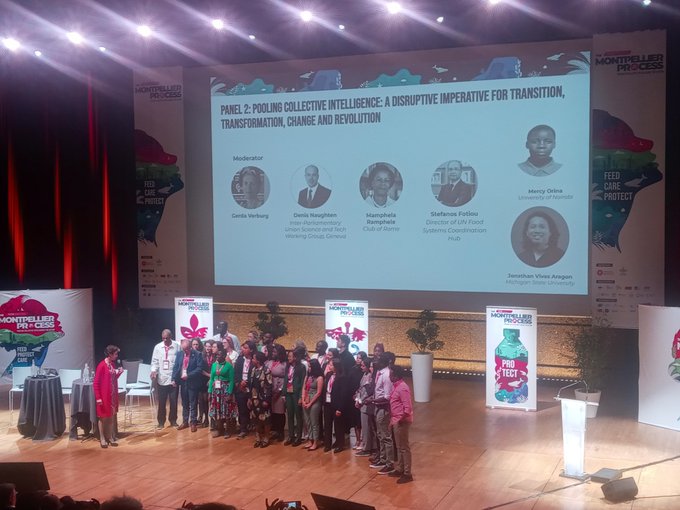
Panel 2 Pooling collective intelligence: a disruptive imperative for transition, transformation, change and revolution a mixed panel of leading scientists and policy makers exploring the future looking PCI possibilities.
  • Moderator: Gerda Verburg
  • Denis Naughten (Inter-Parliamentary Union Science and Tech Working Group, Geneva)
  • Mamphela Ramphele (Club de Rome)
  • Stefanos Fotiou (Director, UN Food Systems Coordination Hub)
  • Mercy Orina (University of Nairobi) 
  • Jonathan Vivas Aragon (Michigan State University)
  • Preetmoninder Lidder (FAO) : The assets we have: expert intervention mapping science-policy-society interfaces (SPI) principles for collaboration, existing collaboration, and typologies
  • Jim Skea (IPCC) -  Orientation
  • David Obura (IPBES) -  Orientation

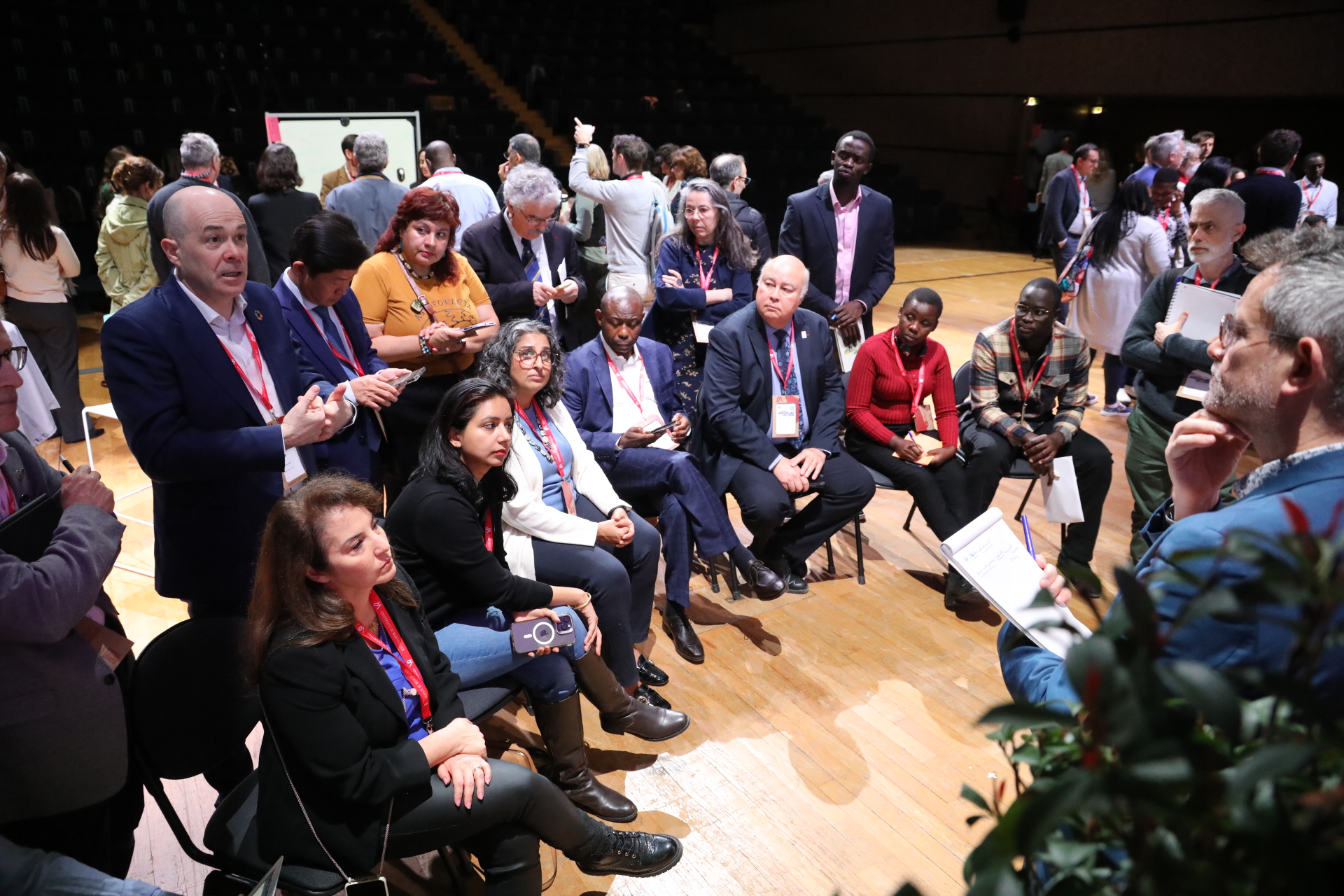
Interactive Fish Bowl
What is it going to take for collaboration across institutions scales, sectors, actors and knowledge systems to really move the dial on effective science-policy-society interfaces. What have we learnt so far, where can we do better and what does success actually look like? Expectations, barriers and enablers for cooperation and collaboration across scales, sectors, actors and knowledge systems… Crossing perspectives from civil society, government, UN bodies, private sector, and others.
  • Moderator: Cargele Masso (CGIAR) Director, Environmental Health and Biodiversity Impact Area Platform
  • Ajay Jakhar (BKS India)
  • Barbara Burlingame (UN Food systems hub / SAC)
  • Francisco Rosado-May (Universidad Intercultural Maya)
  • Joao Campari (WWF)

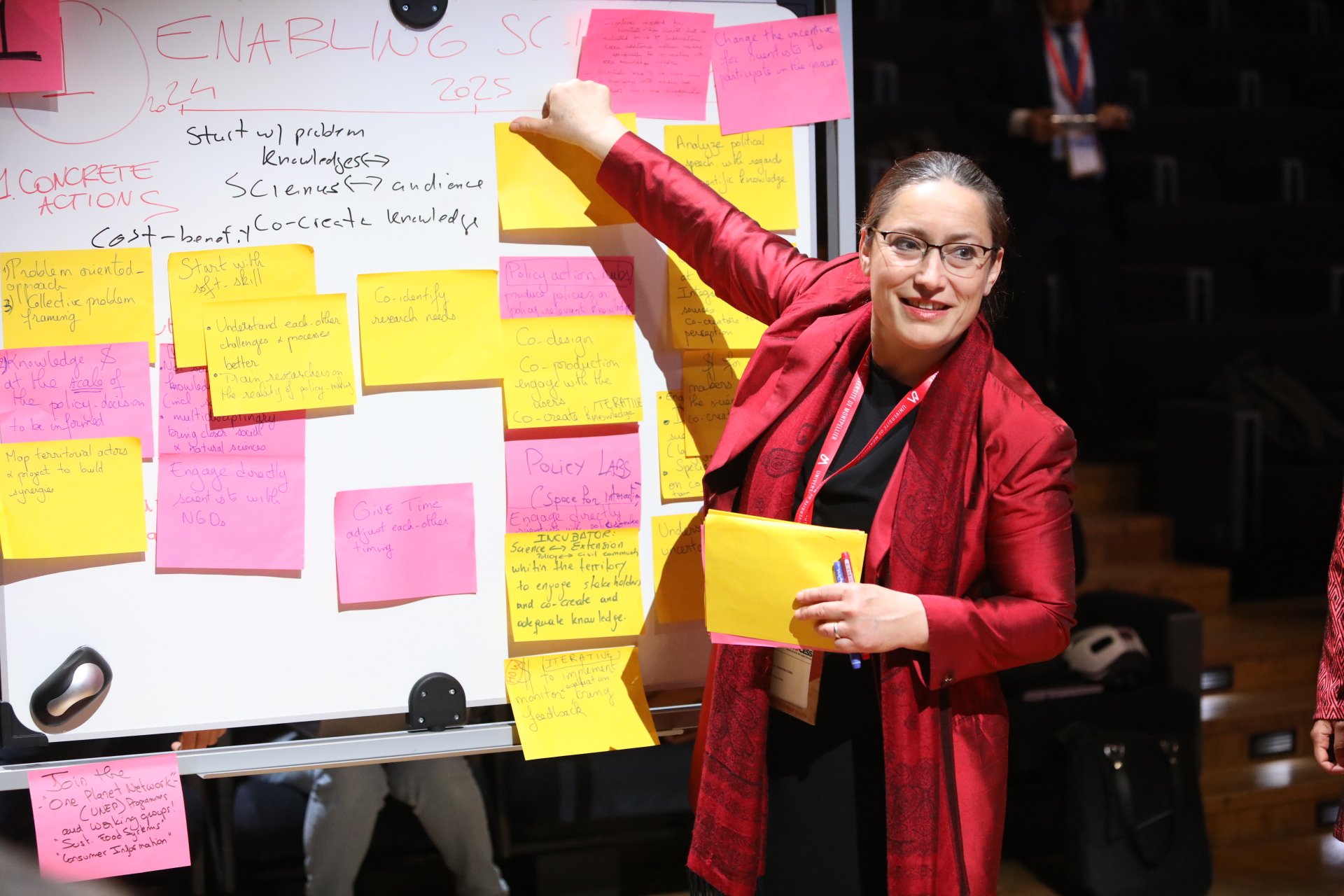
Parallel working session #1
WHAT is working and not working in local/national spaces key to food systems transformation

Context, ambition and tone setting: Real life Use Case experiences integrating knowledge and action across scales, sectors and knowledge systems. Exploring expectations, barriers and enablers for cooperation and collaboration across scales, sectors, actors and knowledge systems. Topics illustrated by living use cases anchored in local and national action areas, where
knowledge communities are collaborating to strengthen real-life impact.

  • National food system transformation pathways: Mexico, Vietnam
  • National food system transformation pathways: Cambodia, Switzerland
  • City food systems transformation: São Paulo, Montpellier
  • Socio-ecological landscapes/territories: Occitanie (France),Tunisia (Pacte Project)
  • Trade policy: OECD
  • Consumers/citizens agency and action: Kenya, Costa Rica

Parallel working session #2
HOW knowledge systems integrate, contribute and participate. Building on the Use Cases to align on conditions and levers to catalyze the integration and use of knowledge across sectors, scale and knowledge systems, strengthening science-policy-society interfaces. Paying attention to ensure coherence across scales; capacity to assess collective cross-scale knowledge for agrifood systems transformation; data, information, and knowledge flows for learning across scales; coordination with Science-Policy Interfaces at all relevant scales.

20/03 Day 2 Interfaces in action: listening, challenging, committing

  • Juan Lucas Restrepo, Global Director of Partnerships and Advocacy - Forward-looking actions for interrogation and commitment 
  • Ismahane Elouafi, Executive Managing Director - Wrap-up and commitments

Designing connections and proposing actions for more effective decision making across models, scientific communities, scientists and decision makers, sectors.

PCI4A Champions:
  • Jim Woodhill (Foresight4Food)
  • Elen Lemaitre-Curri (CIHEAM)
  • Sebastien Treyer (IDDRI)
  • Sylvie Avallone (Institut Agro)
  • Eric Welch (ASU)
  • Raina Plowright (Univ. Cornell)
Curators: 
  • LeeAnne Jackson (OECD)
  • Bill Moseley (Macalester College)
  • Selim Louafi (CIRAD)
  • Renaud dePlaan (IDRC)
  • Hugo Rivera-Mendoza (Expertise France)
  • Vanessa McBride (ISC)

Taking pooling collective intelligence to action Focus on options, proposals and their implications for pooling collective intelligence for action: key actions harvested from previous working sessions

Pitch & Panel #1
  • Moderator: Jean-François Soussana (INRAE)
  • Carlos Alvarez Pereira (Club of Rome)
  • Cromwell Lukorito (IPCC)
  • Karen Fabbri (European Commission)
  • Patrick Okori (RUFORUM)
  • Thomas Mettenleiter (OHHLEP)
  • Jean-Luc Chotte (IRD)
Pitch & Panel #2
  • Moderator: Joao Campari (WWF)
  • Aggrey Agumya (FARA)
  • Akiko Suwa-Eisenmann (HLPE-FSN)
  • Belinda Reyers (University of Pretoria)
  • Jaime Montoya (ISG – GSDR2023)
  • Juan Lucas Restrepo (CGIAR)
  • Ankitha Manohar (University of Leeds)
  • Rodney Asilla (University of Pretoria)
Refining the Expert Panels and Science-Policy Interfaces joint message and ambition narrative: towards the 2024-2033 International Decade of Sciences for Sustainable Development
  • Patrick Caron & Fabrice DeClerck
  • Wrap up by Francois Pierrot (University of Montpellier) & Ismahane Elouafi (CGIAR)

20/03 Side event: CULTIVATING HEALTH & FOOD SOVEREIGNTY: CROSSROADS FROM FARM TO FORK

Dialogue on food sovereignty and health. Together, let’s cultivate a sustainable vision of agriculture. A bridge between earth, plate and future.

Names and roles of stakeholders/partners :

  • Cécile Berthouly, Director of Research in Plant Agrobiodiversity, Institut de recherche pour le développement (IRD), DIADE
  • Laurent Chevallier, doctor and nutritionist. Attached to the Montpellier University Hospital and in clinics.
  • Adrien Kergueme, tractor-free intensive organic market gardener in Lecques (Gard)

Thursday, November 16, 2023

The Political Economy of Food System Transformation: Pathways to Progress in a Polarized World

14 November 2023. The Political Economy of Food System Transformation: Pathways to Progress in a Polarized World by IFPRI

See also PAEPARD blogpost of 21/09 with some extracts of this book. 

The Political Economy of Food System Transformation, a new IFPRI and Oxford University publication edited by Danielle Resnick and Johan Swinnen, tackles the complex subject of understanding the sound understanding of interest group dynamics, incentive systems, the role of ideology and coalitions, and accountability structures.

It is  integrating insights from a global set of interdisciplinary scholars. Their work encompasses food system policy issues relevant to diets and environmental sustainability at the local, national, and international levels. The authors address a wide range of issues, including the need to repurpose costly agricultural subsidies, reduce red meat and ultra-processed food consumption, increase uptake of appropriate biotechnologies, adopt sugar-sweetened beverage taxes, implement the European Union’s Farm to Fork Strategy, adapt urban food system councils to local contexts, and track accountability for global food system commitments.
  • Moderator Charlotte Hebebrand, Director of Communications and Public Affairs, IFPRI
  • Danielle Resnick, Senior Research Fellow, Development Strategies and Governance Unit, IFPRI and Non-Resident Fellow, Brookings Institution
    "One of the key takeaways of the book is to not really ascribe normative goals to stakeholder categories. So trying to get away from food superheroes and villains dichotomies, that civil society is good and all corporate food industry is bad. Those types of dichotomies impede progress on trying to get forward food system transformation. 

    The political economy approach is necessary to identify often-neglected issues, namely contestations, power dynamics, beliefs, ideas, interests, coalitions, cooperation, and policy aims of stakeholders in the food environment.

  • Koen Deconinck, Economist, Trade and Agriculture Directorate, OECD
  • Eduardo Gómez, Professor and Director of the Institute of Health Policy and Politics, Lehigh University

Government Response to Ultra-Processed and Sugar Beverages Industries in Mexico, India and South-Africa..

The global domestic Coalition for regulatory reform [in marketing, sales and labeling] has been late to emerge. The Political Economy context may be soon changing as more activist and more research become aware of the importance of enforcing regulations.

We need more research on the different international domestic political economy contexts interest and incentives, between non communicable disease policies, to better understand why nations are not making as much progress in tackling these diseases. My comparative analysis of soda taxes versus regulatory policy prioritization reveals that more work needs to be done comparing the international and domestic politics of agenda-setting between NCD policy sectors.

  • Christopher Barrett, Stephen B. and Janice G. Ashley Professor of Applied Economics and Management and International Professor of Agriculture at the Charles H. Dyson School of Applied Economics and Management, Cornell University
  • Johan Swinnen, Managing Director, Systems Transformation, CGIAR and Director General, IFPRI
  • Discussant Loraine Ronchi, CGIAR Senior Advisor for Policy Impact, IFPRI

Monday, August 21, 2023

World Water Week 2023

20 - 24 August 2023
.Stockholm, Sweden World Water Week 2023. 

Aiming to explore innovative ways to tackle the global water crisis, World Water Week 2023 was housed for the first time in Stockholm Waterfront Congress Centre. World Water Week welcomed participants from all over the world to join hands for a better water future.

Extracts of the programme

Throughout Africa, several groundwater strategies are currently being simultaneously developed. This happens at regional, transboundary and national scales. This session explored key governance points that strategies need to include to foster an aligned, innovative and enabling space that can strengthen Africa's water security solutions and climate resilience.

View the recoding here.
  • Jenny Grönwall Sida Programme Specialist 
  • Seifu Kebede The University Of KwaZulu Natal Centre For Water Resources Research 
  • Michael Ramaano Orange Senqu River Commission Environment & Water Quality Manager 
  • Phera Ramoeli Okavango River Basin Water Commission Executive Secretary 
  • Klaudia Schachtschneider OneWorld Programme Manager 
  • Staci Warrington OneWorld Sustainable Investments

20/08 Integrated landscape development approach in the Central Rift Valley Sub-basin


The integrated landscape-based approach in the sub-basin addresses the linkages between land, rivers and lakes ecosystems in support of holistic natural resources management and economic development through livelihood activities. In this session, the practical implementation of the landscape-based restoration approaches linked with livelihood activities were presented and discussed.


New approaches of cooperation are needed to address drought risk proactively at all levels, through holistic approaches that include early warning, prevention, response and ultimately building drought resilience. The session will deal with understanding the full complexity and managing the risk in a horizontally and vertically integrated way across scales.

The agenda for the next ten years of Integrated Drought Management at the Drought Resilience +10 across all its workstreams includes:
  • Drought resilience and global mechanisms
  • Drought risk governance: The regional, national, and local challenges
  • Drought Impact monitoring, assessment and forecasting
  • The need to turn drought policies into action
  • Ecosystems and Drought
  • Social inclusion, climate justice and drought
  • Drought risk finance / Insurance
  • Public-Private-Civil Society Partnerships for integrated drought risk management
  • Drought and Health
Co-convened by the Center for International Forestry Research, Food, Agriculture and Natural
Resources Policy Analysis Network, Stockholm International Water Institute, World Agroforestry Centre and Zambezi Watercourse Commission, this session highlighted the partnership of non-governmental organizations/ knowledge tanks with the Zambezi Water Course Commission, an intergovernmental panel of eight member states that share the Zambezi river. 
  • Facilitator – Xanani Baloyi, SIWI
  • Anton Earle, SIWI
  • Felix Ngamlagosi, Zambezi Watercourse Commission (ZAMCOM)
  • Dr. Tshilidzi Madzivhandila, The Food, Agriculture and Natural Resources Policy Analysis Network (FANRPAN) -  The case for investment in African small-holder farmers and rain in the face of climate change 
  • Monica A. Altamirano, WaterEquity - Private Sector Financier Perspectives -
Presentations on innovative methodologies across the Zambezi catchment to unlock the value and build an empirical business case for investing in enhanced rainfed agriculture:
  • Sithembile Mwamakamba, FANRPAN
  • Maimbo Malesu, Center for International Forestry Research (CIFOR) and World Agroforestry (ICRAF)
  • Kasonde Mulenga, SIWI
  • Felix Ngamlagosi, ZAMCOM
  • Monica A. Altamirano, WaterEquity
  • Anna Tengberg, SIWI & Lund University
  • Moderator: Xanani Baloyi, Programme Officer, SIWI

21/08 Developing a payment-for-ecosystem services framework in Ethiopia

The Koga Reservoir supports 10,000 smallholder-farmers in Ethiopia. The reservoir faces siltation related to upstream catchment degradation. Establishing a PES scheme between the upstream and downstream communities is critical. However, in-country experience to implement PES is limited. The session covered lessons learned to develop the foundation of the scheme.

21/08 Launch of Africa’s Voice on Water (AVOW) Magazine

This session unveiled and launched a new magazine – the African Voice on Water (AVOW) as an anthology of water and sanitation stories from AU Member States. It presented AVOW’s value to the sector for information, knowledge, awareness, policy advocacy, dialogue promotion and the showcase of good.

  • HANI ATEF NABHAN SEWILAM Ministry Of Water And Irrigation, Egypt AMCOW President/Minister For Water And Irrigation 
  • TAHANY MOSTAFA YOUSSEF SELIT Ministry Of Water And Irrigation, Egypt / AMCOW TAC Chair 
  • Obinna Richfield Anah African Ministers' Council On Water (AMCOW) Knowledge Management 
  • Sylvester Anthony MATEMU (picture) NILE BASIN INITIATIVE EXECUTIVE DIRECTOR 
  • HANI ATEF NABHAN SEWILAM Ministry Of Water And Irrigation, Egypt AMCOW President/Minister For Water And Irrigation 
  • Sareen Malik ANEW Executive Secretary 
  • Patrick Moriarty IRC CEO 
  • Alexandra Dubois GIZ 
  • Nelson Austin Kamphinda Gomonda African Ministers' Council On Water (AMCOW) Director Of Programmes 
A large proportion of global investments in NbS target strategies which are not relevant to Africa’s diverse environmental, climate, cultural and political contexts. This session brought together key actors to explore how south-south and north-south learning can effectively build a transformative, African approach to NbS for climate resilience.


  • Belynda Petrie OneWorld Sustainable Investments CEO 
  • Luke Borain OneWorld Sustainable Investments 
  • Christine Colvin WWF International Head Of Freshwater Policy - Best practice and examples for NbS
  • Gareth James LLOYD UNEP-DHI Centre Deputy Chief Manager - Systems Approach to making NbS work 
  • Maria Eduarda Gouvea Berto Inter-American Development Bank (IADB) Senior Water And Sanitation Specialist - Financial innovation for NbS 
  • Joakim Harlin UNEP Chief, Freshwater Unit

22/08 Mobilizing investments to build resilience in the Zambezi River Basin


This session brought together political leaders, and technical and financing partners to explore financing opportunities for scaling up the Programme for Integrated Development and Adaptation to Climate Change in the Zambezi River Basin aiming to strengthen regional cooperation and to build community resilience to climatic and economic shocks.

View the recording here
  • HASTINGS CHIBUYE ZAMBEZI WATERCOURSE COMMISSION Manager 
  • FELIX NGAMLAGOSI ZAMBEZI WATERCOURSE COMMISSION (ZAMCOM) EXECUTIVE SECREATARY 
  • Xanani Baloyi SIWI Transboundary Water/ Gender Equality Focal Point

22/08 State of Sanitation and Hygiene Policy Environment: A Situation Analysis of Africa

This session disseminated the findings of a study on sanitation and hygiene policy environment in Africa. It highlighted areas of the enabling environment that require strengthening during policy reform process. Critical elements of the policy environment that requires prioritisation in policies and implementation strategies were discussed.

  • Comfort Kanshio African Ministers' Council On Water (AMCOW) 
  • TAHANY MOSTAFA YOUSSEF SELIT Ministry Of Water And Irrigation, Egypt AMCOW TAC Chair 
  • Alex Manyasi APHRC POLICY ENGAGEMENT AND COMMUNICATION 
  • Eric Momanyi Bill & Melinda Gates Foundation Senior Program Officer 
  • Judith Tshabalala Department Of Water And Sanitation Deputy Minister 
  • Bisi Agberemi UNICEF WASH

22/08 Innovation for Food Security, Water and #zerohunger

WFP's IGNITE Innovation Hub for East Africa helps identify and scale innovative solutions in the region. The Hub nurtures and scales local, market-based innovations to increase food security, enable climate resilient communities and strengthen food systems in East Africa by leveraging WFP’s public and private partners, field experience and expertise. This includes innovations related to water for productive use. This session: (a) Spotlighted the food security challenges faced in East Africa, especially due to the prolonged drought; (b) Amplified the launch of an innovation challenge supporting innovation across the East Africa region, including water related innovation; (c) Encouraged partners and innovators in the ecosystem to support innovations by expressions of interest to partner.

View the recording here
  • Sibi Lawson-Marriott WFP Food Systems 
  • Eric Oyare WORLD WIDE FUND FOR NATURE (WWF) BLUE HEART OF AFRICA INITIATIVE 
  • Bedan Mukoma WFP Regional Bureau Of Nairobi Partnerships And Innovation 
  • James Thuch Madhier The Rainmaker Enterprise

22/08 AFDB/AMCOW Innovative Financing Mechanisms Toward Achieving SDG 6 in Africa

This session delved into the challenges encountered by African member states in implementing water and sanitation-related targets and reporting progress to the African Union Assembly.
- Legal and Institutional requirements for a successful and sustainable financing mobilization for the water sector.
- Financing water, challenges, and current trends (includes State of readiness to mobilize commercial
- Experiences sharing of some of the financiers and investors.
- Concessional green and climate related funds and facilities.
- Project preparation opportunities in Africa.
- Accelerating action on financing water in Africa to achieve SDG6 by 2030.
  • HANI ATEF NABHAN SEWILAM Ministry Of Water And Irrigation, Egypt AMCOW President/Minister For Water And Irrigation 
  • TAHANY MOSTAFA YOUSSEF SELIT Ministry Of Water And Irrigation, Egypt AMCOW TAC Chair 
  • CARL HERMANN GUSTAV SCHLETTWEIN Hon. Minister Ministry Of Agriculture, Water And Land Reform 
  • Joel Kolker World Bank Global Lead 
  • Osward CHANDA AFDB DIRECTOR 
  • HANI ATEF NABHAN SEWILAM Ministry Of Water And Irrigation, Egypt AMCOW President/Minister For Water And Irrigation 
  • Aude Farnault OECD Water Policy Analyst 
  • Brian Arbogast Bill & Melinda Gates Foundation Director

22/08 Paddies for the Planet: Tackling water-climate challenges through low-carbon rice

Paddies for the Planet presents an innovative financing and institutional model that reduce agricultural emissions and water use, benefitting small farmers. This session put a spotlight on incentives for different stakeholders to practice efficient irrigation management, discussed new ways to carry out irrigation practices; and showcased perspectives on innovations and financing (water, irrigation, carbon) to scale practical solutions.

View the recording here
  • Jessica Christiansen Bayer CropScience Ag VP, Sustainability & Business Stewardship 
  • Saroj Kumar Jha WORLD BANK GROUP WATER GLOBAL DIRECTOR 
  • Richard Colback IFC Senior Operations Officer 
  • Michael Webster World Bank Program Manager 
  • Carolina Garcia Arbelaez AB InBev Global Sustainability And Innovation Director

22/08 Harnessing Earth Observation Data to Solve Africa’s Greatest Water Challenges

This talk show discussed Digital Earth Africa, the DIWASA initiative’s Open Data Cube, and the decision-ready data from Earth Observation Satellites that it offers. DEA and IWMI are developing a range of additional analysis tools to help users address water monitoring and management issues at a regional scale. Potential applications of DEA resources include: flood hazard mapping; flood and drought warning systems using weather forecast and hydrological model; vulnerability and impact sectoral analysis of floods and drought; data visualization and analytics tools; and capacity building and technology transfer.

View the recording here
  • Walter Panzirer The Helmsley Charitable Trust 
  • Lena Scherman Deep Sea Productions Reporter/Editor In Chief

22/08 Water Productivity to Improve Water Sustainability In Agricultural Production

The session and panel explored the use of local, regional, and global scale data such as crop yield, applied irrigation water, soil water content, crop canopy parameters, as well as the use of crop modeling and remote sensing, for estimating spatial and temporal variation of crop water productivity. The presentations covered novel approaches in estimating crop water productivity and developing water productivity scores at local and global scale. The presentations will also address approaches and challenges of assessing livestock water productivity.

View the recording here
  • Livia Peiser FAO Land And Water Officer - Monitoring land and water productivity using remote sensing data, the FAO WaPOR open access database
  • Abdulkarim Seid Mesfin Mekonnen The University Of Alabama Assistant Professor - Monitoring water productivity: Pathways for scaling use of advanced data acquisition systems across rainfed – irrigation continuum
  • Dr. Christopher M. U. Neale, Daugherty Water for Food Global Institute, University of Nebraska - Increases in Water Productivity of Irrigated and Rainfed Crops in Nebraska, United States
  • Dr. Mesfin Mekonnen, Department of Civil, Construction and Environmental Engineering University of Alabama - Trends in the Water Productivity of Livestock Products in the United States

22/08 AFRICA FOCUS DAY! High-Level Ministerial Panel for a Water-wise Africa through Innovations and Shared Experiences

Presentation of the draft roadmap to formulate the post-2025 Africa Water Vision and implementation of the Dakar Declaration.

View the recording here
  • HANI ATEF NABHAN SEWILAM Ministry Of Water And Irrigation, Egypt AMCOW President/Minister For Water And Irrigation 
  • TAHANY MOSTAFA YOUSSEF SELIT Ministry Of Water And Irrigation, Egypt AMCOW TAC Chair 
  • CARL HERMANN GUSTAV SCHLETTWEIN Ministry Of Agriculture, Water And Land Reform 
  • Hon. Minister FREDA PREMPEH MINISTRY OF SANITATION AND WATER RESOURCES Ghana
  • MINISTER Judith Tshabalala Department Of Water And Sanitation South Africa
  • Deputy Minister Osward CHANDA AFDB DIRECTOR

22/08 Multi-stakeholder Collaboration in Agricultural Water Stewardship: Solutions to Advance SDGs

To highlight the urgency of our priorities related to terrestrial water stewardship and foster collaboration and investment, this session convened diverse partners from around the world to share successes and barriers to advancing agricultural water stewardship initiatives.

  • Moshi Berenstein NETAFIM & European Irrigation Association MD NETAFIM FRANCE & EIA PRESIDENT 
  • Sasha Koo-Oshima UN FAO Land And Water Division 
  • Shama Perveen Ceres 
  • Nick Brozovic Daugherty Water For Food Global Institute Director Of Policy 
  • Nora Van Cauwenbergh IHE Delft Associate Professor Water And Societal Transition 
  • Madhu Rajesh Coca-Cola Senior Director - Water & Agriculture 
  • Jessica Christiansen Bayer CropScience Ag VP, Sustainability & Business Stewardship

22/08 Water Pricing: valuing and allocating water in Awash Basin Ethiopia


In the Awash basin in Ethiopia, water is available but scarce and highly polluted. Stakeholders from federal and regional governments find each other in a water agreement, facilitating a catchment approach. By registration of all users and allocating water against a price, a fair distribution of the water is pursued.

  • Gerdien Van Genderen - De Kloe Woord En Daad Sustainable Water 
  • Joy Pengel Waterschap Zuiderzeeland Consultant Blue Deal Awash River Basin

23/08 Challenging Paradigms Through Solar Powered Water Systems Planning in Ethiopia


Planning and intentional design of solar powered water systems is critical to delivering sustainable high quality solutions that serve long term needs for refugee and host communities. This session, shared case studies from Ethiopia and discuss approaches to embed best practices and engage young professionals.

  • Chris Cope Water Mission Director Of Engineering Design And Support 
  • Ruth Haile Plan International Ethiopia SUNWASH 
  • Mandy Goksu Water Mission Partnerships Director, Institutions 
  • Anne Smith Petersen 
  • Iben Rasmine Østergaard Marcussen Plan Børnefonden Team Lead - ECD - WASH

23/08 Incorporating inclusive water management and aquatic food in agroecological transitions

This session presented and discussesed revisions to the agroecological principles that incorporate inclusive water management and aquatic food. It then explores their implications for agroecological transitions at scale in member countries of the Agroecology Coalition that face urgent need to adapt to increasing frequency and severity of droughts in some cases and floods in others brought about by climate change.

View the recording here
  • Fergus Sinclair (Moderator) ICRAF
  • Sarah Freed (World Fish)
  • Michaela Lo (IWMI)
  • Matthew McCartney (IWMI)
  • Genna Tesdall (YPARD) Youth perspective on agroecology and aquatic food from DRC
  • Rada Kong CIRAD, ASSET project in association with HE CASIC, Cambodia - Dealing with too much water: flooding in Cambodia
  • Mohamed Yahya Lafdal (adviser to the Mauritanian Minister of Environment) - Dealing with too little water: drought in Mauritania 
  • Swati Renduchintala RySS and CIFOR-ICRAF, India - Agroecological practices perform best in drier conditions In Andhra Pradesh: implications for scaling through womens’ self-help groups
  • Prasanthi Gunawardena, University of Sri Jayewardenepura - Redirecting value from stored water to protect watersheds in Sri Lanka

23/08 Upscaling landscape restoration to safeguard East African Wetlands

East African wetlands are crucial for supporting various economic activities and livelihoods but are threatened by human activities like land-use changes, pollution, and climate change. To restore and safeguard these ecosystems, upscaling of often fragmented pilots in catchment restoration is needed. In this session, integrated landscape-based restoration approaches, and its challenges were discussed.

View the recording here
    • Soledad Pinero Part Of More CEO 
    • Julie Mulonga Wetlands International Director Eastern Africa 
    • Michael Nelemans Wetlands International Technical Officer IWRM

    23/08 Harnessing the digital revolution for water innovation

    The panel was introduced by a brief presentation on the GSMA’s experience of supporting partnerships between utilities and start-ups across Africa and Asia by sharing insights from their recently published toolkit.

    View the recording here
    • Satoshi Ishii Asian Development Bank Director, Water And Urban Development 
    • Kelly Trott Imagine H2O Senior Vice President 
    • Dickson Ndungu Wonderkid Multimedia Limited Managing Director 
    • Chloe Poulin Aquaya Senior Research And Program Manager - Machine-learning proxy-means test for targeting pro-poor water subsidies in Ghana
    • Parag Agarwal JanaJal Founder & CEO

    23/08 Launch of Africa Source Water Protection Partnership

    During the 9th World Water Forum held in Dakar Senegal (March, 2022) key stakeholders in the water sector committed to increase investments into source water protection in Africa. An important element is to learn from some of the successful earlier initiatives implemented in the region like the Nairobi and Greater Cape Town Water Fund in order to accelerate the formation of new funds. Innovative approaches are needed for this, such as SIWI’s Source to Sea initiative that has supported development of modules on public-private partnerships for water management in Africa Continued learning and knowledge exchange is needed to address the underinvestment in source water protection in Africa as a adaptation measure to climate change and rapid urban water use increase.

    View the recording here

    Panel Session 1: Unpacking the problem and its impact
    • Moderator: Anton Earle (SIWI)
    • Dr. Simeon Kenfack – Director of programs, AfWASA Côte d'Ivoire
    • Marijn Zwinkels- Conservation Director, Commonlands South Africa
    • Eng. Joseph Kamau- Athi Water Works Development Agency: Kenya
    • Elizabeth Wathuti – Youth Climate Advocate and 2023 winner of Global Human Rights Award, Kenya
    Panel Session 2 Demonstrated impact rolling out Source Water Protection Program
    • David Onyango – Sustainability Manager Diageo London
    • Madhu Rajesh – Senior Director for Water & Agriculture, TCCC
    • Phera Ramoeli – Executive Secretary IFAD/OKACOM
    • Kate Harawa -Water for People
    • Moderator: Fredrick Kihara (TNC)

    23/08 Uganda Water Services to Refugees: from humanitarian support to development

    Uganda initiated transition of UNHCR supported and managed water services to national providers considering equal and sustainable access to water, sanitation and other services to refugees and population from hosting communities. Three large districts are in the process of such transfer and remaining nine districts will follow.

    View the recording here

    23/08 Private Sector Innovations: A Zambia Case Study

    The online session showcased the process of establishing the first small-scale WASH transactions in Zambia, expected to be implemented this year.

    View the recording here

    24/08 Innovative water data solutions for water and food security

    The session presented the benefits of integrating geospatial data in water statistics but also the barriers and main challenges for the uptake of geospatial tools, including technical, financial and governance issues. The session also highlighted current and emerging innovative approaches that integrate geospatial data in water statistics and information.

    View the recording here
    • Towards a Global Water Data Portal – Patricia Mejias-Moreno, AQUASTAT coordinator, FAO
    • Generating data and information to consistently assess the state of water resources across scales, Dr. Stefan Uhlenbrook, Director Hydrology, World Meteorological Organization
    • Global hydrological data for better water management worldwide, Bertrand Richaud, Project Manager and focal point for River Basin Organisations at DHI
    • Global monitoring of water productivity in agriculture with FAO WaPOR: introducing the new open access portal and data, Livia Peiser, Land and Water Officer, FAO
    National Perspectives
    • The use of geospatial data in irrigation management information systems in Ethiopia, Elias Awol Mohammed, Lead Executive Officer Small Holder Irrigation, Ministry of Agriculture
    • Innovations in water information systems in Jordan, Thair Al Momani, Assistant Secretary General for Technical Affairs, Ministry of Water and Irrigation, Jordan

    Sunday, June 25, 2023

    Invest in strengthening local innovation ecosystems for green transition


    In 2021, the OECD set up the Mission Action Lab (MAL), with the aim to gather evidence and advise public sector organisations in defining, establishing and governing missions. One objective of the Lab is to inform Mission-oriented innovation (MOI) approaches in the Global South with insights from mission implementation across OECD Member States and to convene exchanges between mission owners across continents.

    Among the preliminary findings of the MAL work is that MOI remains largely unexplored and untested in low and middle-income countries.

    Align mission formulation with development trajectories.


    A mission on green transition can work as a trigger for smarter use of natural resources. 
    1. For instance, the Latin America’s Economic and Social Commission proposes that governments could set specific conditionalities for companies exploiting resources such as lithium to ensure that rents are reinvested in innovative activities, promoting economic diversification while pursuing environmental and social benefits, particularly for marginalised and impoverished communities. 
    2. Barbados’s current proto-mission towards sustainable tourism, and 
    3. the recent proposal for a green shift in South Africa’s energy mega projects are other examples of this approach.

    Invest in strengthening local innovation ecosystems. 

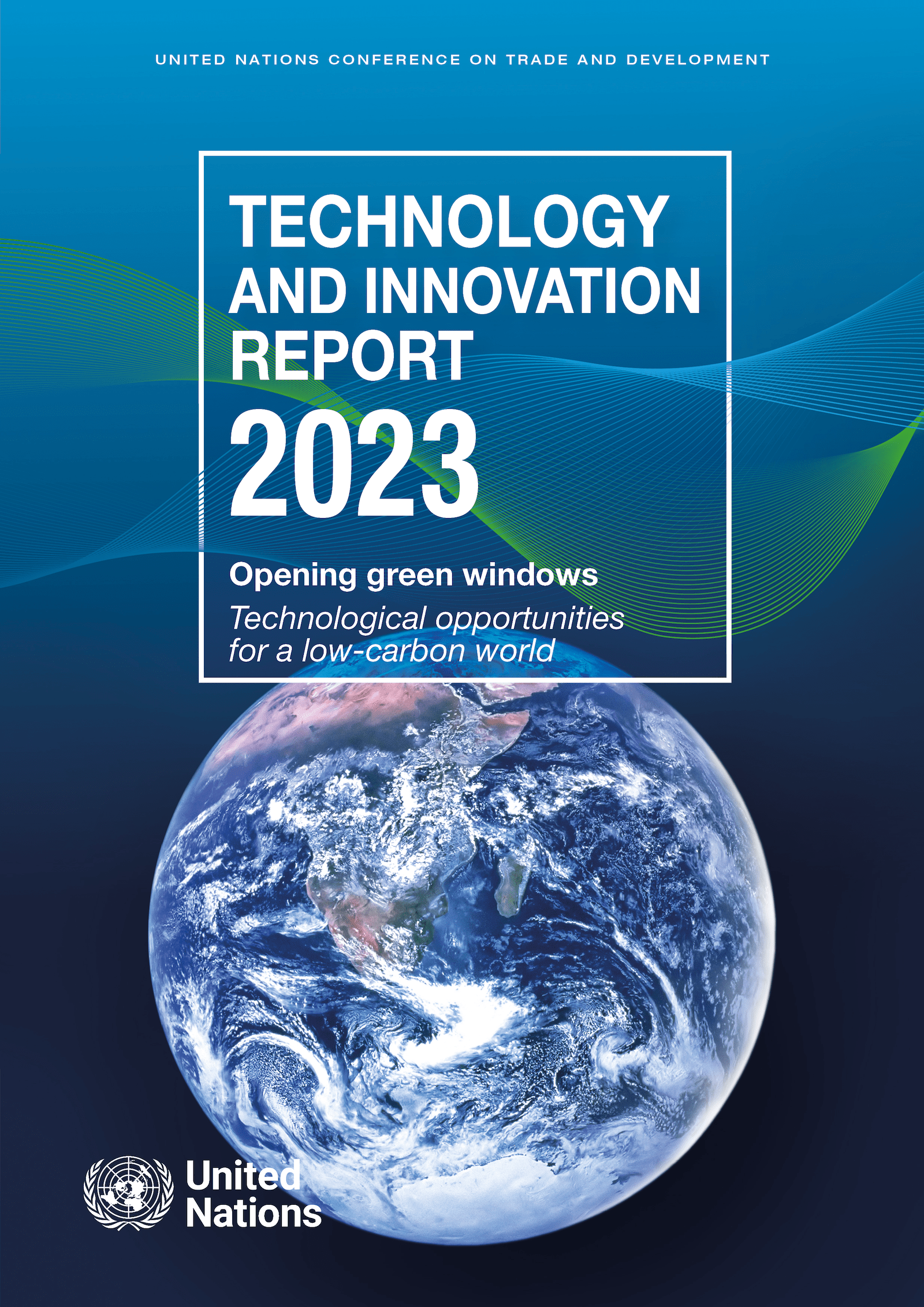
    While UNCTAD’s ‘Technology and Innovation Report 2023’ outlines opportunities for LMICs in the field of green innovation, it also highlights that most countries in the Global South lack the capabilities needed to leverage emerging technologies. 

    Out of the 2.9 billion people who are still offline, most live in LMICs , and either do not have internet coverage or face barriers to use. 

    National governments and development funders should therefore increasingly invest in strengthening STI systems and equitable access to digital opportunities, as well as support infrastructure to enable the local production of context-fit technologies. 

    Development funders can support LMIC government partners with testing instruments such as innovation clusters and system demonstrator projects. 

    Climate Innovation Clusters - EIT Climate-KIC 

    • Accelerating the Evolution of Climate Innovation Clusters is a series of ten peer-reviewed insight documents written by renowned climate innovation experts.
    • The series was commissioned by the UK & Ireland team to support our 2017-2020 focus on building climate innovation clusters in city-regions across the UK & Ireland.
    Explore this series of ten expert insights to find out:
    • which 18 ingredients make a climate innovation cluster most likely to emerge and grow
    • why they provide an accelerated path to the climate-smart society of the future
    • what lessons we have learnt from clusters in other countries
    • where climate innovation clusters are emerging in the UK and Ireland
    • why we think climate innovation clusters should be at the heart of job creation, growth and export plans at all levels of government.
    Series of ten expert
    1. Adapting Industrial Clusters for Climate Innovation: A Guide for Public Intervention
    2. Talent: A Novel Education Model for Climate Innovation Clusters
    3. Accelerating the Creation of a Cleantech Cluster in London
    4. Assessing Business Performance in Climate Innovation Clusters
    5. Tackling Market and System Failures through Climate Innovation Clusters
    6. Broadening the innovation model: Lessons from Climate-KIC’s Regional Innovation Implementation Community
    7. Ingredients for Climate Innovation Clusters: The UK Case
    8. System Climate Innovation for a Transformative Impact
    9. Investment in Climate Innovation
    10. Stimulating the Growth of Climate Innovation Clusters

    System demonstrator projects. 

    • In short, system demonstrators develop pathways for deep structural change by establishing place-based demonstrations of how new systems can look, feel and work. 
    • Their focus on system-level innovations gives them an inherent potential to scale up locally, and to scale up and out nationally through an emphasis on multi-level governance among many actors.

    Development funders can support LMIC government partners such as following Examples:


    The Research and Innovation Systems for Africa (RISA) Fund 


    The ‘Research and Innovation Systems for Africa’ Fund is a multi-country project, funded by the UK, through the Foreign, Commonwealth and Development Office (FCDO), to support research and innovation systems strengthening in Africa.
    • The ‘Research and Innovation Systems for Africa’ Fund is a programme to support and strengthen research and innovation systems in six countries: Ghana, Kenya, Nigeria, Rwanda, South Africa, and Ethiopia. 
    • The programme runs from 2021 to 2024 and is funded by UKAid.
    • The RISA Fund brings together two pre-existing UKAid programmes into one new, joint fund. The two complementary programmes are called Strengthening Research Institutions in Africa (SRIA), and the African Technology and Innovation Partnerships (ATIP), which are designed to support a more effective realisation of the synergies between research and innovation systems. 
    • Their work will continue under the new banner of the RISA Fund.

    EIT Climate-KIC 

    EIT Climate-KIC is a Knowledge and Innovation Community (KIC), working to accelerate the transition to a zero-carbon, climate-resilient society. 
    • It is supported by the European Institute of Innovation and Technology. EIT Climate-KIC identifies and supports innovation that helps society mitigate and adapt to climate change.
    • EIT Climate-KIC believes that a decarbonised, sustainable economy is not only necessary to prevent catastrophic climate change, but presents a wealth of opportunities for business and society.
    • EIT Climate-KIC identifies, source and place public and private funds that stimulate innovation. EIT Climate-KIC tracks progress and outcomes and draw out learning and insight so that EIT Climate-KIC funding partners can effectively invest their resources for maximum impact.
    • EIT Climate-KIC has 450+ global partners, spanning universities, businesses, cities and NGOs.

    Related resources:

    United Nations Inter-Agency Task Team on Science, Technology and Innovation for the SDGs and
    European Commission, Joint Research Centre (2021) Guidebook for the Preparation of Science, Technology and Innovation (STI) for SDGs Roadmap #124 p.

    Input by various institutions beyond those represented by the IATT Sub-Work-
    ing Group co-leads: the Organisation for Economic Co-operation and Development (OECD), European Commission Joint Research Centre (EU JRC), African Union and its affiliated agencies including Regional Economic Communities, African Development Bank (AFDB), African Center for Technology Studies (ACTS), Research and Information System for Developing Countries (RIS), Global Sustainable Technology and Innovation Community (G-STIC), Pathways for Prosperity, InterAcademy Partnership, International Network for Government Science Advice (INGSA), Global Solutions Summit, Technology Bank for the Least Developed Countries, United Nations Economic Commission for Africa (UNECA), United Nations Economic and Social Commission for Asia and the Pacific (ESCAP), United Nations Economic and Social Commission for West Africa (ESCWA), United Nations Development Programme (UNDP), United Nations Industrial Development Organization (UNIDO), United Nations International Strategy for Disaster Reduction (UNISDR), United Nations Office for South-South Cooperation (UNOSSC), United Nations University (UNU) and the World Intellectual Property Organization (WIPO).

    At the 2017 STI Forum, participants highlighted that STI roadmaps and action plans were needed at the subnational, national and global levels, and that these should include measures for tracking progress. 

    Systemic gender disparity among key STI actors in science, technology, engineering and mathematics (STEM) fields, beyond the targets under Goal 5, has been recognized as a key issue to be addressed. (page 10)


    The technology and innovation report 2023 analyzed 17 frontier technologies, and these include artificial intelligence, Internet of Things and green frontier technologies such as green hydrogen electric vehicles, and so forth. And these technologies present a 1.5 trillion US dollar market today.

    Africa possesses the world's greatest renewable energy capacity potential, estimated to reach about 310 gigawatts by 2030. The report identified several good practices: Namibia with regard to green hydrogen; Kenya with regard to solar Photovoltaics (PVS), Ethiopia: biofuels. All happened when the governments and private sector work hand in hand.