Platform for African – European Partnership in Agricultural Research for Development
Showing posts with label Mozambique. Show all posts

Tuesday, December 20, 2022

The Ukraine Crisis and African Economies: Session III

20 December 2022. The Ukraine Crisis and African Economies: Session III

In response to the Russia-Ukraine conflict and its impact on African countries, AKADEMIYA2063 developed the Ukraine Crisis Brief Series, a comprehensive research series to provide evidence-based simulations of the ramifications of the crisis. 

Hinged upon data, analytics, and past crisis patterns, the AKADEMIYA2063 Ukraine Crisis Brief Series analyzes the economic and socio-economic impacts of global market disruptions induced by the Russia-Ukraine conflict. These research findings are published on AKADEMIYA2063's Ukraine Crisis and African Economies portal.

  • Presenter: Mr. Wondwosen Tefera, Senior Associate Scientist, AKADEMIYA2063 »
  • Moderator: Dr. John Ulimwengu, Senior Research Fellow, International Food Policy Research Institute (IFPRI)


Resources

Wednesday, September 21, 2022

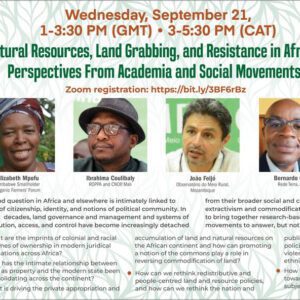
Natural Resources, Land Grabbing and Resistance in Africa: Perspectives From Academia and Social Movements

21 September 2022. The land question in Africa and elsewhere is intimately linked to issues of citizenship, identity, and notions of political community. 

In recent decades, land governance and management and systems of distribution, access, and control have become increasingly detached from their broader social and cultural meanings, giving way to extractivism and commodification. 

This CORA roundtable aims to bring together research-based perspectives and those of social movements to answer, but not be limited to, the following questions:

  1. What are the imprints of colonial and racial regimes of ownership in modern juridical formations across Africa?
  2. How has the intimate relationship between land as property and the modern state been consolidating across the continent?
  3. What is driving the private appropriation and accumulation of land and natural resources on the African continent and how can promoting a notion of the commons play a role in reversing commodification of land?
  4. How can we rethink redistributive and people-centred land and resource policies, and how can we rethink the nation and public space to find pathways to inclusive policies and actions that reduce land-based violence? This includes bringing gender, ethnicity and generation into the equation.
  5. How do struggles for land in Africa contribute towards a deeper recognition of multiple subjectivities, agencies and practices?
Panel:
  • Moderator : Ruth Hall (PLAAS, University of Western Cape, South Africa). 
  • Elizabeth Mpofu (Zimbabwe Smallholder Organic Farmers’ Forum, Zimbabwe)
  • João Feijó (Observatório do Meio Rural, Mozambique)
  • Ibrahima Coulibaly (ROPPA and CNOP, Mali), Natasha Issa Shivji (Cambridge University, Tanzania)
  • Bernardo Castro (Rede Terra, Angola)

Thursday, June 10, 2021

WEBINAR: The Relationship Between Aflatoxin Exposure and Chronic Malnutrition in Nampula Province, Mozambique

10 June 2021.
 The Relationship Between Aflatoxin Exposure and Chronic Malnutrition in Nampula Province, Mozambique
  • Webinar Materials 
  • Webinar Recording link
  • Webinar Slides pdf
  • Study Report pdf
  • Webinar References pdf
In 2018, the Innovation Lab for Nutrition, along with partners at Universidade Lúrio, ANSA, and INS, conducted a study to examine the association between aflatoxin and height in young children. This webinar, shared findings from the study, including relationships found between children's height and aflatoxin, as well as agricultural and dietary contributors to increased aflatoxin levels. It also launched the study report, which will be available on the website following the webinar.
  • Maureen Malavé - Maureen Malavé serves as the Nutrition Team Lead at the USAID Mission to Mozambique, where she manages a multisectoral nutrition portfolio focused on working alongside the Mozambican government to reduce childhood stunting. Maureen oversaw the preparation, implementation, and dissemination of the aflatoxin study in Mozambique. Maureen has a Master of Public Health in Population and Family Health and Forced Migration from Columbia University’s Mailman School, and a Bachelor of Arts in Political Science and Spanish from Villanova University.
  • João Salavessa – João Salavessa is an UniLurio Associate Professor and the Project Coordinator of the UniLurio: Support to Skills Development for Agriculture and Industry Project granted by the African Development Bank. He holds PhD in Food Science and Technology from the Universiade Técnica de Lisboa (Portugal) and is the Local Principal Investigator of the Mozambique aflatoxin study.
  • Sofia Costa- Sofia Costa is the Director of the Center for Studies and Health Services at UniLúrio, where she is also a lecturer and researcher at the Faculty of Health Sciences. She completed her post-grad in pediatric nutrition and is currently a nutritionist as well as the Local Co-Principal Investigator of the Mozambique aflatoxin study.
  • Katie Appel- Katie Appel is an Assistant Researcher for the Feed the Future Innovation Lab for Nutrition. Katie has a Master of Science in Food Policy and Applied Nutrition from the Friedman School of Nutrition Science and Policy and she has been with the Innovation Lab for Nutrition since 2016.
  • Shibani Ghosh- Shibani Ghosh is a Research Associate Professor at the Friedman School of Nutrition Science and Policy. She is also the associate director for the Feed the Future Innovation Lab for Nutrition with experience working in the Middle East, Sub-Saharan Africa and South Asia. Her research interests are in understanding the role of agriculture in improving nutrition while ensuring health, assessing the diet and non-diet determinants of nutritional status of infants and young children, and testing interventions aimed at improving maternal and infant nutrition and growth.

Thursday, March 18, 2021

FANRPAN WEBINAR:  Transforming agriculture market systems in Southern Africa

18 March 2021. Markets are the main ‘transmission mechanisms’ between growth in the wider economy and the lives of the poor. Most smallholder farmers (SHF) sell their produce in informal markets that generate limited value. Evidence from research confirms that despite demanding requirements, participation in formal markets increases incomes much more than participation in informal markets. For instance, horticulture farmers producing fruits and vegetables lose a good proportion of their produce due to unpredictable demand in the informal market against poor or lack of cold storage facilities in their local open markets. 

Advocating for SFH (especially women and youth) to access markets as food producers is critical for fostering pro-poor and inclusive economic growth, thus the need for a structured campaign.

Against this backdrop, the Food, Agriculture and Natural Resources Policy Analysis Network (FANRPAN) has partnered with Oxfam Southern Africa (Oxfam SAF) in an effort to transform market systems in the Southern African region. Over the past 2-3 years, FANRPAN and Oxfam SAF have conducted a series of research studies focusing on four countries, namely Malawi, Mozambique, Zambia and Zimbabwe. 

These studies aimed at unpacking factors that affect the participation of smallholder farmers (SHFs), in agricultural markets. Findings show that women farmers play significant roles in production and post-harvest processing, but benefit least from farming enterprises because they are underrepresented in market systems. There is need to create an enabling environment to transform agriculture markets for the smallholder farming households.

Wednesday, November 21, 2018

Postharvest Management in Sub-Saharan Africa (PHM-SSA) Project

The Postharvest Management in Sub-Saharan Africa (PHM-SSA) Project aims to improve food security (increased food self-sufficiency and incomes) of smallholder farmers in SSA through reduction of postharvest losses of food crops (grains and pulses) by addressing major constraining factors of technology dissemination and adoption, knowledge and information sharing, rural advisory services (RAS) and policies related to PHM.

The PHM-SSA project is coordinated by Helvetas Swiss Intercooperation (HSI) and implemented in a consortium with FANRPAN, with AFAAS and AGRIDEA as further partners.


Phase 1 started from April 2013 to March 2017, in 2 pilot countries: Republic of Benin in the communities of Atacora (North) and Savalou (South); and in Mozambique in the communities of Nampula and Cabo Delgado. During phase 1, technologies, methods and practices were developed and tested, that further resulted into elaborating materials on PHM including; technical manuals, factsheets, farmer training materials (Calendar of good practices, flyers). These materials are downloadable from AFAAS online platforms for adaption and use by extension workers in Africa.

Key results: 
  • a vibrant input supply and distribution networks for metal silos and hermetic bags were established in Tanzania, Benin and Mozambique; through training and deploying over 73 active local artisans, local production of metal silos was established and over 2,700 metal silos were sold to the farmers. 
  • In addition, according to an own survey, over 52,745 farming households directly adopted at least one improved PHM option. There was a 33% reduction in the number of food insecure households in the lean season, and households reported an additional income of over USD 90 per household from saved grain that was sold at higher prices. 
  • This approach has attracted interest from policy makers culminating in national strategies and by-laws on PHM being currently developed. There is a wide-scale interest and uptake of PHM solutions by other countries helped by the examples
  • Further reading
Phase 2. The project is now in its second phase, implemented from April 2017 to March 2020. The major emphasis of the second phase is on promoting adoption of proven technologies and good practices on PHM to scale, at national and regional level.


Friday, August 17, 2018

Using soy recipes to earn money.

6 August 2018. The Tasty! Mozambique Project has just released a new training video for Soybean Innovation Lab (SIL) partners and extension agents to use to promote the women-led enterprise. SIL researcher and University of Missouri scientist Dr. Nina Furstenau has been working with women in rural villages in Mozambique to develop the income generation project that involves using soy recipes to earn money.

Using a prototype hand grinder and strainer, the women entrepreneurs are making soy-enhanced biscuits called “spare change” and selling them at roadside stands to passersby, children, etc. Adding soy to the biscuits provides the customers with a delicious and high-quality source of protein and the entrepreneurs are able to earn money to reinvest in their baking enterprises. A small amount of the profits are held back from each sale to raise funds to purchase other materials and tools to continue the enterprise. The women also become trainers for the next group of women entrepreneurs.

As profits grow, other women have been inspired to form new working groups, and the process becomes self-sustaining. The soy-enhanced food products the women produce and sell also help to bring better nutrition into home kitchens to alleviate malnutrition common in the area.

The video is designed to be used by the women in the group, along with the recipe cards and cookbook from the Tasty! Mozambique project.

Access the Tasty! Mozambique cookbook (In Portuguese) 

Monday, August 6, 2018

Linking Small-Scale Energy and Agriculture to Support Development and Climate Goals

25 July 2018. This Africa AFOLU Community of Practice (CoP) session focused on approaches to link small-scale energy and agriculture in the Africa region. The session began with an overview of approaches and then dive into the use of solar pumps for irrigation at the global level and in Mozambique and use of rice husk briquettes for cooking fuel in Cote D’Ivoire.

The session concluded with a discussion across CoP participants including experiences and lessons from other countries and ideas for further support and engagement on this topic.
  • Alain Kouadio - Environmental Economist, Director of Green Economy and Social Responsibility, Ministry of Environment and Sustainable Development, Cote D'Ivoire
  • Prof. Almeida A. Sitoe - Professor, Silviculture and Ecology of Tropical Forests, Center for Agriculture and Natural Resource Studies (CEAGRE) and Faculty of Agronomy and Forestry, Eduardo Mondlane University, Mozambique
  • Jennifer Holthaus - Senior Program Officer, Winrock International, LEDS Global Partnership AFOLU Working Group Winrock International
  • Bikash Pandey - Director of Clean Energy for the Clean Energy, Environment and Water group, Winrock International, LEDS Global Partnership AFOLU Working Group

Tuesday, September 20, 2016

Integrated Seed Sector Development

19-20 September 2016. Nairobi. The Integrated Seed Sector Development in Africa (ISSD Africa) project, in collaboration with partners such as the Centre for Development innovation (CDI) of the Netherlands-based Wageningen University and Research and Tegemeo Institute of Agricultural Policy and Development of Egerton University, Kenya, brought together seed experts from around the continent, government agencies, as well as donors and development partners.

This conference presented the synthesised findings of two years of action research across ten countries. Almost 100 participants from a wide array of African and global organisations came together to learn about the activities and findings of the ISSD Africa programme and collaboratively set the agenda for future ISSD work at the continental level. Sessions focused on lessons learned and entry points for future work and linkages and be based on the four prescribed themes of ISSD Africa. Read more on these themes here
The conference created a platform to share the outcomes of a two-year piloting phase, alongside the discussions on how to translate these findings into change agendas. ISSD Africa project’s goal is to support the development of a market-oriented, pluralistic, vibrant and dynamic seed sector in Africa that provides both female and male smallholder farmers access to quality seed of superior varieties.
"The lack of quality affects agricultural productivity, income resilience and livelihoods of
smallholders. Smallholder farmers face challenges in getting reliable access to sufficient quantities of quality seed of superior varieties and that impacts negatively on their productivity, earnings and livelihoods” Miltone Ayieko, regional coordinator for the Kenya-based  project
"Africa requires seed entrepreneurship that responds to demands by farmers, agro-dealers, service providers and others in the seed value chain. Entrepreneurship and market-orientation are important incentives for sustainable development” Marja Thijssen, the ISSD Africa Project Coordinator based at the Centre for Development Innovation (CDI) -Wageningen UR
Background:
Integrated Seed Sector Development
In partnership with Centre for Development Innovation (CDI), KIT is involved in country-specific Uganda, Ethiopia, Burundi, Tanzania and Mozambique, as well as in cross-border programmes under the auspices of the African Union.
programmes in

The Pilot Phase of ISSD Africa is funded by the Bill and Melinda Gates Foundation (BMGF) and the Ministry of Economic Affairs of the Netherlands. Executive Coordination is in the hands of a consortium comprised of an African-based Secretariat in close collaboration with the Centre of Development Innovation (CDI) of Wageningen University and Research Centre (Wageningen UR), the Royal Tropical Institute (KIT) and the Future Agricultures Consortium, (see Programme Structure figure hereunder). Tegemeo Institute of Agricultural Policy and Development in Nairobi Kenya (the policy research institute of Egerton University), hosts the African-based Secretariat. 

The two-year piloting phase began in September 2014 with the following four priorities:
access to varieties in the public domain:
  1. common challenges in promoting entrepreneurship in seed value chains
  2. matching global commitments with national realities, and
  3. supporting the missions of the Africa Union Commission (AUC), Comprehensive Africa Agriculture Development Programme (CAADP), Africa Seed and Biotechnology Programme (ASBP) and 
  4. development of the seed sector.

Wednesday, September 30, 2015

Southern Africa Peanut Value Chain Meeting in Malawi

28-29 September 2015. Lilongwe, Malawi. Over 50 project partners including researchers, students, and private sector actors from the target countries, Malawi, Mozambique, and Zambia, plus collaborators from the United States and the United Kingdom attended the meeting.

Initial findings and updates from the ongoing projects that span the value chain were presented to improve multidisciplinary and regional cooperation and impact during the completion of the project.

Visit the website for more information about the Southern Africa Peanut Value Chain Intervention project.

Wednesday, July 30, 2014

4th RUFORUM Biennial Conference

19 - 25 July 2014, Eduardo Mondlane University in Maputo, Mozambique. Over 600 delegates attended the Fourth Regional Universities Forum for Capacity Building in Agriculture Biennial Conference.

The Regional Universities Forum for CapacityBuilding in Agriculture (RUFORUM) is celebrating its 10th anniversary under the theme, "African Higher Education Week: Transforming Agricultural Education - a Platform for the Way Forward."

See further RUFORUM conference blog.

RUFORUM organized a side session where it interacted 

with the Alumni students who have been in the field to 
listen to them in order to know the changes needed in the 
approach to the career path.
FUFORUM's 10th anniversary celebrations coincides with the AU annual theme of Agriculture and Food Security, as well as the 10th anniversary of the Comprehensive AfricanAgricultural Development Programme (CAADP), a blue print agreed upon, and signed in Maputo in 2003, by African Heads of Statesand Governments for achieving 6% economic growththrough agricultural transformation.

In her keynote address Dr. Dlamini Zuma said that Agriculture over the last decade grew by 4% per annum, lower than the target of 6% as envisaged by CAADP. 
"African agriculture should and must do much better, to ensure our collective food security, to reverse the trend of being a net importer of food, to create jobs and to contribute towards industrialisation." 
Another keynote address was delivered by Mrs. Graca Machel, a Member of the International Panel of Elders and Former Mozambiquan Minister of Education. The event was officially opened by the Minister of Science and Technology, and representative of the Prime Minister of the Republic of Mozambique.

Dr Wanjiru from AWARD fellowship
Related:
FARA and partners (e.g. NPCA, SROs, ANAFE, RUFORUM and other key regional agencies) are jointly implementing a project known as the Africa Human Capital in Science, Technology and Agripreneurship for Food Security Framework (AHC-STAFF). 
  • The AHC-STAFF seeks to undertake exhaustive studies to determine current and future capacity needed to propel Africa’s agriculture and recommend appropriate capacity strengthening actions to address the identified needs. 
  • The project has adopted a technology capital (within the wider value) chain’ approach to elucidating requisite capacity for technical change needed to uplift Africa’s agriculture. 
  • The project will assess the overall national capacity needs for knowledge/technology generation, knowledge/technology diffusion, and knowledge/technology adoption and utilization in priority program areas of the NAFSIPs. 
  • The assessments will be conducted in all the CAADP post-compact countries over a three-year period, and will furnish credible grounding for comprehensive human capital formation and institutional strengthening. 
In the first year, the following countries will be targeted:
  • ASARECA: Burundi, Democratic Republic of the Congo (DRC), Ethiopia, Kenya, Rwanda, and Djibouti
  • CCARDESA: Angola, Lesotho, Malawi, Mozambique, Namibia, Tanzania and Zambia
  • CORAF/WECARD: Cameroon, Burkina Faso, Gabon, Ghana, Guinea Bissau, Liberia, Nigeria, Senegal, Sierra Leone, The Gambia
  • NASRO: Tunisia, Mauritania