The 27th PAFO–COLEAD Innovations Session discussed how agrifood systems and the organisations, cooperatives, MSMEs and support ecosystems can better serve youth and women as both entrepreneurs and jobseekers, and how strengthening one pathway can reinforce the other for sustainable, inclusive impact.
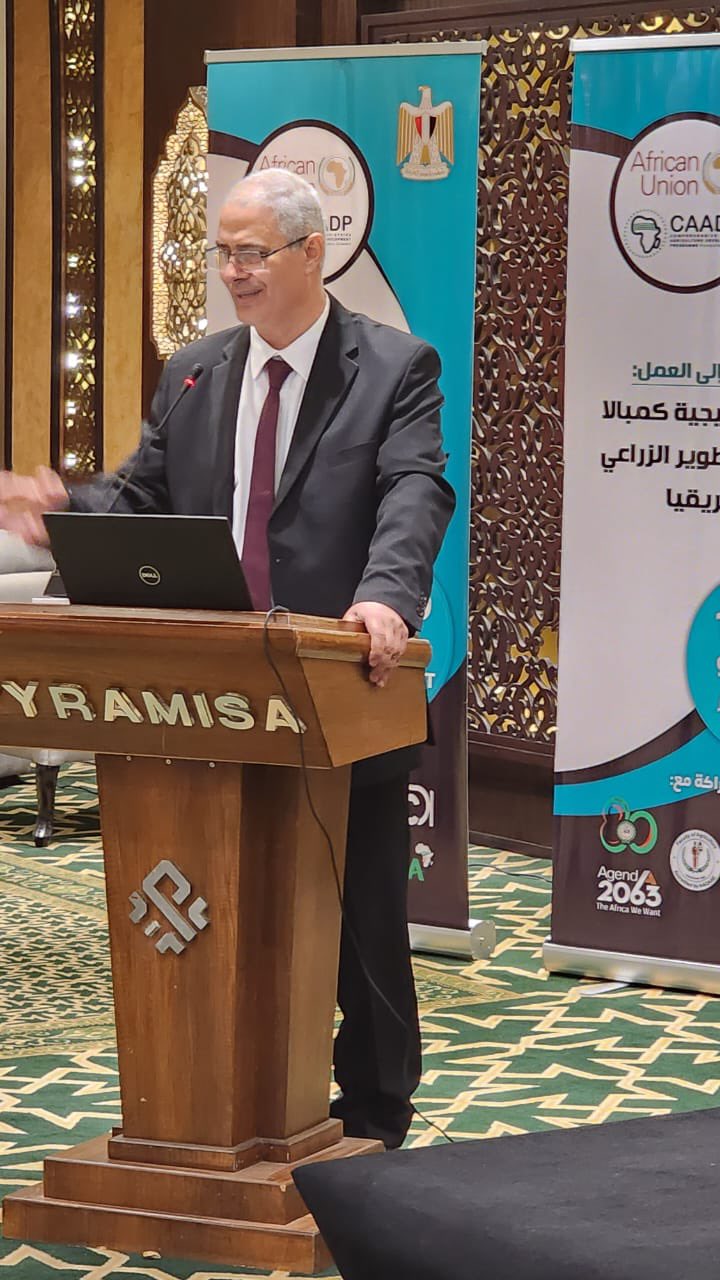
This meeting was organized by AU‑SAFGRAD (the African Union’s Semi‑Arid Food Grains Research & Development office). It served as a key strategy session aimed at operationalizing the newly launched CAADP Kampala Strategy (covering 2026–2035), which is Africa's post‑Malabo framework for transforming agriculture through science and innovation.
It is important to strengthen joint African action to address the risks and challenges facing the region, as well as the optimal and effective exploitation of the vast and diverse economic and natural resources possessed by the African continent, to achieve intra-African economic integration and address the new global reality. Egypt develops agriculture through several axes, including: horizontal expansion through the reclamation of approximately 4 million acres to support the production of strategic crops and reduce the food gap therein, as well as vertical expansion through the development of new varieties with high productivity, early maturity, low water requirements, and tolerance to climate change.
Egyptian state's efforts include adopting modern technologies to develop irrigation systems and increase the efficiency of water resource use by building giant agricultural wastewater treatment plants. This is in addition to supporting the transition to healthy and safe food systems, reducing loss and waste by expanding the scope of the National Silos Program and diversifying import sources for strategic grain commodities. This is in addition to strengthening and expanding the social protection network through the "Takaful and Karama" programs and launching the presidential "Decent Life" initiative, which aims to alleviate the burden on citizens in the most needy communities in rural areas and urban slums, representing more than 60% of the Egyptian population.
The Ministry of Agriculture and its scientists from the Agricultural Research Center and the Desert Research Center are fully prepared to provide the necessary expertise and all means of support to cooperate with our brothers from the African continent, harnessing all capabilities to ensure the success of this cooperation and achieve food security. Alaa Farouk, Minister of Agriculture and Land Reclamation of Egypt
The workshop was attended by: the Director of the African Union Office for Research and Development at the African Union Commission; the Executive Secretary of the Forum for Agricultural Research in Africa; the Executive Secretary of the Arab Fund for Technical Support to African Countries; Dr. Adel Abdel Azim, Head of the Agricultural Research Center; Dr. Saad Moussa, Supervisor of External Agricultural Relations; and representatives of African Union bodies and organizations.
Objectives of the Meeting
Translate the Kampala Strategy into a concrete Action Plan: Participants focused on identifying R&D priorities, setting targets, defining implementation pathways, and establishing an M&E (monitoring & evaluation) framework .
Engage key stakeholders: A broad range of actors from national agricultural research centers, CGIAR institutes, regional bodies like FARA, and AU entities (e.g., SAFGRAD, AUC) were consulted to ensure ownership at all levels.
Mobilize support and funding mechanisms: The meeting also explored ways to build strong public–private partnerships, secure donor engagement, and tap into new financing instruments to support agricultural research in Africa.
Key Themes Covered
Strengthening R&D infrastructure up to 2035.
Enhancing tech transfer—including mechanization, digital agriculture, AI, climate-smart practices.
Establishing robust institutional frameworks and governance for implementation and monitoring.
Formulating resource mobilization strategies.
This event marked the first major consultative workshop aimed at driving the shift from high‑level commitment—to the Kampala Strategy—toward tangible, on‑the‑ground action across Africa. The ultimate goal: to build sustainable, resilient, and innovation-led agri-food systems across the continent.
Lovin Kobusingye (Uganda National Women Fish Organization)
Kofi Kisiedu Acquaye (YPARD)
Jenniffer Wairimu Waruingi (Kenya Youth)
Dr. Jennie Van der Mheen (WUR) University
Dr. Laura Altea (EWA BELT )
Representative ARC Egypt
Panel 6: Institutional Collaboration and Policy Engagement for Kampala Delivery
Moderator: Dr. AKwesi Ntiamoah Atta-Krah, Senior advisor to the Regional Director for Africa
Dr. Uffelen, Gerrit-Jan van (WUR)
Dr. Aliou Faye (ISRA, Senegal)
Representative ARC/Cairo University
Dr. Moyo Siboniso, ILRI Deputy Director General
Panel 7: Resource Mobilization and Public-Private Partnerships
Moderator: Dr Kwaku Antwi (FARA)
Dr. Oyewole Babafemi (PAFO – Farmer/PPP links)
Dr. Tapsoba François (EWA Scientific Board)
Peter Claver Anyeembey (Ministry of Agriculture, Ghana)
Dr. Mohammed Ssemwanga (AGRENES-Private Sector)
Representative Cairo University
Representatives from AFTAAC
Representative ARC Egypt
Key Outcomes & Next Steps
Drafting of an AU-SAFGRAD Action Plan.Outlining thematic priorities, institutional roles, performance indicators, and implementation timelines.
Governance Frameworks Initiated. Draft TORs for coordinating bodies, partnership agreements, and M&E systems were proposed for adoption at continental and regional levels
Resource Mobilization Framework Drafted. Including proposals for public–private funding, donor coordination, and engagement with “Team Africa” financing mechanisms
Research Priorities Finalized.Soil health, digital/agri-tech, AI, mechanization, climate-smart practices and value-chain R&D were signed off as flagship areas
Partnership Agreements Under Development.Including a roadmap for AARIEIs (Africa‑wide Agricultural Research & Innovation Excellence Institutions) aligned with Kampala goals
RUFORUM-Led Capacity Support Planned.RUFORUM to roll out training programs aiding national implementation efforts
YPARD's is actively participating in the 16th Session of the Conference of the Parties (COP16) to the United Nations Convention to Combat Desertification (UNCCD), held in
The involvement of YPARD underscores its commitment to sustainable land management and youth empowerment in agricultural development.
Download the policy position of the YPARD Policy Working Group.
Key Events and Contributions:
1. Investing in Sustainable Agrifood Systems Transformation
The GEF Food Systems Integrated Program (FSIP) Launch · Date & Time: December 5, 17:30–19:00 · Collaborators: FAO, IFAD, GEF
2. Transforming Agri-Food Systems for Resilient Ecosystems, Food Security, and Nutrition through Regenerative Agriculture
· Date & Time: December 5, 12:30–14:00 · Collaborators: YPARD
3. The Gateway to Land Restoration and Resilience: Pathways to Land Tenure for Women & Youth
· Date & Time: December 7, 09:00–10:30 · Collaborators: YPARD, CIFOR-ICRAF, CA4SH, UNCCD Youth Caucus, YOUNGO Food and Agriculture WG, WOCAT, Action on Food Hub, International Land Coalition
4. Empowering Marginalized Voices through Inclusive Land Restoration
· Date & Time: December 7, 14:00–15:00 · Collaborators: CGIAR, YPARD, Bioversity-CIAT
5. Collective Action for Our Land, Our Future: Empowering Marginalized Voices through Inclusive Land Restoration
· Date & Time: December 10, 13:00–14:30 · Collaborators: YPARD, CGIAR
6. A Tapestry of Policy: Can Civil Society Unite the Rio Conventions?
· Date & Time: December 10, 10:00–11:00 · Collaborators: Global Landscapes Forum, Youth in Landscapes Initiative, YPARD, Global Youth Biodiversity Network, International Forestry Students’ Association, Youth4Nature
The CAADP-XP4 Consortium, in collaboration with CGIAR, YPARD, and some National Agricultural Research Institutes (NARIs) from West, South, and Central Africa, successfully hosted the fourth annual Knowledge Management for Agricultural Development (KM4AgD) Conference at the Lemigo Hotel in Kigali, Rwanda. This pivotal event, held from July 29 to 31, 2024, provided a platform to advance agricultural research and innovation across the continent, emphasizing Indigenous knowledge, climate-relevant agricultural transformation, and sustainable development.
CAAD-XP4 Coordinator, Dr. Baitsi Podisi (CCARDESA)
In his opening remarks, the CAADP-XP4 Coordinator at CCARDESA, Dr. Baitsi Podisi, speaking on behalf of the Consortium, praised the organizations for their exceptional work. “We need to adopt standards that will make KM a profession. We are happy to be part of this initiative. We have also tapped into the expertise of the best organizations that have helped us with the training,” he stated. He urged participants to integrate their newly acquired knowledge into their respective organizations and emphasized the importance of accurate information packaging for agricultural decision-making. He also acknowledged the EU, IFAD, and other partners for their continued support, expressing optimism for positive outcomes from the KM4AgD Challenge and Conference.
FARA Knowledge Management Cluster Lead, Mr. Benjamin Abugri
Mr. Benjamin Abugri, speaking on behalf of the CAADP-XP4 Knowledge Management Working Group and Prof. Andreas Brandner, the lead facilitator and Executive Director for the Knowledge for Development Partnership (K4DP), highlighted that the conference aimed to validate KM concepts and briefs developed by participants, recognize their achievements, induct 21 new members into the Community of Practice, and discuss the draft outline of the inaugural 2025 Knowledge Management Report for Africa. The event also fostered discussions on advancing knowledge management in Africa’s agri-food systems and generated stakeholder commitments.
KM4AgD24 Candidate Melika Vodounhessi presenting outputs from the KM4AgD24 Challenge
During the conference, graduates presented various briefs on capturing Indigenous Knowledge, knowledge hubs, knowledge linkages and partnerships, and knowledge inclusion, as well as presented draft organizational and national KM strategies from the National Agricultural Council (ARC) of South Africa, National Agricultural Research and Development Institute (NARDI) of Botswana, Ministry of Agriculture of the Democratic Republic of Congo, Centre National de Recherche Agronomique (CNRA) of Cote d’Ivoire, Institut de Recherche Agricole Pour le Developpement (IRAD) of Cameroun, Institut Tchadien de Recherche Agronomique pour le Développement (ITRAD) of Chad and the Agricultural Research Council of Nigeria (ARCN).
Certified 2024 CAAD-XP4 Knowledge Management for Agricultural Development Managers
Representing the Sustainable Land Management for Sub-Saharan Africa (INTERFACES) intervention, Wilfrid Adjimoti discussed exploring women’s land access challenges and the importance of secure land tenure for economic and social empowerment. Dorcas Sanginga Alame highlighted pathways to organic fertilization through the documentation of successful models for crop residue management. Melika Voudounhessi and Kisito Gandji focused on advancing the right selection of crops considering climate and soil data. At the same time, Narcisse Yehouenou presented micro-dosing as a promising sustainable soil fertility management practice for food security in sub-Saharan Africa. Other key highlights of the presentation of outputs from the 2024 KM4AgD Challenge at this conference were the Knowledge Management Strategies for Civil Society Organizations by Mabel Shu and for the IITA and ILRI of the CGIAR presented by Bosede Ayinla, Sharon Abiodun, Pamela Wairagala and Marius Assogba.
The 21 graduates presented their knowledge management products (briefs and strategies), showcasing their hard work and dedication. The outputs from the KM4AgD Challenge were validated, highlighting the innovative approaches taken by the participants.
Certified 2024 CAAD-XP4 Knowledge Management for Agricultural Development Managers
Mrs. Bridget Kakuwa-Kasongamulilo and Mr. Benjamin Abugri presented the work CCARDESA and FARA have been doing regarding Malabo in the SADC region and the country-levelpromotions they have conducted in seven SADC countries since 2022. Mr. Peter Ballanytne, ILRI KM Consultant, spoke on the history of knowledge management in Africa, emphasizing the evolution of access to knowledge, from CD-ROMs and microfiche to free access portals and the Wayback Machine.
Deputy Minister of Agriculture for Sierra Leone, Dr. Theresa Teneh Dick
Deputy Minister of Agriculture in Sierra Leone, Dr. Theresa Teneh Dick, emphasized the importance of accurate information dissemination in her speech before presenting certificates to the graduates. “Don’t disseminate the wrong news. Be fair enough to speak the truth,” she urged, highlighting the value of integrity in communication. She congratulated the 21 graduates for attaining certification as knowledge management for agricultural development managers. Graduates received their certificates with jubilation and excitement, recognizing their commitment to advancing knowledge management in agriculture. These graduates were inducted into the Community of Practice for KM and Artificial Intelligence (AI), ensuring ongoing collaboration and knowledge sharing. They officially have become Fellows of the KM4AgD Centers of Excellence at both continental and regional levels and would champion KM initiatives in their countries.
Ms. Tsehay, KM and Communications Specialist at ILRI, led a brainstorming session to inform the next research agenda of the CAADP-XP4 Consortium and CGIAR, providing a clear direction for future efforts. The conference also explored emerging issues and opportunities in KM for Africa’s agri-food systems, generating political and stakeholder support for integrating knowledge management as a development strategy.
Certified 2024 CAAD-XP4 Knowledge Management for Agricultural Development Managers
The 2024 KM4AgD Conference marks a significant step towards building Africa’s knowledge-based agricultural development framework, including a significant contribution to the AUC-led Post-Malabo discussions on Knowledge Management, Advocacy, and Communication under Working Group 12. CAADP-XP4 and its partners are committed to driving sustainable agricultural transformation across the continent by fostering collaboration, enhancing capacities, and integrating knowledge management strategies.
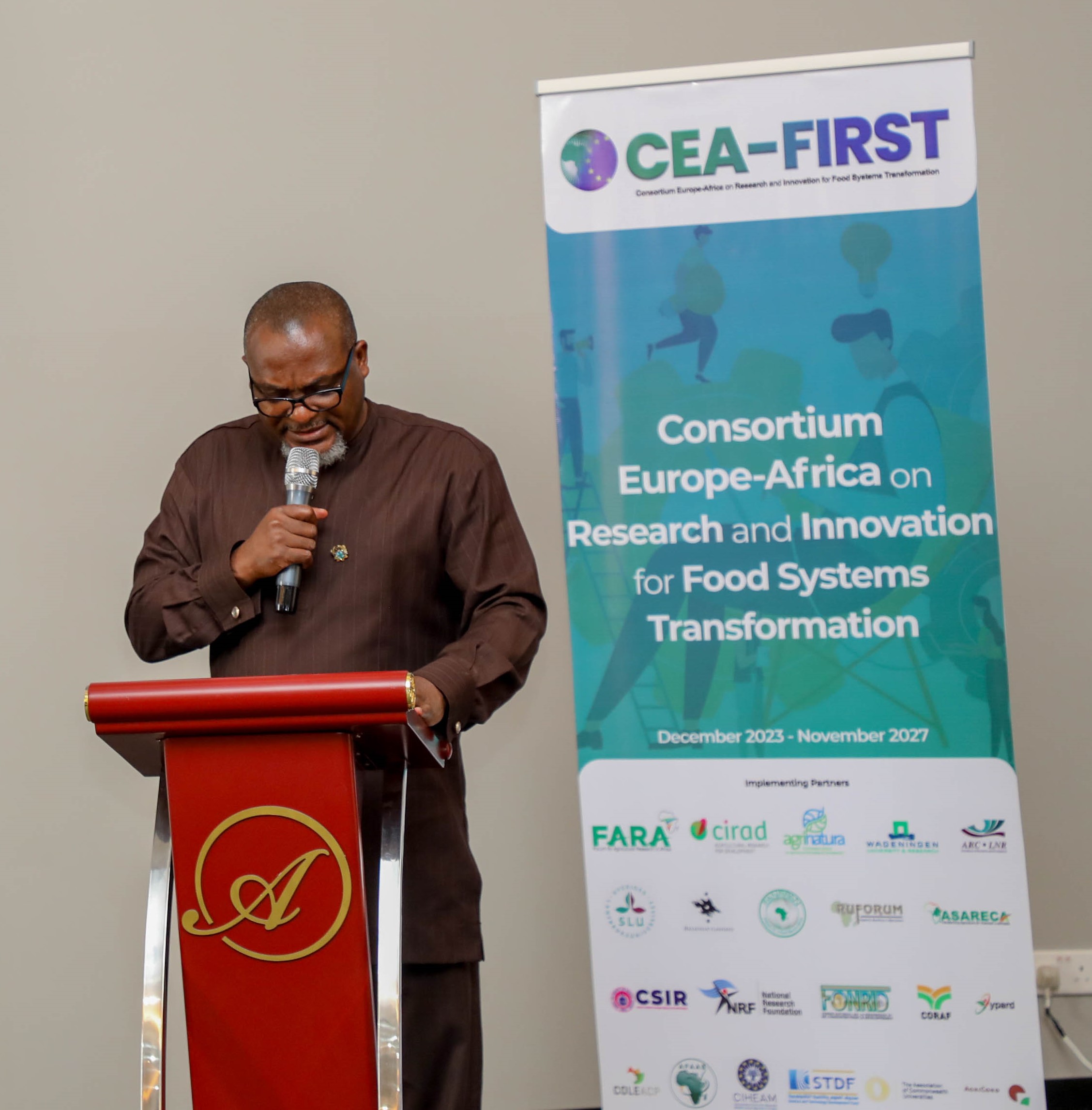
The African Union and the European Union alongside a number of implementing partners have launched the Consortium Europe-Africa on Research and Innovation for Food Systems Transformation #CEA_FIRST Project.
CEA FIRST is funded by the European Union as part of the Green Deal’s “From Farm to Fork” strategy (Horizon Europe budget envelope). It forms a crucial part of the EU’s “Global Gateway” strategic vision, which aims to establish sustainable and reliable connections serving citizens and the planet. This vision addresses pressing global challenges, from combating climate change to enhancing the competitiveness and security of global supply chains, particularly in Africa.
The project brings together 22 partners from Europe and Africa covering a wide range of expertise and stakeholders (research, NGOs, donors, extension workers, etc.) involved in the field of food and nutritional security and sustainable agriculture. It consists partly from the former LEAP4FNSSA and PAEPARD, extended with new public and private network partners.
The main objectivesof CEA-FIRST are as follows:
Providing public access to an extensive platform of knowledge in food and nutrition security and sustainable agriculture.
Developing a robust methodology for analyzing Research and Innovation (R&I) activities and priorities.
Supporting the update of the AU-EU R&I partnership roadmap.
Establishing operational and thematic research working groups.
* COLEAD leads the CEA-FIRST working group which focuses on fostering linkages and multi-stakeholder engagement in programmes and initiatives related to food and nutrition security and sustainable agriculture. Concurrently, COLEAD will co-lead efforts to strengthen the link between research, innovation, and their practical application.
CEA-FIRST will facilitate connections between the IRC and the AU-EU high-level political dialogue.
It will create a learning environment, including communication channels, to support multi stakeholder networks and to strengthen R&I coordination.
CEA-FIRST will operationalise the International Research Consortium (IRC)as a long-term platform on food and nutrition security and sustainable agriculture (FNSSA) in line with the FNSSA Roadmap of the AU-EU High-Level Policy Dialogue (HLPD).
The IRC is a member-based, multi-actor platform and will work towards increasing synergies andcoherence while reducing fragmentation and duplication of research efforts. Its aim is to promote higher returns on investments and impact on business development in Africa and Europe, by linking actors, research and innovation projects, initiatives, and funding programmes.
The final output will be a fully functional IRC. In the context of an essential transition in agri-food systems, compounded by the challenges of climate change and demographic shifts, the IRC is positioning itself as a vital tool for fostering an equitable and sustainable research and innovation partnership between Africa and Europe. This partnership focuses on bolstering agriculture as a key driver of economic development.
The IRC will also serve related AU-EU policy priorities, such as the Climate Change and Sustainable Energy and the Innovation Agenda of the HLPD, as well as the European Green Deal priorities (and farm to fork strategy) and the AU priorities like the African Free Trade Area.
In his opening remarks to kick-off the International Research Consortium and the #CEA_FIRST Project, the Executive Director of FARA, Dr. Aggrey Agumya recognized: "CEA-First represents a larger and far-reaching formation that promises to revolutionize the partnership and working arrangements between African and European institutions."
Participants
Forum For Agricultural Research In Africa (FARA), Ghana (Coordinator)
Centre For International Cooperation In Agronomic Research For DEVELOPMENT (CIRAD), France
European Alliance On Agricultural Knowledge For Development (Agrinatura), France
Stichting Wageningen Research (WUR), the Netherlands
Agricultural Research Council Institute For Soil Climate And Water (ARC), South Africa
Sveriges Lantbruksuniversitet (SLU), Sweden
Helsingin Yliopisto (UH), Finland
Food Agriculture And Natural Resources Policy Analysis Network (FANRPAN), South Africa
Regional Universities Forum For Capacity Building In Agriculture (RUFORUM), Uganda
Association Of Commonwealth Universities (ACU), United Kingdom
The Registered Trustees of The Association for Strengthening Agricultural Research In Eastern And Central Africa (ASARECA), Uganda
Council For Scientific And Industrial Research (CSIR), Ghana
National Research Agency (ANR), France
National Research Foundation (NRF), South Africa
National Fund For Research And Innovation For Development (FONRID), Burkina Faso
West And Central Africa Council For Agricultural Research And Development (CORAF), Senegal
Young Professionals For Agricultural Development (YPARD), Germany
The project brings together 22 partners from Europe and Africa covering a wide range of expertise and stakeholders (research, NGOs, donors, extension workers, etc.) involved in the field of food and nutritional security and sustainable agriculture. It consists partly on lessons from the former #PAEPARD initiative, to the LEAP4FNSSA and now extended with new public and private network partners.
Aiming to explore innovative ways to tackle the global water crisis, World Water Week 2023 was housed for the first time in Stockholm Waterfront Congress Centre. World Water Week welcomed participants from all over the world to join hands for a better water future.
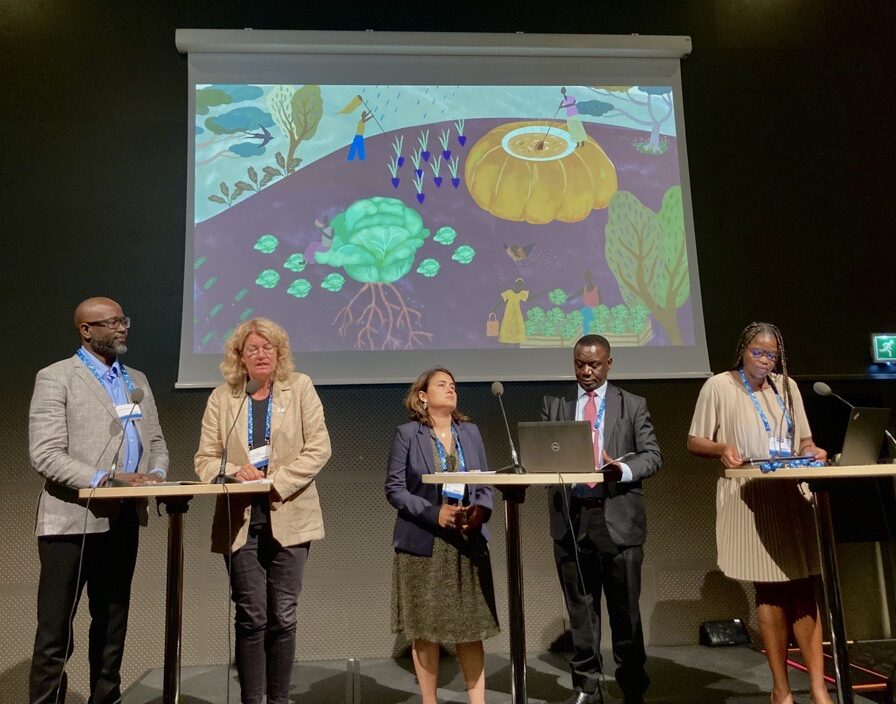
Throughout Africa, several groundwater strategies are currently being simultaneously developed. This happens at regional, transboundary and national scales. This session explored key governance points that strategies need to include to foster an aligned, innovative and enabling space that can strengthen Africa's water security solutions and climate resilience.
The integrated landscape-based approach in the sub-basin addresses the linkages between land, rivers and lakes ecosystems in support of holistic natural resources management and economic development through livelihood activities. In this session, the practical implementation of the landscape-based restoration approaches linked with livelihood activities were presented and discussed.
New approaches of cooperation are needed to address drought risk proactively at all levels, through holistic approaches that include early warning, prevention, response and ultimately building drought resilience. The session will deal with understanding the full complexity and managing the risk in a horizontally and vertically integrated way across scales.
The agenda for the next ten years of Integrated Drought Management at the Drought Resilience +10 across all its workstreams includes:
Drought resilience and global mechanisms
Drought risk governance: The regional, national, and local challenges
Drought Impact monitoring, assessment and forecasting
The need to turn drought policies into action
Ecosystems and Drought
Social inclusion, climate justice and drought
Drought risk finance / Insurance
Public-Private-Civil Society Partnerships for integrated drought risk management
Co-convened by the Center for International Forestry Research, Food, Agriculture and Natural Resources Policy Analysis Network, Stockholm International Water Institute, World Agroforestry Centre and Zambezi Watercourse Commission, this session highlighted the partnership of non-governmental organizations/ knowledge tanks with the Zambezi Water Course Commission, an intergovernmental panel of eight member states that share the Zambezi river.
Felix Ngamlagosi, Zambezi Watercourse Commission (ZAMCOM)
Dr. Tshilidzi Madzivhandila, The Food, Agriculture and Natural Resources Policy Analysis Network (FANRPAN) - The case for investment in African small-holder farmers and rain in the face of climate change
Monica A. Altamirano, WaterEquity - Private Sector Financier Perspectives -
Presentations on innovative methodologies across the Zambezi catchment to unlock the value and build an empirical business case for investing in enhanced rainfed agriculture:
Sithembile Mwamakamba, FANRPAN
Maimbo Malesu, Center for International Forestry Research (CIFOR) and World Agroforestry (ICRAF)
The Koga Reservoir supports 10,000 smallholder-farmers in Ethiopia. The reservoir faces siltation related to upstream catchment degradation. Establishing a PES scheme between the upstream and downstream communities is critical. However, in-country experience to implement PES is limited. The session covered lessons learned to develop the foundation of the scheme.
This session unveiled and launched a new magazine – the African Voice on Water (AVOW) as an anthology of water and sanitation stories from AU Member States. It presented AVOW’s value to the sector for information, knowledge, awareness, policy advocacy, dialogue promotion and the showcase of good.
A large proportion of global investments in NbS target strategies which are not relevant to Africa’s diverse environmental, climate, cultural and political contexts. This session brought together key actors to explore how south-south and north-south learning can effectively build a transformative, African approach to NbS for climate resilience.
This session brought together political leaders, and technical and financing partners to explore financing opportunities for scaling up the Programme for Integrated Development and Adaptation to Climate Change in the Zambezi River Basin aiming to strengthen regional cooperation and to build community resilience to climatic and economic shocks.
This session disseminated the findings of a study on sanitation and hygiene policy environment in Africa. It highlighted areas of the enabling environment that require strengthening during policy reform process. Critical elements of the policy environment that requires prioritisation in policies and implementation strategies were discussed.
WFP's IGNITE Innovation Hub for East Africa helps identify and scale innovative solutions in the region. The Hub nurtures and scales local, market-based innovations to increase food security, enable climate resilient communities and strengthen food systems in East Africa by leveraging WFP’s public and private partners, field experience and expertise. This includes innovations related to water for productive use. This session: (a) Spotlighted the food security challenges faced in East Africa, especially due to the prolonged drought; (b) Amplified the launch of an innovation challenge supporting innovation across the East Africa region, including water related innovation; (c) Encouraged partners and innovators in the ecosystem to support innovations by expressions of interest to partner.
View the recording here
Sibi Lawson-Marriott
WFP Food Systems
Eric Oyare
WORLD WIDE FUND FOR NATURE (WWF)
BLUE HEART OF AFRICA INITIATIVE
Bedan Mukoma
WFP Regional Bureau Of Nairobi
Partnerships And Innovation
This session delved into the challenges encountered by African member states in implementing water and sanitation-related targets and reporting progress to the African Union Assembly. - Legal and Institutional requirements for a successful and sustainable financing mobilization for the water sector. - Financing water, challenges, and current trends (includes State of readiness to mobilize commercial - Experiences sharing of some of the financiers and investors. - Concessional green and climate related funds and facilities. - Project preparation opportunities in Africa. - Accelerating action on financing water in Africa to achieve SDG6 by 2030.
Paddies for the Planet presents an innovative financing and institutional model that reduce agricultural emissions and water use, benefitting small farmers. This session put a spotlight on incentives for different stakeholders to practice efficient irrigation management, discussed new ways to carry out irrigation practices; and showcased perspectives on innovations and financing (water, irrigation, carbon) to scale practical solutions.
This talk show discussed Digital Earth Africa, the DIWASA initiative’s Open Data Cube, and the decision-ready data from Earth Observation Satellites that it offers. DEA and IWMI are developing a range of additional analysis tools to help users address water monitoring and management issues at a regional scale. Potential applications of DEA resources include: flood hazard mapping; flood and drought warning systems using weather forecast and hydrological model; vulnerability and impact sectoral analysis of floods and drought; data visualization and analytics tools; and capacity building and technology transfer.
View the recording here
Walter Panzirer
The Helmsley Charitable Trust
Lena Scherman
Deep Sea Productions
Reporter/Editor In Chief
The session and panel explored the use of local, regional, and global scale data such as crop yield, applied irrigation water, soil water content, crop canopy parameters, as well as the use of crop modeling and remote sensing, for estimating spatial and temporal variation of crop water productivity. The presentations covered novel approaches in estimating crop water productivity and developing water productivity scores at local and global scale. The presentations will also address approaches and challenges of assessing livestock water productivity.
Livia PeiserFAO
Land And Water Officer - Monitoring land and water productivity using remote sensing data, the FAO WaPOR open access database
Abdulkarim Seid
Mesfin Mekonnen
The University Of Alabama
Assistant Professor - Monitoring water productivity: Pathways for scaling use of advanced data acquisition systems across rainfed – irrigation continuum
Dr. Christopher M. U. Neale, Daugherty Water for Food Global Institute, University of Nebraska - Increases in Water Productivity of Irrigated and Rainfed Crops in Nebraska, United States
Dr. Mesfin Mekonnen, Department of Civil, Construction and Environmental Engineering University of Alabama - Trends in the Water Productivity of Livestock Products in the United States
To highlight the urgency of our priorities related to terrestrial water stewardship and foster collaboration and investment, this session convened diverse partners from around the world to share successes and barriers to advancing agricultural water stewardship initiatives.
In the Awash basin in Ethiopia, water is available but scarce and highly polluted. Stakeholders from federal and regional governments find each other in a water agreement, facilitating a catchment approach. By registration of all users and allocating water against a price, a fair distribution of the water is pursued.
Planning and intentional design of solar powered water systems is critical to delivering sustainable high quality solutions that serve long term needs for refugee and host communities. This session, shared case studies from Ethiopia and discuss approaches to embed best practices and engage young professionals.
This session presented and discussesed revisions to the agroecological principles that incorporate inclusive water management and aquatic food. It then explores their implications for agroecological transitions at scale in member countries of the Agroecology Coalition that face urgent need to adapt to increasing frequency and severity of droughts in some cases and floods in others brought about by climate change.
View the recording here
Fergus Sinclair (Moderator) ICRAF
Sarah Freed (World Fish)
Michaela Lo (IWMI)
Matthew McCartney (IWMI)
Genna Tesdall (YPARD) Youth perspective on agroecology and aquatic food from DRC
Rada Kong CIRAD, ASSET project in association with HE CASIC, Cambodia - Dealing with too much water: flooding in Cambodia
Mohamed Yahya Lafdal (adviser to the Mauritanian Minister of Environment) - Dealing with too little water: drought in Mauritania
Swati Renduchintala RySS and CIFOR-ICRAF, India - Agroecological practices perform best in drier conditions In Andhra Pradesh: implications for scaling through womens’ self-help groups
Prasanthi Gunawardena, University of Sri Jayewardenepura - Redirecting value from stored water to protect watersheds in Sri Lanka
East African wetlands are crucial for supporting various economic activities and livelihoods but are threatened by human activities like land-use changes, pollution, and climate change. To restore and safeguard these ecosystems, upscaling of often fragmented pilots in catchment restoration is needed. In this session, integrated landscape-based restoration approaches, and its challenges were discussed.
View the recording here
Soledad Pinero
Part Of More
CEO
Julie Mulonga
Wetlands International
Director Eastern Africa
Michael Nelemans
Wetlands International
Technical Officer IWRM
23/08 Harnessing the digital revolution for water innovation
The panel was introduced by a brief presentation on the GSMA’s experience of supporting partnerships between utilities and start-ups across Africa and Asia by sharing insights from their recently published toolkit.
View the recording here
Satoshi Ishii
Asian Development Bank
Director, Water And Urban Development
Kelly Trott
Imagine H2O
Senior Vice President
Dickson Ndungu
Wonderkid Multimedia Limited
Managing Director
Chloe Poulin
Aquaya
Senior Research And Program Manager - Machine-learning proxy-means test for targeting pro-poor water subsidies in Ghana
During the 9th World Water Forum held in Dakar Senegal (March, 2022) key stakeholders in the water sector committed to increase investments into source water protection in Africa. An important element is to learn from some of the successful earlier initiatives implemented in the region like the Nairobi and Greater Cape Town Water Fund in order to accelerate the formation of new funds. Innovative approaches are needed for this, such as SIWI’s Source to Sea initiative that has supported development of modules on public-private partnerships for water management in Africa Continued learning and knowledge exchange is needed to address the underinvestment in source water protection in Africa as a adaptation measure to climate change and rapid urban water use increase.
View the recording here
Panel Session 1: Unpacking the problem and its impact
Moderator: Anton Earle (SIWI)
Dr. Simeon Kenfack – Director of programs, AfWASA Côte d'Ivoire
Marijn Zwinkels- Conservation Director, Commonlands South Africa
Eng. Joseph Kamau- Athi Water Works Development Agency: Kenya
Elizabeth Wathuti – Youth Climate Advocate and 2023 winner of Global Human Rights Award, Kenya
Panel Session 2 Demonstrated impact rolling out Source Water Protection Program
David Onyango – Sustainability Manager Diageo London
Madhu Rajesh – Senior Director for Water & Agriculture, TCCC
Uganda initiated transition of UNHCR supported and managed water services to national providers considering equal and sustainable access to water, sanitation and other services to refugees and population from hosting communities. Three large districts are in the process of such transfer and remaining nine districts will follow.
The session presented the benefits of integrating geospatial data in water statistics but also the barriers and main challenges for the uptake of geospatial tools, including technical, financial and governance issues. The session also highlighted current and emerging innovative approaches that integrate geospatial data in water statistics and information.
View the recording here
Towards a Global Water Data Portal – Patricia Mejias-Moreno, AQUASTAT coordinator, FAO
Generating data and information to consistently assess the state of water resources across scales,Dr. Stefan Uhlenbrook, Director Hydrology, World Meteorological Organization
Global hydrological data for better water management worldwide, Bertrand Richaud, Project Manager and focal point for River Basin Organisations at DHI
Global monitoring of water productivity in agriculture with FAO WaPOR: introducing the new open access portal and data, Livia Peiser, Land and Water Officer, FAO
National Perspectives
The use of geospatial data in irrigation management information systems in Ethiopia,Elias Awol Mohammed, Lead Executive Officer Small Holder Irrigation, Ministry of Agriculture
Innovations in water information systems in Jordan, Thair Al Momani, Assistant Secretary General for Technical Affairs, Ministry of Water and Irrigation, Jordan