Platform for African – European Partnership in Agricultural Research for Development
Showing posts with label consumers. Show all posts

Thursday, March 12, 2026

Consumers want nutritious, low-impact food: How can innovation deliver at scale?

12 March 2026. From a growing focus on health and nutrition, to rising demand for lower-impact food, evolving consumer expectations are reshaping how value is created across the food sector.

The data reflects this shift, with 75% of Gen Z stating that environmental impact influences their food choices (Deloitte, 2025), and 84% of US consumers rating wellness as a “top” priority (McKinsey, 2025). But consumer expectations around health, nutrition and sustainability are no longer siloed – they have converged into a single commercial imperative for competitive advantage.

This webinar explored how companies are responding to changing consumer demand and utilising innovation to deliver products that meet both sustainability and nutrition expectations. We’ll look at how organisations are adapting and reformulating products, developing innovation levers, and balancing food functionality and sustainability – all whilst creating business value.

  • Dorothy Shaver - Global Food Sustainability Director Unilever
  • Caroline Reid - Senior Sustainability Director Oatly
  • Alex Skidmore - Head of Market Intelligence Europe Griffith Foods

The panelists explored:

  • Staying ahead of the curve: How can business capitalize on consumer demand rather than reacting to it?
  • Adapting to new priorities: How are changing nutrition priorities and consumer awareness reshaping consumption models?
  • Challenges vs solutions: What are the innovation levers driving commercial impact, and how are companies deciding what to prioritise across innovation, R&D, and sustainability?
  • What’s next for value creation: The opportunities and limitations posed by a rapidly changing consumer landscape


Summary:

  1. Consumer expectations are rapidly shifting toward “nutrition + sustainability”. Speakers emphasized that consumers increasingly want food that is both healthy and environmentally responsible, rather than choosing between the two. Surveys show strong demand: many consumers prioritize wellness while younger generations also consider environmental impact in food choices.
  2. Health, sustainability, and taste must be integrated—not treated as separate goals. Companies historically optimized products for taste and price, adding sustainability later. The panel argued that future food innovation must simultaneously optimize nutrition, taste, affordability, and environmental impact.
  3. Taste remains the primary barrier to scaling sustainable food. Despite rising awareness of sustainability, consumers rarely compromise on flavor. Panelists stressed that innovations such as plant-based foods must achieve “taste parity” with traditional foods to reach mainstream markets.
  4. Reformulation is a key lever for improving nutrition at scale. Food manufacturers are increasingly reformulating existing products to reduce salt, sugar, and saturated fat while maintaining taste. Reformulation is seen as one of the fastest ways to improve population nutrition without requiring major changes in consumer behavior.
  5. Ingredient innovation is reshaping the food industry. The discussion highlighted innovations such as: plant-based proteins, fermentation-derived ingredients, functional ingredients that improve nutrition or texture. These technologies help companies develop foods with lower environmental footprints and better nutritional profiles.
  6. Supply chain transformation is essential for low-impact food. Sustainability improvements cannot come only from product formulation. Companies must work across the entire value chain, including sourcing raw materials sustainably, supporting farmers, and reducing emissions and waste in manufacturing.
  7. Scaling sustainable innovation requires partnerships. Panelists stressed collaboration across the food ecosystem: ingredient suppliers, startups, retailers, farmers, research institutions. Innovation cannot scale if companies operate in isolation.
  8. Consumer communication and transparency are critical. Companies must explain the nutritional and environmental benefits of new foods clearly and credibly. Without effective communication, consumers may distrust new products or misunderstand sustainability claims.
  9. Food environments influence consumer choices as much as preferences. Even if consumers say they want sustainable food, availability, price, and convenience strongly shape purchasing decisions. For sustainable diets to scale, better products must also be accessible and affordable.
  10. Innovation in food is becoming a competitive advantage. The webinar concluded that companies that anticipate consumer demand for nutritious, low-impact food will gain market leadership. Firms that delay innovation risk losing relevance as the food system transitions toward healthier and more sustainable products.

Tuesday, May 28, 2019

The Think20 and Cooperation with Africa

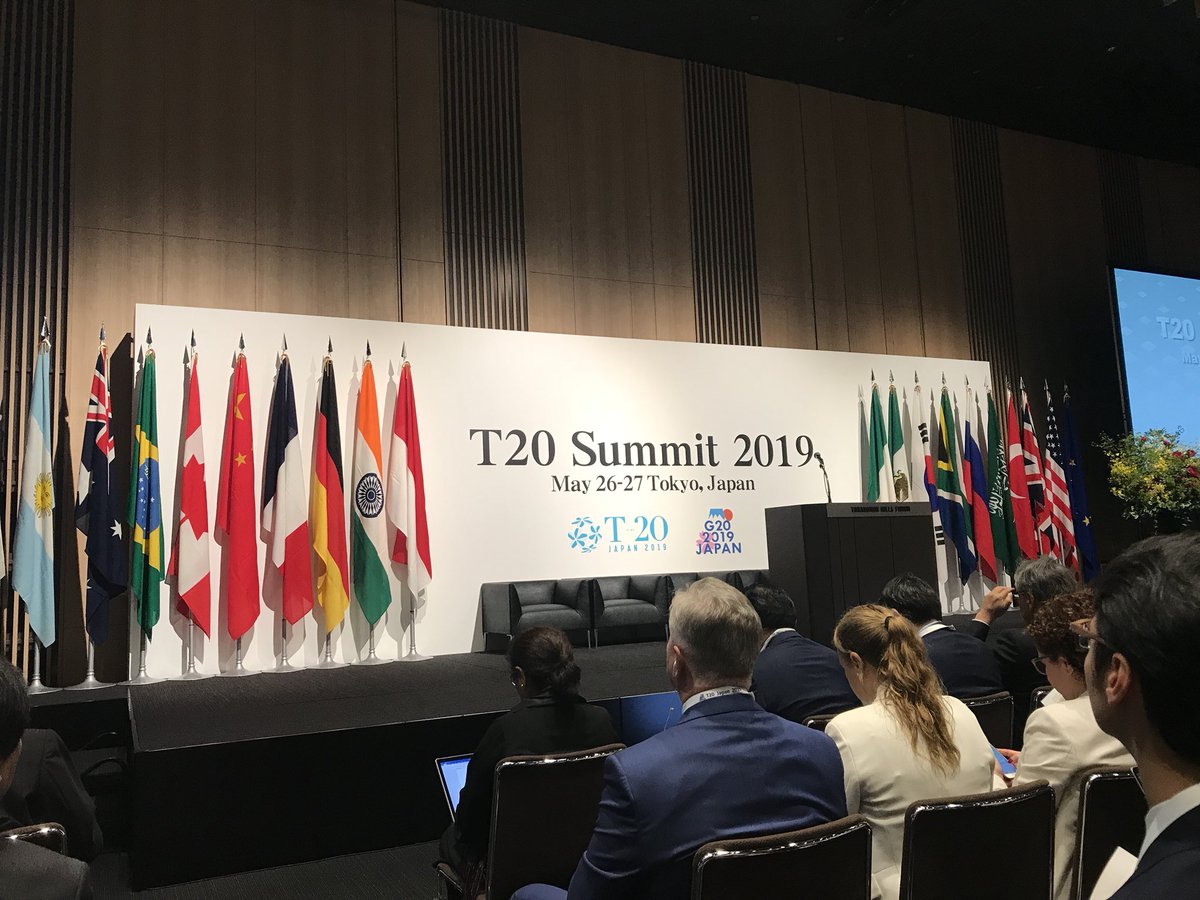
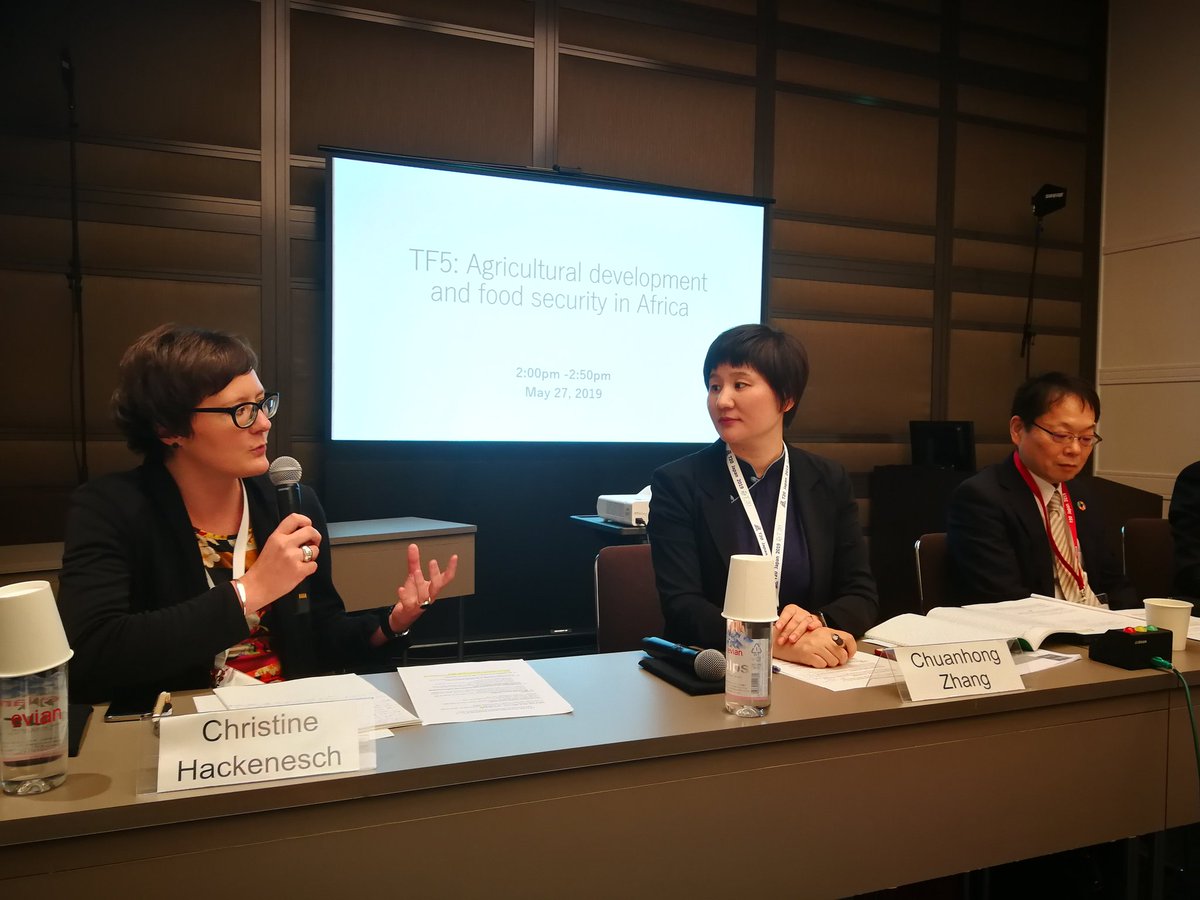
26-27 May 2019. Tokyo. The Think20 (T20), the research and policy advice network of the Group 20 (G20), convened at the of T20 Summit in Tokyo and issued the T20 Japan Communique detailing innovative policy recommendations for consideration during the G20 Leaders’ summit in Osaka.

Task Force 5: Cooperation with Africa
6 policy briefs were released.

Two policy briefs related to agriculture in Africa were discussed:
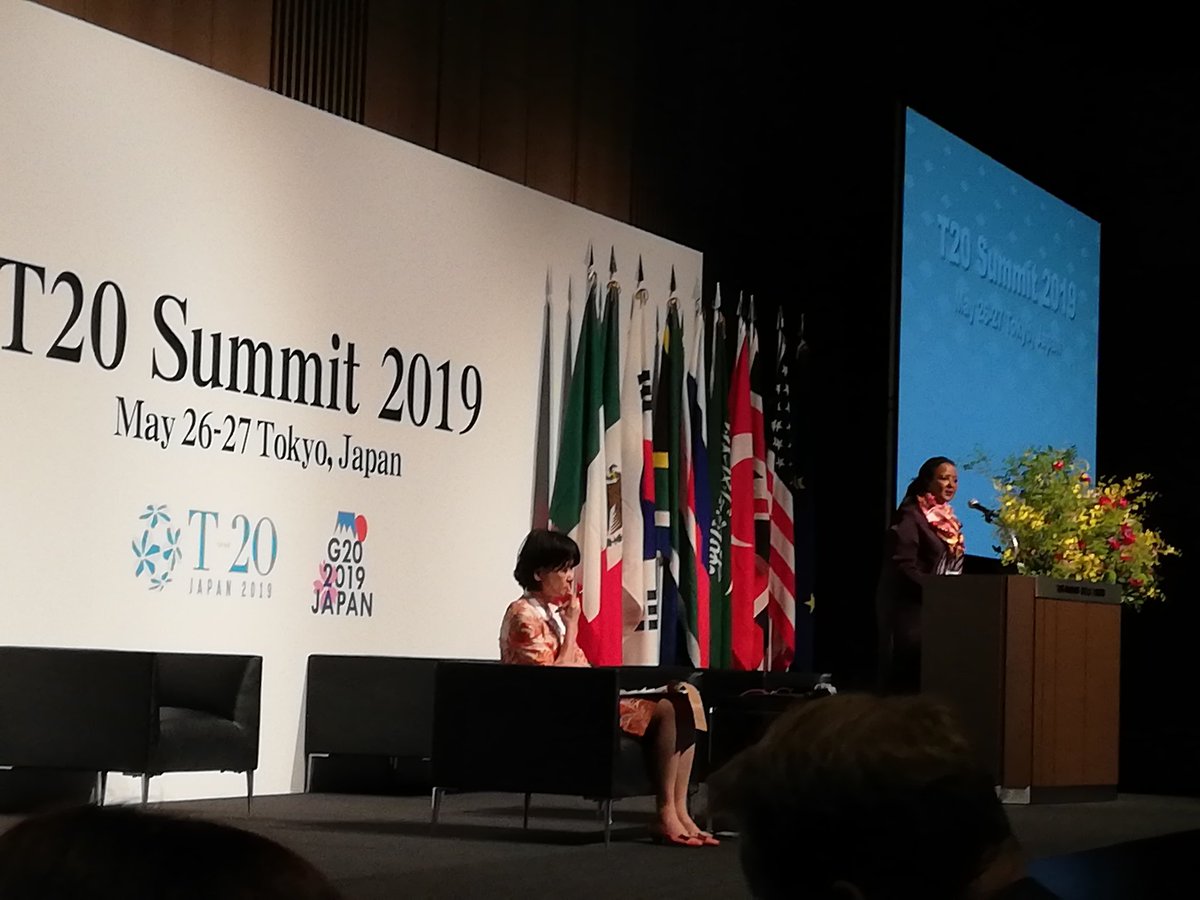
Kenya Minister Amina Mohamed,
discusses Multilateralism and Trade
  1. Linking Smallholder Production with Value-Added Food Markets (10 pages)
  2. Sustainable Prevention of Food Crises in Sub-Saharan Africa (10 pages)
Lead Co-Chairs
  • Ryosuke Nakata, JICA Research Institute
  • Kapil Kapoor, African Development Bank (AfDB)
Co-Chairs
  • Elizabeth Sidiropoulos, South African Institute of International Affairs (SAIIA)
  • Rob Floyd, African Center for Economic Transformation (ACET)
  • Witness Simbanegavi, AERC
  • William Davis, ECA
  • Gamal Ibrahim, ECA
  • Belay Begashaw, SDGs Center for Africa (SDGCA)
  • Yamauchi Futoshi, IFPRI
  • Julia Leininger, German Development Institute (DIE)
  • Nara Monkam, African Tax Administration Forum (ATAF)
Ryosuke Nakata, Lead Co-Chair of the T20 Task Force on Cooperation with Africa, describes how the G20 can help to take African development to the next level in the changing global environment.
  • Africa can take advantage of new trends such as the development of value chains in agriculture and industry, and the leapfrogging impact of innovative technologies. 
  • The private sector’s role is undoubtedly essential in many areas. 
  • The Africa Task Force promotes the African Union’s Agenda 2063 and sustainable development across the African continent by tackling the various policy issues including fiscal and debt sustainability, the G20 Compact with Africa (CwA), industrial development, agricultural development, food security, governance, and taxation.


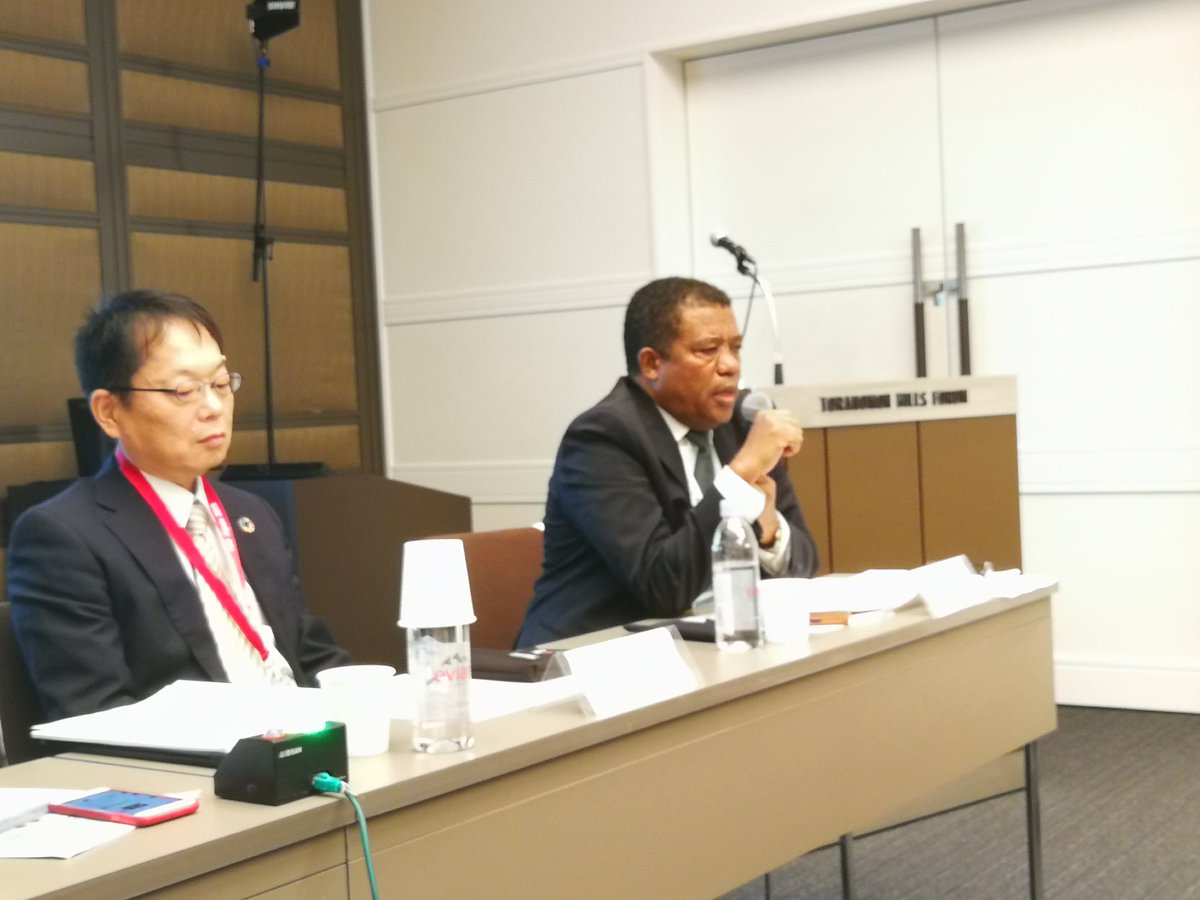
Belay Begashaw presenting TF5
policy briefs on Agriculture.
Demographic pressures and climate change in Africa are rendering subsistence farming an unviable livelihood strategy for smallholder farmers. However, urbanization and economic growth are creating new markets for fresh and processed foods in the region.

To enter this market, African smallholders need to adopt new production strategies that will increase income and make farming more appealing to the next generation. The G20 can encourage this transition by supporting the growth of a rural-based food processing sector, the reorientation of smallholder agriculture to commercialization, and the development of infrastructure to link farmers to markets.

"Interventions should prioritize SMEs over large agroprocessors, since SMEs have greater potential to become an important source of off-farm employment to rural inhabitants". (page 5)

"With the expertise and experience amassed in the food processing industry of some of its members, the G20 can support the integration of the Africa’s agricultural production into global and domestic agro-food value chains by actively promoting the rural-based private food processing sector."  (page 5)

"The G20 can encourage partnerships between African agroprocessors and buyers in the G20 to develop regulatory institutions that ensure the safety and quality of food without being a prohibitive barrier to entry for SMEs". 

"G20 member nations must look closely at their own trade practices, especially subsidies and non-tariff barriers that are inconsistent with WTO regulations, and re-evaluate them in light of stated intentions to promote smallholder farmers’ participation in global value chains." (page 6)

"Since the cost of establishing infrastructure for food processing is prohibitive in some instances, especially in low-income settings, one strategy that has been developed to reduce the user costs of infrastructure is the development of agroprocessing industrial parks. This strategy is currently in development in Ethiopia, and is being scaled up to service 17 regions throughout the country." (page 8)


Highlight: Smallholder Horticulture Empowerment and Promotion (SHEP) This approach was born through the technical cooperation project between Kenya and Japan. This approach addresses the motivation of farmers, and ensures their success in farming as a business. JICA is now promoting SHEP Approach all over Africa and in other areas.

Food crises and distress migration will continue to plague the African continent in the decades ahead unless massive investments are made to make the region’s agriculture and food systems more resilient. The G20 should support and invigorate region-wide efforts to:
  1. massively expand irrigation systems for smallholder farms to boost agricultural productivity and enhance resilience against the impacts of climate change, 
  2. achieve a “big push” in infrastructure, technology and finance to develop robust agri-food systems, and 
  3. enact concerted reforms of agricultural price and trade policies to strengthen trade integration, diversify domestic food supplies, and enhance country-level capacity to adjust to food shortages.
This policy brief  for the G20’s think tank platform, the T20, suggests that massive investments in expanding irrigation in Africa’s arid and semi-arid areas, and in improving weak and missing links in food systems, could provide the key to building resilience to future food crises. Such investments would provide Africa’s poor and agrarian populations with opportunities to break away from poverty and tap the economic potential of the world’s growing demand for food.

The brief was prepared by experts from IFPRI, FAO, and the Japan International Cooperation Agency (JICA). They provided three concrete recommendations for the G20 in three priority areas of action:
  • Investing in irrigation. Studies by IFPRI have shown the enormous potential of small-scale schemes to increase irrigation in Africa South of the Sahara by up to 30 million hectares. This would extend the growing season and provide year-round incomes for poor farming households and smallholders. The surplus production would result in rapid growth of the agriculture sector and help transform African economies. The brief proposes that the G20 and the African Union call on multilateral financial institutions, such as the World Bank and the African Development Bank, to set up financing schemes to help governments, farmers, and farmer organizations with the necessary funding.
  • Investing in strengthened agro-food value chain links. The policy brief encourages the G20 to foster international collaboration and strengthen financing mechanisms to facilitate a “big investment push” in Africa’s food value chains. To reap the benefits of agricultural productivity growth from irrigation investments, better supply chains will be needed for farmers to bring their increased production to market. This will require investments to improve market infrastructure and other innovations such as temperature-controlled storage and transportation and food processing capacity. Longer growing seasons and more surplus production would enable a growing number of small firms to produce processed versions of local staples. Such growth would in turn promote increasing demand, driven by income growth and urbanization, for processed, perishable, and higher value foods—transforming African food systems. Such investments could also leverage large-scale job creation along food supply chains and reduce the pressures that lead to migration.
  • Realigning agricultural incentives and trade policies. Producer prices are set below the world average in many African countries, depressing farmers’ incomes. Some African countries also prioritize domestic food self-sufficiency and government-managed trade, both of which can result in domestic price instability in the event of weather shocks and related climate impacts. When such disasters strike, increasing imports will not be enough to offset reduced food supply. The policy brief recommends that the G20 should collaborate with the African Union to coordinate reforms of domestic agricultural support measures and limit existing food trade restrictions. The Continental Free Trade Area in Africa could also help countries diversify their food supplies, ensuring that neighboring countries make food supplies available when needed to decrease Africa’s exposure to shocks to its largely rain-fed agriculture.
Related:
The Rise of a Middle Class in East and Southern Africa: Implications for Food System Transformationhttps://onlinelibrary.wiley.com/doi/full/10.1002/jid.3107
"High processed perishable shows the greatest change, rising from 14 to 18 per cent even in the low‐growth scenario and up to 29 per cent in the high‐growth scenario. Overall, high processed rises in every scenario, while low processed changes little".

"Import shares in urban areas do not rise with income, meaning that the urban middle class imports no more, as a share of their consumption, than the urban poor. This pattern of steady net import shares across income classes among urban consumers is driven by substitution away from (imported) wheat and rice towards meat and other products (as predicted by Bennett's law) that have lower import shares."

"In light of slow agricultural productivity growth on the continent. Productivity at farm and post‐farm levels will have to increase dramatically to avoid an import surge. (...) Any surge would not be the ‘fault’ of the African middle class but of general factors shared by all the consumer classes."

"The continuing rise of the urban middle class will not bias the growth path toward more imports. Part of the reason for this is that the middle class's penchant for perishables is met in its great majority by local supply."

Friday, October 28, 2016

The sustainable retail summit


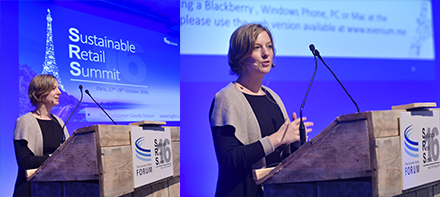
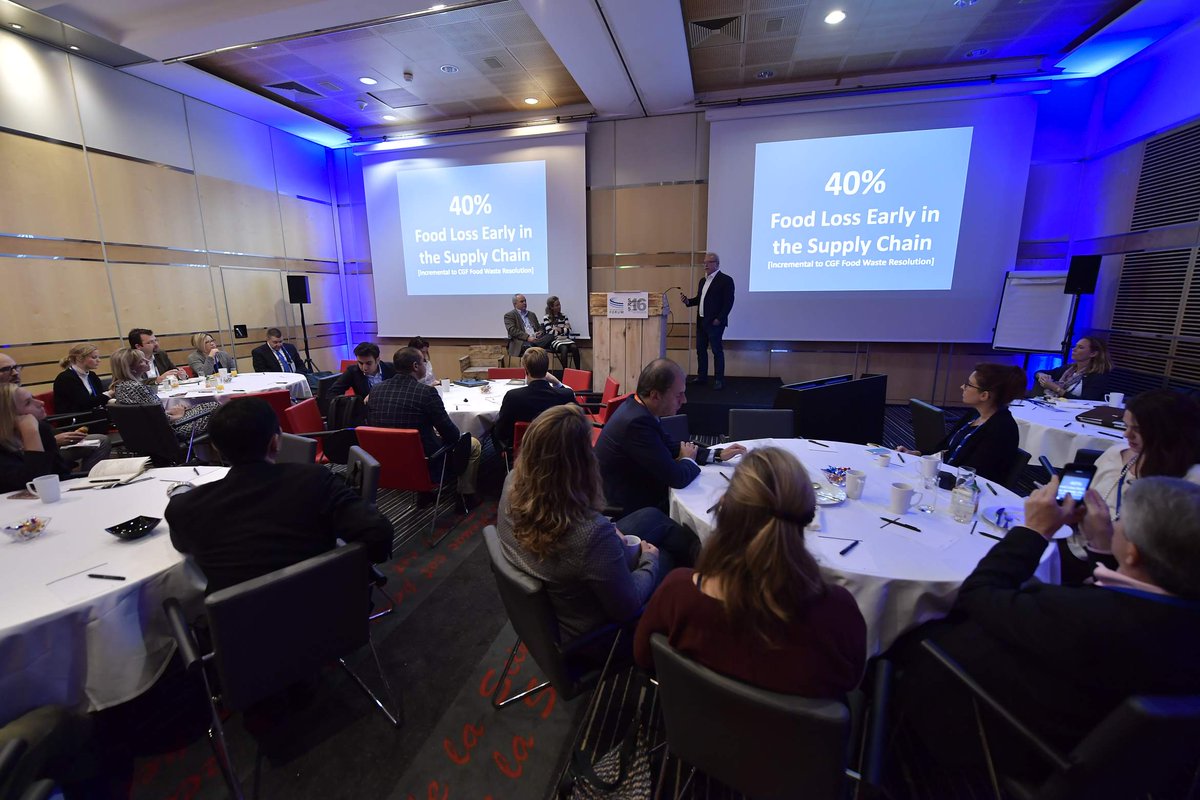
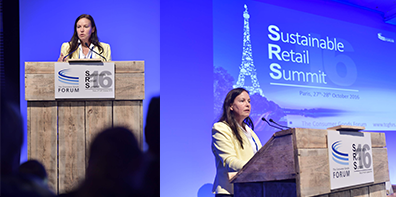
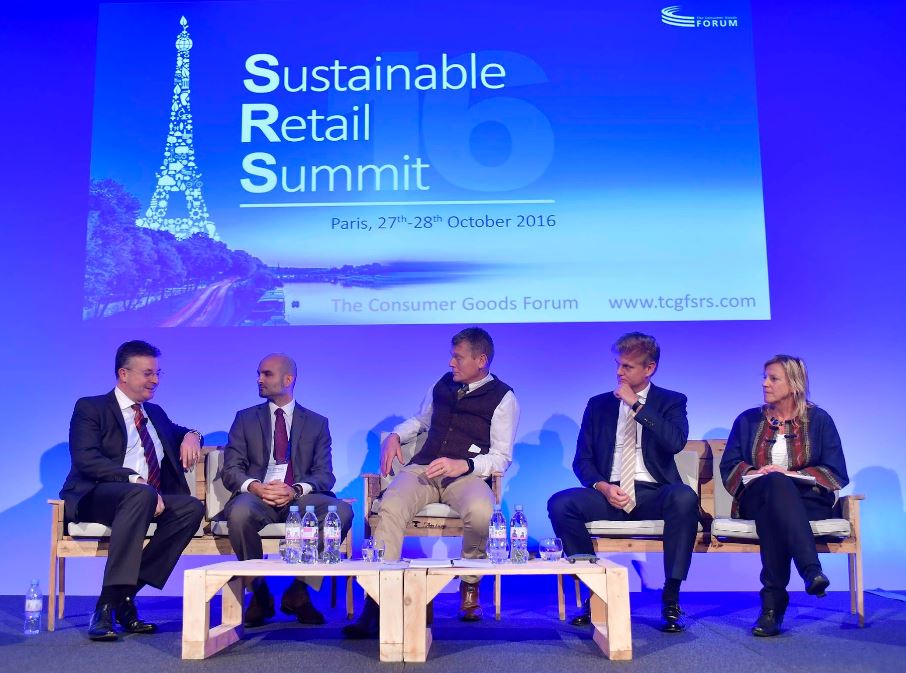
27-28 October 2016. Paris, France. The Consumer Goods Forum. THE SUSTAINABLE RETAIL SUMMIT. The topics addressed included Food Waste, Forced Labour and Health and Wellness.

Internationally renowned speakers, round table discussions, workshops and networking opportunities provided applicable learnings from FMCG experts (company CEOs), high level government representatives, international organisations, inspirational health & sustainability leaders and other stakeholders.
Sharla Halvorson 
Nestle Manager R and D 

Extract of the programme:
USSEC: the critical issues behind soy sourcing and sustainable production.
  • This session offered a unique opportunity for The Consumer Goods Forum and the U.S. Soybean Export Council to educate and inform a broader audience of CGF members on the critical issues around soy sourcing and sustainable production. 
  • Within the context of the work done by the CGF on deforestation, this session highlighted the update of the soy sourcing guidelines. USSEC presented the US Sustainable Soy Assurance Protocol (SSAP) and their efforts to gain greater recognition and acceptance by European traders, feed companies, livestock producers and retailers and consumers. 
  • Finally, US soy producers provided their first-hand experience on what sustainability means to them, the soy value chain and American consumers.
ToineTimmermans, WUR
MEGATRENDS 1 - FOOD WASTE
Food waste is an enormous environmental, social and economic challenge. A third of food calories produced are never eaten. It represents an economic cost to the global economy of $940 billion per year and, if food waste were a country, its carbon footprint would be third only to China and the US. Given the magnitude of this challenge, the consumer goods industry is publicly committed to food waste reduction.
  • CEO Chimney Talk 
  • Thierry Cotillard, CEO, Intermarché Alimentaire Internationale 
  • Mike Coupe, CEO, Sainsbury’s 
    Sabine Juelicher
  • Dave Lewis, Group CEO, Tesco StoresExpert Panel 
  • Craig Hanson, Global Director (Food, Forests and Water) World Resources Institute 
  • Sabine Juelicher, Director, DG Health and Food Safety, Directorate E - Food and feed safety Innovation, European Commission 
  • Pierre Galio, Head of the Consumer and Prevention Department, The French Environment and Energy Management Agency, ADEME 
  • Jérôme Bédier, Deputy Chief Executive Officer and General Secretary, Carrefour Group
Related:
The 2017 Global Food Safety Conference that will be held February 28 through March 2, 2017 in Houston, Texas.

Related:
Members of the Consumer Goods Forum (CGF) have contributed to a new Food Waste booklet, which incorporates real-life examples on how said companies are measuring and reducing food loss and waste.

The booklet (37 pages), which was launched at the Sustainable Retail Summit in Paris, follows on from other
recent successful food waste initiatives involving the CGF and its members, such as the 2015 CGF resolution to halve food waste within the individual operations of its members by 2025, the launch of the Food Loss and Waste (FLW) Standard and participation in Champions 12.3.

According to the Forum, the booklet ‘serves as inspiration and guidance to others wishing to accelerate their food loss and waste measurement and reduction by showcasing an array of successful approaches to food waste from consumer goods companies.’

Related:
A new report (September 2016, 18 pages) on behalf of Champions 12.3 assesses global progress toward Target 12.3 of the Sustainable Development Goals (SDGs), which calls for halving food waste and reducing food loss by 2030. Champions 12.3 is a unique coalition of leaders across government, business and civil society dedicated to achieving Target 12.3.
Actions include:
  • The introduction of our Food Waste Resolution, which asks members to halve food waste within their individual operations by 2025
  • Co-developing the Food Loss & Waste Reporting Standard (FLW), which is the first-ever set of global definitions and reporting requirements for companies, countries and others to consistently and credibly measure, report on and manage food loss and waste
  • Leadership from companies like Tesco, which has rolled out “Community Food Connection” to link unsold yet still safe food with local food charities 
  • Efforts from companies like Nestlé and Unilever to measure their food loss and waste
In 2016, a new storage technology was introduced in Kithithina, Kenya, that can increase the shelf life of potatoes from one to eight months. Known as the Ambient Ware Potato Store, these facilities protect crops from light, heat, humidity, pests, and rodents—enabling potatoes to stay dormant until farmers are ready to sell them. The technology helps farmers to wait for higher off-season market prices while stabilizing market supply.
In 2016, the German Ministry of Agriculture launched a €10 million program to develop “smart packaging” that uses electronic chip sensors to determine how food has aged and communicate to consumers the food’s freshness and safety.
In February 2016, France adopted legislation that requires French supermarkets to donate unsold yet still edible food to charities.
In 2016, Tesco rolled out “Community Food Connection,” which utilizes an online app with FareShare Food Cloud to link unsold yet still safe food with local food charities in real time, reducing the amount of food that goes uneaten. 
In August 2016, the European Commission established the “EU Platform on Food Losses and Food Waste,” a collaboration to identify food loss and waste prevention measures, share best practice, and evaluate progress over time. Designed to support the delivery of Target 12.3, the platform includes national experts from Member States, intergovernmental organizations, research institutions, and non-governmental organizations.
In January 2016, The Rockefeller Foundation launched YieldWise, a $130 million investment to demonstrate practical approaches to halving food loss and waste by 2030. The initiative is tackling hotspots in food loss and waste generation, including fruits, vegetables, and staple crops in Kenya, Nigeria, and Tanzania, as well as food waste in North America and Europe. Its approach spans market development, loss prevention technologies, financing models, innovation, and business tools to measure and track food loss and waste across supply chains.
Related:
UNECE and FAO are organising a Conference on Food Loss «no time to lose on food loss» 10 November 2016, from 10:00 to 18:00 in Room VIII, Palais des Nations, Geneva. To attend the Seventy-second session of the Working Party on Agricultural Quality Standards (WP.7) (9 - 11 November 2016) registration is compulsory. Participants can register online and create their UNECE profile.

Friday, October 7, 2016

Pre-competitive actions along the value chain

21 September 2016. Wellington. Dr Jason Clay, Senior Vice President Food and Markets, WWF-US visited New Zealand in September.

He made a powerful and sobering case for why trade is essential to achieve both food security and biodiversity. He also had some great case studies on how large multinationals can have a lot of power to do good environmentally, socially and ethically when they control so much of the supply chain.
Should consumers really have choice about sustainability? Or should all products on the shelf be sustainable? Why is it that today unsustainable products actually cost less than sustainable ones, when unsustainable products actually cost the planet more? The planet is subsidising our food consumption because externalities – pollution, soil erosion and so on – are not brought into pricing. As we factor in these kinds of costs, food prices are going to go up. WWF has identified 15 commodities as the most important to global conservation – palm oil, cotton, biofuels, sugarcane, pulp and paper, sawn wood, dairy, beef, soy, low trophic-level forage species, farmed salmon, farmed shrimp, tropical shrimp, tuna and whitefish. These – rather than rice, corn or wheat, which occupy the greatest area – are expanding most right now, and so it is these we need to be thoughtful about.
You can see Jason's slide presentation here, or view his complete video presentation


There is no silver bullet, no single activity that will double food production. Instead, we think there are probably nine different sets of discrete activities that need to happen. If we pursue them all simultaneously we will more than double food production. Nobody can work on all of these. But everyone – consumers, producers, retailers, brands – can work on one of them. 
  • We know that one out of every three calories never makes it to the consumer. If we could eliminate food waste in the system, we’d have to produce half as much new food by 2050. Much of the waste is in fresh food, about which we seem to have a mania today. In developing countries the causes are different but the results are the same. 
  • Nor can we get away from genetics. If we didn’t have plant breeding, we wouldn’t have cities, we wouldn’t have agriculture, we wouldn’t have produce surpluses. It would be crazy to think we can abandon it. But genetics doesn’t mean transgenics and GMOs. We have to be doing 21st century plant breeding and looking for traits within the species that offer drought tolerance, disease resistance, productivity and nutrients. 
  • We have to begin looking at trees. Trees are a much better way to produce food, so let’s look at new technologies to see how we can change tree production within 10 years. 
  • We also need to decide what is the right thing to measure. It’s not bushels and tonnes, or animals per acre. It’s calories. And when you look at calories you get a different set of solutions. Fourteen crops provide about 70- 75 per cent of the calories on the planet. If calories are what the world needs to feed people, bananas produce 20 times more calories in Costa Rica than corn does per hectare in Iowa. Sugarcane produces three times more calories than bananas do and 60 times more than corn. Can we use banana starch to replace corn starch? Can we begin to look at the substitutes that will meet our caloric needs? 
  • We need to think differently, start measuring and start managing what we measure. Seventy per cent of all the water we use is for agriculture. This means that every calorie of food takes a litre of water to grow. So which crops take less water, or produce more calories? By 2050 we will have to produce two calories with half a litre of water. Which crops, what farming systems, can do that? 
  • We must focus on the results and be agnostic about the technologies. Let’s figure out which technologies work better in which places. 
  • One of the things people don’t understand is how dependent we are globally on a few countries to fill in the gaps of production shortfalls. When Russia cut wheat exports. That triggered price rises. And someone in Tunisia set themselves on fire in protest, triggering a series of events that became known as the Arab Spring. 
(see: SUSTAINABILITY, SOCIAL MEDIA…and THE FUTUREOF RETAIL Global Retail Summit London, August 2012, 44 pages)

Saturday, December 13, 2014

Highlight: Rise of the African Consumer Class and its impact on African Food Systems

The Modernizing African Food System Consortium (MAFS)
aims to help African agricultural education and training (AET) institutions develop the technical skills and institutional capacity required to modernize African food systems.

Activities and Outputs: 
Collaborative teams from four major agricultural universities have produced a series of empirical background studies that provide evidence necessary for informing capacity development efforts in African AET institutions.

Agricultural Role Models: 
Career guidance from distinguished African agricultural professionals. Click here to view Role Model Directory and Featured Role Model.

Key Publications and Presentations:
Consumers with greater choices are also likely to change their shopping venue from traditional markets to retailers. The current rapid development of retail markets in Africa is in response to a bigger market with increased buying power. Although the transformation in the retail sector is happening rapidly, currently 90% of all food sold in Africa is still bought in traditional markets. The question arises whether the robust development of the retail sector will make the traditional African market obsolete. Projections have shown that this is not likely to be the case but that the prevalence of traditional markets will decrease from the currently handling 90% of food sold to around 65%.
Related Publications and Presentation by Consortium Member Scholars

Call for Submissions: 
The Journal of Agribusiness in Developing and Emerging Economies (JADEE) is requesting original contributions for a special issue entitled “Modernizing Africa Food Systems: Implications for Agricultural Education and Training (AET) in Africa”.

MAFS Seed Funding: International Fund for Agricultural Development

Friday, October 3, 2014

6th African Consumer Protection Dialogue Conference in Lilongwe

8-10 September 2014. Lilongwe, Malawi. Delegates to the 6th African Consumer Protection Dialogue Conference in Lilongwe have adopted the African Dialogue Cross Border Cooperation Principles, initially launched in a Statement of Intent at the 5th African Consumer Protection Dialogue Conference held in Livingstone, Zambia last year September.

Jointly hosted by the COMESA Competition Commission, Competition and Fair Trading Commission-CFTC of Malawi and the U.S. Federal Trade Commission, the conference brought together 77 delegates from 20 countries, including the United States.

Malawian Minister for Industry and Trade, 

Hon. Joseph Mwanamveka (MP), at the 
6th Annual African Consumer Protection 
Dialogue Meeting
According to a joint press release from the organisers, the Statement of Intent was formulated in recognition of the need for effective and enhanced cross border collaboration between and among the participating consumer protection and competition agencies as well as agencies dealing with criminal investigations such as Interpol, in dealing with the traditional and emerging consumer rights violation issues.
"The Livingstone Statement of Intent also outlined each provision of the African Dialogue Cross Border Cooperation Principles, including the mechanisms participating agencies intend to use to work towards effective collaboration and enforcement of cross border consumer protection violations," reads part of the statement.
And in order to effectively implement the African Dialogue Principles, delegates agreed on a Proposed Implementation Framework.

The statement from the organisers says delegates set up Working Committees to coordinate specific tasks and resolved to report on progress in March 2015 and at the 7th African Dialogue Annual Conference.