Platform for African – European Partnership in Agricultural Research for Development
Showing posts with label Mauritania. Show all posts

Wednesday, February 28, 2024

Kosmos Innovation Center

Kosmos Innovation Center programs are structured to allow young entrepreneurs to create opportunities for themselves, by fine-tuning their ideas into a business focused on solving key problems in the agricultural sector.

Through a mix of training, mentoring, and seed-funding, young graduates in Ghana, Senegal, and Mauritania have the opportunity to bring their business ideas to life through the Senegal Startup Accelerator, AgriTech Challenge and Mauritania Innovation Challenge.
Kosmos Innovation Center in Ghana

The Kosmos Innovation Center (KIC) invests in young entrepreneurs and small businesses who have
big ideas and want to see their country grow. The KIC was established in Ghana in 2016 with programs focused on inspiring and empowering young entrepreneurs to drive change in their own country. 

Since its inception, the KIC has focused on innovation in agriculture – the country’s most important sector and largest employer. More than 600 aspiring entrepreneurs have participated in KIC Ghana programs, resulting in the creation of more than a dozen promising start-ups that have gone on to secure seed funding, additional business training, and capital investment.

In 2021, Kosmos Energy re-established KIC Ghana as an independent non-profit organization so it could take advantage of new funding sources that would enable the program to grow. As part of a new multi-year partnership, the Mastercard Foundation agreed to invest approximately US$16 million over four years in KIC Ghana programming. With this new financial support, KIC Ghana aims to expand operations and offer more training to a greater number of young entrepreneurs in every region of the country.

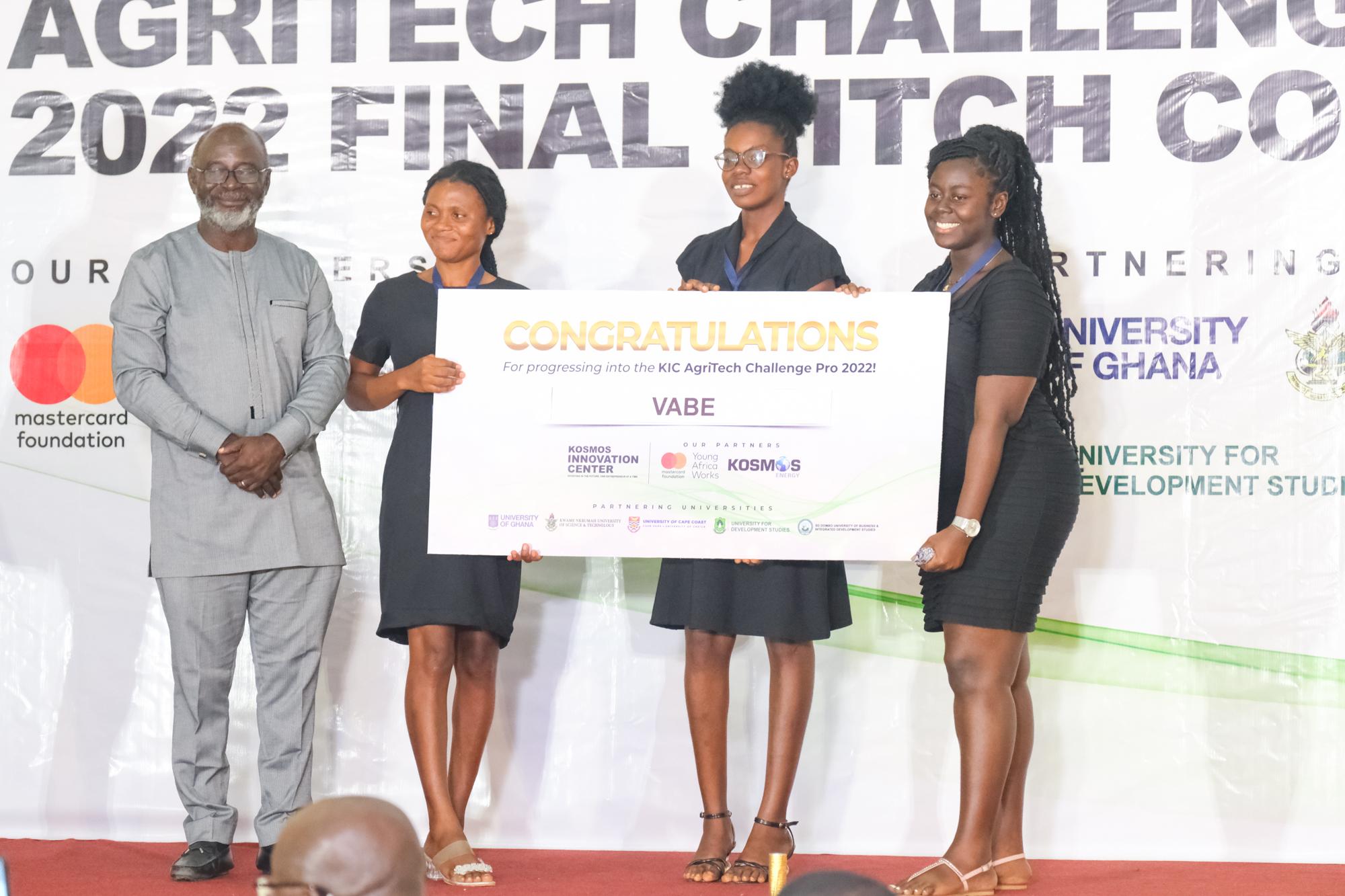
In 2022 KIC and Mastercard Foundation have selected 15 startup businesses as winners of this year’s KIC AgriTech Challenge Classic

Awunpara Ghana


Kigo Ghana

Kigo Ghana provides groundnut uprooting machines to reduce the labor-intensive effort in groundnut production at an affordable cost. It thus also prevents aflatoxin contamination.


Farm Asyst Ghana

Farmasyst Agritechnologies has developed mobile and web applications that facilitate monitoring services for the required support schemes available for smallholder farmers. There is an early disease and pest detection component of the application.


Kosmos Innovation Center in Senegal

The Kosmos Innovation Center (KIC) invests in young entrepreneurs and small businesses who have big ideas and want to see their country grow. 
In partnership with Reach for Change (an international non-profit founded in Sweden) with a history of success in Senegal, the Kosmos Innovation Center is helping young Senegalese entrepreneurs develop innovative solutions to challenges facing the agricultural sector:  Program to strengthen social entrepreneurship with a particular emphasis on adaptation and mitigation of the effects of climate change

The Senegal Start-Up Accelerator provides entrepreneurs who have innovative ideas for the agricultural sector with the skills they need to turn their ideas into reality. Five entrepreneurs have been selected to take part in the accelerator. Over the course of six months they will receive intensive support to develop their solutions for implementation. Six months later, the aim is to launch five new businesses with the potential to transform the agricultural industry in Senegal.


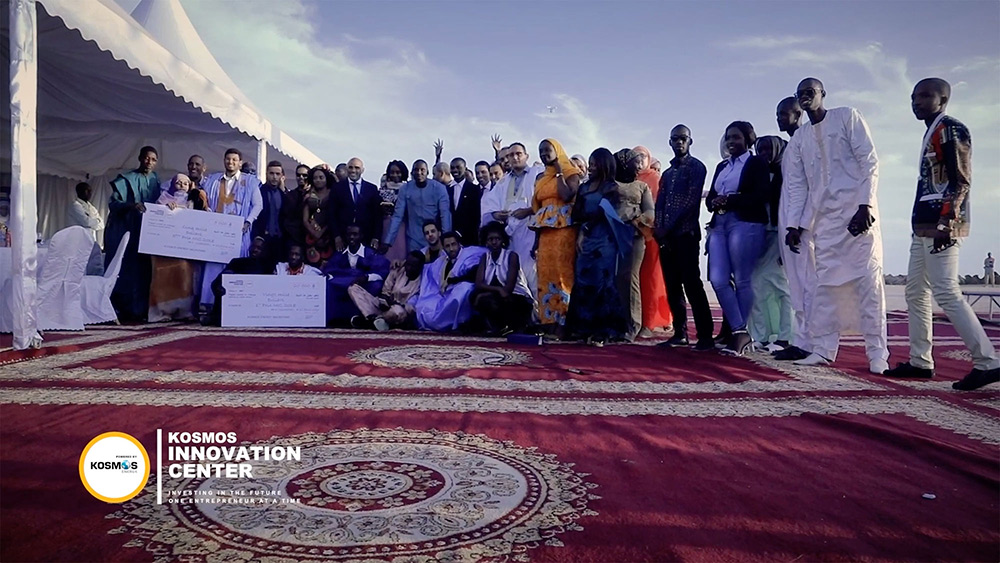
Over 30 young entrepreneurs were selected to participate in the inaugural Mauritania Innovation Challenge. The business development program provides early-stage startups with the opportunity to develop the confidence and skills they need in order to succeed. Aimed at young entrepreneurs and small business leaders, the challenge takes participants on a proven eight-step journey to develop a market-ready product or service, with a final competition for seed-funding at the end. Alongside the seed-funding provided by Kosmos Energy to the winning businesses in the 2018/2019 Mauritania Innovation Challenge, program participants have been able to leverage additional funding from external funders.

DAI, an international development company, helps the Kosmos Innovation Center to design and implement programs that advance locally led, market-driven solutions to some of the country’s key challenges. It provides capacity building support, investment due diligence, and ongoing technical assistance to the team.


19 December 2023. AGRICTECH CHALLENGE: CLASSIC FINAL PITCH


17 - 18 August 2023. Agricultural Innovation For Africa Conference


Friday, June 18, 2021

WEBINAR: Africa's Great Green Wall: Can cities take it to new heights?

25 May 2021. This interactive session introduced the phenomenon known as The Great Green Wall or Great Green Wall of the Sahara and the Sahel and investigated and explored the crucial role that cities can potentially play. Cities, being at the forefront of development and modern life as we know it could be the link needed to elevate the GGW initiative. This session highlighted the benefits of having cities and their stakeholders as key enablers to the success of the GGW initiative, in addition to why they need to be considered important connecters in the initiative’s long-term success.

The kickstart of the Decade of Action provides an ideal opportunity to link and merge forces across boundaries towards collaborative action. The GGW objectives stretch beyond just the planting of trees, as it is also envisaged that the holistic social change will emerge seeing an increase in food security, reduced poverty and resilience to climate change are essential co-benefits. Linked to this is the realisation and drive towards the implementation of the Sustainable Development Goals at the local level. The high-level objectives of the GGW initiative encapsulate those of the SDGs, highlighting the importance of the continued need for biodiversity and nature for a sustainable urban future.
  • Ingrid Coetzee - moderator
  • Madame Fatimetou Abdel Malick president of the Nouakchott Region in Mauritania.
    She was the first speaker and gives a statement about a group led by women against desertification. She gave an inspiring story of how the country came together, local and regional governments. 
  • Dr. Birguy Lamizana, Programme Officer at UNEP. She emphasized “The success of the Great Green Wall must be based on the youth, because they are the future, and on women, because they are the guardians of the land.” 
  • Dr. Moctar Sacande -  International Project Coordinator. Forestry Division (NFO),  FAO’s International projects Coordinator for Action Against Desertification in support of the implementation of Africa’s Great Green Wall.
    He presented the action against desertification, how they tackled the issue, how big the issue is, how much work is needed, and who should benefit from it. He ends his presentation by saying “You have to contribute, women have to contribute, cities have to contribute, we are all in it to win it.”
The session ended with questions and answers and how to get involved with the Great Green Wall. And the speakers leave the attendees with one-sentence reflections like Ingrid said: “The Great Green Wall is also seen as the wall of hope.”


Background:


The Great Green Wall is a symbol of hope in the face of one of the biggest challenges of our time – desertification. Launched in 2007 by the African Union, this game-changing African-led initiative aims to restore Africa’s degraded landscapes and transform millions of lives in one of the world’s poorest regions, the Sahel. Once complete, the Wall will be the largest living structure on the planet – an 8,000 km natural wonder of the world stretching across the entire width of the continent.

The Great Green Wall is now being implemented in more than 20 countries across Africa and more than eight billion dollars have been mobilized and pledged for its support. The initiative brings together African countries and international partners, under the leadership of the African Union Commission and Pan-African Agency of the Great Green Wall.

Key Results (2020 data)
The Great Green Wall snakes the Sahel region from Senegal in the West to Djibouti in the East of Africa. Several achievements have been recorded in most of the GGW member states, with some countries being more successful than others. 
  • The 11 countries selected as intervention zones for the Great Green Wall are: Burkina Faso, Chad, Djibouti, Eritrea, Ethiopia, Mali, Mauritania, Niger, Nigeria, Senegal, and Sudan.
  • Since its launch in 2007, major progress has been made in restoring the fertility of Sahelian lands. 
  • While some countries started the implementation of the GGW activities as early as 2008, others joined as late as 2014, when the GGW declaration was ratified.
  • The total area of the GGW initiative extends to 156 Mha, with the largest intervention zones located in Niger, Mali, Ethiopia and Eritrea.
FLEUVE Project – The Local Environmental Coalition for a Green Union (2014–2018)

The Global Mechanism (GM) of the UNCCD implemented a flagship initiative under the Great Green Wall called FLEUVE. The project was financed by the European Commission in the amount of about seven million Euro and was implemented from 2014-19.

FLEUVE aimed at strengthening the capacities of local communities to help boost investments in land restoration and created employment opportunities or ‘green jobs. The project was driven by local people themselves to strengthen community resilience to land degradation, drought and climate variability.

Micro-investment projects were implemented under FLEUVE in 23 communities across five Sahel countries – Burkina Faso, Chad, Mali, Niger and Senegal. The project was complemented by regional-level activities on capacity building and the dissemination of good practices on sustainable land management and innovative financing.

The Global Mechanism of the UNCCD is also supporting the development of sustainable value chains, where it is working with the private sector who guarantee purchase of dryland products in the Sahel. This leads to the creation of land-based jobs for thousands of rural women in the Sahel.

Tuesday, January 16, 2018

Fast-growing durum wheat for hot climate receives innovation prize

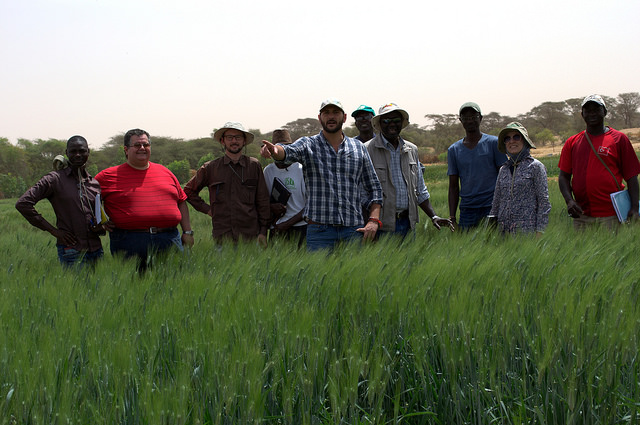
15 January 2018. "A 'crazy idea' has resulted in the ability to grow durum wheat in the extreme heat of famine-affected Senegal, Mauritania and Mali, potentially boosting the income for 1 million farming families." This is the statement that explains the choice of the winner of the 2017 Olam Prize for Innovation in Food Security.

In this region, farmers grow rice for 8 months a year, while the land remains unproductive for the other 4 months. The new durum varieties have been developed to grow very fast and to tolerate high temperatures, allowing farmers to grow durum wheat between rice seasons. In this way 600,000 tonnes of new food could be produced, corresponding to 175 servings of pasta per person per year, in the region, which would also generate significant extra incomes for the farmers. As the wheat contains 5 times more protein than rice, as well as vitamins and minerals, it will also help to improve diets.

The basic research that made these achievements possible was done within a project that was led by Professor Rodomiro Ortiz at SLU in Alnarp and financed by the Swedish Research Council.

The actual plant breeding work was led by Rodomiro Ortiz and Filippo Bassi (International Center for Agricultural Research in the Dry Areas), and conducted in cooperation with research institutes in Mauritania (CNARADA), Senegal (ISRA) and Morocco (Mohammed V University). The germplasm will be shared freely with developing countries, which means that the discovery also has wide adaptation potential for other areas hit by increasing temperatures.

See also: Interview with Dr Filippo Bassi of ICARDA and Olam Prize for Innovation in Food Security Winner

The 2017 Olam Prize Winner for Innovation in Food Security was featured on a panel at the 8th International BCFN Forum on Food and Nutrition on the 4th of December in Milan, Italy. The Prize is run in partnership with the international scientific organisation, Agropolis Fondation and the winner receives an unrestricted US$50,000 grant for the scaling up of research. Watch an animation explaining the 2017 winner’s research.