Platform for African – European Partnership in Agricultural Research for Development
Showing posts with label EMBRAPA. Show all posts

Saturday, May 16, 2026

EMBRAPA’s scientific and research expertise and ManejeBem’s digital innovation capabilities

ManejeBem is a Brazilian agri-tech company that devel
ops digital advisory and management solutions for livestock producers, focusing on sustainable pig and poultry farming through mobile, AI-enabled, and remote extension technologies.
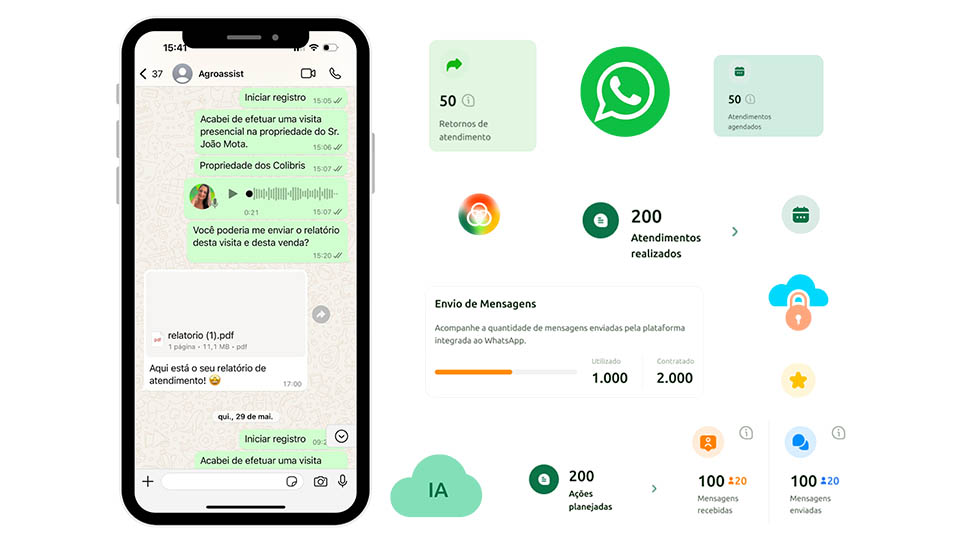
EMBRAPA and ManejeBem are collaborating in Brazil to advance sustainable livestock production through digital agriculture and technical assistance tools for family farmers. Their partnership, led through EMBRAPA’s Swine and Poultry Unit, focuses on developing digital platforms such as “ManejeChat” and the “EcoPiggy” application to support pig and poultry producers with real-time technical guidance, environmental management, animal welfare practices, and production monitoring. 

The initiative aims to improve sustainability and compliance in livestock systems while reducing environmental risks linked to waste management in pig farming.

The collaboration combines EMBRAPA’s scientific and research expertise with ManejeBem’s digital innovation capabilities to strengthen remote agricultural extension services and climate-smart farming solutions. Through mobile and WhatsApp-integrated tools, farmers can access advisory services on animal health, nutrition, bio-inputs, waste utilization, and sustainable production practices, even in low-connectivity rural areas. 

The partnership has also expanded into broader discussions on precision agriculture, ESG innovation (Environmental, Social, and Governance principles),
and international cooperation involving Brazil, the UK, Ghana, and Nigeria, positioning the initiative as a model for inclusive digital agriculture and sustainable rural development. - see: Digital Agri-Tech Africa- Brazil Ecosystem Engagement (DATA-BEE) (2025, 23 p.)

  • DATA-BEE is one of 12 scoping projects in the Innovate UK Climate-Smart Agriculture Partnership, within the theme of Digital Agriculture and Precision Farming. These projects aim to building knowledge, networks and collaboration ideas between the UK, Brazil and Africa. 
  • DATA-BEE focuses on identifying opportunities for collaboration and understanding the specific challenges in adopting digital agriculture and precision farming technologies in Ghana and Nigeria. The project aims to bridge agricultural systems between Africa and Brazil, leveraging the latter’s advanced precision farming techniques to address climate-related challenges and improve food security in West Africa. 
The ecosystem networks built by DATA-BEE directly paved the way for larger innovation phases:
  • Climate-Smart Maize Initiative: A collaborative project funded as a direct output of DATA-BEE's cross-border missions, deploying advanced crop inputs like R-Leaf to lower chemical fertilizer requirements.
  • Dissemination Hubs: Operating continuous on-the-ground training, forums, and market access workshops alongside entities like the British High Commission to scale tech distribution.
Successful adoption of agri-tech requires strong farmer engagement through training programs, extension services, and digital literacy initiatives. Localised knowledge transfer, delivered through both digital platforms and community-based extension officers, will help farmers maximise the benefits of new technologies. Strengthening cooperatives and farmer networks can also enhance collective bargaining power and market access. (page 21)


Possible synergies

Collaboration between EMBRAPA, ManejeBem, and Access Agriculture could expand the reach of sustainable livestock and climate-smart agriculture knowledge to smallholder farmers through multilingual farmer-to-farmer training videos and digital extension platforms.

  • The partnership could combine EMBRAPA’s scientific research, ManejeBem’s digital advisory technologies, and Access Agriculture’s grassroots extension methodologies to create inclusive digital learning ecosystems for farmers with limited connectivity and literacy levels.
  • Joint collaboration could support capacity building for extension agents, youth agripreneurs, and farmer organizations by integrating interactive advisory tools, mobile applications, and practical training content tailored to local production systems.
  • The partnership could strengthen South–South cooperation by facilitating knowledge exchange between Brazil, Africa, and other regions on sustainable livestock production, agroecology, digital agriculture, and resilient food systems.
  • Access Agriculture’s extensive experience in rural communication and local-language video dissemination could help EMBRAPA and ManejeBem scale adoption of good practices in pig and poultry management, animal health, waste management, and biosecurity across Africa and Latin America.

Wednesday, May 13, 2026

Embrapa's Technical Cooperation Office in Addis Ababa, Ethiopia


Researchers from Embrapa and the Gates Foundation (GF) participated in a workshop held on March 17 and 18 in Brasília to coordinate activities regarding the South-South Cooperation Agreement for Agricultural Sustainability. The initiative, the first stage of bilateral cooperation following COP30, identified areas that will serve as a starting point to bring Embrapa’s research in line with the priorities of the U.S. institution.

The initiative is part of an agreement between the Gates Foundation and Embrapa, which sets targets to strengthen the South’s presence in global forums by 2027, and provides for South-South exchange activities, technical events, communication activities concerning regional cooperation, and the identification of opportunities to develop joint Brazil-Africa research, technology and training projects. 

The goals of the meeting, which was coordinated by the Advisory Service for International Relations (Arin), include the identification of opportunities for South-South cooperation to strengthen ties between Embrapa and organizations in African countries, the integration of research networks, and strategic alignment through the establishment of shared schedules for global forums and events.

The following topics were identified as priorities for discussion: 
  • rice and cassava; 
  • dairy farming; 
  • soil biofertilizers, 
  • bio-inputs and bio-products; 
  • food security; 
  • and cross-cutting issues, particularly technology transfer and licensing. 
Representatives from Embrapa Embrapa Dairy Cattle, Embrapa Semiarid, Embrapa Maize and Sorghum, Embrapa Agrobiology, Embrapa Cassava and Fruits, Embrapa Rice and Beans, Embrapa Cerrados and Embrapa Maranhão, centers whose research relates to the initial agenda, had an in-person participation, as well as José Ednilson Miranda, Embrapa’s representative at the Office of Technical Cooperation for Africa in Addis Ababa, Ethiopia.

José Ednilson Miranda highlighted the interest in technologies concerning digital agriculture, Agricultural Climate Risk Zoning (ZARC), digital platforms, Ater+Digital, and the e-Campo learning platform. “They are resources that can benefit several African countries whose needs resemble those Embrapa has been addressing; therefore, the proposal is to develop infrastructure projects in which Embrapa is the technical implementer and the Gates Foundation the aid agency and facilitator in the African continent,”

The participants from the CGIAR, were Namukolo Covic, head of International Relations for Africa, Gatachew Feye, representing Ethiopia's general director, and Million Gebreyes, from CGIAR's Scaling for Impact program.

Related:


6 February 2026. The Brazilian Agricultural Research Corporation (Embrapa) officially inaugurated a Technical Cooperation Office in Addis Ababa, Ethiopia. 

This initiative marks Embrapa's return to the African continent and is part of a broader strategy by the Brazilian government to enhance agricultural collaboration, technology transfer, and South-South cooperation, particularly with the African Union, which is headquartered in Addis Ababa.

The Brazilian government sees in the agricultural sector the greatest opportunities to more easily reach the 54 African countries. 
“Ethiopia is now the diplomatic hub of African countries. We chose Addis Ababa for a reason. Here we have the headquarters of the African Union, as well as offices of the World Bank and the African Development Bank. It is the right place for us to connect with potential partners,”  “Addis Ababa is a hub, and we intend to reach other African countries from here. The demand is huge,” José Ednilson Miranda, head of Embrapa’s local office.
  • Inauguration: The office was inaugurated by Embrapa President Silvia Massruhá and the Director of the Brazilian Cooperation Agency (ABC), Ambassador Ruy Pereira.
  • Location & Purpose: Located in Ethiopia’s capital—a major diplomatic hub—the office aims to facilitate the exchange of tropical agriculture technology, covering areas such as genetics, animal nutrition, and sustainable low-carbon livestock production.
  • Partnerships: The office works with local partners such as the Ethiopian Agricultural Research Institute (EIAR) and private entities like the Kerchanshe Group, with whom they signed a landmark agreement for coffee technology development.
  • Strategic Role: Jose Ednilson Miranda, an experienced Embrapa researcher, was appointed to lead the office, which will also support preparations for technical collaboration in upcoming international forums, including COP-32.
This move follows a push to strengthen Brazil-Africa ties and focus on sustainable, climate-smart agriculture in regions with similar climate conditions to Brazil. 

Friday, November 14, 2025

Food & Agriculture Pavilion @COP30

10 - 21 November 2025
. Belém, Brazil. UN Climate Change Conference (UNFCCC COP 30) - Food & Agriculture Pavilion @COP30 

With Brazil holding the presidency as both an agricultural powerhouse as well as home to the Amazon rainforest and other critical ecosystems such as the Cerrado, the stage is set to show how coherent land-use policies can deliver for climate, nature, and people alike. For the first time, we may see food systems take center stage in a way that meaningfully links the Rio Conventions, the Sustainable Development Goals (SDGs), and the Paris Agreement. 

COP30 is the turning point to mainstream food systems into climate action. CGIAR scientists and FAO with and their global partners are seizing the moment to provide the science, partnerships, and innovations that make global adaptation and mitigation targets achievable, inclusive, and ready for finance.


Extracts of the programme


11 Nov. The full stack: From AI models to ethical policy and farmer impact (IWMI / CGIAR)


This event explored how advanced AI, Earth observation, and digital agronomy can translate into practical benefits for farmers. It focuses on data governance, responsible AI in agriculture, and real-world examples from CGIAR’s work in South Asia and Africa to scale decision-support tools for climate-smart farming.
  • Giriraj Amarnath Research Group Leader – Water Data for Climate Resilience IWMI 
  • Elliot Jones-Garcia Senior Research Analyst IFPRI 
  • Andrew Howe Ai2 Tek Sapkota Principal Scientist CIMMYT 
  • Imara Salas Secretariat Director AIM for Scale 
  • Marcelo Morandi Head of the Office of International Relations Embrapa


12 Nov. Sustainable nitrogen management for climate, food security and livelihoods


A discussion of science-based strategies for cutting nitrogen losses while maintaining yields. CGIAR and FAO researchers shared insights on fertilizer efficiency, circular nutrients, and opportunities for national climate commitments to integrate nitrogen mitigation.

  • Valerie Fajardo, Research Fellow International Nitrogen Network 
  • Martina Otto Head of Secretariat Climate and Clean Air Coalition, UNEP 
  • Tek Sapkota Principal Scientist CIMMYT Mark Sutton Director of the International Nitrogen Management System (INMS) and GCRF South Asian Nitrogen Hub (SANH), co-chair of the UNECE Task Force on Reactive Nitrogen (TFRN) and co-chair of the UNEP Global Partnership on Nutrient Management (GPNM) 
  • David Kanter Chair, International Nitrogen Initiative and Professor of Environmental Studies at New York University (NYU) 
  • Tariq Aziz Regional Director for South Asia at the International Nitrogen Initiative (INI) and Professor of Soil Science at the University of Agriculture, Faisalabad (UAF) 
  • Andrea Perez Senior International Affairs Manager Compassion in World Farming Martial Bernoux Team leader and Senior Natural Resources Officer FAO 
  • Osamu Kubota Deputy Assistant Minister, Export and International Affairs Bureau, Ministry of Agriculture Forestry and Fisheries (MAFF), Japan 
  • Saskia Sanders Swiss Federal Department of Economic Affairs and negotiator of Sharm El-Sheik Joint Work in Agriculture


13 Nov. Pulses in school meals — Untapped climate potential


This session highlights the mitigation and nutrition gains achievable by bringing climate-resilient pulses into national school meal programmes. CGIAR crop scientists share evidence from India, East Africa, and Latin America.
  • Sid Mehta Founder & CEO Greenworks Inc.
  • Lara Gilmour Director of Policy & Sustainability Global Pulse Confederation (GPC)
  • Marcela Quintero Associate Director General  Alliance of Bioversity International and CIAT
  • Lyana Latorre Vice President, Latin America and the Caribbean The Rockefeller Foundation


14 Nov. Demystifying low-emission food systems and landscapes


A science-based unpacking of what “low-emission food systems’’ actually entail. Presenters discussed how mitigation targets can be realistic for countries with diverse farming systems, and the role of CGIAR in quantifying emission reductions.
  • Eliza Villarino Research Specialist Alliance of Bioversity International and CIAT 
  • Marcela Quintero Associate Director General Alliance of Bioversity International and CIAT 
  • Tek Sapkota Principal Scientist, Agricultural System/Climate Change CIMMYT 
  • Claudia Ringler Unit Director, Natural Resources and Resilience IFPRI


14 Nov. Introducing AgriLLM: An AI-Powered Agricultural Advisory Service for the Global South


AgriLLM is a collaborative AI initiative leveraging advanced language models to expand equitable access to agricultural knowledge worldwide. It is developing a domain-specific large language model (LLM) for agriculture, benchmarked against leading systems and to be released open-source as a public good - bridging research, policy, and field-level impact. 
 
Established by the International Affairs Office at the Presidential Court of the UAE, with AI71 as the technology partner, AgriLLM is co-led by over 15 global partners including CGIAR, EMBRAPA, the Gates Foundation, FAO, IFAD, the World Bank, and ECHO, alongside universities and research centers.  
 
This COP30 session offered an early look at the initiative’s journey so far - what AgriLLM is, how it was designed, and its grounding in scientific knowledge and local realities - as well as a preview of what’s next ahead of its global launch in December 2025.
  • Silvia Massruhá President / Head of Digital Agriculture Embrapa
  • Lina Yassin CGIAR AI hub Product Lead CGIAR
  • Kate Kamarchuk Director, Client solutions & Strategic Partnerships AI71
  • Marcelo Behar Special Envoy for Bioeconomy and Senior Advisor Ambition Loop
  • Mamoun Alaoui, AI71 Product Manager/ Technical Lead AI71
  • Eliot Jones-Garcia Senior Research Analyst IFPRI


15 Nov. Climate technology progress report 2025


CGIAR scientists and partners assessed advances in climate tech—bioeconomy solutions, emissions monitoring, digital agriculture, and drought-tolerant crops—evaluating which innovations are ready for scaling.
  • Alex Godoy-Faúndez Associate Professor & Director Universidad del Desarrollo 
  • Debora Ley Coordinator, Climate Change National Actional Plan, NDC3.0 Ministry of Environment and Natural Resources, Guatemala 
  • Elisabeth Gilmore Associate Professor in Environmental Engineering Carleton University 
  • Martial Bernoux Team leader and Senior Natural Resources Officer FAO 
  • Monica Trujillo Research Fellow SEI Latin America 
  • Sara Lærke Meltofte Trærup Head of Section on Technology Transitions and System Innovation UNEP-CCC 
  • Stephen Minas Chair of the Climate Technology Centre and Network Advisory Board

The 2025 Climate Technology Progress Report (CTPR): ‘Advancing biobased technologies in the bioeconomy’ examines how advancing the climate and nature agenda through the integration of technology and sustainable biobased solutions can offer a comprehensive and cost-effective pathway to achieving both objectives simultaneously.

The report is intended as a resource for policymakers, practitioners, and stakeholders seeking to advance integrated, effective, and equitable climate and nature action in the lead-up to COP 30 and beyond.


15 Nov. Turning innovation into impact: Scaling climate-smart solutions for farmers (IWMI / AICCRA / CGIAR)


This AICCRA-led session presented success cases—index insurance, digital advisories, climate-smart cropping systems—reaching millions across Africa. Emphasis is on partnerships that turn pilots into national programmes.

Accelerating Impacts of CGIAR Climate Research for Africa (AICCRA) has six country teams and regional initiatives that work with national and regional partners to transform climate services and scale climate-smart agriculture, increasing access to and use of CGIAR innovations for the benefit of millions of small-scale farmers in Africa.
  • Martial Bernaux Team leader and Senior Natural Resources Officer OCB-FAO
  • Paula Packer Head of Embrapa Environment Embrapa Environment
  • Marina Piatto  Executive Director IMAFLORA
  • Paul Winters Executive Director AIM for Scale
  • Giriraj Amarnath Research Group Leader - Water Data for Climate Resilience (WDCR) IWMI
  • Todd Rosenstock Director - Climate Action Science Program CGIAR
  • John Mundy Director of Global Partnerships One Acre Fund
  • Vincent Martin Director - Office of Innovation FAO


15 Nov. Circular food systems: International solutions for climate action


Showcased evidence from CGIAR research on waste valorisation, nutrient recycling, climate-smart processing, and circular agriculture business models from Latin America, Africa, and Asia.
  • João Paulo Pucciariello Perez Executive Secretary of Food and Nutrition Security Osasco City Hall, Brazil 
  • José Ogawa Mayor of Barcarena, Brazil
  • Anna Salminen Chief Specialist Ministry of Agriculture and Forestry of Finland
  • Sieglinde Snapp SAS Program Director CIMMYT
  • Tilahun Amede Director Climate Adaptation Sustainable Agriculture and Resilience AGRA
  • Niina Aagaard Director of Communications Nordic Council of Ministers

x


17 Nov. Unlocking Finance at Scale for Land Restoration, Climate Adaptation & Food Security

The Resilient Agriculture Implementation for Net-Zero Land Degradation (RAIZ) initiative showcased how restoring degraded agricultural lands is vital for climate resilience, food security, and environmental gains.

By exploring innovative financing mechanisms that blend public, private, and multilateral capital, and sharing best practices across UNFCCC, CBD, and UNCCD frameworks, RAIZ accelerates pathways to achieve land degradation neutrality by 2030. 
  • James Stapleton Senior Advisor, Advocacy Alliance of Bioversity International & CIAT (CGIAR)
  • Wendy Franceconi Senior Environmental Scientist Alliance of Bioversity International & CIAT (CGIAR)

17 Nov. Agriculture and food security in the Caribbean (IWMI / CGIAR)


This session focused on water-smart agriculture, climate advisories, and innovation ecosystems that support Caribbean states in integrating adaptation into food security strategies.
  • Donneil Cain Moderator; Climate Change Coordinator Caribbean Development Bank 
  • Daniel Best President Caribbean Development Bank
  • Todd Rosenstock Director, CGIAR Cliimate Action CGIAR
  • Martial Bernoux Team Leader and Senior Natural Resources Officer FAO
  • Kristin Lang  Director, Department of the Latin America and the Caribbean Region Green Climate Fund (GCF) Secretariat


18 Nov. Strengthening Rural Extension and Advisory Services for a Just Agrifood Transition


This session highlighted the importance of strengthening Rural Extension and Advisory Services to promote a just agrifood transition. It emphasized the role of university outreach, civil society, international organizations, governments, and farmers in addressing climate change. Drawing on evidence and case studies, it showcased collaborative models that advance climate-smart, low-carbon, regenerative, and agroecological practices, linking knowledge, policy, and local action to foster fair, resilient, and sustainable agrifood systems for family farmers and traditional communities.
  • Marco Teixeira  Researcher and Consultant Instituto Escolhas
  • Jaqueline Ferreira Research Director Instituto Escolhas
  • Graciella Corcioli Professor and General Coordinator School of Agronomy at the Federal University of Goiás
  • Paulo Teixeira Minister Ministry of Agrarian Development and Family Farming of Brazil  
  • Gustavo Chianca Assistant Representative – Programme Officer FAO Brazil
  • Rodrigo Castro  Brazil Country Director Solidaridad


19 Nov. Restoring Soils, Renewing Futures: South-South Cooperation for Climate-Resilient Landscapes


This session explored innovative soil restoration models for climate resilience. It showcased policy, finance, and science partnerships that regenerate degraded lands, promote inclusive south-south learning, and scale soil health solutions for resilience, green jobs, and climate action.
  • Leigh Winowiecki Global Research Leader: Soil and Land Health CIFOR-ICRAF
  • Aliou Fala Director of Agricultural research
  • Sieglinde Snapp SAS Program Director CIMMYT


20 Nov. Finance and Evidence for Soil Health to Advance Climate and Sustainable Development Goals


This session spotlighted soil health as a cross-cutting solution for climate mitigation and adaptation, biodiversity conservation, land restoration, food and nutrition security, farmers’ income and livelihoods. It explored how to build and use credible evidence and scale up successful farmer-led initiatives through fit-for-purpose data, partnerships, and investment. Grounded in cases from Africa and Brazil, as well as youth-led initiatives, the discussion linked scientific and financial innovation to national pathways under the Rio Conventions and the Sustainable Development Goals.
  • Hicham El Azami Director of Evaluation & Learning OCP Nutricrops
  • Luis Rangel Senior Expert for Sustainable Agriculture Brazilian Ministry of Agriculture and Livestock (MAPA)
  • Leigh Winowiecki  Co-Lead, CA4SH and Soil and Land Health Research Lead CIFOR-ICRAF
  • Nick Blong First Assistant Secretary, Sustainability, Climate and Strategy Division Australian Government Department of Agriculture, Fisheries and Forestry
  • Lily Tanui Project Officer and Climate Action Leader Kenya National Farmers’ Federation (KENAFF)
  • Helena Van Tichelen UN Events Coordinator International Association of Students in Agricultural and Related Sciences (IAAS)

20 Nov. Enabling holistic NDCs: Tools for integrated climate, biodiversity & food systems action (Alliance CIAT–Bioversity, IWMI, partners)


A major CGIAR-supported event presented integrated modelling tools and cross-sector planning approaches to help countries upgrade their NDCs to include biodiversity, water, and food system linkages.
  • Roberta Makoko NDC Coordinator Malawi
  • Sophika Kostyniuk Managing Director Aquatic Life Institute
  • Charlotte Pavageau  Senior Programme Manager Biovision Foundation
  • Greenwell Matchaya Deputy Representative and Senior Economist IWMI/CGIAR, Pretoria
  • Moderator: Silvia Mantilla Global Policy & Communications Manager WFA


20 Nov. Scaling solutions for resilient animal & aquatic food systems (CGIAR involvement)


This session highlighted innovations from livestock, aquaculture, and aquatic food research communities—including genetics, climate-resilient breeds, water-efficient aquaculture, and antimicrobial-smart systems.
  • Michelle Tigchelar Senior Scientist WorldFish
  • Todd Rosenstock Program Director CGIAR
  • Anthony Whitbread Program Leader, Livestock, Climate, Environment (LCE) ILRI
  • Bernard Kimoro Head climate change and livestock sustainability State Department for Livestock, Ministry of Agriculture and Livestock Development, Kenya
  • Angela Churie Kallhauge Executive Vice President Impact at Environmental Defense Fund
  • Maya Rajasekharan Managing Director, Americas Alliance of Bioversity International and CIAT
  • Lucy Njuguna Postdoctoral Fellow Alliance of Bioversity International and CIAT
  • Ana Maria Loboguerrero Director, Adaptive and Equitable Food Systems Gates Foundation


20 Nov. Sustainable and regenerative livestock of the Americas


A multi-country dialogue on grazing management, silvopastoral systems, and regenerative livestock approaches. CGIAR contributes metrics for monitoring ecosystem benefits and emission reductions.
  • Mariana Aração Heaf of beef program EMBRAPA
  • Cristina Tófoli Executive Coordinator Instituto de Pesquisas Ecológicas (IPE)
  • Allison Thomas COO U.S. Dairy Export Council
  • Amanda Soares Roza  Technical Advisor for Sustainability and Market Intelligence CNA (Brazil)


20 Nov. Scaling regenerative agriculture from Riyadh to Belém (Alliance Bioversity–CIAT / CA4SH)


Building on the UNCCD COP16 momentum, this session connects regenerative agriculture leaders from Latin America, Africa, and the Middle East. It highlights CGIAR evidence on soil health, farmer incentives, and resilience outcomes.
  • Pedro de Figueiredo Co-founder and CEO NetZero in Brazil
  • Maya Rajasekharan Managing Director Alliance of Bioversity International and CIAT
  • Natalia Bottan Vasconcelos Sustaintability Manager Sygenta
  • Isabela Malpighi Chief Sustainability Officer Pepsico Latam
  • Osama Faqeeha Deputy Minister for Environment, Ministry of Environment, Water and Agriculture, Saudi Arabia
  • Gabriel Lambert Advisor to the Executive Secretary of the United Nations Convention to Combat Desertification (UNCCD)
  • Leigh Winowiecki Global Research lead for Soil and Land Health CIFOR-ICRAF


20 Nov. Family farming and agroecology: Pathways to inclusive & climate-resilient food systems


Explores how agroecology and family farming can drive just transitions. CGIAR’s contributions include metrics, farmer-centred extension models, and evidence on productivity co-benefits.
  • Kamyla Borges Senior expert on Agriculture Institute for Climate and Society
  • Caroline Rocha Executive Director LACLIMA

Monday, June 2, 2025

2nd Brazil–Africa Dialogue on Food Security


20 - 22 May 2025.
Brasília, Brazil. 2nd Brazil–Africa Dialogue on Food Security: the Fight Against Hunger, and Rural Development – Ministerial Dialogue

The event convened 43 African Ministers of Agriculture, alongside senior policymakers, technical experts, and development partners from both continents. Following the success of the first edition held in 2010, this meeting promoted the exchange of knowledge and successful experiences, contributing to the strengthening of local food production. Through dialogue, whether in panels or in conversations during field visits, the event provided opportunities to contribute to the strengthening of resilient, inclusive and healthy food systems in African countries. At the same time, the interaction offered a privileged opportunity to reflect on Brazilian experiences considering the observations of the African delegations.

Extract of the programme


Panel 1: Sustainable and Climate-Resilient Agri-Food Systems and the Importance of Family Farming – National Experiences


  • Executive Director of COP30, Ana Toni
  • Minister of Agriculture and Forests of Angola, Isaac dos Anjos
  • Minister of Agrarian Development and Family Farming of Brazil, Paulo Teixeira
  • Minister of Agriculture and Animal Resources of Rwanda, Cyubahiro Marc Bagabe
  • Minister of Agriculture and Livestock of Brazil, Carlos Fávaro

Panel 2 – Research, Development, and Innovation for Terrestrial and Aquatic Agri-Food Systems


  • Moderator: Secretary for Trade Promotion, Science, Technology, Innovation and Culture of the Ministry of Foreign Affairs of Brazil, Ambassador Laudemar Gonçalves de Aguiar Neto
  • Minister of Agriculture of Eswatini, Mandla Tshawuka
  • Minister of Fisheries and Aquaculture of Brazil, André de Paula
  • Minister of Agriculture and Food Security of Nigeria, Abubakar Kyari
  • President of the Brazilian Agricultural Research Corporation (EMBRAPA), Silvia Massruhá

Panel 3: The Global Alliance Against Hunger and Poverty and the Role of Public Policies for Food and Nutritional Security


  • Moderator: Deputy Chief Advisor to the Presidency and Brazil’s Representative to the Global Alliance Council of Champions, Ambassador Audo Faleiro
  • Vice President of Tanzania, Philip Isdor Mpango
  • Minister of Social Development, Family and the Fight Against Hunger of Brazil, Wellington Dias
  • Deputy Prime Minister of Ethiopia, Temesgen Tiruneh Dinku
  • Assistant to the General Director of Itaipu Binacional, Silvana Vitorassi

Panel 4: Financing for Agri-Food Systems and Rural Development and the Role of Multilateral Development Banks


  • Moderator: Secretary for Climate, Energy and Environment of the Ministry of Foreign Affairs and Brazil’s BRICS Sherpa, Ambassador Mauricio Lyrio
  • Vice President of the International Fund for Agricultural Development (IFAD), Geraldine Mukeshimana
  • Secretary for International Affairs at the Ministry of Finance of Brazil, Ambassador Tatiana Rosito
  • Minister of Animal and Fisheries Resources of Côte d'Ivoire, Sidi Tiémoko Touré
  • Socio-Environmental Director of the Brazilian National Development Bank (BNDES), Tereza Campello
  • Director of Agriculture at the African Development Bank (AfDB), Martin Fregene

Strengthening South–South cooperation

FARA's team actively engaged in high-level discussions focused on strengthening South–South cooperation and advancing agricultural transformation across Africa. Key engagements included strategic dialogues with:
  • Nigeria’s Ministers of Agriculture and Livestock, and the Presidential Adviser on Food Security,to explore Nigeria’s potential hosting of the next Africa Agribusiness Science (AASW).
  • Partners from Embrapa to deepen collaboration under the ARIFA fellowship program, supporting African researchers in Brazil.
  • Brazil’s National Cotton Producers Association Abrapa - Associação Brasileira dos Produtores de Algodão to explore linkages with NICOTAN and scale innovations across cotton value chains.
Delegation visited Embrapa units, cooperatives and production enterprises, with the aim of presenting, in a practical way, technologies and methods applied in Brazil to strengthen sustainable agriculture. (see picture with Abdulrazak Ibrahim, Cluster Leader @ FARA | TAAT Capacity Development.

FARA also held  consultations with AGRA, the African Union Commission, AUDA NEPAD, the African Development Bank Group, and the Gates Foundation, reaffirming its shared commitment to inclusive, science-based agricultural development.

The Dialogue concluded with a Joint Declaration and the signing of six Memoranda of Understanding (MoUs) and three sanitary protocols between Brazil and African countries-including Nigeria, Ethiopia, Benin, Kenya, and Côte d’Ivoire. In a major breakthrough, nine African markets were officially opened to Brazilian agricultural products, creating new avenues for trade, innovation, and technology exchange.


Tuesday, October 29, 2024

GFAiR Mobilizes Global Collaboration for Critical Agricultural Innovation

22 October 2024. Press release. Samarkand, Uzbekistan. GFAiR Mobilizes Global Collaboration for Critical Agricultural Innovation Amid Growing Climate and Food Security Concerns.

A major milestone in international agricultural cooperation was reached as the Global Forum for Agricultural Research and Innovation (GFAiR) signed a series of Memoranda of Understanding (MoUs) with key Regional Platforms and institutions. The MoUs were signed during the Global NARS Consortium (GNC) workshop, held on 22 October 2024, in Samarkand, Uzbekistan, marking a pivotal moment in GFAiR’s commitment to advancing agricultural innovation and regional collaboration on a global scale.

The MoUs were signed with EMBRAPA, AARINENA, APAARI, CACAARI (see pictures), EFARD, FORAGRO and FARA, establishing a framework for enhanced cooperation. These agreements aim to strengthen the global voice, increase influence, and improve the resource base and capacities of National Agricultural Research Systems (NARS), while reinforcing the collaboration among global and regional partners.


Preparations for 2025: A Roadmap for Enhanced Collaboration


As GFAiR prepares to mark its 30th anniversary, the Regional Platforms will be instrumental in
implementing a strategic roadmap, developed in consultation with national, regional, and global institutions, networks, and organizations. This roadmap will be unveiled during the CGIAR Science Week, set for April 7-12, 2025, at the UN Campus in Nairobi, Kenya, as part of the pre-launch of new GFAiR initiatives.

Engaging the Private Sector and Expanding Partnerships


In recognition of the crucial role played by the private sector in agricultural innovation,
the agreements include a commitment to welcome private sector participation alongside government agencies. This will encompass extension services, social enterprises, and other private stakeholders, reinforcing the importance of diverse partnerships in advancing sustainable agricultural development.


Strong Regional Support from Central Asia


The workshop highlighted the strong support for GFAiR’s mission from the Central Asia region, with endorsements from governments, research bodies, and farmers' organizations in Uzbekistan, Azerbaijan, Kazakhstan, Georgia, and other nations. This regional backing underscores the shared vision of fostering agricultural resilience and innovation across Central Asia.

New Leadership and Steering Committee for GFAiR


GFAiR’s newly formed Steering Committee was also officially introduced at the workshop. Dr. Ravi
Khetarpal, who continues to lead as Chair, was joined by the newly appointed Vice Chair, Dr. Romano de Vivo, who took over from Dr. Ross McLeod. Dr. McLeod was acknowledged for his invaluable contributions and steadfast support to GFAiR over the years.

In addition, the Steering Committee welcomed three new members: Daniel El Chami from Tima Agro, Katja Vuori from AgriCord, and three representatives from UNWOMEN, signaling a strengthened commitment to gender equity and inclusive agricultural development.

Paving the Way for Global Agricultural Progress


The signing of these MoUs marks a significant step toward a more cohesive and impactful global agricultural research community. GFAiR, through the GNC, is committed to driving agricultural innovation and collaboration that meets the challenges of the 21st century. The 2025 roadmap will serve as a cornerstone for aligning regional strengths with global priorities, ensuring that the next decade of agricultural research is marked by sustainable growth, collaboration, and shared success.

Friday, January 28, 2022

Collaboration between Africa, Latin America and the Caribbean for food systems transformation

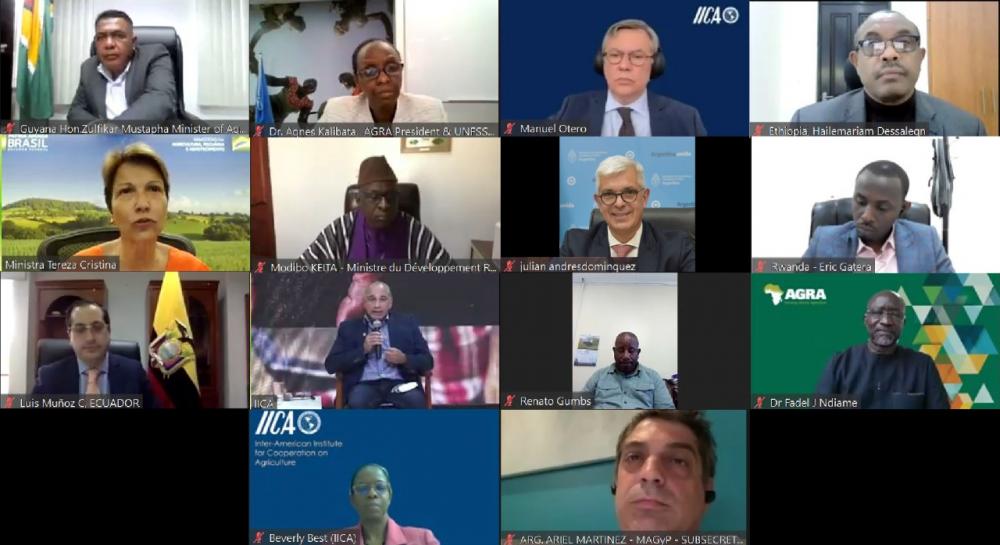
19 January 2022 (IICA). Ministers of Agriculture of Africa and the Americas committed to working together to develop a cooperation agenda, and agreed that the two continents face common challenges and opportunities with respect to transforming their agrifood systems to make them more sustainable and inclusive.

The agreement was reached during the First High-Level Roundtable between Africa and the Americas, convened and organized by the Alliance for a Green Revolution in Africa (AGRA) and the Inter-American Institute for Cooperation on Agriculture (IICA), entitled “Building Bridges for Future Cooperation in Agrifood Systems”.

The high-ranking officials who participated in the virtual event agreed that, beyond the cultural and historical similarities and differences between the Americas and Africa, the continents face a unique and common challenge: that of building knowledge-intensive agriculture, with a human face, while caring for the environment and considering the areas of nutrition and health, which, they agreed, is necessary in order to produce more and higher quality food.

To this end, they agreed to develop agendas throughout the year to link technical assistance institutions
for agriculture – such as Brazil’s Embrapa, Argentina’s INTA and all national research organizations in Latin America and the Caribbean, which play a key role – and their scientists and professionals, in order to deepen exchanges. They also proposed holding a ministerial summit on agriculture in Africa and the Americas in the second half of 2022.

Among the participants in the dialogue were Zulfikar Mustapha, Minister of Agriculture of Guyana; Agnes Kalibata, former Minister of Agriculture of Rwanda, the UN Secretary-General’s Special Envoy to the 2021 Food Systems Summit and President of AGRA; Manuel Otero, Director General of IICA; Hailemariam Desalegn, former Prime Minister of the Republic of Ethiopia and President of AGRA’s Board of Directors; Tereza Cristina, Minister of Agriculture, Livestock and Food Supply of Brazil; Modibo Keita, Minister of Rural Development of Mali; Julián Domínguez, Minister of Agriculture, Livestock and Fisheries of Argentina; Eric Gatera, Chief Technical Advisor of the Ministry of Agriculture and Animal Resources of Rwanda; Luis Muñoz, Deputy Minister of Rural Development of Ecuador; Renato Alvarado, Minister of Agriculture and Livestock of Costa Rica; Renato Gumbs, Director of Agriculture of Saint Vincent and the Grenadines; Fadel Ndiame, Deputy President of AGRA; Beverly Best, Director of External and Institutional Relations of IICA; and Ariel Martínez, Undersecretary for Policy Coordination of the Ministry of Agriculture, Livestock and Fisheries of Argentina.

Resource:

Fanzo J. et. al (2021) Viewpoint: Rigorous monitoring is necessary to guide food system transformation in the countdown to the 2030 global goals Food Policy 104 (2021) 102163, 20 p.

A rigorous, science-based monitoring framework can support evidence-based policymaking and the work of those who hold key actors accountable in this transformation process. Monitoring can illustrate current performance, facilitate comparisons across geographies and over time, and track progress.

Related:
20 October 2021. Measuring Food System: Transformation and Performance Post-Summit. This webinar was hosted by IICA & McGill University’s M.A. Gilliam Institute for Global Food Security to celebrate World Food Day.
 

Friday, December 9, 2016

Farmers led breeding and distribution of green pepper and red pepper varieties

27/11/2016 to 03/12/2016. Tchamba. Togo. Three researchers from Embrapa hortaliças (Brazil): visited the "Local seeds value chain promotion: farmers led breeding and distribution of green pepper and red pepper varieties” of which they are the technical partner: Carlos Francisco Ragassi, Dr Marçal Henrique Amici Jorge, Dr Claudia Silva da Costa Ribeiro

At the beginning of the second year of the project achieved results are:
  • Workshops were organized in Togo for planning activities, characterization and identification of problems referent to the production system, involving different actors of pepper value chain;
  • 175 farmers were interviewed for assessing information about pepper production in the 5
    regions of Togo and it was identified as major problems the lack of seeds in the local market, the occurrence of diseases and pests of plants and the difficulty of access to the market; 
  • Introduction of germplasm from Brazil: 18 Brazilian cultivars and 17 Togo local varieties were evaluated (agromorphological characterization) by local farmers in three village of central region (Nimah, Alibi 1, Bago and Kaboli) and at the station of ESA in Lomé;
  • Mass selection: Capsicum spp. varieties from Togo e Brazil were tested at the station of ESA in Lomé. Seeds were collected of each local variety tested.
    The seeds obtained from the first cycle of mass selection will help to perform the second cycle (mass selection 2) in year 2;
  • Five local varieties (Alibi1, Bago, Sokode (PV), Anie2, Lome) and five cultivars from Brazil (Jalapeno M, Jalapeno+, BRS Mari, BRS Moema, Maximus) were selected.
During the stay, the Brasilian and Togolese teams visited pepper trials farms. The group participated in the pepper farmers leaders training and discussions:
  • the project activities implementation and provisional results - AGOSSOU Affo Binde
  • Pepper breeding - Dr. Claudia Ribeiro
  • Production of seeds and seedlings - Dr. Marçal Amici
  • Cultivation of peppers and chili - Carlos Ragassi

Tuesday, September 23, 2014

ICRAF, Embrapa Strengthen Cooperation on Alternative Biofuel Crops

Manoel Teixeira de Souza, head of agroenergy with the Brazilian
Agricultural Research Corporation (Embrapa) (left) and
Ravi Prabhu, ICRAF deputy director general for research,
sign the cooperation agreement between Embrapa and ICRAF,
on 19 August 2014
16 September 2014. Nairobi, Kenya. The World Agroforestry Centre (ICRAF) and the Brazilian Agricultural Research Corporation (Embrapa) have signed a cooperation agreement that builds on the relationship between the two institutions. 

ICRAF is implementing a four-year Programme for the Development of Alternative Biofuel Crops, with partners in South Asia, Latin America and Africa, including Embrapa, and with funding from the International Fund for Agricultural Development (IFAD). 

The programme aims to conduct research and development along biofuel value chains, while improving food security and the livelihoods of smallholder farmers. 

In Brazil, the programme focuses on research gaps that limit the development and scaling up of macaúba value chains. The macaúba, whose tree is drought-tolerant and can grow in poor soil, grows nontoxic oil-bearing fruits that can be used for producing animal feed, fuel briquettes, activated charcoal and cosmetics.

ICRAF is also partnering with Embrapa to develop silvopastoral and agroforestry systems that integrate food crops and/or livestock with macaúba trees, which would benefit smallholder producers.

Thursday, April 24, 2014

Africa-Brazil Agricultural Innovation Marketplace

8 to 11 April 2014. Brasilia. The Africa-Brazil Agricultural Innovation Market Place held its 2014 Forum in Brasilia, Brazil.

The objectives of the forum were to: 
  1. Foster knowledge sharing among African, Latin America and Caribbean and Brazilian AR4D professionals/practitioners; 
  2. Provide opportunities for learning between current implementers of MKTPlace-supported projects and graduated co-leaders; 
  3. Provide support in the implementation of Marketplace projects; 
  4. Discuss mechanisms and options to support scaling up of successful projects that have been completed; 
  5. Strengthening capacity in project implementation and scaling up/out.
8 African projects selected in the first call in 2011 have completed their activities and lessons learnt in terms of challenges; communication and germplasm exchange.
  1. Mozambique - Fostering knowledge sharing for integrated natural resource management in agricultural landscapes of Southern Africa (ICRAF) Download here
  2. Kenya - Sweet sorghum varietal adaptation for ethanol production Download here
  3. Ghana - Enhancing small-holder cowpea legume production using Rhizobium inoculants  Download here
  4. Kenya - Rehabilitation of degraded rangeland using planned grazing and animal impact in the arid and semi arid lands of Kenya Download here
  5. Ethiopia - Introduction of Napier grass elite lines for screening for stunt resistance to provide feed for improved smallholder dairy productivity (ILRI) Download here
  6. Togo - Pesticide leaching and loss to groundwater in coastal vegetable growers in Togo Download here
  7. Tanzania - Cotton varieties and pest management in Tanzania Download here
  8. Burkina Faso - Study of the ecology and nutritional potential of native food tree species used by local communities in Burkina Faso and Brazilian Amazon: A food security and conservation strategy in the context of climate change. Download here
12 African new projects were selected in December 2013.
  1. Malawi - Enhancing Crop Productivity through Solar-Powered Groundwater Based Drip Irrigation System in Malawi (Department of Agricultural Research Services, Ministry of Agriculture) 
  2. Uganda - Utilizing Sustainable Energy for Water Management in Semi-intensive Aquaculture (NARO) 
  3. Ethiopia - Narrowing the yield gap of food legumes through integrated management of parasitic weeds in the highlands of Ethiopia (ICRISAT )
  4. Mozambique - Sustainable Rice Production Intensification in Conservation Agriculture: Incorporation of Legume and Grass as Cover Crops for Weed Management and Soil Health Enhancement (Aga Khan Foundation) 
  5. Ethiopia -Assessment of the Booroola Fecundity (FecB) Gene in Ethiopian Sheep Breed for Improvement of Sheep Production (Mekelle University) 
  6. Uganda - Towards genetic improvement of farmer preferred rice varieties to the stalk-eyed fly (Diopsis sp): an emerging pest in rainfed irrigated rice growing ecosystems (Uganda Christian Uinversity) 
  7. Ethiopia - Improving crop productivity through use of efficient, low cost and climate smart irrigation technologies (Mekelle University) 
  8. Ghana - Comparative evaluation of different manual cassava harvesting tools (Crops Research Institute)
  9. Kenya - Confidence-Building in Modern Biotechnology: Optimizing Best Communication Practices and Policies to Guide Deployment of Biotech/GM crops in Africa and Brazil International Service for the Acquisition of Agri-biotech Applications 
  10. Tanzania - Exchange of banana and plantain (Musa spp.) varieties and hybrids between IITA and EMBRAPA - widening the genetic base for the development of new cultivars and direct use by farmers (IITA) 
  11. Uganda - Inoculation of efficient rhizobial strains as an approach to increase the pigeonpea production of smallholders in Uganda (NARO) 
  12. Ghana - Increased Smallholder Food Production Through Implementation of Water Conserving Aquaponics-based Food Systems (Crops Research Institute

For scaling up the results of the completed projects the IAR4D model successfully tested through the Sub-Saharan Africa Challenge Program (SSA CP) was recommended. The Dgroup of PAEPARD was also suggested to help improving communication between partners in sharing information and knowledge.

The Africa-Brazil Agricultural Innovation MarketPlace is a South-South cooperation led by Embrapa and FARA with the support from Bill and Melida Gates Foundation (BMGF), The World Bank, DFID, IFAD, ABC, FAO, CIAT, IICA & IDB.

Related:


Tuesday, July 31, 2012

Angola and Brazili boost bilateral cooperation in agriculture


Imagen activa22 July 2012. Luanda. The Ministry of Agriculture of Angola and the Brazilian Agricultural Research Company (Embrapa), boost bilateral cooperation in agriculture.

According to the Public Television of Angola, Brazilian Ambassador to Angola, Nelson Cosme, and Embrapa´s president, Pedro Arraes met in Brasilia to further enhance this cooperation, which will reorganize the Angolan agricultural research system.

The meeting´s objective was to find appropriate ways and resources to implement the Technical Cooperation Project between both countries, said the source.

The Technical Cooperation Project will have more than two million dollars that will be used in creating the institutional basis of the Integrated Agricultural Research System of Angola.

Monday, June 11, 2012

World Bank urges Africa-Brazil partnership in agricultural development

5 June 2012. The World Bank organised a video conference for some African countries including Ghana, Liberia, South Africa, Tanzania, Kenya and Zambia to present experience of the Brazilian corporations in agriculture, social protection, vocational and technical training.


The conference papers were presented from Washington DC in US to participants in their respective countries. Brazilian technology is said to be easily adaptable to many African countries because of geophysical similarities in soil and climate. Andre Nepomuceno Dusi, Structuring Projects Coordinator of Brazilian EMBRAPA pledged the Brazilian government's commitment to help develop the agricultural capacity of African countries, especially those in the Sub-Saharan region.

14 June. This half-day seminar organized by the WB Africa Region aims at presenting Brazilian cooperation experiences in the areas of agriculture, social protection and vocational training.

Shantayanan Devarajan, Chief Economist – Africa Region. The World Bank video platformvideo managementvideo solutionsvideo player


Related: 
“Bridging the Atlantic, Brazil and Sub-Saharan Africa. South-South Partnering for Growth” is the title of a recent report produced jointly by the Capacity Development and Partnership Unit of the Africa Region at the World Bank (WB) and the Brazilian Institute for Applied Economic Research (IPEA). As the report points out, Brazil and Africa are natural partners with strong historic and cultural links. Complementing these links, Brazilian technology seems to be easily adaptable to many African nations because of geophysical similarities in soil and climate. Brazil’s recent successes on the social and economic fronts have attracted attention from many African countries. They have requested Brazilian cooperation in areas such as tropical agriculture, tropical health, vocational training, energy and social protection among others.

Monday, October 25, 2010

African-Brazil Innovation Market Place

Dr. Ramadjita TABO of FARA at the
African-Brazil Innovation Market Place
6 - 7 October 2010. African-Brazil Innovation Market Place

The Africa-Brazil Agricultural Innovation Marketplace is an international initiative supported by different donnors aiming to link brazilian and african experts and institutions to develop cooperative projects.

The Innovation Marketplace was composed of three basic pillars:

  1. A policy dialogue between the main authorities from Africa and Brazil supporting institutions focused on the development of a mutually agreed framework for collaboration
  2. A forum for presentation and discussion of research for development ideas, including proposal selection, that would be competitively supported.
  3. Support and implementation of Africa-Brazil agricultural projects.


Proposal: what happened?

250+ pre-proposals were submitted.
61 were eligible and could continue further. They had the previlege to meet their partners in Brazil during the IM Forum.
20 were selected to submit full proposal. 
6 were selected and received their cheque on the 6th of October.

E-survey system

The Innovative Marketplace was an amazing experience for some of the participants (See blog of Andrianjafy Rasoanindrainy)
The use of interactive e-survey system during the last sessions was one of the most interesting experiences that african participants had.
voting
Andrianjafy Rasoanindrainy: "Such kind of equipment should be used more frequently in Africa to improve reliability, transparence and accountability in voting and all democratic processes."