Platform for African – European Partnership in Agricultural Research for Development
Showing posts with label Sierra Leone. Show all posts

Monday, March 27, 2023

INCiTiS-FOOD Practitioner and Expert Virtual Round Table Discussion

27 March 2023. INCiTiS-FOOD Practitioner and Expert Virtual Round Table 

INtegrated and Circular Technologies for Sustainable city region FOOD systems in Africa (INCiTiS-FOOD)

Supporting innovative food systems and innovators:
Living Labs for Africa’s food systems
  • The INCITIS-FOOD Project (www.incitis-food.eu) is working on improving innovative circular food system in 6 countries across 3 African regions: East (Kenya), West (Ghana, Nigeria and Sierra Leone) and Central (Cameroun and Gabon). These countries also host living labs that act as innovation accelerators.
  • Living labs are innovation networks in which the participant’s roles and rules are freely defined by themselves. They essentially exchange information according to a defined research strategy and a digital infrastructure in order to transform this information into new knowledge; comparable to a lean innovation approach in which the end users define the contents of the project.
  • What are the benefits of participating as a food system actor? 
The objective of the eight living labs in six African countries is to map the landscape of food
providers, manufacturers, marketers, and consumers and to help identify bottlenecks and challenges that can be addressed by the living labs.

This consortium exceptionally involves a financial partner (AFRACA) to upscale innovation.
  • The African Rural and Agricultural Credit Association (AFRACA) is a leading pan-african network of financial and non-financial institutions involved in promoting access to rural and agricultural finance in Africa. AFRACA was established in 1977 as a lead advocate and coordinator on rural and agricultural finance in Africa. AFRACA members include: Central Banks, Commercial Banks, Agricultural & Development Banks, Microfinance Institutions, Universities and Training Institutions.

  • AFRACA is the banking expert in the consortium and will contribute to the Business Model Development and Financial Capacity Building for Circular Agri-food Entrepreneurship, INCiTiS-FOOD Roadshow Events and investment financing.
The project will also empower communities through the Open Calls funding, led by the Foodscale Hub, organization experienced in running large-scale international acceleration programs. One million euros will be given to 8 external Local Innovation Hubs (both from countries that participate in the INCiTiS-FOOD project and beyond) and 24 Independent Innovators from 6 countries from 3 African regions (East: Kenya; West: Ghana, Nigeria, Sierra Leone; Central: Cameroon, Gabon) as financial support from the InCiTiS-FOOD project. 

Beneficiaries of the Cascade Fund will be surveyed to generate empirical evidence on the co-benefits of the INCiTiS-FOOD project technologies and business models, which will guide urban food policy roadmaps.

The INCiTiS-FOOD project is co-funded by the European Union’s Horizon Europe research and innovation programme and all the information is available on project’s website, as well as Facebook, Linkedin, Twitter, Instagram and Youtube.
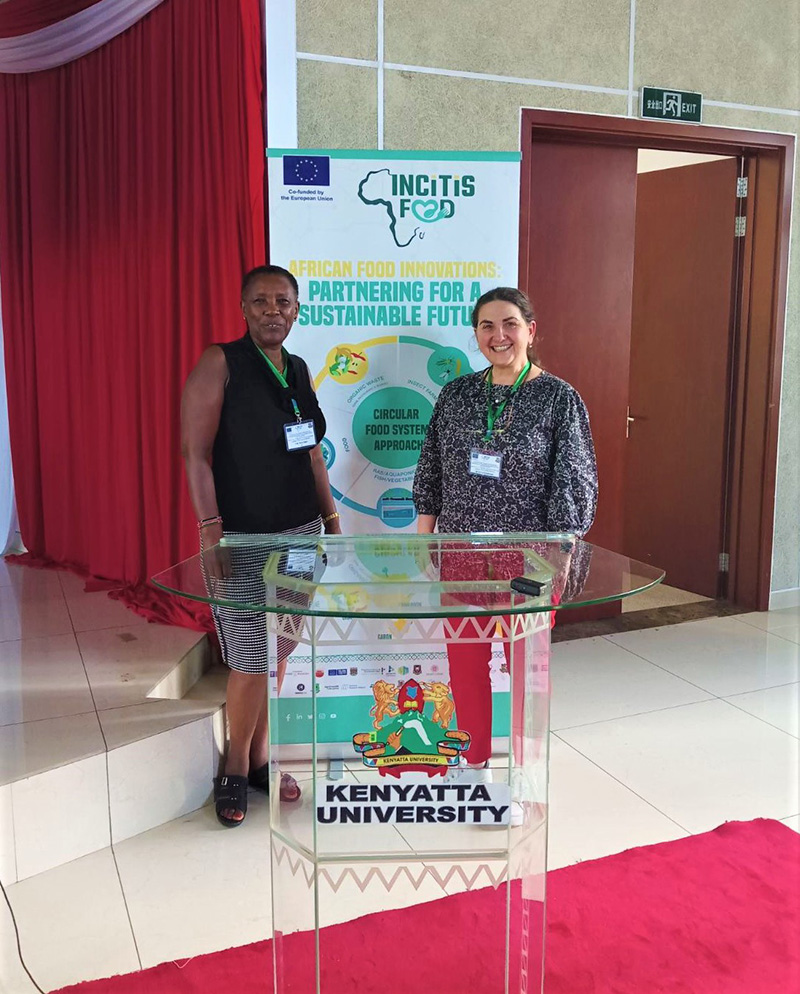
“We will set up 8 Living Labs in 6 African countries. Living labs will be turned into incubators of innovation and their mission will be to improve food and nutrition security in African city regions. Since current African food systems are experiencing severe challenges in delivering desired outcomes and a quarter of those who inhabit African cities remain food insecure and malnourished, we need to redefine and modernize the production. There are different methods to prevent food instability: availability of nutritious and safe food through local production, food access – affordability, food utilization, reduction of food waste, and food stability at all times.” Prof. Dr Gertrud Buchenrieder, Universität der Bundeswehr München – project coordinator (see pictures, right)

Wednesday, September 14, 2016

AfricaRice and SLARI conduct workshop on proposal

15 - 25 August 2016. Njala University, Sierra Leone. Thirty-seven national researchers, including eight women researchers participated in a training workshop on ‘Preparing and Writing Fundable Research Grant Proposals’ organized in the framework of the World Bank's West Africa Agricultural Productivity Program (WAAPP-1C).

The rice component of WAAPP-1C in Sierra Leone is being implemented jointly by the Africa Rice Center (AfricaRice) and Sierra Leone Agricultural Research Institute (SLARI).

The workshop participants were staff members of the National Agricultural Research Centre (NARC), Rokupr Agricultural Research Centre (RARC), the SLARI Statistics Unit, Teko Livestock Research Centre and the Kenema Forestry Tree Crop and Research Centre. The workshop was conducted by Professor Anthony Youdeowei and Rodger Obubo, International Consultant Trainers.

During the discussions, some critically important issues emerged which require the immediate attention of the organizations involved in implementing the WAAPP-1C in Sierra Leone.

Emerging Issues
  1. Donor Information - It was evident from discussions with the workshop participants that there was serious lack of awareness of calls for research proposals for funding African agricultural research. The workshop recommends that SLARI considers establishing a ‘Donor Intelligence Unit’ to collect and distribute regularly information on international donor organizations that fund agricultural research and their calls for research proposals.
  2. Research Proposals Review – There is lack of a systematic process for review of research proposals written by researchers. The workshop recommends an ‘Institutional Proposal Review Committee’ in research centers in Sierra Leone to assist researchers in writing proposals which would be endorsed by concerned centers before submission to donors for funding. 
  3. Research Seminars – To further improve conceptualizing research ideas and writing research proposals, the introduction of regular institutional seminars would be valuable in reviewing the implementation of on-going research programs and research proposals. Research seminars could be organized within individual research centers or between two or more research centers. Such research seminars would promote and facilitate collaborative research, which is attractive to donors, as well as provide opportunities to strengthen researchers’ skills in writing winning research proposals.

Thursday, May 19, 2016

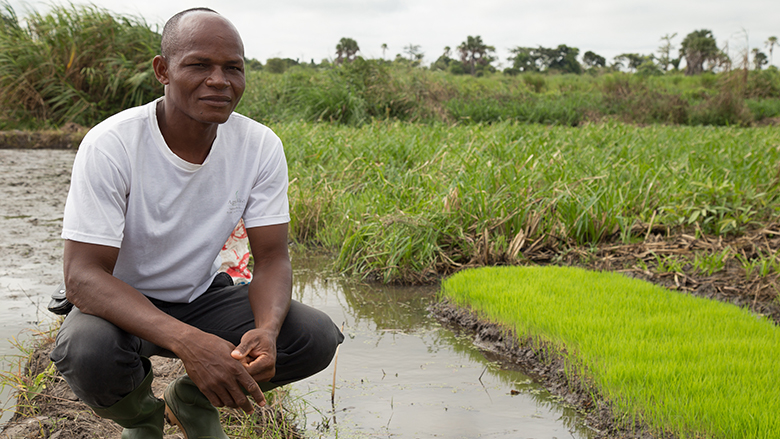
Better Seeds Bring Bigger Harvests in West Africa

Published on 18 May 2016. More food is being produced on farms in Cote d’Ivoire, Sierra Leone and across West Africa. What’s behind this big boost to agriculture and farming? Better seeds!

Throughout West Africa, WAAPP is supporting governments’ efforts to prepare and implement seed system strategies, improve regional seed regulations and strengthen seed certification systems. A project of this scale requires collaboration so WAAPP is working with scientists, farmers, the private sector and others to make improved seeds for rice, plantain and other staple crops available to more people.

In Côte d’Ivoire, the National Rice Development Office’s (NRDO) seed improvement initiatives are positively impacting rice supply. The NRDO is laying the ground work for six seed centers around the country. It engages with farmers and seed entrepreneurs, collecting seeds, cleaning them, and then storing them in WAAPP-funded cocoon storage facilities which preserve their quality for longer periods. It also builds up distribution networks through farmer co-ops.
STORY HIGHLIGHTS
  • The West Africa Agricultural Productivity Program (WAAPP) is working with Côte d’Ivoire – and other countries in West Africa – to revive and strengthen seed systems that were previously decimated due to a lack of infrastructure and funding.
  • Seeds from seed multiplication farms are better in quality, more resistant to pests, and can yield up to 50% more than traditional varieties.
  • In Côte d’Ivoire alone, approximately 50,000 beneficiary producers farming on 100,000 hectares of land have improved their yields by 30 to 150 percent.