Platform for African – European Partnership in Agricultural Research for Development
Showing posts with label Kenya. Show all posts

Wednesday, October 14, 2026

Bridging the gap through Community engagements on Underutilized Legumes


14 October 2026
| Webinar organised by the The Society for Underutilized Legumes (SUL). 

  • Dr Juliana Cheboi, Senior Lecturer in the Department of Plant Science and Crop Protection at the University of Nairobi, Kenya, and Vice-Chair of the Kenya Plant Breeders Association (KPBA), was the featured speaker in the session “Bridging the Gap Through Community Engagements and Outreach Services: Underutilized Legumes Researchers on Call.”

The session addressed the important challenge of bridging the gap between agricultural research and farming communities, with particular attention to underutilized legumes. These crops offer considerable potential for improving nutrition, soil fertility, biodiversity and climate resilience, yet often receive insufficient attention from agricultural research, extension services and markets. 

Community engagement and researcher-led outreach can help translate scientific knowledge into practical solutions, strengthen farmer–researcher collaboration and support the conservation, cultivation and wider use of these valuable crops.


Related:

14 African partner universities across 9 countries, together with global research and academic partners — including ICRISAT, IFPRI, University of Southampton, Humboldt-Universität zu Berlin and others — have developed a 7 free, open-source course blocks on Neglected and Underutilised Species (NUS), spanning agronomy to nutrition, markets, climate and policy.

The courses are now under pilot from 5 to 31 October 2026 — and you are welcome to take part.


Related:


1 October 2026. AgrEcoNUS+ Officially Launched: Scaling Up Neglected and Underutilized Species
More than 110 participants from over 14 countries across Africa, Europe, and Asia gathered online to celebrate the international launch of AgrEcoNUS+, a programme that aims at making Neglected and Underutilized Species (NUS), a driver of agroecological transition across Africa.

Tuesday, August 25, 2026

The collaboration between the Kenyan community seed banks and the national genebank

Traditional crop varieties are disappearing, but farmers and scientists are working together to bring them back.

In Kenya, researchers partnered with farming communities to collect and conserve finger millet and amaranth before they were lost. Supported by the Crop Trust's Power of Diversity Funding Facility, community seed banks and the national genebank are helping safeguard crop diversity and keep it available for farmers, breeders and future generations.

Watch how local knowledge and science come together to strengthen the future food security.

Thursday, August 20, 2026

Seeds, Systems & Sovereignty: Shaping Eastern Africa's Food Future

20 August 2026, Farmers, researchers, civil society organisations, food-system advocates and agricultural stakeholders came together for the online webinar “Seeds, Systems & Sovereignty: Shaping Eastern Africa’s Food Future.” 

The webinar marked the launch of the 1st Eastern Africa Indigenous Seed Conference 2026, hosted by Seed Savers Kenya.

The conversation placed seeds at the centre of a much larger discussion about food sovereignty, biodiversity, farmer rights and the resilience of Eastern Africa’s food systems.


Seeds are more than agricultural inputs


Seeds are often discussed as one of many inputs farmers need to produce food. But indigenous and locally adapted seeds carry something more: knowledge, culture, biodiversity and generations of farmer experience.

Farmers have traditionally selected, saved, exchanged and adapted seeds to suit their local environments. These practices can help maintain crop diversity and preserve varieties that are adapted to particular climates, soils, diets and cultural traditions. That makes seed systems an important part of the region’s food future.

The webinar therefore encouraged participants to look beyond the question of whether farmers have access to seed and consider a deeper question: Who controls the seed system, and who gets to decide what farmers grow?

Community seed banks do not fit conventional donor funding models: they are small, locally governed, volunteer-intensive and require long-term, flexible support, while funders often prefer short, measurable projects with clearer commercial or technological outputs; at the same time, restrictive seed regulations, weak market integration and limited access to finance make them appear harder to scale—even though evidence shows they are important for agrobiodiversity and seed security.

 Farmer led research on indigenous seeds is key. PROLINNOVA (Promoting Local Innovation) emerged in the early 2000s as an international network promoting farmer-led innovation and participatory research in sustainable agriculture, particularly through partnerships between farmers, researchers, NGOs, and other development actors. PROLINNOVA was conceived in 1999 with support from GFAR (then the Global Forum on Agricultural Research), which helped establish it as a Global Partnership Programme (GPP); it later became a recognised GFAR/GFAiR Collective Action.

The 20 August conversation was therefore more than a discussion about seeds. It was a conversation about who shapes Eastern Africa's agricultural future. Its timing is significant. The launch of the Eastern Africa Indigenous Seed Conference creates a broader platform for farmers, researchers and advocates to continue exploring these questions.

The November conference is expected to provide an opportunity to showcase farmer innovations, document community seed practices and advance conversations around seed sovereignty across the region.

Related:

COP17 of the Convention on Biological Diversity (CBD) will be held in Yerevan, Armenia, from 19–30October 2026. COP17 is the first major global review of progress toward the Kunming–Montreal Global Biodiversity Framework (KMGBF) and its 23 targets for 2030.

 The COP 17, COP-MOP 12 and COP-MOP 6 meetings, are open to organizations and agencies, whether governmental or nongovernmental, qualified in fields relating to the conservation and sustainable use of biological diversity, which have informed the Secretariat of their wish to be represented at these meetings. New organizations requesting admission as observer should be submitted to the Secretariat by e-mail to: secretariat@cbd.int by 31 August 2026. 

Relevant background

  1. Resources indigenous seeds
  2. 2026: A pivotal year for indigenous seeds and Farmers'Managed Seed Systems in Africa
  3. Roundtable on Farmer Managed Seed Systems in Africa


Tuesday, July 14, 2026

Kenyan Seed Savers Network in India

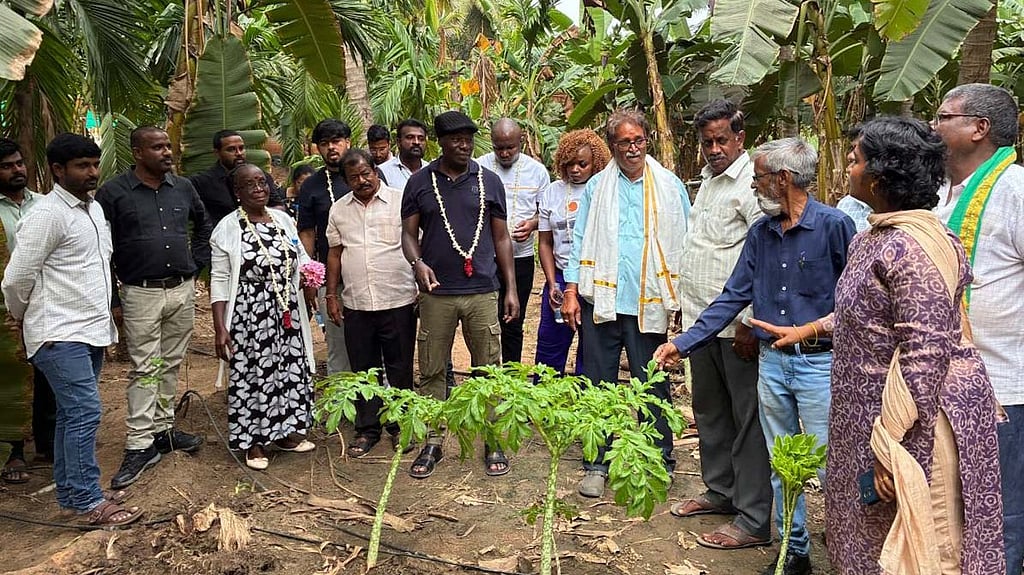
6 July 2026. A delegation from Seed Savers Network Kenya, led by Daniel Wanjama, visited Andhra Pradesh, India, to study community-managed natural farming. According to reports, the team toured farms in Eluru district observing climate-resilient farming practices, indigenous seed conservation, and natural farming systems with the Andhra Pradesh Community Managed Natural Farming (APCNF) program.

The delegation included John Kariuki Mwangi, Head of Slow Food Kenya; farmers Oddah Friday Ochomo and Zipporah Nyambura Kuria; Prasiddha Sapkota, an intern from New York University-Abu Dhabi; and Reddi Gowtham from RySS-APCNF. District Project Manager B Venkatesh briefed them on initiatives across the district.

At Gunampalli village in Dwaraka Tirumala mandal, the team observed Pre-Monsoon Dry Sowing (PMDS) using Navadhanyalu at the farm of Venkata Subba Reddy. They also visited U Ramachandra Rao’s seven-acre integrated Natural Farming model at Agokavaram village in Unguturu mandal and a 14-acre paddy compact block at Venkatapuram village, where desi paddy is cultivated without chemical inputs. The farmers also explained the natural farming methods.

During the exchange, the Kenyan delegation had the opportunity to showcase the work on the Global Field Concept demonstrating how a household can sustainably produce diverse and nutritious food on just 2,000 m² of land without relying on external agricultural inputs.


This approach highlights the potential of smallholder farmers to achieve food security while conserving biodiversity and building resilient farming systems.

The exchange has provided a rich platform for sharing knowledge, practical experiences, and innovative natural farming practices. The Kenyan Seed Savers Network team returned home with valuable lessons and inspiration that they will share with fellow farmers across Kenya, strengthening farmer-to-farmer learning and promoting sustainable, nature-based agriculture.


Related:

17th – 20th November 2026. 1st Eastern Africa Indigenous Seed Conference (EA-ISC 2026) - Building farmer managed seed system community of practice (COP) For a Resilient EASTERN AFRICA Region.

Last year Seed Savers Network, Kenya   and AFSA collaborated on a very important initiate. A capacity building for youth representatives from over 25 countries in Africa. Here's, a touch of what happened. We also look forward to connecting further during the upcoming 1st Eastern Africa Indigenous Seed Conference to discuss the important role of the youth in promoting seed and food sovereignty. 

Monday, July 6, 2026

The Financing Agri-Food Systems Sustainably (FINAS) 2026 Dialogue

30 June–2 July 2026 at the Kenyatta International Convention Centre. The Financing Agri-Food Systems Sustainably (FINAS) 2026 Dialogue was held from under the theme "Towards Sustainable Financial Architecture for Africa's Food Systems." 

The summit brought together governments, development banks, financial institutions, agribusinesses, farmer organizations, investors, research organizations, and development partners to explore how Africa can mobilize and better align finance for food systems transformation.

Dr. Charity Mutegi, Director: "Agriculture continues to power Africa’s economies, yet financing models
remain stuck in the past. Despite donor funding and countless initiatives, the numbers have not shifted. This question is at the heart of #FINASSummit dialogue. That stagnation tells us one thing: we must do something differently."

By aligning policy, innovating finance models, and forging partnerships, we can unlock inclusive, de‑risked solutions for Africa’s food systems.

Programme

Overall, FINAS 2026 featured more than 50 plenary sessions, side events, deal rooms and masterclasses, with speakers drawn from African governments, the private financial sector, development finance institutions, farmer organizations, international organizations, research institutions and development partners. The programme emphasized practical financing solutions for policy alignment, inclusive finance, climate resilience, agrifood SMEs and investment mobilization across Africa.

The programme was organized around four major thematic pillars.

1. Policy Alignment and Coordination

This track focused on creating coherent financing frameworks that support implementation of the Kampala CAADP Declaration and national agricultural investment plans.

Main sessions included:

  • Continental Roundtable: Policy Alignment and Coordination for Financing the Kampala
    CAADP Declaration
  • Using National Agrifood Systems Investment Plans (NASIPs) to mobilize, coordinate and monitor investments
  • Launch of the Kenya National Agrifood Systems Investment Plan (NASIP) 2026–2030

Key discussion themes

  • Harmonizing national and continental investment strategies
  • Public finance reforms
  • Improving accountability for agricultural expenditure
  • Better coordination among governments, donors and private investors.

2. Innovative and Inclusive Finance Models

One of the largest streams examined how to unlock finance for farmers, cooperatives and agrifood SMEs. Panels and side events covered:

  • Making Agricultural Development Funds work
  • Public Development Banks and agricultural finance
  • Wholesale lending for agricultural financial inclusion
  • Agri-SME finance and prudential reforms
  • Finance linked with agricultural skills development
  • Blended finance mechanisms
  • Cooperatives and rural financial services

The discussions emphasized reducing investment risks while expanding affordable credit to smallholders, women, youth and agricultural enterprises.

3. Green, Climate and Resilient Finance

A major focus of FINAS 2026 was integrating climate resilience into agricultural finance. Major sessions included:

  • Embedding Climate Risk Intelligence into Agricultural Value Chain Financing (plenary keynote)
  • Carbon finance under Article 6.2 of the Paris Agreement
  • Embedding insurance into agricultural lending
  • Climate-resilient finance for crop and livestock systems
  • Sustainable financing for resilient agrifood systems
  • Financing feed and fodder systems
  • Cold-chain financing and reducing food loss and waste

These sessions explored insurance, climate data, carbon markets, blended finance and innovative risk-sharing mechanisms that can attract private capital into climate-smart agriculture.

4. Trade, Investment and Partnerships

The final thematic stream examined how finance can strengthen regional markets and agricultural competitiveness. Topics included:

  • Trade and investment frameworks
  • Regional value chains
  • Public-private partnerships
  • Cross-border investments
  • Deal rooms connecting investors with agribusinesses
  • Business-to-business matchmaking
  • Scaling agricultural innovations

Special emphasis was placed on mobilizing domestic capital, strengthening African financial markets and reducing dependence on external aid.

Side events: extracts

02/07 Unlocking Sustainable Financing for Nutrition-Sensitive Food Systems: Evidence, Partnerships and Sub-national Level Innovations — Stock Take of Financial Flows for Food Systems (3FS)

The panel emphasized that transformation requires deliberate alignment of policy frameworks,
financing instruments, and institutional will.
  • Faraya Constance Zimudzi @FAO (#F𝗔𝗢, 𝗨𝗡): Nutrition-sensitive investment must be embedded into agrifood systems at country level.   
  • Ruth Okowa (#𝗚𝗔𝗜𝗡): Policies must translate into practice, ensuring SMEs can scale nutrition-focused solutions.   
  • Anna Tavina Eivin (#𝗙𝗔𝗢, 𝗨𝗡): Stronger institutional coherence is essential to sustain impact.     
  • Peter Chepata (𝗠𝗔𝗜𝗜𝗖): Financing instruments must be tailored to SME realities.    
  • Joseph Nderitu (𝗞-𝗨𝗡𝗜𝗧𝗬): Local financial institutions play a critical role in bridging access gaps.     
  • Blessings Mutheu (𝗜𝗻𝗰𝗼𝗳𝗶𝗻): Investors must see SMEs as viable partners in nutrition transformation.    
  • Samuel Ndonga (𝗙𝗔𝗢, 𝗨𝗡): Coordinated approaches are key to embedding nutrition into agrifood finance.   

2/07 Beyond Donor Funding: Advancing AI-Enabled Finance for Africa’s Smallholder Farmers

At FINAS 2026, SAFIC convened a high-impact side event themed “Beyond Donor Funding: Sustainable Business Models and AI-Enabled Finance for Africa’s Smallholder Farmers,” bringing together leaders from government, academia, development, technology, and the private sector to explore practical pathways for transforming African agriculture.

Prof. Simon Ndiritu, The Center Director of SAFIC, opened by challenging participants to rethink the agricultural ecosystem, noting that Kenya does not lack technology or innovation. Rather, the real opportunity lies in integrating advisory services, finance, quality inputs, insurance, and market access into a coordinated system that delivers tangible value for farmers.

In his keynote remarks, Amb. Philip Thigo, Special Envoy on Technology, emphasized the importance of building trusted mechanisms for data exchange across the agricultural ecosystem. He encouraged stakeholders to begin with practical, scalable proof points, highlighting food systems as a compelling use case for shared data infrastructure and collaborative innovation.

Moderating the discussion, Richard Migwalla of Baobab Impact framed the conversation around three critical questions:

  • Can we meet farmers at their point of need?
  • Can we deliver these solutions sustainably?
  • Can artificial intelligence improve the commercial equation for smallholder agriculture?

𝗔𝗴𝗿𝗶𝗰𝘂𝗹𝘁𝘂𝗿𝗮𝗹 𝗙𝗶𝗻𝗮𝗻𝗰𝗲 𝗧𝗲𝗰𝗵𝗻𝗶𝗰𝗮𝗹 𝗪𝗼𝗿𝗸𝗶𝗻𝗴 𝗚𝗿𝗼𝘂𝗽 (𝗧𝗪𝗧)

At #FINAS2026, leaders from across finance, policy, and development have launched the 𝗔𝗴𝗿𝗶𝗰𝘂𝗹𝘁𝘂𝗿𝗮𝗹 𝗙𝗶𝗻𝗮𝗻𝗰𝗲 𝗧𝗲𝗰𝗵𝗻𝗶𝗰𝗮𝗹 𝗪𝗼𝗿𝗸𝗶𝗻𝗴 𝗚𝗿𝗼𝘂𝗽 (𝗧𝗪𝗧,) a permanent mechanism designed to move evidence into policy, and policy into action.
Key highlights from the speeches:
David Sajabi, 𝗙𝗶𝗻𝗮𝗻𝗰𝗲 & 𝗜𝗻𝘃𝗲𝘀𝘁𝗺𝗲𝗻𝘁 𝗘𝘅𝗽𝗲𝗿𝘁: “Good ideas must not remain reports. Reforms must be followed through.” He emphasized that success will be measured not by discussions, but by real change in agricultural lending.
Dr. Samuel Tiriongo, 𝗞𝗲𝗻𝘆𝗮 𝗕𝗮𝗻𝗸𝗲𝗿𝘀 𝗔𝘀𝘀𝗼𝗰𝗶𝗮𝘁𝗶𝗼𝗻 Stressed the importance of evidence-based advocacy, better data, and exploring alternative collateral beyond land to unlock lending opportunities for farmers.
Titian Donda, 𝗠𝗮𝗻𝗮𝗴𝗶𝗻𝗴 𝗗𝗶𝗿𝗲𝗰𝘁𝗼𝗿, 𝗣𝗼𝗹𝗶𝗰𝘆, 𝗔𝗰𝗲𝗹𝗶 𝗔𝗳𝗿𝗶𝗰𝗮 Reflected on the journey of collaboration, noting that fragmented approaches have slowed progress. The TWT is a product of partnership and coordination, designed to transform data into evidence and evidence into reforms.
Petra Jacoby, 𝗣𝗿𝗼𝗴𝗿𝗮𝗺 𝗗𝗶𝗿𝗲𝗰𝘁𝗼𝗿, 𝗔𝗴𝗿𝗶𝗰𝘂𝗹𝘁𝘂𝗿𝗲 𝗗𝗲𝘃𝗲𝗹𝗼𝗽𝗺𝗲𝗻𝘁, 𝗚𝗜𝗭 𝗞𝗲𝗻𝘆𝗮 Called the launch a reaffirmation of collective commitment. She highlighted the need for sound policies, reliable data, effective risk-sharing mechanisms, and strong coordination to build confidence among financial institutions and expand access to finance for farmers.

FINAS 2026 post-summit field visits 

From cold storage to food processing, the FINAS 2026 post-summit field visits continued with a stop at ItalNovis Group SEZ Limited in Tatu City, Kenya.

‎‎Delegates explored the company's modern pasta manufacturing facility, gaining firsthand insight into the journey from raw materials to finished products. The visit demonstrated how technology, efficient production systems, and value addition are driving competitiveness in Africa's food manufacturing sector.

‎‎With roots dating back to the 1950s, ItalNovis Group reflects the impact of sustained industrial investment and innovation in building resilient agrifood value chains.


Wednesday, July 1, 2026

DialogueNEXT in Africa: Born To Feed the Future

30 June - 1 July 2026.
Nairobi, Kenya. Agricultural leaders, researchers, farmers, entrepreneurs, policymakers and investors gathered for the inaugural DialogueNEXT Africa, organized by the World Food Prize Foundation under the inspiring theme "Born to Feed the Future." 

DialogueNEXT in Africa came ahead of the Norman E. Borlaug International Dialogue to be held in Des Moines, Iowa, October 20–22, 2026.


The event explored how Africa can harness its scientific excellence, entrepreneurial talent and agricultural diversity to become a global leader in sustainable food production. Throughout the day, speakers emphasized that the continent's food systems transformation must be driven by African farmers, youth, women, researchers and innovators working together through strong regional and international partnerships.
"It is an honor to hold this conference in Africa, four decades after Dr. Borlaug made his first major visit to the continent in 1984. Borlaug came with a simple but powerful conviction: that science in the hands of farmers could defeat hunger. That mission is unfinished and more urgent than ever as Africa's food systems must feed a young, growing and increasingly urban population.” Mashal Husain (see picture), President, World Food Prize Foundation.

 "Hosting this conversation in Africa is not just symbolic, but necessary. This continent is home to some of the world's most dynamic agricultural systems and most resilient farmers, yet it remains chronically underinvested in. The challenges — climate shocks, fragile supply chains, growing populations — are real, but so are the solutions, which are increasingly being developed by African scientists, farmers and entrepreneurs. The insights that emerge from Nairobi will help shape the global agenda." Akinwumi Adesina,
2017 World Food Prize Laureate; Member, World Food Prize Foundation Council of Advisors; and Former President of the African Development Bank Group.

Agenda


The conference featured a series of high-level dialogues addressing the major drivers of agricultural
transformation. 


Farmer-Centred Innovation


The session on Farmer-Centred Innovation highlighted how research, extension services and digital technologies can better respond to the needs of smallholder farmers. 
  • Elizabeth Nsimadala, President of the Eastern Africa Farmers Federation (EAFF), stressed the importance of placing farmers at the centre of innovation
  • Canisius Kanangire, Executive Director of the African Agricultural Technology Foundation (AATF), discussed the role of agricultural technologies in improving productivity. 
  • Andrew Mude, Principal Scientist at the International Livestock Research Institute (ILRI), shared insights into strengthening resilience through innovative livestock systems. 

Technology and Digital Agriculture


Discussions on Technology and Digital Agriculture explored how digital tools, artificial intelligence, mechanization and precision agriculture can accelerate productivity and resilience. 
  • Leena Tripathi, Director of the Eastern Africa Hub of the International Institute of Tropical Agriculture (IITA), joined fellow experts in demonstrating how scientific research and biotechnology continue to expand opportunities for African farmers. 
  • Canisius Kanangire – African Agricultural Technology Foundation (AATF)

Women Feeding Africa

Another session on Women Feeding Africa celebrated the pivotal contribution of women across agricultural value chains
  • Doreen Irungu, Founder and CEO of Ustawi Afrika, highlighted the role of women entrepreneurs in transforming food systems.

Youth, entrepreneurship and innovation

The Agripreneurship and Youth Innovation dialogue showcased emerging African innovators and Top Agri-food Pioneers who are developing new business models for agriculture


Optimising Agricultural Regulations

Participants also examined how enabling regulatory frameworks and strategic investments can stimulate innovation and strengthen agricultural value chains.

DialogueNEXT Africa also underscored the importance of collaboration among governments, national agricultural research systems, CGIAR centres, regional organizations, the private sector and farmer organizations. The conference concluded that achieving resilient and nutritious food systems will require sustained investments in research and innovation, supportive policies, stronger public-private partnerships and the active participation of youth and women. 

Technical immersion visits

Following the conference, delegates participated in technical immersion visits hosted by leading agricultural innovation institutions,

Participants visited the Alliance's "Partners Day: Connecting Science, Community & Markets", where researchers, entrepreneurs and agrifood innovators demonstrated how agricultural research is translated into value-added products and market opportunities. The programme included networking with investors and policymakers and exhibitions of climate-smart innovations.

  • Hello Tractor Experience Center – Participants explored how IoT, asset finance, digital marketplaces and mechanization services are helping smallholder farmers access tractors and improve productivity through innovative business models. 
  • International Rice Research Institute (IRRI) – Delegates visited the MRGM Farmer Cooperative to learn how research, farmer-led innovation and circular use of rice straw are improving rice productivity, market access and livelihoods. 
  • International Livestock Research Institute (ILRI) – Visitors toured ILRI's Nairobi campus, including its advanced bioscience laboratories and the Mazingira Centre, to see how CGIAR research is advancing livestock productivity, animal health and climate resilience.
  • CIMMYT – The immersion showcased climate-smart innovations for maize, wheat and dryland cropping systems and demonstrated how research partnerships translate scientific advances into practical solutions for farmers. 
  • WorldFish – Participants visited a science-supported fish farm to explore climate-resilient aquaculture, sustainable fish production, feed management and post-harvest innovations. 
  • International Potato Center (CIP) – The visit highlighted how research, youth entrepreneurship and partnerships are strengthening root and tuber crop value chains through quality seed systems, climate-smart production and digital advisory services. 
  • Alliance of Bioversity International & CIAT – Through its "Partners Day:
    Connecting Science, Community & Markets,"
    the Alliance demonstrated how agricultural research is transformed into value-added products and market opportunities through collaboration with entrepreneurs. 
  • International Centre of Insect Physiology and Ecology (icipe) – Delegates discovered insect-based innovations supporting One Health, sustainable food systems and circular bioeconomy solutions for agriculture and nutrition. 

Mugala Naturals: Organic food venture that is powering a climate-smart future had a stand at ICIPE stand to promote inclusion if cricket powder in Mainstresm processed nutritious climate resilient value chains.

These visits showcased how CGIAR research is being translated into practical solutions for farmers and policymakers across Africa.


Wednesday, June 24, 2026

Advancing National, Regional and Global policies for the World's most overlooked Superfoods


24 June 2026. Advancing National, Regional and Global policies for the World's most overlooked Superfoods. 37th Webinar Series of the SOCIETY FOR UNDERUTILIZED LEGUMES 

Innovations in Crop Science and Horticulture by Dr. Chiamaka Obasi, Plant breeder| data analyst| Quantitative geneticist | VACS Research Fellow at BecA-ILRI Hub, Nairobi Kenya 

Related:


This week, the first of three capacity development workshops under the VACS initiative kicked off in Nairobi, Kenya. The Data Analysis Hackathon for Opportunity Crops brought together emerging plant breeders and researchers from across Africa for hands-on training in data analytics and crop improvement.

Bambara groundnut. Finger millet. Okra. Sesame. Taro. Amaranth. Pigeon pea. These crops feed millions across Africa, yet they've long been overlooked by global research systems. The Vision for
Adapted Crops and Soils (VACS) is changing that.

At the opening, Dr. Stephen Gudz, SAS Program Director at CIMMYT, put it plainly: investing in young African scientists is how we accelerate the crop innovations that food security depends on.

Organized by CIMMYT in collaboration with Cornell University and partners across the CGIAR system.

Tuesday, June 16, 2026

AgriCord Partners' Forum 2026

4 June 2026
. Nairobi. The AgriCord Partners' Forum 2026 highlighted critical strategies for agricultural development. The sessions focused on making farmers' organizations investable through inclusive finance and scaling practical, farmer-led Nature-based Solutions.

Panel 1 | Innovative & Inclusive Financing Mechanisms

This session explored how to make farmers and their organizations more visible, investable, and resilient.

Core Themes: Inclusive finance relies on building robust support systems rather than just offering cheaper loans. Farmers' organizations act as vital intermediaries that aggregate demand, build trust, reduce risk, and connect smallholders to markets. 

Key Speakers:
  • Steve Muchiri – Eastern Africa Farmers Federation (EAFF)
  • Dan Higgins – International Fund for Agricultural Development (IFAD)
  • Mary Achini – Cooperative Bank of Kenya
  • Catherine Ndirangu – Oikocredit 

Panel 2 | Scaling Nature-based Solutions for Farmers’ Organisations: What works?

This panel centered on the practical transition to sustainable food systems, keeping collaboration and farmer leadership at the heart of the movement. 

Core Themes: The focus was on identifying which Nature-based Solutions actually work on the ground and how to scale them successfully within existing farmer organization extension systems. 

Key Speakers:
  • Moderator: Tiina Huvio – Food and Forest Development Finland (FFD)
  • Violet Nyando – Cereal Growers Association
  • Confrey Mung'au Alianji, MBA – GIZ Kenya
  • Marlène Ramirez – AsiaDHRRA
  • Francis Odhiambo Oduor – My FarmTree / Alliance of Bioversity International and CIAT 

Highlight

At 50, Daniel Saitabao has spent his life farming a modest plot in Losikito village, Tanzania. Livestock, maize, beans, but returns that rarely matched the effort.

That changed when his farmers' organisation, MVIWAARUSHA, joined the FORI programme (Farmers Organization Research-Led Innovation), funded by the European Union and Secretariat of the Organisation of African, Caribbean and Pacific States (OACPS). In a region long dominated by tobacco as a cash crop, sunflower cultivation opened an unexpected door.

Mr. Saitabao was among the first ten farmers to test it. From a single demonstration plot, he harvested 120 kilograms of sunflowers, processed into 20 liters of oil. Not just a harvest. A proof of concept that spread through the community.

Resource:

AgriCord (2026) Global Annual Report 2025, 30 p.

AgriCord’s work is defined by farmers’ priorities, co-developed and implemented with farmers’ organisations at local, national, regional and global level. Our agri-agencies provide technical support for farmers’ organisations to address constraints in production, markets, finance, governance and resilience. 

Strengthening capacities of farmers’ organisations for co-research and innovation is essential for scaling both value chain integration and resilience. It enables farmers to develop, adapt and spread locally relevant solutions, respond to changing market and climate conditions, and drive sustainable transformation from within their own organizations and networks.

FO4IMPACT is designed to strengthen smallholder farmers’ organisations as key actors in delivering long-term economic, social, climate, and environmental outcomes. 

  • Funded by the European Union and administered by IFAD, the programme builds on the experience and lessons learned from the previous FO4-programme family: Farmers’ Organisations for Africa, Caribbean and Pacific (FO4ACP); Asia (FO4A) and Latin America (FO4LA). 
  • AgriCord co-implements FO4IMPACT with regional and continental farmers’ organisations and their members.


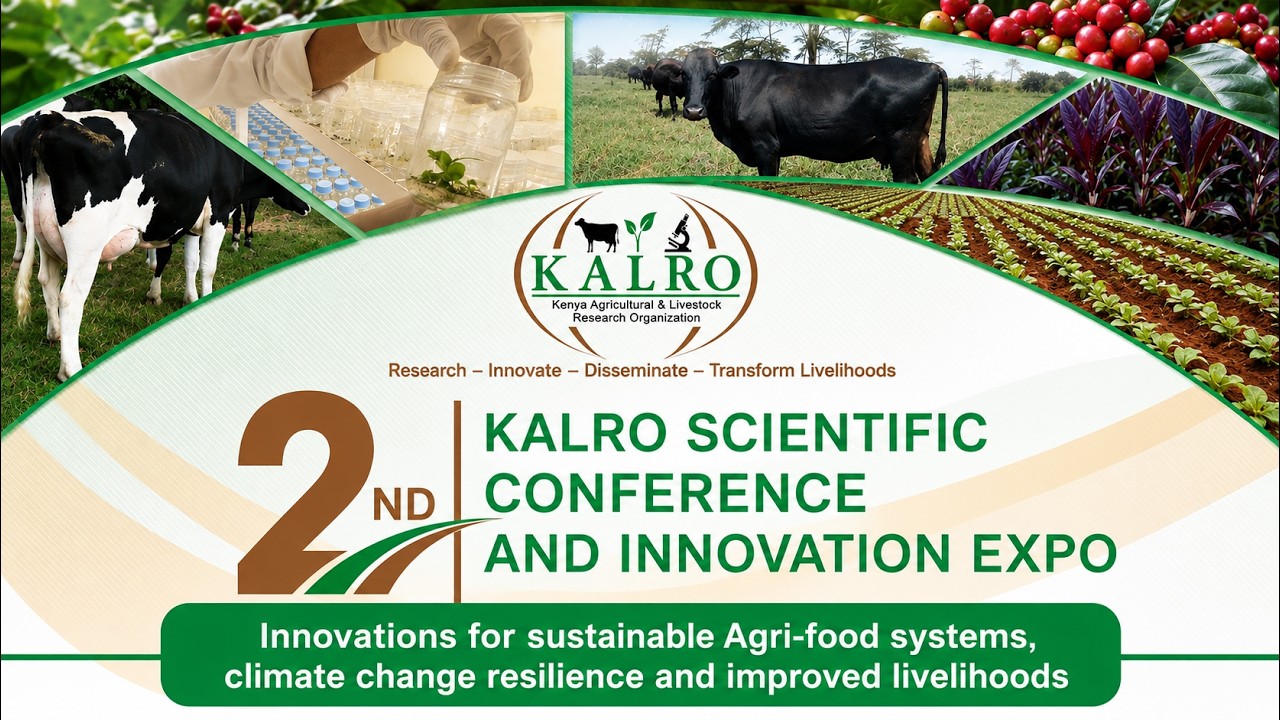
2nd KALRO Scientic Conference and Innovation Expo 2026

15 - 19 June 2026. The 2nd KALRO Scientific Conference and Innovation Expo 2026 is organized around the theme “Innovations for Sustainable Agri-food Systems, Climate Change Resilience and Improved Livelihoods.” 

KALRO Director General Dr. Patrick K. Ketiem, highlighted KALRO's achievements since the last conference, including the release of new crop and livestock technologies developed for Kenyan conditions, expanded soil fertility mapping, strengthened disease surveillance systems and the development of extension materials in local languages to ensure farmers can access and understand scientific knowledge.

"Our task today, and in the years ahead, is to close the distancebetween what we have achieved in the laboratory and what farmers are experiencing in the field. Every paper presented and every innovation showcased during the conference must answer three critical questions: Does it work for the farmer? Can it scale? Can it last? The true measure of success is not the number of technologies released, but the number of farmers whose lives are transformed through their adoption". 

The programme was structured into 16 thematic tracks (subthemes) that served as the main discussion and presentation streams. These tracks brought together researchers, policymakers, private-sector actors, farmers, and development partners to explore solutions for transforming Kenya's and Africa's agri-food systems.

Conference Panels / Thematic Tracks

1. Crop Varieties, Productivity and Production Management

Focused on improved crop varieties, breeding innovations, integrated crop management, and strategies to increase productivity and resilience across different agroecological zones.

2. Sustainable Seed Systems, Quality Assurance and Scalability

Examined seed production, certification, distribution systems, and approaches to ensure farmers have access to quality seed at scale.

3. Plant Health, Emerging Crop Pests and Diseases, Biosecurity and Phytosanitary Systems

Addressed pest surveillance, diagnostics, integrated pest management, responsible pesticide use, biosecurity measures, and phytosanitary systems for market access.

4. Plant Nutrition, Soil Health and Conservation Agriculture

Explored soil fertility management, nutrient-use efficiency, conservation agriculture practices, and strategies for restoring and maintaining productive soils.

5. Water Harvesting, Conservation and Irrigation Systems

Focused on irrigation technologies, water-use efficiency, rainwater harvesting, and climate-resilient water management systems.

6. Ecological-Organic Farming, Renewable Energy and Circular Economy

Highlighted organic agriculture, renewable energy applications, composting, recycling, and circular economy approaches for sustainable farming.

7. Climate Change, Land Degradation and Reclamation

Discussed climate adaptation and mitigation, land restoration, carbon-smart agriculture, and resilience-building strategies.

8. Agrodiversity and Genetic Resources

Examined conservation and utilization of genetic resources, germplasm management, and the role of biodiversity in resilient food systems.

9. Animal Feed Resources, Nutrition and Husbandry Practices

Covered forage development, livestock nutrition, rangeland management, pastoral systems, and
husbandry innovations.

10. Livestock Breeds, Breeding Practices and Emerging Livestock Species

Focused on breeding programmes, genetic improvement, genotype-environment interactions, and emerging livestock opportunities.

11. Animal Health, Sanitary Systems and Emerging Livestock Diseases

Addressed vaccines, epidemiology, disease surveillance, antimicrobial resistance, zoonoses, and livestock biosecurity.

12. Apiculture, Beneficial Insects and Ecosystem Services

Explored beekeeping innovations, pollination services, insect-based enterprises, ecosystem services, and beneficial insects for food and feed.

13. Biotechnological Solutions for Agriculture and Natural Resource Management

Focused on biotechnology applications including gene editing, molecular diagnostics, biotechnology
products, and genetic engineering.

14. Food Safety, Value Addition and Cottage Industries

Examined food safety systems, post-harvest technologies, agro-processing, value addition, and small-scale agribusiness development.

15. Mechanization in Agricultural Systems

Discussed agricultural machinery, precision farming, mechanized production and processing, and innovations to reduce labour and increase efficiency.

16. Technology Transfer, Knowledge Co-Creation and ICT-Enabled Precision Systems

Focused on extension systems, innovation scaling, digital agriculture, ICT-enabled advisory services, precision agriculture, and commercialization pathways

Collaborating CGIAR centres

  • International Livestock Research Institute (ILRI) – headquartered in Nairobi and a frequent KALRO research partner.
  • International Potato Center (CIP) – active in seed systems, root and tuber crops, and climate resilience.
  • International Water Management Institute (IWMI) – involved in water management and irrigation research.
  • Center for International Forestry Research and World Agroforestry (CIFOR-ICRAF) – headquartered in Nairobi and active in agroforestry, land restoration, and climate resilience.
  • International Institute of Tropical Agriculture (IITA) – active in crop improvement and pest management across East Africa.
  • Alliance of Bioversity International and CIAT – engaged in genetic resources, biodiversity, seed systems, and climate-smart agriculture.
  • International Maize and Wheat Improvement Center (CIMMYT) – active in maize, wheat, seed systems, mechanization, and conservation agriculture in Kenya. 

Side events

17 June 2026. AI in Agriculture: Opportunities, Implications and Risks.

The side event will focus on demystifying AI in agricultural applications, showcasing existing AI-enabled advisory solutions in Kenya, and exploring partnerships to advance trusted, localized and responsible AI advisory services for farmers, extension officers  and other agricultural actors.


19 June 2026. Artificial Intelligence meets Agribusiness

Prof. Simon W. Ndiritu from Strathmore University will answer a critical modern question: Which way for improved and sustainable food systems in the face of Artificial Intelligence? A synergy between Agribusiness, Innovating Financing and policy for Agricultural growth.