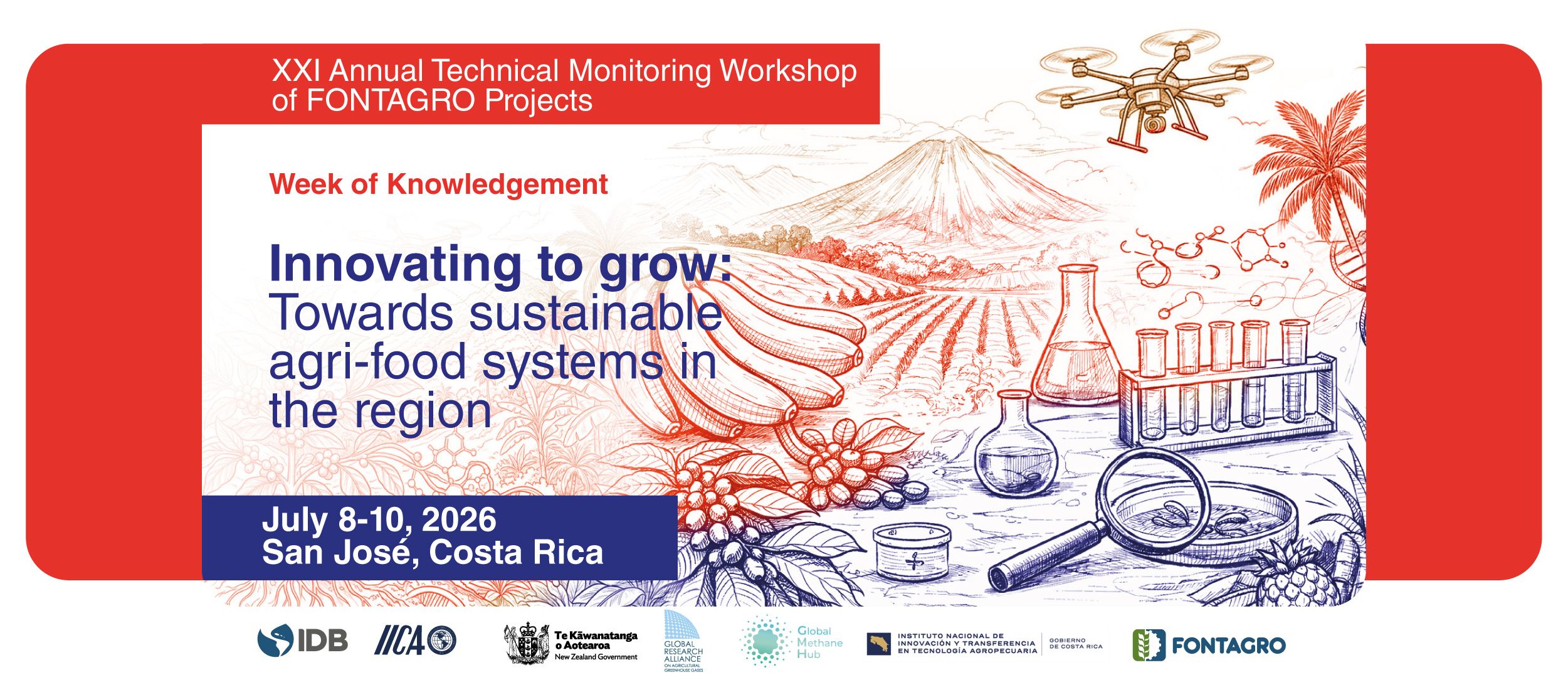
The event combines the XXI Annual Technical Monitoring Workshop of FONTAGRO Projects with scientific presentations showcasing research and innovation across Latin America and the Caribbean.
It is supported by the Inter-American Development Bank (IDB), IICA, the Government of New Zealand, the Global Research Alliance, Global Methane Hub, INTA Costa Rica, and other partners.
The opening session set the stage for three days of scientific exchange and regional collaboration by bringing together researchers, policymakers, development partners, and innovation leaders from across Latin America and the Caribbean. It highlighted FONTAGRO's vision of transforming agri-food systems through science, technology, and international partnerships, emphasizing the importance of collaborative research in addressing climate change, food security, and sustainable rural development.
08/07 Flagship Program 1 – Transformation of resilient and carbon-neutral crop systems
This session addressed the growing pressures of climate change, resource scarcity, and increasing food demand on agricultural production. Presenters showcased innovative approaches to improving crop resilience while reducing agriculture's environmental footprint, covering advances in soil management, biological inputs, nutrient-use efficiency, crop protection, sustainable irrigation, and climate-resilient cropping systems.
Pablo Mamani (PROINPA, Bolivia) – Nanotechnology in agricultural soil moisture management
Francisco Salazar (INIA, Chile) – Nitrogen optimization for climate-smart food production
Víctor Hugo Sánchez (INIAP, Ecuador) – Managing potato purple top disease
Hugo Montero (INTA, Costa Rica) – Biologicals for sustainable agriculture
Ignacio Hisse (University of Florida, USA) – Integrating sorghum into Latin American production systems
Carolina Lizana (Universidad Austral, Chile) – Sustainable irrigation and fertilization in quinoa
08/07 Flagship Program 2 – Livestock and animal protein systems
This session examined how livestock systems could become more productive while reducing their environmental impact. Presentations focused on climate-smart livestock production, methane mitigation, sustainable grazing systems, resilient farm management, animal welfare, and tropical dairy production, demonstrating practical pathways toward more sustainable animal production systems.
Carlos Gómez (Universidad Nacional Agraria La Molina, Peru) – Sustainable livestock in the Amazon
Yury Granja Salcedo (AGROSAVIA, Colombia) – Methane reduction in ruminants
Marcelo Cesar Contreras (INTA, Argentina) – Resilient farm networks
Natalia Aguilar (INTA, Argentina) – One Welfare approaches
Nelson Vivas (Universidad del Cauca, Colombia) – Tropical dairy systems
Alejandro Radrizzani (INTA, Argentina) – Gran Chaco cattle and methane reduction
09/07 Flagship Program 3 – Impact 2030
This session demonstrated how scientific innovation was translated into practical benefits for farmers and rural communities. Speakers presented successful examples of scaling agricultural innovations through extension services, public-private partnerships, participatory research, and regional collaboration, highlighting approaches that accelerated the adoption of climate-smart technologies across Latin America and the Caribbean.
Carlos Hernández (Universidad Nacional, Costa Rica) – Geographical indications for Mesoamerican cacao
Romina Romaniuk (INTA, Argentina) – Integrated production systems for climate adaptation
Sebastián Villagra (INTA, Argentina) – Climate-smart research with Indigenous communities
Gina Garzón (AGROSAVIA, Colombia) – Climate-resilient potatoes for the Andes
09/07 Flagship Program 4 – Digital revolution in agriculture
This session explored how digital technologies were transforming agricultural management and decision-making. Presentations highlighted the use of satellite observations, precision agriculture, artificial intelligence, digital decision-support platforms, and AgTech innovations to improve productivity while enhancing environmental sustainability.
Martín Durante (INTA, Argentina) – Satellite monitoring of pasture biomass
Liliana Ríos (AGROSAVIA, Colombia) – Tropical Agriculture 4.0 and water management
Fernando Lattanzi (INIA, Uruguay) – Scaling AgTech innovation
Álvaro Roel (INIA, Uruguay) – Satellite monitoring and verification of methane emissions
This session focused on agricultural diversification and innovations that contributed to resilient and nutritious food systems. Speakers presented research on biodiversity, sustainable horticulture, biological technologies, post-harvest protection, value-added products, and crop improvement, demonstrating how these innovations strengthened food security and agricultural competitiveness.
Javier Pitti (IDIAP, Panama) – Vertical farming technologies
Federico Battistoni (IIBCE, Uruguay) – Biologicals platform for Latin American farms
Fabián Jiménez (INTA, Costa Rica) – Regional genetic improvement network
10/07 Project Presentations
The finalist project presentations showcased some of the most promising research initiatives supported by FONTAGRO. The projects addressed topics including gene editing, climate-smart livestock systems, biofortified crops, disease management, soil carbon sequestration, and greenhouse gas mitigation, illustrating their potential to generate meaningful benefits for farmers, consumers, and the environment.
Sergio Feingold (INTA, Argentina) – Gene editing for plants and animals
Nelson Pérez (AGROSAVIA, Colombia) – Multipurpose silvopastoral systems
The report focuses on sustainable agricultural productivity, resilient agrifood systems, rural development, and regional cooperation across Latin America and the Caribbean.
Main themes presented in the report
Sustainable and resilient agricultural productivity.
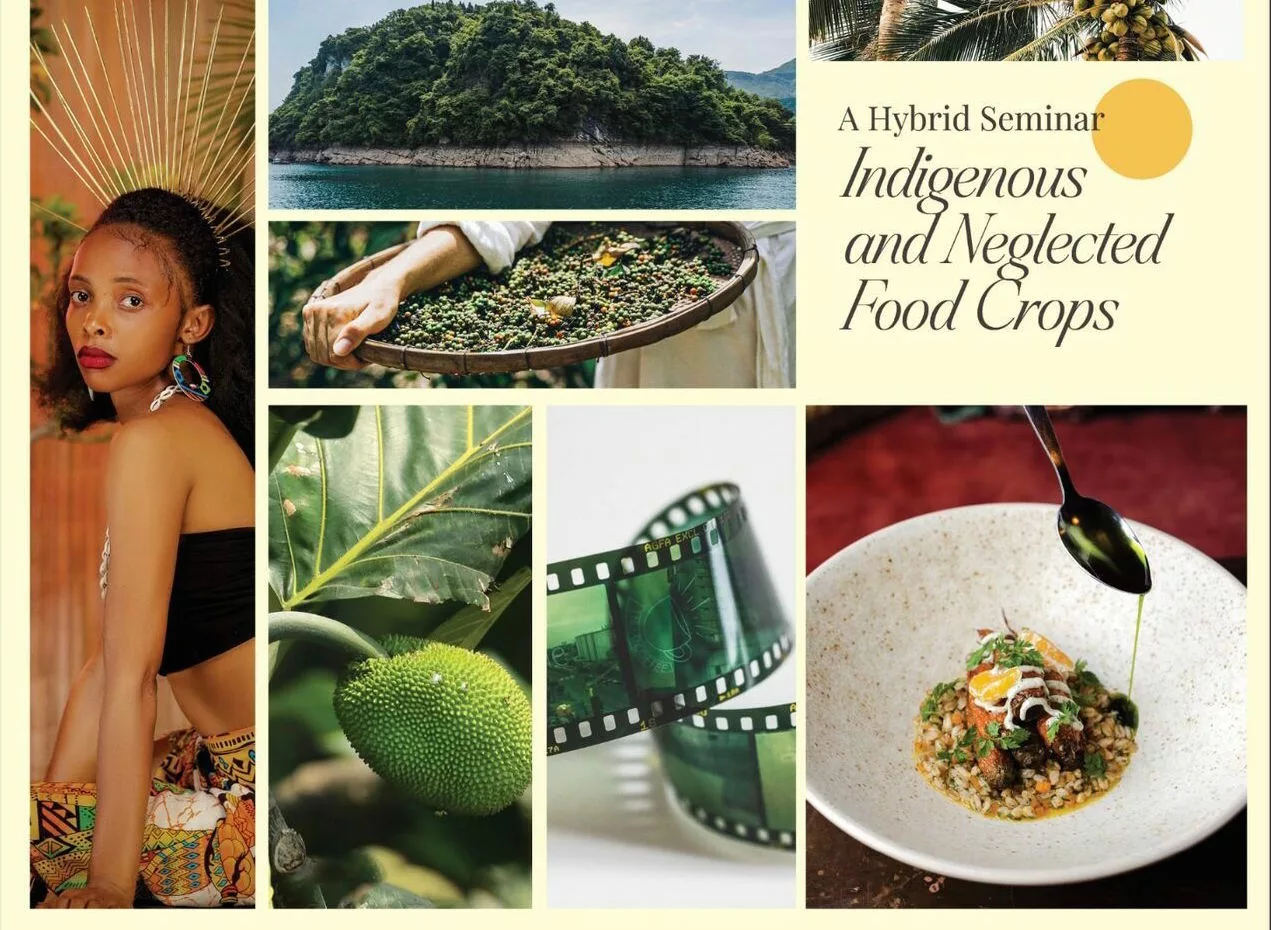
This seminar was the first in a series to promote a wider initiative –
AfriCaribbean Tourism Routes. Given increasing trends in
tourism markets for local, healthy “authentic” culinary and cultural
experiences, the tourism routes initiative between Africa and the
Caribbean aims to promote the regions as sustainable and unique
culinary cultural meccas for both international, regional, and
domestic travelers and public and private sector investors. The seminar was in hybrid format (in-person and virtual).
The seminar was chaired by Mr. Jerry Mabena, CEO of the Motsamayi Tourism Group and featured opening remarks and a keynote address from heads of UJ’s School of Tourism and Hospitality, South Africa’s National Agricultural Marketing Council, the Tourism Business Council South Africa, and Africa Tourism Partners.
It highlighted the social, economic, and environmental relevance of
indigenous, neglected and under-utilized crops to Africa and the
Caribbean. More specifically, to promote these African and
Caribbean crops and related value-added foods and products as
unique ingredients for developing sustainable tourism.
Entrepreneurs showcased real-world case studies – from indigenous teas and reimagined culinary menus in South Africa, bespoke traditional catering in Zimbabwe, artisanal chocolates by a rural network of African and Caribbean farmers and chocolate producers, founded in Trinidad and Tobago, to farm tours in Grenada, and agricultural-based spa treatments in Barbados. Senior representatives from research institutions and development partners, including the International Institute of Tropical Agriculture, South Africa’s Agricultural Research Council, Afreximbank, the International Finance Corporation, the International Trade Centre, UN Tourism, the Inter-American Institute for Cooperation on Agriculture, and the CARICOM Secretariat, highlighted areas in which they are already partnering and other areas for future collaboration, to support the seminar objectives.
OPENING REMARKS
Mr. John Steenhuisen, Minister, Department of Agriculture, Republic of
South Africa (RSA) (tbc)
Mr. Tshifhiwa Tshivhengwa, CEO, Tourism Business Council, RSA
Prof. Diane Abraham, Director, School of Tourism and Hospitality, University
of Johannesburg
CONCEPTUAL AND OPERATIONAL FRAMEWORKS
This presentation provided an overview of trends in the tourism markets that are
relevant to indigenous and local food crops. It also reviews the food system
framework to highlight the benefits of collaboration between Africa and the
Caribbean in maximising these market opportunities for achieving their
sustainable development goals, namely those linked to food and nutrition
security, food import reduction, job creation, and climate change adaptations.
BUILDING BRIDGES: STRATEGIES AND LESSONS LEARNED IN CREATING
CROSS-BORDER AGRITOURISM ROUTES
This presentation provided strategic insights gleaned from creating an
international tasting trail between the United States and Canada
Dr. Lisa Chase, Professor at the University of Vermont Extension, Director of
the Vermont Tourism Research Center, past President and current
Education Co-Chair of the Global Agritourism Network.
CASE STUDIES: COUNTRY RESPONSES TO FOOD AND WELLNESS TRENDS IN TOURISM MARKETS
Examples of primarily private sector-driven business responses highlighted, among other themes:
the key markets targeted,
social and environmental returns on their investments;
challenges in their supply chains; and
the role of smallholder farmers and entrepreneurs and how they can be more efficiently incorporated into agritourism value chains.
Fine Dining; Farm-2-Table
Case Study 1: Mr. Michael Daiber, Manager, !Khwa ttu, an award winning
San heritage educational center and tourist destination transformed its
restaurant menu to tell an indigenous story.
Food Festivals
Case Study 2. Chef Nyanda Peltier Charles, Founder, WATO Festival,
Commonwealth of Dominica (celebrating Caribbean local foods and culture)
Specialty Foods; Retail
Case Study 3: Ms. Gillian Goddard, Co-Founder, Chocolate Rebellion, (an
African-Caribbean network of cocoa farmers and artisanal chocolate
producers)
Case Study 4: Ms. Retang Phaahla, Co-Founder, Setšong African Tea
Crafters, Limpopo, South Africa) (transforming local flora and fauna into an
indigenous brand)
Spa and Beauty Treatments
Case Study 5: Mr. Steve Andrews, Founder, Soothing Touch Spa and The
Bamboo Retreat, Barbados (pampering agri-style)
SPECIAL PRESENTATIONS
DEVELOPING AN AUTHENTIC, LOCAL, CULTURALLY DIVERSE FOOD ECOSYSTEM FOR SOUTH AFRICANS AND GLOBAL TOURISTS
This presentation explored key learnings from the development of a food ecosystem at the V&A Waterfront, one of South Africa’s premier tourist destinations. Participants gained insights into how this complex neighbourhood is leveraging market-driven strategies, driving an ambition to foster an example of a just, equitable and sustainable food landscape, benefiting local communities, small-scale farmers and culinary entrepreneurs
Mr. Henry Mathys, Strategic Programme Manager, V&A Waterfront, Cape Town, South Africa.
REDEFINING FARM LIFE – REIMAGINING LUXURY
This presentation showcased how farms, traditionally places for food production,
can now be hubs for health and wellness experiences, tapping into an emerging
market of travellers seeking nature-based therapies, organic foods, and holistic
well-being experiences.
POTENTIAL FOR HERITAGE FOOD TRAILS IN THE CARIBBEAN
This presentation highlighted success stories in food and wellness tourism in
selected Caribbean countries and the development of regional heritage trails
linking indigenous foods and healing cultures
Ms. Ena Harvey, Agritourism Specialist
LINKING ENTREPRENEURSHIP-AGRICULTURE DEVELOPMENT IN AFRICA
AND THE CARIBBEAN: FROM FARM TO TABLE
This presentation highlighted opportunities in the agri-food model to drive
entrepreneurial innovations for meeting the demands of both local and global
tourism markets.
Ms. Isolina Boto, Head of Networks and Alliances, COLEAD
ROTECTING HERITAGE AND PROMOTING GROWTH: THE ROLE OF
GEOGRAPHICAL INDICATIONS (GIs) IN MARKETING INDIGENOUS AND
NEGLECTED FOOD CROPS
This presentation explored how the recognition of these crops with a GI label
can elevate their marketing value, attract tourism, and stimulate sustainable local
economies. It also touched on the challenges of establishing such systems
and the impact of protecting indigenous knowledge in both the agricultural sector
and cultural tourism.
Mr. Mark Forgenie, Managing Director, Vista Dorado Estates Moruga Hill
Rice
CULTIVATING CONNECTIONS – THE ROLE OF TOUR OPERATORS IN
SHAPING AGRITOURISM EXPERIENCES ACROSS AFRICA AND THE
CARIBBEAN
The presentation highlighted the role of tour operations in, among others,
facilitating logistics and operations for a competitive agritourism route, marketing and promotion, and creating tailored tourism packages while supporting local
community engagements
Mr. Muthuri Kinyamu, Founder, Turn Up Travel and Board Member, Kenya
Ecotourism.
IMPROVING CONNECTIVITY BETWEEN AFRICA AND THE CARIBBEAN
Increased and competitive connectivity between the two regions is required for
efficient South-South collaboration in maximising opportunities in tourism markets
for mainstreaming indigenous food crops. This presentation provided an update
on flight options between Africa and the Caribbean, based on the joint venture
between Air Peace and Antigua and Barbuda.
Ms. Hafsah Abdulsalam, CEO, LIAT 2020
PROMOTING SOUTH-SOUTH COLLABORATION AND AGRITOURISM TRADE
BETWEEN AFRICA AND THE CARIBBEAN
Afreximbank is leading a transformative process to strengthen social and
economic ties between Africa and the Caribbean. Facilitating trade and
investment is a vital step in this process and has formed a major part of the bank’s
Diaspora Strategy. This presentation explored how this support can be
leveraged to promote joint investments in establishing an African-Caribbean
tourism trade route centred on indigenous and neglected crops bundled with the
regions’ cultural and creative assets.
Afreximbank
TAKING ACTION: MAKING A PITCH
This presentation provided an investment pitch for developing a WILD food
safari around homestead communities in Limpopo and Mpumalanga provinces to
complement South Africa’s well developed wildlife safari. It also highlighted lessons for integrating indigenous and neglected crops into more mature tourism
market segments.
Mr. Dave Varty, Co-Founder & Co-Owner, Londolozi Private Game Reserve
This presentation shared plans for RICE, Rising in Community Everyday, a
proposed festival for promoting communities’ uniqueness through culinary art and
experiences
Chef Chaz Brown, Executive Chef at Garces Events
RESPONSES FROM ACADEMIA
This session shared Academia and Development Partners’ agenda, particularly in terms of
(i) on-going related activities; (ii) opportunities for collaboration among themselves for increasing efficiencies in delivering related impacts; and (iii) opportunities for new investments to contribute to maximising African and Caribbean indigenous and local food crops for sustainable tourism and development.
Prof Michael Abberton, Director of the International Institute of Tropical
Agriculture (IITA) Genetic Resources Program and Lead for IITA’s work on
neglected crops
Dr Hema Kesa, Director, Food Evolution Research Laboratory and Senior
Lecturer at the School of Tourism and Hospitality, University of Johannesburg
Prof Mark N. Wuddivira, Dean, Faculty of Agriculture, University of the West
Indies
Dr. Yolisa Pakela-Jezile, Acting Executive Manager, Crops and Natural
Resources, Agricultural Research Council, RSA
RESPONSES FROM DEVELOPMENT PARTNERS
Mr. Samuel Kamau Nganga, Manager, Manufacturing, Agriculture and
Services, International Finance Corporation
Mr. William Castro Rodriguez, Sr. Trade Officer, Caribbean Unit, International
Trade Centre
Ms. Sandra Carvao, Director, Market Intelligence, Policies, and
Competitiveness, United Nations World Tourism Organisation (UNWTO)
Ms. Shauna Brandon, Rural Development Specialist, Inter-American Institute
for Cooperation on Agriculture (IICA)
Mr. Jonathan Lewis, Program Manager, Gates Foundation
Dr. Wendell Samuel, Sr. Advisor to the Secretary General and Acting
Assistant Secretary General, Directorate for Economic Integration,
Innovation, and Development, CARICOM Secretariat
A key highlight of the seminar was an inspiring “elevator pitch session,” including a proposal for a WILD Food Safari in Mpumalanga, South Africa, to leverage the province’s wildlife game safari – an already well-established tourism offering; and another to promote high-end food events based exclusively on indigenous, underutilized, and emblematic crops, including Trinidad and Tobago’s Moruga Hill rice.
The seminar concluded with a call to action from FANRPAN’s CEO, Dr. Madzivhandila, for long-term funding to be increased for feasible tourism projects that promote the regions’ indigenous and neglected food crops.