Platform for African – European Partnership in Agricultural Research for Development
Showing posts with label ROPPA. Show all posts

Friday, August 14, 2026

The West African Caravan: Defending Food Sovereignty through Land, Water and Peasant Seeds


The West African Caravan for Land, Water and Peasant Seeds has become one of the region's most visible grassroots mobilizations for food sovereignty, agroecology and communities' rights over natural resources. Initiated by the Global Convergence of Land and Water Struggles – West Africa (CGLTE-OA), the Caravan brings together farmers' organizations, pastoralists, fishers, women's and youth movements, civil-society organizations and agroecology networks. Since its first edition in 2016, it has sought to make the voices of rural communities heard in debates over land, water, seeds and agricultural policy. 

The movement itself brings together more than 300 organizations and has involved major regional networks including the Network of Peasant
Organizations and Agricultural Producers in West Africa (ROPPA), COPAGEN, the West African Committee for Peasant Seeds (COASP), La Via Campesina Africa, the Alliance for Food Sovereignty in Africa (AFSA) and We Are the Solution.


From a regional caravan to a movement for food sovereignty


At the heart of the Caravan is a simple principle: food sovereignty is difficult to achieve when
farming communities do not control the resources required to produce food
. Access to land and water is therefore inseparable from farmers' ability to save, reproduce, exchange and improve their own seeds. From its first edition, the Caravan explicitly connected these rights with family farming, peasant agroecology and food sovereignty, while challenging land, water and seed grabbing. Its vision emphasizes locally rooted food systems, biodiversity, farmers' control over seeds and respectful relationships between producers and consumers.

The Caravan is particularly significant because it takes these debates out of conference rooms and into farming communities. Rather than organizing a single regional meeting, delegations travel between countries and stop in communities where farmers, traditional authorities, women's groups, young people and policymakers can exchange experiences. Local struggles consequently become part of a regional political agenda. Research on the movement has highlighted precisely this ability of the Caravan to connect localized struggles over natural resources with broader West African and international movements for food sovereignty and climate justice.


Peasant and indigenous seeds at the centre


Peasant, traditional and indigenous seed systems are fundamental to this struggle. Generations of farmers have selected crops and varieties according to local soils, rainfall patterns, food cultures, nutritional preferences and farming systems. These systems maintain agricultural biodiversity while continuously adapting crops to changing environments. Seed sovereignty therefore goes beyond having physical access to seed: it concerns farmers' ability to save, select, multiply, exchange and transmit planting material and associated knowledge from one generation to another.

This is especially important for Africa's neglected and underutilized species (NUS), traditional crops and indigenous foods. Many such crops survive not because they have been prioritized by commercial seed companies, but because farming communities—often women—have continued cultivating, selecting, cooking and exchanging them. The erosion of farmer-managed seed systems can therefore mean more than the disappearance of varieties. It can also lead to the loss of traditional knowledge, food cultures, dietary diversity and locally adapted genetic resources.

The Caravan consequently raises a fundamental question about the future of African agriculture: who controls the seed? A food system increasingly dependent on a narrow range of commercial varieties risks marginalizing the diversity maintained in farmers' fields. By contrast, strengthening farmer-managed seed systems can complement formal breeding and genebank conservation by keeping crop diversity alive and evolving under real farming conditions. Previous Caravan activities have explicitly promoted common farmer seed banks alongside agroecological practices.


Women as custodians of seed diversity


The Caravan also brings attention to the often insufficiently recognized role of women in conserving agricultural biodiversity. In many West African farming and food systems, women are involved not only in production but also in selecting seed, storing planting material, processing crops and maintaining knowledge about preparation, nutrition and cultural uses. During earlier editions of the Caravan, organizers explicitly highlighted women's land rights and described women as important guardians of seeds.

Protecting indigenous and farmer-managed seeds must therefore go hand in hand with strengthening women's access to land, resources, decision-making and markets. A seed may be conserved in a genebank, but maintaining it as part of a living food culture requires farmers who continue to grow it and consumers who continue to value it.


The 2026 Caravan: converging on Cotonou


The fifth West African Caravan, held from 19 July to 9 August 2026, significantly expanded this regional mobilization. Two routes crossed West Africa: a Sahelian route from Senegal through Mali and Burkina Faso to Togo, and a coastal route from Guinea through Côte d'Ivoire and Ghana to Togo. They subsequently converged in Benin, where participants also met a Central African Caravan travelling from Cameroon through Nigeria ahead of the 17th World Social Forum in Cotonou. Organizers projected more than 500 participants, 18 stopovers and mobilization involving more than 20,000 people, particularly rural communities, women and youth.

The launch in Tambacounda, Senegal, already demonstrated the broad coalition behind the initiative. Participants included representatives from Senegal, Mauritania, The Gambia and Guinea-Bissau, alongside farmers' organizations, social movements, community leaders and local authorities. The launch was supported by the Dynamic for an Agroecological Transition in Senegal (DyTAES) and Enda Pronat.

(see: CGIAR Trust Fund (2024) Dynamic for the agroecological transition (Dytael) in Fatick - Senegal. Relocalization of the millet value chain for the territorialization of agroecology

The West African Caravan was initially stopped by Beninese police and sent back toward the border on 3 August 2026, reportedly amid problems concerning authorization and cross-border entry procedures for the large convoy of more than 400 participants from multiple West African countries.

The arrival in Cotonou was therefore more than the conclusion of a journey. It brought a decade of grassroots experience—from the Caravan editions of 2016, 2018, 2021, 2023 and 2026—into a global civil-society forum. Land governance, access to water, peasant seeds, agroecology, food sovereignty, climate change, social cohesion and peace could consequently be discussed not as separate issues, but as components of the same transformation.


From seed conservation to transformation of food systems


The importance of the West African Caravan ultimately lies in its insistence that seeds are simultaneously biological resources, cultural heritage, sources of livelihoods and instruments of food sovereignty. Conserving indigenous crops without strengthening the communities that cultivate them is insufficient. Likewise, promoting agroecology without addressing farmers' access to land, water and diverse seed can only achieve limited transformation.

For neglected and underutilized species, this message is particularly powerful. Their revival requires a chain connecting farmers and seed custodians → community seed systems → research and characterization → agroecological production → processing and entrepreneurship → markets and consumers → supportive policies. The Caravan helps ensure that the first actors in this chain—the farmers and communities who have maintained this diversity—remain central to decisions about its future.

After ten years of mobilization, the West African Caravan demonstrates that the struggle for food sovereignty is also a struggle for agricultural biodiversity and control over the foundations of food production. Its recurring message—rights to land, water and peasant seeds are a common struggle—has particular resonance at a time of climate change, biodiversity loss and increasing concentration within agricultural input systems. Protecting Africa's indigenous and farmer-managed seeds is therefore not about returning to the past. It is about ensuring that the extraordinary diversity created and maintained by generations of African farmers remains available for future breeding, resilient farming, diversified diets and locally determined food systems.


Related:

10 August 2026. Niger Restored 900,000 Hectares of Dead Desert With Shovels — Half a Million People Now Eat. Niger Restored 900,000 Hectares of Dead Desert With Shovels, Half a Million People Now Eat, proving that sometimes the best technology to save the future is actually centuries old. In the southern Maradi region of Niger, a stretch of barren land that the United Nations once wrote off as "finished" is now thriving. This isn't the result of billions of dollars in foreign aid or heavy machinery; it's the result of an ancient, forgotten farming method called the "half-moon" and "zaï pits," pioneered by a man everyone once called insane.

This video explores how 528 sites in the Sahel are holding three million cubic meters of water, recharging aquifers, and creating life-saving microclimates. We also look at the reality behind the African Union's Great Green Wall project, and how grassroots, shovel-in-hand resilience is successfully pushing back the Sahara Desert.

Monday, June 30, 2025

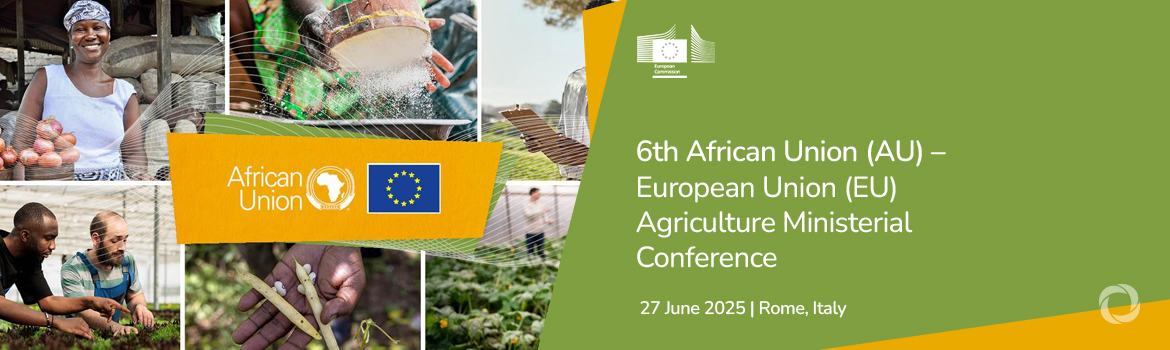
6th African Union (AU) – European Union (EU) Agriculture Ministerial Conference


27 June 2025.
6th African Union (AU) – European Union (EU) Agriculture Ministerial Conference

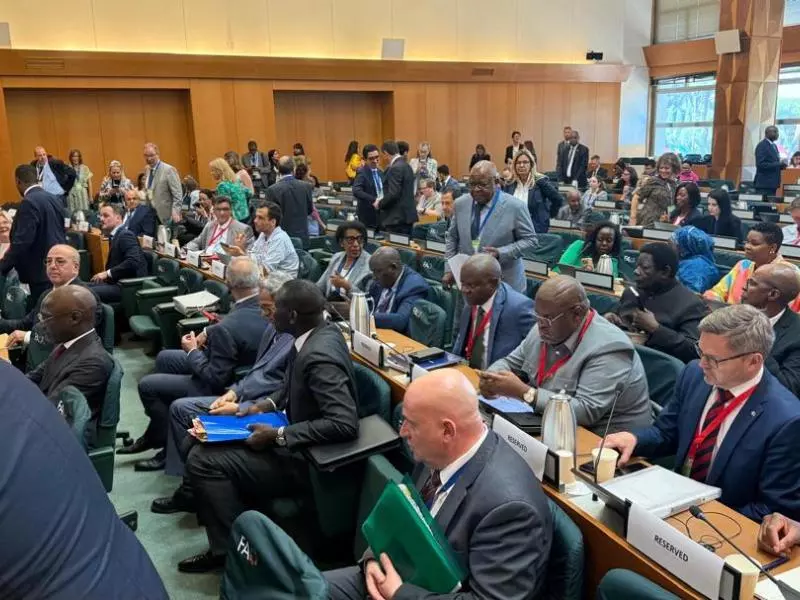
In the framework of the Africa-EU Partnership, the sixth AU-EU agriculture ministerial conference centered around strengthening the collaboration and addressing current challenges facing both Continents’ agri-food systems.
The conference discussed in depth four topics that will feed into the overall theme with a good potential for concrete EU-AU partnership. The four topics were:
  • Investment and Financing in agri-food value chains
  • Sustainable Practices and Climate Resilience
  • Research, Innovation, and Technology
  • Market Access and Trade Facilitation
AU and EU Ministers of Agriculture, together with representatives of other international organisations convened in the afternoon plenary session to take stock of the thematic discussions and pave the way for the future cooperation.

High level thematic sessions


Concept note for the panel on investment and financing in agri-food value chains  # 3 pp.

Concept note for the panel on sustainable practices and climate resilience # 2 pp.

Concept note for the panel on research, innovation and technology # 3 pp.

Concept note for the panel on market access and trade facilitation # 3 pp.

Side events

1: Enhancing investment, sustainability, and trade: The role of farmers and farmer organisations

  • The Farmers’ Organizations for Africa, Caribbean and Pacific (FO4ACP) programme (2019-2025) aimed to increase the incomes and improve the livelihoods, food and nutrition security, and safety of organized smallholders and family farmers in African, Caribbean and Pacific countries by strengthening regional, national and local farmers’ organizations. This program consistsed of 23 projects in various countries of Sub-Saharan Africa. The projects were implemented by nine (9) of the twelve (12) AGRICORD member agri-agencies and trusted Farmer Organizations on the national, subnational and local level ranging from country-wide federations to primary producer cooperatives.
  • Farmers' Organizations Leading Research & Innovation on agroecology for sustainable food systems (FO-RI, 2022-2026), - managed by AgriCord. 
  • A new farmers’ organization’s global capacity building program FO4IMPACT is expected to be implemented in Africa through the Panafrican Farmers Organisation (PAFO), its members and AgriCord.
Speakers:
  • Keynote – Ms Elizabeth Nsimadala, President of EAFF, Board member of PAFO
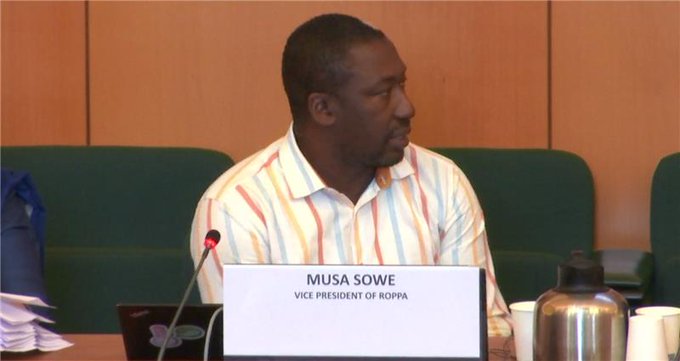
  • Unlocking finance for smallholder farmers, including youth, and addressing barriers to market access, Mr Musa Sowe, President of National Coordinating Organizations for Farmers Association of the Gambia and, Vice-president of ROPPA
  • FOs’ role in IFAD programs and IFAD investments contributing to scaling up, Mr Ron Hartman, Director for Global Engagement, Partnerships and Resource Mobilization, IFAD
  • Relevance of supporting FOs within EU policy framework, Mr Philippe Le Clerc Policy Officer, Sustainable Food Systems/DG INTPA, European Commission
  • Agroecological/climate-smart farming practices and compensation for ecosystem services, Ms Kati Partanen, Board member of the Central Union of Agricultural Producers and Forest Owners/MTK, Finland and Board member of the WFO
  • Summary remarks – Mr Pieter Verhelst, Board member of Boerenbond, Belgium and President of AgriCord

This side event explored how the AU and EU can strategically contribute to global efforts to address inequality, achieve climate justice and the right to food. It linked the conversation to global processes: These include the G20 - now under the Presidency of South Africa - and its Global Alliance against Hunger and Poverty, the lead-up to COP30 in Brazil, the 53rd Plenary Session of the Committee on World Food Security (CFS 53), and the recent pledges at the Nutrition for Growth Summit. 


This event explored how the recent Kampala Comprehensive Africa Agriculture Development Programme (CAADP) Declaration alongside the EU Vision for Agriculture and Food, can further strengthen collaboration opportunities to strengthen the evidence-base of economic analysis of policies. 
  • Opening A. Agumya, Executive Director (FARA)
  • Introduction M. Vilakati, Commissioner for Agriculture, Rural Development, Blue Economy and Sustainable Environment (AU)
  • PANAP: Bridging science and policy presentation - E. Ferrari, Scientific Project Officer (EC-JRC) & Kweku Antwi, Cluster Lead (FARA)
Bridging science-policy in current Africa-EU agri-food policy: opportunities for partnerships
  • M. Heydon, Minister for Agriculture, Food and the Marine, (Republic of Ireland)
  • Senator A. Kyari, Honourable Minister of Agriculture and Food Security (Federal Republic of Nigeria)
  • E. Fotabong, Director of Agriculture (NEPAD)
  • L. Mizzi, Head of Unit (EC-DG INTPA)
  • O. Badiane, Executive Chairperson (AKADEMIYA2063)
  • P. Quartey, Professor (ISSER- University of Ghana)
  • Moderator - K. Dekeyser, Policy Analyst (ECDPM)
  • Wrap-up and take aways A. Zampieri, Director Sustainable Resources (EC-JRC)


The traditional knowledge of the territories where they are rooted, require supportive public
policies to thrive. These policies must secure a favorable legal and administrative framework for their management and protection, support stakeholders in their collective efforts, and help turn these high-quality agricultural and food products into genuine engines of sustainable territorial development.

Strong policies for strong GIs 
  • Annie Genevard, Minister of Agriculture and Food Sovereignty, France
  • Christophe Hansen, European Commissioner for Agriculture
GIs: Perspectives from Africa and Europe
  • Maurizio Martina, Deputy Director-General of FAO
  • Alaa Farouk Zaki El-Sayed, Minister of Agriculture and Land Reclamation, Egypt
  • Mabouba Diagne, Minister of Agriculture, Food Sovereignty, Livestock, Senegal
  • Assoumani Mondoha, Comores ambassador
  • Mr. Tahirou Pape Kanoute, Executive Director of the NGO and consultancy firm ETDS – Economy, Territory and Development Services, Senegal (via video)
Conclusion and thanks 
  • Moses Vilakati, African Union Commissioner for Agriculture
  • Francesco Lollobrigida, Minister of Agriculture, Food Sovereignty and Forests, Italy

Tuesday, October 29, 2024

The right to adequate food in urban and peri-urban areas

29 October 2024. The right to adequate food in urban and peri-urban areas

  • This event aimed to emphasize the integration of the right to food and the right to the city in all measures addressing food insecurity in urban and peri-urban contexts, advocating for equitable, sustainable, and resilient food systems through multilevel governance and human rights-based approaches.
  • Policymakers, researchers, and stakeholders explored the role of local governments, power structures, and inclusive policies to ensure access to adequate food and urban services amidst challenges like climate change, food insecurity, increasing urban populations, conflicts and raising inequalities.

Speakers:


Opening remarks
  • Juan Echanove, Team Leader of the Right to Food, Rural Transformation and Gender Equality Division (ESP), FAO
  • Corinna Hawkes, Director, Agrifood Systems and Food Safety Division (ESF), FAO
  • Keynote speech: Jane Battersby, Lead author of HLPE-FSN Report “Strengthening urban and peri-urban food systems to achieve food and nutrition”
Panel discussion
  • Emily Mattheisen, FIAN International is a global human rights organization that advocates for the right to adequate food and nutrition.
  • Iromi Perera, Colombo Urban Lab
  • Elisabetta Recine, National Council for Food and Nutrition Security (CONSEA), Brazil and HLPE-FSN 
  • Ximena Moreno, Civil Society and Indigenous People’s Mechanism (CSIPM), Committee on World Food Security (CFS)
  • Arthur G. Kawamura, Private Sector Mechanism (PSM), CFS
  • Afantchawo Koudasse, Network of Farmers' and Producers' Organisations in West Africa (ROPPA)

Resource:

  • The 19th report by the HLPE-FSN "Strengthening urban and peri-urban food systems to achieve food security and nutrition in the context of urbanization and rural transformation" highlights the critical need to address food insecurity in urban and peri-urban areas, where over 75% of the world's food-insecure population resides.
  • Policymakers, researchers, and stakeholders explored the role of local governments, power structures, and inclusive policies to ensure access to adequate food and urban services amidst challenges like climate change, food insecurity, increasing urban populations, conflicts and raising inequalities.

Monday, October 14, 2024

Meetings FAO in Rome on Agroecology

15 - 18 October 2024. World Food Forum 

Organized around three pillars - Global Youth Action, Science and Innovation and Hand-in-Hand Investment - the 2024 flagship event leverages the power of intergenerational collaboration, as well as partnerships and action across policy, science, innovation, education, culture and investment. 

This year, the event also hosted:
  1. the 2024 edition of the annual World Food Day 
  2. the High-Level Rome Water Dialogue on WASAG - The Global Framework on Water Scarcity in Agriculture, 
  3. the Global Family Farming Forum,

15 October


Public policy innovations for family farming  

Global Forum on Family Farming. Dr. Fernanda Machiaveli Morão de Oliveira, Executive Secretary, Ministry of Agrarian Development and Family Farming, Brazil

Transforming Landscapes through a participatory co-design approach 

Presentation Corner (AGROMIX) 
  • Dr. Josep Crous-Duran, REVOLVE
  • Ms. Rosemary Venn, Coventry University (Centre for Agroecology Water and Resilience)
  • Prof. Dr. Ulrich Schmutz,  Coventry University (Centre for Agroecology Water and Resilience)

16 October


Which public policies support agroecological and organic family farmers? 

  • Ms. Cristina Grandi, IFOAM


The role of Youth in the Agroecological Transformation: insights from Youth Networks from all over the world. 


A side-event on the pivotal role of youth in promoting agroecology, aiming to connect existing Youth Networks and ignite the creation of new movements and initiatives on sustainable agricultural practices 

Sowing rights: uptake of global policy instruments,  

  • H.E Nosipho Nausca-Jean Jezile, Chairperson, UN Committee on World Food Security (CFS);  Right to Food case study from Indonesia
  • Dr. Rolando González Patricio, President, Parlamento Latinoamericano y Caribeño (PARLATINO)
  • Ms. Anya Coutinho, Leading Coordinator, Grădina Moldovei
  • Mr. Zainal Arifin Fuat, International Coordinating Committee of La Via Campesina


Investing in family farming

  • Mr. Oliver Olivero, Coordinator and Head of the Agroecology Coalition Secretariat
  • Ms. Esther Penunia, Member of the Steering Committee of the Forest and Farm Facility and Secretary General of Asian Farmers’ Association (AFA)
  • Mr Mohamed Fouad Bergigu, GEF Programming Specialist, Global Environment Facility, Office of Climate Change, Biodiversity and Environment (OCB)
  • Mr. Nadjirou Sall, Member of the Steering Committee of the Global Agriculture and Food Security Program (GAFSP) and Secretary General of ROPPA


17 October


Family farming for climate-resilient food systems

  • Ms. Nissa Wargadipura, Joint-founder of At-Tariq farming field school, Indonesia
  • Prof. Arilson Favareto, Professor and researcher at Universidade Federal ABC - UFABC and Centro Brasileiro de Análise e Planejamento – Cebrap
  • Ms. Rim Ferchichi, Secretary General, Union Maghrébine et Nord Africaine des Agriculteurs (UMNAGRI)
  • Ms. Lucrecia Rodríguez, Executive Secretary, Consejo Agropecuario Centroamericano (CAC)
  • Mr. Kyle Stice, CEO, Pacific Island Farmers Organisation Network (PIFON)
  • Mr. Olou Adara, President, Coordination Togolaise des Organisations Paysannes et de producteurs agricoles (CTOP)
  • Mr. Mujuni Mtembei Kamwesige, Senior Agriculture Officer, Ministry of Agriculture of the United Republic of Tanzania

Diversified market opportunities for family farming

  • Mr. Chris Claes, International Executive Director, Rikolto
  • Ms. Elizabeth Nsdandala, President, Eastern African Farmers Federation (EAFF)
  • Mr. Rafael Ortiz Quezada, Vice Minister for Scientific and Technological Affairs, Ministry of Agriculture of Dominican Republic
  • Mr. Richard McCarthy, President, World Farmers' Market Coalition
  • Ms. Patricia Flores, Senior Global Academy Manager, IFOAM
  • Mr. Saer Niang, Autorité de Régulation de la Commande Publique du Sénégal

Innovate Locally, Impact Deeply: exploring why and how to successfully support community-driven innovations 

Sciences and Innovation Forum 

Friday, October 27, 2023

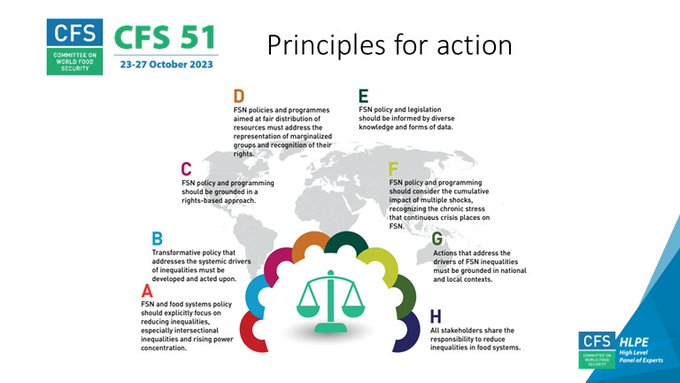
Committee on World Food Security (CFS 51)

23 - 27 October 2023
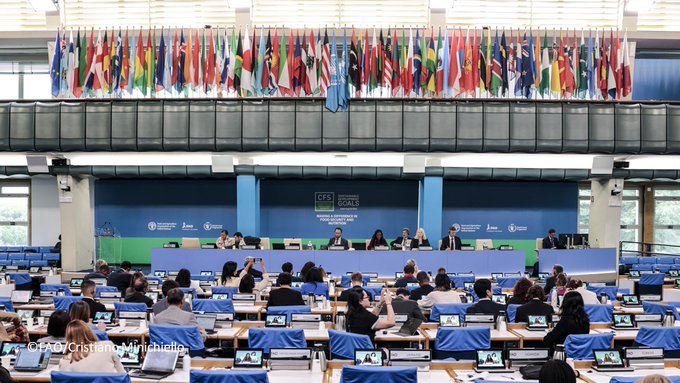
. The fifty-first plenary session of the Committee on World Food Security (CFS 51) was held in a hybrid format.

See the agenda here, and visit the CFS page for more information.

The Committee on World Food Security (CFS) is an inclusive international and intergovernmental platform for a broad range of committed stakeholders to work together in a coordinated manner and in support of country-led processes towards the elimination of hunger and ensuring food security and nutrition for all, for the progressive realization of the right to adequate food in the context of national food security.

During its 51st Session, the CFS endorsed the Policy Recommendations on Strengthening Food Security and Nutrition Data Collection and Analysis Tools for Food Security. 

Additionally, the Plenary included two stocktaking sessions: 


  1. Side Event 1 | Who governs and who should govern food and nutrition security and the fight against hunger in the world?
  2. Side Event 2 | Forging Resilience – Harnessing evidence-based agrifood transformation for navigating multiple crises: insights from South Asia and the Horn of Africa
  3. Side Event 3 | Innovative approaches to sustainable finance for food systems transformation
  4. Side Event 4 | Human rights-based food governance – Coordinating policy responses, rebalancing power, and ensuring corporate accountability
  5. Side Event 5 | Empowering women farmers to effectively reduce poverty and hunger
  6. Side Event 6 | Food systems for the 21st century: How data-driven analysis, and multi-stakeholder collaboration contribute to policy decision-making and investments
  7. Side Event 7 | Data governance in the digitalization of the food system – Bringing together small-scale food producers and governments
  8. Side Event 8 | What It Takes – From effective data generation to use to drive better policies and programmes in food security and nutrition
  9. Side Event 9 | Uptake and implementation of CFS Policy products through legislation – The role of parliaments and parliamentary networks
  10. Side Event 10 | Lessons from Brazil – Recovering from setbacks in the fight against hunger and malnutrition and the challenges in the road ahead
  11. Side Event 11 | Improved data management for increased sustainability, food security and nutrition
  12. Side Event 12 | Achieving Gender Equality, Food Security and Nutrition: Multi-Stakeholder Initiatives and Approaches
  13. Side Event 13 | Integrating Climate and Nutrition: an essential action for zero hunger
  14. Side Event 14 | Boosting finance in Agroecology to achieve Rio Conventions’ targets
  15. Side Event 15 | Mobilizing urban youth in climate change adaptation solutions in Africa
  16. Side Event 16 | Promoting energy access to safeguard food security and nutrition gains within the agrifood systems and beyond - Organizers: FAO, WFP Madagascar, UNEP , Economic Community of West African States (ECOWAS)
  17. Side Event 17 | Innovations for climate-friendly food systems – A deep dive into digitalization and agroecology for resilience Organizers: KALRO/Kenya, SWISSAID, IFAD, ...
  18. Side Event 18 | Our seat at the table – Maximizing transformative opportunities across the rural-urban continuum to deliver healthy diets from sustainable food systems
  19. Side Event 19 | Food and Nutrition Security in Urban Centers
  20. Side Event 20 | Nature based Solutions and decent rural employment in agrifood systems
  21. Side Event 21 | Data-Driven Policy for Better Food Security and Nutrition – Experiences in Digital Transformation
  22. Side Event 22 | Nourishing Connections – Multistakeholder Synergies for Scaling-Up Food Security and Nutrition through Social Protection Systems
  23. Side Event 23 | Investing in Youth to Reduce Inequalities – Implementing CFS Guidelines on Engaging Youth in Agriculture and Food Systems
  24. Side Event 24 | Learnings from cross-sectoral sustainability assessments – From multinational corporations to regional initiatives in West and Central Africa
  25. Side Event 25 | Scaling up the implementation CFS policy instruments in time of climate crisis – The role of the UN Decade of Family Farming 2019-2028 (UNDFF) Organizers: Incl. PROPAC, ESAFF, ROPPA
  26. Side Event 26 | From Global to Local – Translating Policy Recommendations on Youth Engagement and Employment into Tangible Action at the Local Level
  27. Side Event 27 | The Inextricable Link Between Diet Quality, Food Accessibility and Global Inequality
  28. Side Event 28 | Reducing Inequalities in the Food System through an Intersectional lens
  29. Side Event 29 | Zero Hunger in Colombia – A commitment to end food insecurity and building peace
  30. Side Event 30 | Just transition or green grabbing? Land-intensive climate action and protecting the sustainable food systems of IPs and LC Organizers: Incl. EAFF
  31. Side Event 31 | Global Dialogue on Water Tenure for water & food security, social inclusion, and climate resilience
  32. Side Event 32 | Growing Sustainability – Bridging Food, Biodiversity and Climate Goals for a 1.5°C Future
  33. Side Event 33 | Tenure Security for All – the case for local and global action to advance implementation of the VGGT
  34. Side Event 34 | Nourishing Progress – Reflecting on a Decade of Social Protection Innovations and Thinking for Zero Hunger
  35. Side Event 35 | Fair Food Prices – Unlocking multistakeholder action for inclusive and competitive markets Organizers: Incl. Common Market for Eastern and Southern Africa (COMESA)
  36. Side Event 36 | Human rights-based approaches to global challenges and climate action for the Right to Adequate Food for all

Highlights

23/10 Side Event 3 | Innovative approaches to sustainable finance for food systems transformation

This session provided examples of how donors can mobilize responsible investment from the private sector. It presented the results of a new research by the GDPRD and the Shamba Centre on how donors can develop value-added partnerships with public and private funders to drive investment in smallholder commercial agriculture for food systems transformation and high development impact. 

Read the initial summary from the enquiry: 
Oshani Perera, Carin Smaller, Kamal Elharty, and Lysiane Lefebvre (2023) .“Unleashing the catalytic power of donor financing to achieve SDG2”  Shamba Centre for GDPRD members. UNEDITED Draft version 18 October 2023 # 28 p.
  1. Key Finding 1: Blended finance can make the biggest contribution to SDG 2 by focusing on the missing middle; agri-food SMEs seeking finance between USD 50,000 and USD 2 million.
  2. Key Finding 2: Every dollar of concessional finance can mobilize four dollars of commercial finance. However, whether those four dollars deliver on sustainable development will determine if blended finance is truly additional
  3. Key Finding 3: Development finance institutions are governed by rules that discourage them from taking risks to provide finance that would otherwise not be available from commercial lenders.
  4. Key Finding 4: More research and data on the performance of agri-food SME loans that originate from donors is a prerequisite to make ODA catalytic.
Examples from the UK Government’s Commercial Agriculture for Smallholders and Agribusiness (CASA) programme and the Western Cape Department of Agriculture’s partnership approach in South Africa highlighted how the private sector and donors are working together. The WFP ended the session on opportunity costs of funding cuts for food security and resilience building.

Recording forthcoming 

24/10 Side Event 6 | Food systems for the 21st century: How data-driven analysis, and multi-stakeholder collaboration contribute to policy decision-making and investments

This joint side event, organised by the EU, FAO, the Government of Sweden and SIANI, brought together diverse actors and geographic perspectives to discuss this critical interface between data and analysis and multistakeholder processes for policy and investment decision-making. 

It presented insights from crosscutting regional analyses of 50 country EU-FAO-CIRAD food systems’ assessments as well as lessons on how to collate, align, and avail data efficiently and transparently for consumers, practitioners, and decision makers. The panel also examined the challenges, opportunities and trade-offs of developing policies and investment to enhance the environmental sustainability of terrestrial and marine food systems.

Recording forthcoming

24/ 10 Side Event 8 |  What it takes: from effective data generation to use to drive better policies and programmes in food security and nutrition


This side event showcased experiences of generating and using data from three data-focused initiatives: 
  1. the learnings from the 50x2030 initiative to Close the Agricultural Data Gap based on a
    partnership between IFAD, FAO and the World Bank, aiming to strengthen data systems in lower and lower-middle income countries to enhance decision-making for agriculture and food security; 
  2. two initiatives from the European Union: the European Commission-Nutrition Information System (EC-NIS) project to strengthen the generation and capacity of nutrition data within health information systems and beyond; and the National Information Platforms for Nutrition (NIPN) initiative to transform data and multisectoral nutrition information systems to influence and drive programmes and policies.
Recording forthcoming

Side Event 14 | Boosting finance in Agroecology to achieve Rio Conventions’ targets

The side event demonstrated how agroecology connects and delivers on these goals. It shared the results of discussions among a group of donors (bilateral, multilateral and philanthropic donors, private investors and governments) which took place immediately before the CFS (20-21 October). 

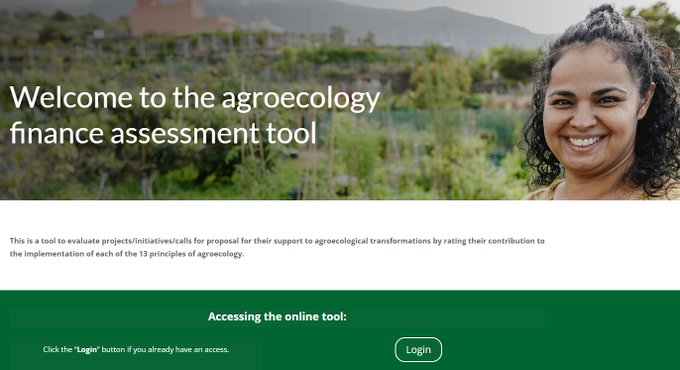
It presented data on investments in agroecology and a methodological tool to assess how much funded projects and programmes contribute to an agroecological transformation based on their alignment with the 13 principles of agroecology as articulated in the HLPE Report.

L
How can the tool be used?
K
L
How does the tool manage the data?
K
L
Who created and developed the tool?
K
L
How can I have more information about the methodology?

Recording forthcoming

Monday, January 23, 2023

FARM: Agriculture(s) : le temps des mobilisations.

17 January 2023. Agriculture(s) : le temps des mobilisations.

La Fondation FARM organisait une grande conférence autour du thème “Agriculture(s) : le temps des mobilisations.” 

Il réunissait tous les acteurs – politiques, chercheurs, financeurs, agriculteurs, étudiants, citoyens… – souhaitant apporter leurs contributions aux transformations indispensables des agricultures et des systèmes alimentaires.


OUVERTURE : 01:31

  • Marc FESNEAU (Ministre de l’Agriculture et de la Souveraineté alimentaire)
  • Pascal LHEUREUX (Agriculteur, Président de la Fondation FARM) 
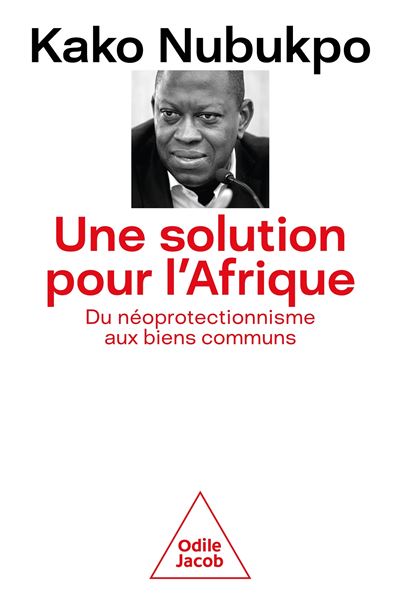
  • Kako NUBUKPO (Commissaire à l’agriculture de l’UEMOA).

    Putting in place an African neo-protectionism and preserving its own resources (land, digital goods, etc.), ensuring its sovereignty – food by developing agroecology, monetary and financial with the creation of a debt agency – are all avenues for Africa is reclaiming its destiny. With this conviction: by promoting a sharing economy, the commons are also deeply rooted in African social reality.

    Related PAEPARD blogpost: Protecting Africa's agricultural assets

1ère séquence : INTERROGER : 24:25

Le monde en 2030 nous interroge : ses dynamiques (démographie, urbanisation et ruralités, etc.), ses mutations (climat, insécurités géopolitiques et géoéconomiques, etc.) et ses opportunités (transformation, emplois, etc.). Quels seront les impacts sur les filières agricoles et alimentaires ?
  • Conférence introductive de Gerda VERBURG (Sous-Secrétaire générale des Nations unies et coordinatrice du mouvement Scaling Up Nutrition) @41:00
Don't start with research, start with dialogue, bring the people together and then see where is the research because there is so much research. When I was minister I was also investing in research, but too much research report end up on the shelf and are not used. So please bring the people together. Talk about everything also about the potential trade offs. Very often the trade offs are the risks with farmers. 

Be very prudent in this and then develop a short term and a longer term strategy and in the short term. Make sure that you have low hanging fruit because collaboration is best when you very quickly see the first results we use to say results, encourage more results and produce better collaboration. 
  1. Don't start to invest virtually into trust, because trust will only be built along the road along working together.
  2. Researchers, wherever in the world, please go a few steps further, not only by doing much more interdisciplinary research. It's ongoing but the speed is not high enough. 
  3. Secondly, bring your findings into the political economy and political economy advisors, political advisors reach more out to translate what is already there from research to bring it into the advisory space for the government and for your ministers. So it's the political economy that requires more attention and then make farmers and consumers winners. Farmers are now very often the victim of a lot of things (...) 
  4. Finally make the better not the enemy of the good because many researchers want to do an extra research because they are not 100% sure about the outcomes of one research, but you start implemented right
  • Paxina CHILESHE-TOE, (Experte climat, FIDA)
  • François MORICONI-EBRARD (Géographe, directeur recherche au CNRS)
  • Tania SOLLOGOUB (Économiste senior, Crédit Agricole)
  • modérée par Matthieu BRUN (Directeur scientifique de la Fondation FARM).

2ème séquence : INTENSIFIER : 2:03:17

L’intensification écologique de la production et la hausse de la productivité sont des premières étapes nécessaires mais insuffisantes pour faire face aux multi-crises. Il faut aussi intensifier la coopération entre les acteurs.
  • Nadine ANDRIEU (chercheure, CIRAD)
  • Kolyang PALEBELE (Agriculteur, Président de la PAFO)
  • Bernard LEHMANN (Président du HLPE au Comité des Nations Unies sur la Sécurité Alimentaire et la Nutrition et Membre du Conseil Exécutif du Global Crop Diversity Trust)

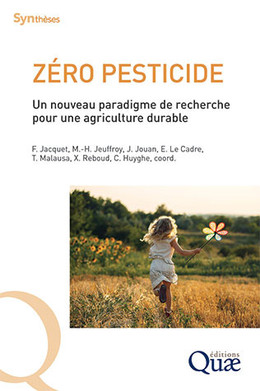
    He referred to the book Zero pesticides of Florence Jacquet.

    France’s ‘Cultiver Protéger Autrement’ (Growing and protecting crops differently) national priority research programme has been launched with the aim of finding new strategies that offer an alternative to pesticides. Research is key to the programme’s success and is being employed with a global vision. All scientific frontiers will be explored in order to gain new knowledge and strengthen society’s efforts to dispense with pesticides

  • modérée par Sibiri Jean ZOUNDI (Directeur adj. du Secrétariat du
    Club du Sahel et de l’Afrique de l’Ouest)

3ème séquence : ENTREPRENDRE : 3:05:49

La transformation de l’agriculture et de l’alimentation dans le monde ne pourra se faire sans une mobilisation des acteurs privés, entrepreneurs et entrepreneuses. Le focus choisi est celui du digital, avec des exemples illustrant comment l’utilisation des nouvelles technologies peut participer à la transformation des systèmes agricoles.
  • Entreprise AGRABAHAdel BEN ROMDHANE (Bioliva)arc DEBETS (CEO d’APEXAGRI)
  • Christian HUYGHE (Directeur Agriculture INRAE)
  • Etienne NIYIGABA (YEAN Rwanda)

4ème séquence : MOBILISER : 4:18:49

De nombreux agriculteurs et agricultrices n’ont toujours pas accès au financement, aux services bancaires et agricoles. La guerre en Ukraine et ses conséquences économiques n’ont fait qu’aggraver la situation. Dans ce contexte, l’investissement privé et public ainsi que la définition et la mise en œuvre de politiques publiques cohérentes pour la transformation des agricultures sont donc essentiels.
  • Introduction sur l’Observatoire des soutiens publics à l’agriculture de Matthieu BRUN (Directeur scientifique de la Fondation FARM).
  • Mariem DKHIL (Directrice du pôle coopération et développement durable, Crédit Agricole du Maroc)
  • Matthieu LE GRIX (Responsable agriculture, biodiversité à l’AFD)
  • Carmine PAOLO DE SALVO (Banque interaméricaine de développement)
  • Karima ESSABBAK (Responsable de l’engagement social en matière de durabilité)
  • Témoignage de Josephine GEORGE FRANCIS (Présidente du Farmer Union Network (Libéria) et Vice-Présidente du ROPPA).
  • modérée par Matthieu BRUN (Directeur scientifique de la Fondation FARM).

CONCLUSION : 5:37:25

Wednesday, September 21, 2022

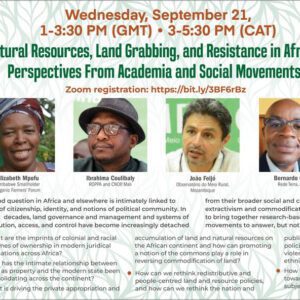
Natural Resources, Land Grabbing and Resistance in Africa: Perspectives From Academia and Social Movements

21 September 2022. The land question in Africa and elsewhere is intimately linked to issues of citizenship, identity, and notions of political community. 

In recent decades, land governance and management and systems of distribution, access, and control have become increasingly detached from their broader social and cultural meanings, giving way to extractivism and commodification. 

This CORA roundtable aims to bring together research-based perspectives and those of social movements to answer, but not be limited to, the following questions:

  1. What are the imprints of colonial and racial regimes of ownership in modern juridical formations across Africa?
  2. How has the intimate relationship between land as property and the modern state been consolidating across the continent?
  3. What is driving the private appropriation and accumulation of land and natural resources on the African continent and how can promoting a notion of the commons play a role in reversing commodification of land?
  4. How can we rethink redistributive and people-centred land and resource policies, and how can we rethink the nation and public space to find pathways to inclusive policies and actions that reduce land-based violence? This includes bringing gender, ethnicity and generation into the equation.
  5. How do struggles for land in Africa contribute towards a deeper recognition of multiple subjectivities, agencies and practices?
Panel:
  • Moderator : Ruth Hall (PLAAS, University of Western Cape, South Africa). 
  • Elizabeth Mpofu (Zimbabwe Smallholder Organic Farmers’ Forum, Zimbabwe)
  • João Feijó (Observatório do Meio Rural, Mozambique)
  • Ibrahima Coulibaly (ROPPA and CNOP, Mali), Natasha Issa Shivji (Cambridge University, Tanzania)
  • Bernardo Castro (Rede Terra, Angola)

Wednesday, September 14, 2022

African Green Revolution Conference (2)

5 - 9 September 2022. Kigali Rwanda AGRF 2022. The AGRF, Africa’s premier forum for food and agriculture, had its 12th annual summit under the theme ‘Grow, Nourish and Reward – Bold Actions for Resilient Food systems’.

6 September Extract of the main programme

06/09 Opening Plenary – Advancing Food Systems in A Time of Crises: What is at Stake for African Food Systems

  • Dr. Agnes Kalibata, President, AGRA and Host of the AGRF Secretariat 
  • Hon. Gerardine Mukeshimana, Minister for Agriculture and Animal Resources, Rwanda 
  • H.E. President of Zimbabwe 
  • Ms. Nardos Bekele-Thomas, CEO, AUDA-NEPAD 
  • Framing Remarks: What is at Stake Mr. Acha Leke, Senior Partner, McKinsey & Co 
  • Hon. Minister of Agriculture and Forestry, South Sudan 
  • Hon. Minister of Agriculture, Nigeria 
  • Hon. Gerardine Mukeshimana, Minister for Agriculture and Animal Resources, Rwanda 
  • Hon. Dr. Delwendé Innocent Kiba, Minister of Agriculture, Animal Resources and Fisheries, Burkina Faso 
  • H.E. Ambassador Gabriel Ferrero, CFS Chair, Ambassador at Large Global Food Security, Ministry of Foreign Affairs, European Union and Cooperation, Spain
  • Mr. Svein Tore Holsether, CEO, Yara International ASA 
  • Mr. Kolyang Palebele, President, Pan-African Farmers Organization (PAFO) 
  • Mr. Abraham Vermeulen, President Africa Middle East, Corteva Agriscience
  • Ms. Hindou Ibrahim, Coordinator, Association of Peul Women and Autochthonous Peoples of Chad (AFPAT) and SDG Advocate

06/09 AASR launch: Accelerating African Food Systems Transformation 


The 2022 report calls for good leadership and coordination, a need to build capacity and capabilities to address food systems, but most importantly the mobilisation of financing from both the public and private sector. The publication focuses on practical pathways to meet these ends.

The report highlights six megatrends shaping the development of agrifood systems in Africa that warrant greater attention by stakeholders. It examines the role of leadership in harnessing collective effort, shared responsibility, greater stakeholder engagement, as well as rallying political will, to achieve food systems transformation in Africa. Further, it presents the investment gap required to trigger and/or sustain Africa’s agro-food transformation reflecting on the requisite human, institutional and systemic capacities and capabilities that are required to achieve agro-food system transformation at scale. And, it recommends priorities for African national governments, development partners and the private sector.

The report states that “Accelerating agro-food transformation in a sustainable and inclusive way is an extremely complex task. It requires an integrated approach, which draws heavily on the cooperation of system actors, with African governments driving the process that facilitates the required change,” adding that addressing the vulnerability of Africa’s food systems requires political will and leadership.
  • Mr. Edward Mabaya, Research Professor, Cornell University and AASR Author 
  • Hon. Oumer Hussien Oba, Minister of Agriculture, Ethiopia
  • Dr. Steven Were Omamo, CEO, New Growth International (NGI) 
  • Ms. Lulama Traub, Chair of the Technical Committee, Regional Network of Agricultural Policy Research Institutes (ReNAPRI) and AASR Author
  • Ms. Anke Oppermann, Head, Decent Work Worldwide, Food and Nutrition Security, Federal Ministry for Economic Cooperation and Development (BMZ), Germany 
  • Mr. Jai Shroff, CEO, UPL 
  • Rt. Hon. Édouard Ngirente, Prime Minister of Rwanda

06/09 Special Event  Agribusiness Dealroom Launch

Panel Discussion: Why do investments in agriculture remain below 5% of all investments on 
the continent despite all commitments and funds? Where is the mismatch?  
  • Moderator: Mr. Frank Braeken, AGRA Board Member  
  • Hon. Rose Mivedor, Minister of Investment Promotion, Togo 
  • Hon. Dr. Jean Chrysostome Ngabitsinze, Minister of Trade and Industry, Rwanda 
  • Minister of Investment, Zambia 
  • Mr. Mauricio Macri, Executive Chairman, FIFA Foundation 
  • Mr. Thomas Essel, Secretary General AFRACA and former Bank of Ghana/GIRSAL 
  • Dr. Beth Dunford, Vice President for Agriculture, Human and Social Development, AFDB

    She presented the Agri-SME catalytic financing mechanism 

  • Funding for this initiative, called the Agri-SME Catalytic Financing Mechanism (ACFM), will provide concessional finance and technical assistance to agribusinesses, financial institutions and impact funds so they can make loans to gender-oriented agri-SMEs.

    The Agrifood SME Catalytic Financing Mechanism (ACFM) is a Special Fund, housed at the African Development Bank, that will provide long-term concessional capital complemented by grant-based technical assistance to catalyze increased financing and investment to small and medium enterprises serving the agrifood system in Regional Member Countries.

  • Mr. Lloyd Muposhi, CEO, Africinvest 
  • Paul Russo - Group Chief Executive Officer at KCB Group
Panel Discussion: Closing the deal - Insights from successful transactions 
  • Moderator: Mr. Frank Braeken, AGRA Board Member 
  • Mr. Jerry Parkes, CEO, Injaro Investments and ABC Fund 
  • Mr. Francis Nderitu, Founder, Rain4Tech 
  • Ms. Kudzayi Hove, Founder, Amayi Foods 
  • Ms. Seun Sangoleye, Founder, Baby Grubz 
  • Ms. Victoria Sabula, CEO, Africa Enterprise Challenge Fund AECF 

  • Novel Vaccine and Biological Company Limited (NOVABI)
    (Veterinary vaccines), is a Tanzanian local company based in Morogoro that produces a three-in-one poultry vaccine called Tatu Moja vaccine. The vaccine is a unique combination of three vaccines for Newcastle, Infectious Coryza and Chicken Pox diseases that are common in sub-Sahara Africa. The vaccine is thermostable and can be easily stored and administered. The three diseases contribute to 90% of chicken deaths per year. NOVABI collaborated with AECF in 2016 to complete the trial and efficacy test of the vaccine, complete regulatory requirement and begin commercial production of the vaccine. Novel vaccine started production in December 2020. The vaccine is now available in agro-dealers throughout Tanzania and the plan is underway for export in EAC countries.

    "Way back in 2015, three scientists of Sokoine University had a fantastic product. AECF provided them with $350,000  to work with them on good manufacturing practices. And then you have to work with them on calibrating the equipment to be fit for purpose, and then you work with them to navigate the regulatory environment in order to get the approvals and then they can actually present a case to the sophisticated investor, the sophisticated commercial banker who actually wants to see a functional business. You're figured out your factoring operations, you figured out what capital structure will be able to work for you and then they provide you capital and. The CRDB Bank came in and provided them with $350,000 initially as a term loan and then $650,000 ... but only in 2021.
Panel discussion 3: Official opening of the Agribusiness Deal Room with Co-Chairs  
  • Moderator: Ms. Vanessa Adams, Vice President, Strategic Partnerships & Chief of Party, AGRA 
  • Dr. Donal Brown, Associate Vice President, Programme Management, IFAD 
  • Dr. Agnes Kalibata, President of AGRA and UN Secretary General’s Special Envoy on food Systems Summit  
  • Ms. Maura Barry Boyle, Senior Deputy Assistant Administrator, Bureau for  Resilience & Food Security, USAID 

06/09 Nourishing Urban Communities, Protecting our Planet – How Cities and Local Governments Are Pioneering Food Systems for the Future 

This session showcased cities and local governments striving to feed their populations with nutritious food, while also improving livelihoods, the environment, and the climate.
  • Moderator: Ms. Betty Kibaara, Director, the Food Initiative, The Rockefeller Foundation, Africa Region Office 
  • Dr. Abebe Haile-Gabriel, Assistant Director-General, Regional Representative for Africa, FAO  
  • Hon. Pudence Rubingisa, Mayor, City of Kigali, Rwanda  
Panel Discussion: 
  • Dr. Gunhild Stordalen, Founder and Executive Chair, EAT Forum and Founder, Food Forward Consortium  
  • Hon. Fabrice Rulinda, Mayor, Entebbe Municipal Council, Uganda and Member, ICLEI Regional Executive Committee  
  • Hon. Elizabeth Sackey, Mayor, Accra, Ghana  
  • Hon. Adanech Abiebie, Mayor, Addis Ababa, Ethiopia  
  • Prof. Joao Bosco Monte, President, Brazil Africa Institute and General Coordination of the Brazil Africa Forum  
  • Mr. Paul Currie, Director for Urban Systems, ICLEI Africa 
  • Ms. Wangari Kuria, Founder and CEO, Farmer on Fire 
  • Ms. Josephine Favre, President, African Association for Vertical Farming (AAVF) 
  • Dr. Abdoulaye Mohamadou, Executive Secretary, Permanent Interstate Committee for drought control in the Sahel, CILSS 

06/09 Partnering for Sustainable Productivity

The session deliberated on how stakeholders can collaborate to enable Africa produce nutritious food
sustainably. Some of the issues included climate smart technologies, last mile delivery
initiatives and partnership with private sector.

Fireside Chat 
  • Moderator: Ms. Wanjira Mathai, Managing Director for Africa and Global Partnerships, 
    World Resources Institute 
  • Hon. Dr. Ildephonse Musafiri, Minister of State of Agriculture, Rwanda 
  • Prof. Rattan Lal, World Food Prize Winner 2020 
  • Dr. Robert Bertram, Director, Office of Agriculture, Research and Technology at US Agency for International Development  
Keynote Remarks:  
  • Mr. Sidi Ould Tah, Director-General, Arab Bank for Economic Development of Africa, BADEA 
  • Dr. Simplice Nouala, Head of Division Agriculture and Food Security at the Department of Rural Economy and Agriculture, African Union Commission 
Panel Discussion: 
  • Hon. Oumer Hussien Oba, Minister of Agriculture, Ethiopia 
  • Hon. Minister of Agriculture and Land Reclamation, Egypt 
  • Ms. Fernanda Lopes Larsen, Executive Vice President Africa & Asia, Yara International ASA  
  • Mr. Mehdi Filali, Vice President Farmer Solutions, OCP Africa 
  • Dr. Michel Evequoz, Deputy Regional Director Rwanda, Federal Department of Foreign Affairs (FDFA), Swiss Agency for Development and Cooperation (SDC) 
  • Dr. Betty Chinyamunyamu, CEO, National Smallholder Farmers' Association of Malawi (NASFAM)  
  • Dr. Joe DeVries, Founder and CEO, Seed Systems Group 
  • Mr. Theo de Jager, Outgoing President, World Farmers' Organisation and former president of the Southern African Confederation of Agricultural Unions (SACAU) 
  • Dr. Vanlauwe Bernard, Director R4D, Central Africa Hub and Natural Resource Management, Leader of the One CGIAR Excellence in Agronomy 2030 Initiative  
  • Dr. Rudy Rabbinge, Professor Emeritus in Sustainable Development and Food Security, Wageningen University, the Netherlands - Closing Remarks 

06/09 Where does the food systems science and policy agenda go from here?

  • Moderator: Dr. Yemi Akinbamijo, Executive Director of the Forum for Agricultural Research in Africa (FARA) 
  • Prof. Sheryl Hendricks, Head of Department and Professor in the Department of Agricultural Economics, Extension, and Rural Development, University of Pretoria, South Africa 
  • Dr. Ismahane Elouafi, Chief Scientist, FAO 
  • Hon. Minister, Department of Agriculture, Forestry and Fisheries, South Africa 
  • Ms. Rhoda Peace Tumusiime, Member, Malabo Montpellier Panel
  • Prof. Adipala Ekwamu, Executive Secretary, Regional Universities Forum for Capacity Building in Agriculture (RUFORUM) 
  • Dr. Thabbie Chilongo, Board Member, Regional Network of Agricultural Policy Research Institutes (RENAPRI) 
  • Prof. Jane Nelson, Director of the Corporate Responsibility Initiative, Kennedy School of Government, Harvard University, US 
  • Mr. Kunal Prasad, Co-Founder, Cropin Technology 
  • Ms. Eleni Gabre-Madhin, Chief Innovation Officer, UNDP 
  • Closing Remarks Mr. Johan Swinnen, Director General, International Food Policy Research Institute (IFPRI)

06/09 Special Event – Farmers Forum 

Leaders in a dialogue with African farmers.  
  • Moderator: Mr. Eugene Anangwe, Anchor, CNBC  
  • Mr. Kolyang Palebele, President, Pan-African Farmers Organization (PAFO) 
  • H.E. Samia Suluhu Hassan, President, Tanzania  
  • H.E. Hailemariam Dessalegn, Chair, AGRF Partners Group and Former Prime Minister, Ethiopia  
Panel discussion: 
  • Mrs. Massandje Toure-Litse, Commissioner of Economic Affairs and Agriculture, ECOWAS 
  • Mr. Ibrahima Coulibaly, Network of Farmers and Producers Organizations in West Africa (ROPPA)  
  • Ms. Elizabeth Nsimadala, President, Eastern Africa Farmers Federation (EAFF) 
  • Dr. Sinare Yusuf Sinare, President of Southern African Confederation of Agricultural Unions (SACAU)
  • Dr. Babafemi O. Oyewole, CEO, Pan-African Farmers Organization (PAFO) 
  • Mr. Felix Kili, Climate Positive Farmer, Eldoret Rift Valley, Kenya 
  • Ms. Haddy Ceesay, Young Professional for Agriculture Development, The Gambia  
  • Ms. Lilian Sambu, Agribusiness & Agroforestry Value Chain, Dodoma, Tanzania 
  • Dr. Apollos Nwafor, Vice President, Policy & State Capability, AGRA

06/09 Experiences, Lessons and Tools for National Food Systems Transformation

Following last year’s UN Food Systems Summit, this session looked at the state of play in moving from national pathways to food systems strategies, investment plans, and coordination mechanisms that can accelerate action on the ground for people and business.
  • Moderator: Ms. Sylvia Lopez-Ekra, Deputy, UN Food Systems Coordination Hub, FAO
  • Dr. Apollos Nwafor, Vice President, Policy & State Capability, AGRA 
  • H.E. Gerda Verburg, Coordinator, Scaling Up Nutrition (SUN) Movement Presentations: 
  • Hon. Reuben Phiri Mtolo, Minister of Agriculture and Livestock, Zambia 
  • Hon. Lee White, Minister of Water, Forests, the Sea, and Environment, Gabon 
  • Ms. Julie Tshilombo Diomi, National Convenor for Food Systems, Office of the President, Democratic Republic of Congo 
  • Hon. Olusola O. Idowu, National Convenor for Food Systems and Permanent Secretary, Ministry of Budget and National Planning, Nigeria 

06/09 Crunching the data - Insights from the Food Systems Dashboard and CAADP Food Systems Monitoring 

  • Dr. Lawrence Haddad, Executive Director, GAIN 
  • Mr. Boaz Keizire, Head, Policy & Advocacy, AGRA 
  • Ms. Safia Boly, Executive Director, AATI 
  • Mr. Mandefro Nigussie, CEO, Ethiopian Agricultural Transformation Agency 
  • Mr. Mohamed Manssouri, Director, FAO Investment Centre 
  • Mr. Enock Chikava, Acting Director, Agricultural Development, Bill & Melinda Gates Foundation 
  • Mr. Peiman Milani, Director, Food Initiative, The Rockefeller Foundation 
  • Ms. Astrid Mastenbroek, Senior Policy Advisor Food & Nutrition Security at Inclusive Green Growth, ministry of Foreign Affairs, The Netherlands 
  • Ms. Melissa Pinfield, Executive Director, Just Rural Transition
  • Mr. Holger Kray, Practice Manager, Agriculture & Food Security, World Bank

06/09 Scaling up Innovations for Climate-Resilient Food, Land, and Water Systems

This session explored how to support a well-funded science agenda to identify and scale innovations that address today’s interconnected challenges.

Panel Discussion 2 – What are some useful experiences and lessons that would help strengthen food, land and water systems in Africa? 
  • Moderator: Mr. Kwesi Atta-Krah, Director, Country Alignment and Systems Integration (CASI), IITA 
  • Hon. Dr. Jean Chrysostome Ngabitsinze, Minister of Trade and Industry, Rwanda 
  • Dr. Yemi Akinbamijo, Executive Director, Forum for Agricultural Research in Africa (FARA) 
  • Dr. Enock Warinda, Executive Director, Association for Strengthening Agricultural Research in Eastern and Central Africa (ASARECA) 
  • Ms. Danielle Abraham, Executive Director, Volcani International Partnerships 
  • Ms. Beth Wagude, Program Manager Aquaculture, IDH 
  • Mr. George Bigirwa, Deputy Vice President for PID, AGRA 
  • Ms. Geeta Sethi, Advisor and Global Lead for Food Systems, World Bank
  • Ms. Diana Sabrain, CEO, Co-Founder, OneAgrix 
  • Mr. Harold Roy-Macauley, Managing Director, Regions and Partnership, CGIAR and Director General, AfricaRice 

06/09 Leadership, Finance & Accountability: Advancing National Food Systems’ Pathways  

In 2021, African countries united behind a Common African Position on food systems transformation to achieve the 2030 Agenda, and more than two-thirds of them (37 African countries) developed national pathways customized to their unique contexts. In this plenary session, leaders from the global level, continental level, and countries discussed the way forward and where the AGRF community must focus attention to support country progress. 
  • Moderator: Ms. Nozipho Mbanjwa, Anchor 
  • H.E. Josefa Leonel Correia Sacko, Commissioner for Rural Economy and Agriculture, African Union Commission  
  • Rt. Hon. Tony Blair, Executive Chairman, Tony Blair Institute for Global Change  
  • Mr. Didier Drogba, President, Didier Drogba Foundation    
  • Mr. Martin Bwalya, Director for Agriculture, Knowledge Management and Programme Evaluation (KMPE), AUDA-NEPAD - Framework in Advancing African National Pathways for Food Systems Transformation 
 Country Progress   
  • Hon. Minister for Food and Agriculture, Ghana 
  • Hon. Lobin Lowe, Minister of Agriculture, Irrigation and Water Development, Malawi  
  • Mr. Jean-Claude Musabyimana, Permanent Secretary, Minister of Agriculture, Rwanda 
Panel Discussion reflecting Leadership, Finance, and Accountability  
  • Mr. Alvaro Lario, President-Elect, IFAD  
  • Ms. Geeta Sethi, Advisor and Global Lead for Food Systems, World Bank 
  • Mr. Peter Bakker, CEO, World Business Council for Sustainable Development WBCSD
  • Mr. Roy Steiner, Senior Vice President, Rockefeller Foundation  
  • Mr. Ozonnia Ojielo, Resident Coordinator Rwanda, United Nations 
  • Dr. Beth Dunford, Vice President for Agriculture, Human and Social Development, African Development Bank (AfDB) 
  • Dr. Stefanos Fotiou, Director, Office of Sustainable Development Goals, FAO Closing Remarks  

06/09 Generation Africa 

This session brought together young entrepreneurs, innovators, movers and shakers in Africa’s agri-food sector and presents inspiration from 12 young agripreneurs competing for this year’s GoGettaz