Platform for African – European Partnership in Agricultural Research for Development
Showing posts with label agribusiness. Show all posts

Wednesday, October 14, 2026

Farmers' Organisation-led Bio-inputs Systems: From Farmer Innovation to Sustainable Markets and Policies

14–15 October 2026. The Collectif Stratégies Alimentaires (CSA), the Fédération Wallonne de l'Agriculture–Union des Agricultrices Wallonnes (FWA-UAW), and AgriCord are organising an international workshop and field visits in Belgium under the theme "Farmers' Organisation-led Bio-inputs Systems." 

Bringing together farmers' organisations from


Africa, Europe and the Pacific, researchers, bio-input companies, policymakers and development partners, the event explores how farmer-led initiatives can develop into credible, accessible and economically sustainable bio-input systems. The programme combines practical visits to bio-input production and research facilities in Wallonia on 14 October with policy discussions, institutional perspectives and collaborative workshops in Brussels on 15 October. 

Bio-inputs—including biofungicides, bioinsecticides, bioherbicides, biostimulants and compost—offer opportunities to restore soil fertility, improve crop health, reduce dependence on synthetic inputs and strengthen farmers' autonomy. However, their wider adoption requires reliable scientific evidence, appropriate regulatory frameworks, quality assurance, affordable production systems and effective agricultural advisory services. 

Farmers' organisations can play a central role by connecting experimentation and innovation with production, market development, farmer training and policy dialogue.


14 October – Field visits in Wallonia: From local production to research and innovation

Walhain and Gembloux. The first day, entitled "Bio-inputs: A Solution Gaining Momentum?", provides participants with practical examples of how farmers, researchers and enterprises are developing biological alternatives to conventional agricultural inputs.


Visit to La Biofabrique, Walhain: 

Participants visit a cooperative of Walloon farmers producing bio-inputs locally. The initiative illustrates how collective production can make biological alternatives more accessible, respond to local farming conditions and strengthen farmers' autonomy.

Meeting at Fédération Wallonne de l'Agriculture – Union des Agricultrices Wallonnes, (FWA-UAW), Gembloux

Presentations introduce four complementary initiatives:

  1. Agricells: microbial technologies and innovative biological products.
  2. Regenacterre: farmer–agronomist collaboration on regenerative agriculture.
  3. CRA-W: the Walloon Agricultural Research Centre, supporting agricultural research and innovation.
  4. Bioferm'Tech: a French enterprise developing on-farm bio-input production systems, including its On-Farm™ model for farm use and commercialisation.

Visit to TERRA Research Centre

Professor Philippe Jacques, Director of TERRA, introduces the interdisciplinary research and teaching centre working across biotechnology, agriculture, agrifood systems, environment and forestry. The visit highlights the role of scientific research in developing and validating bio-input innovations.

Introduction to AgriBioTech Park

Participants discover the concept of a scientific business park under development in Gembloux, intended to support innovative enterprises from the start-up phase through to commercialisation of bio-inputs.

15 October – International Workshop in Brussels

Farmers' organisations driving bio-input adoption: Challenges and keys to success

The opening session shares practical
experiences from farmer-led initiatives across Africa and Europe, examining production, adoption, collective organisation and lessons for scaling.
  • Annick Sezibera — CAPAD, Burundi
  • Innocent Nsengimana K. — APDIK, Democratic Republic of the Congo
  • David Verstraete — Greenotec/Biofabrique, Belgium
  • Peter Fröhlich — Farmer; AgriPurpose, AgriCircle and European Alliance for Regenerative Agriculture, Switzerland

State of the art, opportunities and challenges

  • Dr Frédéric Goulet — Sociologist and Senior Researcher, Environment & Society Department, CIRAD, France
    This presentation examines the scientific, technological and institutional opportunities and challenges associated with the development of bio-input systems.


Panel 1: Building an enabling environment for bio-input systems

The panel explores how regulation, standards, quality control, agricultural advisory systems and market conditions can strengthen the credibility and accessibility of bio-inputs.
  • Olivier Guelton — Head of Unit, Authorisations of Plant Protection Products, Belgian Federal Public Service Health, Food Chain Safety and Environment
  • Representatives — Public Health and Safety Authorities, Burundi
  • Pieter Jan Debauw — COLEAD
  • Dr Toralf Richter — Research Institute of Organic Agriculture (FiBL)


Panel 2: Institutional perspectives on scaling bio-input systems

This discussion brings together European and international development institutions to consider public investment, agricultural transformation, institutional partnerships and opportunities for scaling.
  • Christophe Larose — Head of Sector, Sustainable Agriculture, DG INTPA, European Commission
  • Representative — DG AGRI, European Commission
  • Ivan Cucco — Senior Agricultural and Food Systems Economist and Technical Expert, GP-SAEP, International Fund for Agricultural Development (IFAD)
  • Dr Jean Jacques M. Muhinda — Director General, East Africa, AGRA

Tuesday, October 13, 2026

Food and Nature Forum: Turning Science into Action for Food Systems

15 October 2026. Food and Nature Forum: Turning Science into Action for Food Systems

The Alliance of Bioversity International and CIAT organise the Food & Nature Forum: Turning Science into Action for Food Systems Transformation at Maison de la Poste, Tour & Taxis, Brussels, as part of Brussels Climate Week 2026 (12–16 October). 

The Forum brings together researchers, European policymakers, development organisations, investors, private-sector actors and innovation partners to explore how scientific knowledge can be translated into practical solutions for more resilient, diverse and sustainable agrifood systems. 

Discussions focuses on soil health, agrobiodiversity and opportunity crops, deforestation-free value chains, financing nature-positive agriculture and scaling research-based innovations. A central question will be how to move beyond fragmented research findings and isolated pilot projects towards investments, policies and partnerships that enable implementation at scale.


09:00–09:25 Opening and keynote: Science, partnerships and investment


Opening reflections will examine how science, international cooperation and investment can contribute to resilient and sustainable food and land systems.

  • Juan Lucas Restrepo, Director General, Alliance of Bioversity International and CIAT
  • Annemarie Van der Avort, Director of Environment and Climate, Belgian Federal Public Service for Foreign Affairs, Foreign Trade and Development Cooperation.


09:30–10:30 Panel 1 – From Soil Knowledge to Action: Turning Evidence into Locally Adapted Solutions


With scene-setting by KU Leuven, the panel will compare experiences across Europe, Africa, Latin America and Asia, examining soil degradation, declining fertility, climate shocks and fertiliser dependency. It will explore how soil-health research can inform locally adapted solutions and how successful approaches can be financed and scaled.

  • Stephanie Speck, Global Director, Strategic Partnerships, Engagement & Communications, Alliance
  • Job Kihara, Principal Scientist, Soil and Water Management, Alliance
  • Luis Sánchez Álvarez, DG Agriculture and Rural Development, European Commission
  • Dr Ellen Desie, Professor, KU Leuven.

11:00am – 12:30pm De-risking the Path to Resilience. Exploring financial mechanisms that can support the farmers’ transition to sustainable agriculture

Format: Closed-door, invitation-only working roundtable.

The Sustainable Agriculture Initiative Platform (SAI Platform), a global non-profit organisation
bringing together more than 190 members from the food and beverage industry to advance sustainable and regenerative agriculture.

AB InBev participates in SAI Platform's industry-wide efforts to harmonise sustainability approaches and promote regenerative farming practices across agricultural supply chains, particularly for crops such as barley. The collaboration focuses on improving soil health, biodiversity, water management, climate resilience and farmers' livelihoods. 
AB InBev was among the companies involved in SAI Platform's collaborative regenerative agriculture initiative launched in 2019, which contributed to
developing common principles, indicators and practices. SAI Platform subsequently launched its Regenerating Together framework in 2023 to support consistent measurement and implementation of regenerative agriculture across different commodities and regions.
  • Katie Hoard, Global VP Sustainability Operations, AB InBev
  • Nikolai Porkhov, Public Affairs & Outreach Director, SAI Platform

11:00–12:30 Closed-door roundtable – Advancing Traceable and Deforestation-Free Agricultural Value Chains


This invitation-based discussion will bring together selected public, private and research actors to examine implementation of the EU Deforestation Regulation (EUDR), focusing on coffee and cocoa supply chains. Issues include traceability, data interoperability, smallholder inclusion, ecosystem-service verification and opportunities to generate additional value for producers.


14:00–15:00 Panel 2 – Opportunity Crops for Agrobiodiversity-Based Food Systems


The panel will address how neglected, underutilised and locally adapted crops can contribute to diversified food systems, healthier diets and rural livelihoods. It will explore the role of farmer knowledge, seed systems, processing, consumer demand, private-sector engagement and investment in expanding the cultivation and commercialisation of opportunity crops.

  • Carlo Fadda, Director, Agrobiodiversity, Alliance
  • Francesca Grazioli, Scientist, Alliance
  • Gloria Otieno, Scientist, Alliance
  • Filip Vandelook, Director of Science, Meise Botanic Garden
  • Christophe Larose, Head of Sector, Sustainable Agriculture, DG International Partnerships, European Commission
  • Beatrice Egulu, Policy Officer, Agriculture and Rural Development, African Union Commission; 
  • Thomas Lopes, Research and Innovation Brokerage Manager, COLEAD.


15:00–16:00 Panel 3 – Using Science to Mobilize Finance for Nature


Led by CGIAR's ImpactSF initiative, the session will explore how research evidence can reduce investment risks and attract finance for nature-positive agricultural practices. It will examine mechanisms for directing capital towards smallholder farmers while generating measurable environmental, climate and livelihood benefits.

  • Martina Melchiori, Senior Impact Officer, CGIAR Hub for Sustainable Finance (ImpactSF); 
  • Marcela Quintero, Associate Director General, Research Strategy and Innovation, Alliance; 
  • Godefroy Grosjean, CGIAR Sustainable Finance (ImpactSF) Co-Lead; 
  • Noémie Renier, Chief Commercial Officer, Incofin; 
  • Julie Loyson, ESG Risk & Impact Lead, AGRI3; 
  • Julius Kalulu, CEO, Just Know Your Coffee Cup (JKCC); 
  • Koen Van Troos, Manager, International Partnerships & Communication, BIO; 
  • Maike Möllers, Head of the CompensACTION Secretariat.


16:15–17:15 Panel 4 – Scaling Science-Based Innovations: From Lab to Market


Led by the Accelerate for Impact Platform (A4IP), the panel will examine how agricultural research innovations can move beyond laboratory development and pilot projects towards commercialisation and widespread adoption. Discussions will address technology validation, entrepreneurship, investment readiness, partnerships and market access, with particular attention to connecting research organisations, startups, investors and agricultural end users.

  • Gianpiero Menza, Senior Manager, Partnerships & Innovative Finance, Alliance
  • Koen Dekeyser, Policy Analyst, ECDPM
  • Vincenzo Lorusso, Policy Officer, International Cooperation, DG Research & Innovation, European Commission; 
  • Frida Koslowski, Co-Founder and Director, Kindling Venture; 
  • Aziza Inoubli, Innovation and Venture Ecosystem Advisor.


Nature Day and the Innovation Expo


Alongside the Forum, the Alliance will contribute to Brussels Climate Week's Nature Day plenary on Agriculture, Land & Food Systems (14:00–15:00), with Stephanie Speck among the listed contributors. The session will explore regenerative agriculture, land restoration, water resilience, traceability, digital solutions and sustainable finance.

At the Nature Day Expo (09:00–17:30), the Alliance will showcase two initiatives:

  • International Musa Germplasm Transit Centre (09:00–12:30): Hosted by KU Leuven, this collection of more than 1,700 banana accessions supports crop conservation, research and resilience against pests, diseases and climate stresses.
  • Cacao of Excellence (14:00–17:30): An initiative connecting cacao genetic diversity, quality assessment, flavour recognition and market opportunities for producers.


Friday, September 11, 2026

The Netherlands Food Partnership at AFSF 2026: Connecting Dutch Expertise with Africa’s Food Systems Transformation

31 August to 4 September 2026. AFS Kigali. For the Netherlands Food Partnership (NFP), the Forum was an opportunity to demonstrate that Dutch engagement in African food systems is not about a single technology, sector or organisation. Rather, it is about building partnerships across agriculture, nutrition, energy, research, entrepreneurship, finance and policy.

NFP brought together Dutch organisations and partners around a shared presence at the Forum, while also supporting several partnerships and sessions addressing some of the most pressing challenges facing Africa’s food systems.


A Dutch Pavilion built around partnership


One of the most visible elements of the Dutch presence was the Dutch Pavilion, hosted by the Netherlands Food Partnership. NFP brought together 17 members of its network at the booth, creating a shared space where organisations could present their work, meet African and international partners, exchange experiences and explore new collaborations.

The pavilion reflected the diversity of Dutch engagement in African food systems. Among those represented were organisations working on farmer livelihoods and value chains, climate resilience, nutrition, youth entrepreneurship, research and innovation.

  • Dorcas, for example, used the pavilion to showcase its work on climate-resilient agriculture, farmer field schools and value-chain development in East Africa. Its representatives highlighted experience from Tanzania and Kenya, including work around the PIP approach, farmer field schools and the honey value chain.
  • Access to Nutrition Initiative (ATNi) was also represented through the Dutch booth, with Katherine Pittore participating on behalf of the Netherlands Working Group on international
    Nutrition. ATNi's broader engagement at the Forum focused on healthy diets, consumer demand and the food environment.
  • ProVeg International was another partner present at the Dutch Pavilion, bringing perspectives on plant-rich diets and protein diversification and linking these issues to healthier and more resilient African food systems.

The pavilion therefore served as more than an exhibition stand. It became a meeting point for organisations that approach food-system transformation from different entry points but share an interest in practical, locally relevant solutions.


Putting youth entrepreneurship at the centre


A major NFP-supported event during the Forum was the session “Scaling the Youth Enterprises Ecosystem,” held on 2 September at the Youth Dome. The session was jointly organised by SNV, FAO, AGRA, Netherlands Food Partnership and Wageningen University & Research Student Challenges, with NFP's Bente Meindertsma helping to facilitate the discussion. The central question was : what does it take to help youth-led enterprises move from incubation to scale?

The discussion explored the importance of education, skills, networks, market opportunities and enabling ecosystems. Rather than treating young people simply as beneficiaries of food-system programmes, the session focused on young people as entrepreneurs, innovators and economic actors.

The involvement of East-West Seed Knowledge Transfer Foundation added a practical smallholder perspective. Elijah Mwashayenyi, Head of Knowledge Transfer for Africa, participated in the panel discussing how youth enterprises can scale across different country contexts.


Turning food-system plans into action


NFP joined FAO, GAIN, AGRA, AKADEMIYA2063, GIZ, Expertise France, the Scaling Up Nutrition Movement and the UN Food Systems Coordination Hub, among others, in a side event examining how national food-system plans can be translated into practical action. The discussion focused on the practical challenges governments face when moving from strategy to implementation, including the need for stronger coordination, partnerships and investment.

A session convened under the Accelerator framework brought together government representatives, development partners and international financial institutions to consider how implementation gaps can be addressed.


Connecting food systems with clean energy


Another major area of NFP engagement was the Agri-Energy Coalition, which brings together partners working at the intersection of energy, agriculture, water, nutrition, climate and finance. The Coalition had a dedicated exhibition booth, side events, deal-room activities, Innovation Hub sessions and networking events. NFP was among the Coalition partners. The Coalition brought together organisations including GOGLA, SNV, AGRA, GAIN, Wageningen University & Research, IWMI, Practical Action, REEEP, the Global Energy Alliance for People and Planet, Welthungerhilfe, IKEA Foundation, Acumen, BASE, Partners in Food Solutions, Helen Keller International and others.

Energy is not a peripheral issue for food systems. Reliable and affordable energy affects irrigation, cold storage, processing, transport, markets and the ability of rural enterprises to add value. Renewable energy can therefore be an enabler of both food-system resilience and rural economic development.


Investing in young innovators


NFP's partnership with Wageningen University & Research was also visible through the Food Systems Innovation Challenge. 

The Challenge connects students from universities in the Global South and elsewhere with real food-system challenges, creating opportunities for young people to develop practical solutions and entrepreneurial ideas. 

WUR and NFP jointly organise the Challenge, with a strong emphasis on partnerships with universities in the Global South and on connecting youth innovation with food-system transformation pathways. The 2026 edition involves student teams from 17 partner universities. 

Although the Grand Finals will take place Tuesday, 29 September 2026 in Wageningen, the initiative formed part of the wider NFP presence at AFSF: an example of how youth engagement, education, innovation and entrepreneurship can be connected rather than treated as separate agendas.

The 30 selected teams

1BangladeshBangladesh Agricultural UniversityThe Golden Loop
2BangladeshBangladesh Agricultural UniversityBiocircular
3BeninNational University of AgricultureGreenValor-Compost
4BeninNational University of AgricultureKetou FertiSoyaPlus
5BrazilESALQ-USPEcoPalm Nexus
6BrazilESALQ-USPKindred Ora
7EthiopiaWollo UniversityEureka
8EthiopiaWollo UniversityBiochar – The Black Diamond
9GhanaUniversity of GhanaSoilpulse AI
10GhanaUniversity of GhanaMacIsland
11IndonesiaUniversity of BrawijayaEkolestari
12IndonesiaUniversity of BrawijayaNgramut Wiji
13KenyaLukenya UniversityAgripro
14KenyaLukenya UniversitySolar Harvest Innovators
15KenyaUniversity of EldoretBreezBag
16KenyaUniversity of EldoretFermentaFuture
17NepalKathmandu UniversityGreen Miracle
18NepalKathmandu UniversityShell Alchemist
19NetherlandsWageningen University & ResearchIronTeam
20NetherlandsWageningen University & ResearchPaludifuture
21NigeriaUniversity of AbujaGreen Dessert
22NigeriaUniversity of AbujaSiam Bio-Store
23SenegalUSSEINGancax Pro
24SenegalUSSEINMBT's Infusana
25South KoreaSeoul National UniversityRegrain
26South KoreaSeoul National UniversityABEL
27UgandaMakerere UniversityGreen Organic Harvest Canopy
28UgandaMakerere UniversityBioCoat Solutions
29VietnamCan Tho UniversityEco-Aqua Alliance
30VietnamTra Vinh UniversityEverGreen


Friday, August 14, 2026

Neem as an organic pesticide, fungicide, and nematicide for harmful insects and fungal infections

9 August 2026. Interview with  Linda Akeyate Issaka of Ntiligira Enterprise at the World Social Forum of Cotonou/Benin.

Ntiligira Enterprise is a Ghanaian agribusiness based in Tamale, led by Managing Director Linda Akeyate Issaka, that promotes sustainable and organic farming through the local production of environmentally friendly agricultural inputs. 

The enterprise produces neem-based pesticides, neem oil and neem cake, as well as compost, providing farmers with alternatives to synthetic pesticides and fertilizers while creating value from locally available neem resources. 

Ntiligira was selected for the Ghana Climate Innovation Centre (GCIC) Cohort 10 incubation programme and has also been profiled as a green-economy investment project, reflecting its potential to contribute to climate-smart agriculture, soil health and the expansion of biological crop protection in Ghana.


Linda Akeyate Issaka describes Ntiligira Enterprise as a company founded in 2020 to provide organic alternatives to chemical pesticides.
"Ntiligira means my redeemer"
The business specialises in producing neem oil for pest control and neem cake for nematode treatment and soil fertilisation. Additionally, the company engages in small-scale composting to support organic farming systems.

Production Capacity
  • Daily output with two machines: 50 to 60 bags (50 kg each) of neem seeds and approximately 450 litres of oil.
  • Monthly capacity: 10,000 bags of neem cake (50 kg).
  • Batch capacity: Approximately 20,000 bags of compost (50 kg).
Operational Challenges
  • She identifies significant barriers to scaling production and reducing costs to compete with inorganic fertilisers. A primary concern is that the price difference between organic and inorganic options discourages farmer adoption.
  • The company currently lacks essential machinery such as a chipper truck, water tanker, and a backhoe machine. Acquiring these would allow the business to lower compost prices from 110 cedis per bag to between 70 or 80 cedis. 
  • Furthermore, there is a critical need for dedicated cargo trucks to transport seeds from communities; this ensures the organic integrity of the seeds by preventing contamination from chemicals during transit in general market trucks.
Growth Potential
  • Despite current hurdles, Linda Akeyate Issaka remains optimistic due to the abundant availability of raw materials in the local region. 
  • The primary goal is to secure investment or acquire logistics to meet the high demand from farmers within the organic system.

Related: 


Monday, July 6, 2026

The Financing Agri-Food Systems Sustainably (FINAS) 2026 Dialogue

30 June–2 July 2026 at the Kenyatta International Convention Centre. The Financing Agri-Food Systems Sustainably (FINAS) 2026 Dialogue was held from under the theme "Towards Sustainable Financial Architecture for Africa's Food Systems." 

The summit brought together governments, development banks, financial institutions, agribusinesses, farmer organizations, investors, research organizations, and development partners to explore how Africa can mobilize and better align finance for food systems transformation.

Dr. Charity Mutegi, Director: "Agriculture continues to power Africa’s economies, yet financing models
remain stuck in the past. Despite donor funding and countless initiatives, the numbers have not shifted. This question is at the heart of #FINASSummit dialogue. That stagnation tells us one thing: we must do something differently."

By aligning policy, innovating finance models, and forging partnerships, we can unlock inclusive, de‑risked solutions for Africa’s food systems.

Programme

Overall, FINAS 2026 featured more than 50 plenary sessions, side events, deal rooms and masterclasses, with speakers drawn from African governments, the private financial sector, development finance institutions, farmer organizations, international organizations, research institutions and development partners. The programme emphasized practical financing solutions for policy alignment, inclusive finance, climate resilience, agrifood SMEs and investment mobilization across Africa.

The programme was organized around four major thematic pillars.

1. Policy Alignment and Coordination

This track focused on creating coherent financing frameworks that support implementation of the Kampala CAADP Declaration and national agricultural investment plans.

Main sessions included:

  • Continental Roundtable: Policy Alignment and Coordination for Financing the Kampala
    CAADP Declaration
  • Using National Agrifood Systems Investment Plans (NASIPs) to mobilize, coordinate and monitor investments
  • Launch of the Kenya National Agrifood Systems Investment Plan (NASIP) 2026–2030

Key discussion themes

  • Harmonizing national and continental investment strategies
  • Public finance reforms
  • Improving accountability for agricultural expenditure
  • Better coordination among governments, donors and private investors.

2. Innovative and Inclusive Finance Models

One of the largest streams examined how to unlock finance for farmers, cooperatives and agrifood SMEs. Panels and side events covered:

  • Making Agricultural Development Funds work
  • Public Development Banks and agricultural finance
  • Wholesale lending for agricultural financial inclusion
  • Agri-SME finance and prudential reforms
  • Finance linked with agricultural skills development
  • Blended finance mechanisms
  • Cooperatives and rural financial services

The discussions emphasized reducing investment risks while expanding affordable credit to smallholders, women, youth and agricultural enterprises.

3. Green, Climate and Resilient Finance

A major focus of FINAS 2026 was integrating climate resilience into agricultural finance. Major sessions included:

  • Embedding Climate Risk Intelligence into Agricultural Value Chain Financing (plenary keynote)
  • Carbon finance under Article 6.2 of the Paris Agreement
  • Embedding insurance into agricultural lending
  • Climate-resilient finance for crop and livestock systems
  • Sustainable financing for resilient agrifood systems
  • Financing feed and fodder systems
  • Cold-chain financing and reducing food loss and waste

These sessions explored insurance, climate data, carbon markets, blended finance and innovative risk-sharing mechanisms that can attract private capital into climate-smart agriculture.

4. Trade, Investment and Partnerships

The final thematic stream examined how finance can strengthen regional markets and agricultural competitiveness. Topics included:

  • Trade and investment frameworks
  • Regional value chains
  • Public-private partnerships
  • Cross-border investments
  • Deal rooms connecting investors with agribusinesses
  • Business-to-business matchmaking
  • Scaling agricultural innovations

Special emphasis was placed on mobilizing domestic capital, strengthening African financial markets and reducing dependence on external aid.

Side events: extracts

02/07 Unlocking Sustainable Financing for Nutrition-Sensitive Food Systems: Evidence, Partnerships and Sub-national Level Innovations — Stock Take of Financial Flows for Food Systems (3FS)

The panel emphasized that transformation requires deliberate alignment of policy frameworks,
financing instruments, and institutional will.
  • Faraya Constance Zimudzi @FAO (#F𝗔𝗢, 𝗨𝗡): Nutrition-sensitive investment must be embedded into agrifood systems at country level.   
  • Ruth Okowa (#𝗚𝗔𝗜𝗡): Policies must translate into practice, ensuring SMEs can scale nutrition-focused solutions.   
  • Anna Tavina Eivin (#𝗙𝗔𝗢, 𝗨𝗡): Stronger institutional coherence is essential to sustain impact.     
  • Peter Chepata (𝗠𝗔𝗜𝗜𝗖): Financing instruments must be tailored to SME realities.    
  • Joseph Nderitu (𝗞-𝗨𝗡𝗜𝗧𝗬): Local financial institutions play a critical role in bridging access gaps.     
  • Blessings Mutheu (𝗜𝗻𝗰𝗼𝗳𝗶𝗻): Investors must see SMEs as viable partners in nutrition transformation.    
  • Samuel Ndonga (𝗙𝗔𝗢, 𝗨𝗡): Coordinated approaches are key to embedding nutrition into agrifood finance.   

2/07 Beyond Donor Funding: Advancing AI-Enabled Finance for Africa’s Smallholder Farmers

At FINAS 2026, SAFIC convened a high-impact side event themed “Beyond Donor Funding: Sustainable Business Models and AI-Enabled Finance for Africa’s Smallholder Farmers,” bringing together leaders from government, academia, development, technology, and the private sector to explore practical pathways for transforming African agriculture.

Prof. Simon Ndiritu, The Center Director of SAFIC, opened by challenging participants to rethink the agricultural ecosystem, noting that Kenya does not lack technology or innovation. Rather, the real opportunity lies in integrating advisory services, finance, quality inputs, insurance, and market access into a coordinated system that delivers tangible value for farmers.

In his keynote remarks, Amb. Philip Thigo, Special Envoy on Technology, emphasized the importance of building trusted mechanisms for data exchange across the agricultural ecosystem. He encouraged stakeholders to begin with practical, scalable proof points, highlighting food systems as a compelling use case for shared data infrastructure and collaborative innovation.

Moderating the discussion, Richard Migwalla of Baobab Impact framed the conversation around three critical questions:

  • Can we meet farmers at their point of need?
  • Can we deliver these solutions sustainably?
  • Can artificial intelligence improve the commercial equation for smallholder agriculture?

𝗔𝗴𝗿𝗶𝗰𝘂𝗹𝘁𝘂𝗿𝗮𝗹 𝗙𝗶𝗻𝗮𝗻𝗰𝗲 𝗧𝗲𝗰𝗵𝗻𝗶𝗰𝗮𝗹 𝗪𝗼𝗿𝗸𝗶𝗻𝗴 𝗚𝗿𝗼𝘂𝗽 (𝗧𝗪𝗧)

At #FINAS2026, leaders from across finance, policy, and development have launched the 𝗔𝗴𝗿𝗶𝗰𝘂𝗹𝘁𝘂𝗿𝗮𝗹 𝗙𝗶𝗻𝗮𝗻𝗰𝗲 𝗧𝗲𝗰𝗵𝗻𝗶𝗰𝗮𝗹 𝗪𝗼𝗿𝗸𝗶𝗻𝗴 𝗚𝗿𝗼𝘂𝗽 (𝗧𝗪𝗧,) a permanent mechanism designed to move evidence into policy, and policy into action.
Key highlights from the speeches:
David Sajabi, 𝗙𝗶𝗻𝗮𝗻𝗰𝗲 & 𝗜𝗻𝘃𝗲𝘀𝘁𝗺𝗲𝗻𝘁 𝗘𝘅𝗽𝗲𝗿𝘁: “Good ideas must not remain reports. Reforms must be followed through.” He emphasized that success will be measured not by discussions, but by real change in agricultural lending.
Dr. Samuel Tiriongo, 𝗞𝗲𝗻𝘆𝗮 𝗕𝗮𝗻𝗸𝗲𝗿𝘀 𝗔𝘀𝘀𝗼𝗰𝗶𝗮𝘁𝗶𝗼𝗻 Stressed the importance of evidence-based advocacy, better data, and exploring alternative collateral beyond land to unlock lending opportunities for farmers.
Titian Donda, 𝗠𝗮𝗻𝗮𝗴𝗶𝗻𝗴 𝗗𝗶𝗿𝗲𝗰𝘁𝗼𝗿, 𝗣𝗼𝗹𝗶𝗰𝘆, 𝗔𝗰𝗲𝗹𝗶 𝗔𝗳𝗿𝗶𝗰𝗮 Reflected on the journey of collaboration, noting that fragmented approaches have slowed progress. The TWT is a product of partnership and coordination, designed to transform data into evidence and evidence into reforms.
Petra Jacoby, 𝗣𝗿𝗼𝗴𝗿𝗮𝗺 𝗗𝗶𝗿𝗲𝗰𝘁𝗼𝗿, 𝗔𝗴𝗿𝗶𝗰𝘂𝗹𝘁𝘂𝗿𝗲 𝗗𝗲𝘃𝗲𝗹𝗼𝗽𝗺𝗲𝗻𝘁, 𝗚𝗜𝗭 𝗞𝗲𝗻𝘆𝗮 Called the launch a reaffirmation of collective commitment. She highlighted the need for sound policies, reliable data, effective risk-sharing mechanisms, and strong coordination to build confidence among financial institutions and expand access to finance for farmers.

FINAS 2026 post-summit field visits 

From cold storage to food processing, the FINAS 2026 post-summit field visits continued with a stop at ItalNovis Group SEZ Limited in Tatu City, Kenya.

‎‎Delegates explored the company's modern pasta manufacturing facility, gaining firsthand insight into the journey from raw materials to finished products. The visit demonstrated how technology, efficient production systems, and value addition are driving competitiveness in Africa's food manufacturing sector.

‎‎With roots dating back to the 1950s, ItalNovis Group reflects the impact of sustained industrial investment and innovation in building resilient agrifood value chains.


Saturday, July 4, 2026

Rethinking Mushroom Production in Ghana Through the Cold Chlorine Method

- By  Gideon Adotey, Accra Technical University. His primary areas of research include biochemistry, enzymology, and related chemical and biological sciences (17/06/2026 Mushrooms for Africa International, WhatApp group, 237 members)

Ghana’s agricultural sector is being asked to do more with less. It must feed a growing population, create decent employment, reduce post-harvest waste, and adapt to a changing climate, all within a context of rising production costs and persistent energy challenges. Within this broader national agenda, mushroom cultivation presents a practical and underutilized opportunity.

Mushrooms offer an efficient way of converting agricultural residues into nutritious food and income. They require limited land, have relatively short production cycles, and can be integrated into both rural and peri-urban economies. Yet despite these advantages, the mushroom industry in Ghana remains small compared to its potential.

A major constraint lies in the preparation of growing substrates. Most producers rely on steam or pressure-based sterilization, or hot water pasteurization, to reduce contamination before inoculation. While effective, these methods are capital intensive. They depend on boilers, fuel, electricity, and skilled operation, all of which increase the cost of production and limit expansion, particularly for small and medium-scale farmers.

In response to these limitations, alternative approaches have emerged, among them the Cold Chlorine Method developed by Dr. John Holliday. This system introduces a chemical approach to substrate sanitation that avoids the need for heat-based treatment.

Rather than relying on temperature, agricultural materials such as straw, maize stalks, sawdust blends, and other crop residues are immersed in a chlorine solution at ambient conditions. The active chlorine compounds generate hypochlorous acid in water, which disrupts and destroys a wide range of microorganisms including bacteria, moulds, and fungal spores. The outcome is a substantially reduced microbial load that allows mushroom mycelium to establish dominance quickly.

For Ghana, the implications of this approach are significant.

One of the most immediate benefits is the reduction in energy demand. By eliminating the need for steaming or boiling, farmers can drastically cut fuel and electricity consumption. This is particularly important in an environment where energy costs are unstable and often high, especially for emerging agribusinesses.

Equally important is the accessibility of the system. The Cold Chlorine Method lowers the entry barrier into commercial mushroom production. Farmers and youth-led enterprises do not need to invest in expensive sterilization equipment before starting production. This opens up opportunities for wider participation, particularly among young people, women, and community-based organizations.

From an environmental perspective, the method also aligns with climate-smart agriculture principles. Reducing reliance on fuel-based sterilization contributes to lower greenhouse gas emissions and supports more sustainable production systems. At scale, such shifts in practice can contribute meaningfully to greener agricultural value chains.

Ghana also possesses a strong comparative advantage in raw materials. Large volumes of agricultural residues such as rice straw, maize stalks, cocoa pod husks, plantain leaves, sugarcane bagasse, and sawdust are generated annually, much of which is underutilized or burned. Mushroom production provides a pathway to convert these materials into valuable protein-rich food and economic activity.

The approach is particularly relevant for emerging climate-controlled mushroom farms, university-based production systems, and innovation-driven agricultural enterprises that are seeking cost-efficient methods of scaling production.

However, it is important to acknowledge that this method is not universally applicable. Highly enriched substrates used for specialty mushrooms such as lion’s mane, reishi, and shiitake often require stricter sterilization procedures due to their susceptibility to contamination. In such cases, conventional thermal sterilization may still be necessary.

A key technical consideration in the Cold Chlorine Method is the management of residual chlorine after treatment. While chlorine is effective in reducing contamination, any remaining chemical must be carefully addressed before inoculation. Excess chlorine can inhibit or damage mushroom mycelium.

For this reason, it is essential that residual chlorine levels are reduced to safe thresholds prior to spawning. This can occur naturally through aeration and time, but in more controlled production systems, chemical neutralization provides a more reliable solution. Sodium thiosulphate is widely recognized as an effective neutralizing agent, converting residual chlorine into harmless chloride compounds. This step is particularly important in commercial operations where consistency, spawn protection, and yield stability are essential.

Field reports and experimental observations suggest that properly treated substrates can support rapid colonization and reduced contamination rates. In some cases, production cycles may be shortened, allowing for faster turnover and improved overall productivity. These outcomes, while promising, still require systematic validation under Ghanaian conditions.

This is where the real opportunity lies. The question is not whether the Cold Chlorine Method should replace all existing systems, but whether it can be adapted, tested, and optimized within local production environments. Universities, research institutions, and commercial farms have a role to play in generating evidence on optimal chlorine concentrations, treatment durations, substrate suitability, and neutralization protocols using agents such as sodium thiosulphate.

Ultimately, the future of mushroom production in Ghana will depend on innovation that reduces cost while maintaining productivity and food safety. Technologies that simplify production without compromising yield deserve serious attention.

The Cold Chlorine Method is not a universal solution, but it represents a practical and thought-provoking approach to one of the most expensive stages of mushroom cultivation. In a country striving to expand agricultural entrepreneurship, improve food security, and create sustainable livelihoods, such innovations should not be overlooked.

A modern mushroom industry will be built not only on infrastructure, but also on the willingness to adopt, test, and refine simpler and more accessible technologies.


Announcement: The Applied Research Conference of Accra Technical University (ARCATU 2026) 

This is the premier annual research event at Accra Technical University, bringing together academics, researchers, industry experts, and students to discuss cutting-edge innovations and sustainable solutions for the future. This year, ARCATU 2026 will take place from September 16-18, 2026, at Accra Technical University, Ghana.

Side event: High Speed Culture Blender Technique to Advance Mushroom Production in Africa: ICMBMP 2026 Hands on Workshop at Accra Technical University

Mushroom Consulting LLC has introduced a new technical guideline on a high speed culture blender technique aimed at improving mushroom production efficiency, especially for growers in Africa. The method is designed to address common challenges in the region such as slow spawn production, contamination losses, and limited access to advanced laboratory facilities.

The technique is based on a simple idea. Instead of using multiple steps to multiply mushroom cultures on grain, a fully grown agar culture is directly turned into a liquid inoculum. This is done by blending the culture in a sterile solution under very clean conditions. The liquid produced contains small fragments of healthy mycelium that can be used immediately to inoculate grain or other growing materials. This removes several intermediate stages and saves a lot of production time.

The system uses basic equipment that is easy to find and use. A one liter or one quart glass jar serves as the blending container. The jar is filled with sterile water or a mild nutrient solution, fitted with a blender lid, and sterilized before use. After cooling in a clean environment, a selected agar culture is added and blended for a short time. The result is a smooth liquid inoculum that can be used right away for mushroom production.

This simple setup makes the method suitable for many African mushroom farms. Most growers already use tools such as pressure cookers, jars, and simple clean work areas. Because of this, the technique can be added to existing systems without major investment in expensive laboratory equipment. It offers a practical way to improve production speed and efficiency at both small and medium scale levels.

However, the guideline clearly stresses that cleanliness is very important. The blending process must be done in a sterile environment such as a laminar flow hood or a well prepared clean workspace. If contamination enters the system at this stage, it can spread quickly through the liquid inoculum and affect the whole production batch, leading to serious losses.

To help the culture recover quickly after blending, the method recommends adding a small amount of light malt extract, about twenty grams per liter, to the solution. This provides simple nutrients that help the mycelium recover and start growing faster. In places where malt extract is not available, other clean sugar sources may be used, but only if proper sterilization is followed.

One major advantage of this technique is the reduction in production time. By removing several traditional spawn expansion steps, growers can shorten the full cultivation cycle by several weeks. In good conditions, grain can be fully colonized within a few days after inoculation. Fast growing mushroom species may even reach fruiting much sooner than with conventional methods.

For African mushroom farmers, this can bring important benefits. It means more production cycles in a year, faster response to market demand, and improved income opportunities. It is especially useful for youth and women involved in small scale and community based mushroom farming.

Mushroom Consulting LLC has announced that practical hands on training on this technique will be offered at Accra Technical University as part of the ICMBMP 2026 pre conference workshop. The training will focus on sterile techniques, preparation of liquid inoculum, proper use of the culture blender system, and how to prevent contamination. The aim is to help African growers, technicians, and students learn how to safely apply the method in real production settings.

Even though the technique is simple in design, it requires careful handling and good discipline. Success depends mainly on maintaining strict cleanliness during every step. Without proper training, contamination can easily reduce its effectiveness.

Overall, the. By combining simple tools, faster biological processing, and practical training at Accra Technical University under ICMBMP 2026, it provides a clear pathway toward more efficient and modern mushroom farming across the continent.

Monday, June 29, 2026

Agribusiness, Agro-Processing & Food Value Chains

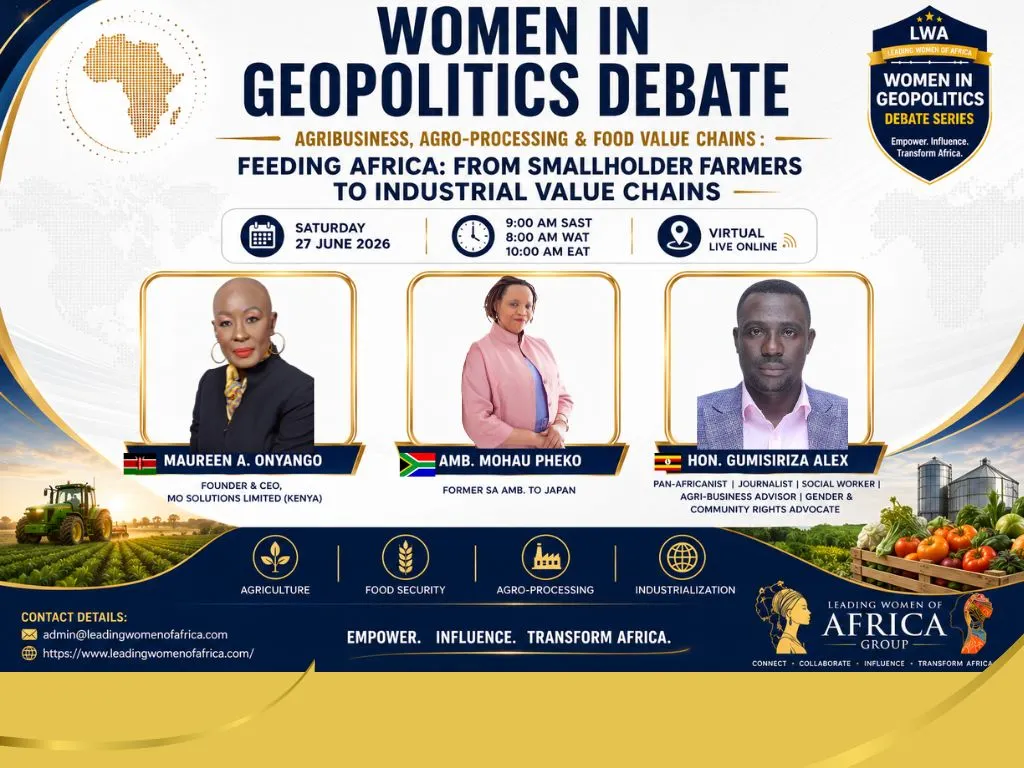
27 June 2026. The Women in Geopolitics Debate Series webinar, focused on the theme "Agribusiness, Agro-Processing & Food Value Chains", examining why Africa—despite possessing some of the world's richest agricultural resources—continues to rely heavily on food imports. 

The discussion explored whether the continent's food insecurity stems primarily from insufficient agricultural production or from deeper structural constraints such as weak market linkages, limited access to finance, inadequate infrastructure, fragmented regional value chains, and policy shortcomings. 

Rather than concentrating solely on farming, the webinar emphasized the need to transform entire agrifood systems by strengthening agro-processing, investment, logistics, technology adoption, and intra-African trade so that agriculture becomes a driver of industrialization, employment, and economic sovereignty. 

Why does the African continent possess nearly 60% of the world's uncultivated arable land, yet somehow spends a staggering $100 billion every single year importing food? In this powerful episode of Women in Geopolitics, international experts drop the pleasantries to expose the value chain crisis holding Africa back.

  • Ambassador Peko masterfully unpacks why Africa doesn't have a production problem, but an ownership problem. From global conglomerates controlling the world's seeds to the tragic reality of exporting raw cocoa, cotton, and coffee only to buy them back as Swiss chocolate, Louis Vuitton, and Starbucks—Africa is producing wealth for everyone except itself.
  • On-the-ground expert Maureen Onyango and others joins the conversation to reveal the shocking disconnect in the ecosystem: local manufacturers are importing agricultural goods from outside the continent while identical local crops rot in post-harvest losses due to broken logistics and high cross-border trade costs. This isn't just a video about farming—it's a masterclass on economic sovereignty, geopolitical strategy, and the 4 assets Africa MUST own to reclaim its future.

The session formed part of the Women in Geopolitics Debate Series, organized by Leading Women of Africa (LWA), which seeks to highlight women's leadership in strategic sectors shaping Africa's future.

  • The webinar brought together a panel of senior leaders and practitioners from across the African agribusiness ecosystem to discuss practical pathways for increasing agricultural competitiveness and reducing dependence on imported food. 
  • Speakers represented expertise in agricultural policy, agribusiness investment, agro-processing, food value chains, entrepreneurship, and regional market development, contributing perspectives on improving farmer access to finance, strengthening processing industries, expanding regional trade, and creating inclusive value chains that benefit women and youth. 
  • The organizers presented the event as an interactive policy dialogue aimed at connecting policymakers, investors, entrepreneurs, researchers, and development partners around a shared vision of building a more resilient, food-secure, and economically competitive Africa. While the announcement highlights a "distinguished panel," the publicly accessible event page does not list the speakers by name; instead, they were presented in an embedded event graphic that is not machine-readable in the available online version.

Friday, June 26, 2026

RAMP - Research and Market Pathways

26 June 2026. The RAMP (Research and Market Pathways) webinar held served as the Demo Day and culmination of the six-month RAMP-Accelerate programme, an initiative of the CGIAR Accelerate for Impact Platform (A4IP). The webinar showcased how scientific innovations developed within CGIAR and the Alliance of Bioversity International and CIAT can move beyond traditional research projects into financially sustainable, market-driven solutions with large-scale impact. Rather than focusing solely on technology transfer, the event emphasized entrepreneurial thinking, customer validation, business model development and strategic partnerships that enable research outputs to reach farmers, agribusinesses and food system actors.

The webinar featured nine multidisciplinary innovation teams pitching their market-ready solutions to investors, development partners and agrifood industry representatives after completing intensive mentoring, coaching and market validation.

  1. Cacao of Excellence: certification program for cacao - presented by Andrew Meter
  2. AquaSmart: modular irrigation for smallholders - presented by Gresia Dalal Ramos
  3. Croppie: coffee yield estimation - presented by Christian Bunn
  4. Climate Resilience Platform: supply chain risk visualization - presented by Thuy Thanh Nguyen
  5. MyFarmTrees: community tree restoration platform - presented by Fidel Chiriboga
  6. Tumaini: AI disease detection for banana and bean farmers - presented by Juan Mora
  7. Tatu (ex Artemis): AI-powered breeding tools - presented by Hana Gajdosova
  8. Scaling Resilient Finance: climate-linked credit for livestock producers - presented by Carlos Navarro
  9. Sample Earth: deforestation monitoring - presented by Phuong Minh

Each team demonstrated how scientific research had been transformed into scalable products or services with clear value propositions and pathways for adoption by public and private sector partners.

More broadly, the webinar highlighted CGIAR's evolving approach to achieving impact by combining excellent science with innovation, entrepreneurship and strategic partnerships. Speakers emphasized that research should not end with publications but should generate practical solutions capable of attracting investment, supporting start-ups and social enterprises, informing policy and reaching millions of beneficiaries. 

RAMP was presented as a structured learning pipeline—from Discover to Launch and finally Accelerate—that equips researchers with commercialisation skills while maintaining CGIAR's public-good mission. The Demo Day also illustrated how collaboration with innovation partners such as Kindling Ventures, investors and agrifood companies can help bridge the gap between scientific discovery and sustainable impact at scale.

Thursday, May 21, 2026

What Dutch exports mean for African food systems

20 May 2026. Research into the possible structural impacts of Dutch agrifood exports to Africa

Do subsidised, highly efficient Dutch farmers push African farmers out of their markets? ECDPM and Wageningen University researched this question for the Dutch Foreign Ministry and the Dutch Parliament (Tweede Kamer). 

ECDPM analysed the trade data, selected two in-depth cases with the highest probability of structural negative impacts – and, based on econometric analysis and interviews, found that there were no such harmful impacts in these cases. This also indicates that impacts in other cases would likely be very limited.


No impact is surprising – why is that?

Why no impacts, then? Trade data shows that Dutch food exports to ‘vulnerable countries’ are declining, and there are few instances where they have a substantial market share and attribution of impact is possible. 

Two cases were selected: onion exports to Senegal and potato exports to Côte d'Ivoire ($ 33.3 million volume and 71% market share for onions to Senegal; $ 10.0 million and 84% for potatoes to Côte d'Ivoire).

Wednesday, May 20, 2026

Food Accelerator Programme of Greenwich University

18 May 2026. The presentation of the report “A Research on the African Diaspora Food Market in the United Kingdom: Understanding Market Dynamics, Opportunities and Indigenous Food Systems” was followed by a visit to the Food Accelerator Programme at the University of Greenwich, 

The Food Accelerator Programme at the University of Greenwich is an innovation and business support initiative led through the Medway Food Innovation Centre and the university’s Natural Resources Institute. The programme is designed to help food and agri-food startups scale their businesses through technical assistance, mentorship, product development support, business coaching, and access to research facilities. 

Participants receive tailored guidance over several months, including workshops, one-to-one advisory sessions, investor connections, and support in accessing grants and funding opportunities. The programme places a strong emphasis on sustainable food systems, plant-based innovation, food technology, and commercial readiness.

For African SMEs, particularly those operating in agriculture, food processing, agritech, and nutrition sectors, the programme offers important opportunities to strengthen innovation capacity and improve competitiveness. African SMEs often face challenges such as limited access to research infrastructure, weak product development systems, and difficulties attracting investment. 

Through accelerator-style support, businesses can refine products, improve quality standards, adopt new technologies, and develop stronger business models that are attractive to regional and international markets. The programme’s mentorship and networking components also expose African entrepreneurs to industry experts, academic researchers, and potential investors, helping them overcome barriers to growth and commercialization.

In addition, the programme aligns well with broader efforts to strengthen food security, sustainability, and entrepreneurship across Africa. By helping SMEs become market- and investment-ready, initiatives like the Greenwich Food Accelerator contribute to job creation, value addition in agricultural supply chains, and the development of climate-smart food innovations. 

African SMEs that participate in such programmes can gain international visibility, access to collaborative research, and partnerships that support expansion into new markets. These benefits are particularly valuable for women-led enterprises, youth innovators, and startups developing solutions for nutrition, sustainable agriculture, and resilient food systems across the continent.

The Growing Kent & Medway website shows examples of businesses it has supported: 
  1. West african food festival in Faversham 
  2. Innovating the recipe box market with a taste of Nigeria: Meet Konero, 
  3. Stabilising African Superfoods for the Plant-Based Market with Root Mylk  
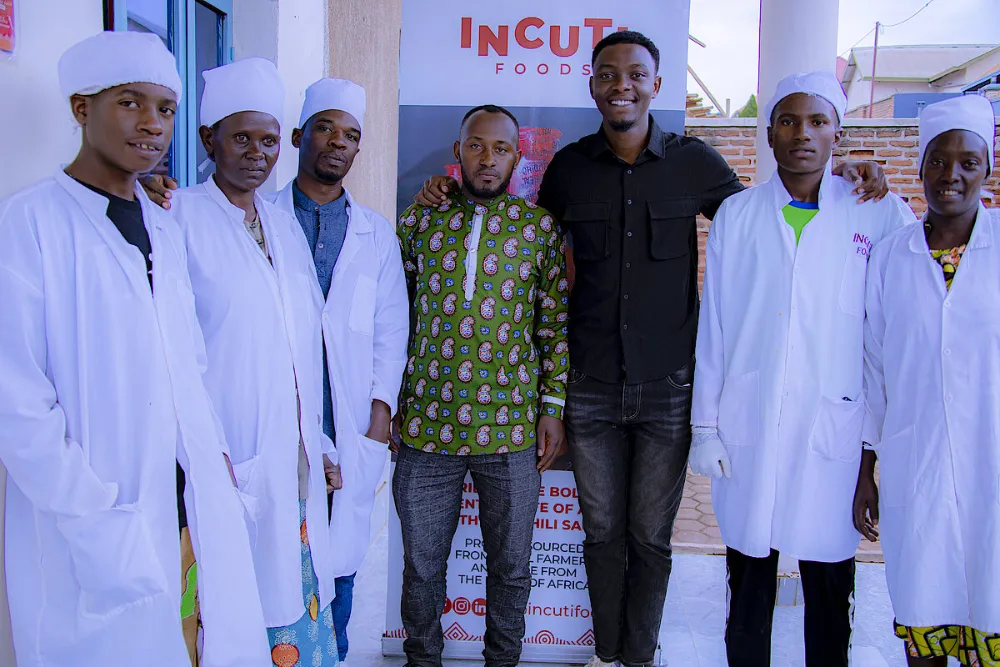
  4. How NRI is supporting a Rwandan start-up’s global vision - Natural Resources Institute

    Incuti is reshaping Rwanda’s chilli value chain, by adding value to chillies that were once sold fresh or went to waste. Farmers now have a more reliable buyer in Incuti, local communities benefit from job creation, and Rwanda earns valuable foreign exchange from exports.

A minimum food technology machinery

In a low-resource African context, the minimum food technology machinery required to support SMEs through a food accelerator programme should focus on affordable, multipurpose, energy-efficient equipment that improves food safety, shelf life, and value addition. The priority is not high-end industrial automation, but practical technologies that allow small enterprises to process local crops into marketable products. Core machinery would typically include cleaning and sorting equipment, solar or hybrid dryers, small hammer mills or grinders, oil presses, mixers, sealers, and basic packaging machines. For enterprises working with fruits, vegetables, grains, legumes, or neglected crops, these technologies can significantly reduce post-harvest losses while increasing product quality and income generation.

Basic food safety and preservation infrastructure is equally important. Minimum investments should include stainless steel processing tables, water filtration systems, weighing scales, moisture meters, refrigeration or cold storage units where feasible, and simple pasteurization or sterilization equipment. In many rural African settings, unreliable electricity makes solar-powered dryers, biomass-powered processing systems, and low-energy cooling technologies particularly valuable. Small laboratory tools for quality testing — such as pH meters, thermometers, and microbial testing kits — can also help SMEs meet national and export standards without requiring expensive industrial laboratories.

The most effective approach in poorer contexts is often shared processing infrastructure rather than individual ownership of machinery. Community food innovation hubs, cooperative processing centres, or university-linked incubation facilities can provide SMEs with access to machinery they could not afford independently. This reduces costs while encouraging skills transfer, entrepreneurship, and product innovation. For African SMEs working on forgotten foods, indigenous crops, or agroecological products, the emphasis should therefore be on scalable, repairable, locally maintainable technologies that support food safety, nutrition, and market access rather than sophisticated industrial systems that are difficult to sustain.

  • The webinar will explore the relationship between food safety and sustainability in food manufacturing, highlighting both the challenges and opportunities associated with current industrial practices. While food safety remains the highest priority across the sector, many processes used to ensure safe production, such as pasteurization, sterilization, cleaning in place, and sterilization in place, require significant amounts of energy, water, and chemical inputs.
  • The session will examine how these practices can create sustainability trade-offs, while also addressing how climate change is introducing new microbial hazards that need to be controlled throughout the food system.
  • Participants will gain an overview of the current landscape of food safety and sustainability, including opportunities to improve resource efficiency while maintaining high safety standards. Topics will include innovative hygienic design approaches, modernisation of traditional preservation methods, strategies to reduce spoilage and waste, and solutions to address emerging microbial risks linked to climate change.
  • If you are interested in joining this webinar, please register through this link: https://bokuvienna.zoom.us/webinar/register/WN_5iai5_fwSzO1WN_p-Hqsxg#/registration