Platform for African – European Partnership in Agricultural Research for Development
Showing posts with label Danemark. Show all posts

Saturday, May 23, 2015

Second European Climate Change Adaptation conference (ECCA2015)

12 - 14 May 2015. Copenhagen, Denmark. The second biennial ‘European Climate Change Adaptation Conference’ attracted more than 1000 participants.

The European Climate Change Adaptation Conference (ECCA) 2015 was the second of its kind, following the first ECCA held in Hamburg 2013 which was attended by more than 700 participants. The conference covered a broad range of issues related to climate change adaptation and follows international adaptation conferences in Australia (Gold Coast, Queensland) in 2010 and in the United States (Tucson, Arizona) in 2012.

This European conference placed a greater emphasis on understanding and assessing adaptation in action under the theme: Integrating climate adaptation action in science, policy, practitioners and business.

Nature-based solutions for Climate Change Adaptation: Research and Innovation Opportunities for Europe 
  • Chair: Eleni Manoli, European Commission, DG Research and Innovation 
  • de Boissezon, B.: A new EU Research and Innovation policy perspective on Nature-Based Solutions for climate change adaptation 
  • Berry, P.: Research abd Innovation perspectives towards the development of Nature-Based Solutions for climate change adaptation 
  • Ruijs, A.: Experiences and lessons learnt from nature based solutions for safeguarding water safety Perini, L.: Coastal threats in the Emilia-Romagna region and potential measures 
  • Robrecht, H : Resilient cities: Opportunities for nature-based solutions Discussion
Sylvia is a mangrove 
carbon scientists, 
originally from Madagascar, 
with experience 
working on conservation projects 
in Indonesia and Thailand
Local community and citizen knowledge – how can it steam up the adaptation process and move science-practice-interaction to a new quality? 
  • Chair: Birgit Kuna, Andreas Baumgärtner 
  • Paulot, Sylvia: Experiences from Madagascar 
  • Born, M.: Climate Change Adaptation within regions in Germany (KLIMZUG) 
  • Vogel, K., Schmidt, A.: The social dimensions of climate change: Interand transdisciplinary research on regional perceptions and actions 
  • Riaz, B. K.: Climate Change and local health issues 
  • Suthhof, A.: Toolbox for local knowledge integration in Europe and developing countries
Related: 

Published on 16 Apr 2015
In this video, the Skoll Foundation visits Alasdair Harris of Blue Ventures in Madagascar, where he is building sustainable coastal communities. This video debuted on the big screen at the 2015 Skoll Awards Ceremony, April 16, 2015, before Alasdair went on stage to receive his award from Skoll Foundation Founder and Chairman Jeff Skoll and President and CEO Sally Osberg.

Ten years ago, in a coastal village in Madagascar, Alasdair tested an elegantly simple model that put Blue Ventures on the map. He encouraged residents to take charge of their local fishery by cordoning off a small section of their octopus-fishing area for a designated period of time. When the area was re-opened, the community saw huge increases in their catch and incomes. In this video, you'll see one woman's reaction and how this drastically changed her family's life.

Building on this success, local communities created Madagascar’s first local committee to manage and conserve marine resources. Since that auspicious start, Blue Ventures has helped replicate this model along thousands of miles of coastline along the Indian Ocean. Beyond managing fisheries, Blue Ventures has integrated family planning and health services into its livelihoods and conservation work, showing the world that protecting the ocean can and should go hand-in-hand with improving lives.

Monday, September 15, 2014

Sustainable Agriculture for Food, Energy and Industry in Regional and Global Context

3-6 September, 2014. Hurup Thy, Denmark. 6th International Conference on Sustainable Agriculture for Food, Energy and Industry in Regional and Global Context. Organized by Nordic Folkecenter for Renewable Energy and the International Council for Sustainable Architecture -in collaboration with EUROSOLAR Denmark, IFEED, Hokkaido University, York University and others.

ICSA has organized five conferences on sustainable agriculture for food, energy and industry; two in Germany, and one each in China, Canada and Japan. The 6th International Conference was organized with following objectives:

  1. To provide an international forum for scientists, farmers, consumers, industrial, material and energy producers in the field of agriculture and energy to exchange information and achievements in research, technology, education and policy.
  2. To identify long term challenges in agriculture to cater to food, energy and industry sectors and formulation of strategies to achieve the UN millennium goal of reducing hunger.
  3. To harness and promote the international partnership for sustainable agriculture.

Monday, June 30, 2014

Mechanization of conservation agriculture slashes farming costs


11 June 2014. IFAD. FARMERS can increase yields, efficiency and drastically reduce the cost of ploughing, planting and weeding in the 2014 season following the introduction of mechanized Conservation Agriculture (CA). The new innovation that is being rolled out by the Lower Usuthu Sustainable Land Management (LUSLM) project (Zimbabwe), funded by the International Fund For Agricultural Development (IFAD) and the Global Environment Facility (GEF), uses tractor drawn Conservation Agriculture implements.

Using mechanized conservation agriculture, a farmer can complete land preparation, fertilizing and planting all
in one operation and in a fraction of the time it takes with conventional ploughing. This method uses the principles of minimum soil tillage, or “Climate Smart” agriculture practices.
  • A 4x4 John Deer 5503 supplied by Swazi Trac in Matsapha rigged with a 5-tooth rippertyne was unveiled during the first demonstration. The designated field was just over a hectare, where Lindiwe Magagula (a local farmer) intended to grow legumes.
  • When the tractor starts, the ripper opens five trenches that are almost 25-30 centimetres deep and 45 centimetres apart. The ripper leaves rows of grass between the trenches. Norman Mavuso, a sustainable Agriculture Coordinator, showed Lindiwe how to mix the herbicide and using a sprayer on her back, how to spray the grass with a special Springbok herbicide to dry the grass so that it forms a mulch cover between the rows of plants.
  • The reduced tillage equipment makes it possible for the tractor to open planting lines, apply fertilizer, seed and cover in one pass. The fertilizer dispenser is able to place fertilizer on one side of the trench and the seed on the other, eliminating the danger of the seed being scorched.
Related:
5 June 5 - 12 June, 2014.  Mulindi, Rwanda. 9th annual National Agri-show. The expo, was organized by Minagri under the theme, 'Transforming Agriculture for Shared Prosperity and Improved Livelihoods.' It attracted over 100 exhibitors from 11 countries, namely Burundi, Tanzania, Kenya, Uganda, Democratic Republic of Congo, South Africa, India, France, USA, Swaziland and Rwanda.
Related:
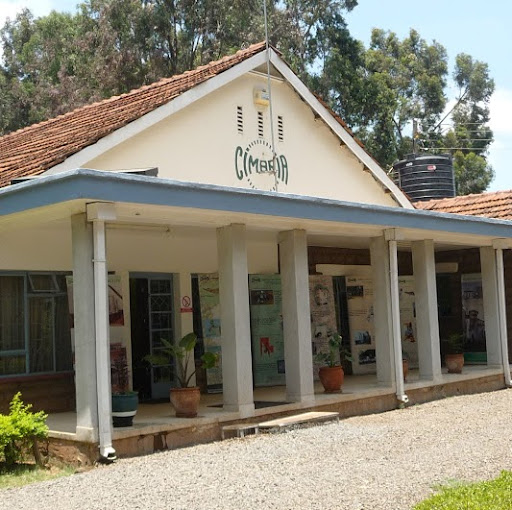
CIMBRIA, a Danish agri-business processing firm is making in-roads in East Africa with a subsidiary company with main offices in Nairobi Kenya. CIMBRIA does not only deal in construction of grain plants but also provides support services which may include training farmers on how to use the machines, plus some technical advice.The company has over 40 employees from East Africa with hope to get more if fully established in Rwanda.

""We provide post-harvest machinery for handling grains such as maize, beans, rice, coffee among others," Wanjohi said. We want to extend our services to Burundi and Congo and this will be so with collaboration with the government," Peter Wanjohi the Technical Sales Assistant at CIMBRIA East Africa Ltd

Saturday, May 10, 2014

Makerere Agribusiness program brings SMEs on board

Joseph Nkandu
Executive Director at NUCAFE
9 May 2014. Official launch of the Makerere Agribusiness program. The Consortium for enhancing University Responsiveness to Agribusiness Development (CURAD), a program initiated to boost agriculture students’ and graduates’ roles in broadening agribusiness entrepreneurship and job creation is expanding to benefit the private Small and Medium Enterprises (SMEs).

According to Joseph Nkandu, an agribusiness social entrepreneur and the program founding director, the initiative is rich with entrepreneurial skills that ought to be acquired by the rest of non-student agribusiness young men and women especially those involved in agricultural value chain.

CURAD was instituted in 2009 at Makerere University Agricultural Research Institute Kabanyolo to reform the curricula to nurture agriculture students into a skilled workforce with more roles in the field of agribusiness entrepreneurship, a step towards enabling beneficiaries with entrepreneurial skills to start their own agribusinesses and also be more competitive in the job market.

Speaking to the media ahead of the program (CURAD) Nkandu explained that the initiative was registering significant strides in equipping students with the skills of agribusiness entrepreneurship from shifting focus from only agronomy (soil and crop science) to other more profitable nodes of the agricultural value chain and marketing finished products.

Through incubation, students acquire skills in making business plans, and CURAD supports them with working capital and some of the students are linked to investors.
“Through CURAD, we started imparting students with entrepreneurial skills. We thought it important also to work and partner with the private sector already in business but had no opportunity to be taken up at Makerere University. We also take on those that had already graduated before the program was introduced,” he said.
According to the program Investigator, Prof. Samuel Kyamanywa, program is already groundbreaking in the SME world, but plans to boost it are also finalized with CURAD partnering with Danida Fellowship Centre and NIRAS to facilitate short course in General Tools and Concepts in Agribusiness SME Development.

Fully funded by Danish Fellowship Program, the course started in November 2013 and will be an annual activity to support the entrepreneurs in improving agribusiness management, developing partnerships and exploring new markets using value chain approach.

Kyamanywa revealed that the course targets private agriculture SMEs entrepreneurs, business Associations as well as rural credit organisations with prior knowledge of the general business development tools such as feasibility studies and business plans.

Thursday, December 12, 2013

East Africa Agribusiness Investment Summit

10th - 11th December 2013. Kampala. This Summit was organised by Focus on East Africa, and gathered Entrepreneurs, Business leaders, Investors & Government Representatives, and those wanting to get a step ahead in Agribusiness.

The Summit aimed to promote private sector Agribusiness development as a means to the fight against poverty in the region as well as a key to the region’s food security. Emphasis was placed on value addition, intra-regional trade, partnerships and value chain development.

aBi Trust joined the European Union in sponsoring
Svend Kaare Jensen, 
Chief Executive Officer, 
aBi Trust and aBi Finance
this Agribusiness event. The Agricultural Business Initiative (aBi) Trust is supporting agribusiness development in the private sector to achieve the objective of the Government of Uganda’s Competitiveness and Investment Climate Strategy (CICS). The aBi is being implemented in cooperation with other donors, with Danida as the lead partner. The other partners are:
  • The European Commission (EC)
  • The Swedish International Development Cooperation Agency (SIDA)
  • The Belgium Development Cooperation (BTC)
  • The German Development Bank (KfW)
  • The US’ Agency for International Development (USAID)
  • The UK’s Department for International Development (DFID) 
Additional international governmental donors as well as private donors have expressed interest in participating in the aBi Trust. 

Highlight on some speakers:
Kristian SCHMIDT
  • Ralph von Kaufmann, Agribusiness Incubation, Foresight and Livestock Systems
  • Sean Paavo Krepp, Country Director, Grameen Foundation-Uganda
  • Stephen Muchiri, Chief Executive Officer, Eastern Africa Farmers Federation
  • Pål Dale, Managing Director, The Voxtra East Africa Agribusiness Fund
  • Kristian SCHMIDT, Head of the European Commission/EU Delegation to Uganda


The East Africa Agribusiness Awards is the key platform for celebrating excellence and best practices in East African Agribusiness. The Awards are designed to identify and recognise achievements by the different key players in the region’s agribusiness. They celebrate the innovative agribusiness leaders, transforming East African agribusiness, who have found transformational and sustainable ways that are both replicable and scalable to help improve the lives of millions around the region.


1


Sanjay Sethi, the Chief Executive Officer for Food and Beverages of the Export Trading Group has been awarded the Africa food Prize 2013 for this noteworthy contribution in helping produce more food for Africa’s poor people. Sethi has implemented various end to end supply chain integration projects for food and agriculture Africa as well as in India. He brought up small holder farming communities in many developing economies in Africa and supported them with modern technologies including drip irrigation.

He has provided integrated solutions to farmers in Rwanda, Kenya, Nigeria, Ethiopia, Malawi, Angola, Uganda, Sudan, Mozambique, Gabon, Ghana and Burkina Faso. His actions have immensely improved the agricultural infrastructure, irrigation technologies, adoption of new technology and Good Agricultural Practices followed by farmers and he has been lauded as thoughtful and creative Agribusiness Professional who has helped many Governments to fine tune their blueprints for agriculture.

Upcoming:
28 – 29 January 2014, Dar es Salaam, Tanzania
See programme 28/01/2014: Panel discussion: Opportunities and pitfalls to a commercially viable East African agricultural industry with Stephen Muchiri, Chief Executive Officer, Eastern African Farmers Federation, Kenya
Global Forum for food and Agriculture Berlin 2014
18th Jan 2014. Berlin. Food Security: Identify Challenges - Increase Resilience.

Africa Agribusiness Forum 2014
28th - 29th April 2014, Vienna, Austria
Case-studies and success stories and innovations in the African agribusiness sector.

Tuesday, September 3, 2013

Denmark Contributes US $1.8 Million to Africa Agriculture Fast Track Fund

3 September 2013. TUNIS, Tunisia. The Government of Denmark has announced a contribution DKK 10 million (approximately US $1.8 million) to the Agriculture Fast Track Fund to Spur Investment in the development of African agriculture infrastructure.

The announcement was made on Wednesday, August 28, 2013 in Copenhagen by Denmark’s Development Cooperation Minister, Christian Friis Bach, during the visit to the country by the President of the African Development Bank Group Donald Kaberuka.

The Agriculture Fast Track Fund (AFT) is a US $26.8-million first-of-its-kind fund set up to spur greater private investment in agriculture infrastructure projects in Sub-Saharan Africa.

Backgound:

The Danish Government’s support complements contributions from Agricultural Fast Track founding donors including USAID, which has committed $15 million, and the Government of Sweden, which has pledged $10 million. The fund is managed by the African Development Bank.

The Agricultural Fast Track (AFT) provides grant funding for the initial project development costs of a broad range of agriculture infrastructure projects spanning the entire value chain – from production to market.The AFT is intervening in countries that are members of the New Alliance for Food Security and nutrition, which aims to strengthen the links from farmers to markets to tables. The New Alliance for Food Security and Nutrition was launched by President Obama at last year’s G8 summit and primarily includes six member countries: Burkina Faso, Côte d’Ivoire, Ethiopia, Ghana, Mozambique, and Tanzania. The New Alliance matches market-oriented regulatory reforms in these six countries with $3.7 billion in commitments from the private sector in agriculture.

Friday, November 25, 2011

Training program on agribusiness incubation for SSA

Dr Ralph von Kaufmann, Technical Coordinator,
UniBRAIN-FARA, in a discussion with Dr Dar and others
21-24 November. Aiming to promote agribusiness ventures in sub-Saharan Africa (SSA) through value-chain based agribusiness incubators, ICRISAT’s Agri-Business Incubation (ABI) program under its
Agribusiness Innovation Platform (AIP) organized a training program on “Strengthening the capacity of UniBRAIN – Agribusiness Innovation Incubation Consortia (AIIC) members” at ICRISAT-Patancheru.

The training program primarily aimed to strengthen the capacity of AIIC members in incubator planning and management, in view of UniBRAIN’s plan to set up an African Business Incubators Network (AFBIN) similar to the Network of Indian Agri Business Incubators (NIABI) of India. The training was focused on incubator management, planning for incubation operations, client selection, setting up systems and processes, and other key aspects of setting up successful business incubators to promote entrepreneurship in sub-Saharan Africa.

Tamil Nadu Agricultural University (TNAU)
Twenty six participants from the Forum for Agricultural Research in Africa (FARA), Universities, Business and Research in Agricultural Innovation (UniBRAIN), Pan African Agribusiness and Agro Industry Consortium (PanAAC), Agro forestry and Natural Resources Education (ANAFE), Association for Strengthening Agricultural Research in East and Central Africa (ASARECA), Conseil Ouest et Centre Africain pour la Recherche et le Développement Agricoles (CORAF) and SADC joined the training program at Patancheru, which had 30 resource persons from infoDev, ISBA, STC, Trec-STEP, Technopark, Villgro, etc. who provided and shared their vast and rich experiences in agriculture and agribusiness.

The training was continued at the Business Planning and Development (BPD) units of the Tamil Nadu Agricultural University (TNAU), Coimbatore and Ooty.

Background
UniBRAIN is a program of FARA supported by the Royal Danish Ministry of Foreign Affairs (DANIDA). It is facilitated by a team of partner institutions comprising FARA Networking Support Function for Capacity Strengthening (FARA-NSF4) and its associated sub-regional organizations – ASARECA, CORAF, Centre for Coordinating Agricultural Research and Development in Southern Africa
(CCARDESA), African Network for Agriculture, ANAFE, PanAAC, and ICRISAT Agri-Business Incubator (ABI).

Monday, January 31, 2011

Universities, Business and Research in Agricultural INovation (UniBRAIN) Initiative

The Danish Ministry of Foreign Affairs/Danida has provided funds to FARA to support the Universities, Business and Research in Agricultural INovation (UniBRAIN) Initiative. The January 2010 - December 2014 UniBRAIN programme is purposed to link university education, research and business in sustainable agriculture. UniBRAIN’s Development Objective is for innovation and entrepreneurship derived jobs in the agricultural sector to be created through partnerships between universities, research institutions and the private sector.

UniBRAIN’s major components are:
  1. Promoting innovation through the establishment of university-led agribusiness incubators in Danida priority countries. These are in Eastern Africa in the ASARECA sub-region: Kenya, Uganda, Tanzania; in West Africa in the CORAF/WECARD: sub-region: Benin, Burkina Faso, Mali, Ghana; in Southern African in the SADC sub-region: Mozambique and Zambia.
  2. Supporting graduate training in entrepreneurial and business skills.
  3. Advancing graduate research-based knowledge that is relevant to the development of African agriculture and agribusinesses.

Thursday, February 4, 2010

Announcement: Agricultural development and support: Experience from the past, prospects for the future?


Home

The Evaluation Department of the Ministry of Foreign Affairs in Denmark in cooperation with the Technical Advisory Services in the MFA and the Danish Development Research Network (DDRN) are jointly organizing a meeting on experiences and lessons learned with support to agriculture in developing countries with particular focus on Africa.

The meeting will bring together researchers, evaluators and experts in the field of agriculture, including participants from partner countries.

Date: March 18, 2010
Venue: Eigtveds Pakhus, Copenhagen

The programme for the event will be posted at www.evaluation.dk shortly.