Platform for African – European Partnership in Agricultural Research for Development
Showing posts with label AATF. Show all posts

Tuesday, June 17, 2025

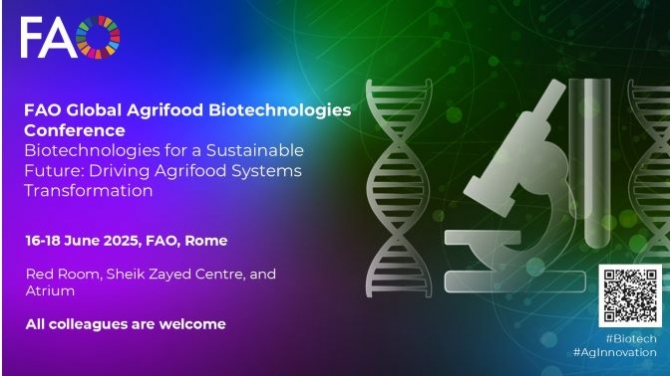
Biotechnologies for a Sustainable Future: Driving Agrifood Systems Transformation

16 - 18 June 2025,
FAO HQ, Rome, Italy. Biotechnologies for a Sustainable Future: Driving Agrifood Systems Transformation

This conference discussed the latest advancements, opportunities and risks associated with biotechnologies, and to examine how biotechnologies can drive agrifood systems transformation, ensuring equitable access and delivering meaningful impacts at all levels.

Objectives 
  • Highlight past achievements, recent advancements and future trends in biotechnologies and their transformative potential for achieving efficient, inclusive, resilient and sustainable agrifood systems.
  • Explore how biotechnologies, including low-tech tools and advanced innovations, such as genome editing and synthetic biology, can empower small-scale producers, processors, traders and retailors to enhance food security, improve nutrition, and build resilience to climate challenges.
  • Share good practices in integrating digital technologies, such as Artificial Intelligence and bioinformatics, to advance research, improve access, and scale biotechnological innovations.
  • Discuss the experience in development of policies and legislation to ensure the safe, equitable, and responsible application of biotechnologies, addressing risks and building public trust.
  • Foster global collaboration by connecting policymakers, scientists, civil society organizations, private sector, and other relevant stakeholders to drive inclusive biotechnological solutions, ensuring no one is left behind in the transformation of agrifood systems.
"Biotechnology is not a substitute for traditional knowledge, but instead it is a valuable complement. It must be accessible to those on the front lines of agrifood systems: farmers, rural communities, and stewards of the environment. Responsible governance, appropriate regulatory frameworks, public trust, and cross-sector collaboration are essential to ensure that no one is left behind in this era of rapid transformation." QU Dongyu FAO Director-General 

Extracts of the programme

16/06 Opening plenary session

The panel highlighted some of the recent advancements such as synthetic biology, microbial metabolic engineering, molecular data science, analytics, computational methods including Artificial Intelligence (AI) applied to development and application of biotechnological solutions. 

FAO Webcast
  • Welcome and opening Address, Dr QU Dongyu, Director-General, FAO 
  • Vincent Martin, moderator
  • Science-based approaches to support food security, better nutrition and food safety in the context of transforming agrifood systems - Mr. Carlos Goulart, Secretary of Animal and Plant Health at the Ministry of Agriculture and Livestock, Brazil
  • Biotechnologies as catalysts for agrifood systems transformation and its role in achieving multiple SDGs - Mr Víctor Manuel Villalobos Arámbula, Former Secretary, Ministry of Agriculture and Rural Development, Mexico 
  • Role of National Agricultural Research Systems (NARS) in development and application of Biotechnologies - Mr Sanwen Huang, President, Chinese Academy of Tropical Agricultural Sciences (CATAS), Hainan, China
  • Application of biotechnologies for smallholders - Mr Papa Abdoulaye Seck, Former Director General, Africa Rice Center and Former Minister of Agriculture and Rural Development, Senegal
  • Taking stock of the past achievements, status and recent breakthroughs in biotechnological research and development - Ms Louise Fresco Professor & Former President, Wageningen University and Research, Wageningen, Netherlands: She stressed the promises of biotechnology 1.0 and biotehnology 2.0

The panel discussion highlighted some of the recent advancements such as synthetic biology, microbial metabolic engineering, molecular data science, analytics, computational methods including Artificial Intelligence (AI) applied to development and application of biotechnological solutions.

FAO Webcast
  • Looking at the future: International cooperation and partnerships for promoting biotechnologies for efficient, inclusive, resilient and sustainable agrifood systems - Ms Jelena Begovic, Chair, Board of Governors, International Centre for Genetic Engineering and Biotechnology (ICGEB), Trieste, Italy and Former Minister of Science, Technological Development and Innovation, Government of Serbia.
  • Application of synthetic biology and microbial metabolic engineering for food security and nutrition - Ms Claudia Vickers, Professor, Queensland University of Technology, Australia
  • Molecular data science - Analytics and computational methods, including AI, applied to genome, protein sequence, and small molecule data - Mr Justin Gerke, Sr. Data Science Manager, Corteva Agriscience, Indianapolis, IN, USA
  • Exploring the Future of biotechnologies: Integrating foresight across UN and Beyond - Mr Chris Earney, Head UN Futures Lab/Global Hub, UN Futures Lab/Global Hub Executive Office of the Secretary General at the Unities Nations, New York, USA
  • Biotechnologies at work for smallholder farmers: Lessons of the past, challenges and opportunities of the future - Mr Ajay Vir Jakhar, Chairman, Bharat Krishak Samaj, Indian Farmers Forum, New Delhi, India: Phylantropic organizations should not influence policy
  • Role of private sector in promoting biotechnological solutions: Increasing investments and engagements - Mr Michael Keller, Secretary General, International Seeds Federation, Nyon, Switzerland

    + 22:35:50 Intervention from Ms Louise Fresco

16/06 FAO/IAEA Joint centre and the Biotechnologies abstract winners

Atrium side event: Extract: Evaluation of transgenic cowpea with combined resistance to the Legume pod borer and cowpea weevil - Mr Jerry Nboyine, Principal Research Scientist (Entomologist) at CSIR - Savanna Agricultural Research Institute, Tamale. Ghana

16/06 Biotechnological innovations and sustainability frontiers

The session focused on some recent and specific biotechnological innovations including gene editing, synthetic biology, DNA sequencing, bioinformatics, cell based products and its wide range of novel solutions for resilient and sustainable agrifood systems.

FAO Webcast
  • Biotechnologies to the most vulnerable communities: Participatory action research with indigenous peoples and peasant communities, and advice on public policies and programs - Ms Georgina Catacora-Vargas, Member of the IPES-Food panel, and professor at the Academic Peasant Unit ‘Tiawanacu’ of the Bolivian Catholic University, Santa Cruz, Bolivia
  • Revolutionary gene editing technology for affordable and accessible solutions in agrifood systems - Mr Brad Ringeisen, Executive Director, Innovative Genomics Institute (IGI), Berkeley, California, USA (On-line)
  • Application of the latest DNA sequencing technologies and bioinformatics methods to advance scientific understanding of crop genetics and interaction with their environment - Mr Mario Caccamo, Chief Executive Officer and Director, National Institute of Agricultural Botany, Cambridge, United Kingdom
  • Biotechnological and food innovation – How plant and cell- based products will transform our agrifood systems? - Mr Bruce Friedrich, President and Founder, The Good Food Institute, Washington, D.C., USA
  • Molecular biological research for development of stress tolerance and resilient crops - Mr. Yasunari Fujita, Food Program, Program Director, Japan International Research Center for Agricultural Sciences (JIRCAS), Japan
  • Role of structural and functional changes in the genome, diversity and population’s structure - adaptation to natural environmental variations or human-induced changes - Mr Yves Vigouroux, Director, DIADE Research Unit (Diversity - Adaptation - Plant Development), Institute of Research for Development (IRD), Montpellier, France
  • Delivering the benefits of biotechnology tools to farmers: Facilitating the transfer of appropriate biotechnology applications to farmers - Ms Margaret Karembu, Director, International Service for the Acquisition of Agribiotech Applications (ISAAA), Africa Center, Nairobi, Kenya (On-line)

16/06 Genetic improvement for sustainable crop production systems

The presentation focused on topics such as next generation genomics, molecular breeding, gene editing and synthetic biology for sustainable crop production systems. 

16/06 Biotechnological Innovations in livestock management

The session provided a platform for interactive dialogue on the latest biotechnological applications in animal breeding, conservation of genetic diversity, improvement of feed efficiency and product quality, and the development of next-generation vaccines.


16/06 Youth and women in Biotech: Innovating for Tomorrow


FAO Webcast 45 applications were received and 6 were selected for presentation
+ 2:05:00 Intervention from Ms Louise Fresco: "South - South collaboration is really important" "Vasilov vs Lisenko  in Russia: we are go to be evidence driven" "Only a fully rounded individual can bë a good scientist

17/06 Innovation Pathways for development and localization of biotechnologies

The session highlighted some practical examples from the United States and China on product development, localization and commercialization, and safe and appropriate use of technologies to help meet agricultural challenges and consumer needs.

  • Role of Agricultural education and extension to promote development and localization of biotechnologies: Pathways for promoting biotechnologies in South Africa - Ms Lerato Bame Tsalaemang Matsaunyane, Research Team Manager: Farmer Support, Commercialisation and Enterprise Development, Agricultural Research Council – Vegetable, Industrial and Medicinal Plants (VIMP), Pretoria, South Africa (On-line)

17/06 Biotechnologies in managing forest genetic resources

  • Biotechnologies to enhance the conservation and use of African tree germplasm - Ms Alice Muchugi (Theme Leader, Tree Genetic Resources and Biodiversity, World Agroforestry, Kenya)

17/06 Fish breeding, diagnostic tools and vaccines for aquatic animals

Brief overview of the main areas where biotechnologies are currently been applied in the fisheries and aquaculture.

17/06 Biotechnological applications for improving nutrition and food quality

  • Applying genomics to enhance the use of nutritionally important underutilized crops and trees species: African Orphan Crops Consortium (AOCC) Initiative - Ms Alice Muchugi, Theme Leader, Tree Genetic Resources and Biodiversity, CIFOR-ICRAF, Nairobi, Kenya 

 17/06 Biotechnology applications in a sustainable bioeconomy

This session discussed the current issues of sustainability assessments and barriers to adoption of biotechnologies. 

FAO Webcast
  • Platforms to enable knowledge transfer and bioeconomy development - Mr. Julius Ecuru, Manager, BioInnovate Africa at ICIPE - International Centre of Insect Physiology and Ecology, Kenya 

17/06 Collaborative approaches for ensuring safety of biotechnological applications in food

  • Case 2: Importance of information sharing under the Convention of Biological Diversity: Biosafety Clearing House (BCH) - Ms Wadzanayi Mandivenyi, Biosafety Clearing House Manager, Biosafety Unit, Secretariat of the Convention on Biological Diversity (CBD), United Nations Environment Programme (UNEP), Canada
FAO Webcast

17/06 Climate-Resilient Future: Adapting to biotic and abiotic stresses through biotechnologies


This session highlighted accessible and affordable biotechnological innovations for climate change adaptation, and discuss specificity of some regional initiatives, and opportunities of plant microbiomes research and the development of microbial pro- and pre-biotic products for a more sustainable agriculture.
  • Biotechnologies for adapting to climate change: Improving resilience of smallholders in Africa - Mr Sylvester Oikeh Manager Biotech Maize seed system AATF, Nairobi, Kenya (On-line)
  • Developing next-generation plant breeding technologies to accelerate the creation of resilient and diverse crops, particularly in response to climate change - Ms Ying Shao, Co-Founder & Chief Executive Officer, Plantik Biosciences, Paris, France 

17/06 Private sector in development, uptake and scaling of biotech solutions 


The session highlighted some selected cases from Sweden, Switzerland, Nigeria, USA and Canada. The discussions focused on application of biotechnologies in livestock herd health management, plant breeding, high-quality and high yielding varieties of seeds and scaling efforts. 
  • Development of Nigeria’s seed sector by improving access to high-quality, high-yielding varieties for smallholder farmers and promoting agronomic practices that support food security and rural livelihoods - Mr Moses Igyuve, Value Seeds Ltd, Nigeria 

18/06 Scaling Innovations in Biotech: From research to context specific adoption by rural communities

Examples covered economically important tropical crops, recent developments in biological nitrogen inhibition (BNI) and converting waste into biofertilizers. 

  • Facilitating transition of biotechnologies from the research to adoption enabled through Science, Technology and Innovation (STI) roadmap  in South Africa  - Ms Maneshree Jugmohan-Naidu, Director: Agricultural Biotechnology, Department of Science, Technology and Innovation, Pretoria, South Africa 
  • Scaling biotech products and response under real-world farmers’ conditions - Mr David Spielman, Director, Innovation Policy & Scaling Unit, International Food Policy Research Institute, Washington DC, USA 
  • Transforming agricultural waste into bio-fertilizer and outreach to rural women farmers in Uganda - Ms Elizabeth Kabakoyo, Founder, Glowish Agro Solutions, Uganda (On-line)

18/06 Policies in Biotechnology: Ensuring innovation and equity, balancing regulatory frameworks


This session highlighted the policies for equitable access and responsible application of biotechnologies by addressing consumer concerns and ensuring integration of ethical considerations.
  • Policy and regulatory affairs for biotechnologies: Experiences from Africa - Mr Francis Nangayo, Senior Manager and Head, Regulatory and Policies, African Agricultural Technology Foundation (AATF), Nairobi, Kenya.
  • Policies and regulations of agricultural biotechnologies in Malawi – stakeholder relations and communications - Ms Lilian Chimphepo, Chief Environmental Officer (Biosafety Registrar), Environmental Affairs Department, Malawi 
  • Policy enablers for regulating agricultural biotechnologies in Africa - Mr Samuel Timpo, Principal Programme Officer – Biosafety, Johannesburg, South Africa 

18/06 Closing Plenary Session

Wednesday, June 11, 2025

African Conference on Agricultural Technologies

9 -12 June 2025.
African Conference on Agricultural Technologies (ACAT) Kigali, Rwanda

ACAT is the foremost forum that focuses on game-changing novel agricultural technologies, ideas, and policies that foster agricultural transformation on the continent. The Conference is an agriculture technology transfer platform that promotes innovative and practical solutions to catalyse more efficient, inclusive, and resilient agriculture in Africa. 

It brought together government representatives, industry thought leaders, policymakers, technical experts, private institutions, farmers, women and youth across the globe to discuss and define practical actions and solutions to the challenges of technology access and use faced in the agriculture sector in Africa.

Extracts of the programme

Day 1 Theme: Farmer-Centric Design: Developing Need-Based Solutions


09/10 Farmer-Centric Design: Developing Need-Based Solutions


This session explored how cutting-edge scientific advancements, coupled with appropriate
and accessible technological tools, can be strategically harnessed to empower farmers.
This empowerment encompasses providing them with the knowledge, resources, and
control necessary to make informed decisions, optimize their farming practices, and
navigate the complexities of modern agriculture. Discussions highlighted how STI can
facilitate access to vital information (weather patterns, market prices, best practices),
improve resource management (water, fertilizers, seeds), and enhance their capacity to
adapt to challenges like climate change.

Panel 1: Farmer Representative Voices: Sharing Experiences and Insights
  • Mr. Ishmael Sunga, CEO, Southern African Confederation of Agricultural Unions (SACAU)
  • Ms. Elizabeth Nsimadala, President, EAFF
  • Mrs. Césarie Kantarama, Farmer & President of the Board, Ingabo Syndicate Rwanda
  • Ms. Sharon Akanyana, Founder and Managing Director, Ishyo Foods Ltd
Panel 2: Harnessing STI for Farmer-Centric Solutions
  • Mr. Obai Khalifa, Deputy Director, Agricultural Development, Gates Foundation
  • Ms. Verena Ruzibuka, Country Director, Rwanda, Heifer International
  • Ms. Julie Borlaug, President, Borlaug Foundation
  • Mrs. Lucia Zigiriza, Senior Partnership Officer, AGRA

09/10 User-centred design


This panel session explored how a user-centered design approach can revolutionize the development and deployment of Science, Technology, and Innovation (STI) in agriculture, with smallholder farmers and other key stakeholders as integral members of the innovation team.

Sequence 1: How can we better understand and prioritize the specific needs of smallholder African farmers to ensure that technological solutions are truly impactful and sustainable?
  • Dr. Milindi Sibomana, Chief Agriculture Officer, One Acre Fund
  • Ms. Margaret Awinja, Coordinator, Western Region Farmers Network
  • Mr. Anthony Kioko, CEO, CGA
  • Prof. Maggie Gill, Board of Trustees Member, AATF
  • Dr. Kayode Sanni, Project Manager and Director of The Alliance for Hybrid Rice in Africa (AHyRA), AATF 
Sequence 2: How can we create effective partnerships between researchers, policymakers, private sector actors, and farmers to design scalable farmer centric agtech solutions?
  • Prof. Richard O. Oduor, Research, Innovation and Outreach, Kenyatta University
  • Prof. Hlami Ngwenya, Head of Research Chair, Communication for Innovation Center for Sustainable Food Systems and Development, University of Free State
  • Prof. Bernard Slippers, Board of Trustees Member, AATF
  • Prof. Firew Mekbib, Chair, National Variety Release, Federal Democratic Republic of Ethiopia
  • Dr. Jean Claude Rubyogo, Director, Pan-Africa Bean Research Alliance (PABRA) 

09/10 Building robust digital infrastructure in rural areas

This session explored a two-pronged approach: establishing resilient and accessible infrastructure for present impact and proactively developing the robust and interconnected infrastructure required to harness the transformative potential of AI, robotics, precision agriculture, and data analytics.

Sequence 1: How can digital solutions be leveraged to accelerate the adoption and application of agricultural innovations? 
  • Dr. Bellancile Uzayisenga, Plant & Microbial Biotechnology Programme Coordinator Senior Principal Research Fellow, Rwanda Agriculture and Animal Resources Development Board, (RAB) 
  • Mr. Deo Massawe, CEO, Bank of Kigali (BK) TecHouse 
  • Mr. Emmanuel Assiak, Chief Investment Officer, Fund for Export Development in Africa (FEDA) 
  • Dr. Ndambe Magnific, Deputy Vice Chancellor of Research, RICA
Sequence 2: What are the key challenges and opportunities in deploying digital tools in remote rural areas, and how can these challenges be overcome?
  • Mr. Pierre Kayitana, General Manager, Zipline Rwanda
  • Mr. Gabriel Macharia, Data Management Officer, AATF
  • Mr. Paul Kwengere, Board Member, International Trade Council
  • Mr. Faissal Sehbaoui, CEO, AgriEdge 

09/06 Digital divide and promoting Ag-tech literacy

This panel addressed the critical issue of farmers’ voices to the forefront and exploring practical solutions to promote tech literacy and the adoption of farmer-centric agricultural technologies.

Sequence 1: Bridging the Gap - Farmers and Tech Developers in Dialogue 
  • Ms. Elizabeth Nsimadala, President, EAFF 
  • Mr. Pacifique Nshimiyimana, Founder & CEO, Real Green Gold Ltd 
  • Mr. Naboho Wiledyo, Farmer, People’s Republic of Burkina Faso 
  • Mrs. Tigist Endashaw Bealem, Consultant - Climate Action Policy Advocacy, Federal Democratic Republic of Ethiopia 
Sequence 2: Interactive workshop and reporting 
  1. What are the effective training and education models for Ag-Tech solutions in Africa? 
  2. What are some practical strategies for enhancing access and affordability of digital tools for farmers? 
  3. The role of youth in championing digital literacy among older farmers?

Day 2: Theme: Enabling Environment: Investment and partnerships for Ag-Tech Solutions


10/06 : Enabling Environment: Investment and partnerships for Ag-Tech Solutions


This session explored strategic investments across a range of vital linkages, markets, credit facilities, capacity building, and other essential support services.
  • Keynote Address: Investing in the Future of African Agriculture - H.E. Dr. Goodluck Jonathan, AATF Goodwill Ambassador & Former President, Federal Republic of Nigeria
Panel 1: Charting a Collaborative Roadmap for Quality Partnerships:
  • Dr. Canisius Kanangire, Executive Director, AATF 
  • Prof. Appolinaire Djikeng, Director General, ILRI
  • Dr. Yuichiro Asai, President & CEO, Asai Nursey, Inc
  • Dr. Sheila Obim, Executive Director, Alliance for Science
  • Prof. Jean Jacques Muhinda, Regional Director East & Southern Africa, AGRA
Panel 2: Building the Ecosystem: Infrastructure, Finance, and Capacity
  • Hon. Tesi Rusagara, Minister of State for Resource Mobilization and Public Investments,
    Rwanda.
  • Ms. Brenda Gunde, Lead Global Technical Specialist ICT4D, Sustainable Products, Markets and Institutions Division, IFAD
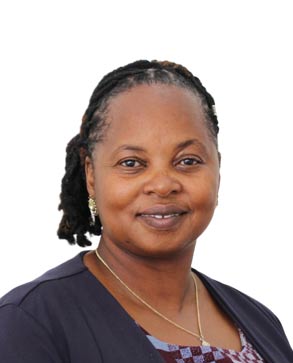
  • Dr. Stella Simiyu (picture), Director Regulatory Affairs & Stakeholder Relations, CropLife Africa Middle East: see video
    @ 42:27 - 46:38 She answers the question: How do we foster a PPP that works for the farmers?
  • Ms. Katie Taft, Communications and Engagement Lead, Gates Ag One
  • Mr. Hannington Namara, C.E.O Equity Bank Rwanda

10/06 : Developing sustainable business models for Ag-Tech

This session explored diverse investment opportunities, innovative financing mechanisms, and policy frameworks that can unlock the widespread development and adoption of impactful Ag-Tech.

Sequence 1: For sustainable Ag-Tech to thrive across diverse African markets, what are the primary investment hurdles and the resulting opportunities once these are addressed?
  • Dr. Eugene Mutimura, CEO, National Council of Science and Technology, Republic of Rwanda
  • Dr. Jonga Munyaradzi, Seed Production Manager, AATF
  • Dr. Said Rutabayiro Ngoga, Division Manager for Technology Innovation, Rwanda Information Society Authority
  • Ms. Martha Haile, Founder, Abze 
Sequence 2: How can we foster a new generation of innovative agripreneurs who can drive sustainable agricultural development and economic growth?
  • Prof. Alfred Bizoza, Professor, University of Rwanda
  • Mr. John Agboola, Foundation Manager, AGCO Corporation
  • Mr. Peter Wamboga-Mugirya, Director for Communication and Partnerships, Science Foundation for Livelihoods and Development (SCIFODE)
  • Dr. Nomathemba Mhlanga, Country Representative, FAO 

10/06 Researchers Dialogue Session Title: Integrating traditional knowledge systems with modern technology solutions

This session examined the synergies between indigenous ecological knowledge—deeply rooted in local cultures and ecosystems—and innovations such as precision agriculture, biotechnology, and digital platforms. 

Sequence 1: Collaborative Pathways to Next-Gen Agriculture
  • Mrs. Gift A. Kadzamira, Director General, National Commission for Science and Technology Rwanda 
  • Dr. Omar Mukama, Lead GCP inspector of Clinical Trials, Rwanda Food and Drugs Authority
  • Dr. Allan Liavoga, Technical Advisor, North American Millers Association
  • Ms. Bakang K. Kgasudi, PhD student, Botswana University of Agriculture and Natural Resources
Sequence 2: Interactive workshop and reporting - Bridging Wisdom and Technology
  1. What core elements of traditional farming must be safeguarded and integrated?
  2. How can digital agriculture enhance, rather than replace, local practices?
  3. What governance mechanisms can ensure ethical knowledge sharing?


Day 3 : Last Mile Delivery: Commercialization and Scaling of Ag-tech Solutions


11/06 Commercialization and Scaling of Ag-tech Solutions

The panellists analysed the persistent barriers hindering access in rural communities and explore how strategic, multi-sectoral partnerships, empowered by cutting-edge technological advancements in logistics and information flow, can revolutionize delivery.
  • Project Showcase: Climate Smart Remote Sensing Project in Rice Value Chain Project - Dr. Kayode Sanni, Project Manager and Director of The Alliance for Hybrid Rice in Africa (AHyRA), AATF 
  • Opening Remarks & Setting the Stage Mr. Sam Ngabire, Coordinator, Home Grown School Feeding Project, Ministry of Education, Republic of Rwanda 
  • Keynote Presentation: Overcoming Last Mile Hurdles -Ms. Mildred Nadah Pita, Head of Public Affairs, Science and Sustainability, Bayer
Panel Discussion: Building Robust Partnerships Among Stakeholders (Public, Private, NGOs) for Sustainable Scaling of Ag-Tech Solutions 
  • Mr Shavda Tree Onov. CEO of East Africa Agro Limited
  • Prof. Karimbhai M. Maredia, Professor and Director of International Programs, Michigan State University -  "The importance of South-South, North-South partnerships for technology transfer"
  • Mr. Momar Dieng, Chief Strategy and Partnerships Officer, AIMS Global Network 
  • Dr. Jean Claude Rubyogo, Director, Pan-Africa Bean Research Alliance (PABRA) 
  • Mr. Dagmawi Habte-Selassie, Country Director, Rwanda, IFAD 
Panel Discussion: Beyond the Pilot, Scaling Ag-Tech Solutions 
  • Mr. Amath Pathé Sene, Managing Director, Africa Food System Forum (AFSF)
  • Ms. Zoë Karl-Waithaka, Managing Director and Partner, Boston Consulting Group (BCG) - Inclusive business models
  • Dr. Mel Oluoch, Director for Strategic Partnerships, Sasakawa 
  • Dr. Telesphore Ndabamenye, Director General, Rwanda Agriculture and Animal Resources Development Board (RAB) 
  • Path Forward: Dr. Oliver Kamana, Permanent Secretary, MINAGRI 
  • The Alliance for Cowpea Improvement in Africa (ACIA) is an Africa-focused community of cowpea experts. It responds to the demands of African farmers and consumers for cowpea that is safe, affordable and environmentally sustainable. 
  • Cowpea is a delicious and nutritious food crop, one widely featured in African cuisines and widely grown on African farms. The mission of ACIA is to ensure this versatile and resilient crop reaches its full potential to support healthy diets and sustainable, productive farms.
  • Presenters: See video below @ 1:52:00

    Kira Everhart-Valentin of Gates Agricultural Innovations (Gates Ag One)
    Prof. Muhammad Lawan Umar - Cowpea breeder, Institute for Agricultural Research (IAR), Nigeria
    Francis Onyekachi, Manager Product Stewardship and Quality (AATF) He presented the progress on gene edited cowpeas
    Dr. Jean Baptiste Tignegre - African Agricultural Technology Foundation (AATF)

11/06 Licensing and IP: access to proprietary traits and germplasm 

This session delved into the complex landscape of intellectual property (IP) and licensing concerning proprietary traits and germplasm – foundational elements for agricultural innovation and productivity gains in Africa. Access to these protected resources holds immense potential for developing climate-resilient crops, enhancing nutritional value, and improving yields for African farmers. However, navigating the legal, ethical, and economic considerations surrounding IP and licensing is crucial to ensure equitable access and foster sustainable agricultural development in Africa.

While the private and public seed sector share the same goal of developing improved varieties, there are important differences that must be considered when developing appropriate IPR for cultivars developed in the public sector. Public breeding often focuses on crops with high social returns to investment but low private returns, such as small grains, perennials, cover and soil building crops, root and tuber crops, and tree crops. Public breeders often focus on long arc research, that is, research in which the payoff may require many years of work, often by many individuals. After development and proof of concept by the public sector, the new products are commercialized by the private sector with little return of funding to the public side. In many cases the public breeding sector collaborates with the private sector to commercialize public cultivars, and considerations must be made to facilitate this technology transfer. (See: University of Wisconsin-Madison (2016) Intellectual Property Rights and Public Plant Breeding Recommendations, and proceedings of a conference on best practices for intellectual property protection of publicly developed plant germplasm)

Sequence 1: How can intellectual property and licensing frameworks be structured to enable access to proprietary traits and germplasm while still incentivizing innovation?
  • Dr. George Smith, Senior Associate Dean for Research, MSU
  • Dr. Damaris Odeny, Plant Geneticist, International Crops Research Institute for the SemiArid Tropics (ICRISAT)
  • Dr. Deogracious Protas Massawe, Principal Research Coordination Officer, Tanzania Commission for Science and Technology.

    He presented: the Tanzania Technology and Innovation Support Centers (TISCs) Innovators are trained on the various aspects of IP, enabling them to identify protectable aspects of their inventions. This safeguards their innovations and gives innovators a competitive advantage at the market. The Tanzania Commission for Science and Technology (COSTECH) is managing a credit window (1 M USD) under the national fund for advancement of Science and technology (NFAST) to support commercialization of Innovations in collaboration with CRDB bank foundation and the World Bank. The establishment of this special commercialization fund in collaboration with CRDB Bank Foundation to accommodate market penetration of research and innovation products. This special window will serve to: (i) Promote commercialization of research and innovation products in Tanzania; (ii) Attract more financing opportunities within and outside Tanzania for supporting; commercialization of research and innovation products; (iii) De-risk innovators and unlock them to commercial funding from commercial banks. (the call opened on 5th May 2025)

Ag-Tech Frontier: Mechanizing the Last Miles: A viable, all-terrain machine to unlock rural food production - Mr. Eric Lane, Co-Founder and Principal, Prosparity Systems

Sequence 2: From Ownership to Access — Making IP Work for African Farmers. What practical steps are needed to ensure African researchers and farmers benefit from protected germplasm and traits, especially in the context of climate resilience and food security?
  • H.E. Ambassador Prof. Muhammadou M.O. Kah, AATF Board
  • Ms. Keziah Chomba, Legal Officer, AATF
  • Dr. Nyagatare Guillaume, Principal, University of Rwanda, College of Agriculture

    "Let's put Intellectual Property Rights in the social context of Africa, and not from an individual gain perspective" 
 

11/06 : Leveraging Ag-Tech for Sustainable Agriculture


This dialogue empowered young people to create, adopt and scale Nextgen AgTech solutions for a sustainable and prosperous agricultural future in Africa. This youth dialogue amplified the voices of young farmers and inspire a new generation of agricultural leaders.

Sequence 1: Collaborative Pathways to Next-Gen Agriculture
  • Mr. Norman Mugisha, CEO, Afrifarmers Market
  • Ms. Mildred Nadah Pita, Head of Public Affairs, Science and Sustainability, Bayer
  • Mr. Henry Lagat, Lead, Generation Africa, AGRA
  • Mr. John Agboola, Foundation Manager, AGCO Corporation
Sequence 2: Interactive workshop and reporting
  1. What are the most effective ways to educate and train young farmers on AgTech in a way that resonates with them?
  2. How can governments and other stakeholders create a more enabling environment that supports youth engagement in Ag-Tech?
  3. How can we foster more effective collaboration between different stakeholders to avoid duplication of efforts and maximize impact?

11/06 Private Sector Dialogue: Commercialization and Scaling of Climate Smart and Modern Ag-Tech to the last mile

This private sector dialogue discusses effective strategies for commercialization of climate-relevant agricultural technologies and innovations in Africa.
  • Dr. Sylvester Dickson Baguma, Executive Director, ASARECA 
  • Ms. Julian Barungi, Program Officer Policy, ASARECA 
  • Dr. Joshua Okonya, Program Officer, Agricultural Technology and Innovation, ASARECA 
  • Mr. Federico Tonelli, Director of Development & Partnerships, Asili Agriculture 
  • Ms. Iheoma Okpara Chienyenwa, Plant Operations Manager, The Rwanda Fertilizer Company Ltd 
  • Mr. Innocent Namuhoranye, Chairman, National Seed Association of Rwanda (NSAR) 
  • Mr. Didace Mparirwa, Head of Agriculture and Livestock Cluster, Private Sector Federation (PSF) 
  • Dr. Geoffrey Ongoya, Technical Manager, Koppert Biological Systems 
  • Ms. Fantu Farris Mulleta, Senior Private Sector Specialist, International Finance Corporation IFC
  • Ms. Stella Kimani, Chief Operations Officer, Acre Africa 
  • Ms. Sidonie Paques, Climate Finance Investment Lead, The Global Green Growth Institute (GGGI)


Day 4 : Cultivating a sustainable future with AgTech Solutions

This subtheme explored practices for product integrity preservation to benefit farmers, enterprises, and consumers while creating regenerative and distributive products that work within the planet’s ecological limits.
  • Project Showcase: The African Union Development Agency-NEPAD’s GenomeEditing Programme: Progress and Milestones - Prof. Olalekan Akinbo, Ag. Head, Genome Editing Programme, African Union Development Agency-NEPAD
  • Opening Remarks & Setting the Stage - H.E. Ambassador Prof. Muhammadou M.O. Kah, AATF Board
  • Keynote Address - Dr. Chris Holdgreve, CEO, Global Stewardship Group (GSG) & Executive Director, Excellence Through Stewardship (ETS) Stewardship  for Transgenetic Plant Technology; Plant breeding Innovation (PBI) such as genome editing and other breeding innovations. 

12/06 Stewardship: Cultivating a sustainable future with Ag-Tech Solutions

This session delved into practices that safeguard product integrity, ensuring the longevity and effectiveness of innovations. 

Panel Discussion: Stewardship & Sustainability in Action 
  • Prof. Johnnie Van Den Berg, Program Manager: Integrated Pest Management, North-West University, South Africa He mentioned Nigerian Farmer’s Success Story with Bt Cowpea
  • Dr. Olusegun Adedayo Yerokun, Deputy Vice Chancellor, Academic Affairs, RICA 
  • Prof. Emmanuel Ikani, Executive Director, National Agricultural Extension and Liaison Services, Zaria, Nigeria 
  • Dr. Gregory Jaffe, President, Jaffe Policy Consulting LLC - He mentioned: the FAO Global Agrifood Biotechnologies Conference Biotechnologies for a Sustainable Future: Driving Agrifood Systems Transformation
  • Stella Rosine, Chief Economist Ministry of Finance and Economic Planning Rwanda
  • Ms. Evelyn Lusenaka, Director Stewardship Africa Middle East, CropLife Africa Middle East @ 1:15:00 on Pesticides and Stewardship

Tuesday, June 29, 2021

AATF Launches New Variety Of Cowpea In Nigeria

28 June 2021. Large-scale adoption of emerging agricultural technologies and innovations could be the cure to endemic challenges facing African small-holder farmers including diseases, pests and climatic stresses..

Denis Kyetere, outgoing executive director, African Agricultural Technology Foundation (AATF) said that transforming subsistence farming in the continent lies in greater uptake of innovations and improved market linkages. (on 25/06 AATF was bidding farewell to its Executive Director, Dr Denis Tumwesigye Kyetere on his retirement after a successful 10-year tenure at the organisation).

The transgenic cowpea variety known as SAMPEA 20-T is resistant to the pod borer pest Marucca and
was released in Nigeria in December 2019 for commercial cultivation. The variety can produce higher yield than the conventional varieties, with reduced use of pesticides by farmers from eight times per cropping season to only two.
  • The new variety of beans which is genetically modified, would boost farmers income as well as scale up production of cowpea in the country. It is resistant to lethal pests, it is not only high yielding but will also lead to reduced use of pesticides by farmers from eight times per cropping season to two.
  • Enhanced yield for Nigerian farmers will help address the national cowpea demand deficit of about 500,000 tonnes and improve the national productivity average of 350 kg per hectare.
  • Smallholder farmers in Kenya, Ethiopia and Mozambique could soon commence planting genetically engineered maize that is tolerant to drought and voracious pests like fall armyworm, subject to regulatory approval. 
  • There is urgency for African governments to create a conducive policy and regulatory environment to facilitate uptake of agricultural innovations at the small-holder level, boost food security and rural incomes.
  • Ongoing efforts to transform cassava value chains in Nigeria, Zambia, Uganda and Tanzania through mechanization and agro-processing have boosted yields and income for local farmers.
Ousmane Badiane, chair of AATF Board of Trustees said that providing African smallholder farmers with affordable and user-friendly technologies and innovations is key to realize sustainable development goals related to ending extreme poverty, hunger and malnutrition.

Related:
AATF Delivering the first Biotech Food Crop to West- Africa: PBR Cowpea

Tuesday, July 31, 2012

KARI to develop new maize varieties

16 July 2012. The Kenya agricultural research institute has said it is developing maize varieties for all ecological zones in Kenya.

According to principal scientist Dr. Stephen Mugo the new varieties will increase farmers' yields as well as withstand the changes in climatic conditions.

The same research is being carried out by regional states namely Uganda, Tanzania, Mozambique, Ethiopia and South Africa.

The research under the water efficient maize for Africa project focuses on developing maize which is disease resistant and that can easily adapt to climate change.

The research is being carried out jointly by the international maize and wheat improvement center-Kenya and the Kenya agricultural training institute and will result to increased farmer earnings once seeds are introduced to the market late this year.

The WEMA project - The African Agricultural Technology Foundation (AATF) is leading a public-private partnership (Water Efficient Maize for Africa -WEMA) to develop drought-tolerant African maize using conventional breeding, marker-assisted breeding, and biotechnology.