Platform for African – European Partnership in Agricultural Research for Development
Showing posts with label digital agriculture. Show all posts

Friday, September 4, 2026

Financing Generative AI for Agricultural Advisory

4 September 2026. Financing Generative AI for Agricultural Advisory. 

Artificial Intelligence is rapidly reshaping African agriculture, with generative AI offering personalized, real‑time advisory across crops, livestock, weather, and markets at a fraction of traditional extension costs. 

Yet unlocking this potential for smallholder farmers requires financing to move beyond pilots and building shared data and digital public infrastructure that ensures accuracy, trust, and accountability. 

This plenary brought both challenges into a single dialogue, drawing on the work of the Institute for Agriculture and AI, launched through a partnership between the Gates Foundation and United Arab Emirates. The institute is essentially an AI-powered agricultural advisory and research hub. Its goal is to turn advanced AI and agricultural data into practical tools for farmers, governments and NGOs, particularly in Africa, Asia and other climate-vulnerable regions. Its work includes:

🌱 Crop, soil and weather advice tailored to specific locations

πŸ”¬ AI models for crop-disease and pest detection

πŸ—£️ Voice-based agricultural advisers that can work in local languages

πŸ€– Geo- and time-aware AI/LLM systems that provide localized farming recommendations

πŸ“Š Building large, open agricultural datasets for AI research

πŸŽ“ Training agricultural ministries, NGOs and other organizations to deploy these systems

🚜 Supporting country-level pilots and real-world deployment


Rwanda's Local AI Goals

1 September 2026. Side event  AFS Kigali. AI and agriculture 

Rwanda is already testing new AI tools to help farmers who do not have smart phones or good internet. According to local reports highlighted by Vision Media Rwanda, “One of the tools being tested is Tunga, an AI-powered voice assistant integrated into the agriculture ministry's call centre.” Farmers speak in Kinyarwanda to get fast crop and fertilizer advice. Rwanda wants to use these tech tools to reach more people with fewer field workers.

The government also wants to build on digital platforms such as e-Soko and Smart Nkunganire. More than 1.5 million farmers are registered on Smart Nkunganire, which allows them to order subsidised seeds and fertilisers through USSD.

Rwanda has also completed soil profiling to identify nutrient deficiencies and is developing fertiliser recommendations tailored to local soil conditions in cooperation with Morocco.


Wearing Scientific goggles 

Interview with Prof. Hlamalani (Hlami) Ngwenya Associate Professor; Head of the Research Chair: Communication for Innovation, University of the Free State (UFS), South Africa, within the Centre/Department of Sustainable Food Systems and Development.


Background

Prof. Hlamalani (Hlami) Ngwenya’s “Wearing Scientific Goggles” approach is a way of encouraging practitioners to look at their everyday work through a scientific and reflective lens, rather than treating research and science as something that happens only in universities or laboratories. 

The approach recognises that practitioners are often innovators and possess valuable tacit knowledge—insights gained through experience that are rarely documented, validated, or shared as formal knowledge. 

  • By applying structured inquiry, reflection, evidence gathering, pattern recognition, systems thinking, and documentation to their daily practice, practitioners can transform experience into credible knowledge products that can inform theory, policy, and practice. 
  • In this sense, the approach seeks to bridge the gap between theory and practice, empower practitioners as knowledge producers, and strengthen the “Science of Delivery” by making real-world implementation knowledge visible and scientifically useful. 
Ngwenya has developed the idea into a broader meta-action research framework under her work in Communication for Innovation at the University of the Free State. 

The “Wearing Scientific Goggles” (WSG) approach has important implications for the use of Artificial Intelligence (AI) in African Agricultural Extension and Advisory Services (AEAS) because it shifts the focus from “using AI as a technology” to critically examining, learning from, and improving AI-enabled practice.

Applied to AI, this means extension officers should not simply accept AI-generated recommendations but should become co-investigators of AI in practice—testing whether recommendations are agronomically sound, locally relevant, understandable, culturally appropriate, and useful to different categories of farmers - preferably using local languages. 

The Wearing Scientific Goggles approach implies that the use of local African languages in agricultural chatbots should be understood as an object of critical inquiry and continuous learning, rather than simply a technical translation problem. Extension officers, farmers, developers, and researchers should jointly test whether AI-generated advice in local languages is linguistically accurate, agronomically sound, culturally appropriate, locally intelligible, and practically useful. This requires evaluating AI performance across languages and dialects, incorporating farmer feedback and local knowledge into iterative development, and treating language choice as an issue of inclusion, equity, and knowledge sovereignty.


Related


Access Agriculture’s initiative ‘Digital knowledge sharing for remote rural areas in local languages’ has been selected as one of the 15 finalists in the Digital@UNGA Awards 2026, which recognise outstanding digital initiatives, policies, partnerships, and leaders that are driving inclusive, responsible, and people-centred technological development worldwide.
Your initiative was chosen from close to 1,500 submissions from 146 countries across the four award categories – Digital Inclusion, Digital Government, Digital Frontiers and Digital Pioneers – and reviewed by an international jury of experts. To reach the final 15 in a field of this size is a real distinction, and it places your work among the most compelling initiatives in digital inclusion brought forward this year. Mariia Shakura Project Officer International Telecommunication Union (ITU)
The achievements of all the finalists will be celebrated at the Digital@UNGA Awards ceremony in New York on 21 September 2026

Thursday, July 9, 2026

Leveraging Digital Solutions for Strengthening the Seed Systems in Africa


9 July 2026
. Leveraging Digital Solutions for Strengthening the Seed Systems in Africa

As African countries seek to strengthen food security, resilience and sustainable agrifood systems, the digitalization of seed systems is emerging as a critical enabler of transformation. Digital tools can improve seed traceability, certification, regulatory services, information management and market access, while helping address challenges such as counterfeit seeds, fragmented processes and weak sector coordination.

The event was organized by the FAO Regional Office for Africa, FAO Country Offices in DR Congo, Somalia and South Sudan, with the support from the African Development Bank (AfDB) and in collaboration with AGRA and other partners. The webinar will bring together policymakers, seed authorities, researchers, development partners, private sector actors and digital agriculture specialists to explore how digital technologies are strengthening seed systems across Africa.

Participants learned from country experiences and innovative initiatives, including FAO's EmergenSys project, digital seed certification and traceability systems in Kenya, and electronic phytosanitary certification (e-Phyto) systems. Discussions will focus on practical lessons, sustainability, interoperability, governance and opportunities for scaling digital seed solutions.

The webinar was organized as part of the EmergenSys project activities, FAO RAF’s periodic digital agriculture knowledge-sharing events, and as a contribution to the preparations for the Digitalization Thematic Area of the Africa Food Systems Forum (AFSF) 2026.

Moderation - Priya Gujadhur, FAO Representative in Ghana (a.i.); Senior Regional Resilience Officer, FAO, Regional Office for Africa
  • Opening Remarks, Meshack Malo, Deputy Regional Representative, FAO Regional Office for Africa
  • Remarks by the African Development Bank (AfDB), Jeffrey Kwesiga, Senior Agribusiness Officer, AHAI.4 (RDGE) Africa Development Bank
  • Digital Seed Systems Initiatives under the EmergenSys Project in Somalia, South Sudan & DRCongo, Kiprotich Chemweno, Head of Information & Systems Management & Digital Innovation FAO Somalia
  • Digital Seed Certification and Traceability Systems in Kenya, Ephraim Wachira, Deputy Director, Seed Certification Kenya Plant Health Inspectorate Service (KEPHIS), Kenya 

    @Ephraim: how can digitalisation protect IP rights on indigenous seeds?
    ANSWER: This can at least document the indigenous variety establishing the fact that it is a variety of common knowledge so that no one can later on claim it. More work can then be done to facilitate community ownership of the indigenous seed.
@Ephraim: How does KEPHIS support Kenyan Seed Savers with digitalisation?
We are currently working on legislation for community seed production and certification, we shall definitely come up with a digital format for it.
  • The Ethio-Seed digital platform, Ato Tefera Zeray, Technical Advisor Seed Systems, Ministry of Agriculture, Ethiopia
  • e-Phyto implementation in Uganda, Remco Kibago, Information Technologist, Ministry of Agriculture Animal Industry and Fisheries, Uganda
  • Presentation of the AU Biotech and Seed Partnership Platform, Catherine Langat, Seed system specialist FAOSFE
  • Poll / Questions and Answers / Interactive Discussion Ken Lohento, Digital Agriculture Specialist, FAO Regional Office for Africa

Related: 1st Eastern Africa Indigenous Seed Conference EA-ISC 2026

Building farmer managed seed system community of practice (COP) For a Resilient EASTERN AFRICA Region.

πŸ“…
17th – 20th November 2026
πŸ“
Catholic university of Eastern Africa, Nairobi, Kenya

Tuesday, May 19, 2026

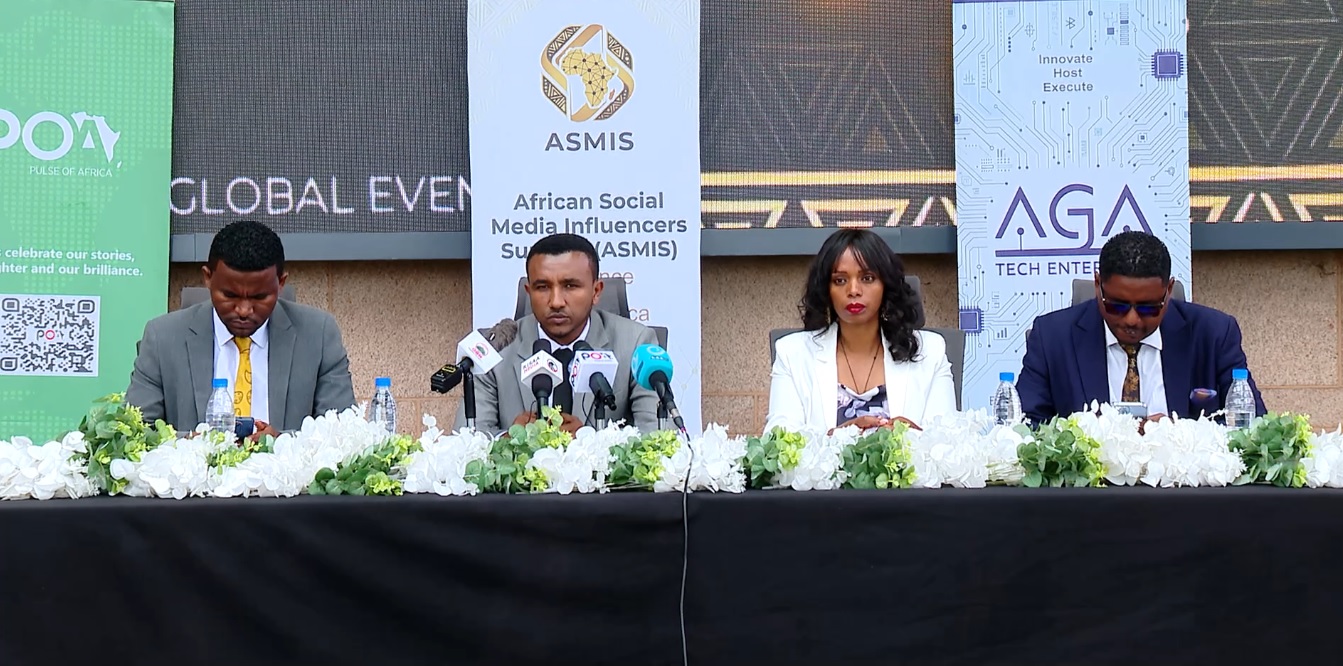
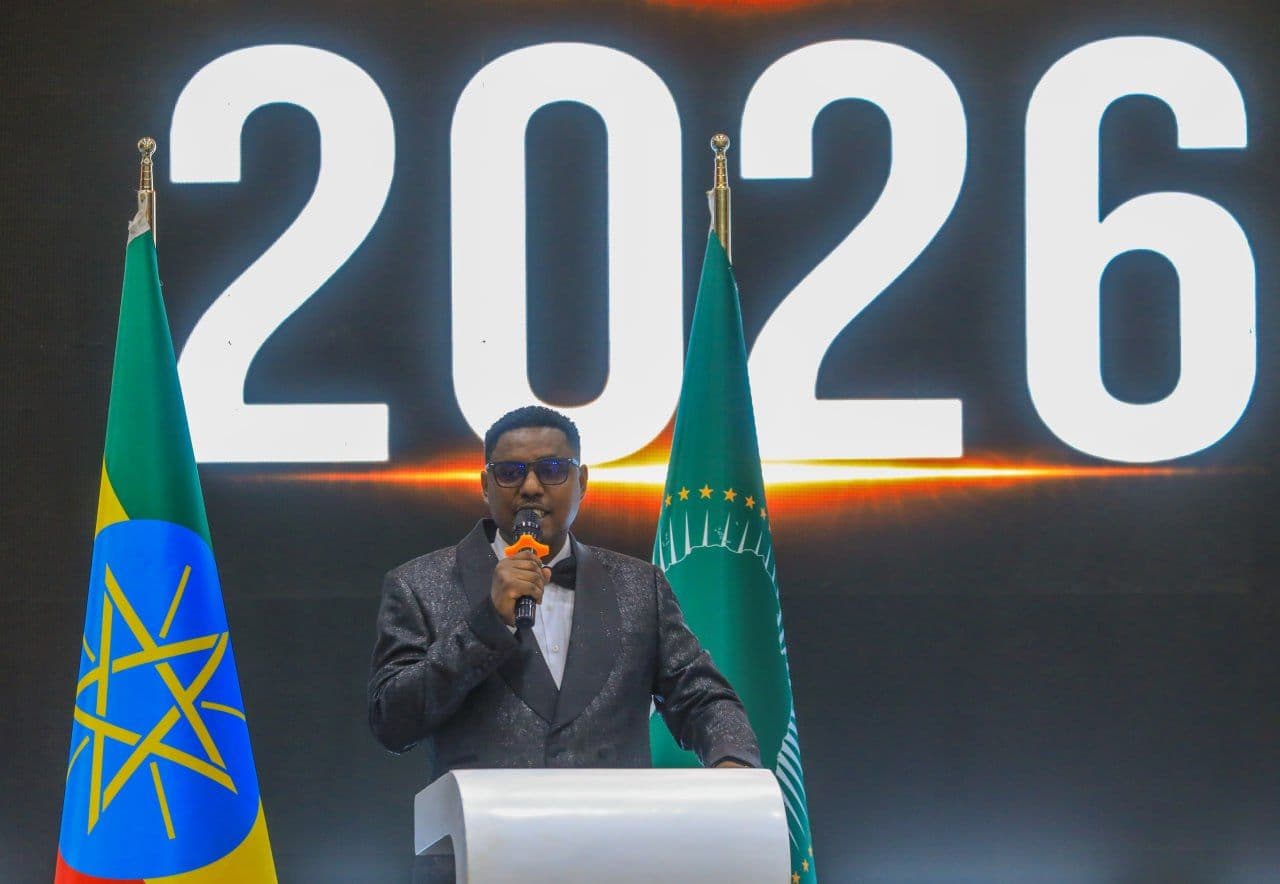
First African Social Media Influencers Summit


7 - 8 May 2026
. Ethiopia hosted the first African Social Media Influencers Summit in Addis Ababa,
bringing together 181 influencers with a combined following of 471 million people to promote African tourism, culture and storytelling.

The summit attracted 61 top influencers from 30 African countries, who joined 120 Ethiopian influencers in a major digital campaign aimed at showcasing Ethiopia and Africa through African voices.

Organized under the theme “Influence for a Better Africa,” the summit focused on how digital platforms and social media could be used to promote African development, innovation, entrepreneurship, and Pan-African cooperation. Organizers described the event as a platform for collaboration, networking, and knowledge-sharing among Africa’s leading digital voices.

A major focus of the conference was reshaping global perceptions of Africa by promoting authentic African narratives and countering stereotypes, misinformation, and negative portrayals of the continent. Speakers and participants emphasized the role of influencers as digital ambassadors who could use storytelling and online engagement to highlight Africa’s culture, achievements, tourism, innovation, and economic opportunities. 

The summit also explored topics such as digital diplomacy, emerging technologies, content creation, and the growing creator economy, while encouraging influencers to use their platforms to contribute to Africa’s transformation and prosperity.

"ASMIS2026 is the Birth of a New Storytelling Era" CEO of AGA Tech Enterprise, Gemeda Olana.

Saturday, May 16, 2026

EMBRAPA’s scientific and research expertise and ManejeBem’s digital innovation capabilities

ManejeBem is a Brazilian agri-tech company that devel
ops digital advisory and management solutions for livestock producers, focusing on sustainable pig and poultry farming through mobile, AI-enabled, and remote extension technologies.

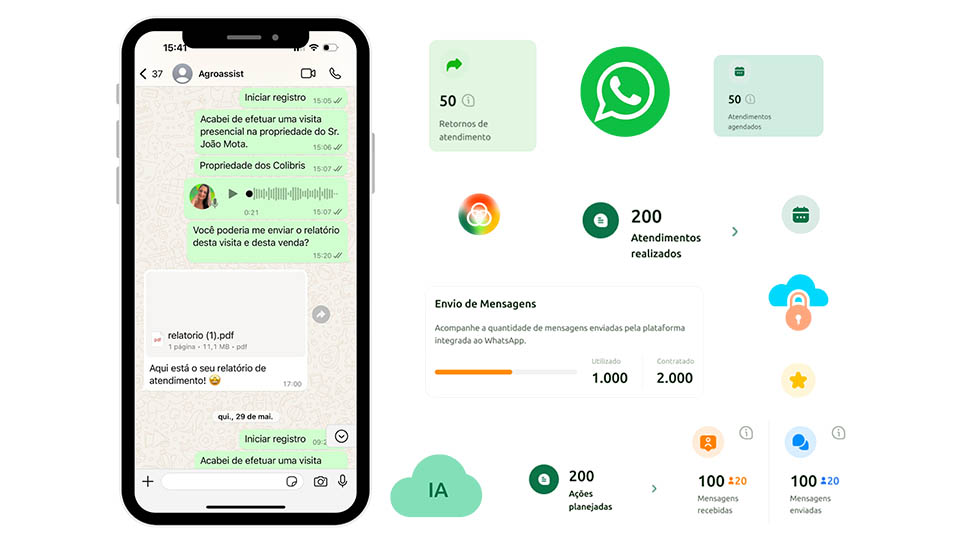
EMBRAPA and ManejeBem are collaborating in Brazil to advance sustainable livestock production through digital agriculture and technical assistance tools for family farmers. Their partnership, led through EMBRAPA’s Swine and Poultry Unit, focuses on developing digital platforms such as “ManejeChat” and the “EcoPiggy” application to support pig and poultry producers with real-time technical guidance, environmental management, animal welfare practices, and production monitoring. 

The initiative aims to improve sustainability and compliance in livestock systems while reducing environmental risks linked to waste management in pig farming.

The collaboration combines EMBRAPA’s scientific and research expertise with ManejeBem’s digital innovation capabilities to strengthen remote agricultural extension services and climate-smart farming solutions. Through mobile and WhatsApp-integrated tools, farmers can access advisory services on animal health, nutrition, bio-inputs, waste utilization, and sustainable production practices, even in low-connectivity rural areas. 

The partnership has also expanded into broader discussions on precision agriculture, ESG innovation (Environmental, Social, and Governance principles),
and international cooperation involving Brazil, the UK, Ghana, and Nigeria, positioning the initiative as a model for inclusive digital agriculture and sustainable rural development. - see: Digital Agri-Tech Africa- Brazil Ecosystem Engagement (DATA-BEE) (2025, 23 p.)

  • DATA-BEE is one of 12 scoping projects in the Innovate UK Climate-Smart Agriculture Partnership, within the theme of Digital Agriculture and Precision Farming. These projects aim to building knowledge, networks and collaboration ideas between the UK, Brazil and Africa. 
  • DATA-BEE focuses on identifying opportunities for collaboration and understanding the specific challenges in adopting digital agriculture and precision farming technologies in Ghana and Nigeria. The project aims to bridge agricultural systems between Africa and Brazil, leveraging the latter’s advanced precision farming techniques to address climate-related challenges and improve food security in West Africa. 
The ecosystem networks built by DATA-BEE directly paved the way for larger innovation phases:
  • Climate-Smart Maize Initiative: A collaborative project funded as a direct output of DATA-BEE's cross-border missions, deploying advanced crop inputs like R-Leaf to lower chemical fertilizer requirements.
  • Dissemination Hubs: Operating continuous on-the-ground training, forums, and market access workshops alongside entities like the British High Commission to scale tech distribution.
Successful adoption of agri-tech requires strong farmer engagement through training programs, extension services, and digital literacy initiatives. Localised knowledge transfer, delivered through both digital platforms and community-based extension officers, will help farmers maximise the benefits of new technologies. Strengthening cooperatives and farmer networks can also enhance collective bargaining power and market access. (page 21)


Possible synergies

Collaboration between EMBRAPA, ManejeBem, and Access Agriculture could expand the reach of sustainable livestock and climate-smart agriculture knowledge to smallholder farmers through multilingual farmer-to-farmer training videos and digital extension platforms.

  • The partnership could combine EMBRAPA’s scientific research, ManejeBem’s digital advisory technologies, and Access Agriculture’s grassroots extension methodologies to create inclusive digital learning ecosystems for farmers with limited connectivity and literacy levels.
  • Joint collaboration could support capacity building for extension agents, youth agripreneurs, and farmer organizations by integrating interactive advisory tools, mobile applications, and practical training content tailored to local production systems.
  • The partnership could strengthen South–South cooperation by facilitating knowledge exchange between Brazil, Africa, and other regions on sustainable livestock production, agroecology, digital agriculture, and resilient food systems.
  • Access Agriculture’s extensive experience in rural communication and local-language video dissemination could help EMBRAPA and ManejeBem scale adoption of good practices in pig and poultry management, animal health, waste management, and biosecurity across Africa and Latin America.

Tuesday, March 3, 2026

AI-powered advisory tool reaching farmers across Kenya

26 February 2026.  AI in Ag: What 450 Farmers Taught Us About Digital Advisory at Scale

60 Decibels and Digital Green organised a deep dive into the findings from a recent study on FarmerChat, an AI-powered advisory tool reaching farmers across Kenya. It explored what’s working, where there’s room to grow, and how farmer feedback is shaping the future of digital agtech.
  • Tetyana Zelenska, Digital Green, Head of MEL 
  • Ellie Turner, Head of Agriculture, 60 Decibels
Resource:
Digital Green (2025) FarmerChat Study PPT 47 pp

AI in Smallholder Agriculture: Hype or Game Changer?

26 February 2026. AI in Smallholder Agriculture: Hype or Game Changer? by the Agri-Food Innovation Centre (SAFIC) of Strathmore University.

Access the resources and join the Community of Practice here:
  1. Webinar Recording: Link.
  2. Webinar Feedback Form: Link.
  3. CoP Joining Link
  4. Kilimo AI
  5. SAFIC Website
Artificial Intelligence (AI) is rapidly transforming industries across the world  from healthcare and finance to education and logistics. Yet one important question remains: can AI meaningfully transform smallholder agriculture, or is it another wave of technological hype?

This question formed the foundation of the webinar, “AI in Smallholder Agriculture: Hype or Game Changer?”, convened by the Strathmore Agri-Food Innovation Center (SAFIC) Agri-Markets Data for Investment and Growth (AMDiG) Community of Practice. The discussion brought together experts in agricultural systems, digital finance, and responsible AI to explore whether emerging technologies can address the real constraints farmers face today.

  • Dr. Denis Mujibi The Associate Center Director SAFIC opened the discussion by emphasizing that while AI has become part of everyday digital life, its relevance to farmers must be judged through practical outcomes. Smallholder farmers operate within complex ecosystems shaped by climate risks, fragmented markets, and limited access to advisory services. Many challenges, speakers noted, are not caused by lack of effort or knowledge but by broken information flows. Farmers often receive delayed, inconsistent, or inaccessible advice  limiting their ability to make profitable decisions. The discussion highlighted that improving how information moves across agricultural systems may be one of AI’s most important opportunities.
  • SAFIC’s Principal Lead AI for Agricultural Transformation Mr. Joseph Gitonga, noted “Smallholder farmers operate under thin margins, climate uncertainty, fragmented value chains, and limited extension support. AI delivers the greatest value when it augments existing human systems rather than replacing them. Diagnostic and advisory AI tools are currently the most practical applications because they provide measurable and immediate outcomes.”

Rather than viewing AI as a universal solution, speakers agreed that its strongest value lies in augmenting existing human systems, particularly extension services. Diagnostic tools, localized advisory platforms, and decision-support systems were identified as early areas where AI can deliver tangible benefits. However, the panel cautioned that many digital agriculture initiatives fail because they provide information without enabling action. Technology must connect advice to inputs, markets, and financial services if farmers are to see real change.

  • Dr. Elizabeth Wamicha an AI & Digital Innovation Researcher & Advisor – Qhala noted that “Trust in AI systems depends on transparency around how farmer data is collected, stored, and used. Farmer data literacy is critical so producers understand the value and risks associated with sharing their information. Farmers should be treated as knowledge contributors rather than passive data sources. AI development must shift from data extraction toward farmer empowerment and co-creation.”
  • Digital finance specialist Jared Ochieng highlighted another critical challenge: despite increased access to financial services, many farmers remain financially vulnerable. Traditional credit systems rely on formal financial histories, leaving many smallholders “invisible” to lenders. AI offers an opportunity to incorporate alternative data  such as transaction patterns and behavioural indicators  to better understand farmer cash flows and risk profiles. Yet innovation must be approached responsibly. Without safeguards, AI-driven finance could deepen exclusion or expose farmers to new risks. Transparency, consumer protection, and ethical data use were identified as essential foundations.

A recurring theme throughout the webinar was trust. Experts emphasized that AI systems must be intentionally designed to include women, rural communities, and farmers with limited digital footprints. Poorly designed datasets risk reinforcing inequalities rather than solving them. 

Participants stressed the importance of treating farmers not merely as data sources but as collaborators in innovation. Building data literacy and ensuring transparency around how information is collected and used will be key to long-term adoption.

The webinar concluded with a clear consensus: AI has the potential to transform smallholder agriculture  but only if grounded in real farmer needs. Technology alone cannot solve systemic agricultural challenges. Success will depend on collaboration between researchers, innovators, financial institutions, policymakers, and farmers themselves. AI is neither pure hype nor an automatic game changer. Its impact will ultimately be defined by how responsibly, inclusively, and practically it is applied.

Thursday, February 19, 2026

Designing and Testing Agricultural LLMs

 12 February 2026. Designing and Testing Agricultural LLMs

This webinar brought together two teams building agricultural LLMs through different but complementary approaches—offering a behind-the-scenes look at how AI systems are co-designed, refined, and validated with domain experts, farmers and extensionists. 

  • Mamoun Alaoui (ai71) presented the development journey of AgriLLM, a domain-specific agricultural LLM built using retrieval-augmented generation (RAG) and trained on curated agronomic datasets. He walked through the co-design process: from data partnerships and ontology building, to model grounding, prompt evaluation, and iterative testing with agricultural experts across CGIAR and partner institutions. 
  • Sulakshana Gupta (Viamo) shared lessons from Ask Viamo Anything (AVA) and Viamo’s locally trained agents—two contrasting advisory approaches now being piloted across multiple countries. She highlighted how Viamo integrates farmer feedback loops, rapid user-testing cycles, and real-time analytics to refine advisory responses and guide model improvements. 
  • Discussant:Jawoo Koo, Senior Research Fellow, IFPRI
  • Moderator: Eliot Jones-Garcia, Senior Research Analyst, IFPRI; PhD Candidate, Wageningen University

Together, the speakers discussed what effective co-design looks like in practice: aligning technical model development with user needs, incorporating field insights early, and building evaluation frameworks that reflect real advisory contexts. 

Monday, February 2, 2026

Webinar Series – AI for Food Systems Research

29 January 2026.
From Foundations to Field: Lessons from Microsoft and Reply’s Work in Agriculture

CGIAR/IFPRI webinar in the AI for Food Systems Research series — panel exploring how AI and digital tools are used in agricultural decision-making, innovation adoption, and research-to-practice translation

See the recording here

As large language models (LLMs) and generative AI systems evolve, understanding how these technologies work—and what they can realistically achieve—has become essential for researchers and practitioners alike. 
  • The session began with a deep dive from Sean Smith of Reply/Microsoft, who will unpack the core principles behind AI and LLMs—how these models are trained and what their strengths and limitations are across different use contexts.
  • Building on this foundation, Ryan McCamy, also from Reply/Microsoft, showcased practical use cases in the agricultural sector. He demonstrated how AI-driven tools are being designed and deployed to enhance decision-making, streamline knowledge management, and support sustainable food system innovation.
  • Lina Yassin, Digital & Data Product Director with the CGIAR Digital Transformation Initiative, who will led the discussion and offered reflections from the perspective of CGIAR’s applied research and digital innovation portfolio.
The presentations bridged the gap between technical innovation and agricultural impact—highlighting how cutting-edge AI models can be harnessed responsibly to address real-world challenges while remaining attentive to local context, data ethics, and user trust.

Wednesday, December 17, 2025

Strengthening communication skills of young researchers in Anglophone East Africa

8-12 December 2025
, in Uganda. Strengthening communication skills of young researchers in Anglophone East Africa.

Access Agriculture, leading GFAiR's Collective Action on Inclusive Digital Agriculture and in partnership with RUFORUM, conducted a residential workshop designed for selected early-career researchers who are affiliated to institutions of higher learning or national research institutes in sub-Saharan Africa.
  1. The workshop for Francophone countries was held, 24-28 November 2025, in Centre Songhai, Benin
  2. The workshop for Anglophone countries was held, 8-12 December 2025, in Uganda.
This regional capacity-building workshop was to strengthen the communication skills of young researchers in Anglophone East Africa. The event brought together early-career researchers from diverse disciplines to enhance their ability to communicate scientific evidence clearly, confidently, and strategically to different audiences, including policymakers, development practitioners, farmers’ organizations, and the media.

Through a mix of practical training sessions, peer learning, and hands-on exercises, participants built skills in scientific writing, policy briefs, oral presentations, and digital communication. The workshop aimed to empower young researchers to increase the visibility, relevance, and impact of their work, foster regional networking, and contribute more effectively to evidence-informed decision-making in agricultural and food systems across East Africa.

Continuous feedback, peer review, and coaching enabled participants to apply new skills directly to their own work, strengthening confidence, clarity, and outreach impact.

ERAs (Entrepreneurs for Rural Access) are local, independent entrepreneurs who use access-friendly communication tools—especially farmer-to-farmer videos—to deliver practical agricultural knowledge to rural communities. They operate as service providers, often organizing village screenings, facilitating discussions, and linking farmers to locally relevant innovations in agriculture, natural resource management, and livelihoods.

Rather than acting as trainers or extension agents, ERAs function as knowledge intermediaries and rural communication entrepreneurs, adapting content to local languages and contexts while building sustainable micro-businesses around information services. The model strengthens last-mile knowledge delivery, enhances peer learning among farmers, and creates income opportunities for young professionals engaged in rural development.

Tuesday, December 16, 2025

Harnessing AI, Digital Innovations, and STI for Sustainable and Advanced Agrifood System

16 December 2025. Harnessing AI, Digital Innovations, and STI for Sustainable and Advanced Agrifood Systems: Digital Agriculture and AI Roadmap and Knowledge & Partnership Gateways

WSIS+20 High-Level Meeting of the United Nations General Assembly - Side Event “Harnessing AI, Digital Innovations, and STI for Sustainable and Advanced Agrifood Systems: Digital Agriculture and AI Roadmap and Knowledge & Partnership Gateways”, organized by the FAO Office of Innovation in collaboration with ITU.

This session explored how Artificial Intelligence (AI), digital innovations, and Science, Technology and Innovation (STI) are reshaping agrifood systems and advancing the WSIS Action Line C7 on e-Agriculture. Building on two decades of FAO’s leadership in promoting inclusive digital transformation, the event will highlight the FAO Digital Agriculture and AI Roadmap and the Knowledge & Partnership Gateways as catalysts for scaling responsible, equitable, and sustainable digital solutions.

Discussions addressed enabling governance frameworks, including data governance, interoperability standards, and ethical AI principles, as well as pathways to expand digital inclusion for smallholder farmers, women, youth, and marginalized communities. 

The event provided a platform for sharing insights, strengthening multi-stakeholder partnerships, and identifying priority actions to accelerate progress toward climate-resilient, efficient, and inclusive agrifood systems.

  • Angelique Uwimana, Innovation Specialist (Digital Agriculture), Office of Innovation, FAO – Moderator
  • Vincent Martin, Director, Office of Innovation, FAO – Opening remarks
  • Henry van Burgsteden, Senior Innovation Officer, Office of Innovation, FAO
  • Erik Van Ingen, Senior Digital Agriculture and Innovation Specialist, Office of Innovation, FAO
  • Roxana Widmer-Iliescu, Head of Digital Inclusion Service, ITU
  • Giacomo Rambaldi, Senior Advisor, Digitalization for Agriculture
  • Innocent Musabyimana, Chief Agricultural Technologies Officer and TAAT Coordinator, African Development Bank
  • Ben Addom, Senior Policy Adviser, The Commonwealth
  • Sah Gitanjali, Strategy and Policy Coordinator, ITU – Closing remarks

AI Agriculture Ecosystem Launch

8 December 2025: The AI Agriculture Ecosystem Launch in Abu Dhabi showcased new AI
technologies that strengthen farmers' resilience amid a global agricultural crisis.

AgriLLM was presented to Bill Gates alongside CGIAR partners at the UAE Presidential Court, CGIAR, The World Bank, Embrapa, and others. It marked a major milestone in bringing purposeful, domain-focused AI to the people who need it most.

Representing a comprehensive set of AI Building blocks, AgriLLM has pushed its engineering teams to solve some of the hardest problems in applied AI:

🌱 Multi-modal, multilingual LLMs for low-resource environments.
🌱 Retrieval pipelines built for noisy, heterogeneous agricultural data.
🌱 Agentic architectures capable of grounding, reasoning, and planning.
🌱 Safety and evaluation frameworks co-designed with domain experts.

CGIAR is teaming up with AI experts like ai71 to unlock 50 years of global data and expertise in an instant. New AI-powered apps and technologies can provide farmers with immediate, accurate, real-time insights and guidance on planting, weather, early warning, resource management, and more, whenever they need them.
“The AI Agriculture Ecosystem is rooted in science and powered by global collaboration. By combining the AI expertise and insights from global partners, the AI Agriculture Ecosystem can develop innovations that strengthen decision-making, guide policies and investments, and accelerate the adoption of digital tools – supporting vulnerable communities in the Global South and farmers in the Global North facing similar challenges.” Ismahane Elouafi, CGIAR’s Executive Managing Director. 
Several other AI breakthroughs were showcased at the Abu Dhabi AI Agriculture Ecosystem Launch, including CGIAR’s new AI Hub. With AI71 - an Abu Dhabi-based artificial intelligence company - as a core partner, the AI Hub is a collaborative digital workspace designed to test, scale, and incubate AI innovations. It acts as a unified, interoperable digital ecosystem where experts from different sectors and disciplines can pool knowledge and collaborate on agricultural solutions, making data accessible and AI-ready.
"The UAE is harnessing artificial intelligence for global good, to help protect the farmers and communities most exposed to climate volatility. By connecting our national research and AI capabilities with leading global partners, we are turning science into real tools that reach people on the ground. Through our partnership with the Gates Foundation, we are advancing Agri-AI solutions that support millions of smallholder farmers facing unpredictable weather, helping secure a more stable and hopeful future for communities worldwide.”
Her Excellency Mariam Almheiri, Head of the International Affairs Office at the UAE Presidential Court.
Groundbreaking advances delivered by the AI Hub so far include:
  1. AgriLLM, an open-source AI model offering multilingual, real-time digital advisory that connects farmers, advisors, and policymakers; 
  2. IWMI’s AI-Water Project that supports water governance, investment and integrated planning to strengthen farmer resilience in the face of droughts and floods - a global dashboard is currently under development for the 2026 UN Water Conference; 
  3. The AI Genebank platform that accelerates crop improvement by rapidly screening hundreds of thousands of plant samples for climate-resilient traits, and then linking them to crop research via an interactive chatbot.
“Partnerships are the cornerstone of food systems transformation. The AI Hub brings together world-leading AI expertise to boost digital capacity, power innovation, and unlock transformative digital tools to support rural farmers on the frontlines of the agricultural crisis.”
Sandra Milach
The launch of Abu Dhabi’s AI for Agriculture Ecosystem was a pivotal moment for a global alliance that actively harnesses artificial intelligence to strengthen food security and agricultural resilience worldwide and follows on from the USD 200 million UAE-Gates Foundation partnership announced at COP28 to advance agricultural innovation. 

This has resulted in four landmark initiatives: 
  1. the Institute for Agriculture and Artificial Intelligence (IA|AI), 
  2. the CGIAR AI Hub, 
  3. AgriLLM, and 
  4. AIM for Scale.
The AI for Agriculture Ecosystem is founded on an alliance of partnerships between the International Affairs Office at the UAE Presidential Court and four Abu Dhabi-based institutions, working with international partners such as the Gates Foundation, CGIAR, the World Bank, and others.


Related: COP30 session Livestreamed 14 November 2025. 


AgriLLM is a collaborative AI initiative leveraging advanced language models to expand equitable access to agricultural knowledge worldwide. It is developing a domain-specific large language model (LLM) for agriculture, benchmarked against leading systems and to be released open-source as a public good - bridging research, policy, and field-level impact. 
 
Established by the International Affairs Office at the Presidential Court of the UAE, with AI71 as the technology partner, AgriLLM is co-led by over 15 global partners including CGIAR, EMBRAPA, the Gates Foundation, FAO, IFAD, the World Bank, and ECHO, alongside universities and research centers.  
 
This COP30 session offered an early look at the initiative’s journey so far - what AgriLLM is, how it was designed, and its grounding in scientific knowledge and local realities - as well as a preview of what’s next ahead of its global launch in December 2025.


Tuesday, December 2, 2025

Strengthening communication skills of young researchers in Francophone West Africa


24-28 November 2025
. Access Agriculture, leading GFAiR's Collective Action on Inclusive Digital Agriculture and in partnership with RUFORUM, conducted a residential workshop designed for selected early-career researchers who are affiliated to institutions of higher learning or national research institutes in sub-Saharan Africa.
This regional workshop was organised at the SonghaΓ― Centre in Porto Novo, Benin. This, and an upcoming workshop for Anglophone African researchers, are funded by the International Foundation for Science (IFS, Sweden).

The event brought together 25 early-career researchers from universities and national research institutions in Benin, Cameroon, CΓ΄te d’Ivoire, Mali, Senegal, and Togo. Their shared goal: to strengthen their ability to communicate scientific knowledge in clear, accessible ways to maximise reach. 
As Dr. Paul Van Mele, co-founder and international director of Access Agriculture, noted, “Agroecology is about creating shared values within society—about how we shape food systems that respect people, culture and the planet. Communication is key to making this happen.”
A central part of the workshop was the “Letter to Mother” technique, a simple yet powerful method that encourages researchers to explain their work as if they were writing to their own mother. For many participants, this exercise was an eye-opening experience. It pushed them to move away from technical jargon, express their ideas naturally, and focus on the people who stand to benefit from their research.

This approach laid the foundation for practical lessons on writing blog posts aimed at non-specialist audiences. Building on these writing skills, participants worked in small groups to turn one of their blog drafts into a short video script.

The training went far beyond theory: each researcher received a DJI Pocket camera and learned how to conduct farmer interviews, frame shots, and edit short videos. These hands-on sessions helped demystify audiovisual communication and showed how affordable tools can be used to share research insights more widely.

The programme also explored how researchers can reach broader audiences through strategic content dissemination using appropriate social media channels. Participants learned how to publish videos on EcoAgtube—an agroecology-focused alternative to mainstream platforms—while gaining practical experience in social media use and digital engagement. 

Participants also learned how to integrate EcoAgtube in education curricula as an educational resource and community engagement tool, bridging the gap between academic knowledge and farmer-led innovation.

One trainee described the workshop as “a turning point in my professional career,” emphasising how it provided the skills to promote research cost-effectively and move beyond traditional scientific publications. Many echoed similar sentiments, appreciating the user-friendly approach of the facilitators and the supportive learning environment.

Organised by Access Agriculture in collaboration with the Regional Universities Forum for Capacity Building in Agriculture (RUFORUM), the workshop underscored the growing importance of communication in agricultural research. 
Dr Florence Mayega Nakayiwa, RUFORUM’s Deputy Executive Secretary, highlighted the need to empower young researchers with tools that go beyond academic writing: “By using audiovisual formats and social media, we can make agriculture more attractive to students and engage with society at large.”
Beyond improving personal communication skills, the workshop also helped participants recognise how existing farmer-to-farmer training videos from Access Agriculture can foster stronger relationships with rural communities and encourage participatory research.

As one trainee expressed in a heartfelt message to the facilitators, the training left many participants “completely transformed and well-equipped” to share agroecological knowledge. 

Their enthusiasm reflects a broader movement: young African researchers are stepping forward to build bridges between science and society—and to help shape a more sustainable future for agriculture across the continent.

Monday, November 24, 2025

Building AI Foundations: From Farms to Future Economies

25 November 2025. Building AI Foundations: From Farms to Future Economies

Artificial intelligence is advancing at remarkable speed, transforming global economies and everyday life. With its power to unlock knowledge, boost productivity, and open new markets, AI holds immense potential to drive jobs, industries, and economic transformation in developing countries. And in the food sector, AI can help smallholder farmers increase yields and strengthen resilience. 

But turning this potential into reality calls for investments in foundational elements like digital infrastructure, governance, and skills, while developing practical AI applications, including “Small AI”. What should countries prioritize?

  • Moderator Catherine Cheney, Senior Editor for Special Coverage at Devex 
  • Axel van Trotsenburg Senior Managing Director, The World Bank 
  • Sangbu Kim Vice President, Digital, The World Bank Sangbu 
  • Christine Zhenwei Qiang Global Director, Digital, The World Bank 
  • Shobha Shetty  Global Director, Agriculture and Food, The World Bank
  • Shahid Yusuf Chief Economist, The Growth Dialogue, George Washington University 
  • Gaurav Nayyar Economic Advisor & Director for World Development Report 2026, The World Bank 
  • Ana Maria Loboguerrero, Director, Adaptive & Equitable Food Systems, Gates Foundation

Resource


World Bank (2025) Harnessing Artificial Intelligence for Agricultural Transformation 104 pp

The global agrifood system stands at a critical inflection point. Climate shocks, rising input costs, fragile supply chains, and widening inequality are placing unprecedented pressure on food production and distribution. Small-scale producers (SSPs), who produce one-third of the world’s food, are especially vulnerable. 

Artificial Intelligence (AI) presents a timely and powerful tool to help reimagine agricultural transformation in ways that are more productive, sustainable, and inclusive. This report presents a comprehensive and development-oriented analysis of how AI can be responsibly deployed across agrifood systems, especially in low- and middle-income countries (LMICs). It moves beyond hype to deliver a grounded roadmap of applications, prerequisites, and investment priorities, while emphasizing ethical, inclusive, and scalable use.

1. Why Artificial Intelligence for Agriculture Sector 
2. Foundational Domains for AI in Agriculture: 
    Conditions, Challenges, and Opportunities 
    Connectivity and Energy Infrastructure: The Physical Backbone                                        
    Data Ecosystems: Fueling AI with Local Intelligence                                                               
    Human Capital and Digital Literacy: Equipping the Frontline                                               
    Governance and Policy: Building a Framework for Trust and Scale                                    
    Public-Private Ecosystems: Scaling Sustainably                                                                     
3. Applications of AI in Agriculture                                                                    
    Crop and Livestock Discovery 
    Advisory and Farm Management                                                                                               
    Inclusive Finance and Risk Mitigation                                                                                       
    Markets, Distribution, and Logistics                                                                                          
    Cross-Cutting Applications                                                                                                         
4. Investment Priorities                                                                                      
    Agriculture-Specific AI Models and Capacity                                                                           
    Foundational Data Investments                                                                                                
    Compute Infrastructure Investments                                                                                      
    Policy and Governance Investments 
    Forward Look: Advancing Agrifood Transformation through Responsible AI 
    Call to action                                                                         

Wednesday, November 5, 2025

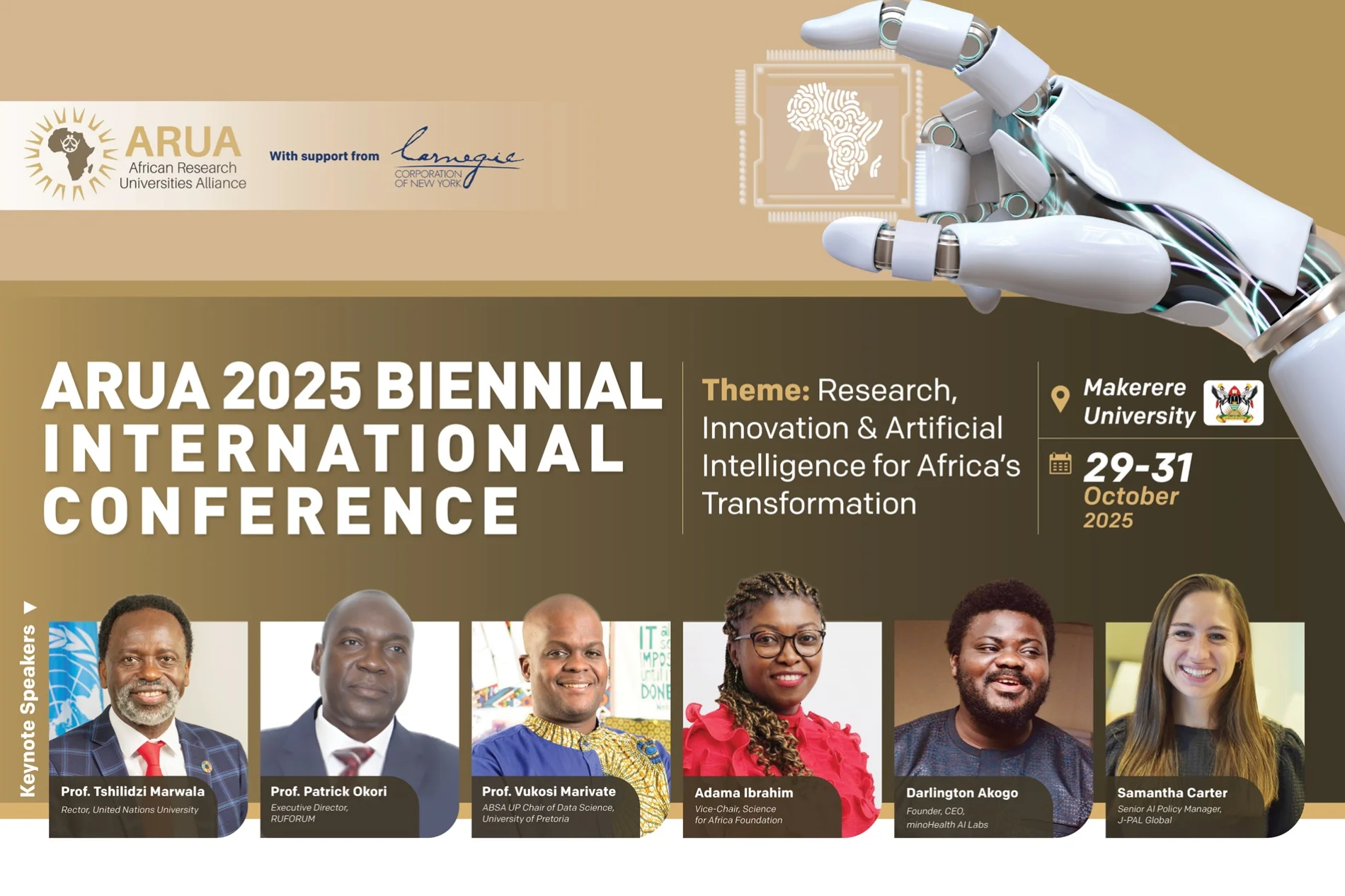
The ARUA 2025 Biennial International Conference

29 - 31 October 2025. The ARUA 2025 Biennial International Conference brought together experts from different fields, including universities, research institutions, government, industry, civil society, international organizations, etc., to discuss how Africa’s Transformation can best be facilitated by 
Research, Innovation and Artificial Intelligence.

See conference brochure (112 pp)

Extracts of the programma


29/10 Advancing responsible AI ecosystems in African HEIs

  • Moderator: Prof. Sizwe Mabizela (VC, Rhodes University, ARUA Board Chair)
  • Prof. Bolanle Oboh (DVC, University of Lagos)
  • Prof. Didas Muganga Kayihura (VC, University of Rwanda)
  • Prof. Mosa Moshabela (VC, University of Cape Town)
  • Prof Denis Worlanyo Aheto  (VC, University of Cape Coast)


30/10 Collaboration of Networks (Promoting Collaborative Research and Innovation Networks in AI in Africa)


  • Moderator: Prof. Kayode Oyebode Adebowale (VC, University of Ibadan)
  • Prof. Sharon Fonn (Co-Director, CARTA)
  • Prof. Anthony Egeru (Manager - Skilling, Engagement for Community Development, RUFORUM)
  • Mr. Jim Kaketch (Senior Programme Officer, Research and Policy Uptake, Partnership for African Social & Governance Research - PASGR)
  • Prof. Akanni Ibukun Akinyemi  (DVC, OAU)
  • Dr. Rachid Serraj (Director for Africa Initiative, UM6P)


31/10 Collaboration of Networks (Engaging international collaborative networks for Research and Innovation)

  • Moderator: Emeritus Prof. Ernest Aryeetey (University of Ghana)
  • Prof. Jenny Dixon (Secretary General, Universitas 21 – U21)
  • Prof. Jan Palmwosky (Secretary General, The Guild of European Research-Intensive Universities – The Guild)
  • Prof. Peter Lennie (Executive Director, Worldwide Universities Network - WUN)
  • Prof. Maashutha Samuel Tshehla (DVC, Stellenbosch University)
  • Dr. Laurent Bochereau (Minister-Counsellor Science, Technology & Innovation Delegation of the European Union to the African Union)

Poster presentation


The ARUA 2025 Biennial International Conference includes several posters and presentations directly related to agriculture and food security, many highlighting how AI and digital innovation can support sustainable farming, climate resilience, and smallholder livelihoods.

1. Leveraging Artificial Intelligence for Climate-Resilient Agriculture and Food Security in Africa: Addressing Data Gaps, Infrastructure Challenges and Policy Barriers

  • Presenter: Ms. Mariah Muli, University of Nairobi
  • Summary: Explores AI’s potential to improve agricultural resilience and food security in Africa. Identifies barriers such as data scarcity, weak infrastructure, and inadequate policy frameworks. Recommends developing localized AI models, strengthening digital infrastructure, and fostering public-private partnerships

2. Leveraging Indigenous Knowledge and Artificial Intelligence for Climate Resilience and Sustainable Agriculture in Africa: Exploring Africa’s Rain-Making Technology

  • Presenter: Mr. Philip Onyekachukwu Egbule, University of Delta, Agbor
  • Summary: Examines integration of Indigenous Knowledge Systems (IKS) with AI for climate adaptation and sustainable agriculture. Proposes hybrid systems that combine traditional weather knowledge with AI-based prediction tools for improved agricultural planning

3. Development of an Agri-Management Database System Prototype for the Sustainability of Smallholder Farmers in South Africa: A Design Thinking Approach

  • Presenter: Dr. Obvious Mapiye, Stellenbosch University, with co-authors from University of Pretoria and UNISA
  • Summary: Introduces a mobile app (AMDS) co-designed with smallholder cattle farmers to digitize farm records and extension services. Demonstrates improved usability and efficiency for managing farm data and connecting to markets

4. Climate-Smart Apiary Site Selection in East Africa: GIS-Based Analysis of Current and Future Climate Projections

  • Presenter: Dr. Filagot Mengistu Walle, Addis Ababa University, with collaborators from University of Helsinki and ICIPE
  • Summary: Uses AI-driven GIS and multi-criteria decision methods to optimize beekeeping site selection under different climate scenarios. Demonstrates how climate models can support adaptive agriculture and ecosystem services

5. AI Research Boost and Impact on Ugandan Universities and Communities

  • Presenter: Mr. Hussein Mbabali, Islamic University in Uganda
  • Summary: Highlights how AI and IoT projects in Ugandan universities (e.g., Busitema’s smart irrigation) have improved crop yields and agricultural productivity, showcasing university-community partnerships


🧩 Poster Presentations Related to Agriculture

6. Monitoring the Environmental Quality of Solar Energy-Powered Poultry Production System Using Artificial Intelligence (AI)

  • Presenters: Okonkwo Ifeanyi & Owoh Ikechukwu, University of Nigeria, Nsukka
  • Summary: Describes use of AI systems to monitor environmental parameters (temperature, humidity, emissions) in poultry systems powered by solar energy—targeting efficiency and sustainability in agribusiness

Tuesday, October 14, 2025

Data and Digital Readiness for Food Systems

13 October 2025. Rome, Luiss Campus. Data and Digital Readiness for Food Systems

WEF (2025) Data and Digital Readiness in Food Systems. Food Innovators Network. BRIEFING PAPER OCTOBER 2025. 15 pp.

The event was dedicated to strategies for mobilizing private-sector investment and recognizing the transformative potential of data in agrifood systems. 

It launched a briefing paper Data and Digital Readiness in Food Systems. developed under the aegis of the World Economic Forum Food Innovators Network, and to spark dialogue around enabling a more data-driven and digitally ready food systems infrastructure.

Below is the extract of the contribution by Ana Maria Loboguerrero Director, Adaptive and Equitable Food Systems at the Gates Foundation.

Friday, September 12, 2025

Tropentag 2025

10 - 12 September 2025. Tropentag 2025 is an interdisciplinary international conference focused on tropical and subtropical agriculture, natural resource management and rural development. 

This year the theme was “Reconciling land system changes with planetary health”, meaning the conference explored how agricultural systems, land use, food security, and environmental protection can be balanced in the face of climate change, urbanization, land-use change, and other pressures. 

The event was organized by the University of Bonn/ZEF together with several partner European
universities and research bodies, and it will include keynotes, oral and poster presentations, workshops, and hybrid/online sessions. 

The key thematic areas were:

  • Resilient Crop & Livestock Systems: Enhancing crop and livestock productivity through optimized management, breeding, and climate-smart agriculture. Addressing biotic (pests, diseas-es) and abiotic (drought, salinity) stresses to improve resilience and resource efficiency.
  • Soil, Water & Biodiversity: Strengthening soil fertility, water management, and agricultural biodiversity. Applying nature-based so-lutions for soil conservation, water retention, and ecosystem services in agricultural landscapes.
  • Land Use, Forestry & Agroecology: Optimizing land management and farming systems through regenerative agriculture, sustainable forestry, and agroecological approaches. Balancing productivity, soil health, and ecosystem functions to enhance long-term agricultural and forest sustainability.
  • Food Systems & Nutrition: Improving food quality, safety, and biofortification while ensuring seed system sustainability. Strength-ening nutrition-sensitive agricultural value chains for healthier diets and resilient food systems.
  • Markets, Economics & Science Policy:Understanding farmer decision-making, risk management, and innovation adoption. Co-design of poli-cies and market mechanisms that support climate-resilient agriculture while ensuring economic viability.
  • Social Learning & Governance: Promoting knowledge transfer, participatory govern-ance, and institutional change. Addressing land ten-ure security, gender equity, and access to resources to support inclusive agricultural transitions.
  • Technology & Agricultural Innovation: Leveraging artificial intelligence, remote sensing, and smart farming for better decision-making and re-source efficiency. Advancing biotechnology and pre-cision agriculture to enhance productivity with mini-mal environmental impact.

Extracts of the programme 80 pp.

  • Opening session Dr. SimΓ©on Ehui — Director General of the International Institute of Tropical
    Agriculture (IITA) & CGIAR Regional Director for Africa Reconciling land systems changes with planetary health. 
  • Dr. Lenis Saweda Liverpool-Tasie (Michigan State University, USA) Her research is about transforming food systems, rural livelihoods, MSMEs, policy-advisory in agriculture in low-/middle-income countries. 
  • Dr. Chris Hoffmann (University of SΓ£o Paulo, Brazil) Works on nutrition transition, gut microbiome, how socioeconomic & agricultural policies affect health outcomes. 
  • Closing session Dr. Ousmane Badiane — Executive Chairperson of AKADEMIYA2063 On remote sensing & AI applications in agriculture; broad reflections toward planetary health. 

11/09 Sessions on Neglected & Underutilised Species


This session highlighted the crucial role of neglected and underutilised species (NUS) and broader biodiversity in tackling today’s food system challenges. Presentations spanned themes such as how NUS link biodiversity, climate, and nutrition; the nutritional potential of neglected African crops; and the integration of biodiversity into agricultural and rural development. Case studies also addressed ecological restoration in Brazil, mangrove protection in Vietnam, and citizen science approaches in the Dominican Republic. Together, the talks emphasized that biodiversity conservation and mainstreaming NUS are key strategies for building climate resilience, improving nutrition security, and supporting sustainable livelihoods.

CΓ©line TermoteNUS at the nexus of biodiversity, climate and nutrition → Framed NUS as critical for dietary diversity and resilience to climate change.
Michael Frei, HervΓ© Mube K., Dominique van der Straeten, et al.Micronutrient density of neglected and underutilised African crops → Showed how NUS could help combat hidden hunger through high micronutrient content.
Mariam AbbasMainstreaming biodiversity into agricultural and rural development: The case of Mozambique → Explored how policy and practice can embed biodiversity in rural development.
Milka KiboiPerformance and yield stability of maize under a long-term experiment in the sub-humid tropics → Provided insights on biodiversity and stability of staple crops, linking to agro-biodiversity themes.
Emma Tamez MonteroSocial-ecological restoration in the Brazilian Mata AtlΓ’ntica: Implications on landscape connectivity dynamics → Examined restoration efforts to reconnect fragmented landscapes.
Uyen TranDoes sustainable aquaculture certification protect mangroves? Evidence from Vietnam → Investigated whether certification schemes actually safeguard biodiversity.
Hugo-Enrique Reyes-AldanaCitizen science for biodiversity monitoring and pathogen detection in coffee farms in the Dominican Republic → Highlighted farmer participation in biodiversity tracking and early warning systems.


Poster Session: Biodiversity and neglected species

A number of poster presentations under this theme: e.g. “Transforming Ethiopian botanical gardens into socio-ecological systems …”, “Wild and alien plant species as a source of food and livelihood support among low-income households …”, “Valorising neglected and underutilised crops: Role of bio-inoculants in improving productivity” etc.

11/09 Bridging Farmer Innovation and Digital Co-Design


The session focused on how farmers’ knowledge and innovation can be combined with digital tools through participatory and co-design approaches. Presentations highlighted how peer-to-peer learning, serious games, and participatory digital literacy can strengthen farmer capacities, encourage more sustainable practices, and improve rural livelihoods. Case studies spanned Kenya, Namibia, Cameroon, and Thailand, showing how farmers and researchers can co-create digital solutions tailored to local needs. The common thread was empowerment of rural communities by embedding innovation within their own social and ecological contexts, rather than top-down technology transfer.

Rufo Roba Halakhe, Maria Restrepo, Brigitte KaufmannPeer-assisted smartphone learning to support digital literacy and participatory design in northern Kenya → Farmers learned digital skills by supporting each other, enabling stronger participation in co-design of digital solutions.
Sean Yeo, Kingpai Koosakunilrund, Patrick WaeberBreaking the failure cycle: Strategy game design to rethink mangrove restoration → A role-play/strategy game helped stakeholders rethink and improve approaches to mangrove restoration in Thailand.
Francis E Ndip, Perez L Kemeni Kambiet, Ernest L MoluaAgricultural commercialisation and children’s welfare: Impacts on diets and education → In Cameroon, commercialization of agriculture was linked to both opportunities and risks for children’s nutrition and schooling, underlining the need for inclusive policies.
Mareike Aufderheide-Voigts, Mpule Kamwi, Rufo Roba Halakhe, Maria Restrepo, Brigitte KaufmannEnhancing livestock husbandry and rural livelihoods through peer-to-peer information access: A transdisciplinary approach in communal areas of Namibia → Farmers co-designed peer-sharing platforms to improve livestock practices and strengthen communal resilience.


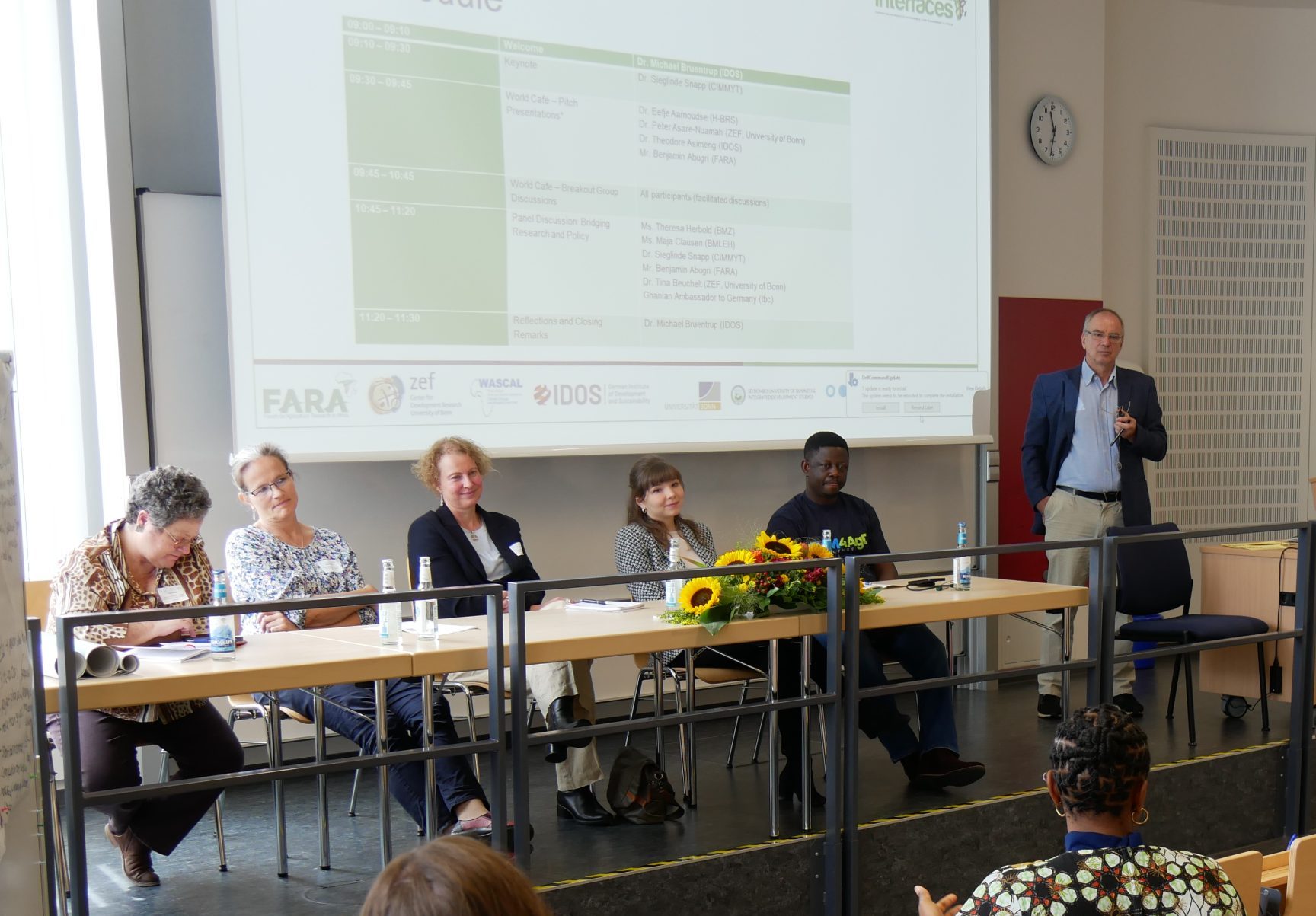
10/09 Bridging the Gap: Strengthening Science-Policy Interfaces in Agricultural Research


  • INTERFACES Side Event at Tropentag 2025,
  • The event brought together researchers, policymakers, and development practitioners from Africa and Europe to reflect on how scientific knowledge can more effectively shape and inform policy processes. 
  • The workshop built on previous Tropentag conversations on participatory research and agricultural knowledge management, and it offered a platform to deepen the dialogue around bridging research, policy, and practice.